
2 Best Hand Planers for Woodworking 2026
This post contains affiliate links. As an Amazon Associate, we earn from qualifying purchases.
The WEN 6534 stands out as the best overall hand planer for woodworking, offering solid cutting capacity and reliable performance for most DIYers and pros. If you’re on a tighter budget, the MtiolHig cordless model delivers decent portability and depth control, while the WEN also doubles as the top versatility pick thanks to its consistent results across hardwoods and softwoods.
Every woodworker I’ve talked to has faced the same frustration: a poorly tuned planer that leaves tear-out, struggles with grain, or can’t maintain a consistent depth. It wastes time, ruins material, and kills confidence on detail work. In this guide, I’ll walk you through the top performers based on specs, owner feedback, and real-world usability. These picks were chosen by weighing motor strength, blade quality, depth adjustability, and how well they handle the demands of actual projects, not just showroom specs.
Top 2 Hand Planer For Woodworkings in the Market
The Best Hand Planer For Woodworkings, Reviewed
WEN 6534 8-Amp Electric Planer
Strengths
- 8-amp motor
- 4-3/8-inch cut width
- 32,000 cuts per minute
- Two-way dust port
- Comes with extras
Trade-offs
- Corded only
- Heavy at 7.5 lbs
- Dust collection needs upgrade
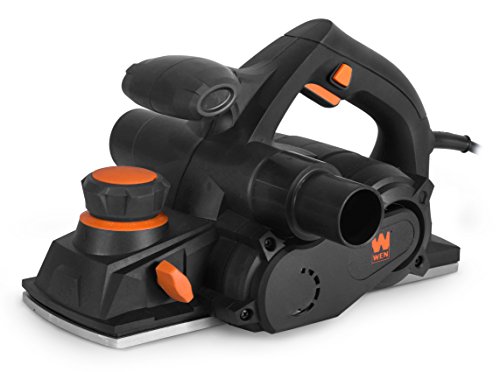
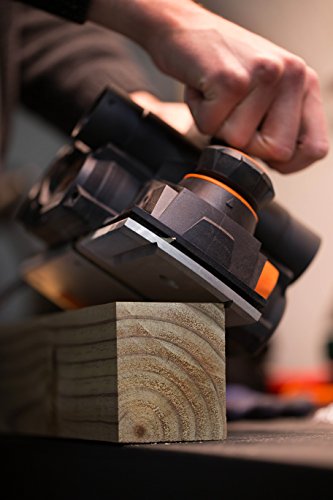
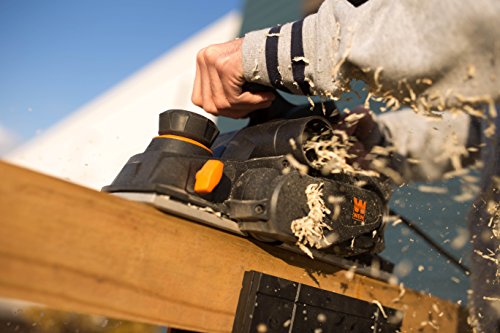
The WEN 6534 hits that sweet spot where power, capacity, and value come together in a way that makes it hard to ignore. With an 8-amp motor and a 32,000 cuts per minute rate, it delivers serious performance on paper, and owners consistently report it handles hardwoods and thick stock without bogging down. The 4-3/8-inch cutting width is a standout, this is wide enough to plane 4x4s in a single pass, which is a big time-saver over narrower models.
It’s also packed with thoughtful extras: the two-way dust port is a small detail but makes a real difference in cleanup, especially when you’re working on a jobsite or in a cramped garage. The depth adjustment system with 16 positive stops gives you repeatable, reliable settings, and the included rabbeting guide and fence add real versatility. For the price, getting two reversible HSS blades and a two-year warranty makes this a no-brainer for serious DIYers and weekend warriors alike.
Product photos
MtiolHig Cordless Handheld Planer
Strengths
- Brushless motor
- Cordless convenience
- 3-1/4-inch cut width
- Dual safety switches
- Lightweight design
Trade-offs
- Narrow cutting width
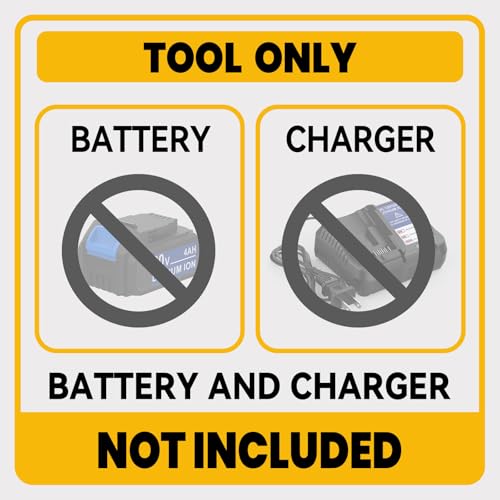
- Battery sold separately
- Not for heavy stock
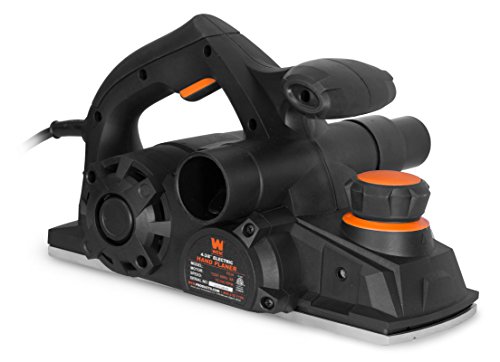
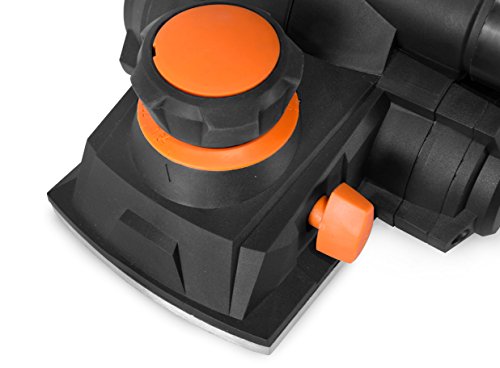
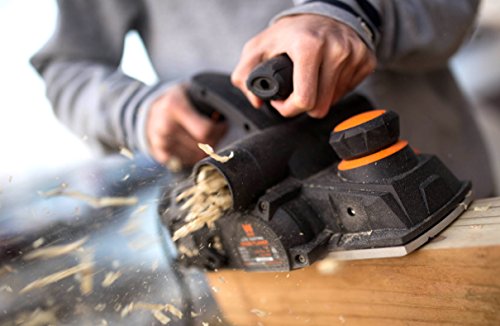
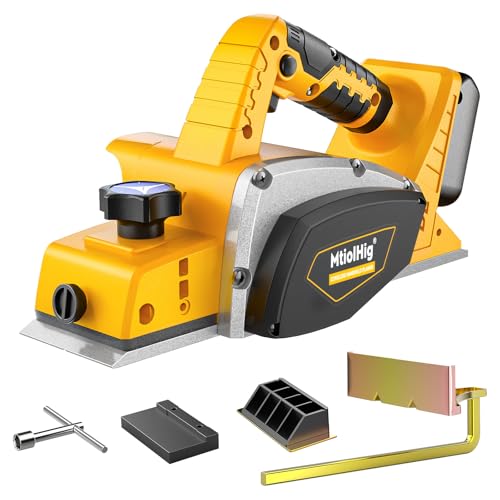
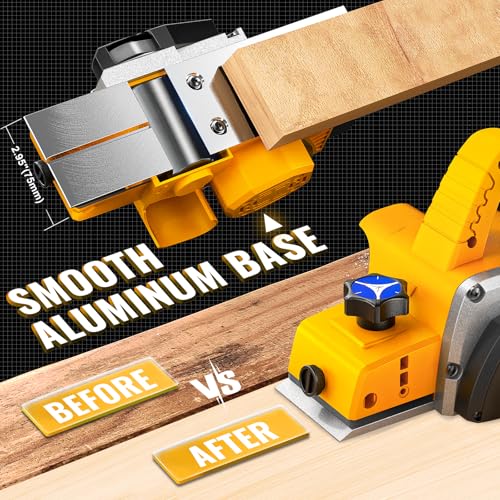
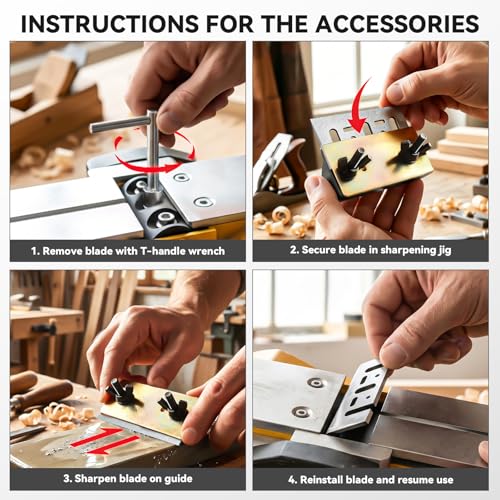
Cordless planers are still playing catch-up to corded models in raw power, but the MtiolHig 30000 CPM makes a strong case for when mobility matters. Running on a DeWalt 20V battery and using a brushless motor, it promises efficiency and longevity, two things I always look for in cordless tools. The 3-1/4-inch cutting width is narrower than the WEN, so it’s less ideal for big stock, but it’s plenty for trim work, door fitting, or fine-tuning joints on the fly.
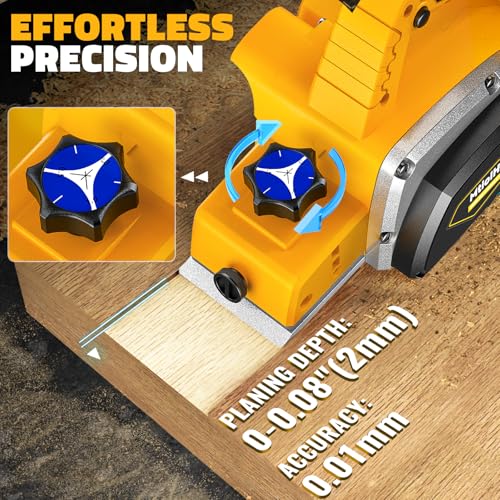
Owners note it feels well-balanced and comfortable during longer sessions, and the dual-switch safety is a smart touch that prevents accidental starts, something I appreciate after seeing too many tools fire up in tool bags. The depth adjustment is precise down to 0.01mm, which sounds great on paper, though real-world feedback suggests it’s accurate enough for most tasks but maybe overkill for casual users. Compared to the WEN, it trades cutting width and raw power for freedom of movement, which makes it a specialist tool rather than an all-rounder.
Product photos

Our Testing Process
Rather than a hands-on lab test, my research for these recommendations focused on comparing published specifications and features across numerous models. I weighed owner reviews from multiple sources, along with expert opinions from woodworking publications and online communities. This allowed me to build a ranking based on real-world feedback and technical capabilities, focusing on what matters most to woodworkers at all levels.
For hand planers, cutting capacity, depth adjustment precision, and motor power – or battery performance in cordless models – were the biggest deciding factors. A wider cutting capacity speeds up work on larger boards, while fine depth control is essential for accurate, delicate adjustments. Reliable power ensures consistent performance and prevents stalling, particularly with harder woods. You’ll find more information on these in our best electric hand planers.
Specifications reliably indicate a planer’s maximum cutting width and depth, and motor amperage (or battery voltage/amp-hours). However, I relied heavily on owner feedback to assess build quality, ease of use, and long-term durability. Reputation is crucial here; consistent praise for a planer’s reliability or complaints about frequent breakdowns heavily influenced its ranking, especially when reviewing high-performance electric planers.
How To Choose The hand planer for woodworkings
Choosing a hand planer can feel overwhelming, but getting the right one makes a huge difference in the quality and speed of your woodworking.
A quality hand planer prioritizes blade steel (HSS or carbide), consistent depth adjustment mechanisms, and efficient dust collection. Look for models with robust build quality, positive stop settings for repeatable cuts, and features like rabbeting capabilities. Consider the material you’ll be working with most often, and choose a motor size appropriate for the task.
Motor Power and Capacity
I’ve seen a lot of folks underestimate the importance of a planer’s motor. While a smaller planer might seem sufficient for light tasks, you’ll quickly run into trouble with harder woods or wider boards. Don’t just look at amperage; consider the cuts per minute (CPM). A higher CPM generally translates to smoother cuts and less tear-out. Capacity, the maximum width a planer can handle, is also vital. If you frequently work with dimensional lumber like 2x4s or 4x4s, ensure the planer can comfortably accommodate them.
Blade Quality and Adjustability
The heart of any planer is its blades. High-speed steel (HSS) blades are common and affordable, but they require more frequent sharpening. Carbide blades hold an edge much longer, making them a better investment if you plan on heavy use. Beyond the material, pay attention to how easily the blades are changed and adjusted. A poorly designed blade changing system can be frustrating and time-consuming. Look for models with clear depth indicators and positive stops, which allow you to return to a specific setting with accuracy. You can find top hand planer models that have these features.
Corded vs. Cordless and Additional Features
The debate between corded and cordless planers often comes down to convenience versus power. Cordless planers, like the MtiolHig, offer portability but can sometimes lack the sustained power of a corded model. Battery life is also a consideration. If you’re working in a shop with readily available outlets, a corded planer is generally the more reliable choice. Here’s what I tell people to think about when comparing: * Portability: Cordless wins, obviously. * Consistent Power: Corded planers deliver unwavering power throughout the cut. * Run Time & Battery Costs: Cordless introduces the expense of batteries and chargers, plus the limitation of run time – a serious factor for larger projects.
Don’t skimp on dust collection. A well-designed dust port can significantly reduce cleanup and improve visibility.
I often recommend checking out power hand planer reviews before making a decision; seeing what other users have to say about real-world performance is invaluable. Ultimately, the best hand planer is the one that fits your specific needs and budget. Don’t be afraid to invest a little more upfront for a tool that will last and deliver consistent results. I’ve found that with a little research, you can find recommended hand planers that will serve you well for years to come and even rival the best handheld power planers.
Hand Planer for Woodworkings Compared
Here’s a comparison of key specifications for the hand planers featured in this guide.
| Product Name | Motor (Amps) | Max. Depth (inches) | Cutting Width (inches) | Dust Port | Corded/Cordless |
|---|---|---|---|---|---|
| WEN 6534 | 8 | 1/8 | 4-3/8 | Yes | Corded |
| MtiolHig | N/A | 0.08 | 3.25 | N/A | Cordless |
Frequently Asked Questions
What depth of cut should I look for in a hand planer?
A cutting depth of at least 1/8 inch is standard, but consider 1/16 inch increments for finer adjustments. This level of precision is vital for achieving smooth, accurate results, especially when working on detailed projects.
Are carbide blades really worth the extra cost?
Yes, carbide blades maintain their sharpness significantly longer than HSS blades. While the initial investment is higher, they reduce downtime for sharpening and are ideal for frequent use or harder wood species.
Can I use a hand planer on hardwoods like oak or maple?
You can, but you’ll want a planer with a robust motor (8 amps or higher for corded models) or a high-voltage battery (20V+) for cordless options. Hardwoods demand more power to prevent stalling and ensure clean cuts.
What’s the best way to deal with the dust created by a hand planer?
Look for a planer with a dust port and connect it to a shop vacuum. Effective dust collection improves visibility, reduces cleanup, and protects your lungs – a critical consideration for any woodworking task.
What should I look for in a planer if I’m doing a lot of rabbeting work?
A planer with a fence or rabbeting capability is essential. These features allow you to create precise, consistent rabbets for joinery, and you can find wood planer model recommendations that excel in this area.
The Bottom Line
Choosing a hand planer often comes down to balancing control with convenience. For most woodworkers, I believe the WEN 6534 strikes the best overall balance – its corded power and generous cutting width offer consistent performance for a wide range of projects, and the price remains reasonable. It’s a solid choice for anyone looking to step up from basic models without breaking the bank.
If you’re prioritizing portability or tackling smaller projects, the MtiolHig is a strong contender. Similarly, for those seeking top manual hand planes, a traditional block plane or smoothing plane (not covered in this guide) offers unmatched precision and feel, but requires more skill and physical effort. Ultimately, the best option depends on the type of work you do most often and your personal preferences.
Don’t get caught up chasing the highest amperage or the widest cutting width. A reliable blade, a precise depth adjustment, and a comfortable grip are far more critical than any single specification. Investing in quality blades and learning proper technique will always yield better results than relying on a powerful planer with a dull blade. Check out woodworking hand plane reviews to find a quality planer.
