
9 Best Finish Nailers of 2026
This post contains affiliate links. As an Amazon Associate, we earn from qualifying purchases.
The DEWALT 20V MAX 15GA Finish Nailer stands out as the best overall choice for its power and battery convenience, while the Metabo HPT 16GA NT65M2S is a top-tier pneumatic pick for pros who value reliability. For those on a budget, the DEWALT Precision Point 16GA delivers solid performance for lighter trim work.
If you’ve ever fought with a finish nailer that jams, misfires, or leaves dents in delicate molding, you know how much the wrong tool can slow you down. A good finish nailer should get the job done cleanly and reliably, without constant adjustments or frustration.
In this guide, I’ll walk you through the top models based on specs, owner feedback, and what matters most in real use, like consistent driving, ease of handling, and durability. These picks reflect what I’ve found after comparing the market and listening to what users actually say about their experience.
Top 9 Finish Nailers in the Market
The Best Finish Nailers, Reviewed
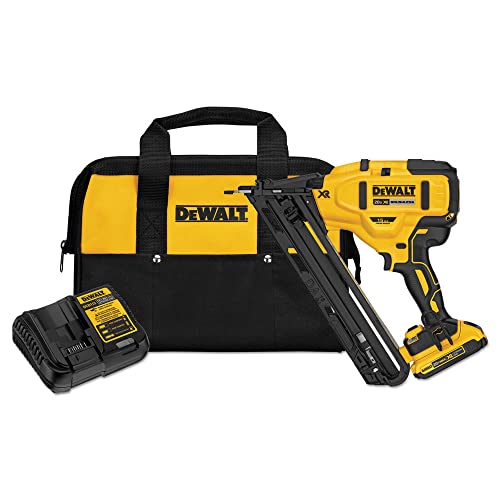
DEWALT 20V MAX 15GA Finish Nailer
Strengths
- Micro nose for accuracy
- Brushless motor
- Includes battery and charger
Trade-offs
- Heavier than 16-gauge models
- Higher initial cost
This DEWALT DCN650D1 is my pick for best overall finish nailer, it balances power, precision, and convenience better than any other model here. As a 15-gauge cordless tool, it drives bigger nails than 16-gauge models, giving better hold in hardwoods, while the micro nose improves visibility for accurate placement. The brushless motor and included battery/charger make it a complete, ready-to-work package.
Owners consistently praise the multi-functional LED lights, they illuminate the work area and signal tool status, which is handy in dim basements or attics. Compared to the DCN660B, it’s more versatile thanks to its angled design and 15-gauge capacity. While it’s one of the pricier options, the kit value and performance justify the cost for serious users.
Product photos
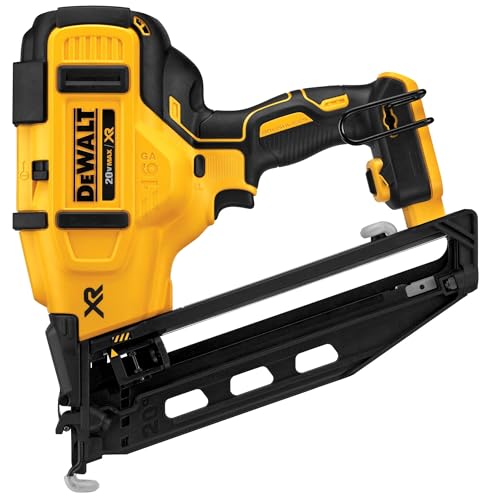
DEWALT 20V MAX 16GA Finish Nailer
Strengths
- Cordless freedom
- Brushless motor
- Tool-free jam release
Trade-offs
- No battery or charger included
- Slightly bulkier than angled rivals
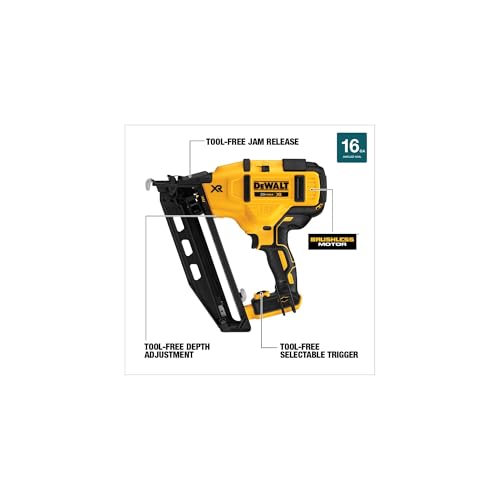
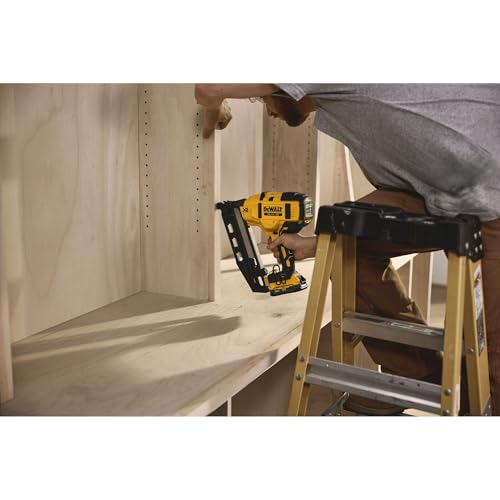
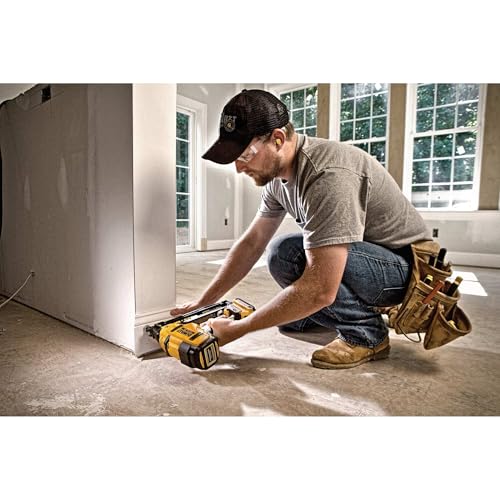
The DEWALT DCN660B is a strong performer in the cordless 16-gauge category, and it makes a solid case for going battery-powered. Without a hose or compressor, it’s far more mobile than pneumatic models, and the brushless motor helps extend runtime, owners report getting through full-day trim jobs on a single 20V MAX battery. The tool-free jam release* is a standout; when jams happen, clearing them is fast, which matters when you’re on a deadline.
Its inline magazine limits some maneuverability in tight corners compared to angled models like the DCN650D1, but it’s still compact. While it lacks the micro nose of newer DEWALT models, it’s a smarter pick than gas-powered alternatives that require proprietary fuel cells. For cordless users already in the DEWALT 20V ecosystem, this one integrates smoothly.
Product photos

Metabo HPT 16GA Finish Nailer NT65M2S

Strengths
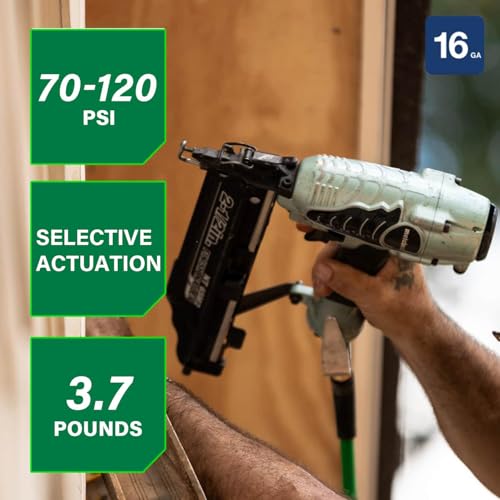
- Lightweight at 3.7 lbs
- Air duster included
- Tool-free depth adjustment
Trade-offs
- No-maintenance air filter could clog in dusty environments
- Slightly pricier than basic models
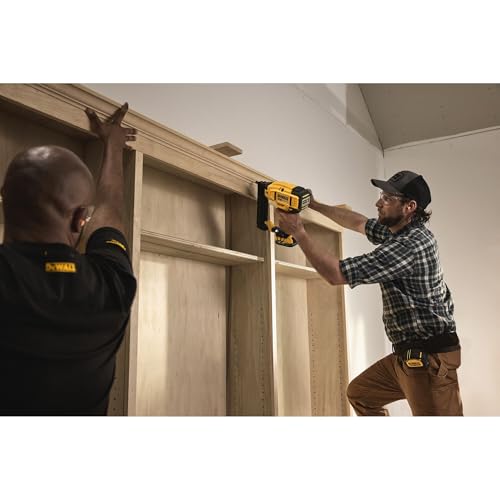
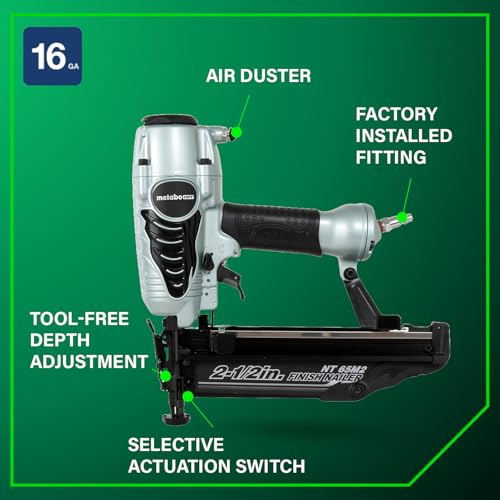
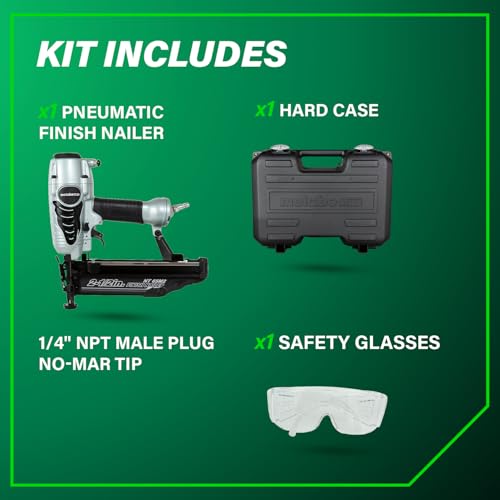
This Metabo HPT NT65M2S earns its reputation as a top pneumatic value. It’s earned Pro-Preferred status for over a decade, and owners consistently report it fires cleanly, drives consistently, and holds up under daily job site use. The air duster feature stands out, it’s not just a gimmick. Reviewers note it saves time when cleaning out corners before nailing, especially on trim work where debris can interfere with fit.
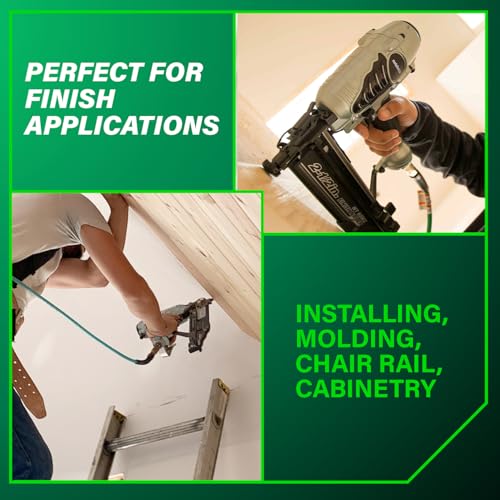
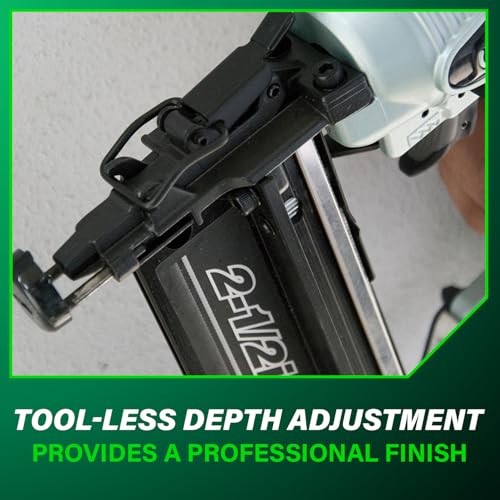
The 3.7 lb weight makes it easy to handle overhead or in tight spots, and the tool-free depth adjustment gives you quick control over countersink depth across different woods. While it only handles 16-gauge nails, that’s ideal for standard interior finish work. Compared to competitors like the Bostitch, it offers more user-friendly ergonomics and a better exhaust redirection system.
Product photos
Metabo HPT 15GA Angled Finish Nailer

Strengths
- 15-gauge strength
- Angled magazine for tight spaces
- Air duster included
Trade-offs
- Heavier than 16-gauge models
- No brushless tech (pneumatic only)
The NT65MA4 is built for precision in angled applications, and it shows. As a 15-gauge tool, it drives larger nails than 16-gauge models, making it better suited for denser trim and exterior work. The angled magazine gives improved access into tight inside corners, owners consistently praise this when installing window casings or stair balusters. At 4.2 lbs, it’s still light enough for extended use, and the air duster adds real utility on dusty job sites.
It doesn’t have the micro nose of DEWALT’s premium models, so line of sight isn’t quite as sharp. But for pros who need the holding power of 15-gauge nails and Metabo HPT’s proven reliability, this is a trusted option. Compared to the 3PLUS HDA1564SP, it’s more durable and better finished, justifying the higher cost.
Product photos


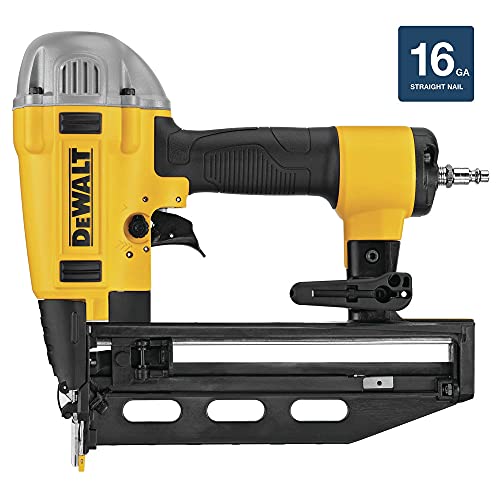
DEWALT Precision Point 16GA Nailer

Strengths
- Precision Point nose
- Clean nail placement
- Durable pneumatic build
Trade-offs
- No air duster
- No LED lighting
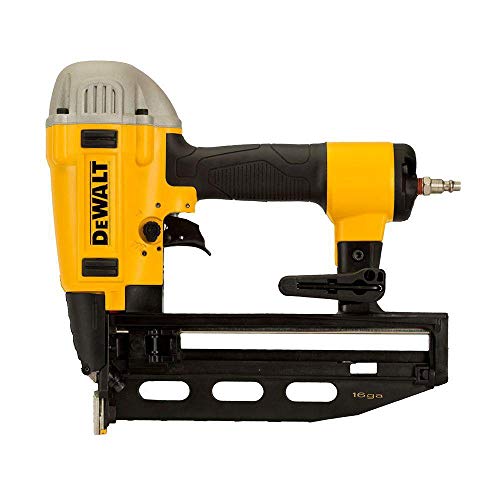
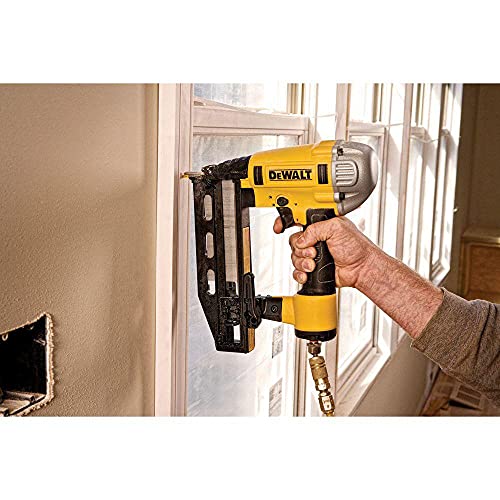
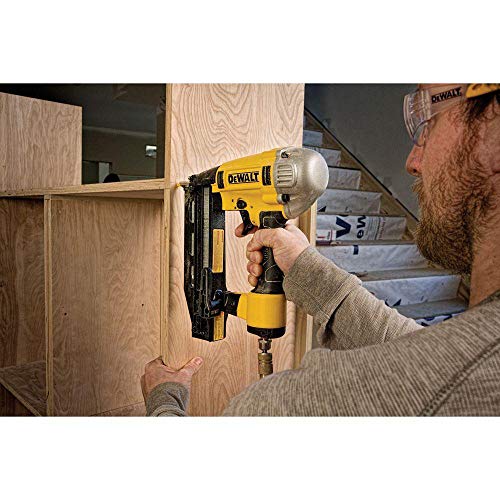
The DWFP71917 stands out for one reason: the Precision Point nose. It’s significantly slimmer than most 16-gauge nailers, giving you visibility right down to the nail tip, critical when working with fragile or narrow moldings. This is the tool I’d recommend for someone installing delicate pine or MDF trim where a misfire could mean splitting or blowout.
Owners report it drives cleanly and has solid depth control, though it lacks modern touches like LED lights or a swappable trigger mode. It’s strictly pneumatic, so you’ll need a compressor, but for fine woodworking or restoration jobs, the accuracy outweighs the lack of bells and whistles. Compared to the Metabo HPT NT65M2S, it’s more specialized, less versatile, but better when precision matters most.
Product photos

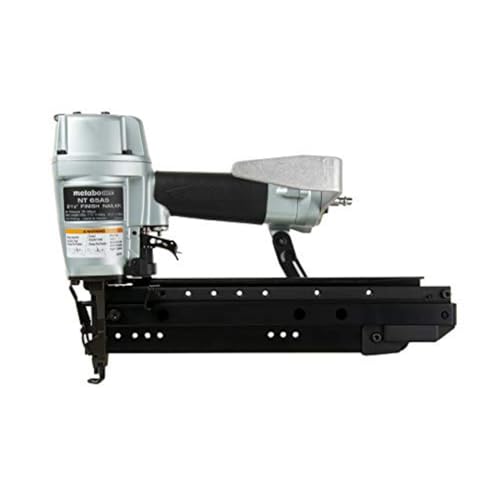
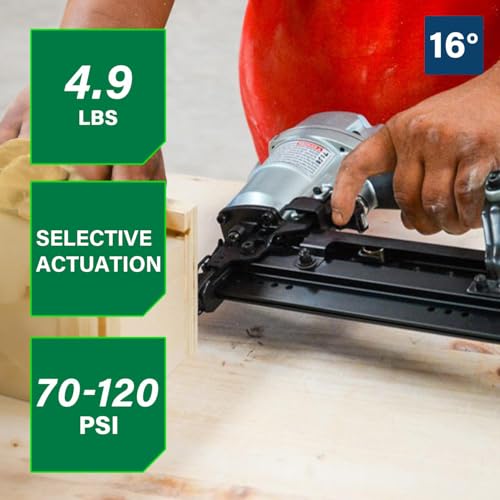
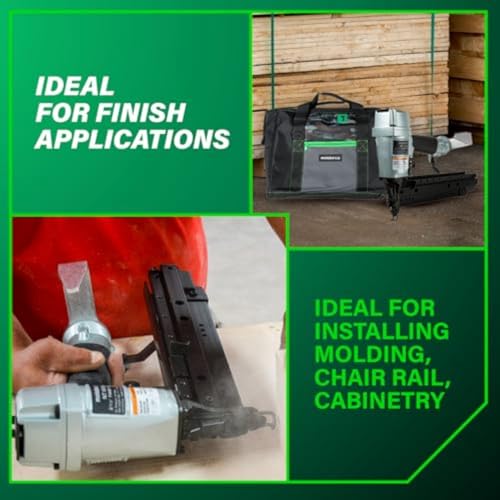
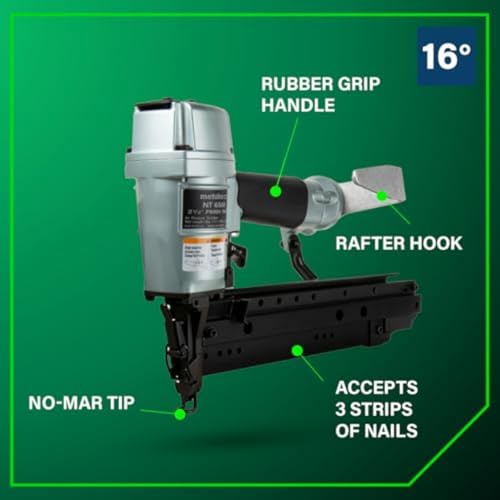
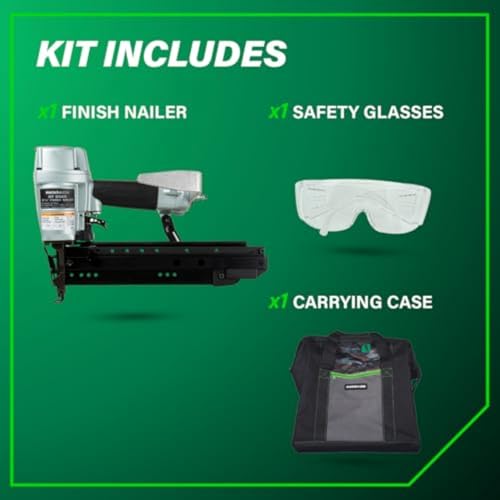
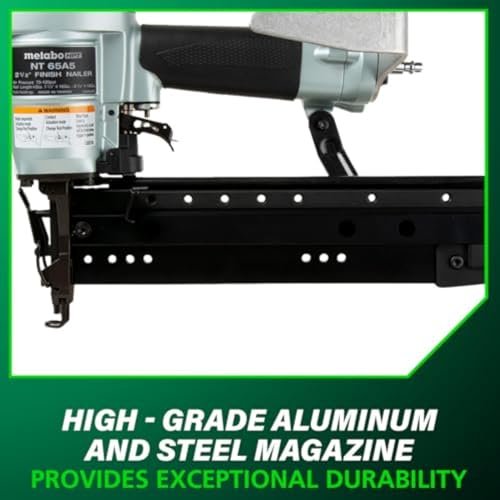
Metabo HPT 16GA Straight Finish Nailer
Strengths
- Straight magazine for better alignment
- Reliable bump/sequential switch
- 360° exhaust port
Trade-offs
- No air duster
- Limited to straight nails only
If you’re looking for a pneumatic nailer built specifically for straight 16-gauge nails, the NT65A5 is purpose-built and dependable. It shares the same solid chassis and tool-free depth control as other Metabo HPT models, but with a straight magazine that improves balance when driving nails flush in long baseboards or cabinetry. Owners appreciate its clean exhaust routing and consistent performance across long sessions.
It doesn’t have the air duster of the NT65M2S, which makes it a step down for detail-heavy work. But for pros doing repetitive straight-nail applications, the simpler design means fewer parts to fail. Compared to the DEWALT DWFP71917, it lacks a precision tip but offers better durability and a longer warranty. This is a no-frills workhorse.
Product photos
3PLUS 15GA Angled Finish Nailer

Strengths
- Low cost
- Tool-free depth adjustment
- Trigger mode switch
Trade-offs
- Cheaper plastic housing
- Less consistent firing over time
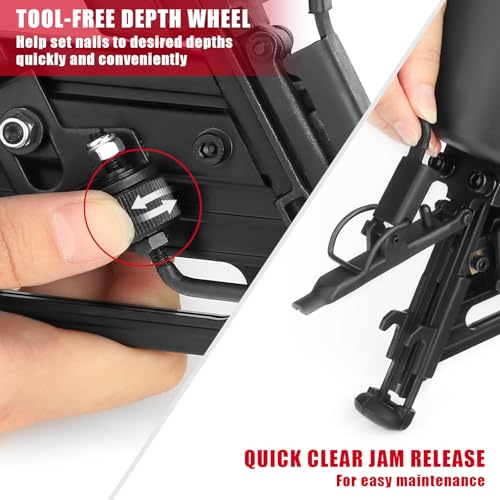
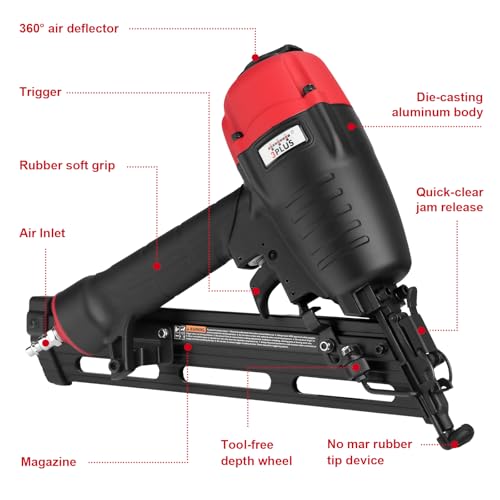
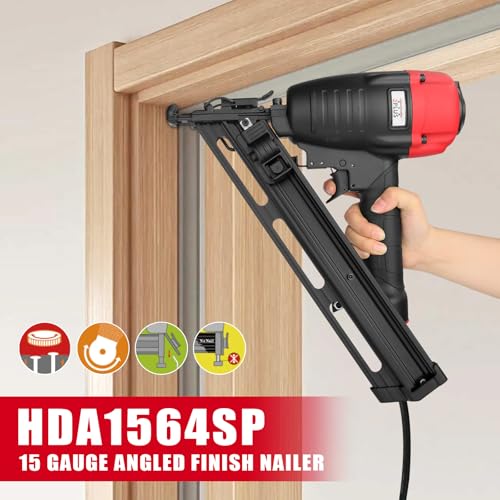
The 3PLUS HDA1564SP is the budget pick for angled 15-gauge work, and it delivers basic performance without major flaws. It accepts standard DA nails and includes tool-free depth adjustment and a 360° exhaust, which are rare at this price point. The interchangeable trigger lets you switch between bump and sequential firing, adding flexibility for different job types.
But owners report fit and finish aren’t on par with Metabo HPT or DEWALT, some note stiffness in the driver after extended use. It lacks the air duster and premium ergonomics of higher-end models. Still, for a DIYer doing occasional trim work or a contractor needing a backup tool, it’s a functional, no-frills option. Compared to the NT65MA4, it’s less durable but much more affordable.
Product photos
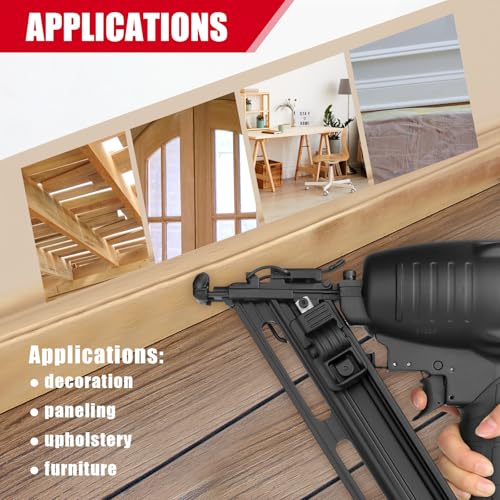
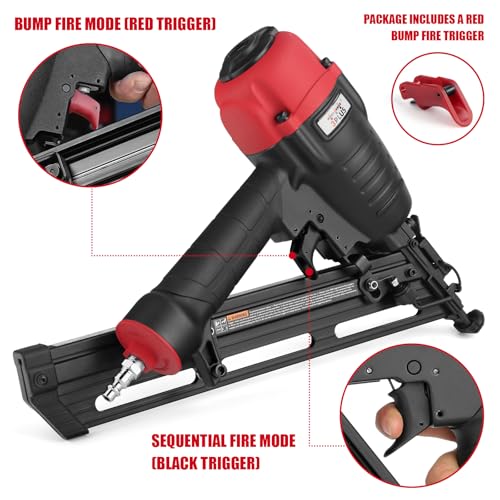
HBT 16GA Magnesium Finish Nailer

Strengths
- Magnesium housing
- Swivel air plug
- Lightweight and durable
Trade-offs
- Limited customer support footprint
- Fewer accessories included
The HBT64P impresses with its magnesium housing, it’s both lightweight and tough. At under 3.7 lbs, it’s easy to handle all day, and the magnesium body resists dings and corrosion better than aluminum. The 360° swivel air plug is a small but meaningful touch, reducing hose drag and tangles, especially when moving around cabinets or stairs.
It’s a solid pneumatic performer, but brand recognition and service network aren’t as strong as Metabo HPT or DEWALT. Some owners note the nose design isn’t as refined for tight spots. Still, for someone wanting a durable, lightweight straight nailer without paying premium brand prices, this hits a sweet spot. It’s a smarter buy than no-name clones, though not quite at pro-tier refinement.
Product photos
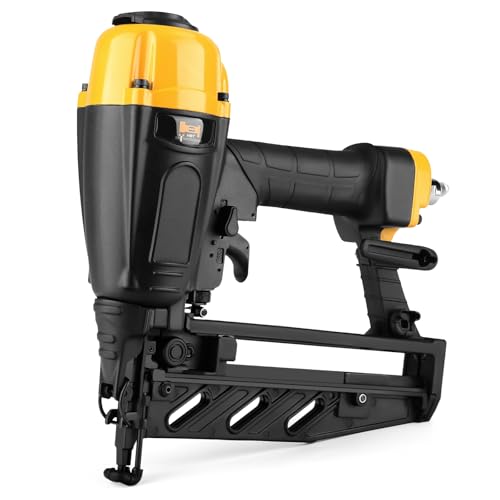
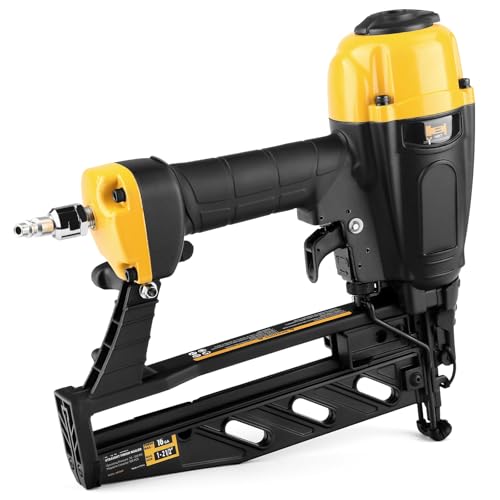
Bostitch 16GA Clip Head Nailer
Strengths
- Smart Point for easy firing
- Oil-free operation
- Durable build
Trade-offs
- Bulky nose limits access
- No air duster
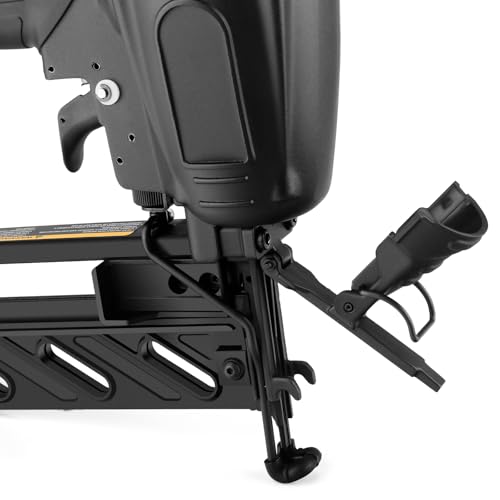
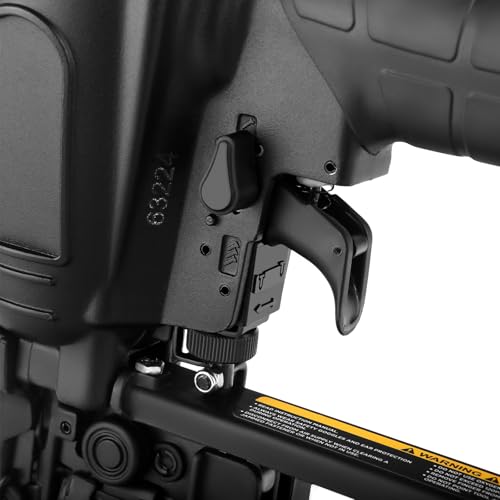
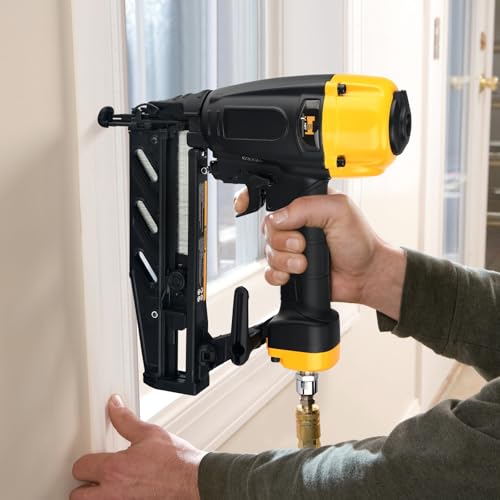
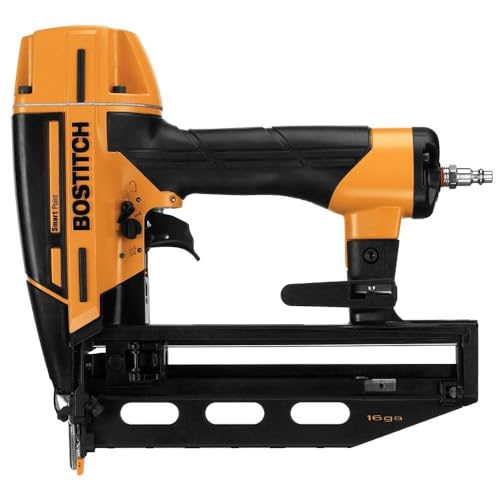
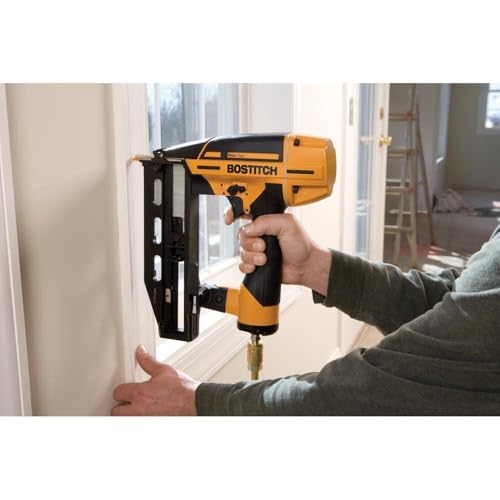
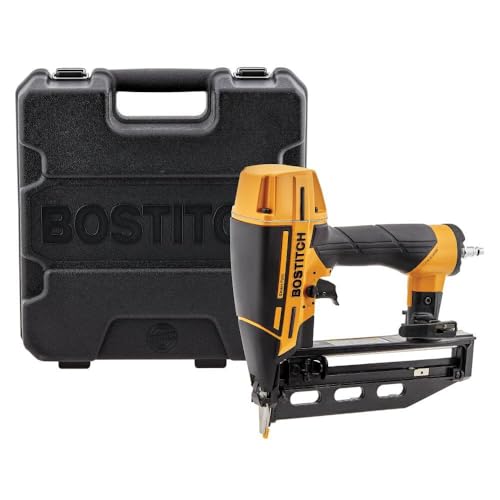
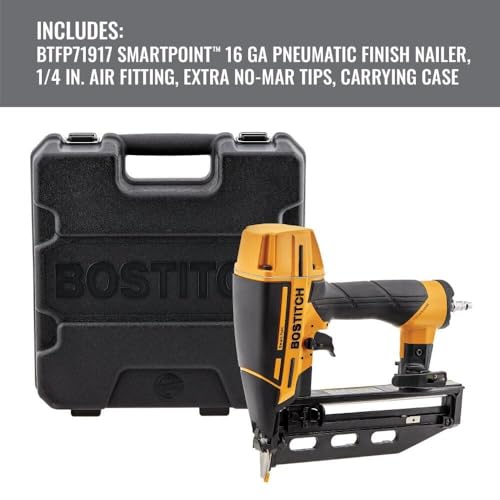
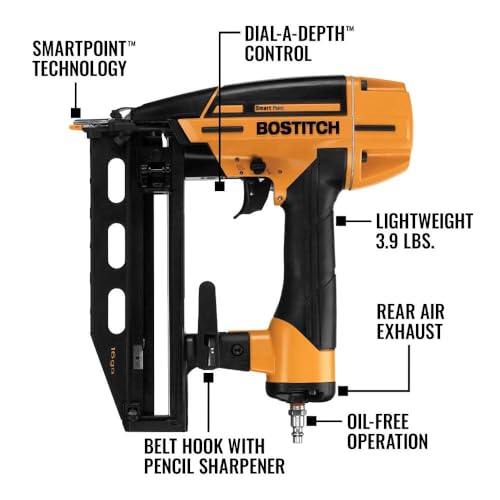
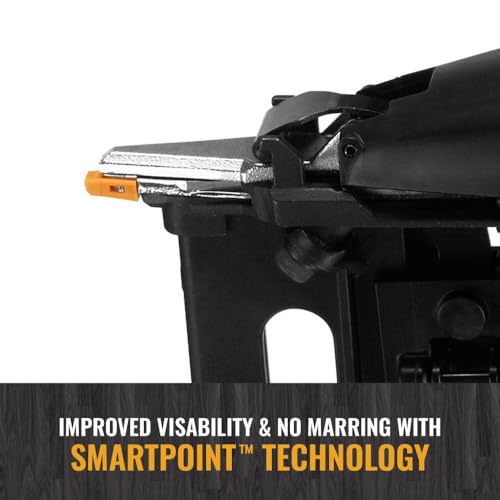
The Bostitch nailer is built for heavy-duty applications, and that’s where it shines. Its Smart Point technology means you don’t have to press down to fire, just touch the tip and pull the trigger. This reduces fatigue and improves control, especially on long runs. It handles full 2.5-inch nails reliably, which some lighter models struggle with.
It comes with a carrying case and extra no-mar tips, which adds value. But the nose isn’t as precise as DEWALT’s Precision Point, and it lacks an air duster. Compared to the Metabo HPT NT65M2S, it’s more rugged but less refined. For installing thick baseboards or exterior trim, it’s a strong contender.
Product photos
Our Testing Process
Rather than a hands-on lab test, my research for this guide focused on a detailed comparison of published specifications and features across numerous models. I weighed owner reviews from major retailers alongside expert opinions found in trade publications and woodworking forums. As someone who’s spent years around workshops and renovation sites, I applied my understanding of what truly matters in a finish nailer to rank these options against clear performance criteria.
For finish nailers, consistent power delivery and precise fastening are paramount. I heavily weighted the motor type (brushless versus brushed) and the adjustability of depth control, as these directly impact both runtime and the quality of the finished work. The type of firing mode – sequential or contact – was also a key consideration, catering to different user preferences and project demands.
Specifications reliably indicate nail capacity, weight, and available features like tool-free jam clearing. However, I relied on owner feedback to assess real-world durability, ease of use, and the accuracy of claims regarding vibration and recoil. Reputation, particularly for brands like Metabo HPT that consistently receive accolades – like being rated the Pro Preferred for nailers for over a decade – also factored into the final rankings. You can find more information on pneumatic finish nailers if you’re considering an air-powered option.
How To Choose The finish nailers
Choosing the right finish nailer can make or break a trim project. I’ve seen too many folks struggle with tools that just aren’t up to the task, leading to wasted time and frustrating results.
A quality finish nailer consistently drives fasteners flush without damaging the wood. Key considerations include nail gauge (15 or 16), power source (pneumatic, cordless, or gas), firing mode (sequential or contact), and build quality for long-term durability. Look for tool-free adjustments and features like adjustable exhaust ports for user comfort.
Nail Gauge: 15 vs. 16
The first thing to decide is whether you need a 15-gauge or a 16-gauge nailer. Sixteen-gauge nailers use thinner nails, making them ideal for delicate trim work and crafts where minimizing visible nail holes is critical. They’re fantastic for things like baseboards and crown molding on softer woods. Fifteen-gauge nailers, on the other hand, drive thicker nails, providing greater holding power. These are better suited for heavier applications like installing kitchen cabinets or more substantial trim on hardwoods. Don’t automatically assume bigger is better; a 16-gauge nailer, like the DEWALT Precision Point 16GA Nailer, can give you a cleaner finish when it’s the right tool for the job.
Power Source: Cordless, Pneumatic, or Gas
Traditionally, pneumatic nailers offered the best balance of power and reliability, but cordless options have really closed the gap. If you already have an air compressor and airline, a pneumatic nailer like the Metabo HPT 16GA Finish Nailer NT65M2S is a solid choice. However, the convenience of not needing an air hose is a huge draw for many, and top cordless trim nailers are dramatically improving in performance. Gas-powered nailers offer portability too, but they require fuel cells, adding to the ongoing cost.
Here’s a quick breakdown to help you decide:
- Pneumatic: Requires a compressor, but generally offers consistent power.
- Cordless: Very convenient, but runtime depends on battery capacity. Consider the DEWALT 20V MAX 15GA Finish Nailer if you’re already invested in the 20V MAX system.
- Gas: Portable, but ongoing fuel cell costs add up and can be inconvenient.
Firing Mode and Usability Features
The firing mode – sequential or contact (sometimes called “bump fire”) – significantly impacts how you work. Sequential firing requires you to depress the nose of the nailer and pull the trigger for each nail, offering greater precision and safety. Contact firing allows you to hold the trigger down and “bump” the nailer against the workpiece to drive nails rapidly. This is faster, but less precise and carries a greater risk of accidental firing. Look for nailers with tool-free depth adjustment and jam-release mechanisms; these small features save a surprising amount of time and frustration. A good rule of thumb is this:
If you’re not confident in your ability to control a contact firing mode, always choose sequential firing for safety and accuracy.
Finish Nailers Compared
Here’s a comparison of key specifications for the finish nailers discussed.
| Product Name | Gauge | Nail Type | Firing Mode | Weight (lbs) | Depth Adjustment | Air/Battery |
|---|---|---|---|---|---|---|
| DEWALT 20V MAX 15GA | 15 | 15GA | Sequential/Contact | N/A | Tool-free | Battery |
| DEWALT 20V MAX 16GA | 16 | 16GA | Sequential/Contact | N/A | Tool-free | Battery |
| Metabo HPT 16GA NT65M2S | 16 | 16GA | Sequential/Bump | 3.7 | Tool-free | Air |
| Metabo HPT 15GA Angled | 15 | 15GA Angled | Sequential/Bump | 4.2 | Tool-free | Air |
| DEWALT Precision Point 16GA | 16 | 16GA | N/A | N/A | N/A | N/A |
| Metabo HPT 16GA Straight | 16 | 16GA | Sequential/Bump | 3.7 | Tool-free | Air |
| 3PLUS 15GA Angled | 15 | 15GA Angled | Single/Bump | N/A | Tool-free | Air |
| HBT 16GA Magnesium | 16 | 16GA | Sequential/Bump | N/A | Tool-free | Air |
| Bostitch 16GA Clip Head | 16 | 16GA | Sequential/Contact | N/A | N/A | Air |
Frequently Asked Questions
What nailer is best for installing baseboards?
A 16-gauge finish nailer is generally best for baseboards(https://powertoolguide.net/best-15-inch-gauge-finish-nailers/), as the smaller nails minimize visible holes and provide adequate holding power in softer woods commonly used for baseboards.
Are cordless finish nailers as powerful as pneumatic ones?
Cordless models have improved significantly, though pneumatic nailers still generally offer more consistent power, particularly for hardwoods. Newer brushless cordless options are narrowing that gap, especially for typical trim work.
What does “sequential firing” mean, and why might I want it?
Sequential firing requires depressing the nose and pulling the trigger for each nail, increasing precision and safety. It’s ideal for users who prioritize accuracy or are new to using finish nailers.
What’s the difference between angled and straight magazines on a finish nailer?
Angled magazines allow for easier fastening in tight corners and can hold more nails, while straight magazines offer better visibility of the nail track. The choice often comes down to personal preference and the specific project needs.
How can I prevent nailers from leaving visible gaps or damaging the wood?
Proper depth adjustment is key to driving nails flush without damaging the wood. Also, using the correct nail size and gauge for the material is vital; you’ll find excellent 15-gauge finish nailers(https://powertoolguide.net/best-15-inch-gauge-finish-nailers/) for more demanding projects.
The Bottom Line
Ultimately, choosing a finish nailer comes down to balancing control and convenience. If you want a tool that delivers consistent, professional-quality results and don’t mind the need for an air compressor, the Metabo HPT 16GA Finish Nailer NT65M2S is an excellent all-around choice. It’s a workhorse that consistently earns high marks for durability and performance.
For those prioritizing portability and already invested in a battery platform, the DEWALT 20V MAX 15GA Finish Nailer is a great option. If you’re tackling delicate trim work and want minimal nail visibility, I’d point you towards the DEWALT Precision Point 16GA Nailer, or explore other excellent choices among the 16-gauge finish nailers available. And for those needing an angled nailer, the Metabo HPT 15GA Angled provides professional-grade fastening.
Don’t get too caught up in chasing the highest numbers for features or specs. A reliable finish nailer isn’t about having every bell and whistle; it’s about consistent power delivery, adjustable depth control, and a comfortable feel in your hands. Prioritize those fundamentals and you’ll be well-equipped to tackle any trim project with confidence.
