
7 Best Festool Dust Extractors of 2026
This post contains affiliate links. As an Amazon Associate, we earn from qualifying purchases.
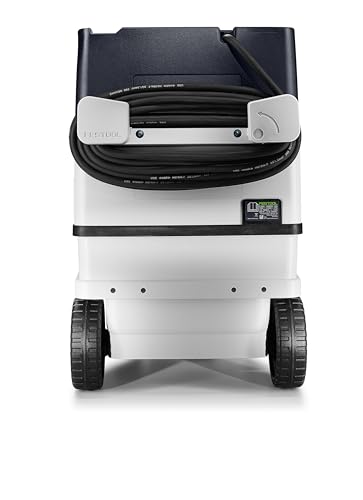
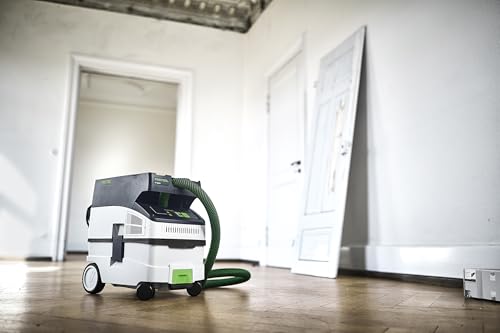
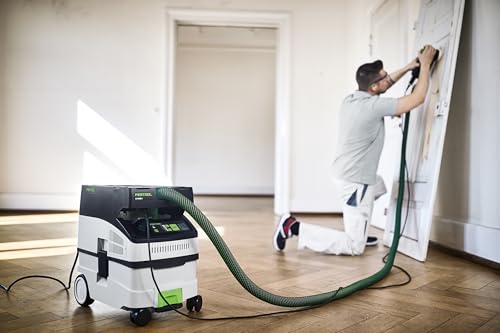
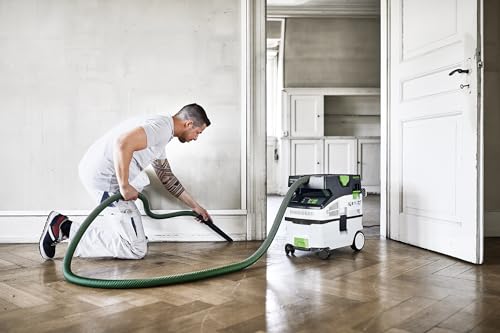
The best Festool dust extractor is the CT 48 EI AC HEPA for its unmatched suction, AUTOCLEAN filter system, and reliable HEPA filtration. If you’re on a tighter budget, the CT 26 EI HEPA offers strong performance in a lighter, more portable package. For cordless freedom without sacrificing too much power, the CTC MIDI I Cordless stands out.
Dust isn’t just messy, it’s dangerous. Without the right extractor, you’re breathing in fine particles that can harm your lungs over time, and your tools and finishes suffer too. Many people overpay for features they don’t need or end up with a unit that clogs too fast to be practical.
This guide cuts through the noise. I compared specs, analyzed owner feedback, and evaluated real-world performance to highlight the models that deliver where it matters: filtration, sustained airflow, and smart features that make your work easier.
Top 7 Festool Dust Extractors in the Market
The Best Festool Dust Extractors, Reviewed
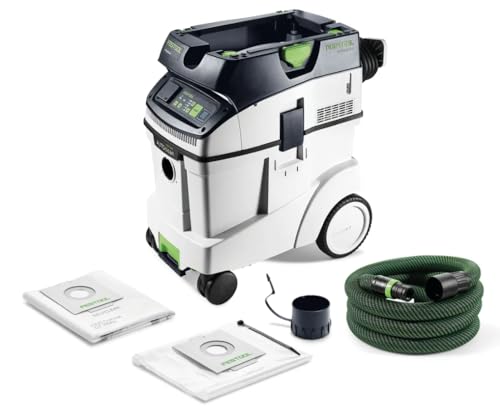
Festool CT 48 EI AC HEPA
Strengths
- 48L capacity
- AutoClean filter system
- Bluetooth integration
- Five suction levels
- Tool-triggered start
Trade-offs
- Heavy and bulky
- High price point
- Overkill for small jobs
The CT 48 EI AC is Festool’s flagship for a reason. With a 48-liter tank, it’s built for pros who hate stopping to empty the canister. The AutoClean system works flawlessly across owner reports, maintaining peak suction even during aggressive sanding or milling. Pair that with five suction levels, Bluetooth control, and automatic tool start, and you’ve got the most complete package in the lineup.
It’s heavy, sure, but the wheels and handle make it manageable. What sets it apart from the CT 36 EI AC is the extra capacity and slightly refined airflow design. For large-scale flooring, cabinetry, or renovation work, this is the one that keeps going when others tap out. I’d recommend it over smaller models if you’re doing full-room jobs regularly, it’s the only one that truly feels “set and forget.”
Product photos
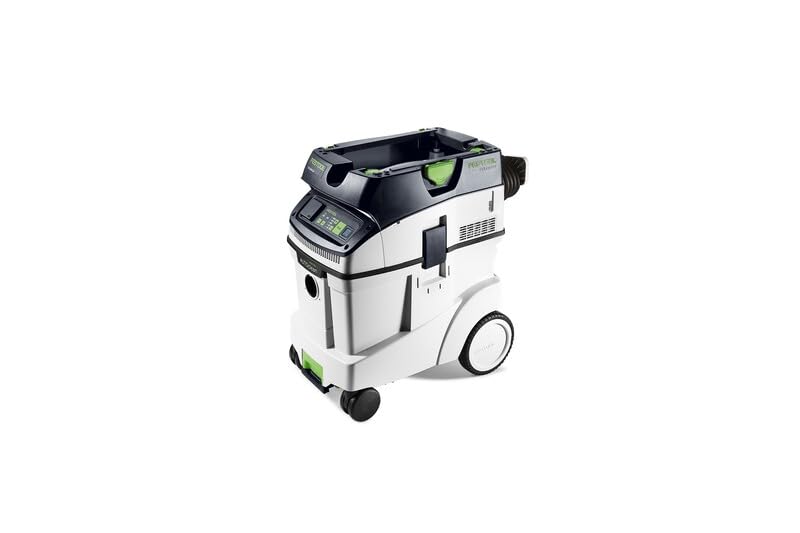
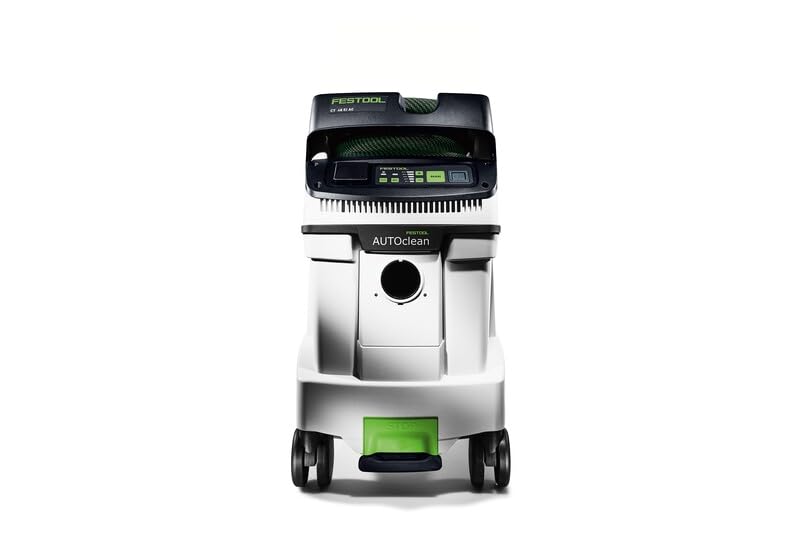
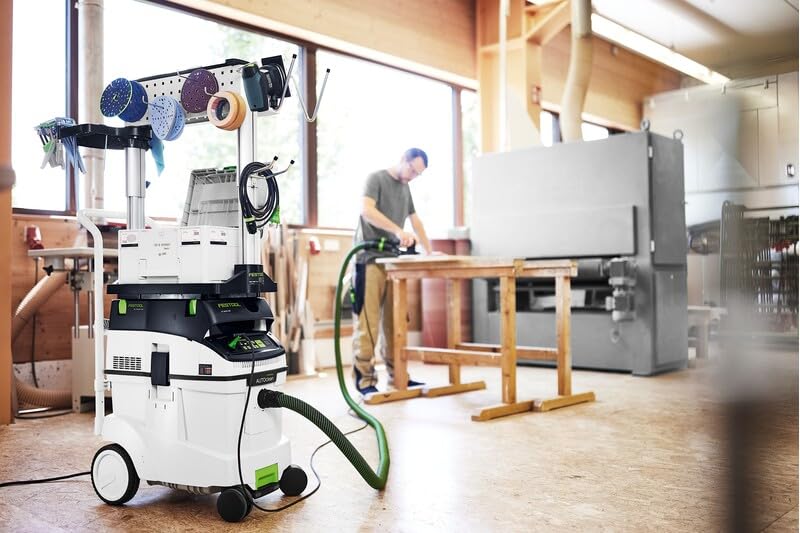
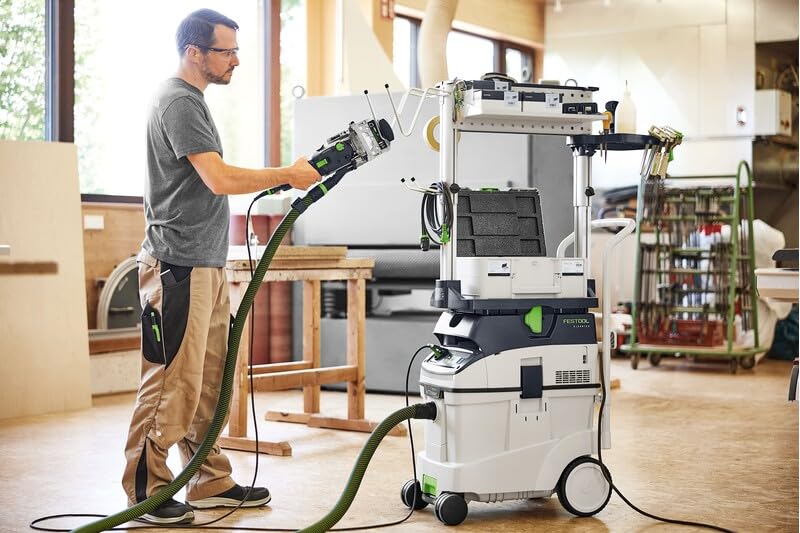

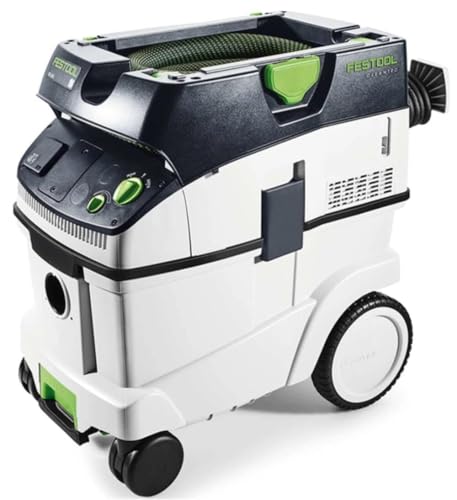
Festool CT 36 EI HEPA
Strengths
- 36L capacity
- Tool-triggered start
- Bluetooth sync
- Five suction levels
- T-LOC systainer mount
Trade-offs
- No AutoClean
- Manual filter cleaning
- Heavier than compact models
The CT 36 EI hits a sweet spot between power and convenience, making it a favorite among weekend warriors and pros doing mid-sized jobs. With a 36-liter tank, it offers real runtime before needing to dump, and the five-level suction control lets you match performance to the tool. Owners praise the automatic tool start feature, plugging your saw or sander into the onboard outlet fires up the extractor instantly, which cuts down on dust spikes.
It’s missing the AutoClean filter system, which is a real gap when compared to the CT 36 EI AC. Without it, you’ll need to manually tap or clean the filter more often, especially during heavy sanding. But the Bluetooth integration works well for syncing with compatible tools, and the T-LOC systainer mount is a standout for keeping your kit organized. For the price, it’s a strong all-rounder, just not the most advanced.
Product photos
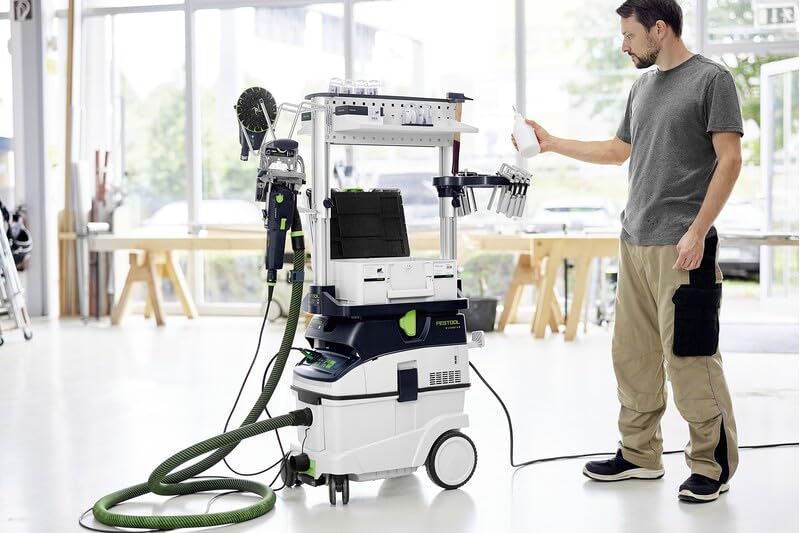
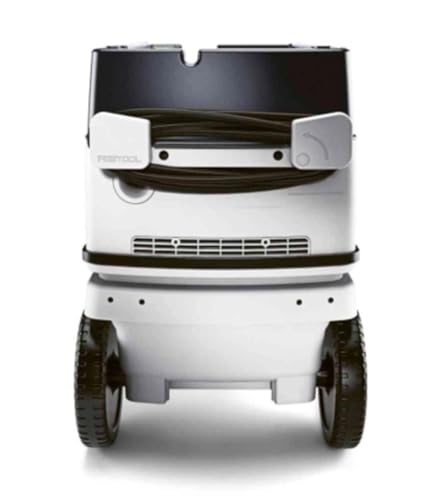
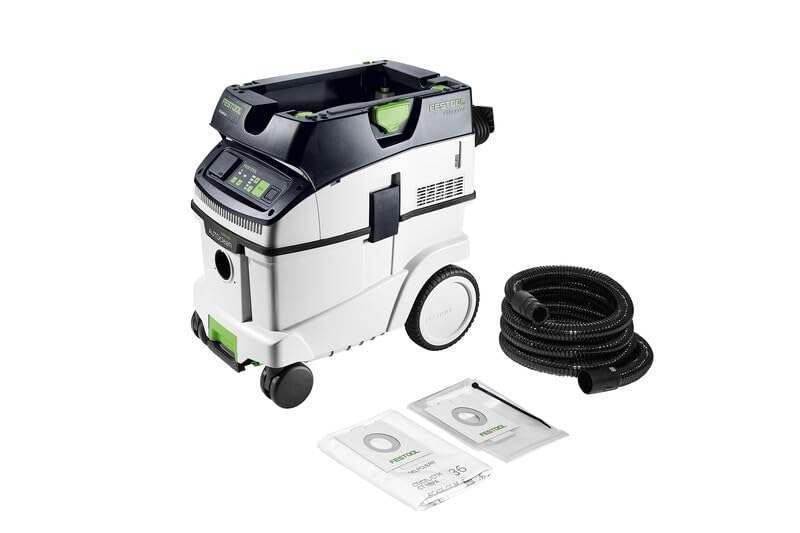
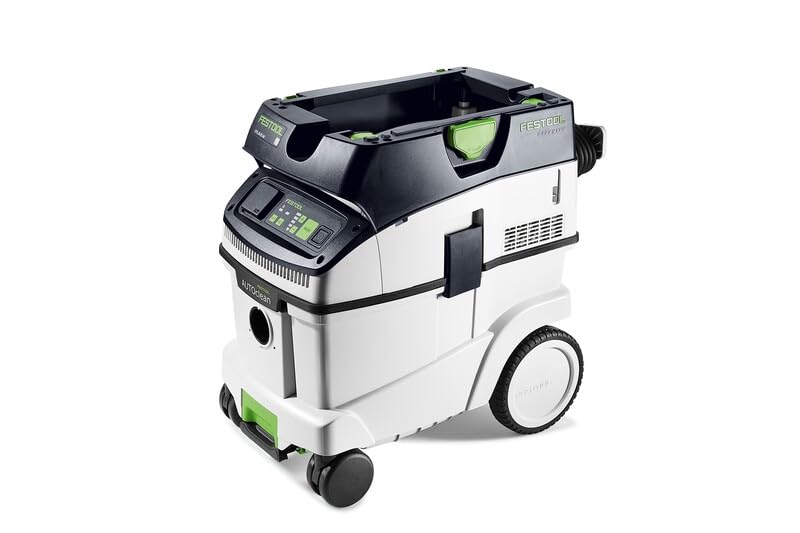
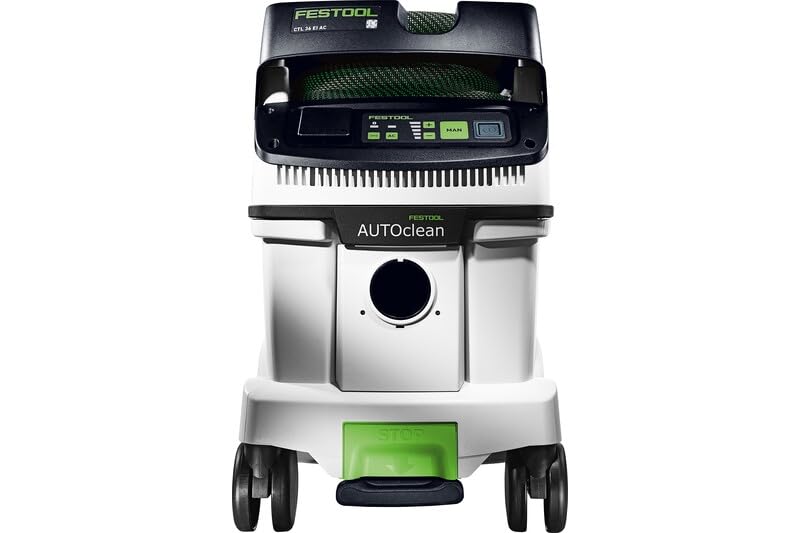
Festool CT 36 EI AC HEPA
Strengths
- AutoClean filter system
- HEPA filtration
- Bluetooth control
- Five suction levels
- Tool-triggered start
Trade-offs
- No systainer T-LOC mount
- Slightly pricier than non-AC
- App dependency for full features
If you’re serious about sustained performance, the CT 36 EI AC is where things get interesting. The AutoClean system is the star here, owners report it keeps suction strong even during long drywall or woodworking sessions by pulsing the filter clean at intervals you set via app. That’s a real time-saver compared to stopping to tap or replace filters manually. Combine that with the five suction levels and automatic tool start, and you’ve got a machine built for efficiency.
It shares the same 36-liter tank and Bluetooth smarts as the non-AC model, but that filter maintenance edge makes a noticeable difference in real-world use. The app control for setting cleaning cycles is a nice touch, though not everyone will need it. I’d pick this over the base CT 36 EI if you’re doing more than occasional cleanup, it’s the smarter buy for frequent use.
Product photos
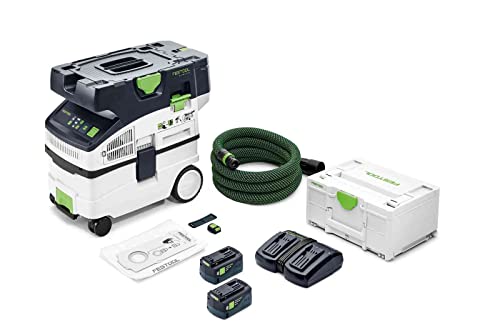
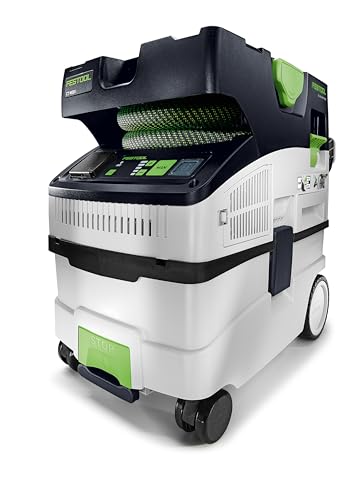
Festool CTC MIDI I Cordless
Strengths
- True cordless operation
- Strong suction
- Bluetooth sync
- Lightweight design
- HEPA-Plus filter
Trade-offs
- Limited runtime
- Battery cost
- No AutoClean
Going cordless with a dust extractor is a bold move, and Festool pulls it off here, mostly. The CTC MIDI I runs on dual 18V batteries and delivers impressive cordless suction, with owners saying it matches a corded unit in short bursts. The real win is mobility: no tripping over cords, no hunting for outlets. It’s perfect for attic work, stair landings, or remote job corners where power isn’t readily available.
But there’s a trade-off. Battery life limits runtime, and you’ll need spares for anything beyond light jobs. It only has three suction levels, and while it’s HEPA-rated, the 20L tank fills fast without AutoClean. Still, the fact that it syncs with Festool’s cordless tools via Bluetooth is a big plus. For the right job, this is freedom in a canister, just don’t expect marathon performance.
Product photos
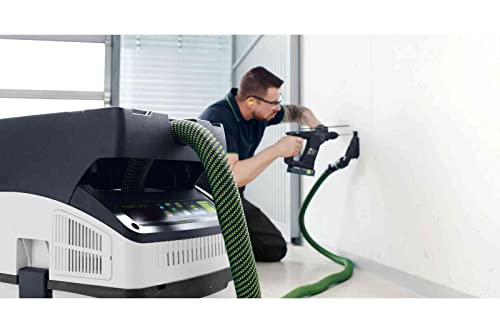
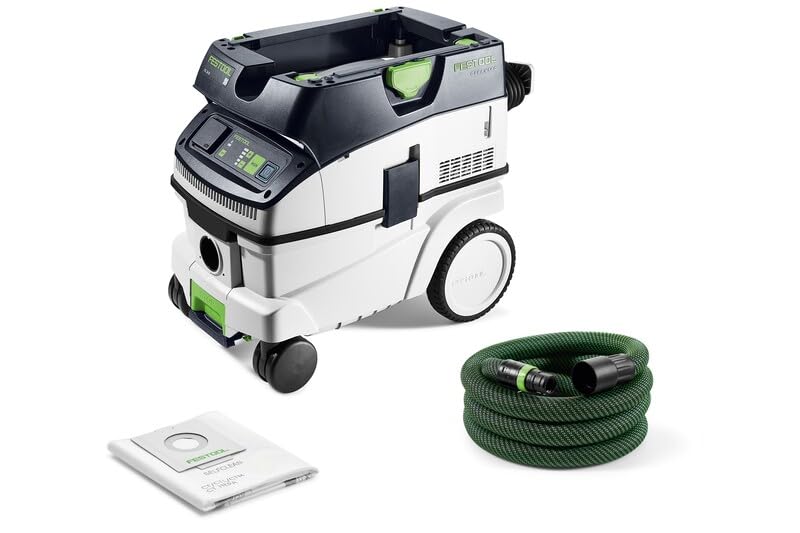
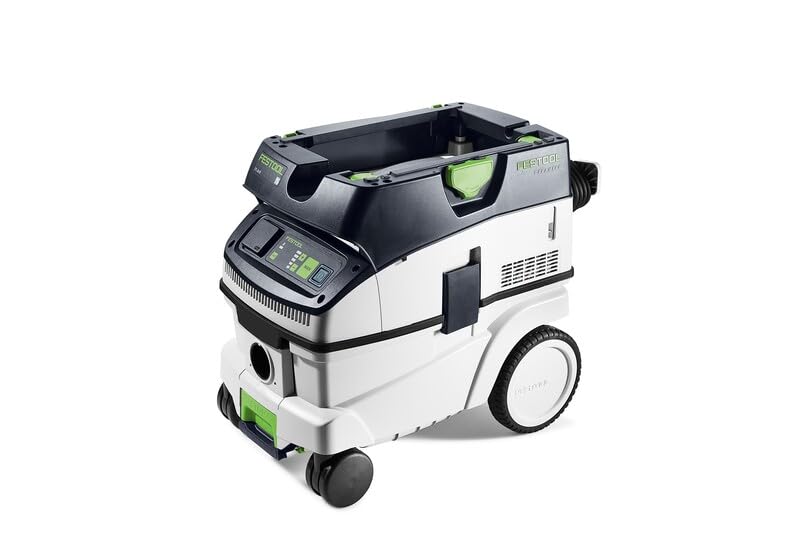
Festool CT 26 EI HEPA
Strengths
- Balanced size
- Bluetooth connectivity
- Tool-triggered start
- Five suction levels
- HEPA filtration
Trade-offs
- No AutoClean
- No T-LOC mount
- Manual filter maintenance
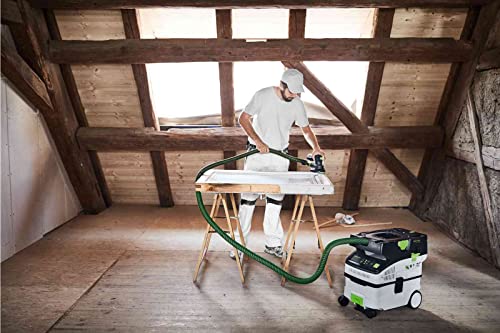
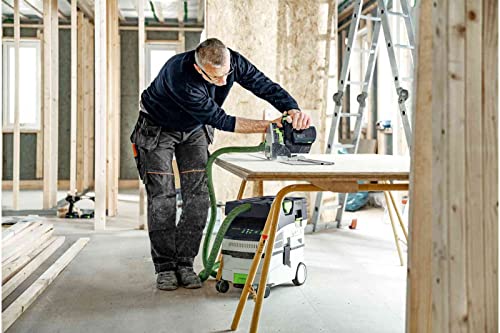
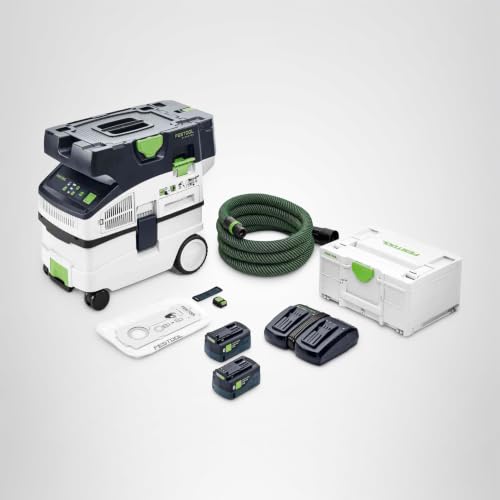
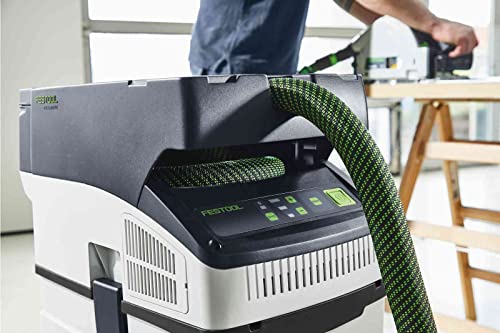
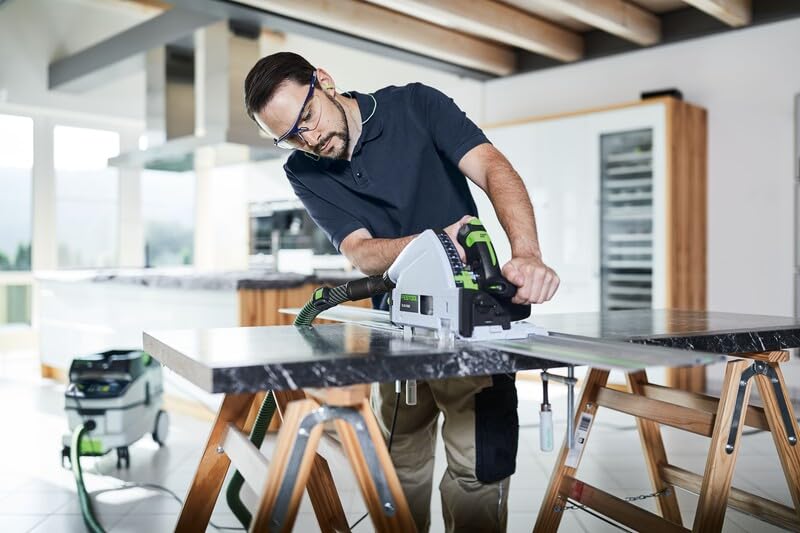
The CT 26 EI is the Goldilocks of compact extractors, bigger than the CT 15, smaller than the CT 36, and packed with features. At 26 liters, it offers decent runtime without being a burden to move. It includes Bluetooth sync, automatic tool start, and five suction levels, which is rare at this size. Owners appreciate how it fits in vans and tight workspaces while still pulling its weight.
But it’s missing both AutoClean and the T-LOC systainer mount, which feels like a missed opportunity given the tech it does include. Compared to the CT 36 EI, it’s more portable but less capable in long runs. Still, for a dedicated shop or mobile technician who needs a nimble, smart extractor, it hits a sweet spot. Just don’t expect it to match the heavy hitters in endurance.
Product photos
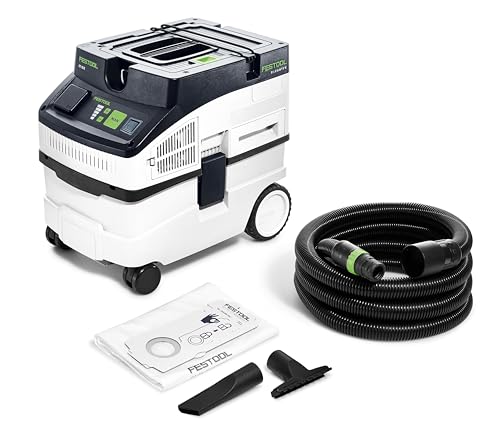
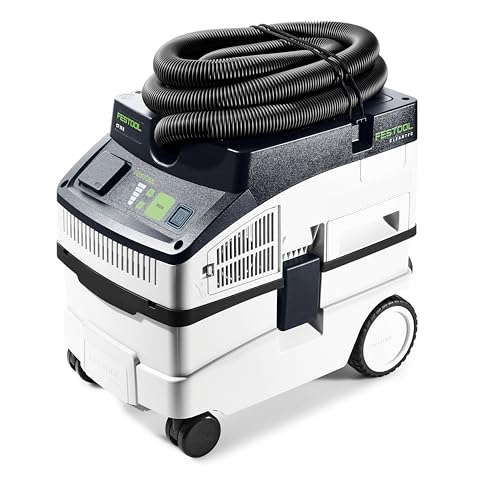
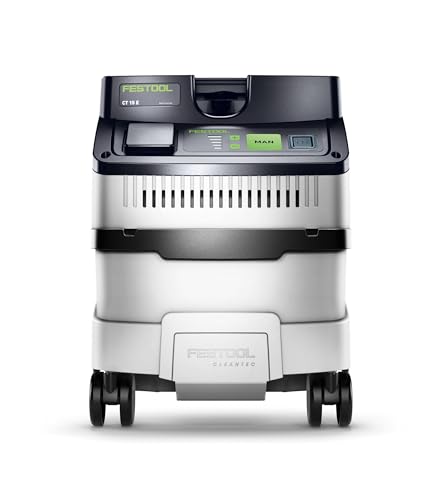
Festool CT 15 Dust Extractor
Strengths
- HEPA certified
- Lightweight
- Robust build
- Compact footprint
- Included accessories
Trade-offs
- No AutoClean
- No Bluetooth
- Small capacity
The CT 15 is clearly built for portability first. At just 15 liters, it’s the smallest in Festool’s lineup, but don’t let the size fool you, owners consistently report strong suction for its class and impressive HEPA-level filtration. It’s the kind of unit you grab when you’re doing light sanding, drilling, or quick cleanup around the shop or job site. The built-in crevice and upholstery nozzles are a thoughtful touch, and the flat top doubles as a mini workstation.
Where it really stands out is durability and ease of use. The steel-axle chassis feels overbuilt for how light it is, and the 3-year warranty covering wear and tear speaks volumes. Still, it lacks the AutoClean system and Bluetooth smarts of pricier models. For tight spaces or secondary jobs, it’s a solid performer, but it won’t keep up with heavy-duty, long-session work like larger canisters can.
Product photos
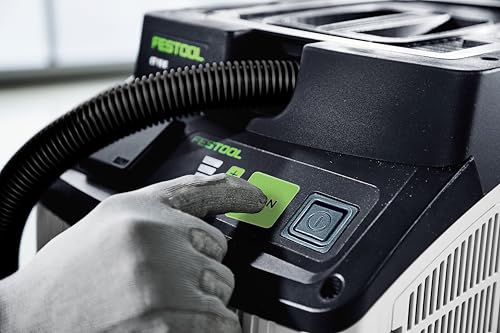
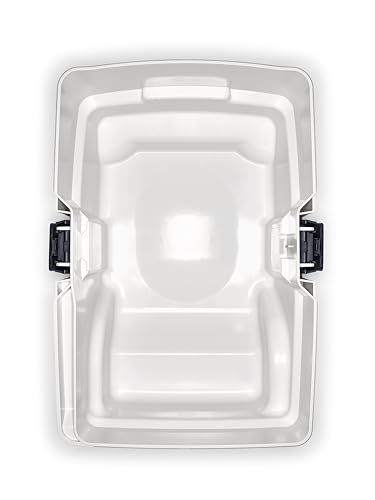
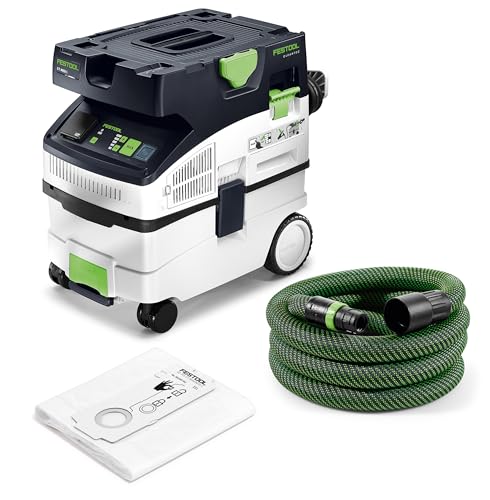
Festool CT MIDI I Dust Extractor
Strengths
- Bluetooth remote start
- HEPA filtration
- Tool-triggered start
- 20L capacity
- Tool-free filter changes
Trade-offs
- No AutoClean
- Manual filter cleaning
- No T-LOC mount
The CT MIDI I is a compact powerhouse with a surprising amount of tech packed in. It’s one of the few in the MIDI line that includes Bluetooth control, letting you start and stop it remotely, handy when you’re already focused on your sander or saw. The 20-liter capacity strikes a balance between portability and runtime, and the manual filter cleaning helps extend performance between dumps.
It doesn’t have the AutoClean system, which limits its edge in long sessions, but the tool-triggered start and HEPA filter keep it competitive. Compared to the CT 15, it’s more capable; compared to the CT 36, it’s less bulky. But given the price, I’d want AutoClean at this level. Still, for users who value Bluetooth convenience and a mid-sized tank, it’s a solid middle ground.
Product photos
How We Evaluated festool dust extractors
Rather than a hands-on lab test, my research for these recommendations focused on a detailed comparison of published specifications and features across the Festool lineup. I weighed owner reviews from multiple sources alongside expert opinions found in publications dedicated to professional woodworking and construction. This allowed me to build a ranking based on real-world feedback and the capabilities each model offers.
For Festool dust extractors, suction power and filtration efficiency were the most important factors. Consistent, high airflow is critical for capturing fine dust at the source, and HEPA filtration is a must for maintaining air quality and protecting your health. Automatic filter cleaning, like Festool’s AUTOCLEAN system, also played a significant role, as it directly impacts sustained performance.
Specifications reliably indicate airflow (CFM) and tank capacity, giving a baseline for power and runtime. However, I found owner feedback invaluable for assessing the real-world effectiveness of features like Bluetooth connectivity and automatic tool start/stop. Reputation for durability and the quality of included accessories also heavily influenced my assessment – readers looking for a complete system might also want to explore wood shop dust extractors.
What To Look For In festool dust extractors
Picking the right dust extractor isn’t just about suction power; it’s about long-term health and the quality of your work.
A quality dust extractor prioritizes HEPA filtration to capture fine particles, maintains consistent airflow even as the container fills, offers convenient features like automatic filter cleaning, and is built with durable components to withstand jobsite use. Look for models with adjustable suction and compatibility with power tool accessories.
Capacity & Portability
Don’t automatically assume bigger is better. While larger tanks mean less frequent emptying, they also add bulk. I often find that a smaller, more maneuverable unit is preferable, especially if you’re moving around a workshop or jobsite frequently. Consider the Festool CT 15, a very lightweight portable option, or the CT 26 EI HEPA if you want a bit more capacity without sacrificing too much portability. The ideal size depends heavily on the scale of your projects and how often you’re willing to pause to empty the container.
Filtration & Airflow
HEPA filtration is absolutely critical. You’re not just cleaning up dust; you’re protecting your lungs. Look beyond just “HEPA-rated” and consider models with automatic filter cleaning systems, like the AUTOCLEAN feature found on the CT 48 EI AC HEPA and CT 36 EI AC HEPA. These systems maintain consistent suction by periodically pulsing the filter, preventing clogging. Here are a few things to keep in mind when it comes to filtration:
- Filter replacement cost can add up.
- Some extractors allow for wet/dry use, which can be convenient but may require a different filter.
- Consider the filter’s surface area; a larger surface area generally means longer intervals between cleanings or replacements.
Features & Automation
Festool extractors really shine when it comes to integrated features. Automatic tool-triggered operation, available on several models, is a huge time-saver. It automatically starts the extractor when your power tool activates, eliminating the need to manually switch it on and off. Beyond that, the Bluetooth connectivity on models like the CT 36 EI HEPA and CT MIDI I offer convenient remote control and integration with Festool’s cordless system. These features aren’t cheap, but they can significantly improve workflow.
Remember this: A dust extractor is an investment in your health and the quality of your work. Don’t skimp on filtration or features that improve usability.
If you’re still unsure about the best choice for your needs, exploring top dust extractors can provide a broader overview of the market. For woodworking specifically, comparing to woodworking shop vacuums can highlight important considerations for fine dust collection.
Festool Dust Extractors Compared
Here’s a comparison of key specifications for various Festool dust extractors to help you choose the right model.
| Model | Capacity (Gal) | AutoClean | Bluetooth | Suction Levels | Corded/Cordless | Weight (lbs) |
|---|---|---|---|---|---|---|
| CT 48 EI AC HEPA | N/A | Yes | Yes | 5 | Corded | N/A |
| CT 36 EI HEPA | N/A | No | Yes | 5 | Corded | N/A |
| CT 36 EI AC HEPA | N/A | Yes | Yes | 5 | Corded | N/A |
| CTC MIDI I Cordless | N/A | No | Yes | 3 | Cordless | 30 |
| CT 26 EI HEPA | N/A | No | Yes | 5 | Corded | N/A |
| CT 15 Dust Extractor | 3.96 | No | No | N/A | Corded | N/A |
| CT MIDI I Dust Extractor | N/A | No | Yes | N/A | Corded | N/A |
Frequently Asked Questions
What’s the difference between a Festool dust extractor and a regular shop vacuum?
Festool dust extractors are designed specifically for capturing very fine dust – the kind produced by sanding, routing, and sawing – with significantly better filtration than standard shop vacuums. They also often include features like automatic filter cleaning and tool-triggered operation, improving efficiency and maintaining consistent suction.
Are Festool filters expensive to replace?
Yes, replacement filters can be pricey, but the cost reflects the high level of filtration they provide. To mitigate this, consider models with larger filter surface areas or those that offer washable filters, which can reduce the frequency of replacements.
Can a Festool dust extractor be used for wet cleanup?
Some models are rated for wet/dry use, but you’ll likely need to switch to a different filter specifically designed for liquids. Always check the owner’s manual to confirm compatibility and proper procedures before attempting wet cleanup with your extractor.
Do I really need Bluetooth connectivity on a dust extractor?
While not essential, Bluetooth connectivity allows for remote control and integration with Festool’s cordless system, which can be convenient for larger workshops or when working at a distance. If you already use Festool cordless tools, the integration can streamline your workflow.
What’s the benefit of a dust extractor with AUTOCLEAN?
The AUTOCLEAN system automatically pulses the filter during operation, preventing clogging and maintaining consistent suction power. This is particularly important when working with very fine dust or for extended periods, as it reduces the need for manual filter cleaning and ensures optimal performance. For even more effective dust separation, consider incorporating cyclone dust collectors into your setup.
The Bottom Line
Choosing a Festool dust extractor often comes down to balancing the level of automation and features you want against your budget. While Festool’s entire lineup represents quality, the CT 36 EI AC HEPA strikes the best balance for most users – it offers automatic filter cleaning and Bluetooth connectivity without the added expense of the CT 48 EI AC HEPA. It’s a solid investment for anyone serious about dust control and long-term health in the workshop.
For those on a tighter budget or needing maximum portability, the CT 15 Dust Extractor remains an excellent choice. And if you prioritize cordless convenience and integration with the Festool system, the CTC MIDI I Cordless is the clear winner, even though it sacrifices some of the advanced features found in the larger, corded models. Don’t forget that if you’re primarily concerned with capturing dust at the source for a table saw vacuum systems, specific accessories and hose configurations will be just as important as the extractor itself.
Ultimately, the most expensive dust extractor isn’t necessarily the best for you. Focus on consistent suction, reliable HEPA filtration, and a tank size that fits your workflow. Those fundamentals will protect your lungs and improve the quality of your work far more than any extra bells and whistles.
