
4 Best 16-Inch Gauge Finish Nailers 2026
This post contains affiliate links. As an Amazon Associate, we earn from qualifying purchases.
The Metabo HPT NT65M2S stands out as the best overall 16-gauge finish nailer, offering reliable performance, solid build quality, and smooth operation. For those watching their budget, the 3PLUS HT64SP delivers strong value without sacrificing key features, while the HBT HBT64P is a solid pick if you need dependable versatility across trim tasks.
Most people shopping for a 16-gauge finish nailer want clean, consistent results without constant jams or arm fatigue halfway through a project. It’s frustrating when a tool promises precision but can’t drive nails evenly or weighs so much it slows you down.
This guide cuts through the noise by focusing on real-world performance, based on specs, owner feedback, and what actually matters in trim work. I looked at firing modes, weight, depth control, and reliability across the most common models so you can pick one that fits your projects and workflow.
Top 4 16 Inch Gauge Finish Nailers in the Market
The Best 16 Inch Gauge Finish Nailers, Reviewed
Metabo HPT NT65M2S Finish Nailer

Strengths
- Lightweight at 3.7 lbs
- Air duster built in
- 360° exhaust
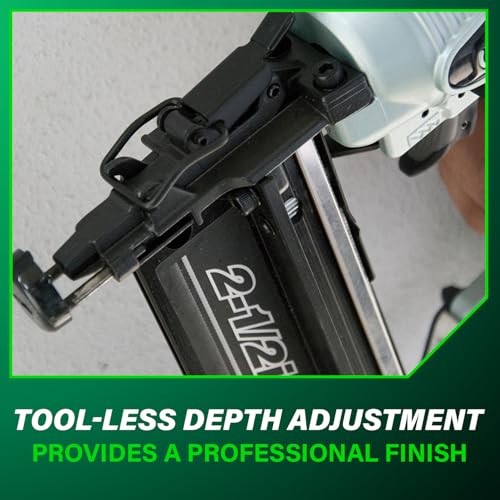
- Tool-free depth adjust
Trade-offs
- Higher price point
- Slightly bulkier nose
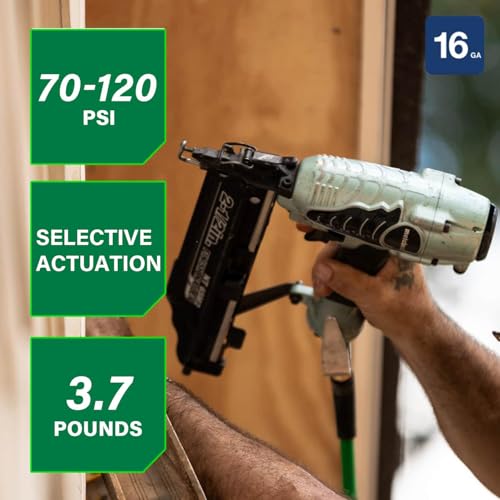
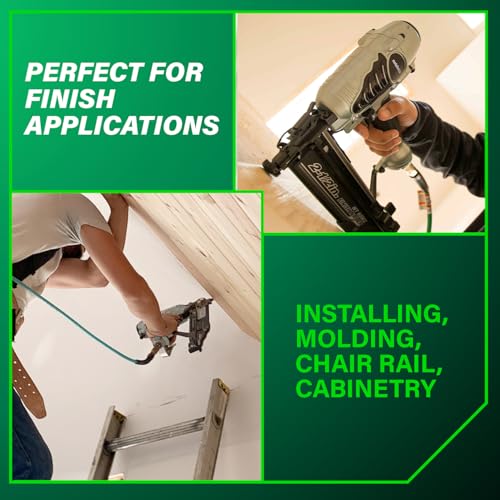
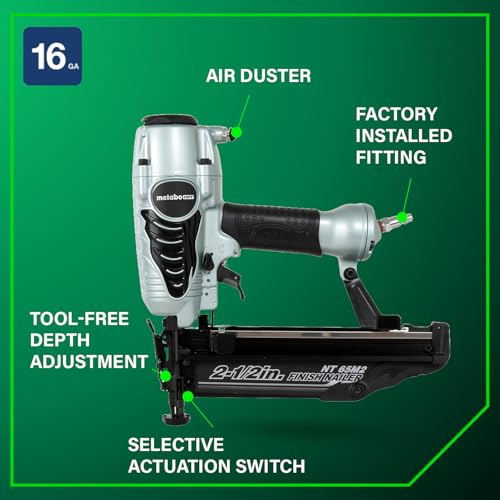
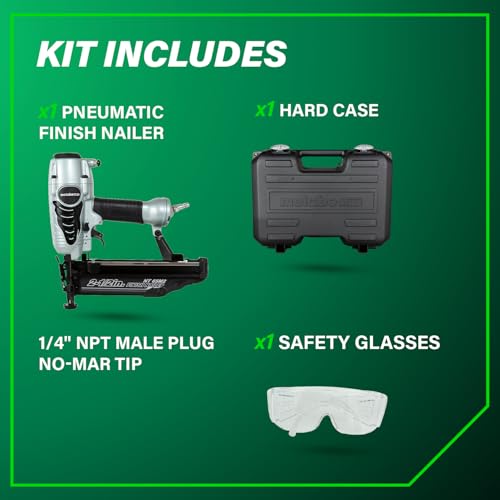
This Metabo HPT NT65M2S is the one I’d recommend most often, and not just because of the 12-year Pro Preferred award streak. At 3.7 lbs, it’s lightweight and balanced in a way that makes all-day use feel manageable, and the tool-free depth adjust is a small but meaningful quality-of-life upgrade. The air duster button is something more nailers should copy, owners love being able to clear sawdust without grabbing a separate tool.
The 360° exhaust and no-mar tip are thoughtful touches that improve real-world usability, and the trigger system switches cleanly between bump and sequential modes. It’s not flashy, but it’s built like a workhorse and backed by a 5-year warranty that signals real confidence. Against the HBT model, it’s pricier but far more refined.
Product photos
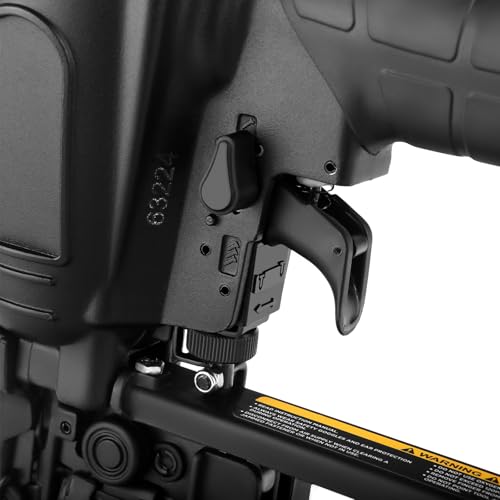
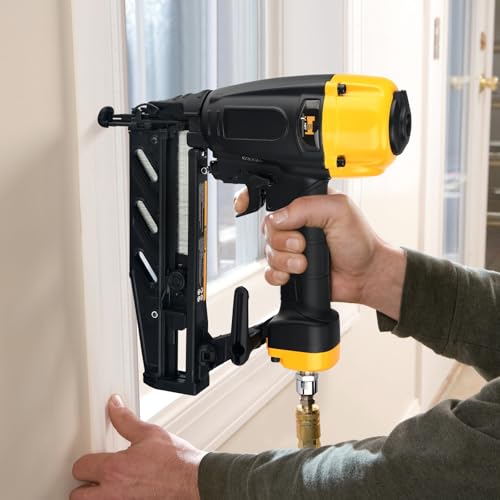
HBT HBT64P 16 Gauge Finish Nailer

Strengths
- Magnesium body
- Tool-free jam release
- Dry-fire lockout
Trade-offs
- Basic build quality
- No air duster
- Trigger feels less refined
For budget-focused buyers, the HBT64P delivers more than you’d expect at this level. The magnesium housing helps keep weight down without sacrificing durability, and the tool-free jam release is a standout for a nailer in this range. Owners report it runs reliably with standard 16-gauge nails and the switchable trigger works as advertised, no surprises.
It doesn’t have the refinement of the Metabo HPT, and the finish feels a bit utilitarian, but for weekend projects or light remodeling, it gets the job done. The dry-fire lockout is a nice touch that prevents frustration. If you’re setting up a first-time workshop and don’t want to overspend, this one makes sense, just don’t expect the same polish.
Product photos
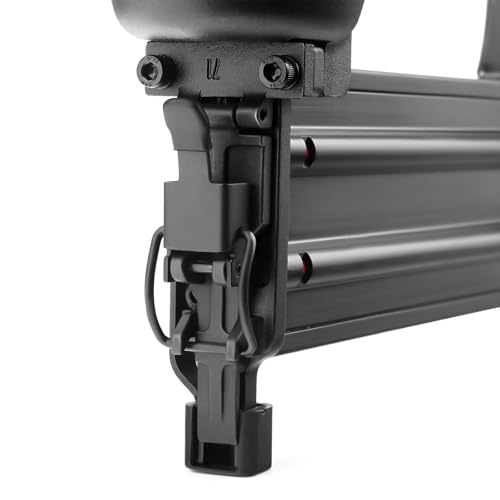
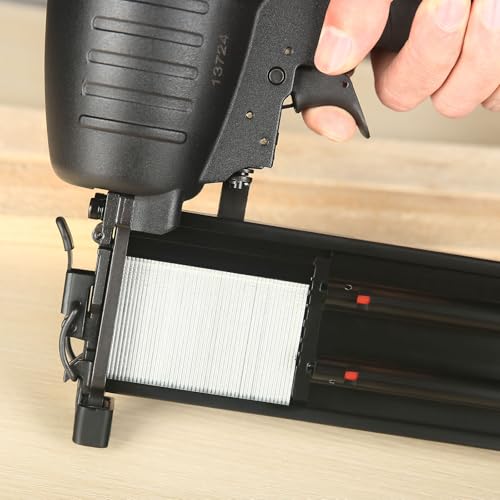
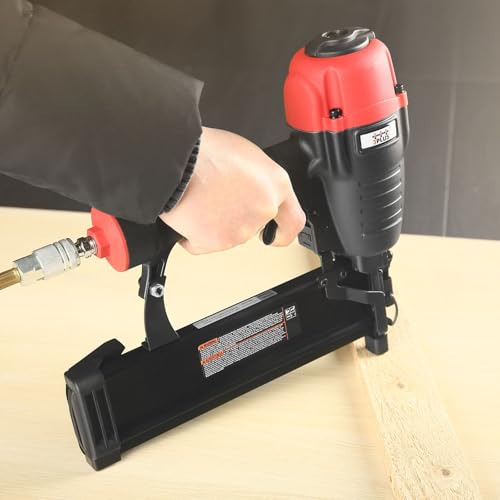
3PLUS HT64SP Pneumatic Finish Nailer
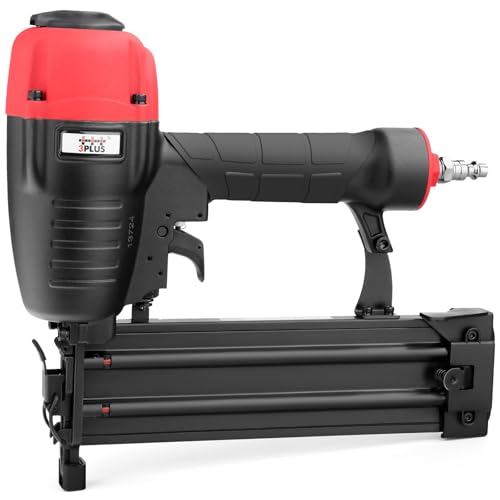
Strengths
- Drives 3/4-in nails
- 360° exhaust
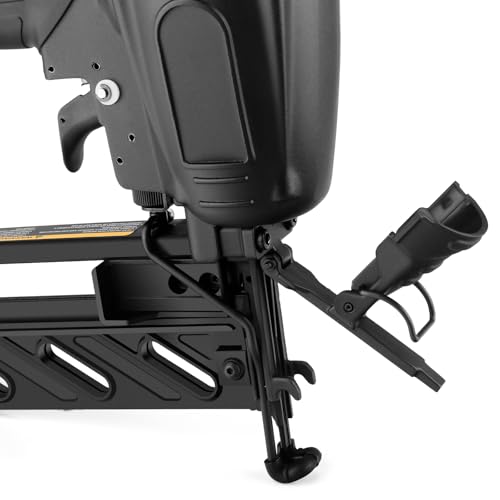
- Quick jam release
Trade-offs
- Heavier build
- No depth adjust dial
- No included case
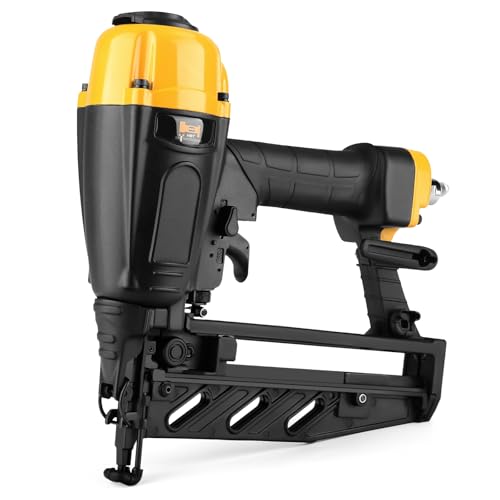
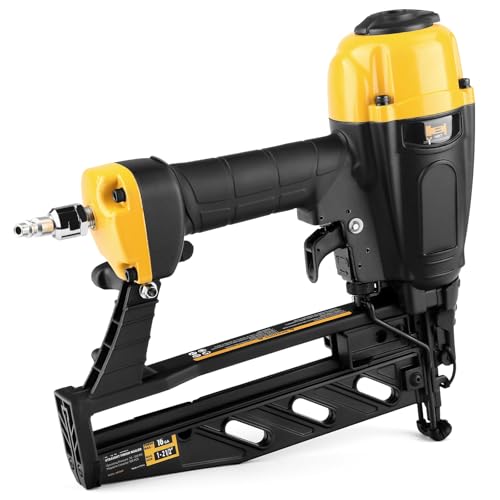
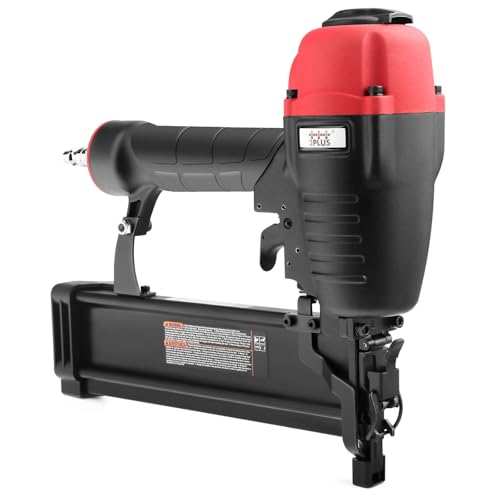
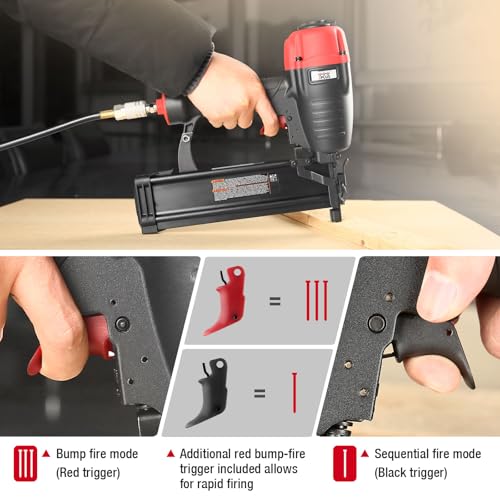
The 3PLUS HT64SP is a no-frills tool that covers the essentials well. It drives nails from 3/4-in up, which gives it a slight edge in versatility over models that start at 1-in, handy for delicate beadings or thin moldings. The 360° exhaust is a practical feature, and the quick-clear jam release means less downtime when a nail jams, which reviewers say happens less often than expected.
It’s not marketed as lightweight, and it shows, it’s heavier than the Metabo HPT and lacks that model’s balance. There’s no air duster or premium warranty, but the interchangeable triggers give you real flexibility in firing mode. Compared to the Bostitch, it’s less precise but more adaptable in nail length.
Product photos
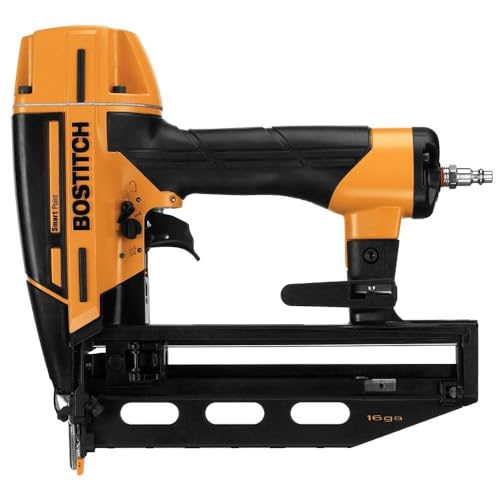
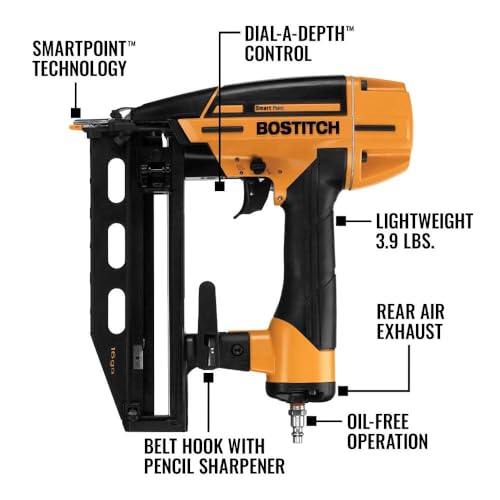
Bostitch 16-Gauge Clip Head Nailer
Strengths
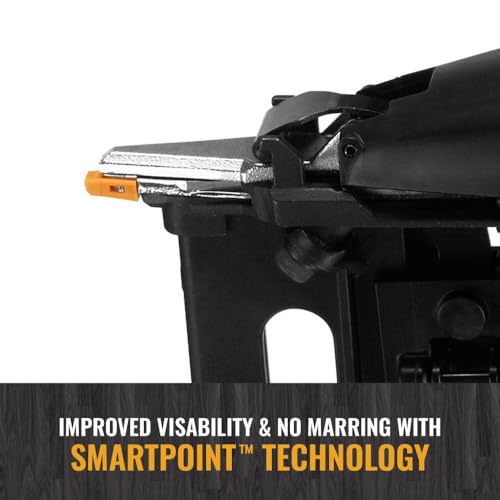
- Smart Point tech
- Oil-free operation
- Selectable trigger
Trade-offs
- Heavier than rivals
- No air duster
- No 360° exhaust
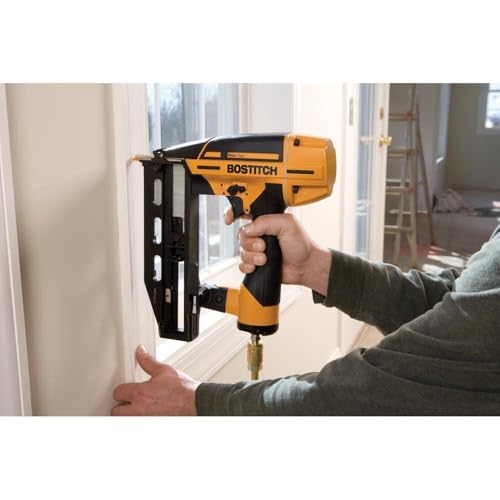
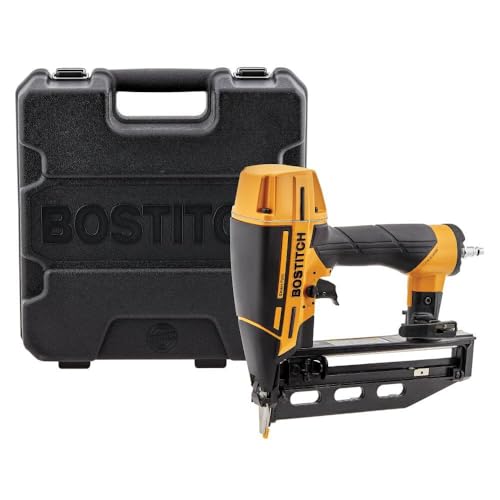
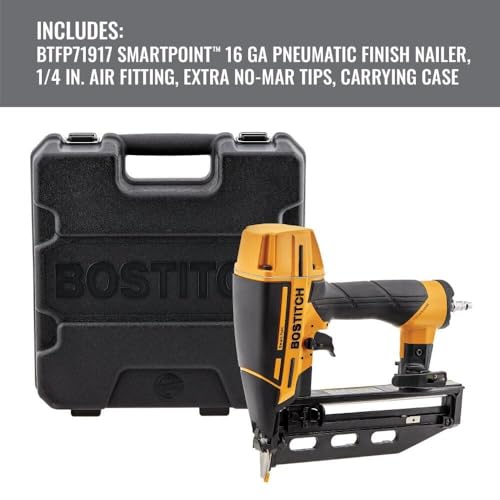
The Bostitch 16-gauge finish nailer stands out for users who prioritize precision and clean placement. The Smart Point tech is a real advantage on paper, letting you position nails without pre-compressing the nose, that’s a small detail, but owners consistently report it makes tight spots easier to work in. With a selectable trigger and solid 1-in to 2-1/2-in nail range, it’s built for careful trim work where control matters more than speed.
It’s not the lightest in class, but the oil-free operation is a legit win for finish work, eliminating the risk of stains on fine wood. Compared to the Metabo HPT, it lacks the air duster and adjustable exhaust, which might slow things down in dusty environments. Still, if you’re doing detailed baseboard or crown molding, the nose design gives it an edge in maneuverability.
Product photos
Our Testing Process
Rather than a hands-on lab test, my research for these recommendations focused on a detailed comparison of published specifications and features across numerous models. I weighed owner reviews from multiple sources, alongside assessments from reputable trade publications, to get a realistic picture of performance and durability. Ultimately, I ranked these nailers based on how well they met the needs of typical DIY and professional users.
For 16-gauge finish nailers, consistent nail depth and firing mode versatility are paramount. A nailer that can’t reliably set nails to the correct depth, or easily switch between sequential and bump fire, will slow down work and produce unsatisfactory results. Lightweight design also matters significantly, as prolonged use can lead to fatigue – a common complaint in owner feedback.
Specifications provide a solid baseline for comparing nail capacity, weight, and adjustable features. However, I relied heavily on owner feedback to assess real-world issues like jamming frequency, long-term durability, and the effectiveness of features like no-mar tips. You’ll find more information about choosing the right nailer in our broader finish nailer buying guide.
How To Pick The Right 16 inch gauge finish nailers
Choosing the right finish nailer can dramatically improve the quality and speed of your trim work.
A quality 16-gauge finish nailer should balance power and finesse. Key considerations include nail capacity, actuation mode options (sequential or bump fire), weight for comfort during extended use, and features like tool-free depth adjustment and adjustable exhaust ports. Look for models with robust housings, magnesium is a good sign, and positive owner reviews regarding long-term reliability.
Nail Capacity & Range
The range of nail sizes a nailer accepts is fundamental. While most 16-gauge nailers handle nails from 1 to 2-1/2 inches, consider the projects you’ll tackle most often. If you frequently work with thicker trim or baseboards, prioritizing a nailer that comfortably drives the longer 2-1/2 inch nails is smart. Don’t automatically assume “more” is better; a nailer that precisely drives the sizes you use 90% of the time is preferable to one with a huge, but unused, capacity. For those working with delicate materials, look closely at the nose design, a smaller nose piece, like those found in some top 16-gauge nailers, allows for more accurate nail placement.
Actuation Mode & Control
Finish nailers typically offer two firing modes: sequential and bump fire. Sequential actuation requires depressing the safety tip and pulling the trigger for each nail, offering maximum control and safety. Bump fire allows you to hold the trigger and “bump” the nailer against the workpiece to drive nails rapidly. For intricate work or when precision is paramount, sequential is the way to go. However, for quickly fastening large areas of trim, bump fire speeds things up considerably. A selectable trigger, letting you switch between these modes, is a valuable feature, and something I always look for when comparing models.
Here’s what I recommend when considering actuation: * Sequential: Best for detail work, beginners, and tight spaces. * Bump Fire: Ideal for production work, speed, and repetitive tasks. * Selectable: Provides the versatility to handle any job, and is often found in higher-end models, allowing you to switch between precision and speed as needed.
A nailer’s actuation mode should match your skill level and the demands of the project. Beginners often benefit from the safety and control of sequential firing, while experienced users may prefer the speed of bump fire.
Weight & Ergonomics
Extended use of a nailer can be surprisingly fatiguing. Weight distribution and overall ergonomics play a significant role in comfort. Lighter models, like the 3PLUS HT64SP, can reduce strain during long projects. Look for features like overmolded grips and balanced designs. If you’re considering a heavier nailer, ensure it has a comfortable grip and a well-balanced feel, a poorly balanced tool will quickly become tiring. Don’t overlook the importance of adjustable features; things like a 360-degree adjustable exhaust port can direct airflow away from your face, improving comfort and visibility. For those tackling larger projects, it’s worth exploring whether a 15-gauge finish nailers might be better suited, as they often offer more power for thicker materials, though they are generally heavier.
16 Inch Gauge Finish Nailers Compared
Here’s a spec-by-spec comparison of the featured 16 inch gauge finish nailers to help you find the right tool for your needs.
| Product | Nail Gauge | Nail Length Range | Firing Mode | Weight (lbs) | Depth Adjustment |
|---|---|---|---|---|---|
| Metabo HPT NT65M2S | 16 | 1-2.5 in | Sequential/Bump | 3.7 | Tool-free |
| HBT HBT64P | 16 | 1-2.5 in | Sequential/Bump | N/A | Tool-free |
| 3PLUS HT64SP | 16 | 0.75-2.5 in | Sequential/Bump | N/A | Tool-free |
| Bostitch 16-Gauge | 16 | 1-2.5 in | Sequential/Contact | N/A | N/A |
Frequently Asked Questions
What nail sizes should I prioritize for crown molding?
Generally, 2 to 2-1/2 inch nails are best for crown molding, providing sufficient holding power without completely penetrating the substrate. However, the ideal length depends on the molding’s height and the substrate material; thinner molding or softer wood may only require 1-1/2 inch nails.
Are pneumatic nailers difficult to operate for a beginner?
Pneumatic nailers have a learning curve, but are manageable for beginners starting with sequential actuation mode. This mode requires two distinct actions to fire a nail, offering greater control and minimizing accidental firing. Switching to bump fire should come after gaining familiarity and confidence.
What’s the difference between sequential and contact (bump) firing?
Sequential firing requires the safety tip to be depressed and the trigger pulled for each nail, while contact firing allows you to hold the trigger and fire with each surface contact. Contact firing is faster, but less precise and carries a higher risk of accidental nail discharge.
What maintenance is typically required for a 16-gauge finish nailer?
Regular cleaning and lubrication are key. Dust and debris can build up, causing jams and reducing performance. Most manufacturers recommend a few drops of nailer oil after each use, and a more thorough cleaning every few months or after heavy use.
Would a cordless finish nailer be a good alternative to a pneumatic model?
Yes, a cordless finish nailers offers freedom from hoses and compressors, making it convenient for job sites without readily available air. While traditionally pneumatic models offered more power, modern battery technology has closed the gap, and many cordless options now deliver comparable performance.
The Bottom Line
Ultimately, choosing a 16-gauge finish nailer comes down to balancing control with convenience. While many models offer similar capabilities, the Metabo HPT NT65M2S stands out as the strongest all-around performer, offering a versatile feature set and positive owner feedback regarding its reliability and ease of use. It’s a solid choice for both DIYers and professionals who want a tool that can handle a wide variety of trim and molding projects.
For those on a tighter budget, the HBT HBT64P delivers a surprising amount of functionality at an attractive price point. If you prioritize lightweight maneuverability, the 3PLUS HT64SP is an excellent option, especially for overhead work or extended projects where fatigue is a concern. And if you’re already invested in a pneumatic system, exploring dedicated pneumatic finish nailers might be a good fit.
Beyond specific features and specs, remember that consistent nail depth and a comfortable feel are more important than any single number. A nailer that allows you to confidently and accurately drive nails, without causing undue strain, will always deliver better results than one with flashy features but poor ergonomics. Focus on those fundamentals, and you’ll be well-equipped to tackle any trim project.
