4 Best Corner Sanders of 2026
This post contains affiliate links. As an Amazon Associate, we earn from qualifying purchases.
The Mellif Brushless Cordless Detail Sander stands out as the best overall corner sander for its strong motor, low vibration, and excellent runtime. For those on a budget, the SKIL Corded Detail Sander delivers solid performance with reliable power. If you’re tackling drywall specifically, the Drywall Corner Sander with Discs is the most effective choice.
Most people buy a corner sander when they realize their orbital or belt sander can’t reach tight edges or produce a smooth finish in corners. The frustration of hand-sanding or using the wrong tool often leads to uneven results and wasted time.
This guide cuts through the noise by focusing on real-world usability, based on specs, owner feedback, and my deep explore how these tools perform across different materials and projects. I looked at power, dust control, ergonomics, and value to find the ones that actually deliver where it matters.
Top 4 Corner Sanders in the Market
The Best Corner Sanders, Reviewed
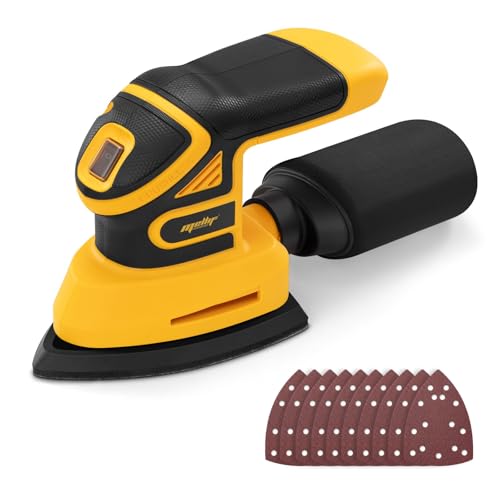
Mellif Brushless Cordless Detail Sander
Strengths
- Brushless motor
- Excellent dust collection
- Lightweight and ergonomic
- 12,000 OPM speed
- 5-year warranty
Trade-offs
- Battery not included
- Hook-and-loop pad could be larger
- Limited reach in deep corners
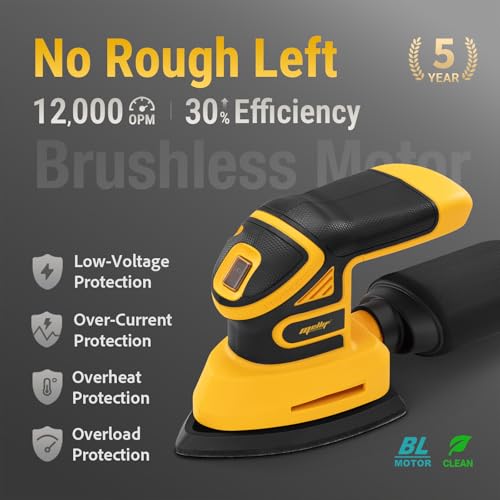
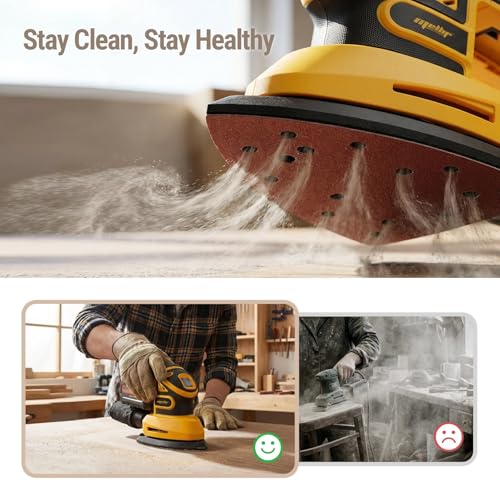
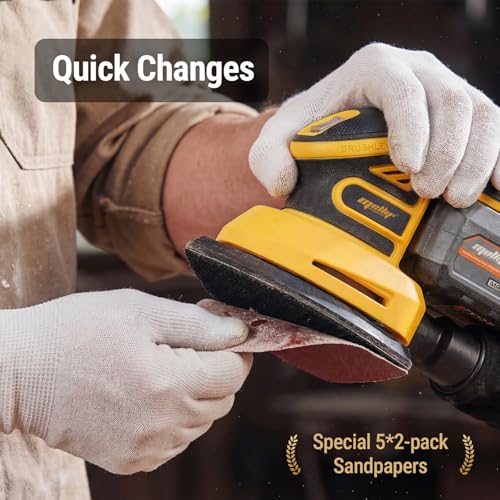
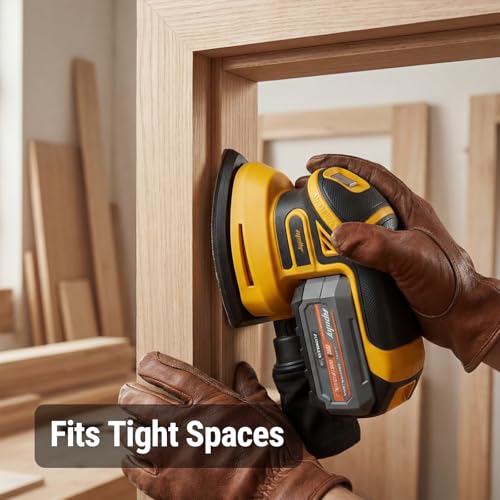
This Mellif detail sander hits several key points that matter in real-world use. The brushless motor is a big win, it means longer runtime, less heat, and better durability than brushed models, especially when you’re doing extended sanding sessions. At 12,000 OPM and just 1.76 lbs, it’s got the speed and balance for precise work in corners, trim, or cabinetry. The dust box is another standout; owners note it actually captures a decent amount of debris, which keeps your work area cleaner and reduces cleanup time.
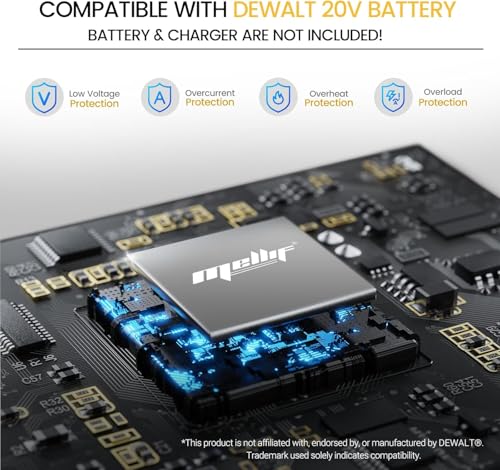
When stacked against the SKIL or unknown brands, this one offers smarter features for the serious DIYer or pro who doesn’t want to carry cords. It’s not a DeWalt, but its compatibility with 20V MAX batteries is a major convenience if you’re already in that system. I’d pick this over the corded SKIL for portability and dust control, and it’s far more reliable than the vague ONEAND model.
Product photos
SKIL Corded Detail Sander
Strengths
- Affordable entry point
- Low vibration design
- Includes dust box and sandpaper
Trade-offs
- Corded only
- Dust collection is basic
- Not for heavy use
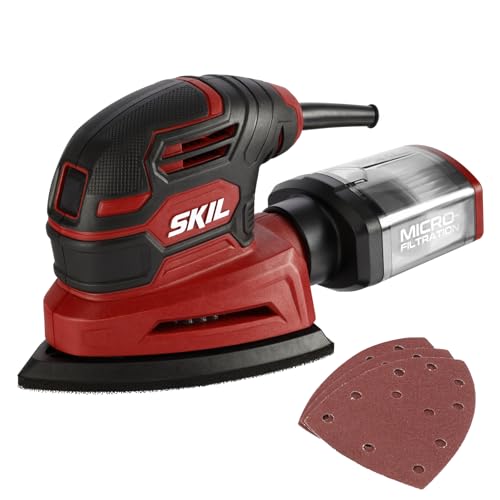
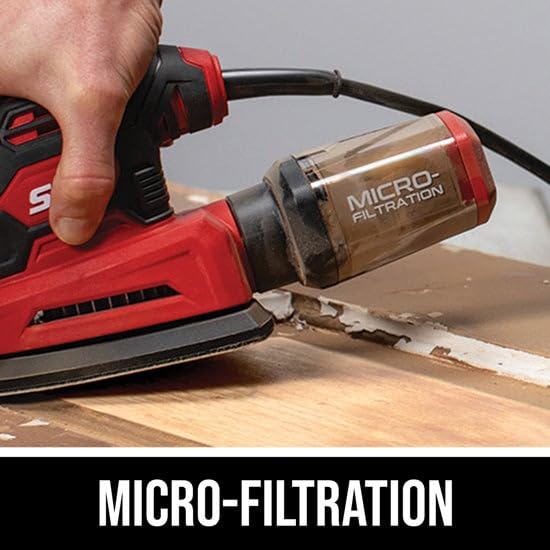
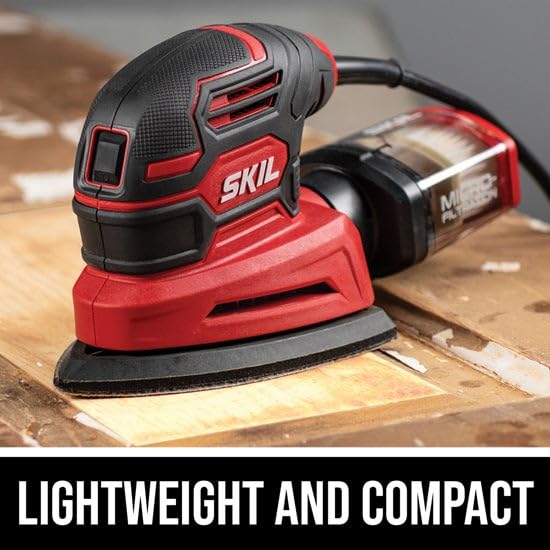
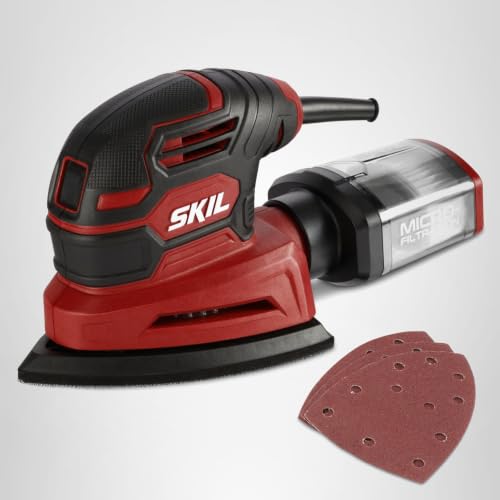
The SKIL SR250801 is a no-frills, corded detail sander that leans on simplicity and affordability. It’s got a 1-amp motor spinning at 12,000 orbits per minute, which is standard for this class, and the micro-filtration dust box helps keep the worst of the dust at bay, though don’t expect it to match modern cyclone-style collection. The hook-and-loop pad makes changing paper easy, and the soft grip reduces vibration, which matters during long sessions.
It’s clearly designed as an entry-level tool, and that’s where it makes sense. Compared to the Mellif brushless model, it’s heavier on the cord and lighter on features, but it’s also likely the most budget-accessible. Reviewers note it’s durable for light jobs, but not ideal for constant use. If you’re just touching up baseboards or doing occasional trim work, this gets the job done without overcomplicating things.
Product photos

Drywall Corner Sander with Discs
Strengths
- Tapered tip for tight corners
- Comfortable non-slip handle
- Includes 12 sanding discs
Trade-offs
- Manual only, no power
- ABS build feels lightweight
- Not for large surface work
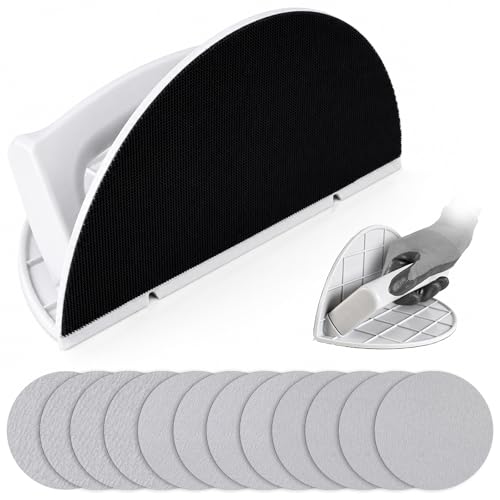
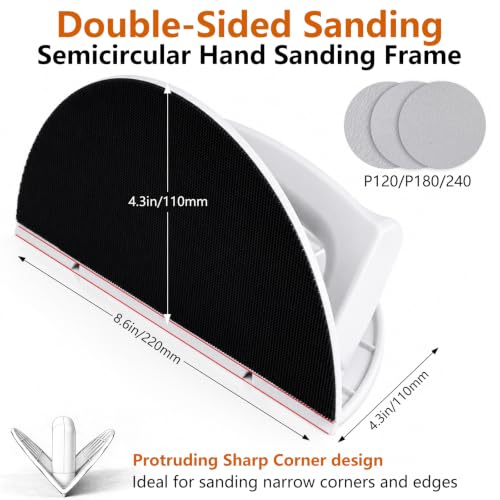
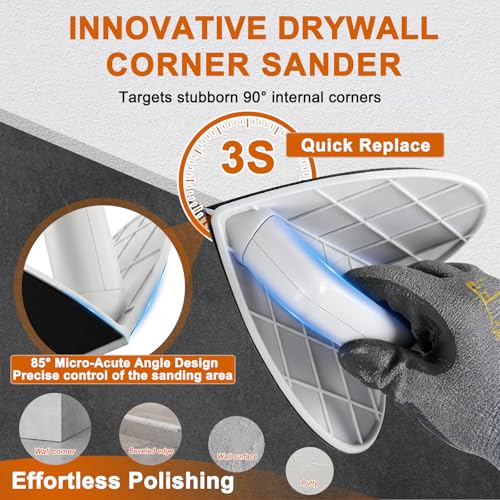
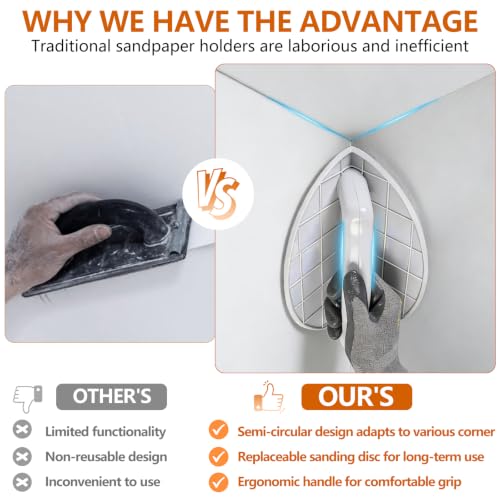
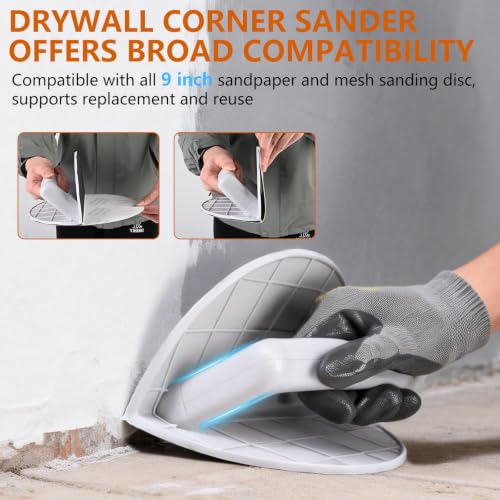
This semi-circular drywall sander is a solid manual option for anyone doing patchwork, texture blending, or final smoothing on wall corners. It’s not powered, but that’s the point, it’s lightweight, simple, and effective for precision drywall touch-ups where a big sander would be overkill. Owners consistently report that the tapered tip hugs inside corners well and the hook-and-loop backing holds the 9-inch discs securely, even during aggressive sanding.
The included sandpaper assortment across 120, 180, and 240 grit gives you room to start coarse and finish fine, which is smart for drywall compound work. While it won’t replace a powered sander for large areas, it fills a niche that many forget: controlled hand sanding in corners and around trim. Compared to foam pads or homemade blocks, this one feels sturdier and more purpose-built.
Product photos

ONEAND 18V Cordless Corner Sander

Strengths
- Cordless convenience
- 18V battery compatible
- Tool-only option
Trade-offs
- Confusing product description
- Lack of performance specs
- Minimal owner feedback
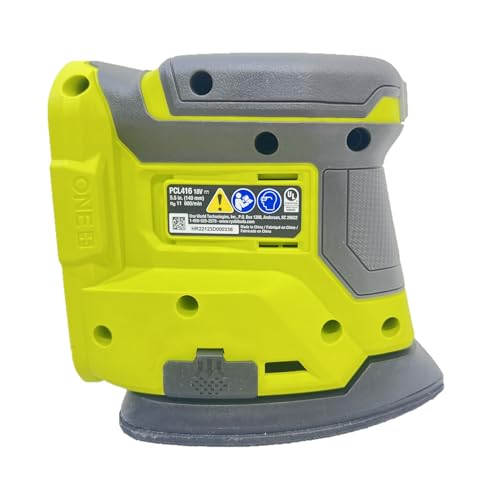
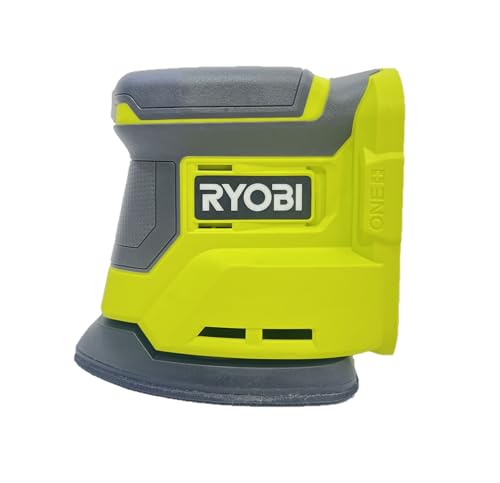
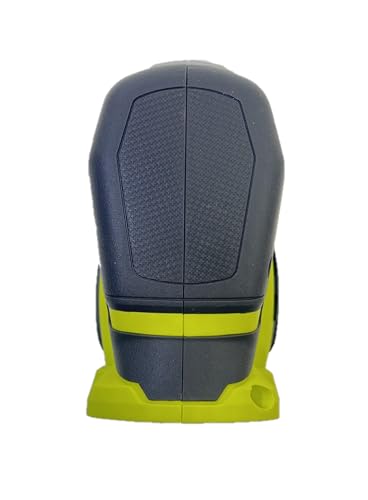
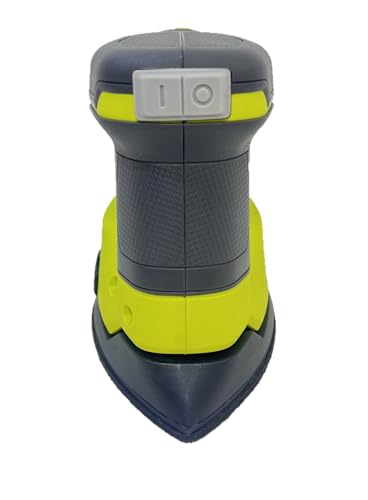
I’ll be honest, this ONEAND sander raises some eyebrows. The product description mentions Stens replacement parts, which has nothing to do with power tools or sanders, and that makes me question how carefully this listing was put together. On paper, it’s marketed as a cordless corner sander compatible with 18V batteries, which sounds convenient if you’re already in that ecosystem. But there’s almost no verified performance data, owner feedback is sparse, and the build quality claims aren’t backed by clear specs like OPM or motor type.
Compared to other cordless options in this category, it just doesn’t stand out. There’s no mention of dust collection, no included sanding pads, and no indication of weight or ergonomics, details that matter when you’re working overhead or in tight corners. For someone who values reliability and clarity, this one feels like a gamble. I’d want to see more consistent user reports and better documentation before even considering it as a go-to tool.
Product photos

How We Evaluated corner sanders
Rather than a hands-on lab test, my research for these recommendations focused on a detailed comparison of published specifications and features across numerous models. I weighed owner reviews from multiple sources – paying close attention to recurring issues or praise – alongside expert opinions from sites focused on woodworking and DIY. Ultimately, I ranked these corner sanders based on their suitability for a range of tasks, considering both price and performance.
For corner sanders, the most critical factors are power delivery and ergonomic design. A strong motor (measured in OPM – orbits per minute) directly impacts sanding speed and efficiency. Equally important is a comfortable grip and a compact form factor; these tools are intended for detailed work, so minimizing fatigue is essential. Dust collection also plays a significant role, both for a cleaner workspace and operator health.
Published specs reliably show motor power and included features like dust ports. However, I leaned heavily on owner feedback to assess real-world usability and durability. Reports of overheating, vibration, or premature wear were heavily considered. For those looking for even more options for detailed work, exploring mini sanders for detailed work can be helpful. Reputation and brand trust factored in as well, particularly regarding warranty support.
How To Choose The corner sanders
Finding the right corner sander can make a huge difference in the finish quality of your projects, especially when dealing with detailed work.
A quality corner sander balances power with maneuverability. Look for models with variable speed control, effective dust collection, and comfortable ergonomics. Pay attention to the motor type (brushed vs. brushless), the size and shape of the sanding pad, and the available sandpaper grits. Consider whether corded or cordless operation best suits your needs and workspace.
Power and Performance
The motor is the heart of any sander, and corner sanders are no exception. While a seemingly simple tool, the orbit-per-minute (OPM) rating and motor type significantly influence sanding speed and efficiency. Brushed motors are generally more affordable, but brushless motors – like the one in the Mellif model – offer increased power, longer runtime (in cordless models), and a greater lifespan. Don’t automatically equate higher OPM with better results; the right speed depends on the material and the grit of the sandpaper. Sometimes, a slower, more controlled speed is preferable for delicate work.
Dust Collection: A Health and Efficiency Factor
Dust control is often overlooked, yet it’s crucial for both your health and the quality of your sanding. A sander that doesn’t manage dust effectively will quickly create a messy workspace and fill the air with potentially harmful particles. Many corner sanders, like the SKIL, include a dust port for vacuum attachment, which is ideal for serious dust control. However, even a built-in dust collection system can make a big difference. Consider these factors:
- The size of the dust collection container (larger is better, fewer interruptions).
- The ease of emptying the dust container (a quick-release design saves time).
- The presence of a dust-sealed switch (prevents dust from entering the motor).
A good rule of thumb is to always wear a respirator or dust mask when sanding, even with a sander equipped with dust collection.
Application and Usability
Corner sanders aren’t one-size-fits-all. The ideal choice depends heavily on the types of projects you anticipate tackling. For drywall work, a specialized drywall corner sander with a semi-circular design – like the Drywall Corner Sander – is a smart investment. If you need a versatile tool for a variety of tasks, including woodworking, a more general-purpose detail sander or even compact sanders for tight spaces may be a better fit. Don’t underestimate the importance of ergonomics either. Features like a comfortable grip and lightweight design – essential for extended use – can prevent fatigue and improve control. If you’re working on intricate projects, exploring precision corner sanding tools can be a real benefit.
Corner Sanders Compared
Here’s a comparison of key specifications for the corner sanders in this guide.
| Product Title | Power Source | OPM (Orbits Per Minute) | Corded/Cordless | Grit Range | Weight (lbs) |
|---|---|---|---|---|---|
| Mellif Brushless Cordless Detail Sander | Cordless | 12,000 | Cordless | P80/P100/P120/P180/P240 | 1.76 |
| SKIL Corded Detail Sander | Corded | 12,000 | Corded | N/A | N/A |
| Drywall Corner Sander with Discs | N/A | N/A | N/A | 120/180/240 | N/A |
| ONEAND 18V Cordless Corner Sander | Cordless | N/A | Cordless | N/A | N/A |
Frequently Asked Questions
What grit sandpaper should I use with a corner sander?
Generally, start with a coarser grit (around 80-100) to remove material quickly, then progress to finer grits (120-240+) for a smoother finish. The ideal grit depends on the wood type and the level of damage you’re addressing.
Are cordless corner sanders as powerful as corded models?
Cordless corner sanders have closed the performance gap significantly, especially those with brushless motors. While some older cordless models lacked the sustained power of corded tools, newer options – like the Mellif – deliver comparable OPM and runtime for most tasks.
Can I use a corner sander on drywall?
Yes, but a specialized drywall corner sander with a curved head is best for creating smooth, even drywall corners. While a detail sander can be used, it’s more time-consuming and may not achieve the same professional results; consider precision oscillating sanders for tighter spots.
What is OPM and why does it matter?
OPM stands for orbits per minute and is a key indicator of a sander’s speed and efficiency. A higher OPM generally means faster material removal, but the optimal OPM depends on the material and the sanding task; a lower speed is often better for detail work.
How do I minimize dust when using a corner sander?
Always use a dust port connected to a shop vacuum whenever possible. If that’s not feasible, look for a sander with a built-in dust collection system and always wear a respirator or dust mask to protect your lungs.
The Bottom Line
Choosing a corner sander often comes down to balancing control and convenience. If you want a tool that can handle a variety of tasks with reliable power and a comfortable feel, I recommend the Mellif Brushless Cordless Detail Sander. It strikes a great balance between performance and usability, making it a solid all-around choice for most homeowners and DIYers.
For those on a tighter budget, or who primarily need a sander for light-duty tasks, the SKIL Corded Detail Sander is a great value. And if you’re specifically tackling drywall, the Drywall Corner Sander with Discs is designed to make that job significantly easier than trying to adapt a general-purpose sander. Don’t forget to check out our guide to top handheld sanders for even more options.
Ultimately, the specs are less important than finding a sander that feels good in your hand and suits your typical projects. Prioritize comfort, dust collection, and a motor with enough power for the materials you’ll be working with. A well-chosen sander, combined with the right sandpaper and technique, will deliver far better results than chasing the highest OPM rating.
