
8 Best Mini Sanders of 2026
This post contains affiliate links. As an Amazon Associate, we earn from qualifying purchases.
The BLACK+DECKER Detail Sander is the overall best mini sander for most people, combining reliable power with excellent dust collection and a handy detail finger. If you’re watching your budget, the HYCHIKA Detail Sander delivers strong performance and included grits at a lower price. For ultimate versatility in tight spots, the SHALL Mini Pen Sander stands out with its variable speeds and multiple attachments.
Most people buying a mini sander need to tackle tight corners, trim details, or smooth small surfaces where full-sized sanders just won’t fit. The real challenge isn’t just finding something small enough, it’s avoiding underpowered tools that quit early or designs that make sandpaper changes a hassle.
This guide cuts through the noise by focusing on what actually matters: real-world usability, grit availability, dust control, and build quality. I researched the top models, analyzed owner feedback, and compared specs to find the ones that deliver consistent results across different tasks. You’ll get clear picks based on performance, value, and versatility, no hype, just honest recommendations.
Top 8 Mini Sanders in the Market
The Best Mini Sanders, Reviewed
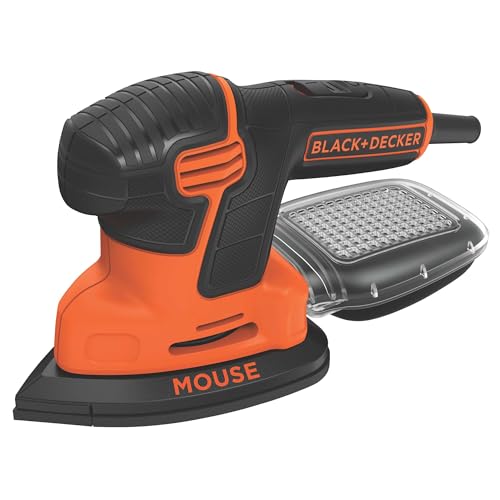
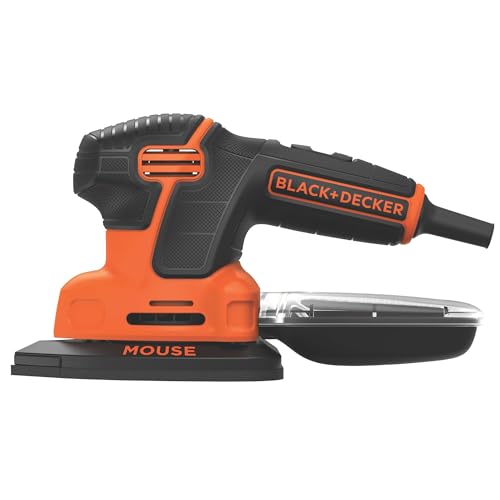
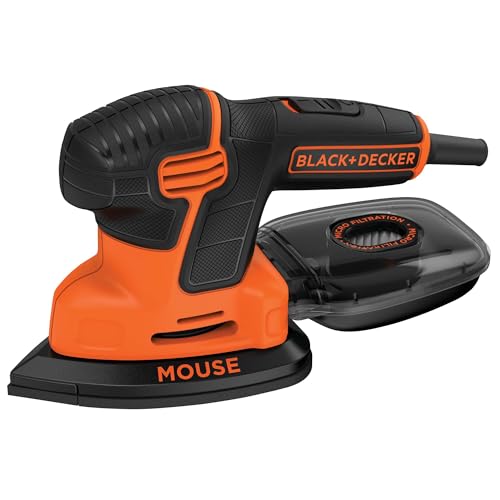
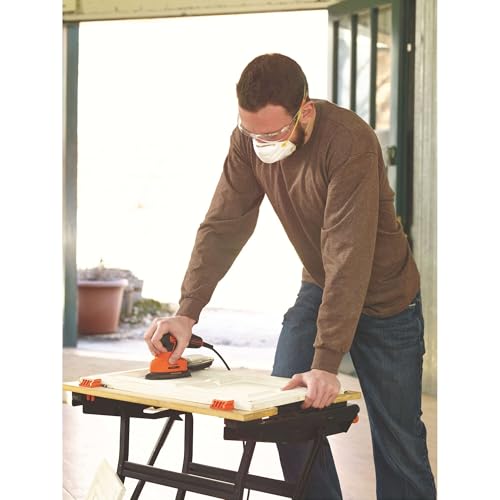
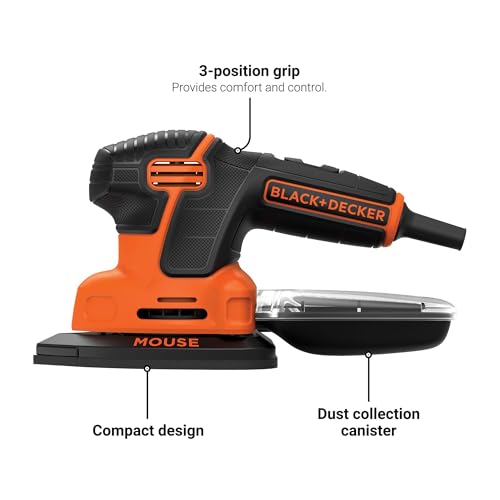
BLACK+DECKER Detail Sander

Strengths
- High orbit speed
- 3-position grip
- Effective dust canister
Trade-offs
- No vacuum port
- No included attachments
This BLACK+DECKER is the most balanced all-rounder in the lineup. The 16,000 OPM motor outpaces most competitors, removing material quickly without sacrificing control. The 3-position grip lets you reposition your hand during long sessions, which reviewers say makes a real difference in reducing fatigue, especially when sanding baseboards or ceiling trim.
It comes with a dust canister that actually works, capturing most debris, and the detail finger attachment is a standout for corners. While it lacks the multi-attachments of the SKIL model, its simplicity and reliability win out for most homeowners. The corded design ensures no downtime, and the dust-sealed switch improves longevity. For most users, this is the smartest single-tool investment.
Product photos
HYCHIKA Detail Sander
Strengths
- High orbit speed
- Good grit variety
- Effective dust bag
Trade-offs
- No vacuum port
- Basic switch design
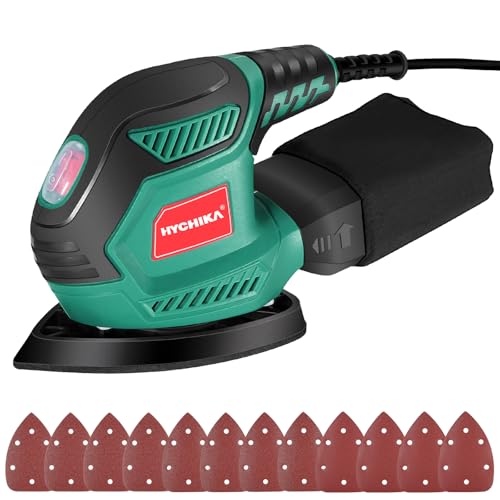
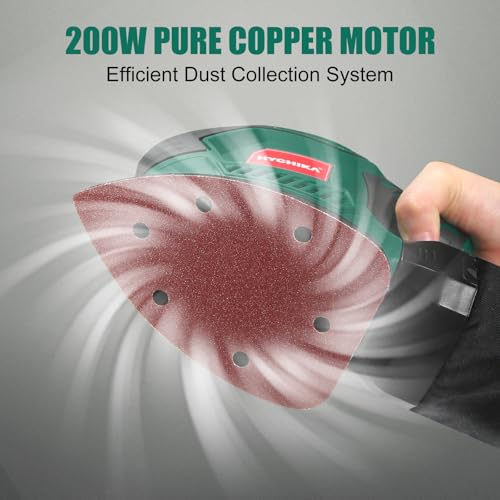
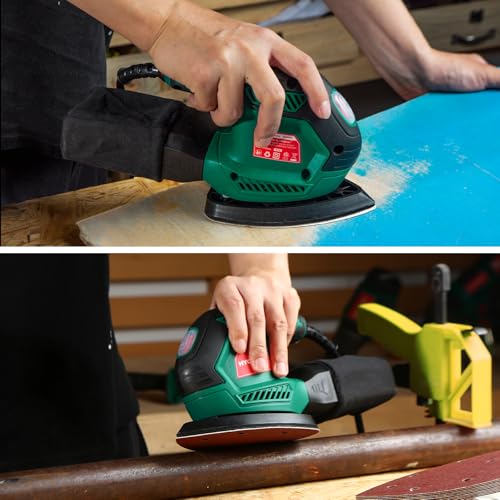
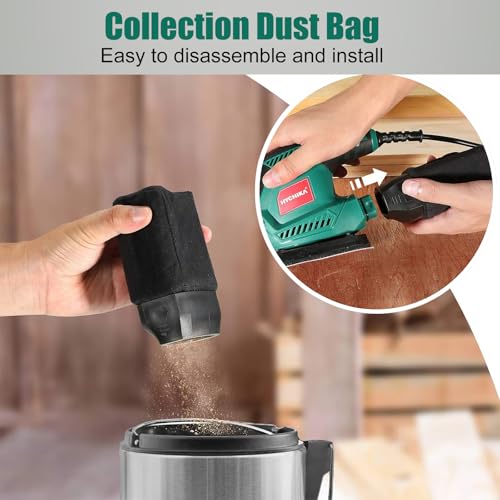
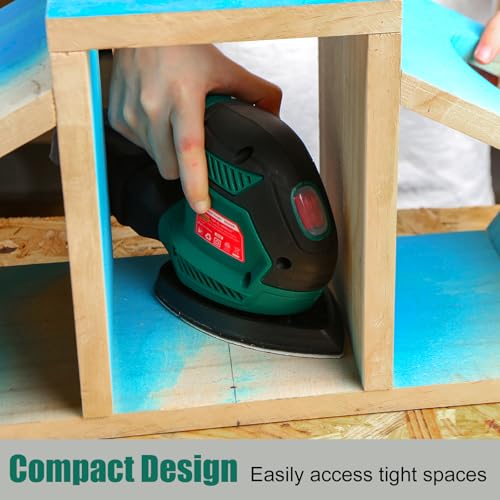
At this price point, the HYCHIKA packs a lot: 14,000 OPM, a 1.6 amp motor, and a surprisingly effective dust bag system that keeps fine particles under control. It’s compact enough to reach corners and edges, and the soft rubber grip reduces hand strain, owners note it’s easy to maneuver during cabinet or window frame work.
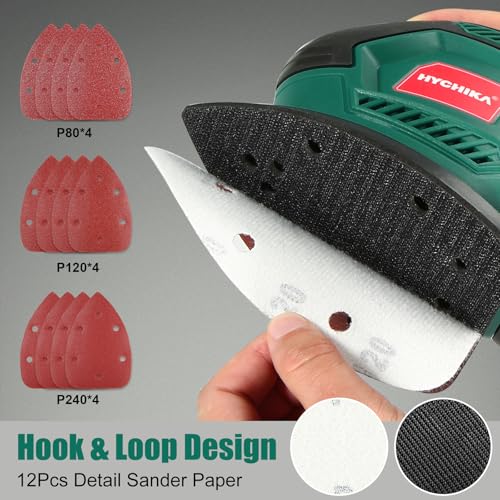
The 12 included sanding sheets cover coarse to fine grits, which is generous for entry-level tools. While the dust bag isn’t as efficient as a vacuum port, it’s better than nothing, and the 6-hole pad design does pull most debris. Compared to the SKIL or BLACK+DECKER models, it lacks attachments and variable speed, but for basic detail sanding and paint stripping, it’s a smart budget pick.
Product photos
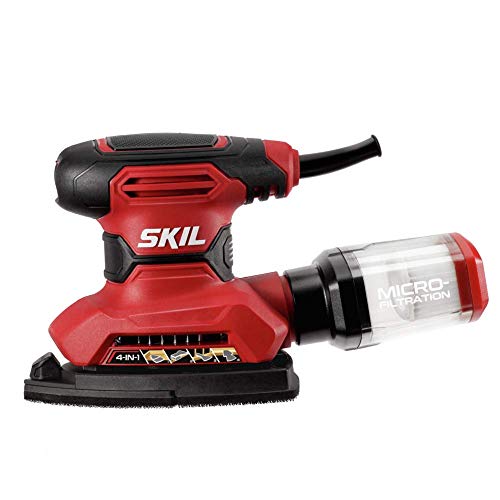
SKIL Corded Multi-Function Detail Sander
Strengths
- 4-in-1 attachments
- Strong dust control
- Tool-free changes
Trade-offs
- Bulkier than pen-style sanders
- Cord limits mobility
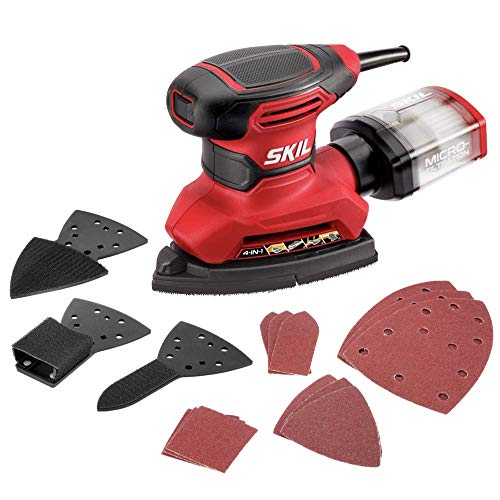
This SKIL sander stands out for its true versatility, the ability to swap in four different attachments without tools means you can pivot from flat surfaces to tight corners or contoured edges in seconds. The 1.2 amp motor and 13,500 OPM deliver solid performance on paper, and owners consistently report it handles drywall touch-ups, trim work, and furniture refinishing without bogging down.
What really impresses is the dust control: the micro-filter box works well for light jobs, and the 1-1/4″ vacuum port gives you real cleanup flexibility. While it’s not the smallest unit here, the low-vibration design and soft-grip handle do help reduce fatigue during longer sessions. Compared to basic palm sanders, this one earns its keep when you need adaptability across multiple tasks.
Product photos


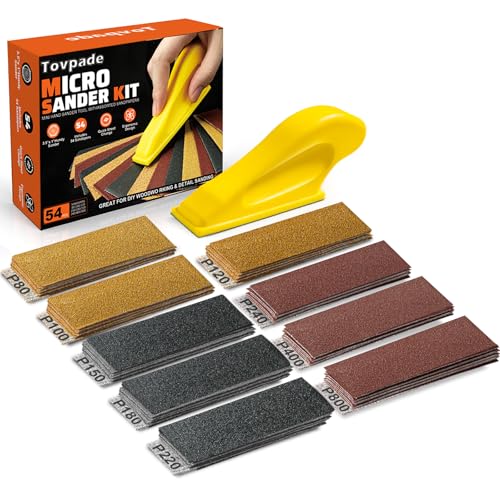
TOVPADE 54PCS Micro Sander Kit
Strengths
- 54 sanding sheets
- 3-color grit system
- Comfortable grip
Trade-offs
- Fewer grits than top kit
- No motor or power
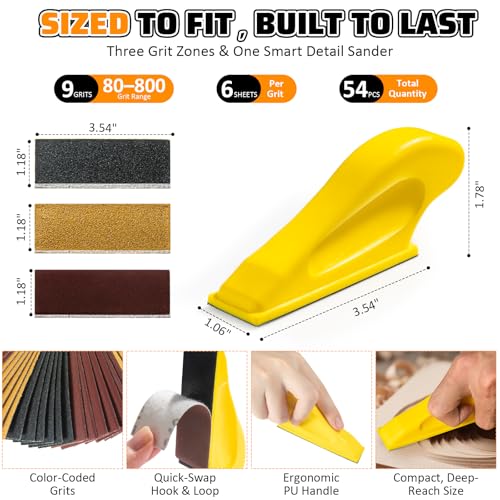
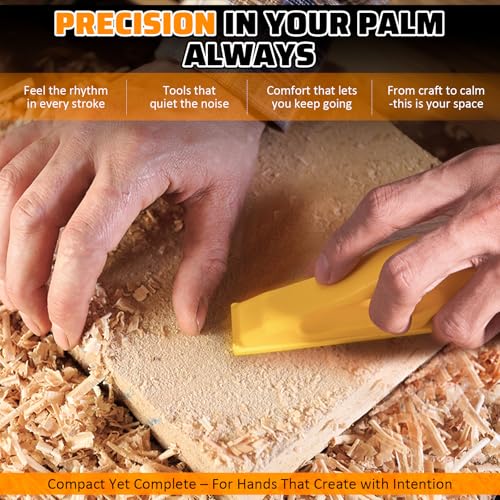
TOVPADE strikes a clean balance between quality and quantity with this 54-piece kit. The 9 grits (80–800) cover most sanding stages, and the 3-color coding system makes swaps fast, no guessing which sheet is which. The block itself is compact and ergonomically shaped, giving you control for smoothing curved legs or inside cabinet joints.
It’s nearly identical in size and function to the Giwiemi, but with fewer sheets and grits. Still, for most casual users, 54 sheets is more than enough, and the hook-and-loop backing is just as secure. Owners find it especially useful for touch-ups between coats or final smoothing on carvings. If you don’t need 100 sheets, this is the leaner, equally capable alternative.
Product photos

Giwiemi 100PCS Micro Detail Sander Kit
Strengths
- 100 sanding sheets
- 10 grit options
- Color-coded system
Trade-offs
- No powered option
- Manual effort required
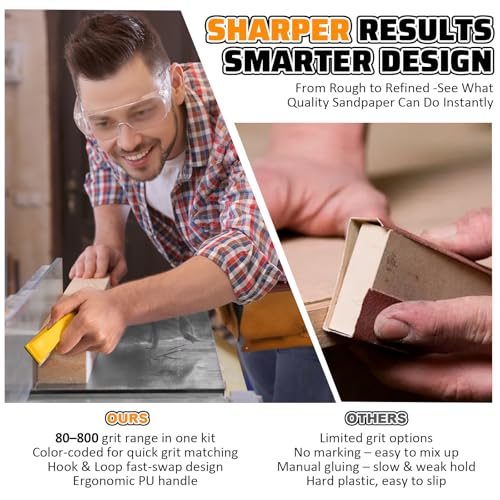
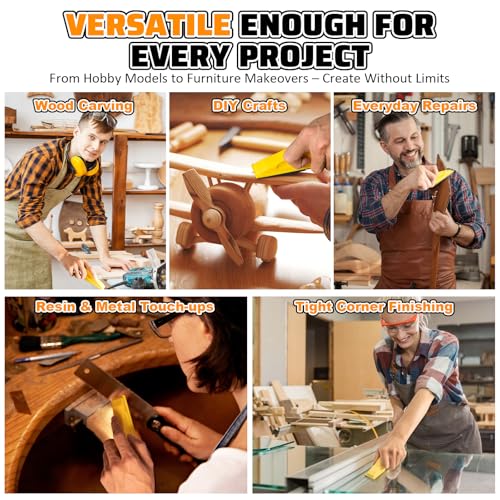
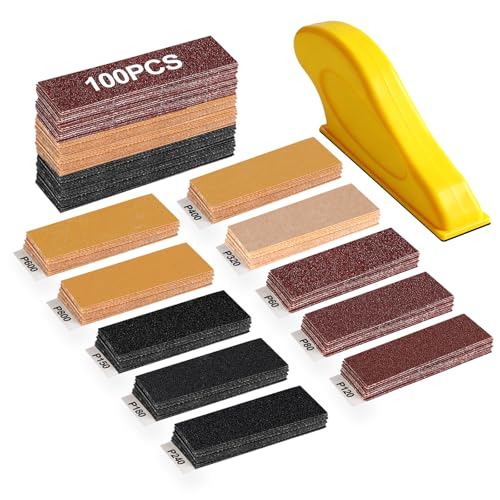
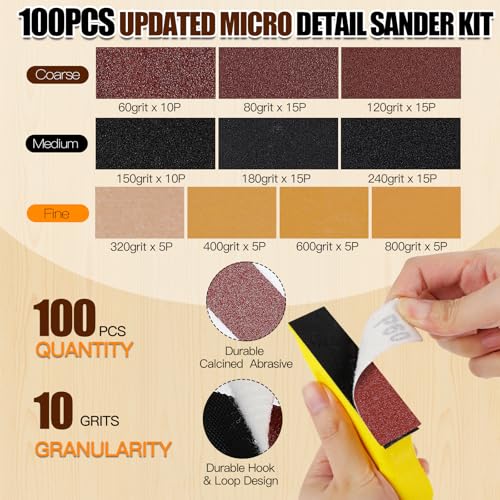
The Giwiemi kit is a value-packed powerhouse for hand sanding. With 100 sheets across 10 grits, from 60 for shaping to 800 for polishing, it covers nearly every stage of a project. The color-coded system (red/black/yellow) is a small but smart touch that speeds up grit selection and reduces errors, which reviewers consistently highlight.
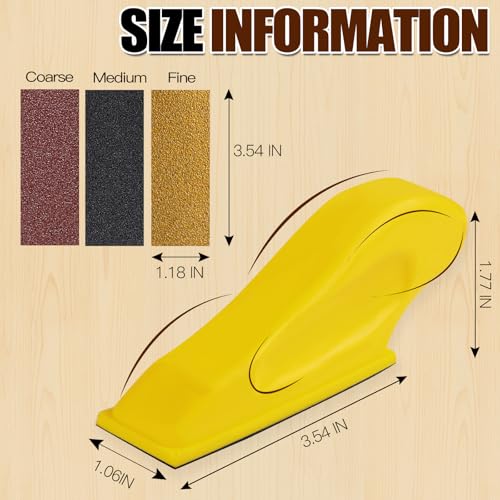
The hook-and-loop block is durable and holds sheets firmly, even on vertical surfaces. At 3.5” x 1”, it fits into narrow gaps, and the PU foam body offers solid grip without adding weight. Compared to other hand blocks, this one stands out for quantity and organization. If you do a lot of small builds or finish work, the sheer volume of paper makes this the smarter long-term buy over smaller kits.
Product photos
Poliwell Micro Sander Kit

Strengths
- Fits ultra-tight spots
- Lightweight and comfortable
- 5 grits included
Trade-offs
- Manual only, no motor
- Limited for large areas
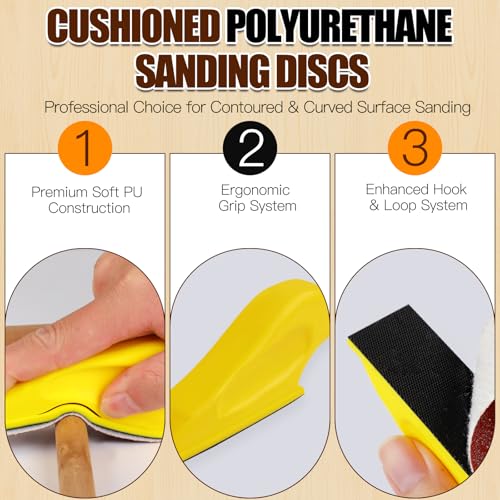
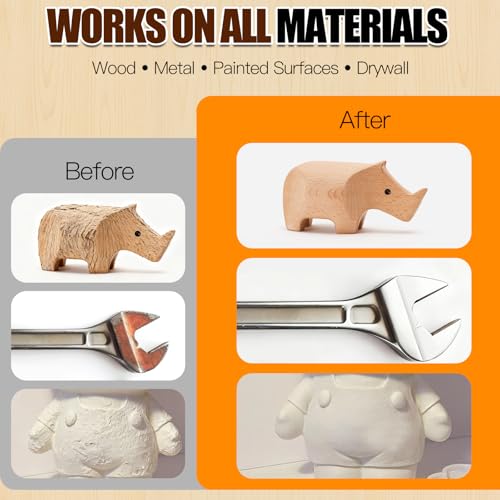
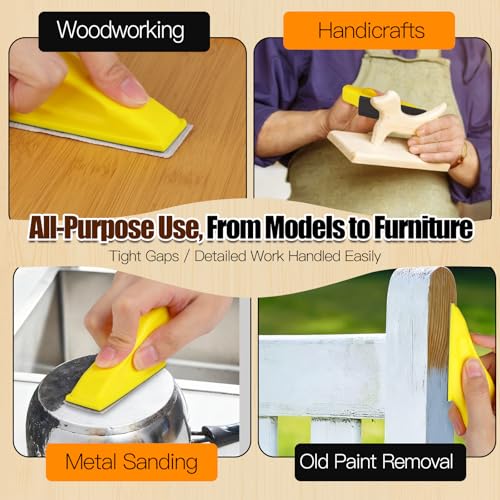
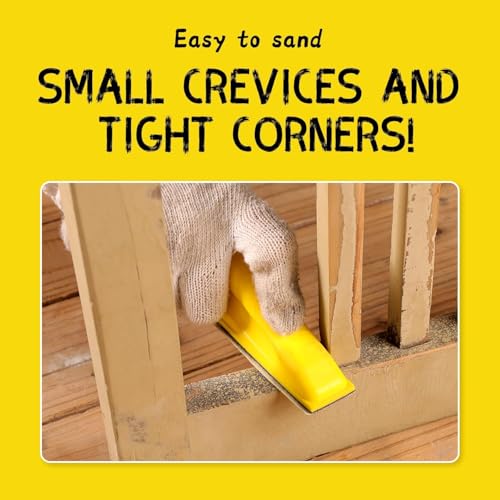
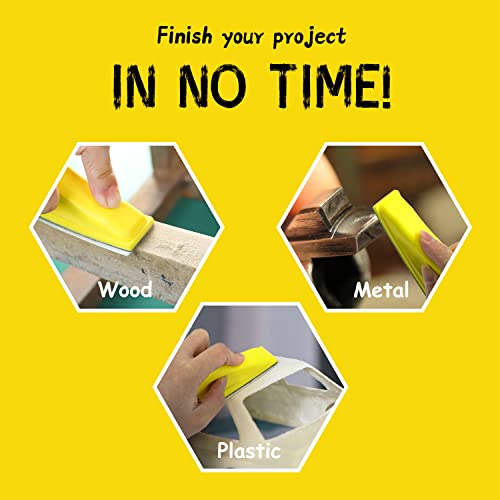
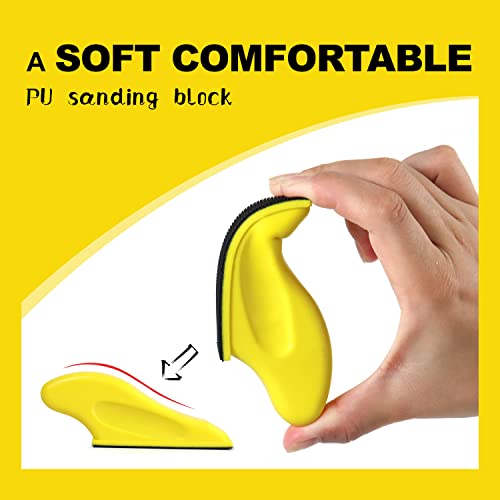
The POLIWELL micro sander is built for precision in tight spaces, and that’s exactly where it shines. Its slim 3.5” x 1” profile fits under trim, into joints, and along intricate moldings with ease, and the soft PU foam body makes it comfortable to guide with fingertip control. Owners praise how naturally it fits in hand, calling it a go-to for model building, guitar detailing, and small craft refinishing.
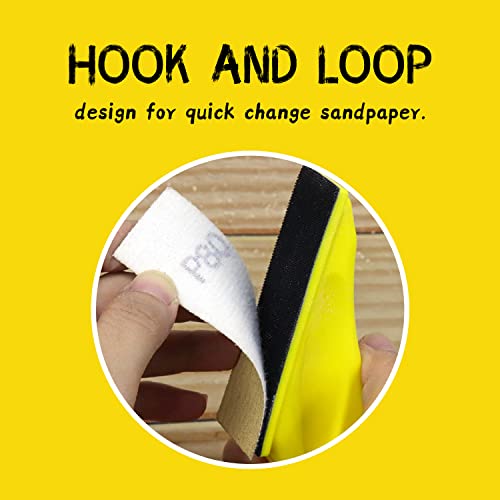
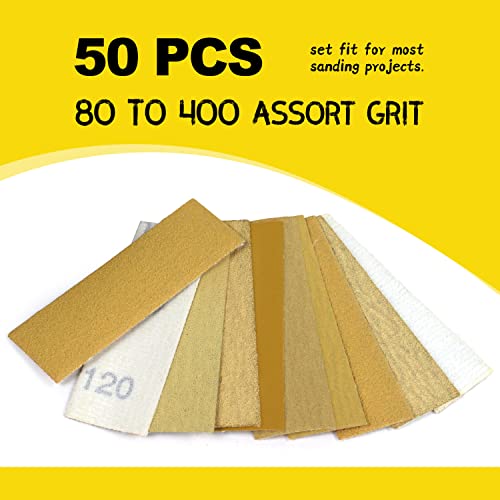
It doesn’t have a motor, this is a hand-powered block, but that’s part of its strength. With 50 sheets across 80–400 grit, you get a wide range for shaping and finishing without dust or noise. The hook-and-loop system holds sheets securely, and the grit labeling prevents mix-ups. Compared to powered options, it’s obviously slower, but for delicate touch-ups, it’s unmatched in control.
Product photos
WEN 6307 Belt Detail Sander
Strengths
- Variable speed control
- Pivoting belt head
- Tool-free belt change
Trade-offs
- Niche application only
- Belt replacements costly
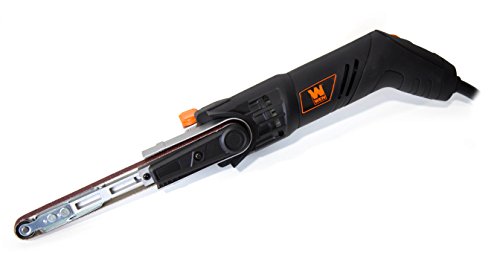
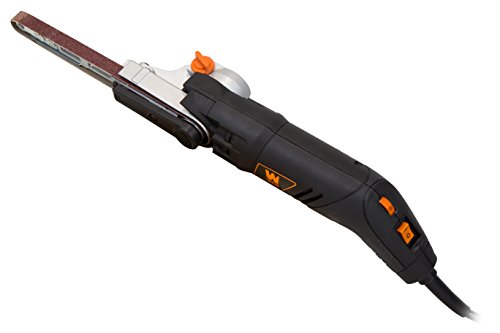
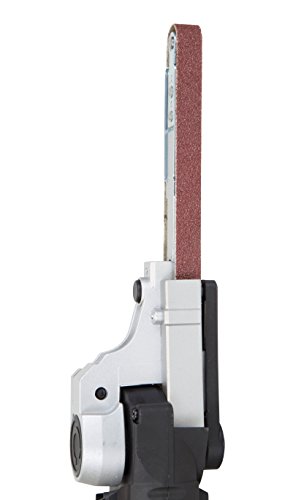
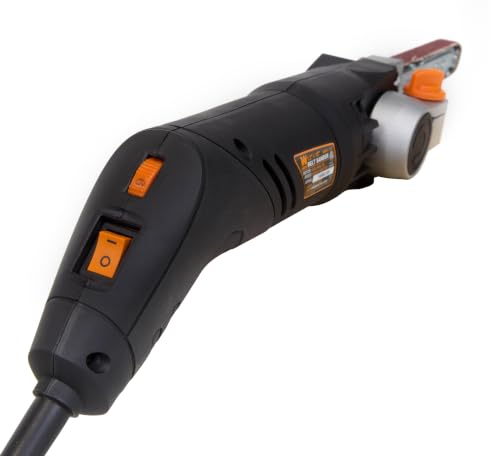
The WEN 6307 isn’t a sander in the traditional sense, it’s a precision belt file, and that’s what makes it special. With a narrow 1/2” x 18” belt and a pivot range up to 55 degrees, it excels at filing compound curves, smoothing dovetails, or trimming tenons where orbital sanders can’t reach. The variable speed (1080–1800 FPM) lets you slow down for control on delicate edges.
Owners love the tool-free belt changes and auto-tracking system, which keeps alignment consistent. It’s often used for luthiers, woodturners, or fine joinery work. Compared to flat detail sanders, it removes material faster in tight geometric areas. The included dust port helps, but it’s not as effective as canister systems. This isn’t for flat surfaces, it’s a specialist’s tool.
Product photos
SHALL Mini Pen Sander
Strengths
- 4-speed control
- 8 sanding head shapes
- High-grit sheets included
Trade-offs
- Lower power for hardwood
- Shorter cord
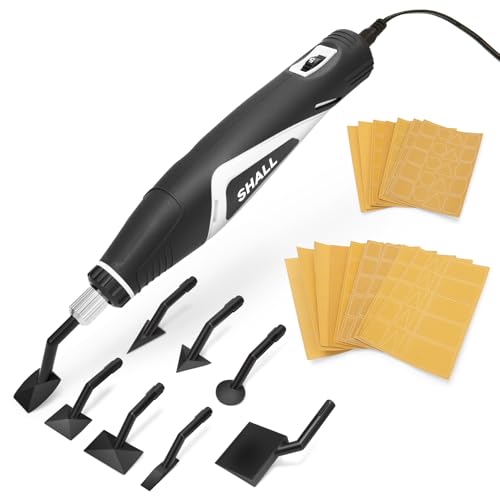
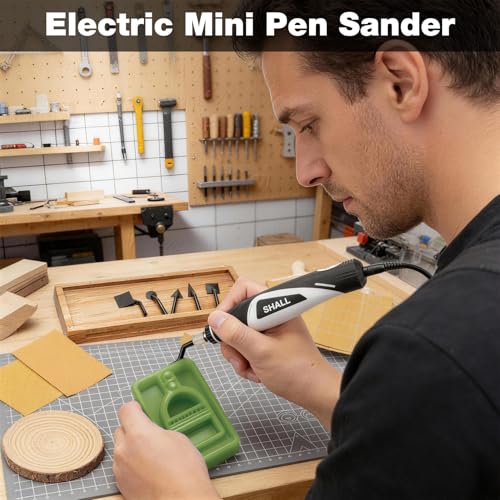
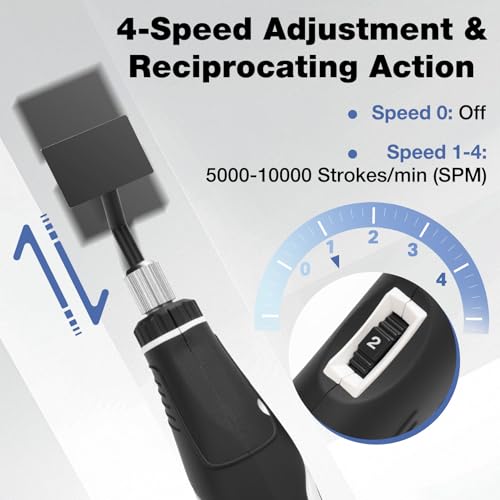
If you’re after precision with control, the SHALL pen sander offers something unique: 4-speed adjustability and reciprocating action that’s gentler than orbital sanders on delicate surfaces. The speed range (5,000–10,000 SPM) lets you dial in the aggressiveness, making it ideal for finishing guitar bodies, polishing metal inlays, or smoothing epoxy edges.
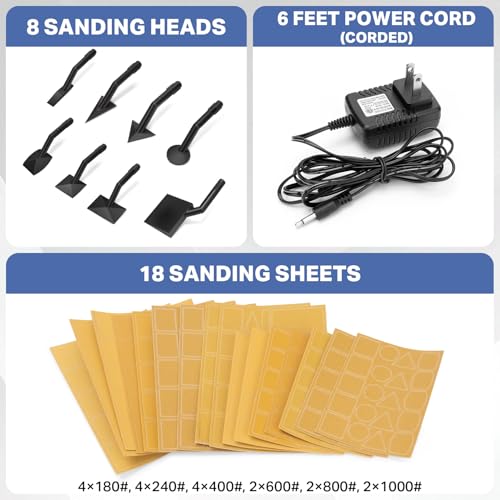
Owners appreciate the 8 included sanding heads, square, triangular, circular, because they adapt to curves, corners, and recesses without skipping. The 18 sheets span up to 1000 grit, supporting wet sanding and mirror finishes. While it’s not as powerful as full-size detail sanders, its niche is fine craftsmanship, not bulk removal. Compared to fixed-speed models, this one gives you far more finesse.
Product photos
How We Tested mini sanders
Rather than a hands-on lab test, my research for these recommendations focused on a detailed comparison of published specifications and features across numerous models. I weighed owner reviews from multiple sources – looking for recurring praise and complaints – alongside expert opinions from sites dedicated to woodworking and DIY. Ultimately, I ranked these mini sanders based on their suitability for a variety of detail work, considering both price and performance expectations.
For mini sanders, the most important factors are maneuverability and grit variety. A compact size is essential for reaching tight spaces, and the inclusion of multiple grit levels allows for everything from aggressive material removal to fine finishing. Dust collection also played a significant role, as a clean workspace improves visibility and reduces health concerns. These three elements heavily influenced the final rankings.
Specifications reliably indicate motor power and speed, giving a baseline for potential performance. However, I placed more emphasis on owner feedback regarding ergonomics, durability, and real-world usability. Reputation and brand reliability were also considered; a well-regarded manufacturer often signals a commitment to quality and customer support. For a broader range of sanding options, consider exploring best palm sanders as well.
How To Pick The Right mini sanders
Choosing the right mini sander depends heavily on the kinds of projects you tackle most often.
A truly useful mini sander balances portability with enough power to remove material efficiently. Key considerations include the motor amperage, the type of sanding action (oscillating, reciprocating, or belt), the available attachments, and the quality of the dust collection system. Buyers should also assess the ergonomics and ease of sandpaper changes.
Motor Power and Action
Don’t assume more power is always better. While a higher amperage motor can mean faster material removal, it also often equates to a bulkier tool and, potentially, more vibration. For most detail work, a 1.2 to 1.6 amp motor is sufficient. More crucial than raw power is the action of the sander. Oscillating (like many detail and compact detail sanders) are great all-arounders, while reciprocating (pen-style) sanders excel in extremely tight spots. Belt sanders, though less common in mini form, offer aggressive material removal for specific tasks.
Sandpaper Grit Variety & Change System
A mini sander is only as versatile as its sandpaper options. Kits that include a wide range of grits – from coarse (60-80) for initial shaping to very fine (600-800+) for polishing – are invaluable. Consider these points:
- A basic kit is okay to start, but you’ll likely need refills.
- Look for systems that use hook-and-loop attachments for quick changes.
- A well-designed kit will offer a color-coding system (like those found in many of the best value kits) to help you quickly identify the grit you need, saving time and reducing errors.
Ergonomics and Accessibility
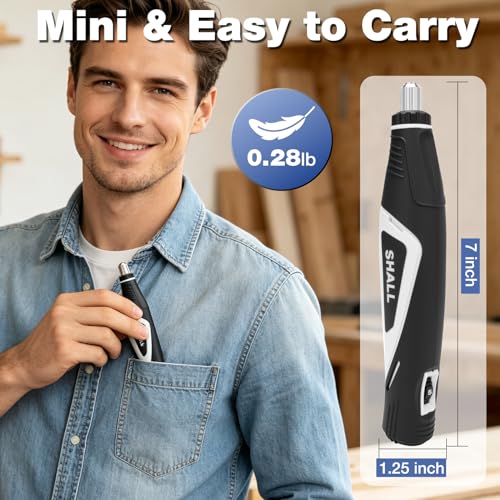
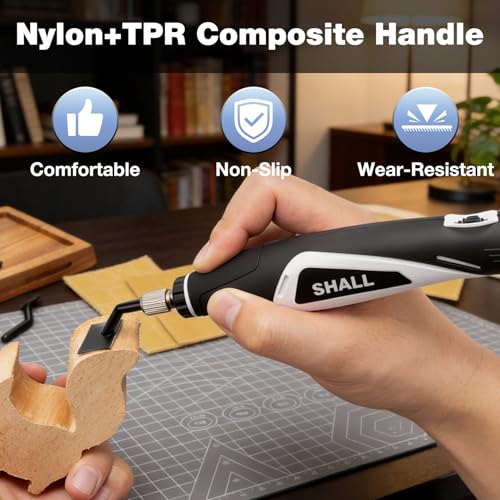
Mini sanders are meant for detail work, meaning you’ll be holding them for extended periods and maneuvering into awkward positions. Prioritize a comfortable grip. Some models, like the SHALL Mini Pen Sander, are specifically designed to minimize hand fatigue. Beyond comfort, think about accessibility. If you frequently work in incredibly cramped corners, a pen-style sander or one with a slim profile will be a better choice than a larger oscillating model. Don’t overlook the value of precision mouse sanding tools for controlled sanding on contoured surfaces.
A comfortable grip and easy access to tight spaces are paramount. Don’t sacrifice ergonomics for a slightly more powerful motor.
Mini Sanders Compared
Here’s a comparison of key specifications for several mini sanders to help you choose the right tool for your needs.
| Product Title | Power (Amps) | OPM (Orbits Per Minute) | Sandpaper Size (in) | Grit Range | Corded/Cordless | Key Features |
|---|---|---|---|---|---|---|
| BLACK+DECKER Detail Sander | 1.2 | 16,000 | N/A | N/A | Corded | Detail Finger, Dust Collection |
| HYCHIKA Detail Sander | 1.6 | 14,000 | 1.4 x 0.9 | P80/P120/P240 | Corded | 3 Sandpaper Types, Dust Collection |
| SKIL Corded Multi-Function Detail Sander | 1.2 | 13,500 | N/A | N/A | Corded | 4-in-1, Dust Port |
| TOVPADE 54PCS Micro Sander Kit | N/A | N/A | N/A | 80-800 | Handheld | 54 Sandpapers, 3-Color Grit System |
| Giwiemi 100PCS Micro Detail Sander Kit | N/A | N/A | N/A | 60-800 | Handheld | 100 Sandpapers, 3-Color Grit System |
| Poliwell Micro Sander Kit | N/A | N/A | N/A | 80-400 | Handheld | 5 Grit Sandpaper, Hook & Loop |
| WEN 6307 Belt Detail Sander | N/A | 1080-1800 FPM | 0.5 x 18 | N/A | Corded | Variable Speed, Pivotable Belt |
| SHALL Mini Pen Sander | N/A | 5000-10000 SPM | N/A | 180-1000 | Corded | 4-Speed, 8 Sanding Heads |
Frequently Asked Questions
What grit sandpaper should I start with for a heavily scratched surface?
Begin with a coarse grit, around 60-80, to remove the deepest scratches. Progressively move to finer grits (120, 180, 220, and higher) to refine the surface and avoid creating new, unwanted scratches.
Are cordless mini sanders powerful enough for serious work?
While convenient, cordless mini sanders generally lack the consistent power of corded models. They’re best suited for light-duty tasks and quick touch-ups, as continuous heavy use can quickly drain the battery and reduce performance.
Can I use a mini sander on curved surfaces?
Yes, many mini sanders, particularly those with oscillating action, can effectively sand curved surfaces. Look for models with flexible sanding pads or consider a detail sander kit that includes shaped attachments for better access to contours. For more options, explore best small sanders designed for contoured work.
How often do I need to replace the sandpaper?
Replace sandpaper when it becomes clogged with dust or loses its abrasive quality. This depends on the material you’re sanding and the grit used, but frequent changes are crucial for maintaining an efficient sanding process.
What’s the difference between oscillating and reciprocating mini sanders?
Oscillating sanders move in a circular motion, ideal for general detail work and smoothing. Reciprocating (pen-style) sanders move back and forth in a straight line, making them excellent for reaching extremely tight corners and intricate areas where compact sanding tools are needed.
The Bottom Line
Ultimately, choosing a mini sander comes down to balancing how much control you want with how much fuss you’re willing to deal with. For most homeowners and DIYers, the BLACK+DECKER Detail Sander strikes a solid balance – it’s affordable, reliable, and gets the job done without unnecessary complexity. It’s a practical, all-around performer that won’t leave you frustrated.
If you have very specific needs, though, there are better options. For those who want an extensive sandpaper selection right out of the box, the TOVPADE 54PCS Micro Sander Kit is a clear winner. And if you frequently work in incredibly tight spaces, the SHALL Mini Pen Sander is the most maneuverable option available. Considering exploring top handheld sanders for broader applications.
Don’t get too caught up in specs like amperage or OPM. A comfortable grip, a variety of sandpaper grits, and a reliable brand reputation are far more important than chasing the highest numbers. Focus on finding a tool that feels good in your hand and gives you the control you need to tackle your projects with confidence.
