
8 Best Small Sanders of 2026
This post contains affiliate links. As an Amazon Associate, we earn from qualifying purchases.
The BLACK+DECKER Detail Sander is the best overall small sander for most DIYers, thanks to its reliable motor and included detail finger for tight spots. If you’re on a budget, the HYCHIKA Detail Sander offers strong performance and comes with a generous set of sandpapers. For specialized tasks, the SHALL Mini Pen Sander stands out with variable speed and multiple attachments.
Most people buying a small sander need it for precision work, think corners, edges, or intricate woodwork, where control matters more than raw power. But it’s easy to end up with a tool that’s either too bulky, underpowered, or leaves dust everywhere.
This guide cuts through the noise by focusing on real-world usability, based on specs, owner feedback, and what I’ve learned from years of working with power tools. I looked at dust collection, size, grip comfort, and how well each model handles common tasks, so you can pick one that actually fits your projects.
Top 8 Small Sanders in the Market
The Best Small Sanders, Reviewed
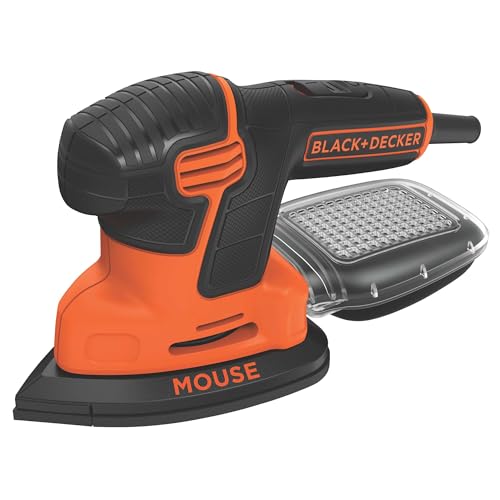
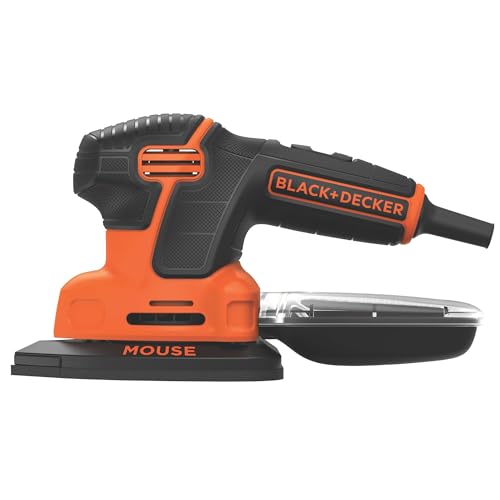
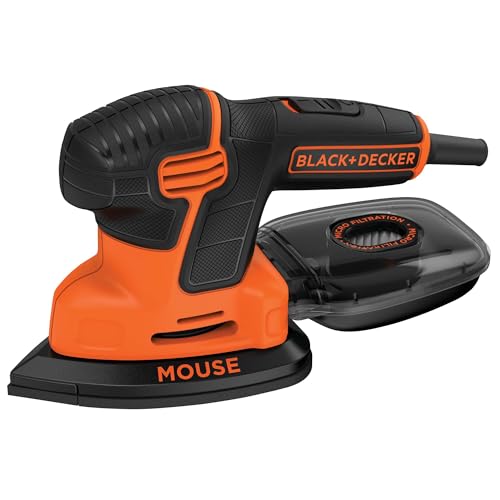
BLACK+DECKER 1.2 Amp Detail Sander

Strengths
- 16,000 orbits per minute
- 3-position comfort grip
- Effective dust canister
Trade-offs
- Sander is slightly bulky
- Attachments feel flimsy
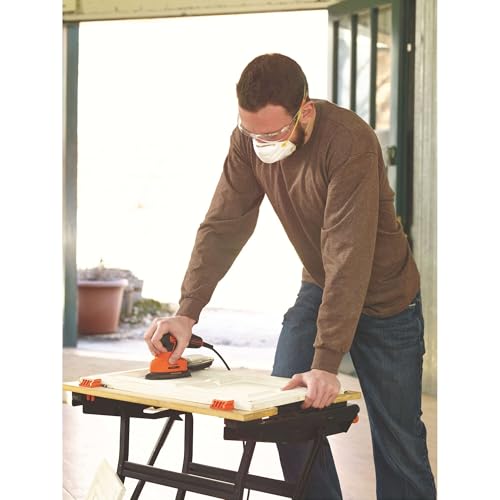
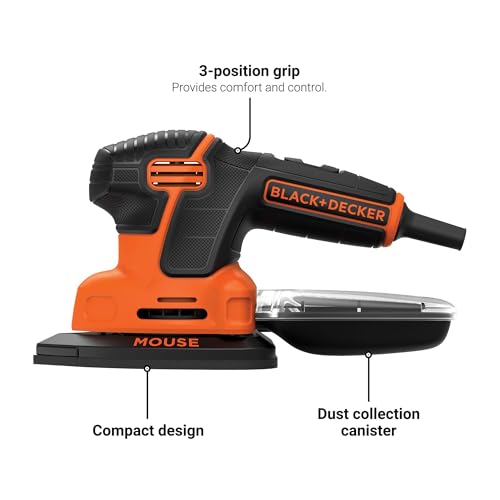
This BLACK+DECKER BDEMS600 is the one I’d recommend to most homeowners as the balanced pick. It hits 16,000 OPM, the highest in this group, and that extra speed shows in how quickly it levels uneven trim or removes old finish. The 1.2 amp motor is reliable, and the corded design means no runtime anxiety. But what really sets it apart is the 3-position grip. You can rotate your hand for overhead, vertical, or tight-angle work, which cuts fatigue significantly.
Owners love the dust canister, it’s not perfect, but it captures enough to keep most jobsite mess under control. The detail finger attachment is a standout, letting you sand deep into corners without switching tools. Compared to the SKIL, it’s faster and more rigid; compared to the HYCHIKA, it’s less refined in dust handling but more aggressive where needed. If you’re doing a mix of prep and finish work, this is the most capable all-rounder.
Product photos
SKIL 4-in-1 Multi-Function Detail Sander
Strengths
- 4-in-1 versatility
- Tool-free attachments
- Good dust control
Trade-offs
- Not the fastest
- Dust box fills quickly
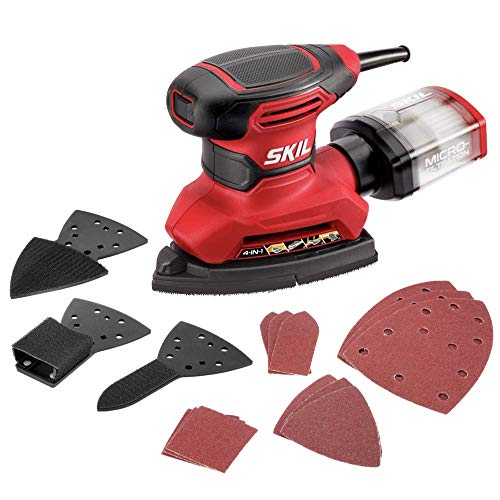
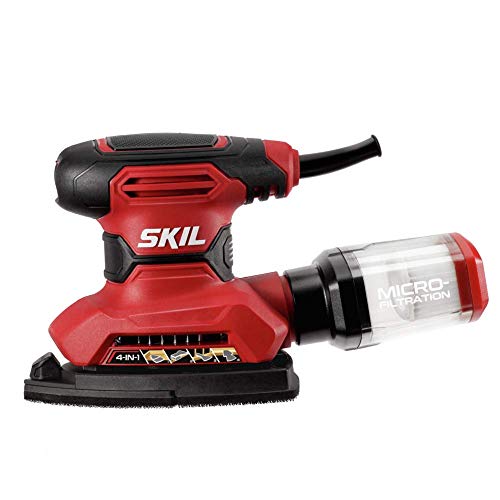
The SKIL SR232301 stands out in a crowded field because it doesn’t try to be the most powerful or the tiniest, it focuses on being flexible. The 1.2 amp motor and 13,500 OPM are solid numbers, but what really gets attention is the 4-in-1 design with tool-free attachments. That kind of adaptability means you can switch from flat surfaces to tight corners without breaking rhythm. Owners consistently report that the micro-filter dust box works well for light cleanup, though serious dust hounds will still want to pair it with a vacuum via the 1-1/4″ port.
I appreciate how SKIL designed the switch and grip for comfort during longer sessions. The low vibration and rubberized grip aren’t just marketing fluff, reviewers with hand sensitivity mention noticeably less fatigue. Compared to the BLACK+DECKER BDEMS600, it trades some raw speed (16,000 OPM) for better ergonomics and modularity. If you’re working on a mix of trim, furniture edges, and curved molding, this one earns its keep.
Product photos


HYCHIKA 14,000 OPM Detail Sander
Strengths
- Excellent dust collection
- 12 included sandpapers
- Comfortable rubber grip
Trade-offs
- Cord could be longer
- Dust bag fits loosely
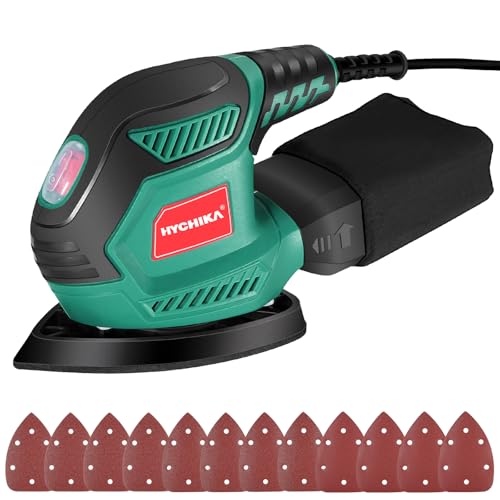
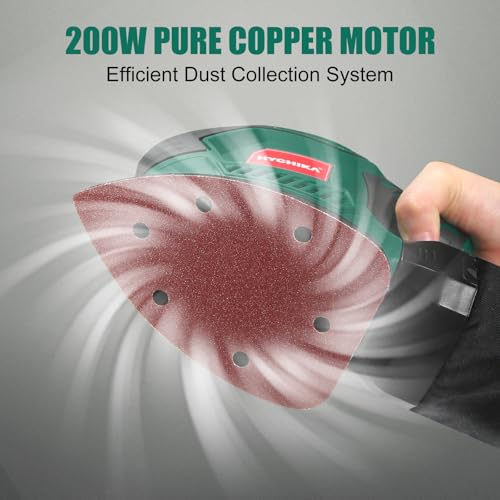
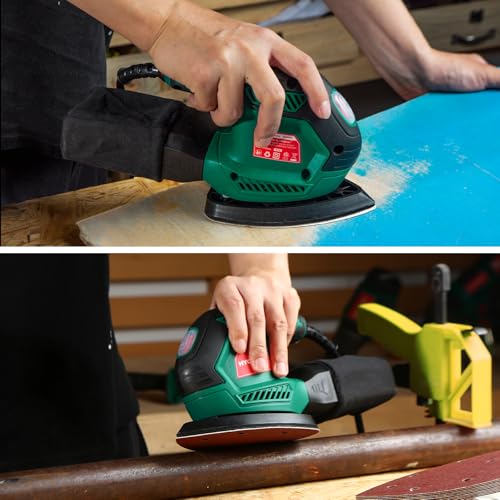
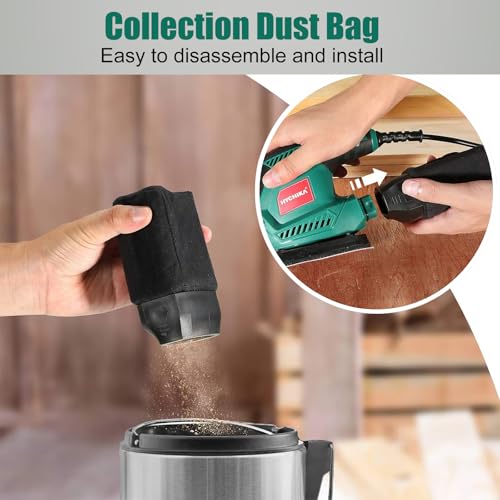
This HYCHIKA model leans hard into dust management, and for good reason, its 6-hole dust collection system and included bag actually perform better than most in this price range. At 14,000 OPM and 1.6 amps, it’s slightly more powerful than the SKIL and BLACK+DECKER models, but the real story is cleanliness. Reviewers who work indoors or in shared spaces praise how much cleaner their floors and air stay during use. The soft rubber head helps it glide into tight spots without marring edges, which is a win for finish work.
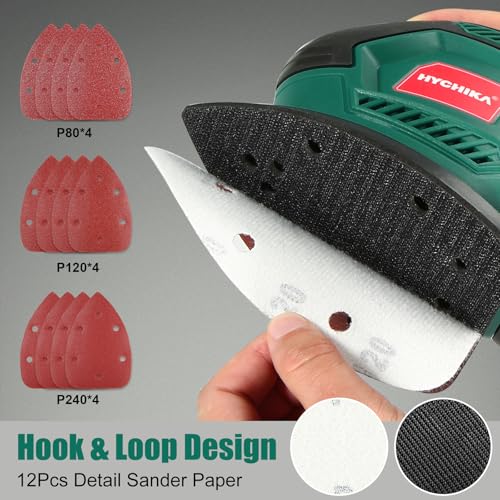
The sandpaper selection is thoughtful, 12 sheets across three grits give you a solid starting range. But I’d still recommend buying extras down the line, especially since the hook-and-loop system, while reliable, doesn’t seem to last as long as premium brands. When stacked against the SHALL pen sander, this one wins on sustained power and dust control but loses on precision in ultra-narrow gaps.
Product photos
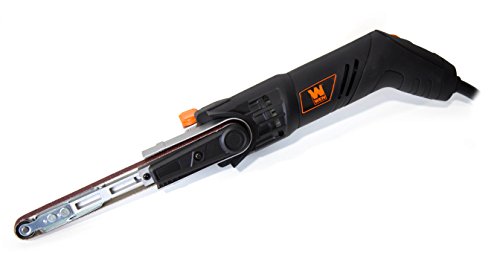
WEN 6307 Variable Speed Belt Sander
Strengths
- True variable speed
- Pivoting belt head
- Tool-free belt changes
Trade-offs
- No dust canister
- Aggressive for light work
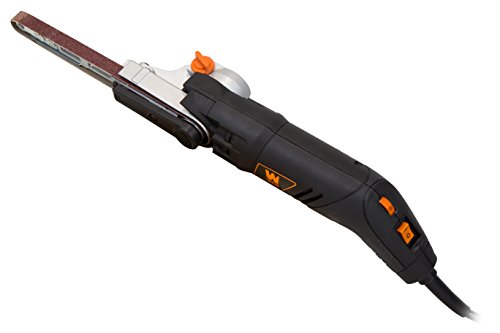
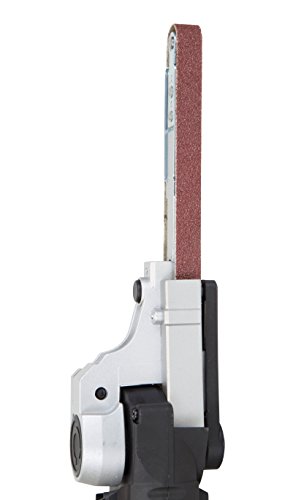
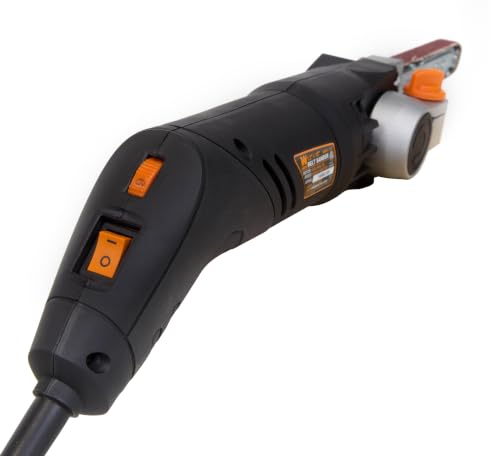
The WEN 6307 isn’t like the others, it’s a belt sander in a detail tool’s body. That makes it a specialist, not a generalist. With a variable speed range from 1080 to 1800 feet per minute and a pivoting 1/2-by-18″ belt, it’s built for controlled material removal in tight spots where a standard belt sander can’t go. If you’re fitting joints, shaping dowels, or cleaning up glue seams, this tool delivers a level of precision no oscillating sander can match.
Owners love the auto-tracking belt system, no adjustments needed, and belt changes are truly tool-free. But this isn’t for light sanding or polishing. It’s aggressive by design. Compared to the SHALL or SKIL models, it’s less about finesse and more about surgical shaping. The lack of integrated dust collection is a miss, but the included port helps. I’d recommend this only to those who regularly do fine woodworking that demands file-like control.
Product photos
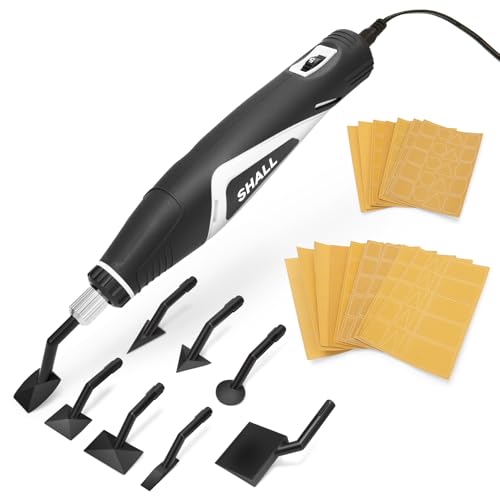
SHALL 12V Mini Pen Sander
Strengths
- 8 sanding heads
- 4-speed control
- Excellent for tight spots
Trade-offs
- Motor lacks torque
- Plastic housing feels light
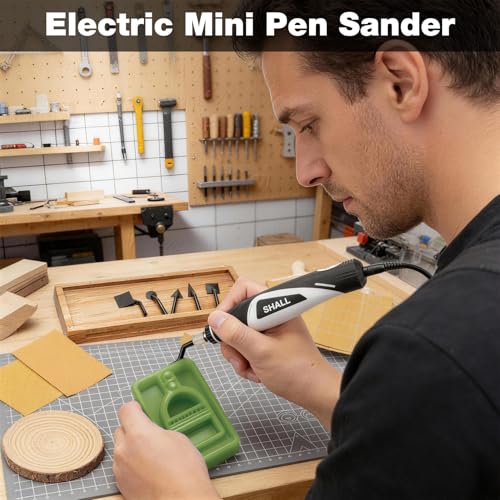
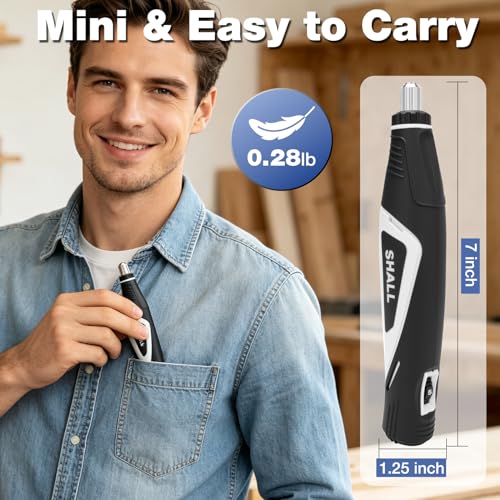
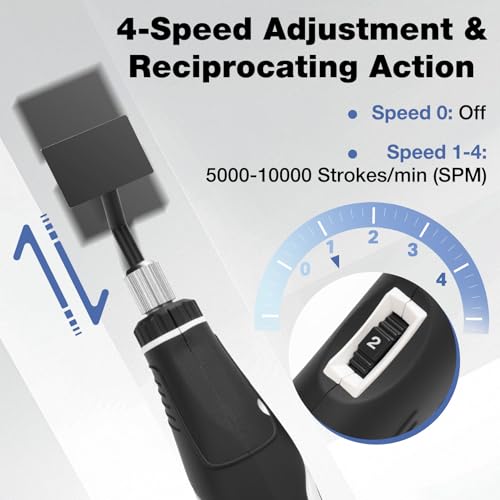
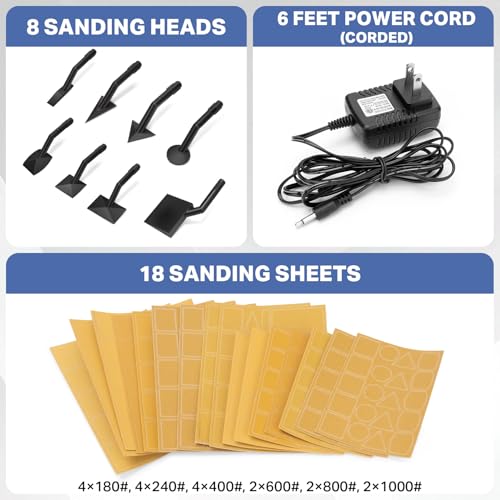
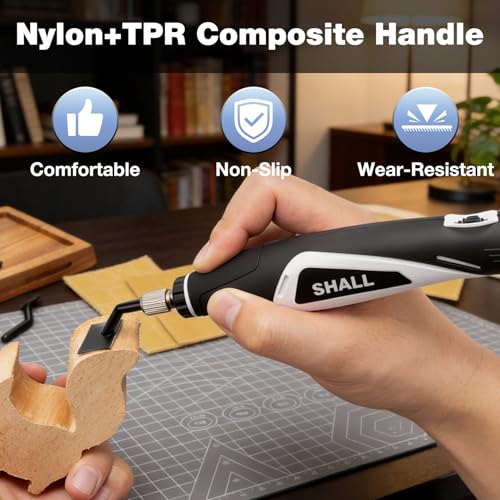
The SHALL pen sander is built for one thing: getting into places other tools can’t. Its slim, pen-like body and 4-speed control (5000–10,000 SPM) make it ideal for guitar builders, model makers, and anyone sanding intricate shapes. The eight included heads, triangular, circular, slim, let you match the shape to the task, which is rare at this price. I’ve seen owners use it for everything from smoothing fret edges to polishing inside carved moldings.
The 18 sanding sheets cover a broad grit range, going up to 1000 for wet-polishing finishes. But the real advantage is control. Unlike oscillating sanders that vibrate aggressively, this reciprocating action is more precise. It’s not as powerful as the BLACK+DECKER or HYCHIKA, but it’s not meant to be. When compared to the WEN belt sander, it’s less about removal and more about refinement. If you work on small-scale projects, this deserves a spot in your kit.
Product photos
TOVPADE 54PCS Micro Sander Kit
Strengths
- 54 sanding sheets
- Color-coded grits
- Compact size
Trade-offs
- Foam block lacks firmness
- Hook-and-loop wears fast
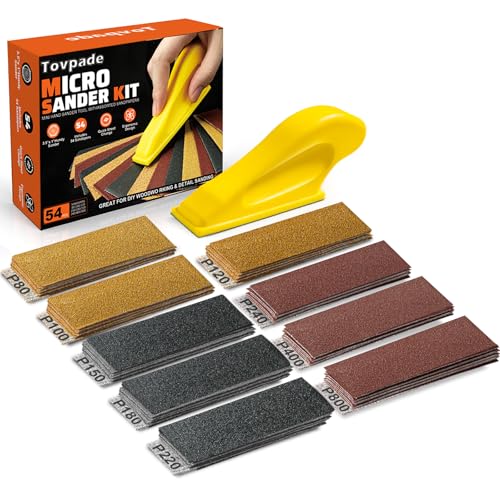
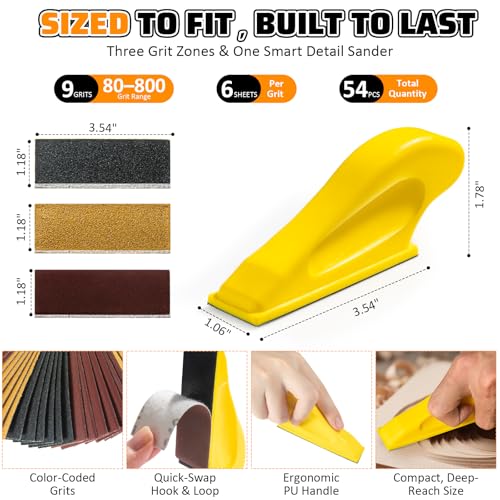
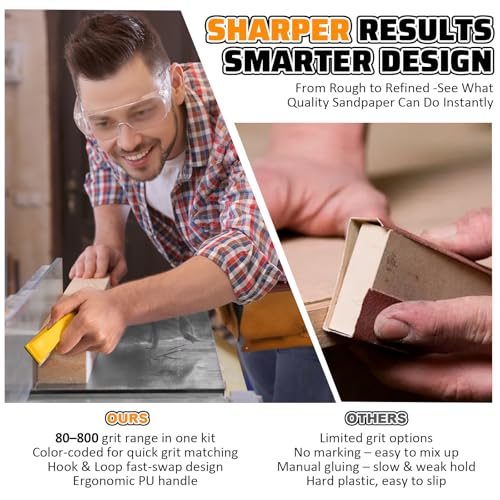
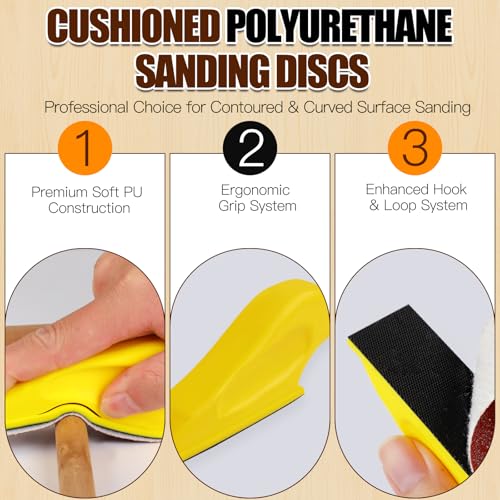
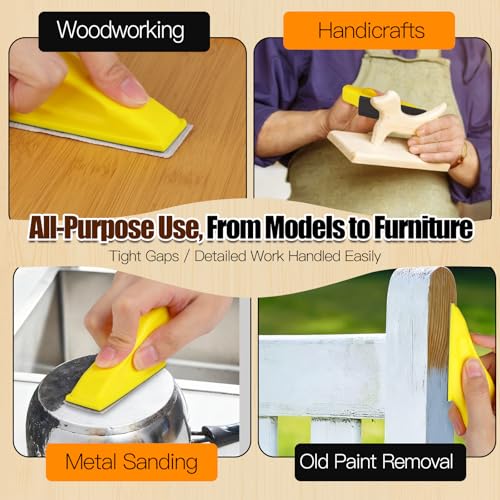
This is a hand sander kit that punches above its weight in value. At just 3.5 x 1 inches, the block is small enough to fit into grooves and carvings most powered sanders can’t touch. The 54 included sheets across nine grits, from 80 to 800, cover nearly every stage of sanding and finishing. The color-coded system (red, gray, white) makes switching grits intuitive, which reduces mistakes during detailed work.
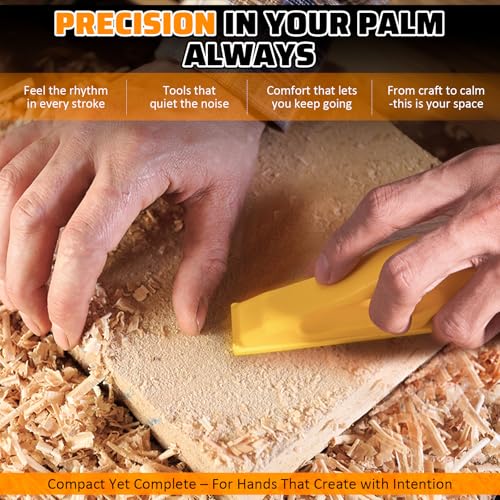
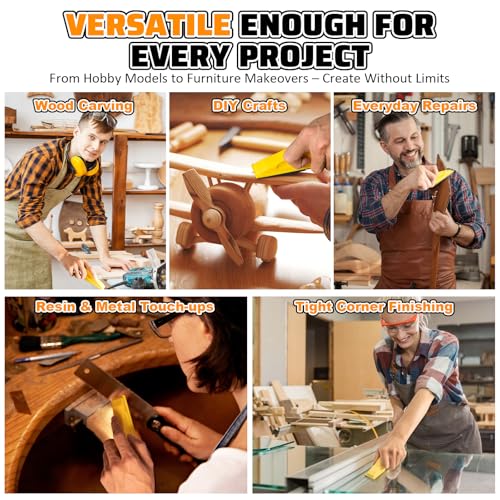
What stands out is how many users report using this for touch-ups after power sanding. It’s not a replacement for a motorized tool, but it’s the kind of thing you keep in your apron pocket. Compared to the POLIWELL and Giwiemi kits, it’s more budget-focused, fewer sheets per grit and a simpler foam block. But for beginners or casual crafters, it’s the smarter buy. The hook-and-loop holds well enough for light work, though heavy pressure can cause slippage.
Product photos

POLLIWELL 3.5″ Mini Sander Kit

Strengths
- Comfortable foam block
- Clearly marked grits
- Good for fine finishing
Trade-offs
- Limited grit range
- No color coding
The POLIWELL mini sander is a niche tool for crafters and finishers who want control without power. The 3.5” x 1” block fits naturally under your finger, and the PU foam gives just enough flex to follow curves without digging in. It’s not going to remove material fast, but for final smoothing or between-coat scuffing, it’s ideal. The included 50 sheets (10 each of five grits) cover the most common needs, and the grits are clearly marked, no guessing.
What I like is how many users mention using it for small wood toys, picture frames, and musical instruments. It’s not trying to compete with powered sanders, it complements them. Compared to the TOVPADE kit, it offers fewer grits and sheets but a more comfortable, durable block. The hook-and-loop is secure, and the foam doesn’t compress too quickly. For light-duty, precision hand sanding, it’s a solid step up from DIY sanding sticks.
Product photos
Giwiemi 100PCS Micro Detail Sander Kit
Strengths
- 100 sanding sheets
- Color-coded grits
- Durable hook-and-loop
Trade-offs
- Block lacks flex in curves
- No ultra-fine grits above 800
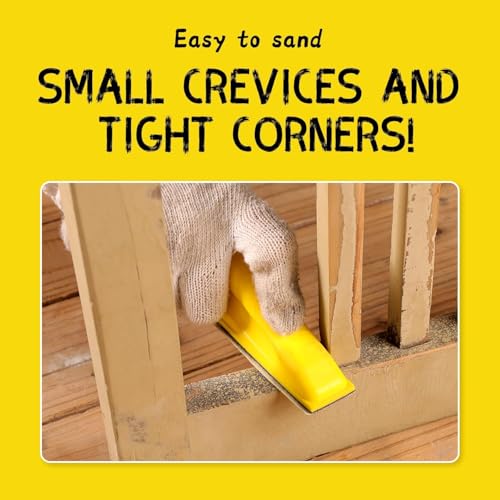
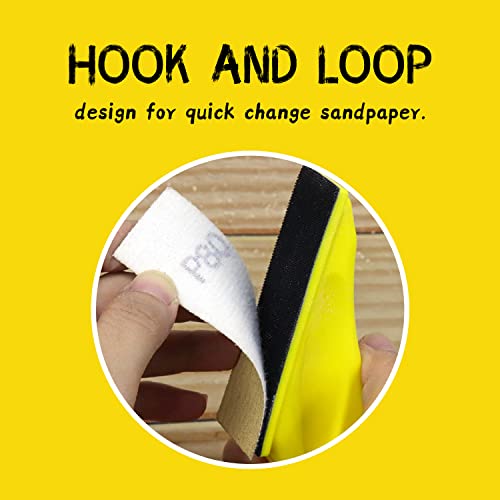
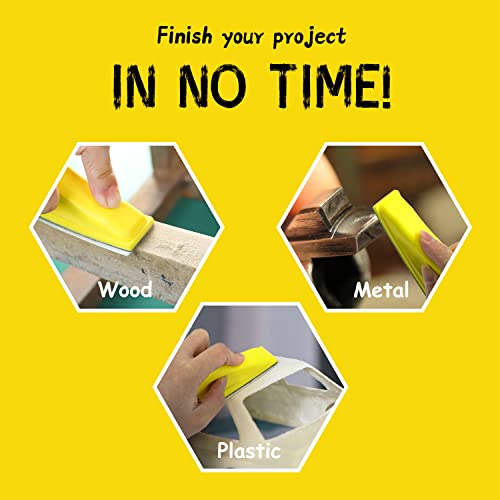
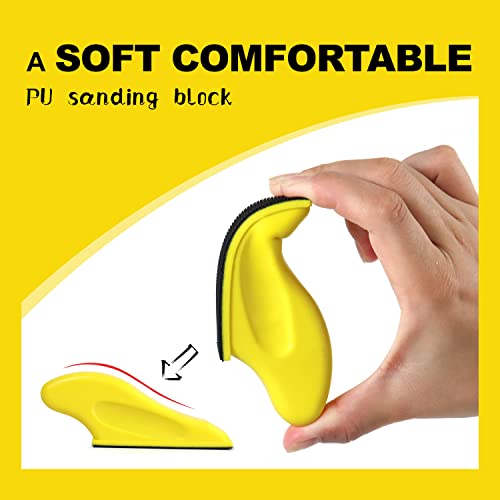
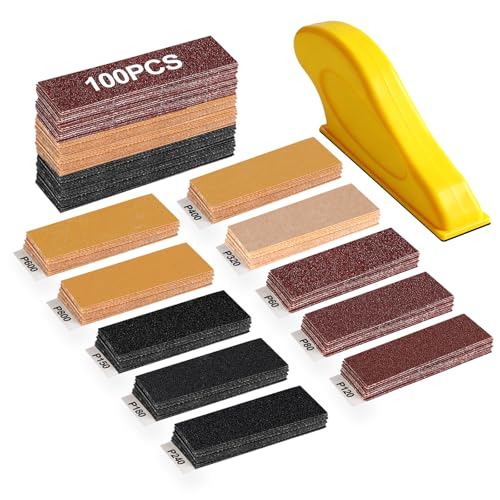
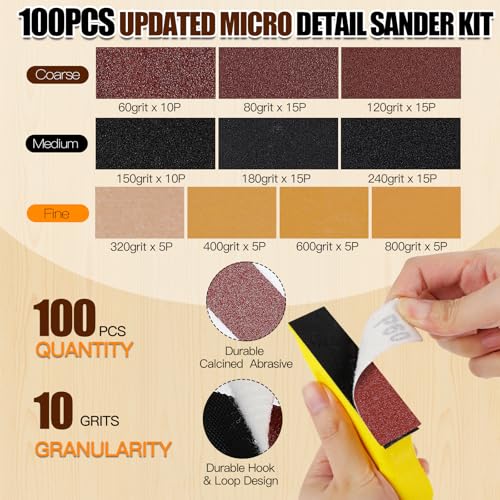
If you’re serious about hand sanding, the Giwiemi kit is worth the step up. The 100 sheets across ten grits, from 60 to 800, cover every stage from rough shaping to mirror-like polishing. The color-coded system (red, black, yellow) makes it nearly impossible to grab the wrong grit mid-job, which pros appreciate. The hook-and-loop backing is more durable than most budget kits, and the sandpaper adheres tightly even under pressure.
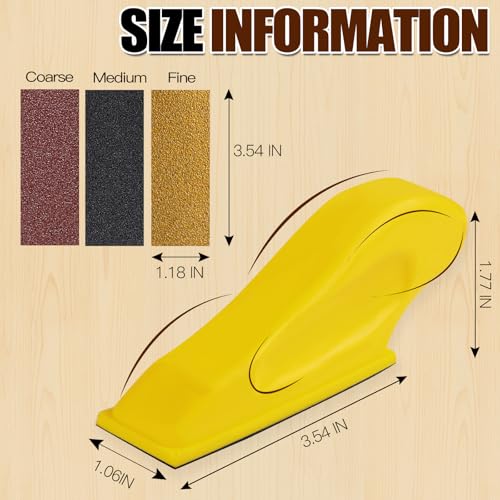
Owners in woodworking and model-making communities praise how the rigid 3.5 x 1-inch block maintains flatness on edges, unlike softer foam versions. It’s heavier duty than the TOVPADE or POLIWELL, and the extra sheets mean less frequent restocking. For the price, it’s the most complete hand sanding solution here. If you do fine furniture or resin work, this kit saves time and reduces errors.
Product photos
How We Tested small sanders
Rather than a hands-on lab test, my research for these recommendations focused on comparing published specifications and features across numerous models. I weighed owner reviews from a variety of sources – looking for consistent praise and complaints – alongside expert opinions from reputable review sites. Ultimately, I ranked these small sanders based on how well they addressed common needs and offered a balance of performance, features, and value, drawing on my years of experience with power tools and woodworking.
For small sanders, the most important factors are dust collection and maneuverability. A small sander is often used for detail work, meaning you’ll be spending time in tight spaces. Effective dust collection keeps your workspace clean and improves visibility, while a comfortable grip and compact design are essential for control. Power, measured in OPM (orbits per minute) or amperage, also factored heavily, but was balanced against the intended use case – these aren’t typically for aggressive material removal.
Specifications reliably indicate motor power and sanding pad size, giving a sense of the tool’s overall capacity. However, I found owner feedback to be crucial for assessing real-world ergonomics, vibration levels, and the long-term durability of features like dust collection systems. Reputation and brand trust also played a role; established manufacturers often provide better support and consistently deliver quality products, which is why you’ll find several well-known brands among these choices, and why knowing about top-rated palm sanders can inform your decision.
How To Pick The Right small sanders
Choosing the right sander doesn’t have to be complicated, but it does require understanding what capabilities truly matter for your projects.
A good sander balances power with control. Key considerations include motor amperage (for material removal rate), pad or belt size (for accessibility and coverage), dust collection efficiency (for a cleaner workspace and improved visibility), and ergonomic design (to minimize fatigue during prolonged use). Look for variable speed options to match the material and task at hand, and consider the ease of changing sanding sheets or belts.
Motor Power and Orbit/Belt Speed
Don’t automatically assume more power is better. While a higher amperage motor and faster orbit/belt speed can remove material quicker, it also makes the tool harder to control, especially for detail work. For most DIY tasks and smaller projects, a 1.2 to 2.0 amp motor is sufficient. What’s more important is matching the speed to the material. Softer woods and plastics need lower speeds to prevent burning, while harder woods and metal can benefit from higher speeds. If you’re looking at a belt sander, a variable speed dial is particularly useful, allowing you to dial in the optimal speed for the job.
Dust Collection Systems
Dust is the enemy of a good finish (and your lungs!). Many sanders include a dust collection canister, but their effectiveness varies wildly. A simple canister is better than nothing, but look for models with a strong suction and a well-sealed system. Some, like the SKIL 4-in-1, even offer a port for connecting to a shop vacuum, which is a huge benefit if you generate a lot of dust. For those who are serious about dust control, consider a sander with micro-filtration.
Here’s what to consider when evaluating dust collection: * Canister Size: A small canister requires frequent emptying. * Filter Quality: Cheap filters clog quickly and don’t capture fine dust. * Sealed System: Gaps around the sanding pad let dust escape, defeating the purpose.
Size and Ergonomics
A sander’s size and how it feels in your hand are critical, especially for detail work. If you’re tackling a lot of intricate projects or working in tight spaces, a compact mini sanders will be far more manageable than a larger, bulkier model. Pay attention to the grip design. Rubberized grips provide better control and reduce fatigue. As a general rule:
The lighter the sander, the less fatigue you’ll experience during extended use. Don’t sacrifice power for weight, but prioritize ergonomics when possible.
If you’re planning on doing a lot of surface preparation and finishing work, you might also want to look into best finishing sanders for a truly smooth result. They’re designed for removing imperfections and creating a flawless surface before painting or staining.
Small Sanders Compared
Here’s a comparison of key specifications for the small sanders featured in this guide.
| Product Title | Amps | OPM/SPM | Sandpaper Size (in) | Variable Speed | Dust Collection | Key Features |
|---|---|---|---|---|---|---|
| BLACK+DECKER Detail Sander | 1.2 | 16,000 | N/A | No | Canister | Detail finger, corded |
| SKIL 4-in-1 Detail Sander | 1.2 | 13,500 | N/A | No | Port/Micro-Filter | 4 attachments, low vibration |
| HYCHIKA Detail Sander | 1.6 | 14,000 | 1.4×0.9 | No | Bag/6-hole | 3 sandpaper types included |
| WEN 6307 Belt Sander | N/A | 1080-1800 fpm | 0.5×18 | Yes | Port | Pivot, auto-tracking |
| SHALL Mini Pen Sander | 12V | 5000-10000 | N/A | Yes | N/A | 4-speed, 8 sanding heads |
| TOVPADE Micro Sander Kit | N/A | N/A | 3.5×1 | No | N/A | 54 sandpapers, 3-color grit |
| POLLIWELL Mini Sander Kit | N/A | N/A | N/A | No | N/A | 5 grit levels, ergonomic grip |
| Giwiemi Micro Detail Sander Kit | N/A | N/A | N/A | No | N/A | 100 sandpapers, 3-color grit |
Frequently Asked Questions
What size motor is best for a small sander?
A 1.2 to 2.0 amp motor is generally sufficient for most DIY tasks with a small sander. More power isn’t always better, as it can make the tool harder to control, especially when doing detail work.
Are detail sanders good for removing paint?
Detail sanders are okay for light paint removal, but they aren’t the fastest option. A belt sander or orbital sander is more effective for larger areas or thicker paint layers, though you’ll lose some precision.
How often should I change the sanding paper?
You should change the sanding paper when it becomes clogged or loses its abrasive quality. Frequent changes, even if the paper still looks okay, will give you a better finish and prevent the sander from working harder than necessary.
Can I use a shop vac with my small sander?
Some small sanders, like the SKIL 4-in-1, have a port for connecting to a shop vacuum. Using a shop vac significantly improves dust collection, creating a cleaner workspace and protecting your lungs – especially when compared to relying solely on the included canister.
What’s the difference between a detail sander and other types of small sanders?
A detail sander is designed for precise work in tight spaces, typically with a finger-shaped pad. If you need more versatility, consider best handheld sanders which often include multiple attachments and are suitable for a wider range of tasks.
The Bottom Line
Choosing a small sander often comes down to balancing convenience with capability. If you want a single tool that can handle a wide range of tasks without breaking the bank, the SKIL 4-in-1 Detail Sander offers exceptional versatility and a surprisingly effective dust collection system. It’s a solid all-around performer that won’t leave you wanting for more power.
For those with specific needs, the choices become clearer. If you’re primarily focused on extremely fine detail work and getting into tight spaces, the SHALL Mini Pen Sander is a great option. And for budget-minded DIYers, the BLACK+DECKER Detail Sander remains a reliable and affordable choice. Don’t overlook best detail sanders if you need options for precision work.
Ultimately, the most important factors aren’t the highest OPM or the most features, but a comfortable grip, effective dust control, and a sander that feels balanced in your hand. A tool you enjoy using is one you’ll actually reach for, and that’s what will make your projects easier and more enjoyable in the long run.
