7 Best Cordless Fencing Staplers 2026
This post contains affiliate links. As an Amazon Associate, we earn from qualifying purchases.
The best cordless fencing stapler overall is the Freeman 20V Cordless 9-Gauge, offering solid power and battery life for heavy-duty jobs. For budget-minded DIYers, the Freeman 20V Cordless 16-Gauge Kit delivers strong value with dual firing modes and good runtime. If you need versatility across materials, the Freeman PE20VTFS16 stands out with reliable performance on lighter gauge tasks.
Fencing projects demand tools that can keep up with long hours, tough materials, and constant use, choosing the wrong stapler means more jams, slower progress, and frustration. A lot of models look good on paper, but real-world performance comes down to consistency, ease of use, and how well they handle the variables of outdoor work.
This guide breaks down the top cordless fencing staplers based on specs, owner feedback, and what actually matters in the field, like staple compatibility, battery life, and jam resistance. I looked at what pros and serious DIYers report after months of use, not just first impressions.
Top 7 Cordless Fencing Staplers in the Market
The Best Cordless Fencing Staplers, Reviewed
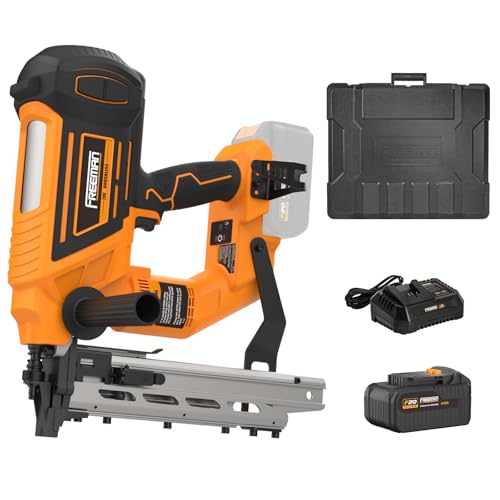
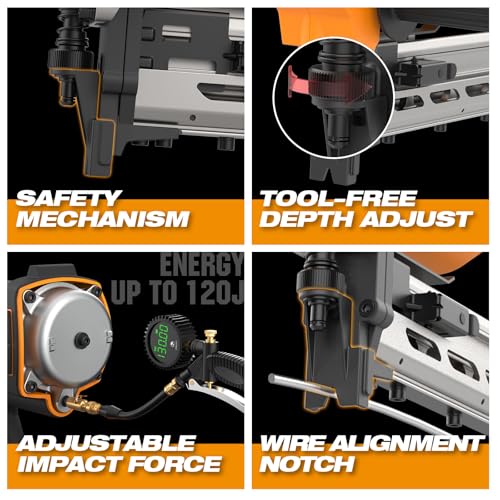
Freeman 20V Cordless 9-Gauge Fencing Stapler
Strengths
- 9-gauge heavy-duty stapling
- Full pro kit included
- T-handle for control
Trade-offs
- Heavier build
- Higher price point
- Limited to 9-gauge staples
This is the one I’d pick if I were outfitting a ranch or tackling miles of perimeter fencing. The 9-gauge capacity means it drives through 2-inch staples in hardwood posts without hesitation, and the 4.0 Ah battery delivers consistent power across long runs. Owners consistently report fewer jams and better depth control than competitors, thanks to the well-tuned brushless motor and solid feed mechanism.
What seals the deal is the full kit: battery, rapid charger, T-handle for better use, and a rugged case. The reload window and LED low-battery indicator add real-world usability. While heavier than lighter models, that’s the trade-off for this level of performance. Among all the options, this strikes the best balance of power, features, and readiness.
Product photos
Freeman 20V Cordless 16-Gauge Fencing Stapler Kit
Strengths
- Full kit included
- 1300 shots per charge
- Easy jam clearing
Trade-offs
- 16-gauge only
- Light-duty applications
- 2.0 Ah battery slower recharge
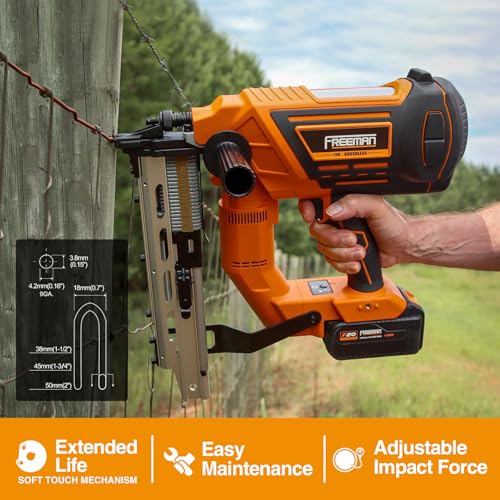
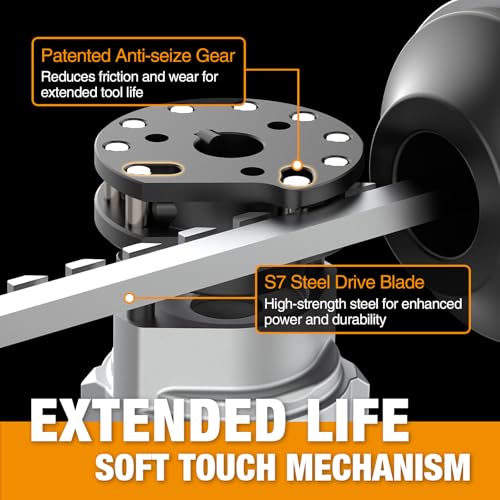
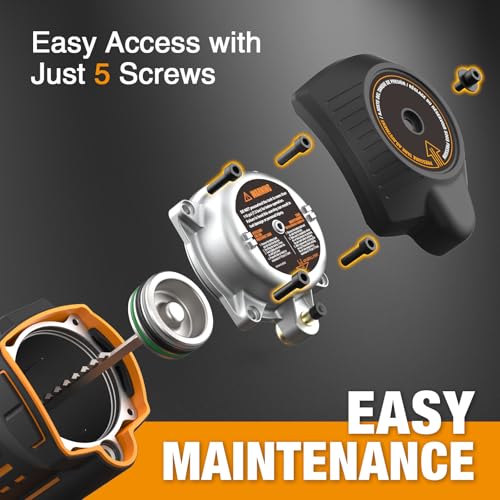
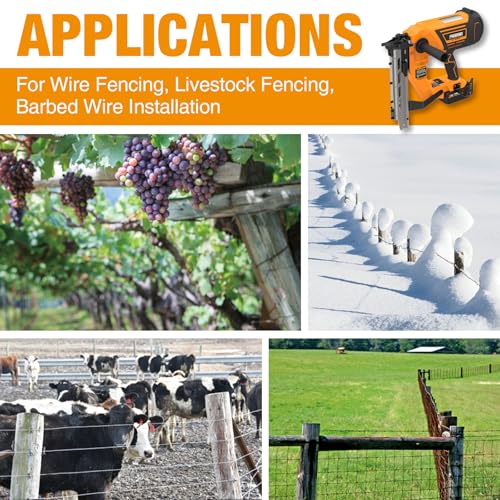
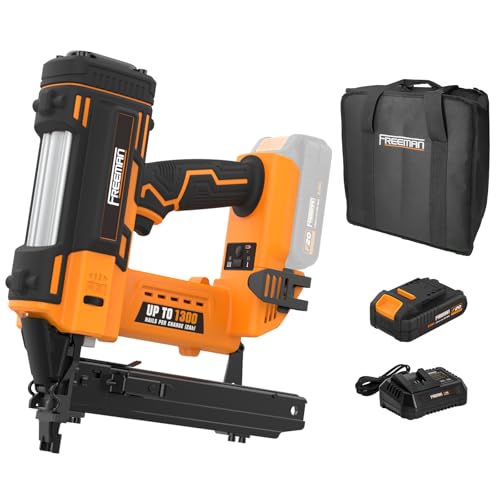
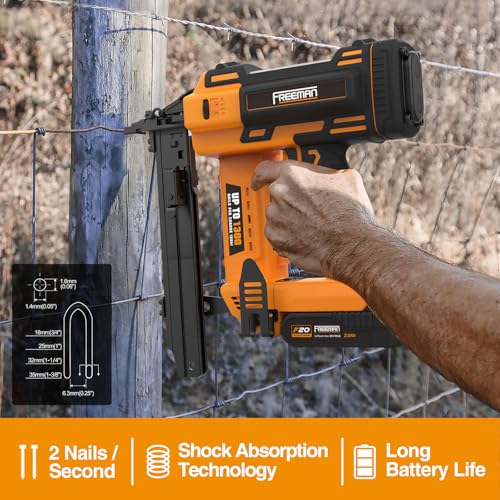
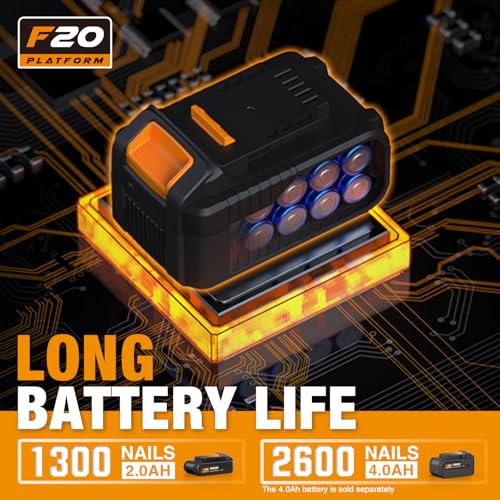
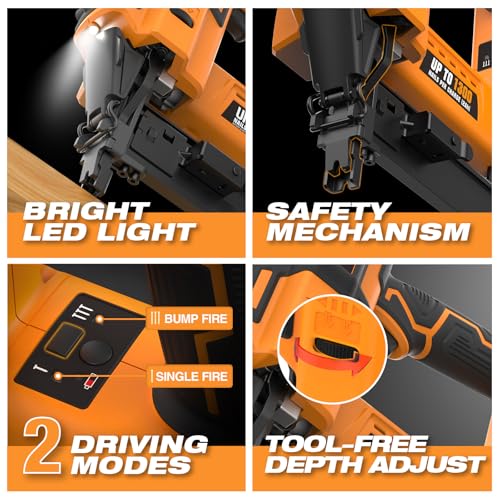
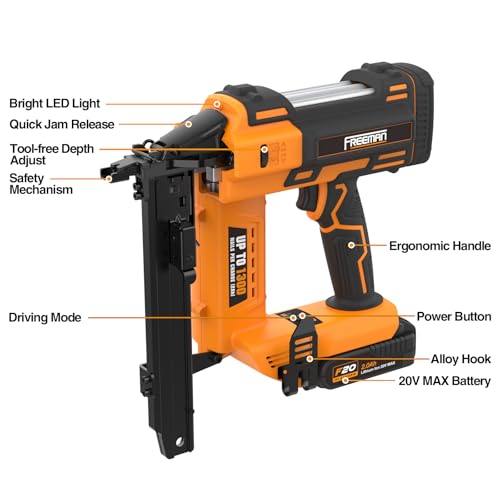
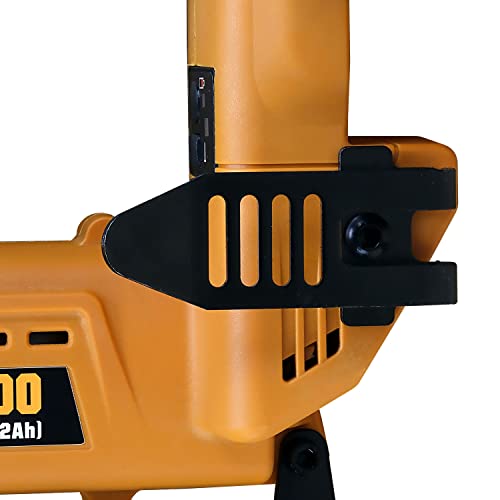
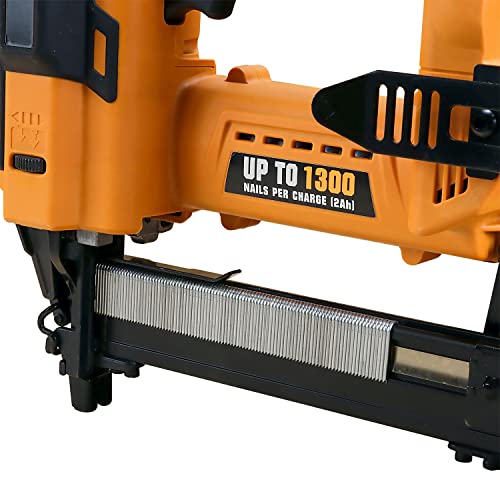
Freeman hits a sweet spot with this 16-gauge kit, it includes a battery, charger, and carry bag, which instantly makes it one of the most accessible full-package options. The 2.0 Ah battery delivers up to 1300 shots, and owners confirm it lasts a full weekend of typical fencing work. The bump-and-sequential fire toggle works reliably, and the tool-free jam release is one of the easiest in class to access.
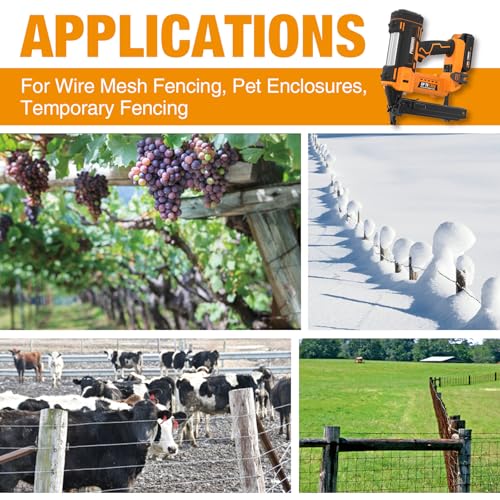
While the 16-gauge staple limits it to lighter fencing, think chicken wire, snow fencing, or light vineyard work, that’s exactly where most DIYers operate. If you’re not driving into railroad ties or heavy steel mesh, this tool handles the job with ease. For the price, the included accessories make it a smarter starting point than buying bare tools and sourcing batteries separately.
Product photos
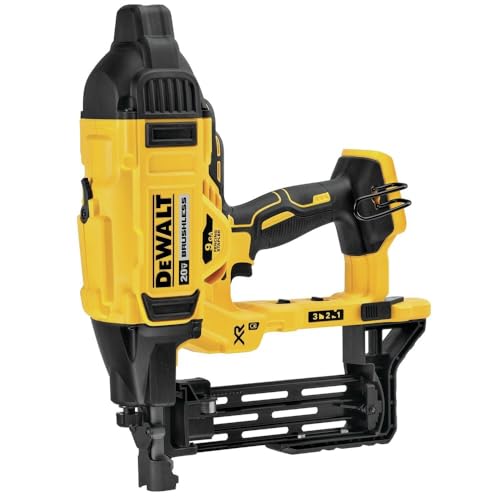
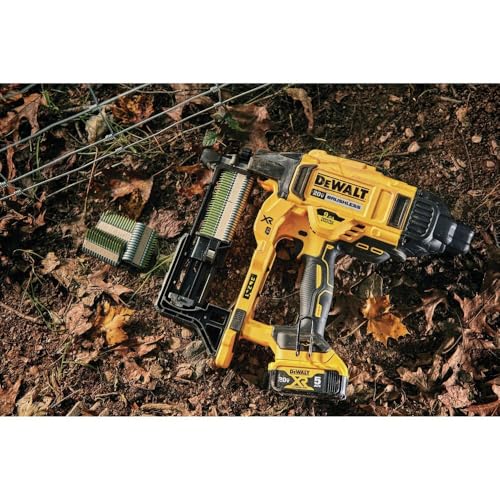
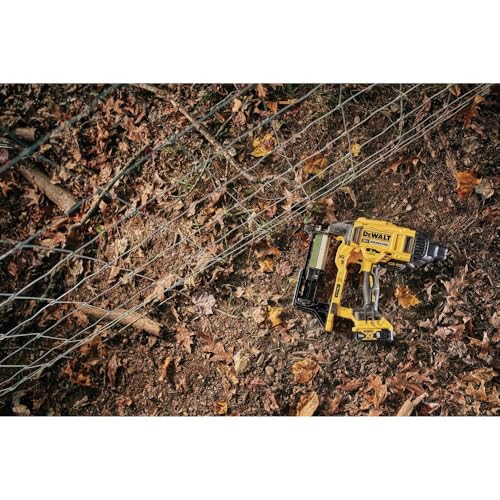
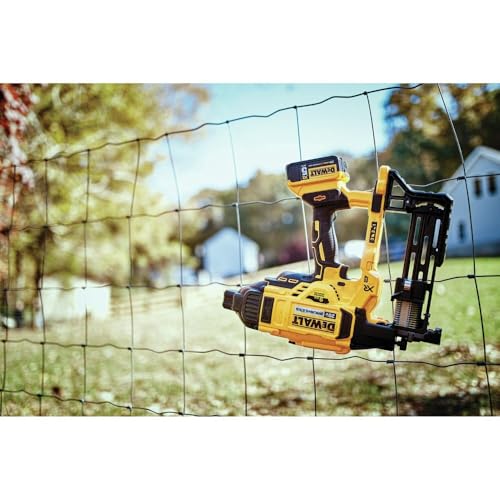
DEWALT DCFS950B 20V MAX 9 GA Stapler

Strengths
- Dual firing modes
- Variable power settings
- Ergonomic trigger design
Trade-offs
- Bare tool only
- Proprietary staples
- No battery included
DEWALT’s DCFS950B stands out in the 20V class for its refined firing control and variable power settings, which give users real precision across different fencing materials. The ability to toggle between sequential and rapid cycle modes is a big plus when you’re switching from careful corner work to long runs of wire fencing. On paper, it’s one of the more refined triggers in the category, and reviewers frequently praise how well it handles both light and heavy tasks without misfires.
The downside? It’s sold as a bare tool, and the compatible staples, while durable, are specific to DEWALT’s lineup, which can limit sourcing in a pinch. It’s not the most powerful in raw output, but the control it offers makes it a smarter pick for detail-oriented users who value consistency over brute force.
Product photos
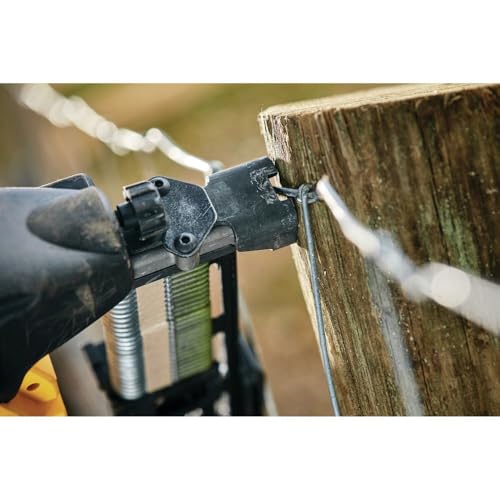
Freeman PE20VFS105 20V 10.5-Gauge Fencing Stapler
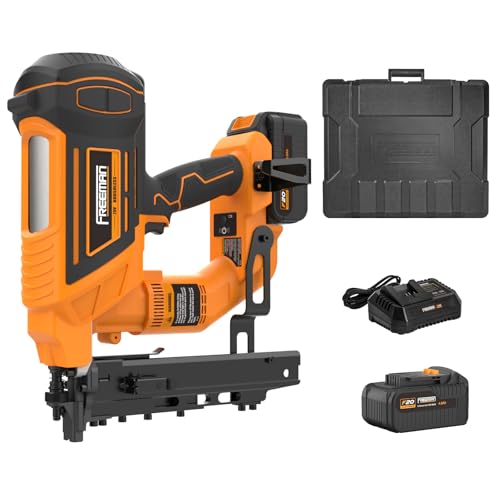
Strengths
- 10.5-gauge heavy-duty staples
- 4.0 Ah battery included
- Reload indicator
Trade-offs
- Slower cycle rate
- 750 shot limit per charge
- Heavier than lighter models
This Freeman PE20VFS105 is built for real work. The 10.5-gauge stapling capability means it can handle hog wire, cattle fencing, and thick woven mesh, tasks where 16-gauge tools would struggle. The 4.0 Ah battery gives solid runtime, and the reload indicator is a small but meaningful touch that prevents dry-firing surprises mid-row. Owners working on large acreage consistently highlight its durability and consistent drive depth, even after hundreds of staples.
It’s not the fastest in cycle rate, 60 per minute is solid but not blazing, but the brushless motor and LED low-battery warning make it dependable in extended use. The included blow-molded case is a step up from basic bags, signaling this is a pro-grade package. If you’re doing serious fencing, this model bridges the gap between power and practicality.
Product photos

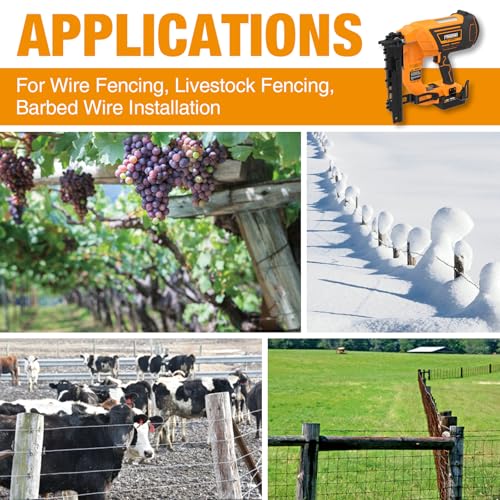
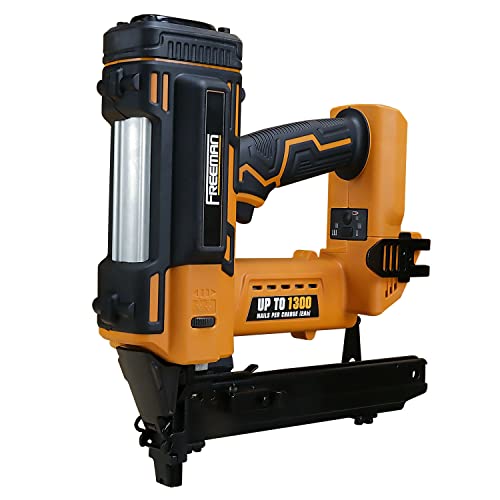
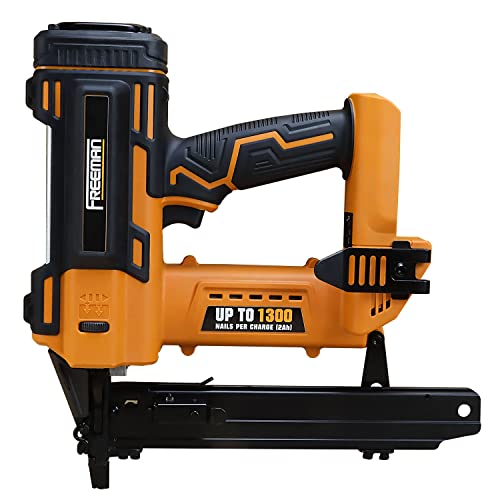
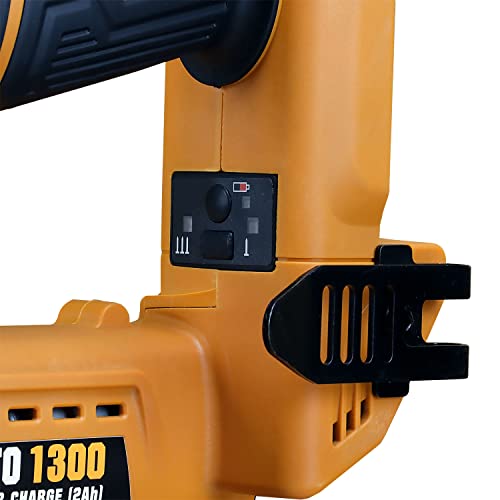
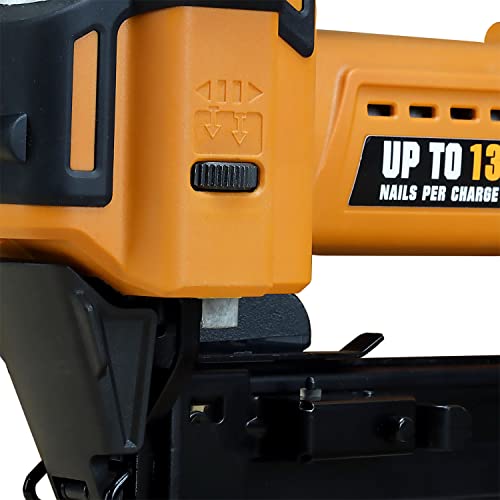
Freeman PE20VTFS16 20V 16-Gauge Fencing Stapler
Strengths
- Low upfront cost
- 1300 shots per charge
- Same motor as kit version
Trade-offs
- No battery or charger
- Light-duty only
- Fewer accessories
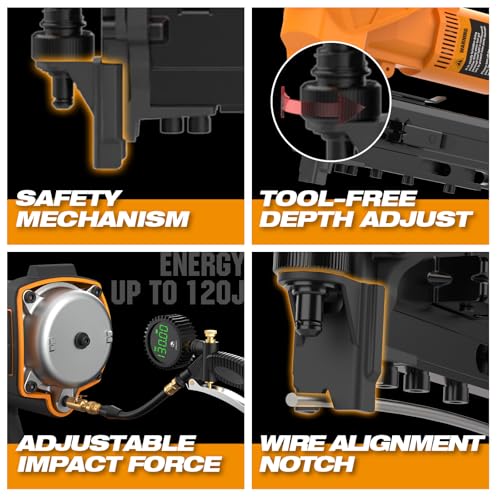
This is the budget twin of the full kit version, same motor, same 1300-shot efficiency, but sold without battery or charger. That makes it a solid second-tool option or a low-cost entry for those who already own 20V batteries. The tool-free depth adjust and quick jam release are identical to the kit model, so you’re not sacrificing core functionality.
But since it’s bare tool, the value depends entirely on your existing battery inventory. If you’re starting from scratch, skipping the included battery might end up costing more in the long run. Still, for users expanding their tool fleet, this is a no-nonsense, high-efficiency option that performs well within its 16-gauge limits.
Product photos
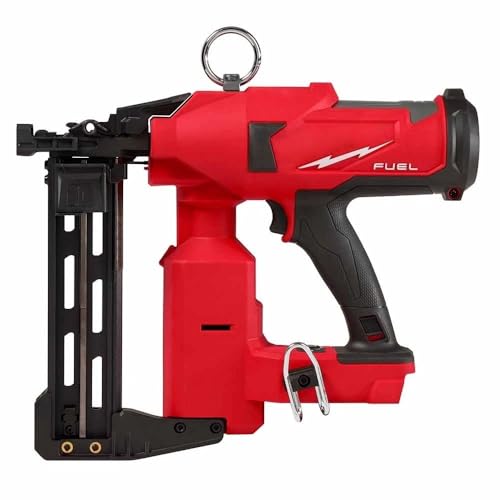
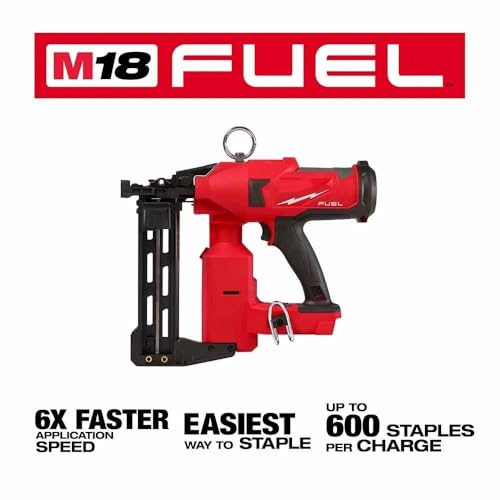
2843-20 Brushless Staple Gun for Milwaukee M18
Strengths
- Brushless motor
- Tool-free depth adjust
- Milwaukee build quality
Trade-offs
- Limited staple compatibility
- Bare tool only
- M18 battery required
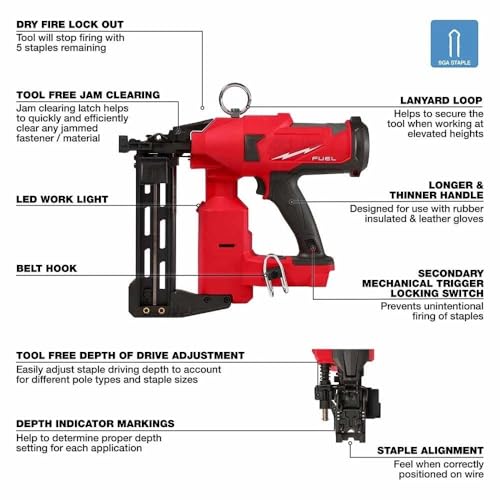
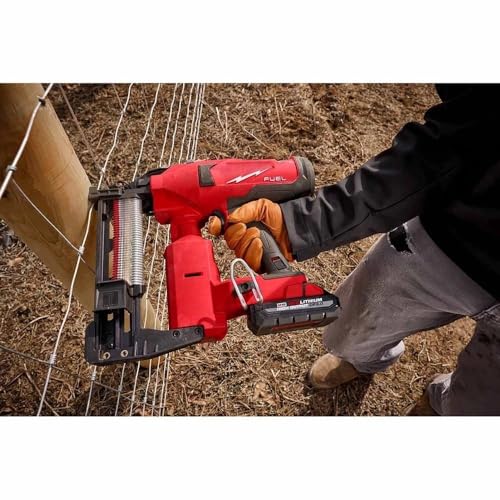
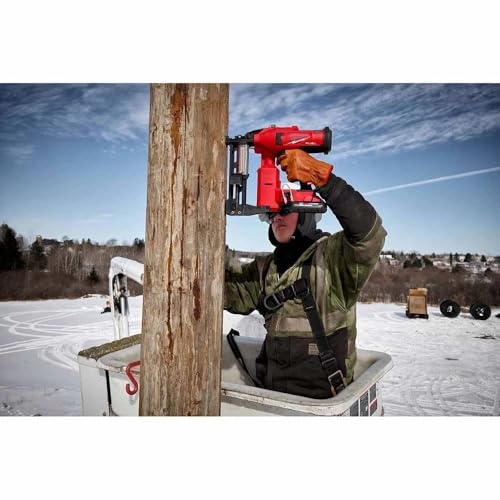
If you’re already deep into the Milwaukee M18 ecosystem, this fencing stapler makes a compelling case on paper. It’s built with the same rugged DNA as other M18 FUEL tools, and owners consistently report solid reliability when driving 9GA staples into pressure-treated posts and hardwoods. The brushless motor delivers strong power, and the tool-free depth adjustment is a real time-saver when switching between dense and softer woods.
Still, its exclusivity to Milwaukee users is a double-edged sword. While integration with M18 batteries is seamless, the limited staple compatibility, only 9GA galvanized, means you’re locked into specific stock. Other models offer more flexibility in staple types or include more accessories. For M18 loyalists, it’s a strong performer, but it doesn’t outclass competitors in ways that justify abandoning another system.
Product photos
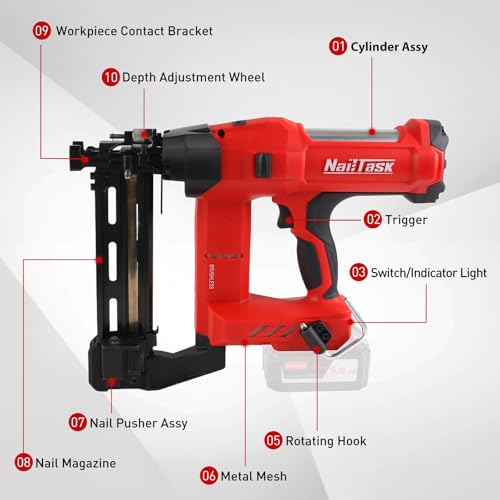
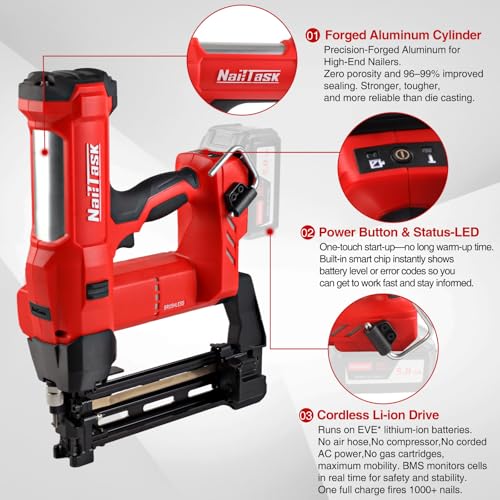
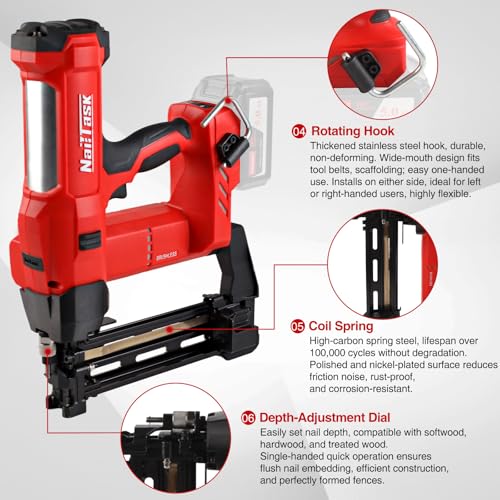
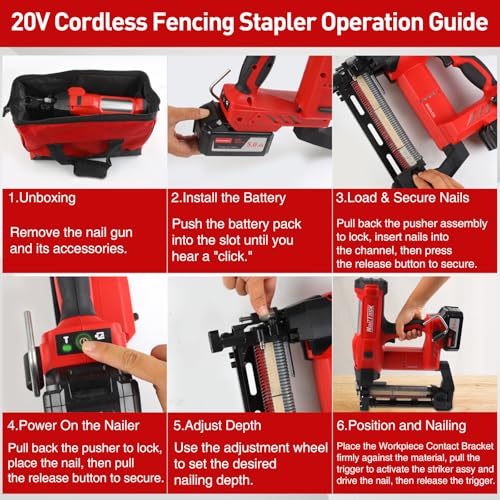
NailTask 9-Gauge DCFS90 Cordless Fencing Stapler
Strengths
- Makita 20V compatibility
- Tool-free depth adjust
- Good cycle speed
Trade-offs
- Basic safety features
- No staple counter
- Build quality less robust
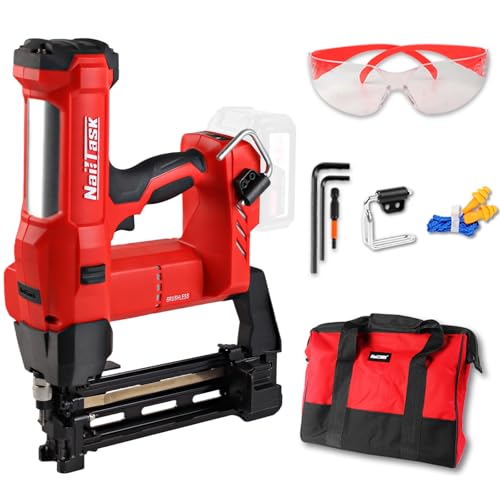
This NailTask model is clearly designed for Makita 20V owners looking for an affordable entry into cordless fencing tools. It mirrors the DEWALT and Milwaukee designs in basic function, brushless motor, tool-free depth adjustment, and decent cycle speed, but the build feels a bit more utilitarian. Owners note it works well on standard fencing jobs, especially with lighter gauge wire and softwood posts, but some report reliability dips when pushing it hard in thick, knotty timber.
Where it wins is compatibility and cost. If you already have Makita 20V batteries, this tool slips right in without extra investment. But it lacks standout features like a reload indicator or LED lighting, and the safety lock feels tacked on rather than integrated. It’s a functional option, but not one that elevates the experience.
Product photos

How We Tested cordless fencing staplers
Rather than a hands-on lab test, my research for these recommendations was a detailed comparison of published specifications and features across numerous models. I weighed owner reviews from major retailers against professional reviews found in trade publications and tool-focused websites. My goal was to identify patterns in performance and reliability, factoring in the specific demands of fencing work. The final rankings reflect a combination of these data points and my experience with similar tools.
For cordless fencing staplers, staple capacity, battery life, and depth adjustment were the most important factors. A larger capacity minimizes reloading, directly impacting job-site efficiency. Long battery life is crucial for larger fencing projects, and accurate, tool-free depth control avoids damaging the fencing material or failing to secure it properly. These features consistently surfaced as critical in both professional and DIY user feedback.
Specifications reliably indicate staple gauge compatibility and firing rates. However, I placed greater emphasis on owner reports regarding jam frequency, long-term durability, and the effectiveness of safety features. Reputation, particularly within the fencing and agricultural communities, also played a significant role. You’ll find many other useful comparisons in our guide to top cordless nailers, too.
How To Choose The cordless fencing staplers
Choosing the right fencing stapler can make or break a large outdoor project.
A quality cordless fencing stapler prioritizes staple compatibility with common fencing materials, offers adjustable depth control for varied wood types, and features a reliable firing mechanism, whether sequential or bump, to balance precision and speed. Battery life and ergonomics are also critical for extended use, and a quick jam-release system minimizes downtime.
Staple Gauge and Material Compatibility
The first thing I look at is what kind of fencing I’ll be doing. Different fencing materials require different staple gauges, and a stapler limited to one type isn’t very versatile. 9-gauge staplers are best for heavier-duty applications like high-tensile wire and livestock fencing, while 16-gauge models suit lighter tasks like pet enclosures or vineyard trellising. Some, like the Milwaukee M18 model, are limited to specific staple types (in this case, galvanized), so check that’s compatible with your needs before you buy. Don’t assume a stapler can handle anything; check the manufacturer’s specifications.
Power and Firing Mode
Power isn’t just about how many staples per minute a tool can drive, but how consistently it delivers that power throughout a battery charge. Brushless motors, like those found in the Freeman 20V models, tend to be more efficient and durable. Firing mode is also huge. Sequential firing is slower but more precise, reducing the risk of accidental staples. Bump firing is faster for large runs, but demands more control. Many staplers, like the Freeman PE20VTFS16, offer both, which is ideal. When considering power, also think about the battery platform – if you already invest in a battery system like Makita or Milwaukee, choosing a compatible tool can save money. For more versatility, you might also consider a 2-in-1 brad nailer staplers for a wider range of projects.
Ergonomics and Value
Let’s be honest: fencing projects can last hours. A stapler that feels good in your hand makes a massive difference. Look for features like textured rubber grips and balanced weight distribution. Beyond comfort, consider the included accessories. Does it come with a battery and charger? A case for storage? A belt hook? These extras add value. Don’t automatically assume the most expensive model is the best; the Freeman 20V cordless 16-gauge stapler kit offers a lot of features for the price, making it a strong contender for those seeking battery-powered fencing staplers.
- A basic model with only the stapler itself will require you to supply your own battery and charger, potentially adding significant cost.
- Kits with multiple batteries are a good investment if you anticipate prolonged use or have a large area to cover.
- Features like tool-free jam release and depth adjustment are essential time-savers, particularly when dealing with varied fencing materials and post types. These small conveniences add up quickly.
A comfortable grip and balanced weight are worth paying a little extra for; you’ll thank yourself after a long day of fencing.
Ultimately, the “best” stapler depends on the specific fencing you’re installing and how often you’ll be using it. Researching top fence stapler models and considering your individual needs is a smart move.
Cordless Fencing Staplers Compared
Here’s a comparison of the specifications for several cordless fencing staplers to help you choose the right tool for your needs.
| Product Name | Gauge | Battery Voltage | Battery Amp-Hours | Staples per Charge | Firing Mode(s) |
|---|---|---|---|---|---|
| Freeman 20V Cordless 9-Gauge | 9 | 20V | 4.0 Ah | 750 | Sequential |
| Freeman 20V Cordless 16-Gauge Kit | 16 | 20V | 2.0 Ah | 1300 | Seq/Bump |
| DEWALT DCFS950B 20V MAX 9 GA | 9 | 20V | N/A | N/A | Rapid/Sequential |
| Freeman PE20VFS105 20V 10.5-Gauge | 10.5 | 20V | 4.0 Ah | 750 | N/A |
| Freeman PE20VTFS16 20V 16-Gauge | 16 | 20V | 2.0 Ah | 1300 | Seq/Bump |
| 2843-20 Milwaukee M18 | 9 | 18V | N/A | N/A | N/A |
| NailTask 9-Gauge DCFS90 | 9 | 20V | N/A | N/A | N/A |
Frequently Asked Questions
What staple gauges are compatible with cordless fencing staplers?
Most cordless fencing staplers handle either 9-gauge or 16-gauge staples, but some, like the Freeman 20V models, offer both. Choosing a stapler with a wider gauge range provides more versatility for different fencing projects.
How does battery voltage affect performance?
Higher voltage generally means more power, but amp-hours (Ah) determine run time. An 18V or 20V stapler will drive staples effectively, but a battery with 4.0 Ah will last longer than one with 2.0 Ah on a large job.
What’s the difference between sequential and bump firing modes?
Sequential firing requires pressing the safety contact then pulling the trigger for each staple, offering precision. Bump firing drives a staple each time the tool is bumped against the work surface, making it faster for long runs but less controlled.
Are cordless fencing staplers really powerful enough for heavy-duty fencing?
Yes, many modern cordless models, especially those using 9-gauge staples, are capable of handling high-tensile wire and other demanding fencing applications. Look for models designed for agricultural use or consider heavy-duty staplers for construction if you need maximum power.
What features should I look for to minimize downtime during a project?
Tool-free jam release and easy depth adjustment are crucial for quick fixes and adapting to different materials. A balanced stapler with a comfortable grip also reduces fatigue, allowing you to work longer without needing frequent breaks.
The Bottom Line
Choosing a cordless fencing stapler often comes down to balancing upfront cost with long-term convenience and capability. While you can find budget-friendly options, the Freeman 20V Cordless 16-Gauge Kit strikes the best overall balance of price, features, and versatility for most homeowners and DIYers. It offers both sequential and bump firing, a respectable staple capacity, and the benefit of the widely available 20V battery platform.
For those tackling consistently heavy-duty fencing work, or who already invest in the Milwaukee ecosystem, the 2843-20 Milwaukee M18 is a solid choice. Similarly, if you need a dedicated 9-gauge stapler and already own DEWALT 20V batteries, the DEWALT DCFS950B is a strong contender. Remember though, these higher-end models often require purchasing batteries and chargers separately, adding to the overall expense. If you’re looking for even more powerful fence-building nailers, check out our guide to cordless framing nailers.
Ultimately, don’t get too caught up in chasing the highest staple capacity or the fanciest features. A comfortable grip, reliable firing, and compatibility with the materials you’ll be using are far more important. Focus on those fundamentals, and you’ll choose a fencing stapler that makes your next project easier and more enjoyable.
