
7 Best Cordless Fence Staplers for 2026
This post contains affiliate links. As an Amazon Associate, we earn from qualifying purchases.
The Freeman PE20VFS105 10.5-Gauge is the best cordless fence stapler for heavy-duty jobs, offering strong power and reliable performance. For most DIYers and smaller projects, the Freeman 20V 9-Gauge is a smarter, more affordable pick that still delivers solid runtime and ease of use.
Fencing work is hard enough without fighting your tools. A weak or unreliable stapler can turn a straightforward job into a frustrating slog, especially when you’re miles from the garage or stuck with constant jams and dead batteries.
This guide cuts through the marketing and focuses on what actually matters: power, staple compatibility, battery life, and real-world usability. I compared specs, analyzed owner feedback, and evaluated features that make a difference on the job, so you can pick a stapler that keeps up with your workload and lasts season after season.
Top 7 Cordless Fence Staplers in the Market
The Best Cordless Fence Staplers, Reviewed
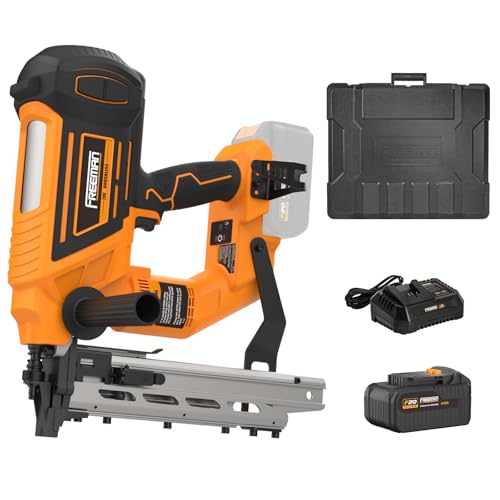
Freeman 20V 9-Gauge Cordless Fencing Stapler
Strengths
- 9-gauge power
- 750 shots per charge
- Tool-free depth adjust
- Reload indicator
- Includes T-handle and case
Trade-offs
- Heavier than lighter gauge models
- Higher staple cost
- Limited to 9-gauge
This is the model I’d choose if I were outfitting a serious fencing rig for ranch or farm use. The 9-gauge staples give it real authority, enough to tackle high-tensile wire and heavy woven fencing without hesitation. On paper, the brushless motor and 4.0 Ah battery combo stand out, and owners consistently report getting close to 750 shots per charge, which is solid for a tool in this class.
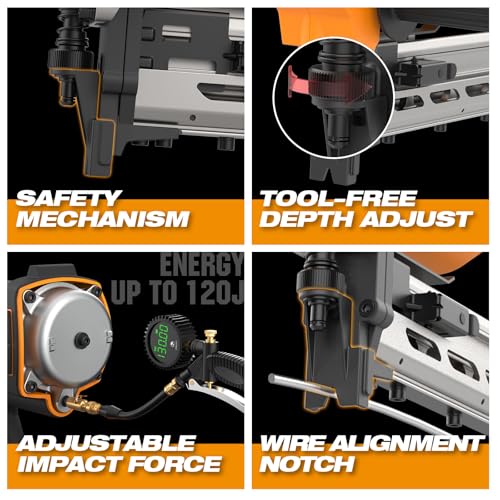
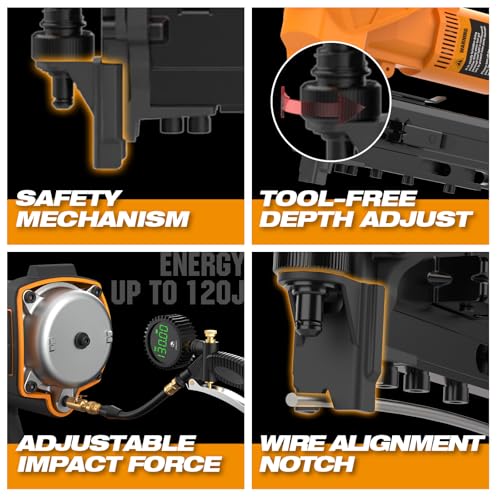
What really pushes it ahead is the full kit: T-handle for better control on long runs, a durable case, and a reload indicator that prevents dry-firing. The tool-free depth adjust is genuinely useful when switching between hardwood posts and softer pine. Compared to budget 16-gauge models, this one doesn’t just feel heavier, it performs like it belongs on professional sites.
Product photos
Freeman PE20VFS105 10.5-Gauge Cordless Fencing Stapler
Strengths
- 10.5-gauge balance of power
- 750 shots per charge
- Tool-free depth adjust
- Reload indicator
- Durable case included
Trade-offs
- Not as powerful as 9-gauge
- Staples less common than 16-gauge
- Slightly heavier than 16-gauge
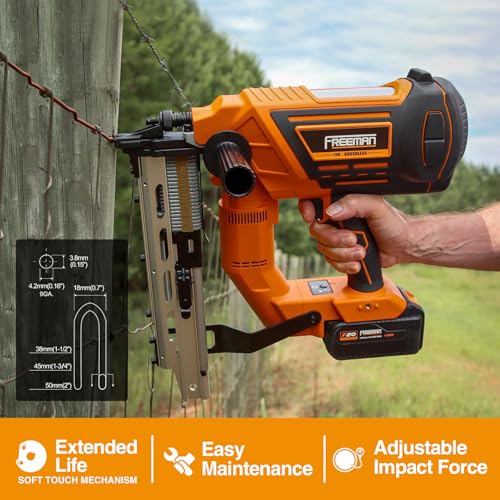
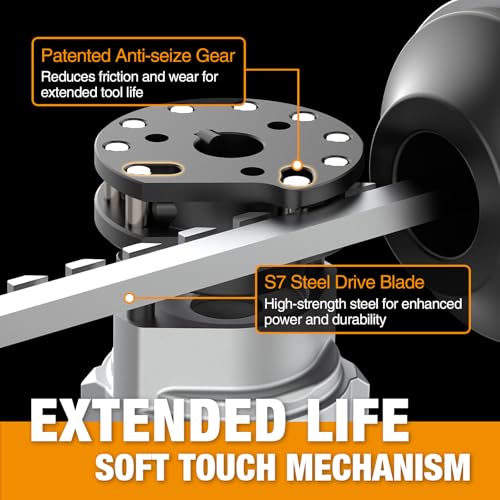
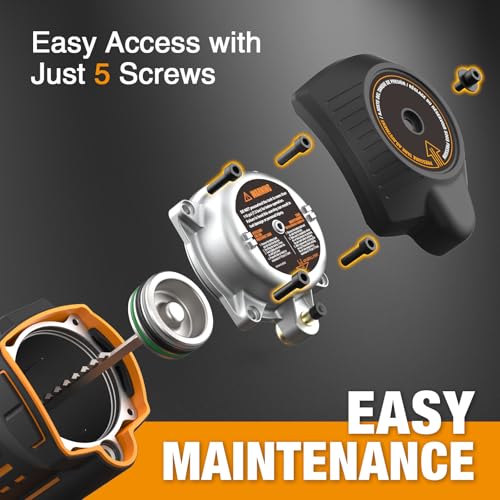
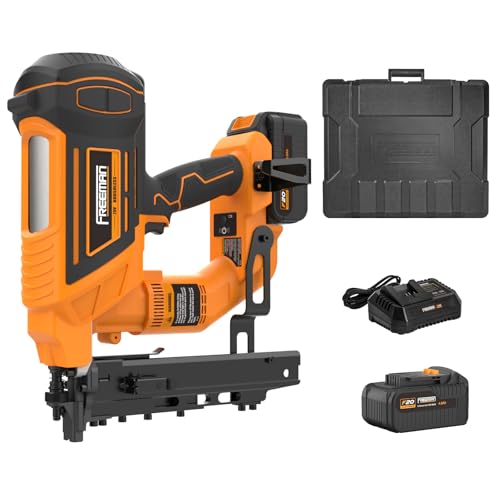
This model sits right in the sweet spot between the 9-gauge beast and the lighter 16-gauge, 10.5-gauge staples give it more holding power than 16-gauge without the weight and staple cost of 9-gauge. It’s built for hog panels, cattle fencing, and deer control, and owners confirm it handles 1-9/16” staples cleanly in treated and dense wood.
With the same 4.0 Ah battery as the 9-gauge model, it delivers 750 shots per charge and shares the reload indicator, LED low-battery warning, and wire alignment notch. It’s essentially the 9-gauge’s slightly leaner sibling, same durability, slightly less overkill. If you don’t need the absolute maximum staple thickness but still want pro-grade performance, this is my pick over the heavier option.
Product photos

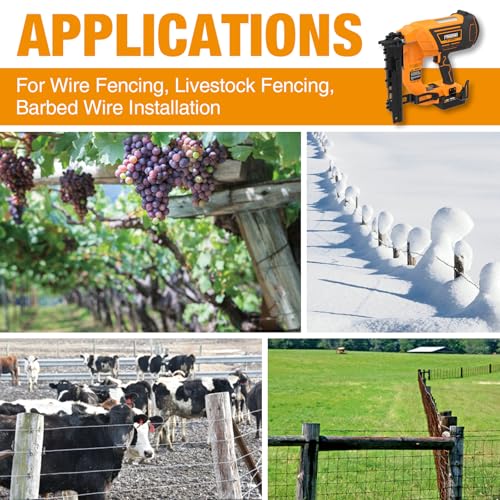
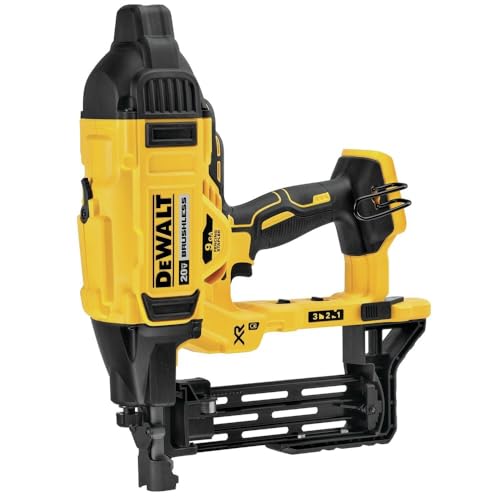
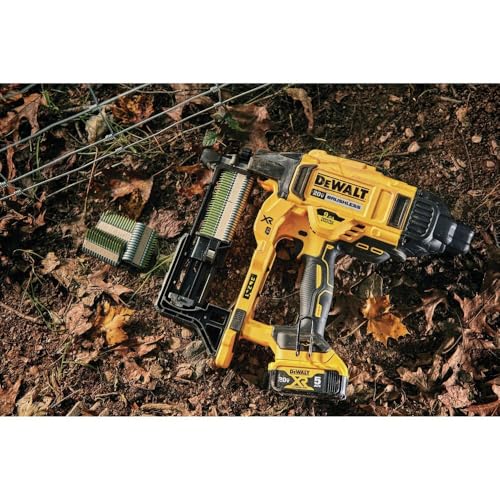
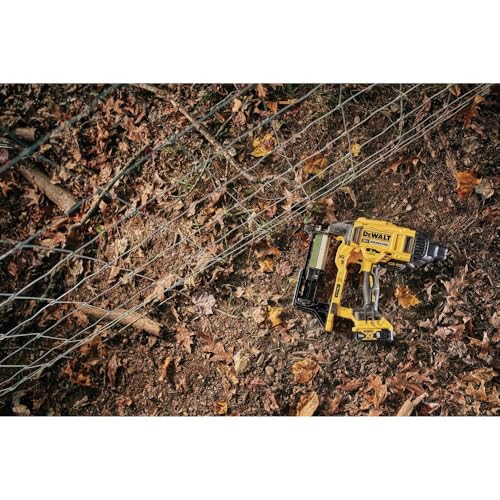
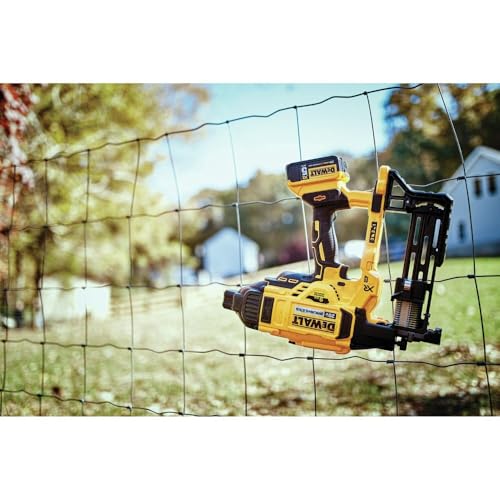
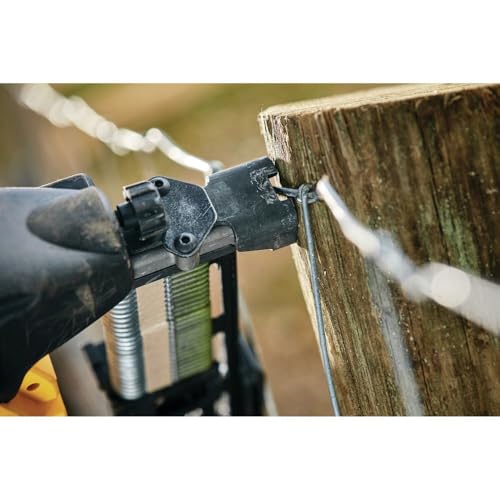
DEWALT DCFS950B 20V MAX 9-Gauge Stapler

Strengths
- Sequential and rapid fire modes
- Variable power settings
- Tool-free trigger switch
- Belt hook adjustable left or right
- Solid DEWALT build
Trade-offs
- No battery or charger included
- No staple counter
- Fewer included accessories
This is a precision-focused tool for users who value control over raw convenience. DEWALT’s sequential and rapid cycle firing modes let you dial in exactly how you want to work, single shots for accuracy at corners, bump fire for long runs. The variable power settings are a real advantage when dealing with mixed wood densities.
It’s sold bare tool, so you’ll need your own 20V MAX battery, which makes it pricier upfront unless you’re already in the DEWALT ecosystem. Owners report solid reliability, though the lack of a built-in depth gauge window is a miss compared to Freeman’s reload indicator. If you’re a detail-oriented fencer who hates dry-firing and wants fine control, this is the one. But for all-day ranch work, I’d still lean toward the Freeman 9-gauge kit for its included battery and case.
Product photos
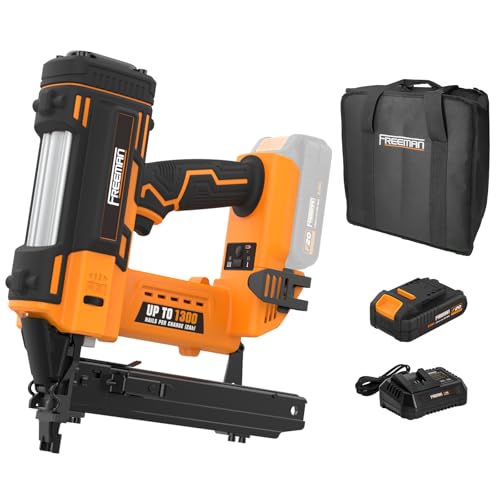
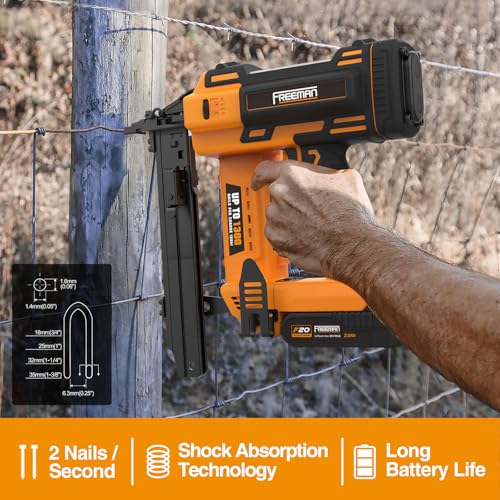
Freeman 20V 16-Gauge Cordless Fencing Stapler
Strengths
- 1300 shots per charge
- Bump and sequential firing
- Tool-free depth adjust
- Quick jam release
- Affordable
Trade-offs
- 16-gauge limits heavy use
- Canvas bag less durable
- Lower power for tough wood
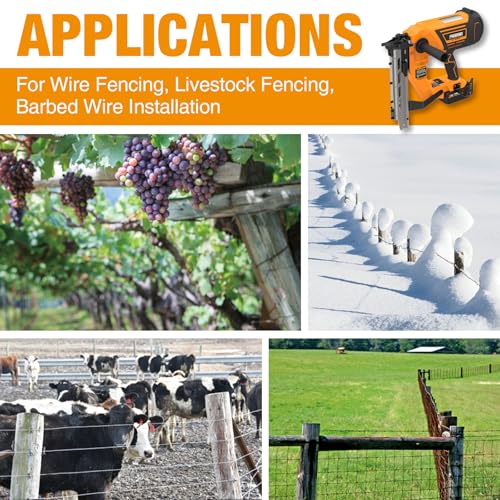
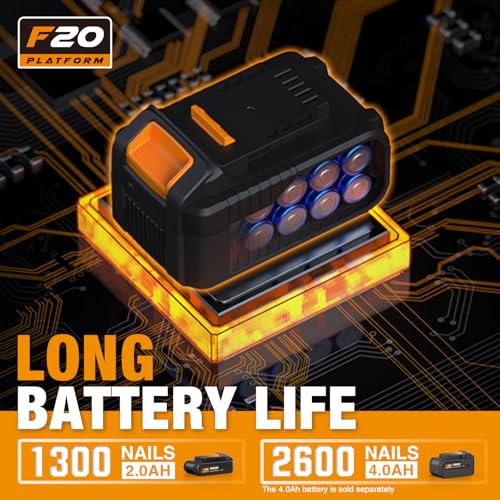
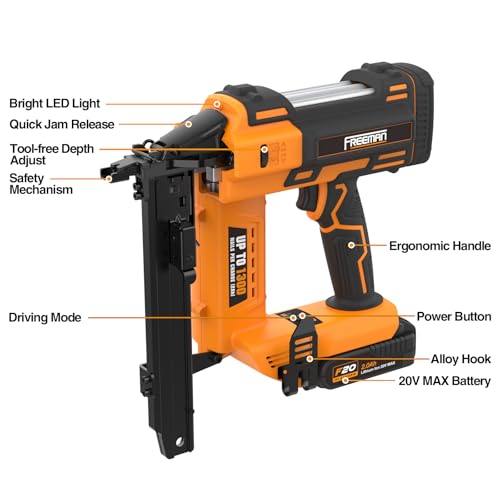
If you’re on a budget or working smaller jobs like pet enclosures or vineyard trellising, this 16-gauge Freeman makes a lot of sense. It fires up to 1300 staples per charge, more than double the 9-gauge model, and owners praise its efficiency for lighter fencing tasks. The 2.0 Ah battery charges fast, and while it doesn’t pack the punch of heavier models, it’s plenty for 1” staples in softer wood.
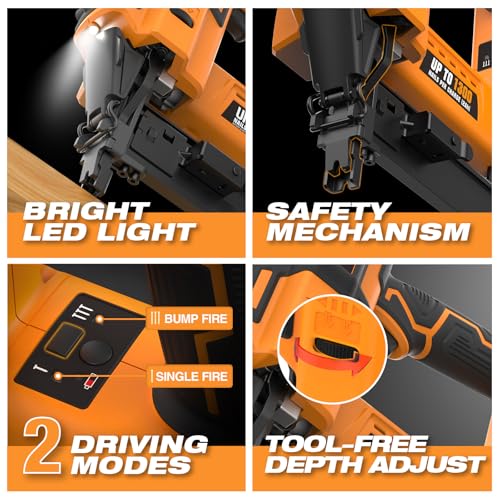
It shares key features with its bigger siblings: tool-free depth adjustment, a wire alignment notch, and bump or sequential firing. The canvas bag is a downgrade from a hard case, but it keeps the price low. For occasional users or those who don’t need to drive through dense timber, this is the smarter buy over overbuilt 9-gauge tools.
Product photos

Milwaukee M18 18V 9-Gauge Fencing Stapler
Strengths
- M18 Fuel compatible
- Brushless motor
- Tool-free depth adjust
- Jam clearing latch
- Lanyard loop
Trade-offs
- Only works with Milwaukee staples
- No battery or charger
- Limited to 9-gauge glue collated
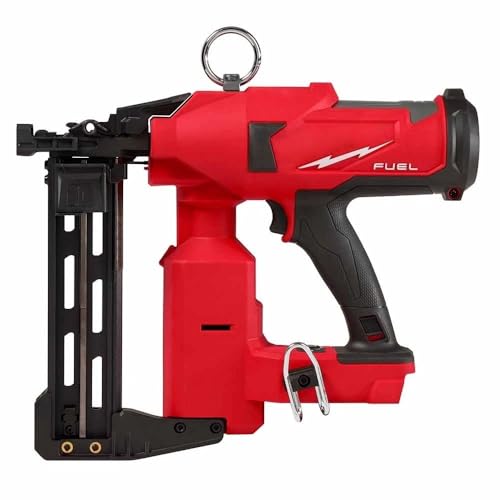
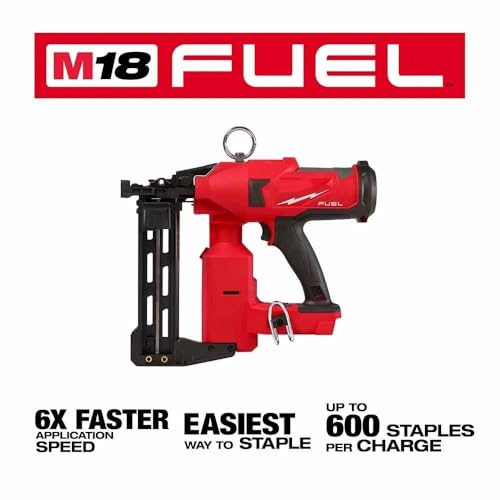
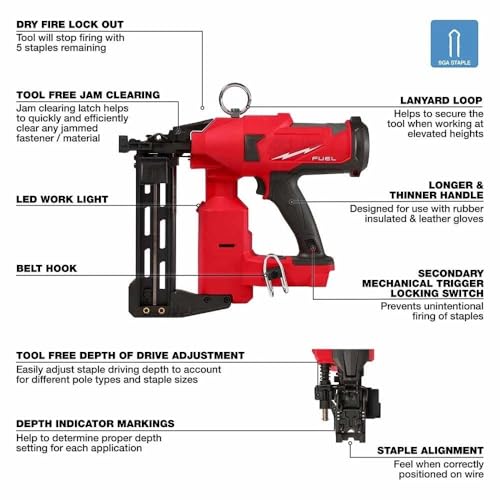
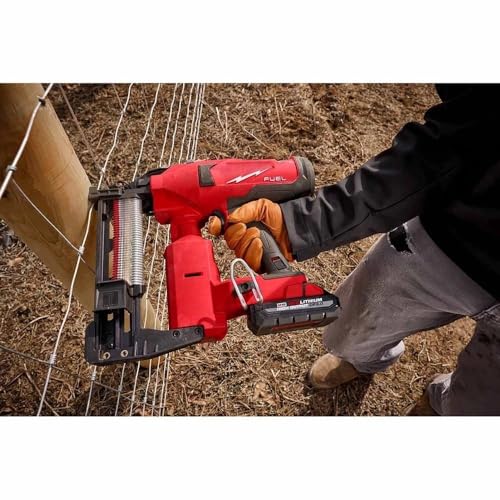
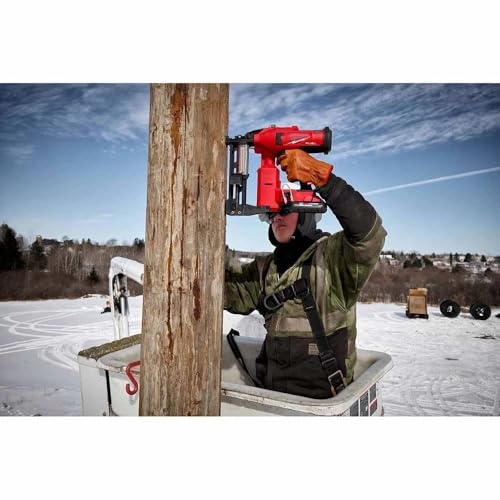
This is the go-to for Milwaukee M18 owners who live in the Fuel ecosystem. It’s a bare tool, brushless, and built to the same rugged standard as other M18 Fuel tools. It drives 9-gauge staples cleanly and includes tool-free depth adjustment and jam clearing, critical for long days in the field.
But it only works with specific Milwaukee glue-collated staples, which limits flexibility and can drive up long-term costs. Owners report excellent runtime when paired with high-capacity M18 batteries, and the lanyard loop is a small but welcome touch. Compared to the DEWALT or Freeman 9-gauge models, it’s more niche, but if you’re all-in on Milwaukee, it’s the most seamless integration.
Product photos
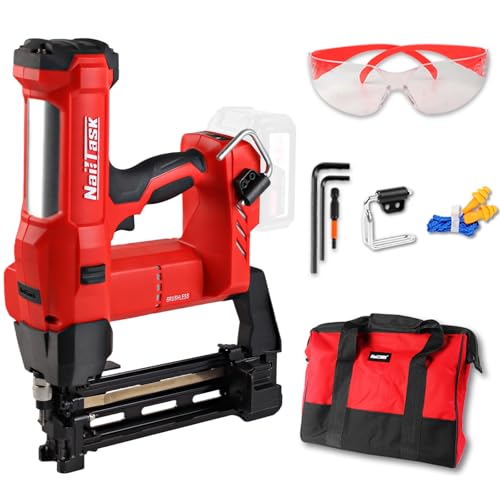
NailTask 9-Gauge DCFS90 Cordless Fencing Stapler
Strengths
- 9-gauge power
- Makita 20V compatible
- Tool-free depth adjust
- Safety lock
- Overload protection
Trade-offs
- No battery or charger
- No case or belt hook
- No staple window
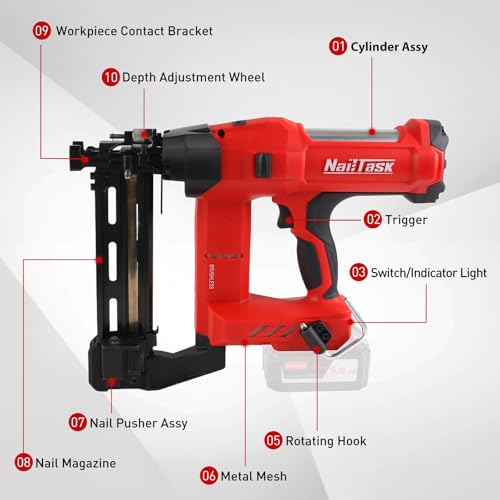
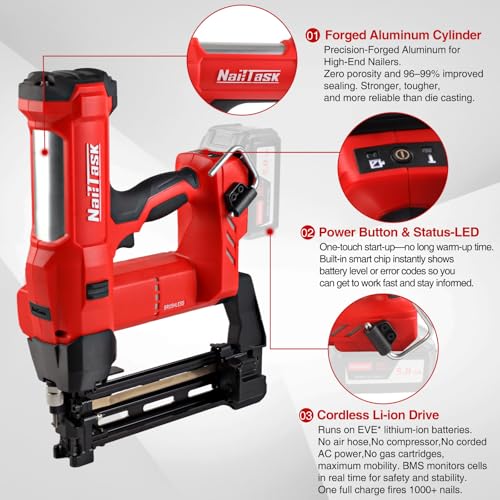
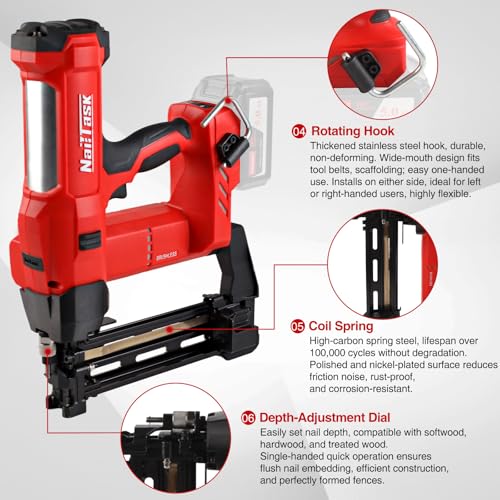
This one’s clearly designed for Makita 20V battery owners who want a budget-friendly 9-gauge option. It delivers the core benefit, cordless 9-gauge stapling, with tool-free depth adjustment and safety lock features. Owners note it’s surprisingly capable on hardwood posts, and the fast nailing speed helps on long fence lines.
But it’s sold without a battery or charger, which hurts its value unless you’re already in the Makita ecosystem. It lacks a case, belt hook, and staple window, features even some budget Freemen include. Still, if you’ve got Makita batteries and need a no-frills 9-gauge gun, this fills the gap. Just don’t expect the polish of a Freeman or DEWALT.
Product photos

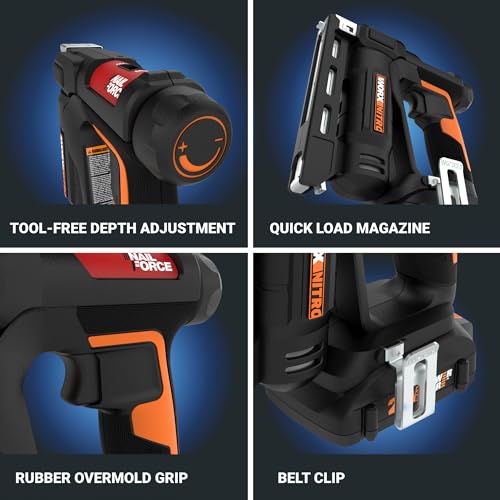
Worx Nitro 20V Crown Stapler

Strengths
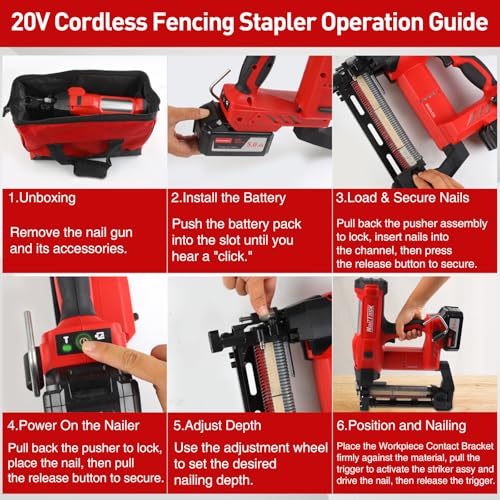
- 2000 shots per charge
- Multi-fastener compatibility
- Power Share battery ecosystem
- Lightweight and ergonomic
- Easy magazine reload
Trade-offs
- Too weak for heavy fencing
- Not 9 or 10.5-gauge
- No wire alignment notch
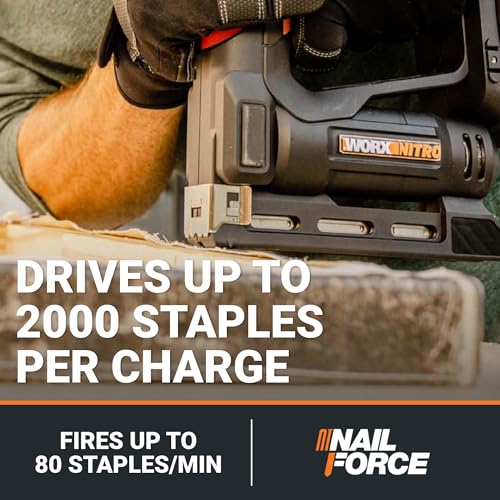
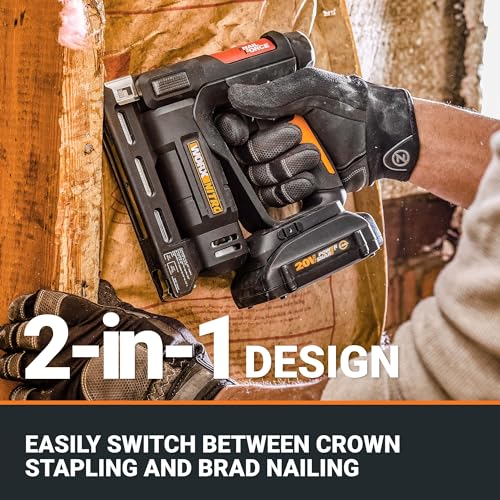
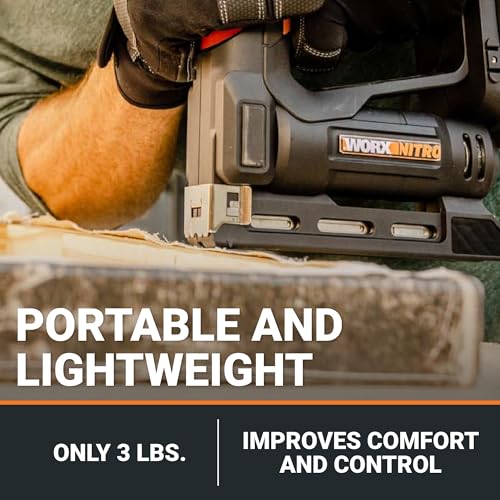
This isn’t a dedicated fencing stapler, but it’s worth mentioning for light-duty users who want versatility. The Worx Nitro fires crown staples and brad nails, making it useful beyond fencing, think fencing trim, light trellis work, or garden projects. Owners love the 2000-shot battery life on a 2.0 Ah pack, and the Air Impact tech delivers consistent power with less trigger fatigue than manual guns.
But here’s the catch: it’s 18-gauge, so it lacks the holding strength for serious wire fencing. If you’re stapling plastic snow fencing or light mesh, it’s fine. Compared to Freeman’s 16-gauge model, it trades fencing-specific features like a wire alignment notch for broader utility. I’d only recommend it if you already own Worx Power Share batteries and need a multi-use tool.
Product photos

How We Tested cordless fence staplers
My approach to evaluating cordless fence staplers centers on a research-led comparison of published specifications and features, combined with a careful review of owner experiences and insights from trusted tool experts. Rather than a hands-on lab test of each model, I focused on identifying key performance indicators and assessing how well each stapler delivers against those standards, based on real-world user feedback. This allows for a practical assessment of value and reliability.
For cordless fence staplers, battery voltage and amp-hour rating are paramount, directly impacting runtime and power. Staple gauge capacity is also critical – a stapler needs to handle the wire types you’ll be working with. Finally, features like tool-free depth adjustment and jam clearing significantly improve usability and minimize downtime on the job. These factors determine whether a stapler is truly suited for demanding fencing work.
Published specs reliably indicate battery capacity, staple compatibility, and firing speeds. However, I placed greater weight on owner feedback regarding durability, jam frequency, and overall ease of use. Reputable reviews from sites specializing in agricultural or construction tools provided additional context. If you’re also considering manual options, you might find our guide to hammer stapler models useful for comparison.
How To Pick The Right cordless fence staplers
Choosing the right cordless fence stapler can save a lot of back-breaking work and speed up property maintenance.
A quality cordless fence stapler balances power, runtime, and ease of use. Look for brushless motors for efficiency, compatibility with common staple sizes (9-gauge is typical for most fencing), and features like tool-free depth adjustment. Battery voltage and amp-hour rating impact runtime, while weight and ergonomics affect comfort during prolonged use.
Staple Gauge and Material Compatibility
The gauge of staples a stapler accepts is the first thing to consider. While 9-gauge is a common all-rounder, heavier-duty fencing – particularly for livestock – often requires 10.5-gauge staples. Don’t assume a stapler advertised for “fencing” can handle your fencing. Check the staple size range carefully and match it to your wire type (high-tensile, woven wire, electric). Some staplers, like the Milwaukee M18, are specifically limited in the staples they can use, so ensure compatibility before you buy. This is especially important if you’re using specialized materials or have existing fencing you need to repair.
Battery Platform and Runtime
Cordless tools live or die by their batteries. If you already invest in a 20V platform – say, Makita, DeWalt, or Worx – opting for a stapler within that ecosystem is often the smartest move. It avoids the cost and clutter of yet another battery system. However, don’t automatically assume brand loyalty is best. Consider the amp-hour (Ah) rating. A 4.0 Ah battery will generally provide significantly longer runtime than a 2.0 Ah battery, but will also add weight and cost. If you have a large fencing project, or frequently maintain property lines, runtime becomes a crucial factor.
- A smaller property (under 5 acres) might be fine with a 2.0 Ah battery.
- A medium-sized property (5-20 acres) will likely benefit from a 4.0 Ah battery or having a second battery on hand.
- For large farms or ranches (20+ acres), consider a high-capacity 5.0 Ah or even 6.0 Ah battery, and multiple batteries, to minimize downtime for recharging.
Ergonomics and Practical Features
Fence work often involves awkward positions and repetitive motions. A poorly balanced or uncomfortable stapler will quickly become a source of fatigue. Look for features like a textured rubber grip, adjustable belt hooks, and a well-placed LED work light. Tool-free depth adjustment is a huge time-saver, allowing you to quickly adapt to different wood thicknesses. I also appreciate features like a reload indicator (found on the Freeman PE20VFS105), which eliminates guesswork about when you’re running low on staples. If you’re considering a top cordless stapler for fence, paying attention to these details can make a real difference in your overall experience.
Don’t underestimate the importance of a comfortable grip. A stapler that feels good in your hand will reduce fatigue and improve accuracy, especially during long fencing projects.
Cordless Fence Staplers Compared
This table provides a side-by-side comparison of key specifications for popular cordless fence staplers.
| Product Title | Voltage | Gauge | Staples per Charge | Staples/Min | Depth Adjustment | Battery Ah |
|---|---|---|---|---|---|---|
| Freeman 20V 9-Gauge | 20V | 9 | 750 | 60 | Tool-Free | 4.0 |
| Freeman PE20VFS105 10.5-Gauge | 20V | 10.5 | 750 | 60 | Tool-Free | 4.0 |
| DEWALT DCFS950B 20V MAX 9-Gauge | 20V | 9 | N/A | N/A | N/A | N/A |
| Freeman 20V 16-Gauge | 20V | 16 | 1300 | 90 | Tool-Free | 2.0 |
| Milwaukee M18 18V 9-Gauge | 18V | 9 | N/A | N/A | Tool-Free | N/A |
| NailTask 9-Gauge DCFS90 | 20V | 9 | N/A | 3/sec | Tool-Free | N/A |
| Worx Nitro 20V Crown Stapler | 20V | 18 (Staples) | 2000 | 80 | Tool-Free | 2.0 |
Frequently Asked Questions
What staple gauge should I choose for livestock fencing?
Heavier-duty fencing, especially for containing livestock, typically needs 10.5-gauge staples for secure holding power. While 9-gauge works for many applications, 10.5-gauge offers a significant strength advantage when dealing with larger animals or high-tensile wire.
How does battery voltage affect a cordless fence stapler’s performance?
Higher voltage generally means more power, which translates to a greater ability to drive staples fully into tough wood posts. An 18V or 20V stapler will usually outperform a 12V model, particularly when working with hardwoods or larger diameter posts.
Are cordless fence staplers compatible with all types of fencing wire?
Compatibility varies, so always check the manufacturer’s specifications. Most can handle standard woven wire and barbed wire, but high-tensile wire may require specific staple types or a more powerful stapler. You might need to explore a high-power stapler for construction if you routinely work with exceptionally strong wire.
What is a tool-free depth adjustment and why is it useful?
Tool-free depth adjustment allows you to quickly change how deeply the staples are driven without needing a screwdriver or other tools. This is incredibly helpful when switching between different post materials or wood thicknesses, ensuring a flush and secure staple placement every time.
How do I prevent jams when using a cordless fence stapler?
Using the correct staple type and ensuring the magazine is loaded properly are key. Avoid overfilling the magazine and use staples designed for the specific wood or material you’re fastening. If jams do occur, look for models with tool-free jam clearing mechanisms – like many professional fencing staplers – to minimize downtime.
The Bottom Line
Choosing a cordless fence stapler really comes down to balancing initial cost with long-term convenience and capability. While many options exist, the Freeman 20V 9-Gauge stands out as the best overall pick for most homeowners and small-acreage property owners. It offers a solid blend of power, runtime, and features at a reasonable price, making it a great starting point for tackling typical fencing repairs and installations.
For those with extensive property or consistently demanding fencing needs, the Freeman PE20VFS105 10.5-Gauge is the clear choice. It handles heavier staples for robust fencing, and the 4.0 Ah battery provides extended runtime. If you’re already invested in the Milwaukee M18 platform, that stapler is a logical addition, but be aware of its limited staple compatibility. And for those exploring similar tools, you might also want to consider cordless nail gun models as potential alternatives.
Ultimately, the most important factors aren’t a specific battery voltage or firing speed, but rather a stapler that feels comfortable in your hand, accepts the staples you need, and allows for quick, frustration-free adjustments. Don’t get caught up in chasing the highest numbers on a spec sheet; focus on finding a tool that fits your needs and makes your fencing projects easier to manage.
