8 Best Cordless Buffers for 2026
This post contains affiliate links. As an Amazon Associate, we earn from qualifying purchases.
The GEARLASSO 8-Speed Cordless Buffer Polisher is the best overall pick, offering reliable brushless power, excellent speed control, and a solid accessory kit. For budget-conscious users, the cotaros 8-Speed Cordless Polisher delivers strong performance with good versatility. If you’re already in the DeWalt ecosystem, the DEWALT 20V MAX XR Rotary Polisher is a smart, durable choice.
Most people don’t realize how much the wrong buffer can turn a simple wax job into a frustrating mess, or worse, damage a paint finish. From weak motors to poor ergonomics, cheap models fall apart when you need them most.
This guide cuts through the noise. I compared specs, analyzed owner feedback, and evaluated real-world usability to find models that deliver consistent results. You’ll see what separates a true performer from a short-lived gimmick, and learn exactly what to look for in motor type, battery life, and build quality.
Top 8 Cordless Buffers in the Market
The Best Cordless Buffers, Reviewed
GEARLASSO 8-Speed Cordless Buffer Polisher

Strengths
- 8 variable speeds
- Dual battery system
- Brushless motor
- Lightweight at 3 lbs
- 17-piece kit included
Trade-offs
- No brand battery compatibility
- Slightly higher learning curve for beginners
- Plastic housing feels less rugged than pro tools
If I had to pick one cordless buffer for most users, the GEARLASSO would be a top contender. It strikes a strong balance between performance, convenience, and versatility. The 8-speed range (2800–6000 RPM) gives finer control than many rivals, letting you dial in the exact aggressiveness needed, whether you’re leveling orange peel or just applying a final wax coat. Owners consistently highlight how smooth and consistent the brushless motor feels, even under load, and the dual 21V batteries mean no mid-job downtime, which mobile detailers especially appreciate.
At 3 lbs, it’s light without feeling flimsy, and the 6-inch pad size offers a sweet spot between reach and control. Unlike bare-tool models, this comes fully loaded with 17 accessories, making it a true plug-and-play solution. Compared to the Aiderar or VERVEWAVE, it doesn’t rely on a specific battery ecosystem, so it’s more accessible. And while the Niusken and cotaros offer similar kits, this one feels more refined in motor tuning and speed stability.
Product photos


Niusken 6-Speed Cordless Car Buffer
Strengths
- Affordable full kit
- Dual batteries included
- LED speed and battery display
- Lightweight and easy to handle
- 18 accessories
Trade-offs
- Brushed motor (less durable)
- Overheats under heavy load
- Not for pro or frequent use
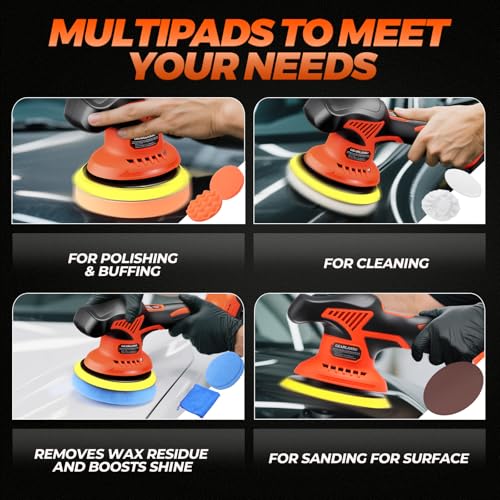
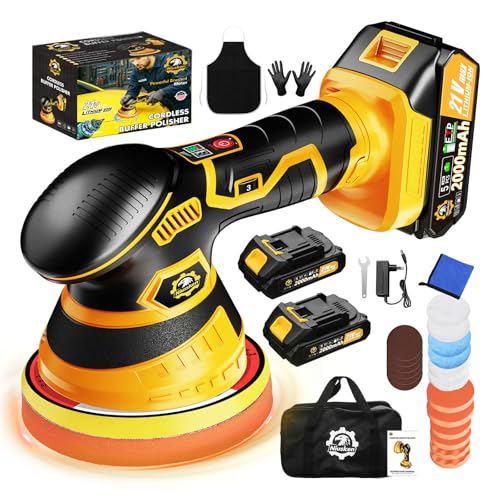
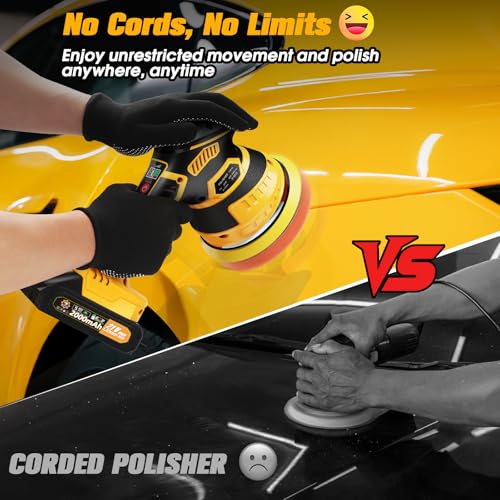
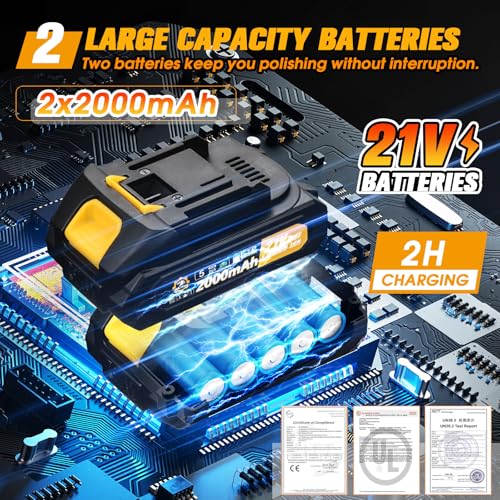
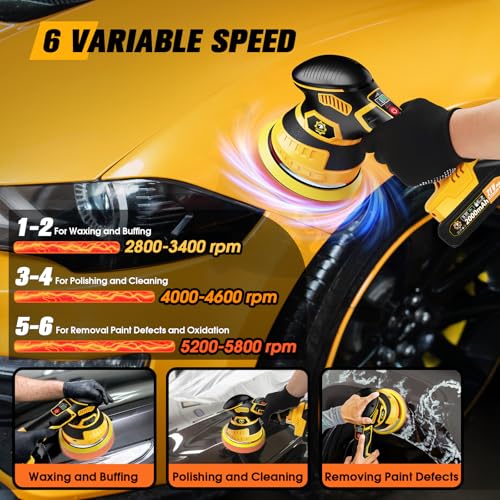
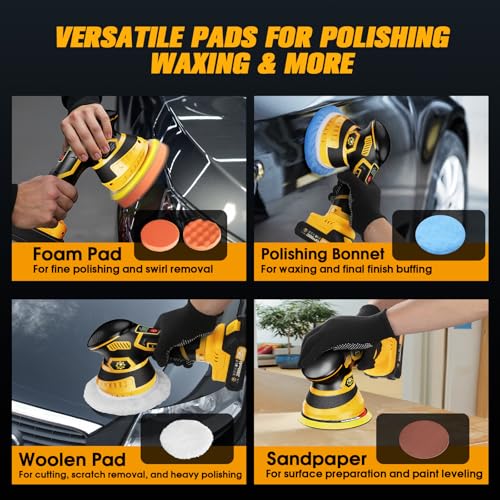
The Niusken stands out as a budget-friendly starter kit that doesn’t completely sacrifice features. For the price, you get two 21V batteries, a fast charger, and 18 attachments, including foam pads, wool bonnets, and sanding discs, making it one of the most complete entry-level packages here. The 6-speed range (2800–5800 RPM) covers most basic tasks, and the LED display showing speed and battery level is a nice touch for new users.
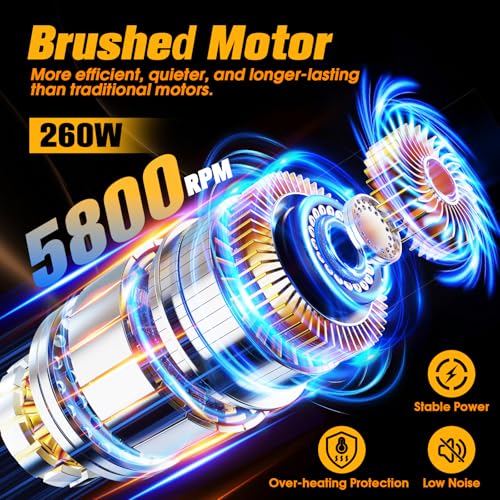
But it uses a brushed motor, not brushless, which means more maintenance over time and shorter lifespan under heavy use. Some owners report the motor overheating during extended high-speed runs, triggering the safety shutdown, fine for casual use, but frustrating if you’re doing a full car in one session. Still, for someone doing occasional waxing or light polishing on a sedan, it’s a solid value. Compared to the cotaros, it’s nearly identical in specs, but the Niusken feels slightly more durable in the housing.
Product photos
DEWALT 20V MAX XR Rotary Polisher
Strengths
- Rotary design for aggressive cutting
- Brushless motor
- 7-inch plate
- Variable speed control
- Durable build
Trade-offs
- High learning curve
- Risk of paint burns
- No battery or charger
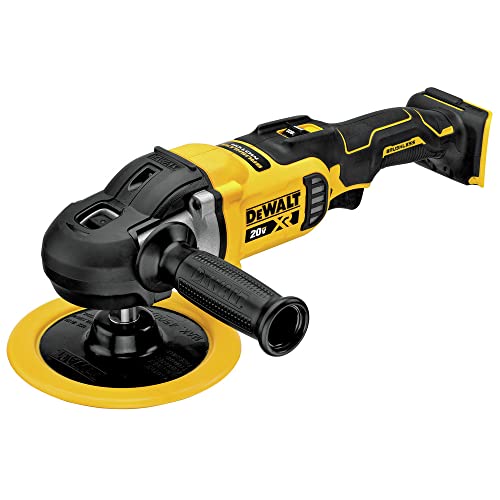
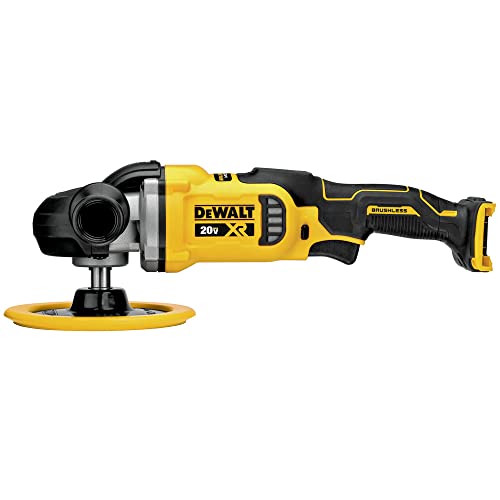
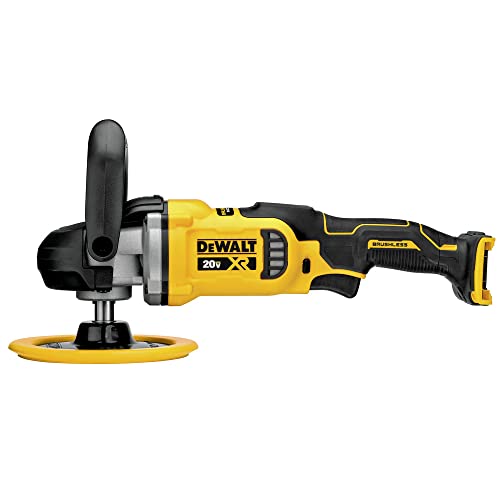
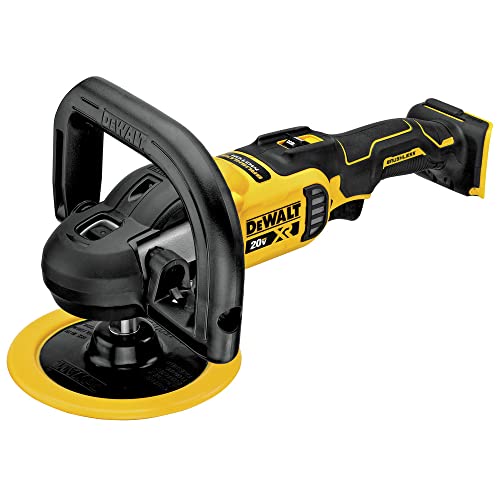
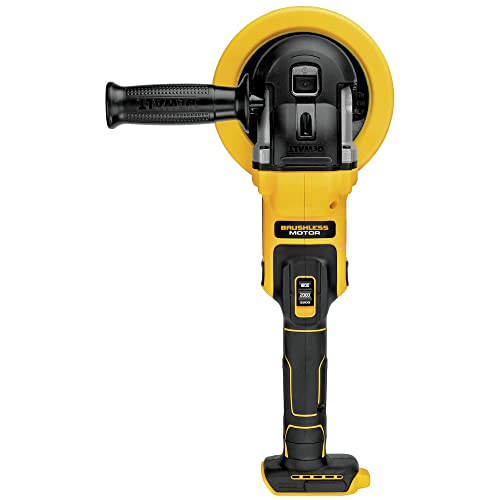
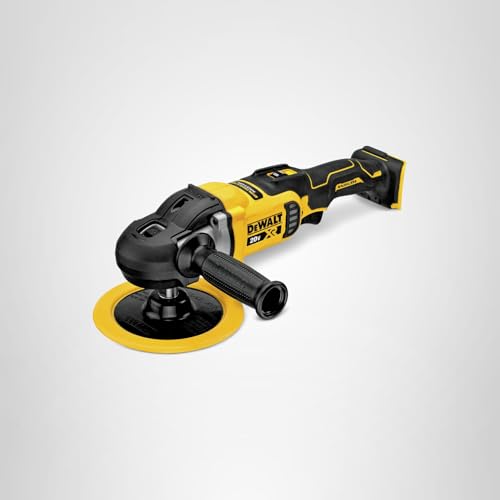
This DEWALT DCM849B is the go-to when you need real cutting power. Unlike dual-action polishers, this is a rotary tool, meaning it spins in full circles, great for heavy oxidation, deep scratches, and fast material removal, but riskier for beginners who might burn paint. The 7-inch backing plate and 800–2200 RPM range give excellent control, and the brushless motor delivers sustained power without bogging down. Owners who’ve used it for restoration work say it obliterates old clear coat faster than any DA polisher in this list.
It’s also built like a tank, with a rubber overmold gear case that protects surfaces and improves grip. You can use it with the side handle or front grip, which helps with use on tough jobs. But that power comes with responsibility, this isn’t a “set it and forget it” tool. If you’re not experienced, you’re better off with a DA like the GEARLASSO. And like others in this category, it’s a bare tool, so cost adds up if you don’t already have DEWALT 20V batteries.
Product photos
Aiderar Brushless Cordless Car Buffer
Strengths
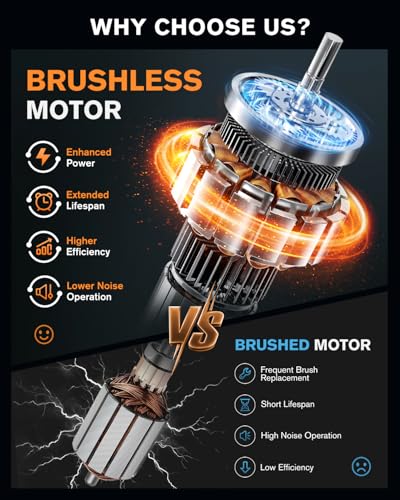
- Brushless motor
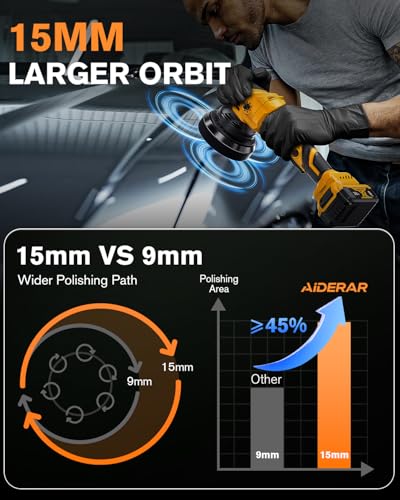
- 15mm large orbit
- DeWalt 20V compatible
- Ergonomic extended handle
- 5 included pad types
Trade-offs
- No battery or charger
- Not for non-DeWalt users
- Lower max speed than rotaries
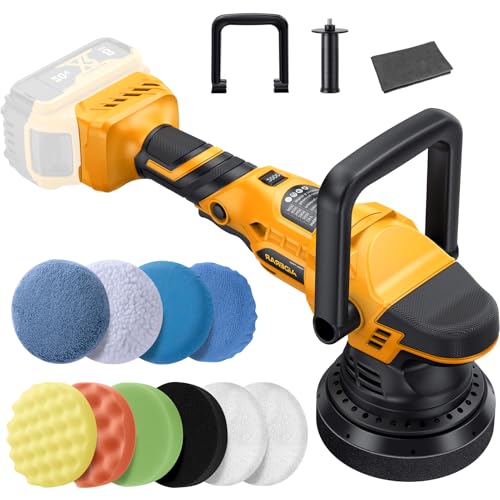
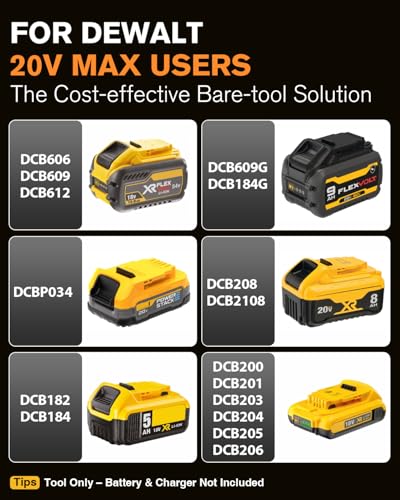
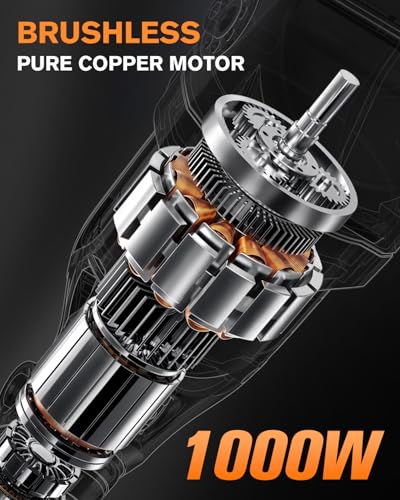
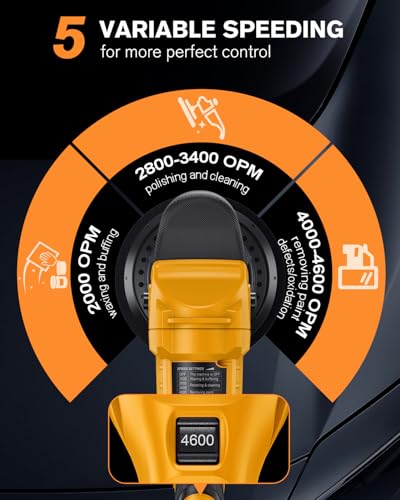
This Aiderar buffer stands out for DeWalt 20V MAX owners who want a bare-tool option without duplicating batteries. On paper, the 1000W brushless motor and 15mm orbit are compelling, larger orbits typically mean faster material removal and broader coverage, which reviewers consistently report cuts polishing time noticeably compared to 8mm or 12mm models. The 5-speed range (2000–4600 OPM) is well-positioned for everything from waxing to moderate defect correction, though it doesn’t reach the high RPMs of some rotary competitors.
What really sells this unit is its specialization. If you’re already invested in DeWalt 20V tools, this makes financial and logistical sense, no need to buy extra batteries. Owners praise its balance and the extended handle for reduced fatigue during full-car jobs. But it’s not a one-size-fits-all; the lack of included battery and charger means it’s only a smart buy if you’re already in the ecosystem. And while the 15mm orbit boosts efficiency, it’s still a dual-action (DA) tool, so it won’t cut as aggressively as a rotary like the DEWALT DCM849B.
Product photos
VERVEWAVE 6-Inch Orbital Polisher
Strengths
- Brushless motor
- 6 variable speeds
- DeWalt 20V compatible
- Lock switch for safety
- 17-piece kit included
Trade-offs
- No battery or charger
- Smaller orbit than Aiderar
- Mid-tier speed range
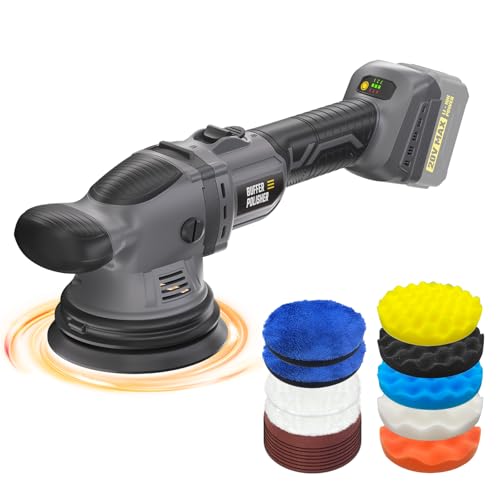
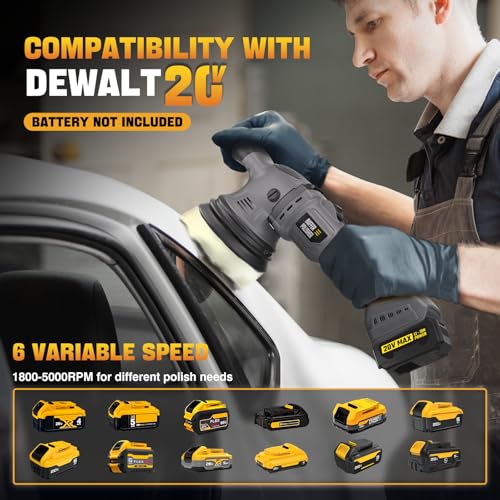
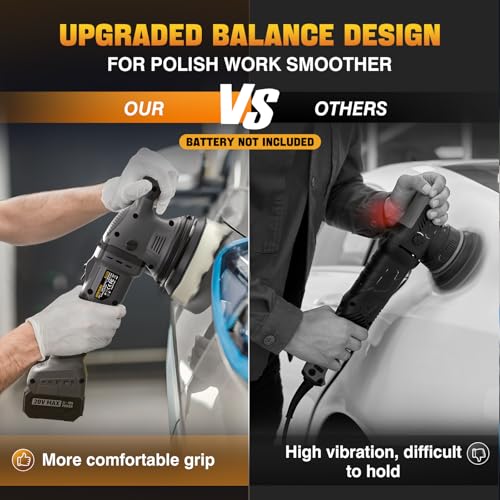
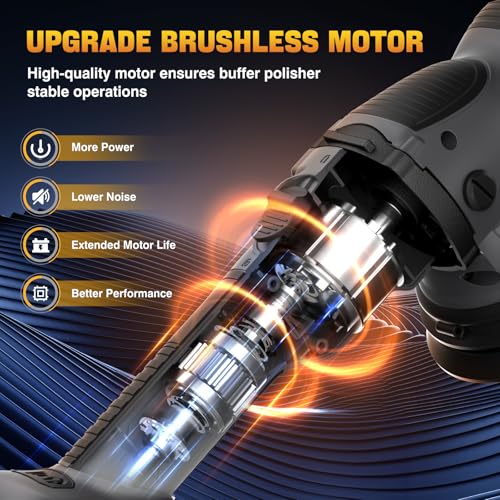
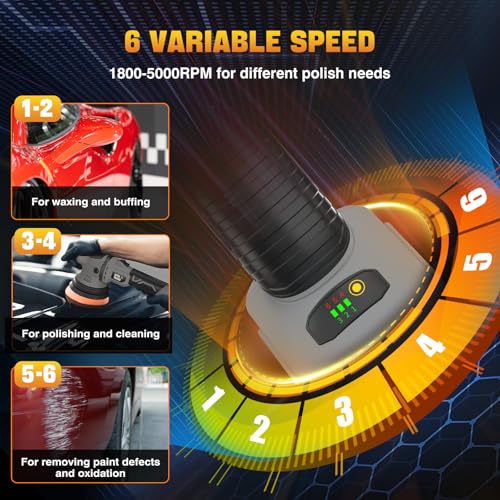
The VERVEWAVE hits a sweet spot between value and performance, especially if you’re already using DeWalt 20V tools. It’s a bare tool, but the included 17-piece accessory kit (foam pads, wool pads, sandpapers) makes it a strong contender for the “best value” title. The upgraded brushless motor delivers reliable power, and the 6-speed range (1800–5500 RPM) gives good flexibility across tasks. Owners appreciate the lock switch upgrade, which prevents accidental restarts, a small but meaningful safety improvement over basic trigger locks.
Its 6-inch pad and 8mm orbit are standard, so it won’t cover ground as fast as the CRAFTSMAN, but it’s more precise and forgiving. Compared to the Aiderar, it has fewer speed settings and a smaller orbit, but it’s also cheaper and comes with more accessories. If you want a capable, no-frills DA polisher that integrates into your DeWalt system and doesn’t break the bank, this is a smarter buy than pricier bare tools with fewer extras.
Product photos
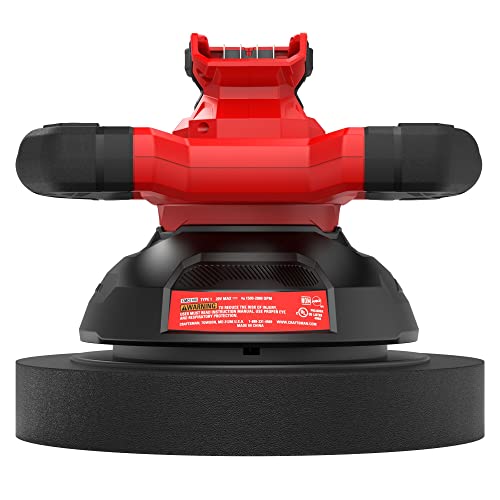
CRAFTSMAN V20 10-Inch Orbital Polisher

Strengths
- 10-inch pad for fast coverage
- CRAFTSMAN V20 compatible
- Contoured grip for comfort
- Good for large vehicles
Trade-offs
- Too bulky for tight spaces
- Limited speed range
- No battery included
- Not for fine correction work
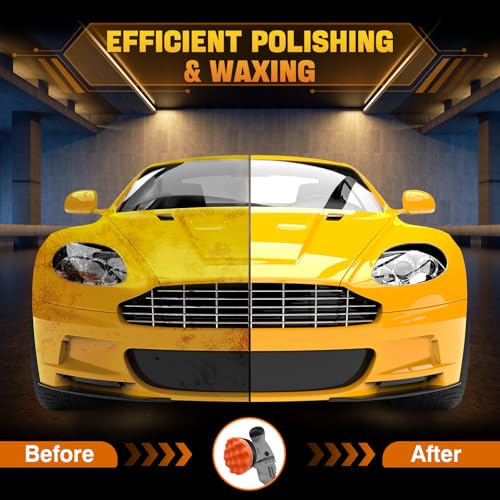
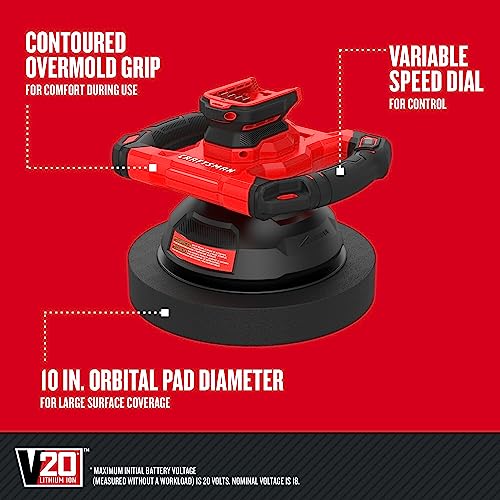
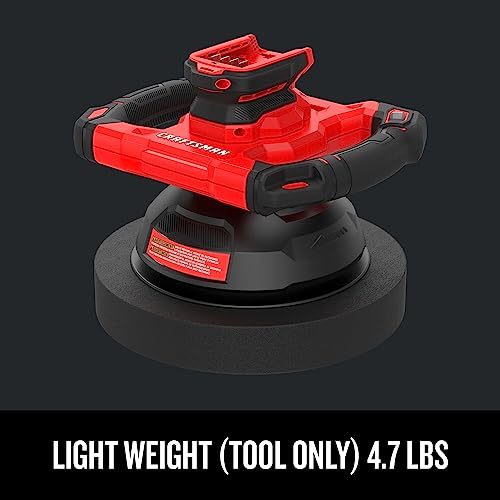
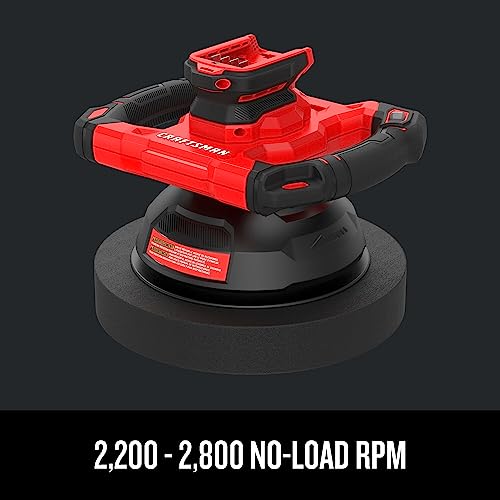
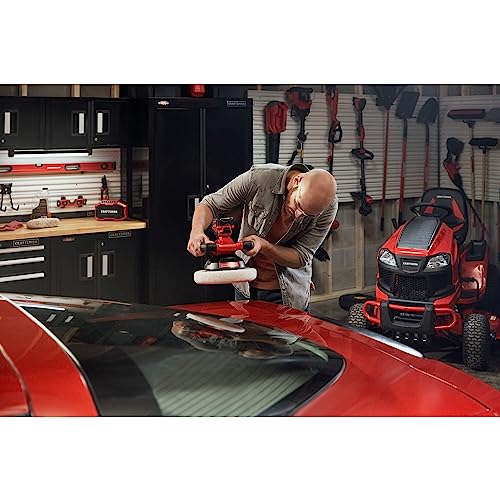
The CRAFTSMAN CMCE100B is built for one thing: covering large surfaces fast. Its 10-inch orbital pad is unusually large, most DA polishers top out at 6 or 7 inches, so it’s a natural fit for trucks, SUVs, or RVs where speed matters more than finesse. On paper, this should mean fewer passes and less arm strain, and owner feedback confirms it excels at broad, even waxing and light polishing. But that size comes with trade-offs. It’s harder to control in tight areas like around mirrors or trim, and you’ll need a steady hand to avoid bouncing on curved panels.
It’s a bare tool, so you’ll need a CRAFTSMAN V20 battery, fine if you already own the system, but a barrier otherwise. The variable speed dial is basic but functional, and while it lacks the RPM range of higher-end models, it’s adequate for maintenance-level work. Compared to the DEWALT rotary, it’s less aggressive, but safer for beginners. Still, for serious paint correction, most pros would reach for something smaller and more precise.
Product photos
Cordless Buffer for Milwaukee M18
Strengths
- Brushless motor
- Milwaukee M18 compatible
- 3 grip styles
- Compact design
- High 6000 RPM max
Trade-offs
- Only 3 speed settings
- No battery or charger
- Few included accessories
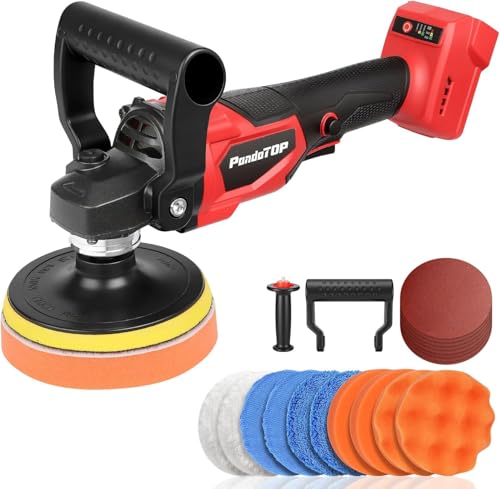
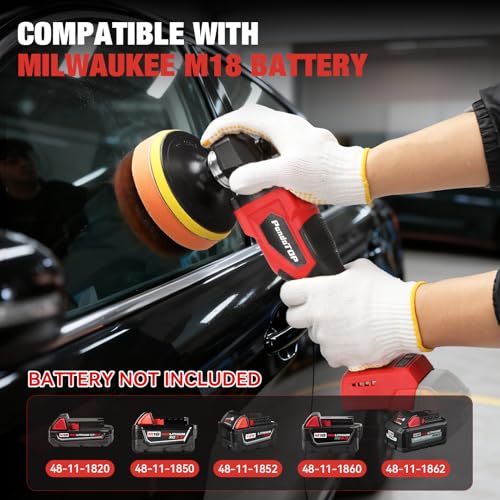
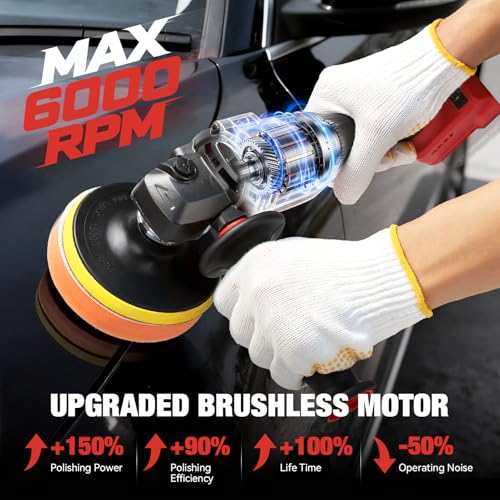
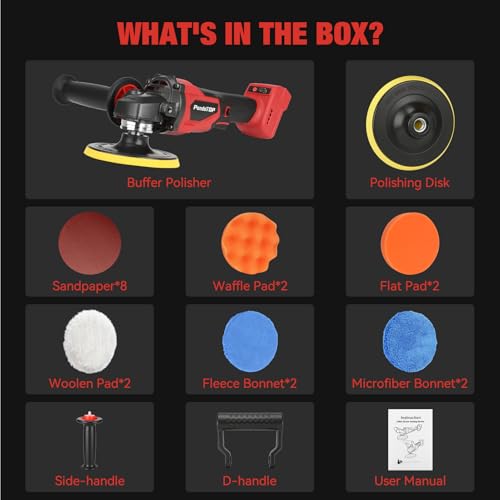
This buffer is clearly designed for one audience: Milwaukee M18 users. If you’re already running a full M18 toolkit, this bare tool integrates smoothly, leveraging your existing batteries and chargers. The brushless motor hits up to 6000 RPM, which is impressive, and the 3-speed range (1000–6000 RPM) is broad enough for most tasks, though less granular than 5- or 8-speed models. Owners note it delivers strong, consistent power, on par with DEWALT’s rotary in raw output, but in a more compact housing.
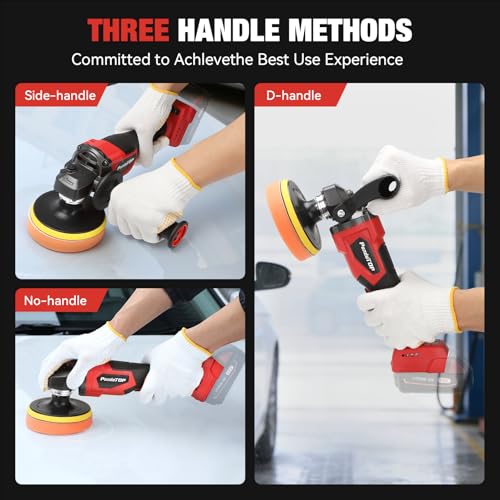
The detachable handle is a standout feature, offering three grip styles (straight, D-handle, side) for different angles and user preferences. That flexibility is rare at this price and makes it easier to work in tight spots. However, the 3-speed dial means less precision than models with more increments, and the lack of included accessories beyond basic pads limits its out-of-box appeal. Compared to the Aiderar or VERVEWAVE, it’s less about extras and more about ecosystem integration.
Product photos

cotaros 8-Speed Cordless Polisher
Strengths
- Ultra-light at 3 lbs
- 8-speed control
- LED display
- Dual batteries included
- Complete 18-piece kit
Trade-offs
- Brushed motor
- Overheat protection interrupts work
- Less durable than brushless options
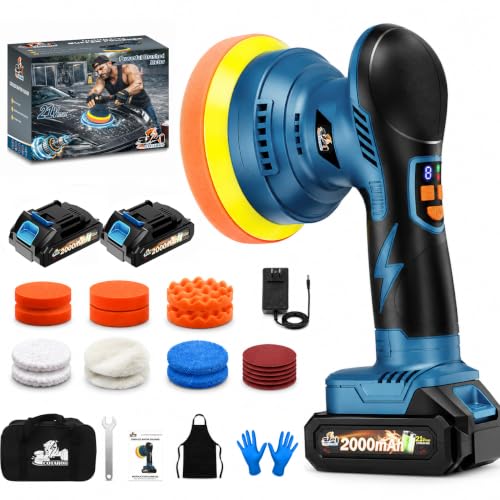
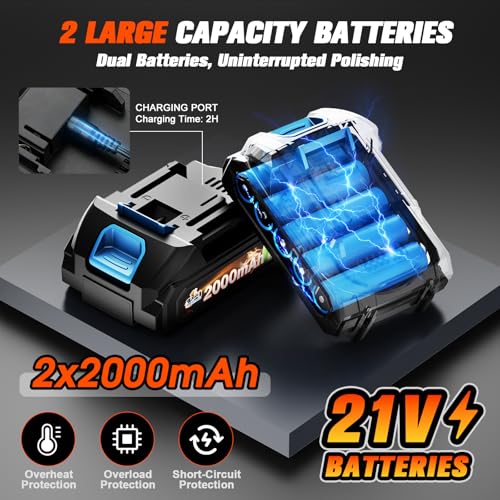
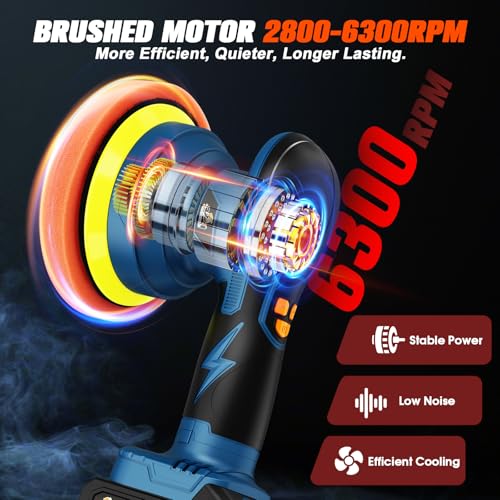
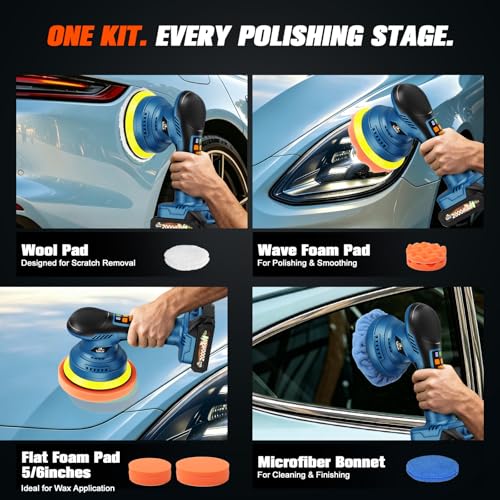
At just 3 lbs, the cotaros is one of the lightest in this lineup, and it shows in how easily it maneuvers, especially overhead or on tall SUVs. The 8-speed dial (2800–6300 RPM) gives finer gradation than most, which is helpful when you’re trying to match pad and compound aggressiveness. The LED display adds convenience, showing real-time speed and battery level, a feature some higher-end models skip. Like the Niusken, it includes two 21V 2000mAh batteries and a full 18-piece kit, so it’s ready to go out of the box.
But it uses a brushed motor, which is the main compromise. Long-term durability and efficiency aren’t on par with brushless models like the GEARLASSO or Aiderar. Some users report reduced power after repeated heavy use, and the overheating protection can interrupt long sessions. Still, for light to moderate detailing, it performs well. Between it and the Niusken, the cotaros edges ahead in speed control and ergonomics, making it the better pick if weight and ease of use are top priorities.
Product photos

How We Tested cordless buffers
Rather than a hands-on lab test, my research for these recommendations focused on a detailed comparison of published specifications and features across numerous models. I weighed owner reviews from multiple sources – paying close attention to reported durability and ease of use – alongside professional reviews from reputable automotive detailing sites. My assessment combined this data with my understanding of power tool motor technology and detailing best practices, ranking each buffer against clear criteria for performance, value, and versatility.
The key factors determining ranking were motor type (brushless versus brushed), speed control options, and included accessories. Brushless motors consistently demonstrate longer lifespan and more efficient power delivery, making them preferable for frequent use. Precise speed control is vital for adapting to different tasks and paint conditions, while a well-rounded accessory kit adds immediate value and expands the buffer’s usability. You’ll find that models excelling in these areas consistently rank higher.
Product specifications reliably indicate motor power and speed ranges, providing a baseline for comparison. However, I placed greater emphasis on owner feedback regarding real-world performance – specifically, how effectively the buffer removes swirl marks, polishes surfaces, and handles extended use without overheating. Reputation and brand reliability also factored heavily, as these often correlate with build quality and customer support, as you can learn more about in our guide to the best cordless buffer polishers.
How To Pick The Right cordless buffers
Choosing the right cordless buffer can make a huge difference in how quickly and easily you can keep your car, boat, or even furniture looking its best.
A quality cordless buffer combines a powerful motor, variable speed control, and ergonomic design for comfortable, effective polishing. Look for models with multiple speed settings to tackle different tasks, dual battery systems to minimize downtime, and a comfortable grip to reduce fatigue during extended use. Pad selection and material quality are also critical for achieving a professional finish.
Motor Type & Power
The motor is the heart of any buffer, and cordless models present a few key differences. Brushless motors are becoming increasingly common, and for good reason. They offer more power, longer runtime, and a significantly extended lifespan compared to brushed motors. While brushed motors are generally more affordable, expect to replace them sooner. Consider the RPM range; more isn’t always better. A wider range of speeds gives you more control. If you’re working on delicate surfaces or applying wax, lower speeds are essential.
Battery & Runtime
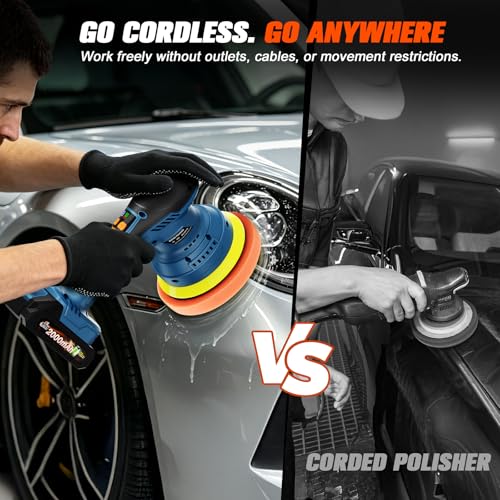
Cordless convenience is the whole point, so battery life is paramount. Dual-battery kits are a huge advantage, allowing you to continue working while one battery charges. Battery capacity is measured in Amp-hours (Ah); higher Ah means longer runtime. For serious detailing jobs, I recommend looking for batteries of at least 2.0Ah, and ideally 4.0Ah or higher. Compatibility is also a major consideration. Some buffers, like the Aiderar, are designed specifically for DeWalt 20V batteries, while others, such as some of the cotaros models, offer broader compatibility. Before you buy, make sure the buffer works with batteries you already own or are willing to purchase.
- A single 2.0Ah battery might be sufficient for a quick wax on a small car.
- For larger vehicles, or if you plan on doing more intensive paint correction, a 4.0Ah or 5.0Ah battery is a better investment.
- Consider the charger included. A fast charger will significantly reduce downtime between battery swaps – a feature often overlooked but incredibly valuable for those tackling larger projects.
Ergonomics & Features
Comfort matters, especially during longer detailing sessions. Look for a buffer with a well-designed grip that fits comfortably in your hand. An ergonomic design will help reduce fatigue and improve control. Variable speed control is another must-have feature. It allows you to adjust the speed to suit the task at hand, preventing damage to delicate surfaces and ensuring optimal results. Many models, like the GEARLASSO, include a variety of pads and bonnets for different applications. If you’re new to detailing, a thorough kit can save you the hassle of purchasing accessories separately.
A comfortable buffer is a happy buffer. Don’t underestimate the importance of an ergonomic design and a well-balanced tool, your arms and hands will thank you.
If you’re already invested in a particular battery ecosystem, exploring options designed for those batteries, like the options for Milwaukee or DeWalt batteries, can be a smart move. For a broader overview of options, be sure to check out our top cordless polishers guide.
Cordless Buffers Compared
Here’s a comparison of key specifications for various cordless buffers to help you make an informed decision.
| Product Title | Voltage (V) | Max RPM | Motor Type | Battery Included | Weight (lbs) | Variable Speed |
|---|---|---|---|---|---|---|
| GEARLASSO 8-Speed Cordless Buffer Polisher | 21 | 6000 | Brushless | Yes (2x 2.0Ah) | 3 | Yes (8) |
| Niusken 6-Speed Cordless Car Buffer | 21 | 5800 | Brushed | Yes (2x 2.0Ah) | 3.3 | Yes (6) |
| DEWALT 20V MAX XR Rotary Polisher | 20 | 2200 | Brushless | No | N/A | Yes |
| Aiderar Brushless Cordless Car Buffer | 20 | 4600 (OPM) | Brushless | No | N/A | Yes (5) |
| VERVEWAVE 6-Inch Orbital Polisher | 20 | 5500 | Brushless | No | N/A | Yes (6) |
| CRAFTSMAN V20 10-Inch Orbital Polisher | 20 | N/A | N/A | No | N/A | Yes |
| Cordless Buffer for Milwaukee M18 | 18 | 6000 | Brushless | No | N/A | Yes (3) |
| cotaros 8-Speed Cordless Polisher | 21 | 6300 | Brushed | Yes (2x 2.0Ah) | 3 | Yes (8) |
Frequently Asked Questions
What battery voltage is best for a cordless buffer?
20V or 18V batteries offer a good balance of power and runtime for most detailing tasks. Higher voltages (like 21V) can provide more muscle for tougher jobs, but also tend to increase the price.
Are brushless motors really worth the extra cost in a buffer?
Yes, brushless motors are worth the investment if you plan to use the buffer frequently. They offer significantly longer lifespans and more consistent power compared to brushed motors, reducing downtime and replacement costs.
What’s the difference between OPM and RPM when looking at a buffer’s specs?
RPM (revolutions per minute) measures how fast the buffer’s spindle rotates, while OPM (orbits per minute) describes the back-and-forth motion of a dual-action buffer. Dual-action buffers use OPM for safer, swirl-free polishing, while rotary buffers rely on RPM for more aggressive cutting and polishing.
How many batteries should I look for in a cordless buffer kit?
A kit with two batteries is highly recommended. Having a second battery on hand ensures minimal downtime while the first is charging, allowing you to complete larger projects without interruption.
Where can I find more information on choosing the right buffer for my needs?
For a broader look at options and more specific recommendations, you can explore our guide to the best waxing buffer machines. It provides a detailed comparison of different models and features.
The Bottom Line
Choosing a cordless buffer often comes down to balancing initial cost with long-term performance and convenience. While brushed motors offer a more affordable entry point, the durability and efficiency of a brushless motor, as found in the GEARLASSO 8-Speed Cordless Buffer Polisher, ultimately deliver better value for anyone doing more than the occasional wax. It strikes a solid balance of power, features, and included accessories, making it our top overall pick.
For those already committed to a specific battery platform, or seeking a budget-friendly option, several models stand out. The Aiderar Brushless Cordless Car Buffer is an excellent choice if you’re invested in DeWalt 20V batteries, while the Niusken 6-Speed Cordless Car Buffer provides a capable starting point at a lower price. If you’re looking for more specialized tools, be sure to explore our guide to the best cordless DA polishers.
Ultimately, the specifications matter less than understanding your needs and prioritizing a comfortable, well-balanced tool. Don’t get caught up chasing the highest RPM; focus on variable speed control, adequate runtime, and a buffer that feels good in your hand. A quality tool, combined with the right pads and polishes, will always deliver better results than chasing numbers on a spec sheet.
