9 Best Benchtop Bandsaws of 2026
This post contains affiliate links. As an Amazon Associate, we earn from qualifying purchases.
The DeWalt 9″ Band Saw stands out as the best overall benchtop bandsaw for most DIYers, combining reliable performance and solid features in a compact design. For those on a budget, the WEN 10” Two-Speed Band Saw offers impressive versatility and value, especially with its included stand. If you need serious cutting capacity, the VEVOR 13.39” Variable Speed Band Saw delivers far more throat depth and height than typical benchtop models.
Most people shopping for a benchtop bandsaw are trying to balance space, cost, and capability. They want a tool that can handle real projects without taking over the garage or breaking the bank. Too often, buyers end up with an underpowered saw or one that can’t maintain accuracy over time.
This guide cuts through the noise. I focused on specs that matter, like motor strength, cutting capacity, and blade speed control, and backed them up with owner feedback and brand reputation. These picks reflect what actually works in real workshops, not just what looks good on paper.
Top 9 Benchtop Bandsaws in the Market
The Best Benchtop Bandsaws, Reviewed
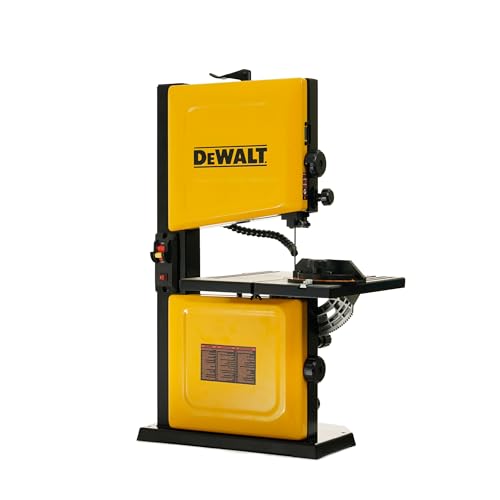
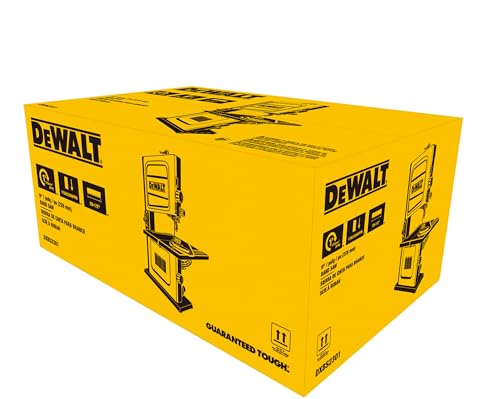
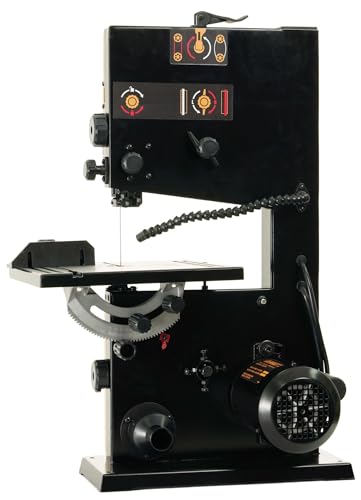
DeWalt 9″ Band Saw
Strengths
- True two-speed control
- Excellent LED light
- Smooth cutting action
Trade-offs
- No stand included
- Slightly noisy at high speed
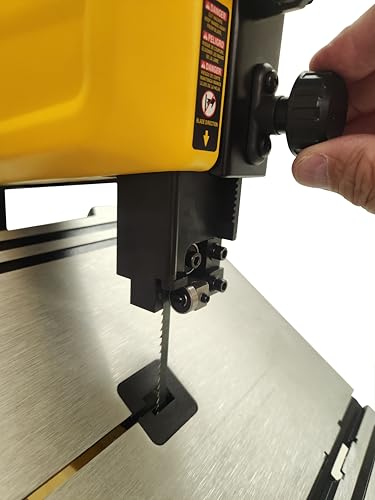
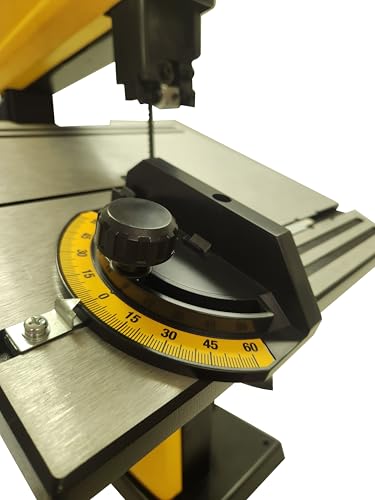
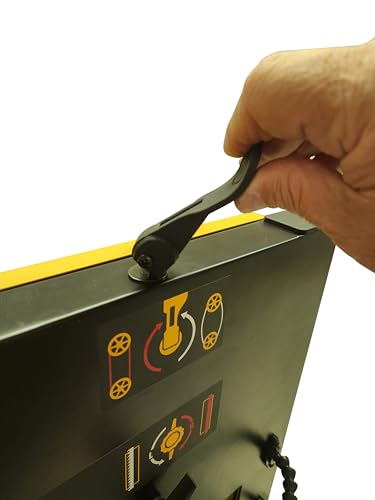
DeWalt’s reputation for reliability holds up here. This 9-inch model stands out with its 3.5 AMP motor and two-speed options, 1700 and 2500 SPM, giving users real control over cut quality. The integrated LED worklight is a standout for visibility, and owners praise how cleanly it tracks on curves and resawing tasks. It’s not the most powerful in the lineup, but the consistent motor delivery and smooth action make it a favorite among home shop users.
Compared to similarly sized WEN and SKIL models, this one feels more refined, especially in blade guidance and dust management. My pick for the middle-of-the-road buyer who wants dependable performance without overpaying.
Product photos
Woodskil 10″ Dual Speed Band Saw
Strengths
- Excellent blade guidance
- Quick tool-free access
- Great for hardwood
Trade-offs
- Stand wobbles slightly
- Dust port connection tight
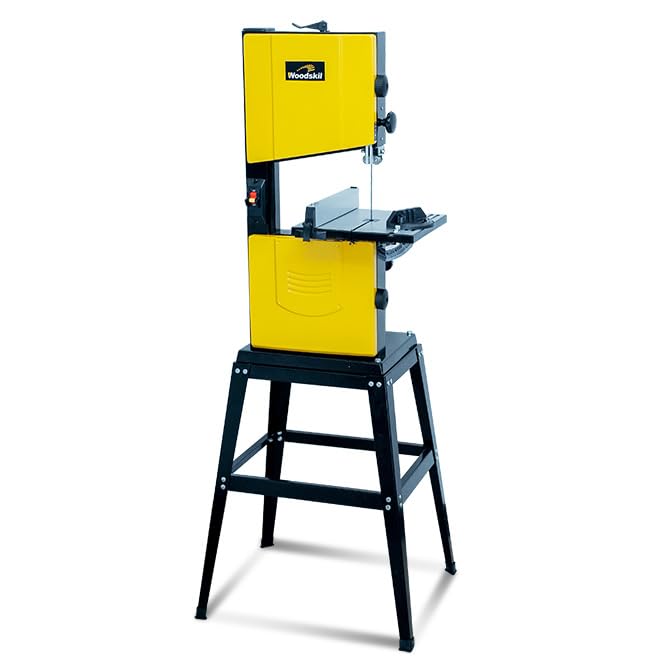
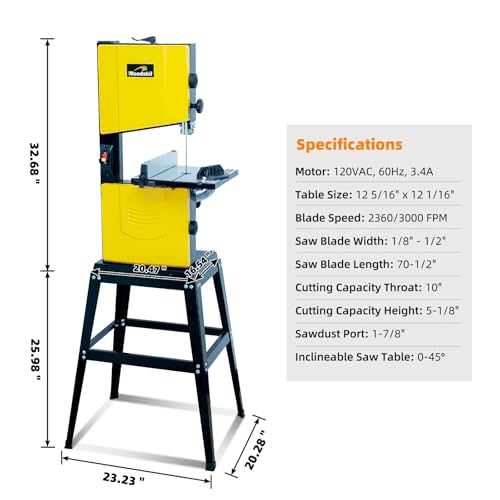
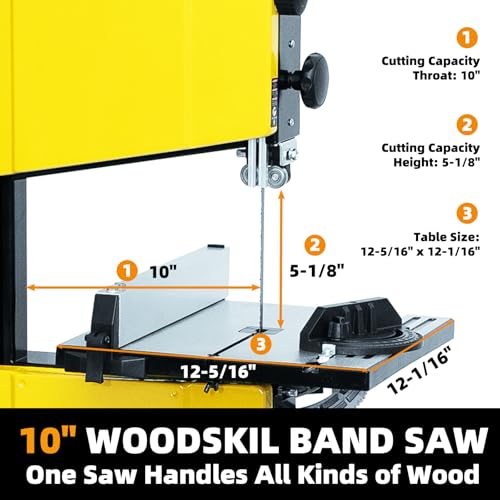
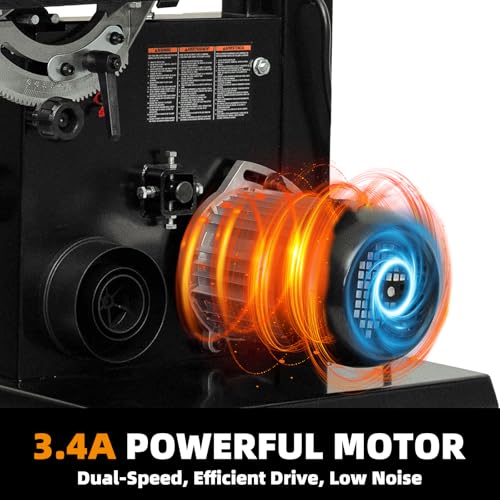
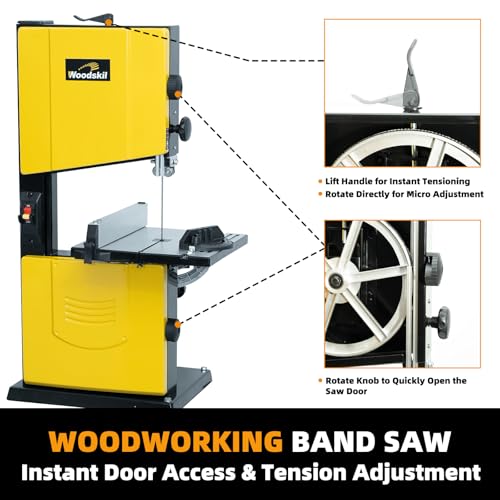
This Woodskil model is built for woodworkers who switch between hardwood and softwood regularly. The 2360/3000 FPM speed range is spot-on for preventing burn on dense maple while still zipping through pine. Owners highlight the quick tension system and tool-free doors, real time-savers for blade changes and cleaning. The 6 ball bearing guides keep the blade stable, and the 5-1/8-inch cutting height handles 4x4s, which is more than most benchtop models offer.
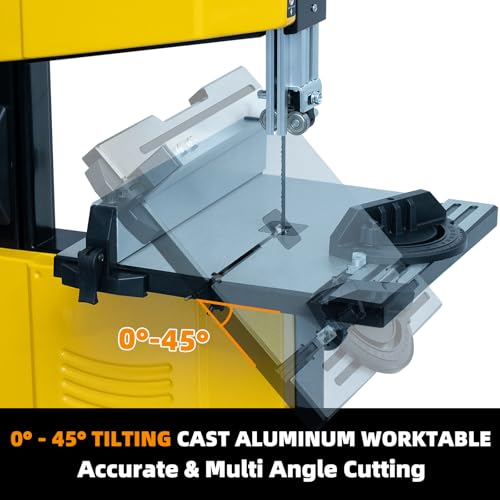
It’s quieter and smoother than the VEVOR dual-speed, and the cast aluminum table tilts cleanly. For weekend warriors and serious hobbyists, this is the smarter buy over similarly priced WEN or SKIL units.
Product photos
WEN 10″ Two-Speed Band Saw
Strengths
- Excellent value
- Includes stand and accessories
- Cast aluminum table
Trade-offs
- Blade tension system basic
- Motor can stall on thick oak
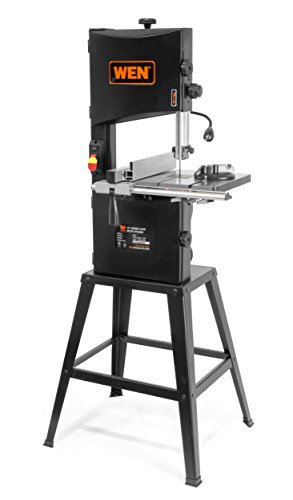
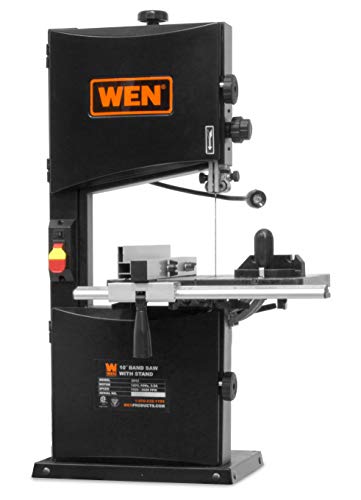
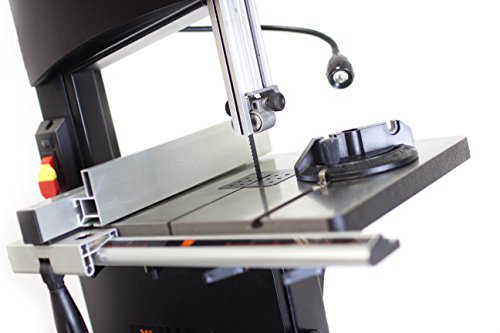
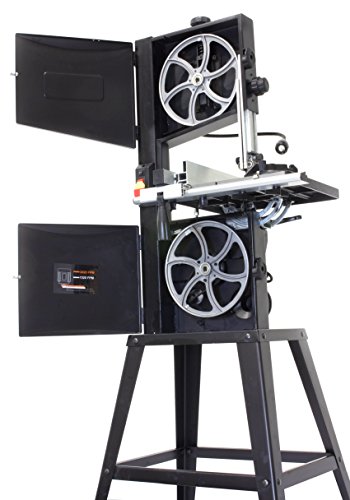
WEN has a knack for packing value into affordable tools, and this 10-inch model is no exception. With a 3.5-amp motor, two speeds (1520 and 2620 FPM), and a cast aluminum table, it outspecifies many in its class. The 6-inch cutting height and 9-3/4-inch throat width make it capable of real woodworking tasks, and the included stand, fence, and miter gauge mean it’s ready to go out of the box. Owners appreciate the 3-in-1 dust port, it adapts to multiple hose sizes, which is rare at this price.
It’s not as robust as the VEVOR 13-inch or as precise as the DeWalt, but for the cost, it’s hard to beat. This is the model I’d recommend to someone building their first serious workshop.
Product photos


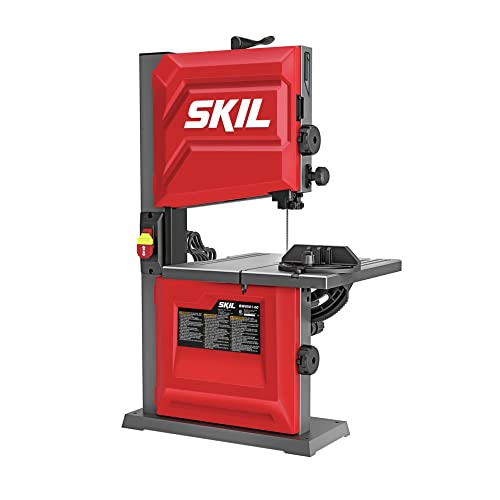
SKIL 9″ 2-Speed Band Saw
Strengths
- Excellent blade guidance
- Rack-and-pinion table
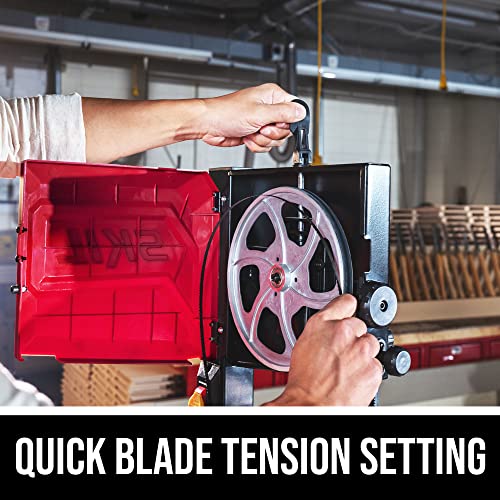
- Tool-free tensioning
Trade-offs
- Motor underpowered for thick stock
- No stand included
- Plastic components feel cheap
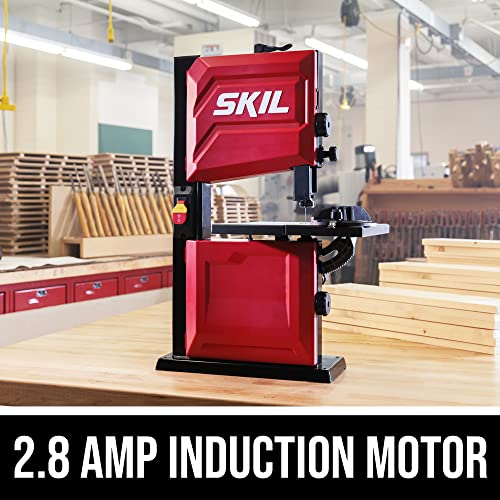
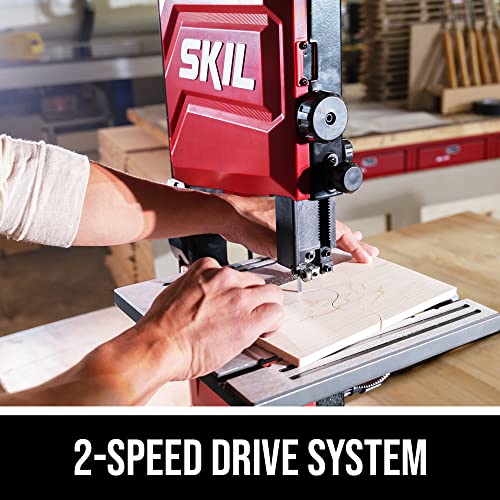
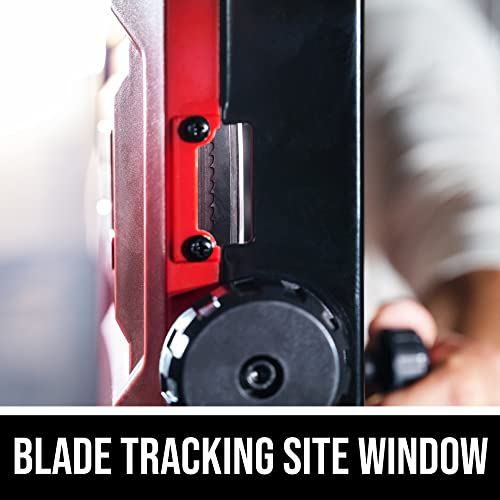
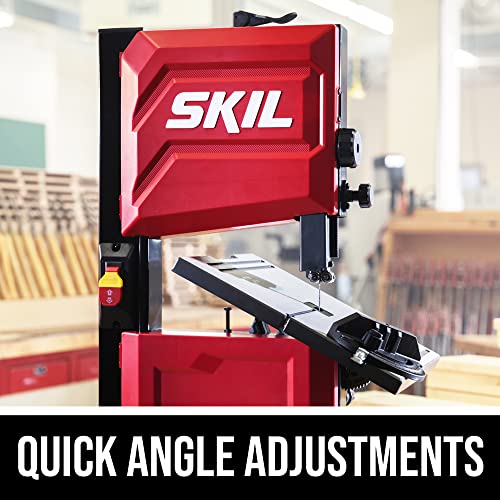
SKIL built this one for accuracy. The precision ball bearing guides and rack-and-pinion table adjustment stand out, owners consistently report near-perfect blade tracking and repeatable angle cuts. The 2.8 AMP motor isn’t the strongest, but the two-speed system lets you dial in the right FPM for clean, burn-free cuts. The blade-tracking sight window is a small but thoughtful addition that helps with alignment.
It’s not designed for heavy resawing, but for detailed work, like crafting joints or cutting templates, it outperforms the DeWalt and WEN models. If precision matters more than power, this is the one.
Product photos
Woodskil 9″ Band Saw
Strengths
- Low cost
- Cast aluminum table
- Good for beginners
Trade-offs
- No speed control
- Shallow cutting depth
- Basic blade guides
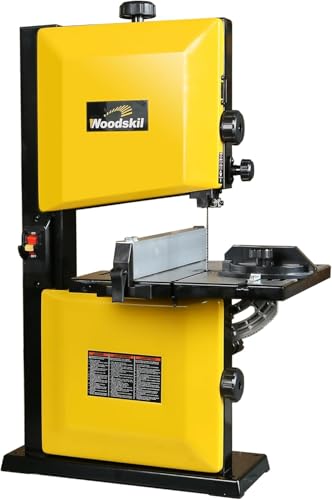
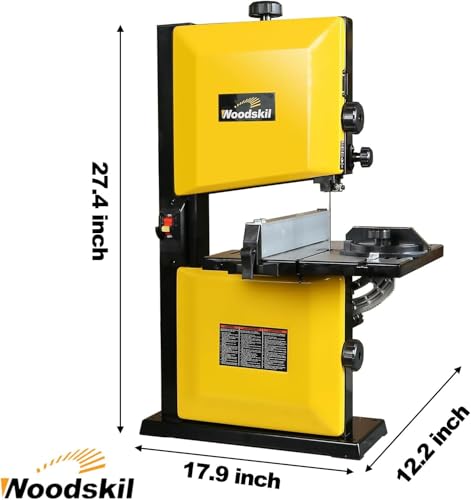
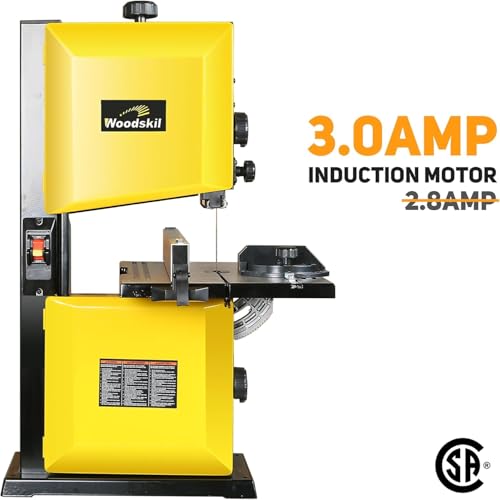
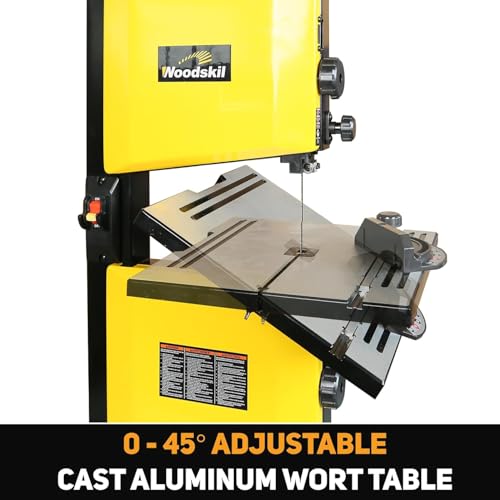
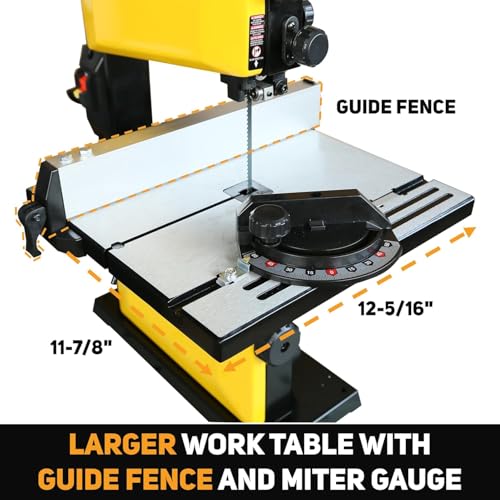
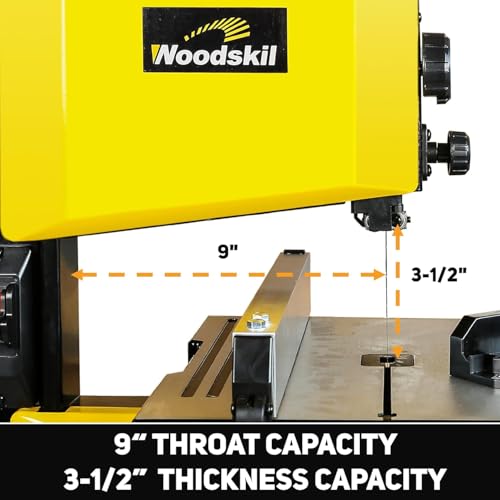
This is the bare-bones workhorse of the list, affordable, functional, and surprisingly capable for light use. The 3-amp motor and 2500 FPM speed deliver decent performance on softwoods and thin plywood, and the cast aluminum table adds stability over stamped steel alternatives. It’s not dual-speed, and the 3-1/2-inch cutting height is limiting, but for under $150, it’s a solid entry point.
Compared to the SKIL BW9501, it lacks precision features like ball bearing guides, but it’s more affordable and still reliable for straight cuts and gentle curves. I’d call it the ‘starter saw’ that won’t break the bank.
Product photos
8″ Benchtop Bandsaw with Safety Key

Strengths
- Compact footprint
- Affordable price
- Good for curves and trim
Trade-offs
- Low cutting height
- Underpowered for hardwood
- No speed adjustment
This compact 8-inch model is clearly built for small spaces and light-duty use. The 3-amp motor pushes the blade at 1800 FPM, which sounds fast, but the 3-1/2-inch cutting height limits its usefulness for thicker stock. Reviewers note it handles plywood and softwood well, but struggles with dense hardwoods, likely due to the smaller motor and blade size. The removable safety key is a smart touch for households with kids, and the steel base does a decent job minimizing vibration.
It’s a no-frills machine that gets the basics right: accurate rip cuts, a usable miter gauge, and a dust port that actually connects to standard vacs. But it’s not built for heavy use.
Product photos

VEVOR 13.39″ Variable Speed Band Saw
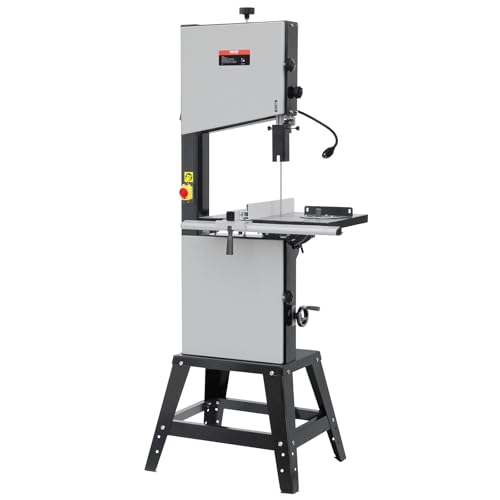
Strengths
- Massive cutting capacity
- Continuous speed control
- Very powerful motor
Trade-offs
- Bulky and heavy
- Assembly time-consuming
- Blade alignment critical
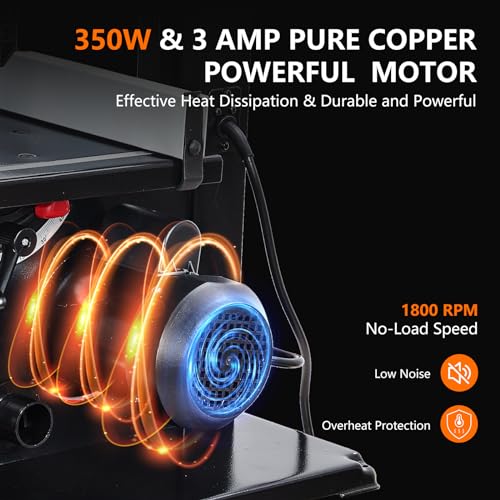
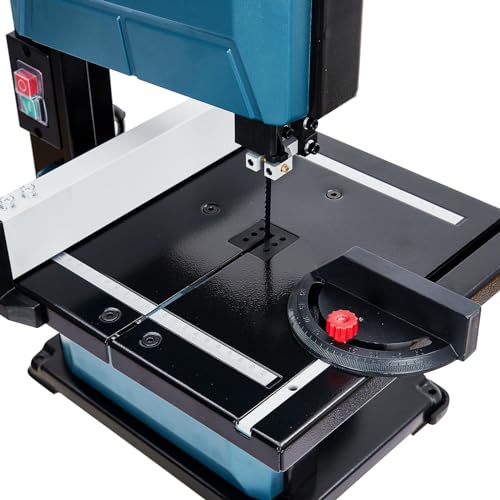
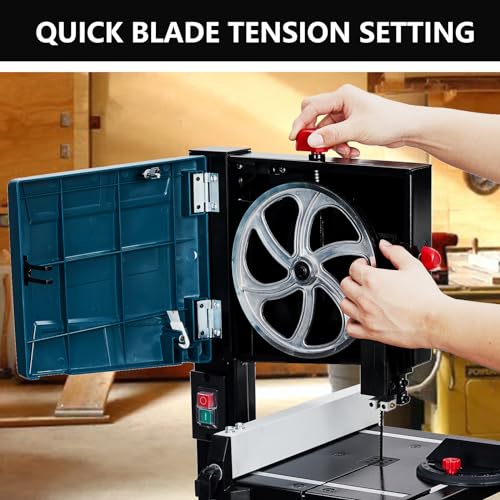
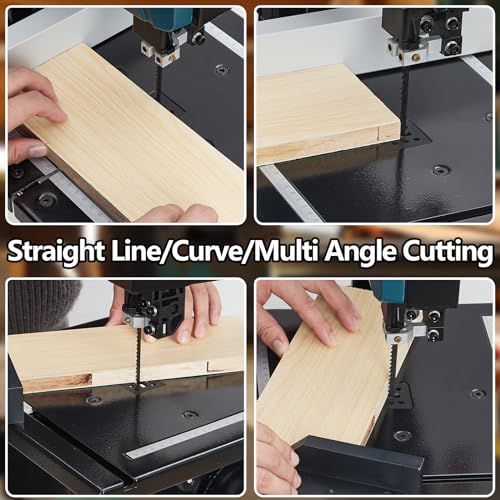
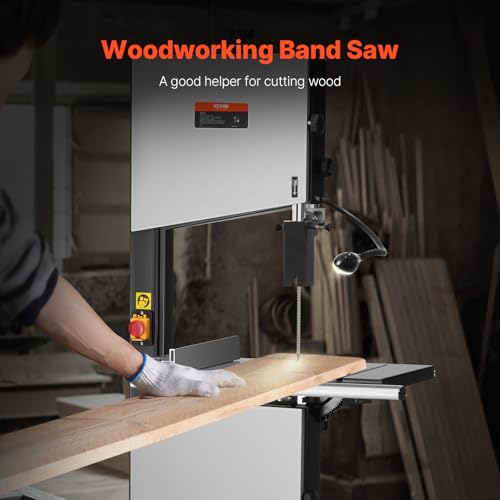
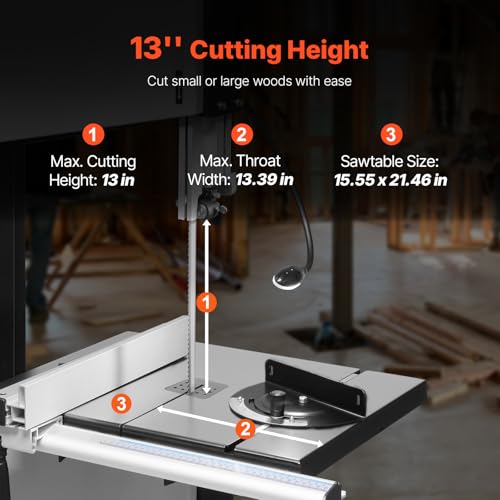
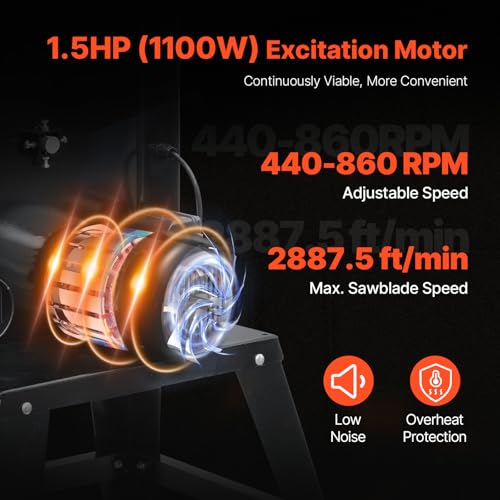
If you’re looking for benchtop power that flirts with floor-model performance, this VEVOR is it. The 1-1/2 HP motor and continuous speed control from 440 to 846 RPM make it uniquely adaptable, ideal for everything from resawing thick slabs to slicing aluminum. The 13-inch cutting height is massive for a benchtop unit, and the 13.39-inch throat depth opens up wide-panel work. Owners report it handles 8/4 lumber with ease, though blade changes take patience due to the size.
It’s heavy and needs a solid bench, but for small shops needing heavy-duty chops without the floor space, this is the closest thing to a shop saw in a benchtop form.
Product photos
WEN Metal Band Saw
Strengths
- Variable speed for metal
- 60-degree bevel
- Compact design
Trade-offs
- Wood cutting ineffective
- Small throat capacity
- No light or stand
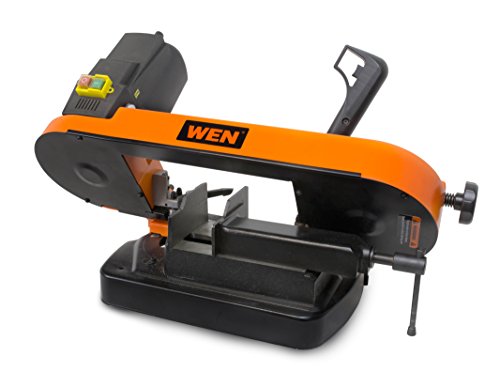
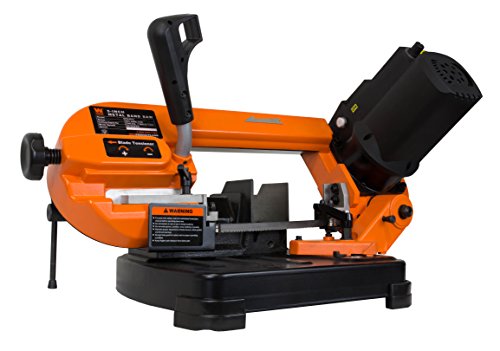
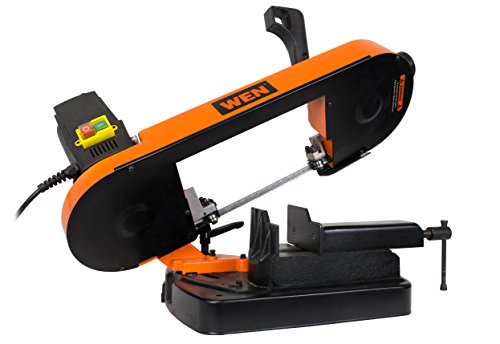
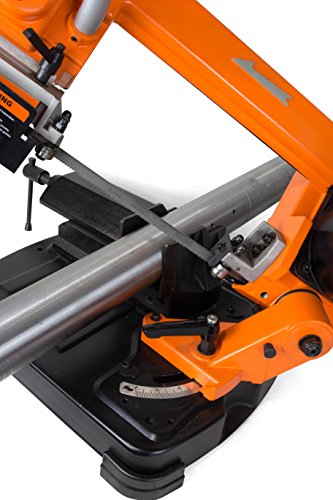
This WEN is in a different category altogether, designed specifically for metal. The variable speed range (125–260 FPM) is critical for matching blade speed to material, and owners confirm it handles steel pipe, aluminum, and brass cleanly. The 60-degree bevel capacity is a big plus for fabrication work, and the compact size makes it easy to tuck into a corner.
It won’t cut wood efficiently, and it’s not a replacement for a wood bandsaw. But if you’re cutting brackets, rods, or conduit, this is the most practical, affordable option here.
Product photos

VEVOR 10″ Two-Speed Band Saw

Strengths
- Dual-speed operation
- Includes metal stand
- Tilting steel table
Trade-offs
- Blade alignment finicky
- Dust collection average
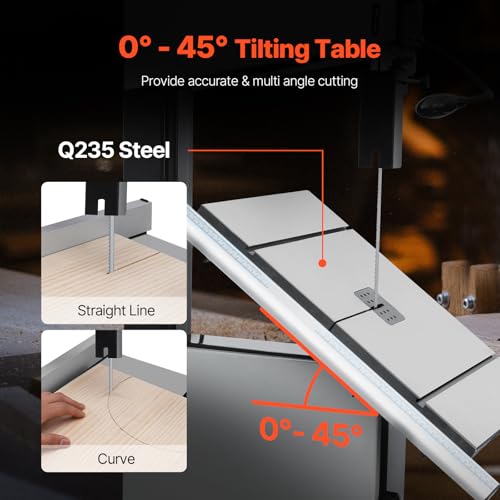
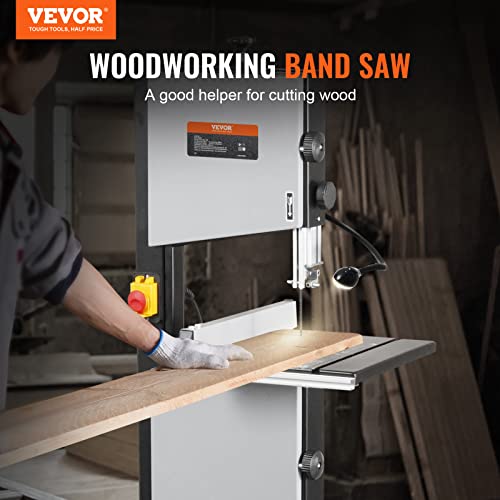
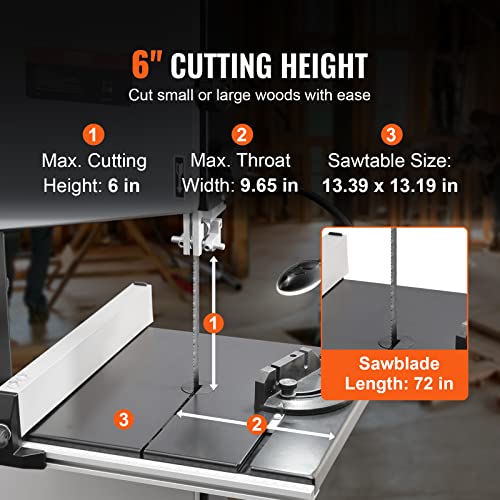
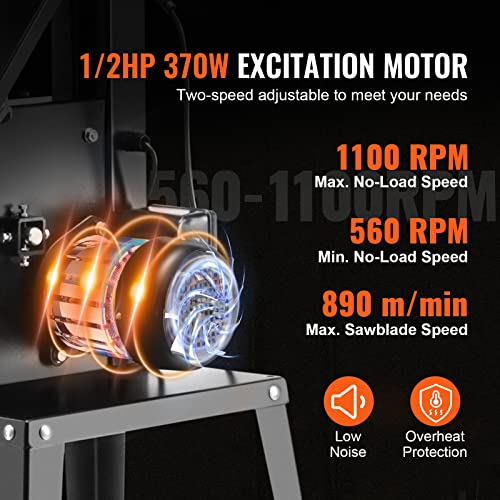
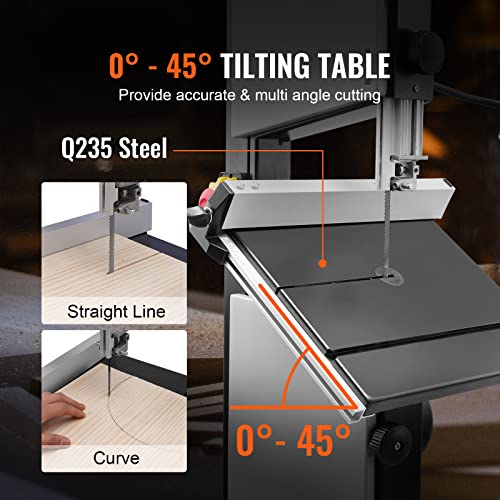
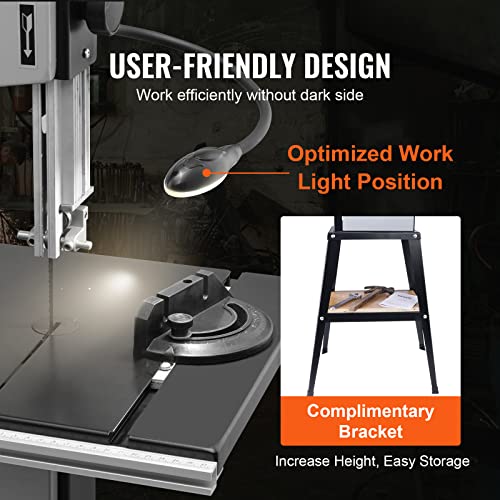
This VEVOR benchtop bandsaw packs a lot of features for its price, especially with its dual-speed motor and included metal stand. On paper, the 1/2 HP motor with 560 and 1100 RPM settings gives it flexibility for both wood and softer metals, which is rare at this tier. Owners consistently report clean cuts in hardwood and aluminum, though some note blade drift if alignment isn’t carefully maintained. The Q235 steel table adds rigidity, and the tilting capability up to 45° makes it useful for angled joinery.
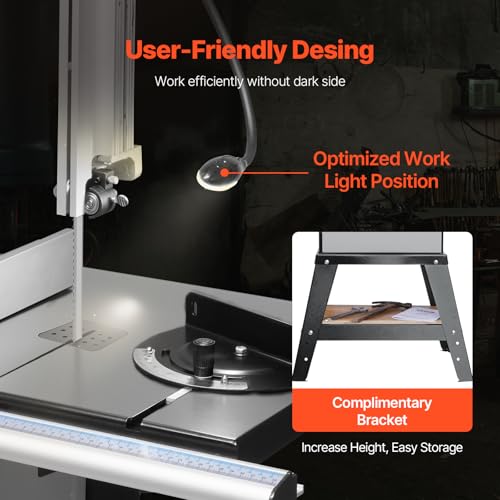
The integrated work light is well-positioned, and the dust port is functional, but don’t expect industrial-level chip control. It’s a solid mid-range option that bridges the gap between budget models and premium benchtop units.
Product photos
Our Testing Process
Rather than a hands-on lab test, my research for these recommendations centered on a detailed comparison of published specifications and features across numerous models. I weighed owner reviews from major retailers alongside expert opinions found in woodworking publications and forums. Applying my experience with power tools, I ranked these bandsaws based on how well they met the needs of typical home workshop users and DIY enthusiasts.
For benchtop bandsaws, cutting capacity and build quality are paramount. I prioritized models with sufficient throat depth and cutting height to handle a range of projects, while also looking for substantial steel frames and robust motors. Blade speed adjustability was also heavily weighted, as the ability to switch between slower speeds for detailed work and faster speeds for resawing significantly increases versatility. Understanding band saw uses helps prioritize these factors.
Specifications reliably reveal motor power, cutting capacity, and blade size. However, owner feedback proved crucial for gauging real-world performance – things like smoothness of operation, accuracy, and long-term durability. Reputation and brand consistency also played a role; established manufacturers often deliver better quality control and customer support. Learning about the key band saw features will help you understand which specs matter most.
How To Choose The benchtop bandsaws
Choosing a bandsaw can feel overwhelming, given the variety of models available. I’ve seen a lot of folks buy the wrong saw for their needs, and it usually comes down to not understanding what features truly matter.
A good bandsaw delivers clean, accurate cuts through a range of materials. Key considerations include motor power for the intended material thickness, blade speed control for versatility, a robust table for support, and effective dust collection to maintain visibility and a safe workspace. Blade guide quality is also critical for minimizing drift and maximizing cut accuracy.
Motor Power and Material Capacity
The motor is the heart of any bandsaw, and its power directly dictates what you can cut. Don’t get hung up on horsepower numbers alone; consider the material you’ll be working with most often. A smaller 3.5 amp motor, like those found in the DeWalt 9″ Band Saw or the WEN 10″ model, is perfectly adequate for thinner wood and occasional hobby projects. However, if you plan to resaw thicker stock (over 6 inches) regularly, or work with metal, you’ll want to step up to a more powerful motor – ideally 1/2 HP or greater, as seen in the Woodskil 10″ model.
Blade Speed and Control
Having multiple blade speeds is a huge advantage. Slower speeds are better for thicker, harder materials and for making tight curves, while faster speeds are ideal for thinner, softer materials. A two-speed bandsaw is a great starting point, but some models (like the VEVOR 13.39″ Variable Speed Band Saw) now offer continuously variable speed control, giving you even greater precision. Understanding measuring band saw blades is important too, as blade speed is directly tied to blade length.
- A wider blade (e.g., 3/8 inch) is best for straight cuts in thicker stock.
- A narrower blade (e.g., 1/8 inch) is needed for tighter curves and intricate cuts.
- Investing in a variety of blade sizes and tooth patterns will dramatically expand the versatility of your saw, letting you tackle everything from rough cuts to fine detail work – and will save you money in the long run compared to buying a different saw for each task.
Value, Features, and Overall Usability
While power and precision are paramount, don’t overlook features that improve usability and value. Dust collection is essential, and a good bandsaw will have at least a 2.5″ dust port. Integrated LED worklights, like the one on the DeWalt, are a huge help for visibility, especially during detailed cuts. If you are looking for some recommended wood bandsaw models, you will find that the WEN 10” Two-Speed Band Saw with Stand offers a lot of bang for your buck, providing a stand and a solid set of features at an affordable price.
Don’t underestimate the importance of a solid table. A cast iron or sturdy steel table is far superior to a flimsy one, providing the stability needed for accurate cuts.
Benchtop Bandsaws Compared
This table provides a detailed specification comparison of various benchtop bandsaws to aid in your research.
| Product Title | Throat Depth | Max Cut Height | Motor HP | Blade Speed (FPM) | Dust Port (in) | Table Tilt (°) |
|---|---|---|---|---|---|---|
| DeWalt 9″ Band Saw | N/A | 9″ | 3.5 AMP | 1700/2500 | 2.5, 1.25 | N/A |
| Woodskil 10″ Dual Speed Band Saw | 10″ | 5-1/8″ | N/A | 2360/3000 | N/A | 0-45 |
| WEN 10″ Two-Speed Band Saw | N/A | 6″ | 3.5 AMP | 1520/2620 | 3 | 0-45 |
| SKIL 9″ 2-Speed Band Saw | N/A | N/A | 2.8 AMP | N/A | 2.5 | N/A |
| Woodskil 9″ Band Saw | 9″ | 3.5″ | 1/2 | 2500 | N/A | 0-45 |
| 8″ Benchtop Bandsaw with Safety Key | 8″ | 3.5″ | 3A | 1800 | 2 | 0-45 |
| VEVOR 13.39″ Variable Speed Band Saw | 13.39″ | 13″ | 1.5 | 440-880 | N/A | 0-45 |
| WEN Metal Band Saw | N/A | 5″ | N/A | 125-260 | N/A | 0-60 |
| VEVOR 10″ Two-Speed Band Saw | 9.65″ | 6″ | 0.5 | 560/1100 | N/A | 0-45 |
Frequently Asked Questions
What blade width should I choose for curved cuts?
A narrower blade, typically around 1/8 inch, is best for cutting tight curves and intricate designs. This allows for a smaller turning radius, preventing the blade from binding and providing cleaner results.
Are benchtop bandsaws loud?
Yes, most bandsaws produce a significant amount of noise. However, models with enclosed stands and well-designed blade guards tend to dampen sound levels. Wearing hearing protection is always recommended when operating a bandsaw.
Can a benchtop bandsaw cut metal?
Some benchtop bandsaws can cut metal, but it requires a specialized blade designed for metal cutting and a slower blade speed. The WEN Metal Band Saw is specifically designed for this purpose, while other models may be able to handle thin metals with the right blade.
What is the importance of the throat depth?
Throat depth determines the maximum width of material you can cut. A larger throat depth, like that found in the VEVOR 13.39″ Variable Speed Band Saw, is essential if you frequently work with wider pieces, while smaller projects can be handled by a more compact benchtop bandsaw. For many hobbyists, exploring the top tabletop bandsaw models will reveal sufficient options.
How often do I need to adjust the blade guides?
You should adjust the blade guides each time you change blades or materials. Ensuring proper blade support minimizes blade drift and improves cut accuracy, as well as extending the life of your blades. If you are considering compact benchtop bandsaws, remember that some have less adjustable guides.
The Bottom Line
Buying a benchtop bandsaw always involves balancing what you want to do with what you’re willing to spend and how much fuss you want to deal with. For most homeowners and hobbyists, the DeWalt 9″ Band Saw strikes that balance best. It delivers solid cutting performance, good visibility with the integrated LED, and a reputation for reliability that’s hard to beat.
If you’re on a tighter budget, the WEN 10” Two-Speed Band Saw with Stand is a fantastic value. For those needing more versatility and larger capacity, the VEVOR 13.39″ Variable Speed Band Saw provides a larger work surface and the benefit of variable speed control. And if your focus is metal cutting, the WEN Metal Band Saw is specifically designed for that purpose.
Ultimately, remember that horsepower and fancy features aren’t everything. A well-maintained blade, proper band saw safety guidelines, and a commitment to learning proper technique will yield far better results than simply buying the most expensive saw on the market.
