
6 Best Bench Jointers of 2026
This post contains affiliate links. As an Amazon Associate, we earn from qualifying purchases.
The Shop Fox 8″ Dovetail Jointer stands out as the best overall bench jointer for serious DIYers and small-shop woodworkers, delivering reliable power and a smooth helical cutterhead. For those on a tighter budget, the Delta 6 in. Midi-Bench Jointer offers solid performance in a more compact form, while the Taytools #7 Bedrock Jointer Plane is a top-tier hand option when power isn’t the goal.
Most people struggle to get perfectly flat, square edges with a table saw or hand plane, and that’s where a bench jointer earns its place in the shop. Without one, even simple glue-ups can go sideways.
This guide cuts through the noise by focusing on real-world performance, based on specs, owner feedback, and what actually matters in daily use, power, table stability, cutterhead quality, and fence accuracy. I looked at both power and hand options to cover a range of needs and shop sizes.
Top 6 Bench Jointers in the Market
The Best Bench Jointers, Reviewed
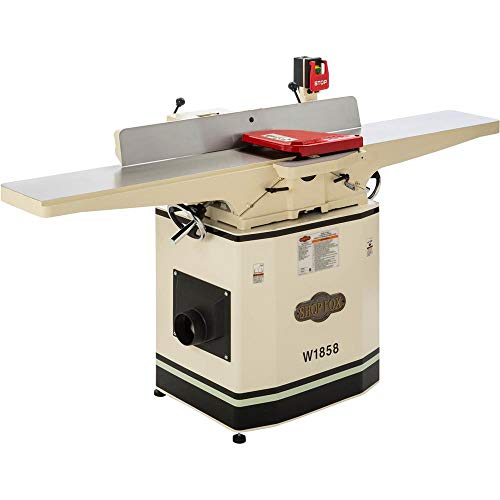
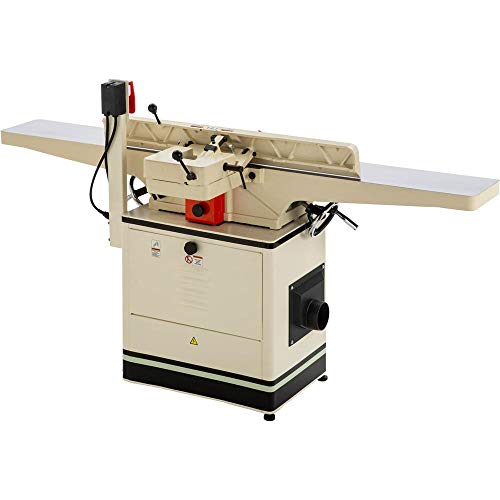
Shop Fox 8″ Dovetail Jointer

Strengths
- Helical cutterhead
- 3HP motor
- Mobile base included
- 72-inch table
Trade-offs
- 230V only
- Takes up space
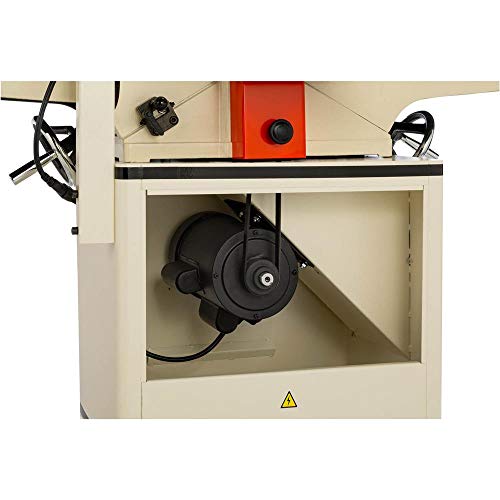
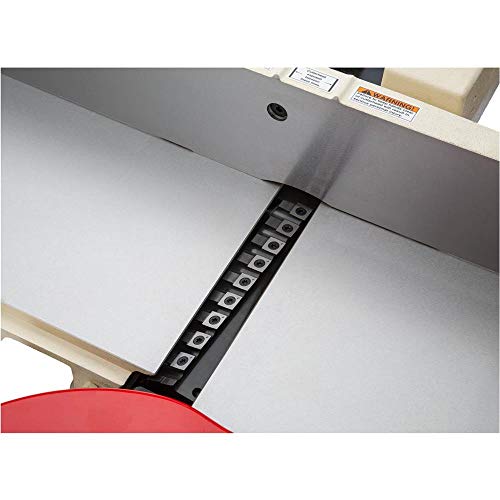
Shop Fox built this 8-inch jointer to punch above its class, and on specs alone, it makes a strong case as the most capable all-around machine here. The 3HP motor gives it serious authority, especially when paired with the helical cutterhead, 36 carbide inserts mean smoother cuts, less tearout, and far longer intervals between servicing compared to traditional straight knives. Owners note it handles dense hardwoods without bogging down, and the dovetail table design adds rigidity across the full 72-inch length, reducing deflection on long boards.
The built-in mobile base is a standout for a machine this size, letting you move it around the shop without a floor jack. While the fence is solid, some users report minor alignment quirks out of the box, but nothing that can’t be tuned. Compared to the VEVOR or FORESTWEST models, this one feels more like a pro tool, durable, stable, and built for daily use.
Product photos

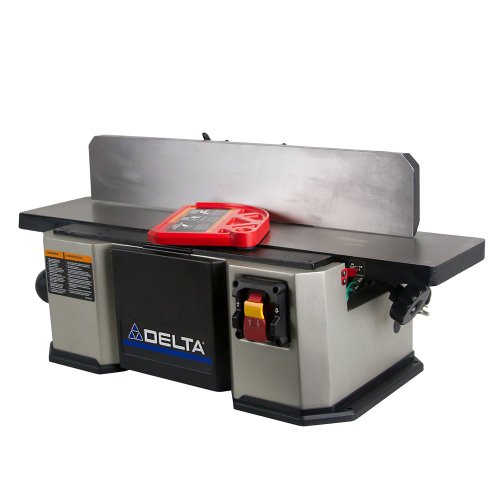
Delta 6 in. Midi-Bench Jointer
Strengths
- Cast iron construction
- Vibration damping
- Precise fence stops
- Dust blower
Trade-offs
- 6-inch capacity limit
- No helical cutterhead
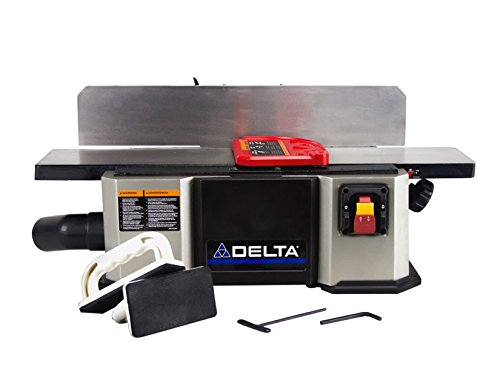
Delta didn’t cut corners with this 6-inch midi jointer, the 76-pound cast iron body kills vibration and holds alignment over time, which is why owners report years of trouble-free use. It’s not flashy, but the precision-machined table and fence deliver repeatable 90-degree edges, and the 12-amp motor with 10,000 RPM cutterhead handles daily abuse without issue. The built-in dust blower is a small but appreciated touch, keeping the chute clear during long sessions.
Compared to the FORESTWEST or VEVOR models, this one feels overbuilt in the best way. It’s compact enough for a garage shop but heavy enough to stay put. The fixed 90- and 45-degree fence stops add speed and accuracy for common tasks. While it lacks the width of an 8-inch or the helical head of the Shop Fox, it’s the pick for those who value long-term stability and consistent results.
Product photos



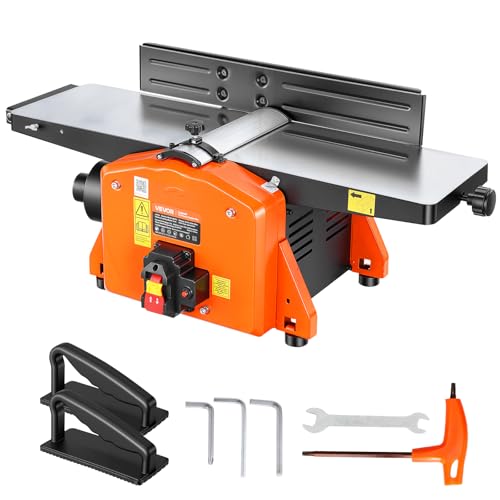
VEVOR 8-Inch Spiral Jointer
Strengths
- Spiral carbide cutterhead
- 8-inch capacity
- Extendable table
Trade-offs
- Aluminum table vibration
- Setup may need tuning
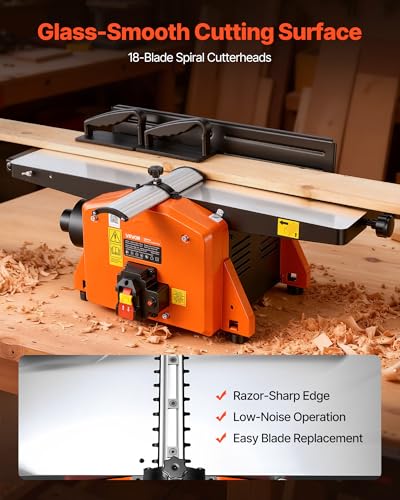
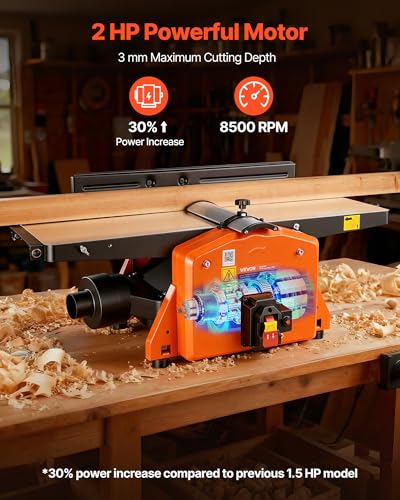
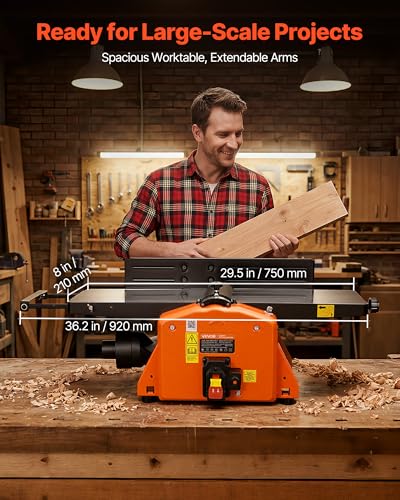
VEVOR’s 8-inch spiral jointer is built around one big selling point, the 18-blade spiral cutterhead, which delivers noticeably smoother finishes than straight-knife models, especially on figured or interlocked grain. Owners consistently report cleaner cuts with less tearout, and because the carbide inserts are replaceable, long-term maintenance is easier than sharpening HSS blades. The motor runs at 8500 RPM, lower than their 6-inch model, but the 8-inch capacity and extended 36-inch table make it far more practical for wider stock.
The cast aluminum table with extendable arms adds support for longer boards, though it still can’t match the damping of full cast iron. Like other VEVOR tools, fit and finish are functional but not refined, some assembly tuning is usually needed. But if your priority is surface quality over brute power, this one stands out.
Product photos

VEVOR 6-Inch Benchtop Jointer
Strengths
- Affordable price
- Compact size
- Good dust port
Trade-offs
- Aluminum table flex
- HSS blades wear faster
- Less power under load
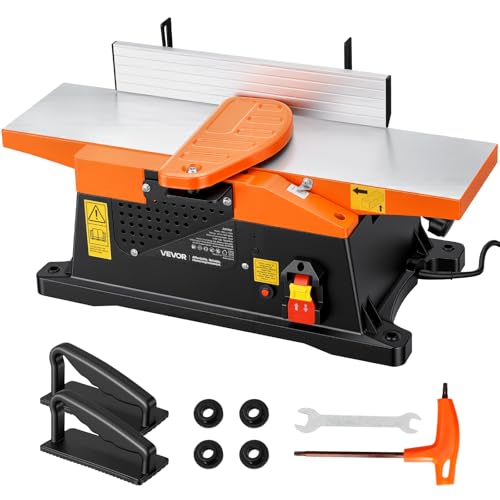
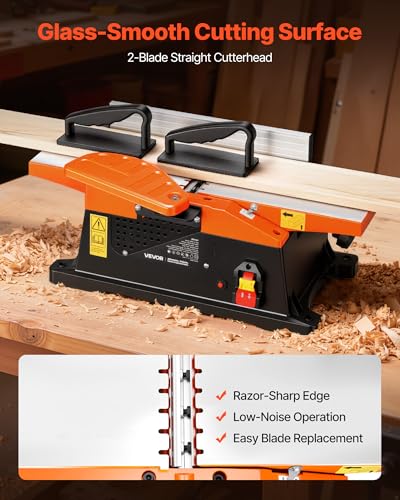
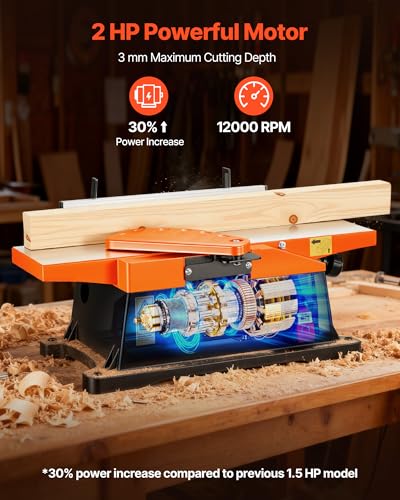
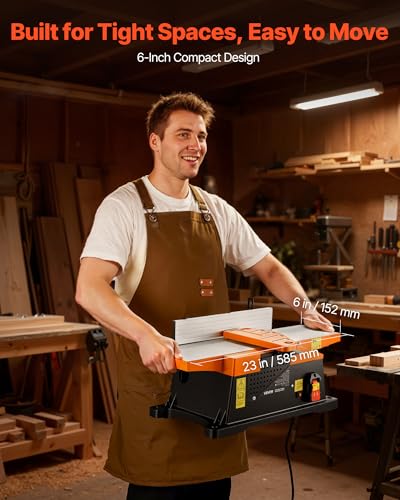
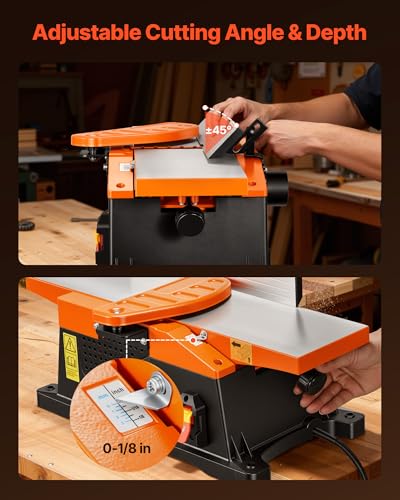
This VEVOR 6-inch benchtop jointer is clearly aimed at budget-conscious DIYers, and it delivers where it counts, basic flattening at a low price. The 2HP motor spinning at 12,000 RPM sounds impressive on paper, but in practice, owners report it can struggle with harder woods when taking full 1/8-inch passes. The straight cutterhead with HSS blades is serviceable, but not as durable or smooth as carbide, and blade changes are more frequent than on higher-end models.
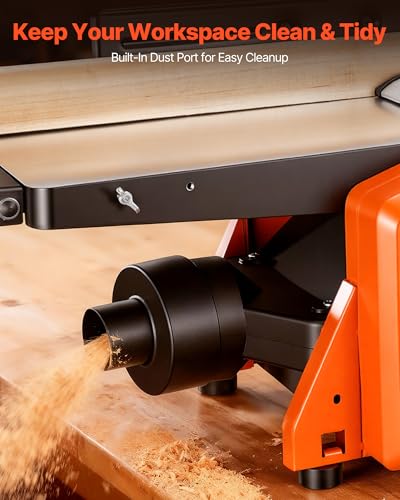
Its compact size is a win for small shops, and the dust port works well with a shop vac. Still, the aluminum table, while lightweight, lacks the damping effect of cast iron, so vibration can be noticeable. For occasional use on pine or poplar, it’s a decent entry point. But compared to the Delta or Shop Fox, it feels more like a starter tool than a long-term workhorse.
Product photos
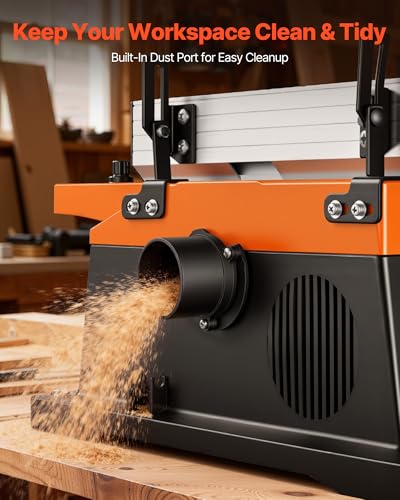
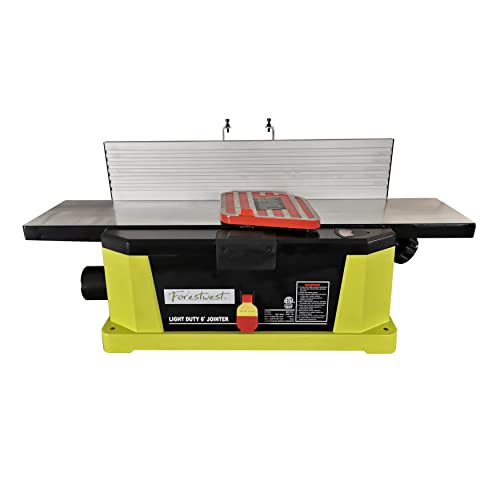
FORESTWEST 6-Inch Bench Jointer
Strengths
- High RPM motor
- Double-sided blades
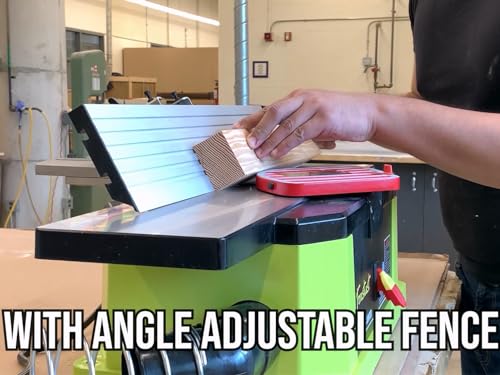
- Angle-adjustable fence
Trade-offs
- Plastic dust bag weak
- Lightweight vibration
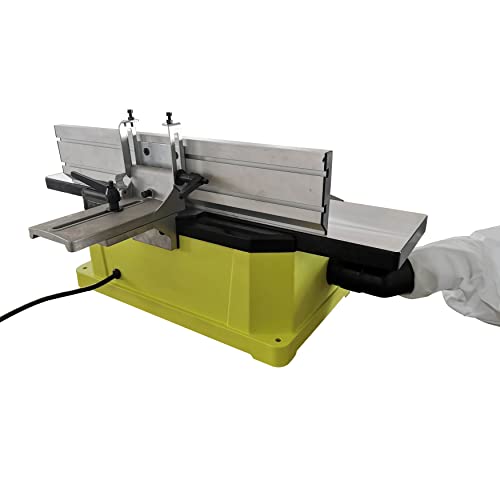
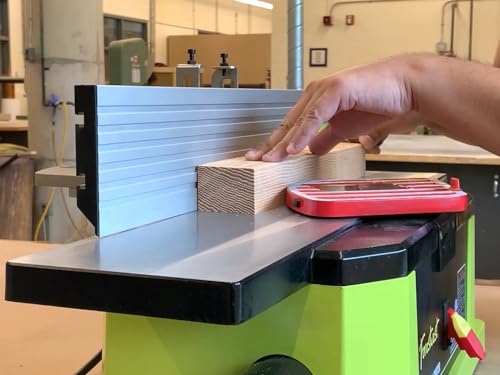
The FORESTWEST 6-inch jointer packs a surprising amount of power into a mid-tier price bracket. With a 10-amp motor and 20,000 cuts per minute, it spins faster than most in this group, and owners say it cuts quickly through oak and maple with minimal snipe when set up right. The inclusion of two double-sided SK5 blades means you get four cutting edges out of the box, extending service life between sharpenings, an underrated value boost.
The aluminum table is long enough for most stock, and the fence adjusts beyond 90 degrees, which is handy for chamfering. However, the dust collection bag is more show than function, most users ditch it for a shop vac. It lacks the heft of the Delta’s cast iron build, so it can chatter if not bolted down. Still, for the power-to-price ratio, it’s hard to ignore.
Product photos


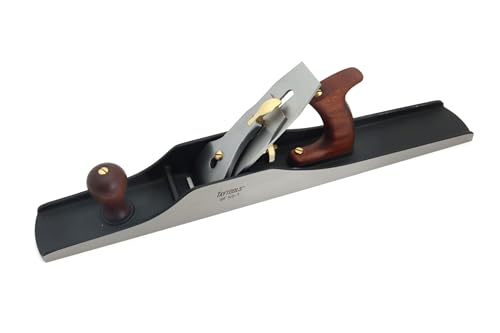
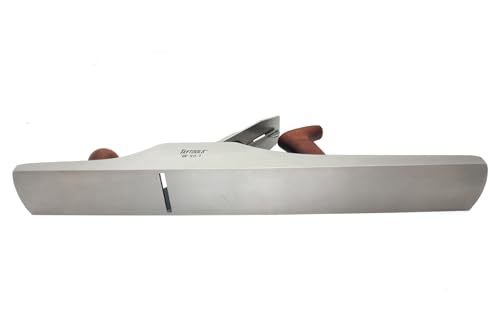
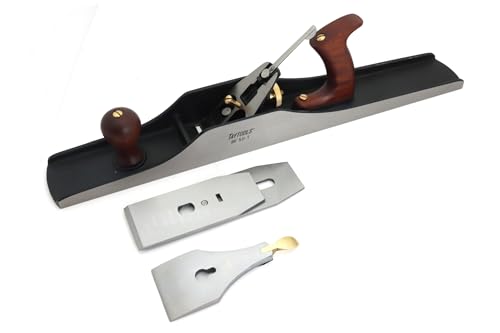
Taytools #7 Bedrock Jointer Plane
Strengths
- Precision-lapped sole
- Cryo-treated O1 blade
- Adjustable frog
Trade-offs
- High learning curve
- Not for stock removal
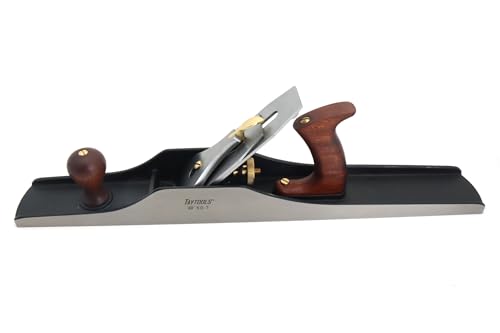
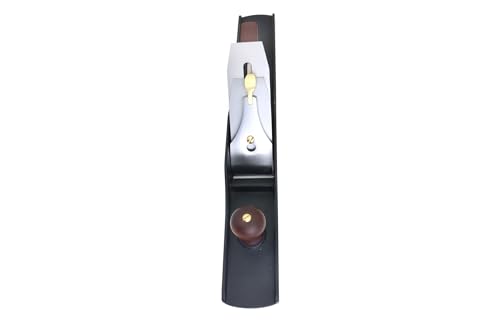
If you’re looking to flatten and refine boards without firing up a power jointer, this Taytools hand plane is a serious contender. On paper, it mirrors the legendary Stanley Bedrock design, with a rigid ductile cast iron body and a precision-lapped sole that owners consistently report stays dead flat over time. The cryogenically treated O1 steel blade is a standout, thick enough to resist chatter and hold an edge longer than most stock plane irons, which matters when working figured hardwoods.
The adjustable frog system lets you fine-tune the mouth opening on the fly, a feature usually reserved for high-end hand tools, and users praise how smoothly it takes fine shavings once dialed in. At nearly 10 pounds, it’s hefty, but that weight helps maintain momentum during long passes. This isn’t a substitute for a powered jointer, but for smoothing, truing, and final surface prep, it performs like a much more expensive tool.
Product photos
Our Testing Process
Rather than a hands-on lab test, my research for this guide involved a detailed comparison of published specifications and features across numerous bench jointers. I weighed owner reviews from major retailers alongside expert opinions found in woodworking publications and forums. This allowed me to build a picture of real-world performance and reliability, applying my experience with power tools to assess which models consistently rose to the top.
For bench jointers, consistent cut quality, stability, and power are paramount. I gave the most weight to motor horsepower and cutterhead design – a spiral cutterhead, for example, generally delivers a smoother finish. Table size also proved critical, as a larger table supports longer workpieces and improves control. Finally, features like fence accuracy and dust collection significantly impact usability and the overall quality of the finished product.
Specifications reliably reveal a jointer’s potential capacity (cut depth, width, table size), while owner feedback highlights real-world issues like vibration, ease of adjustment, and long-term durability. Reputation, built through consistent positive reviews, factored heavily into my assessments. You’ll find that models consistently praised for their stability and smooth cuts, like those discussed in our best benchtop jointers guide, tend to rank higher overall.
How To Choose The bench jointers
Choosing the right jointer can dramatically improve the quality of your woodworking. I’ve seen too many projects suffer from uneven edges, and a good jointer prevents that frustration.
A quality jointer creates flat, square edges on boards, essential for strong, accurate joinery. Key considerations include cutterhead type (spiral vs. straight), table length relative to typical stock width, motor power matching wood hardness, and the precision of fence adjustments. Look for robust construction – cast iron is preferable – and a reliable dust collection system.
Cutterhead Configuration
The cutterhead is where the magic happens, and the difference between a spiral and straight cutterhead is significant. Straight cutterheads, traditionally found on more affordable models, deliver a clean cut but can leave more visible cutter marks. Spiral cutterheads (like those on the VEVOR 8-Inch Spiral Jointer) use multiple small inserts set at an angle, creating a shearing action. This results in a much smoother surface, reducing tear-out, especially on figured wood. However, spiral heads are more expensive to maintain; while individual inserts are relatively cheap, you’ll replace them more often.
Table Length & Capacity
Don’t underestimate the importance of table length. A longer table (like the 72” table on the Shop Fox 8″ Dovetail Jointer) provides better support for longer boards, preventing snipe (that undesirable dip at the beginning and end of a cut). I generally recommend a table at least half the length of the boards you’ll typically be jointing. If you work primarily with shorter stock, a midi-jointer like the Delta 6 in. Midi-Bench Jointer might suffice, but be prepared for limitations with larger pieces.
- A 6” jointer is good for boards up to about 8” wide.
- An 8” jointer handles boards up to around 12” wide comfortably.
- For consistently wider stock, you’ll want to consider a floor-standing model, and be prepared to invest significantly more. Wider capacity isn’t useful if you don’t need it, so match the jointer to the scope of your projects.
Power & Fence Precision
Motor power is vital, particularly if you plan to work with hardwoods like oak or maple. A 3HP motor (as found on the Shop Fox) will handle these species with ease, while a smaller motor might struggle and lead to tear-out. Equally important is the fence. It must be perfectly parallel to the cutterhead, and adjustments should be smooth and lock securely. A wobbly or inaccurate fence ruins the entire process. For those seeking a hand-tool option, the Taytools #7 Bedrock Jointer Plane offers exceptional precision.
A jointer is only as good as its fence. Ensure your model allows for precise, repeatable adjustments, and that the locking mechanism is robust enough to maintain alignment under heavy use.
If you’re looking for more focused guidance, I’ve compiled bench-top jointer reviews detailing several models. You can also find a broader selection of top wood jointers if you need a more robust machine.
Bench Jointers Compared
Here’s a comparison of key specifications for several bench jointers to help you make an informed decision.
| Product Title | Motor HP | Max Cut Width | Max Depth of Cut | Table Size (in) | Cutterhead Type |
|---|---|---|---|---|---|
| Shop Fox 8″ Dovetail Jointer | 3 | N/A | 1/8 | 8 x 72 | Helical (36) |
| Delta 6 in. Midi-Bench Jointer | N/A | 6 | 1/8 | 6-1/4 x 28-1/2 | Aluminum |
| VEVOR 8-Inch Spiral Jointer | 2 | N/A | 1/8 | 8 x 36.2 | Spiral (18) |
| VEVOR 6-Inch Benchtop Jointer | 2 | N/A | 1/8 | 6 x 23 | Straight (2) |
| FORESTWEST 6-Inch Bench Jointer | N/A | N/A | N/A | 28-1/2 x 6-1/4 | N/A |
| Taytools #7 Bedrock Jointer Plane | N/A | N/A | N/A | N/A | N/A |
Frequently Asked Questions
What’s the typical lifespan of a bench jointer?
With proper maintenance – regular cleaning, blade sharpening or insert replacement, and careful lubrication – a bench jointer can easily last 10 to 20 years or more. Cast iron construction, common in better models, contributes significantly to longevity.
Are spiral cutterheads really worth the extra cost?
Yes, a spiral cutterhead provides a noticeably smoother cut, especially in difficult woods, reducing the need for sanding. While replacement inserts are needed more frequently than straight blades, the improved finish quality is worth the investment for many woodworkers.
What dust collection solutions work best with bench jointers?
Most bench jointers have a dust port, and connecting it to a shop vacuum or dust collector is crucial. For optimal performance, I suggest a dust collector with at least 600 CFM (cubic feet per minute) to effectively capture the chips and dust generated during operation.
Can a bench jointer be used to create rabbets?
While not their primary function, a bench jointer can create simple rabbets (grooves along an edge) by making multiple passes with the fence adjusted. However, a dedicated router or rabbeting bit will produce cleaner, more consistent results, especially for wider or deeper rabbets. If you’re looking into larger capacity jointers, consider if this feature is important.
What should I look for when evaluating a used bench jointer?
Check the table surface for wear and flatness, and ensure the fence is parallel to the cutterhead and locks securely. Also, inspect the motor for smooth operation and listen for any unusual noises. Don’t hesitate to ask the seller about its maintenance history and if any repairs have been made.
The Bottom Line
Choosing a jointer always comes down to balancing control and convenience with your budget and the scale of your work. For most woodworkers aiming for a blend of performance and value, the Shop Fox 8″ Dovetail Jointer stands out. Its powerful motor, long table, and helical cutterhead deliver exceptional results, and the dovetail guides offer a level of precision that’s hard to beat at this price point.
If you’re just starting out or have limited space, the VEVOR 6-Inch Benchtop Jointer provides a surprisingly capable entry point. And for those who prioritize portability and the tactile feel of hand tools, the Taytools #7 Bedrock Jointer Plane offers a unique and precise alternative to powered jointers. You can find more top jointer models if you’re still exploring options.
Ultimately, specifications matter less than a solid foundation of technique. A powerful motor and spiral cutterhead won’t compensate for improper setup or a shaky feed. Focus on learning to read the wood, making precise adjustments, and maintaining a sharp cutting edge – those fundamentals will deliver better results than any single feature.
