7 Best Arborist Chainsaws of 2026
This post contains affiliate links. As an Amazon Associate, we earn from qualifying purchases.
The Husqvarna T435 stands out as the best arborist chainsaw for serious tree work, combining power, reliability, and a lightweight top-handle design trusted by professionals. For those on a tighter budget, the WTHW 25.4CC Top Handle offers solid performance at a much lower price point. If you prefer cordless convenience for shorter jobs, the SEESII 40V 16-Inch is a capable option.
Arborists need tools that deliver power without the weight, especially when working overhead or in the canopy. A poorly balanced or underpowered saw can turn a routine job into a dangerous struggle. After comparing the field based on specs, owner feedback, and what works in real tree care scenarios, I focused on models that prioritize safety, weight, and cutting efficiency.
This guide covers the key factors that matter most, from engine type and bar length to safety features and real-world reliability, so you can pick a saw that matches your workload and skill level.
Top 7 Arborist Chainsaws in the Market
The Best Arborist Chainsaws, Reviewed
Husqvarna T435 12 in. Gas Chainsaw
Strengths
- 35.2cc optimal power
- Side chain tensioning
- Anti-vibration system
Trade-offs
- Higher price point
- Requires regular maintenance
- Not for casual users
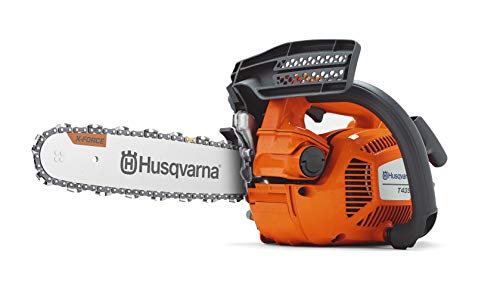
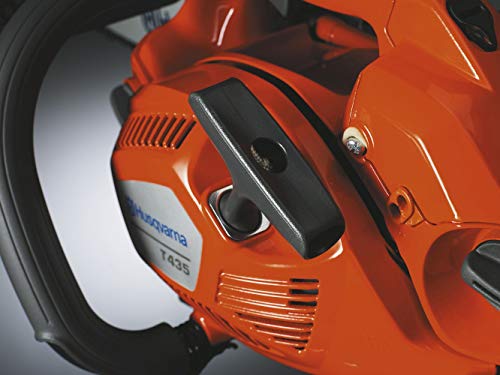
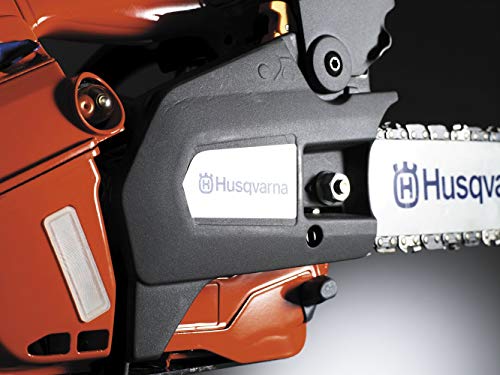
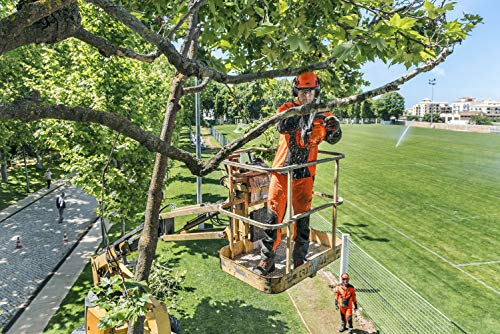
If you’re serious about tree work, the Husqvarna T435 is the benchmark. At 35.2cc, it strikes a near-perfect balance between power and weight, and the anti-vib system is noticeably effective, owners report less hand fatigue on long days. The side chain tensioning is a standout in the field; you can tighten the chain with a screwdriver while the saw’s still in the tree, which saves time and hassle.
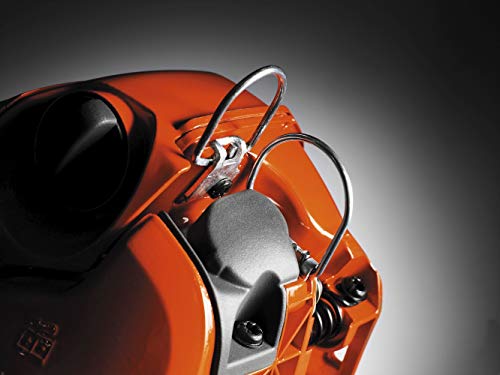
It comes with Husqvarna’s X-Cut chain and X-Force bar, both known for clean, fast cuts and durability. The rope hoist attachment is a small but meaningful touch for climbers. Compared to the Holzfforma or WTHW, this saw feels more refined in every way, from start-up to shutdown. It’s not the cheapest, but it’s the one pros keep coming back to. My recommendation? If you’re making a living in the canopy, this is the saw to beat.
Product photos
Husqvarna 120 Mark III 16 in. Chainsaw

Strengths
- 38cc X-Torq engine
- Easy start system
- LowVib technology
Trade-offs
- Rear-handle design
- Too heavy for climbing
- Not for overhead work
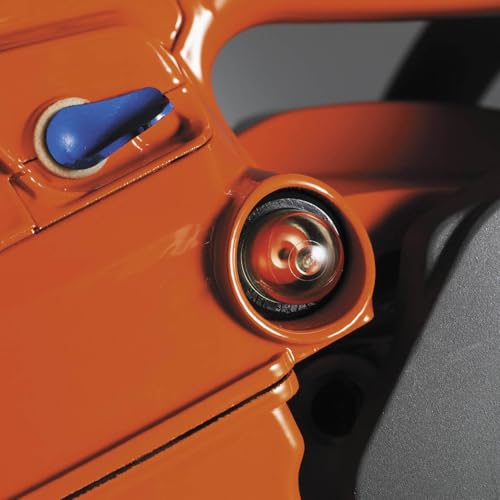
The Husqvarna 120 Mark III is a solid mid-tier homeowner saw, but calling it an arborist tool stretches the truth. At 38cc and 1.8 HP, it’s more than capable for firewood, pruning, and felling small trees, and the X-Torq engine delivers decent fuel efficiency and lower emissions. Owners consistently report easy starts thanks to the air purge and combined choke control, a real win over older models that flood easily.
But it’s a rear-handle design, which immediately disqualifies it for climbing. It’s also heavier and bulkier than top-handle arborist saws like the T435. That said, for ground-level work, it’s reliable and durable, with LowVib tech helping reduce fatigue. If you’re comparing it to the SEESII cordless, the Husqvarna has more raw power and better cold-weather reliability. For most non-climbing users, this is the smarter buy if you need gas-level performance without stepping up to pro gear.
Product photos


WTHW 25.4CC Top Handle Arborist Saw
Strengths
- Lightweight at 8.3 lbs
- Dual-trigger safety lock
- Auto oiling system
Trade-offs
- No side chain tensioning
- Not for heavy hardwoods
- Build quality average
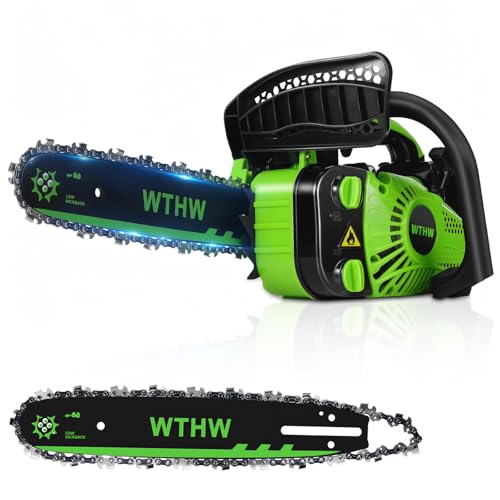
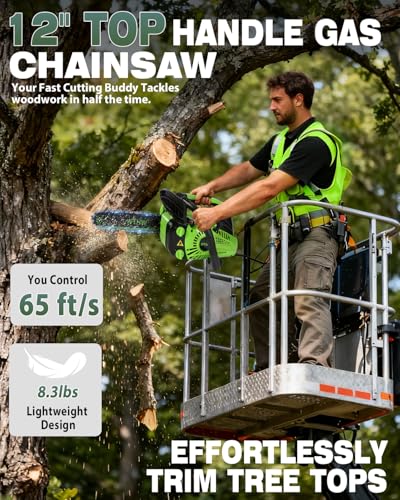
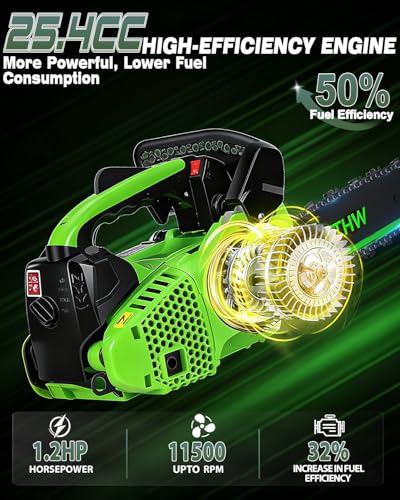
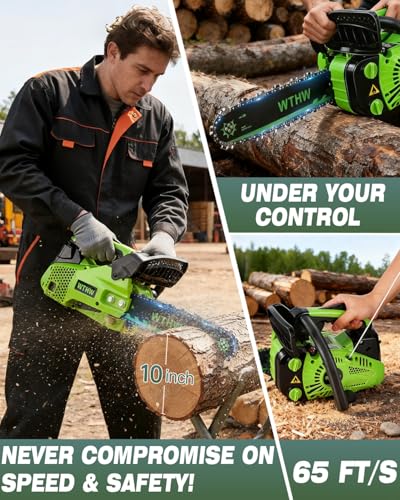
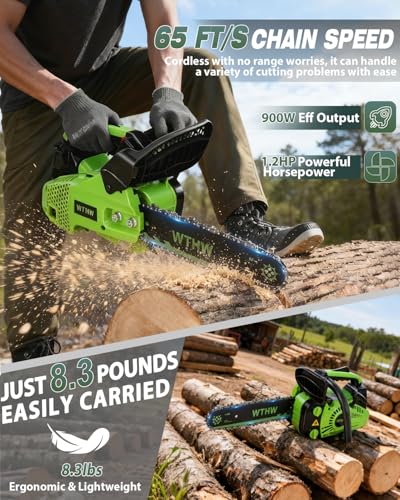
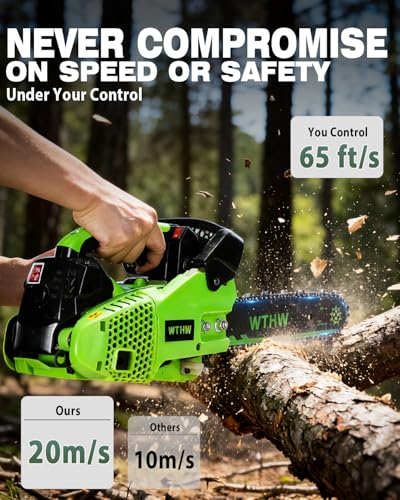
The WTHW 25.4cc saw is clearly modeled after the pro arborist profile, 8.3 lbs, top handle, auto oiling, and a 1.2 HP engine. It’s one of the most complete budget arborist saws available, with a dual-trigger throttle lock and rapid-reaction brake guard adding real safety value. Owners appreciate the easy start system and smooth power delivery, especially for yard-level pruning and storm cleanup.
But it’s still a budget build. The engine holds up for light work, but it’s not in the same league as the Husqvarna T435 when cutting dense hardwoods all day. There’s no side tensioning, so you’ll need to take the bar cover off mid-job, which is a pain up a tree. Still, for DIYers or side-hustle trimmers, it’s hard to beat the value. Compared to the NEO-TEC, it’s slightly heavier but feels more rugged. My take? This is the best bang-for-buck arborist-style saw if you’re not clocking 40-hour weeks in the canopy.
Product photos
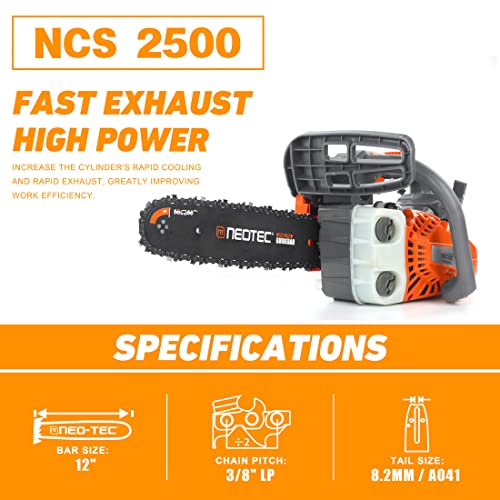
NEO-TEC 12 Inch Top Handle Gas Saw
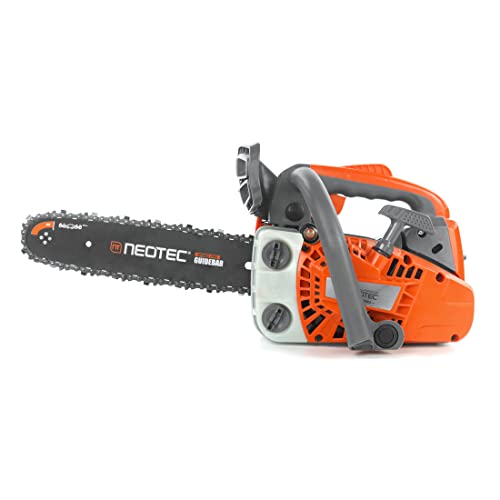
Strengths
- Ultra-light at 8 lbs
- High 12,000 RPM speed
- Metal lanyard ring
Trade-offs
- Long-term durability concerns
- Basic tool kit
- No side tensioning
The NEO-TEC 25.4cc saw punches above its weight on paper, 1.2 HP, 12,000 RPM, and a featherweight 8 lbs. That kind of power-to-weight ratio is exactly what climbers look for, and owners confirm it starts easily and runs smoothly for short to mid-length jobs. The metal lanyard ring and ergonomic handle are thoughtful touches that show it’s designed with actual tree work in mind.
It’s not as refined as the Husqvarna T435, obviously, but for a fraction of the cost, it delivers solid performance. Where it falters is in long-run durability, some users report carb issues after a few months of heavy use. Still, for the price, it’s one of the better lightweight performers. If you’re comparing it to the JPNTECH or WTHW, the NEO-TEC edges ahead in both power and build. I’d pick this for light to moderate climbing work where budget matters but reliability still counts.
Product photos


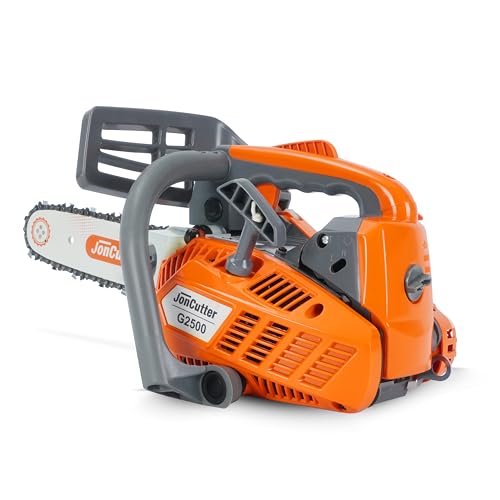
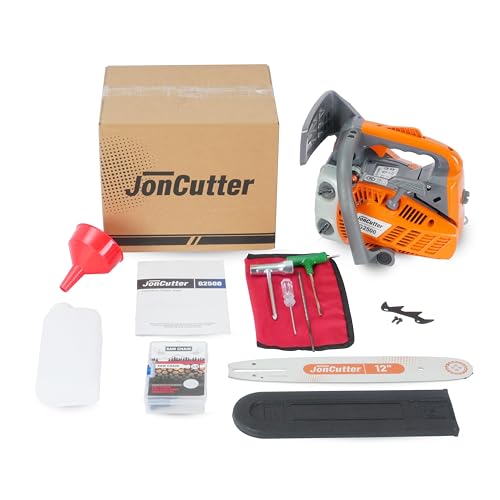
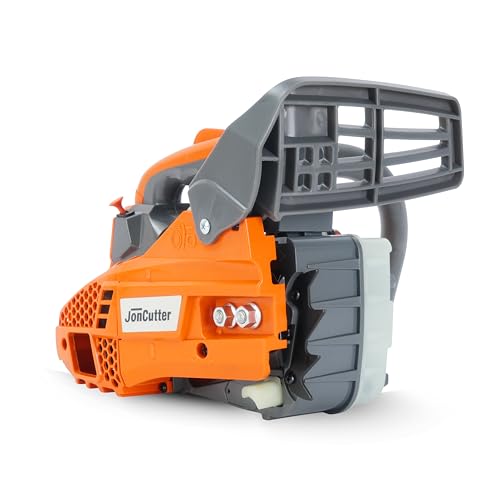
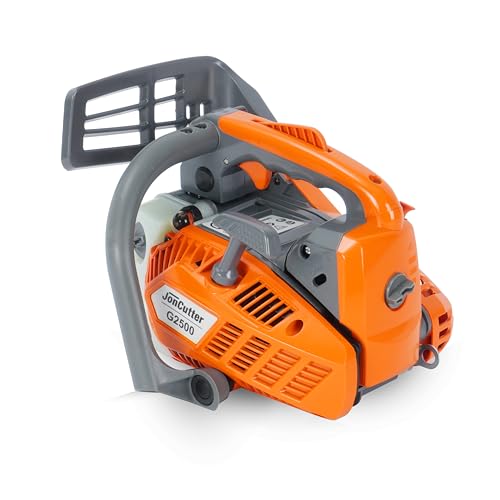
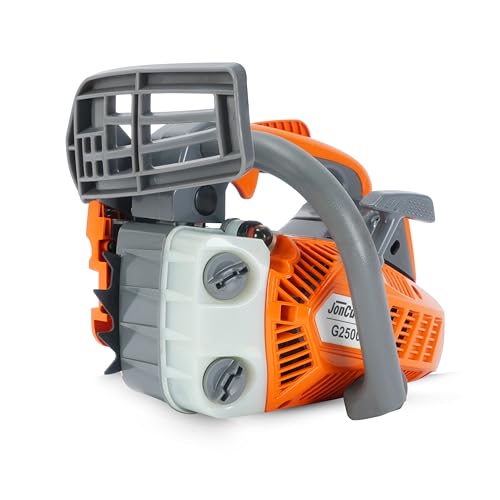
Holzfforma G2500 Top Handle Power Head

Strengths
- 25.4cc displacement
- 12-inch bar included
- Bar cover included
Trade-offs
- No side chain tensioning
- Basic anti-vibration
- Not built for heavy use
This Holzfforma G2500 is positioned as a power head for professional refurb builds, and on paper, it makes sense for that niche. With a 25.4cc two-stroke engine and 0.9kw output, it’s in the same ballpark as other lightweight arborist saws, but it lacks the refined features you’d expect for climbing work. Owners note it’s bare-bones, no side tensioning, no anti-vib system, and the build quality feels more utility-grade than purpose-built for sustained tree work.
It includes a 12-inch 3/8 LP bar and .050 chain, which is standard, but if you’re building a custom rig, you’re better off sourcing a complete saw with better feedback. I wouldn’t recommend this as a daily driver, but for someone rebuilding or modifying a setup on a budget, it could serve as a donor unit. Compared to the Husqvarna T435 or even the WTHW, it just doesn’t bring enough to the table for active climbers.
Product photos
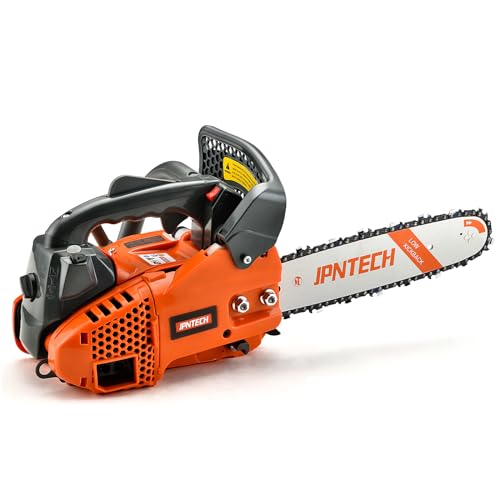
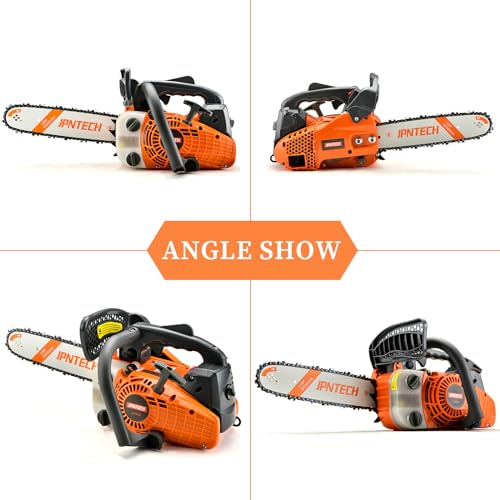
JPNTECH 12 Inch Top Handle Chainsaw
Strengths
- 12-inch top handle
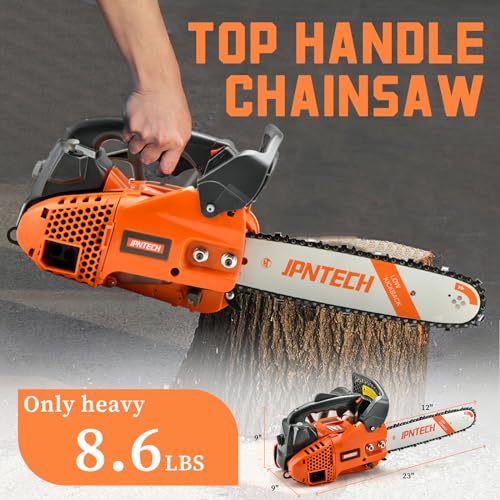
- Lightweight at 8.6 lbs
- Affordable entry point
Trade-offs
- Basic build quality
- No side tensioning
- Vibration control lacking
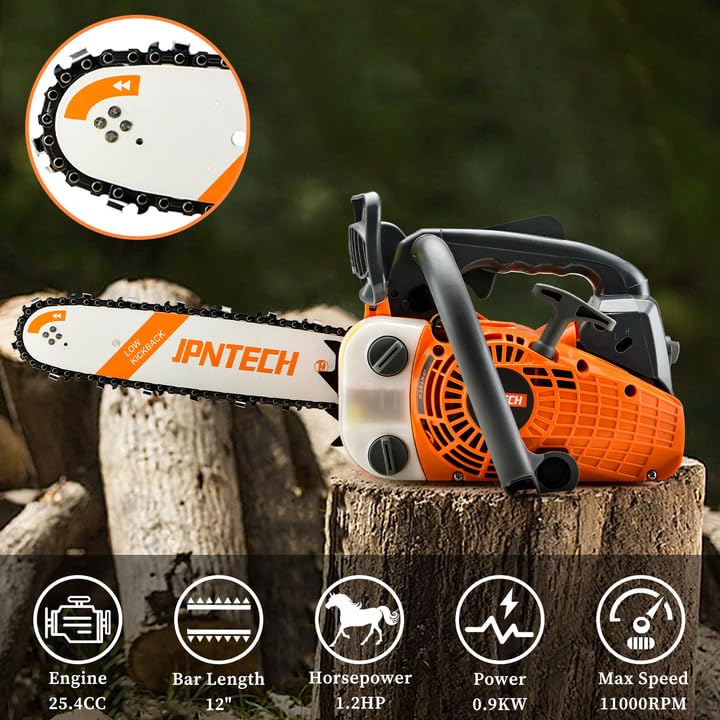
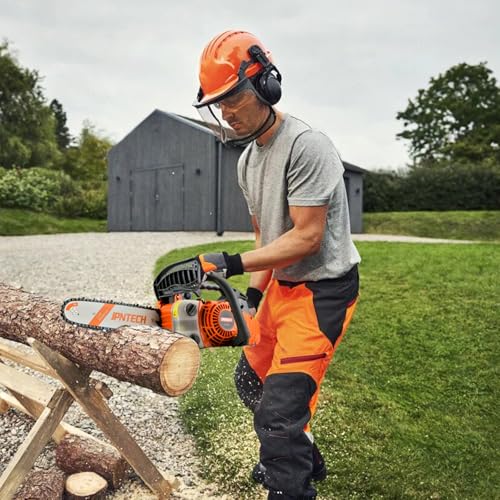
At 8.6 lbs and 25.4cc, the JPNTECH hits the right weight and displacement for entry-level arborist work, and it’s priced accordingly. It delivers 1.2 HP and 11,000 RPM, specs that align with other lightweight climbers’ saws, and owners say it starts fairly easily thanks to the spring-assisted pull cord. The top handle and compact size make it manageable for one-handed use, which matters when you’re aloft.
But it lacks key refinements, no side chain tensioning, no advanced anti-vibration system, and the build feels a bit plasticky compared to Husqvarna or Echo. It’s best seen as a budget-conscious gateway into tree work. If you’re comparing it to the NEO-TEC or WTHW, it’s close on specs but falls short in long-term durability. Still, for occasional pruning or light limbing, it gets the job done without breaking the bank.
Product photos

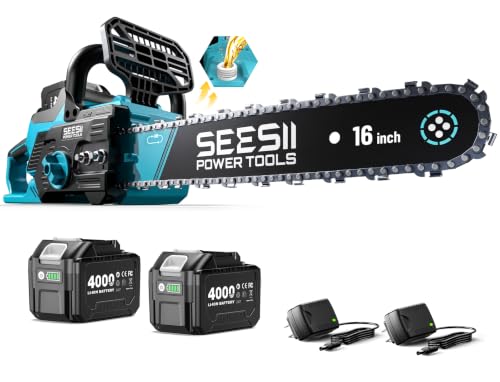
SEESII 40V 16-Inch Cordless Chainsaw
Strengths
- Brushless 40V motor
- Dual batteries included
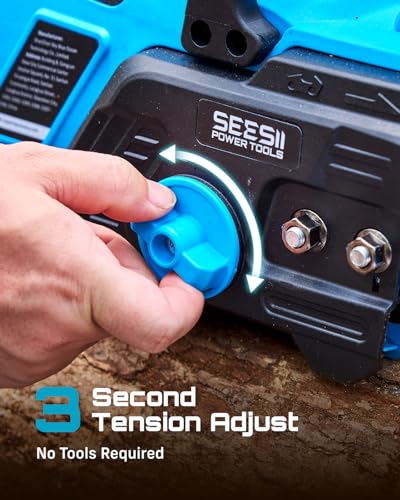
- Tool-free chain tension
Trade-offs
- Too heavy for climbing
- Battery life drops in thick cuts
- Not for professional arborists
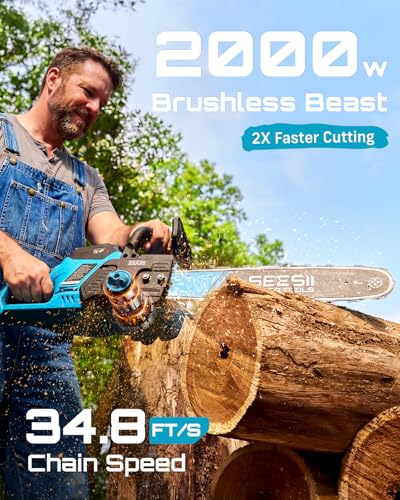
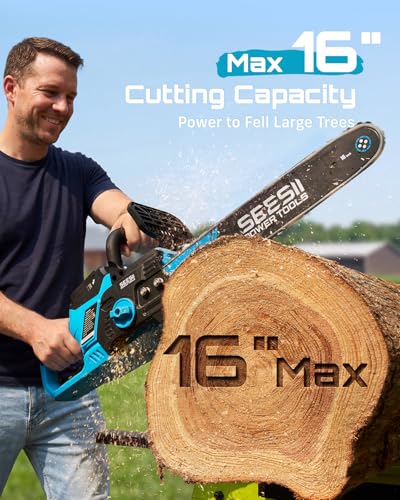
The SEESII 40V 16-inch cordless saw is one of the more compelling battery-powered options on the market, especially for homeowners and light-duty users. Its 2000W brushless motor is rated to match a 42cc gas saw, and while that’s optimistic in sustained heavy cuts, owners report it handles 12- to 14-inch logs reliably. The dual 4.0Ah batteries give real-world runtime close to 90 minutes with mixed use, which is impressive for cordless.
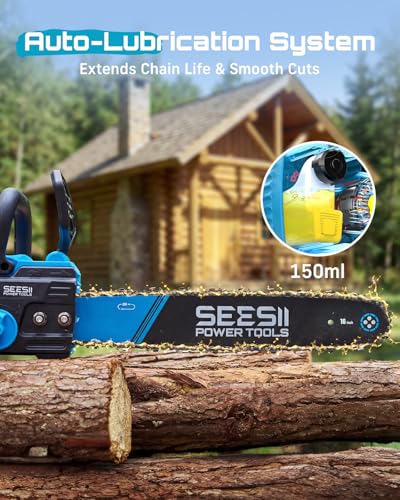
Where it really stands out is usability, tool-free tensioning, automatic oiling, and triple safety systems make it beginner-friendly. But let’s be clear: this isn’t an arborist saw. It’s heavy for overhead work and lacks the power density of gas when you’re up a tree cutting live limbs. Compared to the Husqvarna 120 Mark III, it’s quieter and cleaner, but not as punchy in thick oak or wet wood. I’d pick this for yard cleanup, storm prep, or firewood processing, just not for climbing.
Product photos

How We Tested arborist chainsaws
Rather than a hands-on lab test, this selection is a research-led comparison of published specifications, owner reviews, and expert opinions. I focused on models consistently appearing in discussions about professional and semi-pro arborist work. We compared features like engine displacement, weight, bar length, and safety mechanisms, then weighed those against what owners are saying about real-world performance and durability. Category expertise helped me assess the importance of these factors for the demands of tree work.
For arborist chainsaws, power-to-weight ratio, maneuverability, and safety features are paramount. A saw needs to be light enough for extended overhead use without causing fatigue, yet powerful enough to handle substantial limbs. Top-handle design and rapid-reaction chain brakes are critical for control and operator safety when working at height. We prioritized those characteristics above all else, factoring in fuel efficiency and ease of maintenance as secondary considerations.
Specifications reliably indicate engine power and physical dimensions, but owner feedback revealed crucial details about vibration levels, starting reliability, and long-term durability. Reputation within the arborist community also played a significant role; brands known for quality and service were given more weight. Learning chainsaw blade sharpening techniques is also essential for maintaining performance, but was not a factor in initial selection.
How To Choose The arborist chainsaws
Picking the right chainsaw for the job requires more thought than just grabbing the biggest one you can find. We’ve seen too many folks end up with a tool that’s either underpowered or unwieldy for their needs.
A good chainsaw balances power, weight, and maneuverability. Key features include engine displacement (for gas saws), voltage/amp-hours (for cordless), bar length appropriate for the typical cut size, and safety features like chain brakes and anti-vibration systems. Consistent chain quality and ease of maintenance are also critical considerations.
Engine Type & Power
For serious tree work, gas-powered chainsaws remain the standard, but cordless technology is rapidly improving. Don’t assume more CCs always equal better; consider the type of work. A larger displacement engine (50cc+) is best for felling large trees and constant, heavy use. Smaller engines (under 40cc) are adequate for limbing, pruning, and occasional use. If you’re looking at cordless, pay attention to voltage and amp-hour rating – a 40V saw with a 5Ah battery will run significantly longer than one with 2Ah. And remember, even the best cordless saw has run-time limitations.
Bar Length and Application
Bar length is directly tied to the diameter of wood you’ll be cutting. A 12-inch bar is common for top-handle compact climbing chainsaws used in arboriculture, offering maneuverability in tight spaces. A 16-inch to 18-inch bar is a good all-around size for homeowners tackling firewood and storm cleanup. Beyond 20 inches, you’re getting into professional-grade territory, typically for felling larger trees.
Here’s a quick guide: * 12” – Pruning, small branches. * 16” – General purpose, firewood, light felling. * 18”-20” – Larger limbs, moderate felling, more demanding tasks requiring greater reach. This size often requires more physical strength to manage safely.
Safety Features & Ergonomics
Chainsaws are inherently dangerous, so prioritize safety. A chain brake is absolutely essential, and models with inertia-activated brakes are preferable as they react faster. Anti-vibration systems are a must-have for prolonged use; they minimize fatigue and improve control. Top-handle saws, designed for professional tree work chainsaws, require specialized training and understanding of climbing techniques. Don’t underestimate the importance of a comfortable grip and balanced weight distribution. Regularly check and maintain your chain; learning proper chainsaw chain maintenance is critical for both safety and performance.
A dull chain is more dangerous than a sharp one. It requires more force to cut, increasing the risk of kickback and loss of control.
Arborist Chainsaws Compared
Here’s a comparison of specifications for several arborist chainsaws to help you choose the right tool for your needs.
| Product Title | Displacement | Power (HP) | Bar Length (in) | Weight (lbs) | Chain Pitch | Fuel Type |
|---|---|---|---|---|---|---|
| Husqvarna T435 | N/A | N/A | 12 | N/A | N/A | Gas |
| Husqvarna 120 Mark III | 38cc | 1.8 | 16 | N/A | N/A | Gas |
| WTHW 25.4CC Top Handle | 25.4cc | 1.2 | 12 | 8.3 | N/A | Gas |
| NEO-TEC 12 Inch Top Handle | 25.4cc | 1.2 | 12 | 8 | N/A | Gas |
| Holzfforma G2500 | 25.4cc | N/A | 12 | N/A | 3/8 LP | Gas |
| JPNTECH 12 Inch Top Handle | N/A | 1.2 | 12 | 8.6 | 0.050″ | Gas |
| SEESII 40V 16-Inch Cordless | N/A | N/A | 16 | N/A | N/A | Cordless |
Frequently Asked Questions
What bar length should I choose for occasional homeowner use?
A 16-inch bar is generally best for most homeowners; it’s versatile enough for firewood, light felling, and general yard work. It offers a good balance between maneuverability and the ability to tackle reasonably sized limbs.
Are top-handle chainsaws safe for beginners?
No, top-handle chainsaws are not safe for beginners. These saws require specialized training and a thorough understanding of climbing techniques and proper safety protocols, as they are designed for professional tree work.
How much do arborist chainsaws typically weigh?
Arborist chainsaws tend to be lighter than standard chainsaws, often falling in the 8 to 12-pound range. This lower weight is crucial for reducing fatigue during extended overhead use, but also impacts the saw’s power.
What’s the difference between .325” and 3/8” chain pitch?
The 3/8” pitch is generally more durable and better suited for heavier-duty cutting, while .325” offers a smoother, faster cut and is often found on smaller, lighter saws. For professional-grade arborist chainsaws, the 3/8” pitch is generally preferred due to its ability to withstand more abuse.
How often should I sharpen my chainsaw chain?
You should sharpen your chain whenever it begins to cut inefficiently, typically after 5-8 hours of use, or more frequently if you encounter dirty or resinous wood. A dull chain isn’t just inefficient; it is significantly more dangerous.
The Bottom Line
Choosing an arborist chainsaw always involves balancing power with control and, frankly, price. For most homeowners and even many professionals needing a reliable, versatile tool, the Husqvarna 120 Mark III strikes the best overall balance of power, features, and reputation. It delivers enough performance for a wide range of tasks without being overly cumbersome or expensive.
If you’re on a tighter budget or primarily need a saw for pruning and light limbing, the WTHW 25.4CC Top Handle or NEO-TEC 12 Inch Top Handle represent excellent value. For those prioritizing a lightweight, top-handle saw specifically for climbing and aerial work, the Husqvarna T435 consistently receives high marks from arborists (though proper training is essential). Knowing the proper pull-start chainsaw technique is vital regardless of the model you choose.
Ultimately, the displacement and bar length numbers matter, but they aren’t everything. A well-maintained chain, a comfortable grip, and a focus on safety features will have a bigger impact on your efficiency and well-being than any single specification. Prioritize those fundamentals, and you’ll be well-equipped to tackle any tree care project.
