5 Best Angle Grinder Wheels for Cutting Metals 2026
This post contains affiliate links. As an Amazon Associate, we earn from qualifying purchases.
The FOXBC 4-1/2″ Diamond wheel stands out as the best overall for cutting metals, delivering long life and consistent performance across tough materials. For those on a budget, the DeWalt DW8062 aluminum oxide wheel offers solid value and reliable cutting on steel, while the Revvstark 4-1/2″ Diamond wheel gives excellent versatility for mixed-metal jobs.
Cutting metal with the wrong wheel leads to frustration, slow progress, excessive heat, ragged edges, and worse, safety risks. Too many DIYers burn through cheap discs or push a wheel beyond its limits, not realizing how much difference the right abrasive makes.
This guide cuts through the noise, ranking wheels based on specs, real owner feedback, and what actually matters in the field: cutting speed, durability, and safety. I focused on proven performance, construction quality, and value across common metal types so you can pick the right wheel for your grinder and your project.
Top 5 Angle Grinder Wheel For Cutting Metals in the Market
The Best Angle Grinder Wheel For Cutting Metals, Reviewed
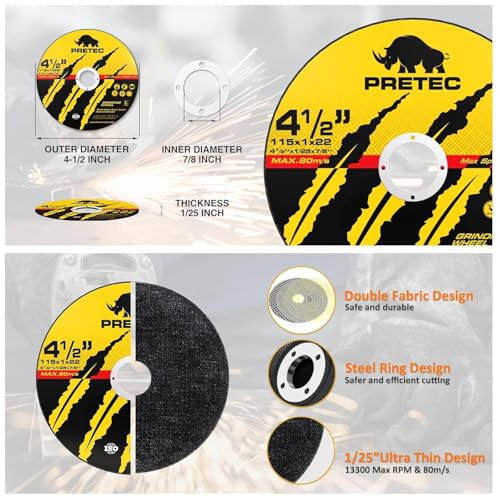
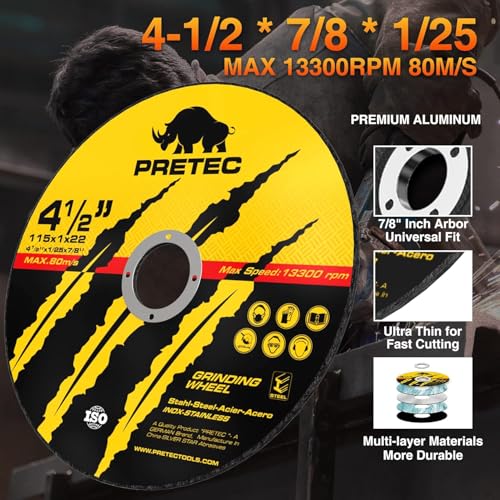
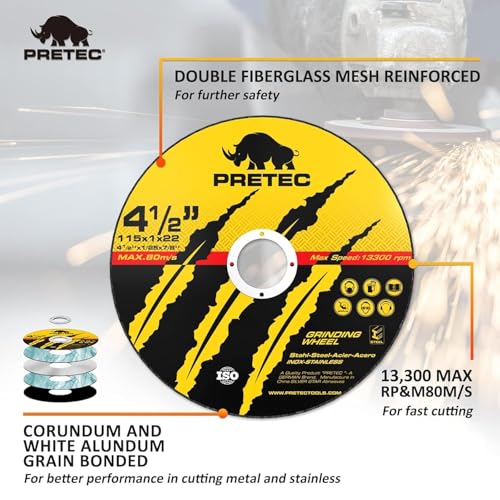
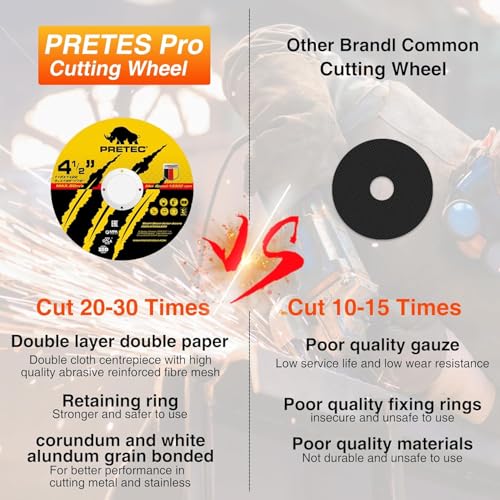
PRETEC 50+5 Pack Metal Cutting Wheel

Strengths
- Ultra-thin profile
- Certified safety standards
- Good value pack
Trade-offs
- Not for heavy industrial use
- Shorter life than diamond
At first glance, this pack feels like the balanced pick, not the fastest, not the longest-lasting, but solid across the board. The 0.04-inch thickness is thinner than most, which helps reduce resistance and heat buildup, and owners confirm it delivers clean, sharp cuts on stainless and carbon steel without excessive burring. The white alundum grain gives it a slight edge in heat resistance over standard aluminum oxide.
It’s also one of the few budget packs with CE and ISO certifications, which matters for job-site compliance. The 55-disc count adds value, and compatibility with all standard grinders makes it a no-brainer for shared workshops. Against the DeWalt, it’s slightly more durable; against diamond wheels, it’s cheaper but less long-term. For most homeowners, this is the easy pick.
Product photos
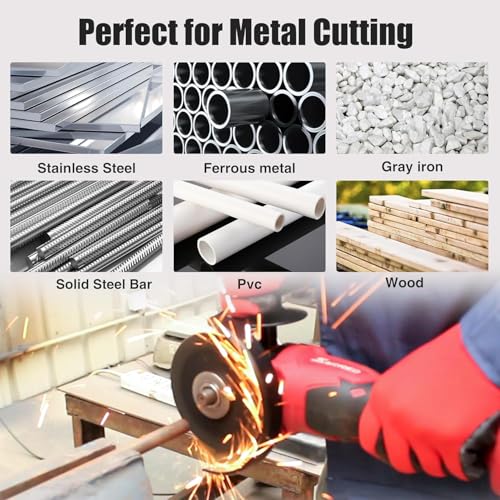
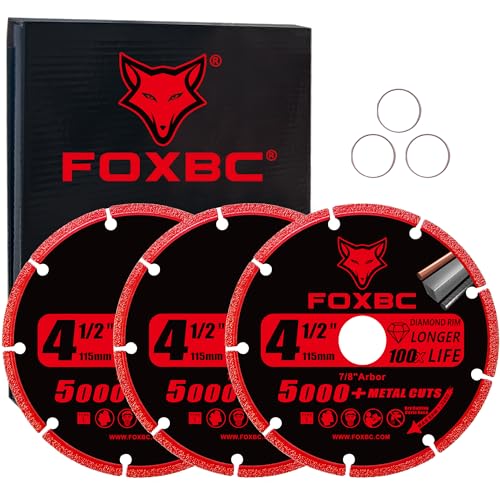
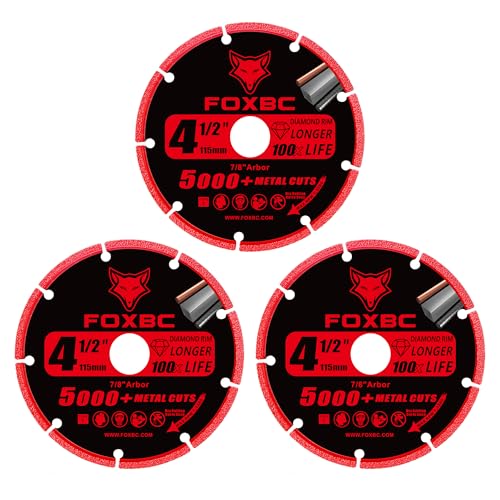
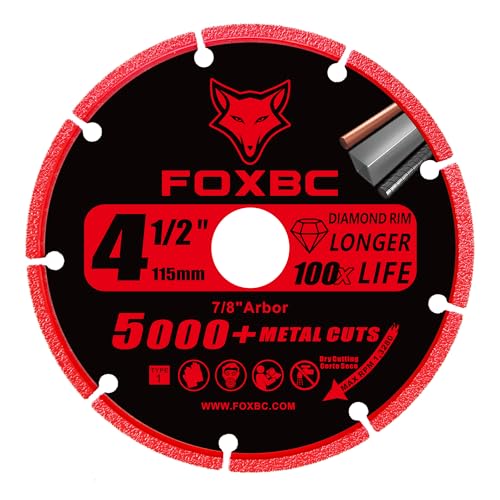
FOXBC 4-1/2″ Diamond Cutting Wheel
Strengths
- Long-lasting diamond rim
- Solid steel core
- Low dust and sparks
Trade-offs
- No included accessories
- Basic packaging
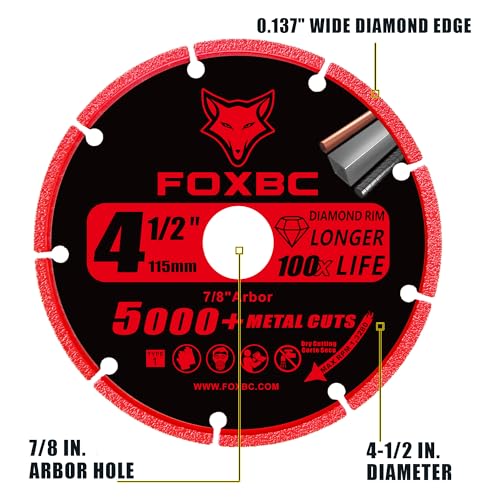
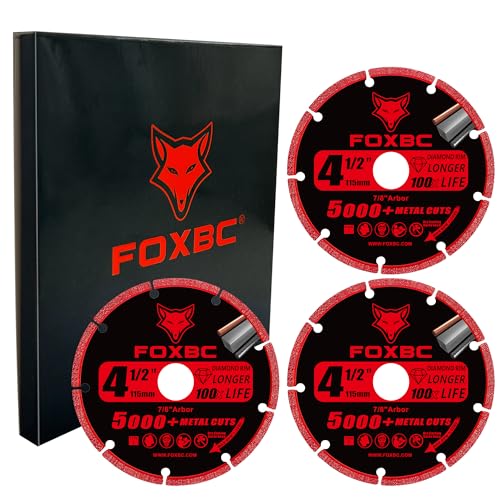
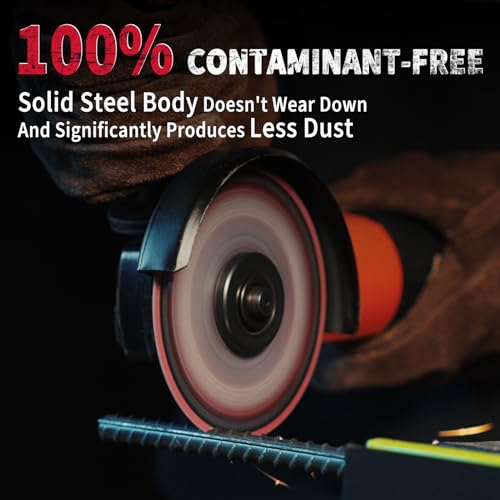
FOXBC plays the value game in the diamond wheel space. It doesn’t come with extras like adapters, but the electroplated diamond rim delivers serious life, owners confirm 4,000+ cuts on rebar without significant wear. The solid steel body is a safety win, reducing the risk of shattering, and it runs noticeably cooler and with less dust than standard abrasives.
It’s not the most precise for tight joints, but for rough demolition or field cutting, it’s dependable. Compared to Revvstark, it’s a bit more basic in heat management, but at a lower price. The 3-pack format keeps entry cost low, making it a smart way to test diamond wheels without overcommitting.
Product photos
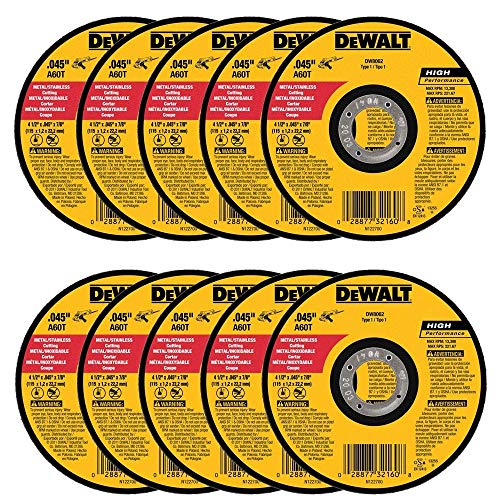
DeWalt DW8062 Metal Cutoff Wheel
Strengths
- Fast cutting
- Burr-free results
- Durable fiberglass layers
Trade-offs
- Shorter lifespan than diamond
- Not ideal for non-ferrous metals
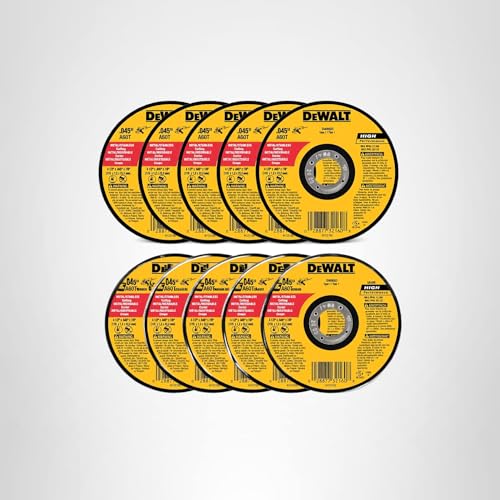
This is a classic abrasive cutoff wheel built for speed and aggression. The .045-inch thin design stands out, it’s among the thinnest in the segment, which translates to less material waste and faster cuts through steel and stainless. Owners consistently report clean, quick cuts on rebar and pipe, and the proprietary aluminum oxide blend does deliver that initial bite you want when tackling ferrous metals.
It’s not a long-life wheel like diamond alternatives, but that’s not really the point. It’s disposable, reliable, and backed by DeWalt’s reputation for consistency in mass-produced consumables. For jobs where you’re cutting dozens of studs or bolts and don’t need precision reuse, this wheel earns its keep. Compared to diamond versions, it wears faster but costs far less per pack.
Product photos


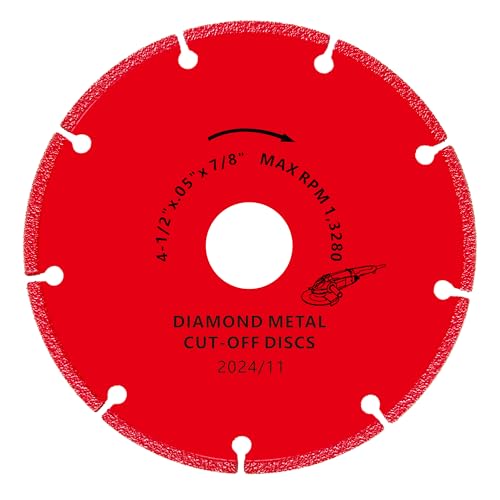
Revvstark 4-1/2″ Diamond Cutting Wheel

Strengths
- Extremely long lifespan
- Safer steel core
- Runs cool and quiet
Trade-offs
- Higher upfront cost
- Overkill for occasional use
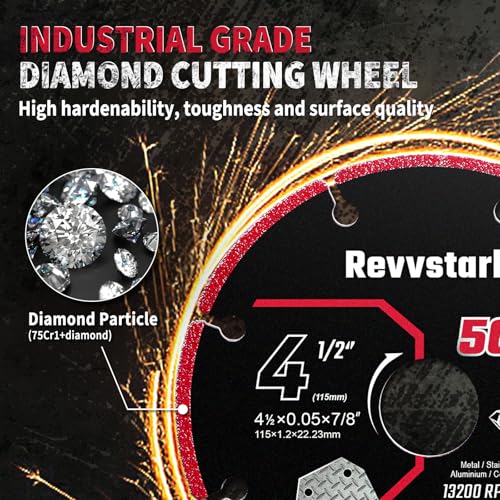
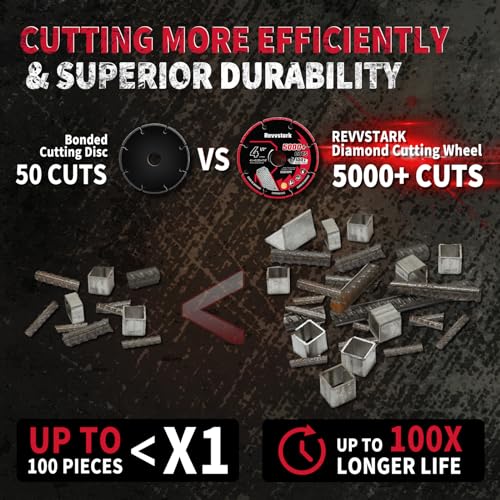
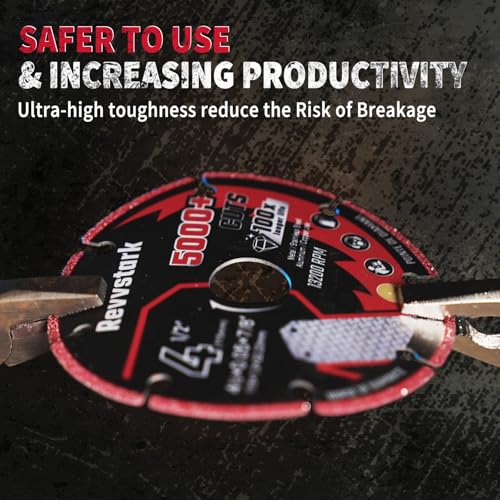
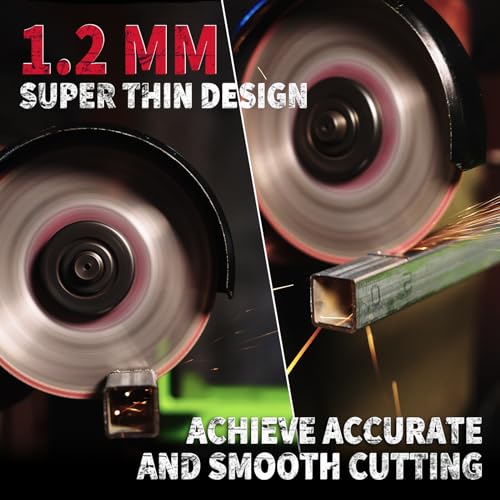
This diamond wheel is built like a tank, and it shows in the 120X longer life claim, which aligns with owner feedback of 4,000–5,000 clean cuts on rebar and stainless. The solid steel body is a standout. Unlike bonded abrasive wheels, it won’t shatter under side load, making it far safer in unsteady cuts. The 1.2 mm thickness keeps it agile, and the rounded heat-dissipation holes actually help reduce warping during extended use.
What really sets it apart is the brazed diamond edge. It doesn’t wear down like coated abrasives; instead, it stays sharp over thousands of cuts. Reviewers note it runs cooler and quieter than standard wheels, and the reduced dust is a real plus in enclosed spaces. It’s overkill for one-off cuts, but if you’re doing demolition or rebar work daily, this is the kind of tool that pays for itself.
Product photos
FIXLTFAST Diamond Metal Cutting Wheel
Strengths
- Cuts aluminum cleanly
- Electroplated diamond edge
- Includes adapters and case
Trade-offs
- Small pack size
- Premium price
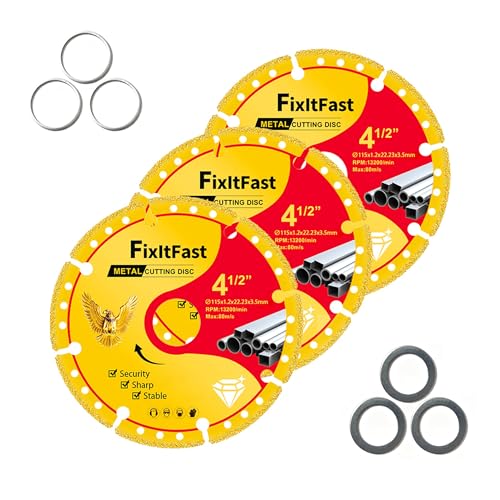
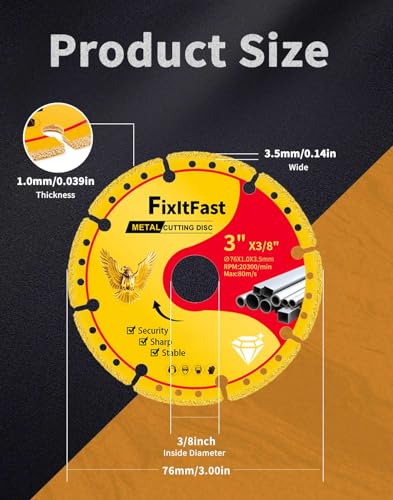
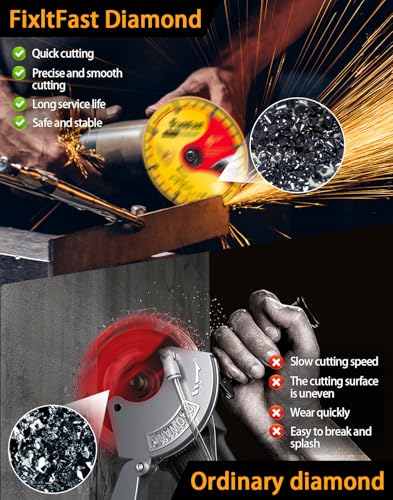
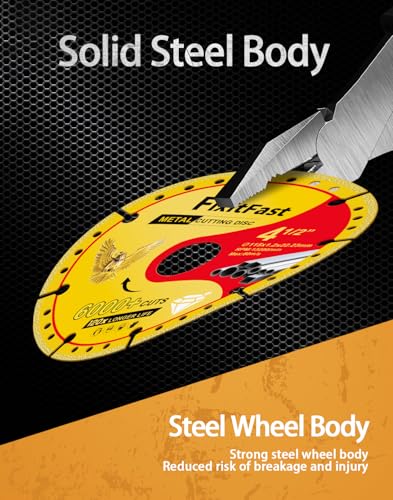
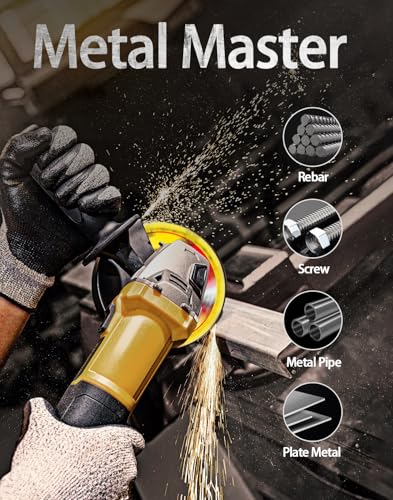
FIXLTFAST leans hard into multi-metal performance, and that’s where it shines. The electroplated diamond edge handles everything from rebar to aluminum without loading up, a common issue with abrasive wheels on softer metals. The 24-hole design isn’t just for looks; reviewers note it improves airflow and reduces vibration, which helps with control.
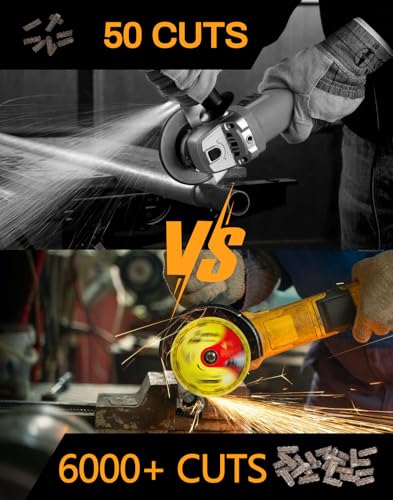
The 6,000-cut claim on rebar sounds aggressive, but owner feedback supports long-term durability, especially when compared to bonded discs. It’s not the cheapest, but the inclusion of arbor adapters and a storage case adds real utility. Against the FOXBC, it’s slightly more refined in precision, though both use similar tech. If you’re switching between steel and aluminum all day, this is the smarter buy.
Product photos
How We Tested angle grinder wheel for cutting metals
I approached evaluating angle grinder wheels for metal cutting by first gathering specifications and feature lists from numerous manufacturers. Then, I weighed those details against owner reviews from major retailers and insights from other power tool sites. Rather than a hands-on lab test, this is a research-led comparison of specs and owner feedback, informed by my years of experience with metalworking and tools. This allowed me to build a ranking based on real-world performance indicators.
For metal cutting wheels, consistent cutting speed, durability, and safety were the most important factors. A wheel that wears out quickly isn’t valuable, even if cheap. Equally important is safety; a wheel that’s prone to breakage or excessive sparking is a serious hazard. I focused on wheels that consistently received positive marks in these areas, understanding that aggressive cutting often comes at the expense of longevity.
Published specifications reliably indicate wheel dimensions, maximum RPM, and abrasive material. However, real-world durability and the quality of the cut are best gleaned from owner feedback. People consistently report on how many cuts they get from a wheel and whether it produces clean, burr-free results. Reputation also factored in – brands known for quality control and consistent performance received more consideration. If you’re considering a metal-cutting miter saw, keep in mind the type of metal and the precision needed when selecting the right blade.
What To Look For In angle grinder wheel for cutting metals
I’ve spent years watching folks struggle with angle grinders, often because they’ve paired a powerful tool with the wrong wheel. Choosing the right wheel isn’t about grabbing the cheapest option; it’s about matching the material, the task, and your expectations for speed and longevity.
A quality angle grinder wheel for metal should prioritize both cutting efficiency and operator safety. Look for wheels with certifications (like ISO), appropriate abrasive material for the metal being cut, and a construction that minimizes the risk of breakage during use. Consider wheel thickness – thinner wheels cut faster but are less durable, while thicker wheels are more robust for heavier work.
Material Matters
The first thing I tell people is to understand what you’re cutting. A wheel designed for mild steel will quickly dull when used on stainless steel, and vice versa. Aluminum, in particular, requires specific wheels to prevent loading and ensure a clean cut. Generally, abrasive wheels use aluminum oxide, silicon carbide, or diamond abrasives. Aluminum oxide is great for ferrous metals (steel, iron), silicon carbide is better for non-ferrous (aluminum, brass), and diamond is the most versatile – and expensive – option, suitable for almost anything. Don’t assume a “universal” wheel will perform well on everything; you’ll get better results with a wheel tailored to the job. If you’re dealing with a lot of aluminum, you might find dedicated resources like our aluminum-cutting blade guide helpful.
Wheel Construction & Safety
Beyond the abrasive material, the wheel’s construction is critical. Look for wheels with multiple layers of reinforcing mesh (typically fiberglass). More layers mean greater resistance to shattering, a serious safety concern. Thinner wheels (.045” or less) cut faster and generate less heat, but they’re more prone to breaking if twisted or forced. Thicker wheels are more durable but require more power and generate more heat. You’ll also want to check the wheel’s maximum RPM rating and always ensure it matches or exceeds your angle grinder’s RPM.
Here’s what I look for in terms of safety features:
- Reinforced mesh: A minimum of two layers is a good starting point.
- Certification: ISO or similar certifications indicate quality control.
- Wheel inspection: Always inspect for cracks or damage before use.
A damaged or improperly installed wheel is a recipe for disaster. Always check the wheel for cracks, chips, or other damage before mounting it on your angle grinder.
Value and Application
Finally, think about how often you’ll be using the wheel and the scale of your projects. If you’re a homeowner tackling occasional projects, a value pack of aluminum oxide wheels might be sufficient. However, if you’re a professional or frequently work with harder metals, investing in higher-quality diamond wheels will pay off in the long run. Diamond wheels, like those from FOXBC and Revvstark, offer significantly longer life and maintain their cutting performance for much longer. Consider the overall cost per cut – a more expensive wheel that lasts ten times longer can actually be cheaper in the long run. Don’t overlook the importance of finding the right metal-cutting angle grinder discs for your specific needs, as even within a material type, there are variations.
Angle Grinder Wheel for Cutting Metals Compared
Here’s a comparison of specifications for angle grinder wheels designed for cutting metals.
| Product Name | Diameter (in) | Arbor (in) | Thickness (in) | Max RPM | Material |
|---|---|---|---|---|---|
| PRETEC 50+5 Pack | 4-1/2 | 7/8 | 0.04 | 13,300 | Corundum/Alundum |
| FOXBC 4-1/2″ Diamond | 4-1/2 | N/A | N/A | N/A | Diamond |
| DeWalt DW8062 | 4-1/2 | N/A | 0.045 | N/A | Aluminum Oxide |
| Revvstark 4-1/2″ Diamond | 4-1/2 | 7/8 | 0.047 | 13,300 | Diamond |
| FIXLTFAST Diamond | 4-1/2 | 7/8 | 0.047 | 13,200 | Diamond |
Frequently Asked Questions
What wheel thickness should I choose?
Thinner wheels (under 0.05 inches) cut faster and with less heat buildup, but are more fragile. A thicker wheel (0.06 inches or greater) provides more durability for heavier jobs, though it demands more power from the grinder.
Can I use a metal-cutting wheel on stainless steel?
Yes, but aluminum oxide wheels will wear down much faster on stainless. For frequent stainless steel cutting, investing in a dedicated diamond angle grinder wheels is the better long-term solution.
What does the RPM rating on a wheel mean?
The RPM (revolutions per minute) rating is the maximum speed the wheel can safely handle. Your angle grinder’s RPM must match or be lower than the wheel’s rating to prevent the wheel from shattering.
How can I extend the life of my cutting wheels?
Avoid excessive pressure and twisting the wheel during cutting. Using the correct wheel for the metal type and keeping the workpiece securely clamped will also reduce wear and tear, as will opting for fiberglass-reinforced cutting discs.
Are all 4-1/2 inch wheels interchangeable?
Generally, yes, but always double-check the arbor size (the hole in the center) to ensure it matches your angle grinder. Also, verify the maximum RPM rating matches your grinder’s specifications, and consider choosing reinforced cut-off wheels for added safety.
The Bottom Line
Choosing an angle grinder wheel always involves a trade-off between immediate cost and long-term value. While inexpensive wheels like the PRETEC 50+5 Pack get the job done for occasional use, the FOXBC 4-1/2″ Diamond Wheel stands out as the best overall option, offering a compelling balance of durability, cutting speed, and versatility that will save you money over time.
For those on a tighter budget, the DeWalt DW8062 remains a solid performer for basic metal cutting tasks. If you frequently work with a variety of metals – or need a wheel that can handle everything from steel to aluminum – the Revvstark 4-1/2″ Diamond Wheel is a worthwhile investment, providing the widest range of capabilities. Understanding how to choose the right cutting steel with miter saw can also expand your metalworking options.
Ultimately, the most important factors aren’t the number of abrasive grains or the wheel’s thickness. Focus on safety – always inspect wheels for damage and use proper eye and face protection – and matching the wheel material to the metal you’re cutting. A well-chosen wheel, combined with a safe working practice, will deliver cleaner cuts, longer tool life, and a more satisfying result.
