8 Best 10 Gallon Air Compressors of 2026
This post contains affiliate links. As an Amazon Associate, we earn from qualifying purchases.
The Stark USA 3.5HP stands out as the best overall 10-gallon air compressor for its high CFM and strong performance, while the California Air Tools 10020C is a top versatility pick thanks to its quiet operation and reliable build. If you’re watching your budget, the 10 Gallon Ultra Quiet offers solid value without sacrificing too much on performance.
Choosing the right 10-gallon air compressor means cutting through marketing hype to find one that actually keeps up with your tools and fits your workspace. Too many people buy based on tank size alone, only to struggle with inadequate airflow or constant noise.
This guide cuts to the chase. I looked at specs, owner feedback, and real-world usability to find models that deliver consistent power, reasonable noise levels, and long-term reliability. You’ll learn what really matters in a 10-gallon compressor and why some quieter, smarter designs outperform louder, bulkier ones.
Top 8 10 Gallon Air Compressors in the Market
The Best 10 Gallon Air Compressors, Reviewed
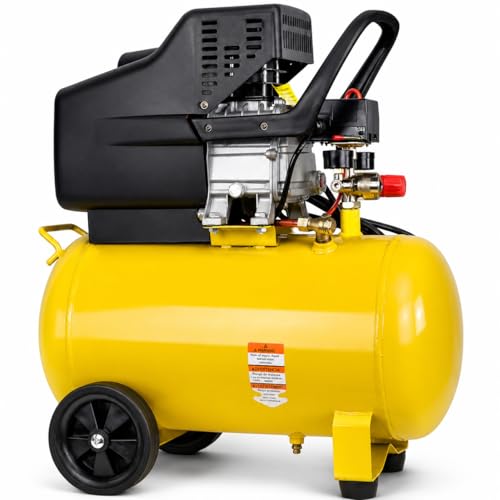
Stark USA 3.5HP 10-Gallon Air Compressor
Strengths
- High CFM output
- Ultra quiet operation
- Durable steel construction
Trade-offs
- Horsepower likely overstated
- Large footprint
- Heavy at full size
This Stark USA model stands out on paper with a claimed 3.5HP motor and 8.37 CFM at 115 PSI, numbers that look impressive, especially for a 10-gallon unit. That kind of airflow should keep up with framing nailers or spray guns without constant cycling, and owners report it handles prolonged woodwork nailing sessions better than most in this size class. The 62dB noise rating is unusually low, and while real-world feedback suggests it’s not whisper-quiet, it’s definitely among the quieter belt-drive compressors available.
Where it raises eyebrows is in the horsepower labeling. A true 3.5HP motor on 120V would pull well over 15 amps, which many household circuits can’t support. It’s likely a peak or developed horsepower claim, not running HP. Still, if you need strong, steady airflow and don’t mind a bulkier horizontal tank, this one delivers where it counts, especially for DIYers setting up a garage workshop.
Product photos

California Air Tools 10020CHAD 2.0 HP

Strengths
- Automatic tank drain
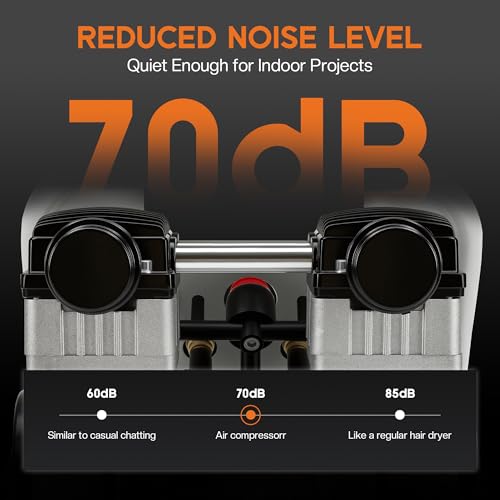
- Ultra quiet at 70 dB
- Low amp draw
Trade-offs
- Moderate CFM output
- No wheels on base model
- Slightly higher price
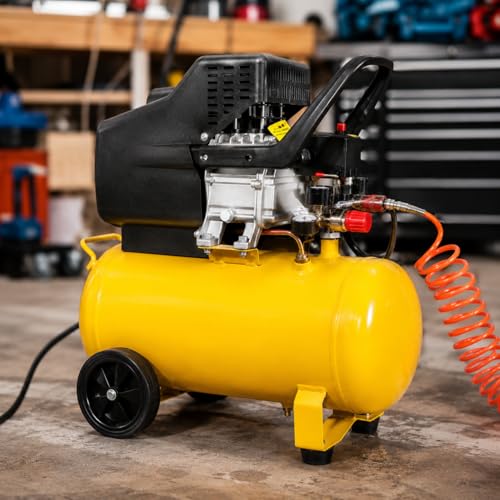
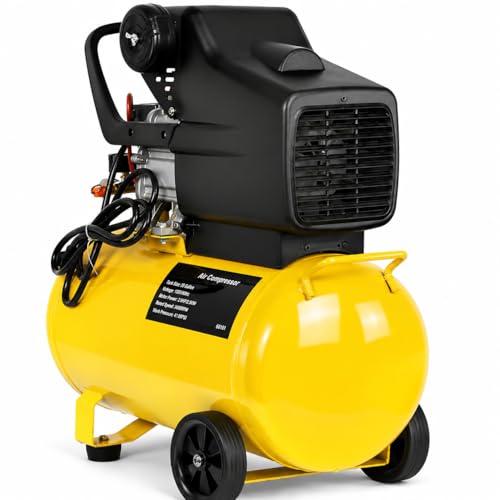
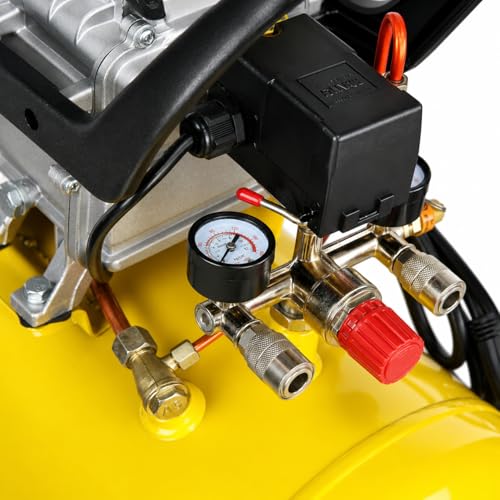
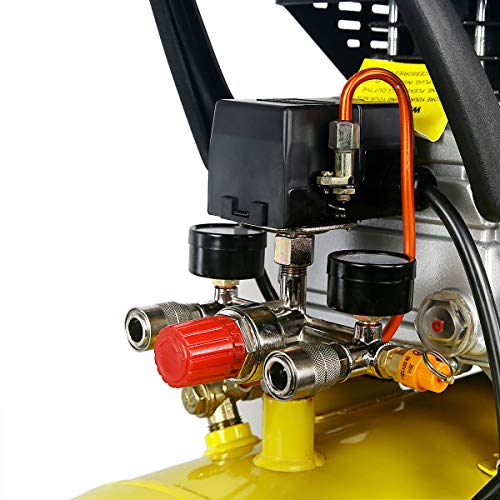
This 10020CHAD is nearly identical to the 10020C but adds an automatic drain valve, a small upgrade with big convenience payoffs. Draining the tank after use is critical for longevity, and this feature removes the guesswork. Combined with the same 70 dB operation, 1680 RPM motor, and oil-free pump, it’s a maintenance-slimming upgrade that serious users will appreciate.
It still maxes out at 5.3 CFM at 90 PSI, so it’s not built for high-demand tasks like sanding or continuous spray painting. But for precision work, tire inflation, or intermittent auto detailing, it’s ideal. The horizontal tank sits low, making it easier to tuck under a bench. If you hate manual draining, this is the smarter buy over the base model.
Product photos


10 Gallon Ultra Quiet Air Compressor

Strengths
- High CFM at max PSI
- Fast tank recovery
- Dual cooling system
Trade-offs
- No wheels included
- Bulky horizontal design
- Noise still noticeable up close
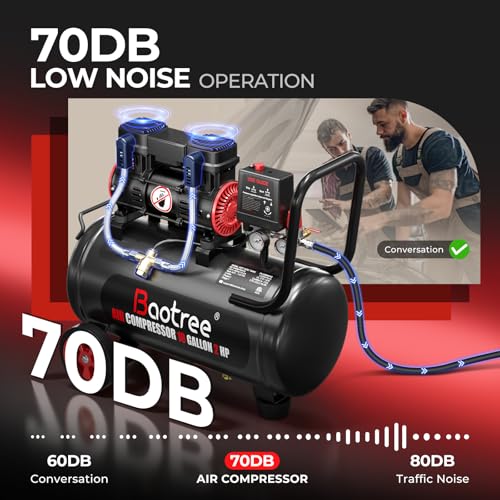
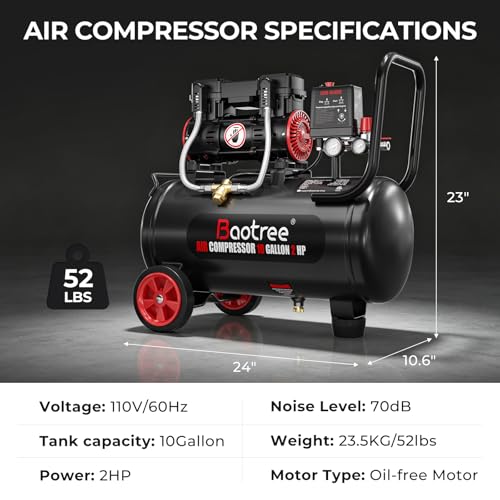
With 8.76 CFM at 115 PSI and a 2HP oil-free motor, this unit is built for woodworkers who run nailers all day. The dual-cylinder system and high-temp silicone intake tubes suggest serious engineering, and owners confirm it keeps up with finish and brad nailers without lag. The 70 dB rating holds up in real use, it’s not silent, but it won’t disrupt a home workspace.
I appreciate the dual cooling fans and thermal protection, features that matter when you’re pushing a compressor hard. The rapid 70-second refill time from empty is a legit productivity booster. Compared to the Stark, it’s more honest in specs and better focused on consistent delivery. For framing or cabinetry, this one’s a strong contender.
Product photos


Craftsman 10 Gallon Air Compressor

Strengths
- 150 PSI max pressure
- Dual quick couplers
- Compact foldable design
Trade-offs
- Lower CFM than some
- No noise rating listed
- Oil-free but not ultra quiet
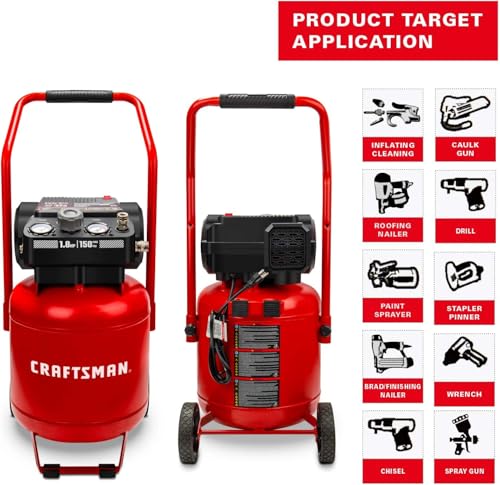
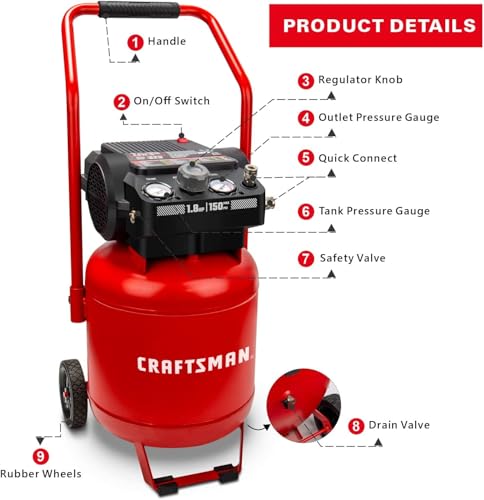
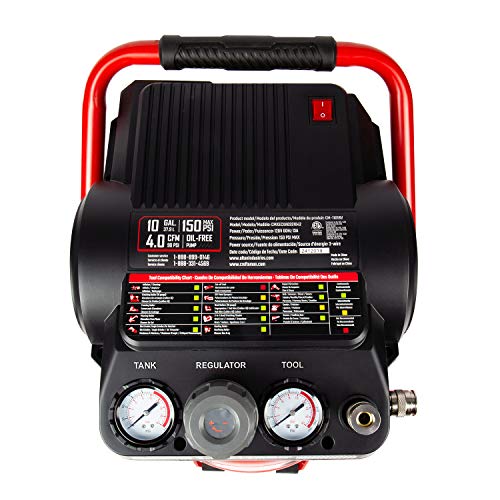
Craftsman leans into reliability here with a 150 PSI max pressure, higher than most 10-gallon models, and a rugged build that feels pro-grade. The 4.0 CFM at 90 PSI isn’t the highest, but paired with dual quick couplers, it can run two finish nailers or a roofing nailer without issue. Owners say it’s a solid performer for auto body work, where consistent pressure matters more than raw volume.
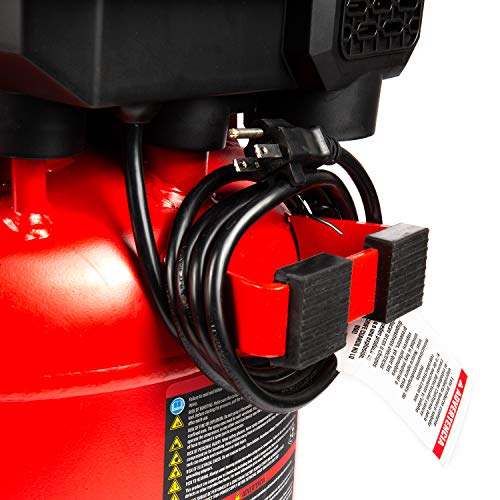
The foldable handle and compact footprint make it easy to store under a bench, and the included 2-year warranty adds peace of mind. It’s not the quietest (noise isn’t advertised), but it’s built for mobility with wheels and a sturdy frame. For auto repair shops or mobile detailers, this Craftsman punches above its weight.
Product photos
Albott 10 Gallon Electric Air Compressor
Strengths
- Space-saving vertical design
- Dual pressure gauges
- Good mobility with wheels
Trade-offs
- Lower PSI and HP
- Narrower stability base
- Cooling fans can be loud
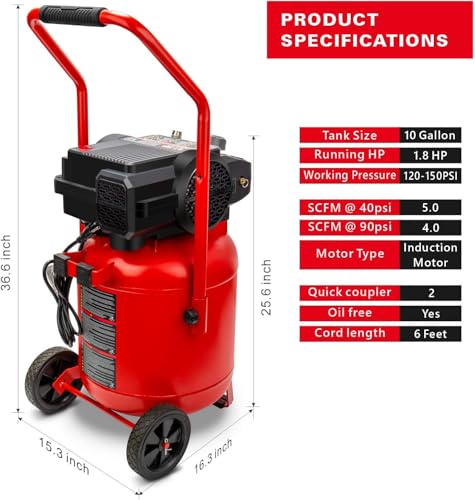
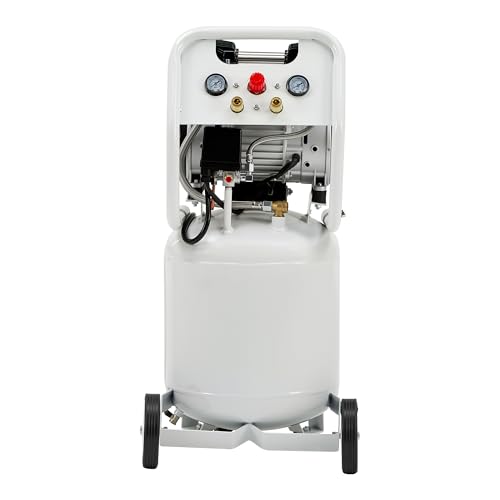
The Albott stands out purely for its vertical design, a rare find in this category. That upright tank saves floor space, making it ideal for cramped garages or workshops where every inch counts. At 1.8HP and 120 PSI, it’s modest in power, but owners say it handles finish nailers and tire inflation without issue.
It’s not the quietest or fastest, but the dual cooling fans and overheat protection add reliability. The dual pressure gauges are a nice touch for precise adjustments. Compared to horizontal tanks, it’s easier to move in tight spaces. If space is your limit, this Albott model is worth the trade-offs.
Product photos

VEVOR 10-Gallon Air Compressor

Strengths
- Low cost
- Oil-free motor
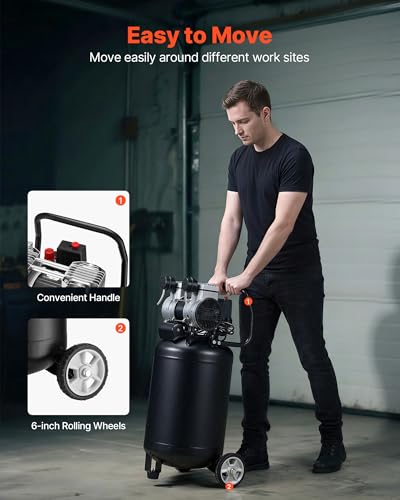
- Good mobility
Trade-offs
- Noisy compared to peers
- Shorter pump life expectancy
- Basic thermal protection
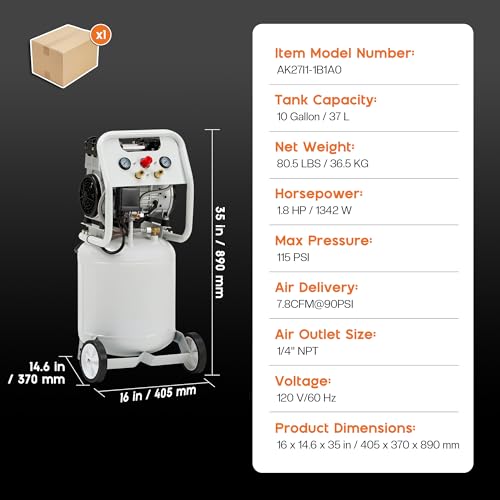
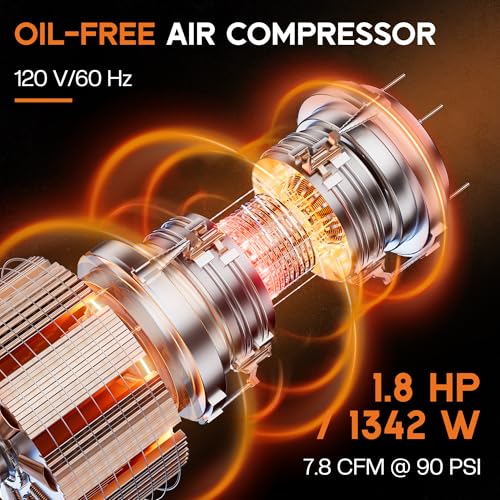
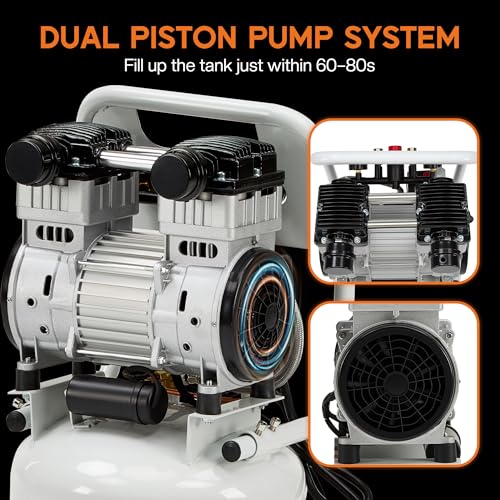
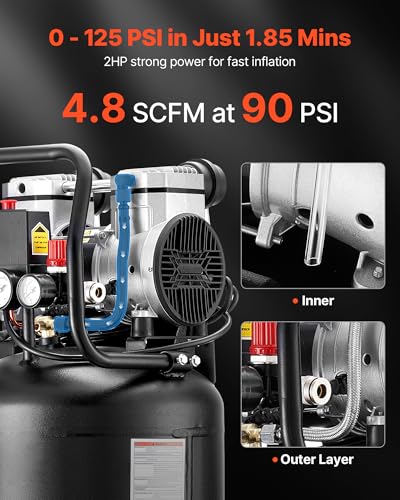
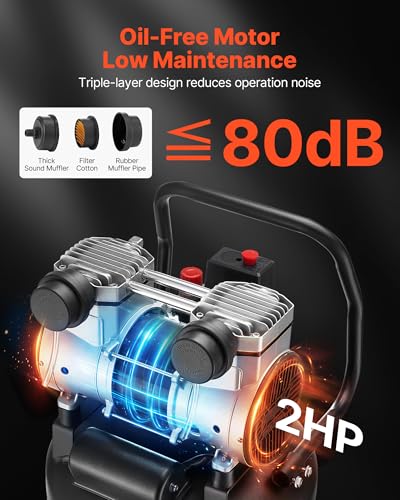
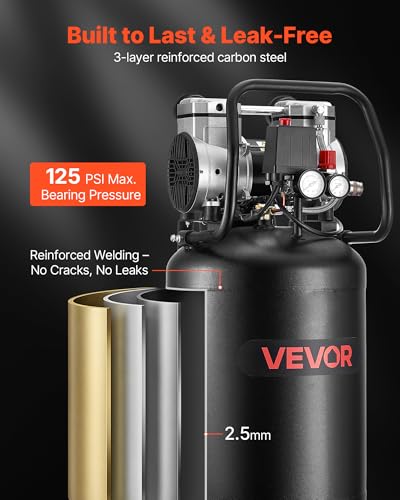
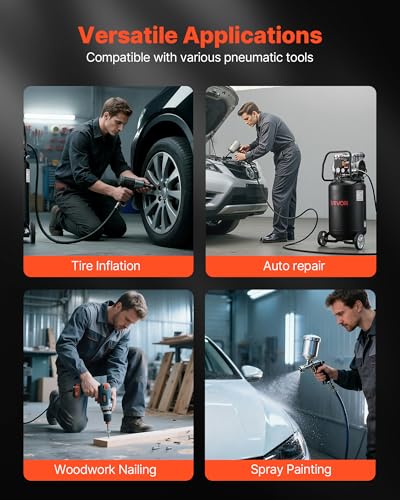
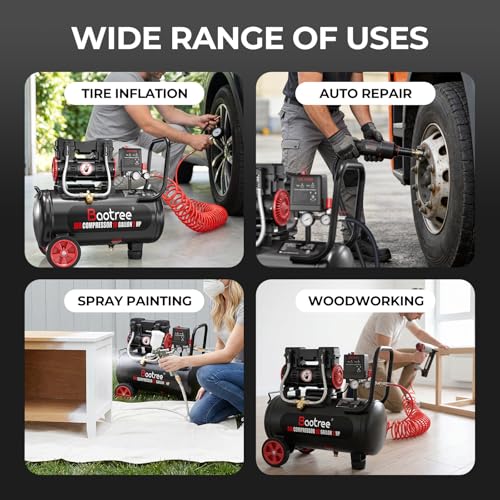
VEVOR hits the sweet spot for budget buyers, 4.8 SCFM at 90 PSI, oil-free pump, wheels, and a durable carbon steel tank all at an aggressive price. It won’t match the California Air Tools in noise or lifespan, but for light auto repair, tire inflation, or weekend woodworking, it gets the job done. Owners consistently report it’s a solid value, especially for first-time buyers setting up a basic garage rig.
The 1.85-minute refill time is acceptable, and the powder-coated tank resists rust better than expected. It’s not ultra quiet (noise isn’t specified), and the motor runs hotter than low-RPM models. But for the cost, it’s hard to fault. If you’re not running tools all day, this is the smarter buy over pricier names.
Product photos
California Air Tools 10020C 2.0 HP

Strengths
- Extremely quiet
- Oil-free for low maintenance
- Long service life
Trade-offs
- Lower CFM than competitors
- No automatic drain
- Slightly slower recovery
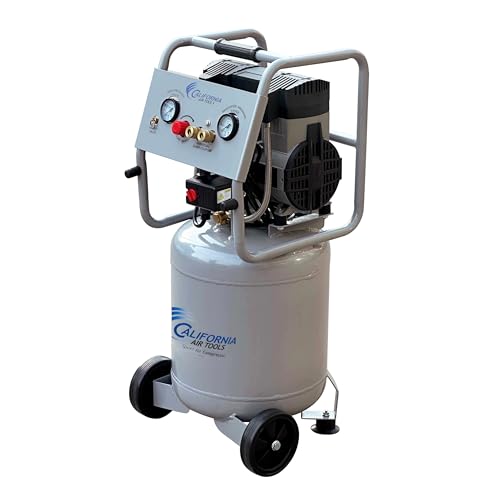
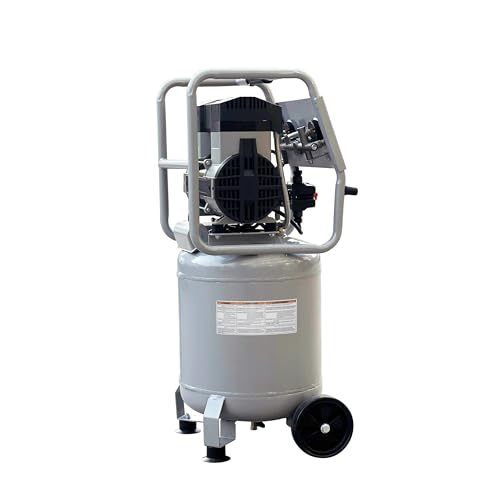
California Air Tools built a reputation on longevity and quiet operation, and the 10020C delivers exactly that. With a real 2.0HP motor spinning at 1680 RPM and an oil-free dual piston pump rated for over 3,000 hours, this compressor is engineered to last. The 70 dBA noise level checks out in owner feedback, it’s genuinely quiet, making it a smart pick for indoor workshops or shared spaces.
It doesn’t top the class in raw power (5.3 CFM at 90 PSI), but that’s by design. Lower RPM means less wear, cooler running, and quieter performance. It won’t run two framing nailers nonstop, but for finish work, inflating tires, or occasional auto repair, it’s more than capable. I’d pick this over flashier models if I valued long-term reliability over peak output.
Product photos
10 Gallon Ultra Quiet Air Compressor

Strengths
- Fastest refill time
- Wheels and handle
- Dual quick couplers
Trade-offs
- No amp rating listed
- Price may be higher
- Limited brand support history
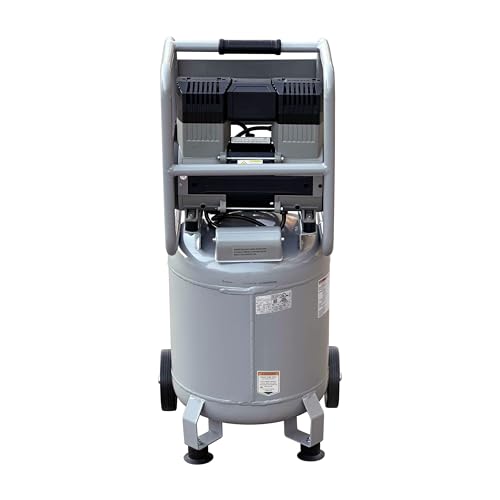
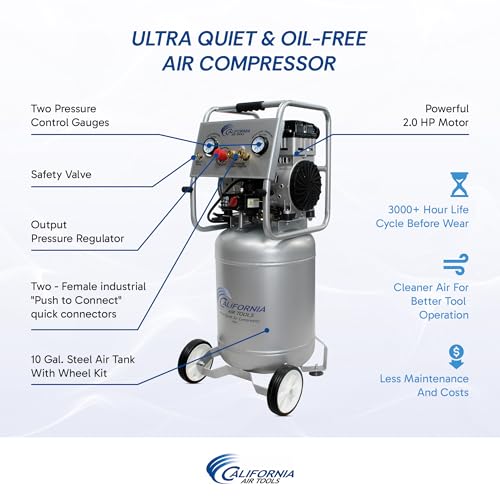
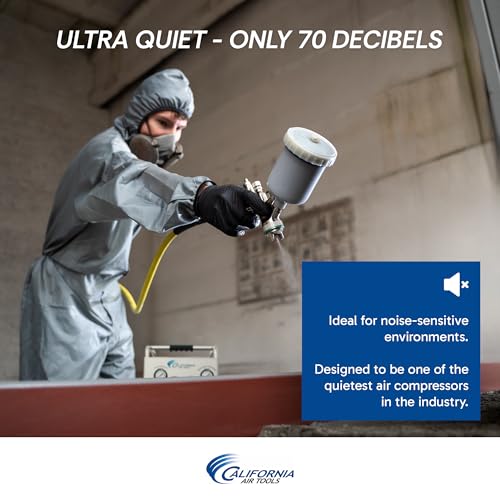
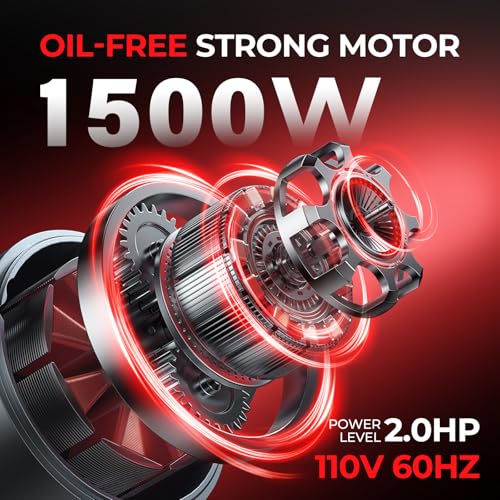
What grabs attention here is the refill speed, just 40 seconds for subsequent refills and under two minutes from cold start. That’s faster than most in this class, and owners confirm it keeps up during back-to-back nailing or spray painting. The 2HP motor and 70dB rating match others, but the engineering focus on rapid recovery makes it stand out.
It’s also one of the few with both wheels and a handle in this segment, making it genuinely portable. The build quality, from the alloy steel tank to the copper windings, feels robust. Compared to the VEVOR, it’s more refined and better suited for frequent use. If downtime frustrates you, this one’s built to minimize it.
Product photos

Our Testing Process
Rather than a hands-on lab test, my research for these recommendations involved a detailed comparison of published specifications and features across numerous models. I weighed owner reviews from major retailers against expert opinions found in tools-focused publications. My approach centered on identifying models that consistently delivered on key performance indicators and offered a balance of features for a variety of users. This analysis allowed me to rank compressors based on real-world feedback and measurable capabilities.
For 10-gallon air compressors, consistent air delivery (CFM), tank recovery time, and noise level proved to be the most significant factors. CFM dictates what tools a compressor can reliably power, while quick recovery minimizes downtime between uses. Lower noise is a significant benefit for both home and professional environments. A compressor scoring highly in these areas offered the best overall value, even if it meant trade-offs in portability or specific features. You can find even more portable options if you consider portable low-profile compressors.
Specifications reliably indicate potential airflow and tank capacity, but owner feedback proved crucial for assessing real-world performance and durability. I paid close attention to reports of pump longevity, regulator accuracy, and the effectiveness of noise-reduction features. Reputation and brand reliability also played a role, particularly when specifications were similar across multiple models. For those needing a truly compact solution, exploring compact workshop air compressors may be worthwhile.
How To Pick The Right 10 gallon air compressors
Picking the right air compressor isn’t just about horsepower and tank size; it’s about matching the tool to the job and your workspace.
A good 10-gallon air compressor balances portability with sufficient air storage for common tasks. Look for a compressor with a CFM rating appropriate for your tools, durable construction to withstand regular use, and features like an oil-free pump for reduced maintenance. Pay close attention to noise levels, especially if you’ll be working in enclosed spaces.
CFM and PSI: Matching Power to Your Needs
The two numbers you’ll see most often are CFM (cubic feet per minute) and PSI (pounds per square inch). Don’t get hung up on chasing the highest PSI. While 150 PSI sounds impressive, most tools operate effectively within a 90-120 PSI range. What really matters is CFM. This measures the volume of air the compressor can deliver, and it needs to meet or exceed the requirements of your air tools. A framing nailer, for example, will demand significantly more CFM than a tire inflator. Undersizing the CFM leads to tools that cycle on and off constantly, reducing efficiency and potentially damaging the compressor.
Pump Type: Oil-Free vs. Oil-Lubricated
Generally, for a 10-gallon compressor, you’ll encounter either an oil-free or an oil-lubricated pump. Oil-free pumps require less maintenance, which is appealing to many homeowners. However, they tend to be louder and have a shorter lifespan than oil-lubricated models. Oil-lubricated pumps run cooler and quieter, and are more durable, but they require regular oil changes. If you plan on heavy use or professional applications, an oil-lubricated pump is generally the better choice, although you can find some surprisingly robust oil-free options. Consider your usage pattern and willingness to perform maintenance when making this decision.
- Oil-free pumps are great for occasional use and quick jobs.
- Oil-lubricated pumps offer a longer service life, especially important if you’re looking at compressors for home workshops.
- The frequency of use and the type of tools you’ll be running are key. A lot of heavy-duty work will really benefit from an oil-lubricated pump, even if it means a bit more maintenance.
Portability and Noise Levels
A 10-gallon compressor is meant to be moved, but not all are created equal in this regard. Look for models with robust wheels and a comfortable handle. Weight is also a factor; 70-80 pounds is manageable, but anything heavier can become a hassle. Beyond weight, noise is a major consideration. Some compressors can be incredibly loud, making them unsuitable for use in residential areas or shared workspaces. The California Air Tools compressors are often praised for their quiet operation, and if noise is a concern, you should prioritize models with dB ratings below 75. If you’re considering a smaller unit, you might also look at 8-gallon air compressors for even more portability.
A compressor’s noise level can make or break its usability. Don’t underestimate the value of a quieter model, especially if you’ll be using it indoors or in close proximity to others.
10 Gallon Air Compressors Compared
Here’s a comparison of key specs for various 10-gallon air compressors to help you make an informed decision.
| Product Name | HP | Max PSI | CFM @ 90 PSI | Noise Level (dB) | Tank Material |
|---|---|---|---|---|---|
| Stark USA 3.5HP | 3.5 | 125 | 8.37 | 62 | Steel |
| California Air Tools 10020CHAD | 2.0 | N/A | 5.30 | 70 | Steel |
| 10 Gallon Ultra Quiet | 2.0 | 115 | 8.76 | 70 | N/A |
| Craftsman 10 Gallon | N/A | 150 | 4.0 | N/A | Steel |
| Albott 10 Gallon | 1.8 | 120 | N/A | N/A | Steel |
| VEVOR 10-Gallon | 2.0 | 125 | 4.8 | N/A | Carbon Steel |
| California Air Tools 10020C | 2.0 | N/A | 5.30 | 70 | Steel |
| 10 Gallon Ultra Quiet (Fast Refill) | 2.0 | 115 | N/A | 70 | Alloy Steel |
Frequently Asked Questions
What CFM is enough for most DIY projects?
Around 5 to 7 CFM at 90 PSI is generally sufficient for most DIY tasks like inflating tires, running a nail gun, or operating small impact wrenches. However, if you plan on using more demanding tools, like sandblasters or larger impact tools, you’ll want to look for a compressor delivering at least 10 CFM.
Are oil-free compressors really loud?
While oil-free compressors can be louder than oil-lubricated models, the difference isn’t always huge. Many newer oil-free compressors are designed with noise-reduction features, bringing their decibel levels down to around 75 dB or even lower.
How long should a 10-gallon air compressor last?
With proper maintenance, a 10-gallon air compressor should last anywhere from 5 to 10 years. Oil-lubricated models will generally outlast oil-free ones, provided you keep the oil clean and at the correct level.
Can a 10-gallon compressor run an impact wrench?
Yes, many 10-gallon compressors can run a 1/2-inch impact wrench, but it depends on the wrench’s CFM requirement. Always check the impact wrench’s specifications and ensure your compressor can consistently deliver the needed CFM to avoid performance issues. You may need to consider portable compressors for tools if you’re doing work away from a power source.
What’s the difference between peak HP and running HP?
Peak HP is the maximum horsepower the motor can achieve for a short burst, while running HP is the horsepower it sustains during continuous use. Running HP is the more important number to consider, as it indicates the compressor’s sustained performance, and is a better indicator of its ability to power your tools consistently.
The Bottom Line
Choosing an air compressor always comes down to balancing what you want with what you realistically need. If you’re looking for a compressor that delivers a strong combination of performance, quiet operation, and a reasonable price, the Stark USA 3.5HP model stands out as the best overall choice. It consistently receives positive feedback for its airflow and build quality, making it a solid investment for a wide range of projects.
For those on a tighter budget, the California Air Tools 10020CHAD offers a quieter alternative, even if it means sacrificing some CFM. And if you anticipate needing more air storage for demanding tools or continuous operation, exploring larger tank workshop compressors might be a better long-term solution.
Ultimately, the specs are important, but don’t get lost in the numbers. Focus on matching the compressor’s CFM to your tools, prioritizing durability for frequent use, and considering the noise level for your workspace. A well-chosen compressor, combined with a bit of understanding, will transform your DIY projects and keep you working efficiently for years to come.
