
6 Best Air Compressors for Body Shops 2026
This post contains affiliate links. As an Amazon Associate, we earn from qualifying purchases.
The Ingersoll Rand 2340L5-V 5 hp is the best overall air compressor for body shops, delivering reliable performance and industrial durability. For shops on a tighter budget, the Klutch 60-Gallon 3.7 HP offers solid value without sacrificing core performance. If you need serious power for heavy daily use, the VEVOR 80 Gallon 10HP stands out as the most versatile high-capacity option.
Running a body shop means your tools depend on one thing: a steady, unfailing supply of air. Too many shops buy compressors based on tank size or price and end up with tools that stall mid-spray or sanding jobs that take twice as long. I’ve seen it cost more in downtime than the savings from cutting corners.
This guide cuts through the noise. I’ve focused on real-world needs, CFM at 90 PSI, pump longevity, and consistent output, using specs and owner feedback to find models that actually hold up. These picks are based on what body shop operators report: reliability, airflow, and the ability to run multiple tools all day.
Top 6 Air Compressor For Body Shops in the Market
The Best Air Compressor For Body Shops, Reviewed
Klutch 60-Gallon 3.7 HP Air Compressor

Strengths
- High CFM output
- Belt-driven smoothness
- Easy maintenance
Trade-offs
- 135 PSI max (lower than others)
- Requires 230V
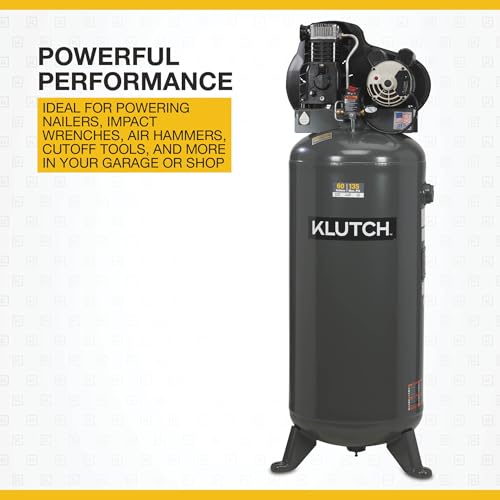
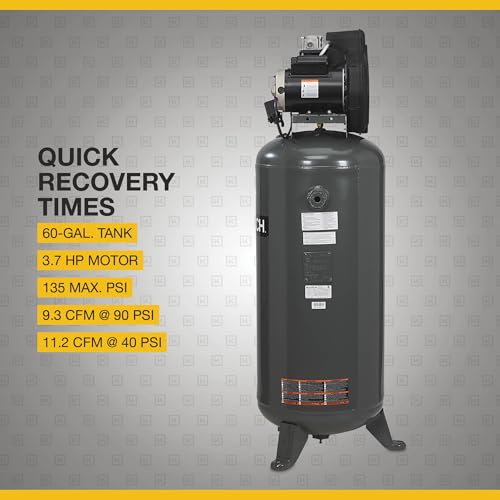
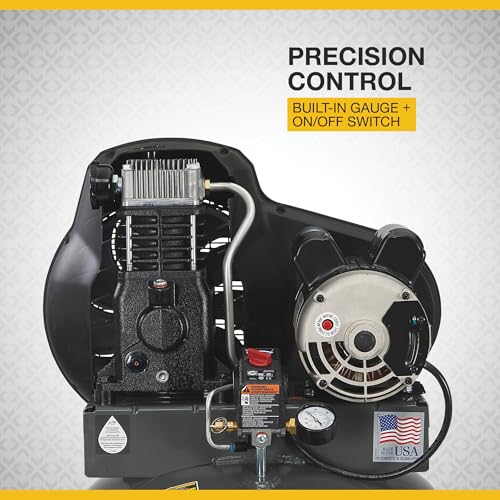
The Klutch 60-gallon compressor strikes a near-perfect balance for mid-sized body shops that need serious air without industrial pricing. With 9.3 CFM at 90 PSI and a 135 PSI max pressure, it handles most pneumatic tools with ease, from grinders to HVLP spray guns, and the belt-driven system ensures smoother, quieter operation than direct-drive models. The oil-lubricated cast iron pump means better cooling and longer life, and owners consistently report solid performance over years of regular use.
It’s not the largest tank here, but the 60-gallon capacity provides long run times between cycles. Compared to the Ingersoll Rand, it lacks two-stage efficiency, but it’s also more affordable and easier to maintain. I’d call this the smart middle ground, more power than budget models, better value than premium industrial units. My recommendation for shops that want pro-level performance without overbuilding.
Product photos

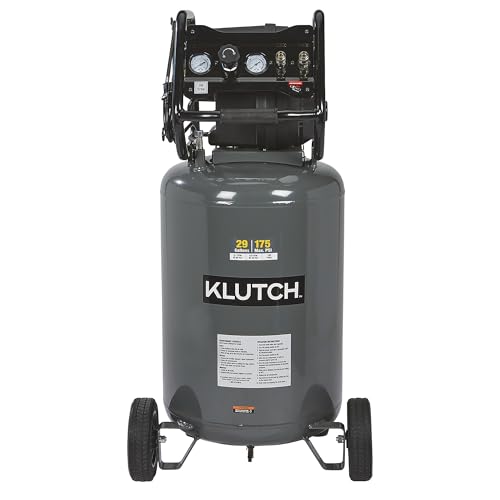
Klutch 29-Gallon 2.5 HP Air Compressor
Strengths
- Oil-free, maintenance-free
- 120V plug-and-play
- Portable and quiet
Trade-offs
- Low CFM for heavy tools
- Not for continuous use
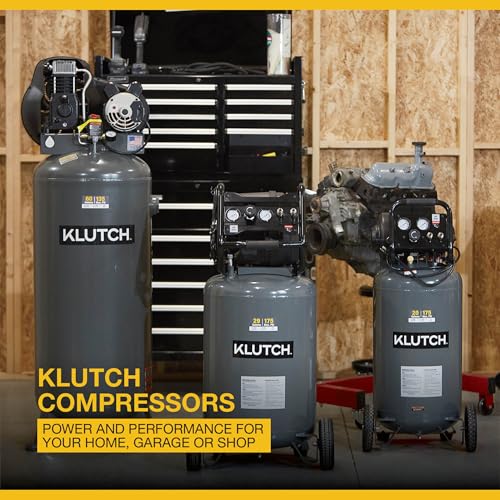
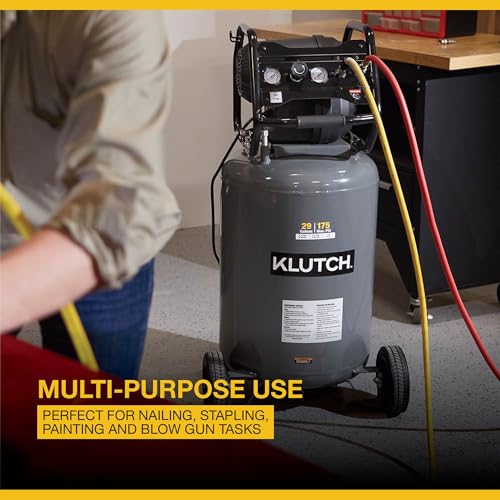
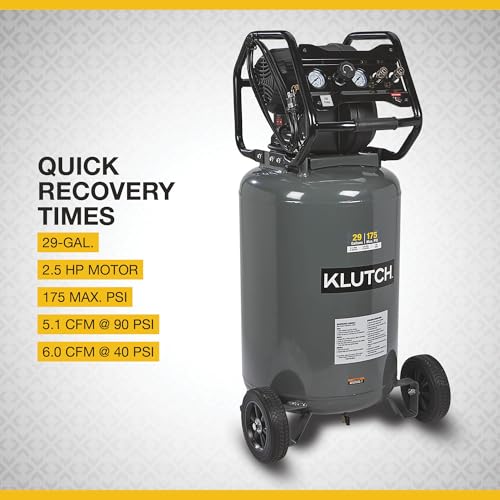
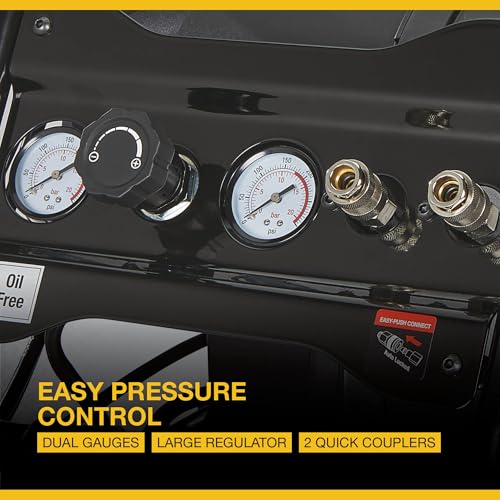
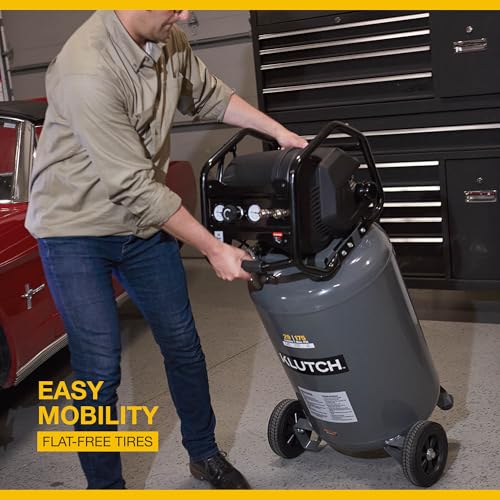
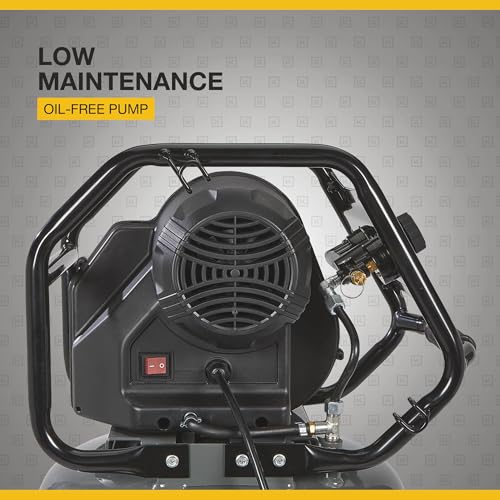
The Klutch 29-gallon compressor is a no-frills, budget-friendly option that gets the job done for light to moderate body shop tasks. Running on 120V, it’s easy to plug into standard outlets, and the 5.1 SCFM at 90 PSI is enough for finish nailers, blow guns, or small spray touch-ups. The oil-free pump stands out, it means less maintenance and no oil leaks near sensitive paint areas, which matters in clean-shop environments.
But let’s be real, it’s not built for constant use. Compared to the 3.7 HP Klutch 60-gallon model, it recovers slower and can’t sustain long tool runs. Owners like its portability and low noise, but some report overheating during extended sessions. I’d recommend this only for part-time users or small shops with intermittent air needs.
Product photos
CRAFTSMAN 33 Gallon Air Compressor

Strengths
- Oil-free pump
- Vertical space-saving
- Dual couplers
Trade-offs
- Lower durability long-term
- Limited for high-demand tools
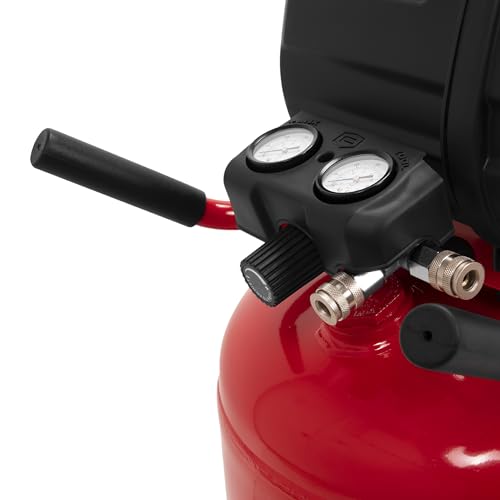
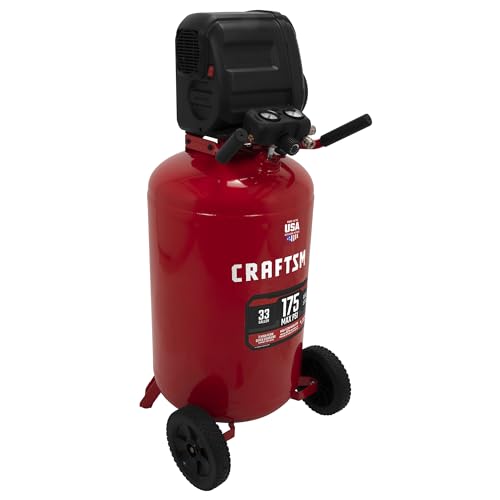
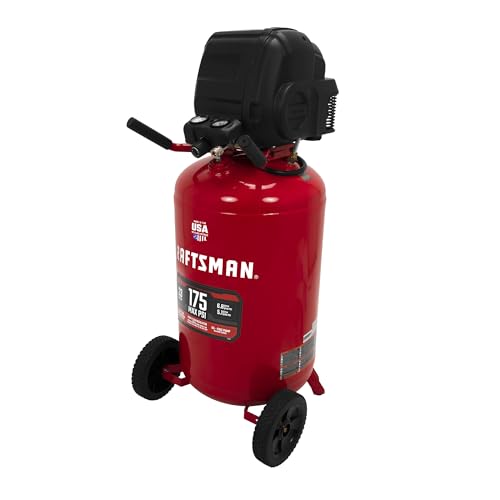
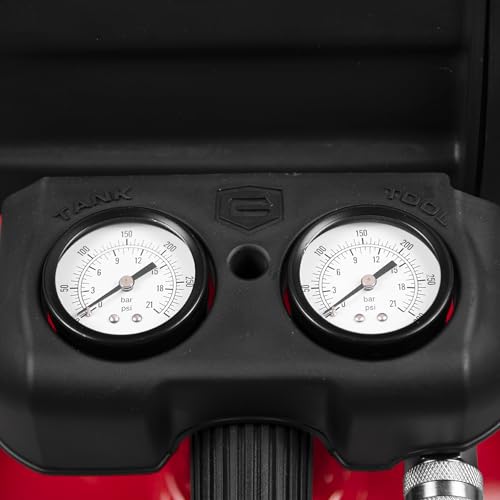
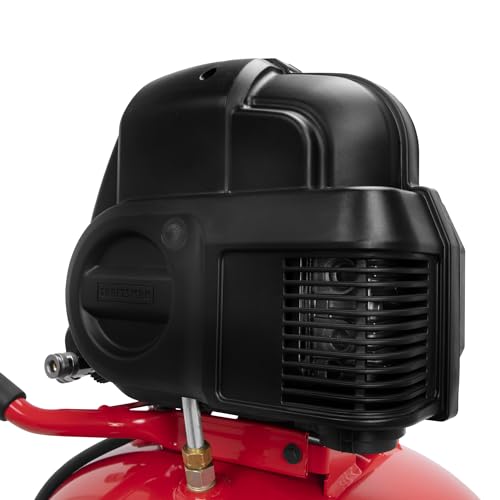
CRAFTSMAN’s 33-gallon oil-free vertical compressor hits a sweet spot for users who want reliability without the mess of oil changes. With 5.1 CFM at 90 PSI and dual quick couplers, it supports light simultaneous tool use, say, a blow gun while someone else uses a small impact gun. The vertical design saves floor space, and the oil-free pump is a win for clean environments where oil contamination near paint prep areas is a concern.
Still, oil-free pumps tend to have shorter lifespans under heavy loads. Compared to the Klutch 60-gallon oil-lubricated model, it lacks the durability and airflow for full-time shop use. Owners appreciate its ease of use and consistent performance for weekend projects, but it’s not built for daily 8-hour shifts. I’d pick this for a hobbyist or side-job bodyworker, not a full commercial shop.
Product photos
VEVOR 80 Gallon 10HP Air Compressor
Strengths
- Massive 80-gallon tank
- High SCFM output
- Belt-driven smooth operation
Trade-offs
- Requires 3-phase power
- Less proven long-term reliability
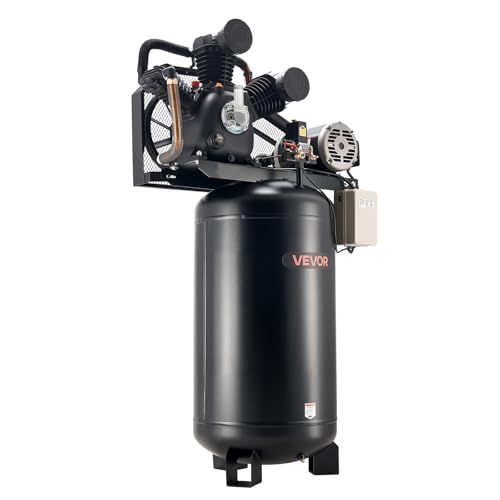
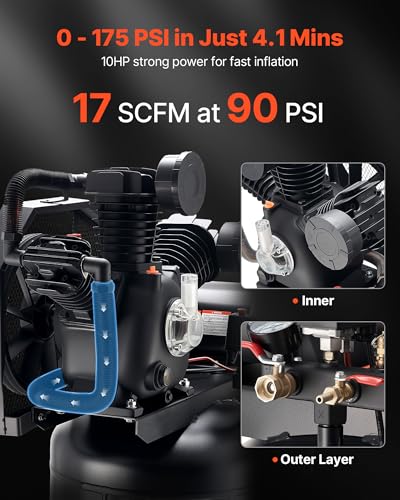
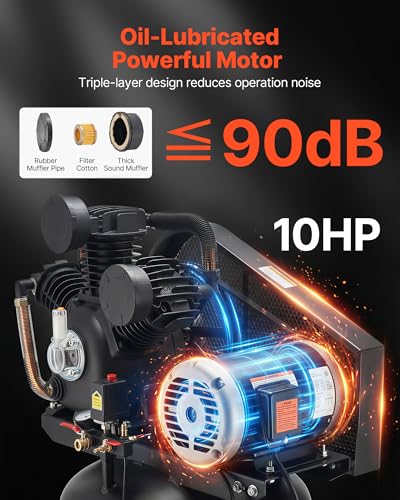
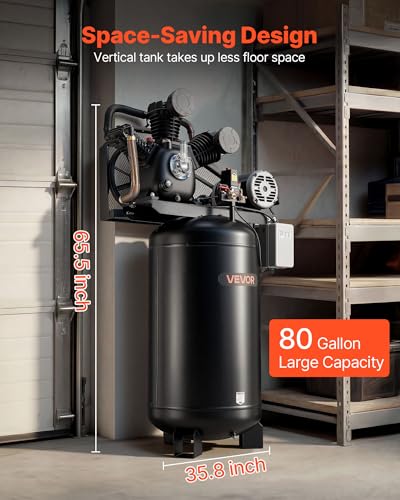
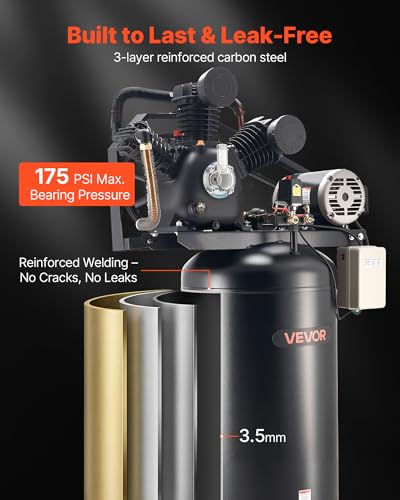
The VEVOR 80-gallon compressor is overkill for most DIYers, but in a large body shop running multiple stations, it starts to make sense. With a 10 HP motor, 17 SCFM at 90 PSI, and an 80-gallon tank, it’s designed to keep air flowing during back-to-back sanding, priming, and assembly tasks. The belt-driven pump runs smoother and cooler than direct-drive units, and the oil sight mirror is a small but appreciated touch for maintenance.
But here’s the catch, it requires 3-phase power, which rules out most residential garages. Owners using it in commercial shops praise its steady output and low downtime, but warn about installation complexity. Compared to the Ingersoll Rand, it offers more capacity and power, but less brand trust. I’d consider this a solid budget-conscious pick for shops already equipped with 3-phase infrastructure.
Product photos
Ingersoll Rand 2340L5-V 5 hp Compressor

Strengths
- Cast iron durability
- Two-stage efficiency
- 100% duty cycle
Trade-offs
- Heavy and loud
- No plug included
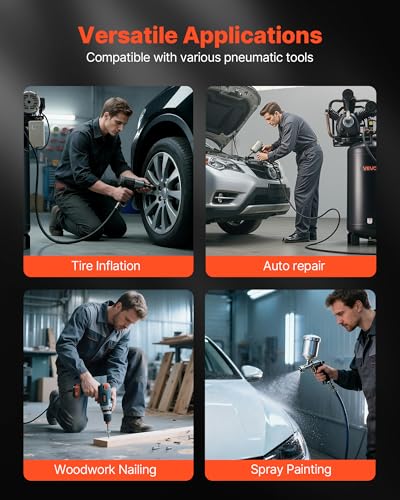
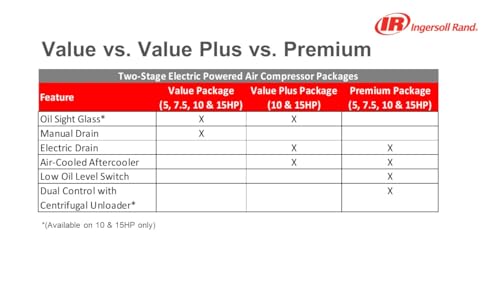
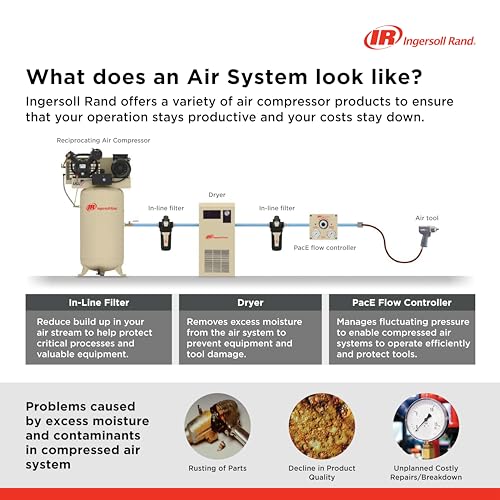
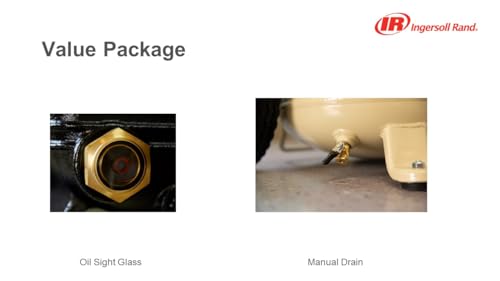
When you’re running a body shop that demands nonstop air for sanders, sprayers, and impact guns, the Ingersoll Rand 2340L5-V is the kind of industrial workhorse you build your shop around. On paper, it’s built like a tank, cast iron, two-stage compression, and a 60-gallon vertical tank mean it can sustain high pressure and high volume without breaking a sweat. The 5 hp motor running at 230V single-phase makes it accessible for most shop setups, and owners consistently report it holds up for years with basic maintenance.
This isn’t a flashy unit, but it’s the kind of compressor that earns loyalty. It’s not the largest in capacity, but the two-stage design boosts efficiency and reduces wear, which matters when you’re cycling tools all day. Compared to similarly sized units, it delivers more consistent pressure recovery, and its reputation in auto body and industrial settings is solid. I’d pick this over budget-tier industrial models any day for reliability.
Product photos


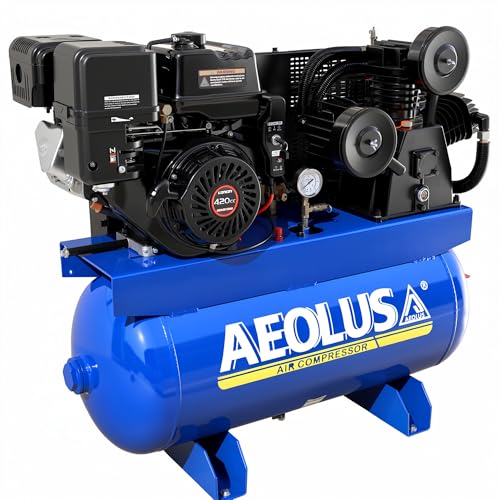
AEOLUS 30 Gal Gas Powered Compressor
Strengths
- Gas-powered portability
- High CFM output
- ASME certified tank
Trade-offs
- Heavy and bulky
- Gas maintenance required
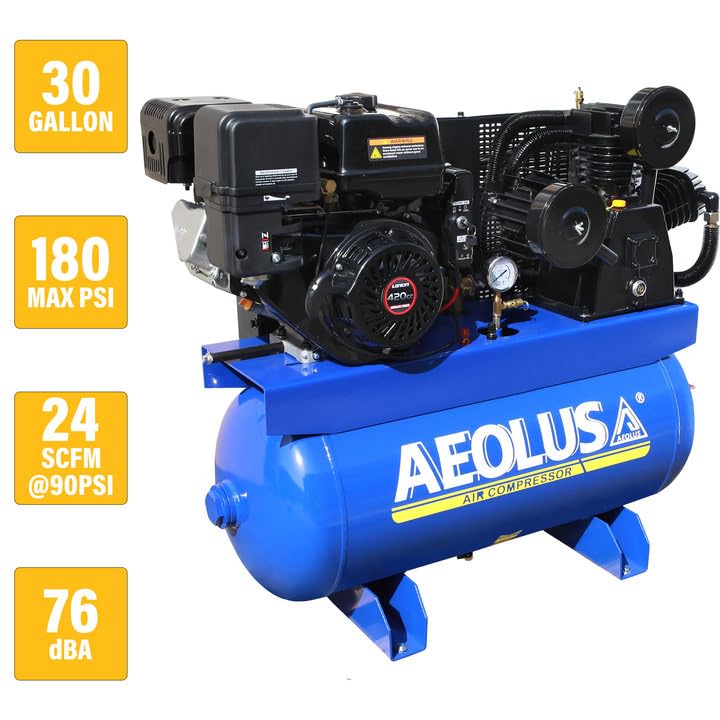
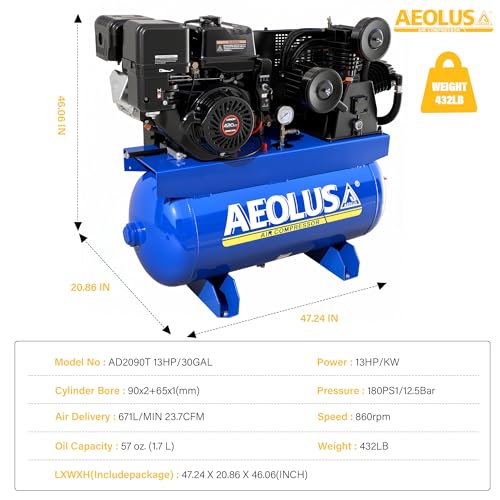
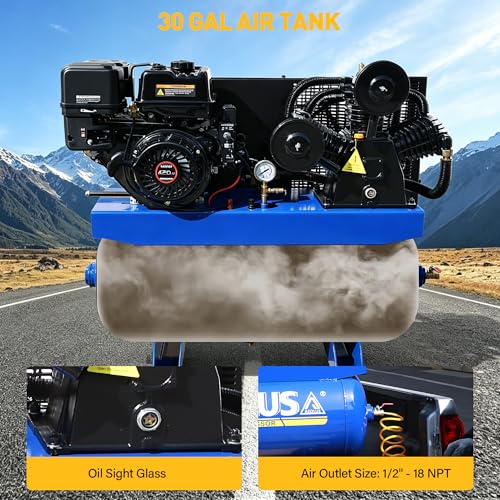
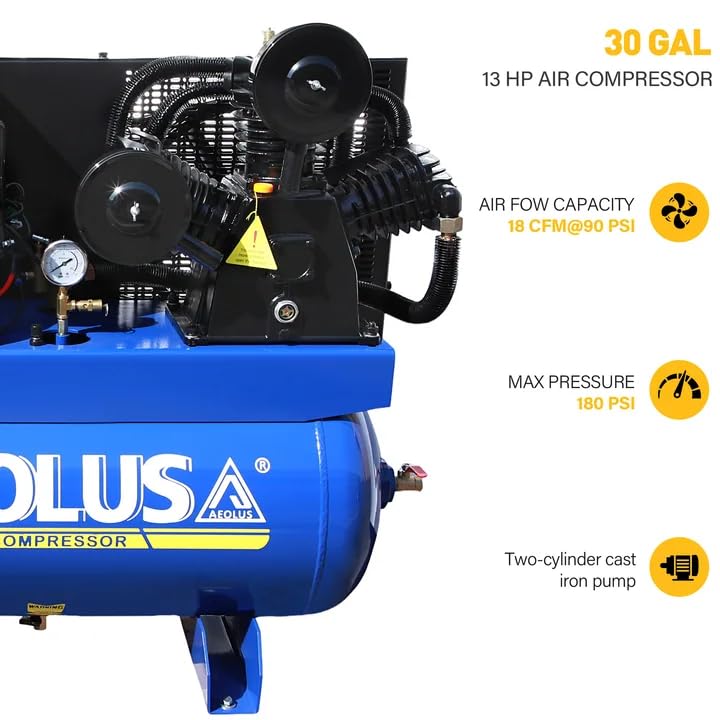
If you’re working remotely, on job sites without power, or need to mount a compressor on a service truck, the AEOLUS 13HP gas-powered unit makes a strong case. With a 420cc OHV engine and 24 CFM at 180 PSI, it’s more powerful on output than many electric models in this list, and that’s a big deal when you’re running impact wrenches or spray guns in the field. The two-stage, oil-lubricated cast iron pump is built for longevity, and the ASME-certified tank adds a layer of safety that’s essential in professional environments.
Owners note it starts reliably with electric or recoil backup, and the throttle control helps manage engine load under variable air demand. It’s heavy at over 400 lbs, but that’s expected for a mobile industrial unit. Compared to the VEVOR or Ingersoll Rand, it’s less about shop integration and more about off-grid capability. I’d recommend this for mobile mechanics or body shops with frequent on-site repair needs.
Product photos
How We Picked These air compressor for body shops
My approach to recommending air compressors for body shops centers on understanding the demands of professional use. Rather than a hands-on lab test, this is a research-led comparison of published specifications and owner feedback. I compared models across key features, weighing owner reviews from multiple sources alongside expert opinions to identify patterns in real-world performance and reliability. This process allowed me to rank compressors based on their suitability for demanding body shop tasks.
For body shop compressors, consistent CFM delivery at 90 PSI and tank capacity are paramount. A shop needs to run tools continuously, so sustained output trumps peak PSI. Durability is also critical; body shops rely on these machines daily. I placed significant weight on pump construction (cast iron versus aluminum) and motor horsepower, because these directly impact longevity and the ability to handle heavy use.
Specifications reliably indicate a compressor’s potential – CFM, PSI, tank size, and motor HP. However, owner feedback reveals how well those specs translate to real-world performance. I prioritized reviews detailing long-term reliability, noise levels, and ease of maintenance. Reputation matters too; established brands with a history of quality often indicate better build quality and parts availability. You can find more general guidance on compressors for automotive workshops on my site.
What To Look For In air compressor for body shops
Choosing the right air compressor for a body shop isn’t just about grabbing the biggest one you can find. It’s about matching capacity and capability to the specific tasks you’ll be performing.
A good air compressor for body shops prioritizes consistent airflow (CFM) at the required pressure (PSI) over sheer tank size. Look for durable construction, reliable pumps (oil-lubricated are generally preferred for heavy use), and features that simplify maintenance. Consider the power source available and the portability needed for the workspace.
CFM and PSI: The Core Requirements
Forget tank size for a moment. While a larger tank provides more reserve, the real workhorses of body shop compressors are cubic feet per minute (CFM) and pounds per square inch (PSI). Sanding, painting, and running air tools all demand specific CFM levels at a given PSI. Underestimate this and you’ll be fighting a compressor that can’t keep up, leading to frustrating stalls and inconsistent results. I frequently see shops underestimate their CFM needs, so err on the side of more capacity. Check the CFM requirements of all your air tools, then add a buffer of at least 50% to account for simultaneous use and pressure drops.
Pump Type and Duty Cycle
Oil-lubricated pumps are almost always the better choice for a professional body shop environment. They run cooler and quieter, and they last considerably longer than oil-free models. While oil-free compressors have their place, they simply don’t hold up to the continuous demands of auto body work. Consider the duty cycle as well. If you anticipate needing air all day, every day, you’ll want to investigate long-run body shop compressors designed for this purpose.
- A smaller shop doing light bodywork might get by with a 60-gallon, single-stage compressor.
- A medium-sized shop with heavier demands will likely need an 80-gallon or larger, two-stage compressor. Two-stage compressors deliver air more efficiently and at higher pressures.
- Larger facilities, or those doing full restorations, will need to consider industrial-grade compressors with even greater capacity and durability, and potentially industrial continuous-use compressors to meet their needs.
A compressor’s pump is its heart. Don’t skimp on quality here. Cast iron pumps are vastly superior to aluminum, offering longer life and better heat dissipation.
Power and Portability Considerations
Most body shops have access to 230V power, which allows for larger, more powerful compressors. However, if you’re limited to 120V, you’ll need to carefully consider your CFM requirements and accept that you’ll likely be sacrificing some capacity. Portability is another factor. If you need to move the compressor around the shop (or even to job sites), wheels and a sturdy handle are essential. For maximum flexibility, especially for mobile repair work, you might even consider a gas-powered option, though these are generally louder and require more maintenance. Before you make a decision, review available CFM-rated compressors for auto body to ensure your choice suits your needs.
Air Compressors for Body Shops Compared
This table provides a side-by-side comparison of key specifications for air compressors suitable for body shop applications.
| Product Title | HP | Tank Size (Gallons) | Max PSI | CFM @ 90 PSI | Voltage |
|---|---|---|---|---|---|
| Klutch 60-Gallon 3.7 HP | 3.7 | 60 | 135 | 9.3 | N/A |
| Klutch 29-Gallon 2.5 HP | 2.5 | 29 | 175 | 5.1 | 120V |
| CRAFTSMAN 33 Gallon | N/A | 33 | 175 | 5.1 | N/A |
| VEVOR 80 Gallon 10HP | 10 | 80 | 175 | 17 | 230V (3-Phase) |
| Ingersoll Rand 2340L5-V 5 hp | 5 | 60 | N/A | N/A | 230V |
| AEOLUS 30 Gal Gas Powered | 13 | 30 | 180 | 24 | N/A |
Frequently Asked Questions
What size tank is truly necessary for a body shop?
While a larger tank offers more air reserve, 80 gallons is generally the sweet spot for a medium-sized body shop. This provides enough capacity to run multiple tools without constant cycling, but isn’t so large as to be impractical for the space.
Are two-stage compressors worth the extra cost?
Yes, two-stage compressors are worth the investment for professional body shops. They deliver air more efficiently and at higher pressures, resulting in longer pump life and better performance with demanding tools.
How important is a compressor’s noise level?
Noise levels are more important than many realize, especially for daily use. Look for models with noise ratings below 80 dB, or consider adding sound dampening materials to the compressor room to create a more comfortable work environment.
What maintenance should I expect with an oil-lubricated compressor?
Oil-lubricated compressors require regular oil changes (typically every 50-100 hours of use) and periodic draining of the tank to prevent rust. Following the manufacturer’s maintenance schedule will significantly extend the life of the compressor.
Can I use a standard 120V outlet for a body shop compressor?
It’s possible, but limiting. Most high-CFM compressors require 230V power. If you’re stuck with 120V, you’ll need to choose a smaller compressor and carefully manage your air tool usage, or consider upgrading your electrical service. You may also want to investigate CFM-matched HVLP air compressors that are designed to operate efficiently on standard voltage.
The Bottom Line
Choosing an air compressor for a body shop always involves balancing upfront cost with long-term reliability and capability. While a budget-friendly option might seem appealing, the consistent demands of bodywork really call for a machine built to last – and that’s why, for most shops, the Ingersoll Rand 2340L5-V 5 hp stands out as the strongest overall pick. It represents a sweet spot between power, durability, and a reputation for dependable performance.
If you’re just starting out or working on smaller projects, the Klutch 29-Gallon 2.5 HP provides a solid entry point and is ideal for lighter-duty tasks. For those needing maximum versatility and the ability to run multiple tools simultaneously, the VEVOR 80 Gallon 10HP delivers impressive CFM and tank capacity. And for shops looking for compressors for automotive spray painting, investing in a model with a long duty cycle compressors for car paint will pay dividends in consistent finish quality.
Ultimately, remember that CFM at 90 PSI is more critical than any other specification. Don’t get caught up in chasing peak PSI numbers or massive tank sizes if the compressor can’t consistently deliver the airflow you need. Prioritize a durable pump, a reliable motor, and a machine that’s well-suited to the specific demands of your body shop work.
