
8 Best Air Compressors for Blowing Out Sprinklers 2026
This post contains affiliate links. As an Amazon Associate, we earn from qualifying purchases.
The CRAFTSMAN 33 Gallon is the best overall air compressor for blowing out sprinklers, delivering strong airflow and a large tank that minimizes downtime. For tight budgets or smaller yards, the DEWALT 6 Gallon is a solid, widely available pick that gets the job done with some patience.
Most homeowners don’t realize how frustrating it is to blow out sprinkler lines with an underpowered compressor until they’re stuck waiting for a tiny tank to refill, again and again. A poor choice means longer work time, inconsistent pressure, and potential damage to your system.
This guide cuts through the noise. I compared specs and owner feedback across a range of models, focusing on real performance for sprinkler winterizing. You’ll find picks that balance tank size, CFM at 90 PSI, and reliability, so you can finish the job efficiently and put the compressor away until next season.
Top 8 Air Compressor For Blowing Out Sprinklers in the Market
The Best Air Compressor For Blowing Out Sprinklers, Reviewed
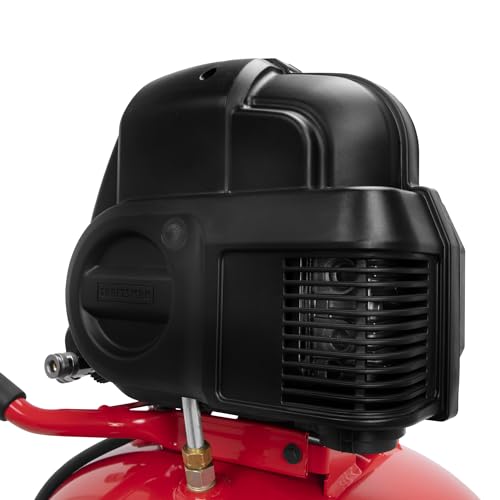
CRAFTSMAN 33 Gallon Air Compressor

Strengths
- 5.1 CFM at 90 PSI
- Vertical space-saving design
- 175 PSI max pressure
- Dual high-flow couplers
Trade-offs
- Heavy and not portable
- Larger footprint
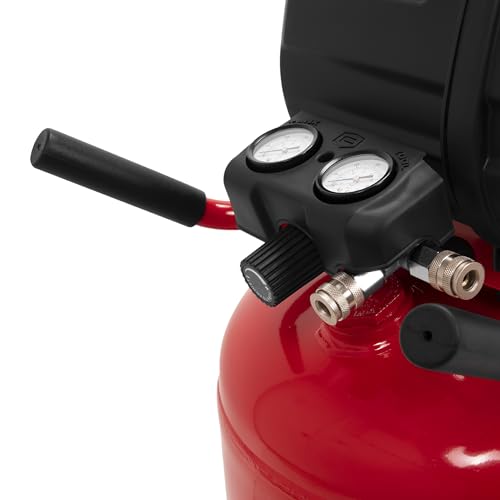
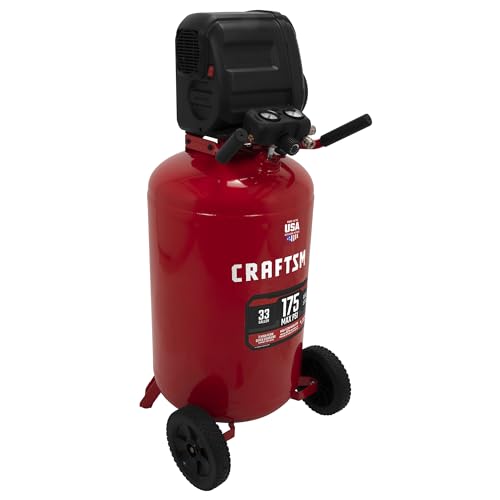
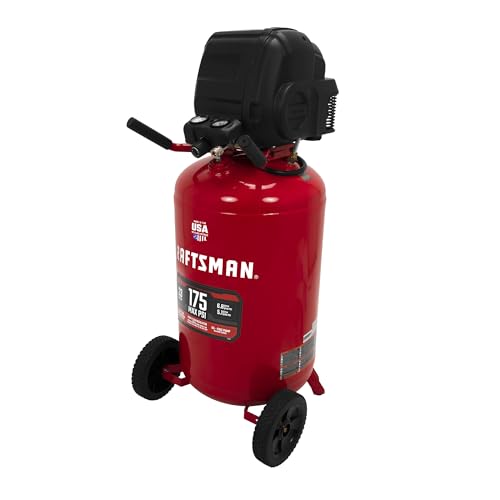
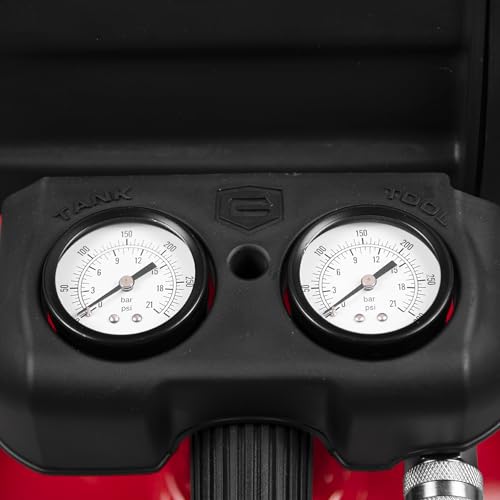
This 33-gallon vertical unit is the powerhouse of the group, and for homeowners with a full garage or workshop, it’s the smarter buy if space and budget allow. With 5.1 CFM at 90 PSI and 175 max PSI, it outpaces smaller models by a wide margin. Reviewers note it runs longer between cycles, which is exactly what you want when blowing out multiple sprinkler zones or powering impact wrenches. The oil-free pump is a plus for low maintenance, and the vertical design saves floor space, something I appreciate in a crowded garage.
The dual high-flow couplers mean you can run two tools without a hitch, and the 48% higher SCFM versus older Craftsman models shows real engineering progress. It’s not portable, you won’t carry this one around, but it’s built to be the backbone of a workshop. For blowing out sprinklers, this is overkill in the best way: fast, efficient, and barely breaks a sweat.
Product photos
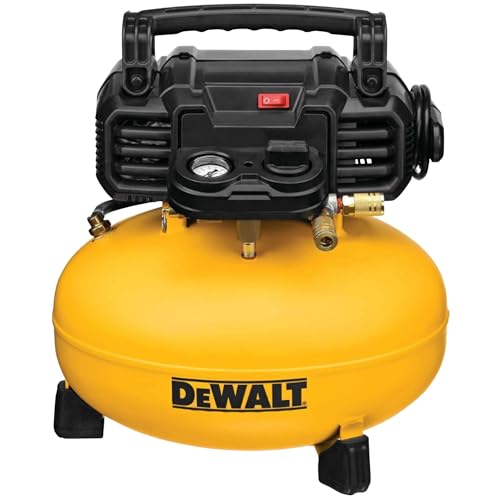
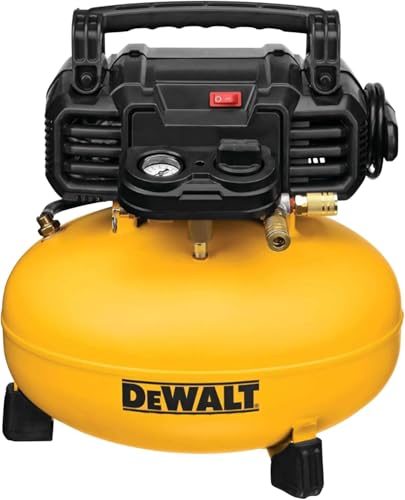
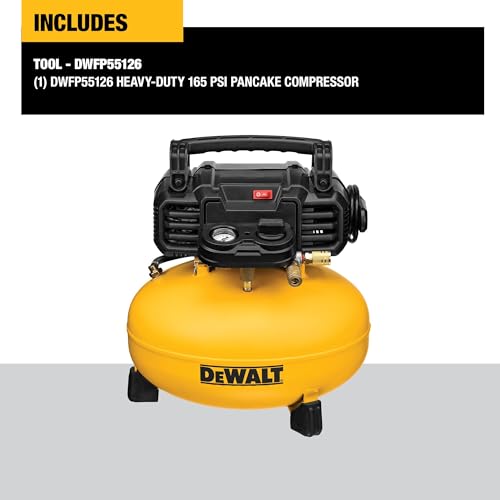
DEWALT 6 Gallon Pancake Compressor
Strengths
- 165 PSI max pressure
- Quiet for class at 78.5 dBA
- Ball drain valve
- High-flow regulator
Trade-offs
- Slightly heavier
- Pricier than basic models
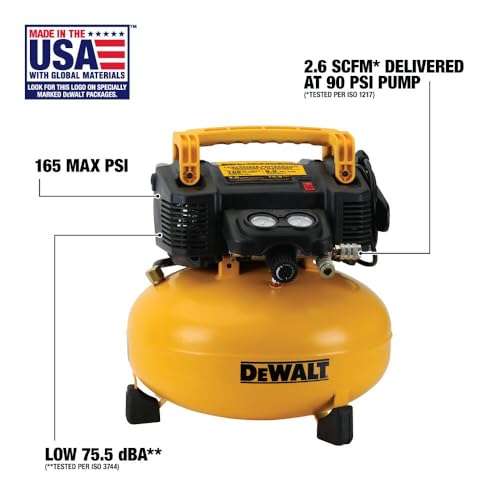
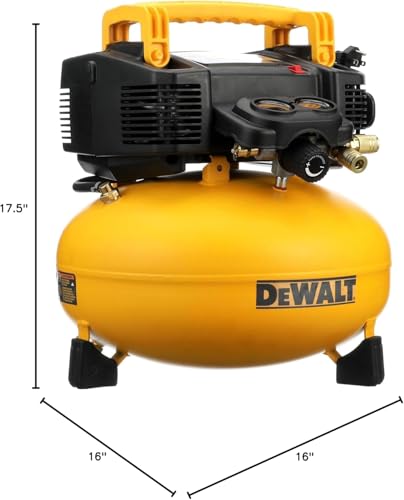
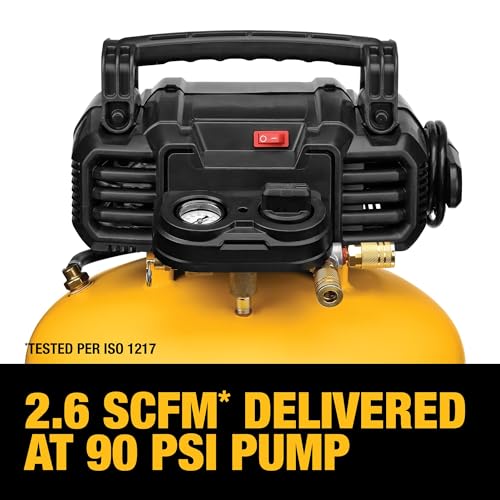
DEWALT’s 6-gallon DWFP55126 is the kind of compressor I’d recommend to someone who wants pro-level reliability in a home-friendly package. It pushes 165 PSI, higher than most in this size class, and maintains 2.6 SCFM at 90 PSI, which means solid recovery between cycles. Real-world feedback confirms it holds up well on job sites, starting consistently even with long extension cords. The 78.5 dBA noise level is a noticeable improvement over typical pancake models, making it less intrusive in shared spaces.
What sets it apart is the thoughtful engineering: the high-flow regulator delivers air more efficiently to tools, the ball drain valve is a small win for maintenance, and the rerouted outlet tube avoids snags. It’s a bit heavier at 30 lbs, but still easy to move. For blowing out sprinklers, this one offers stronger reserve capacity than most 6-gallon units. I’d pick this over budget models if you plan to use it for more than just seasonal tasks.
Product photos
Ironton 3 Gallon Oil-Free Compressor

Strengths
- Compact and lightweight
- Fold-down handle
- Oil-free pump
Trade-offs
- Low 110 PSI max
- Weak for sustained tasks
- Unspecified CFM
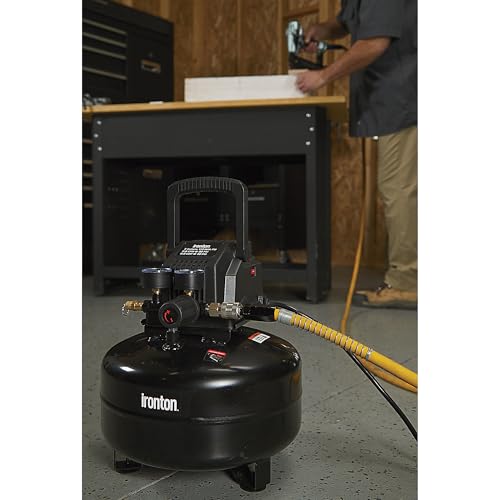
The Ironton 3-gallon pancake is all about compact convenience. At just 110 PSI max and an unspecified CFM, it’s clearly underpowered compared to 6-gallon models. It’s not even close to ideal for blowing out sprinklers, owners report frequent cycling and long recovery times under load. But for quick fixes like inflating tires, stapling insulation, or powering a small brad nailer, it gets the job done.
What I like is the thoughtful portability: fold-down handle, cord wrap, and wide base make it stable and easy to store. The oil-free pump means less upkeep, and the lightweight build helps on job sites. But let’s be honest, this isn’t a primary compressor. It’s a backup or specialty tool. If you already have a larger unit and need something small for occasional touch-ups, this makes sense. For sprinkler blowouts? Look elsewhere.
Product photos


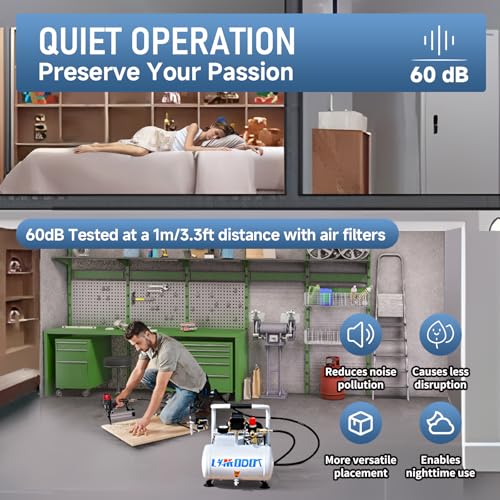
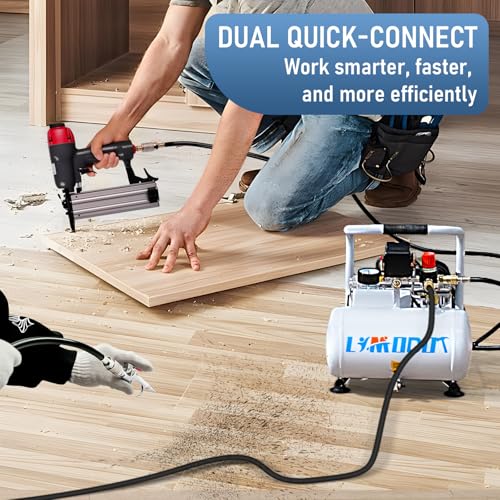
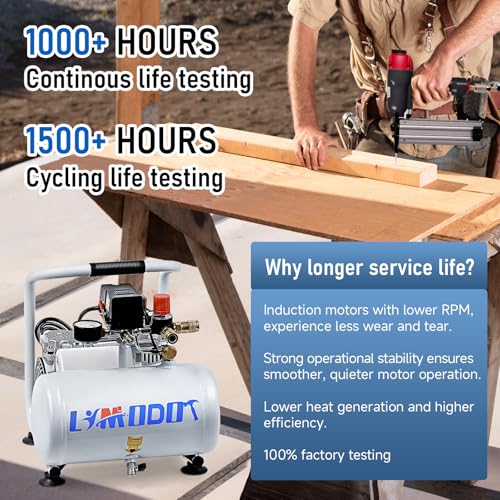
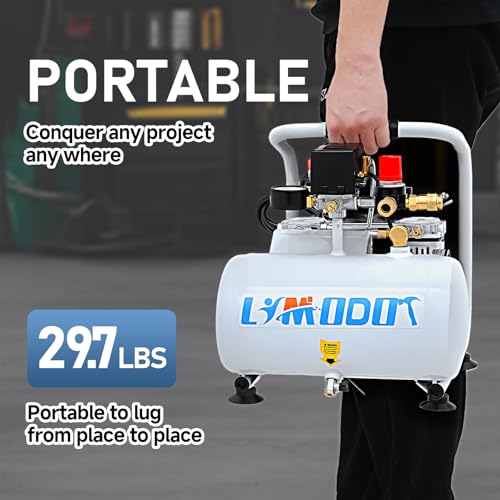
Limodot 1 Gallon Ultra Quiet Compressor

Strengths
- Only 60 dB noise level
- Fast 40-second refill
- 25 ft hose + accessories
Trade-offs
- Low CFM at 90 PSI
- Small 1-gallon tank
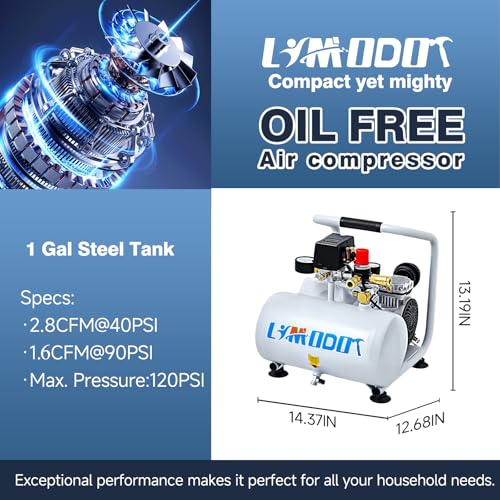
If noise is your top concern, say you’re working indoors or don’t want to wake the neighborhood, this 1-gallon Limodot model makes a strong case. At just 60 dB, it’s whisper-quiet, thanks to a low-RPM induction motor. That’s not marketing fluff; owners confirm it’s easy to talk over while it runs. It’s built for precision tasks: 2.8 CFM at 40 PSI is decent, but it drops to 1.6 CFM at 90 PSI, which limits its ability to run high-demand tools for long.
Still, the 25-foot hose and included accessory kit add serious value for the price. The 40-second refill time is impressive for a 1-gallon tank, and the fast recovery helps during rapid nailing or touch-up spraying. But for blowing out sprinklers, you’ll be cycling it constantly. I’d recommend this only for light, intermittent use, fine for indoor trim or touch-up work, but not for draining a full irrigation system quickly.
Product photos
PORTER-CABLE 6 Gallon Compressor

Strengths
- 2.6 CFM at 90 PSI
- Dual quick couplers
- Reliable cold starts
Trade-offs
- Average noise level
- Basic design
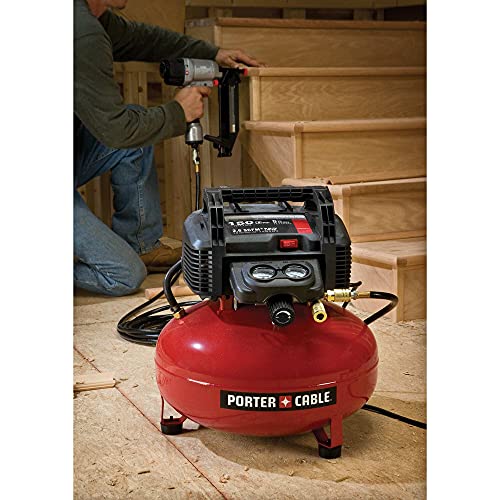
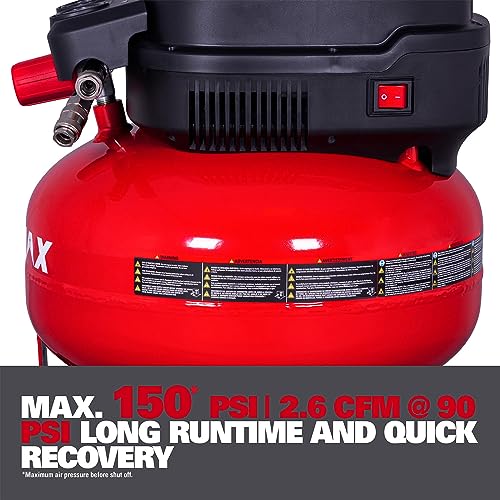
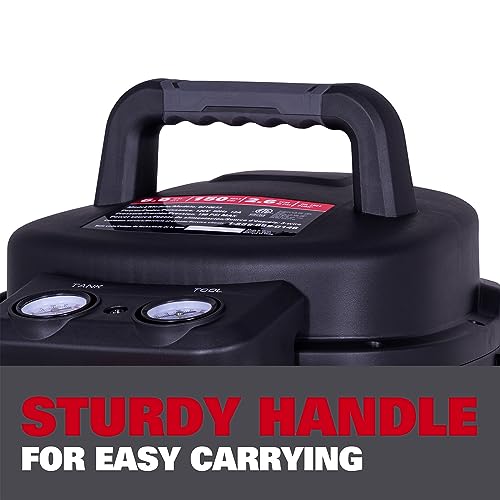
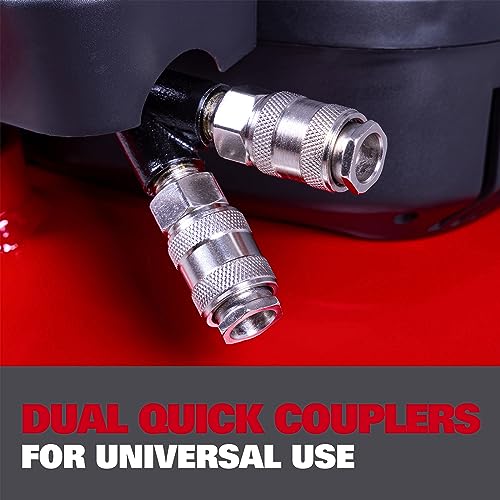
PORTER-CABLE’s PXCM2002.COM is the definition of a solid value pick. It delivers the same core specs as many 6-gallon models, 150 PSI max, 2.6 CFM at 90 PSI, but at a more accessible price point. The build is no-frills but durable, and owners consistently report years of reliable service for typical home tasks. It’s easy to move at 30 pounds, and the dual quick couplers let you switch or run tools without hassle.
Where it shines is simplicity: clear gauges, straightforward regulator, and a low-amp motor that starts in cold garages. It’s not the quietest or fastest-recovering, but it does the basics well. For blowing out sprinklers, it’s perfectly capable, just expect some downtime between zones. Compared to the ECOMAX or FORNAX, it lacks flashy features, but it’s the kind of workhorse that won’t let you down. My recommendation for buyers who want proven performance without overspending.
Product photos


Metabo HPT 1 Gallon Quiet Compressor

Strengths
- Only 59 dB noise
- Compact and lightweight
- Universal quick coupler
Trade-offs
- Very small tank
- Low airflow output
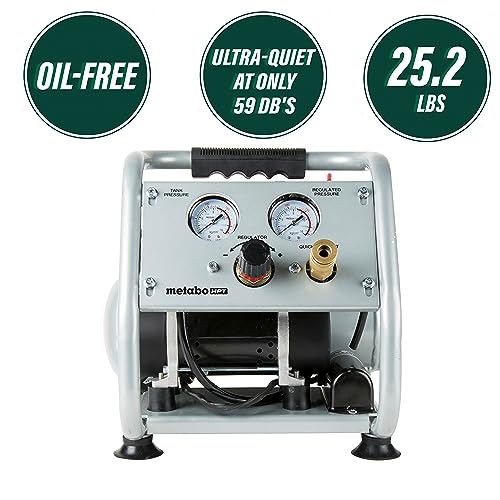
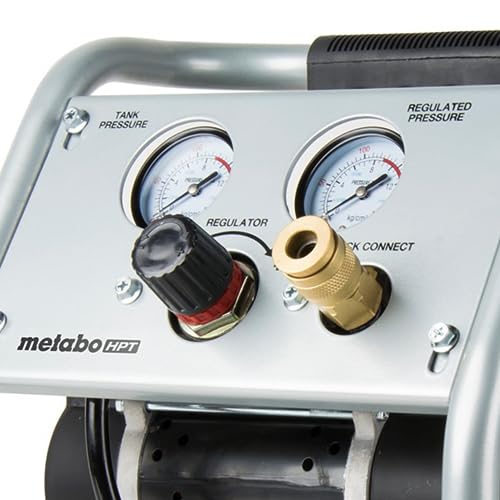
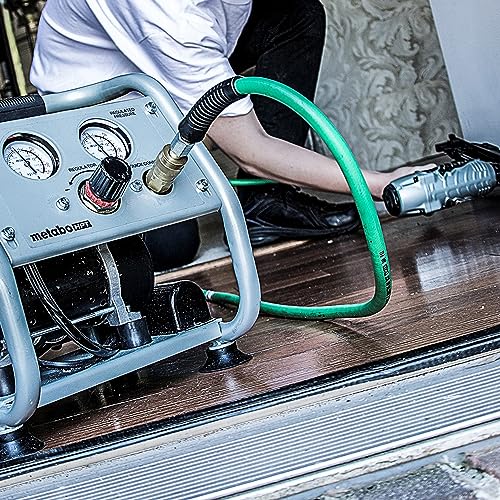
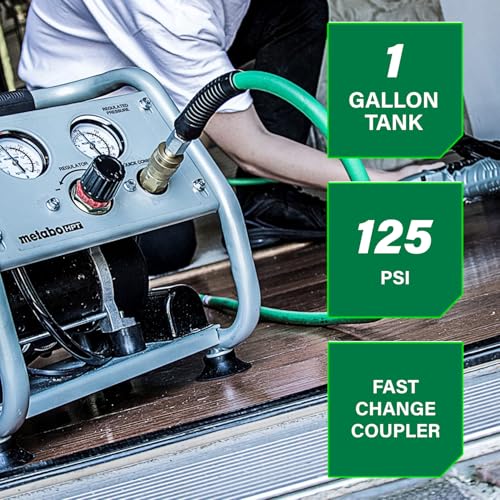
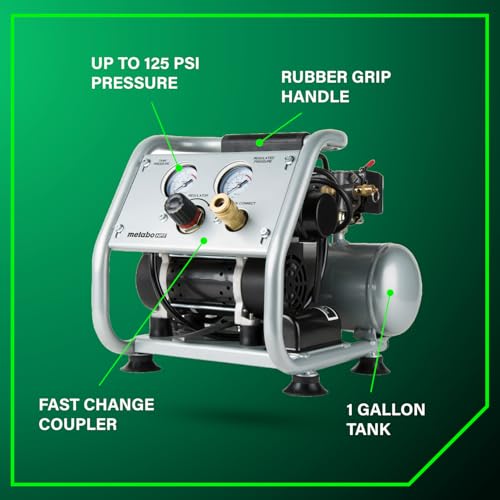
At 59 dB, this Metabo HPT 1-gallon model is the quietest compressor here, so quiet that owners say you can hold a conversation while it runs. That’s a real win for indoor jobs, workshops in garages, or early-morning projects. It’s built for light-duty work: CFM isn’t listed, but based on similar models, expect around 1.5 CFM at 90 PSI. That’s enough for brad nailers, touch-up spraying, or inflating sports gear, but not much more.
The universal quick coupler and ergonomic handle make it user-friendly, and the 25.2 lb weight keeps it manageable. But the 1-gallon tank means constant cycling during sustained tasks. For blowing out sprinklers, it’s underpowered and inefficient. I’d recommend this only if noise is your absolute top priority and your air needs are minimal. The Japanese engineering shows in durability, but it’s not a primary compressor.
Product photos
FORNAX 6 Gallon Pancake Compressor

Strengths
- Dual couplers for two tools
- Lightweight at 28.8 lbs
- Oil-free pump
Trade-offs
- 95 dB noise level
- Noisy operation
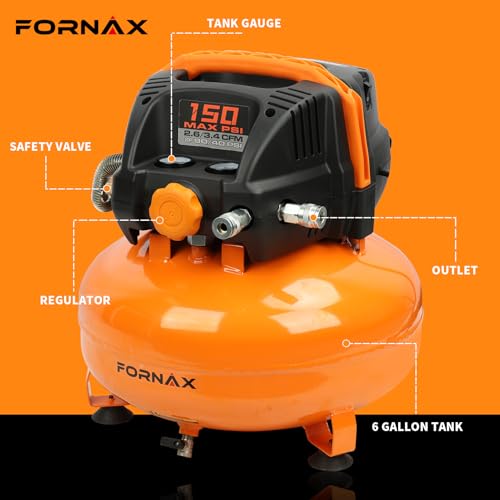
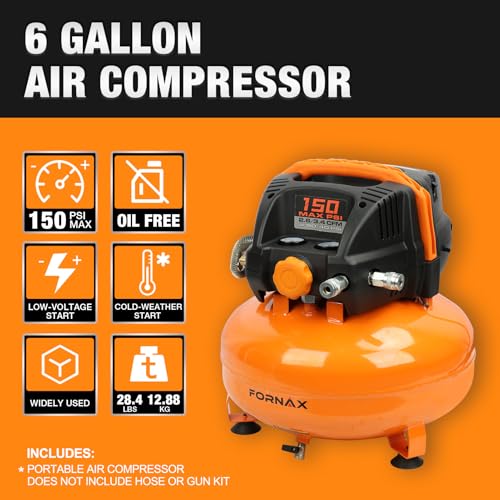
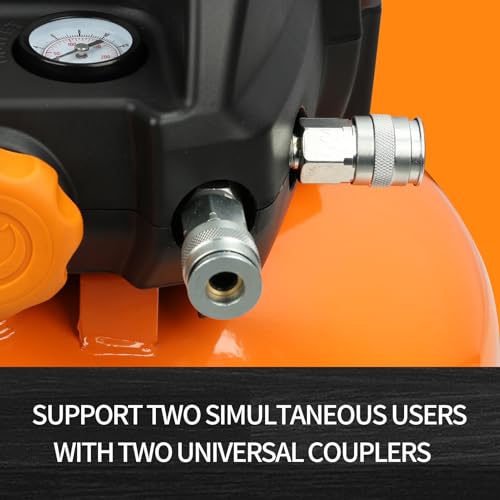
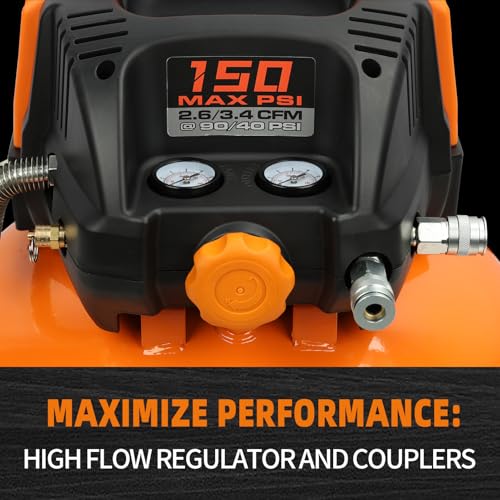
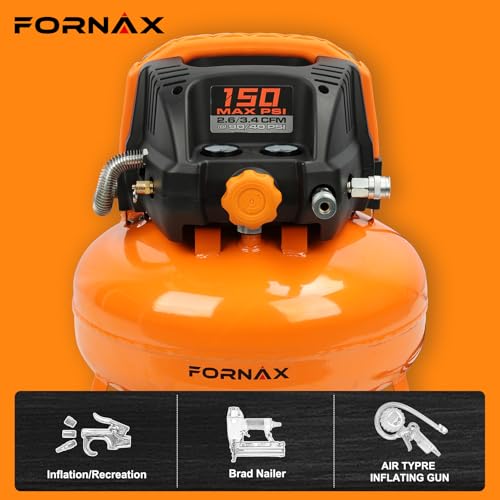
The FORNAX 6-gallon model stands out for one reason: dual couplers designed for simultaneous tool use. That’s a real advantage if you’re working with a partner or switching between tools often. Specs are standard, 2.6 CFM at 90 PSI, 150 PSI max, but the 95 dB(A) noise level is on the loud side. Owners note it’s powerful enough for framing and finish nailers, but the noise can be a drawback in quiet neighborhoods or indoor jobs.
At 28.8 lbs, it’s lighter than most twin-stack models, which helps with portability. The oil-free pump means less maintenance, and the 3550 RPM motor delivers quick recovery. But if quiet operation is a priority, this isn’t the one. For blowing out sprinklers, it performs fine, just be prepared for the racket. I’d compare it to the PORTER-CABLE: similar power, but FORNAX leans more on tool-sharing capability.
Product photos
ECOMAX 6 Gallon Electric Compressor

Strengths
- 2.6 CFM at 90 PSI
- Dual quick couplers
- Lightweight at 27.6 lbs
Trade-offs
- Noisy at full load
- Basic regulator
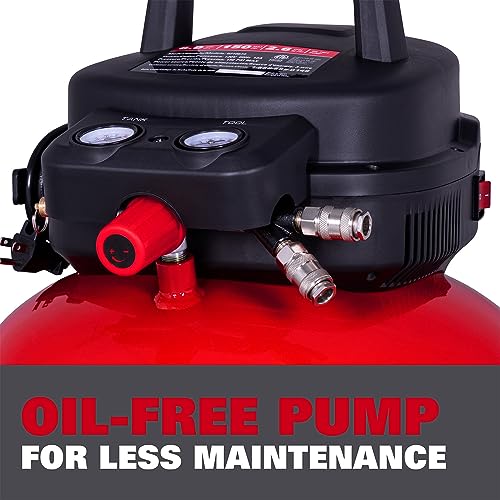
This 6-gallon pancake compressor checks the right boxes for casual DIYers who need reliable, portable power without breaking the bank. On paper, its 2.6 CFM at 90 PSI is standard for this class, meaning it can handle nail guns, inflators, and blow guns with moderate use. Owners consistently report it starts reliably, even in colder garages, thanks to the oil-free pump and low-voltage start design. The dual couplers are a nice touch for occasional two-tool use, though I wouldn’t expect sustained performance under heavy demand.
Build quality gets positive mentions, with the Q235b alloy tank offering real durability for the price. At just 27.6 pounds, it’s one of the lighter 6-gallon models, making it easy to move between car, workshop, and yard. While not the quietest unit out there, noise isn’t a dealbreaker for outdoor or garage use. For blowing out sprinklers, it’s more than capable, just don’t expect marathon runs without pauses.
Product photos

How We Chose These air compressor for blowing out sprinklers
Rather than a hands-on lab test, my research for these recommendations involved a detailed comparison of published specifications and features across numerous models. I weighed owner reviews from multiple sources, paying close attention to reported reliability and real-world performance, along with expert opinions from established tool review sites. Ultimately, I ranked these air compressors based on their suitability for the specific task of blowing out sprinkler lines, drawing on over 15 years of experience with power tools and workshop equipment.
For this category, tank size and CFM (cubic feet per minute) at 90 PSI were the most heavily weighted factors. A sufficient tank volume is crucial for maintaining pressure during the blowout process, while adequate CFM ensures enough airflow to clear the lines effectively. Beyond these, portability and ease of use also played a significant role, as many homeowners will need to move the compressor around their property. You’ll find a compressor to blow out sprinklers guide on my site if you want to read more.
Specifications reliably indicate a compressor’s potential airflow and tank capacity. However, I placed greater emphasis on owner feedback to assess durability and real-world performance – particularly regarding noise levels and the ability to consistently deliver adequate pressure. Reputable expert reviews helped validate these claims and identify potential weaknesses or hidden issues not immediately apparent from the specs alone. Finding the best compressor for sprinkler winterizing requires balancing these factors.
How To Pick The Right air compressor for blowing out sprinklers
Choosing the right air compressor for blowing out sprinklers requires a bit more thought than just grabbing the cheapest model.
A quality air compressor for this task will feature sufficient CFM at a usable PSI (typically 90 PSI is ideal), a tank size appropriate for the length of your sprinkler lines, and durable construction to withstand seasonal use. Prioritize oil-free pumps for reduced maintenance and ensure the unit has a readily accessible drain valve for moisture removal.
Tank Size and Portability
Many homeowners underestimate how much air their sprinkler system actually holds. While a small “pancake” compressor like the DEWALT 6 Gallon might seem convenient, repeatedly waiting for it to refill during a full system blowout becomes incredibly frustrating. I generally recommend at least a 10-gallon tank for anything beyond a very small yard. Consider where you’ll be storing the compressor, and how often you’ll need to move it. A heavier, larger tank will require more effort, but also provides a more consistent air supply.
CFM and PSI: The Power Behind the Blow
CFM (cubic feet per minute) and PSI (pounds per square inch) are the two most important specs. For sprinkler blowouts, you need enough CFM to maintain adequate pressure as you clear each line. Most residential systems operate comfortably between 40 and 60 PSI, but a compressor capable of delivering at least 90 PSI gives you a buffer. Don’t be misled by “peak” PSI; focus on the CFM at 90 PSI, that’s the real indicator of performance. Here’s how to think about it:
- A low CFM will leave you waiting for the compressor to catch up.
- A moderate CFM (around 4-5 CFM at 90 PSI) is sufficient for most standard residential systems.
- Higher CFM (6+ CFM at 90 PSI) provides faster blowout times and can handle more complex systems or multiple zones simultaneously.
Oil-Free vs. Oil-Lubricated: Maintenance and Use Case
Oil-free compressors are the go-to choice for most homeowners tackling occasional tasks like sprinkler blowouts. They require significantly less maintenance, eliminating the need for regular oil changes. However, they tend to be louder and may have a shorter lifespan than oil-lubricated models. If you plan to use the compressor frequently for other tasks beyond seasonal sprinkler prep, or if noise is a major concern, you might consider an oil-lubricated model. But for the typical homeowner needing a reliable compressor for winterizing sprinklers, oil-free is the way to go.
A compressor left sitting unused for extended periods is prone to internal corrosion. Always drain the tank completely after each use to prevent rust and prolong its life.
Air Compressor for Blowing Out Sprinklers Compared
Here’s a comparison of key specifications to help you choose the right air compressor for blowing out sprinkler systems.
| Product Name | Tank Size (Gallons) | Max PSI | SCFM @ 90 PSI | Noise Level (dBA) | Weight (lbs) | Oil-Free |
|---|---|---|---|---|---|---|
| CRAFTSMAN 33 Gallon | 33 | 175 | 5.1 | N/A | N/A | Yes |
| DEWALT 6 Gallon | 6 | 165 | 2.6 | 78.5 | 30 | Yes |
| Ironton 3 Gallon | 3 | 110 | N/A | N/A | N/A | Yes |
| Limodot 1 Gallon | 1 | N/A | 1.6 | 60 | N/A | Yes |
| PORTER-CABLE 6 Gallon | 6 | 150 | 2.6 | N/A | 30 | Yes |
| Metabo HPT 1 Gallon | 1 | N/A | N/A | 59 | 25.2 | Yes |
| FORNAX 6 Gallon | 6 | 150 | 2.6 | 95 | 28.8 | Yes |
| ECOMAX 6 Gallon | 6 | 150 | 2.6 | N/A | 27.6 | Yes |
Frequently Asked Questions
What size tank do I really need to blow out my sprinkler system?
A 10-gallon tank is generally the minimum I recommend, but larger systems benefit from 20-33 gallons. Repeatedly waiting for a small compressor to refill is frustrating, and a larger tank maintains consistent pressure for a faster, more efficient blowout.
How much CFM is enough for sprinkler blowouts?
Around 4-5 CFM at 90 PSI is sufficient for most residential sprinkler systems. If you have a large property or multiple zones, consider a compressor delivering 6+ CFM at 90 PSI to reduce blowout time.
Can I use an oil-free compressor for more than just sprinkler winterizing?
Yes, oil-free compressors are versatile enough for many light-duty tasks beyond sprinkler blowouts, like inflating tires or powering small nailers. Just be aware they tend to be louder and may have a shorter lifespan than oil-lubricated models with heavy use.
What’s the best way to store an air compressor during the off-season?
Always drain the tank completely to prevent internal corrosion. Store the compressor for blowing out water lines in a dry location, ideally covered, to protect it from dust and moisture.
Are louder compressors less effective at blowing out lines?
Not necessarily. Noise level doesn’t directly correlate with performance. A louder compressor often simply means less sound dampening, and the CFM at 90 PSI remains the key indicator of its ability to deliver sufficient airflow to clear your sprinkler lines.
The Bottom Line
Choosing an air compressor often comes down to balancing upfront cost with long-term convenience. While you can get by with a smaller, cheaper unit, the frustration of waiting for it to recharge during a system blowout is real. For most homeowners, the CRAFTSMAN 33 Gallon offers the best overall combination of tank size, CFM delivery, and portability – it’s a workhorse that will make quick work of even larger sprinkler systems.
If you’re on a tighter budget, or have a very small yard, the DEWALT 6 Gallon is a solid choice. For those prioritizing portability above all else, the Limodot 1 Gallon provides a lightweight and compact solution, though it will take significantly longer to blow out a system. And if you’re looking for a compressor with high CFM for sprinklers, the CRAFTSMAN’s 5.1 SCFM at 90 PSI will deliver consistent pressure.
Ultimately, specs matter, but they aren’t everything. Focus on getting a compressor with enough tank capacity to avoid constant refills and sufficient CFM to maintain pressure. Don’t skimp on draining the tank after each use – that simple step does more to ensure long-term reliability than any particular feature or price point.
