
8 Best Air Compressors for Air Tools 2026
This post contains affiliate links. As an Amazon Associate, we earn from qualifying purchases.
The overall best air compressor for air tools is the Metabo HPT 6-Gallon, offering strong airflow and solid build quality for most DIY and pro jobs. For a quieter, more compact option perfect for light to medium tasks, the California Air Tools 8-Gallon stands out. If you’re on a budget but still want reliable performance, the ECOMAX 6-Gallon delivers solid value.
Most people don’t realize how mismatched their compressor is until they’re in the middle of a job and their tool sputters or the motor won’t stop running. Too many buyers focus on tank size or horsepower alone, only to end up with a unit that can’t keep up with their tools’ actual airflow demands.
This guide cuts through the confusion. I compared specs and real-world owner feedback to find models that deliver consistent CFM, reliable pressure, and practical portability. These picks are based on what actually matters when running nailers, inflators, or impact wrenches, not just what the marketing says.
Top 8 Air Compressor For Air Tools in the Market
The Best Air Compressor For Air Tools, Reviewed
Klutch 20-Gallon Air Compressor

Strengths
- Cast iron pump
- 20-gallon tank
- Thermal protection
Trade-offs
- Heavier unit
- Belt maintenance
- Larger footprint
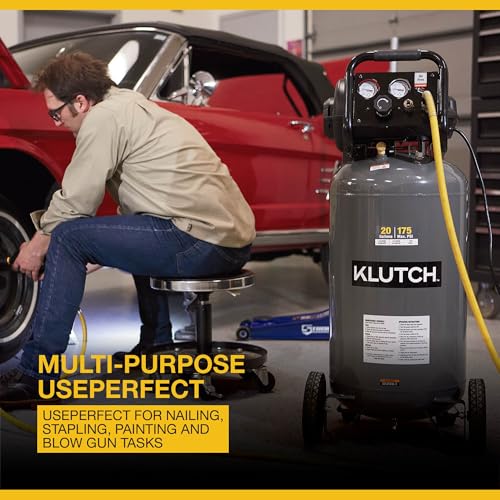
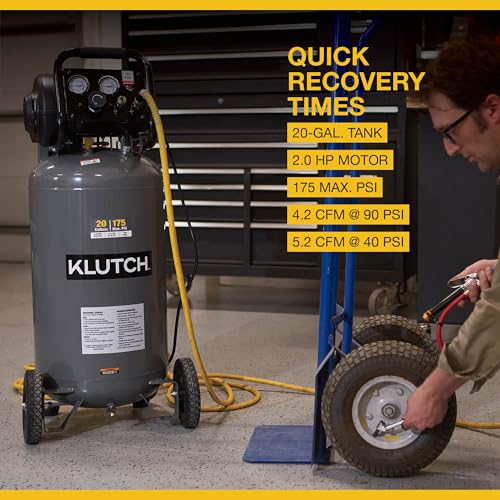
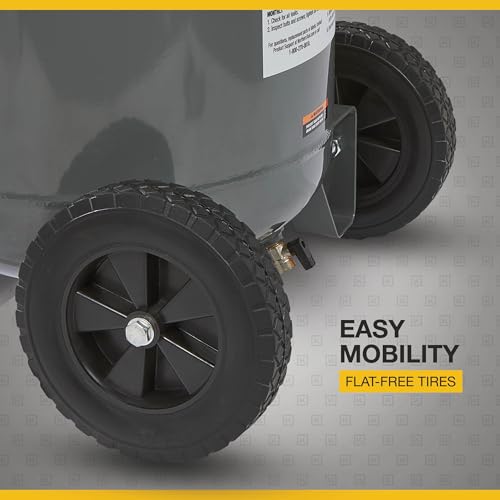
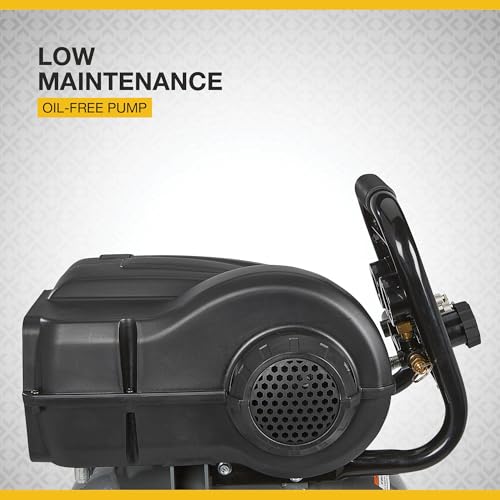
The Klutch 20-gallon is the most complete package here for serious users. With a belt-driven, oil-lubricated cast iron pump and 2HP motor, it’s built like a shop staple, owners report years of trouble-free use in garages and light commercial settings. The 175 PSI max pressure and rapid recovery mean it can run multiple tools or high-demand sprayers without strain. The oil-sight gauge and manual drain make maintenance straightforward, which matters when you’re relying on it weekly.
It’s heavier and pricier than pancake models, but compared to the VEVOR, it’s more durable and efficient long-term. My recommendation? This is the smarter buy for users who want a set-it-and-forget-it workhorse that won’t quit after two seasons.
Product photos

California Air Tools 8-Gallon Compressor

Strengths
- 60 dBA ultra quiet
- Aluminum tank
- Wheels included
Trade-offs
- Lower CFM
- Slower recovery
- Limited for heavy tools
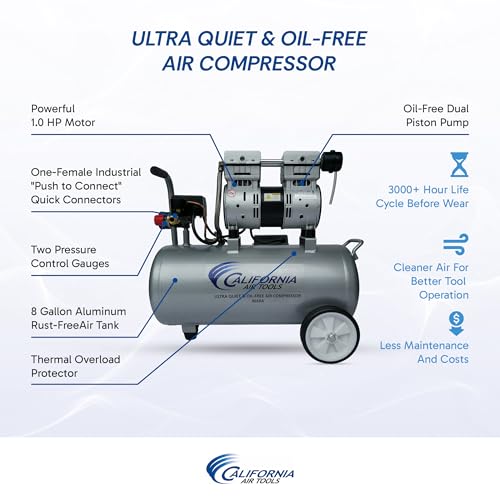
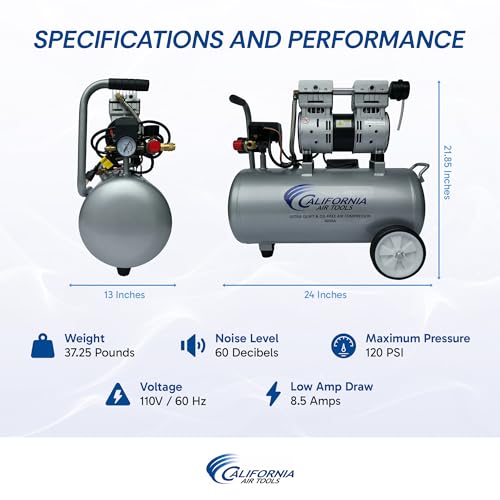
If noise is your top concern, the California Air Tools 8010A is in a league of its own at just 60 dBA, about as loud as a normal conversation. The 1.0 HP motor runs at 1680 RPM, which explains the whisper-quiet operation and reduced wear. With 2.2 CFM at 90 PSI, it’s not the strongest, but it’s sufficient for brad nailers, inflators, and touch-up spraying.
Owners love using it indoors or in shared spaces, and the aluminum tank with wheels adds to its mobility. It won’t keep up with framing guns, but for finish work, studios, or home use, it’s the clear choice. I’d pick this over the DEWALT when silence matters most.
Product photos


Metabo HPT 6-Gallon Pancake Compressor

Strengths
- 200 PSI max
- 4 CFM output
- Lightweight build
Trade-offs
- Higher price
- Limited runtime
- Noisy for indoor
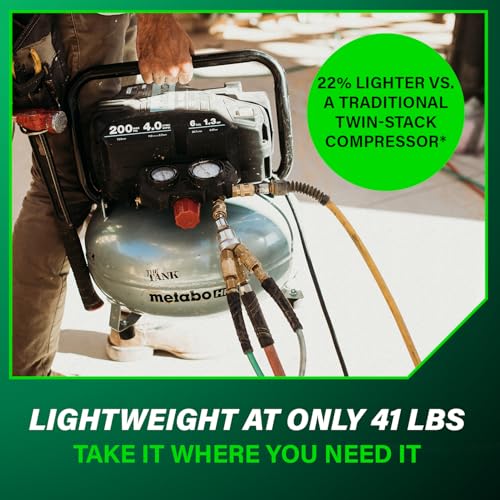
Metabo HPT’s THE TANK lives up to its name with 200 PSI max pressure, the highest here, and 4 CFM at 90 PSI, which is exceptional for a 6-gallon unit. That extra pressure and airflow mean it can run two framing nailers at once, something most pancake compressors can’t touch. At 42 lbs, it’s also lighter than twin-stack models, making it easy to haul to job sites.
Reviewers consistently note fewer stall-outs and faster nail driving, especially in cold weather. While it’s pricier than basic models, the engineering justifies it. I’d pick this over the DEWALT or Bostitch for any pro or serious DIYer using high-demand nailers regularly.
Product photos


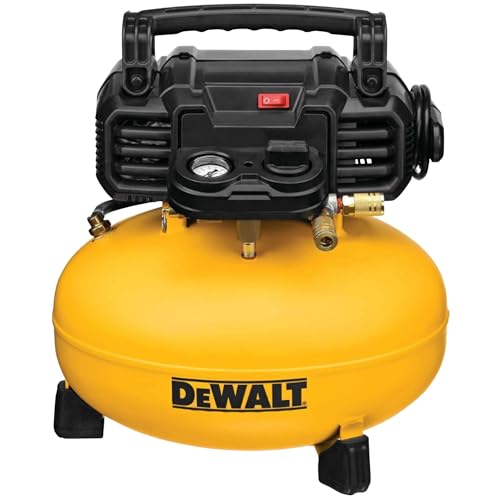
DEWALT 6-Gallon Pancake Compressor
Strengths
- 78.5 dBA quiet
- Ball drain valve
- High-flow regulator
Trade-offs
- Fewer accessories
- Average recovery
- Shorter hose
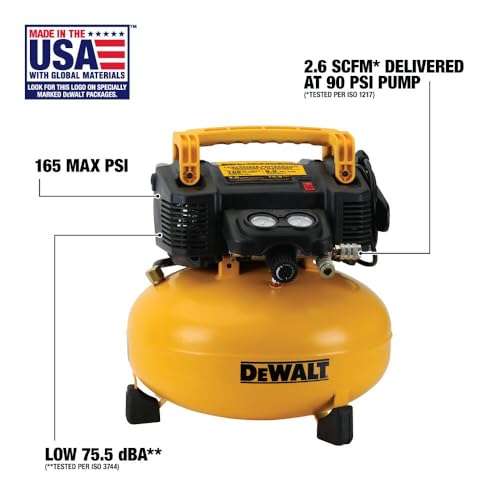
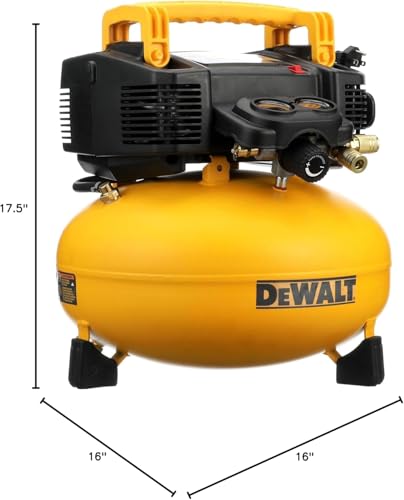
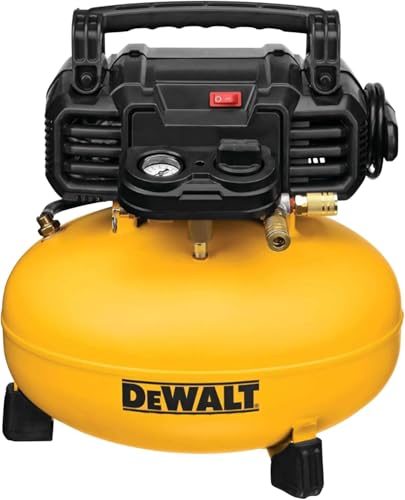
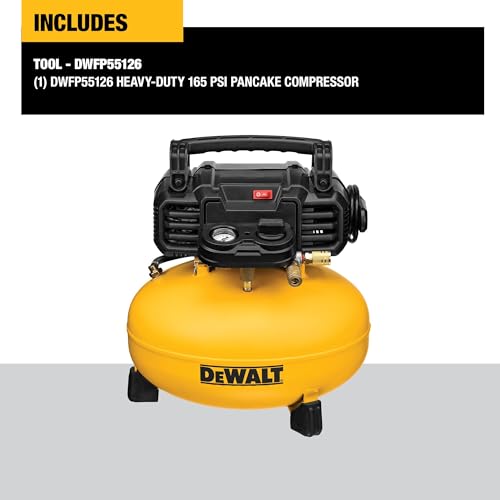
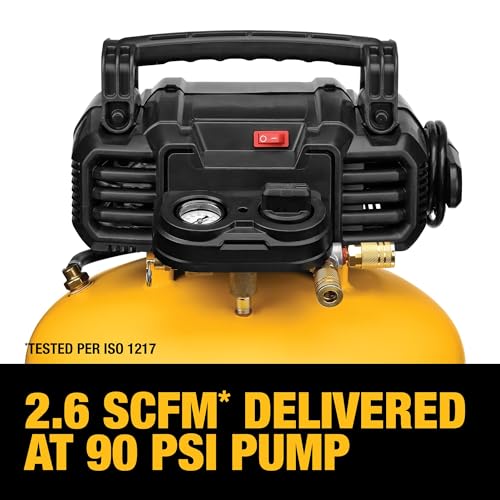
DEWALT’s 6-gallon pancake is a quiet performer at 78.5 dBA, noticeably hushed compared to most in this class. With 2.6 SCFM at 90 PSI and a 165 PSI max, it’s on par with the Bostitch but with a more refined build. The high-flow regulator and dual couplers ensure tools run efficiently, and the ball drain valve is a small but appreciated upgrade for fast tank emptying.
It doesn’t have the accessories of the Bostitch or the power of the Metabo HPT, but for someone who values a clean, quiet garage setup, this is a solid daily driver. I’d recommend it over the ECOMAX for homeowners who hate loud tools but don’t need pro-level output.
Product photos
Bostitch 6-Gallon Pancake Compressor
Strengths
- 13-piece kit
- 50-ft hose
- Dual couplers
Trade-offs
- Average noise
- Modest CFM
- Plastic housing
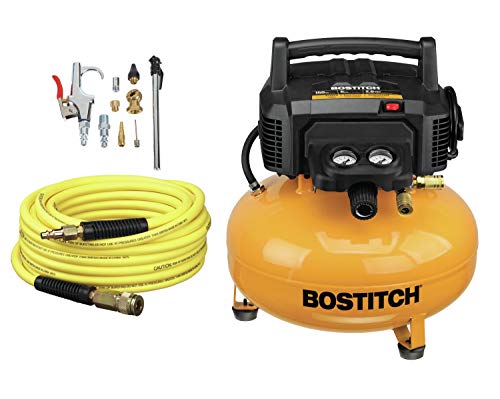
Bostitch brings its reputation for pro-grade tools into this pancake compressor, and it shows in the details. At 150 PSI and 2.6 CFM at 90 PSI, it’s not the most powerful, but the 13-piece kit is where it wins, especially the 50’ premium hose, which most competitors don’t match. The oil-free pump is reliable, and the dual couplers let two people work at once, a rare plus in this size.
Owners praise its consistency on finish jobs, and the removable console cover makes repairs easier than on sealed units. Compared to the DEWALT, it’s slightly louder but offers better value in accessories. For the weekend warrior building a full toolkit, this one delivers more out of the box.
Product photos


ECOMAX 6-Gallon Pancake Compressor

Strengths
- Low cost
- 10-piece kit
- 150 PSI max
Trade-offs
- Slower recovery
- Basic regulator
- Limited for pros
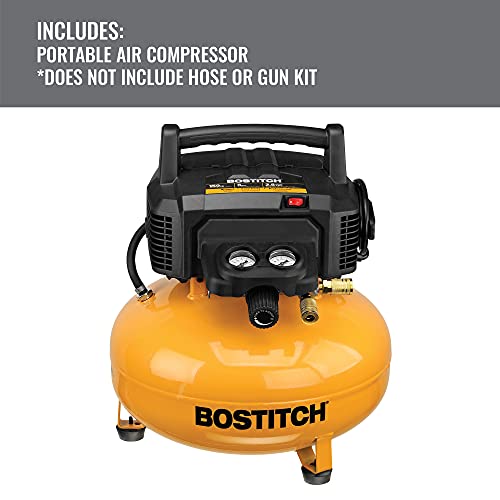
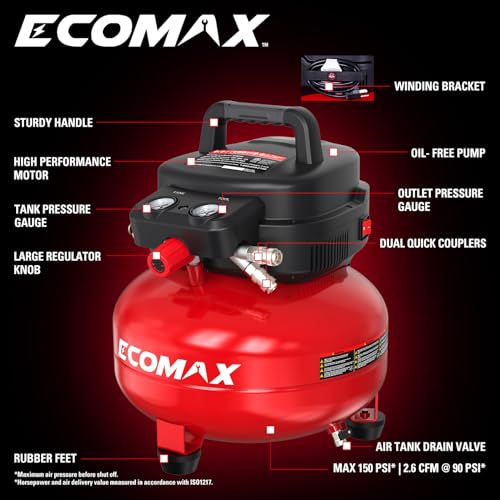
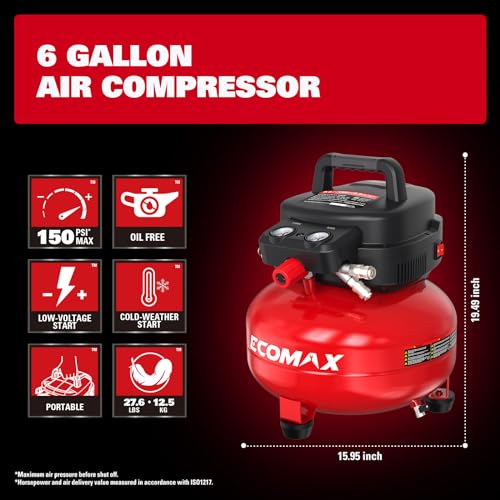
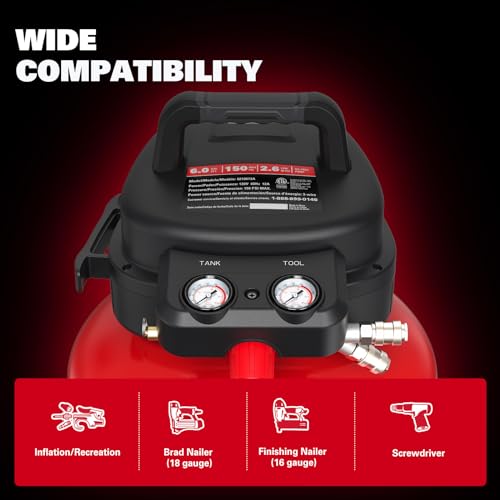
The ECOMAX 6-gallon pancake is a textbook budget pick, lightweight, simple, and packed with extras. At 150 PSI and 3 CFM at 90 PSI, it won’t power heavy framing guns continuously, but it’s perfectly capable for brad nailers, inflating tires, or occasional trim work. What stands out is the 10-piece accessory kit, which includes a 25-ft hose and useful nozzles, making it a true plug-and-play setup for beginners. Reviewers note it starts reliably in cold garages, a nod to its oil-free pump and low-voltage tolerance.
It’s not going to impress pros, and recovery time lags behind higher-end 6-gallon models like the Metabo HPT. But for someone setting up a first workshop or needing a portable unit for odd jobs, this one clears the bar without breaking the bank.
Product photos

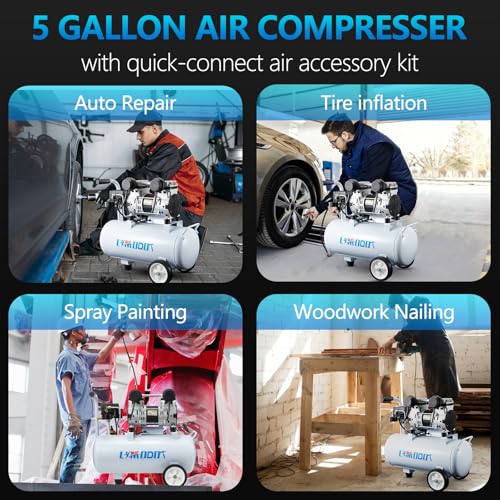
Quiet 5-Gallon Oil-Free Compressor

Strengths
- 80-sec fill
- 25-sec recovery
- 68dB quiet
Trade-offs
- Smaller tank
- Lower CFM
- Shorter hose
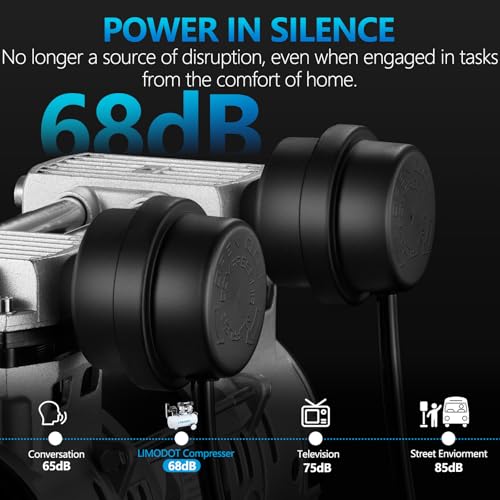
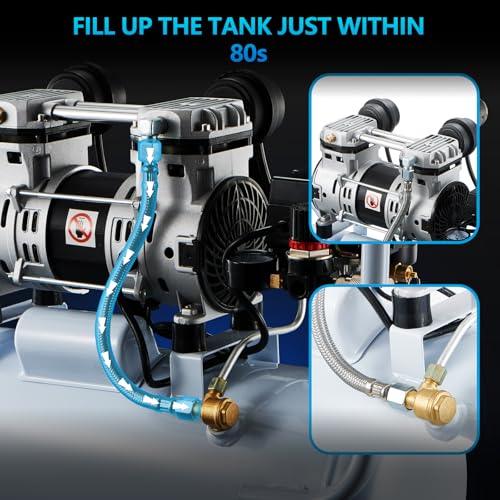
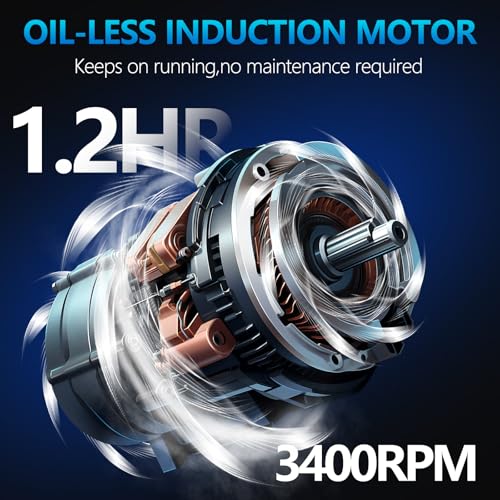
This 5-gallon model makes a strong case for itself with a standout 80-second fill time and a blistering 25-second recovery, numbers that rival some larger units. At 2.8 CFM at 90 PSI and 1.2HP, it’s tuned for fast-paced nailing jobs where downtime matters. The 68dB rating holds up in owner feedback, making it one of the quieter options in its class, and the inclusion of a 25-ft hose and 13 accessories adds real value for the homeowner.
It’s not as powerful as the Metabo HPT or DEWALT in high-demand scenarios, but for finish carpentry or indoor projects where noise and speed are key, this one shines. I’d pick it over the ECOMAX for anyone prioritizing workflow efficiency over raw power.
Product photos
VEVOR 13-Gallon Oil-Free Compressor

Strengths
- 2HP motor
- 13-gallon tank
- 66dB quiet
Trade-offs
- Plastic fittings
- Heavier build
- Oil-free pump
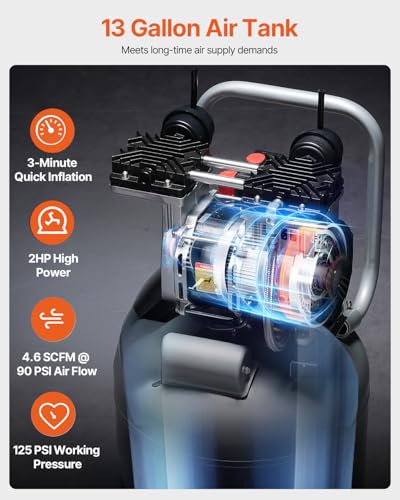
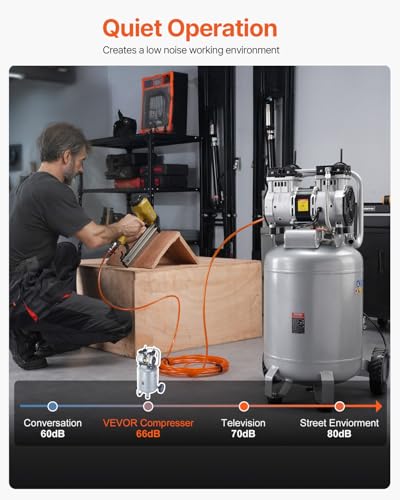
On paper, the VEVOR 13-gallon compressor looks like a solid step up for users needing more runtime and faster recovery than pancake models offer. With a 2HP motor and 4.6 SCFM at 90 PSI, it can keep up with framing nailers and even light spray painting, which puts it in a more prosumer tier. Owners consistently report it handles extended auto repair or woodworking sessions without tripping the breaker, and the 66dB noise rating is believable given the oil-free, low-RPM design, quiet enough for a shared garage or weekend use without bothering the neighbors.
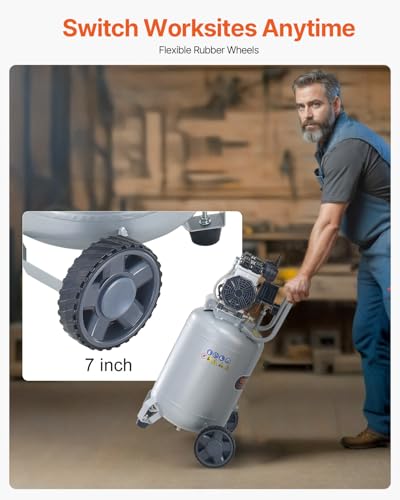
Still, it’s bulkier than pancake or hot dog styles, and while the included accessories are generous, some users note the plastic air filters degrade over time and should be replaced with brass ones for longevity. Compared to the Klutch 20-gallon model, it’s less robust in pump construction, no cast iron here, but for the price bracket, it delivers strong value for heavy-duty weekenders.
Product photos
How We Picked These air compressor for air tools
Rather than a hands-on lab test, my research focused on a detailed comparison of published specifications and features across numerous models. I weighed owner reviews from major retailers against professional assessments found in trade publications and tool-focused websites. This allowed me to build a ranking based on real-world feedback and objective data, applying my experience with pneumatic tool performance to identify key differentiators.
For air compressors, consistent pressure and airflow are paramount, along with portability and noise levels. I prioritized compressors delivering at least 6 CFM at 90 PSI to support a wide range of tools, and also looked closely at tank size – larger tanks mean longer runtimes. Quiet operation is increasingly important for both home and professional use, so decibel ratings were a significant factor. If you need a compressor suited for more demanding applications, exploring compressors for heavy-duty tools is a good place to start.
Specifications reliably indicate tank size, maximum PSI, and advertised CFM output. However, owner feedback proved crucial for gauging real-world performance and durability. I paid close attention to reports of motor longevity, pump consistency, and the accuracy of advertised noise levels. Reputation also played a role; brands with a long history of quality generally scored higher, even when specs were similar. For selecting a compressor to work with impact wrenches, looking at air compressors for impact wrenches is essential.
How To Pick The Right air compressor for air tools
Choosing the right air compressor isn’t just about horsepower or tank size; it’s about matching the tool to the job and understanding what your air tools actually demand.
An effective air compressor delivers consistent pressure (PSI) and airflow (CFM) to power pneumatic tools efficiently. Key considerations include tank size for sustained use, motor power for recovery time, pump type (oil-lubricated vs. oil-free) for maintenance, and portability for jobsite flexibility. Prioritize matching CFM output to tool requirements to avoid performance drops.
Tank Size & Duty Cycle
Tank size is often the first spec people look at, but it’s surprisingly easy to overspend on capacity you don’t truly need. A larger tank certainly means longer run times for tools like impact wrenches or sanders, but consider how you’ll be using the compressor. If you’re doing quick jobs – inflating tires, running a brad nailer for trim – a smaller 6-gallon pancake compressor might be perfectly adequate. If you plan on running framing nailers or spray guns continuously, you’ll want to investigate larger 20-gallon or even 60-gallon options. Think about the duty cycle; how long will you be actively using air tools versus how much time will the compressor need to recover?
Oil-Free vs. Oil-Lubricated Pumps
The debate between oil-free and oil-lubricated pumps comes down to maintenance versus longevity. Oil-free compressors are incredibly convenient. They require virtually no maintenance beyond draining the tank, making them ideal for occasional use or homeowners who don’t want to deal with oil changes. However, they tend to be louder and have shorter lifespans than oil-lubricated models. Oil-lubricated compressors, on the other hand, run quieter and cooler, extending their overall life, but they do require regular oil level checks and changes. For professional use or frequent heavy-duty projects, the improved durability of an oil-lubricated model is often worth the extra effort.
CFM and PSI: Matching to Your Tools
This is where many people stumble. PSI (pounds per square inch) tells you the maximum pressure the compressor can generate, but CFM (cubic feet per minute) determines how much air it can deliver continuously. Your air tools will have CFM requirements listed on them. Don’t just meet the minimum; aim for a compressor that delivers at least 1.5 times the tool’s CFM requirement to avoid a drop in performance, particularly during sustained use. For example, if you’re looking at compressors for nail guns, pay close attention to CFM at 90 PSI – that’s the pressure most nailers operate at.
- A small trim nailer might need just 0.3 CFM.
- An impact wrench could require 4-7 CFM, depending on size.
- A spray gun can easily consume 8-15 CFM, so a larger compressor is essential, and you’ll want to examine PSI-optimized air compressors closely.
A good rule of thumb: always overestimate your CFM needs. It’s far better to have a compressor that can deliver more air than you need than one that struggles to keep up.
Looking at portable air compressor models can also help you narrow down your search if you need something easy to move around the jobsite.
Air Compressor for Air Tools Compared
Here’s a comparison of key specifications for various air compressors designed for use with air tools.
| Product Title | Tank Size (Gallons) | Max PSI | CFM @ 90 PSI | Noise Level (dBA) | Motor HP | Oil Type |
|---|---|---|---|---|---|---|
| Klutch 20-Gallon | 20 | N/A | N/A | N/A | 2.0 | Oil |
| California Air Tools 8-Gallon | 8 | 120 | 2.20 | 60 | 1.0 | Oil-Free |
| Metabo HPT 6-Gallon | 6 | 200 | 4.0 | N/A | N/A | Oil-Free |
| DEWALT 6-Gallon | 6 | 165 | 2.6 | 78.5 | N/A | Oil-Free |
| Bostitch 6-Gallon | 6 | 150 | 2.6 | N/A | N/A | Oil-Free |
| ECOMAX 6-Gallon | 6 | 150 | 3.0 | N/A | 1.5 | Oil-Free |
| Quiet 5-Gallon | 5 | N/A | 2.8 | 68 | 1.2 | Oil-Free |
| VEVOR 13-Gallon | 13 | N/A | N/A | 66 | 2.0 | Oil-Free |
Frequently Asked Questions
What size air compressor do I really need for most air tools?
A compressor delivering at least 6 CFM at 90 PSI is a good starting point for running a variety of tools. However, carefully check the CFM requirements of your most demanding tool to avoid performance issues.
How much louder are oil-free compressors compared to oil-lubricated ones?
Oil-free compressors typically operate around 10-15 decibels louder than their oil-lubricated counterparts. If noise is a concern, especially for indoor use, consider an oil-lubricated model or one specifically marketed as “quiet.”
Can I use an air compressor designed for a nail gun to power an impact wrench?
While possible, it’s generally not recommended. Impact wrenches demand significantly higher CFM than nail guns. Using an undersized compressor will result in reduced power and potentially damage the tool.
What’s the best way to extend the life of an oil-free air compressor?
Regularly drain the tank after each use to prevent corrosion and buildup of moisture. This simple step significantly reduces wear and tear on the pump and internal components.
Where can I find air compressors well-suited for a home workshop?
For a well-equipped home workshop, consider investing in garage-duty air compressors that offer a balance of power, portability, and durability for a wide range of projects.
The Bottom Line
Choosing an air compressor ultimately comes down to balancing your budget with your needs. While a higher price tag often buys you durability and consistent performance, the Klutch 20-Gallon strikes a solid balance for most users, offering a good tank size and power without breaking the bank. It’s a versatile option that can handle a wide range of air tools and projects.
For those prioritizing portability or working with lighter-duty tools, the California Air Tools 8-Gallon is an excellent choice. And if you’re looking for a quiet compressor for indoor tasks, the Quiet 5-Gallon is a strong contender. We also found the Metabo HPT 6-Gallon to be one of the recommended portable compressors for those who need something easy to move around the jobsite.
Ultimately, remember that specs aren’t everything. Prioritize matching the compressor’s CFM output to your most demanding air tools, and don’t skimp on a quality regulator and air hose. A well-chosen setup, even a modestly priced one, will deliver far more satisfaction than the most powerful compressor paired with inadequate accessories.
