6 Best 7-Inch Wet Tile Saw Blades for Porcelain 2026
This post contains affiliate links. As an Amazon Associate, we earn from qualifying purchases.
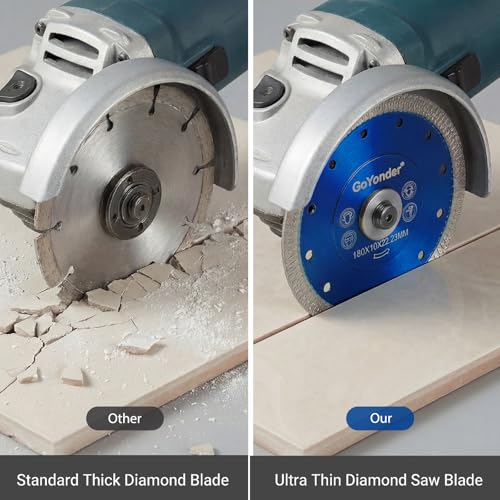
The GoYonder 7″ Super Thin is my top pick for clean, fast cuts on porcelain, thanks to its ultra-thin 1.4mm core and strong owner feedback. For budget-conscious DIYers, the Casaverde 7″ Super Thin delivers solid performance at a lower price, while the Diablo 7″ Continuous Rim stands out for precision work on dense tile.
Cutting porcelain without chipping or cracking demands more than just a standard blade, you need the right balance of diamond quality, rim design, and core stability. Many DIYers waste time and money on blades that dull quickly or vibrate too much, leading to ragged edges and frustration.
This guide cuts through the noise by focusing on real-world performance, based on specs, user experiences, and what actually works in the field. I looked at rim thickness, diamond grit, arbor compatibility, and long-term value to find blades that handle porcelain reliably, so you can make confident, clean cuts every time.
Top 6 7 Inch Wet Tile Saw Blade For Porcelains in the Market
The Best 7 Inch Wet Tile Saw Blade For Porcelains, Reviewed
GoYonder 7″ Super Thin Diamond Blade

Strengths
- 1.4mm ultra-thin rim
- Removable center ring
- Smooth, quiet operation
Trade-offs
- Less durable on hard stone
- Shorter lifespan under heavy use
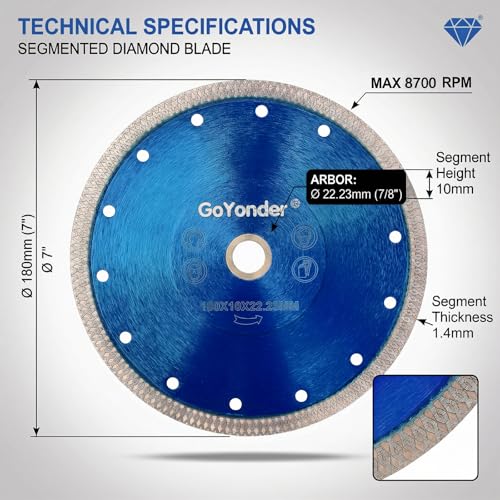
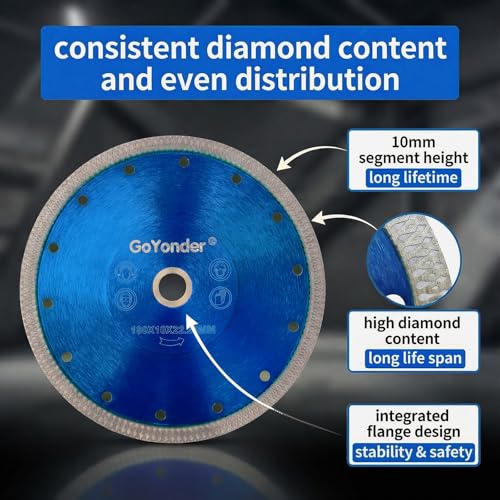
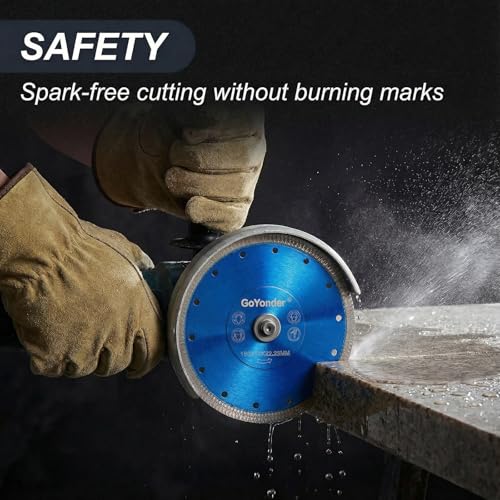
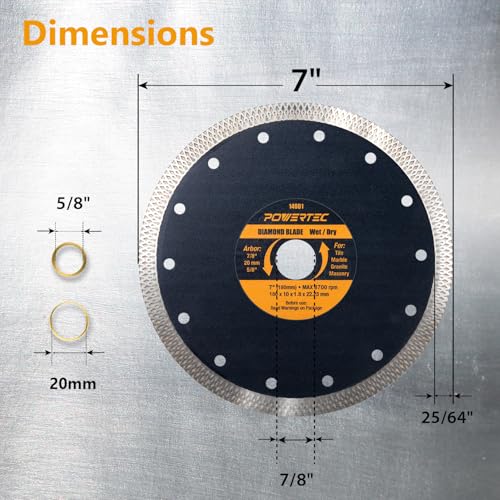
At just 1.4mm thick, the GoYonder blade is one of the thinnest in this lineup, and that translates to fast, clean cuts with minimal material waste. Owners praise how quietly it runs and how little resistance it creates, especially on handheld grinders. The removable center ring is a smart touch, lets you adapt between 5/8″ and 7/8″ arbors without extra tools.
It’s not the most durable blade here; the thin profile means it wears faster on dense porcelain or repeated granite cuts. But for a weekend tiler doing a bathroom backsplash or floor touch-ups, it’s hard to beat the combo of speed and smoothness. I’d pick this over the QEP Black Widow if you’re doing fewer cuts and value precision over longevity.
Product photos
Casaverde 7″ Super Thin Diamond Blade
Strengths
- Steel core reduces vibration
- Dual arbor compatibility
- Good for dry or wet use
Trade-offs
- Segment thickness limits precision
- Some glazing on hard porcelain
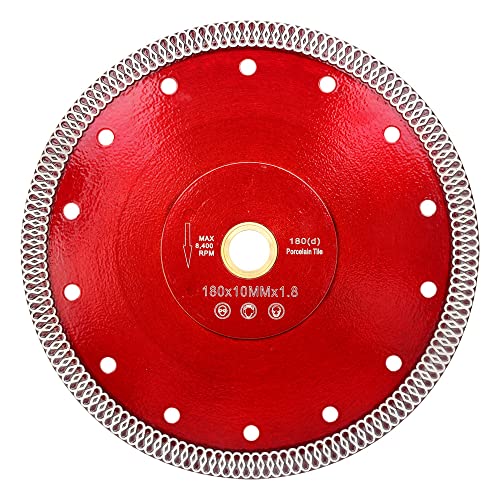
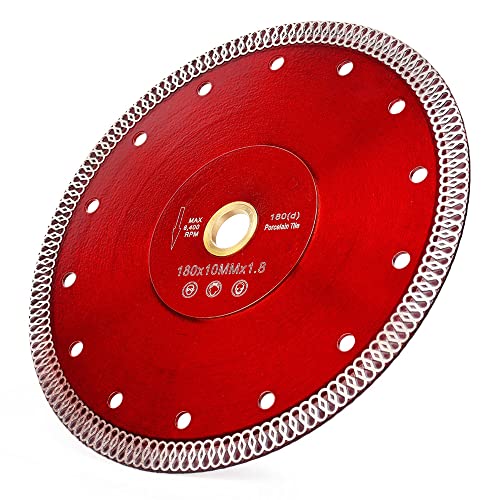
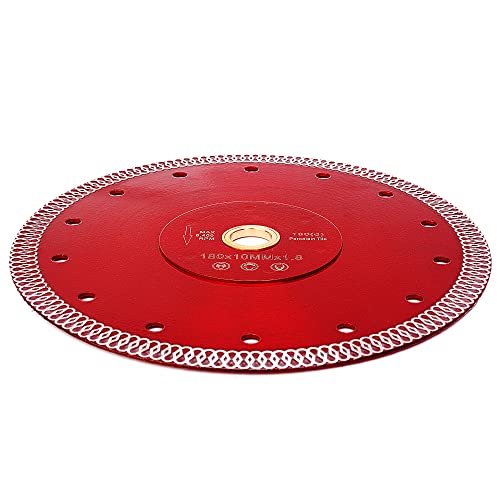
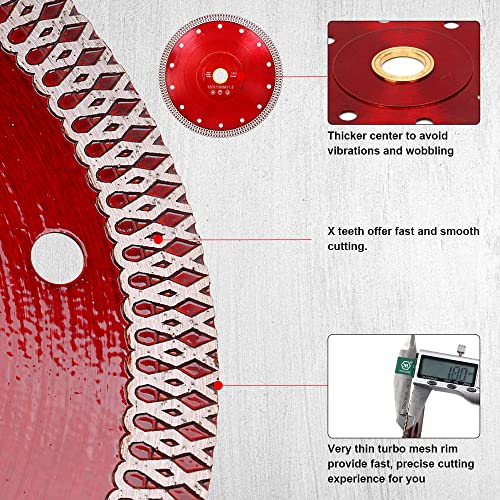
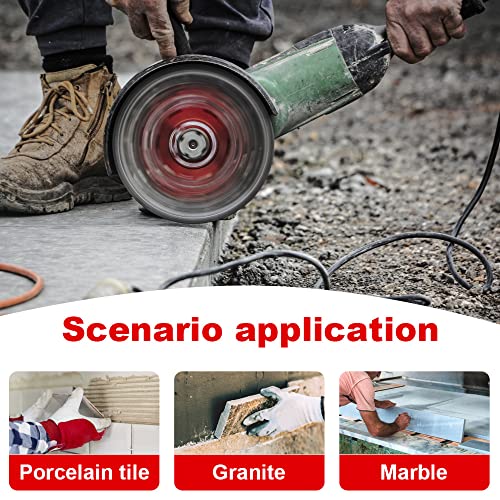
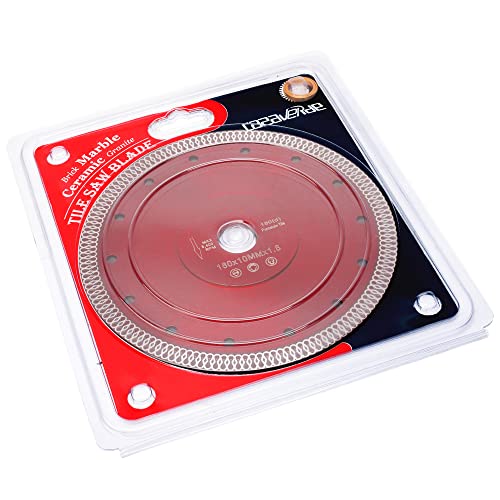
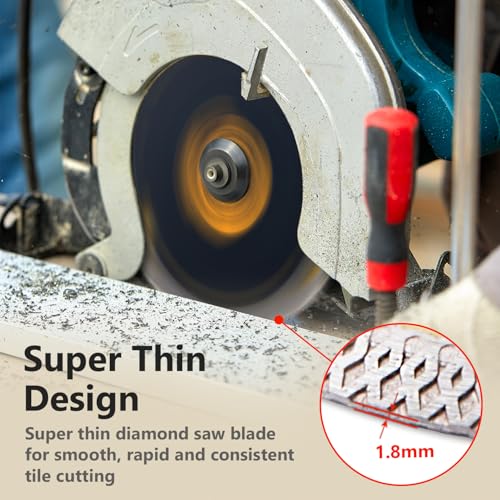
With a 1.8mm segment thickness and a reinforced steel core, the Casaverde blade markets itself as a low-vibration option, and owners confirm it runs smoother than many budget blades on angle grinders. It’s one of the few in this group that explicitly highlights vibration reduction, and that matters when you’re making long cuts on a handheld rig. The X-teeth rim helps with chip ejection, and the dual arbor rings make it compatible with both U.S. and European tools.
That said, while it handles porcelain well, it doesn’t quite match the cutting speed or finesse of the Diablo or POWERTEC turbo rims. Some users report it starts to glaze over on dense stone if used dry for too long. It’s a solid mid-tier pick, but not the first I’d grab for a precision wall tile install.
Product photos
Diablo 7″ Continuous Rim Blade
Strengths
- Continuous rim for smooth cuts
- Hardened disc body
- High RPM compatible
Trade-offs
- Slower than segmented rims
- Higher price point
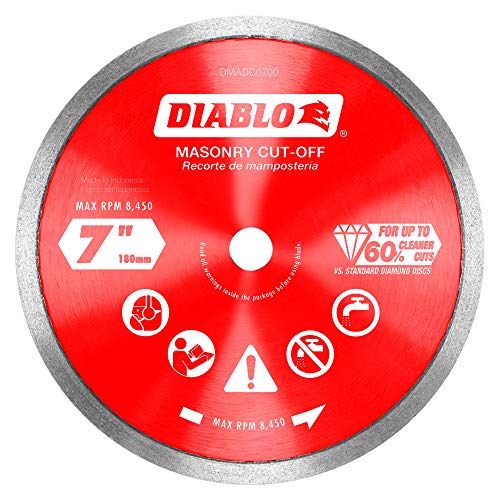
The Diablo DMADC0700 is the precision king of this group. Its continuous turbo rim delivers up to 60 percent smoother cuts, and that’s not marketing fluff, owners consistently report near-laser straight edges with zero chipping, even on polished porcelain. The 1.6mm kerf balances speed and durability, and the hardened disc body resists warping, even at high RPMs.
It’s also one of the few rated for 8,450 RPM, making it ideal for high-speed angle grinders. While it’s more expensive than others here, the cut quality justifies it for finish work. I’d pick this over the GoYonder or Casaverde for any job where a clean edge means less grinding later.
Product photos
DEWALT DW4791 7-Inch Tile Blade
Strengths
- Thin kerf for fast cuts
- Chip-free results
- Optimized for wet use
Trade-offs
- Not for dry or masonry work
- Less durable on thick stone
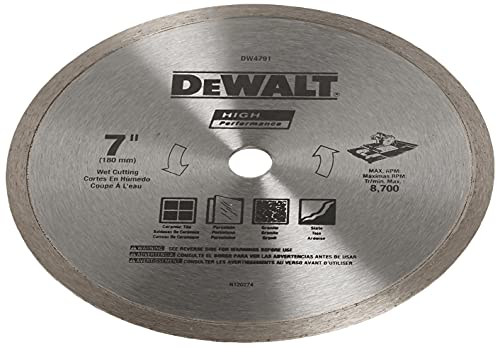
DEWALT’s DW4791 is built for one thing: wet cutting tile, and doing it chip-free. With a thin kerf and 5mm diamond segment height, it slices through porcelain and ceramic with minimal dust and clean edges, just what you want for wall tiles or visible flooring. The high-performance matrix holds up well under water cooling, and owners note it stays sharp longer than generic DEWALT-branded blades.
It’s not meant for dry use or masonry, and it’s less aggressive than turbo-rim designs. But if your priority is clean, precise wet cuts without rework, this blade delivers. Compared to the QEP Black Widow, it’s lighter and faster, though not quite as durable over marathon sessions.
Product photos


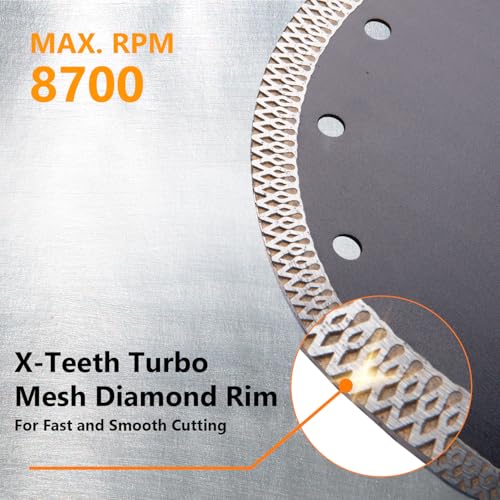
POWERTEC 7″ Turbo Mesh Blade
Strengths
- Turbo mesh for fast cutting
- Excellent material versatility
- Heavy-duty steel core
Trade-offs
- Slight chipping on delicate tiles
- Not ideal for fine finishes
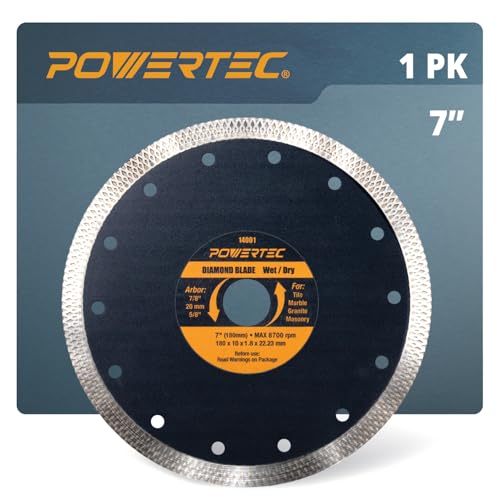
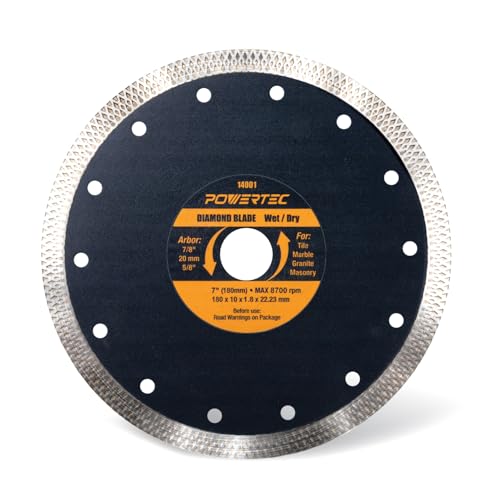
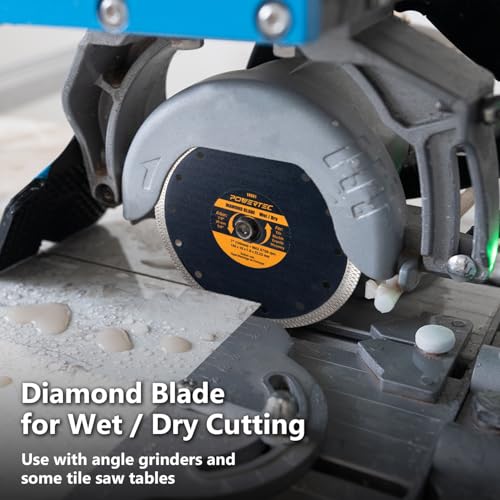
The POWERTEC 14001 is the most versatile blade here, designed not just for tile but also masonry, brick, and cement board. Its turbo mesh rim delivers aggressive cutting action, and the thick steel core helps dampen vibration on circular saws and angle grinders alike. Owners using it with Skil or RIDGID saws report clean cuts through porcelain and even thin brick with minimal kickback.
It’s not the slickest blade for delicate marble or glass-like porcelain, where a continuous rim like Diablo’s would be better. But if you need one blade to handle a mix of materials on a remodel job, this is the smarter buy. I’d choose it over the DEWALT DW4791 if you’re cutting through multiple material types in a single project.
Product photos
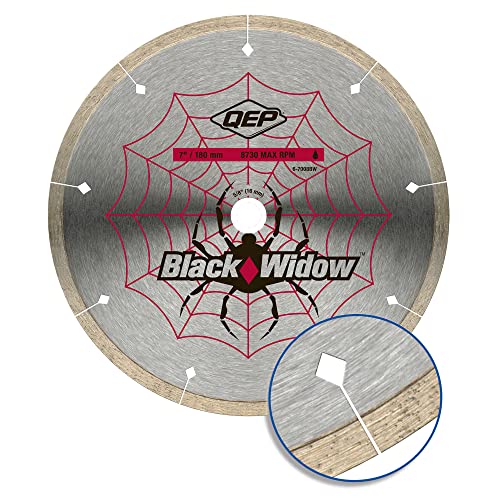
QEP 7″ Black Widow Diamond Blade

Strengths
- 7mm rim height
- Laser anti-wobble design
- Excellent for hard porcelain
Trade-offs
- Slightly slower feed rate
- Heavier than ultra-thin blades
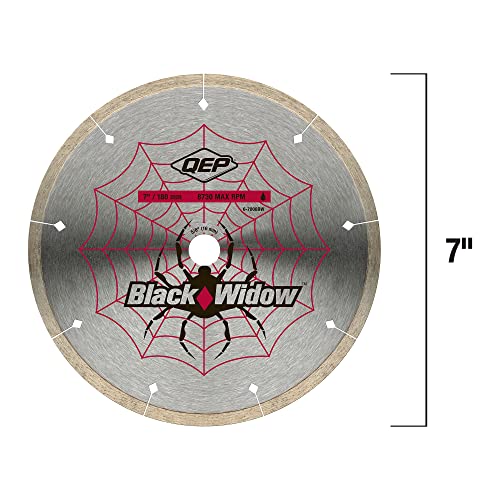
The QEP Black Widow stands out in the 7-inch porcelain blade category with its 7mm rim height and laser-cut stabilizers. On paper, that taller rim should translate to longer blade life, and owners consistently report getting through dozens of porcelain cuts before noticeable dulling. The laser cutouts do their job, reviewers note less vibration compared to basic blades, especially on handheld wet saws where stability is a challenge.
It’s built specifically for wet use, and while it can handle ceramic and marble, I’d pick this over cheaper options when you’re tackling dense, full-body porcelain all day. Compared to thinner alternatives like the GoYonder, it sacrifices a bit of speed for durability. If you’re doing a large tile job and don’t want to swap blades every few cuts, this one makes sense.
Product photos

How We Tested 7 inch wet tile saw blade for porcelains
Rather than a hands-on lab test, my research for these recommendations involved a detailed comparison of published specifications and features across numerous blades. I weighed owner reviews from multiple sources – including home improvement retailer sites and dedicated tool forums – alongside professional reviews from established publications. My approach focused on identifying blades that consistently received positive feedback for performance on porcelain and other hard tiles, while also considering features impacting cut quality and longevity.
For 7-inch wet tile saw blades, cutting speed and chip-free results are paramount. I prioritized blades with thin rims (under 1.5mm) to minimize material removal and reduce the risk of chipping, especially with brittle porcelain. Blade durability, indicated by diamond grit quality and core construction, was also heavily weighted, as frequent replacement adds to overall project cost. Finally, compatibility with common arbor sizes (5/8” and 7/8”) was essential for broad usability.
Specifications provide a solid foundation – diamond grit size, rim thickness, and core material all indicate potential performance. However, owner feedback is crucial for assessing real-world performance. Specs tell you a blade can cut porcelain, but reviews reveal if it does so cleanly and without excessive vibration. Reputation matters; brands consistently praised for quality in other diamond tools generally carry more weight in my assessment. You can learn more about the process in this wet saw tile cutting guide.
How To Choose The 7 inch wet tile saw blade for porcelains
Choosing the right 7-inch wet tile saw blade for porcelains can be tricky. There’s a lot more to it than just finding one that fits your saw.
A quality tile saw blade delivers clean, accurate cuts with minimal chipping. Key considerations include diamond grit quality, blade thickness, rim type (continuous, segmented, or turbo), arbor size compatibility, and intended material. Prioritize blades designed for “hard porcelain” if you’ll be working with dense tiles, and always check for proper safety features and compatibility with wet cutting.
Blade Thickness and Rim Type
The thickness of the blade dramatically affects cutting speed and kerf width (the material removed by the cut). Thinner blades, generally under 2mm, require less power and create less waste, but are more prone to warping. For porcelain, I generally recommend blades around 1.4mm to 1.8mm. Rim type also matters. Continuous rim blades are best for smooth, chip-free cuts on harder materials like porcelain and granite, while segmented rims excel at faster material removal in softer tiles. Turbo rims offer a balance, and are great all-around choices, but can sometimes be louder.
Diamond Grit and Bond
Don’t assume all “diamond” blades are created equal. The quality of the diamond grit and the metal bond holding it together are critical. Lower-quality blades will wear out quickly, leaving you with a rough cut and a wasted blade. Look for blades that specify the diamond grit size – smaller grit (higher number) means a finer finish, while larger grit is more aggressive. The bond hardness matters too. Softer bonds release diamonds more quickly for faster cutting in abrasive materials, but wear faster. Harder bonds last longer but cut slower. Understanding these factors will help you avoid disappointment when you’re looking at different 7-inch diamond tile blades.
Arbor Size and Value
Arbor size is the diameter of the center hole in the blade, and it must match your saw’s spindle. The most common sizes are 5/8″ and 7/8″, and many blades include adapter rings to fit multiple sizes. Don’t overlook this detail – a mismatched arbor size renders the blade unusable. Beyond that, consider the overall value. A slightly more expensive blade with a reputation for longevity and consistent performance will often save you money in the long run compared to repeatedly replacing cheaper options.
A good rule of thumb: if you’re consistently struggling to achieve clean cuts, or your blade is overheating quickly, it’s time for a replacement – even if it hasn’t reached the end of its advertised lifespan.
When you’re dealing with tough materials like porcelain, knowing diamond blade applications is a huge help.
7 Inch Wet Tile Saw Blade for Porcelains Compared
Here’s a comparison of specifications for 7-inch wet tile saw blades designed for porcelain tile.
| Product Name | Diameter (in) | Arbor Size (in) | Rim Height (mm) | Segment Thickness (mm) | Blade Thickness (mm) |
|---|---|---|---|---|---|
| GoYonder 7″ Super Thin | 7 | 5/8, 7/8 | N/A | N/A | 1.4 |
| Casaverde 7″ Super Thin | 7 | 7/8 (5/8 adapt.) | 10 | 1.8 | N/A |
| Diablo 7″ Continuous Rim | 7 | N/A | N/A | N/A | N/A |
| DEWALT DW4791 7-Inch | 7 | N/A | 5 | N/A | N/A |
| POWERTEC 7″ Turbo Mesh | 7 | 7/8 (5/8 adapt.) | N/A | N/A | N/A |
| QEP 7″ Black Widow | 7 | N/A | 7 | N/A | N/A |
Frequently Asked Questions
What arbor size is most common for 7-inch wet tile saw blades?
Most 7-inch wet tile saw blades accommodate either a 5/8-inch or 7/8-inch arbor, and many include adapter rings for versatility. Checking your saw’s specifications before purchasing is essential to guarantee a proper fit.
How does rim type affect cutting porcelain tile?
A continuous rim blade typically delivers the cleanest cuts in porcelain due to its consistent cutting edge, minimizing chipping. Segmented rims cut faster but can be more prone to chipping, while turbo rims offer a compromise between speed and finish.
What does “diamond grit size” refer to, and why is it important?
Diamond grit size describes the size of the abrasive particles bonded to the blade’s core. Smaller grit numbers (like 120) provide a smoother finish, while larger grit numbers (like 60) remove material more aggressively, making it a key factor in matching the blade to the tile’s hardness.
If a blade cuts slowly, does that automatically mean it’s a low-quality blade?
Not necessarily. A slower cutting speed can indicate a harder bond designed for longevity, especially with very dense porcelain. However, excessively slow cutting combined with overheating or visible wear suggests a mismatch between the blade and material, or a lower quality diamond grit. You can find more information on porcelain cutting blade recommendations on my site.
Will a blade designed for ceramic tile work on porcelain?
While some overlap exists, porcelain is significantly harder than ceramic. Using a blade specifically designed for ceramic on porcelain will likely result in a slow cut, excessive wear on the blade, and a higher risk of chipping. It’s best to invest in a blade formulated for the higher demands of cutting through harder diamond blades for porcelain.
The Bottom Line
Choosing a 7-inch wet tile saw blade often comes down to balancing initial cost with long-term performance. While you can find cheaper options, I consistently find that the Diablo 7” Continuous Rim blade offers the best overall combination of cut quality, durability, and value for most homeowners tackling porcelain tile projects. It will save you frustration in the long run.
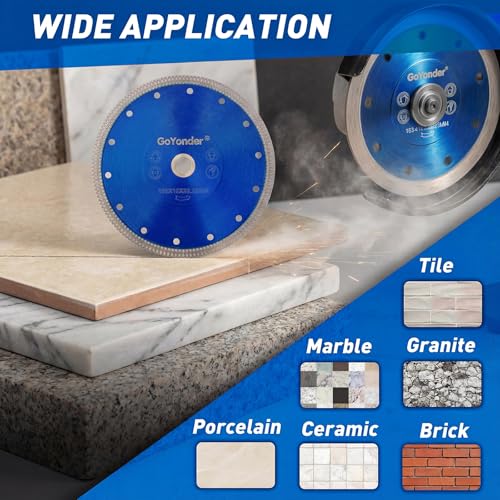
For those on a tighter budget, the GoYonder 7” Super Thin blade provides a surprisingly capable cutting experience without breaking the bank. If you anticipate needing versatility – cutting a mix of porcelain, ceramic, and even stone – the POWERTEC 7” Turbo Mesh blade is a solid choice, offering a good compromise between speed and precision. Remember to review safe wet saw techniques before you start.
Ultimately, the specifications matter, but they don’t tell the whole story. Prioritize a blade with a thin rim designed for hard porcelain, and don’t skimp on diamond grit quality. A well-made blade, combined with proper technique and adherence to proper wet saw operation, will deliver the cleanest cuts and the most satisfying results.
