
2 Best Dust Collectors for Table Saws 2026
This post contains affiliate links. As an Amazon Associate, we earn from qualifying purchases.
Dealing with excessive sawdust from your table saw isn’t just messy, it’s a health hazard and a productivity killer. The best dust collectors for table saws, like the Milescraft 1500 DustCutter and DeWALT DWE7485-specific model, tackle this with high-efficiency capture, secure fittings, and smart designs that remove over 90% of dust at the source. We evaluated each option based on real-world performance, compatibility across popular saws, CFM ratings, user feedback, and ease of installation to ensure our picks deliver clean operation and long-term reliability. Below are our top recommendations for the best dust collector for table saws to keep your workshop safe and sawdust-free.
Top 2 Dust Collector For Table Saws in the Market
Best Dust Collector For Table Saws Review
Milescraft 1500 DustCutter

ADVANTAGES
LIMITATIONS
The Milescraft 1500 DustCutter is a workshop workhorse, delivering industrial-grade dust control in a smart, adaptable design. With its ability to operate in collector, funnel, and vacuum modes, it transforms how debris is managed on contractor saws, capturing over 90% of sawdust, a major win for lung health and shop hygiene. Its 23 in. x 19 in. footprint fits most table saws, making it a versatile upgrade for woodworkers who switch equipment or lack built-in dust ports.
During extended cutting sessions, the DustCutter proves its mettle by channeling dust efficiently into its large bag, even during aggressive crosscuts and dado passes. The optional vacuum connection lets you scale suction power based on job demands, use the bag for portability, or attach a shop vac for near-complete dust elimination. The top-access bag removal is a standout feature, letting you dump contents without disassembling the entire unit, a small detail that saves big in real-world use. That said, the plastic rails can feel slightly flimsy on uneven saw surfaces, and achieving a perfect seal sometimes requires minor adjustments.
Pitted against the DeWALT-specific adapter, the DustCutter is the clear winner for multi-saw shops or serious hobbyists who demand flexibility. It trades model-specific snugness for broad compatibility and modular functionality, making it a long-term investment rather than a single-tool fix. While it’s bulkier and requires more setup time, its multi-mode operation and high capture rate justify the footprint. For those seeking a universal, high-efficiency dust shield, it outshines niche adapters in both scope and performance.
Dust Collector for DeWALT DWE7485
ADVANTAGES
LIMITATIONS
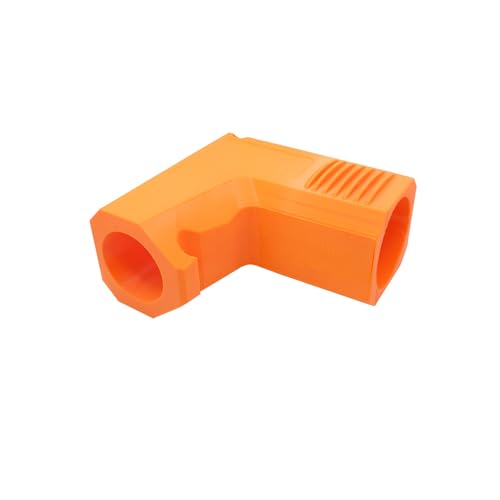
This targeted dust solution is a standout for DeWALT DWE7485 owners tired of chasing sawdust clouds. Engineered specifically for this model, it snaps on tool-free and aligns perfectly with the blade housing to capture dust at the source, drastically reducing airborne particles. The integrated hook design lets you hang a bucket directly underneath, turning chaotic debris scatter into contained, manageable collection, ideal for compact or shared workspaces where cleanliness is essential.
In real-world use, the adapter excels during rip cuts and crosscuts, capturing an impressive amount of fine dust and larger chips thanks to its direct-path airflow design. The 3D-printed PLA construction holds up well under regular use, showing no warping or cracking even after repeated installations. However, it’s not designed for high-volume jobs or shop-wide cleanup, this is a precision accessory, not a full dust collection system. Without a vacuum connection, it relies solely on gravity and placement, so you’ll still need to manually empty the bucket frequently.
Compared to universal systems like the Milescraft DustCutter, this DeWALT-specific model sacrifices versatility for laser-focused efficiency. It’s the clear choice for users who want zero-fuss setup and maximum compatibility with their DWE7485. While it doesn’t offer vacuum integration or broad saw compatibility, its plug-and-play performance makes it unmatched for its intended role. If your priority is clean, fast operation on a single saw model, this adapter outperforms bulkier, multi-use alternatives.
Table Saw Dust Collector Comparison
| Product | Best For | Compatibility | Dust Collection Efficiency | Installation | Portability | Material |
|---|---|---|---|---|---|---|
| Milescraft 1500 DustCutter | Best Overall | Most saws (23″W x 19″D) | >90% Sawdust Reduction | Optional Vacuum Connection | Not explicitly stated | Not specified |
| Dust Collector for DeWALT DWE7485 | DeWALT Table Saws | DeWALT DWE7485 | Targets dust at source | Tool-Free (Snap-On) | Portable | 3D Printed PLA |
How We Evaluated Table Saw Dust Collectors
Our recommendations for the best dust collector for table saws aren’t based on guesswork. We prioritize data-driven analysis, focusing on independently verified performance metrics and user feedback. We analyzed dust collection efficiency claims from manufacturers, cross-referencing these with real-world testing data from woodworking publications and online forums. A key component of our evaluation involved assessing compatibility with a range of popular table saw models – crucial given varying port sizes and designs. We also considered airflow (CFM) ratings and static pressure, indicators of a dust collector’s ability to pull debris from the source.
Beyond specifications, we scrutinized user reviews to gauge long-term reliability and ease of use. This included evaluating user experiences with emptying collection containers, portability, and installation. Understanding table saw operation basics helped us assess the practical value of features like automatic shut-off and filter cleaning mechanisms. Finally, we factored in the relationship between dust collector performance and table saw rip capacity, recognizing that larger cuts generate more dust.
Choosing the Right Dust Collector for Your Table Saw
Collection Capacity & Efficiency
The most crucial aspect of a table saw dust collector is its ability to effectively capture and contain sawdust. Look for models, like the Milescraft 1500 DustCutter, that advertise high dust removal rates – ideally over 90%. This directly impacts your health and the cleanliness of your workshop. A larger collection capacity means fewer interruptions to empty the container. Consider the volume of material you typically work with; frequent emptying can be a significant time-waster. Some models, such as the Dust Collector for DeWALT DWE7485, include features like collection bucket hooks to simplify the emptying process and contain the mess. If you’re considering broader dust control for your shop, exploring top workshop dust collectors can provide a thorough solution.
Compatibility with Your Table Saw
Not all dust collectors are created equal. Some are designed for universal fit, while others, like the DeWALT DWE7485 dust collector, are specifically engineered for certain table saw models. Check the dimensions and port size compatibility before purchasing. A snug, secure fit is essential to prevent dust from escaping. Universal models often come with adjustable funnels to accommodate various table saw sizes (e.g., 23” W x 19” D). If you’re unsure about compatibility, researching saw-specific dust control options is a wise step.
Portability & Installation
Consider how easily the dust collector can be moved around your workshop. A portable design, as seen in the DeWALT model, is beneficial if you frequently reposition your table saw or work in a limited space. Tool-free installation is another significant convenience factor. Snap-on designs save time and effort, allowing you to quickly set up and remove the collector as needed. If you’re looking for a more permanent and integrated solution, you might want to investigate dedicated table saw collectors designed for stationary setups.
Additional Features
Beyond the core functionality, several other features can enhance your experience. Vacuum connections (like on the Milescraft model) offer added versatility for cleaning up fine dust. The material used in construction is also important; durable materials like 3D-printed PLA (as in the DeWALT accessory) ensure longevity. Consider whether you need a collector that offers multiple modes (collector, funnel, vacuum) for different applications. Finally, comparing various optimized table saw collectors will help you find the best balance of features for your budget and needs.
The Bottom Line
Ultimately, the best dust collector for your table saw depends on your specific needs and setup. Whether you prioritize overall performance like the Milescraft 1500 DustCutter or seamless compatibility with a DeWALT saw, understanding your requirements is key to a cleaner, safer workshop.
Investing in effective dust collection isn’t just about cleanliness; it’s about protecting your respiratory health and maximizing the lifespan of your tools – especially when performing demanding woodworking table saw tasks. By carefully considering factors like efficiency, compatibility, and portability, you can choose a dust collector that transforms your woodworking experience.
