
5 Best Work Boots for Welders 2026
This post contains affiliate links. As an Amazon Associate, we earn from qualifying purchases.
The HISEA NINGO Steel Toe Western Boots stand out as the best overall choice for welders, combining rugged full-grain leather with reliable steel toe protection. For those on a budget, the SAFETOE Fire Resistant Welding Boots deliver solid heat and spark resistance at a lower price, while the SAFETOE model with metatarsal protection adds extra coverage for high-risk environments.
Welders face a constant threat from sparks, molten metal, and high heat, regular work boots won’t cut it when your feet are on the line. Poorly designed footwear can fail under heat exposure, lack proper insulation, or wear out too quickly in harsh conditions.
This guide cuts through the noise by focusing on real-world performance, safety certifications, and construction quality. I compared specs and owner feedback to find boots that actually protect, last, and keep you comfortable through long shifts.
Top 5 Work Boots For Welders in the Market
The Best Work Boots For Welders, Reviewed
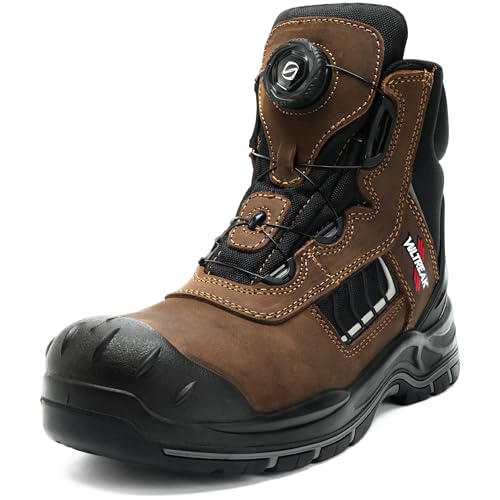
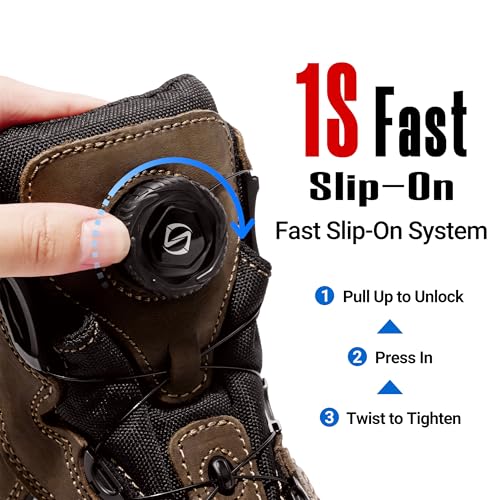
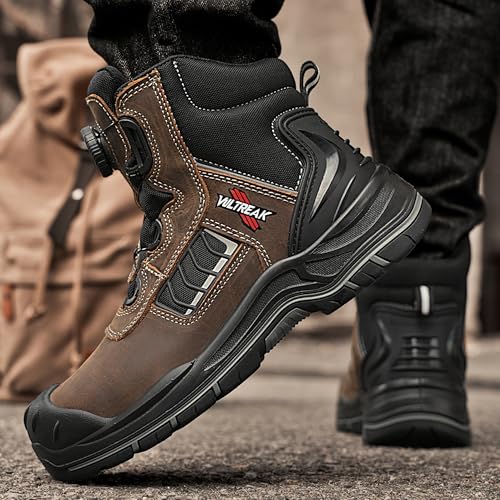
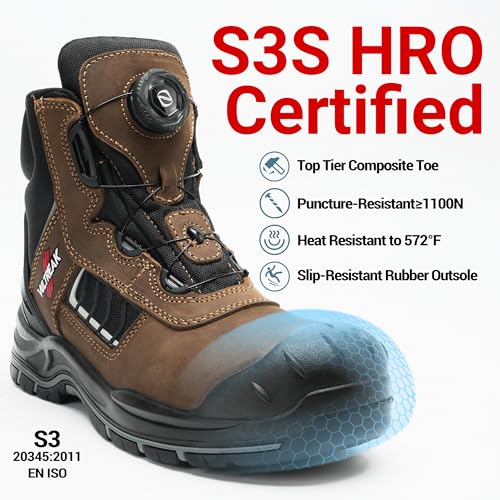
VULTREAK Composite Toe Work Boots
Strengths
- HRO and S3 certified
- Quick Fit dial closure
- Kevlar puncture resistant
- Lightweight composite toe
- Excellent heat resistance
Trade-offs
- Premium price
- Dial mechanism may wear
- Limited color options
The VULTREAK S3 HRO-certified boots are, in my view, the most complete package for welders who want no-compromise protection and modern convenience. The Quick Fit dial system replaces laces entirely, a small detail that pays off when you’re suiting up multiple times a day. More importantly, the S3 and HRO certifications mean this boot is built for wet, hot, and electrically sensitive environments, which covers nearly every welding scenario.
The full-grain waxed leather resists burns and wipes clean, and owners praise its resistance to spatter buildup. The composite toe exceeds steel in weight savings while matching protection levels, and the Kevlar midsole adds puncture resistance. Compared to bulkier met guard boots, this one balances safety and mobility better. If I had to pick one boot for a welder who moves between shop, field, and tight spaces, this would be it.
Product photos
ROCKROOSTER 7 Inch Zipper Work Boots

Strengths
- YKK side zipper
- Static dissipative
- CoolMax breathable lining
- Oiled full grain leather
- Comfortable memory foam
Trade-offs
- No HRO rating
- Average heat resistance
- Zipper may wear over time
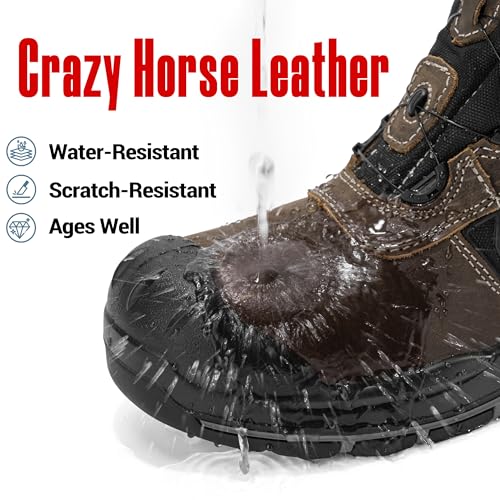
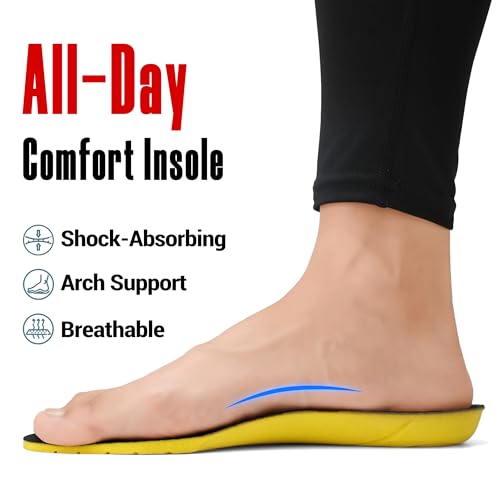
The ROCKROOSTER AK245Z stands out for one standout feature: the YKK side zipper. For welders who value speed and convenience, especially those climbing scaffolds or switching gear frequently, this design is a real win. The zipper runs the full 7 inches and pairs with a lace-up system, so you get secure fit without the hassle. The oiled full-grain leather develops a rugged patina and resists light moisture, and the static-dissipative (SD) outsole is a smart touch for environments with electrical hazards.
However, it lacks HRO-rated heat resistance, which limits its use in direct welding zones. The PORON XRD and CoolMax lining offer solid impact absorption and breathability, but owners note the sole doesn’t hold up as well near open flames. It’s better for mechanical or maintenance roles with occasional welding. Compared to the VULTREAK, it’s less specialized but more versatile for mixed tasks.
Product photos


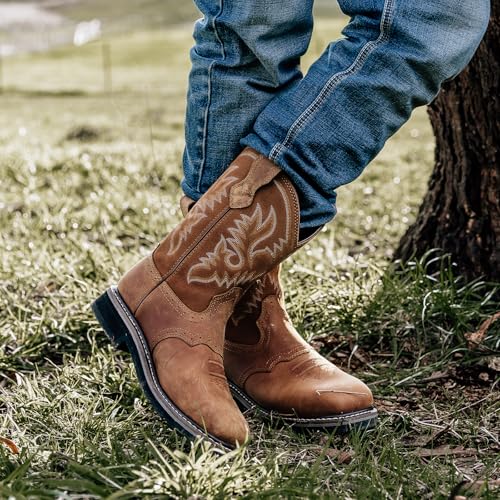
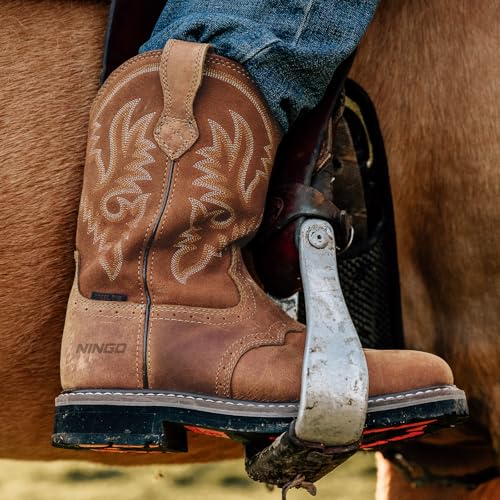
HISEA NINGO Steel Toe Western Boots

Strengths
- Steel toe protection
- Goodyear welt durability
- All-day comfort design
- Full grain leather
- Slip resistant outsole
Trade-offs
- No HRO rating
- Heavy for extended wear
- Not ideal for high-heat welding
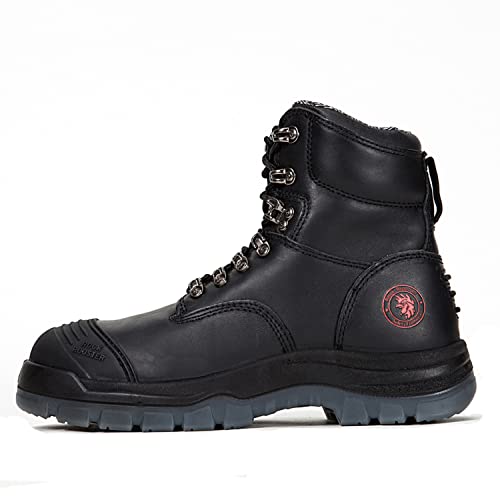
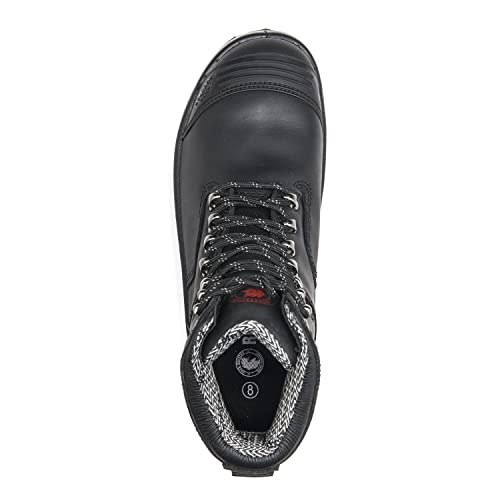
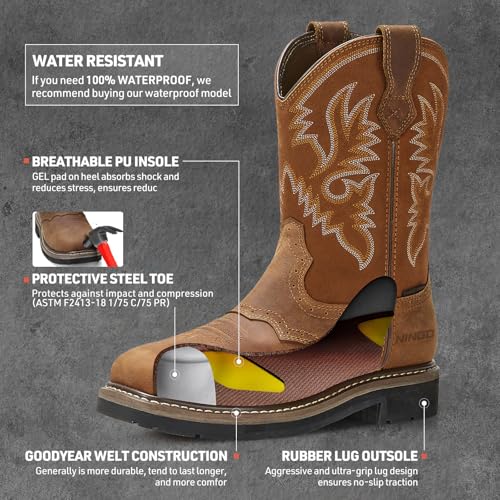
These HISEA NINGO boots stand out in the welder boot category for blending classic Western style with solid protective specs. On paper, they check key boxes, full-grain leather, Goodyear welt construction, and ASTM F2413-18 certification for impact, compression, and electrical hazard protection. The steel toe and steel shank offer reliable underfoot support, and owners consistently report they hold up well on concrete floors and uneven job sites.
Where they shine is comfort during long shifts. The removable GEL heel pad and anti-fatigue design help reduce leg strain, and the wide square toe gives room for natural foot spread. That said, they lack explicit heat-resistant outsole ratings (HRO), which gives me pause for dedicated welding use. They’re better suited for mixed industrial work where sparks are occasional, not constant.
Product photos

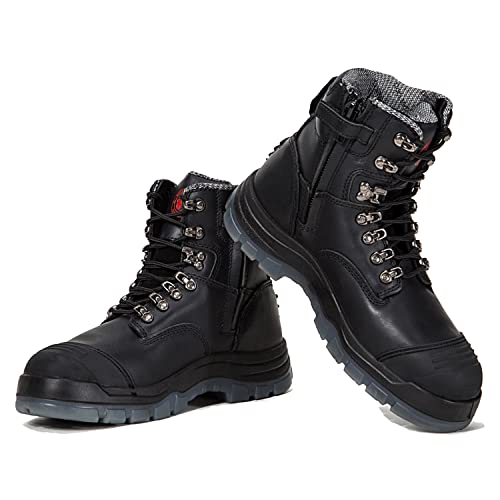
SAFETOE Fire Resistant Welding Boots

Strengths
- 300°C heat resistant sole
- Fire-resistant stitching
- Lightweight composite toe
- Kevlar puncture protection
- HRO and SRC rated
Trade-offs
- Basic cushioning
- Limited ankle support
- Break-in period reported
If you’re looking for a budget-friendly welding boot that doesn’t cut corners on heat protection, this SAFETOE model makes a strong case. The 300°C heat-resistant dual PU/rubber outsole is a standout spec, backed by HRO and SRC ratings, a rare combo at this price tier. The fire-resistant stitching and nubuck leather upper hold up well against sparks, and owners note they feel protected during MIG and stick welding tasks.
The composite toe is lightweight and meets ASTM standards, and the Kevlar midsole adds puncture resistance without adding bulk. Breathable mesh lining helps manage heat, though airflow is limited compared to ventilated designs. It’s not the most refined boot in terms of cushioning, but for the price, it delivers core safety features where it counts.
Product photos
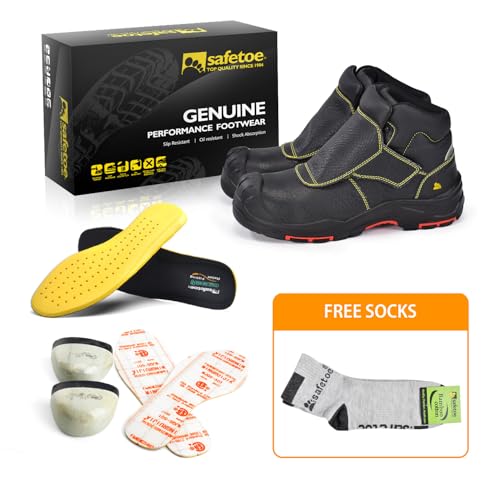
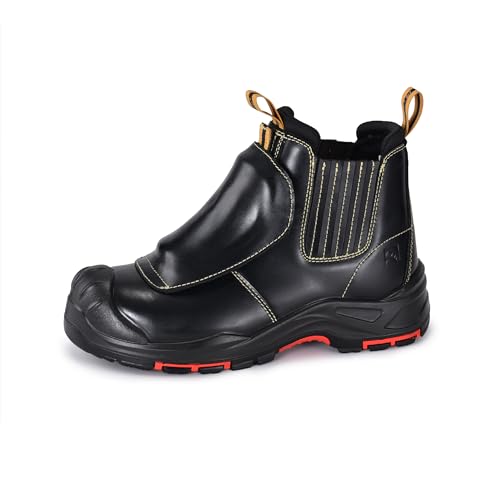
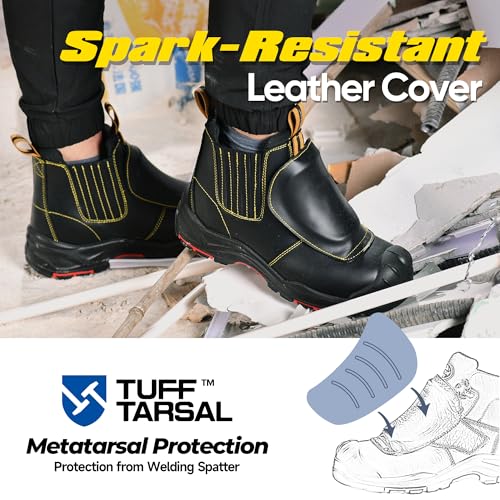
SAFETOE Welding Boots with Metatarsal Protection
Strengths
- Metatarsal protection
- 300°C heat resistant sole
- Fire-resistant thread stitching
- Kevlar midsole
- HRO and SRC rated
Trade-offs
- Heavier than standard boots
- Bulky fit
- Longer break-in time
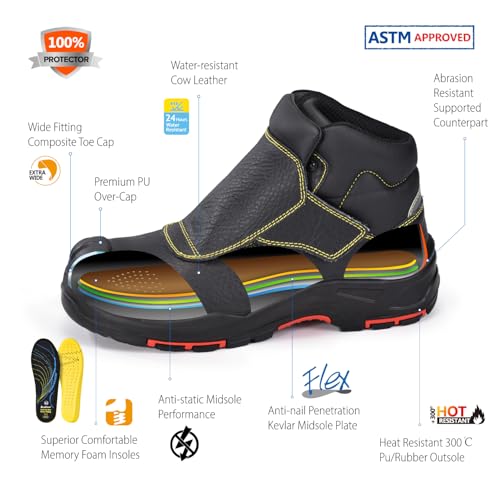
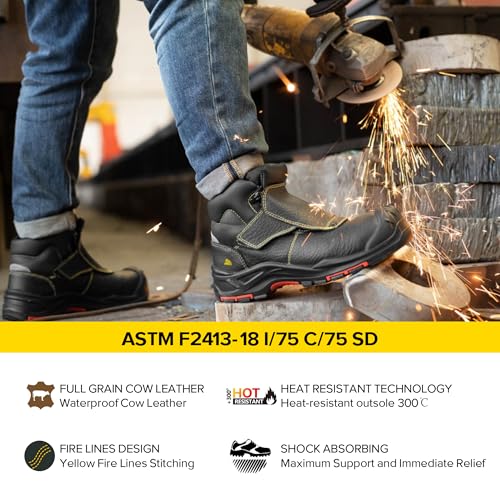
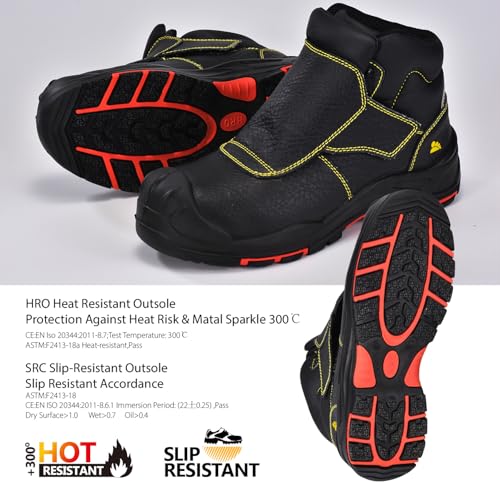
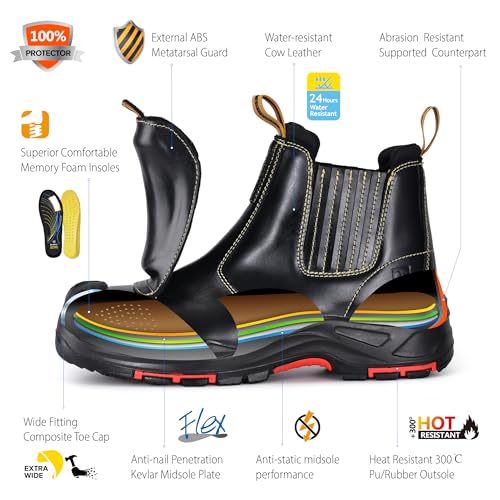
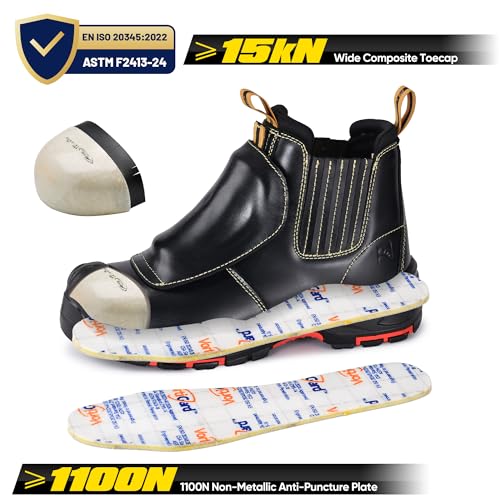
This SAFETOE model takes the previous version and adds metatarsal protection, and that changes the game for serious welders. The met guard is a major upgrade, it shields the top of the foot from falling objects and radiant heat, which is critical in heavy fabrication. Combined with the same 300°C HRO outsole and fire-resistant stitching, this boot delivers protection on multiple fronts.
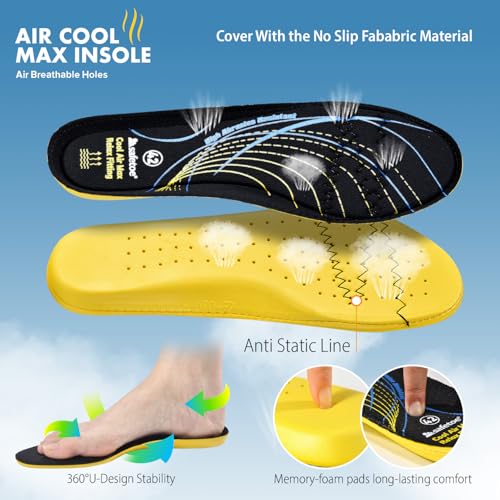
Owners working in shipyards and structural steel report feeling noticeably safer with the added coverage. The composite toe keeps weight down, and the memory foam insole helps offset the stiffer build. It’s not as nimble as lighter models, but that’s the trade-off for thorough protection. Compared to the standard SAFETOE, this one is worth the bump in price if your work involves high-risk environments.
Product photos


How We Picked These work boots for welders
Rather than a hands-on lab test, my research focused on a detailed comparison of published specifications and features across numerous models. I weighed owner reviews from multiple sources – including Amazon, specialist welding forums, and retailer sites – against assessments from reputable boot review websites. My evaluation applied years of experience understanding the demands placed on footwear in workshop and construction settings, and prioritized features crucial for welders.
For work boots intended for welding, impact protection and heat resistance stand out as the most critical factors. A steel or composite toe is essential, but equally important is the boot’s ability to withstand sparks and high temperatures. Durability also plays a significant role; welders need boots that can hold up to abrasive environments and constant use, so construction quality and leather grade were heavily considered. You’ll find more on choosing the right pair in our guide to safety footwear for welders.
Specifications reliably indicate toe impact resistance (ASTM ratings) and heat resistance (outsole temperature limits). However, I placed greater emphasis on owner feedback regarding long-term comfort, fit consistency, and how well the boots held up to real-world welding conditions. Reputation and brand history were also considered, with brands known for quality construction and consistent performance receiving higher marks. Finding truly [durable welding-specific footwear] requires looking beyond the marketing hype.
What To Look For In work boots for welders
Finding the right work boots for welding isn’t just about comfort; it’s about safeguarding your feet from a unique set of hazards.
Welders demand boots built to withstand intense heat, flying sparks, electrical risks, and punishing work conditions. Look for full-grain leather construction, reinforced toe protection meeting ASTM standards, heat and abrasion resistance, and slip-resistant outsoles. Prioritize boots specifically designed for welding, not just general work boots, to ensure adequate protection.
Understanding Heat and Spark Resistance
Welding inherently involves extreme heat and a constant rain of sparks. Don’t assume any leather boot will cut it. Look for boots explicitly stating they’re designed for welding, and pay attention to construction details. Full-grain leather is a good start, but look for boots with reinforced seams stitched with fire-resistant thread – often a yellow or orange color. The outsoles are critical too; a dual-density PU/rubber combination rated for 300°C (or higher) is a good benchmark. Many affordable options, like the SAFETOE Fire Resistant Welding Boots, prioritize these heat-resistant features without breaking the bank.
Prioritizing Safety Certifications
When it comes to welder footwear, safety certifications aren’t suggestions; they’re minimum requirements. ASTM F2413-18 is the key standard to look for. This covers impact and compression resistance in the toe (I/75 and C/75 ratings are common), as well as electrical hazard (EH) protection. Composite toe options are increasingly popular, offering comparable protection to steel toes but without the weight or potential for setting off metal detectors. Beyond ASTM, CE certifications (particularly EN ISO 20344:2011) demonstrate European safety standards, often focusing on areas like puncture resistance. You can find more information about top-rated welding safety boots to help you understand these ratings.
Balancing Comfort and Durability
Welders spend long hours on their feet, often in demanding positions. Comfort isn’t a luxury; it’s essential for productivity and preventing fatigue. Here’s how to approach it:
- Insoles: A removable, cushioned insole is a must.
- Welt Construction: Goodyear welt construction (like on the HISEA NINGO boots) is incredibly durable, allowing for resoling and extending the boot’s lifespan.
- Fit & Support: Don’t compromise on fit. A too-loose boot will cause blisters, while a too-tight boot will restrict circulation. Look for boots with good arch support and ankle stability to reduce strain.
A well-fitting boot is far more valuable than a cheap boot with a fancy name. If you’re trying boots on, wear the type of socks you’d typically wear at work.
If you’re looking for more options tailored to fit, check out these men’s specific welding boots. When considering durable men’s work boots for welding, prioritize quality construction over flashy features.
Work Boots for Welders Compared
Here’s a comparison of key specifications for work boots designed for welders.
| Product Title | Toe Protection | Heat Resistance | Metatarsal Protection | Upper Material | Outsole Material |
|---|---|---|---|---|---|
| VULTREAK Composite Toe Work Boots | Steel | HRO | N/A | Full-Grain Leather | N/A |
| ROCKROOSTER 7 Inch Zipper Work Boots | Steel | N/A | N/A | Full-Grain Leather | TPU |
| HISEA NINGO Steel Toe Western Boots | Steel | N/A | N/A | Full-Grain Leather | Rubber |
| SAFETOE Fire Resistant Welding Boots | Composite | 300°C | N/A | Nubuck Cow Leather | Dual PU/Rubber |
| SAFETOE Welding Boots with Metatarsal Protection | Composite | 300°C | Yes | Nubuck Cow Leather | Dual PU/Rubber |
Frequently Asked Questions
What’s the difference between steel toe and composite toe for welding boots?
Composite toe boots offer comparable impact protection to steel, but they’re lighter and won’t set off metal detectors – a significant benefit if you work in environments with security checkpoints. Steel toes are generally more affordable, but can get very hot or cold depending on the climate.
How important is electrical hazard (EH) protection in welding boots?
EH protection is critical. Welding involves potential electrical risks, and EH-rated boots are designed to provide a secondary layer of defense against electrical shock by resisting the passage of electricity through the footwear. Always verify ASTM EH ratings when selecting boots.
Can I resole welding boots to extend their lifespan?
Yes, boots constructed with a Goodyear welt (like the HISEA NINGO) are designed to be resoled. Resoleing can significantly extend the boot’s life and is more cost-effective than repeatedly replacing entire pairs, especially given the demands of welding environments.
What outsole material holds up best to welding environments?
Dual-density polyurethane (PU)/rubber outsoles are generally the most durable and offer a good balance of comfort, slip resistance, and heat resistance. Look for outsoles rated for at least 300°C, as these are better equipped to handle the high temperatures found in welding applications.
Are there specific boots recommended for different types of welding?
While many boots offer general welding protection, certain tasks benefit from specialized features. For precision work, consider dexterity-focused welder gloves and boots with a more flexible design, while heavier-duty applications may require increased metatarsal protection.
The Bottom Line
Choosing work boots for welding often comes down to balancing initial cost with long-term durability and protection. While you can find affordable options, investing in a quality pair like the VULTREAK Composite Toe Work Boots will likely save you money, and discomfort, in the long run. These boots represent a solid blend of necessary safety features, reasonable comfort, and construction that should withstand the rigors of a welding environment.
For specific needs, the SAFETOE Fire Resistant Welding Boots are an excellent choice if heat resistance is your top priority, offering a good level of protection at a budget-friendly price. If you require metatarsal protection alongside heat resistance, the SAFETOE Welding Boots with Metatarsal Protection provide a thorough safety package. However, if you appreciate classic Western styling and need a reliable, all-around performer, the HISEA NINGO Steel Toe Western Boots are a strong contender.
Ultimately, remember that ASTM ratings and heat resistance specs are important, but a proper fit and comfortable insole matter just as much. Don’t skimp on these fundamentals, and you’ll find best-rated welding work boots that will keep your feet safe and supported throughout your workday.
