
7 Best Wood Planers Under $500 of 2026
This post contains affiliate links. As an Amazon Associate, we earn from qualifying purchases.
The DEWALT DW735X is the best wood planer under $500 for most people, delivering reliable power and consistent results. If you’re on a tighter budget, the VEVOR 13-Inch Benchtop Wood Planer offers solid performance at a lower price. For portability and quick trim work, the CRAFTSMAN V20 Cordless Hand Planer is a strong versatility pick.
Choosing the right planer under $500 means balancing power, precision, and real-world durability without overspending. Too many buyers end up with underpowered units that struggle with hardwood or models that drift out of adjustment after a few uses.
This guide cuts through the noise by focusing on what actually matters, motor strength, cutting depth, blade quality, and owner-reported reliability. I compared specs and real user feedback to find models that deliver consistent performance and long-term value for DIYers and home shop woodworkers.
Top 7 Wood Planer Under 500S in the Market
The Best Wood Planer Under 500S, Reviewed
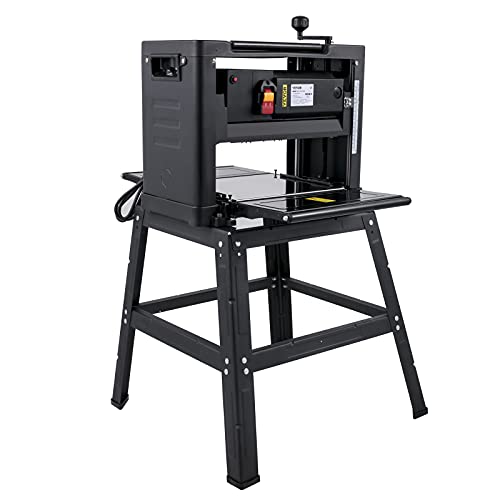
VEVOR 13-Inch Benchtop Wood Planer
Strengths
- Includes heavy-duty stand
- Foldable tables
- Overload protection
- Good feed speed
- Dust exhaust included
Trade-offs
- Inconsistent on hardwoods
- Some vibration issues
- Finish quality lags behind DEWALT
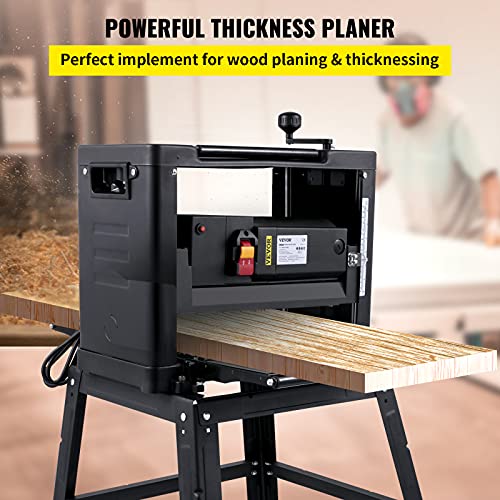
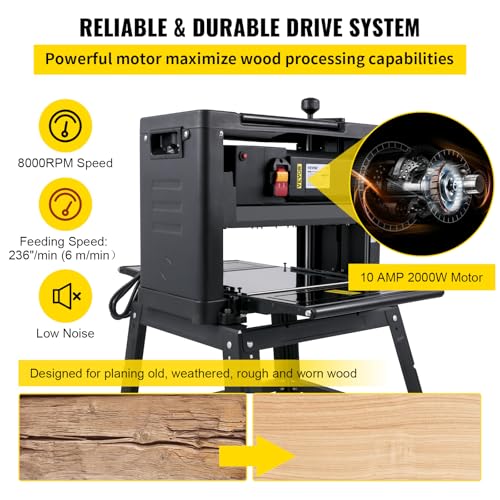
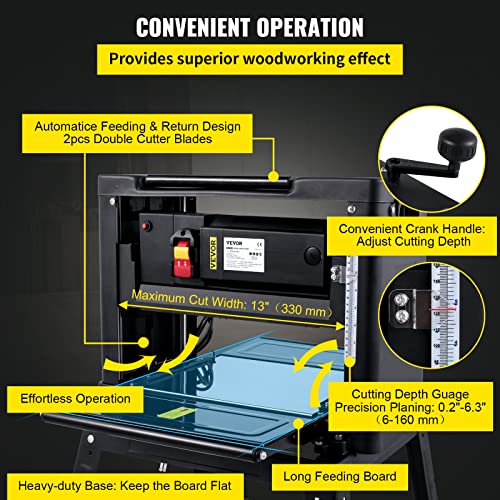
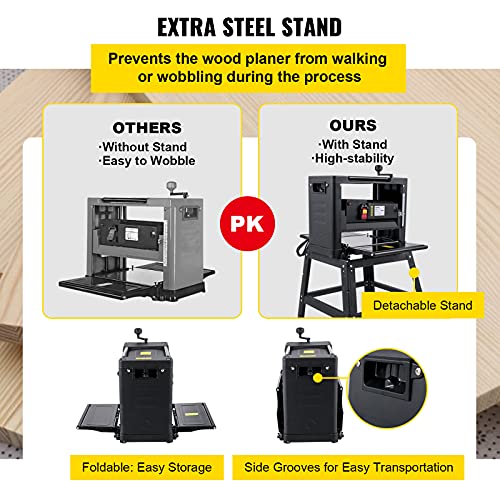
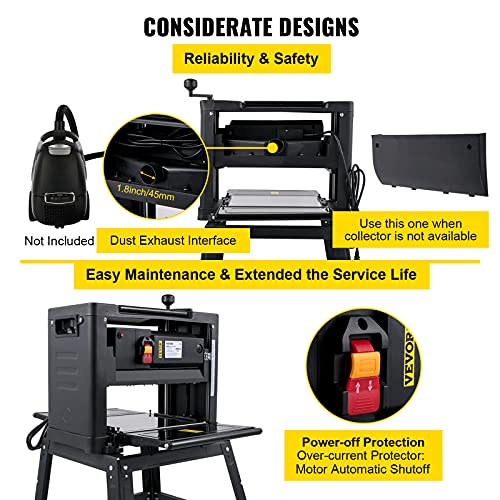
VEVOR positions this as a workhorse, and on specs alone, it’s impressive: 1800W motor, 6 m/min feed speed, foldable tables, and a heavy-duty stand included. The iron stand is a big plus, many competitors sell it separately. The overload protection switch adds safety during long sessions, and the dust exhaust fits standard shop vac hoses.
But owners report mixed results on consistency. While it handles softwoods well, it can bog down on dense hardwoods, and some note vibration at startup. The build is robust but not as refined as the DEWALT or WOODERS models. Still, with the stand included and a lower price, it offers strong value if you’re setting up a first-time shop.
Product photos
JORGENSEN No.60-1/2 Hand Planer
Strengths
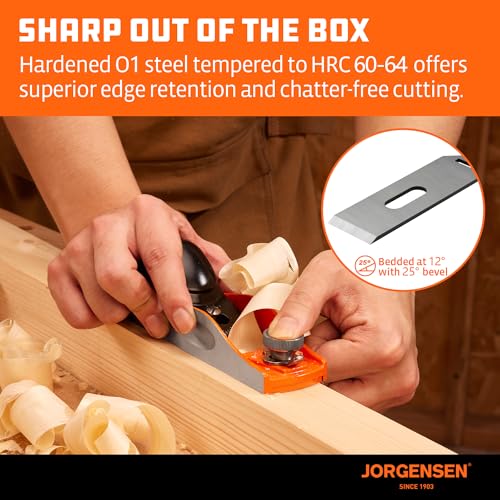
- O1 tool steel blade
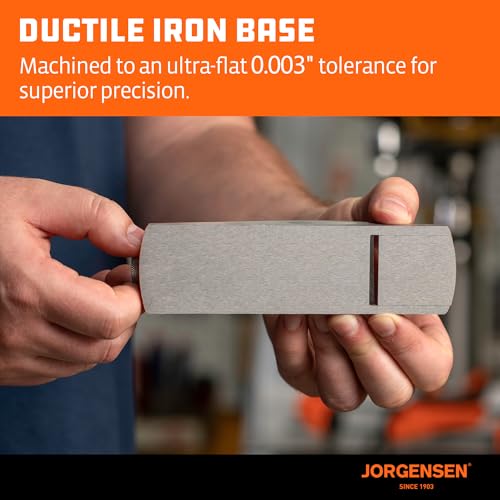
- Ductile iron body
- Adjustable mouth
- Precision depth control
- Beginner-friendly setup
Trade-offs
- No included sharpening tools
- Manual effort required
- Slower than power planers
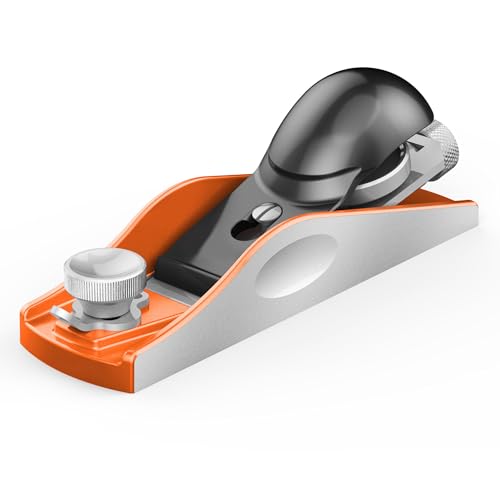
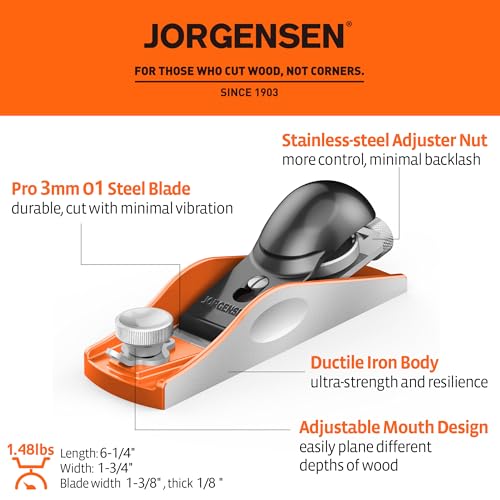
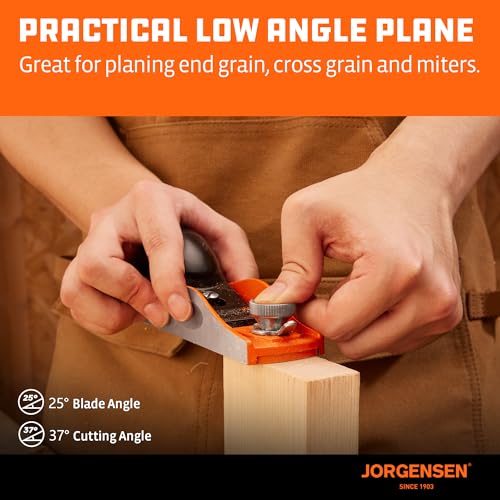
This is a traditional hand tool done right. The O1 tool steel blade holds an edge well and can be resharpened repeatedly, which matters if you’re serious about hand planing. Unlike electric models, it requires skill and effort, but delivers unmatched control for fine-tuning joints, smoothing end grain, or fitting cabinet doors. The ductile iron body gives it heft and stability, reducing chatter during use.
Owners consistently report it’s one of the few hand planes that arrives sharp and ready to work, which isn’t always the case at this price point. The adjustable mouth is a pro feature that lets you fine-tune the cut for different wood types. If you’re already using chisels and hand saws, this plane fits right in.
Product photos

DEWALT 13-Inch Thickness Planer DW735X
Strengths
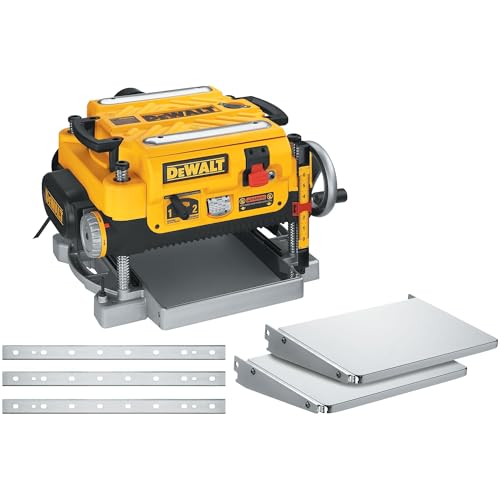
- Three-knife cutterhead
- Two-speed feed options
- Cast aluminum base
- Automatic snipe reduction
- Includes extra knives
Trade-offs
- Heavy and bulky
- No built-in dust bag
- Higher noise level
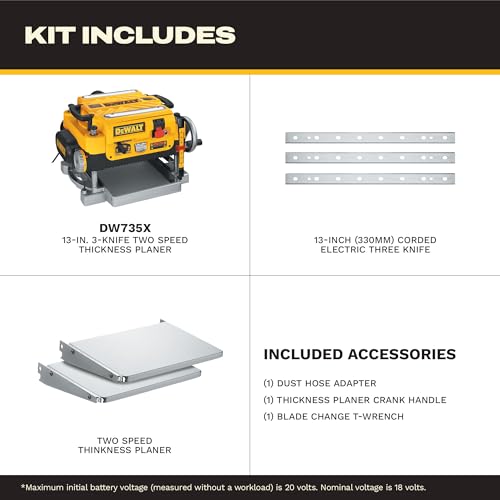
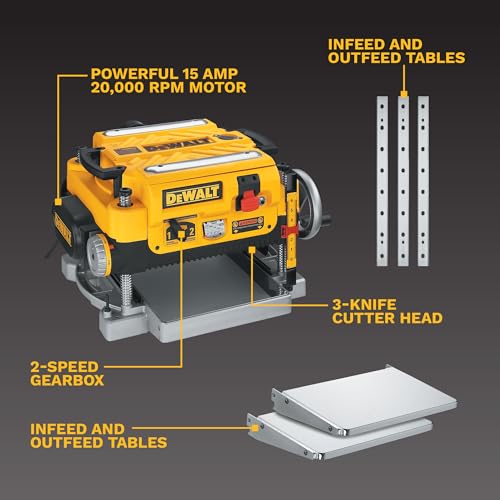
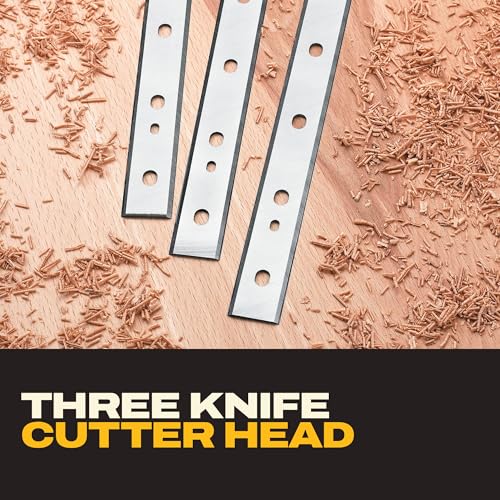
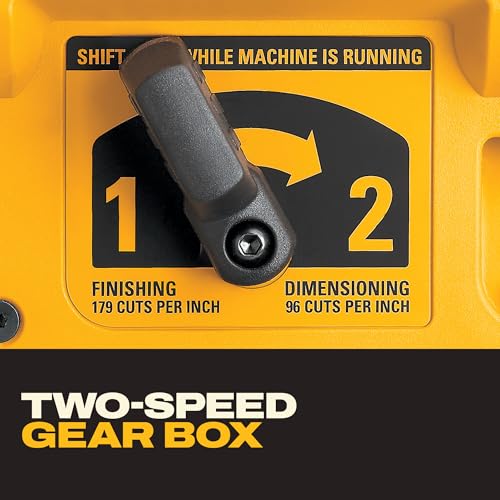
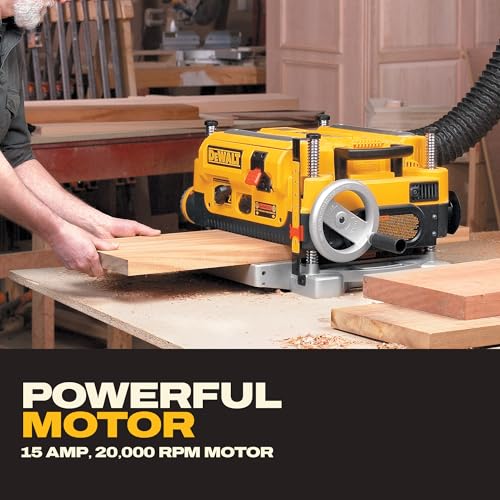
The DEWALT DW735X is the gold standard in benchtop planers under $500, even if it skews toward the top of that range. Its 15-amp motor and three-knife cutterhead deliver smooth, consistent cuts with noticeably less tear-out than two-knife models. The two-speed gearbox is a real advantage, 96 CPI for aggressive stock removal, 179 CPI for finishing passes. That kind of flexibility is rare in this class.
Reviewers often highlight the rigidity of the cast aluminum base and the automatic carriage lock, which effectively reduces snipe. The included extra set of knives and folding tables add long-term value. While it’s heavier than some competitors, that weight contributes to stability. Compared to newer budget 13-inch models, this one still sets the benchmark for reliability and finish quality.
Product photos
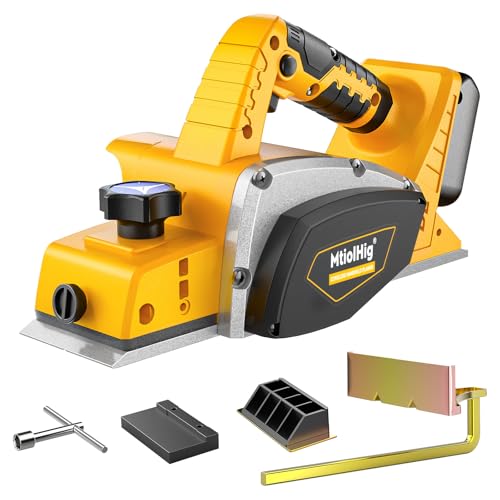
MtiolHig 3-1/4″ Cordless Hand Planer
Strengths
- 30,000 CPM output
- DeWalt 20V compatible
- Precise depth control
- Dual safety switches
- Lightweight design
Trade-offs
- Plastic build quality
- Battery not included
- Blade changes less intuitive
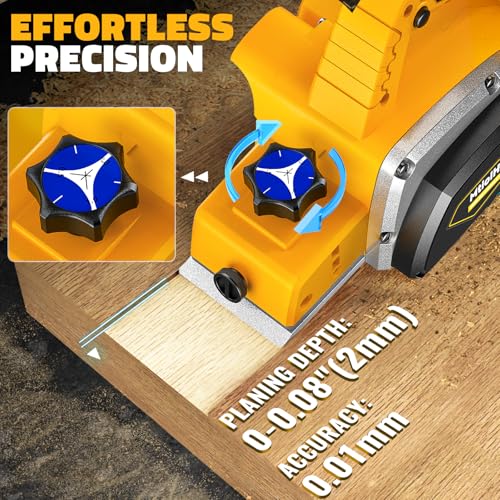
At this price, the MtiolHig delivers surprising specs: 15,000 RPM, 30,000 CPM, and 0–2mm depth adjustment with 0.01mm precision. It’s compatible with DeWalt 20V batteries, which is a smart move for users already in that ecosystem. The dual-switch safety feature is a standout, prevents accidental startups, something I always recommend for cordless tools.
Owners say it feels balanced and cuts cleanly, though the plastic housing doesn’t inspire long-term confidence. It’s lighter than the CRAFTSMAN model, making it easier to handle overhead or in tight spots. For the money, it’s the most capable cordless option here, just don’t expect the durability of a premium brand.
Product photos

3-1/4″ Electric Hand Planer with Kit
Strengths
- 16000RPM motor
- Edge guide included
- V-groove capability
- Adjustable depth knob
- Comes with accessories
Trade-offs
- Plastic housing feels less durable
- Dust collection is basic
- Not for heavy stock removal
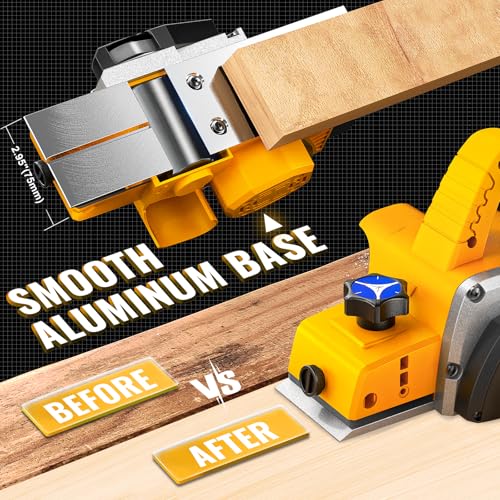
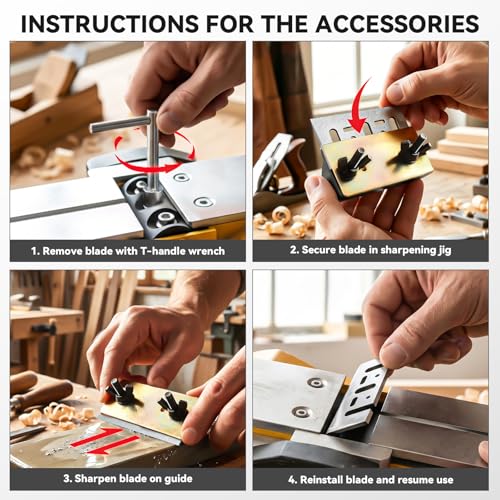
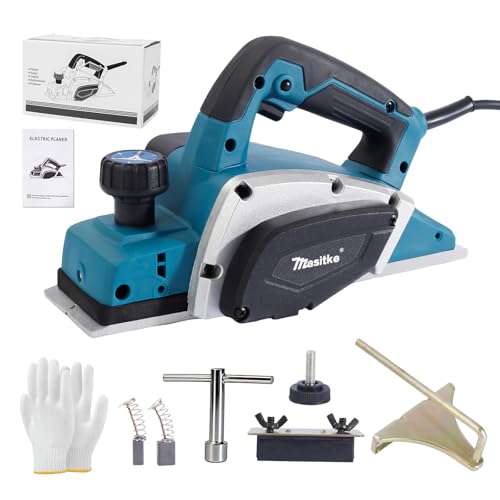
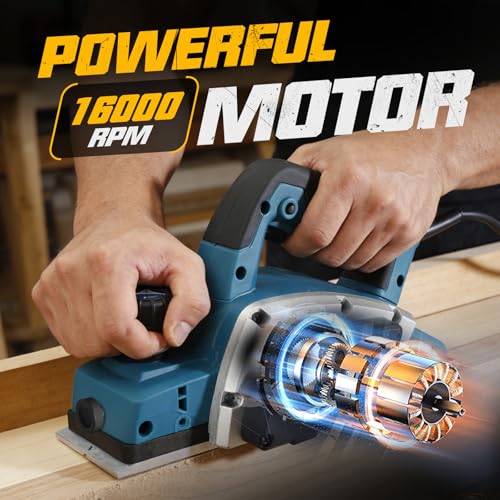
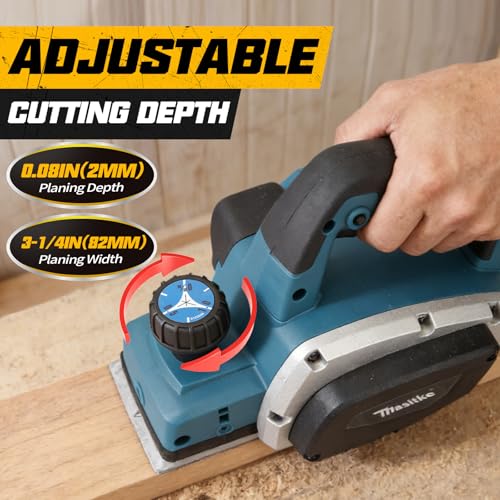
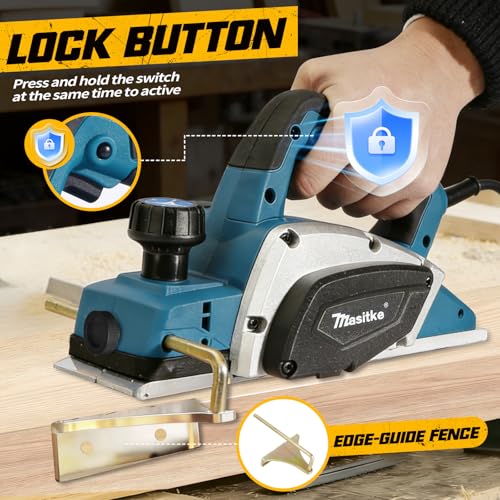
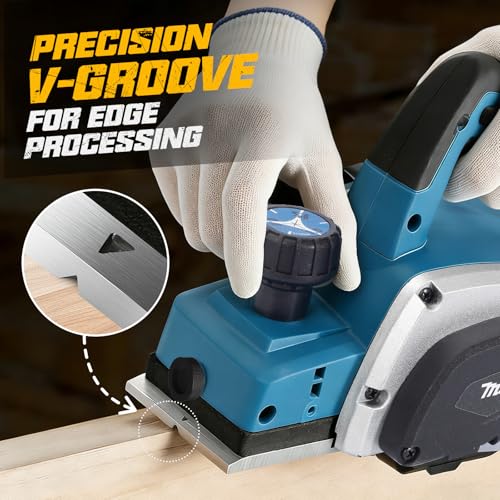
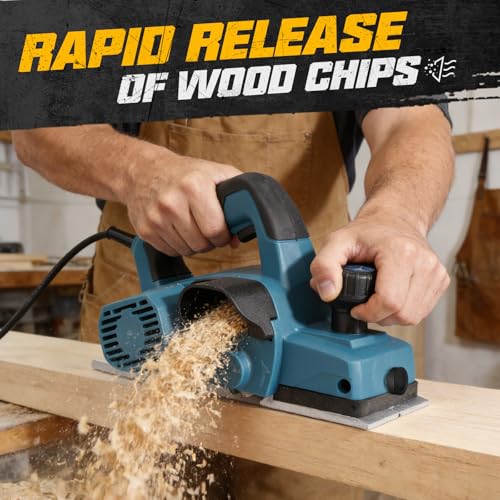
This hand planer packs solid specs on paper, with a 16000RPM motor and 0–2mm depth adjustment that should handle most light to medium-duty trimming tasks. The inclusion of both an edge guide and V-groove feature makes it more versatile than basic models, especially for DIYers working on joints or door edges. Owners seem to appreciate the included accessories, like the dust chute and gloves, which add real value for occasional users.
Where it stands out is in usability. The rubberized grip and safety lock button are thoughtful touches that reduce fatigue and prevent accidents, something I always look for in handheld tools. Compared to bare-bones budget models, this one feels like a complete package, though it doesn’t quite match the precision of higher-end corded or benchtop units.
Product photos
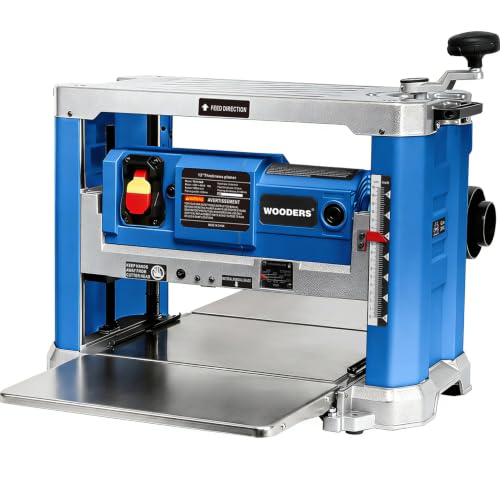
WOODERS 13-Inch Benchtop Thickness Planer
Strengths
- 2000W copper motor
- Includes spare blades
- Anti-snipe design
- Clear depth scale
- Good dust port
Trade-offs
- No stand included
- Feed rate a bit slow
- Motor can overheat on dense wood
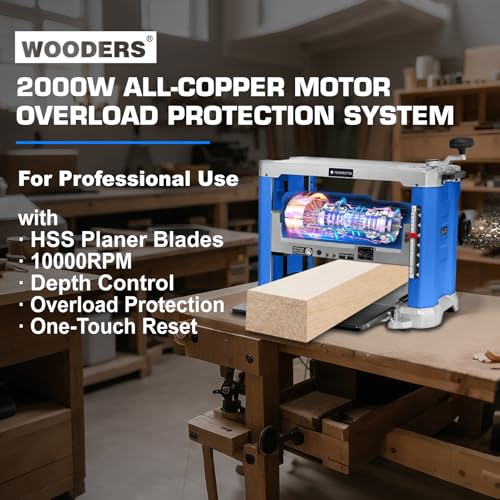
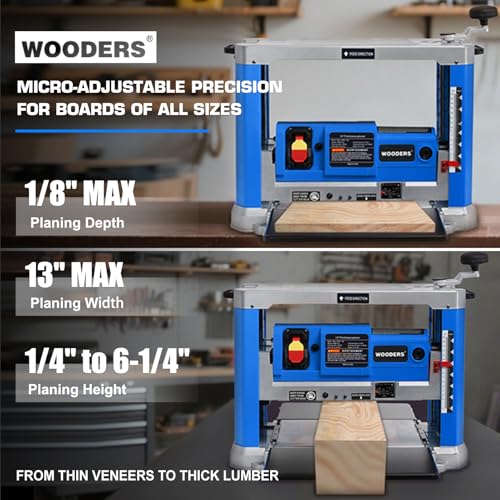
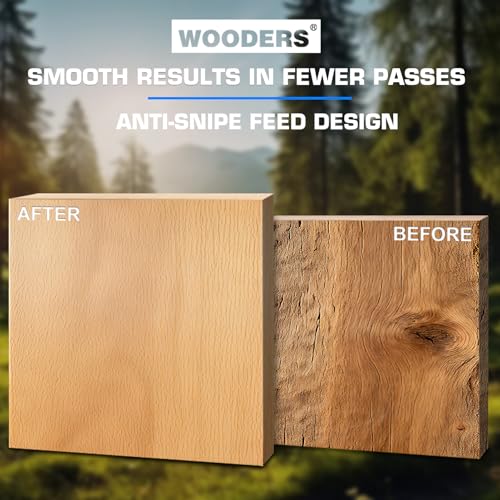
This WOODERS planer hits a sweet spot between cost and capability. The 2000W all-copper motor delivers steady power, and the 10,000 RPM dual-edge cutterhead produces clean finishes with minimal snipe, thanks to its anti-snipe design. The 13-inch width handles full sheet stock, and the clearly marked depth gauge makes repeatable passes easier.
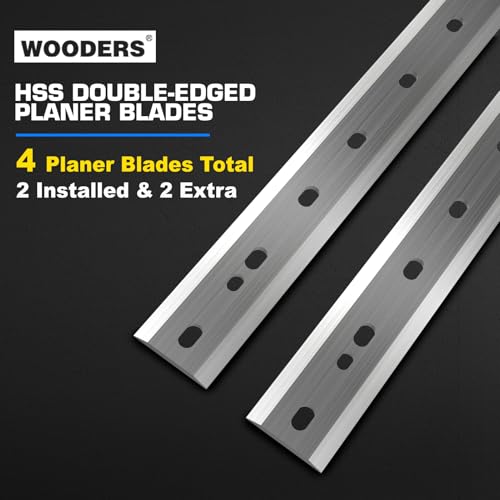
Owners like that it includes two spare HSS blades, something even some name brands charge extra for. The dust port works well with shop vacs, though the stand isn’t included. Compared to the VEVOR model, it feels slightly more refined in build, with a smoother height adjustment mechanism. For the price, it’s hard to beat.
Product photos

CRAFTSMAN V20 Cordless Hand Planer
Strengths
- Brushless motor
- Dual exhaust ports
- Includes dust bag
- CRAFTSMAN V20 compatible
- Good cut speed
Trade-offs
- Limited depth per pass
- No fine depth scale
- Battery sold separately
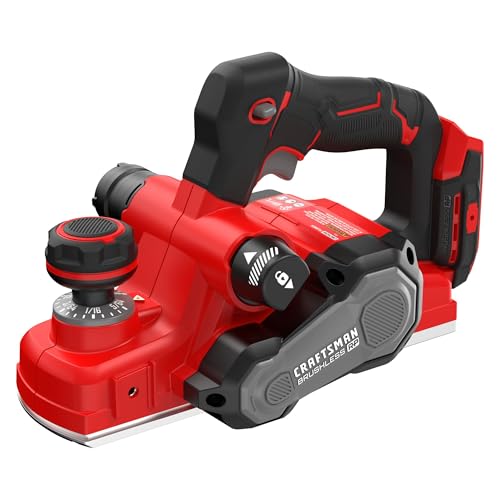
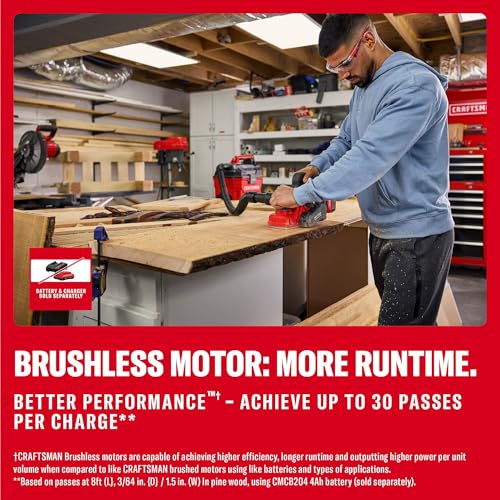
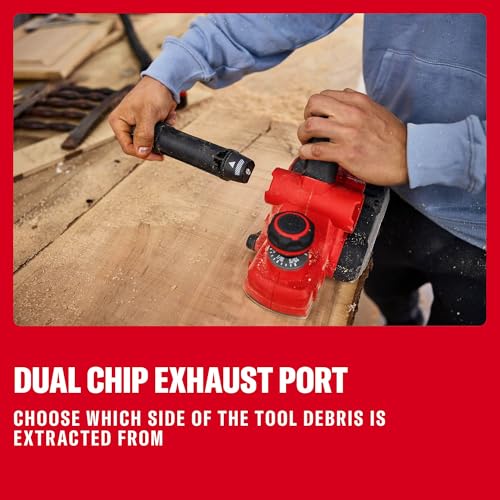
Cordless convenience meets decent power here. Running on the CRAFTSMAN V20 battery platform, this planer hits up to 15,000 RPM and 30,000 cuts per minute, which on paper rivals corded models. The brushless motor helps with efficiency and runtime, and the dual exhaust ports let you route chips away from your work, handy when you’re on a ladder or working in tight spaces.
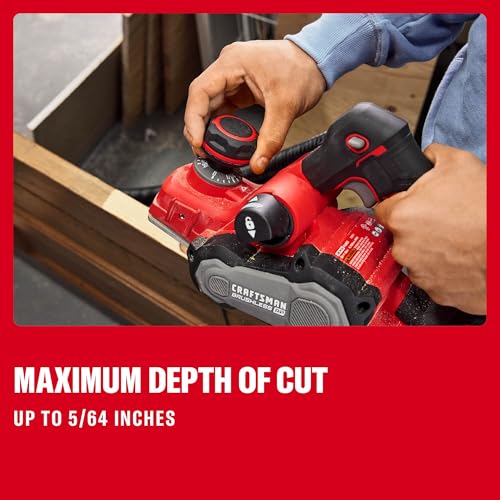
It’s not the deepest cutter, max 5/64 inch per pass, but that’s typical for cordless hand planers. What stands out is the dust bag, which many competitors skip. Still, compared to the DEWALT or MtiolHig models, it lacks depth markings with fine gradations, making precise passes a bit harder. For quick trims or on-site adjustments, it’s a solid pick.
Product photos


How We Evaluated wood planer under 500s
My approach to recommending wood planers, particularly in this price range, centers on a research-led comparison of specifications and owner feedback. Rather than a hands-on lab test of each model, I compiled detailed feature lists, paying close attention to motor power, cutting width and depth, and build quality. I then weighed those specs against what current owners are saying about performance, durability, and ease of use across multiple retail sites and woodworking forums. This helped me build a realistic picture of each planer’s strengths and weaknesses.
For wood planers under $500, consistent cutting depth and sufficient power are paramount. A planer that struggles to take consistent passes, or lacks the muscle for hardwoods, won’t deliver satisfying results. I also prioritized build quality; a flimsy machine won’t hold adjustments and is unlikely to last. Finding a good balance between these factors – and doing so at a reasonable price – is what separates the truly useful planers from the rest. You can find more options in our guide to top wood thickness planers under 500.
Specifications reliably tell you about a planer’s potential – motor size, cutting capacity, and available features. However, owner feedback provides crucial context. Reports of excessive vibration, difficulty with adjustments, or premature blade wear are red flags, even if the specs look good on paper. Reputation, gleaned from expert reviews and long-term owner experiences, is invaluable for assessing the real-world reliability of these tools and finding the best budget thickness planer.
How To Pick The Right wood planer under 500s
Choosing the right wood planer can dramatically improve your woodworking, but there’s a lot to consider beyond just price.
A good wood planer delivers consistent, flat surfaces with minimal tear-out. Key specs include motor power (for thicker, harder woods), cutting width, maximum cutting depth, and the quality of the blades. Look for features like adjustable depth controls, dust collection, and a stable base for accurate results. Prioritize build quality and consider whether a benchtop or handheld model best suits your needs.
Motor Power and Cutting Capacity
The size of the motor is directly related to what kind of wood you’ll be planning. Softer woods like pine don’t require a huge amount of power, but if you plan on working with hardwoods like oak or maple regularly, you’ll want a planer with at least a 15-amp motor. Don’t overlook cutting width and depth either. A wider planer saves time on larger boards, and greater depth allows you to remove more material in a single pass. If you’re looking for a good balance of power and affordability, exploring a benchtop planer under $500 is a smart move.
Blade Quality and Adjustability
A planer is only as good as its blades. High-speed steel (HSS) blades are common, but carbide-tipped blades offer significantly longer life and stay sharper for longer, especially when working with abrasive woods. Beyond the material, consider how easy it is to change the blades. Some planers require specialized tools or have unnecessarily complicated blade change systems. Adjustability is also critical. Look for a planer with a clear and precise depth adjustment mechanism, and ideally, one with a scale for repeatable results.
- A simple knob adjustment is fine for occasional use.
- A micro-adjuster offers more precise control, vital for fine-tuning thickness.
- A digital readout, like on the DEWALT DW735X, provides the most accurate and repeatable settings, but generally comes at a higher price point.
Don’t skimp on blade changes. Dull blades cause tear-out, burning, and a generally poor finish. Keep a spare set on hand and learn how to sharpen or replace them properly.
Portability and Value
Handheld planers are fantastic for trim work, small projects, and on-site repairs, but they lack the precision and capacity of a benchtop model. Benchtop planers offer a larger work surface and more consistent results, but they’re obviously less portable. Consider your primary use case. If you need something you can easily carry around, a cordless option like the CRAFTSMAN V20 is a good choice. If you need to surface large boards regularly, a benchtop unit is the way to go. When comparing models, also look at the included accessories. Some planers come with extra blades, infeed/outfeed tables, or dust collection adapters, adding significant value. You can also explore top benchtop planer models to see what features are available at different price points.
Wood Planer Under 500s Compared
Here is a comparison of specifications for wood planers priced under $500.
| Product Name | Motor (Amps/Volts) | Max. Cut Width (in.) | Max. Cut Depth (in.) | Feed Speed (FPM) | Corded/Cordless | Blade Material |
|---|---|---|---|---|---|---|
| VEVOR 13-Inch Benchtop Wood Planer | 15 AMP / 1800W | 13 | 6.3 | 236 | Corded | HSS |
| JORGENSEN No.60-1/2 Hand Planer | N/A | N/A | N/A | N/A | Manual | O1 Tool Steel |
| DEWALT 13-Inch Thickness Planer DW735X | 15 | 13 | N/A | 96/179 | Corded | N/A |
| MtiolHig 3-1/4″ Cordless Hand Planer | 20V (Battery Only) | 3.25 | 0.08 | N/A | Cordless | N/A |
| 3-1/4″ Electric Hand Planer with Kit | N/A | 3.25 | 0.08 | N/A | Corded | N/A |
| WOODERS 13-Inch Benchtop Thickness Planer | 2000W | 13 | 0.12 | N/A | Corded | Iron |
| CRAFTSMAN V20 Cordless Hand Planer | 20V (Battery Only) | N/A | 5/64 | N/A | Cordless | N/A |
Frequently Asked Questions
What level of experience is needed to use a wood planer effectively?
A beginner can absolutely use a wood planer, but starting with softer woods and practicing on scrap pieces is crucial. Understanding grain direction and taking shallow passes will help prevent tear-out and produce cleaner results, and reading reviews of top-rated wood planers can give you a sense of user-friendliness.
How often do the blades need replacing or sharpening?
Blade life varies significantly depending on the wood type and usage frequency, but expect to sharpen or replace HSS blades every 20-30 hours of use. Carbide blades last much longer, potentially 5-10 times that duration, making them a worthwhile investment if you plane frequently.
Can a wood planer be used on treated lumber?
Generally, no. Planing treated lumber releases harmful chemicals and will quickly dull the blades. Treated lumber isn’t suitable for most woodworking projects anyway, and attempting to plane it voids warranties and poses a health risk.
What’s the difference between a benchtop and a handheld planer?
Benchtop planers offer greater precision, wider cutting widths, and more power for larger projects, while handheld planers are portable and better suited for trim work or on-site adjustments. A benchtop model is best for consistent surface preparation, but for quick touch-ups, a handheld unit is more convenient.
What about dust collection – is it really necessary?
Yes, effective dust collection is vital for both your health and a clean workspace. Planers generate a lot of fine wood dust, which is a respiratory hazard. Many planers have a dust port for connecting to a shop vacuum, and investing in a good dust collection system will greatly improve your experience and the quality of your finished work.
The Bottom Line
Ultimately, choosing a wood planer comes down to balancing control and convenience. If you’re serious about consistently surfacing larger stock and demand precision, the DEWALT DW735X stands out as the strongest overall performer in this price bracket, offering a blend of power, adjustability, and reputation for reliability.
For those on a tighter budget or needing a versatile tool for smaller tasks, the VEVOR 13-Inch Benchtop Wood Planer delivers excellent value. If portability is your priority, the CRAFTSMAN V20 Cordless Hand Planer provides freedom from cords, though you’ll sacrifice some capacity and precision. You might also consider a thickness planer under $400 if you’re looking to save even more.
Don’t get too caught up in chasing the highest specs. Consistent setup, sharp blades, and a solid understanding of wood grain are far more important than any single feature. A well-maintained, modestly-powered planer used correctly will always outperform a high-end machine operated carelessly.
