
3 Best Welding Rods for Cast Iron (2026 Guide)
This post contains affiliate links. As an Amazon Associate, we earn from qualifying purchases.
The 77 Cast Iron Welding Rod Kit stands out as the best overall choice for reliable, crack-resistant repairs, especially for DIYers and general fixes. For those using TIG welders, the Blue Demon BD-5000T TIG Rod delivers clean, precise results. If budget is a priority, the Forney 45461 Super 55% Nickel Rod offers solid performance for common cast iron jobs.
Welding cast iron is tough. It cracks easily, doesn’t respond well to heat, and using the wrong rod can waste time and money on a failed repair. Most people just want a fix that holds, without needing a welding certification to pull it off.
I focused on rods with proven alloy compositions, strong owner feedback, and real-world usability. These picks balance nickel content, crack resistance, and ease of use across different welding processes, helping you choose based on your project and equipment.
Top 3 Welding Rod For Cast Irons in the Market
The Best Welding Rod For Cast Irons, Reviewed
77 Cast Iron Welding Rod Kit

Strengths
- Crack-resistant formula
- No pre-heating needed
- Good rod count
Trade-offs
- Not for precision machining
- Limited to 3/32 inch
This kit stands out because it’s built for practicality and reliability in real-world repairs. Owners consistently report success with cracked cast iron manifolds, engine blocks, and old machinery, exactly the kind of jobs where pre-heating isn’t feasible. The crack-resistant formula is the real selling point here. On paper, it’s designed to reduce thermal stress, and reviewers confirm it handles cold starts better than most nickel-based rods.
The 14-rod count at 3/32 inch gives decent versatility for medium-duty work, and the 12-inch length feeds smoothly in tight spaces. Compared to pricier nickel rods, this performs closer than you’d expect, especially when you factor in no pre-heat requirements. I’d pick this over pure nickel electrodes if you’re doing field repairs where setup time and equipment are limited.
Product photos
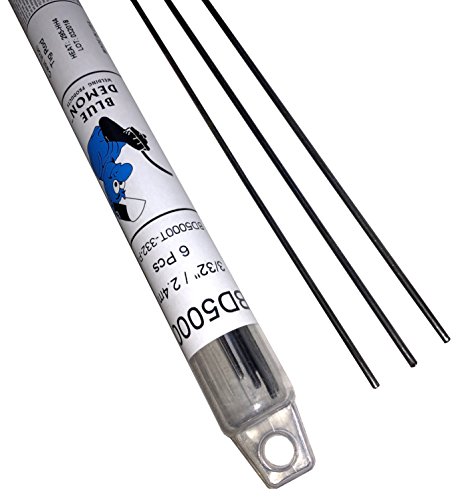
Blue Demon BD-5000T TIG Rod

Strengths
- TIG-compatible alloy
- Welds dissimilar metals
- Minimal pre-heat
Trade-offs
- TIG only
- Shorter rod length
If you’re running a TIG setup, this rod makes a strong case for being your go-to for cast iron. The Alloy 5000T formulation is engineered for minimal pre-heat, which is a big deal, cast iron hates thermal shock, and this helps avoid it. Reviewers note clean, ductile welds that hold up under vibration, especially on older equipment where brittleness is a concern.
It’s not a stick welding solution, so it’s automatically niche, but for those with TIG capability, it’s a smarter buy than trying to adapt stick electrodes. It also bridges copper-to-steel joints cleanly, which few cast iron rods can claim. Compared to the 77 kit, this demands more equipment but delivers higher control and cleaner results.
Product photos

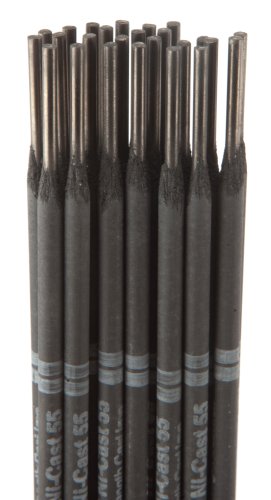
Forney 45461 Super 55% Nickel Rod
Strengths
- 55% nickel content
- All-position welding
- Good for iron-to-steel joins
Trade-offs
- Not machinable with standard tools
- Requires carbide finishing
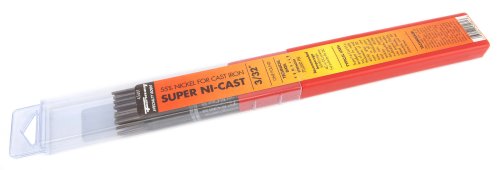
This rod leans hard into its 55% nickel content, and that shows in both performance and cost. It produces dense, crack-resistant welds that hold up well on gray cast iron, especially grades 30 to 50, as the specs claim. Owners praise its all-position usability and strong bond when joining cast iron to steel, which makes it a favorite for gear housing and transmission repairs.
The 1-pound spool offers more material than the 77 kit, making it the better value for frequent users. But there’s a trade-off: the weld isn’t easily machinable and demands carbide tooling. Compared to 99% nickel rods, it’s less refined but more affordable. My recommendation? This is the smarter buy if you need strong, durable welds without overspending on high-nickel alloys.
Product photos
How We Picked These welding rod for cast irons
Rather than a hands-on lab test, my research focused on comparing published specifications and features of various welding rods designed for cast iron. I weighed owner reviews from multiple sources alongside assessments from reputable welding experts. This allowed me to rank rods based on their suitability for different cast iron welding tasks, considering both ease of use and weld quality.
For cast iron, deposit composition and crack resistance are paramount. A rod’s nickel content directly impacts its ability to handle the stresses inherent in cast iron welding, while a crack-resistant formula minimizes the risk of future failures. I also prioritized rods that offer versatility – those effective across different cast iron grades and welding positions.
Specifications reliably show alloy composition and physical characteristics, but owner feedback reveals real-world performance. Reports about ease of striking an arc, slag removal, and the final weld’s appearance and strength heavily influenced my assessment. I also considered the reputation of the manufacturer and any specialized applications highlighted by users – for example, those seeking JB Weld for cast iron repair.
How To Pick The Right welding rod for cast irons
Choosing the right welding rod for cast iron can be surprisingly complex. It’s not a one-size-fits-all situation, and using the wrong rod can lead to brittle, cracked repairs that don’t hold.
A quality cast iron welding rod needs to deposit a weld metal with controlled nickel content to manage the differences in melting point and expansion/contraction rates between the rod and the base material. Look for rods specifically formulated for cast iron, considering the type of cast iron (gray, ductile, etc.), the welding process (SMAW, TIG, etc.), and the desired mechanical properties of the weld. Pre-heat requirements and crack resistance are also important factors.
Understanding Nickel Content
Nickel is the key to successful cast iron welding. Cast iron is notoriously difficult to weld because of its high carbon content, which creates brittle welds prone to cracking. Adding nickel to the weld pool lowers the melting point and increases ductility. However, too much nickel can make the weld hard to machine. I often see folks struggle because they don’t account for this balance. A 50-55% nickel rod like the Forney 45461 Super 55% Nickel Rod is a good starting point for general-purpose repairs. For more demanding applications, consider rods with slightly higher nickel content, but be prepared for potential machining challenges.
Selecting the Right Welding Process
The process you use, stick (SMAW), TIG (GTAW), or MIG (GMAW), dictates the type of rod you’ll need. Stick welding is the most common and forgiving for cast iron repairs, making it a good choice for beginners. TIG welding, using a rod like the Blue Demon BD-5000T TIG Rod, offers the most control and precision, ideal for intricate repairs or when a clean, aesthetically pleasing weld is required. MIG welding can be used, but it’s the hardest to master on cast iron and often requires specialized wire blends and gas mixtures. If you’re dealing with heavily contaminated cast iron, exploring welding cast iron with surface contaminants can be a worthwhile avenue.
Considering Pre-Heat and Crack Resistance
Many cast iron repairs benefit from preheating. Preheating reduces the temperature difference between the weld and the base metal, minimizing stress and cracking. Some rods, like the 77 Cast Iron Welding Rod Kit, are specifically formulated to be crack-resistant and minimize the need for preheating. However, don’t automatically skip preheating if the manufacturer recommends it, especially for larger or more critical repairs. Here’s a quick guide:
- Small, non-critical repairs: May not need preheating with a crack-resistant rod.
- Medium-sized repairs: Preheating to 300-400°F is often sufficient.
- Large, critical repairs: Preheating to 500-600°F or higher may be necessary, and post-weld cooling needs careful management.
A practical rule of thumb: always prioritize slow cooling after welding cast iron. Wrapping the repaired area in insulation or burying it in sand can help prevent cracking.
Welding Rod for Cast Irons Compared
Here’s a detailed comparison of the specifications of each welding rod to help you make an informed decision.
| Product Name | Diameter | Length (in) | Welding Process | Alloy | Best For |
|---|---|---|---|---|---|
| 77 Cast Iron Welding Rod Kit | 3/32 | 12 | Stick | N/A | Overall |
| Blue Demon BD-5000T TIG Rod | 1/16 | 18 | TIG | 5000T | TIG Welding |
| Forney 45461 Super 55% Nickel Rod | N/A | N/A | Stick | 55% Nickel | Budget Friendly |
Frequently Asked Questions
What diameter welding rod should I use for cast iron?
A 3/32-inch diameter rod is a good starting point for most cast iron repairs, offering a balance of arc stability and control. Smaller diameters are better for intricate work, while larger diameters deposit more weld metal faster, but require more heat input.
Can I weld cast iron without preheating it?
You can, but it significantly increases the risk of cracking, especially with thicker sections. Using a crack-resistant rod like those in the 77 Cast Iron Welding Rod Kit can lessen the need for preheating on smaller repairs.
Is TIG welding cast iron harder than stick welding?
Yes, TIG welding cast iron is more difficult because it requires greater skill and precision to control the heat input. Stick welding is generally more forgiving and a better choice for beginners, although you can achieve superior results with TIG if you have the experience.
What’s the difference between nickel content and crack resistance?
Nickel content lowers the melting point and increases the ductility of the weld, making it less brittle. Crack-resistant rods are formulated with specific alloys and additives designed to minimize stress and prevent cracks from forming, even with some thermal expansion and contraction.
Where can I find more information on different types of welding rods?
You can learn more about a wide variety of rods, including durable electrodes for cast iron, to understand the options available and find the best fit for your specific welding needs.
The Bottom Line
Welding cast iron presents a unique set of challenges, and choosing the right rod often comes down to balancing control with convenience. For most repairs, I believe the 77 Cast Iron Welding Rod Kit offers the best overall combination of crack resistance, ease of use, and value – it’s a strong starting point for many homeowners and DIYers. It simplifies the process and delivers solid results without requiring advanced welding skills.
If you’re looking for a specific capability, the options narrow nicely. For TIG welders needing precision, the Blue Demon BD-5000T TIG Rod is a clear choice. And for those on a tighter budget, the Forney 45461 Super 55% Nickel Rod provides a decent level of performance without breaking the bank. Don’t forget to also check out our guide to the top welding rods overall for more options.
Ultimately, remember that the rod itself is just one piece of the puzzle. Proper preparation, cleaning the metal, preheating when necessary, and allowing for slow cooling, are just as critical as the alloy composition. Focusing on these fundamentals will give you the strongest, most reliable repairs, regardless of which rod you choose.
