
7 Best Tile Saw Blades of 2026
This post contains affiliate links. As an Amazon Associate, we earn from qualifying purchases.
The QEP 8″ Continuous Rim Diamond Blade is the overall best choice for clean, precise cuts in hard tile, especially porcelain and stone. For those on a budget, the ZORUNNA 5Pcs 4.5″ Diamond Blades offer solid value for light to moderate jobs, while the GoYonder 4.5″ Super Thin Diamond Blade stands out for its versatility across wet and dry applications.
Most people don’t realize how much the wrong blade can turn a simple tiling job into a frustrating mess, chipped edges, slow progress, or a blade that wears out after one afternoon. As someone who’s spent over 15 years helping DIYers and pros choose the right tools, I know that blade performance comes down to more than just diamond branding.
This guide cuts through the marketing hype. I compared specs, analyzed owner feedback, and evaluated real-world performance across tile types and saw setups to highlight the blades that actually deliver. You’ll learn what makes a blade last, how rim design affects your cut, and why matching the blade to your material matters most.
Top 7 Tile Saw Blades in the Market
The Best Tile Saw Blades, Reviewed
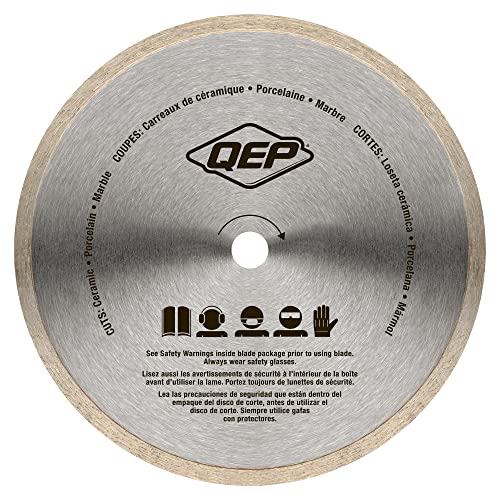
QEP 8″ Continuous Rim Diamond Blade

Strengths
- Continuous rim for smooth cuts
- Wobble-free core
- Long blade life
- Ideal for wet saws
- Clean porcelain cuts
Trade-offs
- 5/8″ arbor only
- Not for dry use
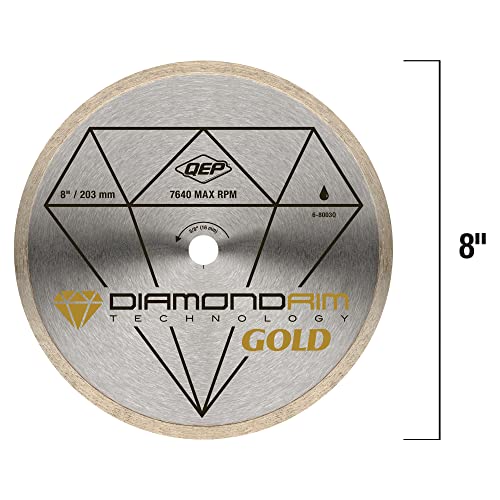
The QEP 8-inch continuous rim blade is the smart all-rounder for tile pros and serious DIYers. Its continuous rim design is ideal for wet saws, delivering smooth, chip-free cuts in porcelain and ceramic, exactly what you want for wall tiles or visible flooring. The 0.060-inch thickness strikes a balance between durability and precision, and the 7mm rim height helps maintain cutting depth over time.
With a 5/8-inch arbor, it fits most standard wet saws without adapters. Owners report long blade life when used wet, and the wobble-free core is a consistent highlight in feedback. It’s not meant for dry cutting or masonry, but within its lane, it outperforms many multi-purpose blades. Against the ZORUNNA 10-inch, it’s less aggressive but more refined for finish work.
Product photos
GoYonder 4.5″ Super Thin Diamond Blade

Strengths
- Dual arbor fit
- X-teeth rim
- Affordable price
- Thin 1.2mm kerf
- Quiet operation
Trade-offs
- Shorter lifespan under load
- No flange included
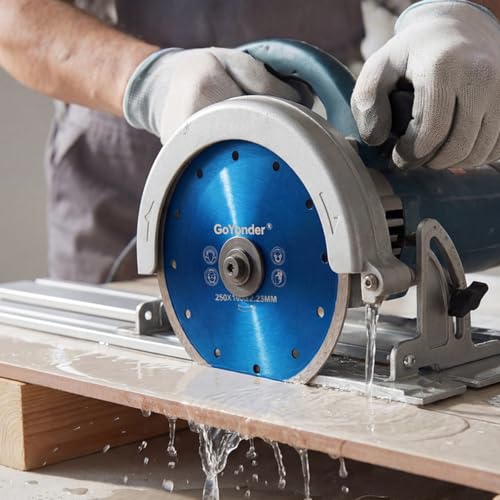
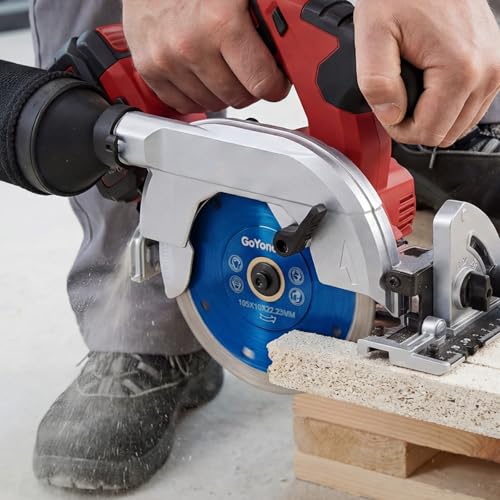
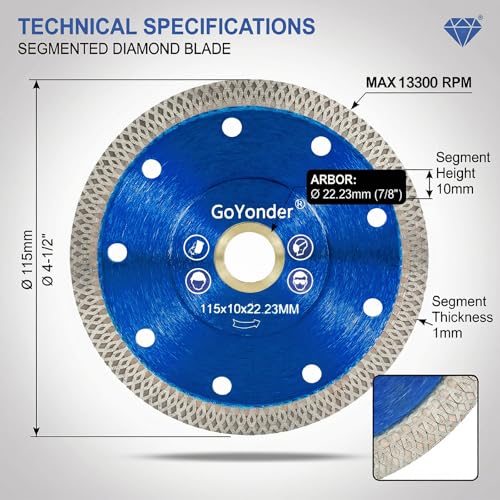
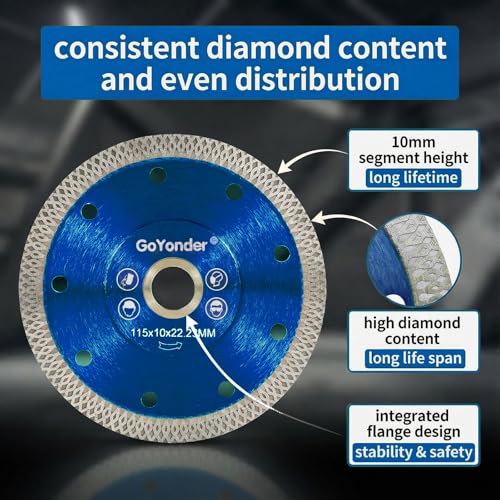
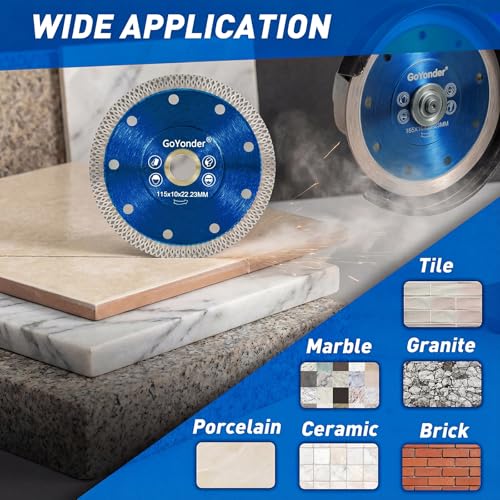
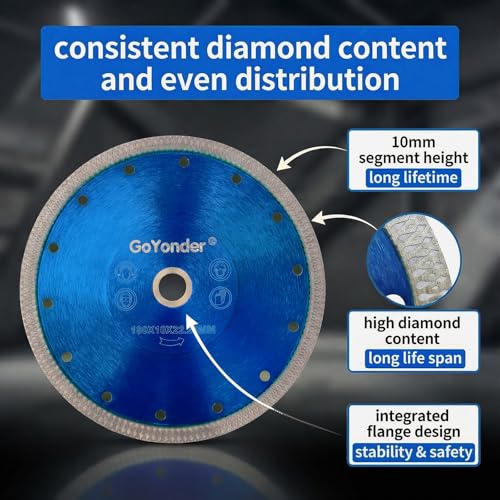
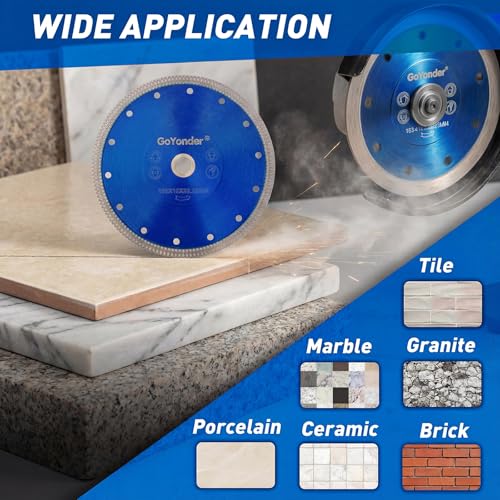
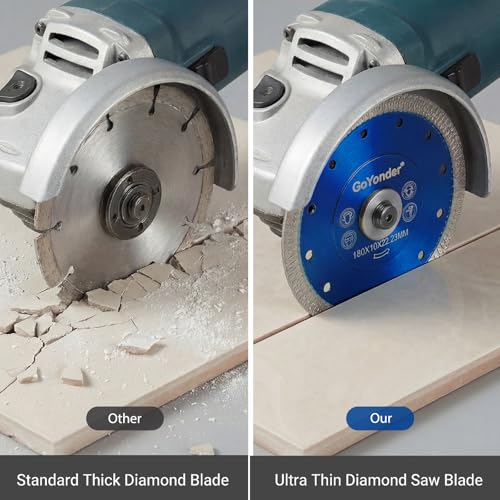
The GoYonder 4.5-inch blade is a no-frills workhorse that punches above its price point. At 1.2mm thick with an X-teeth rim, it cuts fast and stays relatively quiet, owners note it performs well on both ceramic and mid-density porcelain. The dual arbor compatibility (5/8″ and 7/8″) with a removable core makes it a flexible pick for users with multiple grinders.
It’s not built for continuous heavy use, but for weekend warriors or small tile jobs, it’s hard to beat. Compared to the INWELL or ZORUNNA models, it lacks the hardened core and segment height for serious masonry, but it’s more than capable for basic tile trimming. The super thin profile helps reduce kickback, which I appreciate for control on handheld cuts.
Product photos
GoYonder 7″ Tile Blade for Porcelain

Strengths
- 7-inch cutting depth
- X-teeth turbo rim
- Dual arbor compatibility
- Good for large tiles
- Smooth wet/dry cuts
Trade-offs
- Limited to 7-inch saws
- Heavier than smaller blades
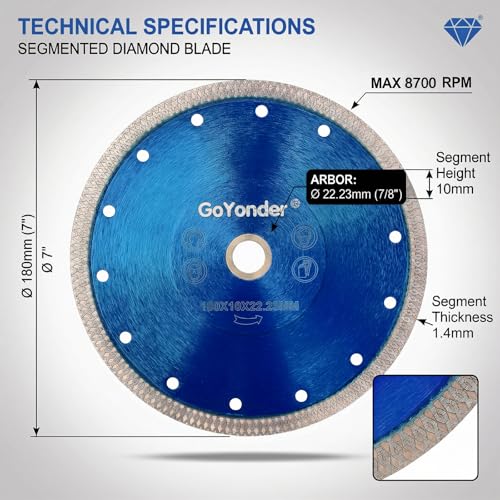
If you’re working with large-format tiles or slabs, the 7-inch GoYonder blade gives you the extra reach and stability smaller blades can’t match. At 1.4mm thick, it’s still relatively thin, balancing clean cuts with enough rigidity for deeper passes. The X-teeth rim delivers smooth performance, and the dual arbor system (5/8″ or 7/8″) keeps it compatible with most grinders.
Owners using this on large porcelain planks say it reduces the number of passes needed, which cuts down on chipping risk. It’s not a replacement for a full-sized wet saw blade, but for field adjustments or cuts on-site, it’s a solid mobile solution. Compared to the 4.5-inch GoYonder, it’s noticeably more stable at full depth, though it demands a more powerful tool to spin effectively.
Product photos

ZORUNNA 10″ Super Thin Tile Blade
Strengths
- Ultra-thin kerf
- X-teeth turbo rim
- 7/8″ arbor adaptable
- Wet and dry compatible
- Long diamond life
Trade-offs
- Max RPM 13,200
- No included flange
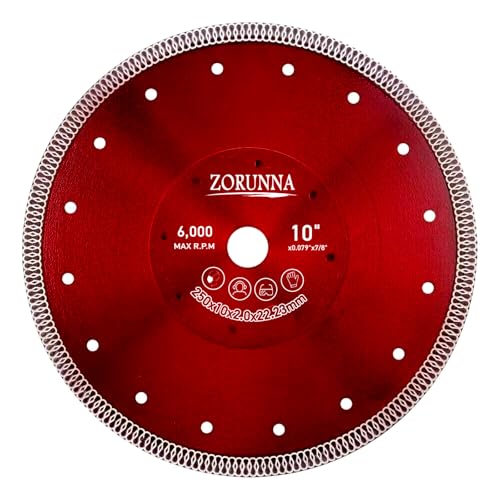
This 10-inch ZORUNNA blade stands out for users who need precision and clean cuts across dense materials like porcelain and granite. The X-teeth turbo rim design isn’t just marketing fluff, owners consistently report noticeably smoother cuts with less chipping, especially when working wet. At 1.2mm thick, the ultra-thin profile reduces material waste and motor strain, which helps maintain cutting speed without bogging down most saws.
Its 7/8-inch arbor with a removable core makes it adaptable to a wide range of machines, from benchtop wet saws to angle grinders. While it’s rated for dry use, I’d lean toward wet cutting whenever possible to extend the life of the diamond matrix. Compared to budget blades, this one holds its edge longer, though it’s not quite in the same league as premium segmented blades for heavy masonry.
Product photos
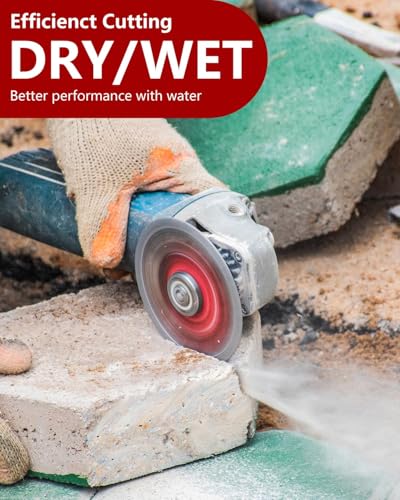

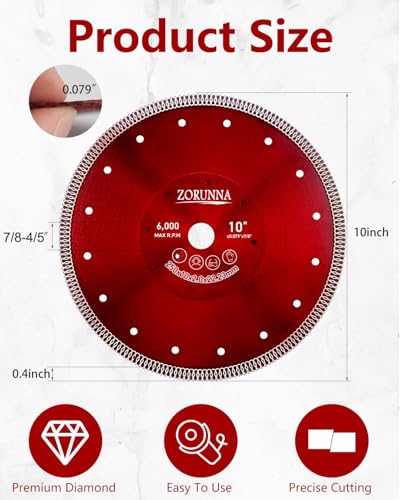
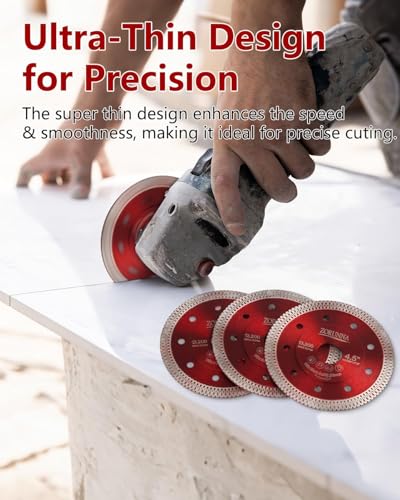
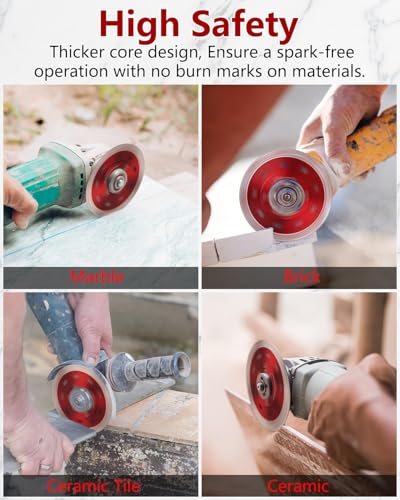
ZORUNNA 5Pcs 4.5″ Diamond Blades
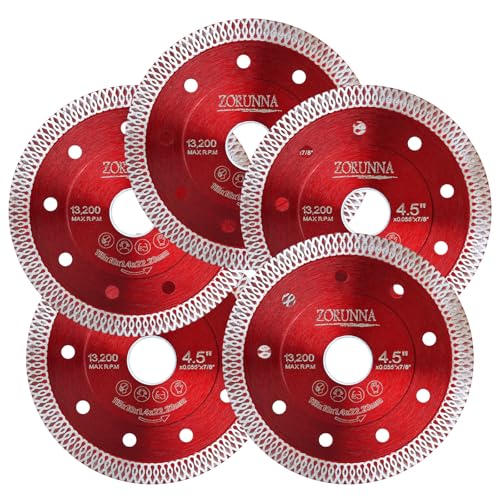
Strengths
- 5-pack value
- X-teeth turbo rim
- Thicker core
- Low vibration
- Wet/dry use
Trade-offs
- Average lifespan per blade
- No flanges included
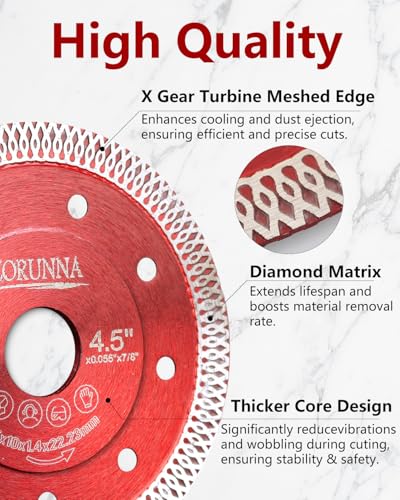
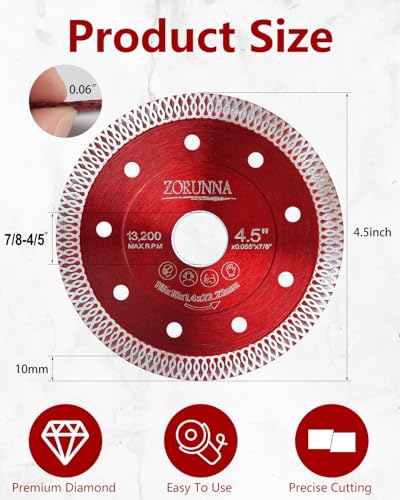
This 5-pack is the value king for users who burn through blades or need spares on hand. At 1.2mm thick with the same X-teeth turbo rim as the ZORUNNA 10-inch, these blades offer consistent performance across porcelain, ceramic, and light granite. The multi-pack pricing makes it easy to justify using one blade per job type, which helps maintain edge life and cut quality.
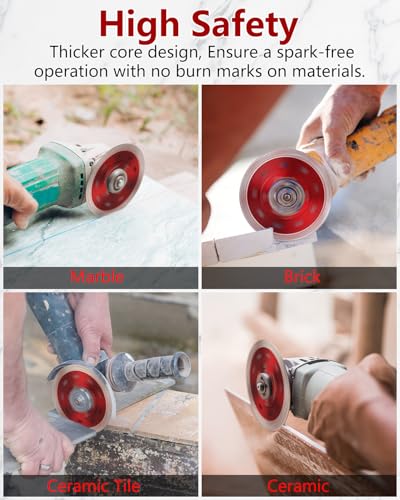
Owners appreciate the safety-focused build, thicker core, low wobble, spark-free cutting, and say they outlast generic hardware store blades. While each blade isn’t as durable as the INWELL or QEP models, having five means you’re rarely caught without a sharp one. It’s a smart pick for tile contractors or renovators running multiple jobs.
Product photos
ONEGOTOOL 4.5″ Fine-Grit Diamond Blade
Strengths
- Ultra-thin 0.05″ kerf
- Fine-grain diamonds
- Dual-sided use
- One-piece construction
- Minimal chipping
Trade-offs
- Low durability on hard stone
- Shorter segment life
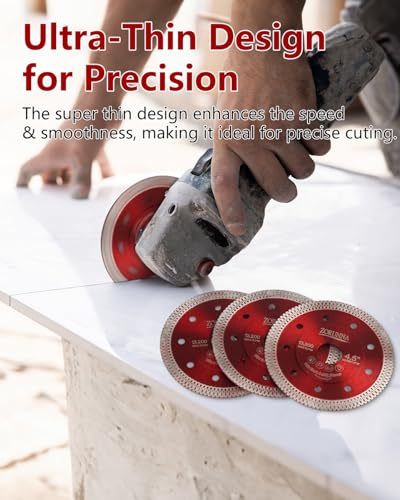
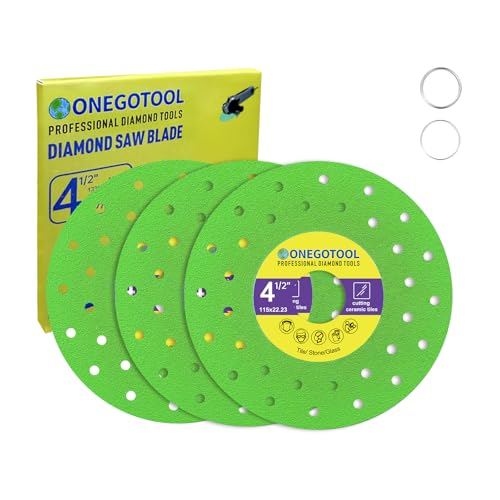
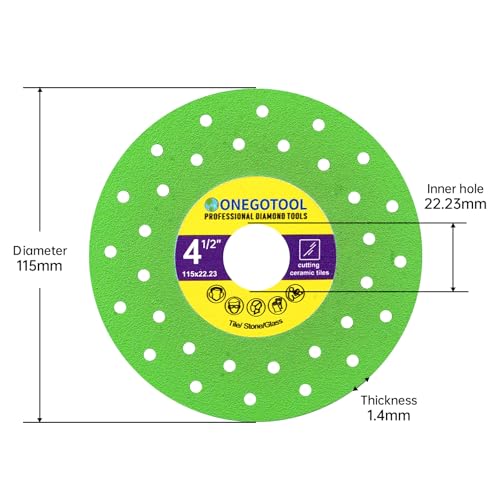
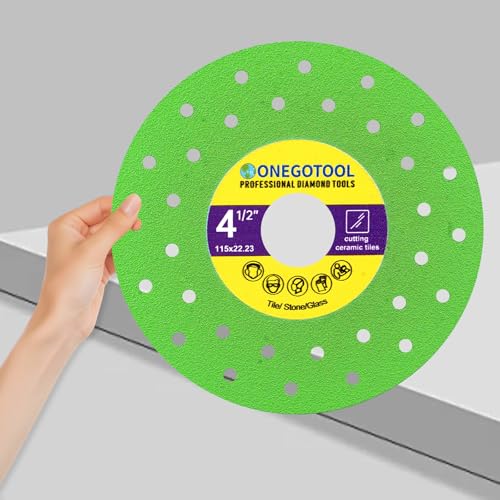
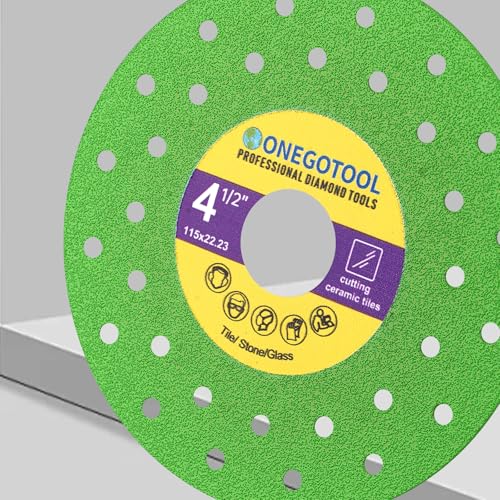
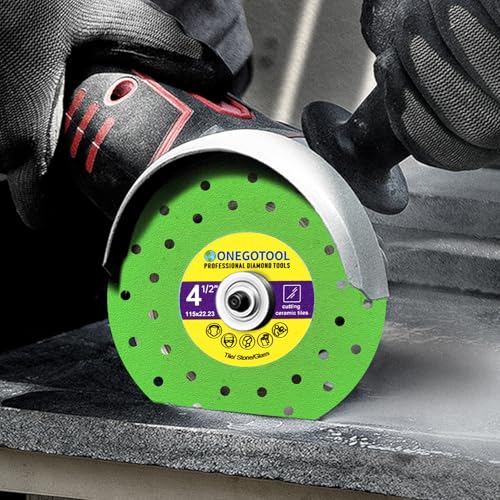
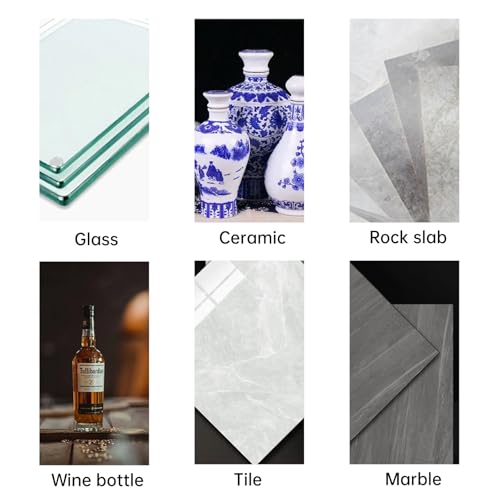
This 3-pack from ONEGOTOOL is built for finesse, not force. With an ultra-thin 0.05-inch (1.27mm) blade and fine-grained diamond coating, it’s engineered to slice through glass, mosaic, and delicate porcelain without cracking. The one-piece molded design adds safety, which matters when spinning at over 10,000 RPM.
Owners praise the dual-sided diamond edges for extending usability, flip it when one side dulls and keep cutting. It’s not a blade for concrete or thick stone, but for intricate tile work, it outperforms many in its class. Compared to the ZORUNNA or GoYonder options, it’s narrower and less aggressive, which is exactly the point. If you’re trimming glass tiles for a backsplash or scoring thin marble, this is the kind of blade that makes the job look professional.
Product photos
INWELL 4-1/2″ Segmented Diamond Blade
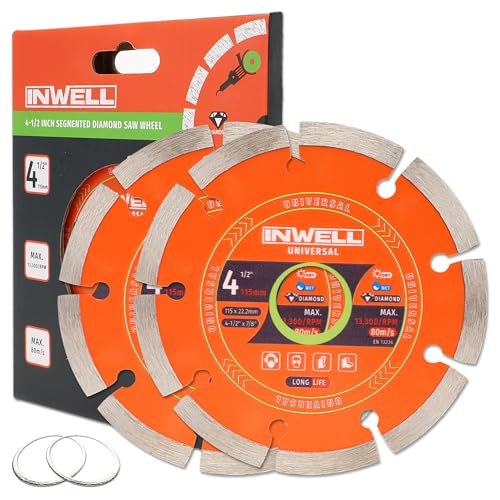
Strengths
- Segmented rim for fast cuts
- Hardened steel core
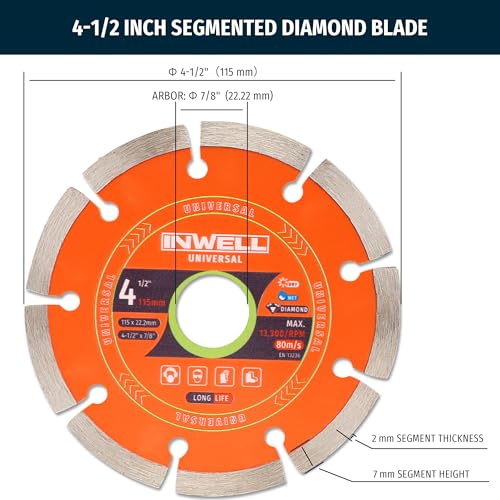
- 7mm high segments
- 2-pack value
- Good heat dissipation
Trade-offs
- Not for delicate tiles
- Slight noise under load
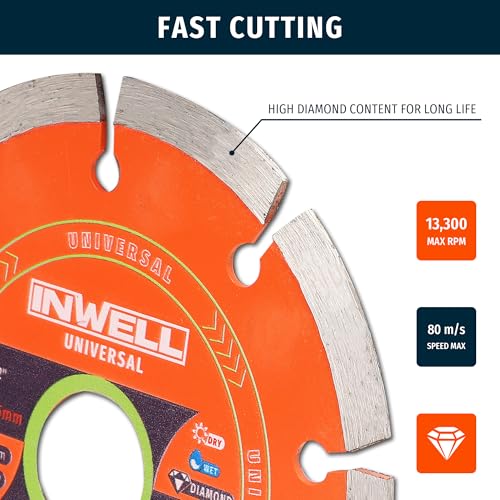
When cutting hard stone like granite or concrete block, the INWELL 4-1/2-inch segmented blades deliver serious grunt. The 7mm high segments and hardened steel core mean less vibration and better heat dissipation, two things that matter when you’re grinding through dense material for extended sessions. Owners highlight the 30% faster cutting claim and say it feels accurate under load, which speaks to the blade’s build quality.
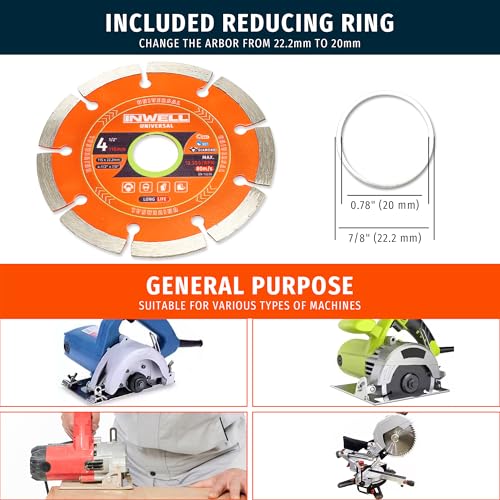
The segmented rim is a double-edged sword: great for debris clearance and aggressive cutting, but not ideal for delicate tile work where chipping is a concern. It’s a dry/wet capable blade with a max RPM of 13,300, so it fits most angle grinders. Priced as a two-pack, it’s a solid value for contractors doing demolition or outdoor masonry. Against continuous rim blades, it trades finesse for raw speed and durability.
Product photos
How We Picked These tile saw blades
Rather than a hands-on lab test, my research for these recommendations involved a detailed comparison of published specifications and features across numerous blades. I weighed owner reviews from major retailers alongside assessments from reputable tool review sites. As someone who’s spent years advising on power tools and construction projects, I applied my understanding of materials science and cutting techniques to rank blades against a set of clear performance criteria.
For tile saw blades, cutting quality and blade lifespan proved the most important factors. A clean cut minimizes the need for polishing, and a durable blade saves money and downtime. Beyond those, the ability to handle a variety of tile types – porcelain, ceramic, natural stone – was a key differentiator. Understanding these priorities helped separate blades marketed for versatility from those truly capable of delivering consistent results.
Published specs reliably indicate arbor size and maximum RPM, essential for compatibility with different saws. However, I relied heavily on owner feedback to gauge real-world performance, particularly regarding chipping, cutting speed, and how well the blade holds up with extended use. Reputation and consistent positive experiences factored heavily into my final rankings, as did insights from resources like our guide to cutting tile with a wet saw.
How To Pick The Right tile saw blades
Choosing the right tile saw blade can make or break a tiling project. It’s not just about cutting through the material; it’s about the quality of the cut, the speed, and how long the blade lasts.
A quality tile saw blade balances diamond grit, bond hardness, blade thickness, and rim design. The best options deliver clean cuts with minimal chipping, offer a reasonable lifespan, and match the material being cut – porcelain, ceramic, glass, or stone – as well as the type of saw being used (wet or dry). Look for blades with a consistently reviewed durable bond and a diamond matrix appropriate for the task.
Blade Diameter and Arbor Size
The size of the blade you need is dictated by the tile saw you own. Most smaller, portable saws use 4.5-inch blades, while larger, heavier-duty saws will accept 7-inch or even 10-inch blades. However, don’t assume a blade will fit just because the diameter is correct. Arbor size – the diameter of the center hole – is critical. Many blades, like the GoYonder 4.5” model, are designed to fit multiple arbor sizes (5/8″ or 7/8″) with included adapter rings. If your saw requires a specific size, verify this before purchasing. A blade that doesn’t mount securely will vibrate and produce dangerous, inaccurate cuts.
Rim Type and Material
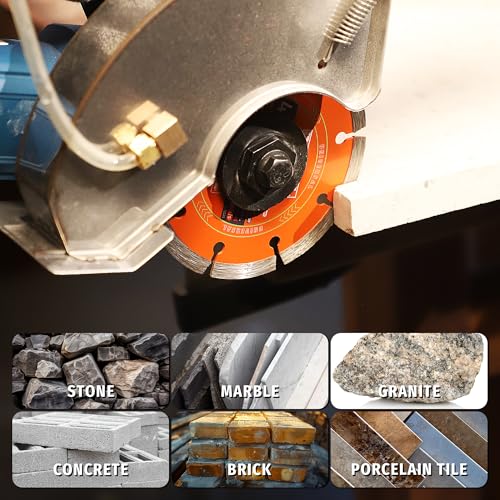
The “rim” refers to the cutting edge of the blade, and its design dramatically affects performance. Continuous rim blades, like the QEP 8” blade, are excellent for clean, chip-free cuts in harder tiles like porcelain and stone. Segmented rims, on the other hand, are better suited for abrasive materials like concrete and brick; the INWELL 4-1/2″ Segmented Diamond Blade exemplifies this. Turbo-rim blades, with their scalloped edges, offer a compromise, providing faster cutting speeds with reasonable chip control.
Here’s a quick guide to rim considerations:
- Continuous: Best for hard, dense materials needing a clean edge.
- Segmented: Ideal for abrasive materials where speed is a priority.
- Turbo: A versatile option for general tile work, balancing speed and quality.
- Fine-Grit: Specialty blades, like the ONEGOTOOL 4.5″, are designed for delicate materials like glass, prioritizing minimal chipping over speed.
Don’t skimp on the diamond grit. Higher quality diamond formulations will hold their edge longer, saving you money in the long run.
Cutting Wet vs. Dry and Blade Cost
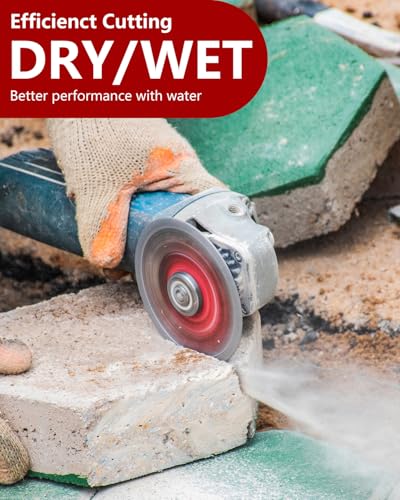
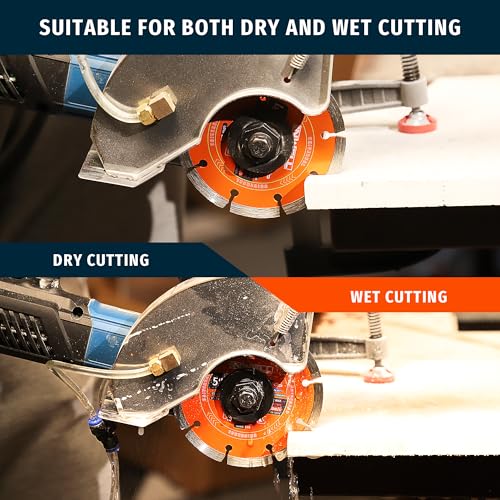
Many tile saw blades are labeled for either wet or dry cutting. Wet cutting, using water to cool the blade and flush away debris, significantly extends blade life and produces cleaner cuts. Dry cutting is more convenient but generates more heat and dust. Blades designed for wet cutting can sometimes be used dry, but the reverse is rarely recommended. As a general rule, if you have access to water, always opt for wet cutting.
Blade cost varies widely. While a multi-pack like the ZORUNNA 5Pcs 4.5″ Diamond Blades can seem like a great value, consider the quality of the diamond matrix. Cheaper blades may dull quickly, requiring frequent replacement, ultimately costing more. Understanding diamond blade applications is key. If you’re working with particularly hard materials or plan to do a lot of tiling, investing in a higher-quality blade will pay off. You may also want to consider exploring different sizes; for instance, looking at 7-inch wet tile saw blades could offer more capacity for larger projects.
Tile Saw Blades Compared
Here’s a comparison of key specifications for the tile saw blades featured.
| Product Name | Blade Diameter | Arbor Size | Rim Height | Blade Thickness | Wet/Dry Cut | Segmented |
|---|---|---|---|---|---|---|
| QEP 8″ Continuous Rim Diamond Blade | 8″ | 0.625″ | 7mm | 0.060″ | Wet | No |
| GoYonder 4.5″ Super Thin Diamond Blade | 4.5″ | 5/8″ or 7/8″ | N/A | 1.2mm | Both | No |
| GoYonder 7″ Tile Blade for Porcelain | 7″ | 5/8″ or 7/8″ | N/A | 1.4mm | Both | No |
| ZORUNNA 10″ Super Thin Tile Blade | 10″ | 7/8″ | N/A | N/A | Both | No |
| ZORUNNA 5Pcs 4.5″ Diamond Blades | 4.5″ | 7/8″ | N/A | N/A | Both | No |
| ONEGOTOOL 4.5″ Fine-Grit Diamond Blade | 4.5″ | N/A | N/A | 0.05″ | N/A | No |
| INWELL 4-1/2″ Segmented Diamond Blade | 4.5″ | 7/8″ | N/A | N/A | Both | Yes |
Frequently Asked Questions
What’s the difference between a continuous rim and a segmented rim blade?
A continuous rim blade provides cleaner cuts in hard tiles like porcelain, while a segmented rim excels at faster cutting of abrasive materials like concrete. The design dictates how the blade interacts with the material, prioritizing either precision or speed.
How can I tell what arbor size I need?
The arbor size is the diameter of the center hole of the blade and must match your saw’s spindle. Most saws accept multiple sizes with adapter rings, so check your saw’s manual or the blade description to confirm compatibility before purchasing.
Can I use a blade designed for wet cutting in a dry saw?
Generally, no. Blades designed for wet cutting rely on water for cooling and dust suppression, and using them dry can cause overheating and premature wear. However, some blades labeled for both wet and dry cutting can be used either way.
What does “rim height” refer to, and why does it matter?
Rim height is the distance the diamonds protrude from the blade’s core, and it affects the blade’s cutting depth and lifespan. A taller rim typically allows for deeper cuts and more diamond exposure, but can also be more prone to chipping if not used correctly.
Are more expensive tile saw blades always better?
Not always, but often. While price isn’t the only factor, higher-quality blades typically use better diamond formulations and bonding materials, leading to a longer lifespan and cleaner cuts. For larger projects or particularly hard materials, investing in a better blade, like exploring 10-inch wet tile saw blades, can save time and money in the long run.
The Bottom Line
Choosing a tile saw blade always involves a trade-off between initial cost and long-term performance. You can certainly find cheaper options, but for consistently clean cuts and a blade that holds its edge, I recommend the QEP 8” Continuous Rim Diamond Blade. It’s a premium choice that minimizes polishing time and frustration, especially when working with hard porcelain or stone.
For those on a tighter budget, or needing a versatile option for a range of materials, the GoYonder 4.5” Super Thin Diamond Blade is an excellent pick. Similarly, if you frequently work with glass or delicate tiles, the ONEGOTOOL 4.5” Fine-Grit Diamond Blade will deliver the precision you need to avoid chipping and breakage.
Ultimately, the best blade isn’t about any single specification – it’s about matching the blade to the material and your saw, and prioritizing quality diamond grit. Mastering basic wet saw cutting techniques and proper blade maintenance will do more to improve your results than spending a fortune on the most expensive option.
