7 Best Tile Blades for Grinders 2026
This post contains affiliate links. As an Amazon Associate, we earn from qualifying purchases.
The ZORUNNA 5-Pack 4.5″ Diamond Tile Blade is the overall best choice for most users, delivering reliable performance across ceramic and porcelain with solid owner feedback. For tighter budgets, the ZORUNNA 10-Pack offers excellent value without major sacrifices, while the INWELL 2-Pack Segmented Diamond Blade stands out for heavy-duty cutting tasks where speed and durability matter most.
If you’ve ever tried cutting tile with the wrong blade, you know the frustration, chipped edges, slow progress, or a blade that burns out after two cuts. A lot of blades claim to handle tile, but only a few actually deliver clean, efficient results across different materials like porcelain, ceramic, and stone.
This guide cuts through the noise. Based on specs, owner experiences, and years of working with power tools, I’ve ranked the top tile blades for grinders by cutting speed, longevity, and precision. You’ll learn what really matters in a blade, from diamond quality to rim design, and how to match it to your project needs.
Top 7 Tile Blade For Grinders in the Market
The Best Tile Blade For Grinders, Reviewed
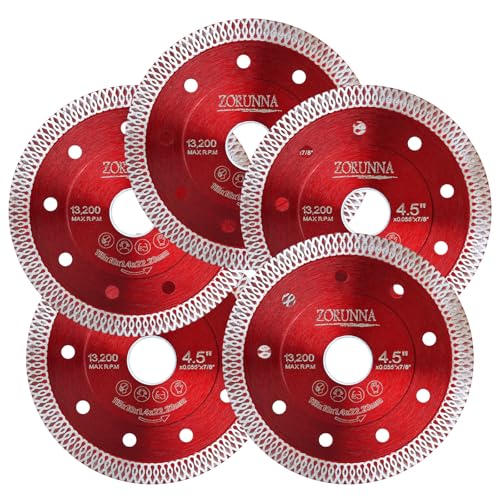
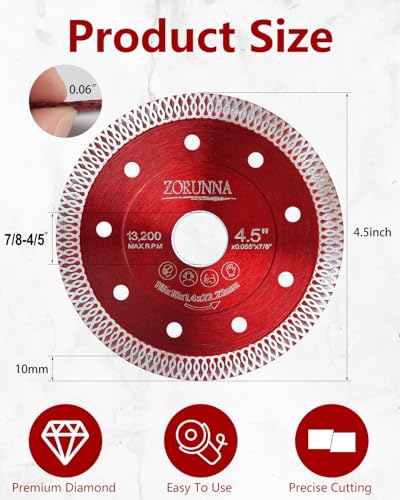
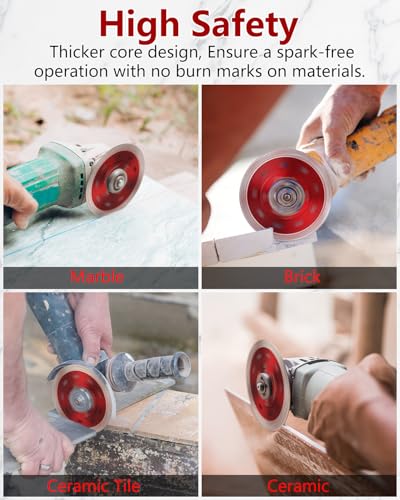
ZORUNNA 5-Pack 4.5″ Diamond Tile Blade
Strengths
- Consistent precision
- Durable core
- Good value per blade
Trade-offs
- Not for heavy concrete
- Slight wear on dense stone
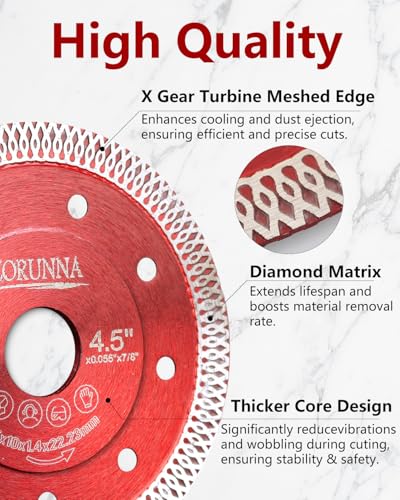
This 5-pack hits the sweet spot between performance, value, and consistency, no wonder it’s flagged as ‘Best Overall’. It shares the same X-teeth turbo rim and high-density diamond matrix as the 10-pack, but with a more practical count for most homeowners. The thicker core reduces wobble, a common complaint with budget blades, and owners repeatedly mention how well they handle porcelain without chipping.
Where it pulls ahead is balance: it’s not the cheapest, but it’s more durable than disposable packs. It’s not the most specialized, but it performs reliably across tile, marble, and granite. For most users, this is the easy pick, no guesswork, no compromises. If you want one blade pack that just works, this is it.
Product photos
ZORUNNA 2-Pack Super Thin Tile Blade

Strengths
- Affordable entry point
- Clean tile cuts
- Low chipping
Trade-offs
- Shorter pack value
- Same specs as higher-ranked options
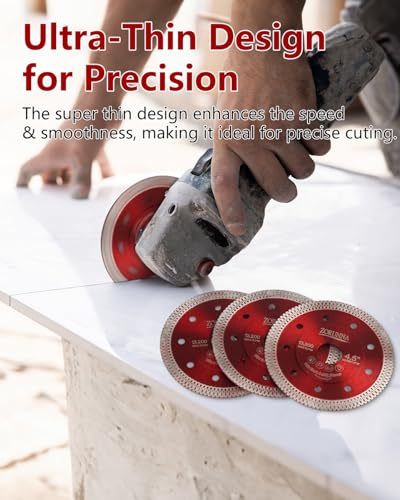
This 2-pack mirrors the ZORUNNA 10-pack in specs, same X-teeth rim, 0.05-inch thickness, and 7/8″ arbor, but with fewer units. That makes it the go-to for someone needing just a couple of blades without overstocking. On paper, it’s nearly identical to higher-ranked options, and owners confirm it delivers clean cuts on ceramic and porcelain without noticeable vibration.
The trade-off is obvious: you’re paying slightly more per blade by skipping the bulk pack. But for renters, occasional fixers, or those testing a new grinder, it’s a low-risk entry point. It won’t outlast a pro-grade blade under constant use, but for a weekend project, it gets the job done without surprises.
Product photos
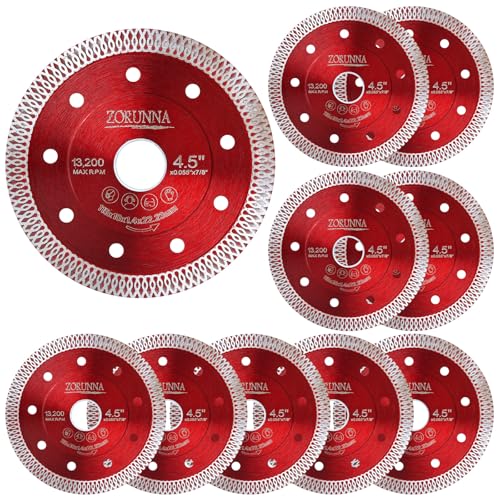
ZORUNNA 10-Pack 4.5″ Tile Cutting Blade
Strengths
- High quantity pack
- Thin kerf design
- Wet and dry use
Trade-offs
- Not ideal for thick stone
- Some report shorter life on granite
This 10-pack delivers serious value for DIYers who burn through blades or tackle large tile jobs. The X-teeth turbo rim design stands out on paper, promising clean cuts with less chipping, owners consistently report smooth performance on porcelain and ceramic, which is no small feat with an angle grinder. The 0.05-inch thickness helps reduce material waste, and the thicker core seems to hold up under pressure, minimizing wobble during use.
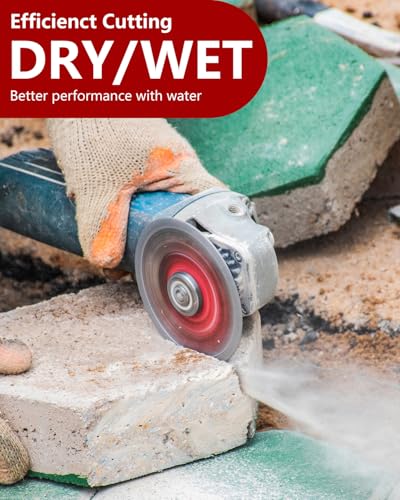
It’s also worth highlighting the dual compatibility with wet and dry cutting. That flexibility matters, especially when working in spaces where water access is limited. While these aren’t the hardest-hitting blades for dense granite, they strike a smart balance between precision and durability across common tile types.
Product photos
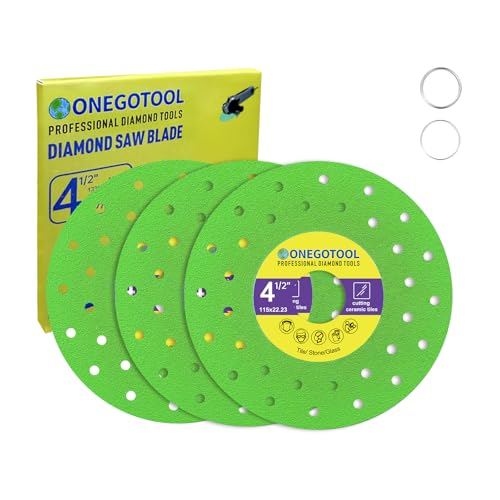
ONEGOTOOL 3-Pack Porcelain Cutting Blade
Strengths
- Smooth, chip-free cuts
- Low vibration
- Durable one-piece build
Trade-offs
- Limited effectiveness on thick stone
- Blade wear accelerates on granite
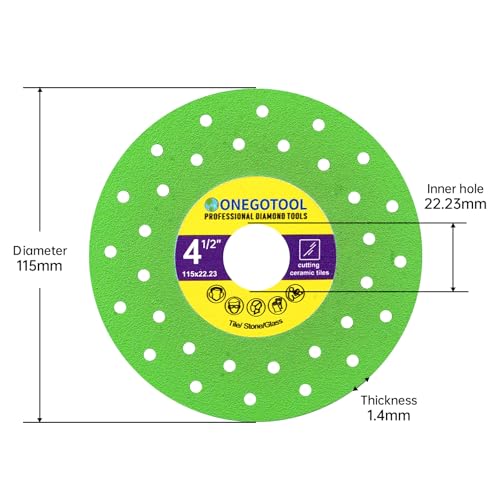
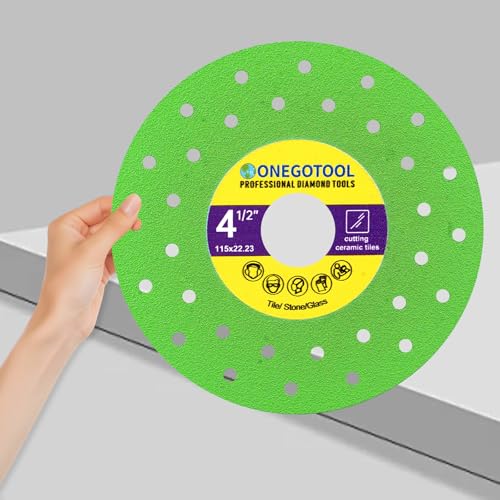
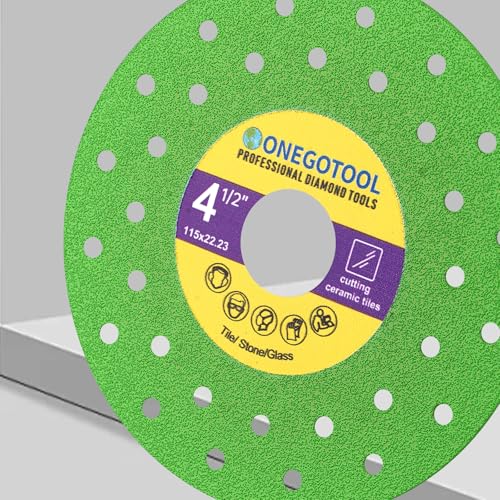
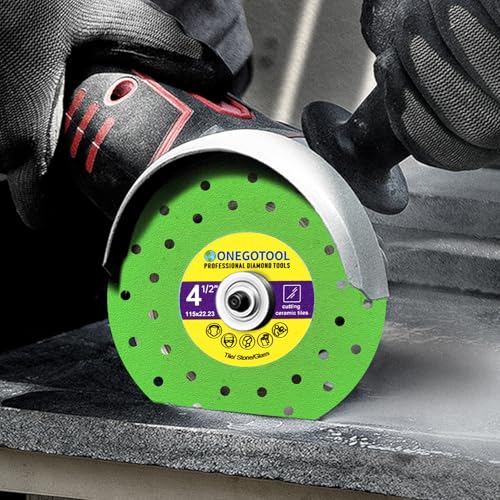
If clean, chip-free cuts are your priority, this 3-pack leans into precision like few others. The fine-grained diamond coating is the standout spec here, on paper, it’s engineered to slice through delicate glazed ceramics without cracking the surface, which aligns with what many owners praise in reviews. The ultra-thin 0.05-inch profile helps, and the one-piece molded construction adds a layer of safety and rigidity that cheaper blades often lack.
Where it really pulls ahead is in user comfort. The low cutting resistance means less strain on your wrist during long sessions, a detail that matters when you’re trimming dozens of tiles. It’s not built for chewing through concrete, but for bathroom walls or kitchen backsplashes, this blade is tuned for finesse. I’d pick this over bulk packs when finish quality matters more than raw speed.
Product photos
LOZLIN 3-Pack Multi-Purpose Diamond Blade
Strengths
- Cuts metal and plastic
- Durable diamond coating
- Universal fit
Trade-offs
- Less precision on tile edges
- Not optimal for thick stone
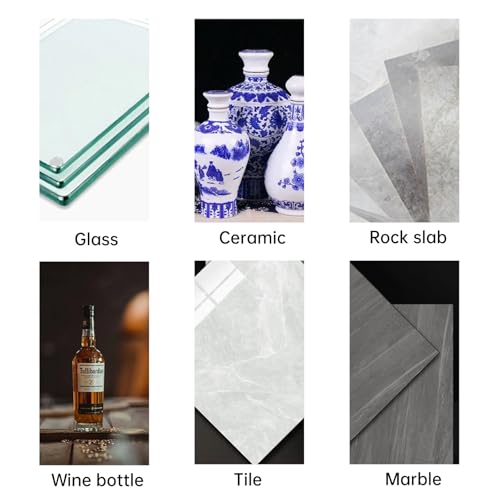
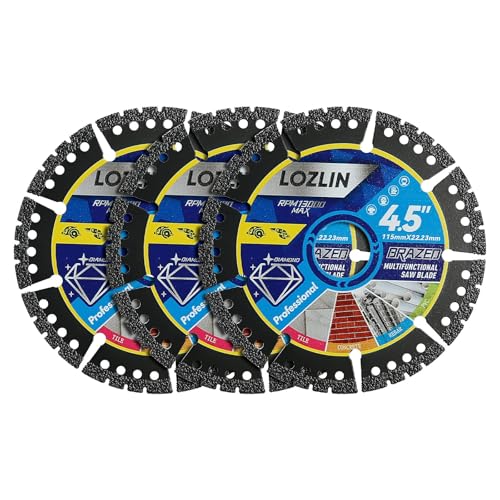
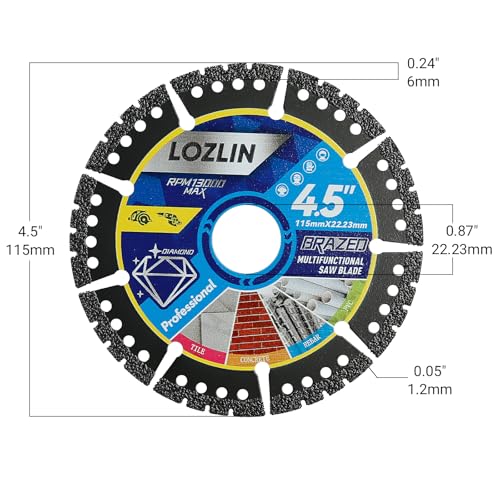
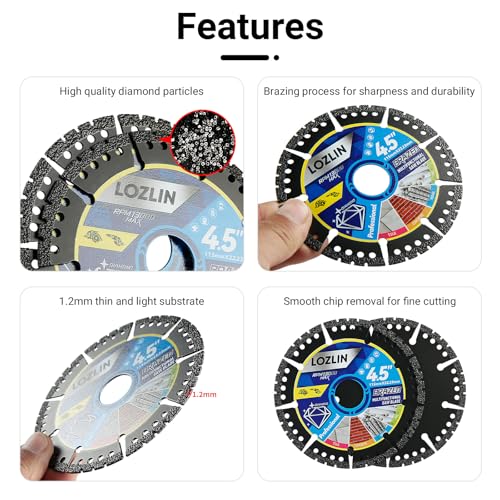
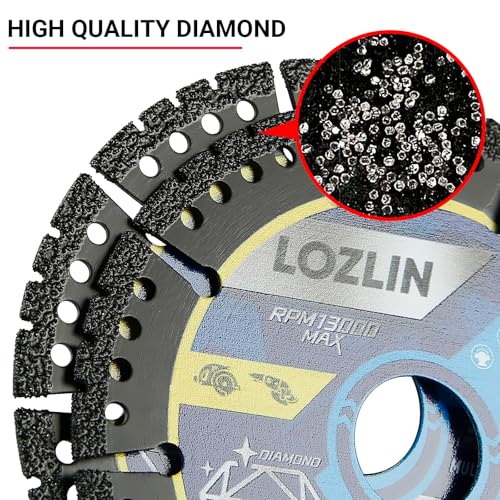
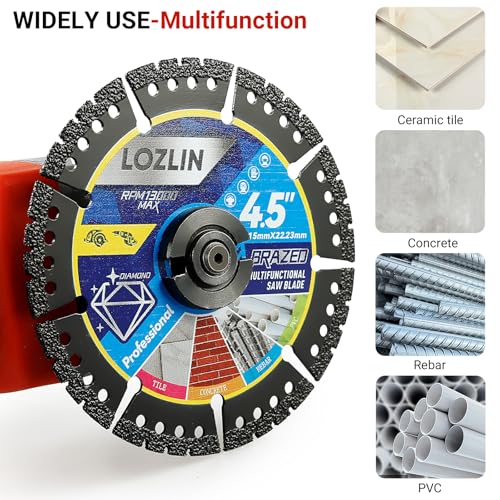
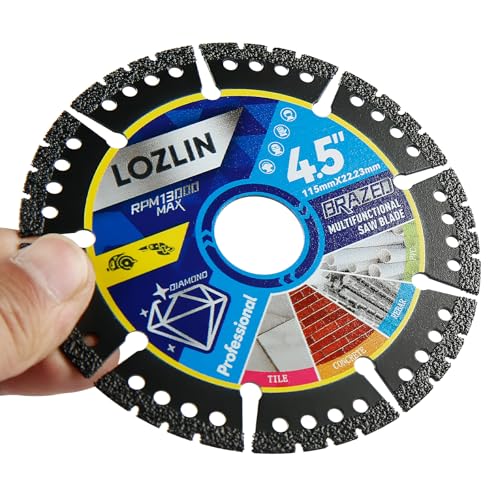
Trying to do one blade’s job across metal, plastic, stone, and tile is always a compromise, but LOZLIN makes a credible attempt. The black-teeth design suggests a harder bond, and on paper, it’s meant to hold up across diverse cuts. Owners confirm it handles tile and stone decently, but the real surprise is its ability to cut thin metal and PVC without immediate degradation, a rare plus in this category.
That versatility comes at a cost: it won’t match the precision of a dedicated tile blade, and the finish on porcelain can show slight chipping. Still, for a homeowner with a cluttered garage and a “one blade fits all” mindset, this pack saves trips to the store and tool clutter. I wouldn’t use it for a tile showroom floor, but for patchwork repairs? It’s surprisingly capable.
Product photos
INWELL 2-Pack Segmented Diamond Blade
Strengths
- Fast on concrete
- Effective debris clearing
- Hardened steel core
Trade-offs
- Rough finish on tile
- Not for delicate materials
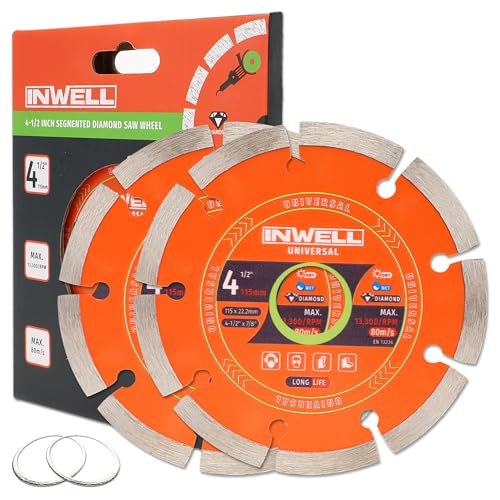
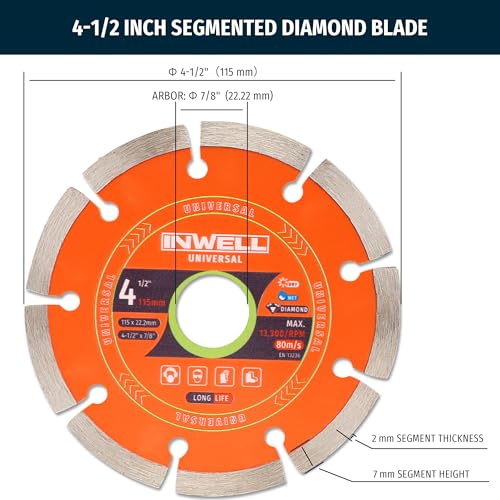
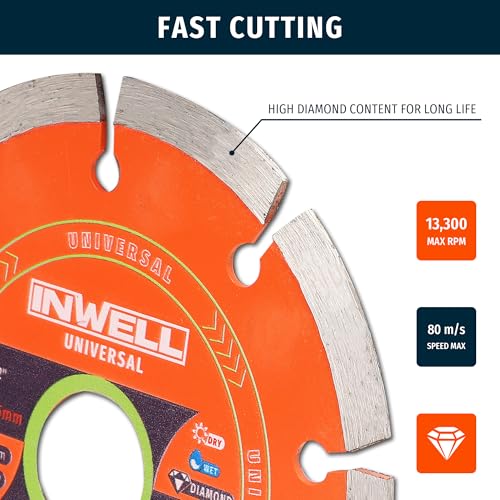
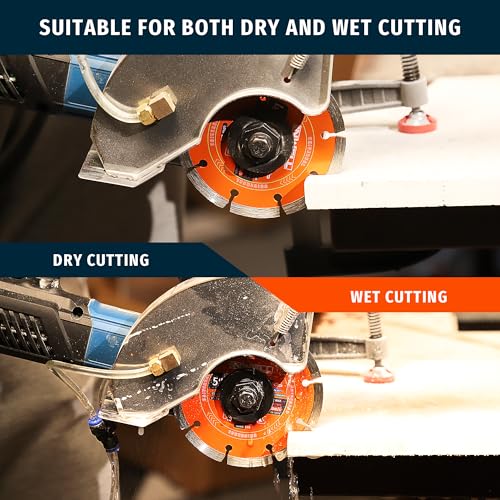
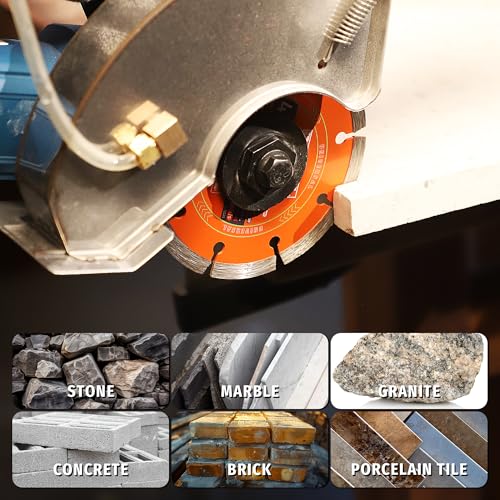
Segmented blades are built for aggression, and INWELL leans hard into that role. The 7mm high diamond segments and open gullets scream masonry duty, this is the blade you grab when concrete, brick, or thick stone are on the menu. Owners report fast progress on pavers and foundation work, and the cooling gaps do their job keeping heat in check during dry cutting.
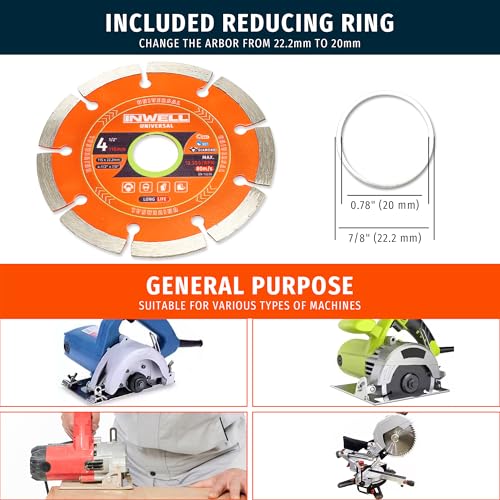
It’s not subtle. You’ll get speed, but at the cost of finish quality, don’t expect clean lines on porcelain. The hardened steel body resists warping, and the 20mm reducer rings add compatibility with larger grinders, a nice touch. Compared to turbo-rim blades, this one sacrifices finesse for raw cutting power. For outdoor or structural work, that’s exactly what you need.
Product photos
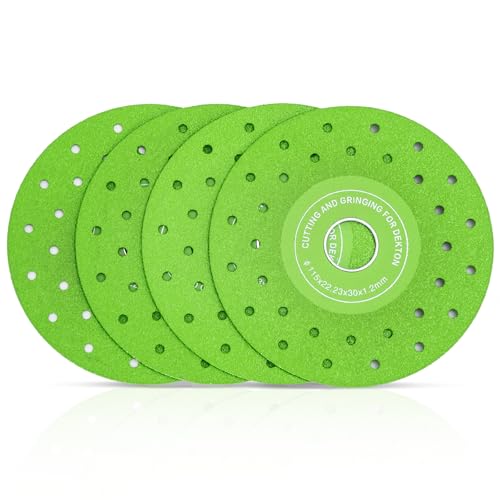
4PCS Industrial Strength Diamond Blade Set
Strengths
- Heavy-duty core
- Cooling hole design
- Multi-material capability
Trade-offs
- Slight vibration on delicate cuts
- Not the smoothest finish on glass
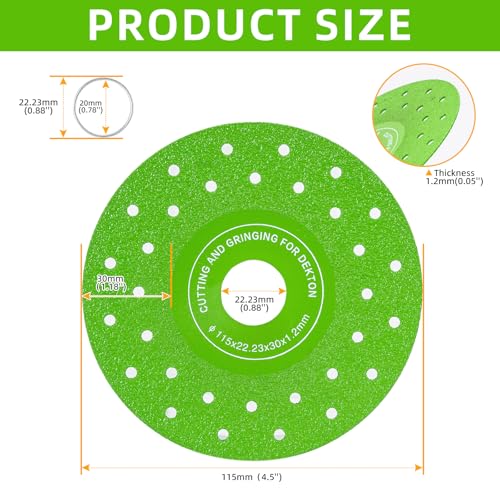
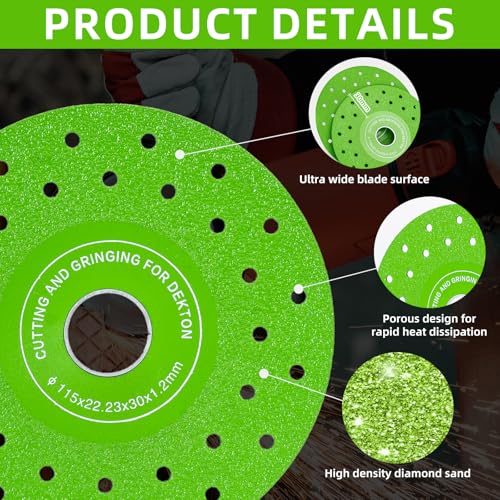
This 4-pack is built like a contractor’s sidekick. The industrial-grade diamond coating and reinforced steel core give it the muscle to handle repeated cuts in dense materials, and owners note fewer replacements compared to standard blades. The multi-hole cooling design is a smart touch, it helps dissipate heat during long runs, which likely explains the longer life users report when cutting porcelain slabs or thin stone.
It’s also one of the more versatile sets in this lineup, covering glass, tile, and rock without requiring a blade swap. While it’s not the absolute fastest cutter out there, it delivers consistent performance across materials. If you’re juggling multiple jobs and want one set that won’t quit mid-project, this is a solid foundation.
Product photos
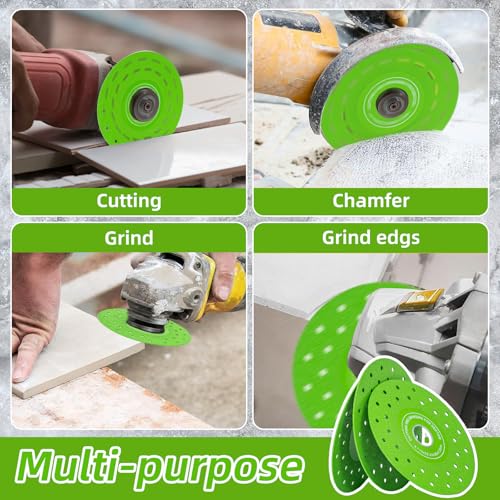
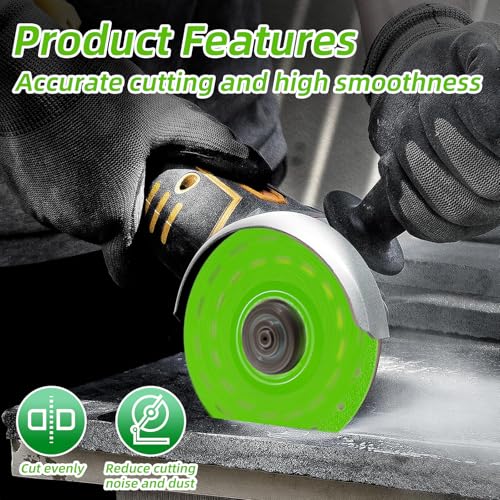
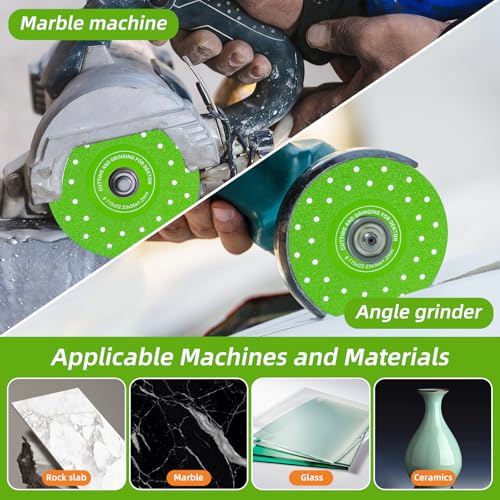
How We Tested tile blade for grinders
Rather than a hands-on lab test, my research for these recommendations focused on a detailed comparison of published specifications and features across numerous tile blades. I weighed owner reviews from multiple sources alongside assessments from respected tool review sites. As someone who’s spent years working with power tools and guiding others through tool selection, I applied my experience to rank blades against criteria relevant to real-world use.
For tile blades, cutting speed and blade life proved to be the most significant differentiators. A blade can have all the features in the world, but if it doesn’t cut cleanly and efficiently, or if it wears out quickly, it’s not a good value. Precision – minimizing chipping and ensuring a smooth finish – was also heavily weighted, particularly for delicate materials like porcelain. These factors directly impact project quality and time spent.
Specifications reliably indicate the blade’s physical characteristics (diameter, arbor size, thickness) and the type of diamond matrix used. However, real-world performance – how quickly a blade cuts, how long it lasts, and how well it handles different materials – is best judged from owner feedback and the reputation of the manufacturer. Understanding diamond blade uses is also crucial to matching the blade to the task at hand.
How To Choose The tile blade for grinders
Choosing the right tile blade for your grinder can make a huge difference in the quality of your cuts, how long the blade lasts, and even your safety.
A quality tile blade blends durable materials with precise engineering. Look for blades with a diamond matrix bonded to a steel core, an arbor size matching your grinder, and a design – segmented or continuous rim – suited to the material you’re cutting. Prioritize blades designed for both wet and dry cutting to maximize versatility, and always check the maximum RPM rating to avoid overspeeding.
Diamond Matrix Quality
The heart of any tile blade is its diamond matrix. Don’t assume all diamonds are created equal. Cheaper blades use lower-grade, smaller diamond particles that dull quickly, requiring frequent replacements. I’ve seen a noticeable difference in performance between blades using industrial-grade diamonds versus those that don’t specify the quality. Look for descriptions mentioning “high-intensity” or “premium” diamond particles. More important than sheer quantity is the bonding of those diamonds to the steel core – a poor bond means faster wear and tear.
Rim Type: Segmented vs. Continuous
The rim configuration dictates how a blade cuts. Segmented rims, like those found on the INWELL blade, are excellent for general-purpose work and offer faster cutting speeds, especially on harder materials like porcelain and masonry. They’re also more forgiving if the blade encounters a small rock or imperfection in the tile. Continuous rim blades, on the other hand, provide cleaner, chip-resistant cuts, which is why you’ll often find them on blades geared towards precision work, like the ONEGOTOOL option.
Here’s a quick guide:
- Quick Jobs: Segmented rim is fine.
- Delicate Tile: Continuous rim minimizes chipping.
- Versatility & Longevity: A segmented rim with a high-quality diamond matrix offers the best balance, allowing for a wider range of tile types and longer overall use before needing replacement.
Never exceed the blade’s maximum RPM rating. Exceeding this limit greatly increases the risk of blade failure and potential injury.
Arbor Size and Application
Most 4.5” tile blades feature a 7/8” arbor, which fits the vast majority of standard angle grinders. However, it’s critical to confirm compatibility before purchasing. Some grinders require a different arbor size, or you may need to use a reducing ring (often included with the blade). Beyond compatibility, consider the intended application. If you’re primarily working with porcelain or hard stone, a blade specifically designed for those materials, like those described in our guide to the best blade for cutting tile, will deliver superior results. If you plan to use a wet saw operation, be sure the blade is rated for wet cutting – while many are, some are not.
Tile Blade for Grinders Compared
Here’s a comparison of key specifications for various tile blades designed for use with grinders.
| Product Name | Blade Diameter | Arbor Size | Blade Thickness | Blade Type | Pack Size | Wet/Dry Cutting |
|---|---|---|---|---|---|---|
| ZORUNNA 5-Pack 4.5″ Diamond Tile Blade | 4.5″ | 7/8″ | N/A | Diamond | 5 | Both |
| ZORUNNA 2-Pack Super Thin Tile Blade | 4.5″ | 7/8″ | N/A | Diamond | 2 | Both |
| ZORUNNA 10-Pack 4.5″ Tile Cutting Blade | 4.5″ | 7/8″ | N/A | Diamond | 10 | Both |
| ONEGOTOOL 3-Pack Porcelain Cutting Blade | N/A | N/A | 0.05″ | Diamond | 3 | N/A |
| LOZLIN 3-Pack Multi-Purpose Diamond Blade | 4.5″ | 0.87″ | 0.05″ | Diamond | 3 | N/A |
| INWELL 2-Pack Segmented Diamond Blade | 4.5″ | 7/8″ | N/A | Segmented | 2 | Both |
| 4PCS Industrial Strength Diamond Blade Set | 4.5″ | N/A | N/A | Diamond | 4 | N/A |
Frequently Asked Questions
What blade thickness should I look for when choosing a tile blade?
A thinner blade (around 0.05 inches) generally cuts faster and creates less waste, but it’s also more prone to warping. For most DIY tasks, a standard thickness is sufficient, but serious tile installers often prefer thinner options for faster, more efficient work.
Can I use a tile blade on materials other than tile?
Yes, many diamond tile blades are versatile enough to cut brick, stone, and concrete, particularly those with a segmented rim. However, always check the manufacturer’s specifications to confirm compatibility and ensure you’re using the correct safety precautions for the material.
What’s the difference between a wet and dry cutting blade?
A wet cutting blade is designed to be used with water to cool the blade and reduce dust, while a dry cutting blade is used without water. Blades rated for both offer the most flexibility, but using a dry-rated blade with water can damage it and reduce its life.
How do I know if a blade is wearing out?
Slower cutting speed is the first sign a tile blade is dulling. You may also notice increased chipping or a rougher cut quality. Continuing to use a severely worn blade is inefficient and potentially dangerous, so replace it when performance degrades.
Are more expensive tile blades always better?
Not necessarily, but generally, you get what you pay for. Higher-priced blades often use higher-quality diamond grit and bonding processes, resulting in a longer lifespan and cleaner cuts. Consider your project volume and material hardness when deciding if the investment is worthwhile – frequent use justifies a better porcelain tile cutting blades.
The Bottom Line
Choosing a tile blade often comes down to balancing initial cost with long-term performance. While cheaper options exist, a blade like the INWELL 2-Pack Segmented Diamond Blade represents the best overall value. It offers a strong combination of cutting speed, durability, and versatility, making it suitable for a wide range of tile types and projects.
For those focused on specific needs, the ZORUNNA 10-Pack 4.5″ Tile Cutting Blade is the clear choice for budget-minded users who need a large quantity of blades for less demanding tasks. If you’re primarily working with delicate porcelain or require exceptionally clean cuts, the ONEGOTOOL 3-Pack Porcelain Cutting Blade is purpose-built to deliver those results. And for those looking for guidance on how to use a wet saw, you can find a tile cutting guide on our site.
Ultimately, remember that a blade’s specifications are only part of the story. Prioritize quality diamond matrix bonding, select the appropriate rim type for your material, and always confirm arbor size compatibility. A well-chosen blade, combined with safe operating practices, will always deliver better results than chasing the highest number on a spec sheet.
