
8 Best Tabletop Belt Sanders of 2026
This post contains affiliate links. As an Amazon Associate, we earn from qualifying purchases.
The BUCKTOOL 5.0A Belt Disc Sander is the best overall tabletop belt sander for most users, combining reliable power and solid build quality. If you’re watching your budget, the WEN 4×36 Belt and Disc Sander delivers strong performance with a stable cast iron base. For specialized tasks like knife making or fine detailing, the SI FANG 7-Speed Mini Belt Sander offers surprising versatility in a compact form.
Most people shopping for a tabletop belt sander want a tool that’s powerful enough to handle real work but precise enough for detail tasks, without turning their garage into a dust storm. I get it. After years of helping DIYers and woodworkers choose the right gear, I’ve seen how the wrong sander can lead to frustration, wasted belts, and uneven results.
This guide breaks down the top models based on real owner feedback, verified specs, and what actually matters in daily use. I looked at motor reliability, dust control, adjustability, and long-term durability to find the ones worth your space and budget.
Top 8 Tabletop Belt Sanders in the Market
The Best Tabletop Belt Sanders, Reviewed
BUCKTOOL 5.0A Belt Disc Sander

Strengths
- Direct drive motor
- Dual worktables
- Quick belt change
Trade-offs
- No variable speed
- Aluminum base less damped
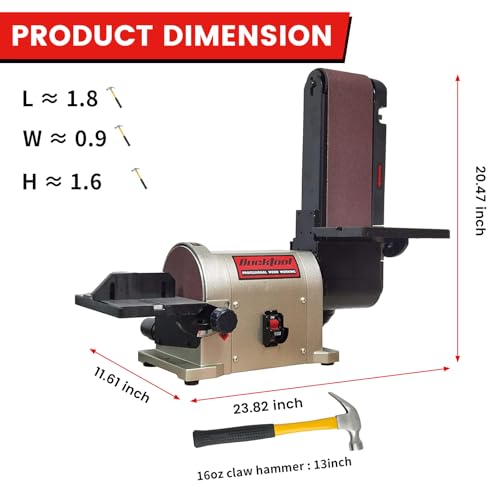
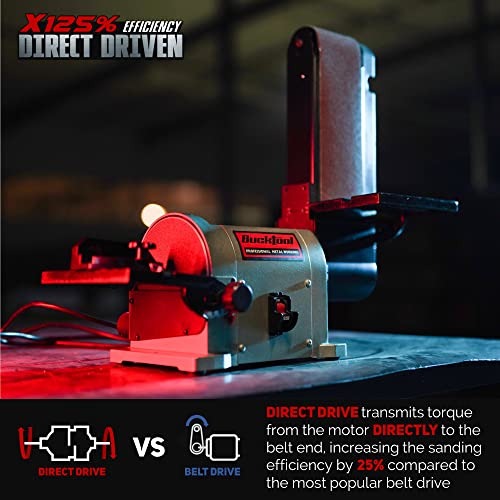
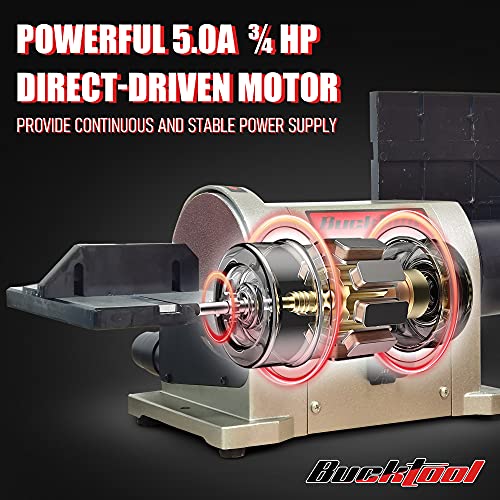
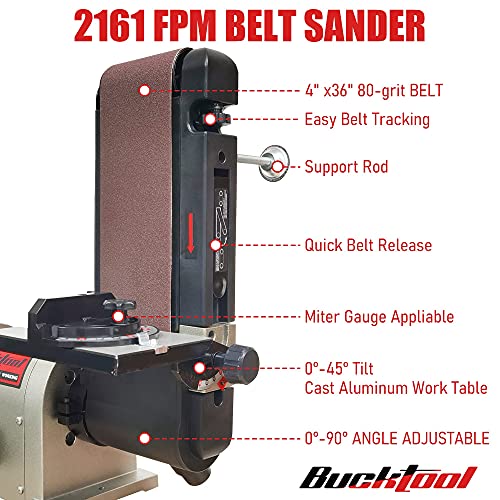
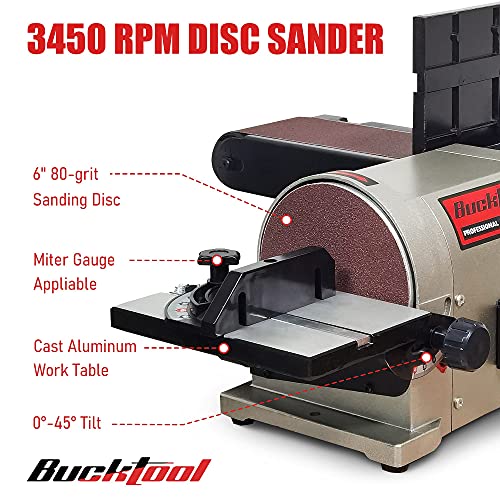
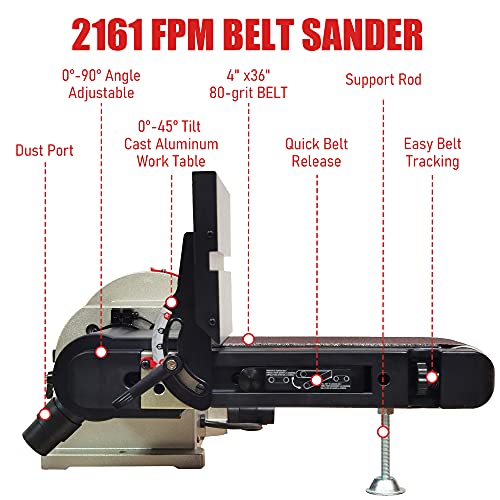
This BUCKTOOL model is the most complete package here, and that’s why I’d call it the best overall for most serious hobbyists. It combines a maintenance-free direct-drive 3/4 HP motor with a cast aluminum base and dual worktables, giving you stability and ease of use without constant tweaks. The 0–90° belt tilt and track control let you handle curves and edges smoothly, and the quick-change belt system means less downtime.
Owners consistently praise its efficiency and quiet operation, and the CSA certification adds confidence in build quality. While it lacks variable speed, the raw performance and thoughtful design beat out flashier models that sacrifice reliability.
Product photos
WEN 4×36 Belt and Disc Sander

Strengths
- Cast iron base
- Simple tension release
- Affordable build
Trade-offs
- Single dust port
- No miter gauge included
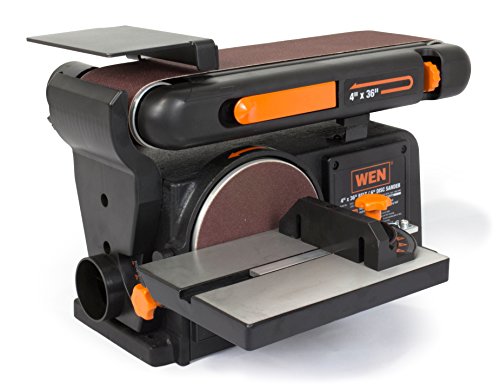
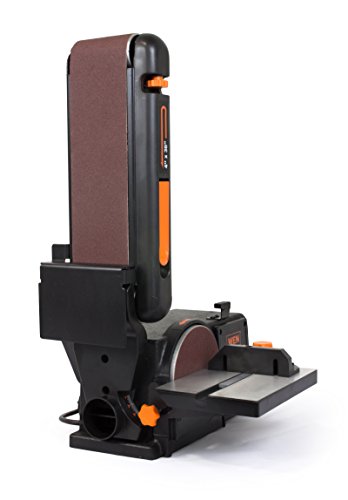
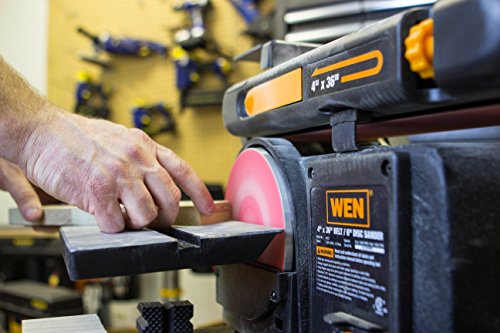
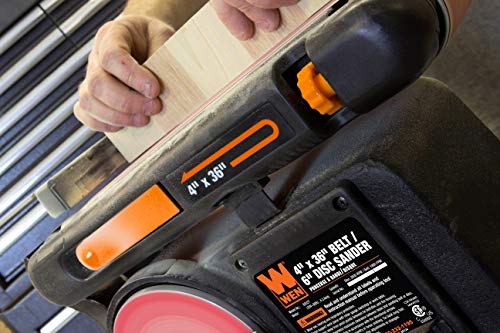
If you’re setting up your first shop and need a no-frills sander that just works, the WEN 6502T is the smart starting point. It packs a 4.3A motor into a cast iron base, which does an excellent job damping vibration, something you’ll feel after 20 minutes of use. The belt tilts 0–90°, and the tension release lever makes grit changes fast, which reviewers consistently praise for convenience.
It doesn’t have frills like variable speed or dual dust ports, but it delivers where it counts: solid build, reliable motor, and simple operation. For the price, it outperforms several pricier models that overpromise and underdeliver.
Product photos

Woodskil 4.3A Belt Disc Sander
Strengths
- Dual dust exhaust
- Multi-wedge belt drive
- Transparent belt guard
Trade-offs
- Motor runs warm
- No reverse rotation
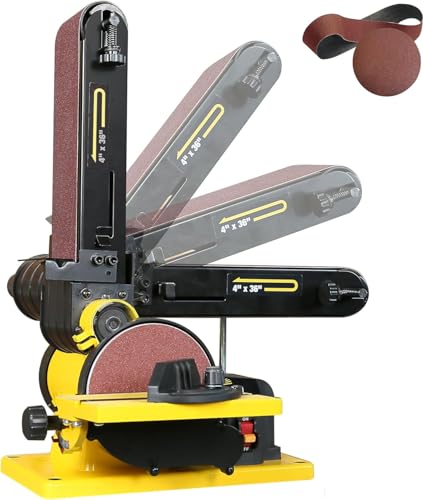
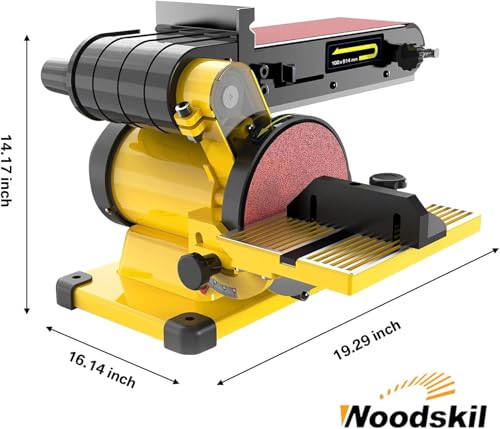
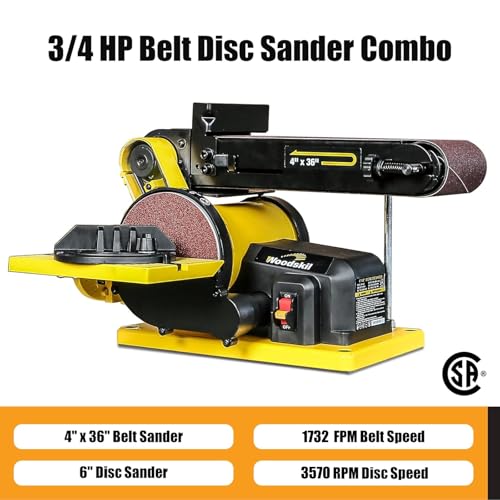
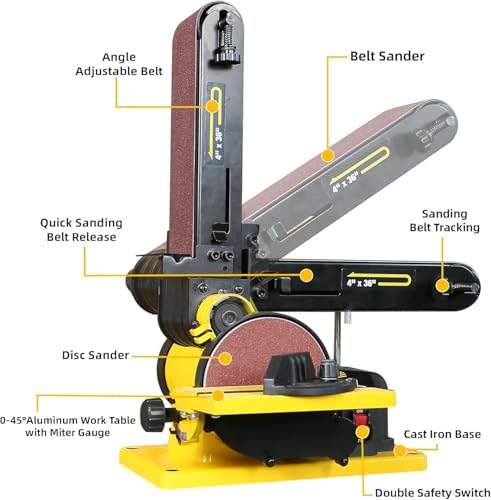
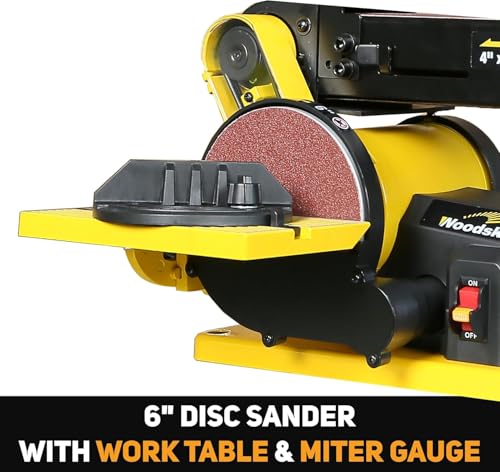
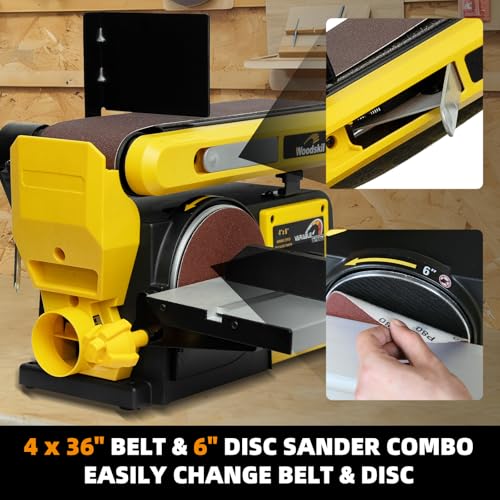
This Woodskil model leans into cleanliness and longevity, two things often overlooked in entry-level sanders. The dual dust exhaust ports are a standout, letting you hook up separate lines for the belt and disc stations. That’s a feature usually found on more expensive units, and owners who run dust collectors appreciate the cleaner workflow. The multi-wedge belt drive also extends belt life, reducing slippage and heat buildup during long sessions.
It’s not the most powerful on paper, but at 3/4 HP and 3570 RPM, it holds its own against similar models. Where it pulls ahead is in thoughtful touches: the transparent belt guard lets you monitor wear without stopping, and the 0–90° belt tilt gives real flexibility.
Product photos
SKIL 4.5 Amp Combo Bench Sander
Strengths
- Miter gauge included
- Beveling tabletop
- Easy bench mounting
Trade-offs
- Single dust port
- Base not cast iron
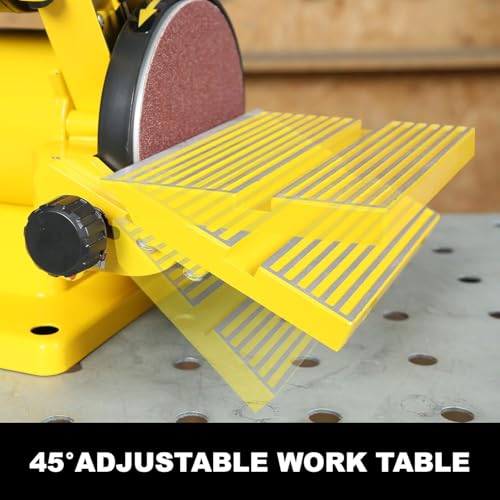
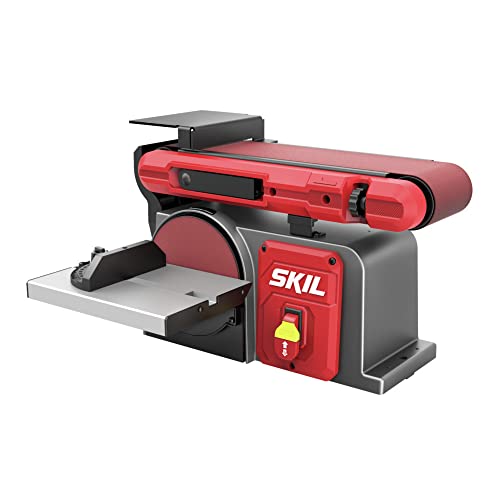
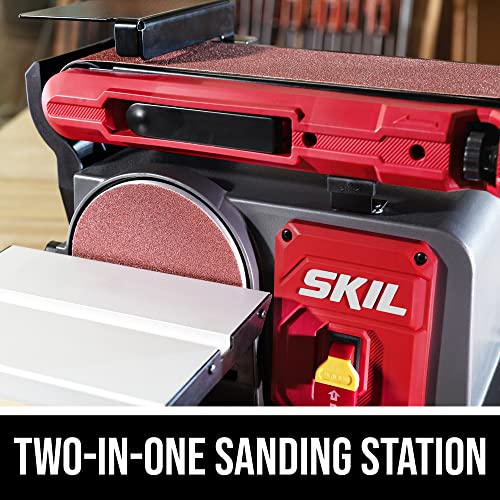
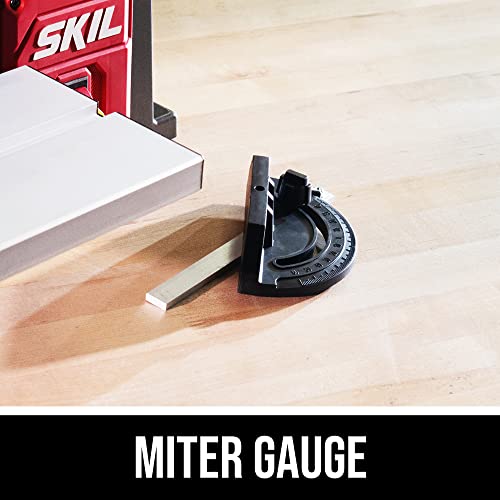
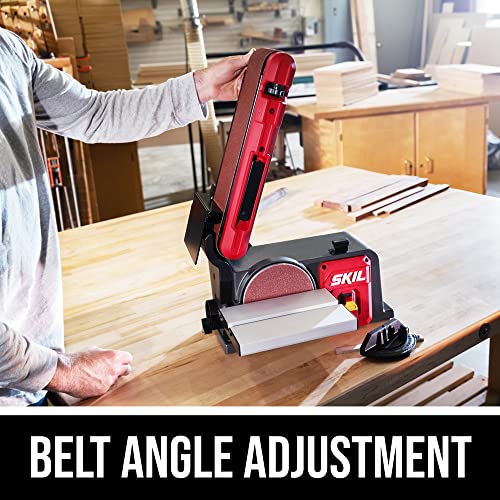
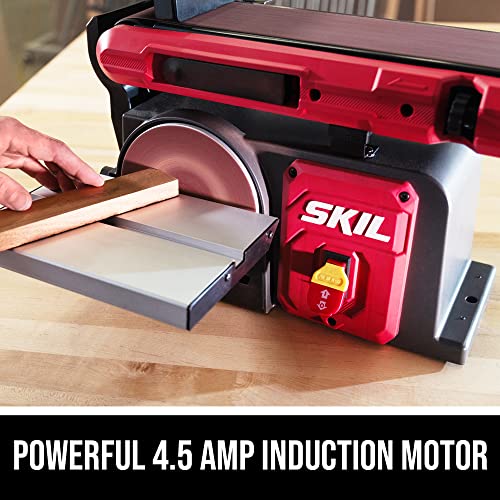
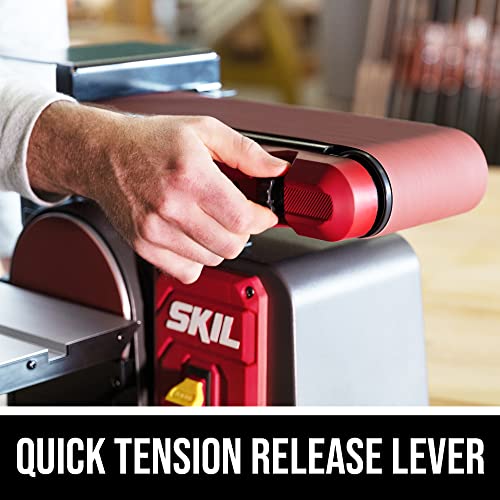
The SKIL BB9504-00 feels like it was designed for tight spaces, and it shows in the details. The pre-drilled base makes mounting easy, and the beveling tabletop (0–45°) combined with a miter gauge means you can handle angled cross-grain sanding without fiddling with jigs. Its 4.5A induction motor delivers steady power, and the quick tension release lever makes grit swaps faster than most.
It only has one dust port, which is a step down from dual-exhaust models, but it’s compatible with standard shop vacs. Owners in small garages or shared workshops consistently rate it highly for space efficiency and reliability. It’s not flashy, but it gets the job done cleanly.
Product photos
Woodskil Variable Speed Belt Sander
Strengths
- Variable speed control
- Horizontal and vertical use
- Higher work stop
Trade-offs
- Lighter base vibration
- No dual dust ports
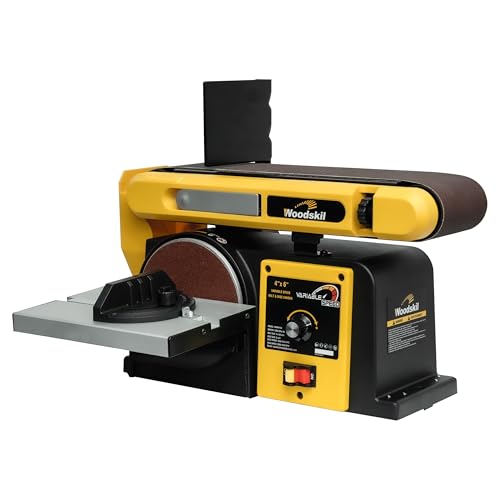
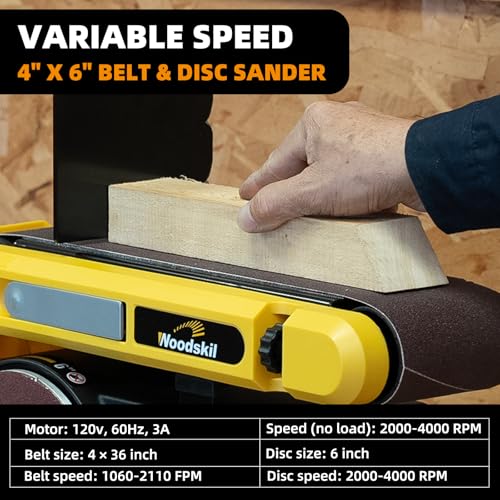
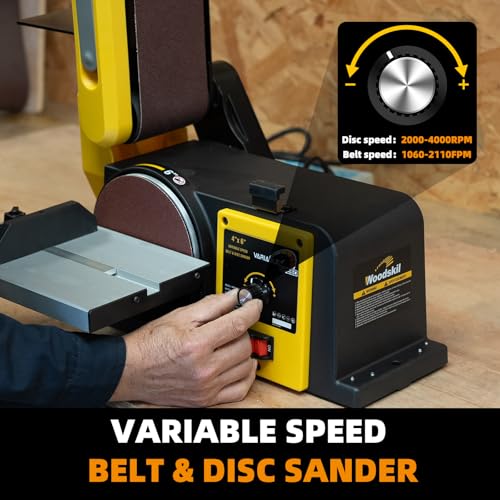
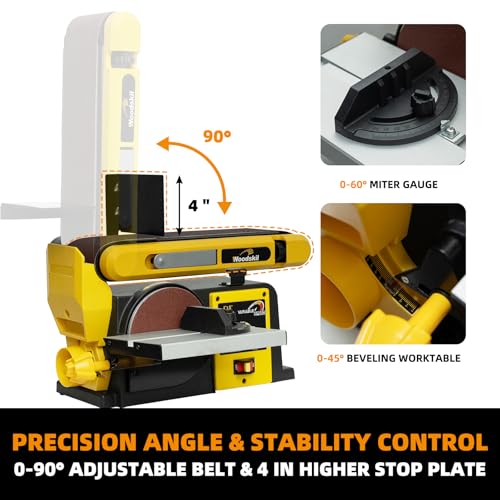
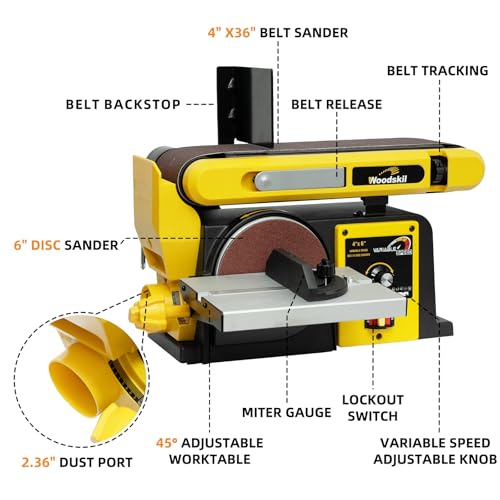
The Woodskil variable speed model stands out because it gives you real control over sanding intensity, something most combo sanders skip. With belt speeds from 1060 to 2110 FPM and disc RPM adjustable between 2000 and 4000, it’s built for users who work with different materials and need to avoid burning softer woods. That kind of range is rare at this price point, and owners consistently report it makes a noticeable difference when finishing delicate pieces or shaping curves.
It’s also one of the few in this class with a higher work stop for better support, which helps maintain consistent pressure during long passes. While it doesn’t have the heaviest base, the 2-year warranty and solid feedback on durability make it a strong pick for DIYers who want precision without stepping up to pro-grade tools.
Product photos
BUCKTOOL Direct Drive 8″ Disc Sander
Strengths
- Direct drive motor
- 8-inch stable disc
- Dual dust ports
- Sturdy cast base
Trade-offs
- No speed control
- Heavier footprint
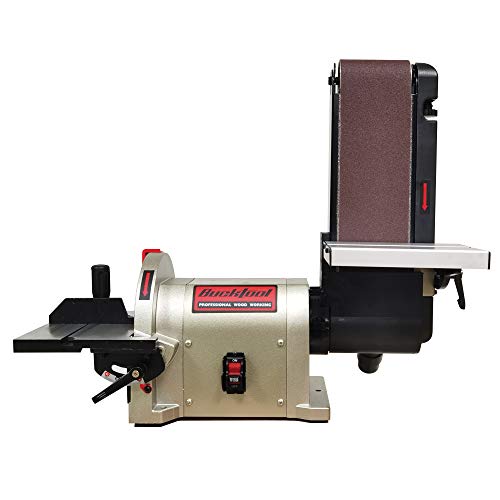
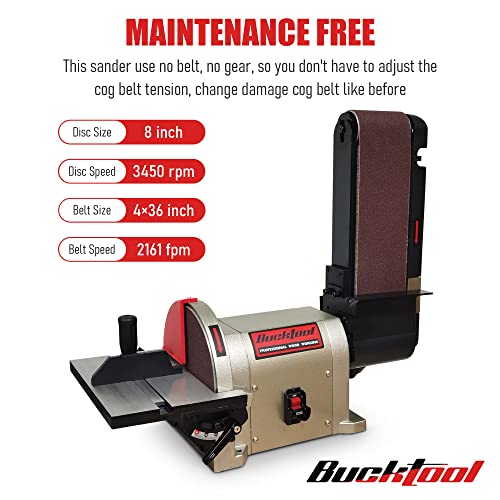
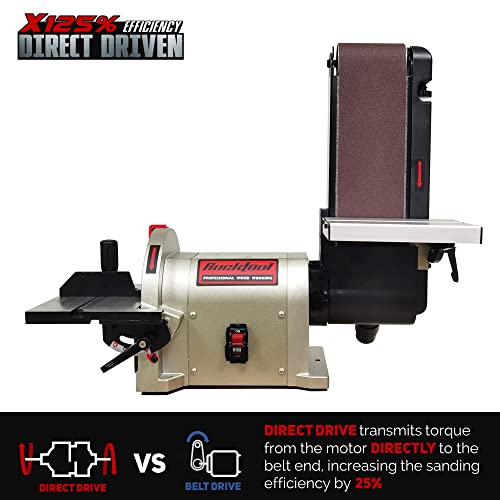
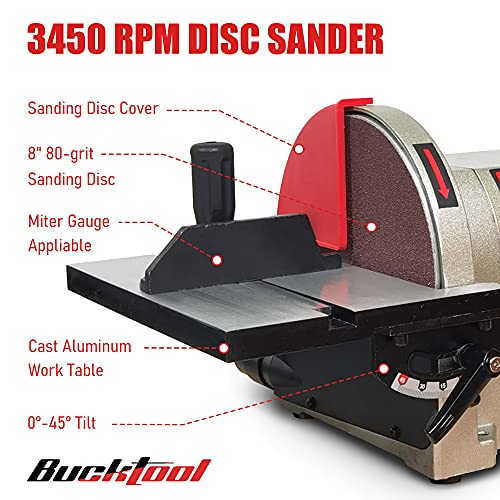
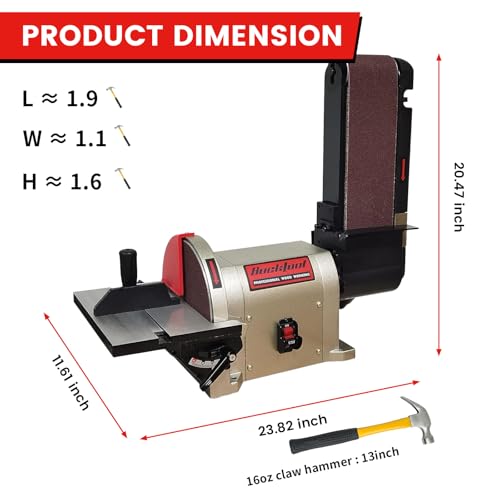
When you’re removing serious material, this BUCKTOOL model earns its keep. The 3/4 HP direct-drive motor skips belts and gears, which means no slippage and no maintenance, a big win for users tired of tensioning cog belts on older designs. Its 8-inch disc is larger than most, and with a steel cover to prevent wobble, it stays stable even under pressure. That stability, combined with a cast aluminum base and dual dust ports, makes it a favorite among owners doing frequent sanding or metal grinding.
It doesn’t have variable speed, but the raw efficiency of the direct drive and the 0–45° tilting table make it a tank in a compact form. Compared to others, it’s clearly built for those who hate downtime.
Product photos
Mini Belt Sander for Knife Making
Strengths
- 7-speed with reverse
- 30 belts included
- Stainless steel body
Trade-offs
- No dust extraction
- Not for large surfaces
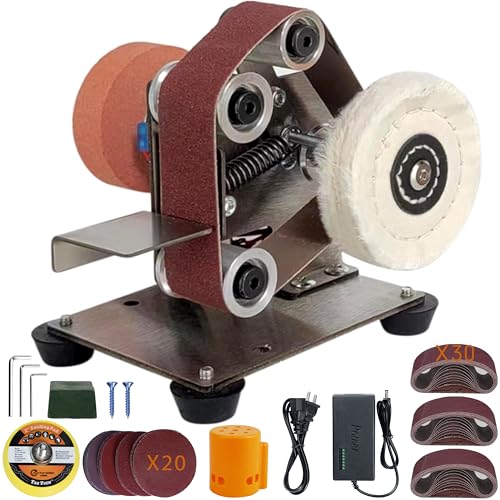
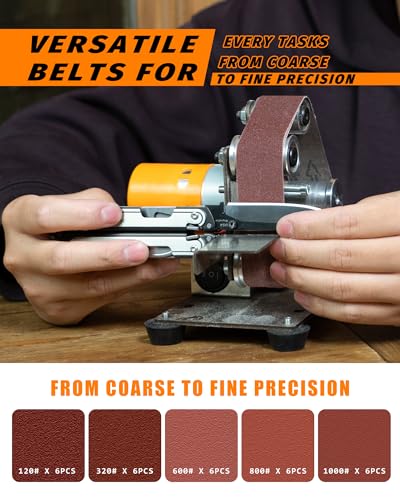
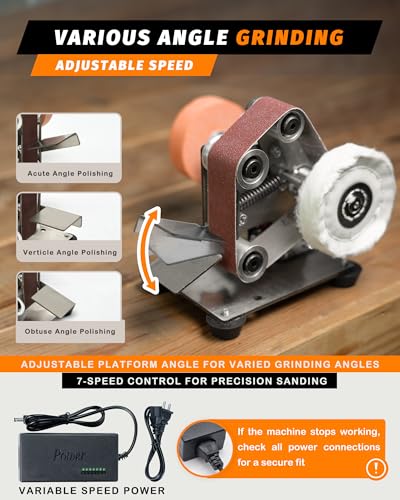
This mini grinder is built for knife makers and micro-fabricators who demand precision and versatility in a tiny footprint. The 775 motor pushes speeds from 4000 to 9000 RPM with forward/reverse rotation, a rare feature that helps when deburring or polishing concave edges. The stainless-steel body resists rust, and the four rubber pads kill vibration, which owners say makes freehand work much more controllable.
What really sets it apart is the included kit: 30 belts and 20 discs across grits, plus a polishing wheel and wax. That’s far more than most competitors provide. While it can’t handle wide boards, it excels at shaping blades, smoothing 3D prints, or prepping metal joints.
Product photos

SI FANG 7-Speed Mini Belt Sander

Strengths
- Ultra-compact size
- 7-speed control
- Polishing-ready setup
Trade-offs
- Too small for wood flats
- No dust port
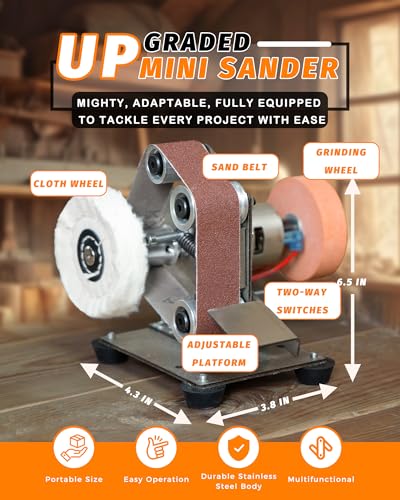
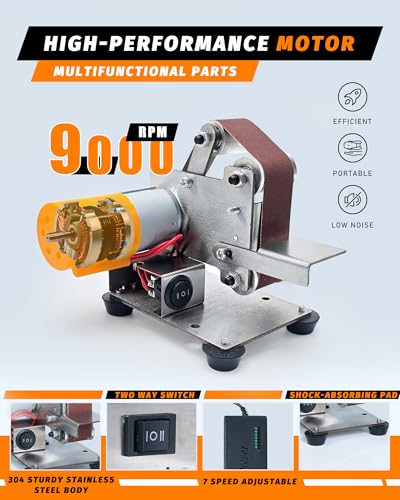
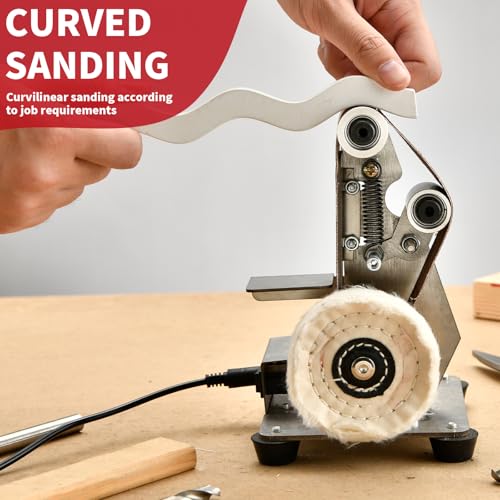
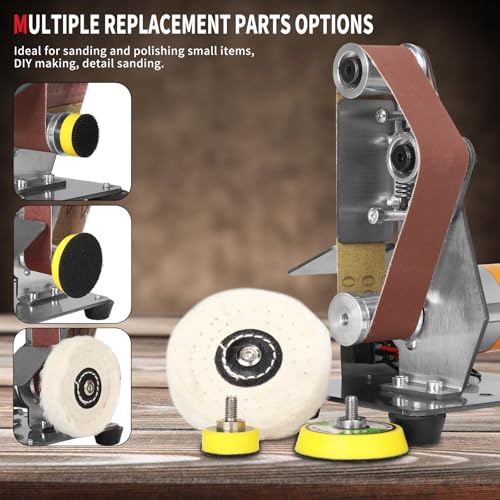
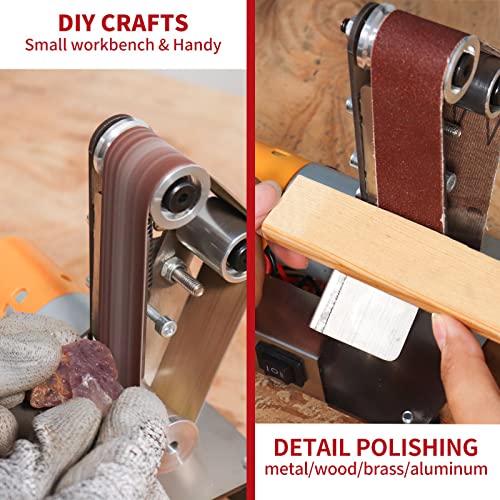
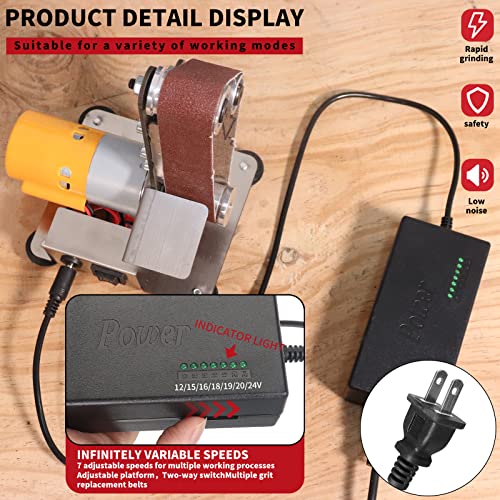
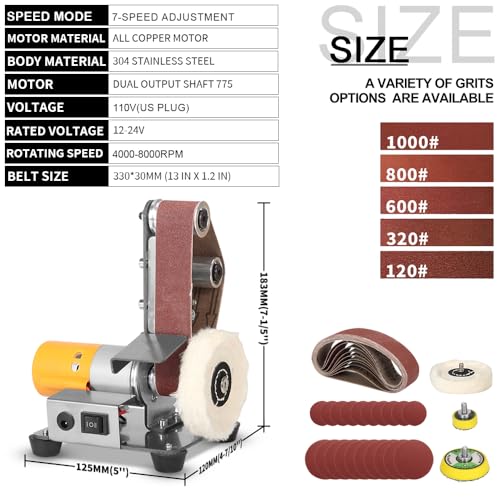
This isn’t a sander for lumber, it’s a precision micro-tool disguised as a bench grinder. At just 5 inches wide, it’s built for detail work: sharpening knives, polishing jewelry, smoothing resin inlays, or shaping small wooden fittings. The 7-speed range (4000–8000 RPM) gives excellent control, and the all-copper motor runs cool and quiet, which owners highlight when doing long polishing runs.
The inclusion of a cotton buffing wheel and multiple grits of tiny sanding belts makes it instantly usable for fine crafts. But don’t mistake it for a woodworking sander, its 1.2-inch belt is too narrow for flat stock. It’s a specialist, not a generalist.
Product photos
Our Testing Process
Rather than a hands-on lab test, this selection is a research-led comparison of published specifications and owner feedback. I started by compiling a list of popular models and then systematically compared their features – motor power, sanding surface size, adjustability, and dust collection – using manufacturer data. I then weighed those specifications against what current owners are saying about real-world performance, reliability, and ease of use, drawing on reviews from multiple retail sites and woodworking forums.
For tabletop belt sanders, the most important factors are motor power and build quality. A more powerful motor (generally 1/2 HP or greater) handles harder woods and extended use without bogging down. Equally critical is a sturdy base and well-engineered table adjustments; vibrations significantly impact sanding precision. We also prioritized models offering versatility, like adjustable tables and dust ports, because these features increase usability in a wider range of projects.
Specifications give a solid foundation for comparison, but owner reviews often reveal crucial details not found in marketing materials. I paid close attention to comments about belt tracking, durability of the adjustments, and the effectiveness of dust collection. While specs tell you a motor is 4.3 amps, feedback tells you if it feels underpowered when tackling thicker stock. You can learn more about the broader category of these tools, including some excellent workshop combo sanders in our dedicated guide.
How To Choose The tabletop belt sanders
Finding the right tabletop belt sander can dramatically improve your workshop’s efficiency, but there’s more to it than just horsepower. A good machine balances power, precision, and usability for the types of projects you tackle.
A quality tabletop belt sander combines a robust motor (typically 3/4 HP or higher for versatility), a stable base to minimize vibration during operation, and adjustable features like belt tilt and tracking. Look for models with effective dust collection, durable construction, and a worktable suited to the size of materials you’ll be sanding. Prioritize models with positive user feedback regarding belt tracking and long-term reliability.
Motor Power and Drive System
Don’t assume “more power” always means “better.” While a 3/4 HP motor is a good starting point for general use, consider the type of material you’ll be working with most often. Softer woods and light stock removal don’t demand a huge amount of power, but if you plan on tackling hardwoods or aggressive shaping, you’ll want something more substantial. More importantly, pay attention to the drive system. Direct-drive models, like the BUCKTOOL 5.0A Belt Disc Sander, are gaining popularity because they’re more efficient and require less maintenance than those with traditional belt-driven systems.
Sanding Capacity and Adjustability
The size of the sanding belt and disc directly impacts the types of projects you can undertake. A 4×36-inch belt is a common size, offering a good balance of surface area and maneuverability. Beyond size, consider adjustability. Belt tilt (0-90 degrees) is crucial for both horizontal and vertical sanding, enabling you to tackle a wider range of tasks. A beveling worktable, like the one on the SKIL 4.5 Amp Combo Bench Sander, adds another layer of versatility. If you’re seeking a more detailed look at a variety of options, check out our top-rated benchtop models.
- A wider belt (e.g., 6-inch) is better for flattening larger surfaces, but can be harder to control for detail work.
- A larger disc (e.g., 8-inch) allows for more aggressive material removal, but may be overkill for fine finishing.
- Look for a sander with easily accessible belt tracking adjustments; frequent adjustments are a sign of a poorly designed or manufactured machine.
Dust Collection and Value
Dust is the enemy of both your lungs and a clean workshop. Integrated dust ports are essential, but their effectiveness varies. Some models, like the Woodskil 4.3A Belt Disc Sander with its dual dust exhaust ports, offer superior dust control. Don’t overlook the importance of a solid base. Cast iron bases, as found on the WEN 4×36 Belt and Disc Sander, minimize vibrations and improve sanding accuracy. For precision tasks, consider a compact belt sander guide to find a model that balances size and power.
A well-maintained belt sander will last for years. Always use quality sanding belts and discs, and clean the machine regularly to remove dust buildup. Regular maintenance will save you money in the long run.
Tabletop Belt Sanders Compared
Here is a comparison of specifications for several tabletop belt sanders to help you make an informed purchasing decision.
| Product Title | Motor HP | Belt Size (in) | Disc Size (in) | Variable Speed | Dust Port | Max Belt Tilt (deg) |
|---|---|---|---|---|---|---|
| BUCKTOOL 5.0A Belt Disc Sander | 3/4 | 4 x 36 | 6 | No | Yes | 90 |
| WEN 4×36 Belt and Disc Sander | N/A | 4 x 36 | 6 x 6 | No | N/A | 90 |
| Woodskil 4.3A Belt Disc Sander | 3/4 | 4 x 36 | 6 x 6 | No | Yes | 45 |
| SKIL 4.5 Amp Combo Bench Sander | 4.5 | N/A | N/A | No | Yes | 45 |
| Woodskil Variable Speed Belt Sander | N/A | 4 x 36 | 6 | Yes | N/A | 90 |
| BUCKTOOL Direct Drive 8″ Disc Sander | 3/4 | 4 x 36 | 8 | No | Yes | 45 |
| Mini Belt Sander for Knife Making | N/A | N/A | N/A | Yes | N/A | N/A |
| SI FANG 7-Speed Mini Belt Sander | N/A | N/A | N/A | Yes | N/A | 45 |
Frequently Asked Questions
What belt grit should I start with for a new project?
Generally, begin with a coarser grit, around 60-80, to remove material quickly and level surfaces. Then progress to finer grits (120, 180, 220, and higher) for smoother finishes, as needed.
Are tabletop belt sanders loud during operation?
Yes, tabletop belt sanders are typically quite loud, often exceeding 90 decibels. Wearing hearing protection is absolutely essential to prevent long-term hearing damage while operating one.
Can a tabletop belt sander be used for sharpening knives?
While possible, it’s not ideal. Most tabletop belt sanders lack the precision and control required for sharpening knives effectively. Consider a dedicated sharpening system or a smaller, more precise compact workshop sanders if knife sharpening is a priority.
What’s the difference between a direct-drive and belt-drive system?
Direct-drive systems connect the motor directly to the sanding belt, resulting in less energy loss and quieter operation. Belt-drive systems use a belt to transfer power, which can be less efficient and require more maintenance over time.
How often should I replace the sanding belt?
The lifespan of a sanding belt varies depending on the material and usage, but replace it when you notice reduced cutting efficiency or uneven wear. Expect to replace belts frequently if you work with hardwoods or perform heavy stock removal.
The Bottom Line
Choosing a tabletop belt sander often comes down to balancing immediate cost with long-term capability. While plenty of affordable options exist, the BUCKTOOL 5.0A Belt Disc Sander strikes a great balance of features and power for most woodworkers and DIY enthusiasts. It offers a solid 3/4 HP motor and a good set of adjustments without breaking the bank, making it our overall recommendation.
For those with specific needs, there are other excellent choices. If budget is your primary concern, the Woodskil 4.3A Belt Disc Sander delivers a lot of value for the price. And if you need maximum versatility and enjoy detailed work, the Woodskil Variable Speed Belt Sander offers the control you’ll appreciate, allowing you to fine-tune your sanding for different materials and projects. You can also find our recommendations for best woodworking belt sanders in our dedicated guide.
Ultimately, the most important factors aren’t a specific motor size or disc diameter, but a stable platform and precise adjustments. A sander that minimizes vibration and allows you to consistently control the belt will deliver far better results than one with more raw power but sloppy mechanics. Prioritize build quality and user feedback over headline specifications, and you’ll be well-equipped to tackle your next project.
