8 Best Benchtop Sanders of 2026
This post contains affiliate links. As an Amazon Associate, we earn from qualifying purchases.
The BUCKTOOL Pro 1HP Bench Belt Sander stands out as the best overall benchtop sander for its strong motor and dual 4×36 belt and 8-inch disc setup, while the WEN 4×36 offers a solid budget-friendly option for lighter tasks. If you need more versatility in speed control, the Woodskil Variable Speed Belt Disc Sander is a strong pick for detailed or delicate work.
Most people don’t realize how much a benchtop sander’s stability and motor power affect their final results, too weak, and it bogs down; too flimsy, and it vibrates off the bench. After comparing the field, reading owner feedback, and evaluating specs across dozens of models, I focused on build quality, motor performance, and real-world usability to narrow down the best options for DIYers and serious hobbyists alike.
Top 8 Benchtop Sanders in the Market
The Best Benchtop Sanders, Reviewed
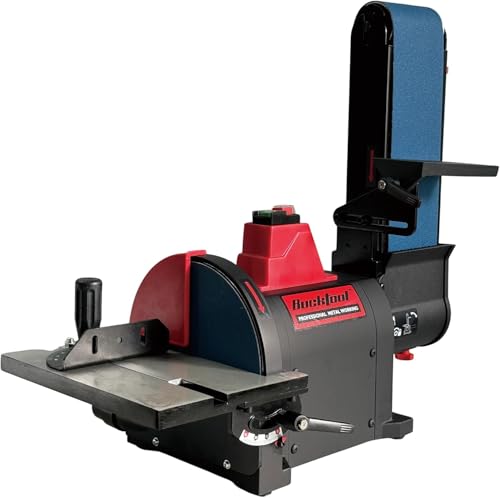
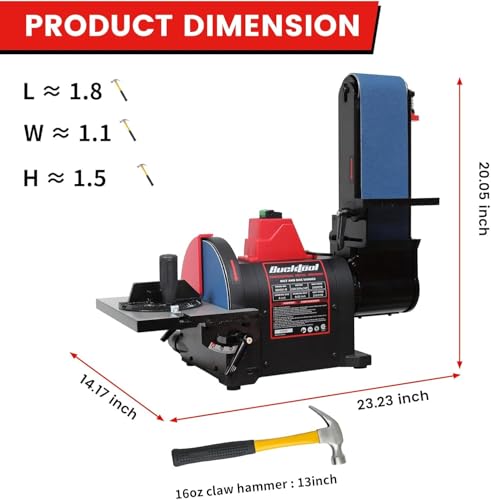
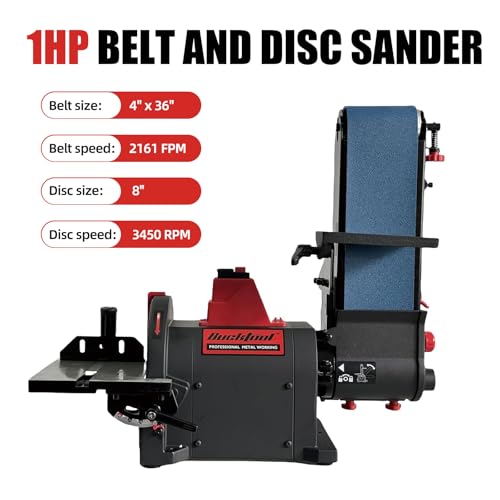
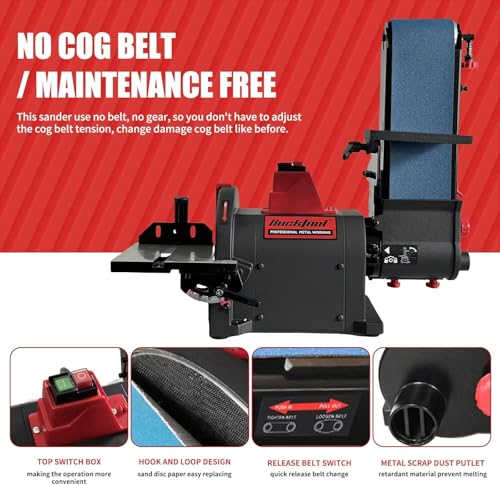
BUCKTOOL Pro 1HP Bench Belt Sander
Strengths
- Direct-drive motor
- Dual angle-adjustable tables
- Sturdy vibration-resistant base
- Hook-and-loop disc
- Large dust port
Trade-offs
- Heavy for benchtop
- Higher price tier
- Less common replacement parts
If you’re looking for a two-in-one sander that can go hard on metal and still handle wood, this BUCKTOOL model stands out. The direct-drive 1 HP motor is a major upgrade over belt-driven designs, and reviewers note it delivers consistent power without bogging down during heavy grinding. The 8-inch disc paired with a 4 x 36-inch belt gives you serious surface coverage, and the ability to tilt both tables independently means you can dial in angles with real precision.
What impresses most is the build quality for the class. The cast aluminum base with rubber feet does a solid job minimizing vibration, and the top-mounted switch is a small but thoughtful touch. Compared to the WEN or SKIL models, this one leans more toward the professional metalworker, but its flexibility makes it a strong all-rounder. I’d pick this over others if you regularly switch between materials.
Product photos
Woodskil Variable Speed Belt Disc Sander
Strengths
- True variable speed
- Compact footprint
- Higher work stop
- Dual-position belt
- 2-year warranty
Trade-offs
- Motor lacks torque under load
- 6-inch disc smaller than competitors
- Dust collection average
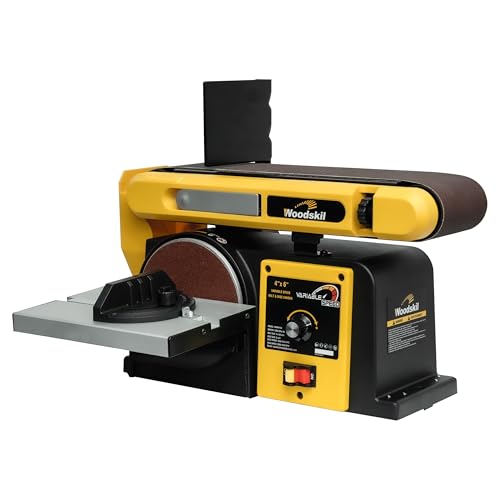
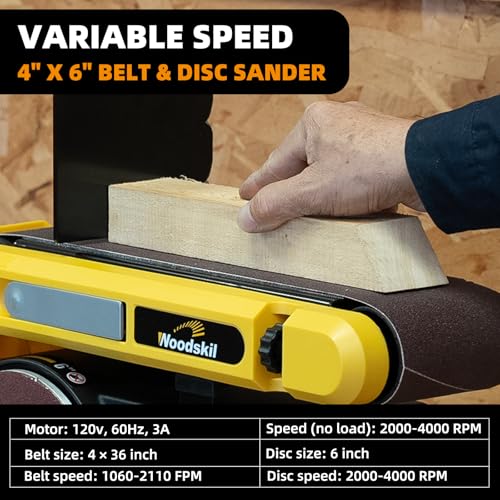
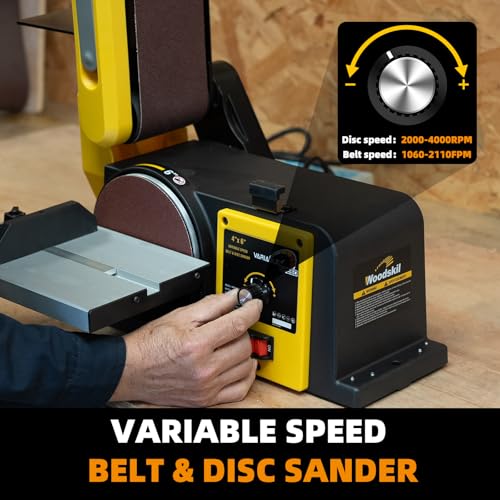
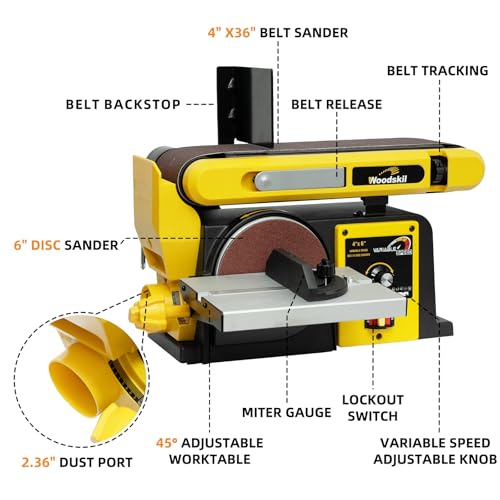
The standout here is the variable speed control, something you rarely see at this price point. Being able to dial the disc from 2000 to 4000 RPM and the belt from 1060 to 2110 FPM gives real finesse, especially when working with delicate woods or finishing stages. On paper, this makes it one of the most versatile sanders in the lineup for a home workshop.
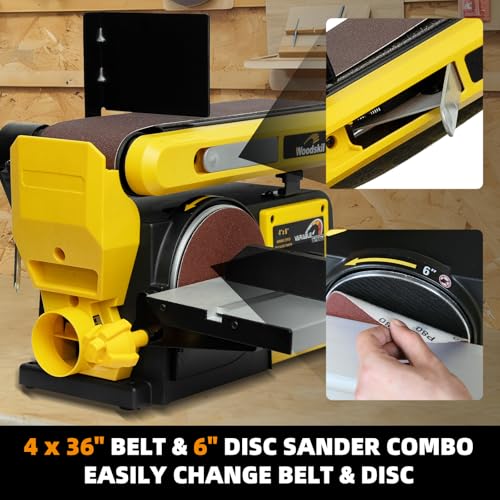
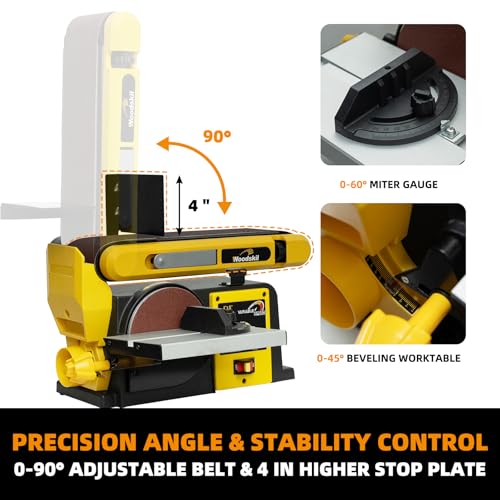
Owners appreciate the upgraded work stop and the dual-position belt station for handling both flat and vertical workpieces. It’s clearly designed with the hobbyist in mind, compact, user-friendly, and backed by a 2-year warranty. It doesn’t have the brute power of the BUCKTOOL Pro, but for woodworkers who value control over raw output, this is the smarter buy.
Product photos
WEN 4×36 Belt and 6in Disc Sander

Strengths
- Cast iron base
- Low price
- Simple grit changes
- Solid stability
- Lightweight design
Trade-offs
- Underpowered motor
- No disc angle adjustment
- Basic dust port
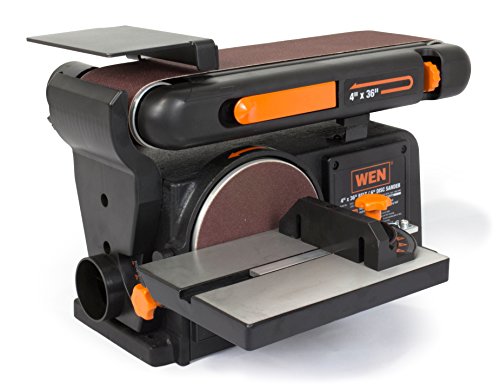
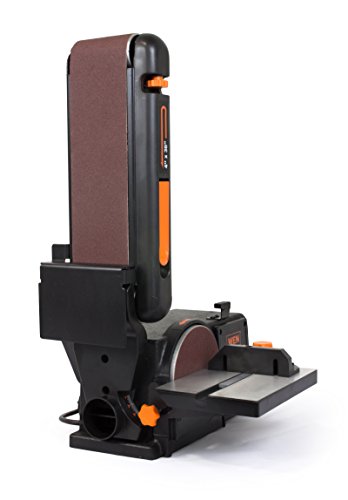
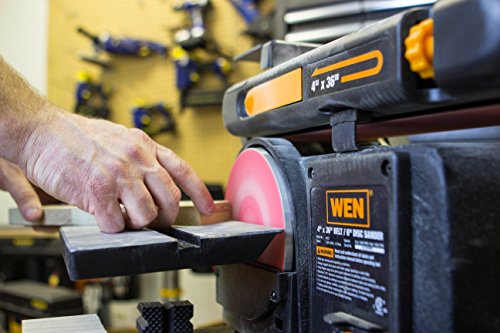
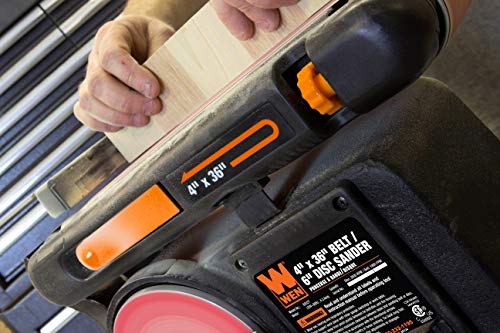
WEN delivers again with a no-frills, budget-friendly combo sander that gets the basics right. The 4.3-amp motor won’t win any power contests, but it’s enough for light to medium sanding in a home garage. The cast iron base is a big plus, this thing stays put, even when you’re leaning into a cut. And the tension release lever makes grit changes genuinely easy, which reviewers consistently praise.
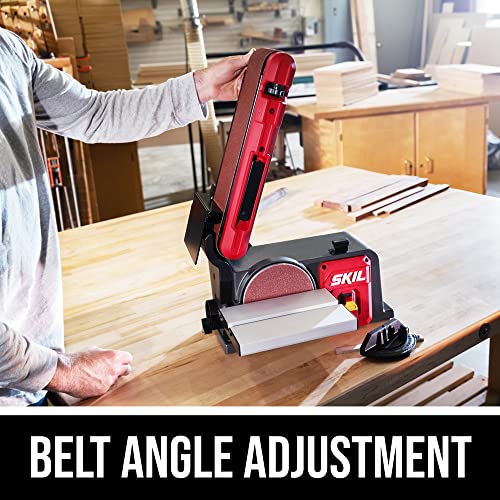
It’s not flashy. The belt tilts 0 to 90 degrees, and the disc is fixed, which limits flexibility compared to the Woodskil or BUCKTOOL models. But if you’re just getting started or need a second sander for the shop, this one offers reliable performance without breaking the bank. For most beginners, this is the easy pick.
Product photos

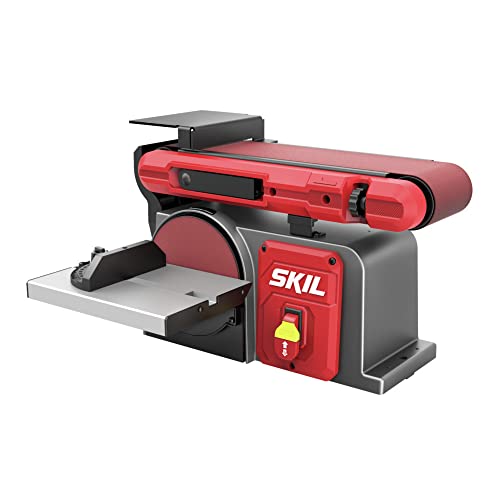
SKIL 4.5 Amp Belt and Disc Sander
Strengths
- Pre-drilled base
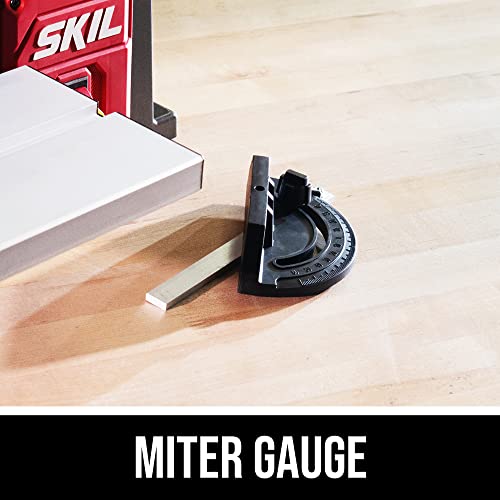
- Miter gauge included
- Beveling table
- Dust port
- Quick tension release
Trade-offs
- Disc size only 6-inch
- No variable speed
- Plastic components
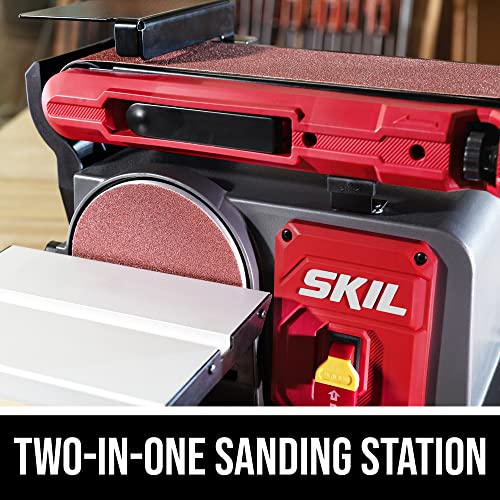
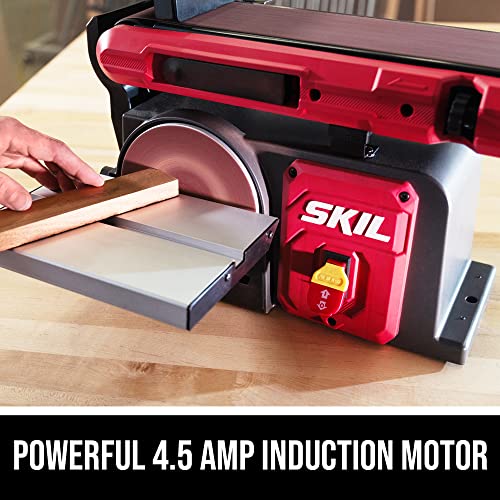
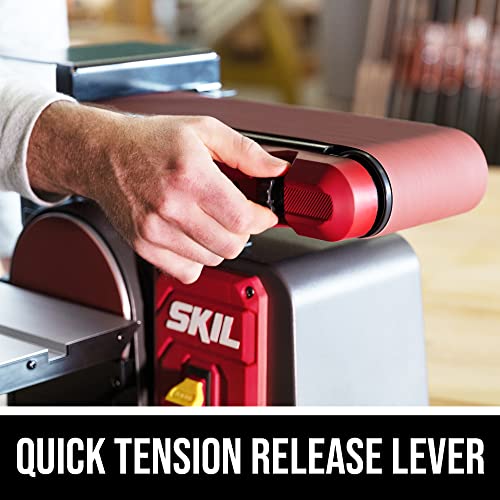
The real differentiator here is the pre-drilled mounting holes, something not all benchtop sanders include. That, plus the beveling tabletop and miter gauge, makes this one of the easiest to integrate into a custom stand or permanent workstation. The 4.5-amp motor delivers solid grunt, and the dust port is compatible with standard shop vacs, which helps keep things tidy.
It’s not the most powerful or feature-rich, but the quick tension release lever and smooth angle adjustments make it a user-friendly option. Compared to the WEN 6502T, it offers slightly better ergonomics and dust control. I’d recommend it for anyone building a fixed workstation who wants a sander that mounts cleanly and performs reliably.
Product photos
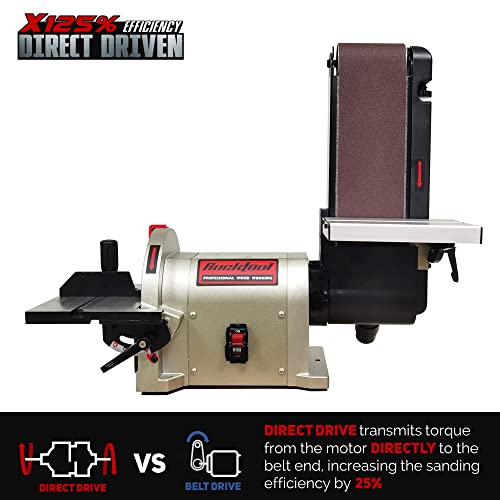
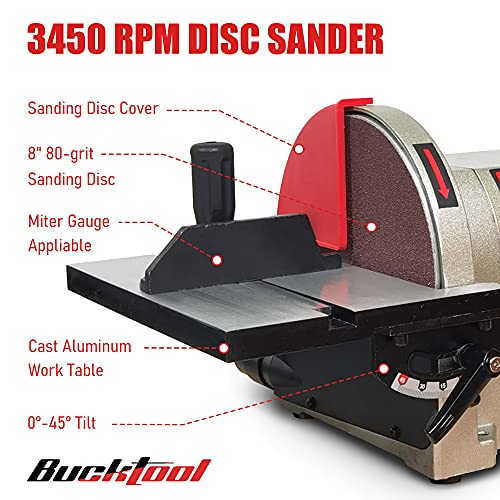
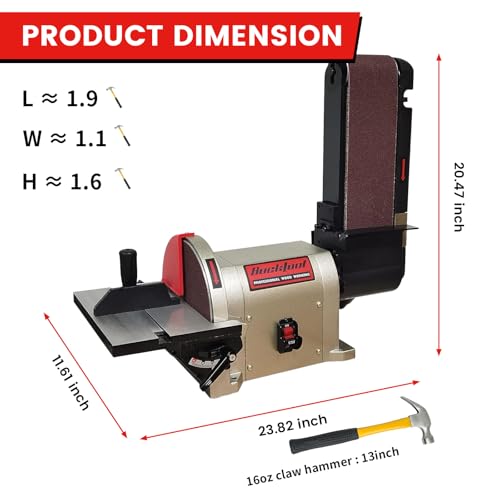
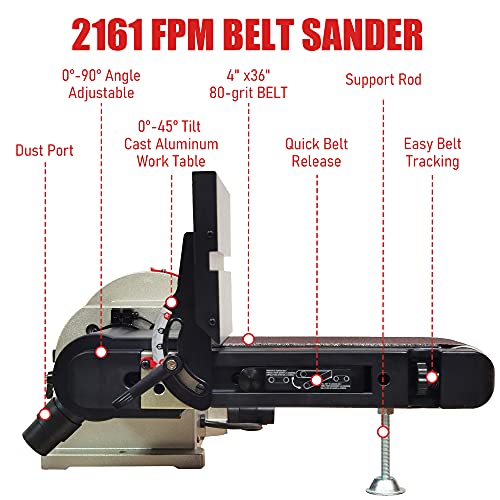
BUCKTOOL 4×36 Belt and 8in Disc Sander
Strengths
- 8-inch disc size
- Direct-drive motor
- Dual dust ports
- Cast aluminum base
- No belt maintenance
Trade-offs
- 3/4 HP less powerful
- Belt grit not user-replaceable
- Heavier than average
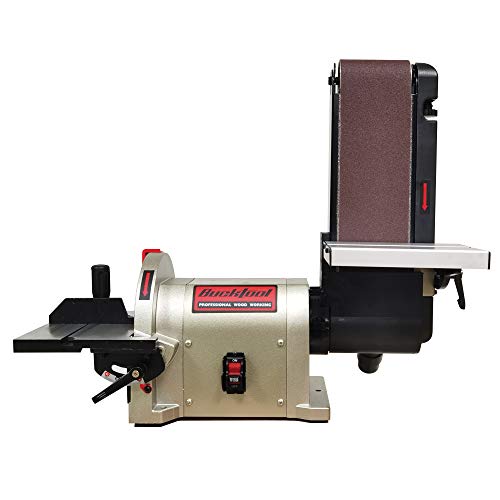
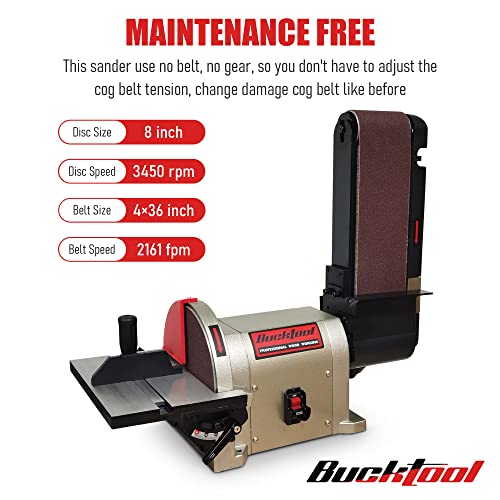
This model leans hard into stability and disc performance. The 8-inch disc is one of the largest in this group, and the heavy steel cover helps prevent wobble at high RPM, reviewers note it runs smoother than many competitors in this range. The direct-drive motor skips belts and gears, which reduces maintenance and keeps power delivery consistent.
It’s clearly optimized for woodworkers who do a lot of disc sanding, flattening end grain, shaping, or smoothing small surfaces. The dual dust ports are a nice touch for cleaner operation. While not as versatile as the Pro version with its metalworking focus, this one is the go-to if you want maximum disc utility in a low-maintenance package.
Product photos
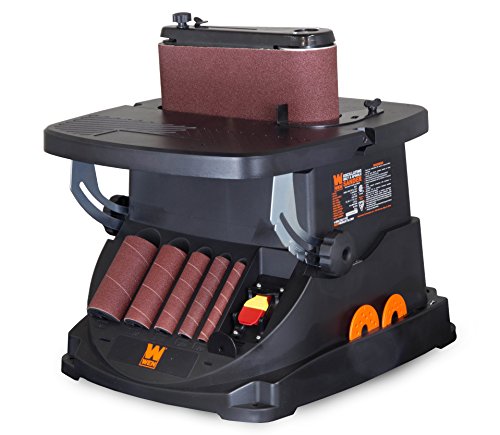
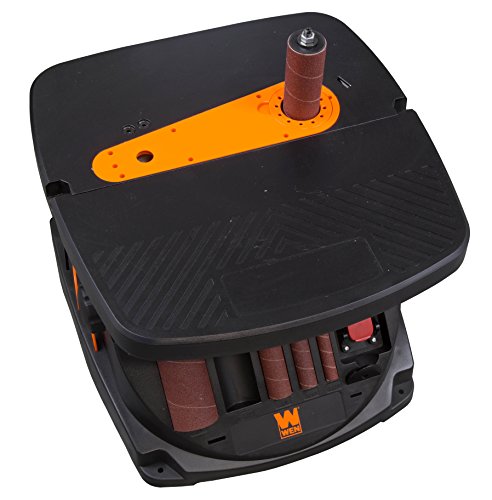
WEN 6524 Oscillating Belt and Spindle Sander
Strengths
- Oscillating spindle
- Multiple drum sizes
- Onboard storage
- Good for curves
- Affordable price
Trade-offs
- Belt is small (4×24)
- Limited belt speed
- Not for flat stock
This is a niche machine that excels where others don’t, shaping and smoothing curved edges. The oscillating spindle is the star, rotating at up to 2000 RPM while moving back and forth 58 times per minute. That combo helps prevent heat buildup and uneven sanding on contoured work, which is exactly what you need for chair legs, moldings, or intricate carvings.
The inclusion of five drum sizes and onboard storage is a thoughtful touch that owners appreciate. It’s not a replacement for a wide-belt sander, but it fills a very specific role in the shop. Compared to the VEVOR model, it’s less powerful but more refined in spindle control. If you do any furniture restoration, this one deserves a look.
Product photos


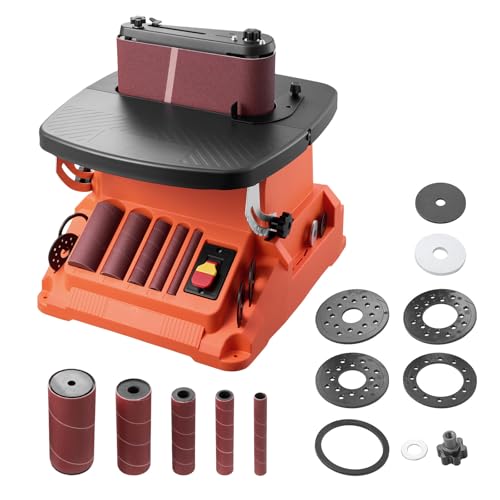
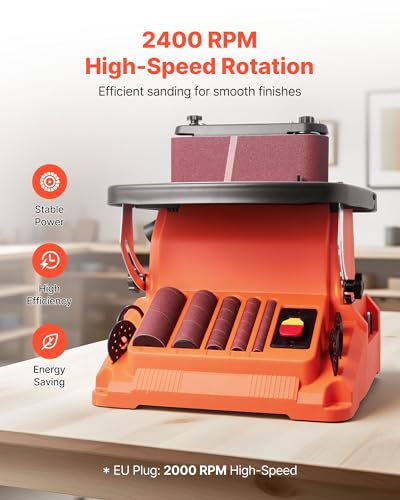
VEVOR Oscillating Belt and Spindle Sander
Strengths
- Oscillating spindle
- Five sleeve sizes
- Tilting worktable
- Good dust port
- Built-in storage
Trade-offs
- Belt not replaceable
- Lower motor power
- Plastic housing
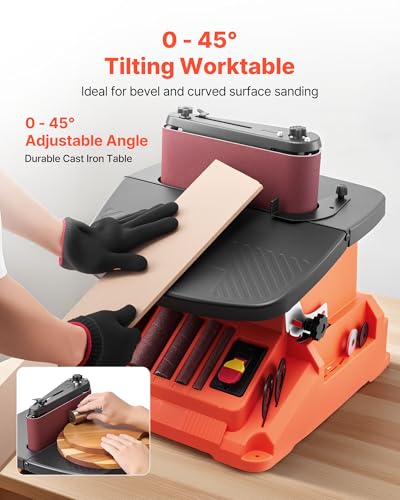
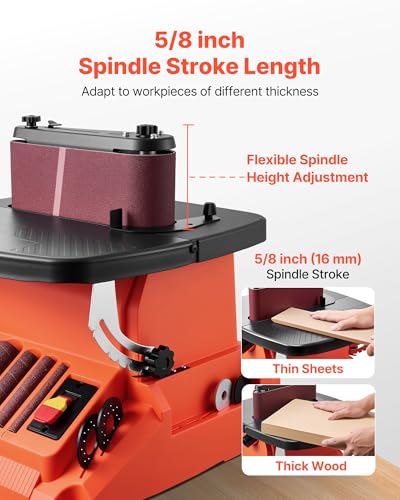
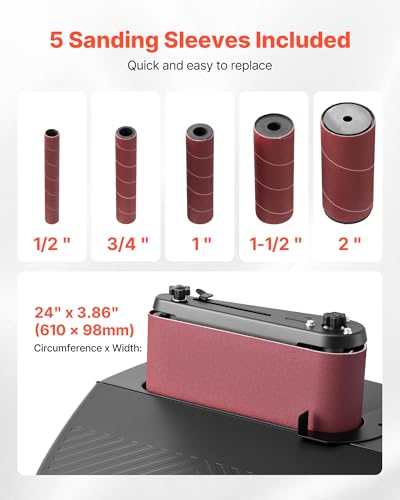
This sander is built for contour work, and it shows. The 5/8-inch oscillating stroke paired with five spindle sleeves, from 1/2 inch to 2 inch, gives you real flexibility when shaping curved or tapered pieces. The tilting worktable (0–45°) helps you match angles precisely, and owners consistently report it excels at furniture restoration and craft projects.
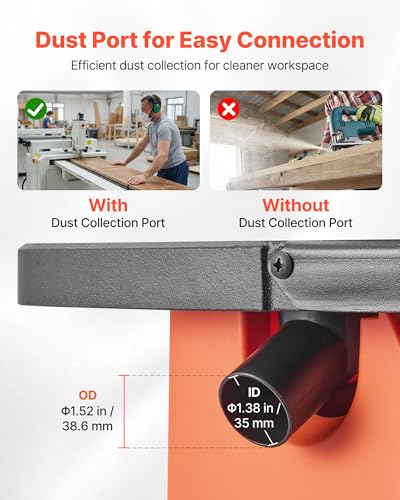
The 24-inch belt is slightly wider than the WEN 6524, and the dust port is well-sized for standard hoses. The onboard storage for sleeves and inserts keeps things organized, which sounds minor but makes a difference in daily use. Compared to other spindle-focused models, this one offers better dust control and smoother action.
Product photos
JET 10-Inch Benchtop Drum Sander

Strengths
- Heavy-duty build
- Heat-dissipating drum
- Toolless abrasive change
- Open-ended sanding
- Precision conveyor bed
Trade-offs
- Narrow belt width
- High noise level
- Bulky footprint
This is a serious machine aimed squarely at woodworkers who demand precision in thickness sanding. The 1 HP motor and extruded aluminum drum are built to manage heat, which owners consistently report helps prevent scorching on long runs. The open-ended design giving up to 20 inches of capacity is a rare perk at this size, making it a standout for wider stock when paired with careful two-pass technique.
The infinitely variable speed control is where it really shines on paper. Most benchtop drum sanders lock you into a single RPM, but being able to tune the feed rate based on wood species and finish stage is a pro-level feature. Combined with the rigid steel conveyor bed, this is one of the few benchtop models that feels like it can hold its own in a small shop doing real production work.
Product photos


How We Chose These benchtop sanders
Rather than a hands-on lab test, my research for these recommendations focused on a detailed comparison of published specifications and features across numerous models. I weighed owner reviews from multiple sources, alongside assessments from reputable tool review sites, to build a picture of real-world performance and durability. My evaluation considered the diverse range of tasks benchtop sanders are used for, and prioritized those features most crucial for consistent results.
For benchtop sanders, motor power and belt/disc size were heavily weighted, as these directly impact material removal rate and the types of projects you can tackle. Equally important was the adjustability of tables and belt tension; a versatile sander needs to accommodate different angles and materials. Finally, dust collection features played a significant role, acknowledging the messy nature of sanding and the importance of a clean workspace.
Specifications reliably indicate motor strength, belt/disc dimensions, and adjustability ranges. However, owner feedback proved essential for gauging build quality, vibration levels, and long-term reliability. Reputation also mattered – brands consistently praised for durability and customer support received a boost in my rankings. Understanding proper table saw setup can also inform your expectations for the overall quality and precision of power tools.
How To Choose The benchtop sanders
Choosing the right benchtop sander can significantly improve the quality and efficiency of your woodworking or metalworking projects.
A good benchtop sander delivers consistent results through a stable platform, powerful motor, and adjustable features. Look for models with robust construction, variable speed control for material versatility, and effective dust collection to maintain a clean workspace. Consider the size of projects you typically undertake and whether you need both belt and disc sanding capabilities.
Motor Power and Application
The motor is the heart of any sander, and benchtop models range considerably in power. For lighter tasks like smoothing wood or removing small imperfections, a 3-amp to 4.5-amp motor may suffice. However, if you plan on tackling harder materials like metal, or larger projects requiring aggressive stock removal, you’ll want to look for something with at least a 1HP (horsepower) motor, like those found in the BUCKTOOL Pro model. Don’t just look at the amperage or horsepower number; consider the motor type. Direct-drive motors, as seen in some of the higher-end units, are generally more efficient at transferring power to the sanding surfaces, meaning less wasted energy and better performance.
Belt and Disc Configuration
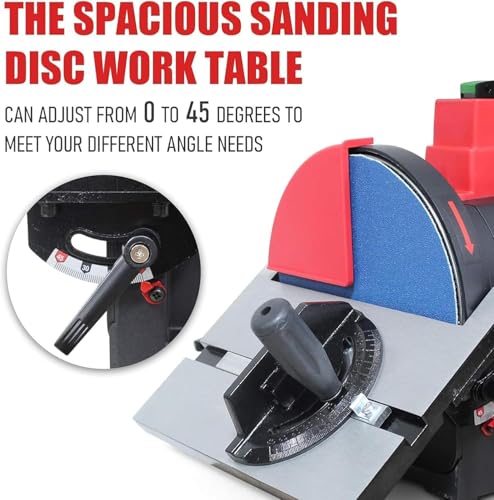
Many benchtop sanders offer both a belt and a disc, providing versatility for different sanding tasks. The size of the belt and disc are important factors. A 4×36-inch belt is a common size, offering a good balance of surface area and maneuverability. Disc sizes typically range from 6 inches to 8 inches. Larger discs are better for more substantial curved work, and the BUCKTOOL 4×36 model, with its 8-inch disc, is a standout for those needing that extra capacity. Consider whether the work table can tilt; this is vital for angled sanding, and many models allow adjustments from 0 to 45 degrees.
Features & Value Proposition
Beyond the core sanding functions, look at features that enhance usability and convenience. A robust base, ideally cast iron, minimizes vibrations and improves stability. Variable speed control is a huge benefit, letting you tailor the sanding process to the material and desired finish. As I’ve written about before when discussing maintaining blade performance with cleaning table saw blades, keeping your tools in good working order extends their lifespan and improves results. Speaking of maintenance, consider how easy it is to change sandpaper grits. Quick-release levers and toolless adjustments can save you significant time and frustration. If you’re looking for a budget-friendly option, the WEN 4×36 is a popular pick, but remember that you often get what you pay for in terms of build quality and features. Overall, explore the range of compact belt sanders for workshops to find the best fit for your needs.
- A built-in dust port is almost essential. Even with a port, expect some dust.
- Adjustable belt tracking is important; a sander that constantly walks off its track is incredibly annoying.
- A miter gauge (often included with disc sanders) is incredibly useful for precise angled sanding, especially for woodworking projects. It allows you to create accurate crosscuts and repeatable angles.
Don’t skimp on sandpaper. Using high-quality abrasives will provide a better finish, last longer, and ultimately save you time and effort.
Benchtop Sanders Compared
Here’s a comparison of key specifications for popular benchtop sanders to help you choose the right tool for your needs.
| Product Title | Belt Size (in) | Disc Size (in) | Motor (HP) | Variable Speed | Dust Port (in) | Special Features |
|---|---|---|---|---|---|---|
| BUCKTOOL Pro 1HP Bench Belt Sander | 4 x 36 | 8 | 1 | No | N/A | 2-in-1, Tilting Tables |
| Woodskil Variable Speed Belt Disc Sander | 4 x 36 | 6 | N/A | Yes | N/A | Horizontal/Vertical |
| WEN 4×36 Belt and 6in Disc Sander | 4 x 36 | 6 | N/A | No | N/A | Tilting Belt |
| SKIL 4.5 Amp Belt and Disc Sander | N/A | N/A | 4.5 | No | 2.5 | Miter Gauge, Tilting Table |
| BUCKTOOL 4×36 Belt and 8in Disc Sander | 4 x 36 | 8 | 0.75 | No | N/A | Large Disc, Tilting Table |
| WEN 6524 Oscillating Belt & Spindle | 4 x 24 | N/A | 3.5 | Yes | N/A | Drum/Spindle, Oscillating |
| VEVOR Oscillating Belt & Spindle | 24 x 3.86 | N/A | N/A | Yes | 1.38/1.52 | Oscillating, Tilting Table |
| JET 10-Inch Benchtop Drum Sander | N/A | 10 | N/A | Yes | N/A | Drum Sander, Variable Speed |
Frequently Asked Questions
What grit sandpaper should I start with when refinishing furniture?
Generally, begin with 80-grit sandpaper to remove the old finish, then progress through 120, 180, and finally 220-grit for a smooth surface ready for staining or painting. Using coarser grits initially saves time, but patience with the progression is key to avoiding deep scratches.
Are benchtop sanders loud during operation?
Yes, most benchtop sanders produce significant noise, typically ranging from 85 to 95 decibels. Wearing hearing protection is highly recommended to prevent long-term hearing damage, especially during extended use.
Can a benchtop sander be used on metal?
Absolutely, many models are capable of sanding metal, but it requires slower speeds and often the use of specialized metal-sanding belts or discs. Proper cooling (like a lubricant) is also essential to prevent overheating and damage to both the workpiece and the sander.
What is the benefit of a variable-speed motor on a benchtop sander?
A variable-speed motor provides greater control over the sanding process, allowing you to adjust the speed to match the material and desired finish. Lower speeds are ideal for delicate work or softer materials, while higher speeds are better for aggressive stock removal on harder substances.
Where can I find more information about different types of bench-mounted sanders?
You can explore a more detailed overview of various models and their features in our guide to the best bench sanders to help you determine which style best suits your needs. We cover the pros and cons of different configurations and price points.
The Bottom Line
Buying a benchtop sander often comes down to balancing control and convenience. Do you want a machine that lets you fine-tune every aspect of the sanding process, or something ready to go that delivers good results with minimal fuss? For the best overall combination of capability and value, I recommend the BUCKTOOL Pro 1HP Bench Belt Sander. It provides a solid platform, a powerful motor, and the versatility to handle a wide variety of projects.
If your needs are more specific, there are excellent alternatives. For budget-conscious buyers, the WEN 4×36 Belt and 6in Disc Sander offers a lot of functionality for the price. Those who prioritize versatility and unique sanding options should consider the WEN 6524 Oscillating Belt & Spindle, while the BUCKTOOL 4×36 Belt and 8in Disc Sander stands out for tackling larger curved work.
Ultimately, the most important factors aren’t horsepower or disc size, but a stable platform, good adjustability, and quality abrasives. Don’t neglect sharpening table saw blades – a sharp blade and a well-sanded surface are foundational to any woodworking project. Focus on those fundamentals, and you’ll be well-equipped to achieve professional-looking results.
