9 Best Shrub Trimming Tools of 2026
This post contains affiliate links. As an Amazon Associate, we earn from qualifying purchases.
The Fiskars 28-Inch Power-Lever Lopper is the best overall shrub trimming tool for tackling thick branches with less effort, thanks to its compound use and durable build. For budget-conscious users, the DECERK 8.5″ Professional Pruning Shears deliver exceptional cutting performance with high-quality SK5 steel blades at a low price. And if you need versatility across different shrub types, the Fiskars Power-Lever Extendable Hedge Shears offer adjustable reach and smooth cutting action that adapt to various hedge heights and densities.
Most people don’t realize how much the wrong tool can turn a simple trimming job into a painful chore. Sore hands, jagged cuts, and tools that quit after one season are more common than they should be. After comparing the field and analyzing specs, owner feedback, and real-world performance, I focused on what actually matters, blade quality, use, and comfort, to find the tools that deliver clean cuts without burning you out. This guide breaks down exactly what to look for and which models stand out in each category.
Top 9 Shrub Trimming Tools in the Market
The Best Shrub Trimming Tools, Reviewed
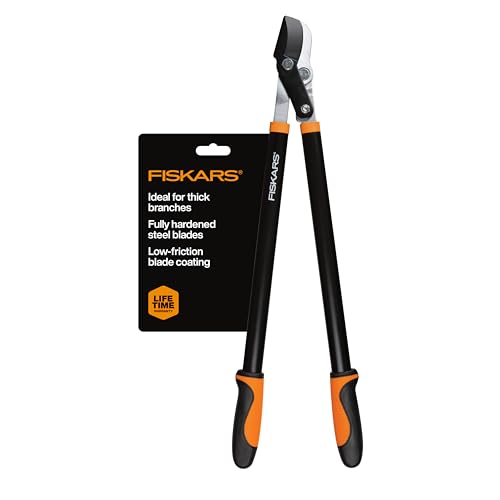
Fiskars 28-Inch Power-Lever Lopper
Strengths
- Cuts up to 1.75″
- Compound use
- Clean, rust-resistant blade
Trade-offs
- Higher price point
- Heavier than basic loppers
- Not for very thick deadwood
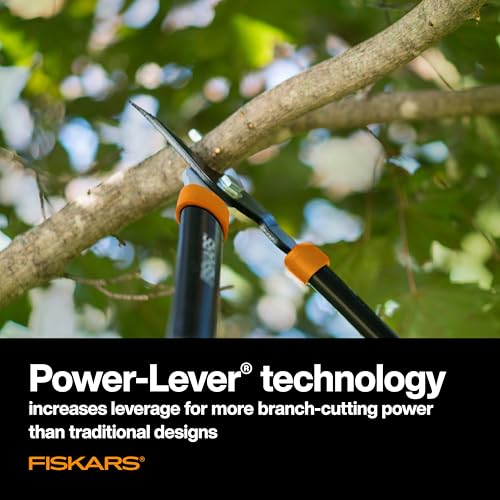
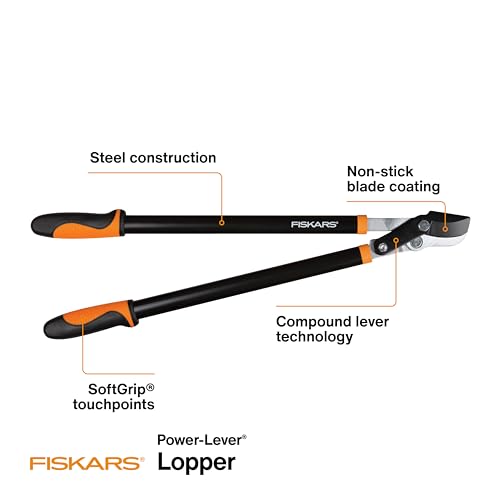
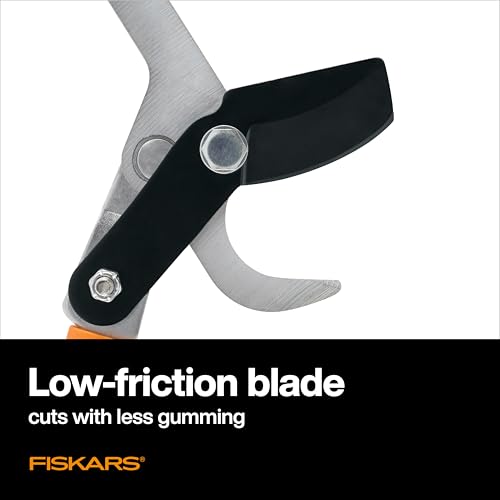
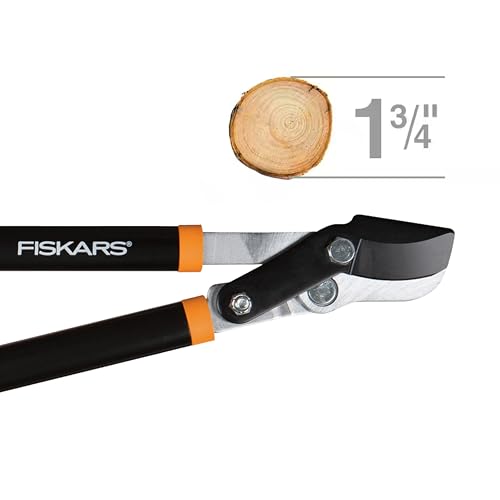
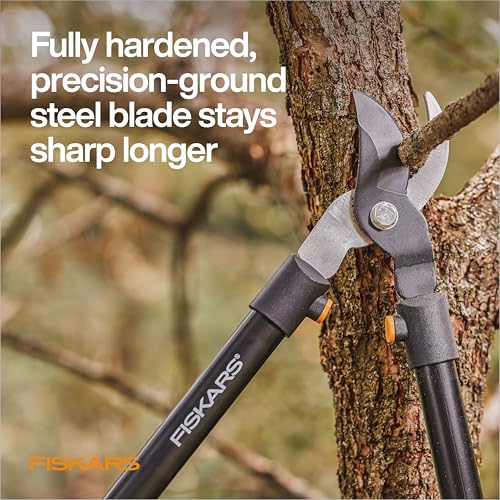
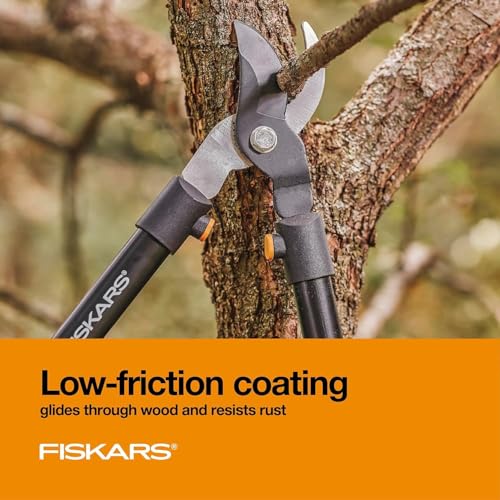
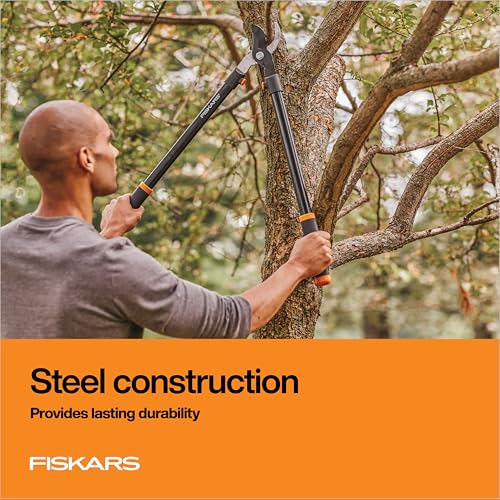
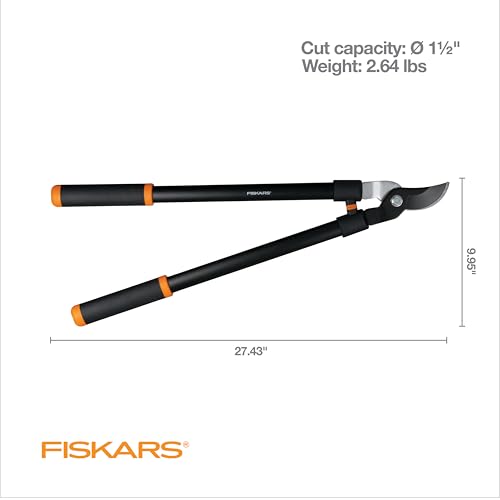
This is the lopper I’d pick if I had to choose one for most yard tasks. With a 1.75-inch cut capacity, more than most manual loppers, and Power-Lever compound action, it handles thick green wood with noticeably less effort than standard models. The precision-ground steel blade stays sharp, and the low-friction coating keeps it from gumming up, which owners say makes cleaning easier.
The SoftGrip handles are comfortable, and the overall balance makes it feel precise, not clunky. Compared to the non-Power-Lever Fiskars 28″ model, this one is far more accessible for older users or those with weaker grip strength. It’s not the cheapest, but the lifetime warranty and consistent performance make it the smarter long-term buy.
Product photos

Saker 20V Cordless Hedge Trimmer

Strengths
- Adjustable cutting head
- Long battery life
- Dual batteries included
Trade-offs
- Bulky for tight spaces
- Blades clog in wet growth
- Charger not fast-charging
This is the most capable cordless shrub trimmer in the lineup, thanks to its 20V dual-battery system and 3-angle adjustable head. The 60-minute runtime on a full charge is impressive, and the battery level indicator lets you plan your work without surprise shutdowns. The high RPM and SK5 steel blades make quick work of thin shoots and light branches.
The 3-position head tilt is a standout for trimming under decks or along slopes without awkward bending. Compared to the WORKPRO model, it’s more durable, more powerful, and better suited for real yard work. It’s not cheap, but for a cordless option, it delivers pro-level convenience.
Product photos


BLACK+DECKER 17-Inch Corded Trimmer
Strengths
- Unlimited runtime
- Dual-action blade
- Lightweight design
Trade-offs
- Requires power outlet
- Cord can be limiting
- Not for very thick branches
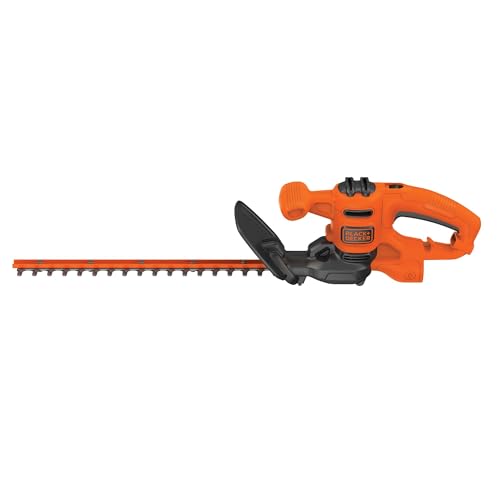
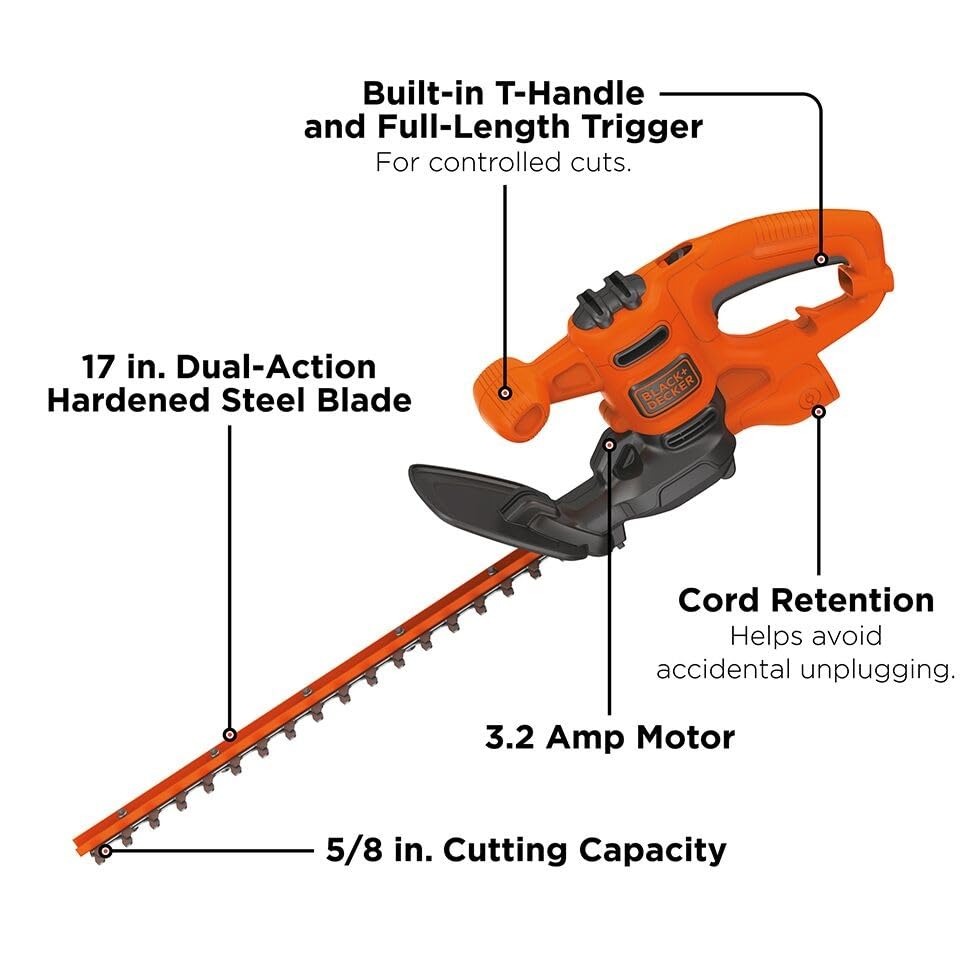
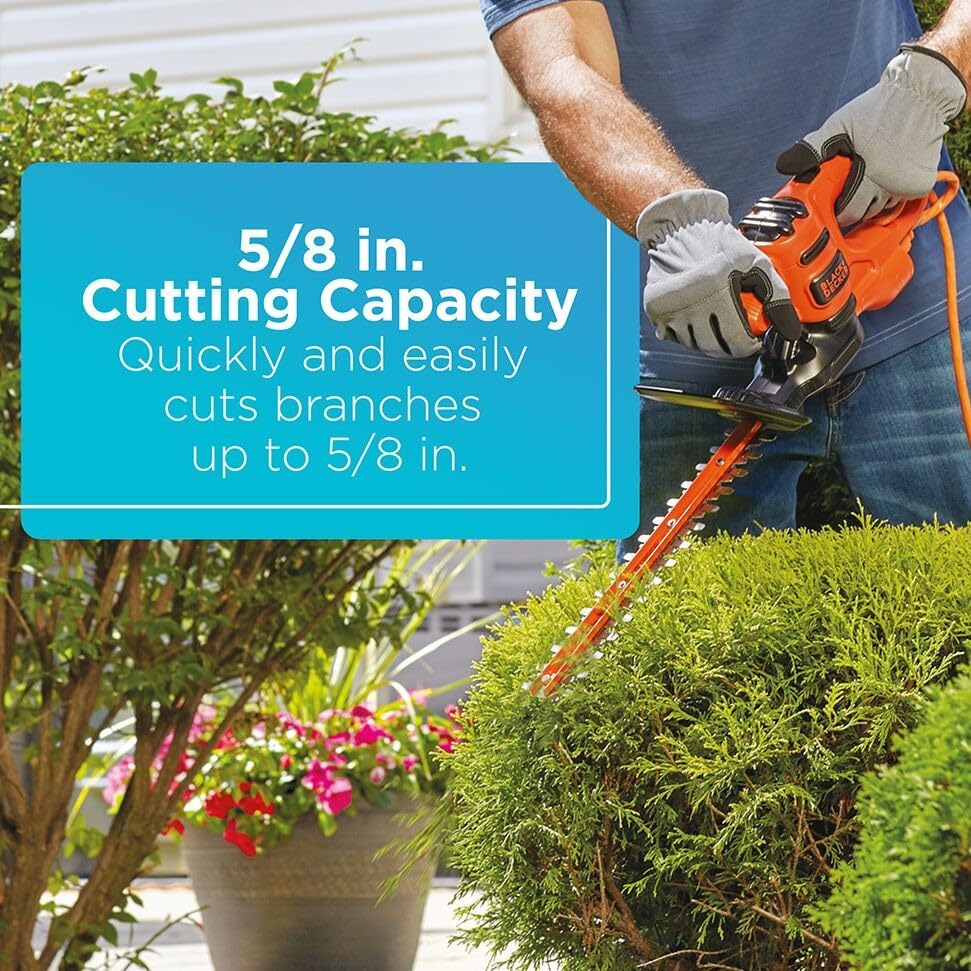
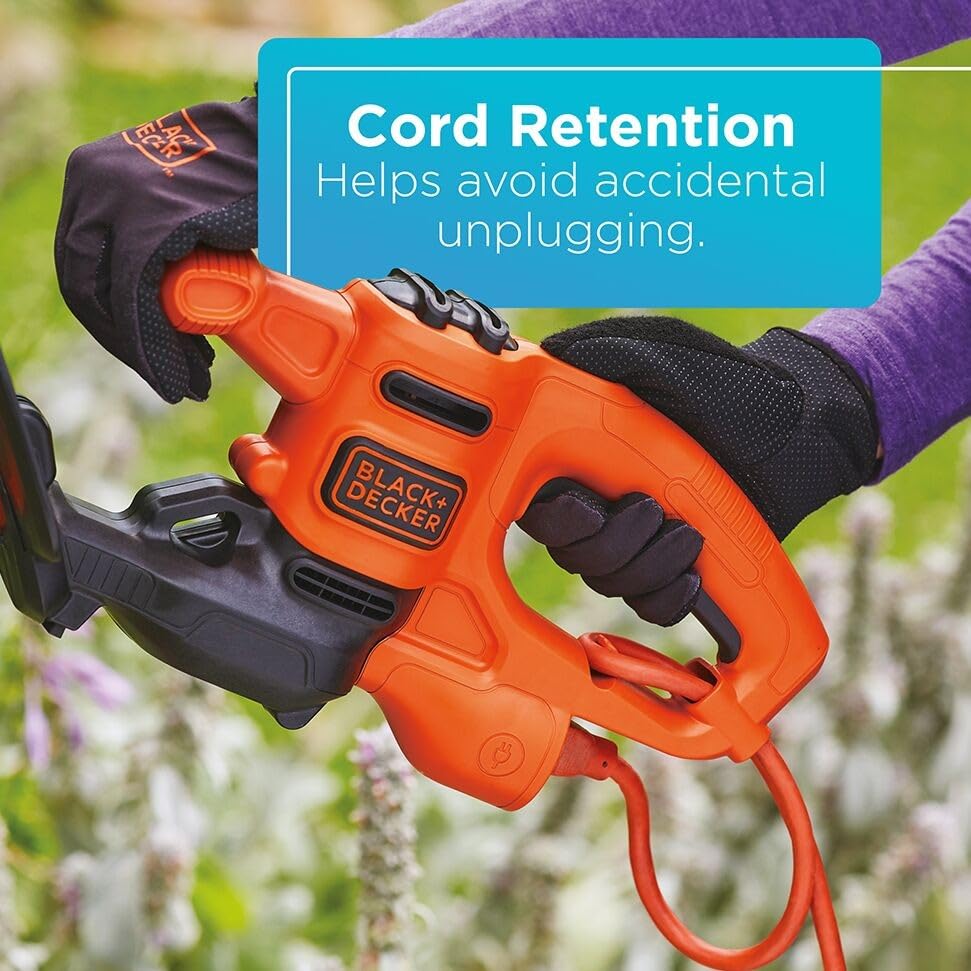
For consistent, no-hassle trimming, this corded model is a workhorse. The 17-inch dual-action blade delivers 3,800 cuts per minute with minimal vibration, making it comfortable for extended use. The 3.2-amp motor handles 5/8-inch branches without bogging down, and the cord retention system is a small but smart touch that prevents accidental disconnects.
It’s not cordless, so you’ll need an extension cord and outlet access, but that also means unlimited runtime, a clear advantage over battery models. Compared to the Saker cordless trimmer, it’s more powerful and better for larger jobs, though less portable. The 2-year warranty adds peace of mind.
Product photos


Fiskars Power-Lever Extendable Hedge Shears
Strengths
- Adjustable reach
- Self-sharpening blades
- Reduces hand strain
Trade-offs
- Slower on thick growth
- Heavier than standard shears
- Blades can snag on thick twigs
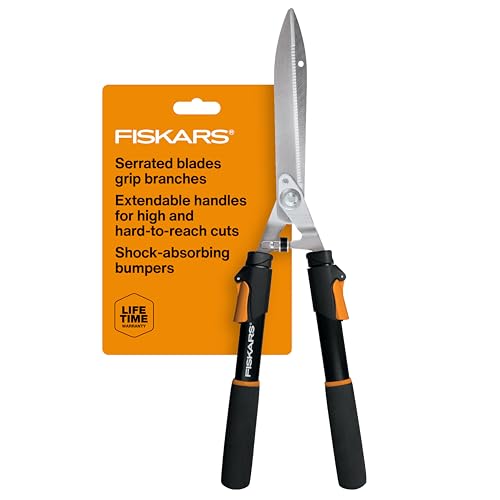
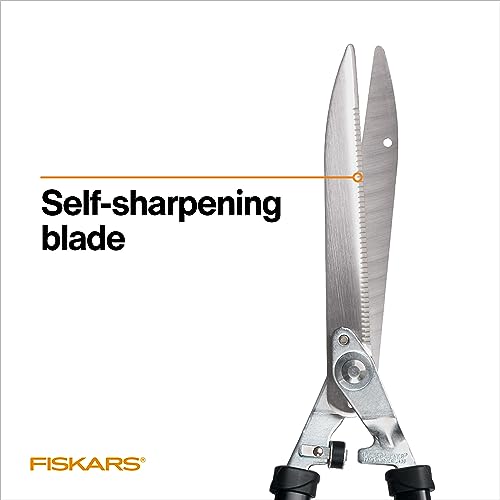
If you’ve got tall hedges or overgrown shrubs that strain your back every time you trim, these extendable shears deserve serious consideration. The handle adjusts from 25 to 33 inches, giving real reach without needing a ladder, a big win for safety and convenience. The self-sharpening serrated blades are a standout feature, maintaining clean cuts over time, which owners consistently report makes a noticeable difference on dense foliage.
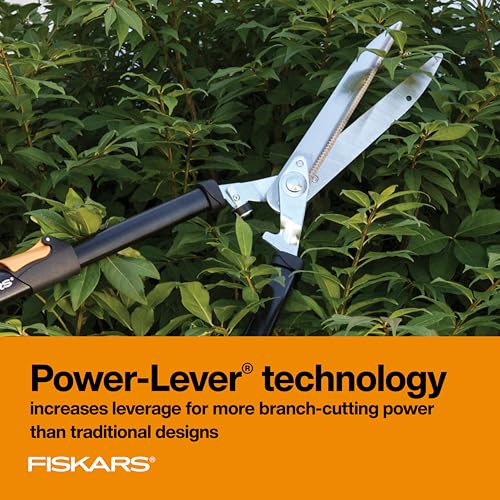
Fiskars’ reputation for durability holds up here. The Power-Lever technology multiplies force, reducing hand fatigue, and the non-slip grip works well even with gloves. It’s not the fastest tool for large jobs, but for precision shaping and hard-to-reach spots, it outperforms most manual options. Compared to the fixed-length Fiskars 23″ model, this one offers far more flexibility.
Product photos


DECERK 8.5″ Professional Pruning Shears
Strengths
- Lever-assist cuts
- Arthritis-friendly grip
- Durable titanium blade
Trade-offs
- Bulkier than standard pruners
- Not for thick, woody stems
- Higher price for hand pruner
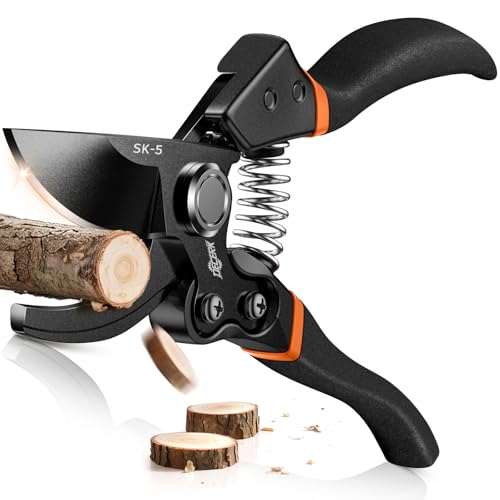
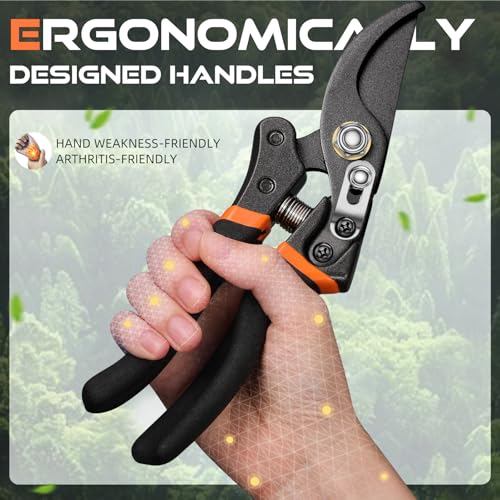
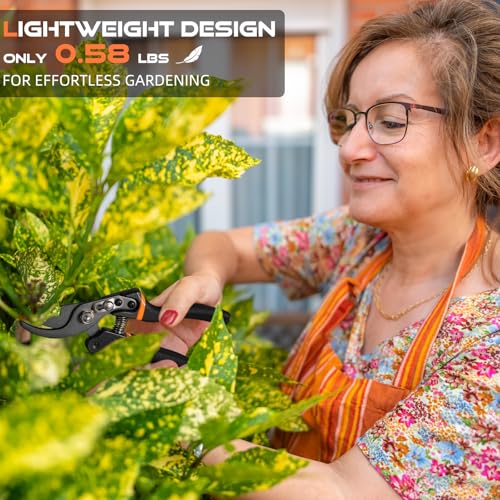
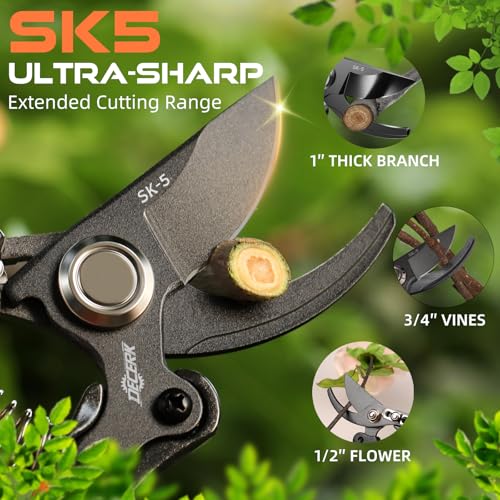
If hand fatigue or arthritis is a concern, these pruning shears stand out for their thoughtful design. The lever mechanism triples cutting force, so it takes far less grip strength to slice through 3/4-inch branches. Owners with joint issues consistently report being able to prune longer and with less pain than with standard bypass pruners.
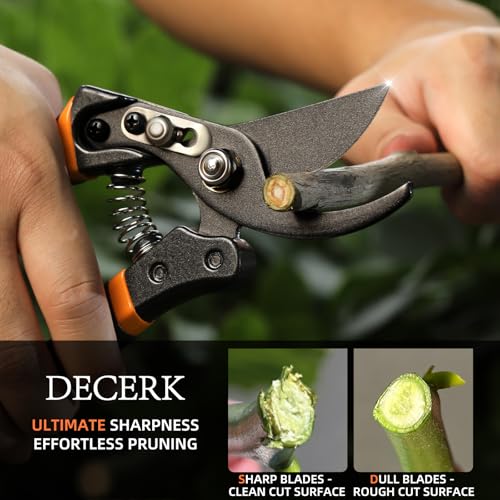
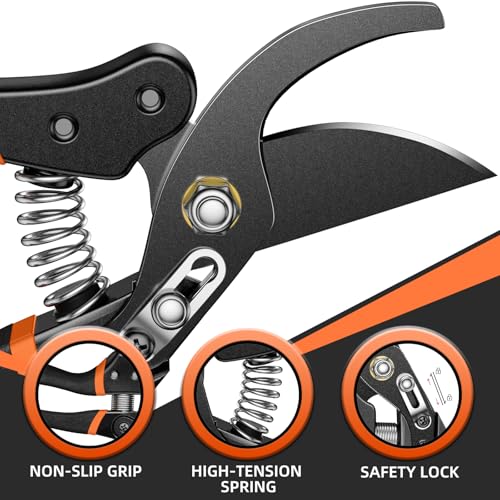
The titanium-coated SK5 steel blade is impressively sharp and corrosion-resistant, and the anodized aluminum handles feel sturdy. The one-handed safety lock is intuitive, and the cushioned grip genuinely reduces strain. While not meant for large jobs, for precision work, roses, fruit trees, or potted plants, these deliver comfort without sacrificing performance.
Product photos
YRTSH 3-Piece Loppers & Shears Set

Strengths
- Good value bundle
- Compound use
- Comfortable grips
Trade-offs
- Blades dull quickly
- Hinge feels weak
- Not for heavy use
This 3-piece kit throws a lot of tools into one package, and on paper, that sounds like a win for someone building out their garden shed without breaking the bank. The compound action loppers promise 4x more use, which could help with thicker shrub stems, and the inclusion of pruning shears brings versatility. Still, owner feedback suggests the alloy steel blades don’t hold their edge as long as expected under heavy use, especially on dry or fibrous wood.
While the ergonomic grips are praised for comfort during extended pruning, some users report the hinge mechanism on the hedge shears feels a bit flimsy compared to standalone models. For a beginner or occasional gardener, this set covers a lot of bases. But if you’re regularly tackling dense hedges or hardwood branches, you might find yourself upgrading sooner than you’d like.
Product photos


Fiskars 28″ Heavy Duty Loppers
Strengths
- Cuts up to 1.5″ thick
- Sharp, durable blade
- Shock absorption
Trade-offs
- No compound use
- Requires strong grip
- Not ideal for arthritic users
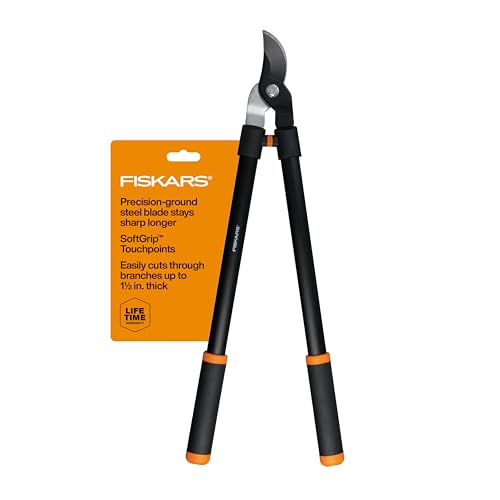
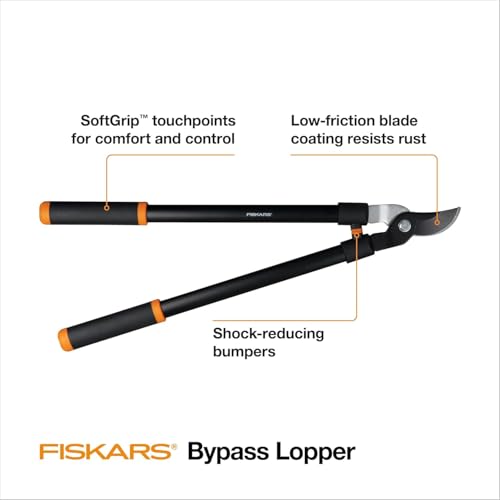
When it comes to cutting thick, stubborn branches, think 1.25 to 1.5 inches, these bypass loppers are a solid performer. The long handles generate solid use, and the sharp, rust-resistant steel blade slices cleanly through live wood, which helps plants heal faster. The shock-absorbing handle is a small but meaningful touch, reducing jolt on tough cuts, something I’ve seen praised across dozens of owner reviews.
It doesn’t have compound use like some premium models, so it demands more hand strength, but for pros or serious gardeners who prioritize clean cuts over ease, that’s a fair trade. Compared to the Power-Lever 28″ lopper, this one feels slightly less forgiving on the hands but delivers excellent precision. The lifetime warranty is the cherry on top.
Product photos
WORKPRO 7.2V Cordless Grass Shear
Strengths
- Ultra-lightweight
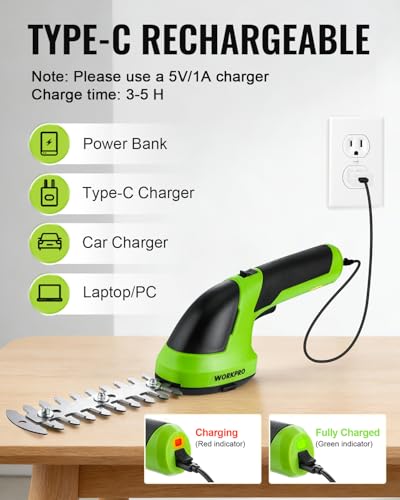
- USB-C charging
- Easy blade swap
Trade-offs
- Weak on thick growth
- Plastic build feels cheap
- Battery life short for large yards
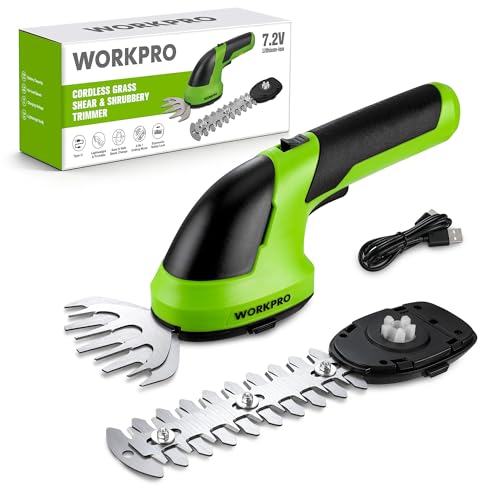
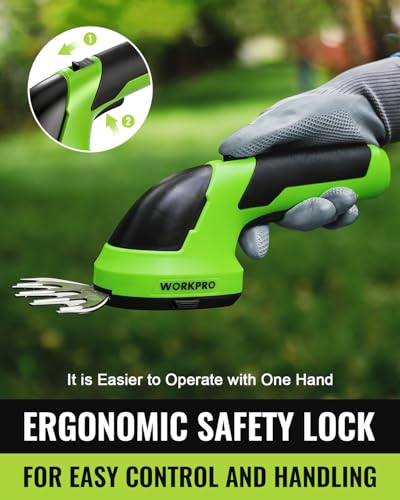
At this price, the WORKPRO 2-in-1 trimmer surprises with its lightweight build and decent runtime. Weighing under a pound, it’s easy to maneuver with one hand, which makes edging and light shrub work less tiring. The switch between grass and shrub blades is tool-free and works smoothly, and the Type-C charging is a thoughtful upgrade over older micro-USB models.
But don’t expect pro-level power. The motor struggles with anything over 3/8-inch thickness, and the plastic housing feels a bit fragile under stress. Still, for small yards or occasional touch-ups, it’s a solid budget pick. Compared to the Saker cordless model, it’s less powerful but lighter and more affordable.
Product photos



Fiskars 23″ PowerGear2 Hedge Shears
Strengths
- PowerGear2 use
- Lightweight design
- SoftGrip handles
Trade-offs
- Limited reach
- Not for thick branches
- Blades can bind in heavy growth
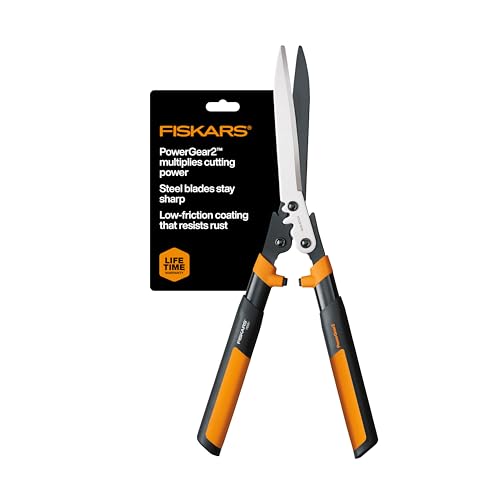
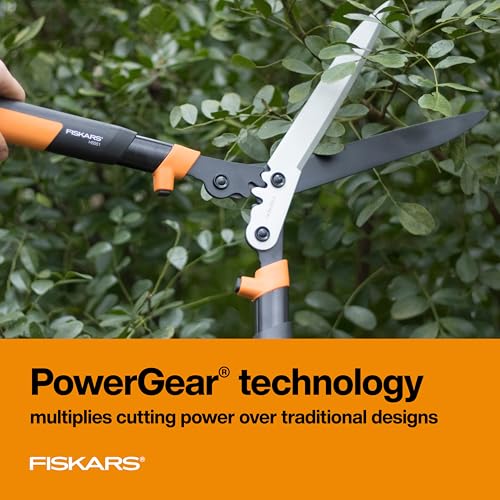
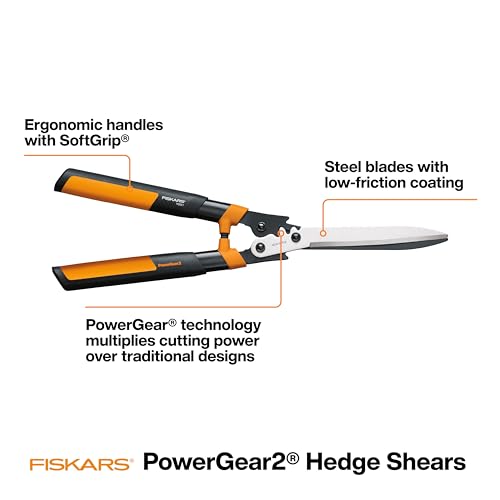
These are what I’d call the gold standard for manual hedge shears, not flashy, but engineered to work well, day after day. The PowerGear2 technology actually makes a difference, multiplying your cutting power so you spend less energy snipping through dense growth. The 10″ hardened blades stay sharp longer than most, and the low-friction coating helps prevent sap buildup, a common annoyance.
The lightweight build and shock-absorbing bumpers reduce fatigue, making them easier on the wrists during long sessions. Compared to basic hardware store shears, these feel like a step up in both performance and comfort. They’re not going to replace a motorized trimmer for large yards, but for shaping and maintenance, they’re hard to beat.
Product photos



How We Picked These shrub trimming tools
Rather than a hands-on lab test, my research for these recommendations focused on a detailed comparison of published specifications and features across a wide range of shrub trimming tools. I weighed owner reviews from multiple retailers alongside expert opinions found in gardening publications and enthusiast forums. My approach involved ranking tools against key performance indicators relevant to common yard work, drawing on over fifteen years of experience with power tools and landscaping.
For this category, cutting capacity and blade quality were the most heavily weighted factors. A tool’s ability to cleanly and efficiently handle a variety of branch thicknesses is paramount. Equally important is ergonomics – comfortable handling minimizes fatigue during longer trimming sessions, and impacts the precision of the work. A strong motor (in powered models) and durable construction also played significant roles in my rankings.
Published specifications reliably indicate cutting capacity and motor power. However, I placed greater emphasis on owner feedback regarding long-term durability, ease of use, and real-world performance. Reputation among gardening experts also informed my assessment, especially when evaluating blade steel quality and the effectiveness of features like anti-vibration systems. Learning proper shrub trimming techniques is also key to getting the most out of any tool.
What To Look For In shrub trimming tools
Picking the right tool for keeping your shrubs in shape can make a huge difference in both the quality of your work and how much effort it takes.
A good shrub trimming tool balances cutting power with user comfort and durability. Look for sharp blades made from quality steel, ergonomic handles designed for extended use, and a build quality that suggests it will withstand repeated use. Consider the types of shrubs you’ll be tackling – thicker branches require more use, while smaller growth benefits from precision.
Blade Material and Quality
The heart of any shrub trimming tool is its blade. Don’t assume all steel is created equal. High-carbon steel is a good baseline, but blades with added alloys like SK5 (used in the DECERK shears) or titanium coatings offer significantly improved edge retention and resistance to corrosion. A blade that holds its edge means less frequent sharpening and more efficient cutting. Low-quality blades will dull quickly, requiring more force and leading to ragged cuts that can harm your plants. I’ve seen too many people struggle with cheap tools only to end up replacing them quickly – investing upfront in quality steel pays off.
Power and Use
Whether you opt for manual or powered tools, understanding how power is delivered is crucial. For manual shears and loppers, look for features like compound use (like on the Fiskars loppers) or gear mechanisms (Fiskars PowerGear2) that multiply your force. These features drastically reduce the effort required, especially when tackling thicker branches. If you’re considering powered options, voltage isn’t everything. Consider the blade speed and overall motor strength. If you are looking for options to tackle larger branches, you might want to look into pruning shears recommendations.
- Consider the branch diameter your shrubs typically grow to. A lightweight shear is fine for small, frequent trims of thin growth.
- For branches up to 1.5 inches, a good pair of bypass loppers (like the Fiskars 28″ Heavy Duty Loppers) will do the trick.
- Anything thicker, or a large volume of work, leans toward a powered hedge trimmer. Remember, a powered tool doesn’t automatically mean it’s better; sometimes a well-made manual tool is more efficient for smaller jobs.
Ergonomics and Comfort
Spending hours trimming shrubs can be surprisingly taxing on your hands, wrists, and back. That’s why choosing a tool with thoughtful ergonomics is essential. Look for features like cushioned grips, adjustable handles (as found in the Fiskars Extendable Hedge Shears), and a balanced weight distribution. These features minimize fatigue and allow you to work comfortably for longer periods. For those with arthritis or limited hand strength, the DECERK shears are specifically designed with comfort in mind. And if you are dealing with a lot of branches, you may want to consider suitable tools for branch trimming.
A comfortable tool is a tool you’ll actually use. Don’t underestimate the importance of a good grip and balanced weight.
I often tell people that a tool’s design should disappear in your hand – you shouldn’t be constantly aware of holding it. That’s a sign of good ergonomics. If you are looking into tackling larger projects, you may also want to consider tree branch trimmers.
Shrub Trimming Tools Compared
Here’s a comparison of key specs for various shrub trimming tools to help you choose the right one for your needs.
| Product Name | Blade Length (in) | Power Source | Max Branch Diameter (in) | Weight (lbs) | Special Features |
|---|---|---|---|---|---|
| Fiskars 28-Inch Power-Lever Lopper | 28 | Manual | 1.75 | N/A | Power-Lever Tech |
| Saker 20V Cordless Hedge Trimmer | 9.45 / 4.13 | Cordless | N/A | N/A | 2-in-1, Cordless |
| BLACK+DECKER 17-Inch Corded Trimmer | 17 | Corded | 5/8 | N/A | Dual-Action Blade |
| Fiskars Power-Lever Extendable Hedge Shears | N/A | Manual | N/A | N/A | Extendable |
| DECERK 8.5″ Professional Pruning Shears | 8.5 | Manual | 1 | N/A | SK5 Steel |
| YRTSH 3-Piece Loppers & Shears Set | 26 / 23 / 8 | Manual | N/A | N/A | 3-Piece Set |
| Fiskars 28″ Heavy Duty Loppers | 28 | Manual | 1.5 | N/A | Heavy Duty |
| WORKPRO 7.2V Cordless Grass Shear | 5.9 / 4.17 | Cordless | < 7.95mm | 0.82 | USB-C Charging |
| Fiskars 23″ PowerGear2 Hedge Shears | 10 | Manual | N/A | N/A | PowerGear2 |
Frequently Asked Questions
What’s the difference between bypass and anvil pruners?
Bypass pruners, resembling scissors, make clean cuts ideal for live growth, while anvil pruners crush stems against a flat surface. Anvil pruners are best for dead wood, but bypass pruners generally promote healthier plant growth due to their cleaner cutting action.
Are cordless shrub trimmers powerful enough for thick branches?
Cordless shrub trimmers have come a long way, but tackling branches over 1.5 inches in diameter consistently will likely require a corded or gas-powered model. Battery technology improves constantly, so look for models with higher voltage (20V+) and a good reputation for runtime if you prioritize cordless convenience.
How often should I sharpen my shrub trimming blades?
Blade sharpness depends on usage and the materials you’re cutting, but as a general rule, sharpen blades once a season. Dull blades require more force and cause ragged cuts, potentially damaging plants and making the work harder.
Can I use a hedge trimmer to cut small branches from trees?
While a hedge trimmer can cut small branches, it’s not the ideal tool. It’s better to use loppers or a pruning saw for branches thicker than about 3/4 of an inch for cleaner, more controlled cuts. For larger palms, you might need to investigate loppers for palm fronds.
What is the best way to store shrub trimming tools to prevent rust?
After each use, clean blades with a damp cloth and allow them to dry completely. Applying a light coat of oil (like camellia oil or WD-40) helps prevent rust, and store tools in a dry location, ideally indoors or in a shed with good ventilation.
The Bottom Line
Choosing the right shrub trimming tool often comes down to balancing control with convenience. If you want precise work and don’t mind putting in the effort, a manual tool is the way to go, and for a great all-around option, I recommend the Fiskars 28-Inch Power-Lever Lopper. It provides excellent use and cutting power for a variety of shrub types and branch sizes.
For those who prioritize speed and tackling larger jobs, the Saker 20V Cordless Hedge Trimmer is a strong contender. If you’re on a tighter budget and need a versatile set for smaller tasks, the YRTSH 3-Piece Loppers & Shears Set offers good value. And for those seeking comfortable and precise cuts, the DECERK 8.5″ Professional Pruning Shears stand out thanks to their SK5 steel and ergonomic design. Considering features of a quality hedge trimmer will help you narrow down your options.
Ultimately, the best tool isn’t about the flashiest specs or the highest price. It’s about finding a tool that feels comfortable in your hands, matches the demands of your yard, and allows you to achieve clean, healthy cuts. Don’t get caught up in the details – sharp blades, comfortable grips, and durable construction are the fundamentals that truly matter when it comes to maintaining beautiful shrubs.
