
2 Best Shop Vacs for Drywall Dust 2026
This post contains affiliate links. As an Amazon Associate, we earn from qualifying purchases.
The ECOMAX 8-Gal HEPA Shop Vac is the best overall for drywall dust thanks to its true HEPA filtration, power tool activation, and solid 8-gallon capacity. For a more budget-friendly option, the Dustless D1603 delivers strong performance with excellent filter cleaning tech, though it lacks PTA and a listed tank size.
Drywall dust is more than just a mess – it’s a health risk. Most shop vacs can’t trap the fine particles that stay airborne and end up in your lungs. I’ve seen too many DIYers use the wrong vac and wonder why their space stays dusty or their filters clog in minutes.
This guide cuts through the noise. I compared specs, owner feedback, and real-world performance to spotlight vacs that actually handle drywall cleanup. We’re focused on HEPA filtration, airflow that lasts, and features that make the job easier – because the right vac shouldn’t just work, it should work safely and efficiently.
Top 2 Shop Vac For Drywall Dusts in the Market
The Best Shop Vac For Drywall Dusts, Reviewed
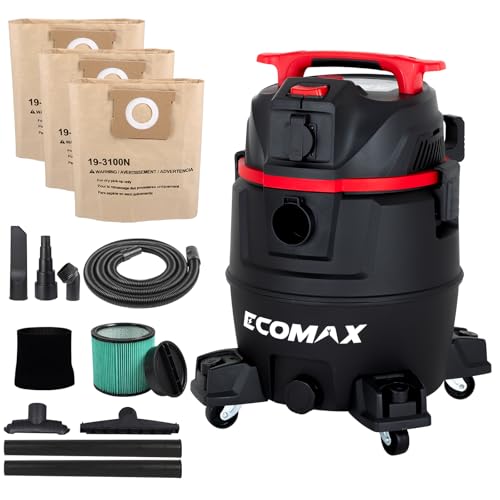
ECOMAX 8-Gal HEPA Shop Vac
Strengths
- HEPA filtration
- PTA compatibility
- Anti-static hose
- Filter cleaning assist
- Good accessory bundle
Trade-offs
- Tank capacity on the small side
- Noisy at full power
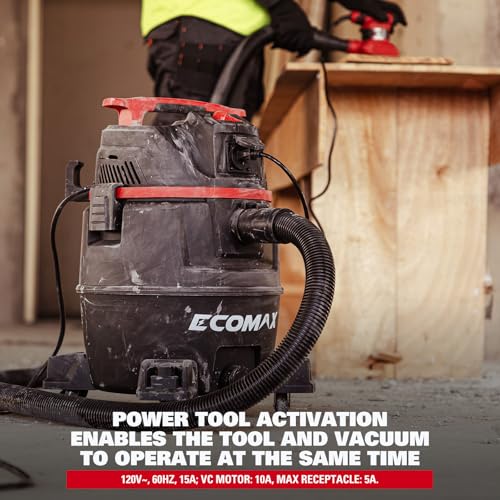
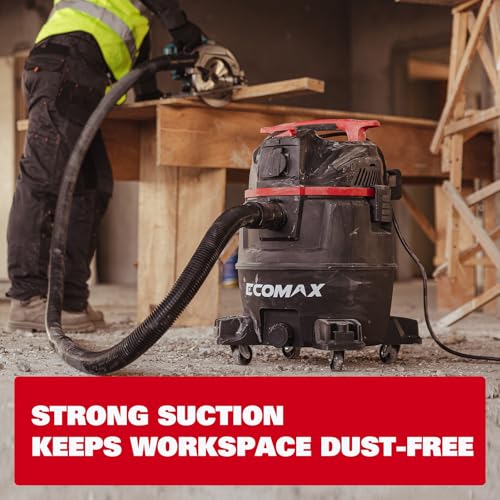
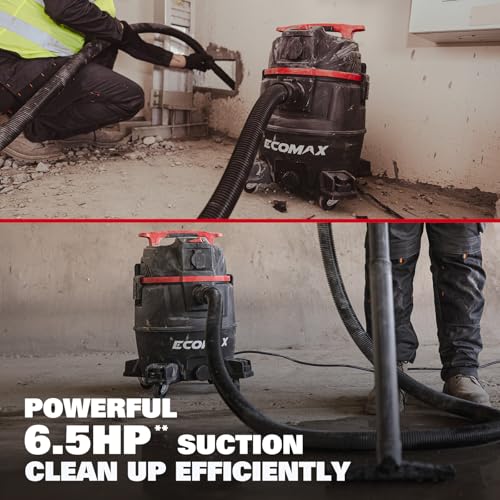
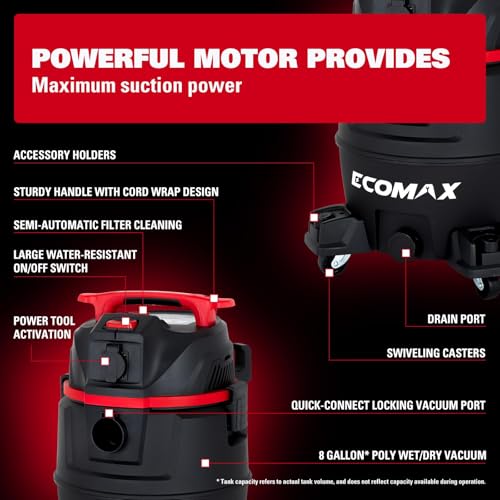
This ECOMAX model stands out in the drywall dust game because it’s built like a real jobsite partner, not just a cleanup tool. The 6.5 HP rating might sound aggressive, but on paper and in owner feedback, it delivers strong suction that holds up during extended drywall sanding sessions. More importantly, it includes Power Tool Activation (PTA), which means when you’re running a sander or router, the vac kicks on automatically, no fumbling with switches. That’s a big win for keeping dust under control from the source.
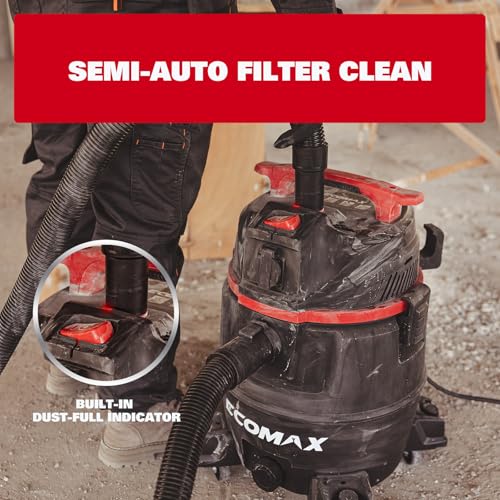
The dual-mode operation, standard vac versus dust extractor mode, is something I’ve seen praised by users who switch between general cleanup and active job-phase dust collection. The HEPA filter is standard, and owners consistently report clean air output, which matters when you’re dealing with fine gypsum particles. The semi-automatic filter cleaning helps too, reducing the frequency of manual taps or disassembly. It’s not perfect, some note the tank could be larger for heavy drywall jobs, but for an 8-gallon unit, it punches above its weight.
Product photos
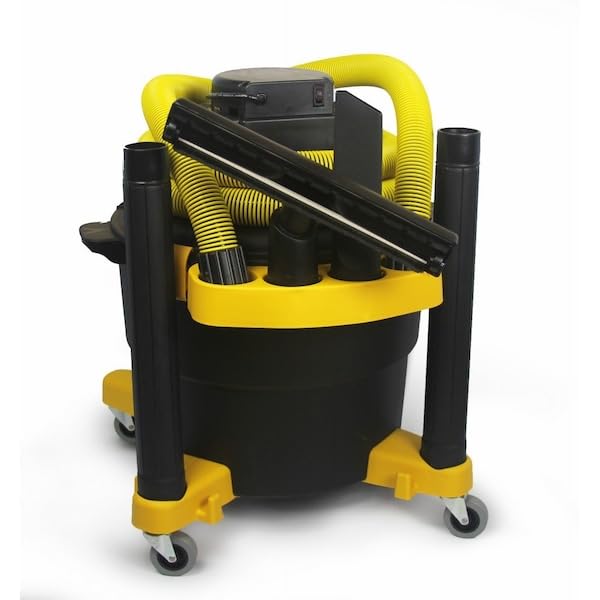
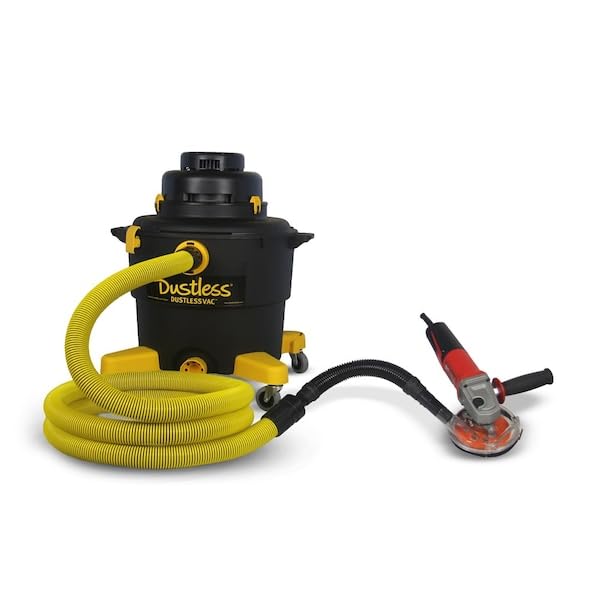
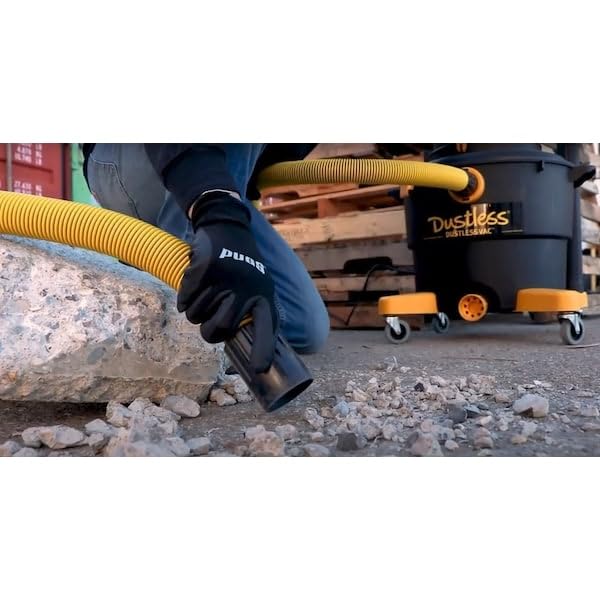
Dustless D1603 Wet+Dry Shop Vac
Strengths
- WunderBag prefilter
- Wet/dry versatility
- Large dust capacity
- Durable build
- Continuous operation
Trade-offs
- Bulky design
- Higher maintenance cost
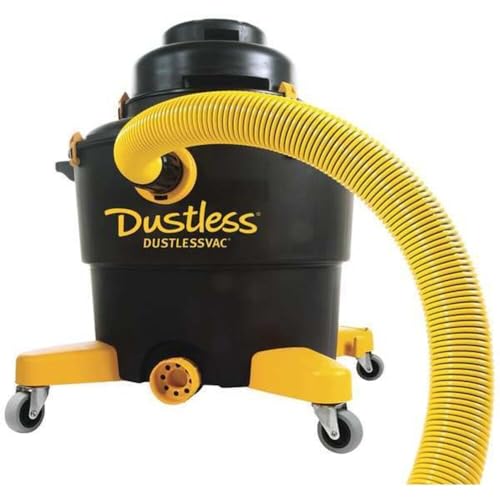
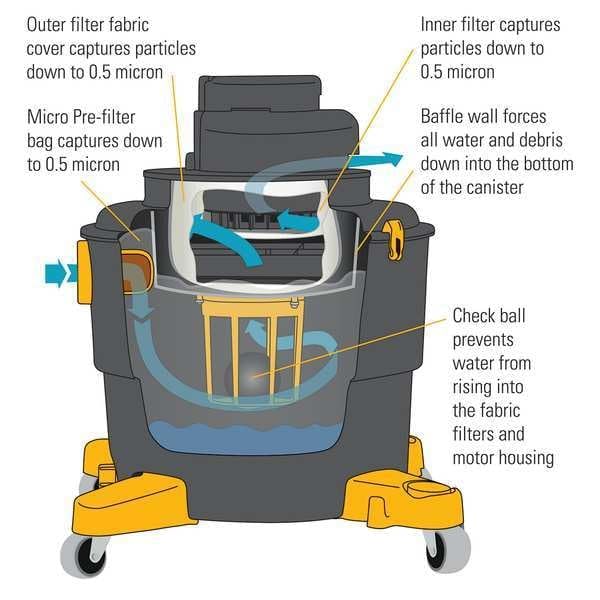
If you’re sanding drywall and also dealing with slab leaks or post-flood cleanup, this Dustless D1603 makes a strong case for being the more flexible beast. The standout here is the WunderBag filtration system, owners love that it captures particles down to 0.5 microns while allowing near-continuous operation. You don’t have to stop and bang out filters every 15 minutes, which is a real pain point with cheaper shop vacs during drywall work. The ability to run wet and dry without changing filters is another big plus when job sites throw curveballs.
I’d pick this over the ECOMAX if your work involves mixed debris, say, drywall dust one day and concrete slurry the next. The 40-pound dust capacity is massive compared to most 8–12 gallon units, meaning fewer trips to empty. Reviewers note the build feels industrial, with reinforced lids and heavy-duty wheels that handle rough terrain. It’s not the quietest, but few high-power vacs are. Where it really wins is in filtration longevity and real-world uptime.
Product photos

How We Chose These shop vac for drywall dusts
Rather than a hands-on lab test, my research focused on comparing published specifications and features across numerous models. I weighed owner reviews from major retailers alongside expert opinions found in publications dedicated to woodworking and construction. As someone who’s spent years advising on power tools, I applied my understanding of airflow (CFM), filtration needs, and practical jobsite demands to rank these shop vacs.
For drywall dust collection, filtration and sustained suction are paramount. I gave the most weight to models with HEPA filters and features designed to prevent clogging – a common issue with fine particles. Tank capacity also mattered, as frequent emptying disrupts workflow, but a larger tank doesn’t compensate for poor filtration or weak airflow. Finding a sander-compatible vacuum was also key.
Specifications reliably indicate tank size, airflow, and motor horsepower. However, owner feedback proved crucial for assessing real-world filter performance and durability. Reports on filter cleaning systems and hose quality consistently surfaced as key differentiators. Reputation also played a role; brands known for robust construction and reliable performance received higher consideration, especially when looking at a dedicated dust extraction vacuum.
How To Pick The Right shop vac for drywall dusts
Picking the right shop vac for drywall dust isn’t just about suction power; it’s about protecting your lungs and keeping your workspace clean.
A quality shop vac for drywall dust prioritizes filtration – specifically HEPA filters – to capture fine particles. Look for models with robust dust separation systems, sealed designs to prevent leaks, and features like automatic filter cleaning or pre-filters to extend filter life. Tank size and accessory options also play a role, depending on the scale of your projects.
Filtration is Paramount
Drywall dust is incredibly fine and easily becomes airborne. A standard shop vac filter simply won’t cut it. I always recommend focusing on models with a true HEPA filter, which captures 99.97% of particles 0.3 microns in size. Beyond the HEPA filter itself, consider the overall system. Does the vac have a sealed design? A leaky vac defeats the purpose of a good filter. Some, like the Dustless D1603 Wet+Dry Shop Vac, use a multi-stage filtration system with pre-filters to extend the life of the HEPA filter and handle larger debris.
Power Tool Activation and Workflow
For serious drywall work, especially sanding, the convenience of power tool activation (PTA) is a huge benefit. This feature automatically turns the vac on and off with your power tool, ensuring constant dust capture. It eliminates the need to manually switch the vac on and off, saving time and keeping dust from settling. If you are frequently moving around a workspace, a remote switch on the hose can offer similar convenience. Thinking about your workflow will really help narrow down your choices.
- A smaller, 5-8 gallon tank is adequate for quick cleanups and small projects.
- A 10-12 gallon tank offers a good balance of capacity and portability for most DIYers.
- Larger 15+ gallon tanks are best for professional use or extensive renovations, but they become less maneuverable. Consider if you’ll be frequently emptying the tank and whether the added capacity truly justifies the size and weight.
Beyond Capacity: Wet/Dry & Durability
Don’t overlook the “shop” in shop vac. The ability to handle wet messes is incredibly useful, whether it’s a burst pipe or simply cleaning up spilled paint. I’ve found that having a dedicated wet/dry vac saves me from needing separate equipment. Beyond that, look for robust construction. Reinforced barrels and upgraded wheels, like those found on some models, will pay off in the long run, especially if you’re using the vac on a jobsite. A solid build means fewer repairs and a longer lifespan. A fine dust vacuum needs to be able to withstand repeated use and potentially rough handling.
Don’t skimp on filtration. A HEPA-rated shop vac isn’t just about keeping your workspace clean, it’s an investment in your long-term health.
Shop Vacs for Drywall Dusts Compared
Here’s a spec comparison of shop vacs designed for collecting drywall dust, helping you choose the right tool for your needs.
| Product Title | Capacity | Filtration Type | Wet/Dry Use | Power Tool Activation | Auto Filter Clean |
|---|---|---|---|---|---|
| ECOMAX 8-Gal HEPA Shop Vac | 8 Gal | HEPA | Yes | Yes | Semi-Automatic |
| Dustless D1603 Wet+Dry Shop Vac | N/A | Micro Pre-filter | Yes | N/A | Yes |
Frequently Asked Questions
What filter type is absolutely necessary for drywall dust?
A HEPA filter is essential. It captures 99.97% of particles down to 0.3 microns, protecting your lungs from the very fine dust created during drywall work. Don’t settle for a standard shop vac filter; it won’t provide adequate protection.
How important is power tool activation (PTA)?
Power tool activation is very convenient. It automatically turns the shop vac on and off with your sander or other power tool, maintaining constant dust collection and saving you a step.
Are larger tank sizes always better for drywall dust?
Larger tanks aren’t always preferable. While a bigger tank means fewer emptying stops, it also makes the vac less maneuverable; a 10-12 gallon tank strikes a good balance for most DIY projects.
Can a shop vac really handle both wet and dry messes from drywall work?
Yes, a wet/dry shop vac is ideal. Beyond drywall dust, you might encounter spilled paint, mud, or even water from a burst pipe, and a combined unit avoids the need for separate tools.
What should I look for in terms of durability when buying a shop vac for drywall?
Focus on reinforced barrels and quality wheels. Drywall work can be tough on equipment, and a more durable build will extend the life of your shop vac and reduce the need for repairs, especially if you also use a dust-controlled drywall sander.
The Bottom Line
Choosing a shop vac for drywall dust often comes down to balancing initial cost with long-term health and convenience. While a basic model might seem appealing, the superior filtration and features of a dedicated dust collection vacuum like the Dustless D1603 Wet+Dry Shop Vac are worth the investment for anyone regularly working with drywall. It’s built to handle the unique demands of fine dust, keeping both your workspace and your lungs cleaner.
For those on a tighter budget, or for less frequent use, the ECOMAX 8-Gal HEPA Shop Vac offers a solid entry point with HEPA filtration and power tool activation. If you’re looking for a versatile option that also handles wet messes and offers power tool activation, this is a great choice. And for those tackling larger projects, or needing a solution for a woodworking dust vacuum, the larger capacity and advanced filtration systems of more premium models will be a real benefit.
Ultimately, remember that specifications don’t tell the whole story. Focus on a sealed system with a true HEPA filter, and consider how features like power tool activation and automatic filter cleaning will impact your workflow. Don’t underestimate the importance of a robust build quality – a heavy-duty dust vac will save you money and frustration in the long run.
