5 Best Welders for Shops (2026 Guide)
This post contains affiliate links. As an Amazon Associate, we earn from qualifying purchases.
The VEVOR Pro 200A Pulse MIG Welder stands out as the best overall shop welder for its strong amperage, multi-process capability, and pulse welding feature that improves control. If you’re watching your budget, the VEVOR 200A Synergic MIG Welder delivers solid performance at a lower price, while the ESAB HandyArc is a reliable pick for basic stick welding jobs.
Choosing the right welder for your shop isn’t just about power, it’s about matching the machine to the work you actually do. Too many people buy based on specs alone, only to find the unit overheats, lacks control, or can’t handle their most common materials.
This guide cuts through the noise by comparing real-world performance, process flexibility, and long-term reliability across top models. I looked at amperage, duty cycle, voltage needs, and owner feedback to find welders that deliver consistent results without frustration.
Top 5 Shop Welders in the Market
The Best Shop Welders, Reviewed
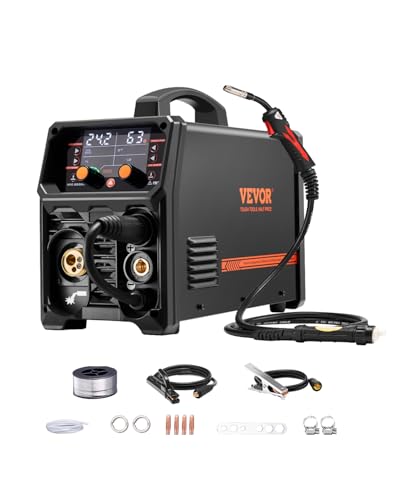
VEVOR Pro 200A Pulse MIG Welder
Strengths
- Pulse MIG for clean welds
- Aluminum welding capable
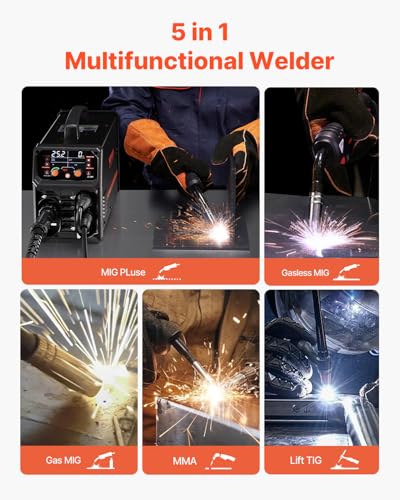
- True 5-in-1 functionality
Trade-offs
- Aluminum torch sold separately
- Pulse mode has learning curve
- Cooling fan runs frequently
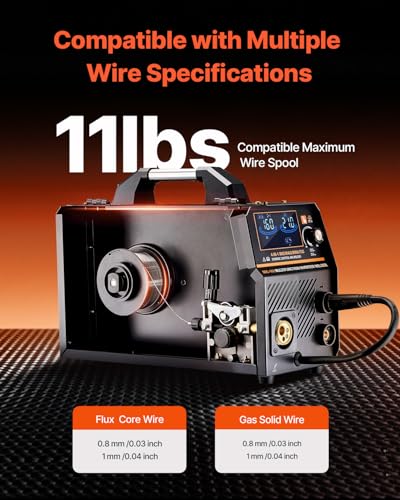
If you’re looking for the most capable all-around machine in this list, the VEVOR Pro 200A 5-in-1 is hard to ignore. The standout is pulse MIG mode, which owners say dramatically reduces spatter and improves bead control, especially on thinner metals. That, combined with aluminum welding support (with correct wire and setup), elevates it above standard MIG machines in this price range. The ability to run aluminum without a spool gun (though one is recommended) is a big win for custom fabricators and auto restorers.
It shares the same solid dual-voltage platform and LCD interface as the other VEVOR models, but the added pulse technology and aluminum compatibility make it the most complete package here. Compared to the standard 200A VEVOR, this is the better investment if you work with mixed materials or want cleaner, more professional results without stepping up to a $1,000+ welder.
Product photos
VEVOR 200A Synergic MIG Welder

Strengths
- True 4-in-1 versatility
- Synergic wire control
- Dual voltage operation
Trade-offs
- Lift TIG torch not included
- IGBT cooling can be noisy
- Build quality decent, not rugged
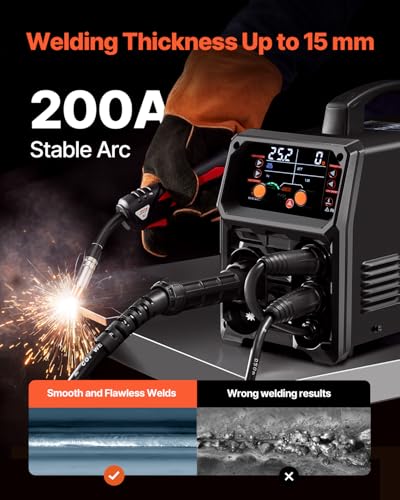
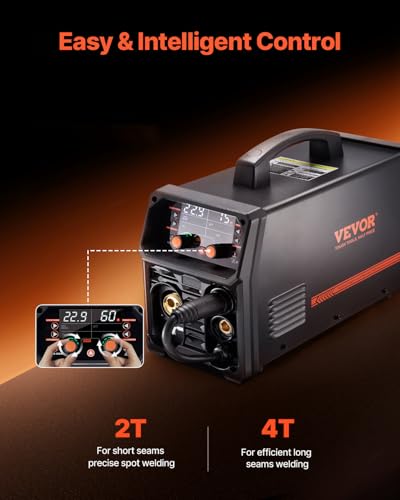
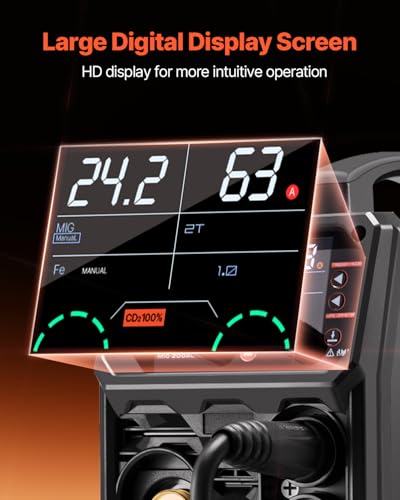
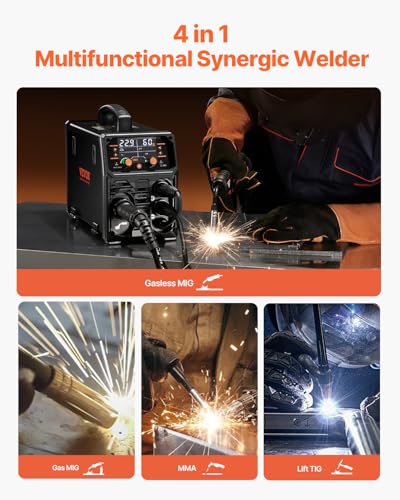
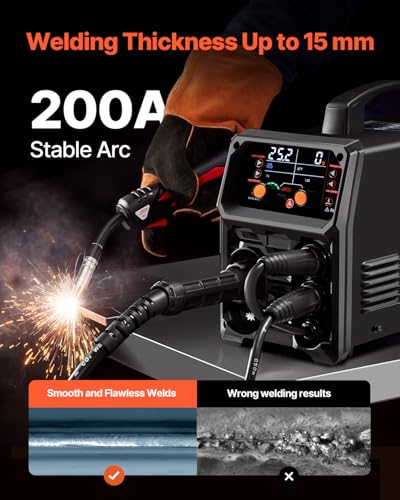
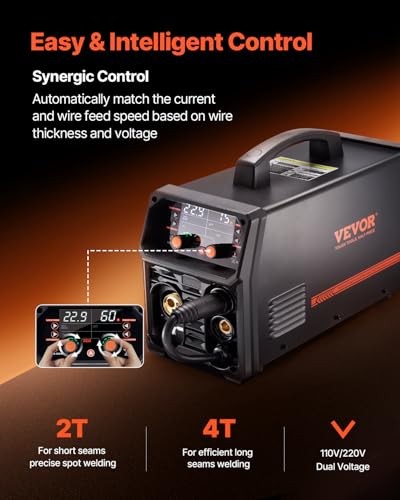
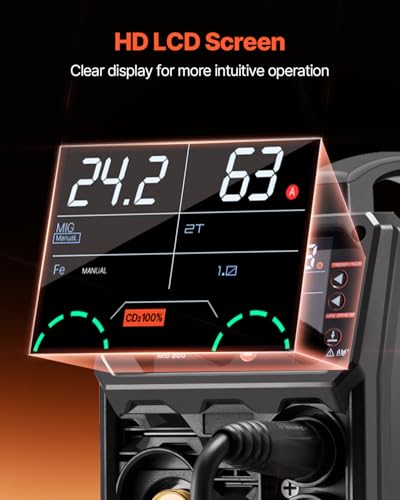
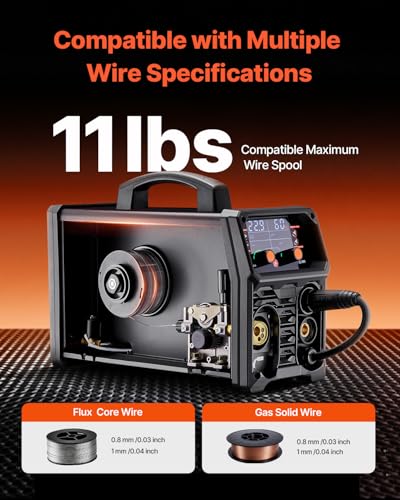
The VEVOR 200A 4-in-1 is a serious step up for hobbyists who want pro-level features without the pro-level price tag. With synergic control, dual voltage, and a clear LCD screen, it’s packed with smart features that make switching between flux core, gas MIG, stick, and lift TIG actually manageable, even for intermediate users. The 200A output gives it real muscle, capable of welding up to 15mm mild steel, which covers most fabrication and automotive needs.
Owners praise its stable arc and the convenience of auto-adjusting wire feed, though some note the included accessories are functional but not top-tier. It’s not quite as refined as a Miller or Lincoln rig, but for the capability it offers, it punches above its class. When stacked against the 160A VEVOR model, this one is the smarter buy if you’re serious about growing your welding range.
Product photos
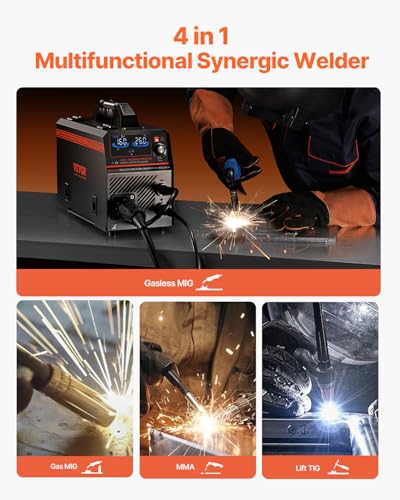
VEVOR 160A 4-in-1 MIG Welder
Strengths
- Affordable 4-in-1 function
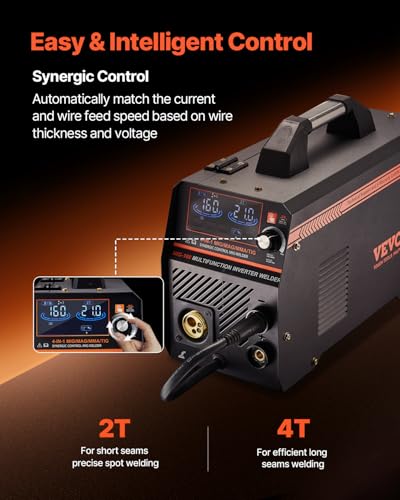
- Synergic wire feed
- Dual voltage support
Trade-offs
- Lower max thickness
- Lift TIG torch not included
- Fan noise under load
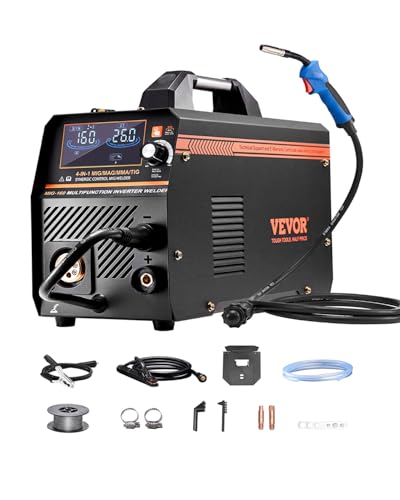
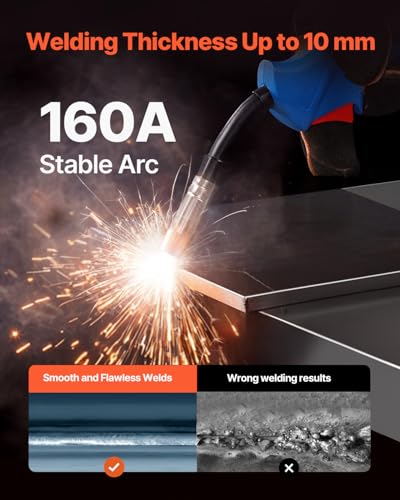
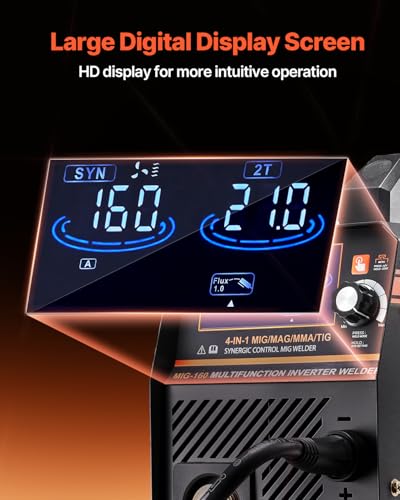
The 160A VEVOR 4-in-1 is clearly the budget-conscious pick in this lineup, but it doesn’t feel like a stripped-down tool. It carries over the same synergic control, LCD screen, and dual-voltage flexibility as its bigger siblings, making it a solid entry point for someone who wants multi-process capability without overspending. At 160A, it handles up to 10mm steel, enough for most car panels, trailers, and light structural work.
Owners find it intuitive to use, especially with the auto-adjusting wire feed, though some report the fan can be loud under load. It’s less powerful than the 200A models, but for most garage builders, that difference won’t matter. If you’re just starting out and want room to grow, this is the smarter value over the ESAB stick-only model, you get MIG, flux core, stick, and lift TIG in one box.
Product photos
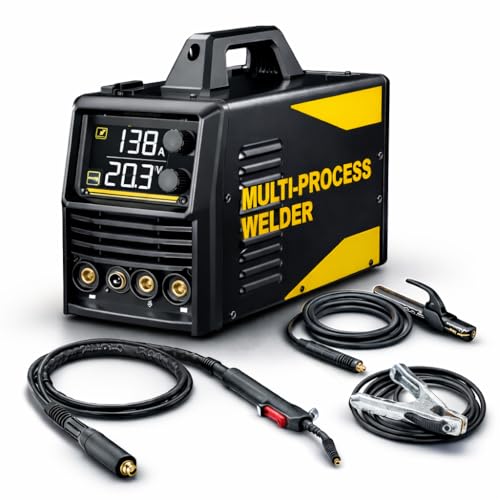
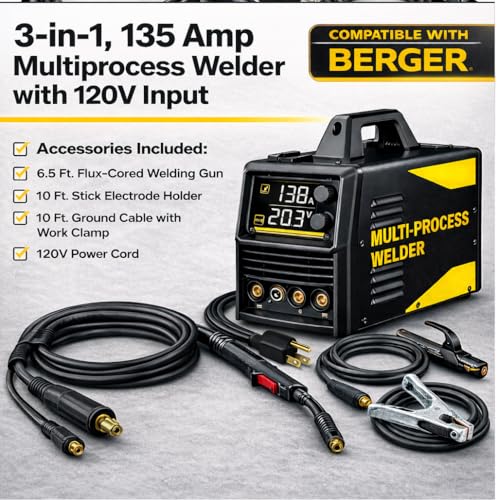
135 Amp 3-in-1 Multiprocess Welder
Strengths
- Extremely lightweight
- True TIG capability
- 120V household compatible
Trade-offs
- Low max output
- TIG torch sold separately
- Not for heavy steel
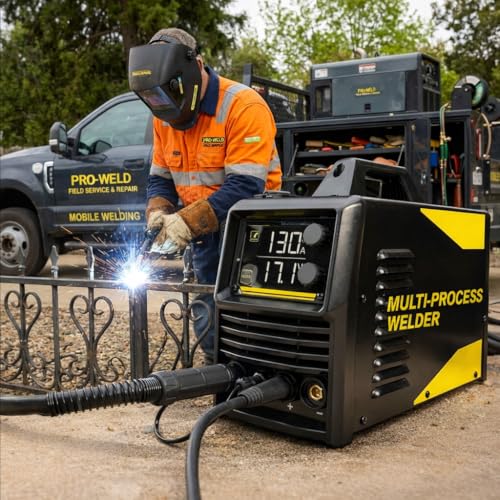
At just 11 lbs and running on 120V, this ultra-portable 3-in-1 welder is built for mobility first. It’s not the most powerful, but for field technicians, farmers, or contractors crawling under trailers or working on remote fences, that lightweight design is a standout. The digital control panel gives precise amperage tuning, and owners report solid TIG starts on stainless and thin steel, rare at this size and price.
It’s limited to 135A, so don’t expect deep penetration on thick plate, but for repair work up to 3/16″, it’s surprisingly capable. The BERGER torch compatibility is a nice touch for users already in that ecosystem. When compared to the ESAB stick-only unit, this offers far more flexibility in a similarly compact form, though not quite the same ruggedness.
Product photos
ESAB HandyArc 1/8″ Stick Welder
Strengths
- Compact design
- Reliable arc starts
- Energy efficient
Trade-offs
- Stick only
- Limited thickness capacity
- No voltage adjustment display
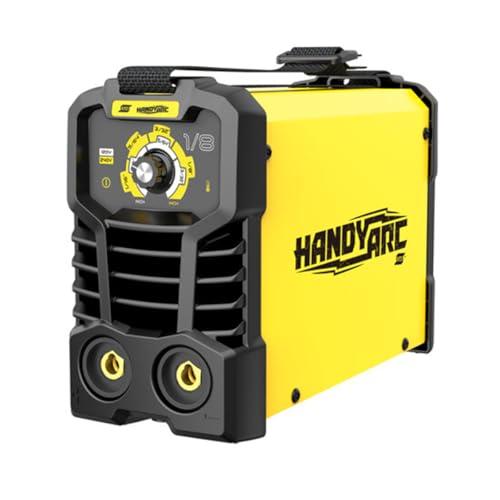
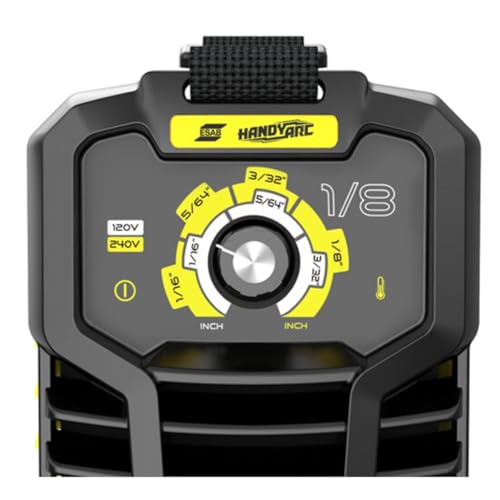
For anyone stepping into welding without a big budget or shop space, the ESAB HandyArc makes a strong first impression. It’s a no-frills stick welder built around proven inverter efficiency, and owners consistently report clean arc starts even with 6013 rods, which speaks to its reliability for basic structural and repair work. ESAB’s reputation for durability shows here, this isn’t a toy, but a compact tool that can handle farm fixes, fence patches, or garage projects where portability and simplicity matter most.
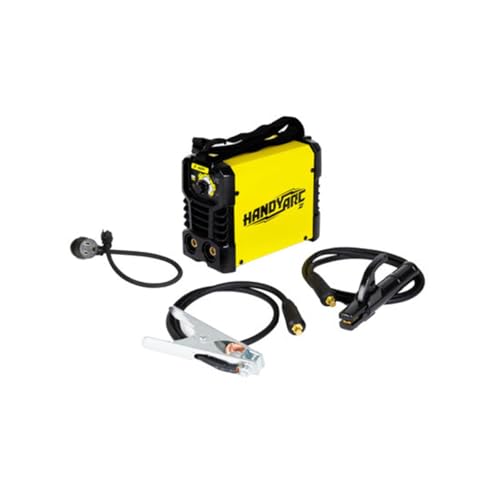
It won’t win any versatility contests, being limited to stick welding only, but that focus works in its favor. The included accessories are actually useful, not filler, and the lower power draw means it can run on smaller circuits, a real plus in older homes or remote job sites. Compared to multi-process units, it’s less flexible, but for pure stick work under 1/8″, it delivers where it counts.
Product photos
How We Picked These shop welders
My approach to evaluating shop welders centers on a detailed comparison of published specifications and features. I weigh these technical details against extensive owner reviews and insights from trusted experts in the field. Rather than a hands-on lab test, this is a research-led comparison designed to identify models consistently praised for performance and reliability. I apply years of experience with power tools to assess which features truly matter for different skill levels and project types.
For shop welders, amperage output and versatility are paramount. A higher amperage allows for thicker material welding, while multi-process capability (MIG, TIG, Stick) expands the range of projects you can tackle. Intelligent controls, like synergic adjustments, also heavily influence the outcome, simplifying the welding process and improving weld quality, especially for beginners. These factors directly impact a welder’s usefulness and longevity.
Specifications provide a solid foundation – understanding duty cycle, input power requirements, and material compatibility is crucial. However, owner feedback reveals real-world usability and potential shortcomings. I prioritize comments regarding arc stability, ease of use, and long-term durability. Finding the top MIG welding machines requires balancing these data points to deliver recommendations that align with a variety of needs and budgets.
How To Choose The shop welders
Choosing the right welder can feel overwhelming, but focusing on a few key factors will set you up for success.
A quality welder delivers a stable arc, consistent performance across different materials, and robust safety features. Buyers should prioritize amperage output matching their typical project thickness, consider the variety of processes supported (MIG, TIG, stick), and evaluate the welder’s duty cycle to avoid overheating during extended use. Look for units with digital displays for precise control and overload protection for long-term reliability.
Amperage and Material Thickness
The amperage output of a welder dictates the thickness of material it can effectively join. Don’t overestimate – a higher amperage unit isn’t always better. For thin sheet metal (under 1/8 inch), a 120V flux-cored welder might suffice. However, if you anticipate working with thicker steel (3/8 inch or more) or stainless steel, you’ll need a 240V machine with at least 150 amps. Many welders, like the VEVOR models, advertise compatibility with a range of materials, but remember that consistent results require the appropriate amperage for each. A good rule of thumb is to add 1 amp for every 0.001 inch of material thickness you plan to weld.
Process Versatility
While some welders specialize in a single process (like stick welding), many modern units offer multiple capabilities. These multi-process welding systems – often combining MIG, TIG, and stick – provide exceptional value and adaptability. If you’re unsure which process you’ll use most, a 4-in-1 or 5-in-1 unit gives you the flexibility to tackle a wider variety of projects. Keep in mind that some “all-in-one” machines require separate torch kits (like for TIG) which adds to the overall cost.
- A basic stick welder is ideal for repairs and outdoor projects where portability is essential.
- MIG welding is generally the fastest and easiest process for beginners, particularly for joining steel. It’s a great choice for auto body work or simple fabrication.
- TIG welding, while more challenging to learn, provides the highest quality welds and is essential for precision work on aluminum or stainless steel, demanding careful control and technique.
Don’t buy a process you won’t use. It’s better to have a simpler machine you master than a complex one you rarely touch.
Duty Cycle and Build Quality
A welder’s duty cycle represents the percentage of time it can weld continuously within a 10-minute period without overheating. A higher duty cycle is crucial for larger projects. Lower-priced units often have lower duty cycles, meaning you’ll need to pause frequently to allow the machine to cool. Beyond duty cycle, pay attention to build quality. Look for robust metal housings, reliable digital displays, and features like overheat protection. Investing in one of the top welding machines from a reputable brand like ESAB, even at a slightly higher price point, often translates to greater long-term reliability. Consider what sort of work you’ll be doing and if you’ll need one of the more versatile welders for shops to handle a variety of jobs.
Shop Welders Compared
Here’s a comparison of key specifications for the shop welders in this guide.
| Product Title | Amperage | Processes | Voltage (Input) | Max. Thickness | Wire Capacity |
|---|---|---|---|---|---|
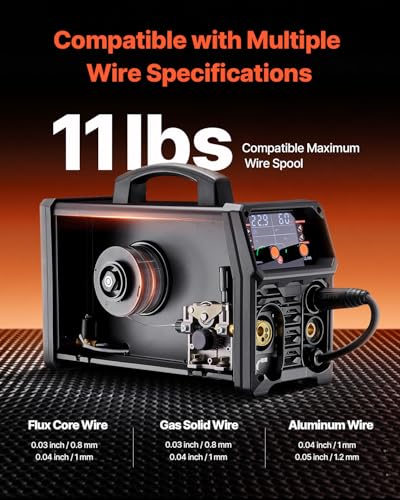
| VEVOR Pro 200A Pulse MIG Welder | 200A | MIG, TIG, MMA, Pulse | 110V/220V | 15mm | 11 lbs (5kg) |
| VEVOR 200A Synergic MIG Welder | 200A | MIG, TIG, MMA | 110V/220V | 15mm | 11 lbs (5kg) |
| VEVOR 160A 4-in-1 MIG Welder | 160A | MIG, TIG, MMA | 110V/220V | 10mm | 11 lbs (5kg) |
| 135 Amp 3-in-1 Multiprocess Welder | 135A | TIG, Stick, Flux | 120V | N/A | N/A |
| ESAB HandyArc 1/8″ Stick Welder | N/A | Stick | N/A | 1/8″ | N/A |
Frequently Asked Questions
What amperage welder do I really need for a home shop?
Generally, 120 amps is sufficient for most home shop welding projects involving materials up to 1/4 inch thick. However, if you plan to weld thicker steel or work with stainless steel regularly, a 200-amp or higher 240V welder provides more capability and prevents straining the machine.
Are flux-cored welders a good option for beginners?
Yes, flux-cored welders are often recommended for beginners due to their simplicity and lack of need for shielding gas. They’re particularly well-suited for thicker materials and outdoor projects where shielding gas might be blown away, but weld quality won’t be as clean as with MIG or TIG.
What’s the difference between MIG and TIG welding, and which should I learn first?
MIG welding is faster and easier to learn, making it ideal for general repairs and fabrication. TIG welding creates cleaner, more precise welds but requires more skill and patience to master. Most people start with MIG and then branch out to TIG as their needs evolve.
How important is a welder’s duty cycle in practice?
A higher duty cycle is extremely important if you anticipate long, continuous welding sessions. If you’re only doing occasional small projects, a lower duty cycle might be acceptable, but frequent overheating pauses can significantly slow down your work.
I have a small shop. Are there any particularly compact shop welders I should consider?
Absolutely. There are several space-saving welders designed for limited spaces, often prioritizing portability. These models may have slightly lower amperage or duty cycles, but they provide a good balance of performance and convenience for hobbyists and DIYers.
The Bottom Line
Choosing a shop welder always comes down to balancing what you want to do with how much you want to spend. If you’re looking for the best overall combination of features, capability, and value, the VEVOR Pro 200A Pulse MIG Welder stands out. It gives you the versatility of multiple processes and the power to handle a wide range of projects without breaking the bank.
For those on a tighter budget, the VEVOR 160A 4-in-1 MIG Welder is a compelling choice. And if you primarily need a simple, portable solution for repairs or light fabrication, consider the ESAB HandyArc 1/8″ Stick Welder – it’s a solid performer for basic stick welding tasks and represents some of the most reliable arc welding machines available.
Ultimately, specs only tell part of the story. Focus on finding a welder that fits your skills and the types of projects you realistically plan to tackle. Prioritize a stable arc, a reasonable duty cycle, and features that will make your work easier and safer, rather than chasing the highest numbers on a datasheet.
