7 Best Sheetrock Screw Guns of 2026
This post contains affiliate links. As an Amazon Associate, we earn from qualifying purchases.
The DEWALT 6.0-Amp Drywall Screw Gun is the best overall for consistent power and depth control, especially on large jobs. For cordless convenience without sacrificing performance, the DEWALT 20V Max Brushless Screwgun is my top pick. If you’re on a tight budget but still need solid reliability, the Hoteche 4.5-Amp Electric Screw Gun delivers.
Drywall work is repetitive, and using the wrong tool can turn a manageable job into a sore-handed mess. A dedicated sheetrock screw gun isn’t a luxury, it’s what separates a pro-level finish from a DIYer’s headache.
This guide cuts through the noise by focusing on real-world performance, based on specs, owner feedback, and what actually matters when you’re up on a lift or crawling through an attic. I looked at depth control, power delivery, ergonomics, and battery compatibility to find the models that get the job done without burning you out.
Top 7 Sheetrock Screw Guns in the Market
The Best Sheetrock Screw Guns, Reviewed
DEWALT 6.0-Amp Drywall Screw Gun

Strengths
- 5,300 RPM motor
- Depth-sensitive nosepiece
- Durable steel gears
- Lightweight for corded
- Two-finger trigger
Trade-offs
- Corded only
- No reverse function
- No LED light
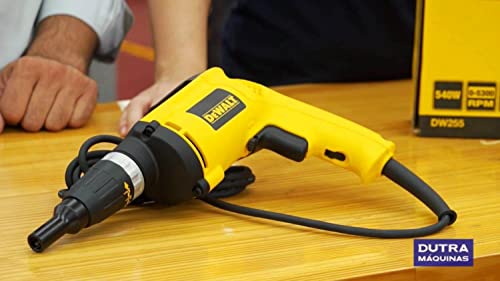
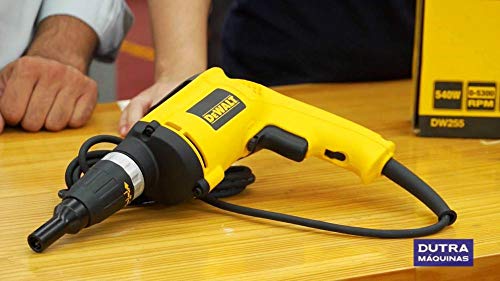
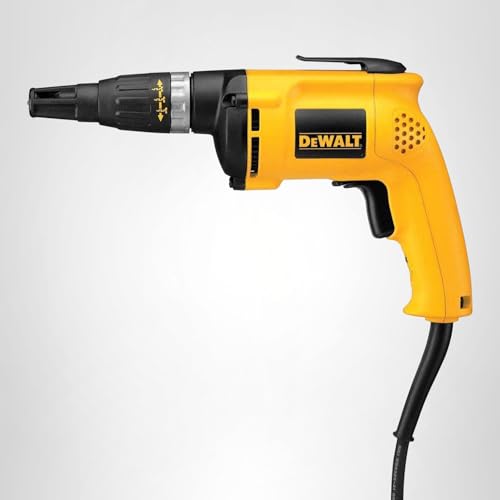
The DEWALT DW255 is the gold standard for corded drywall guns, and after years in the field, it still earns the ‘Best Overall’ label. With a 6.0-amp motor and 5,300 RPM, it’s among the fastest in the class, making quick work of large walls. The depth-sensitive nosepiece is a standout, once you set it, every screw seats perfectly without adjustment. Owners love the ‘set and forget’ function, and it shows in long-term satisfaction scores.
It’s built like a tank, with helical-cut steel gears that laugh off daily abuse. While it’s heavier than cordless options, the weight is well-distributed, and the two-finger trigger reduces fatigue. Compared to the Hoteche, it’s in a different league in power and precision. It won’t win any portability awards, but if you’re working near an outlet or using an extension cord, this is the most reliable performer you can buy.
Product photos

DEWALT 20V Max Brushless Screwgun

Strengths
- Brushless motor
- Four operation modes
- Tool Connect ready
- LED work light
- Compact design
Trade-offs
- No battery included
- Slight learning curve on modes
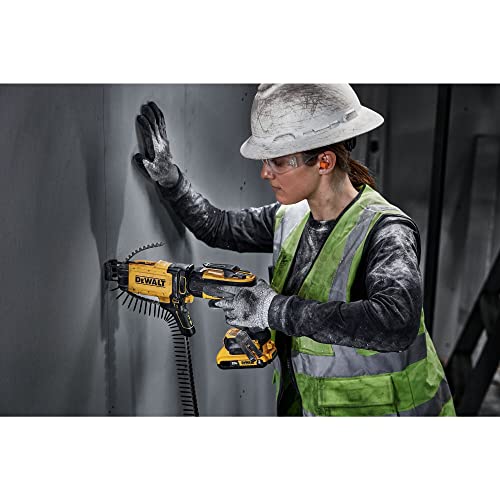
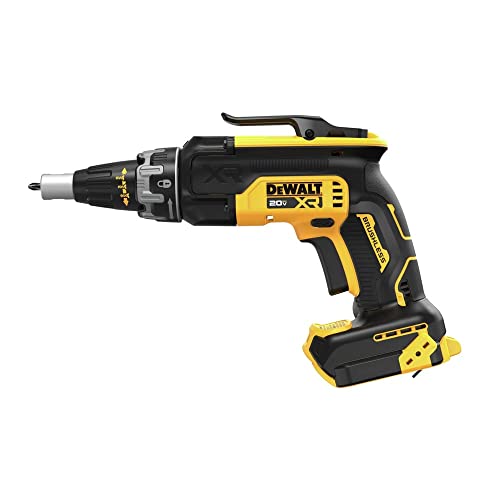
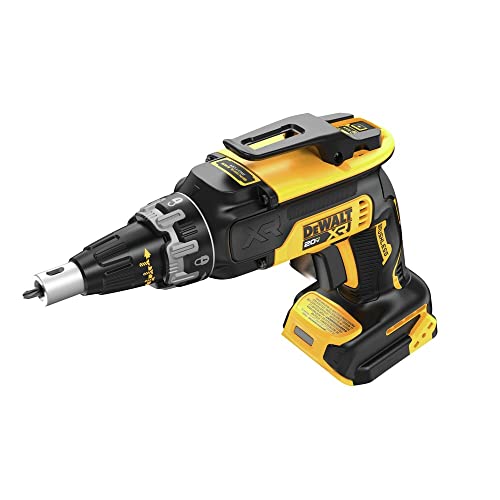
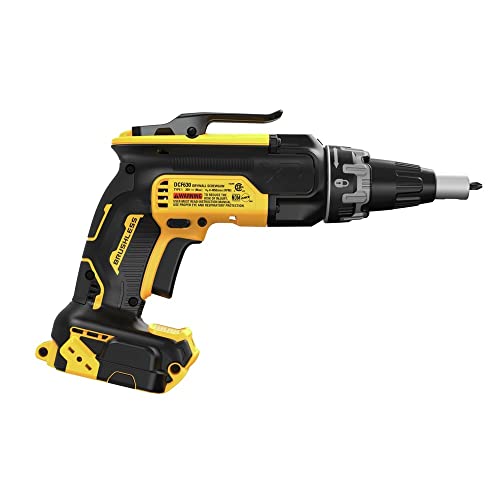
This DEWALT model stands out in the cordless drywall gun space thanks to its brushless motor and thoughtful mode selection. The four dedicated modes, including Trigger High, Trigger Low, PushStart, and Lock-On, give pros real flexibility depending on substrate and workflow. On paper, the variable speed range is solid, and owners consistently report smooth starts and fewer blowouts when setting screws just below the paper. The top-mounted mode switch is a small detail, but it makes a big difference in practice, letting you change settings fast without shifting your grip.
The LED light and Tool Connect readiness add modern utility, especially on larger job sites where tracking gear matters. It’s not the lightest in class, but the balance helps reduce fatigue over long hangs. Compared to the Milwaukee 2866-20, it doesn’t have Auto Start, but the PushStart mode achieves a similar efficiency gain. For anyone already in the DEWALT 20V ecosystem, this is a no-brainer upgrade from corded models.
Product photos

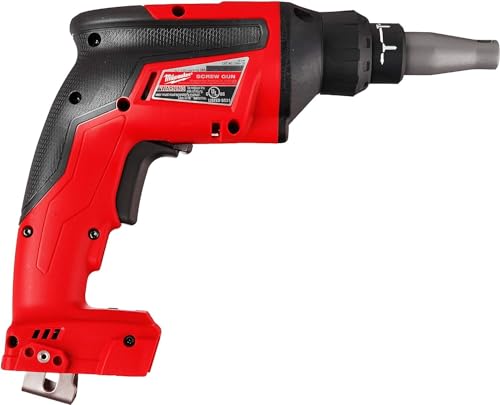
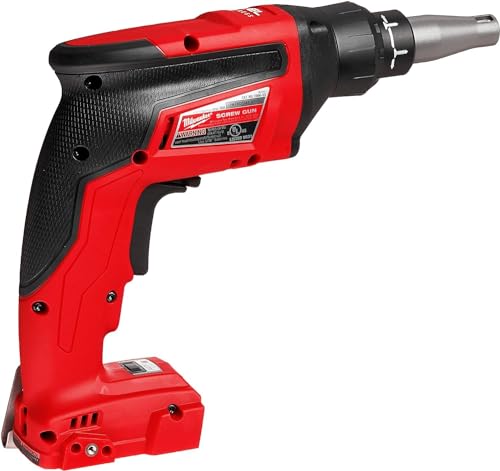
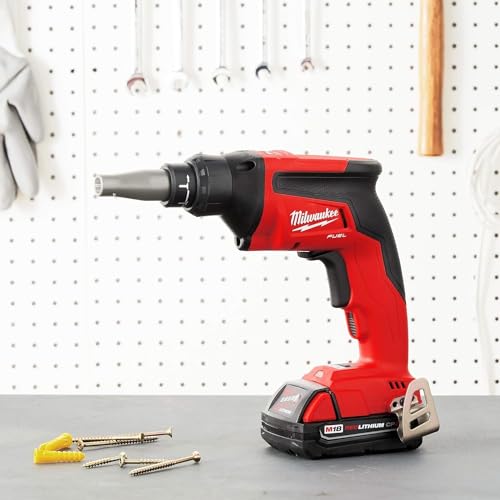
Milwaukee M18 FUEL Drywall Screw Gun

Strengths
- Auto Start Mode
- Long runtime
- M18 compatibility
- LED work light
- Balanced design
Trade-offs
- Higher upfront cost
- Bare tool only
- Slight delay in trigger response
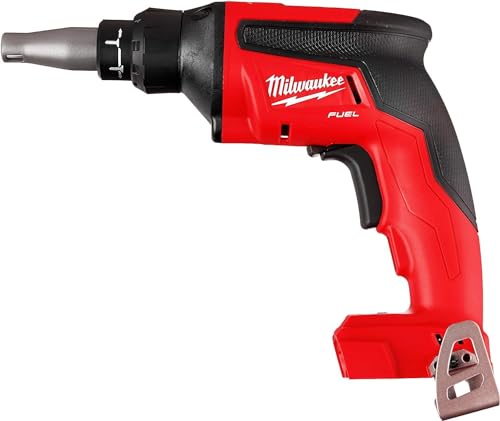
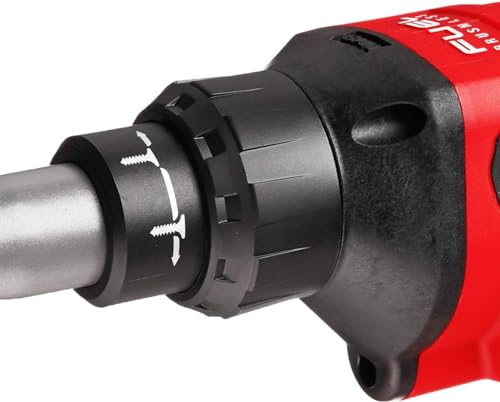
Milwaukee’s M18 FUEL model is built for the pro who lives on battery power and needs endurance above all. The Auto Start Mode is the real star here, the motor only kicks in when the nose hits the screw, which cuts down on noise and dramatically extends runtime. Reviewers note they’re getting 60+ sheets per charge with the XC5.0 battery, which beats most competitors. The POWERSTATE brushless motor delivers 4,500 RPM with plenty of torque, and it holds up well in both wood and light-gauge metal studs.
It’s not the fastest-starting gun out there, but the efficiency more than compensates. The LED at the foot of the tool is better placed than top-mounted lights, giving a clean shadow-free view. Compared to the DEWALT DCF630B, it trades some mode flexibility for longer run times and smoother operation. If you’re already in the M18 ecosystem, this is one of the smartest buys in the category.
Product photos
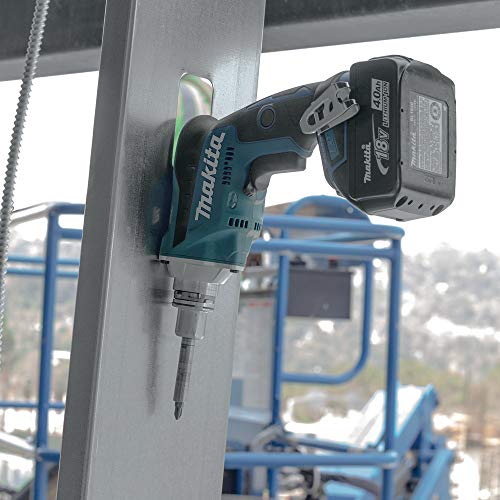
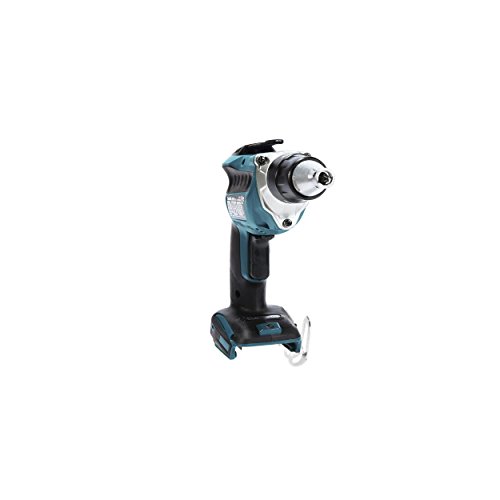
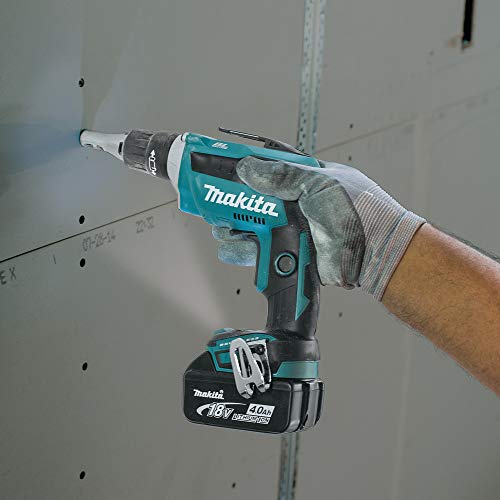
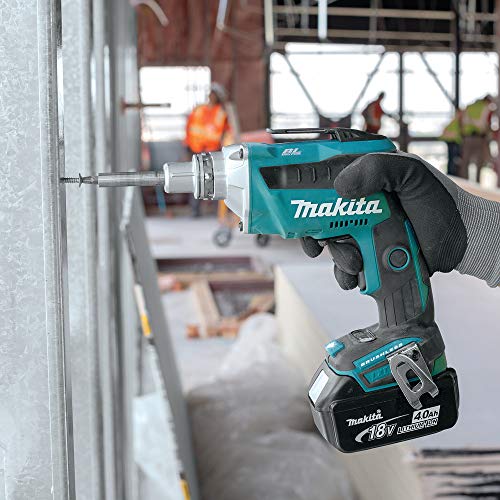
Makita 18V Brushless Drywall Screwdriver

Strengths
- Push Drive Technology
- Efficient brushless motor
- Precision control
- Compact and balanced
- Long battery life
Trade-offs
- Lower max RPM
- Bare tool only
- Limited mode options
Makita’s XSF03Z is all about precision and efficiency. The Push Drive Technology means the motor only runs when the screw engages, which cuts noise and saves battery, a feature similar to Milwaukee’s Auto Start but with a lighter touch. The electronically controlled brushless motor adjusts torque and RPM on the fly, which owners say results in smoother starts and fewer stripped screws. At 0–4,000 RPM, it’s not the fastest, but for careful work, that’s a benefit, not a drawback.
It’s compact and well-balanced, making it a favorite for detail work or ceilings. Compared to the DEWALT DCF630B, it has fewer modes but more refined control. The lack of an included battery is a pain, but if you’re in the 18V LXT system, it integrates smoothly. This is the go-to for installers who hate rework and value clean, quiet operation.
Product photos

Ecarke 6000RPM Brushless Screwgun
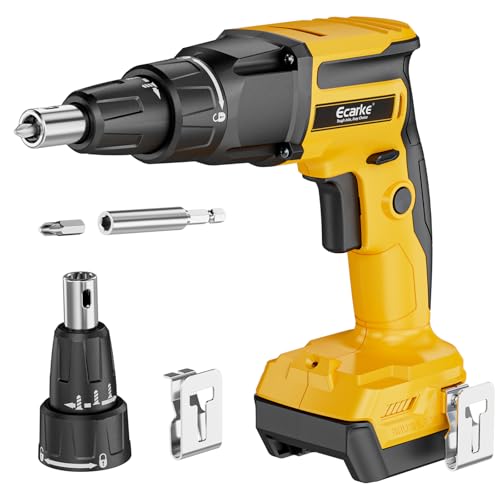
Strengths
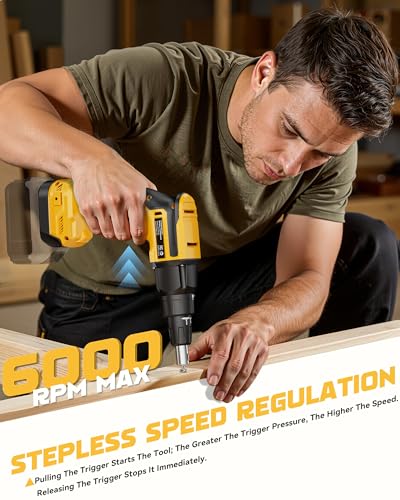
- 6000 RPM speed
- Lightweight design
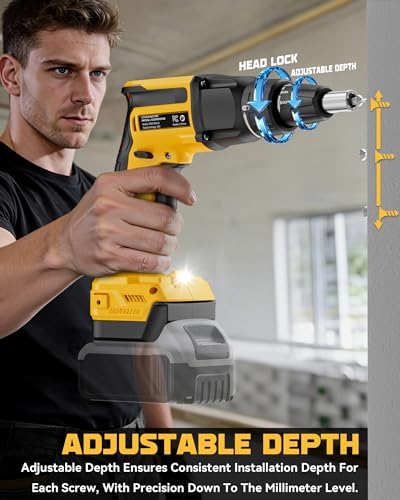
- Tool-free depth adjustment
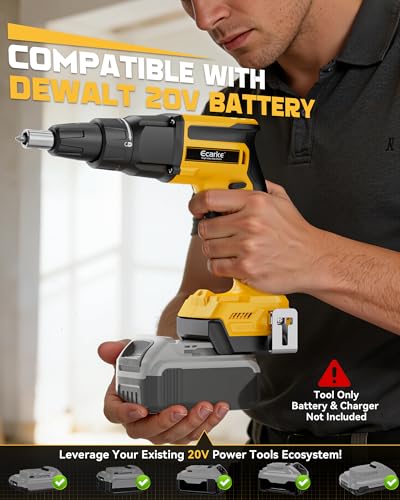
- DeWALT 20V compatible
- LED light
Trade-offs
- Trigger response inconsistent
- Overheats under heavy load
- Build quality average
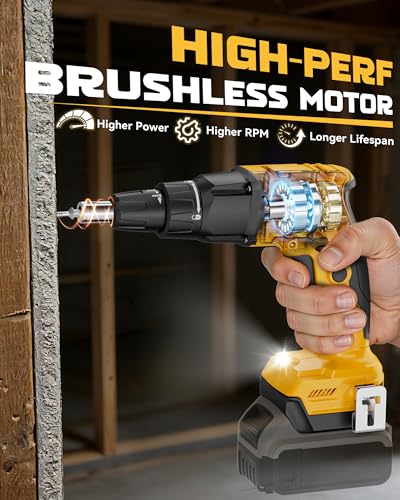
The Ecarke gun grabs attention with a bold 6,000 RPM claim, the highest on this list, but real-world feedback suggests it’s more marketing than magic. The brushless motor does deliver strong power and runs cool, and the tool-free depth adjustment works well, with clear markings that help avoid over-driving. At just 2.8 pounds, it’s one of the lightest options, and the belt clip is a practical touch for on-the-go work.
However, owners report the trigger response is inconsistent, and the high RPM can lead to more blowouts unless you’re extremely careful. It’s clearly inspired by DEWALT’s design but lacks the refinement in motor control and ergonomics. For someone on a tight budget who already owns DeWALT 20V batteries, it’s a functional alternative. But compared to the DCF630B, it’s a step down in reliability and finesse.
Product photos
Hoteche 4.5-Amp Electric Screw Gun
Strengths
- Low cost
- Forward and reverse
- Variable speed control
- 1/4-inch chuck
- Durable motor
Trade-offs
- Corded only
- Lighter-duty build
- No depth stop gauge
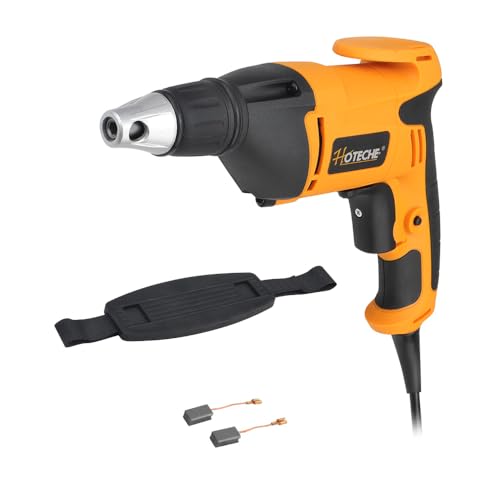
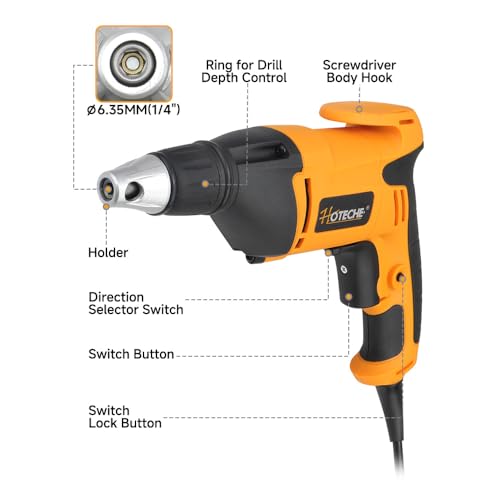
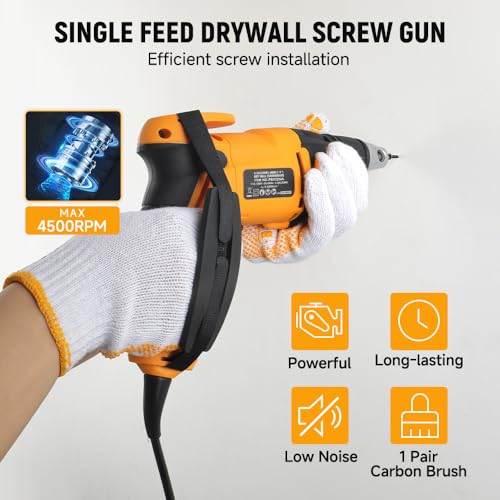
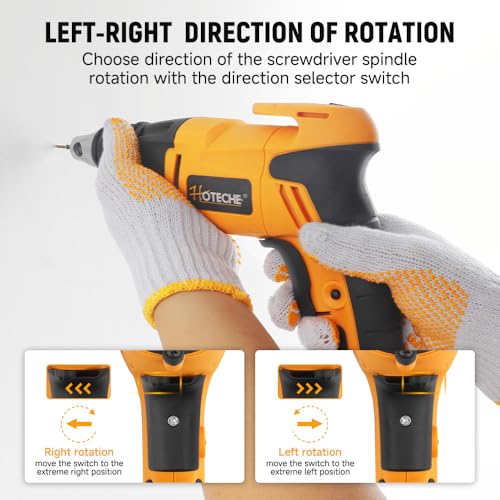
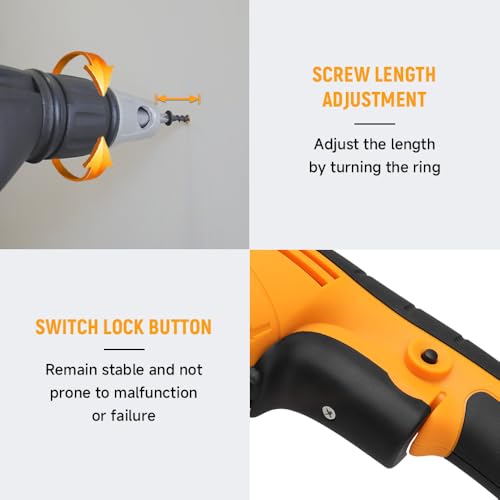
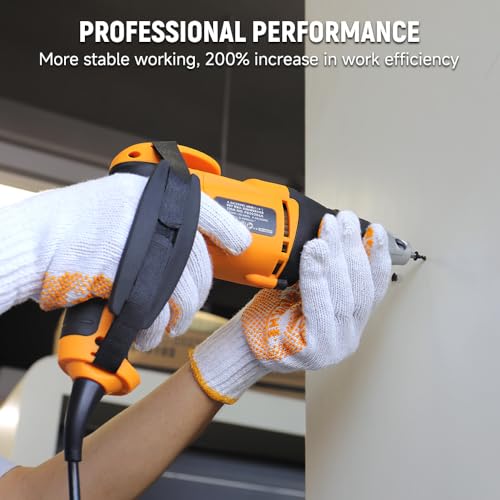
The Hoteche is a straightforward, no-frills corded screw gun that delivers what it promises: consistent power at a low price. With a 4.5-amp motor and 0–4500 RPM variable speed, it handles standard drywall tasks without issue. The forward/reverse switch is practical for correcting mistakes, and the 1/4-inch chuck opens up compatibility with a wide range of bits, which is a rare perk in this category. Owners say it runs cool even during extended use, and the included carbon brushes suggest the brand expects long-term use.
It won’t match the finesse of high-end cordless models, and the cord is a real limitation on large jobs. But for a homeowner or handyman working in a garage or basement, this is a solid budget play. Compared to the DEWALT DW255, it lacks the refined ergonomics and RPM, but it offers reverse function and chuck versatility the DW255 doesn’t.
Product photos
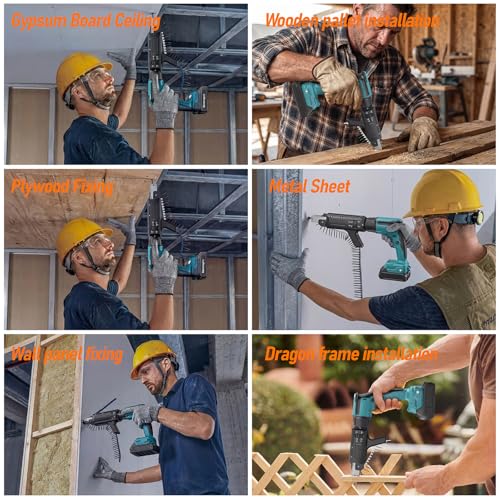
18V 2-in-1 Auto-Feed Screw Gun
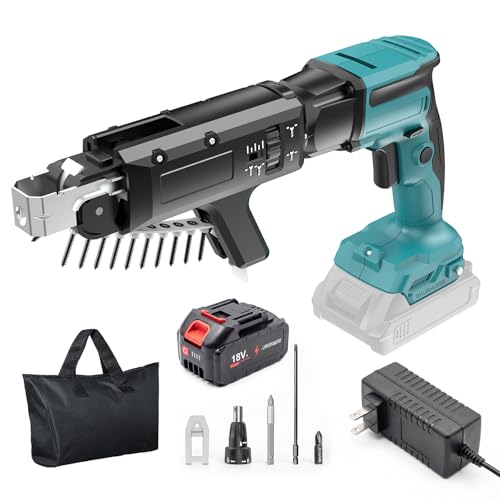
Strengths
- 360° rotating head
- Auto-feed function
- Brushless motor
- Includes battery and charger
- Tool-free depth adjustment
Trade-offs
- Auto-feed jams frequently
- Build quality inconsistent
- Bulky in tight spaces
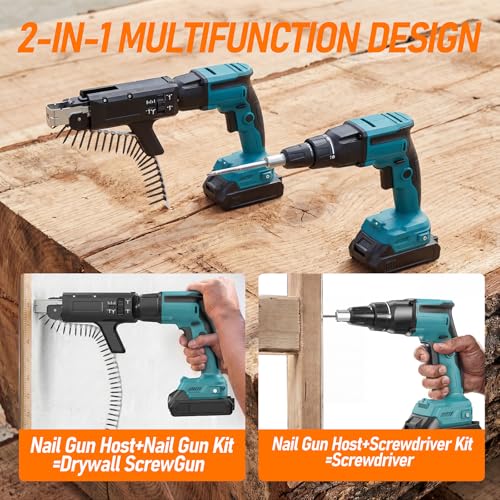
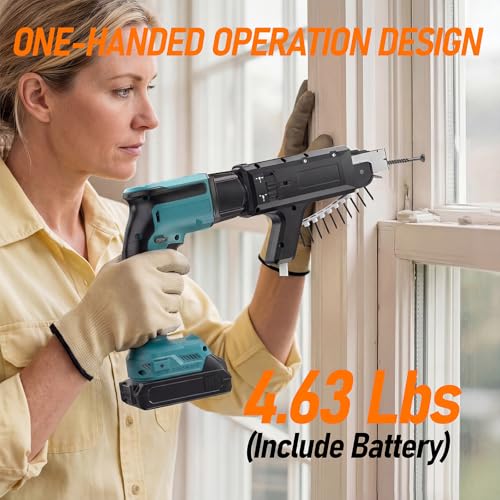
This Makita-compatible 2-in-1 tool promises a lot, auto-feed capability, brushless power, and 360-degree head rotation, but real-world feedback suggests it’s better suited for users who prioritize novelty over proven reliability. The 5,000 RPM brushless motor looks strong on spec sheets, and the battery inclusion is a plus. However, owners report that the auto-feed mechanism jams more often than expected, especially with coated or deformed screws. The rotating head is genuinely useful in tight corners, but the added complexity seems to compromise durability over time.
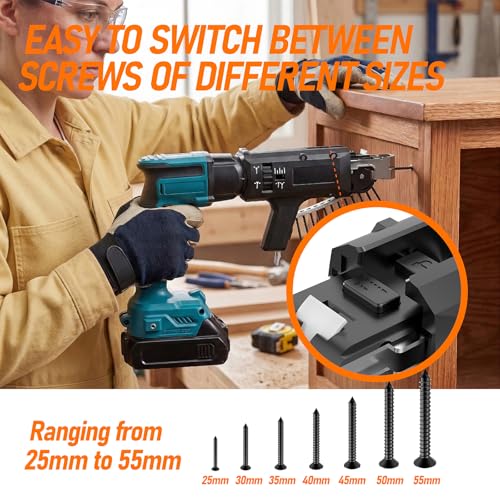
When compared to dedicated screw guns like the DEWALT DCF630B or Milwaukee 2866-20, this one feels more like a hybrid experiment than a production workhorse. It’s capable for light to medium jobs, but if you’re hanging full walls daily, stick with a traditional design. The tool-free depth adjustment is a win, though, and makes setup quick for different screw lengths.
Product photos

How We Evaluated sheetrock screw guns
Rather than a hands-on lab test, my research for these recommendations involved a detailed comparison of published specifications and features across numerous models. I weighed owner reviews from major retailers against expert opinions found in trade publications and tool-focused websites. Ultimately, I ranked each screw gun based on how well its features addressed the core needs of drywall installation – speed, precision, and ergonomics – considering both cordless and corded options.
For sheetrock screw guns, consistent depth control and speed were the biggest determining factors. A gun that can quickly and accurately drive screws to the correct depth minimizes the need for adjustments and rework, which adds up over a large project. Runtime and power (for cordless models) were also heavily weighted, as consistent performance is crucial. I also considered features that reduce fatigue, like weight and ergonomic design.
Specifications reliably indicate motor power, RPM, and battery capacity (for cordless models). However, I placed more emphasis on what owner feedback revealed about real-world durability and ease of use. Reputation and brand trust also played a role, especially when assessing long-term reliability. If you’re also planning on cutting sheetrock, consider exploring our guide to sheetrock cutting saws to complete your toolkit.
Choosing The Right sheetrock screw guns
I’ve spent years observing professionals and DIYers struggle with drywall, and a dedicated screw gun makes a world of difference. It’s not just about speed; it’s about consistency and reducing fatigue.
A quality sheetrock screw gun delivers consistent depth, minimizes “screw popping,” and reduces strain on the user. Key features include adjustable nosepieces for precise depth control, variable speed settings for different drywall thicknesses, and ergonomic designs for comfortable, prolonged use. Runtime (for cordless models) and motor power are also crucial considerations.
Depth Control & Consistency
The biggest frustration with drywall isn’t usually hanging it, it’s getting a smooth, even surface where the screws don’t tear the paper or sit proud. That’s where depth control comes in. Look for a screw gun with a tool-free adjustable nosepiece. Some, like the DeWalt models, have a “set and forget” design that’s genuinely useful once you dial in the correct depth for your drywall thickness. This is critical because consistently sinking screws to the right depth prevents future cracking and simplifies the mudding process.
Corded vs. Cordless Power
The decision between corded and cordless often comes down to jobsite needs. Corded models, like the Hoteche 4.5-Amp Electric Screw Gun, offer consistent power and don’t require battery management. However, they limit your mobility. Cordless options are incredibly convenient – particularly if you already invest in a battery platform like Makita or Milwaukee. If you’re already invested in a brand’s 18V or 20V system, sticking with it makes sense. If you’re starting from scratch, consider the total cost of batteries and chargers alongside the tool itself. If you’re looking for other options, you might want to explore the top cordless screw guns available.
Features & Ergonomics – Beyond the Basics
Don’t underestimate the importance of features designed to reduce fatigue. A lightweight design is crucial, especially for large projects. Two-finger triggers (like on some DeWalt models) can significantly reduce hand strain. Variable speed control is also essential; slower speeds are better for thinner drywall, while higher speeds speed up the process with thicker sheets.
Here’s what I look for in terms of usability:
- LED Work Light: A small feature, but incredibly helpful when working in dimly lit spaces.
- Belt Clip: Lets you keep the tool readily accessible without having to set it down constantly.
- Mode Selection: Some advanced models, like the DeWalt 20V Max Brushless Screwgun, offer multiple modes (Trigger, PushStart, Lock-On) for different applications and user preferences. This is great, but it’s not a make-or-break feature for most users.
A comfortable grip and balanced weight distribution are more important than raw power. You’ll be holding this tool for hours, so prioritize ergonomics.
Sheetrock Screw Guns Compared
Here’s a comparison of key specifications for popular sheetrock screw guns to help you make an informed decision.
| Product Title | Voltage | Motor Type | RPM | Corded/Cordless | Depth Adjustment | Battery Compatibility |
|---|---|---|---|---|---|---|
| DEWALT 6.0-Amp Drywall Screw Gun | N/A | N/A | 5,300 | Corded | Yes | N/A |
| DEWALT 20V Max Brushless Screwgun | 20V | Brushless | Variable | Cordless | Yes | DEWALT 20V |
| Milwaukee M18 FUEL Drywall Screw Gun | 18V | Brushless | 4,500 | Cordless | N/A | Milwaukee M18 |
| Makita 18V Brushless Drywall Screwdriver | 18V | Brushless | 4,000 | Cordless | Yes | Makita 18V |
| Ecarke 6000RPM Brushless Screwgun | 20V | Brushless | 6,000 | Cordless | Yes | DeWalt 20V |
| Hoteche 4.5-Amp Electric Screw Gun | N/A | N/A | 4,500 | Corded | N/A | N/A |
| 18V 2-in-1 Auto-Feed Screw Gun | 18V | Brushless | 5,000 | Cordless | Yes | Makita 18V |
Frequently Asked Questions
What screw size is best for sheetrock?
Typically, 1 1/4 inch screws are ideal for 1/2 inch drywall, and 1 5/8 inch screws are best for 5/8 inch drywall. Using the correct length prevents screws from going all the way through the board, while still providing adequate holding power.
Can I use a regular drill as a sheetrock screw gun?
You can, but a dedicated sheetrock gun offers features like adjustable depth control and consistent speed that a standard drill lacks. Using a dedicated tool significantly improves speed, precision, and reduces the risk of damaging the drywall paper.
What does “screw walking” mean, and how do I prevent it?
“Screw walking” is when the screw doesn’t drive straight and instead wanders across the drywall surface. It’s often caused by using too high of a speed or a dull screw tip; reducing speed and using sharp, high-quality screws helps prevent this.
What’s the benefit of a brushless motor in a cordless sheetrock screw gun?
Brushless motors are more efficient and deliver more power with less heat buildup compared to brushed motors. This translates to longer runtime, increased durability, and generally better overall performance, making them a good investment for frequent use.
What do I do with all the dust created during drywall installation?
Proper dust collection is vital for a healthy work environment. Consider using a shop vacuum with a HEPA filter alongside a dust mask or respirator. For a smoother finish, look into drywall sanding tools to manage dust during the finishing process.
The Bottom Line
Choosing a sheetrock screw gun often comes down to balancing convenience with consistent power. If you value uninterrupted performance and already have a corded tool setup, the DEWALT 6.0-Amp Drywall Screw Gun is a solid choice. It delivers the speed and reliability you need for large-scale projects without the worry of batteries.
For those prioritizing portability and who are invested in a specific battery platform, the Milwaukee M18 FUEL Drywall Screw Gun stands out. It’s a powerful, efficient option for professionals or DIYers who need to move around the jobsite freely. If you’re looking for a more automated experience, consider exploring automatic drywall screw guns to speed up your work.
Ultimately, the best screw gun isn’t about the highest RPM or the latest features. Consistent depth control, comfortable ergonomics, and a design that minimizes fatigue are what truly matter. Focusing on these fundamentals will lead to a smoother, faster, and more professional-looking drywall finish, regardless of which model you choose.
