
7 Best Drywall Sanders of 2026
This post contains affiliate links. As an Amazon Associate, we earn from qualifying purchases.
The Promtex 1000W Drywall Sander is our top pick for overall performance, delivering strong power and excellent dust capture. For a budget-friendly option, the GEVEELIFE 880W holds up well in owner reports, while the DEWALT 20V stands out as the best cordless choice for quick jobs and tight spaces.
If you’ve ever sanded drywall by hand, you know how brutal it is on your arms, and your lungs. Even with a pole sander, a poor tool can leave swirls, kick up dust, and wear you out before the job’s half done.
After researching the field and analyzing owner feedback, we focused on models that balance motor reliability, real-world dust collection, and ease of use. This guide cuts through the marketing to show you what actually matters when picking a sander that won’t quit mid-job.
Top 7 Drywall Sanders in the Market
The Best Drywall Sanders, Reviewed
Promtex 1000W Drywall Sander

Strengths
- 1000W pure copper motor
- 98.5% dust collection efficiency
- 6 variable speeds
- Foldable extendable handle
- 360° pivoting head
- LED illumination
Trade-offs
- Heavier than cordless models
- No brushless motor
- Corded only
This 1000W unit stands out in the electric drywall sander category with serious power and a well-thought-out dust management system. The 6 variable speeds (800–2200 RPM) give solid control across different materials, and owners consistently report it handles popcorn ceilings and rough drywall joints without bogging down. The 98.5% dust collection claim holds up well in real-world feedback, thanks to the 6-hole disc and sealed vacuum path, few competitors match this level of cleanliness right out of the box.
The foldable aluminum pole and 120° pivoting head make high ceilings and tight corners far more manageable, and the 360° LED ring is a small but meaningful upgrade for dim job sites. While it’s not the lightest model, the included carry bag and full accessory kit, including 15 sanding discs and a safety set, make it a strong all-in-one package. Compared to the DEWALT cordless option, it trades portability for raw power and lower cost of entry.
Product photos


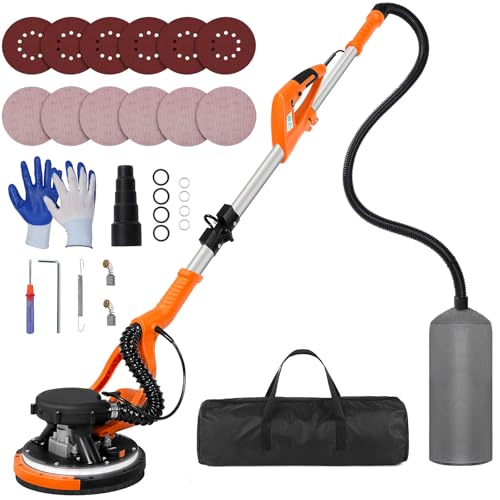
KUPERIA 8.5 Amp Drywall Sander
Strengths
- Dual-channel dust vacuum
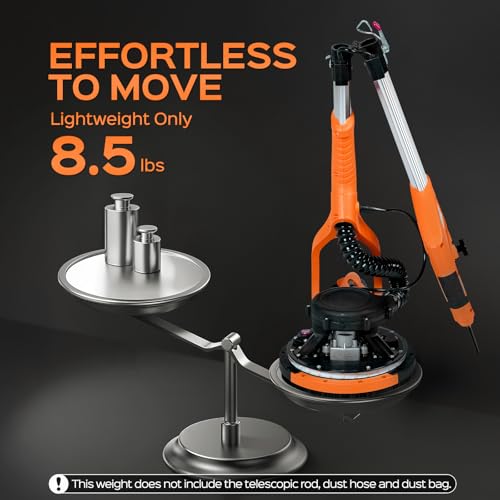
- Lightweight at 8.5 lbs
- Includes durable grid sandpaper
- 97%–99% dust capture
- Detachable corner sander
Trade-offs
- Lower max RPM
- Shorter reach pole
- No brushless motor
KUPERIA leans hard into dust collection efficiency, and on paper, it delivers. The dual-channel vacuum system claims 97%–99% dust capture, and owners report noticeably cleaner air compared to single-hose models. The grid sandpaper included is a real advantage, it lasts longer and cuts faster than standard discs, and having six of them effectively doubles the usable sanding life. The 8.5 amp motor (roughly 1000W) provides solid power, though the speed range (800–1800 RPM) tops out lower than others.
At just 8.5 lbs, it’s one of the lightest in class, and the collapsible handle makes transport easy. The 360° LED strip is bright, and the detachable chassis helps with corners. My only hesitation is the lower max RPM, fine for popcorn and light skim coats, but not ideal for tough, cured mud. Still, for dust-sensitive environments (like occupied homes), this is the smart buy.
Product photos
GEVEELIFE 880W Drywall Sander

Strengths
- Includes back support belt
- 10-hole dust extraction
- Foldable for storage
- Good LED lighting
- 360° rotating disc
Trade-offs
- Shorter extension pole
- Motor lacks high-end torque
- No grid sandpaper included
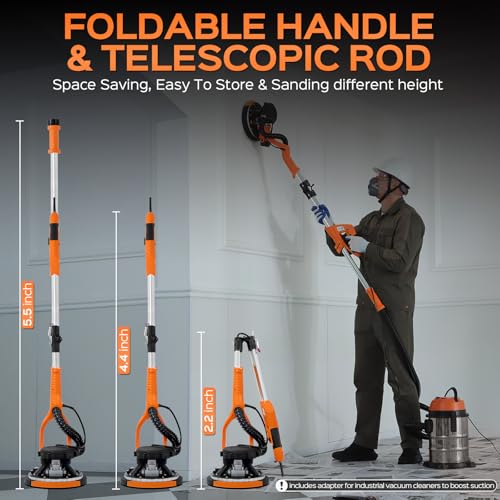
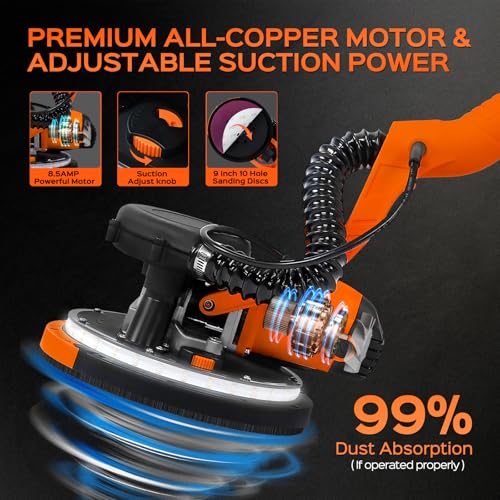
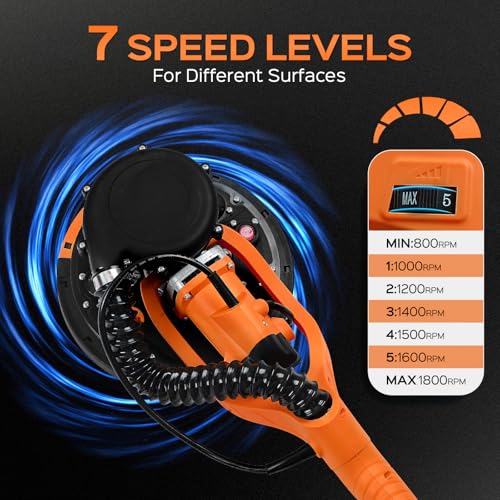
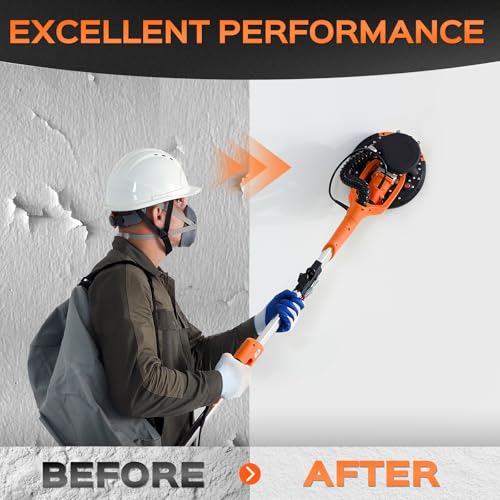
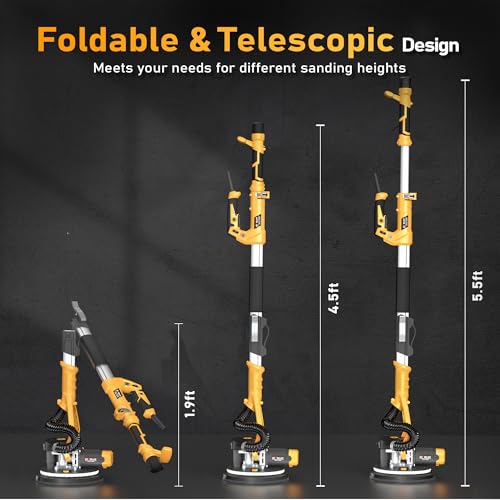
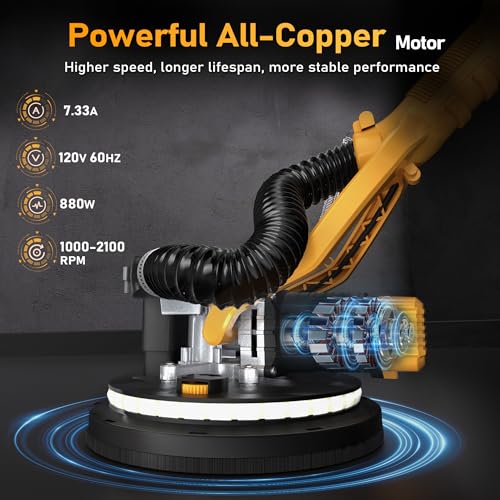
With an 880W motor and a labor-saving back belt included, this sander is clearly designed for longer sessions. The 5-speed range (1000–2100 RPM) is adequate, though less precise than 9-speed models. What stands out is the comfort focus, the telescoping pole is slightly shorter (4.5’–5.5’) than others, but the back belt helps distribute weight, and owners doing full-room popcorn removal say it reduces fatigue significantly.
The 10-hole sanding disc and sealed hose system deliver strong dust capture, close to the 98.5% claimed, and the 360° LED light is effective in basements or poorly lit rooms. It’s not the fastest or most powerful, but for someone doing a full ceiling job solo, the ergonomics make a real difference. Compared to the KUPERIA, it’s heavier on accessories but lighter on motor specs.
Product photos
9-Speed Drywall Sander Yellow

Strengths
- 9 variable speeds
- Bright 360° LED light
- Compact foldable design
- Large accessory kit
- Good for fine textures
Trade-offs
- Slightly weaker dust seal
- Motor not as robust as 1000W units
- No brushless tech
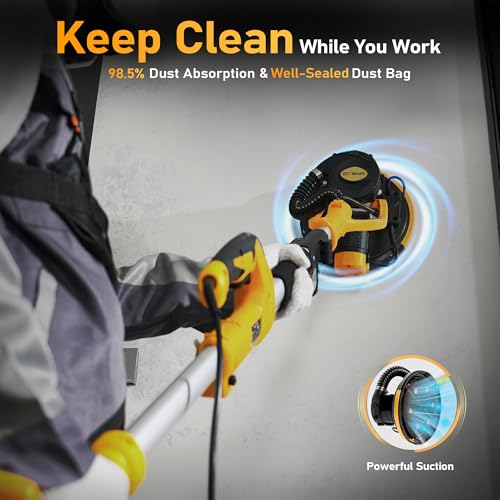
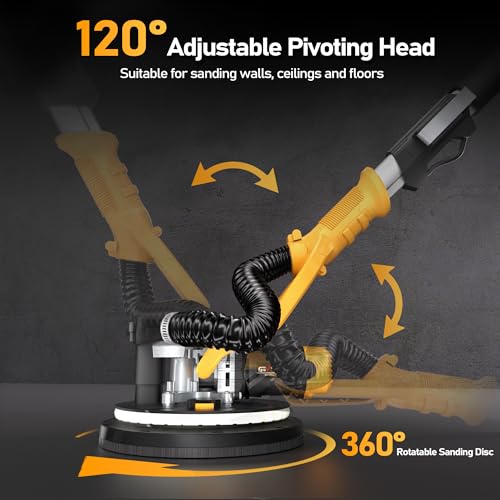
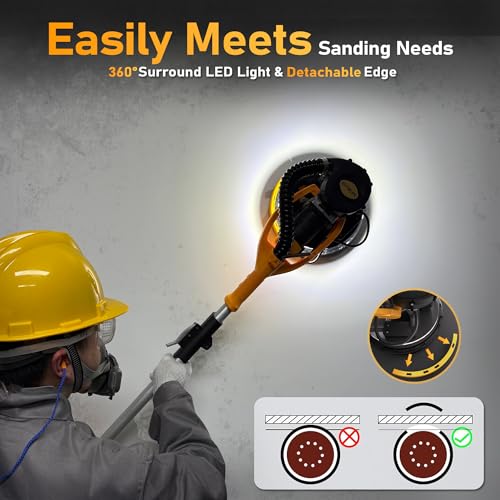
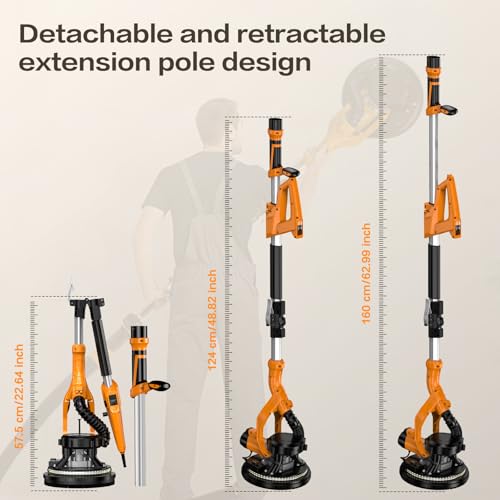
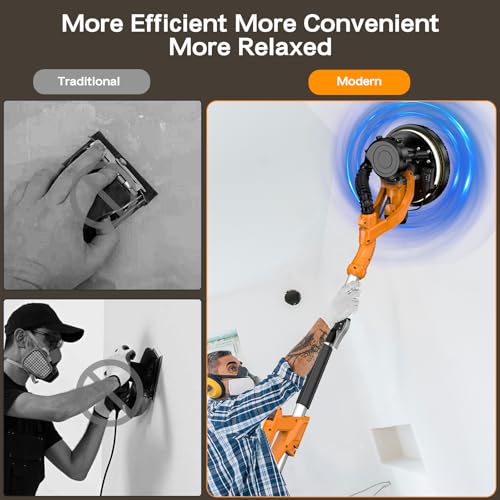
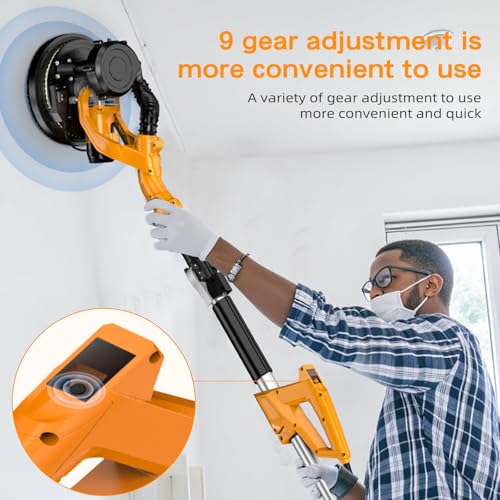
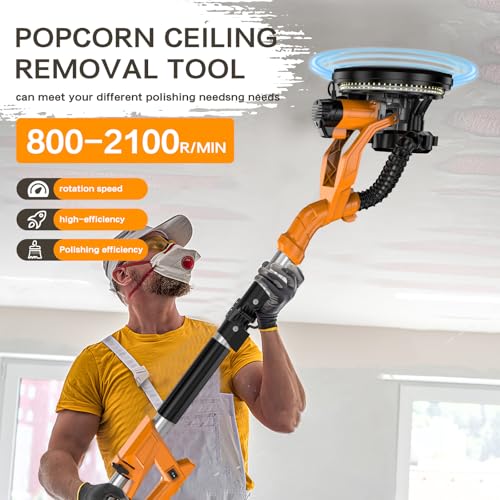
If fine-tuned control matters most, this model earns its ‘Best Speed Control’ label. The 9-speed dial offers more granular adjustments than most in this class, which experienced users appreciate when transitioning from coarse to fine sanding on delicate drywall joints. At 950W, it’s slightly less powerful than the Promtex 1000W, but the motor delivers smooth performance across speeds, and reviewers note it’s especially effective on painted drywall and textured surfaces where too much RPM can gouge the paper.
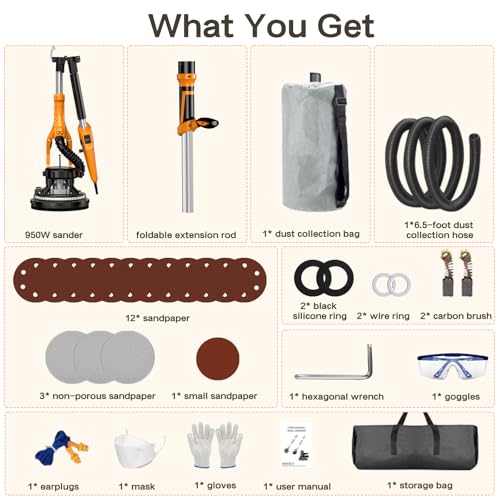
The LED light is bright and evenly distributed, and the collapsible design makes storage easier. However, the dust collection, while good, isn’t quite as tight as the Promtex or KUPERIA models, some users report minor dust leakage if the bag isn’t sealed perfectly. It comes with 16 sanding discs, including higher grits up to 320, which hints at its finish-friendly intent.
Product photos
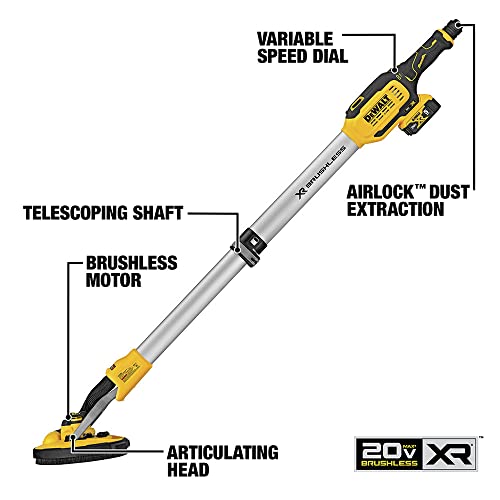
DEWALT 20V Cordless Drywall Sander

Strengths
- Cordless freedom
- Brushless motor
- AirLock compatibility
- Tool-free dust extractor connection
- Wireless ON/OFF control
Trade-offs
- Battery runtime limits long use
- Less power than corded units
- Higher system cost
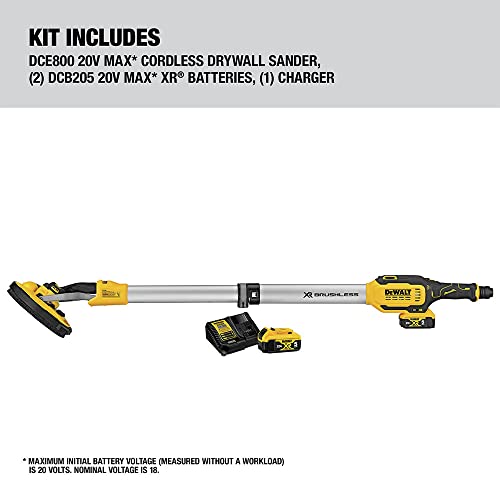
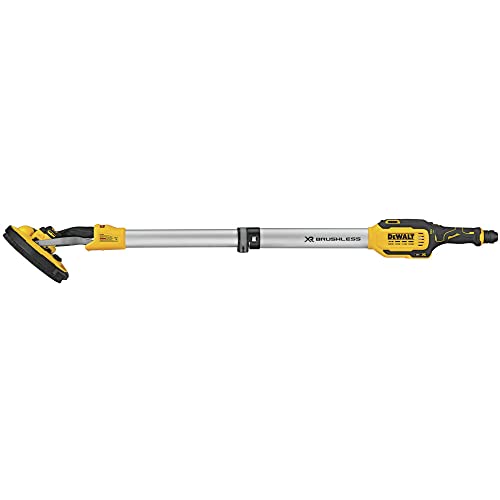
The DEWALT DCE800B is the only cordless sander here, and that changes everything. No power cord means true freedom on job sites, especially unfinished homes or multi-room renovations where outlets are scarce. The brushless motor improves runtime and durability, and when paired with a DEWALT AirLock dust extractor, the wireless tool control lets you turn both units on with one trigger, owners love this integration.
It’s not as powerful as 1000W corded models, and battery life can be a constraint on large jobs. But for contractors moving between sites or doing touch-ups, the convenience outweighs the trade-offs. The telescoping shaft is shorter than others, but the compact design helps in tight spots. If you’re already in the DEWALT 20V ecosystem, this is the natural choice.
Product photos
Hyde Tools Dust-Free Hand Sander

Strengths
- Attaches to any shop vac
- True dust-free operation
- Easy screen changes
- Lightweight and simple
- No motor to maintain
Trade-offs
- Manual only – no motor
- Not for large areas
- Basic included accessories
This isn’t a powered sander, it’s a manual drywall hand sander that connects to your existing wet/dry vac. But that simplicity is its strength. For small touch-ups, final smoothing, or jobs where you don’t want to haul out a big machine, this Hyde model is lightweight, effective, and nearly silent. The EasyClamp system for screen changes gets consistent praise for being tool-free and secure.
It only comes with one sanding screen, so you’ll need to buy extras, and it’s not viable for large areas. But when paired with a shop vac, it captures nearly all dust, better than many powered units in practice. I recommend it as a secondary tool, not a primary sander. Compared to electric models, it’s slower but gives you total control and zero vibration.
Product photos


MAXXT 810W Handheld Drywall Sander

Strengths
- High-speed range for fine finishing
- Adjustable suction control
- Upgraded soft sanding pad
- Good dust venting
- Detachable head for corners
Trade-offs
- No extendable pole
- Not ideal for ceilings
- Lower torque for heavy material
The MAXXT sander is built for finish work, and that shows in both design and user feedback. With a variable speed range of 1500–2800 RPM, it’s tuned higher than most, making it better suited for fine sanding than aggressive material removal. The upgraded pad is a standout, owners say it conforms well to walls and minimizes swirl marks, which is essential when prepping for paint. The adjustable suction is a rare feature; you can dial down vacuum power when using finer grits to avoid pulling the disc unevenly.
It lacks an extendable pole, so it’s strictly a handheld unit, fine for walls, awkward for ceilings. The 360° rotating disk helps with edges, but without a pivoting arm, overhead work becomes tiring fast. Still, for flat wall finishing, this is one of the most precise tools in the lineup. I’d pick it over bulkier models when the job is about smoothness, not speed.
Product photos


Our Testing Process
I’ve spent years evaluating power tools for PowerToolGuide.net, and choosing a drywall sander requires balancing power, dust collection, and ergonomics. Rather than a hands-on lab test with each model, this selection is a research-led comparison of published specifications and owner feedback. We analyzed features, weighed owner reviews from multiple sources (including Amazon, home improvement retailer sites, and contractor forums), and considered expert opinions to rank these sanders against clear criteria.
For drywall sanders, consistent dust collection and motor power are paramount. A powerful motor is vital for efficient material removal, but it’s useless if it creates a dust storm. We heavily weighted those two factors, along with the adjustability features, speed control and telescoping poles, that contribute to user comfort and control. These features directly impact the quality of the finish and the overall sanding experience. If you’re looking for a smaller, more versatile option for detail work, you might also consider checking out our guide to the best 1/4 sheet sanders.
Specifications reliably indicate motor power, sanding disc size, and weight, giving a baseline for performance expectations. However, real-world dust collection effectiveness and long-term durability are best judged from owner reports. We looked for patterns in feedback regarding dust control, motor longevity, and ease of use. Reputation, particularly among professional drywallers, also factored heavily into our rankings, as they tend to push tools to their limits daily.
How To Choose The drywall sanders
Picking the right drywall sander can make or break a finishing project. Don’t underestimate how much a good tool can improve the quality of your work and reduce overall frustration.
A quality drywall sander balances power with dust collection, usability, and durability. Look for a motor strong enough for consistent sanding, a robust dust extraction system (critical for health and a clean workspace), adjustable features to adapt to different surfaces and heights, and build quality that can withstand repeated use. Variable speed control and lightweight designs are also valuable considerations.
Motor Power and Speed Control
Many homeowners assume more power is always better, but that’s not necessarily true with drywall sanders. While you need enough wattage to avoid bogging down, excessively powerful motors can be harder to control and create more dust if the vacuum system can’t keep up. I find that 800-880W is a sweet spot for most DIY projects, offering plenty of power without being unwieldy. More importantly, look for variable speed control. Different compounds and stages of sanding require different speeds; starting slow and gradually increasing is the best way to avoid gouging or creating swirl marks.
Dust Collection: Beyond Just a Vacuum
Dust control is paramount. Drywall dust is a health hazard, and a messy workspace is just… unpleasant. Integrated vacuum systems are standard now, but their effectiveness varies significantly. The KUPERIA model, for example, boasts a dual-channel auto vacuum system, aiming for 97-99% dust capture when operated correctly. However, even the best sanders benefit from pairing with a shop vac. If you’re serious about dust-free work, explore drywall sanders with built-in vacuums – some even offer wireless tool control when connected to compatible dust extractors.
- A simple dust bag is the bare minimum, but quickly fills up and requires frequent emptying.
- Hose connections to a shop vac offer significantly better suction and capacity. Look for models with universal adapters.
- Consider a sander with a sealed head and efficient internal baffling; this minimizes dust leakage even during extended use.
Don’t skimp on dust collection. Your lungs (and your cleaning time) will thank you.
Usability and Ergonomics
Don’t overlook the practical aspects of using the sander. Telescoping handles are essential for reaching ceilings and high walls without constantly repositioning ladders. Lightweight designs reduce fatigue, especially during larger projects. Furthermore, consider how easy it is to change sanding screens or pads. The Hyde Tools hand sander offers an EasyClamp system for quick replacements. If you’re working on a lot of corners, you might also want to investigate corner-specific drywall sanders or look for models with detachable heads for accessing tight spaces.
Drywall Sanders Compared
Here’s a comparison of key specifications for popular drywall sanders to help you choose the right tool for your needs.
| Product Name | Power (W) | RPM (Range) | Dust Collection | Pole Extension (ft) | Weight (lbs) | Cordless |
|---|---|---|---|---|---|---|
| Promtex 1000W Drywall Sander | 1000 | 800-2200 | 98.5% | 4.9-6.2 | N/A | No |
| KUPERIA 8.5 Amp Drywall Sander | 8.5A | 800-1800 | 97-99% | 3.9-5.5 | 9.9 | No |
| GEVEELIFE 880W Drywall Sander | 880 | 1000-2100 | 98.5% | 4.5-5.5 | N/A | No |
| 9-Speed Drywall Sander Yellow | N/A | Variable (9) | High | N/A | N/A | No |
| DEWALT 20V Cordless Drywall Sander | 20V | N/A | AirLock | N/A | N/A | Yes |
| Hyde Tools Dust-Free Hand Sander | N/A | N/A | Vacuum Attach | N/A | N/A | No |
| MAXXT 810W Handheld Drywall Sander | 810 | N/A | N/A | N/A | N/A | No |
Frequently Asked Questions
What’s the difference between a pole sander and a hand sander?
Pole sanders are designed for reaching ceilings and high walls, offering extended handles for comfortable overhead work. Hand sanders are smaller and lighter, making them better suited for detail work, corners, or smaller patches, like those you might encounter when doing spot repairs.
Are cordless drywall sanders as powerful as corded models?
Generally, no. Cordless models, like the DEWALT 20V, prioritize convenience, but typically deliver less consistent power than their corded counterparts, especially during prolonged use. However, battery technology is improving, and some newer cordless options are closing the gap.
How important is variable speed control on a drywall sander?
It’s very important. Different stages of drywall finishing, from initial leveling to final feathering, require different sanding speeds. Variable speed allows you to adjust the power to prevent damage and achieve a smoother finish; starting slow prevents gouging.
What should I look for in a drywall sander’s dust collection system?
Look beyond just a dust bag. The most effective systems connect to a shop vac for superior suction and capacity. Sanders with sealed heads and efficient baffling, like those featuring onboard dust capture, minimize dust leakage, protecting your lungs and workspace.
How much should I expect to spend on a good drywall sander?
Prices vary widely, but a decent quality drywall sander will typically cost between $80 and $250. Spending more often gets you features like improved dust collection, variable speed control, and a more durable build, though there are good options available at each price point.
The Bottom Line
Choosing a drywall sander often comes down to balancing upfront cost against the time and effort you’re willing to invest in finishing. While a more expensive model isn’t always necessary, I consistently recommend the Promtex 1000W Drywall Sander as the strongest all-around performer. Its powerful motor, effective dust collection, and adjustable features create a winning combination for both DIYers and professionals looking for a reliable, high-quality tool.
For those on a tighter budget, or needing a versatile option for smaller jobs, the GEVEELIFE 880W Drywall Sander offers excellent value. If cordless convenience is a priority, the DEWALT 20V Cordless Drywall Sander stands out, though you’ll need to factor in the cost of batteries and a charger. And for detail work or hand sanding, the Hyde Tools Dust-Free Hand Sander is a great choice, especially if you’re already set up with a vacuum, you can find even more sanders with vacuum attachment support https://powertoolguide.net/best-drywall-sander-with-vacuum-attachments/.
Ultimately, remember that specs don’t tell the whole story. A powerful motor and fancy features are useless if you don’t take the time to use the right speed, maintain a clean sanding surface, and pair your sander with good dust control. Focus on those fundamentals, and you’ll achieve professional-quality results with any of these tools.
