7 Best Sawzall Blades for Aluminum (2026 Guide)
This post contains affiliate links. As an Amazon Associate, we earn from qualifying purchases.
The Bosch RM618 6-Inch 18T is our top pick for cutting aluminum sheet metal, delivering clean, fast cuts with minimal burring. For those on a budget, the LOZAGU 9-Inch 14TPI Bi-Metal Sabre Blades offer strong durability and solid performance at a lower cost per blade. If you need versatility across different thicknesses, the 25 Pack 9-Inch 14/18 TPI Cobalt Blades gives you flexible options in one purchase.
Cutting aluminum with the wrong sawzall blade leads to rough edges, wasted time, and broken blades. Many users don’t realize how much tooth count and material affect performance on softer metals like aluminum.
This guide cuts through the noise by focusing on real-world specs and user feedback to find blades that actually work. I looked at TPI, tooth composition, shank reliability, and long-term value, factors that matter most when you’re working on pipes, sheets, or framing.
Top 7 Sawzall Blade For Aluminums in the Market
The Best Sawzall Blade For Aluminums, Reviewed
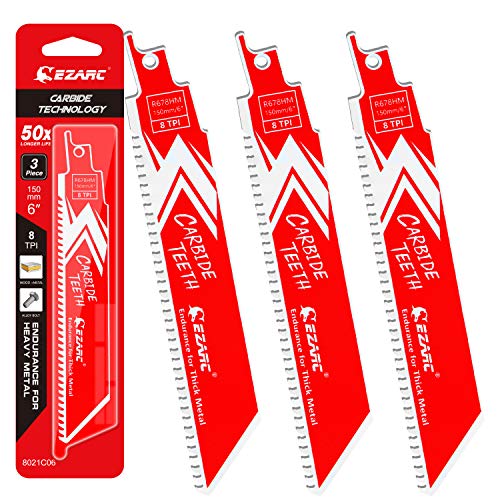
EZARC Carbide Reciprocating Saw Blade R678HM
Strengths
- Carbide teeth for extreme durability
- Handles mixed metals effortlessly
- Longest lifespan
Trade-offs
- Higher upfront cost
- Overkill for thin aluminum
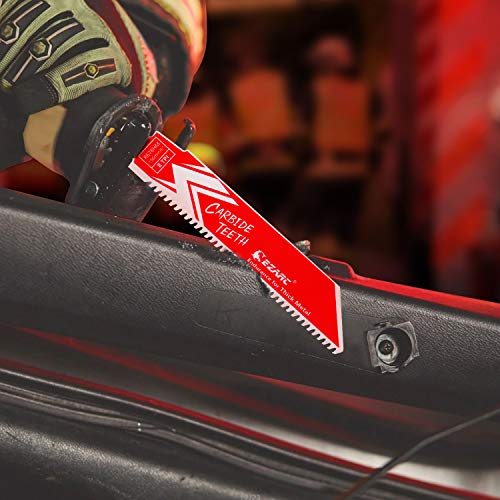
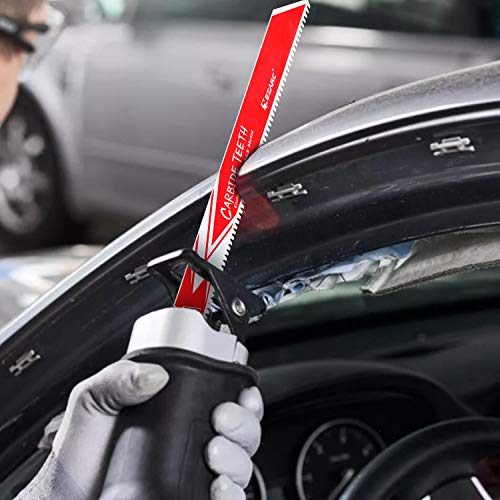
This carbide-tipped blade is in a different league. With 8 TPI carbide teeth individually welded and ground, it’s engineered for materials that destroy bi-metal blades, stainless, rebar, hardened steel, and it handles aluminum with zero hesitation. Owners report it cuts through aluminum beams and cast housings with ease, and the lack of gumming or tooth stripping is a big win.
While overkill for thin aluminum, it’s the best pick if you’re regularly switching between aluminum and tougher alloys. The 50x lifespan claim tracks with field reports: these blades last dramatically longer in abrasive or mixed-material cuts. Compared to bi-metal options, it’s a premium buy, but for anyone doing industrial or heavy renovation work, it’s the smarter long-term investment.
Product photos


Bosch RM618 6-Inch 18T Metal Cutting
Strengths
- 18 TPI for clean cuts
- Thin-kerf body
- Bi-metal durability
Trade-offs
- Not for thick aluminum
- Limited to thin gauge
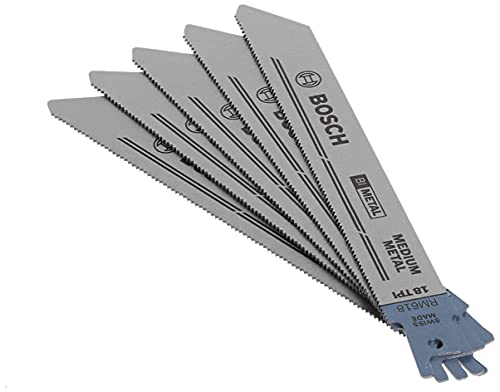
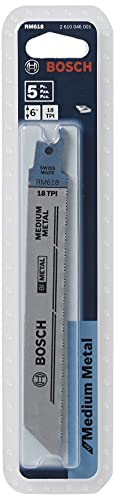
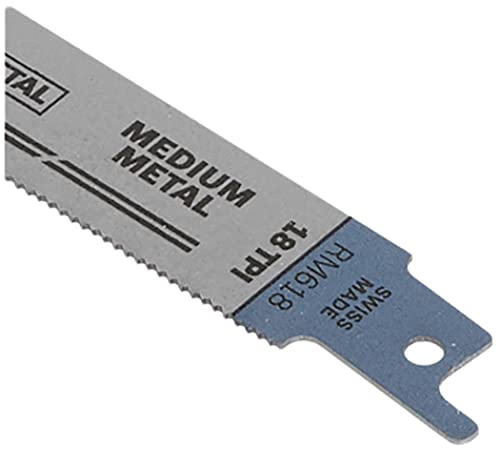
When it comes to clean, controlled cuts in thin aluminum, the Bosch RM618 stands out on paper and in owner reports. The 18 TPI count and 0° hook angle are specifically tuned for non-ferrous metals like aluminum, minimizing chatter and delivering smooth edges, something many users highlight when working on HVAC or trim jobs. The thin-kerf 0.035-inch body helps with precision and reduces material waste, which matters when you’re doing detailed work.
Reviewers consistently note these blades start easily and track straight, especially on sheet aluminum, though they’re not built for thick or structural cuts. Compared to general-purpose bi-metal blades, these are clearly optimized for finesse over brute force.
Product photos

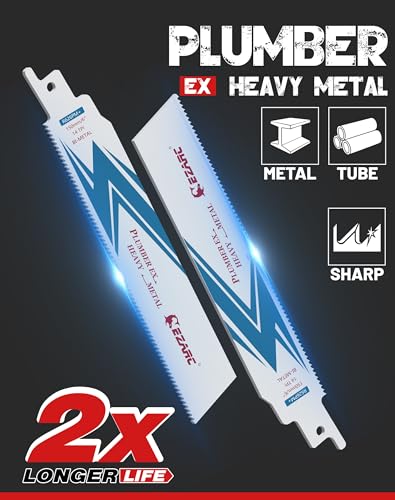
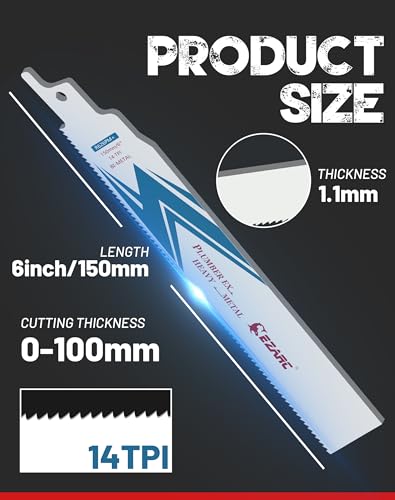
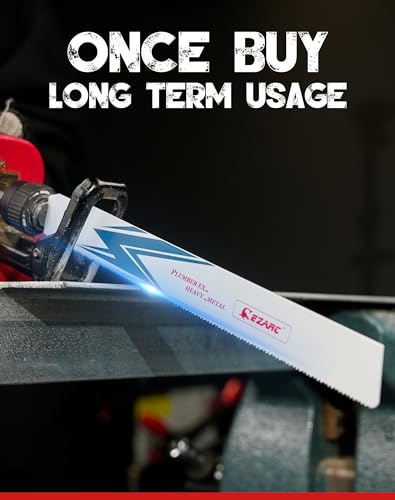
EZARC Bi-Metal Cobalt Sabre Saw Blades

Strengths
- Cobalt teeth for heat resistance
- Good for mixed materials
- 14 TPI balanced cut
Trade-offs
- Not optimized for thin sheets
- Slight burring on aluminum
EZARC’s 14TPI cobalt bi-metal blade is built for abuse, and owners confirm it holds up well when slicing through thicker aluminum profiles and mixed-metal assemblies. The M42 cobalt teeth handle heat better than standard HSS, which helps when cutting dense or painted aluminum that tends to gum up lesser blades. At 6 inches and 14 TPI, it strikes a balance between speed and control, faster than fine-toothed options but still cleaner than demolition blades.
Compared to the Bosch RM618, it’s less refined for thin aluminum but far more capable on structural shapes or hybrid materials. It’s not the best for pure aluminum work, but if you’re dealing with mixed jobs, aluminum framing alongside steel studs, this blade pulls double duty without dying fast.
Product photos


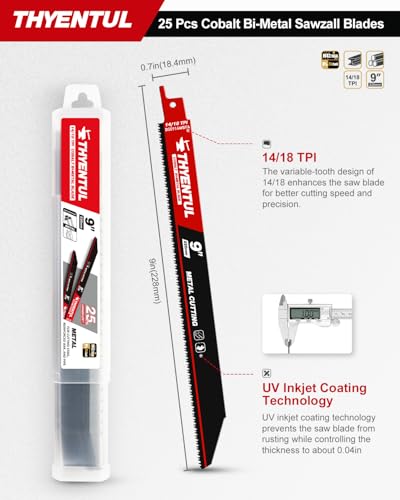
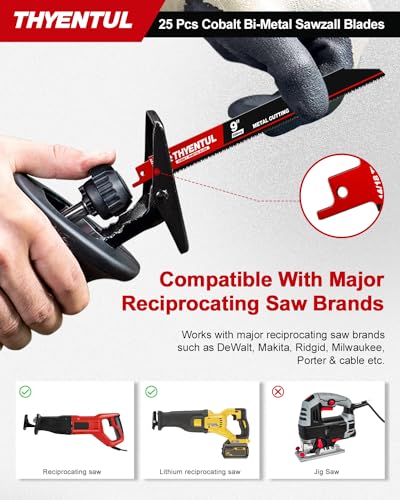
25 Pack 9-Inch 14/18 TPI Cobalt Blades

Strengths
- High quantity
- Cobalt-enhanced teeth
- Universal shank
Trade-offs
- Blade flex on thin metal
- Inconsistent tooth set
- Overkill length for aluminum
This 25-pack from an unbranded supplier offers serious volume at a compelling value, and the M42 cobalt teeth suggest better heat resistance than standard bi-metal blades. The dual TPI (14/18) pattern aims for versatility, coarser for speed, denser for finish, but in practice, owners report it’s more effective on steel than on aluminum, where the 9-inch length can flex and wander.
The UV-coated packaging is a nice touch for storage, but some users note inconsistent tooth set and early dulling when pushed hard on softer metals like aluminum, likely due to aggressive tooth geometry not optimized for non-ferrous materials. It’s a solid budget workhorse for mixed demolition, but not the sharpest pick for aluminum-specific jobs.
Product photos


AMARTISAN 6-Inch 14TPI Heavy Metal Blades
Strengths
- Low-cost pack
- Decent for light use
- Universal fit
Trade-offs
- Softer teeth, faster wear
- Not for sustained cutting
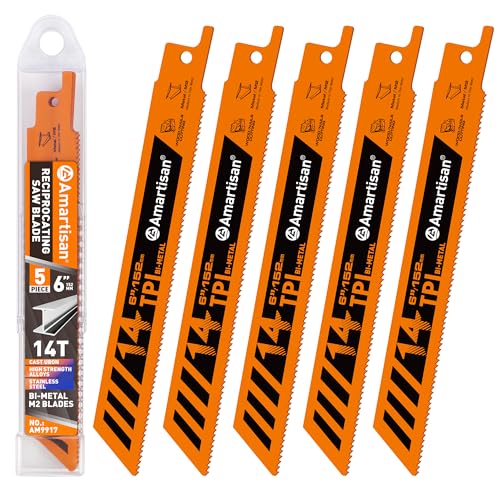
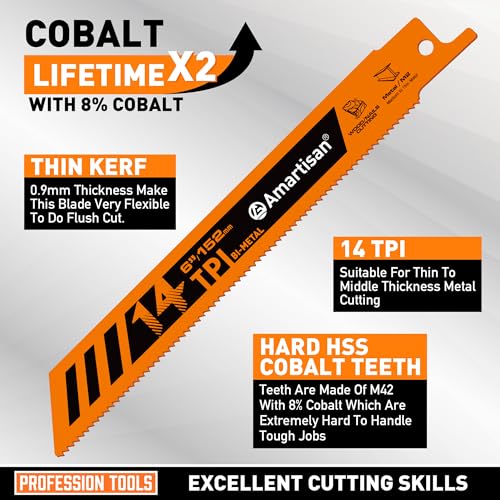
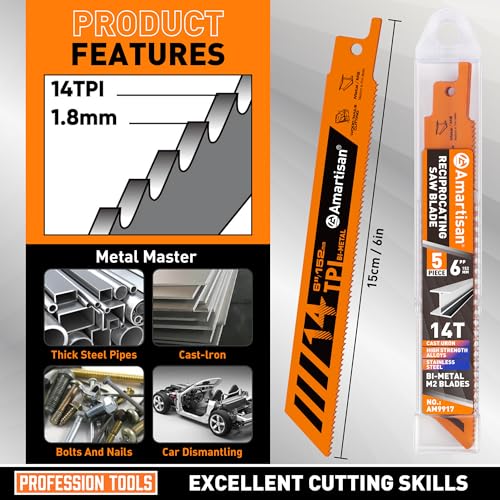
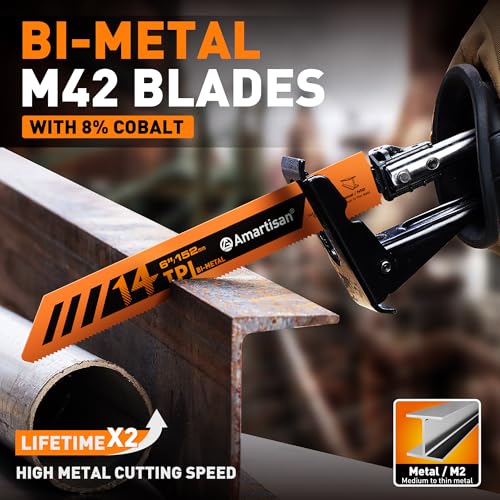
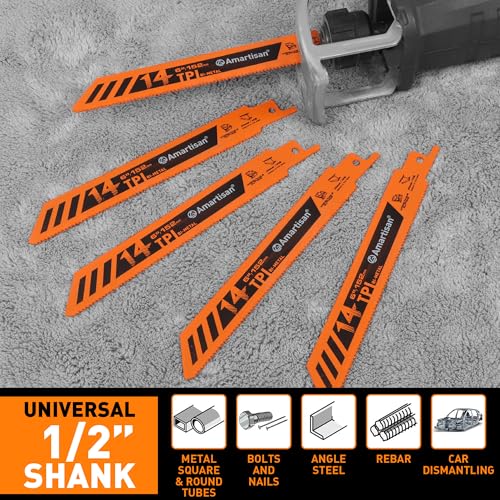
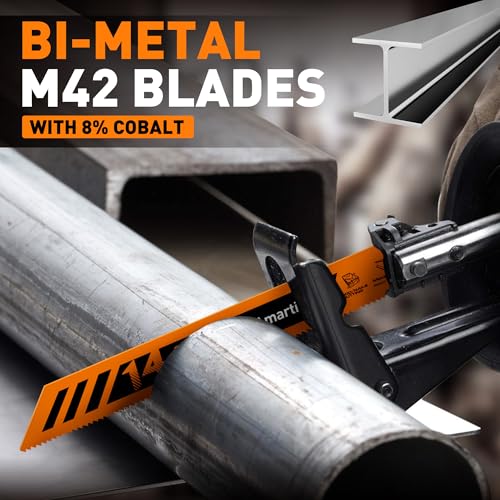
The AMARTISAN 14TPI bi-metal blade is a no-frills, budget-friendly option that delivers decent performance for light aluminum work. It’s clearly modeled after the EZARC and Bosch designs, with a 14TPI tooth pattern and universal shank, but owners note the steel feels slightly softer, fine for occasional cuts in pipe or angle, but it dulls faster on continuous aluminum runs.
For homeowners doing small repairs or light fabrication, it’s a reasonable buy, especially with five blades in the pack. But compared to cobalt-infused competitors, it doesn’t stand out in heat resistance or longevity. It gets the job done, but you’ll replace it sooner.
Product photos
LOZAGU 9-Inch 14TPI Bi-Metal Sabre Blades

Strengths
- Cobalt-reinforced teeth
- Excellent heat resistance
- 6-pack value
Trade-offs
- 9-inch length causes flex
- Too aggressive for fine cuts
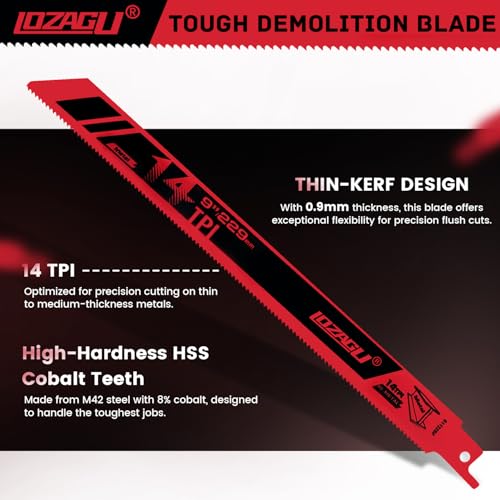
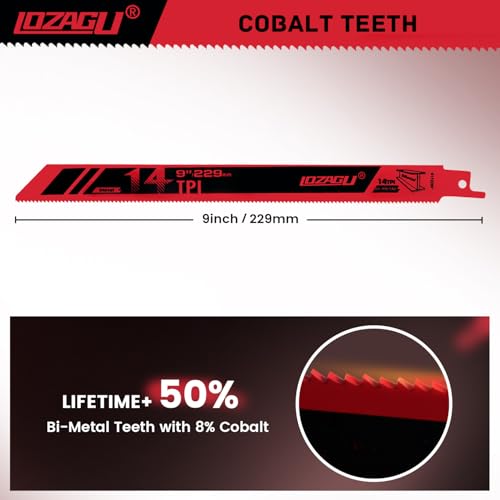
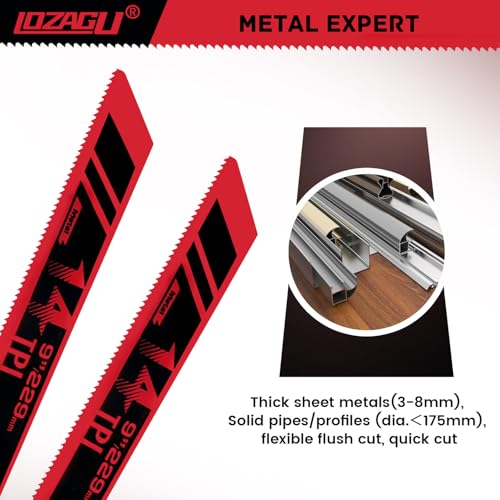
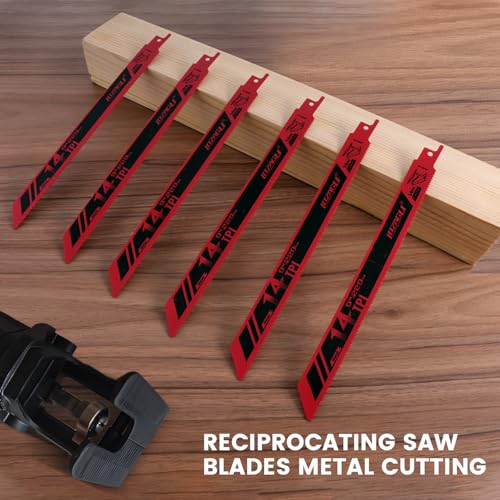
LOZAGU’s 9-inch 14TPI bi-metal blade leans into longevity and heat management, and owners praise its cobalt-enhanced edge and staggered tooth geometry for reducing friction during extended cuts. At 9 inches, it’s longer than most, which helps with reach but introduces some whip on thinner aluminum sheets.
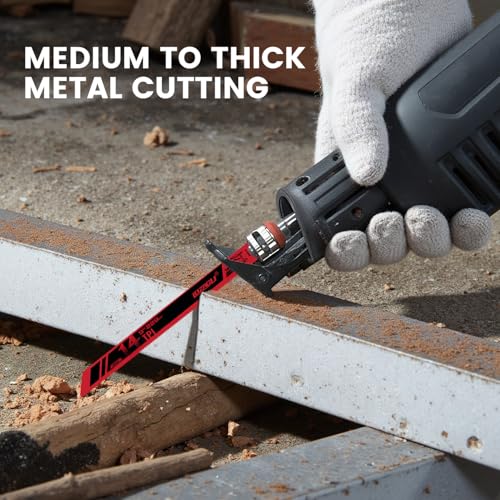
The 0.9mm thin body and optimized heat dissipation make it a strong contender for cutting thicker aluminum extrusions or ductwork where you need depth and sustained performance. Reviewers note it outlasts standard bi-metal blades in demolition environments. Compared to the Bosch RM618, it’s less precise on thin gauge but more durable on mixed or thick materials.
Product photos
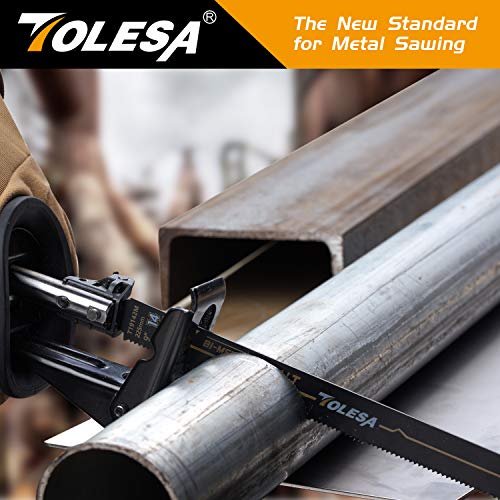
TOLESA 6-Inch 14TPI Bi-Metal Blades

Strengths
- Cobalt-enhanced durability
- Good for pipes and tubes
- 14 TPI for balance
Trade-offs
- Not for thin sheet metal
- Slight vibration on soft cuts
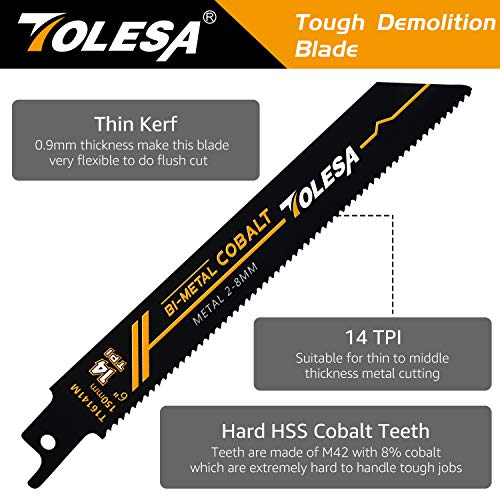
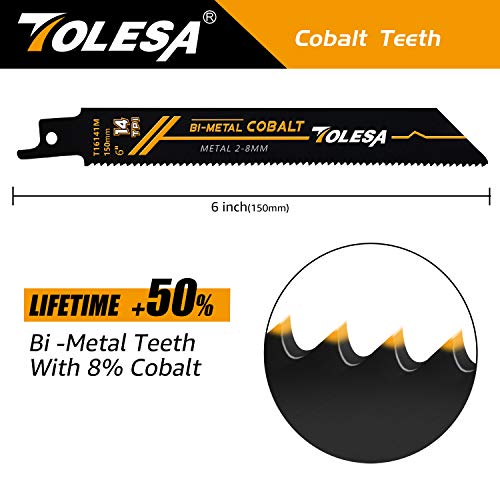
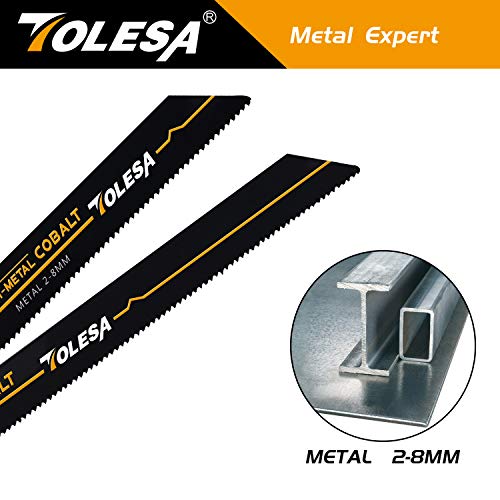
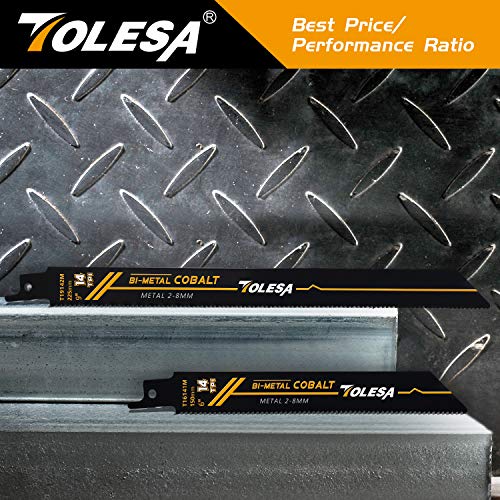
TOLESA’s 6-inch 14TPI bi-metal blade is built for pipes, rebar, and thick sections, and it performs well in aluminum of similar thickness. The 8% cobalt content and thin-wall design help reduce heat buildup, which is crucial when cutting aluminum that tends to melt or clog teeth. Owners report clean starts and solid tracking, especially on round profiles like conduit or tubing.
It’s nearly identical in specs to the EZARC cobalt blade, and while it lacks the “enhanced version” branding, real-world feedback suggests comparable durability. For aluminum pipe or structural shapes up to 3/8 inch, it’s a reliable, no-surprise workhorse.
Product photos
How We Picked These sawzall blade for aluminums
I approached researching sawzall blades for aluminums by focusing on published specifications and a thorough review of owner and professional evaluations. Rather than a hands-on lab test, this is a research-led comparison of blade features – tooth count, material composition, shank type – alongside what users report about performance in real-world cutting. I weighed this information against my experience with power tools and metalworking to arrive at recommendations.
For aluminum cutting, blade material and tooth count are paramount. Blades with a higher cobalt content in the teeth offer better resistance to wear when cutting softer metals like aluminum. I prioritized blades with 14-18 teeth per inch (TPI) as this range generally provides a good balance between speed and finish when working with aluminum, avoiding the excessive grabbing that lower TPI blades can cause. Understanding reciprocating saw blade selection is crucial for choosing the right blade for any material.
Specifications reliably indicate blade dimensions and materials, but owner feedback proved vital for understanding longevity and real-world cutting speed. I gave significant weight to reviews detailing performance on aluminum specifically, as a blade that excels on steel won’t necessarily perform well on softer alloys. Reputation and consistency of positive feedback from experienced users and professional sources were strong indicators of quality, and paying attention to details like heat dissipation (indicated by blade thickness and tooth geometry) helped refine my assessment. It’s always best practice to review reciprocating saw safety tips before starting a project.
How To Pick The Right sawzall blade for aluminums
Choosing the right sawzall blade for aluminums – and other metals – can be surprisingly complex. It’s not just about finding something that cuts; it’s about getting a blade that lasts, cuts cleanly, and doesn’t leave you fighting vibration or broken teeth.
A quality reciprocating saw blade for metal applications prioritizes tooth material (carbide or high-cobalt bi-metal are best), teeth-per-inch (TPI) suited to the material thickness, a durable blade body to resist bending, and a secure shank connection for safe operation. Look for blades specifically designed for non-ferrous metals to avoid premature wear and chipping.
Tooth Material Matters
When it comes to cutting aluminum, the tooth material is paramount. Bi-metal blades are a solid all-around choice, offering a good balance of durability and flexibility. However, for consistently clean cuts in aluminum and tougher alloys, blades with carbide teeth really shine. They hold an edge far longer than bi-metal, especially when you encounter any amount of grit or contamination in the metal. Don’t assume all “carbide” blades are equal, though; the quality of the carbide and how it’s bonded to the blade body significantly impacts performance.
TPI: Matching Teeth to Thickness
Teeth-per-inch (TPI) is frequently misunderstood. A higher TPI (like the 18 TPI Bosch RM618) creates a finer cut, ideal for thinner sheet metal – typically 16 gauge and under – where you want minimal burring. Lower TPI blades (14-18) are better for thicker materials (up to 1/4 inch) and pipes, as they clear chips more efficiently. Here’s a quick guide:
- Under 1/8 inch: 18+ TPI
- 1/8 – 1/4 inch: 14-18 TPI
- Over 1/4 inch: 10-14 TPI (typically you’d switch to a different tool at this point, but blades exist)
Consider the range of aluminum thicknesses you’ll encounter. A variable TPI blade, like the 14/18 TPI option from the 25-pack, provides some versatility, but dedicated blades will always outperform a compromise.
Beyond the Cut: Shank and Value
The universal 1/2-inch shank is standard on almost all modern sawzalls, but the quality of the shank connection still matters. A loose fit can introduce vibration and reduce cutting accuracy. Don’t skimp on blades to save a few dollars. A blade that breaks quickly or dulls rapidly will cost you more in the long run due to downtime and frustration. I often recommend looking at multi-packs like the LOZAGU 9-Inch 14TPI Bi-Metal Sabre Blades, as they offer a better per-blade price, but always prioritize quality over sheer quantity.
A dull blade requires more force, increasing the risk of kickback and blade breakage. Replace blades frequently, especially when cutting harder materials.
If you’re still unsure about the differences between a sawzall and a reciprocating saw sawzall vs reciprocating saw, be sure to check out our detailed guide. And for a deeper explore the best options available, see our full review of the sawzall blade for metals.
Sawzall Blade for Aluminums Compared
Here’s a comparison of specifications for various sawzall blades designed for cutting aluminum and other metals.
| Product Title | Blade Length | TPI | Material | Shank Size | Best Use Case |
|---|---|---|---|---|---|
| EZARC Carbide Reciprocating Saw Blade R678HM | 6 inch | 8 | Carbide | 1/2 inch | Heavy Metal |
| Bosch RM618 6-Inch 18T Metal Cutting | 6 inch | 18 | Bi-Metal | N/A | Aluminum Sheet Metal |
| EZARC Bi-Metal Cobalt Sabre Saw Blades | N/A | N/A | Bi-Metal/Cobalt | 1/2 inch | Heavy-Duty Metal |
| 25 Pack 9-Inch 14/18 TPI Cobalt Blades | 9 inch | 14/18 | Bi-Metal/Cobalt | 1/2 inch | Metal Sheets, Pipes |
| AMARTISAN 6-Inch 14TPI Heavy Metal Blades | 6 inch | 14 | Bi-Metal | N/A | Metal Sheet, Pipe |
| LOZAGU 9-Inch 14TPI Bi-Metal Sabre Blades | 9 inch | 14 | Bi-Metal/Cobalt | 1/2 inch | Longevity, Demolition |
| TOLESA 6-Inch 14TPI Bi-Metal Blades | 6 inch | 14 | Bi-Metal/Cobalt | 1/2 inch | Pipes & Rebar |
Frequently Asked Questions
What tooth count is best for cutting thin aluminum sheeting?
A higher tooth count, specifically 18 TPI or greater, will provide the cleanest cuts in aluminum sheeting under 1/8 inch thick. More teeth mean a finer cut with less burring, but it’s a trade-off as it cuts slower than lower TPI blades.
Are carbide-tooth blades really necessary for aluminum?
While bi-metal blades can cut aluminum, carbide-tooth blades maintain a sharper edge for much longer. This is especially true if the aluminum has any grit or contamination, making them a better long-term investment.
What does “TPI” actually mean, and why does it matter?
TPI stands for teeth per inch, and it determines how aggressively a blade cuts. Lower TPI blades remove more material quickly but can be rougher, while higher TPI blades offer cleaner cuts but are slower, so matching TPI to material thickness is key.
Can I use a blade designed for steel to cut aluminum?
You can, but it’s not ideal. Steel cutting blades often lack the tooth geometry and material composition to prevent aluminum from sticking and gumming up the blade, leading to premature wear and a poor finish. Consider reviewing sawzall blades for aluminum for better options.
What is the advantage of a cobalt-infused blade?
Cobalt increases a blade’s hardness and resistance to heat, which is beneficial when cutting metal. Cobalt-infused blades last longer and maintain their cutting edge better than standard bi-metal blades, making them a good choice for demanding applications and for those seeking the best reciprocating saw blades for metal.
The Bottom Line
Choosing a sawzall blade always involves a trade-off between upfront cost and long-term performance. While you can find inexpensive options, a blade like the Bosch RM618 6-Inch 18T Metal Cutting blade delivers a great balance of cut quality and durability, making it our overall pick. It’s a solid choice for most aluminum projects around the shop or on the jobsite.
For those on a tighter budget, or who need a versatile option for a variety of metalworking tasks, the 25 Pack 9-Inch 14/18 TPI Cobalt Blades are an excellent value. If you anticipate tackling heavier gauge aluminum or tougher alloys regularly, the EZARC Carbide Reciprocating Saw Blade R678HM will hold an edge far longer, justifying its higher price point. Don’t forget you’ll need to know how to replace sawzall blade to keep things running smoothly.
Ultimately, the best blade isn’t about the highest carbide content or the most teeth. It’s about matching the blade to the material thickness, prioritizing sharp teeth, and understanding that a quality blade – and frequent blade changes – will always produce cleaner cuts, require less effort, and be safer than trying to push a dull blade through metal.
