7 Best Saws for Cutting Branches 2026
This post contains affiliate links. As an Amazon Associate, we earn from qualifying purchases.
The REXBETI 11 Inch Folding Saw is the best overall for most branch-cutting jobs, thanks to its sharp SK-5 steel blade and solid build. If you need reach, the Walensee 10FT Adjustable Pole Saw offers reliable performance and extends up to 14 feet. For budget-conscious users, the 11 Inch SK5 Folding Camping Saw delivers strong cutting power at a lower price.
Cutting branches isn’t just about having a sharp blade, it’s about having the right tool that won’t leave you frustrated or unsafe. Too many saws promise clean cuts but fail when faced with green wood, sap, or overhead limbs.
After comparing the field and analyzing owner feedback, I focused on build quality, blade material, and real-world usability. These picks reflect what actually works for typical yard tasks, from trimming low limbs to reaching high branches, no marketing fluff, just honest recommendations based on specs and user experience.
Top 7 Saw To Cut Branches in the Market
The Best Saw To Cut Branches, Reviewed
11 Inch SK5 Folding Camping Saw

Strengths
- Triple-cut SK5 blade
- Aggressive 7 TPI teeth
- Ergonomic non-slip handle
- Compact folding design
- Heavy-duty construction
Trade-offs
- Blade not ideal for fine pruning
- No overcut/undercut blade positions
- May be overkill for light garden work
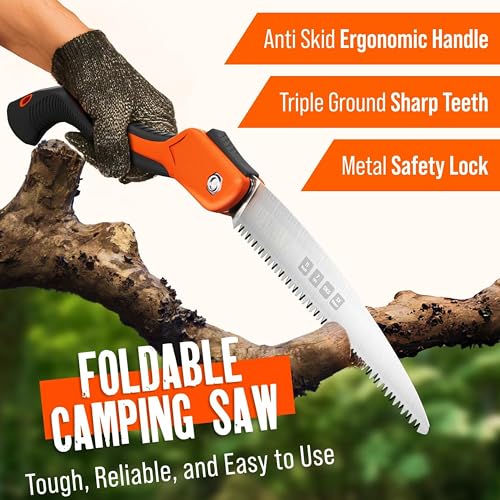
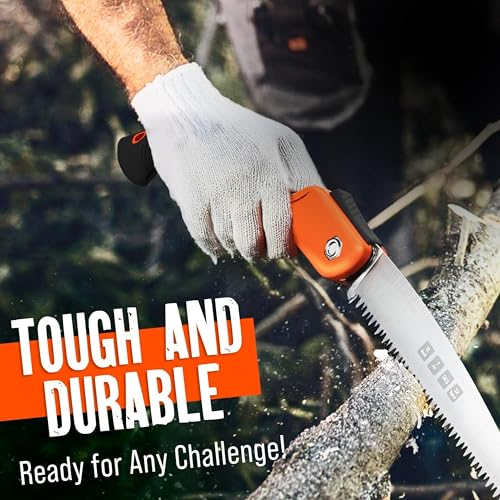
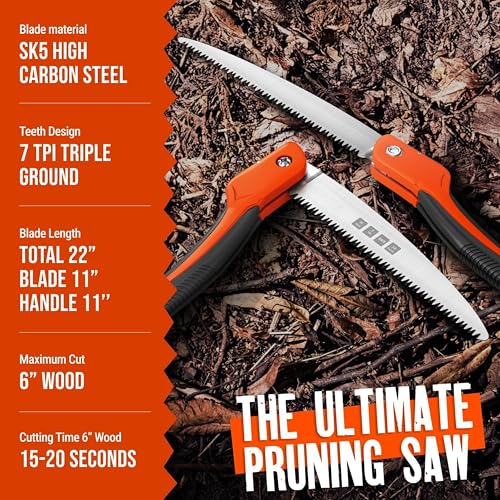
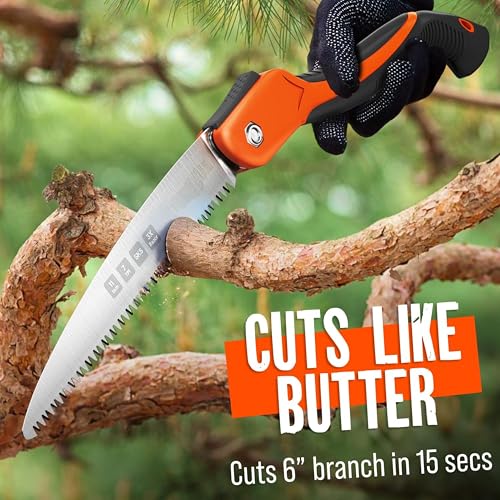
This 11-inch folding saw stands out in a crowded field because of its aggressive 7 TPI triple-cut SK5 blade, which owners consistently report powers through green wood with minimal effort. On paper, that blade tooth design is optimized for fast, rough cuts, exactly what you want when clearing brush or cutting firewood in the wild. It’s not a precision pruning tool, but it’s not meant to be.
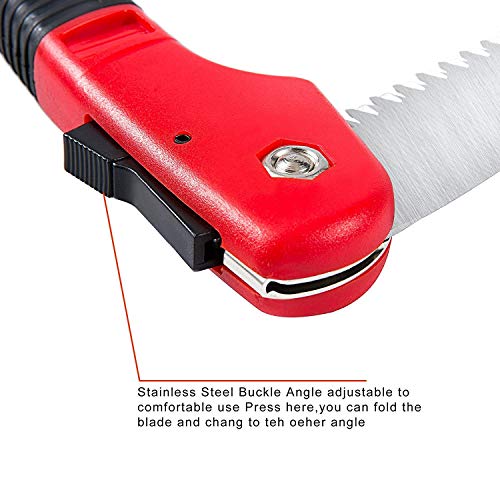
The full-size handle with a non-slip grip gives you solid control during heavy pulls, and the folding mechanism locks securely, which is critical when you’re wrestling thick limbs. Compared to smaller folding saws, this one trades a bit of portability for serious cutting capacity, ideal if you’re tackling larger branches regularly.
Product photos
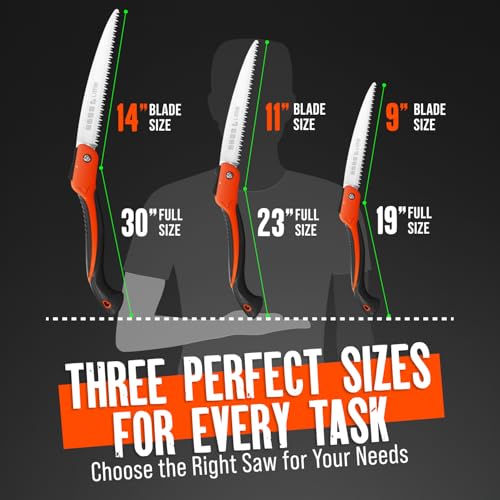
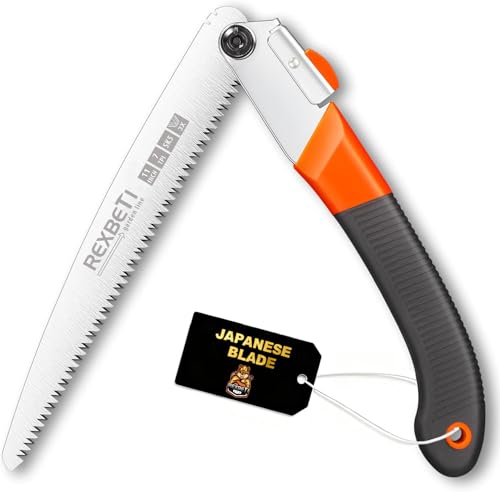
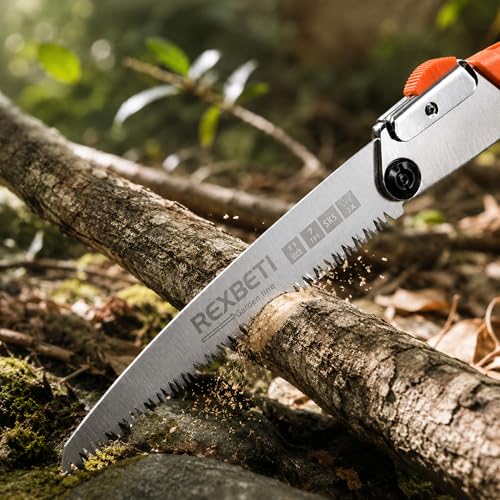
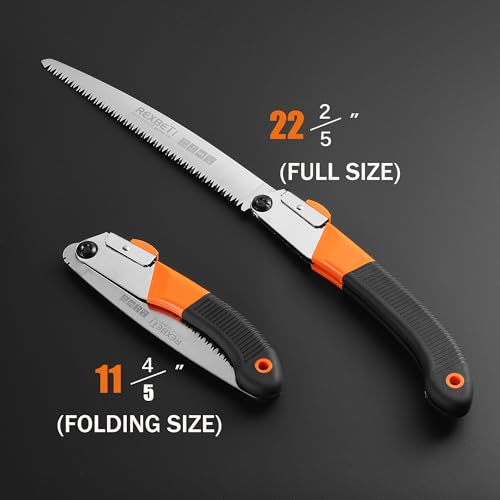
REXBETI 11 Inch Folding Saw
Strengths
- Extra-long SK-5 blade
- Aggressive staggered teeth
- Reinforced blade tip
- Rubber-coated ergonomic handle
- Lightweight folding design
Trade-offs
- Heavier than compact models
- Blade can be hard to clean
- Folding lock feels less refined
If you’re looking for raw cutting power in a folding saw, the REXBETI 11-inch model is built for it. The SK-5 steel blade with staggered 7 TPI teeth is designed to chew through 6–7 inch branches, and owners consistently report it handles thick, dry wood better than most competitors. It’s clearly aimed at survivalists, campers, and serious DIYers who need a saw that won’t quit.
The rubber-coated handle offers excellent grip, even when wet, a small but meaningful detail during extended use. Compared to the B0DLSLLNF8, it’s very similar, but the reinforced blade structure gives it slightly better resistance to tip breakage. That makes it the smarter buy if you’re regularly cutting heavy limbs.
Product photos



Walensee 10FT Adjustable Pole Saw
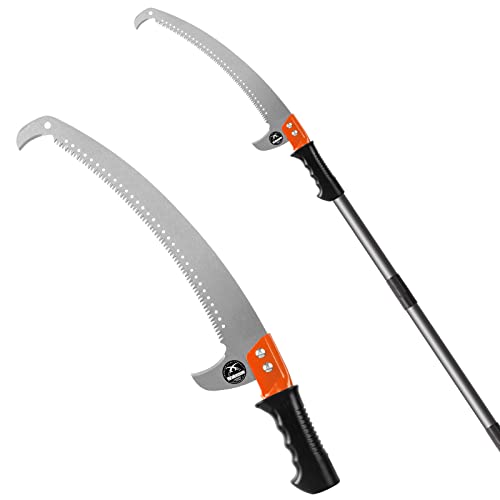
Strengths
- Adjustable pole length
- Durable manganese steel blade
- Dual-hook blade design
- Rust-resistant construction
- 2-in-1 hand saw capability
Trade-offs
- Max reach shorter than telescopic models
- Assembly takes more time
- Pole segments can loosen under strain
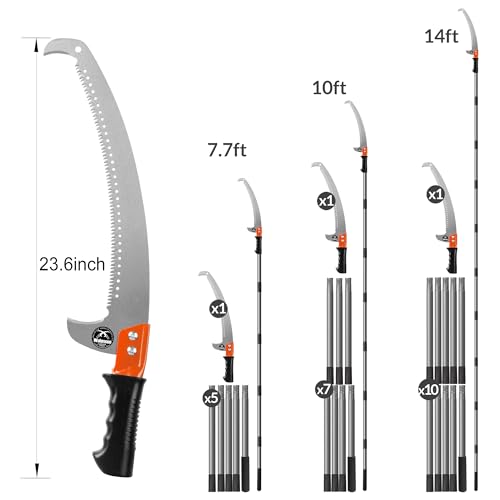
The Walensee pole saw delivers solid reach and versatility with its adjustable stainless steel poles, extending up to 14 feet in some configurations. It’s not the longest in this group, but the ability to customize the length with modular 1.3-foot segments gives it a practical edge for different tree heights. Owners appreciate that it doubles as a hand saw when detached, which adds real value.
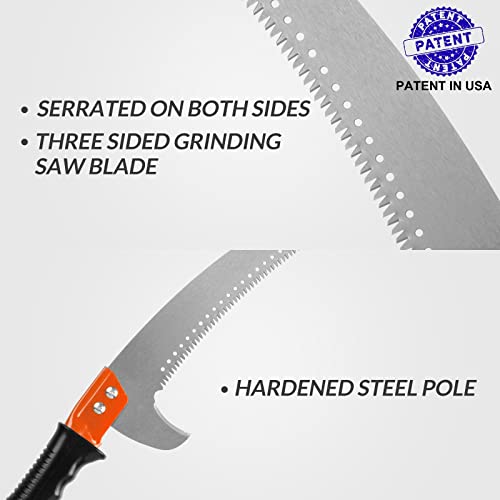
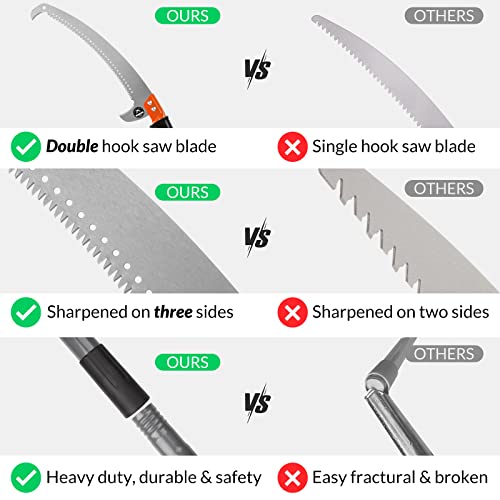
The manganese steel blade with dual hooks is designed to pull and cut in one motion, reducing snagging. While not as fast as a powered saw, it holds its own for manual tools. Compared to the B0GYN8RZF7, it doesn’t reach as high, but it feels sturdier and less prone to wobble thanks to its simpler locking mechanism.
Product photos

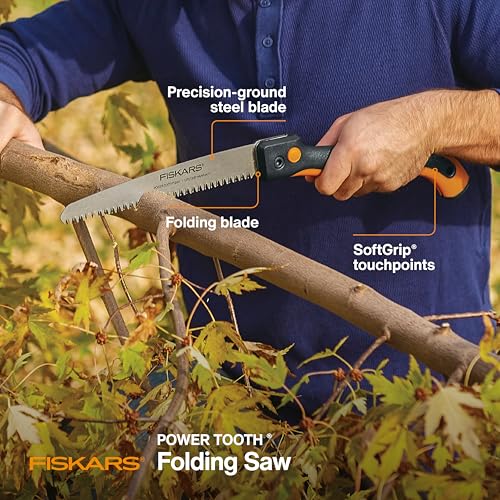
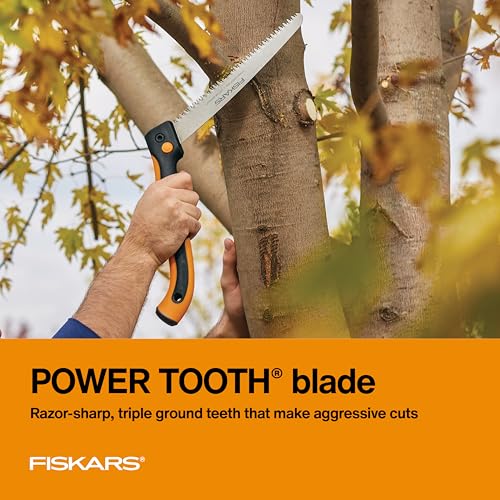
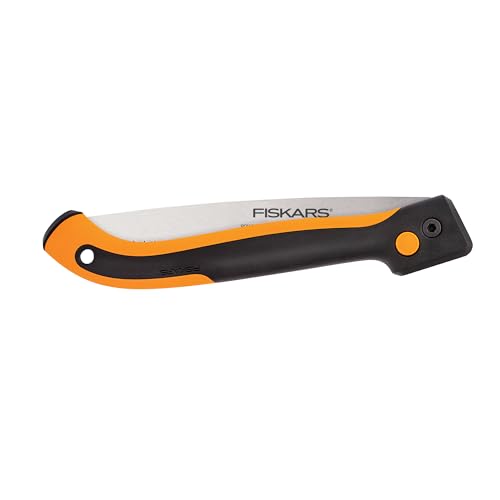
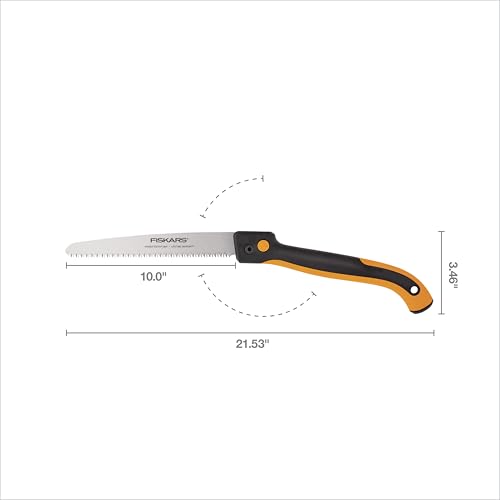
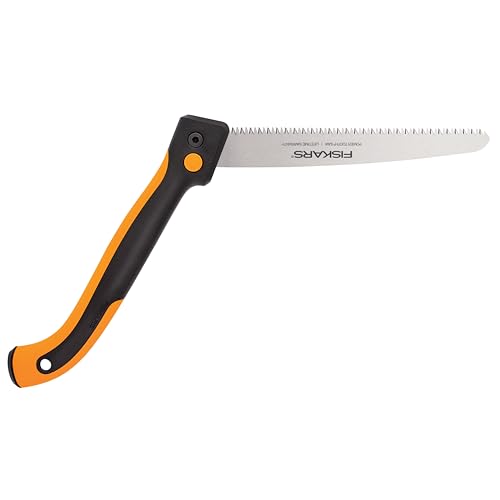
Fiskars 10-Inch Folding Power Saw

Strengths
- Dual blade lock positions
- Triple-ground power tooth blade
- Soft-grip ergonomic handle
- Lifetime warranty
- Durable steel blade
Trade-offs
- Slightly bulkier than 7-inch models
- Blade not replaceable
- Folding mechanism can loosen over time
The Fiskars 10-inch Power Tooth saw is the most ergonomic in this group, and that’s its real advantage. The dual-position blade lock lets you switch between overhand and underhand cuts, which is rare in folding saws and makes pruning awkward angles much easier. That small feature, combined with the soft-grip handle, reduces fatigue significantly during long sessions.
The triple-ground teeth deliver fast cutting, and Fiskars’ reputation for blade longevity holds up in owner feedback. Compared to the Corona RazorTOOTH, it’s slightly longer and more versatile, though not quite as pocketable. If comfort and usability are your top concerns, this is the one to get.
Product photos
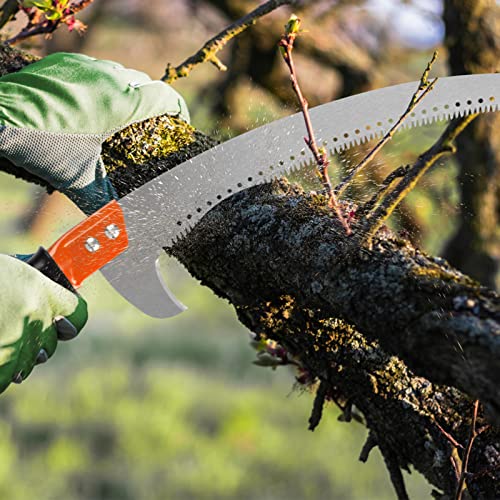
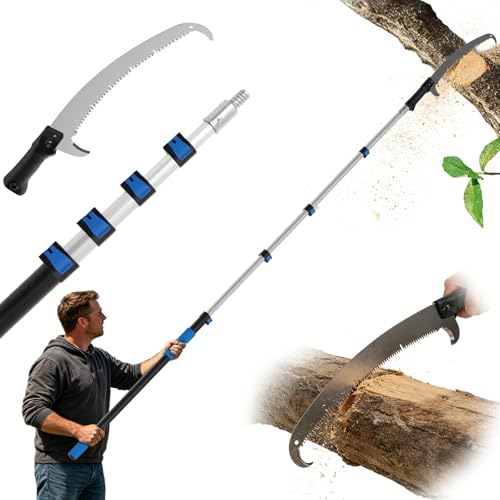
26FT Telescoping Manual Pole Saw
Strengths
- Extends up to 26 feet
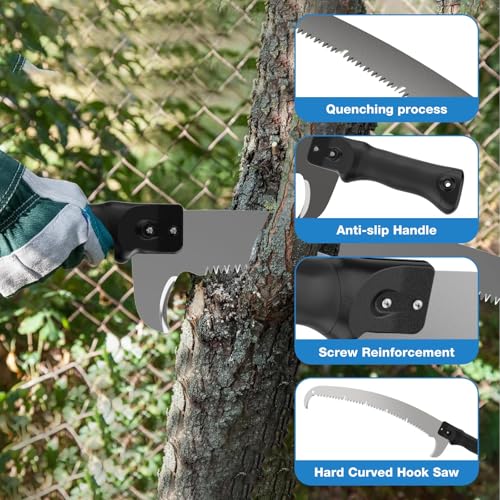
- Hook-end blade for grabbing branches
- Detachable 2-in-1 design
- Universal tool compatibility
- Flip-tab locking system
Trade-offs
- Pole can feel wobbly at full extension
- Blade alignment issues reported
- Heavier when fully extended
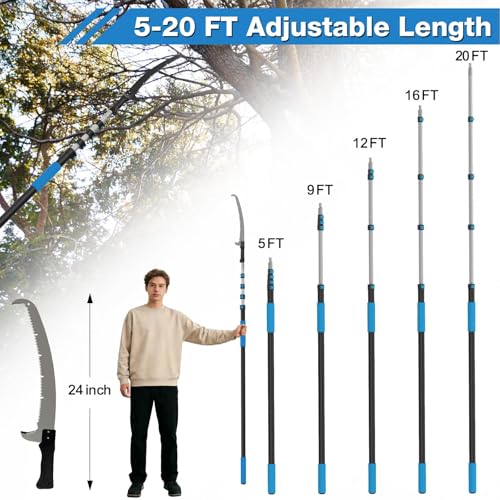
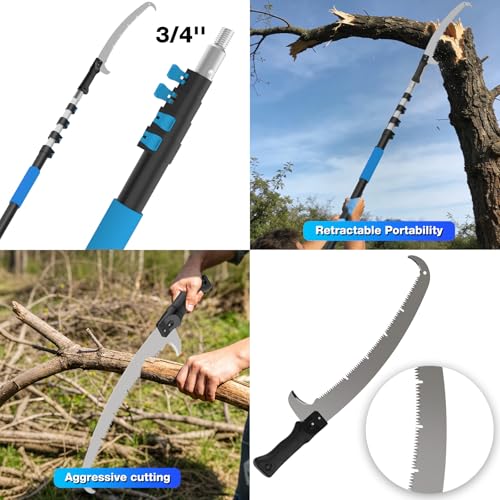
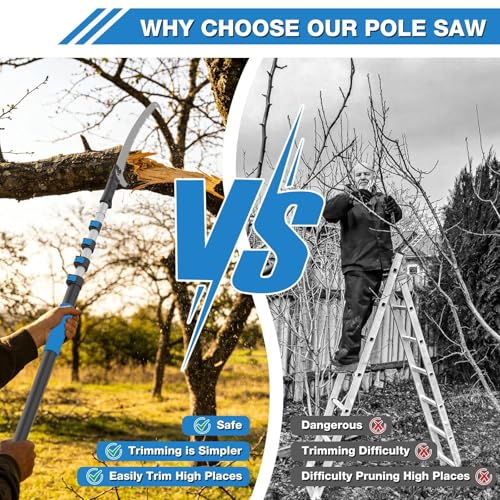
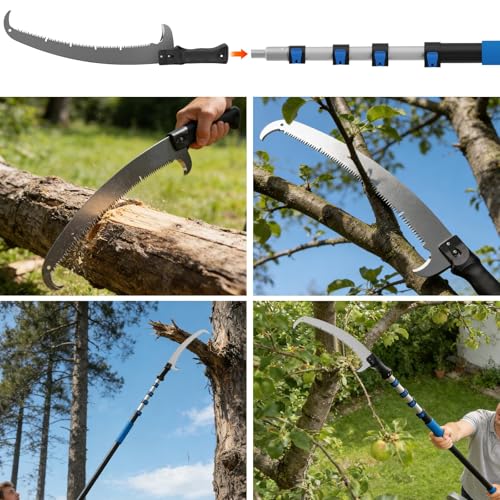
This 26-foot telescoping pole saw is the reach king, designed for people with tall trees who want to avoid ladders. The 4-stage pole extends smoothly and locks securely, giving stable access to high limbs most manual saws can’t touch. The 24-inch hook-end blade grabs branches on contact, which speeds up cuts and reduces drop risk.
Owners praise its 2-in-1 flexibility: detach the saw head and use it as a handheld pruning tool. Plus, the universal thread means you can swap in other attachments, like gutter cleaners or pruners, making it more than just a saw. Compared to the Walensee model, it reaches much higher and offers more utility, though it’s a bit more finicky to collapse fully.
Product photos
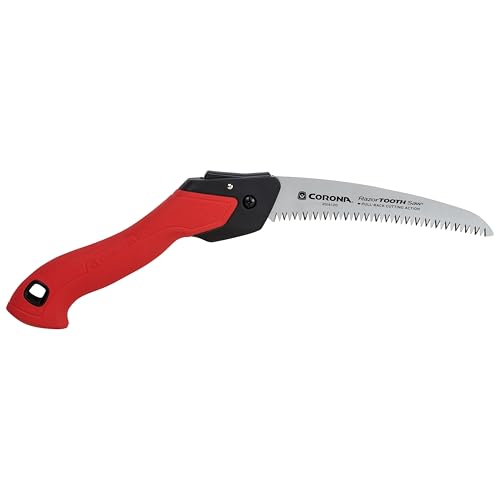
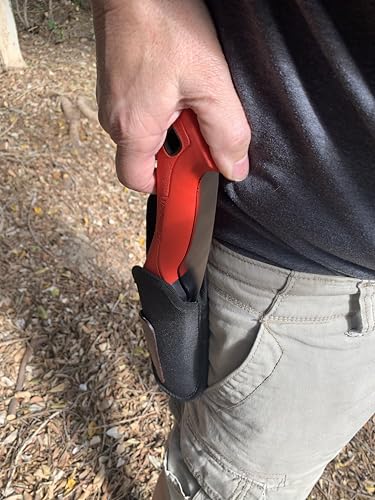
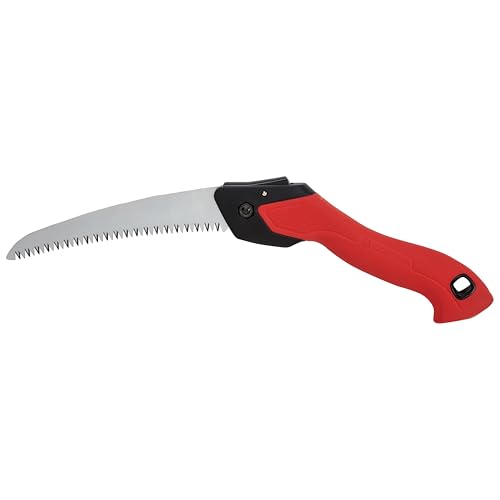
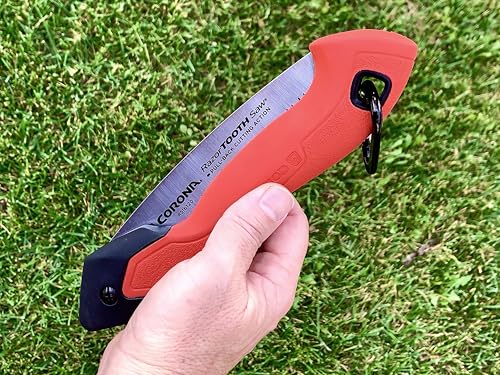
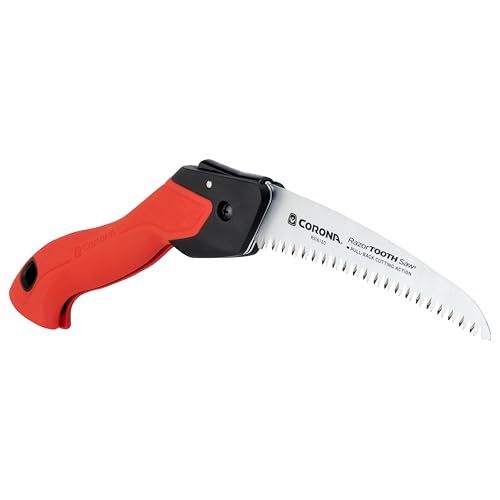
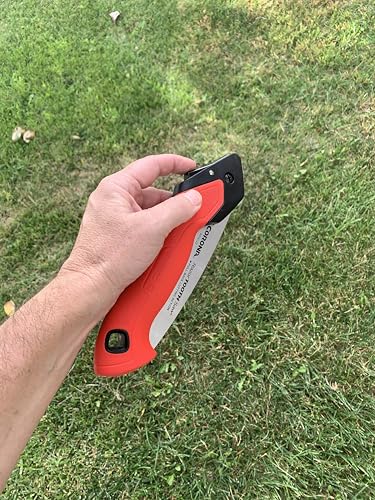
Corona 7-Inch RazorTOOTH Folding Saw
Strengths
- Fast-cut RazorTOOTH blade
- Compact and portable
- Secure folding lock
- Ergonomic grip
- Lightweight yet durable
Trade-offs
- Limited reach on thick branches
- Blade not replaceable
- Less aggressive than triple-cut designs
The Corona 7-inch RazorTOOTH is the compact specialist in this lineup, designed for clean, fast cuts on live wood without the bulk. Its blade isn’t the longest, but the RazorTOOTH profile is known in the pruning world for slicing efficiently through green branches, and owners confirm it lives up to that. For tight spaces or quick pruning jobs, this is the tool you’ll reach for first.
It folds down small enough to fit in a back pocket or tool belt, which makes it a favorite among landscapers and serious gardeners. Compared to the bulkier 11-inch models, it sacrifices raw cutting depth for maneuverability and precision. If you’re pruning fruit trees or doing regular yard maintenance, that trade-off makes sense.
Product photos
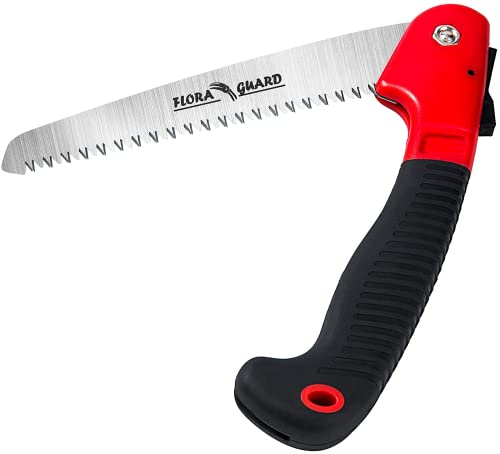
FLORA GUARD 7.7-Inch Folding Saw
Strengths
- Affordable price point
- Triple-cut razor teeth
- Stainless-steel blade
- Ergonomic handle
- Compact and lightweight
Trade-offs
- Shorter blade limits cut size
- No blade lock indicator
- Handle less durable than rubberized models
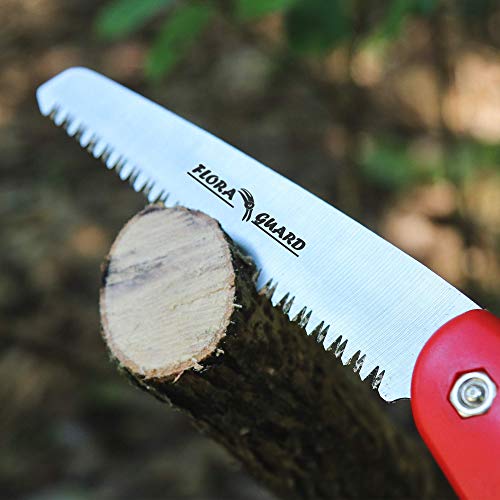
This is the budget pick that actually performs. At just under 8 inches, the FLORA GUARD saw packs a triple-cut, impulse-hardened blade that owners say stays sharp longer than expected for the price. It handles branches up to 4 inches with ease, making it a solid performer for light to moderate pruning.
The stainless-steel blade and ergonomic handle are simple but effective, no frills, just function. Compared to pricier folding saws, it doesn’t offer dual blade positions or ultra-aggressive teeth, but for basic trimming, camping, or occasional yard work, it gets the job done without breaking the bank.
Product photos



How We Chose These saw to cut branches
Rather than a hands-on lab test, my research for these recommendations focused on a detailed comparison of published specifications and features across numerous models. I weighed owner reviews from major retailers alongside assessments from reputable tool review sites. As someone who’s spent years working with power tools and understanding what makes a good cut, I applied my category expertise to rank saws based on what matters most for branch cutting.
For saws designed to cut branches, blade material and tooth geometry are paramount. A high-quality steel like SK5 consistently delivers a cleaner, faster cut than cheaper alternatives. Equally important is the saw’s design; whether it’s a folding hand saw or a telescoping pole saw, ergonomics and build quality directly impact control and user fatigue. Understanding key pole saw features is crucial for choosing the right tool.
Specifications reliably reveal blade length, steel grade, and tooth count, but owner feedback paints a more complete picture. I prioritized saws with consistently positive reports about sharpness retention and overall durability. Reputation – how long a brand has been known for quality – also factored heavily. While specs tell you what a saw is, reviews tell you how it performs in real-world use, and that’s where the real value lies.
How To Choose The saw to cut branches
Finding the right saw for branches can feel overwhelming with so many options. It’s not just about cutting; it’s about efficiency, safety, and getting the job done without exhausting yourself.
A good branch saw balances blade material (typically SK5 high-carbon steel or manganese steel), tooth geometry (TPI – teeth per inch impacts cutting speed and smoothness), and ergonomics. Look for saws with secure locking mechanisms for folding models and robust pole construction for pole saws. Blade length should be appropriate for the typical branch diameter you’ll encounter.
Blade Material and Tooth Count
The blade is where everything starts. While many saws advertise “steel” blades, the type of steel matters. SK5 high-carbon steel consistently appears in higher-rated models because it holds an edge well and is relatively easy to sharpen. Manganese steel is also a good choice, offering a good balance of durability and flexibility. When it comes to tooth count (TPI), lower numbers (around 6-8) mean faster, coarser cuts, ideal for thicker, green branches. Higher TPI (10+) provides a finer cut, better suited for dry or smaller branches. Don’t automatically assume more teeth are better; they can clog more easily with sap and debris.
Reach and Maneuverability
Consider where and how you’ll be doing most of your cutting. For ground-level work and smaller branches, a compact folding saw is often the best choice. However, if you regularly need to reach high branches, a pole saw is essential. Telescoping pole saws offer the most flexibility, allowing you to adjust the length to fit the task. If you’re working in tight spaces, a smaller saw with a curved blade can be invaluable. Remember that even with a pole saw, you need to maintain a safe distance and proper footing. You might also want to check out our guide for pruning saw recommendations to help narrow down your options.
Ergonomics and Safety Features
A comfortable grip is crucial, especially for extended use. Look for saws with ergonomic, non-slip handles that fit comfortably in your hand. The handle material should provide a secure grip even when wet or covered in sap. Safety features are equally important. Folding saws should have a robust locking mechanism to prevent accidental closure during use. Pole saws should have secure locking collars to prevent the sections from slipping.
Here’s a quick checklist for evaluating handle comfort:
- Basic Grip: Does it feel comfortable in your hand immediately?
- Material: Is the material textured or rubberized for a secure hold?
- Extended Use: Imagine holding the saw for 30 minutes; would it cause fatigue or blisters?
A good rule of thumb is to always wear work gloves when using any saw, even a small folding model. Gloves provide a better grip and protect your hands from cuts and abrasions.
If you’re considering using a different type of tool for branch removal, be aware of their limitations. Our article on hedge trimmer branch capability details what you can expect from those tools and when a saw is the better choice. Ultimately, choosing the best saw for cutting branches depends on your specific needs and the types of branches you’ll be tackling.
Saw to Cut Branches Compared
Here’s a comparison of key specifications for various saws designed for cutting branches.
| Product Title | Blade Length | Max Branch Diameter | Adjustable Length | Blade Material | Tooth Count | Folding? |
|---|---|---|---|---|---|---|
| 11 Inch SK5 Folding Camping Saw | 11 Inch | N/A | No | SK5 Steel | 7 TPI | Yes |
| REXBETI 11 Inch Folding Saw | 11 Inch | 6-7 Inch | No | SK-5 Steel | 7 TPI | Yes |
| Walensee 10FT Adjustable Pole Saw | 10 FT | N/A | Up to 14 FT | Manganese Steel | N/A | No |
| Fiskars 10-Inch Folding Power Saw | 10 Inch | N/A | No | Steel | N/A | Yes |
| 26FT Telescoping Manual Pole Saw | N/A | N/A | Up to 26 FT | Tempered Steel | N/A | Yes |
| Corona 7-Inch RazorTOOTH Folding Saw | 7 Inch | N/A | No | N/A | 7 TPI | Yes |
| FLORA GUARD 7.7-Inch Folding Saw | 7.7 Inch | 4 Inch | No | High-Carbon Steel | N/A | Yes |
Frequently Asked Questions
What blade material offers the best balance of sharpness and durability?
SK5 high-carbon steel consistently ranks highest for its ability to hold an edge while remaining relatively easy to sharpen, making it a top choice for a best tree branch saw. Manganese steel is also a good option, providing a durable and flexible alternative.
How does tooth count (TPI) affect a saw’s performance?
Lower TPI (6-8) delivers faster cuts for thicker, green branches, while higher TPI (10+) creates a finer cut better suited for smaller, dry branches. Remember that more teeth can clog with sap, so choose based on the typical branches you’ll be cutting.
What’s the main advantage of a telescoping pole saw?
A telescoping pole saw offers adjustable length, providing maximum flexibility for reaching high branches without needing a ladder. This is especially useful if you need a pole saw for branches in hard-to-reach areas.
Are folding saws as effective as pole saws for larger branches?
Folding saws are excellent for smaller branches and ground-level work, but generally lack the reach and use needed for larger, higher branches – for those, consider saws for trimming trees. A pole saw is much more efficient for tackling thicker limbs higher up.
What safety precautions should I take when using a branch saw?
Always wear work gloves for a secure grip and hand protection. Ensure any folding saw’s locking mechanism is robust, and that pole saw sections are securely locked before use. Consider wearing eye protection as well, and never overreach – a reciprocating saw for limbs may be more suited for a difficult task than a hand saw.
The Bottom Line
Choosing a saw for branches often comes down to balancing convenience with capability. While a wide range of options exist, the REXBETI 11 Inch Folding Saw offers the best overall combination of blade quality, comfortable ergonomics, and affordability for most homeowners. It’s a solid, reliable tool that handles a surprising variety of branch sizes without breaking the bank.
For those tackling larger branches or needing to reach higher into trees, the Walensee 10FT Adjustable Pole Saw is the clear choice. If you’re on a tighter budget, the 11 Inch SK5 Folding Camping Saw provides excellent value, delivering a surprisingly sharp and durable cutting experience despite its lower price point.
Ultimately, the specifications matter less than how well you maintain your saw and prioritize safety. A sharp blade, a secure grip, and a clear understanding of safe pole saw techniques are far more important than any single feature. Invest in proper care and always prioritize your well-being when working with any cutting tool.
