7 Best Saws for Cutting Branches 2026
This post contains affiliate links. As an Amazon Associate, we earn from qualifying purchases.
The REXBETI 11 Inch Folding Saw is the best overall for most users, delivering aggressive cuts on thick branches with solid build quality. For tight budgets, the WEIMELTOY 10 Inch Folding Pruning Saw offers reliable performance, while the Suchtale 10FT 2-in-1 Pole Saw stands out if you need reach and versatility.
If you’ve ever struggled with a flimsy saw that binds or dulls after a few cuts, you know how frustrating branch cleanup can be. A poor tool wastes time, wears you out, and can even damage trees with ragged cuts.
This guide cuts through the noise, focusing on real-world performance. I looked at blade steel, tooth design, and owner feedback to find saws that actually hold up. These picks balance durability, cutting efficiency, and value, whether you’re trimming storm damage or maintaining shrubs.
Top 7 Saw For Cutting Branches in the Market
The Best Saw For Cutting Branches, Reviewed
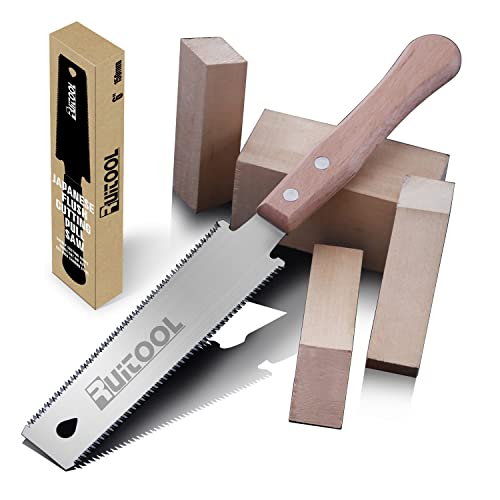
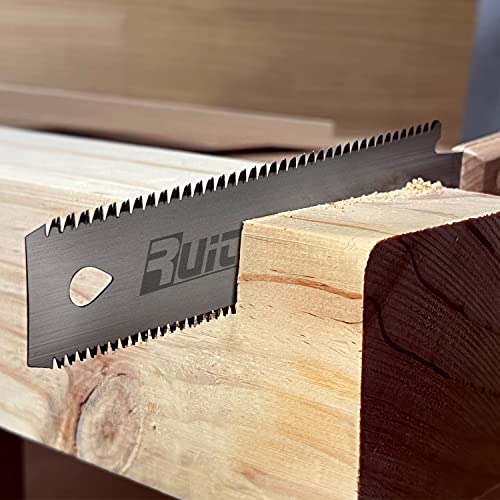
RUITOOL 6 Inch Japanese Pull Saw
Strengths
- Double-edged blade
- High TPI precision
- SK5 hardened steel
- Flush-cut capable
- Balanced beech handle
Trade-offs
- Short 6-inch blade
- Not for thick branches
- Pull-cut takes adjustment
If you care about cut quality and versatility in a small package, this Ryoba-style saw is tough to beat. The double-edged blade, 17 TPI for hardwood, 14 TPI for softwood, gives you two tools in one, and the pull-cut design delivers cleaner, smoother results than most Western push saws. The SK5 high-carbon steel is hardened to HRC60-63, which matches specs you’d expect from premium brands, and owners confirm it holds a sharp edge well.
It’s not meant for thick limbs, but for flush cuts, pruning small trees, or detailed yard work, it excels. The beechwood handle feels balanced, and the compact size makes it easy to control. Compared to larger hand saws, it’s more surgical than brute force, the kind of tool you’d pick when accuracy matters more than raw power.
Product photos



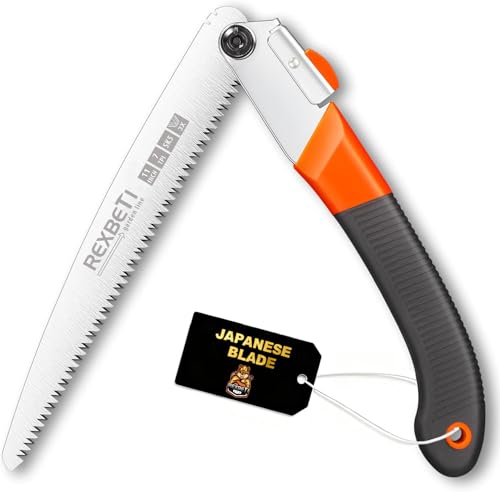
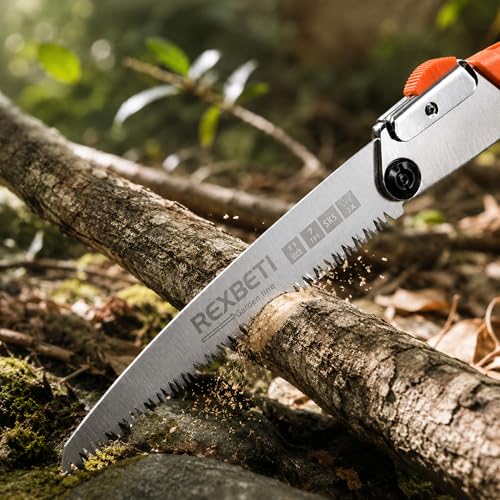
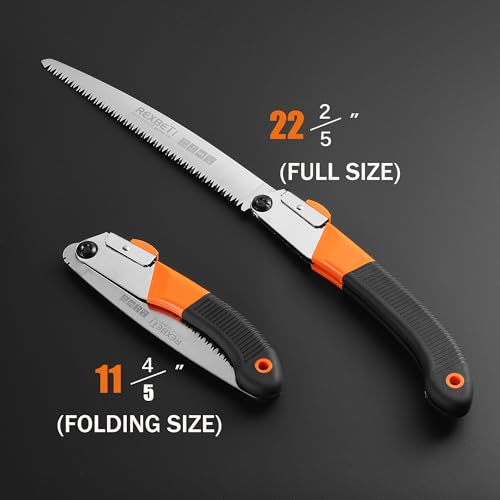
REXBETI 11 Inch Folding Saw
Strengths
- 11-inch long blade
- SK-5 steel construction
- 7 TPI aggressive teeth
- Reinforced blade
- Rubber-coated grip
Trade-offs
- Folding lock not foolproof
- Teeth clog in dense wood
- Handle can feel stiff
This is the go-to folding saw for people who want serious cutting power in a packable form. The 11-inch SK-5 blade with 7 TPI staggered teeth handles 6–7 inch branches, and the reinforced structure minimizes flex, a common flaw in budget folding saws. Owners love it for camping and survival kits because it’s aggressive without being fragile.
The rubber-coated handle provides solid grip in all conditions, and the folding mechanism locks securely. It’s not as refined as a Japanese pull saw, but for outdoor tasks where you need to cut fast and move on, it delivers. Compared to the WEIMELTOY model, it’s slightly larger and more durable, making it the smarter buy if you’re okay with a bit more bulk.
Product photos



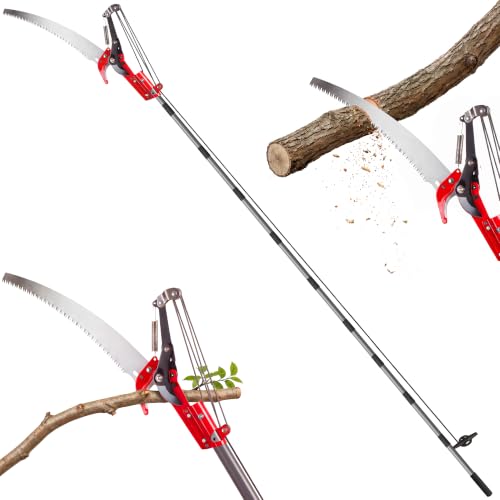
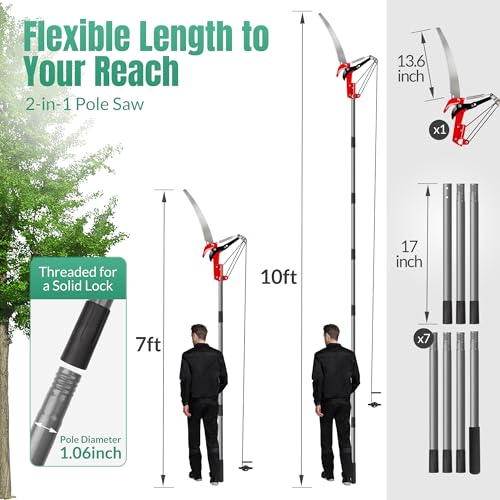
Suchtale 10FT 2-in-1 Pole Saw
Strengths
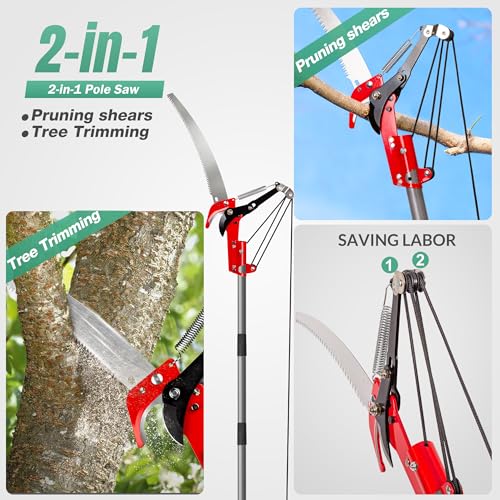
- Quadruple pulley system
- 2-in-1 saw and scissors
- Stable reinforced joints
- Lightweight for pole saw
- Easy overhead cutting
Trade-offs
- Limited to 10FT reach
- Scissors max 1.2 inches
- Saw blade not replaceable
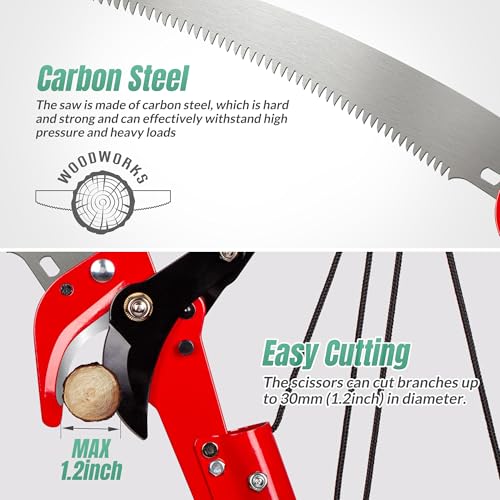
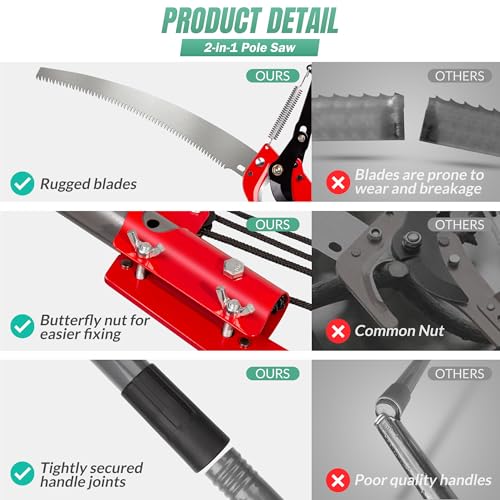
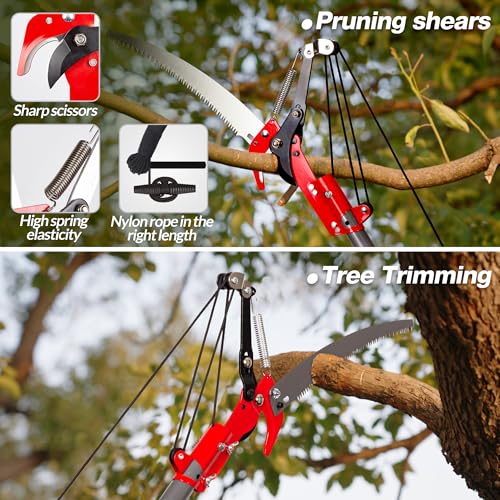
The quadruple pulley system here is the real story, it genuinely reduces the effort needed to snip high branches, which is rare in manual pole saws. At 10 feet, it doesn’t reach as high as some competitors, but the dual cutting head (saw + pruning scissors) makes it incredibly efficient for mixed-height pruning. The scissors handle smaller branches cleanly, while the saw tackles thicker growth, so you’re not switching tools mid-job.
Owners like how stable the reinforced joints feel, and the reduced wobble means better control when working over your head. It’s not built for massive limbs, but for palm trees, fruit trees, and general yard shaping, it’s a smart pick. Compared to single-blade pole saws, this one trades raw cutting depth for versatility and ease of use.
Product photos
WEIMELTOY 10 Inch Folding Pruning Saw

Strengths
- Affordable price
- SK5 steel blade
- Folding compact design
- Triple-cut sharp teeth
- Rubber soft handle
Trade-offs
- Blade flex under heavy load
- Lock mechanism can loosen
- Not ideal for precision cuts
For the price, this folding saw punches above its weight. The 10-inch SK5 curved blade is stiff enough to handle branches up to 6 inches, and the triple-cut teeth deliver a clean, fast cut in both green and dry wood. What really stands out is how many owners mention it outperforms more expensive models, not because it’s flawless, but because it balances sharpness, durability, and ease of carry so well.
The folding design with a locking mechanism makes it safe and compact, ideal for tossing in a truck bed or camping pack. The rubberized handle stays grippy even when wet, which matters when you’re trimming after a morning rain. It’s not as refined as Japanese pull saws, but for general outdoor tasks from trail clearing to yard cleanup, it’s a solid, no-nonsense tool.
Product photos


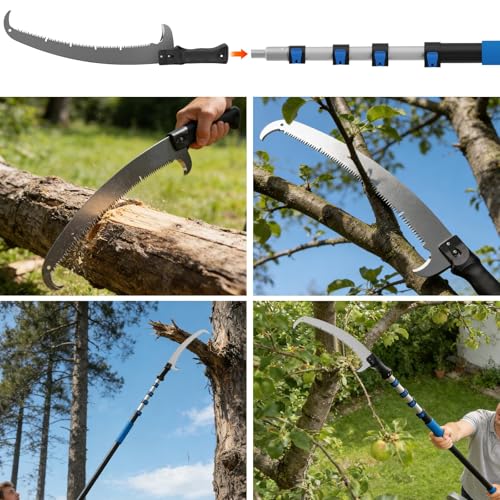
Manual 26FT Telescoping Pole Saw
Strengths
- 26FT max reach
- Detachable handheld saw
- Hook-end blade design
- Universal tool compatibility
- Flip-tab pole locks
Trade-offs
- Heavy at full extension
- Manual effort required
- Assembly takes time
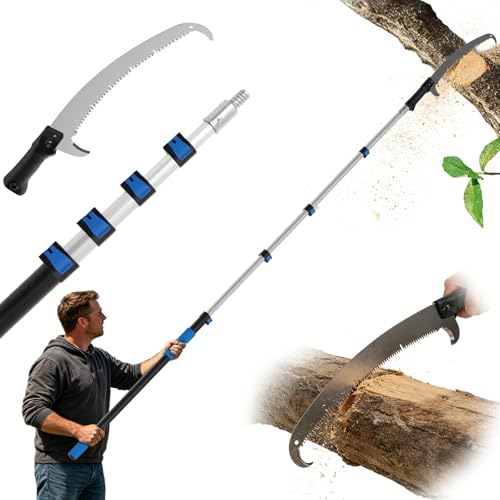
The ability to extend up to 26 feet gives this pole saw serious reach, and the detachable 24-inch blade adds versatility few others in this class offer. The hook-end blade is a smart touch, it grabs limbs on the first pull, reducing slip and speeding up cuts, especially on live branches. Owners appreciate that it works without batteries or cords, and the flip-tab locking system keeps the pole stable even at full extension.
What makes it stand out is the universal thread compatibility. You’re not just getting a pole saw, it becomes a multi-tool platform for gutter cleaning, window washing, or other pole-mounted jobs. That said, it’s heavier than gas or electric models, and overhead cutting can still be tiring. But for someone avoiding power tools or tight budgets, this manual option delivers surprising capability.
Product photos
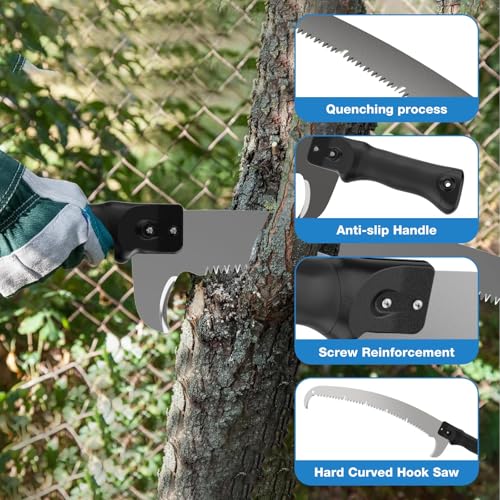
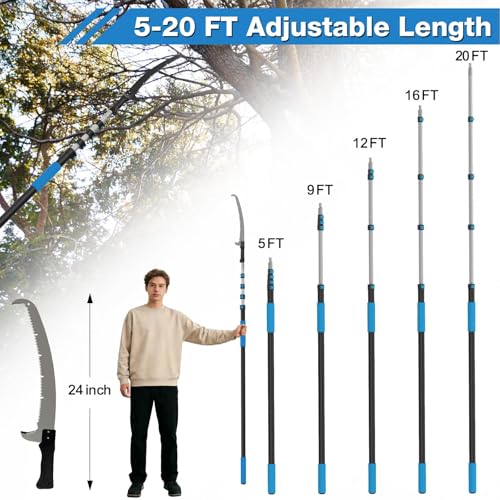
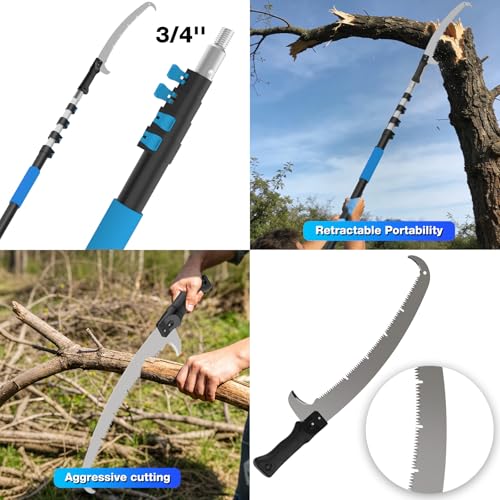
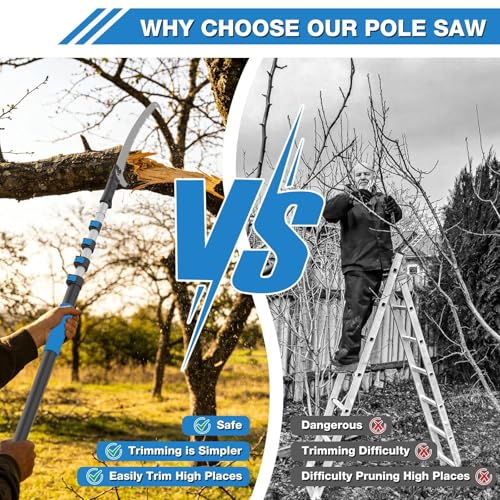
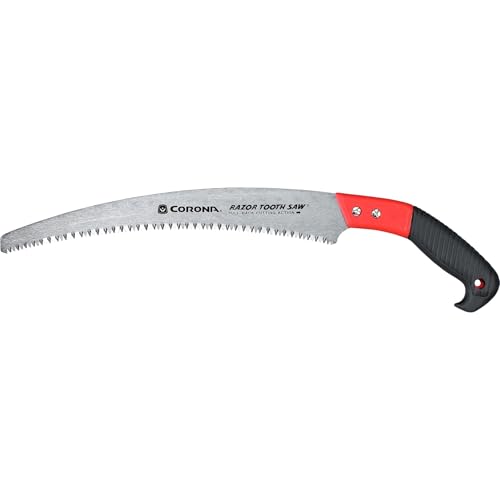
Corona 13-Inch RazorTOOTH Pruning Saw
Strengths
- Cuts 7-inch branches
- Impulse-hardened teeth
- Chrome-plated blade
- Pistol grip control
- RazorTOOTH efficiency
Trade-offs
- No foldable design
- Heavy for extended use
- Bulky for storage
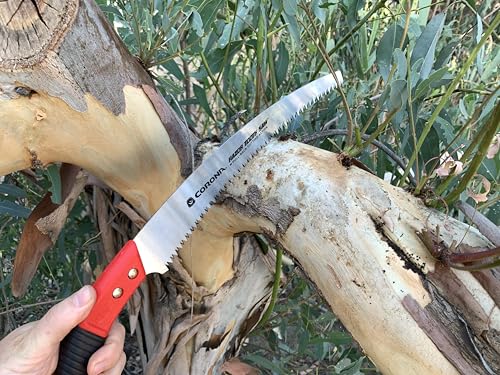
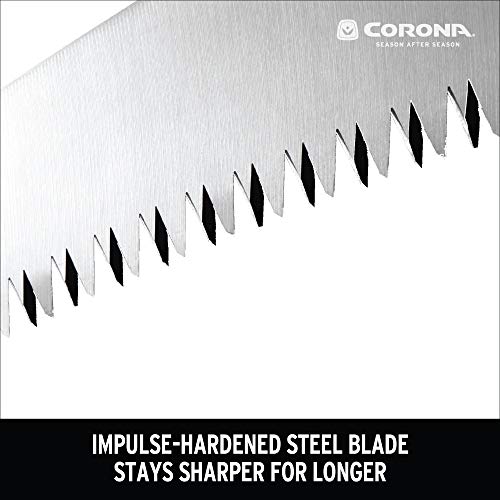
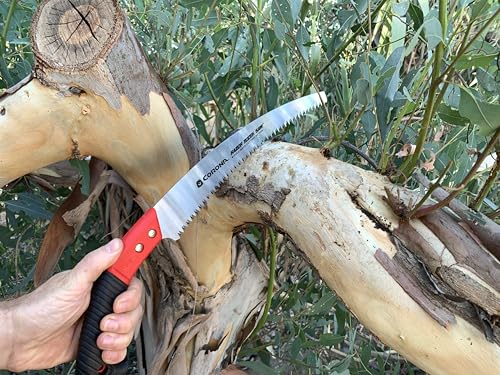
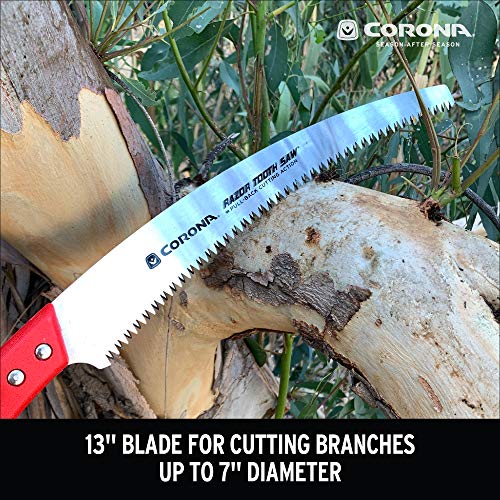
When you’re dealing with branches up to 7 inches, the Corona RS 7120 earns its reputation. The curved blade and impulse-hardened RazorTOOTH design remove material fast, and the chrome-plated finish actually does reduce friction, reviewers consistently note smoother cuts and less gumming in sap-heavy limbs. This is a saw built for aggressive, one-handed pruning, and the pistol grip makes it feel natural in use.
It’s not flashy, but it’s overbuilt in the right ways. The high-carbon SK5 steel blade holds up well, and the three-sided teeth stay sharp longer than cheaper stamped blades. Compared to folding models, it’s less portable, but for serious yard work, it’s more reliable. If you’ve ever struggled with a saw that binds or dulls after two cuts, this one feels like a step up.
Product photos

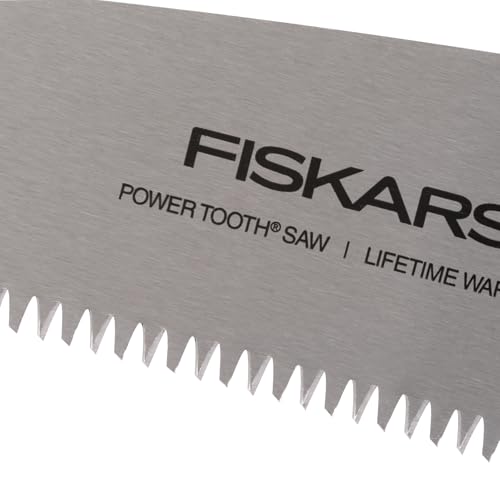
Fiskars 15″ PowerTooth D-Handle Saw
Strengths
- Triple-ground teeth
- Full-hardened steel blade
- D-handle use
- SoftGrip comfort
- Long 15-inch blade
Trade-offs
- Bulky for storage
- Not foldable
- Heavy for one-handed use
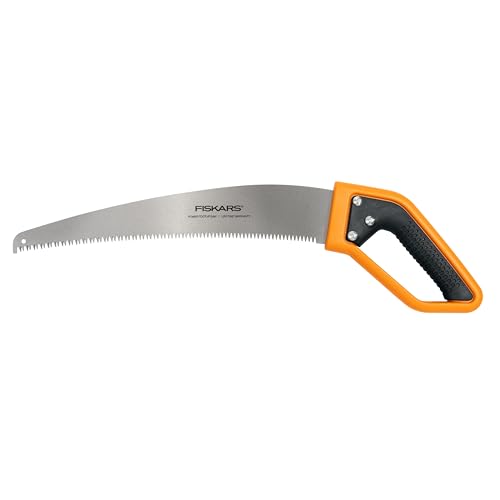
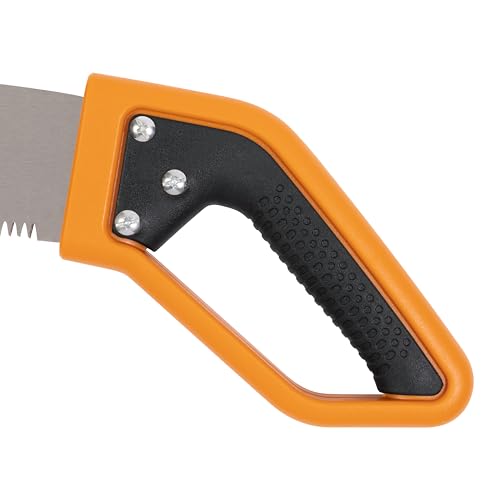
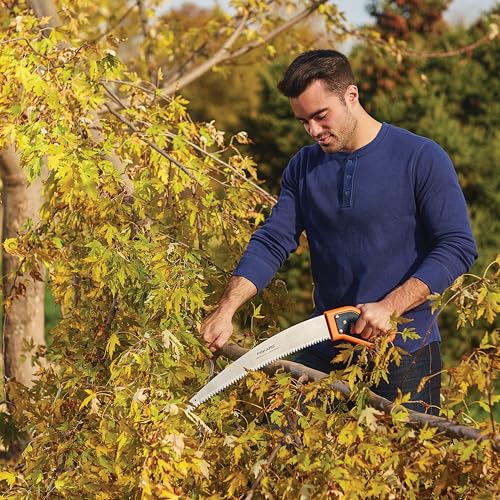
This is one of those rare hand saws that feels like it was built for serious work, not just occasional yard touch-ups. The 15-inch POWER TOOTH blade with triple-ground teeth stands out on paper, and owners consistently report it powers through thick, green wood with noticeably less effort than standard saws. The full-hardened stainless steel construction isn’t just marketing fluff, it’s the kind of durability you expect from a tool meant to last years in a working shed.
The D-handle design gives you real use, especially when you’re wrestling with a stubborn limb. Combined with the SoftGrip zones, it stays comfortable even during extended use, and the control it offers beats most pistol-grip models when you need precision. Compared to folding saws, this one sacrifices portability for raw cutting power, but for someone regularly clearing brush or tackling storm-damaged trees, that trade-off makes sense.
Product photos
How We Picked These saw for cutting branches
Rather than a hands-on lab test, my research for these recommendations involved a detailed comparison of published specifications and features across numerous models. I weighed owner reviews from major retailers alongside expert opinions found in trade publications and dedicated tool review sites. As someone who’s spent years working with tools, I applied my understanding of materials, blade geometry, and intended use to rank these saws against a set of clear criteria focused on performance and value.
For saws designed to cut branches, blade material and tooth count were the most significant factors. High-carbon steel blades, like SK5, consistently showed up in saws praised for holding an edge and resisting wear. Tooth count, measured in TPI (teeth per inch), directly impacts cutting speed and finish; lower TPI for thicker branches and higher TPI for finer work. Beyond that, ergonomics and the overall build quality played a large role in separating consistently well-reviewed options.
Product specifications reliably indicate blade length, steel type, and TPI. However, I placed greater emphasis on owner feedback regarding sharpness retention, ease of use, and durability. Reports of blade warping, flimsy handles, or rapid dulling were red flags. Reputation also mattered; brands with a long history of producing quality cutting tools generally earned higher consideration. Understanding pole saw uses can also help narrow your choices.
What To Look For In saw for cutting branches
Picking the right saw for branches isn’t always straightforward. There’s a lot more to it than just grabbing the first one you see at the hardware store.
A quality saw for branches balances blade material (SK5 high-carbon steel is common), tooth geometry (TPI – teeth per inch – dictates cutting speed and finish), and ergonomic design. Consider the typical branch diameter you’ll encounter, the height you’ll need to reach, and whether portability is a major concern. Prioritize saws with durable construction and comfortable grips for extended use.
Blade Design & Tooth Count
The blade is where the work happens, so understanding its features is crucial. A higher tooth count (TPI) generally means a cleaner cut, ideal for precision work on smaller branches. Lower TPI, like you’ll find on the REXBETI 11 Inch Folding Saw with its 7 TPI, excels at quickly powering through thicker limbs. However, a very low TPI can be rough on the wood. Japanese pull saws, like the RUITOOL 6 Inch Japanese Pull Saw, use a unique pull-stroke action and fine teeth for incredibly clean cuts, though they require a different technique than traditional saws.
- A saw with dual-sided teeth offers versatility (like the RUITOOL) – one side for hardwoods, one for softwoods.
- Consider blade length; a longer blade (10″+) provides more reach and use for larger branches, but can be unwieldy in tight spaces.
- SK5 high-carbon steel is a standard for a reason. It holds an edge well and is relatively easy to sharpen, making it a good choice for long-term value.
Reach and Maneuverability
If you regularly need to tackle high branches, a pole saw for trimming is essential. The Suchtale 10FT 2-in-1 Pole Saw exemplifies this, offering impressive reach and a combined saw/pruner system. However, pole saws can be cumbersome to maneuver. For ground-level work, a folding saw like the WEIMELTOY 10 Inch Folding Pruning Saw provides excellent portability and control. Think about how you’ll be using the saw most of the time – is it for quick cuts in the garden, or for tackling larger trimming jobs?
A good rule of thumb: If you’re consistently using a ladder to reach branches, invest in a pole saw. It’s a safety upgrade that will pay for itself.
Power & Ergonomics
While most of these saws are manually powered, the efficiency of the design matters. Features like the quadruple pulley system on the Suchtale pole saw reduce effort, making overhead cutting less strenuous. But don’t overlook ergonomics. A comfortable grip, like the ergonomic rubber handle on the REXBETI, is vital for extended use. Also, consider the weight – a heavier saw will fatigue you more quickly, especially during prolonged tasks. If you’re dealing with consistently thick branches, the Corona 13-Inch RazorTOOTH Pruning Saw, with its Razortooth technology, is designed for quick material removal, and its D-handle provides excellent control. For those who also need to tackle thick growth trimming, understanding the limitations of a pruning saw versus a hedge trimmer branch cutting tool is essential.
Saw for Cutting Branches Compared
Here’s a comparison of key specifications for saws designed for cutting branches.
| Product Name | Blade Length | TPI (Teeth Per Inch) | Max Branch Diameter | Pole Length (Extended) | Blade Material | Features |
|---|---|---|---|---|---|---|
| RUITOOL 6 Inch Japanese Pull Saw | 6 in | 14/17 | N/A | N/A | SK5 Steel | Double Edged |
| REXBETI 11 Inch Folding Saw | 11 in | 7 | 6-7 in | N/A | SK-5 Steel | Folding Design |
| Suchtale 10FT 2-in-1 Pole Saw | N/A | N/A | 1.2 in (Pruner) | 10 FT | Steel | 2-in-1 System |
| WEIMELTOY 10 Inch Folding Pruning Saw | 10 in | N/A | 6 in | N/A | SK5 Steel | Folding Design |
| Manual 26FT Telescoping Pole Saw | N/A | N/A | N/A | 26 FT | Tempered Steel | Hook-End Blade |
| Corona 13-Inch RazorTOOTH Saw | 13 in | N/A | 7 in | N/A | SK5 Steel | RazorTOOTH Tech |
| Fiskars 15″ PowerTooth D-Handle Saw | 15 in | N/A | N/A | N/A | Hardened Steel | D-Handle |
Frequently Asked Questions
What saw blade material holds an edge the longest?
High-carbon steel, particularly SK5, consistently receives praise for its edge retention and resistance to wear. While other materials exist, SK5 provides a good balance of durability and ease of sharpening, making it a practical choice for long-term use.
Is a pole saw really necessary, or can I just use a ladder?
A pole saw is a significant safety upgrade if you frequently need to reach higher branches. Using a ladder introduces risk of falls, whereas a pole saw allows you to work from the ground, greatly reducing that hazard.
What TPI (teeth per inch) is best for all-around branch cutting?
Around 7-10 TPI offers a good compromise for general branch cutting. Lower TPI excels at quickly cutting thicker branches, while higher TPI provides a cleaner finish on smaller limbs; a versatile range handles most common yard work.
Are Japanese pull saws difficult to learn to use?
Japanese pull saws require a different technique than traditional saws, as you pull the blade towards you instead of pushing it. However, many users find them easier to control and achieve exceptionally clean cuts once they get used to the motion, and they are a popular choice for those seeking best hand saw for pruning.
What’s the difference between a pruning saw and a general-purpose wood saw?
Pruning saws are specifically designed for live wood, with blade geometry optimized for clean cuts that promote healing. General-purpose saws are typically designed for dry, seasoned wood, and may tear or crush live branches, so consider a yard hand saw models if you have a lot of live growth.
The Bottom Line
Choosing a saw for branches often comes down to balancing convenience with control. If you want a tool that can handle a wide range of tasks without breaking the bank, the REXBETI 11 Inch Folding Saw strikes that balance very well. It’s a solid all-around performer that won’t leave you wanting for power or portability.
For those with specific needs, the standout options deliver focused performance. If you’re frequently working at height, the Suchtale 10FT 2-in-1 Pole Saw provides the reach you need; and for precise cuts on smaller branches, the RUITOOL 6 Inch Japanese Pull Saw offers unmatched quality. Understanding safe pole saw techniques is crucial when working overhead, regardless of the saw you choose.
Ultimately, the best saw isn’t about chasing the highest specs or the lowest price. It’s about finding a tool that fits your typical projects and feels comfortable in your hands. Prioritize a sharp, durable blade, a comfortable grip, and a design that lets you work safely and efficiently, those fundamentals matter more than anything else.
