
7 Best Saw Blades for Miter Saws 2026
This post contains affiliate links. As an Amazon Associate, we earn from qualifying purchases.
The WEN BL1200 stands out as the best overall miter saw blade for its clean cuts and durability, especially in hardwoods and trim work. For those on a budget, the WEN BL1060 delivers solid performance without the high price. If you need versatility across materials, the Ryltanks 10-Inch 32T/60T/80T multi-pack covers a broad range of tasks.
Most people struggle to find a blade that actually matches their miter saw’s power and their cutting needs, too often ending up with rough edges, excessive tearout, or blades that dull after just a few jobs. After comparing the field and analyzing specs, owner feedback, and blade design, I focused on tooth count, carbide quality, and kerf thickness to identify the models that deliver consistent results. This guide breaks down what really matters when choosing a blade and highlights top options based on real-world performance.
Top 7 Saw Blades For Miter Saws in the Market
The Best Saw Blades For Miter Saws, Reviewed
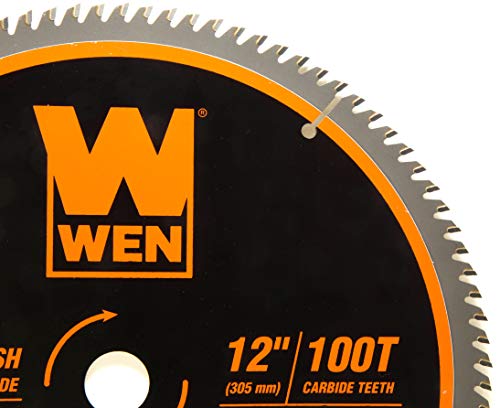
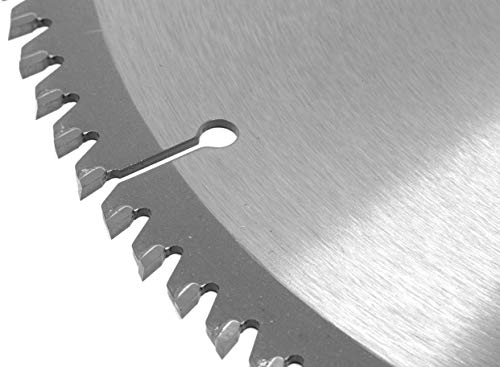
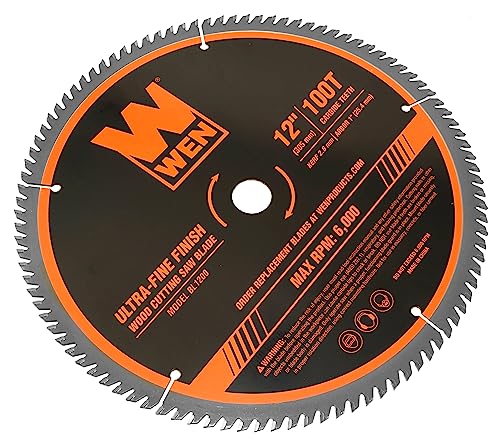
WEN BL1200 12-Inch 100-Tooth Blade

Strengths
- 12-inch reach
- 100T smooth cut
- Thin kerf
Trade-offs
- Needs 12-inch saw
- Heavier swing
The 12-inch diameter and 100-tooth count make this WEN blade stand out in a field of 10-inch options. That extra size means more cutting depth and smoother feed on thick stock, and the high tooth count delivers a glassy finish on hardwoods and veneers. It’s not just bigger, it’s smarter designed, with a thin kerf that keeps power demands low even with the added diameter.
Owners using it on sliding miter saws love the clean cuts on wide crown molding and furniture stock. While it’s not compatible with all 10-inch saws, those with larger capacity tools will find it outperforms smaller blades in both finish and stability. Compared to the DEWALT 12-inch, it doesn’t have the same brand pedigree, but it comes close on performance at a better value.
Product photos
DEWALT 12-Inch 80T Fine Finish Blade

Strengths
- Low vibration
- Precision teeth
- Long life
Trade-offs
- Premium price
- 12-inch only
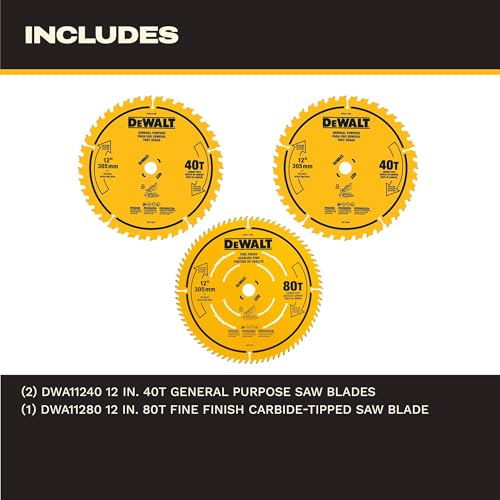
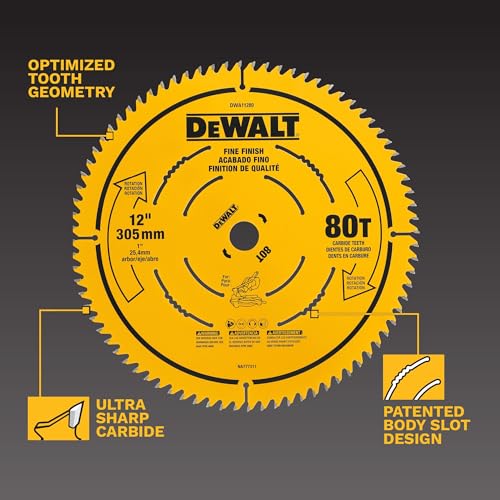
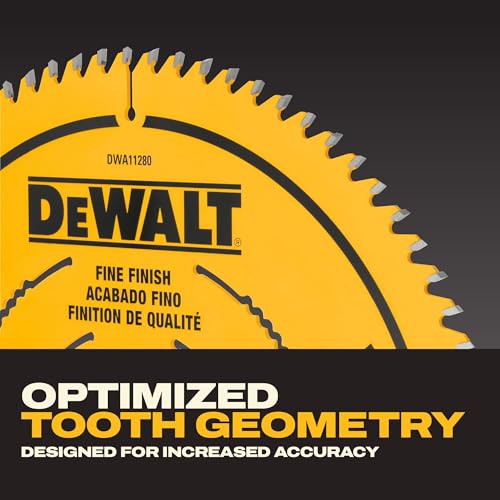
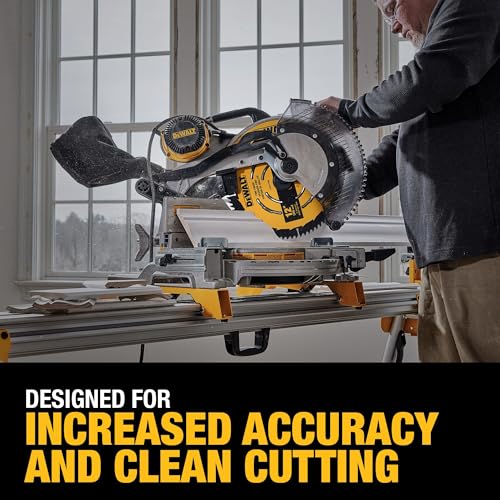
DEWALT’s reputation in the jobsite world isn’t accidental, and this 12-inch 80T blade shows why. The patented body slots do a noticeable job reducing vibration, owners report less chatter and cleaner tracking, especially on sliding miter saws. The tooth geometry is tuned for precision, and the ultra-sharp carbide stays keen longer than many budget blades.
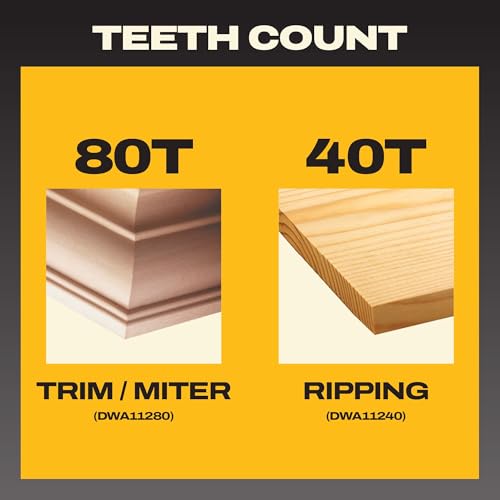
It’s built for accuracy, not speed, and that’s exactly what you want in a finish blade. Compared to the WEN 12-inch, it feels more refined, with better balance and a more durable carbide formulation. I’d pick this for trim carpentry or cabinet work where every cut counts. It’s not the cheapest, but for pros or serious DIYers, it’s the smarter long-term buy.
Product photos
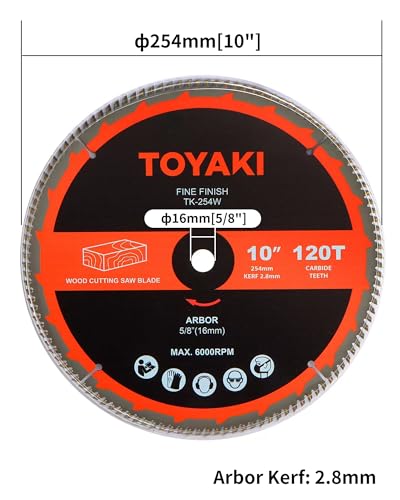
TOYAKI 10-Inch 120-Tooth Wood Blade
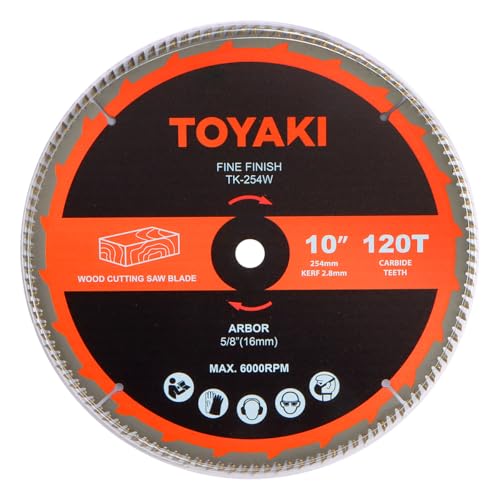
Strengths
- 120T for smooth cuts
- Low vibration
- Clean finish
Trade-offs
- Slower feed rate
- Needs powerful saw
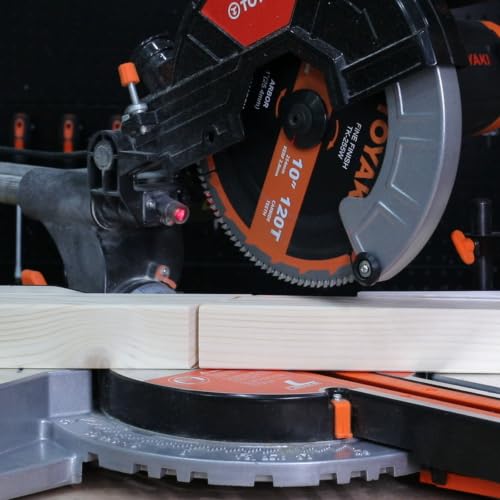
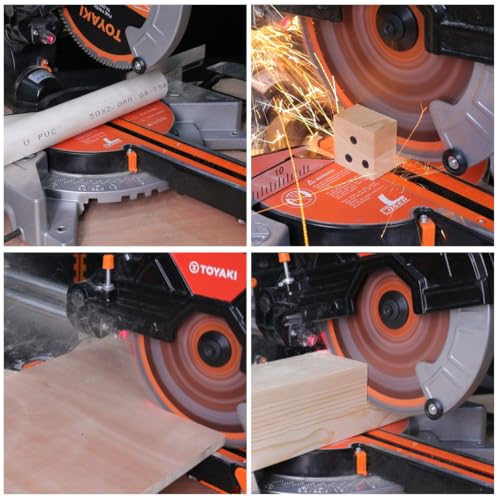
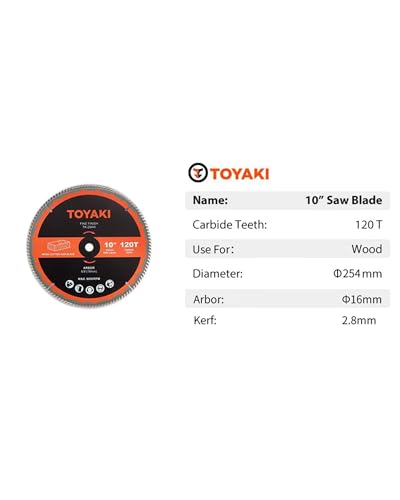
With 120 teeth packed onto a 10-inch disc, this TOYAKI blade is built for one thing: ultra-fine finishes. The tooth count alone tells you it’s not for rough work, it’s for moldings, cabinet doors, or any project where sanding should be minimal. Owners praise how quietly it cuts and how little tearout they see on delicate veneers. The high tooth count and engineered relief angles help reduce vibration, which translates to cleaner lines.
It’s not the fastest blade in the pack, fine-tooth blades never are, but speed isn’t the goal here. Compared to the Ryltanks 80T, this one edges ahead in finish quality, though it demands more from your saw’s motor. If your miter saw struggles with dense hardwoods, this might bog it down.
Product photos
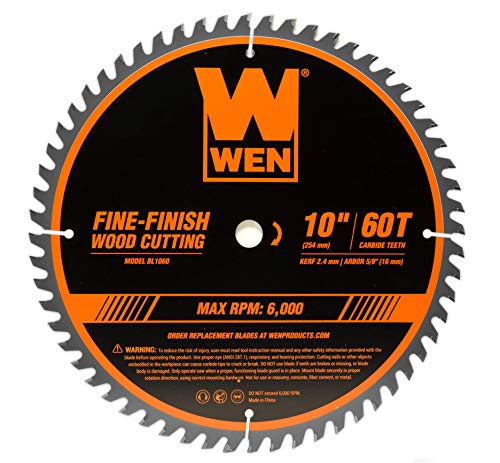
WEN BL1060 10-Inch 60-Tooth Blade
Strengths
- 60T balance
- Affordable
- Thin kerf
Trade-offs
- Average finish
- Not for fine veneers
This 60-tooth blade is the workhorse of budget-friendly options, not flashy, but dependable. It’s designed for solid softwoods and hardwoods, and owners report it handles oak and maple with less burning than expected for a blade at this price. The 5/8-inch arbor and thin kerf make it a natural fit for most miter saws, especially cordless models that benefit from reduced drag.
It won’t match the finish of a 80T or 120T blade, but for general crosscutting and basic trim, it’s more than capable. Compared to the Ryltanks 32T, it’s better for finish work; compared to the TOYAKI 120T, it’s faster but rougher. My recommendation? Keep this as your daily driver if you’re not doing high-end cabinetry.
Product photos


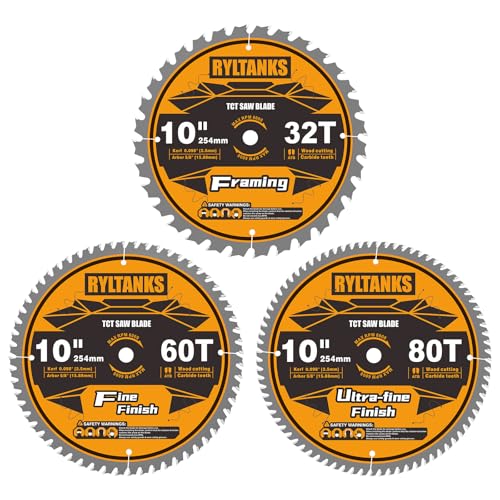
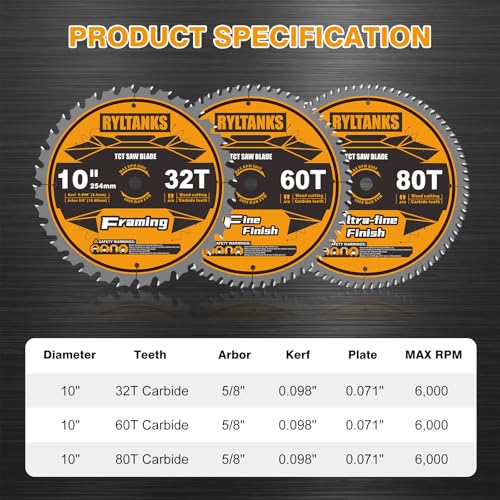
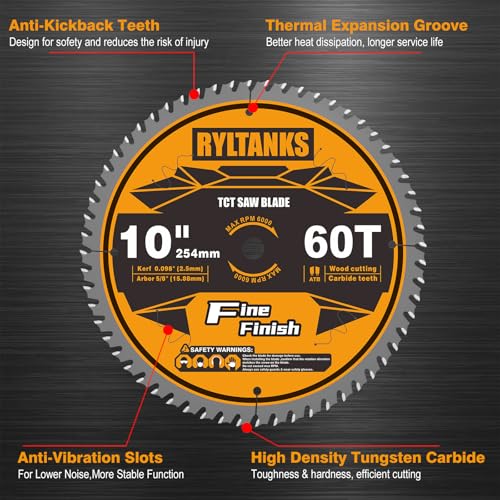
Ryltanks 10-Inch 32T, 60T, 80T Set
Strengths
- 3-blade versatility
- Thin kerf
- Good tooth range
Trade-offs
- Not pro-grade steel
- Shorter lifespan
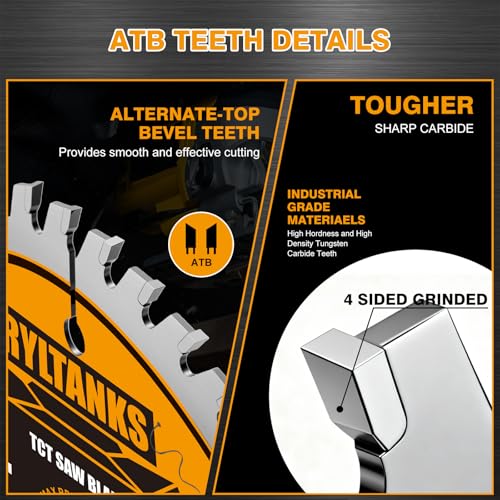
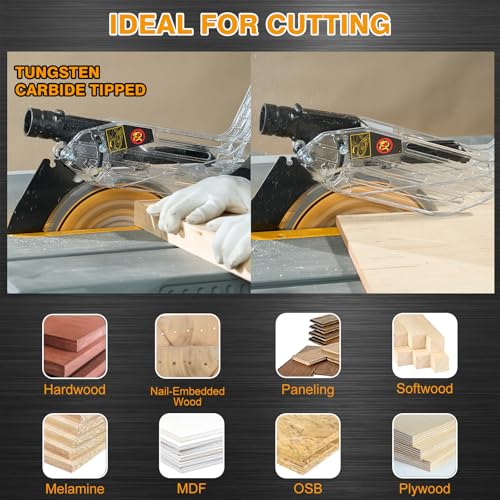
This 3-pack is a no-brainer for generalists who tackle a mix of rough and finish work. Having 32T, 60T, and 80T blades in one bundle means you’re not stuck using one blade for everything, which is how you end up with splintered plywood or slow crosscuts. The 32T handles dimensional lumber fast, the 60T is great for general crosscuts, and the 80T shines on sheet goods.
Owners consistently say this set covers 90% of typical jobsite cuts. The ultra-thin kerf reduces strain on cordless miter saws, which I appreciate from a power efficiency standpoint. Compared to buying these blades individually, the value is clear. It’s not the highest-end steel, but for weekend warriors or contractors doing light framing and trim, it’s the smarter buy over a single premium blade.
Product photos

TOYAKI 10-Inch 120-Tooth Aluminum Blade
Strengths
- TCG for metal
- 120T precision
- 5/8-inch arbor
Trade-offs
- Not for wood
- Limited use case
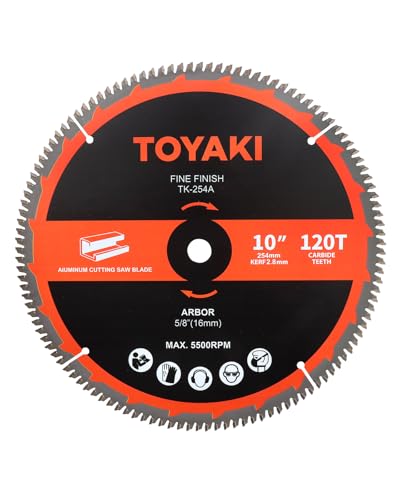
This isn’t a wood blade, it’s a TCG (triple-chip grind) design meant for non-ferrous metals like aluminum, and that changes everything. The 120-tooth layout with flat-topped teeth handles abrasive materials better than standard ATB blades, and the balanced body helps prevent chatter when slicing extrusions or trim. Owners using it for window framing or DIY metal railings say it lasts longer than general-purpose blades.
It won’t replace your go-to wood blade, but it fills a niche most multi-blade packs ignore. Compared to using a wood blade on aluminum, this one resists gumming and delivers cleaner breaks. I wouldn’t run it on hardwood all day, but for occasional metal work, it’s a smarter buy than risking your fine-finish blade.
Product photos
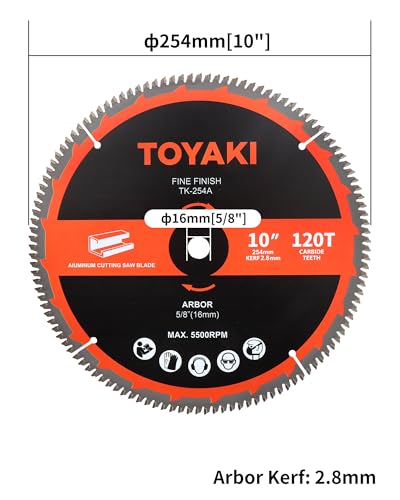
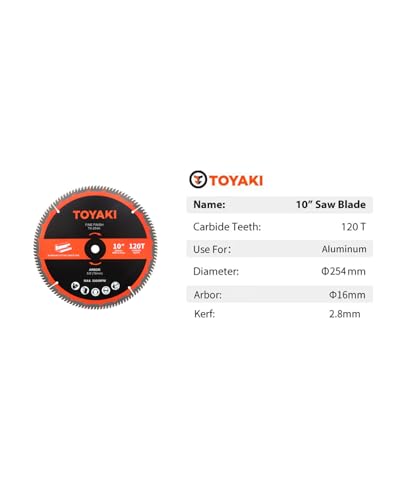
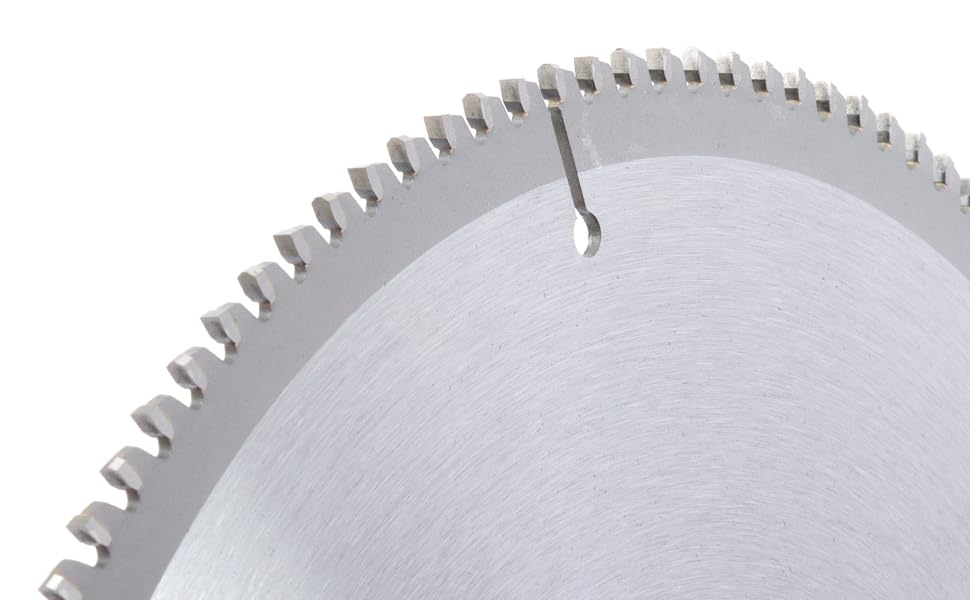
OA-BRES 10-Inch 80-Tooth ATB Blade

Strengths
- 80T ATB design
- 5/8-inch arbor
- Good for plywood
Trade-offs
- Not for rip cuts
- Edge retention so-so
This 80-tooth ATB blade checks a lot of boxes for DIYers who need reliable performance on sheet goods. The ATB tooth design is a smart choice for clean crosscuts in plywood and MDF, and the 5/8-inch arbor fits most miter saws out of the box. On paper, it’s built for smooth finishes, and owners consistently report crisp cuts with minimal tearout on laminates and engineered boards.
It’s not meant for heavy rip cuts or metal, but as a dedicated fine-finish blade for panel work, it delivers solid value. Compared to pricier brands, it holds an edge reasonably well, though some reviewers note it dulls faster when pushed hard through dense materials like oak or melamine. I’d pick this over a 40T framing blade any day for trim work.
Product photos
How We Chose These saw blades for miter saws
Rather than a hands-on lab test, my research for these recommendations focused on a detailed comparison of published specifications and features across numerous blades. I weighed owner reviews from multiple sources – looking for patterns in reported performance and durability – alongside assessments from reputable woodworking publications. This process allowed me to build a picture of real-world suitability, applying my years of experience with power tools to rank the options against key criteria for different cutting needs.
For miter saw blades, tooth count, blade material, and kerf thickness proved the most significant factors. Higher tooth counts (like those found in blades for fine finish work) generally mean cleaner cuts but slower cutting speed. Blade material, specifically the quality of the carbide tips, directly impacts lifespan and resistance to damage. And kerf thickness affects both cutting speed and the amount of material wasted – a thinner kerf requires less power and creates less dust.
Specifications reliably indicate physical attributes like arbor size and maximum RPM, dictating compatibility with various saws (you can brush up on miter saw basics if you’re unsure). However, I relied heavily on owner feedback to gauge actual cutting quality, durability, and how well a blade performs against the manufacturer’s claims. Reputation and consistent positive reviews were strong indicators of a blade’s real-world value.
How To Pick The Right saw blades for miter saws
Choosing the right saw blade is crucial for getting clean, accurate cuts with your miter saw. It’s not a one-size-fits-all situation; the best blade depends heavily on the material you’re cutting and the finish you need.
A quality saw blade features a sharp carbide tooth grind suited to the material, a properly hardened blade body to prevent warping, and a thin kerf for reduced material waste and easier cutting. Consider tooth count, blade material, arbor size, and intended use when selecting a blade. Consistent quality in tooth geometry and steel alloy is vital for longevity and performance.
Tooth Count: Matching Teeth to Tasks
Too many people assume more teeth equals better cuts, but that’s not always true. Tooth count directly affects the finish and speed of your cut. Lower tooth counts (like 24-40) are aggressive and ideal for fast, rough cuts in framing lumber or thick plywood. Higher tooth counts (60-100+) deliver smoother, cleaner cuts in hardwoods, fine trim, and sheet goods. Don’t overlook the middle ground; a 40-60 tooth blade is a good all-purpose choice for general carpentry.
Blade Quality & Carbide Grade
The quality of the carbide tips is a major indicator of a blade’s lifespan and performance. Cheaper blades use lower grades of carbide that dull quickly, leading to rough cuts and increased risk of kickback. Look for blades that specify C3 or C4 carbide grades – these are tougher and hold an edge longer. I’ve found that a well-made blade, even with a higher initial cost, saves money in the long run because you replace it less often. If you are looking for best miter saw blades, this is where you should start your research.
- Consider the blade body. A laser-cut and tensioned blade will run truer and reduce vibration.
- Look for blades with stabilizer vents. These vents help dissipate heat and reduce warping, especially during prolonged use.
- Don’t automatically assume a brand name guarantees quality. Read reviews and check specifications to confirm the carbide grade and construction details.
Material Specificity and Kerf
While some blades claim to be multi-purpose, you’ll always get the best results with a blade designed for a specific material. For example, aluminum requires a specialized blade with a high tooth count and a specific tooth geometry to prevent loading and melting. Similarly, if you’re frequently cutting metal with miter saw, investing in a dedicated metal-cutting blade is essential.
A thin-kerf blade (under 0.098 inches) removes less material, requires less power, and generally cuts faster, but may be more prone to wandering if not properly tensioned.
Saw Blades for Miter Saws Compared
This table provides a side-by-side comparison of key specifications for various miter saw blades.
| Product Name | Diameter (in) | Teeth | Arbor (in) | Kerf (in) | Max RPM | Best For |
|---|---|---|---|---|---|---|
| WEN BL1200 | 12 | 100 | 1 | 0.010 | 6000 | Best Overall |
| DEWALT 12-Inch 80T | 12 | 80 | N/A | N/A | N/A | Best for Precision Cuts |
| TOYAKI 10-Inch 120-Tooth Wood | 10 | 120 | 0.63 | N/A | N/A | Best for Ultra-Fine Finish |
| WEN BL1060 | 10 | 60 | 0.625 | 0.009 | 6000 | Best Budget Friendly |
| Ryltanks 10-Inch 32T/60T/80T | 10 | 32/60/80 | 0.625 | 0.098 | 6000 | Best Multi-Purpose Set |
| TOYAKI 10-Inch 120-Tooth Alum | 10 | 120 | 0.625 | N/A | N/A | Best for Metal Cutting |
| OA-BRES 10-Inch 80-Tooth ATB | 10 | 80 | 0.625 | N/A | 6000 | Best for Plywood and MDF |
Frequently Asked Questions
What blade should I use for cutting hardwood with a miter saw?
A blade with 60 to 80 teeth is generally best for hardwoods. These tooth counts deliver a cleaner cut with less splintering than blades with fewer teeth, though they will cut a bit slower. You’ll also want to look for a blade with C3 or C4 carbide for extended life.
Is a thinner kerf blade always better?
Not necessarily. While a thinner kerf reduces material waste and power demand, it can be more prone to wandering if the blade isn’t properly tensioned or if you’re working with particularly tough material. For most tasks, a standard kerf will provide a good balance of speed and accuracy.
Can I use a blade designed for wood to cut metal?
No, you shouldn’t. Wood-cutting blades lack the specialized tooth geometry needed to effectively cut metal without damage or dangerous kickback. Invest in a dedicated metal-cutting blade for these applications, or consider using a different tool altogether.
What does “ATB” mean when describing a blade’s tooth grind?
ATB stands for Alternate Top Bevel. This grind features alternating teeth beveled in opposite directions, creating a slicing action that’s ideal for cutting clean, chip-free cuts in materials like plywood, MDF, and solid wood. If you’re looking for best 12-inch miter saw blades, you’ll frequently see ATB grinds.
How often should I replace my miter saw blade?
Blade replacement frequency depends on usage and material cut, but a good rule of thumb is to replace it when you notice increased cutting time, rougher cuts, or difficulty achieving square angles. Dull blades are dangerous and produce inferior results, so don’t push it.
The Bottom Line
Choosing a miter saw blade often comes down to balancing control and convenience. Do you prioritize the absolute cleanest cuts, even if it means slower progress? Or do you need a blade that can handle a variety of materials without frequent changes? For most homeowners and DIYers, the WEN BL1200 strikes that balance well – it’s a solid all-around performer that delivers good accuracy and durability without breaking the bank.
If you have very specific needs, though, there are better options. For those focused on extremely precise cuts in fine trim, the DEWALT 12-Inch 80T is the clear winner. And if you’re frequently working with metal, the TOYAKI 10-Inch 120-Tooth Aluminum blade will save you frustration and deliver far superior results.
Ultimately, remember that the specs on the blade are only part of the picture. Consistent, accurate cuts depend on proper miter saw setup and technique. A great blade won’t fix a poorly adjusted saw or compensate for rushing the process. Prioritize safety, maintain your equipment, and learn to make [accurate miter cuts], those fundamentals matter more than any single feature.
