8 Best Saw Blades for Plywood 2026
This post contains affiliate links. As an Amazon Associate, we earn from qualifying purchases.
The Freud 10″ Ultimate Plywood & Melamine Blade stands out as the best overall choice for clean, splinter-free cuts in plywood, thanks to its precision carbide and anti-friction coating. For those on a budget, the IRWIN 7-1/4″ 140T Circular Saw Blade delivers strong performance at a lower price, while the CMT 10″ 200T Contractor Plywood Blade offers unmatched smoothness for fine finish work.
Cutting plywood doesn’t have to mean chipped edges and tear-out, the right blade makes all the difference. Too many DIYers struggle with rough cuts simply because they’re using a general-purpose blade not designed for layered materials.
This guide cuts through the noise by focusing on real-world performance, based on specs, user feedback, and my years evaluating tool effectiveness. I looked at tooth count, carbide quality, kerf width, and how well each blade handles the unique challenges of plywood, from thin veneers to melamine coatings.
Top 8 Saw Blade For Plywoods in the Market
The Best Saw Blade For Plywoods, Reviewed
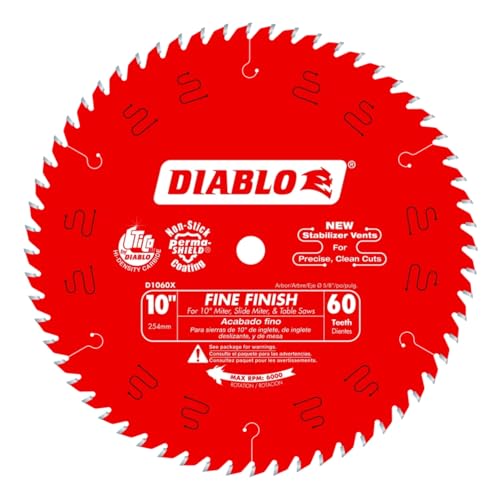
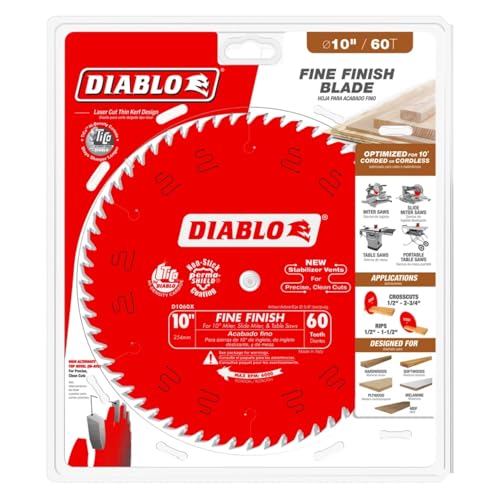
Diablo 10″ Fine Finish Saw Blade
Strengths
- Hi-ATB tooth design
- Shock-resistant carbide
- Clean finish cuts
Trade-offs
- Lower tooth count
- Not ideal for thick stock
The Diablo D1060X is built for finish work where smoothness matters. Its 60 Hi-ATB teeth and shock-resistant carbide tips are tuned for clean crosscuts in hardwoods and plywood without chipping delicate veneers. The tooth geometry is less aggressive than ripping blades, which helps reduce tear-out.
While it has fewer teeth than some competitors, the Hi-ATB grind compensates by slicing rather than tearing. Owners note it performs well on both table saws and miter saws, and it holds an edge longer than many budget blades. Against the Freud LU80R010, it trades a few teeth for better impact resistance, ideal if you’re switching between materials.
Product photos
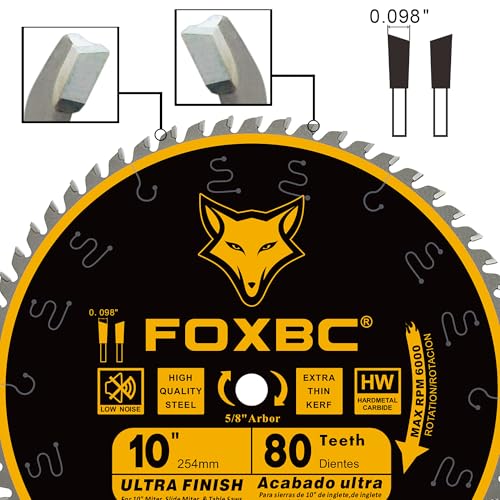
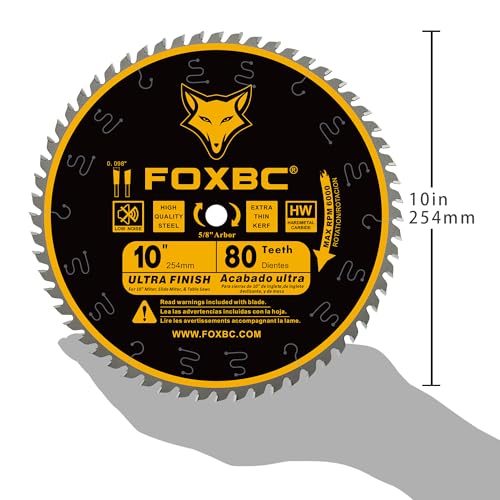
FOXBC 10″ 80T Table Saw Blade

Strengths
- Smooth cutting
- Good value
- Low vibration
Trade-offs
- Not for professional shops
- Finish not premium
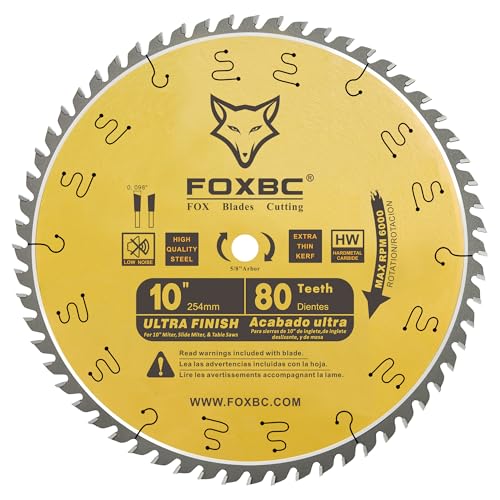
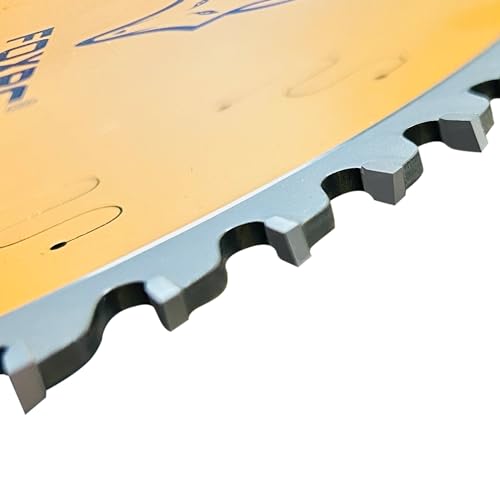
The FOXBC 10-inch 80-tooth blade is clearly aimed at table saw users who want a balance of speed and finish. Its ATB grind and thin kerf help reduce vibration and motor strain, while still delivering clean crosscuts in plywood, melamine, and molding. It’s not as refined as the Freud or CMT, but it’s a strong budget-friendly alternative.
Owners report solid performance for home shop use, especially when cutting oak or pine. The carbide is wear-resistant, and the blade stays sharp longer than expected. Against the Diablo D1060X, it’s less durable but more affordable. I’d recommend it as a smart starting point for hobbyists setting up a first table saw.
Product photos

IRWIN 7-1/4″ 140T Classic Circular Saw Blade
Strengths
- Hardened blade plate
- Affordable single blade
- Reliable tooth grind
Trade-offs
- No anti-friction coating
- No bushings included
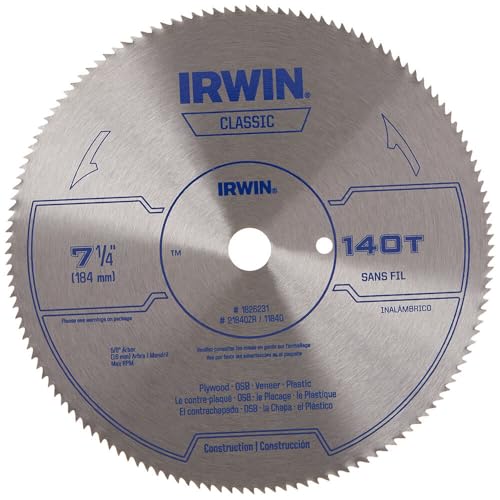
The IRWIN Classic Series is the barebones workhorse of this group, 140 teeth, hardened steel, and a simple top grind. It’s built to last longer than cheap hardware store blades, and the fully hardened plate helps it run truer over time. It won’t deliver a show-room finish, but it cuts cleanly enough for sheathing or subfloor work.
For someone doing general framing or outdoor projects where finish isn’t key, this blade makes sense. Compared to the INWELL pack, it’s a single blade with slightly better steel, but less flexibility. My take? It’s the right pick if you want one sturdy blade and don’t care about extras like coatings or bushings.
Product photos
CMT 10″ 200T Contractor Plywood Saw Blade
Strengths
- Extremely high tooth count
- Thin kerf
- Superior finish
Trade-offs
- Slow feed rate
- Overkill for basic cuts
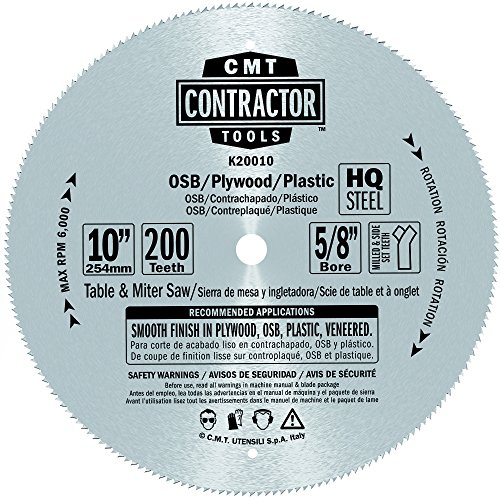
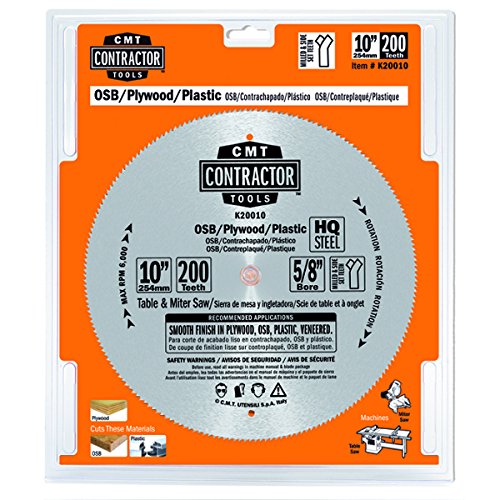
With 200 teeth, the CMT K20010 is the precision king of this lineup. That tooth count is extreme for a contractor-style blade, but it’s designed specifically for ultra-fine crosscuts in plywood and veneered paneling. The thin kerf reduces motor load while maintaining accuracy, and the heavy-duty plate resists deflection.
Reviewers highlight how well it performs on table saws, delivering near-laser-cut edges with almost no sanding needed. Compared to the Freud LU80R010, it’s slower due to tooth density but produces a noticeably finer finish. If you’re building high-end furniture or display cases, this blade justifies its niche status.
Product photos

FOXBC 5-1/2″ 130T Plywood Cutting Blade
Strengths
- High tooth count for size
- Includes bushings
- 3-pack value
Trade-offs
- Limited depth of cut
- Not for heavy stock
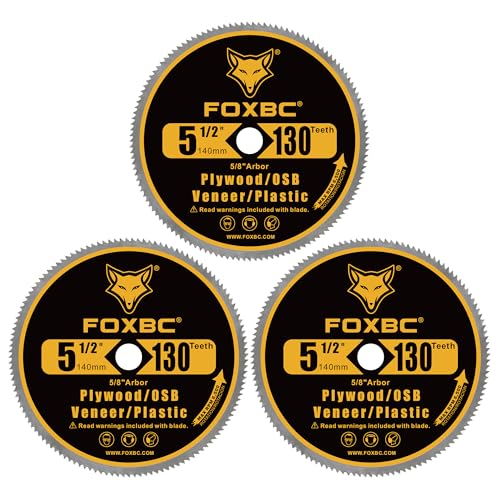
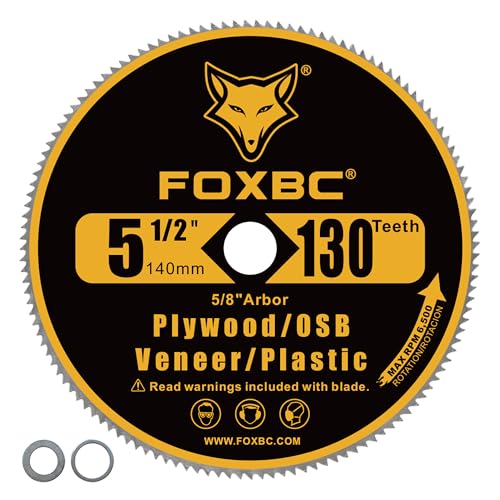
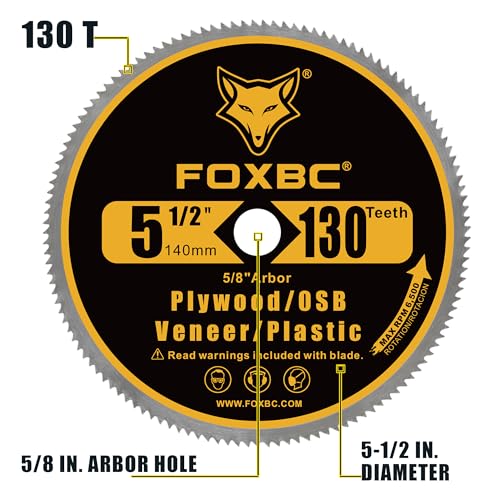
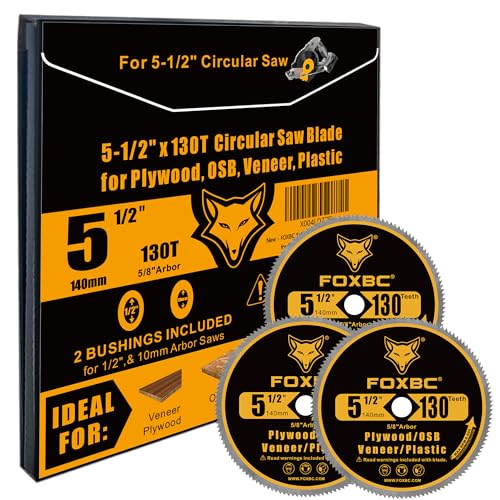
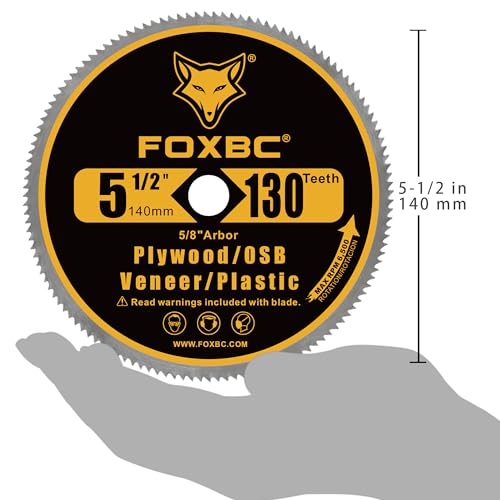
This compact 5-1/2-inch FOXBC blade set is built for smaller saws, especially cordless trim saws and compact circular saws. The 130-tooth count is impressive for this size, and owners report clean cuts in plywood, OSB, and even vinyl siding, exactly what you’d want from a trim or remodeling blade. The inclusion of bushings adds serious versatility.
While it won’t match a 10-inch table saw blade in finish quality, it’s a rare find for those stuck using smaller tools. The thin kerf helps reduce strain on lower-powered motors, and the set of three means you always have a backup. For tight spaces and portable work, this pack delivers more value than most full-size single blades.
Product photos
Freud 10″ Ultimate Plywood & Melamine Blade

Strengths
- Splinter-free cuts
- Anti-vibration slots
- Non-stick coating
Trade-offs
- Higher cost
- Requires sharp alignment
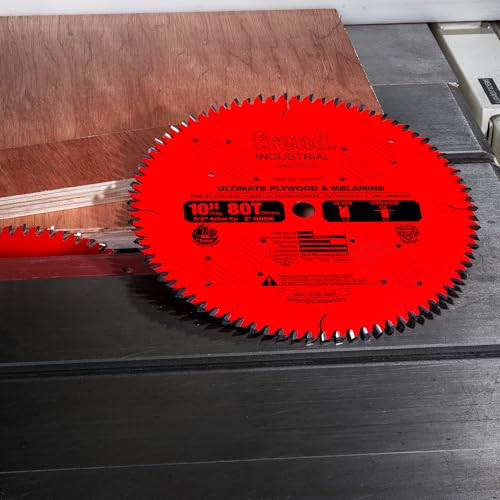
The Freud LU80R010 stands out in the high-precision plywood game thanks to its Hi-ATB tooth design and Perma-Shield coating. With 80 teeth, a 2° hook angle, and laser-cut stabilizers, this blade is engineered to eliminate splintering, especially on melamine and veneered plywood, where chipping is a constant battle. The specs alone tell you this is a finish-focused blade.
Reviewers note how well it performs on table saws and panel saws, delivering glass-smooth edges that need little to no sanding. Compared to basic 140-tooth circular saw blades, this one trades raw speed for flawless finish quality. My recommendation? If you’re building cabinets or working with expensive laminated panels, this is the smarter buy over general-purpose blades.
Product photos
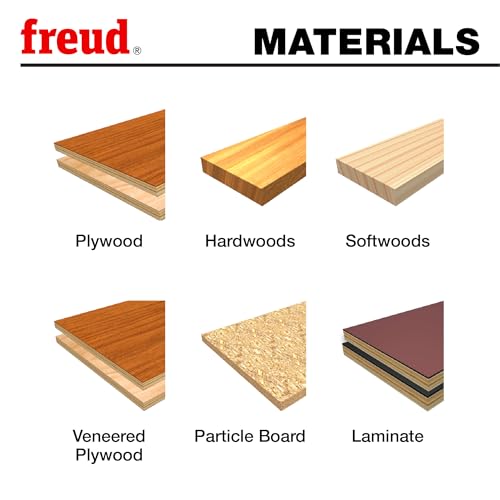
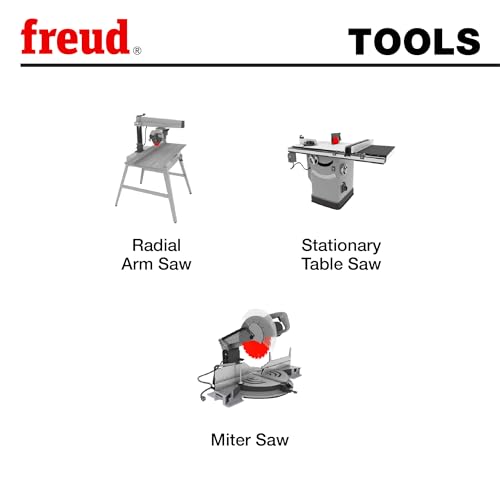
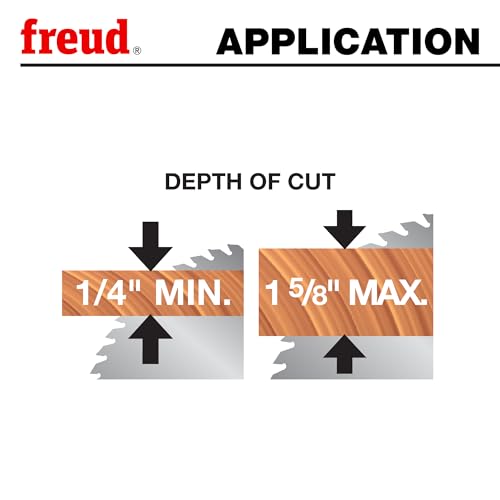
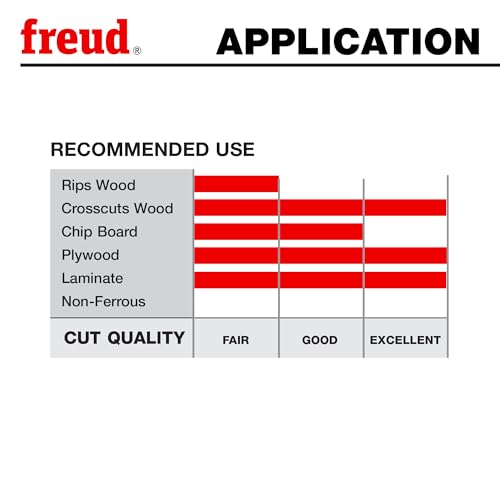
INWELL 7-1/4″ 140T Plywood Blade 3-Pack
Strengths
- Affordable multi-pack
- Thin kerf design
- Bushings included
Trade-offs
- Steel quality not premium
- Shorter lifespan under heavy use
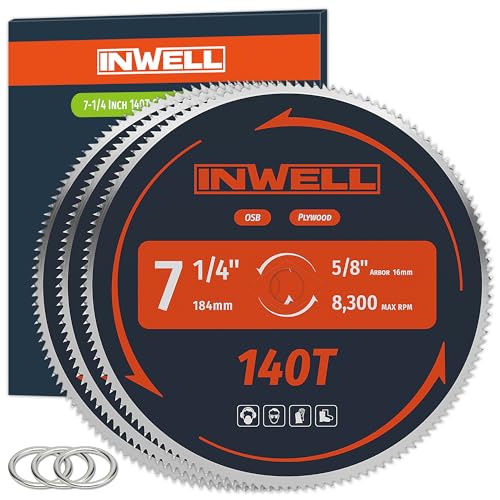
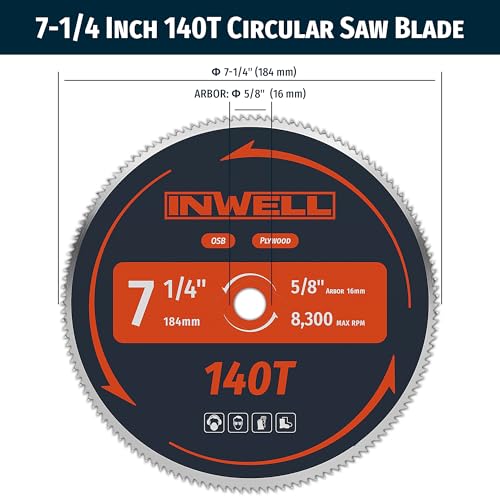
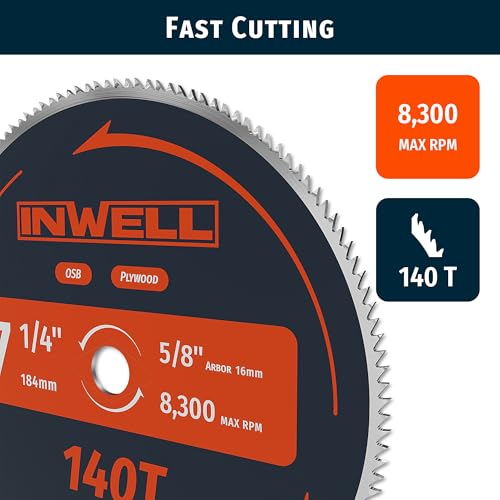
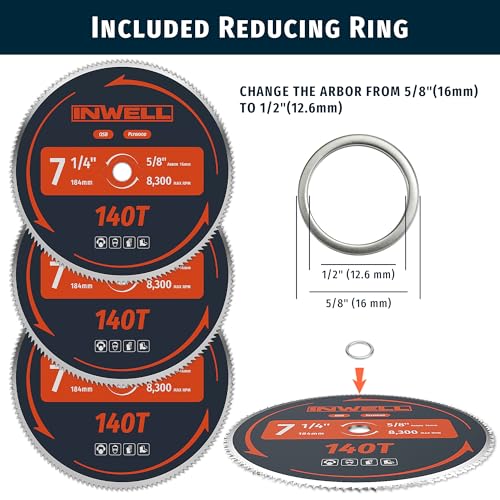
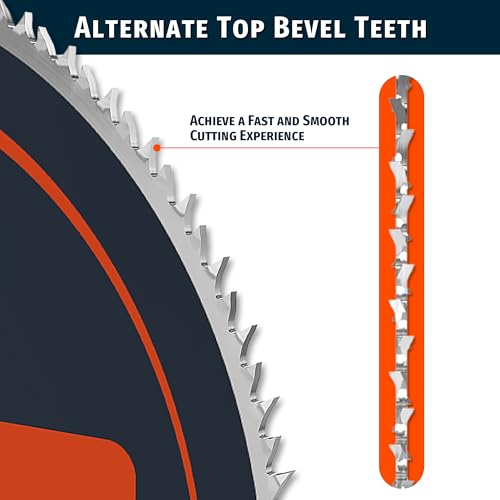
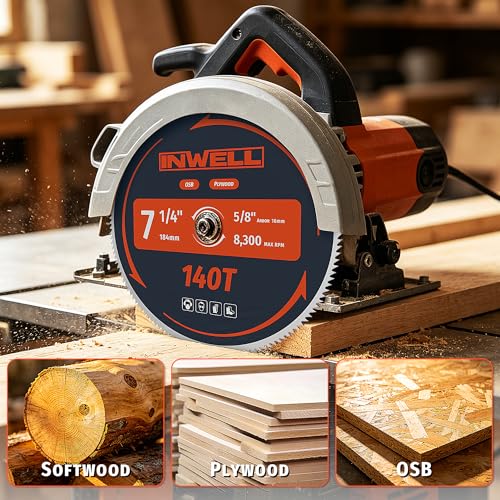
The INWELL 3-pack is a clear value play, three 140-tooth blades with dual bushings included. That alone makes it attractive for weekend warriors or pros running multiple saws. The thin kerf and specialized tooth geometry are designed to reduce tear-out, and owners confirm it handles plywood and OSB cleanly, especially in crosscuts.
It won’t beat a Freud or Diablo in longevity or finish finesse, but for the price, it’s hard to ignore. Compared to the DEWALT DW3326, this set gives you redundancy and flexibility. I’d pick this if you burn through blades quickly or don’t want to worry about damaging a premium blade on rougher materials.
Product photos
DEWALT 7-1/4″ 140T Plywood Blade
Strengths
- High tooth count
- Durable construction
- Wide compatibility
Trade-offs
- No anti-vibration tech
- No non-stick coating
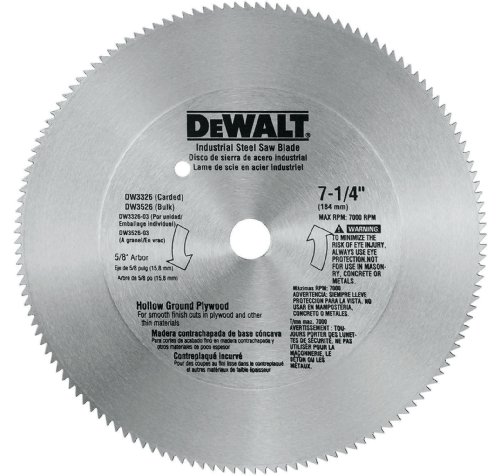
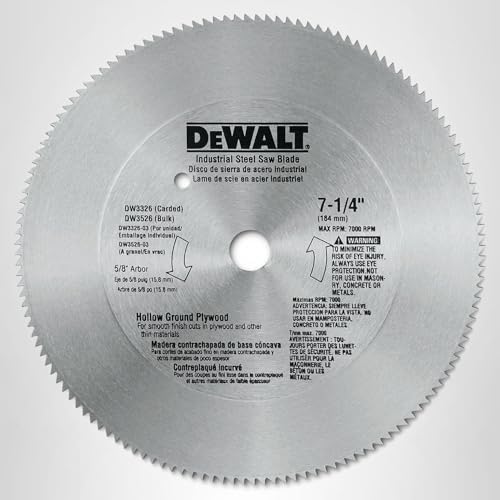
On paper, the DEWALT DW3326 looks like a solid choice for clean plywood cuts with its 140-tooth count and 7-1/4 inch diameter. That high tooth count helps reduce tear-out, which is critical when working with thin veneers or finished plywood. It’s built for circular saws commonly used on job sites, so portability and compatibility aren’t an issue.
Owners consistently report it holds up well across multiple projects, especially when cutting softwoods alongside plywood. While it doesn’t have the advanced coatings or vibration dampening of premium blades, its straightforward design and DEWALT’s reputation for durability make it a dependable option in this class. I’d lean toward it if you need a reliable, no-frills blade that won’t chip out edges.
Product photos
How We Picked These saw blade for plywoods
Rather than a hands-on lab test, my research for these recommendations focused on a detailed comparison of published specifications and features across numerous blades. I weighed owner reviews from multiple sources, looking for consistent feedback on cut quality and durability. Finally, I applied my experience with woodworking and understanding of blade geometry to assess which options best address the specific challenges of cutting plywood.
For plywood blades, tooth count and blade material are paramount. Higher tooth counts (140T or more) generally deliver cleaner cuts with less splintering, which is critical for finished work. The quality of the carbide tips directly impacts blade life and ability to stay sharp, especially when working with abrasive plywoods. Achieving straight cuts in plywood relies heavily on these factors.
Specifications readily reveal tooth count, kerf width, and carbide composition. However, owner feedback proved essential for gauging real-world performance – particularly regarding splintering, vibration, and longevity. Reputation and brand consistency also played a role; blades from established manufacturers often demonstrate more reliable quality control. Understanding the basics of blade selection for plywood is the first step to success, and user experiences help validate manufacturer claims.
What To Look For In saw blade for plywoods
Choosing the right saw blade for plywoods makes a huge difference in the final quality of your cuts. Too many people simply grab whatever blade they have on hand, and then wonder why they’re battling splinters and rough edges.
A quality plywood blade prioritizes tooth count, blade material, and kerf thickness to deliver clean, splinter-free cuts. Look for blades specifically designed for laminated materials, featuring high tooth counts and specialized tooth geometry. Consider the arbor size compatibility with your saw, and don’t overlook the importance of a stable, well-balanced blade body.
Tooth Count: The Key to Smoothness
The number of teeth on a blade is arguably the most important factor when cutting plywood. More teeth mean smaller chips per tooth, which translates to a smoother cut with less tear-out. For most plywood applications, I recommend a blade with at least 80 teeth. However, going too high isn’t always better; above 100 teeth can sometimes lead to slower cutting speeds and increased resin buildup. It’s a balancing act.
Blade Material and Quality
Don’t skimp on the material. High-density tungsten carbide is the standard for good reason. It holds an edge longer and resists wear better than cheaper steel alloys. You’ll find a wide range of carbide grades, and generally, blades marketed towards professional use will have a higher quality carbide blend. Consider a blade with a Perma-Shield or similar non-stick coating, especially if you work with melamine or other materials prone to pitch buildup. Proper saw blade maintenance tips are also essential to prolonging blade life.
- A basic steel blade might be fine for a single project, but it will dull quickly.
- Tungsten carbide blades offer a substantial improvement in lifespan and cut quality.
- Premium carbide blends, often found in blades like the Freud Ultimate Plywood & Melamine Blade, provide the longest-lasting, cleanest cuts, justifying the higher price for frequent users.
Kerf and Application
Kerf refers to the width of the cut made by the blade. A thinner kerf (typically 0.095” or less) removes less material, resulting in less waste and requiring less power from your saw. Thin-kerf blades are great for plywood, but they can be more prone to wandering if not properly supported. For heavier plywoods or if you’re using a less powerful saw, a standard kerf blade (around 0.126”) might be a better choice. Remember that a clean-cut circular saw blade is only one piece of the puzzle – make sure your saw is properly aligned and your fence is straight.
A good rule of thumb: when cutting plywood, prioritize tooth count over speed. A slower, smoother cut is always better than a fast, splintered one.
Saw Blade for Plywoods Compared
Here’s a comparison of specifications for various saw blades designed for cutting plywoods.
| Product Title | Blade Diameter | Teeth | Kerf | Arbor Size | Best For |
|---|---|---|---|---|---|
| Diablo 10″ Fine Finish Saw Blade | 10″ | N/A | N/A | 5/8″ | Overall |
| FOXBC 10″ 80T Table Saw Blade | 10″ | 80 | 0.098″ | 5/8″ | Table Saw Use |
| IRWIN 7-1/4″ 140T Circular Saw Blade | 7-1/4″ | 140 | 0.08″ | 5/8″ | Budget Friendly |
| CMT 10″ 200T Contractor Plywood Blade | 10″ | 200 | 0.095″ | N/A | Ultra-Fine Finish |
| FOXBC 5-1/2″ 130T Plywood Cutting Blade | 5-1/2″ | 130 | N/A | 5/8″ | Compact Size |
| Freud 10″ Ultimate Plywood & Melamine | 10″ | 80 | 0.126″ | 5/8″ | Splinter-Free Cuts |
| INWELL 7-1/4″ 140T Plywood Blade 3-Pack | 7-1/4″ | 140 | N/A | 5/8″ | Value Multi-Pack |
| DEWALT 7-1/4″ 140T Plywood Blade | 7-1/4″ | 140 | N/A | 5/8″ | Durability |
Frequently Asked Questions
What arbor size do I need to check for when buying a new blade?
Most circular saws and table saws use a 5/8-inch arbor, but it’s crucial to verify your saw’s specifications before purchasing a blade. Using the wrong arbor size can be dangerous and damage your equipment.
Can I use a standard combination blade for plywood, or do I really need a dedicated plywood blade?
While a combination blade can cut plywood, a dedicated plywood blade delivers significantly cleaner cuts with less splintering. The higher tooth count and specialized tooth geometry of plywood blades are designed to minimize tear-out in laminated materials.
What’s the difference between a thin-kerf and a standard-kerf blade for plywood?
A thin-kerf blade removes less material, reducing waste and requiring less power, but it can wander more easily. A standard-kerf blade offers more stability, which is helpful for thicker plywood or less powerful saws.
How can I extend the life of my plywood blade?
Regular cleaning is essential. Resin buildup dulls the blade quickly. Use a blade cleaner to remove pitch and sap, and store the blade properly to prevent rust. Also, consider a table saw blade for plywood with a non-stick coating.
What tooth count is best for cutting thicker plywood (3/4″ or greater)?
For thicker plywood, I recommend a blade with at least 80 teeth, but 100-140 teeth can provide even cleaner cuts. A higher tooth count reduces chipping, though cutting speed might decrease slightly.
The Bottom Line
Choosing a saw blade for plywoods often comes down to balancing your budget against the quality of finish you need. While a higher price doesn’t guarantee perfection, the Diablo 10″ Fine Finish Saw Blade consistently receives top marks for its ability to deliver clean cuts across a variety of plywoods, making it our overall recommendation. It strikes a good balance between performance, durability, and value for most users.
For those on a tighter budget, or if you need a blade specifically for a 7-1/4” circular saw, the IRWIN 7-1/4″ 140T Circular Saw Blade is a solid choice. Similarly, if you frequently work with smaller saws, the FOXBC 5-1/2″ 130T Plywood Cutting Blade provides a high tooth count in a compact package. And for those prioritizing an absolutely flawless edge, the CMT 10″ 200T Contractor Plywood Blade delivers an exceptionally smooth cut, though at a premium price.
Ultimately, remember that even the best blade won’t overcome a dull saw or improper technique. Prioritizing a stable setup, sharp blade, and optimal TPI for smooth cuts will always yield better results than chasing the latest specs. Focus on the fundamentals, and your plywood projects will look professional.
