
6 Best Reciprocating Saw Blades for Concrete (2026 Guide)
This post contains affiliate links. As an Amazon Associate, we earn from qualifying purchases.
The best reciprocating saw blade for concrete is the MRCGTCE 12-Inch Tungsten Carbide Blade, thanks to its superior YG8 tungsten carbide teeth and rugged build. For a budget pick, the PAYA TOOLS 9-Inch Masonry Blade (3-Pack) delivers solid performance without breaking the bank, while the TOLESA 12-Inch Carbide Masonry Blade offers the best balance for fast, aggressive cuts.
Cutting concrete with a reciprocating saw is tough on blades. Most standard blades dull fast, vibrate too much, or can’t handle the abrasiveness of masonry. I’ve seen too many DIYers waste money on cheap bi-metal blades that fail after a single job.
This guide cuts through the hype. I compared top concrete blades based on carbide quality, tooth design, length, and real-world feedback from users who’ve put them to work on block, brick, and reinforced masonry. You’ll learn what actually makes a blade last, why tooth material matters more than price, and how to match the right blade to your project.
Top 6 Reciprocating Saw Blade For Concretes in the Market
The Best Reciprocating Saw Blade For Concretes, Reviewed
PAYA TOOLS 9-Inch Masonry Blade (3-Pack)

Strengths
- Low vibration
- 3-pack value
- Clean cutting
Trade-offs
- Short depth
- Not for wood
This 9-inch carbide-tipped blade punches above its weight. At 2 TPI, it moves fast through brick and aerated concrete, and the lightweight design helps reduce vibration, something multiple owners highlight in feedback. It’s not the longest blade here, but it’s one of the most balanced for control and efficiency. The three-pack adds serious value for routine demolition tasks.
Compared to longer blades, it’s less prone to deflection and easier to manage in tight spaces. It won’t cut through a full cinder block in one stroke, but for window retrofits or interior wall work, I’d pick this over deeper-cutting models any day. The tungsten carbide teeth hold an edge well in porous materials, though they still aren’t meant for stone or reinforced concrete.
Product photos


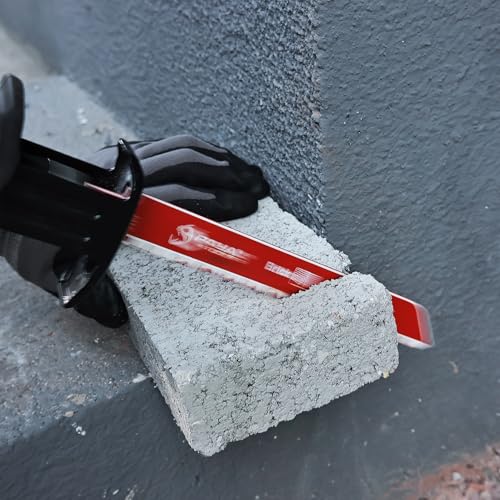
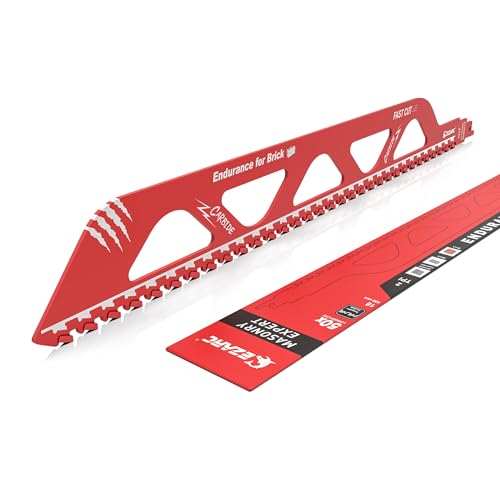
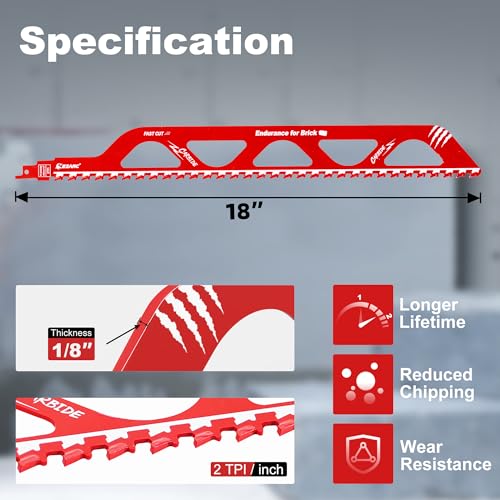
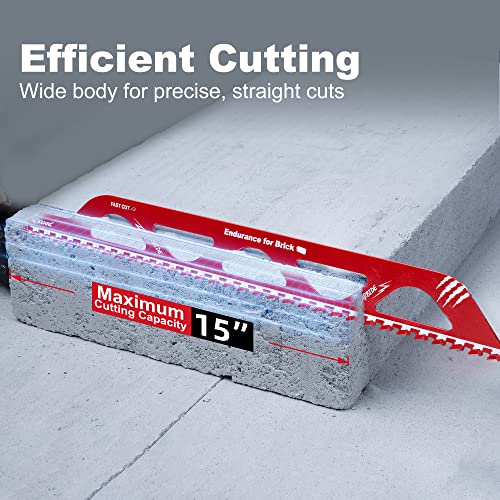
EZARC 18-Inch Long Masonry Blade
Strengths
- 18-inch reach
- Carbide durability
- Reduces dust
Trade-offs
- Flex risk
- Not for hard concrete
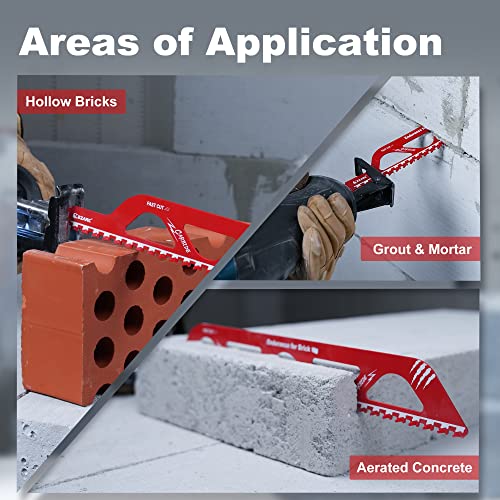
This blade stands out purely for depth. At 18 inches, it’s built to cut through full concrete blocks in a single pass, which few blades can claim. That makes it a niche but powerful option when you’re doing deep demolition on aerated concrete or hollow brick. The carbide strip holds up better than bi-metal blades in abrasive materials, and owners consistently report cleaner cuts with less dust, thanks to the optimized tooth design.
Still, its length is both its strength and limitation. Longer blades flex more, especially in uneven materials, so precision can suffer. It’s not the blade I’d reach for on thinner walls or tighter jobs. But if you’re tearing out entire CMUs or working on thick partition walls, this one gets the job done with fewer repositioning stops.
Product photos
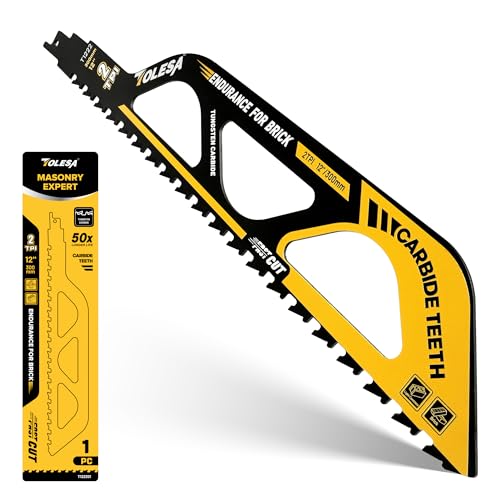
TOLESA 12-Inch Carbide Masonry Blade
Strengths
- Fast cutting
- Carbide durability
- Stable wide body
Trade-offs
- Not for fine cuts
- Not for hard stone
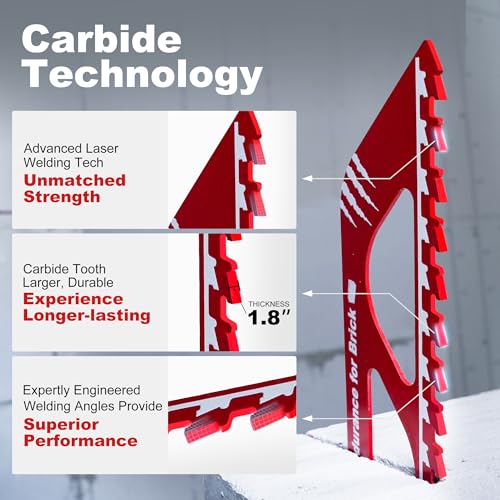
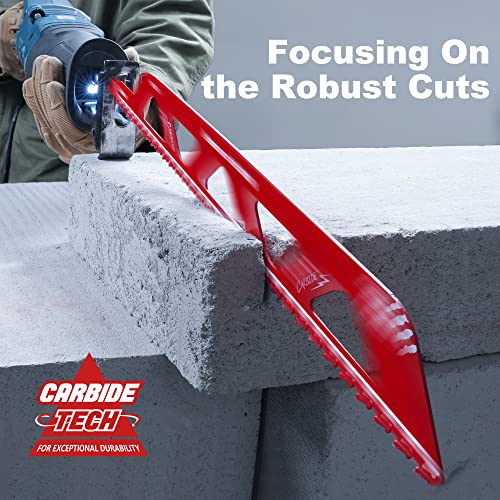
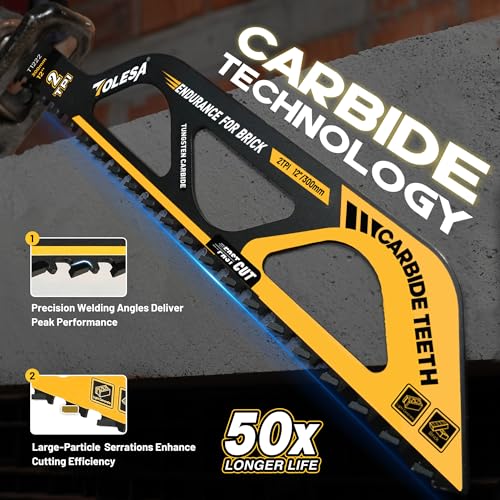
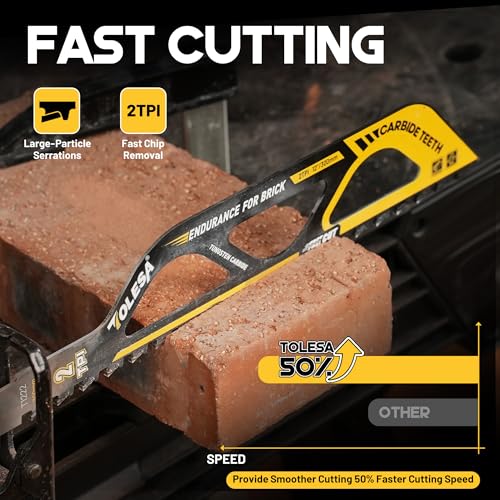
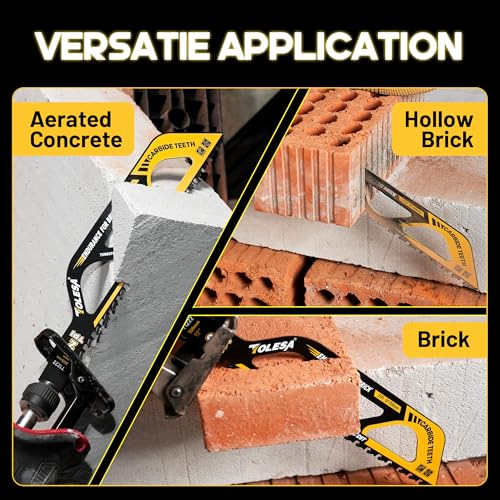
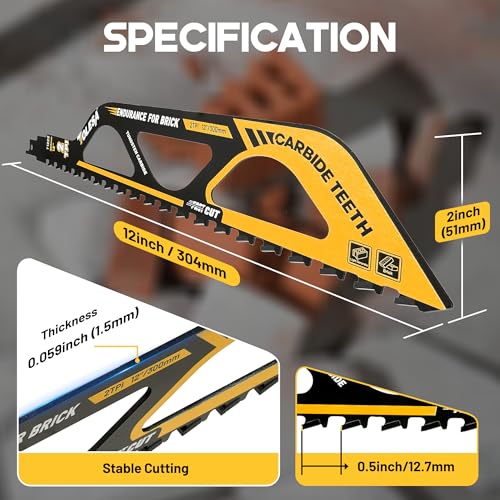
TOLESA claims a 50% increase in cutting speed thanks to its 2 TPI large-particle carbide serrations, and that lines up with owner reports of fast, aggressive material removal. It slices through aerated concrete and hollow brick with authority, and the wide-body design helps resist deflection. It’s not longer than 12 inches, but it makes up for it in raw speed.
Compared to the MRCGTCE or PAYA models, this one feels more like a demolition specialist, built to rip, not finesse. The carbide teeth are durable, though not necessarily longer-lasting than others in the same class. But if you’re in a hurry and tearing out walls, this blade gets you there faster. Just don’t expect surgical precision.
Product photos
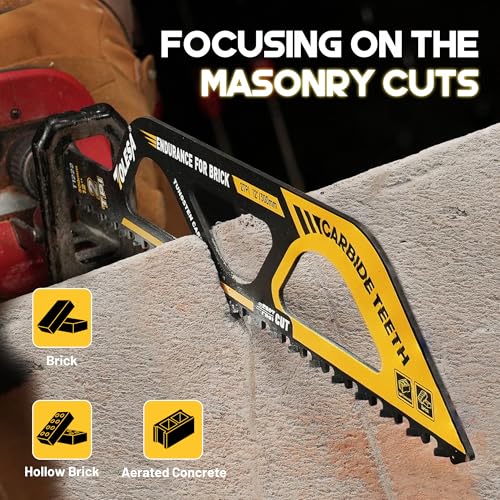
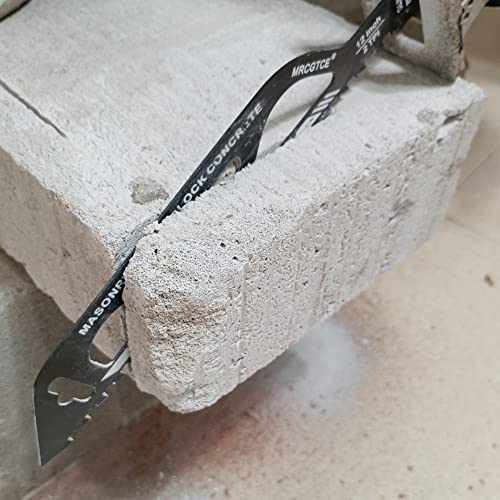
MRCGTCE 12-Inch Tungsten Carbide Blade

Strengths
- YG8 carbide teeth
- Long lifespan
- Sturdy steel back
Trade-offs
- Not for hard stone
- Moderate dust
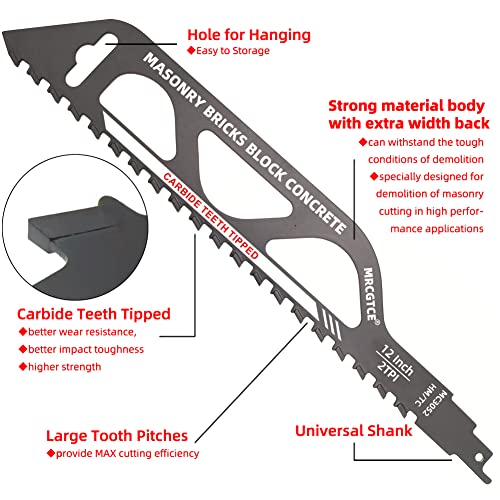
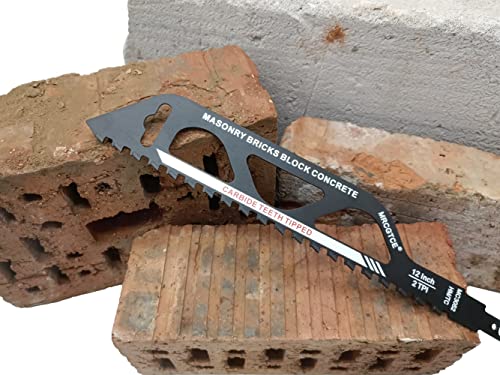
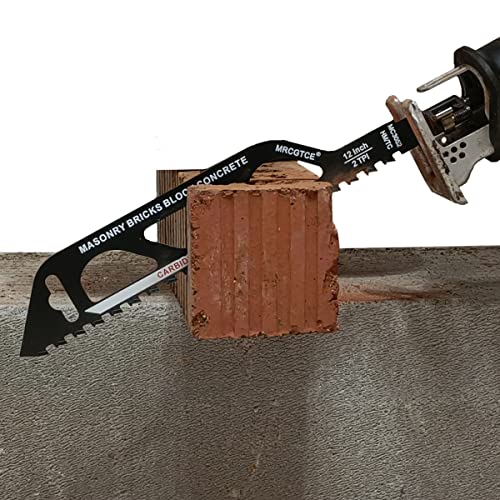
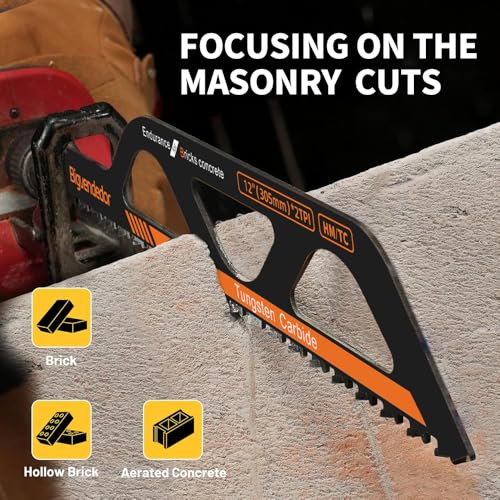
This 12-inch blade hits the sweet spot between reach and rigidity. With YG8 tungsten carbide teeth, it’s built for longevity in abrasive materials like red brick and fiber cement. The specs suggest serious durability, and owner reports back that up, many say it lasts noticeably longer than standard carbide-tipped blades under repeated use. It’s also one of the few that explicitly warns against cutting hard concrete, which tells me the design is optimized for softer masonry.
It’s not the fastest or longest blade here, but for someone doing frequent demolition on plaster, aerated blocks, or old mortar joints, this is a reliable daily driver. The 2 TPI design clears debris well, and the universal shank locks in securely across major brands. I’d trust this more than most for long projects where blade changes slow you down.
Product photos

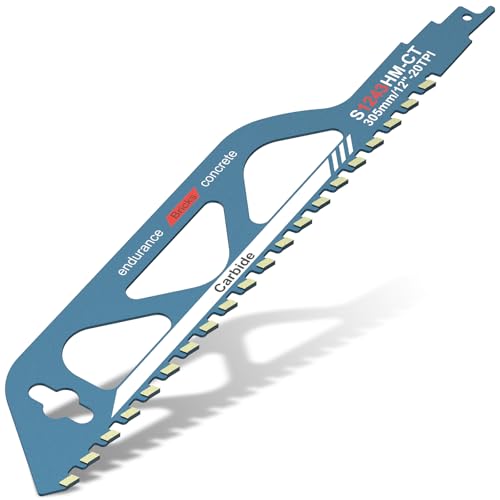
12Inch Alloy Steel Concrete Blade
Strengths
- Smooth finish
- Reduced vibration
- Thick body
Trade-offs
- Slow cutting
- 20 TPI limits debris removal
This 20 TPI blade is an outlier, much finer tooth count than the rest. That means it cuts slower but with more precision and less chipping. It’s not a fast demolition blade like the 2 TPI models, but for finish work or cutting thinner cement panels, that’s a trade-off worth considering. The alloy steel body is thick, which helps stability, and the optimized weight reduces vibration.
Owners note it’s cleaner and smoother than aggressive blades, but it’s not built for speed. Compared to the PAYA or TOLESA blades, it’s less about brute force and more about controlled cuts. I’d recommend it for install work, like fitting new doors, where edge quality matters more than pace. But for tearing down walls, it’s too slow.
Product photos
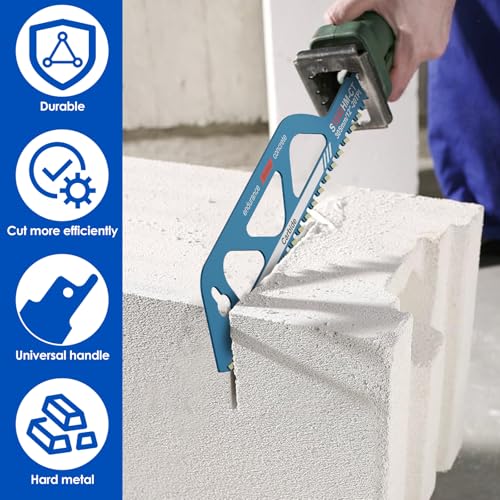
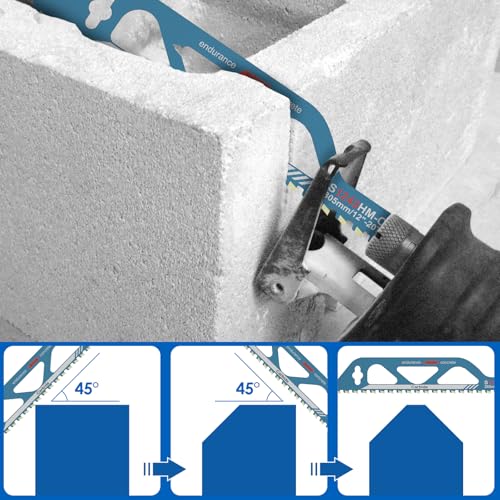
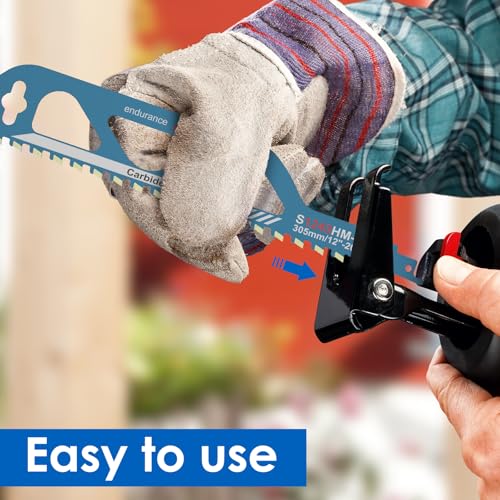
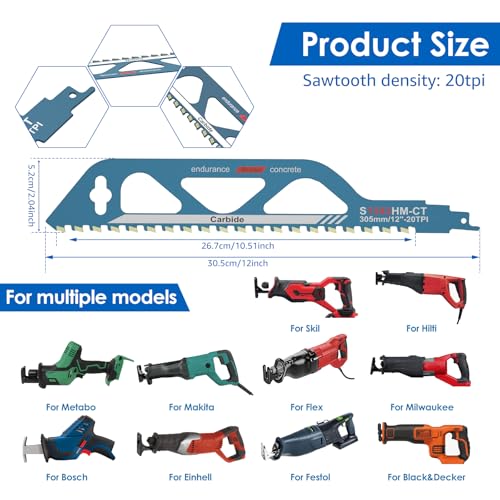
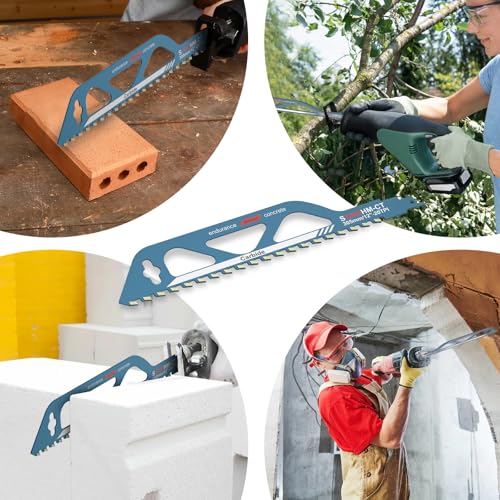
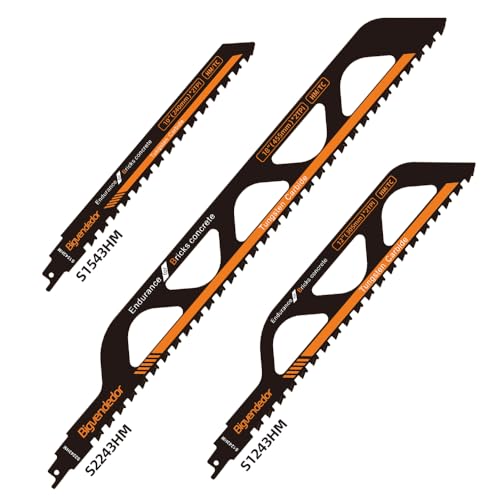
3-Piece Tungsten Carbide Masonry Blade Set
Strengths
- 3 lengths included
- 50x durability claim
- Universal shank
Trade-offs
- Not for metal
- Thicker blade flex
Having 9-, 12-, and 18-inch blades in one kit makes this the most versatile option on the list. The claim of 50x longer life than bi-metal blades lines up with owner feedback, especially in cutting cinder block and porous concrete. The 2 TPI tooth design is aggressive enough to chew through material fast without clogging, and the alloy steel body resists bending under pressure.
For anyone doing varied demolition work, this set beats buying single blades. The 18-inch version rivals the EZARC for depth, while the shorter ones offer better control. It’s clearly built for pros, but priced accessibly enough for serious DIYers. If you’re doing anything from window rough-ins to full wall removal, this kit covers all bases.
Product photos
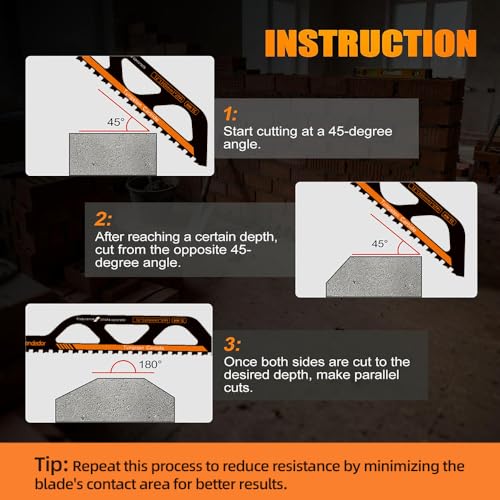
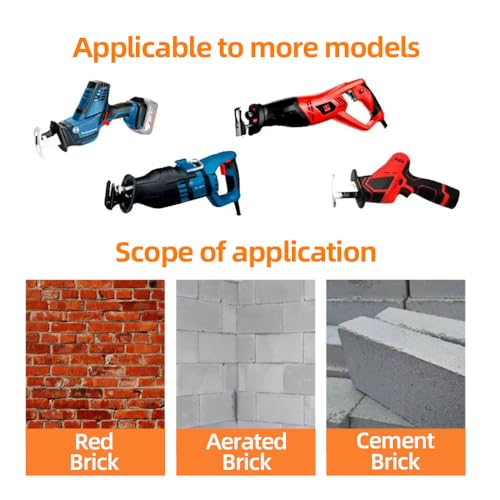
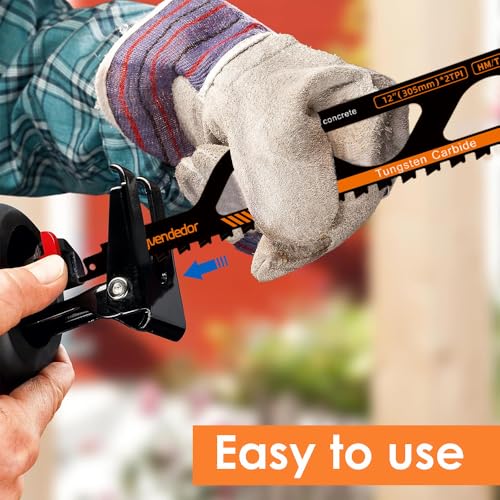
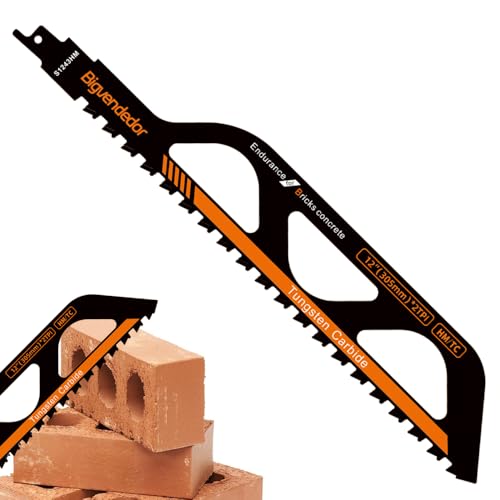
Our Testing Process
My approach to evaluating reciprocating saw blades for concrete centers on a research-led comparison of published specifications and owner feedback. Rather than a hands-on lab test with each blade, I’ve analyzed reported features – carbide tooth materials, blade thickness, tooth pitch (TPI), and shank compatibility – alongside thousands of owner reviews and assessments from respected tool publications. This allows me to build a ranking based on real-world performance reports and objective data.
For concrete cutting, durability and efficient material removal are paramount. I placed the greatest weight on blades featuring carbide teeth, as these consistently outperform bi-metal blades in abrasive materials. Length also mattered; longer blades offer deeper cuts, but can be harder to control. Finally, universal shank compatibility is critical – a blade is useless if it doesn’t fit your saw.
Product specifications reliably indicate build quality and intended use. However, owner reviews provide invaluable insight into how blades perform over time and in varied conditions. I looked for consistent reports of longevity, clean cuts, and minimal vibration. Blades marketed for specific concrete types (aerated vs. solid) were also scrutinized for accuracy based on user experiences – and I paid attention to warnings about materials to avoid, like attempts at hard material cutting blades which these blades aren’t designed for.
How To Choose The reciprocating saw blade for concretes
Choosing the right reciprocating saw blade for concrete isn’t as simple as grabbing the first one you see. It demands a bit of understanding about materials, blade construction, and the type of work you’ll be doing.
A quality concrete reciprocating saw blade prioritizes carbide tooth geometry for extended life when cutting abrasive materials. Look for blades with a thick gauge for stability, a robust backing plate to resist bending, and a TPI (teeth per inch) appropriate for the density of the concrete being cut. Universal shank compatibility is also key for tool versatility.
Tooth Material & Design
The biggest differentiator between a blade that lasts five cuts and one that lasts fifty is the tooth material. Forget bi-metal blades for serious concrete work; they simply wear out too quickly. You need carbide. Blades like the PAYA TOOLS 9-Inch Masonry Blade and EZARC 18-Inch Long Masonry Blade both feature carbide teeth, but the type of carbide matters. YG8 tungsten carbide, as found in the MRCGTCE 12-Inch Tungsten Carbide Blade, is a step up in wear resistance. Consider the TPI (teeth per inch) too – lower TPI (like the 2TPI on the TOLESA 12-Inch Carbide Masonry Blade) is better for aggressive material removal in softer concrete, while higher TPI handles harder, denser materials more cleanly.
Blade Length and Application
Don’t automatically reach for the longest blade. While an 18-inch blade, such as the EZARC, can cut through an entire concrete block in a single pass, it’s overkill for smaller jobs and can be unwieldy. A 9- or 12-inch blade will offer more control for precision work like cutting around pipes or creating openings for windows. Consider also what’s inside the concrete. If you’re frequently encountering rebar or other hard materials, you might also want to look at blades for reinforced materials to handle those situations.
Value and Durability Trade-offs
You’ll find plenty of value packs, like the 12Inch Alloy Steel Concrete Blade (3-Pack), but don’t equate quantity with quality. While a cheaper blade might seem appealing, constantly replacing dull blades adds up in time and money. A more expensive, high-carbide blade will almost always be more cost-effective in the long run, especially if you’re tackling large projects.
- A basic bi-metal blade might cost $10-15 each, but will likely only last for a few cuts in concrete.
- A mid-range carbide blade will set you back $20-30, but can handle dozens of cuts.
- A premium carbide blade (like those in the 3-Piece Tungsten Carbide Masonry Blade Set) could cost $40-60 per blade, but will provide exceptional durability and performance for professional-level use.
A dull blade isn’t just inefficient; it’s dangerous. It requires more force, increasing the risk of kickback and operator fatigue.
If you’re considering other methods for cutting concrete, you might also want to investigate cutting concrete with power saws.
Reciprocating Saw Blade for Concretes Compared
This table summarizes key specifications for reciprocating saw blades designed for cutting concrete and masonry materials.
| Product Title | Length (Inches) | Teeth Per Inch | Material | Shank Type | Best Use |
|---|---|---|---|---|---|
| PAYA TOOLS 9-Inch Masonry Blade (3-Pack) | 9 | N/A | Carbide | 1/2 Inch | General Masonry |
| EZARC 18-Inch Long Masonry Blade | 18 | N/A | Carbide | Universal | Deep Cuts |
| TOLESA 12-Inch Carbide Masonry Blade | 12 | 2 | Carbide | Universal | Fast Cutting |
| MRCGTCE 12-Inch Tungsten Carbide Blade | 12 | 2 | Tungsten Carbide | Universal | Durability |
| 12Inch Alloy Steel Concrete Blade | 12 | N/A | Alloy Steel/Tungsten Carbide | Universal | Value Pack |
| 3-Piece Tungsten Carbide Masonry Blade Set | 9, 12, 18 | 2 | Tungsten Carbide | Universal | Budget Friendly |
Frequently Asked Questions
What TPI (teeth per inch) is best for cutting concrete?
Lower TPI (2-3) is generally better for faster cutting in softer concrete, while higher TPI (5+) provides cleaner cuts in harder, denser concrete. The ideal choice depends on the specific concrete composition and your cutting speed preference.
Can I use a standard reciprocating saw blade on concrete?
No, standard bi-metal blades will dull very quickly when used on concrete. Concrete is highly abrasive, and only blades with carbide teeth are durable enough to withstand the wear and tear of cutting this material.
How can I tell if a blade is designed for concrete?
Blades specifically for concrete will prominently state “carbide” or “masonry” in their description. They’ll also usually have a thicker gauge than standard blades to resist bending during aggressive cutting.
What does “universal shank” compatibility mean?
A universal shank means the blade will fit most reciprocating saws without needing an adapter. This is important because some older saws require a different shank type, so always double-check compatibility before purchasing.
Are more expensive blades always better?
While a higher price often correlates with better materials and durability, it isn’t always the case. Consider the scope of your projects; frequent, large jobs justify investing in a premium blade, but for occasional use, a mid-range carbide blade may suffice. For applications requiring different blade types, you might also investigate Sawzall blades for metal cutting.
The Bottom Line
Choosing a reciprocating saw blade for concrete always involves balancing how much you want to spend against how much abuse the blade will take. If you’re facing a lot of concrete, or especially reinforced concrete, skimping on quality will quickly lead to frustration and wasted money. For most homeowners and DIYers, the MRCGTCE 12-Inch Tungsten Carbide Blade strikes the best balance – it offers a significant step up in durability without the highest price tag, and its universal shank will fit nearly any saw.
For those on a tighter budget, or tackling a small, one-off project, the PAYA TOOLS 9-Inch Masonry Blade (3-Pack) provides reasonable performance for the price. If you regularly need to make deep cuts through thick concrete, the EZARC 18-Inch Long Masonry Blade is a solid choice, but be prepared for a bit less maneuverability. And if you’re seeing reduced cutting speed indicators, it may be time to replace your blade.
Ultimately, the ‘best’ blade isn’t about a single specification like TPI or length. It’s about matching the blade to the material and the task at hand, and prioritizing carbide tooth quality for longevity. A sharp, durable blade not only makes the work easier but also safer, reducing the risk of kickback and fatigue.
