
2 Best PVC Cutting Tools of 2026
This post contains affiliate links. As an Amazon Associate, we earn from qualifying purchases.
The Klein Tools 50063 is the best overall PVC cutting tool for most users, delivering clean cuts with reliable ratcheting action and solid build quality. For tight budgets or occasional use, a basic manual cutter works fine, but if you’re regularly cutting larger or thicker-walled pipe, the General Tools 24” Cable Saw offers unmatched versatility for big jobs.
I’ve seen too many DIYers waste time and effort fighting a cheap or poorly matched PVC cutter. A ragged cut can lead to weak joints, leaks, or wasted materials, problems that show up later and cost more to fix. The right tool makes a real difference in speed, accuracy, and confidence.
This guide cuts through the marketing and focuses on what actually matters: blade performance, cutting capacity, and real-world usability. My picks are based on specs, owner feedback, and years of working with tools that need to perform under pressure, so you can choose with clarity and get the job done right.
Top 2 Pvc Cutting Tools in the Market
The Best Pvc Cutting Tools, Reviewed
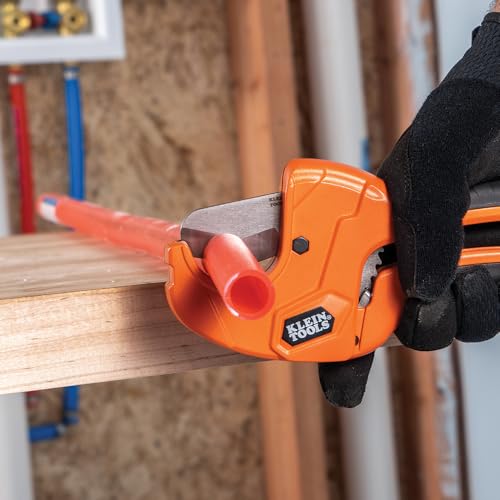
Klein Tools 50063 Ratcheting Cutter

Strengths
- Ratcheting action
- One-handed use
- Replaceable blades
Trade-offs
- Limited to 1-1/4-inch max
- Not for metal pipes
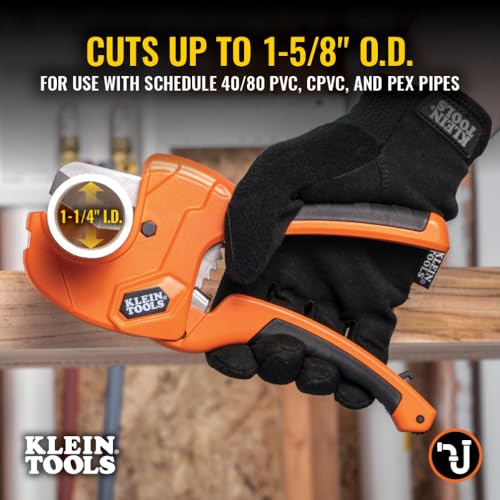
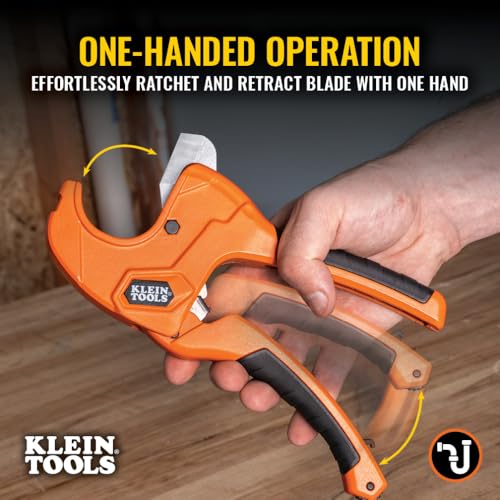
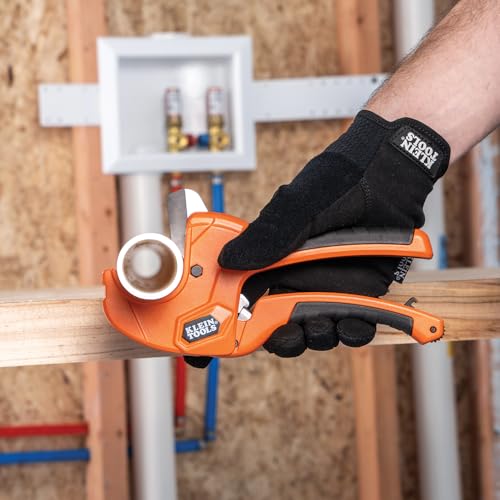
The Klein Tools 50063 stands out in the ratcheting PVC cutter class for its reliable blade action and one-handed operation, which makes it a favorite among users working in tight spots or overhead. On paper, its ability to handle up to 1-1/4-inch I.D. PVC, CPVC, and PEX lines up well with typical residential plumbing needs, and owners consistently report clean, square cuts without deformation, critical for proper fitting seals.
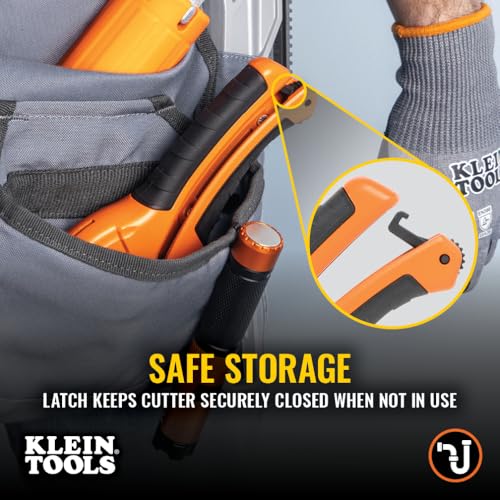
What really sets it apart from basic manual cutters is the ratcheting mechanism, which increases cutting force with each squeeze and reduces hand fatigue over multiple cuts. Compared to cheaper models that bind or slip, this one holds alignment well, especially on schedule 40 and 80 PVC. The soft-grip handles aren’t just for show, they make a noticeable difference during extended use, and the latch closure keeps the tool secure in a bag or belt holster.
Product photos
General Tools Cable Saw 24″

Strengths
- Cuts up to 8-inch pipes
- Works in tight spaces
- Folds for storage
Trade-offs
- Slower than ratcheting cutters
- Requires two hands
When you’re dealing with pipes over 2 inches, especially in retrofit or HVAC scenarios, this cable saw becomes a necessity rather than a novelty. The 24-inch stainless steel serrated wire can handle up to 8-inch diameter pipes, which puts it in a different league than ratcheting cutters like the Klein 50063. Reviewers often highlight its usefulness when cutting PVC or ABS that’s flush against a wall or joist, where a traditional cutter won’t fit.
It’s not the fastest tool for small jobs, but in confined or awkward spaces, the flexible wire design wins. Owners praise its durability and the fact that it requires no adjustments between pipe sizes. While it demands a back-and-forth motion like a pruning saw, the ergonomic handles provide decent use. It’s not for precision work, but for demolition, field mods, or large drainage lines, it’s hard to beat.
Product photos


How We Evaluated pvc cutting tools
Rather than a hands-on lab test, my research focused on comparing published specifications and features across various PVC cutting tools. I weighed owner reviews from multiple sources – including home improvement retailers and tool-focused forums – alongside assessments from reputable sites covering plumbing and construction. This allowed me to build a ranking based on real-world usability and reported performance, applying my experience with tools and materials over the years.
For PVC cutters, cutting capacity and blade durability are paramount. A tool that can cleanly handle common pipe sizes (like Schedule 40 and 80) without frequent blade changes will save time and frustration. I also heavily considered the ergonomics and grip, as comfortable handling is crucial for accurate, repeated cuts, particularly in awkward positions.
Specifications reliably indicate maximum cutting capacity and the types of materials a tool can handle. However, owner feedback proved essential for judging long-term durability and the quality of the cut itself. Reports on blade sharpness, ratcheting mechanism smoothness, and overall build quality heavily influenced my assessment. You can find similar considerations when selecting blades for plexiglass.
How To Pick The Right pvc cutting tools
I’ve seen a lot of folks struggle with getting clean, square cuts on PVC, and frankly, many tools marketed for the job just don’t deliver. It’s a surprisingly nuanced category.
A quality PVC cutting tool delivers clean, burr-free cuts consistently. Look for models with sharp, replaceable blades (where applicable), robust ratcheting mechanisms if you opt for a ratchet-style cutter, and sufficient capacity for the pipe diameters you anticipate working with. Consider the material being cut (schedule 40 vs. schedule 80 PVC, CPVC, PEX) and confirm the tool is rated for it.
Blade Quality and Replaceability
The cutting action is everything, and that starts with the blade. Don’t assume all “PVC cutters” use equally effective blades. Some use relatively soft alloys that dull quickly, particularly with thicker-walled schedule 80 PVC. I generally favor tools where blades are easily replaceable. It’s more economical long-term, and a fresh blade makes all the difference. While ratchet pipe cutters are popular, a dedicated blade replacement system can extend the life of even simpler, manual options.
Ratcheting Mechanisms and Ergonomics
If you go with a ratcheting cutter – and many plumbers and DIYers do – pay close attention to the mechanism’s smoothness and strength. A jerky, flimsy ratchet will fight you with every cut. Look for models with a solid locking mechanism to prevent accidental blade release, too. Comfort matters, especially on larger projects. Soft-grip handles, like those found on the Klein Tools 50063, can significantly reduce hand fatigue.
- A basic, non-ratcheting cutter is fine for occasional jobs and smaller diameter pipe.
- Ratcheting cutters excel at larger diameter pipe (1-inch and up) and repetitive cuts, saving significant effort.
- For exceptionally large pipes (over 4 inches), or working in extremely tight spaces, consider a cable saw like the General Tools 24” model. These allow for cuts where traditional tools simply won’t fit, but require more technique to achieve a perfectly square result.
Capacity and Material Compatibility
Don’t buy a cutter that almost fits the largest pipe you anticipate needing to cut. Always factor in a bit of headroom. Check the tool’s specifications for maximum pipe diameter and wall thickness. Furthermore, confirm it’s suitable for the type of plastic you’ll be working with. Many cutters handle standard schedule 40 PVC fine, but fewer are rated for the thicker walls of schedule 80, or for CPVC and PEX. Speaking of other tools, knowing safe blade change procedure is crucial if you’re also using power tools for PVC projects – even if you’re mainly focused on cutting plastic.
A good rule of thumb: if you frequently work with both schedule 40 and schedule 80 PVC, invest in a tool specifically rated for schedule 80. It’ll handle both with ease and last longer.
PVC Cutting Tools Compared
Here’s a detailed comparison of the specifications for each PVC cutting tool to help you make an informed decision.
| Product | Max Pipe Diameter (in) | Material | Ratcheting | Blade Type | Best For |
|---|---|---|---|---|---|
| Klein Tools 50063 | 1.25 | PVC, CPVC, PEX | Yes | Ratcheting Blade | General Purpose |
| General Tools Cable Saw 24″ | 8 | Stainless Steel | No | Cable | Large Diameter Pipes |
Frequently Asked Questions
What’s the difference between schedule 40 and schedule 80 PVC, and does it matter for cutting?
Yes, it matters significantly. Schedule 80 PVC has thicker walls and requires a cutter with sufficient capacity and a blade strong enough to handle the increased density. Using a tool only rated for schedule 40 on schedule 80 will quickly dull the blade and may result in a ragged cut.
Can I use a regular utility knife to cut PVC pipe?
While possible for very small diameter pipes, it’s not recommended. Utility knife blades aren’t designed for the consistent pressure needed for clean PVC cuts, and attempting it is dangerous–the blade can slip, or the pipe can crack unevenly.
Are ratchet PVC cutters really worth the extra cost?
Generally, yes, particularly if you frequently cut PVC or work with larger diameter pipes. The ratcheting mechanism significantly reduces hand fatigue and provides more controlled, consistent cuts, making it easier to achieve a square edge.
What’s the best way to deal with burrs after cutting PVC?
A deburring tool, specifically designed for plastic pipes, is the quickest and most effective solution. You can also carefully use a utility knife or fine-grit sandpaper to remove small burrs, but a deburring tool provides a cleaner, more consistent result and reduces the risk of damaging the pipe. If you need precise cuts for fitting, consider a jigsaw for plastic pipes for more controlled shaping.
What should I do with old or dull PVC cutter blades?
Dispose of them carefully. PVC cutter blades are sharp and should be treated as hazardous waste. Wrap them securely in cardboard or tape before discarding them to prevent injuries to sanitation workers. Replacing blades regularly is key to maintaining clean cuts.
The Bottom Line
Choosing a PVC cutter often comes down to balancing initial cost with long-term convenience. While a basic cutter can handle occasional jobs, the Klein Tools 50063 really stands out as the best all-around choice. It offers a robust ratcheting mechanism, handles a variety of materials, and delivers clean cuts consistently – saving you both time and potential frustration on larger projects.
For those on a tighter budget, or primarily working with smaller diameter pipe, a simpler manual cutter will suffice. However, if you frequently tackle larger diameter pipes or need to make repetitive cuts, the General Tools Cable Saw 24” is the way to go. It excels in situations where traditional cutters can’t reach, and with a bit of practice, provides effective, if slightly more involved, cutting action.
Ultimately, the best PVC cutting tool isn’t about fancy features or a high price tag. It’s about having a sharp blade, a comfortable grip, and a tool that’s appropriate for the size and type of pipe you’re working with. Don’t overlook the importance of safe wood cutting methods when considering tools for other projects either; safety should always be the first priority.
