
8 Best Mitre Saws of 2026
This post contains affiliate links. As an Amazon Associate, we earn from qualifying purchases.
The DEWALT DWS780 stands out as the best overall mitre saw for its precision, durability, and smooth sliding action, especially for serious DIYers and pros. If you’re watching your budget, the SKIL MS6306-00 delivers solid performance for the price, while the DEWALT DWS779 offers excellent versatility with its dual bevel design and wide cutting capacity.
Most people shopping for a mitre saw are trying to solve a simple problem: making clean, accurate crosscuts and angled joints without frustration or wasted material. But with so many models boasting big specs and fancy features, it’s easy to end up with a saw that’s either underpowered, overly complicated, or just not suited to your typical projects.
This guide cuts through the noise. I compared the top models based on specs, owner feedback, and real-world usability, focusing on what actually matters, accuracy, cutting capacity, ease of use, and long-term reliability, so you can pick the right saw for your workshop and confidence in your cuts.
Top 8 Mitre Saws in the Market
The Best Mitre Saws, Reviewed
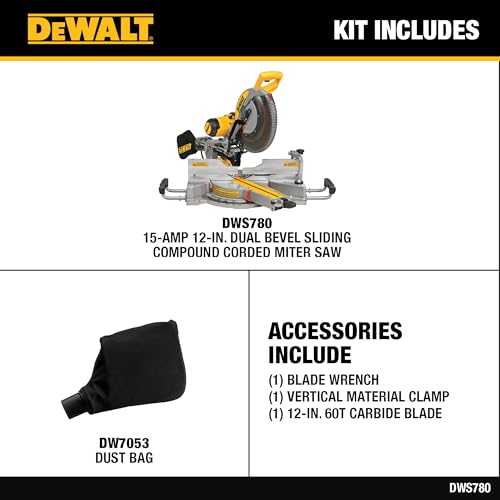
DEWALT DWS780 12″ Double Bevel Sliding Miter Saw

Strengths
- 15-amp motor
- XPS LED shadow line
- 75%+ dust capture
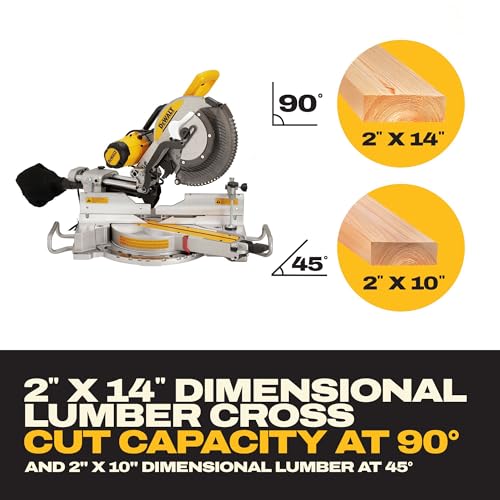
- 2×14 cutting capacity
- Dual steel rails
Trade-offs
- 58 lbs, not ultra-portable
- Slight learning curve on fence adjustments
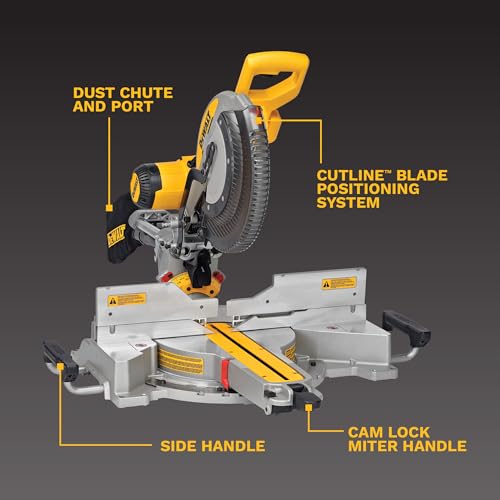
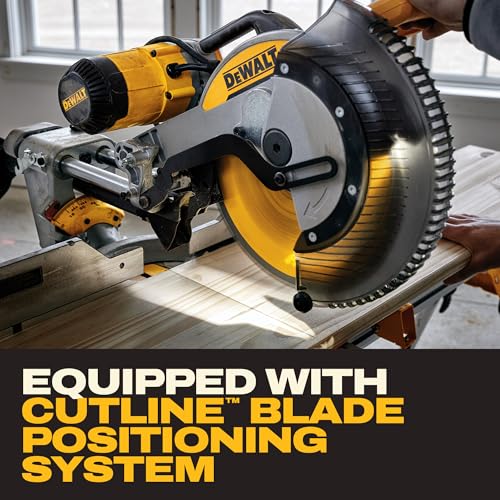
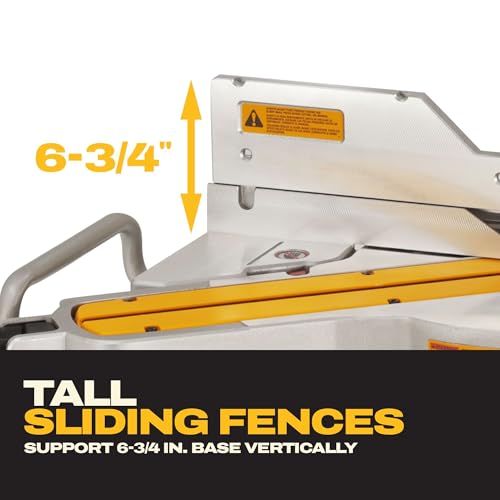
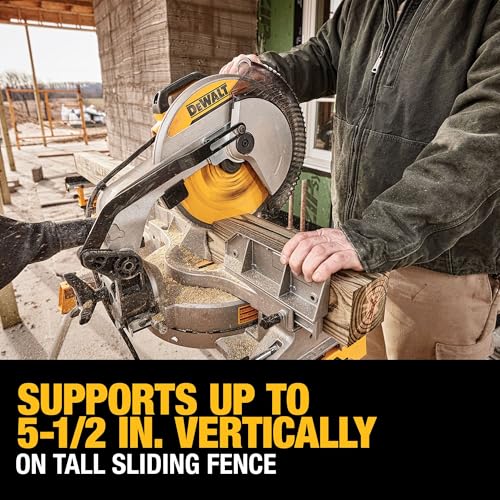
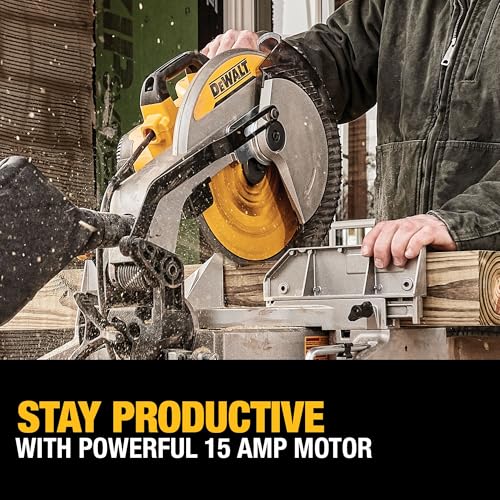
This is the kind of saw that makes you understand why DEWALT sits at the top of so many pro toolboxes. On paper, the DWS780 throws everything you want into one package, a robust 15-amp motor, sliding fences that handle 7-1/2-inch crown molding, and a cutting capacity that reaches 2×14 at 90°. The XPS LED shadow line is a standout, giving a crisp cutline preview without the glare or battery drain of traditional lasers. Owners consistently report that the shadow line stays reliable over time, which matters when you’re lining up trim on a low-light job site.
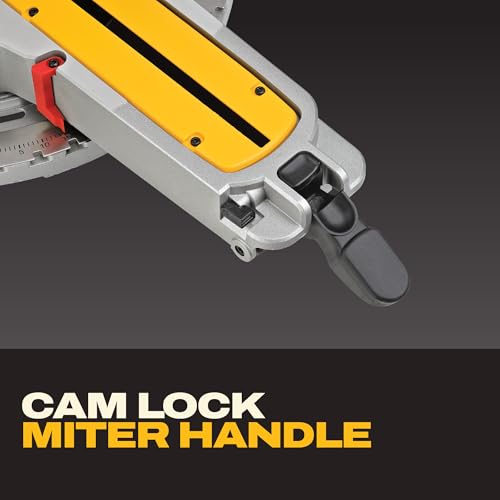
The dust collection system claims over 75% capture, and while no miter saw fully delivers a clean floor, reviewers note this one comes closer than most. The dual steel rails and ball bearings keep the glide smooth and accurate, and the cam lock miter handle is a small touch that pays off in speed when switching angles. It’s heavier than some at 58 lbs, but that weight adds stability. I’d pick this over the DWS779 for its slightly better feature set and proven track record in contractor environments.
Product photos

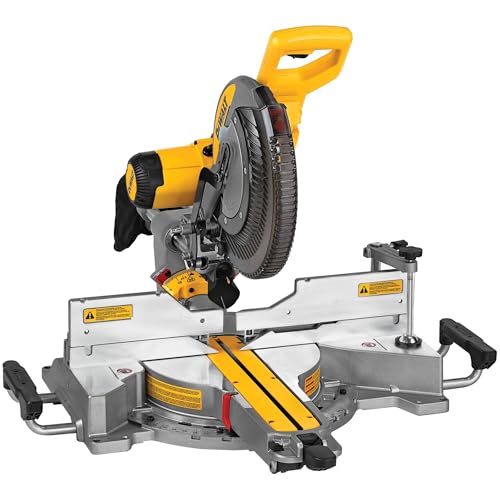
DEWALT DWS779 12″ Double Bevel Sliding Miter Saw
Strengths
- 15-amp motor
- 75%+ dust capture
- 2×14 cutting capacity
- Dual steel rails
- Bevels left and right
Trade-offs
- No shadow line system
- Slightly heavier than rivals
- Fewer miter detents
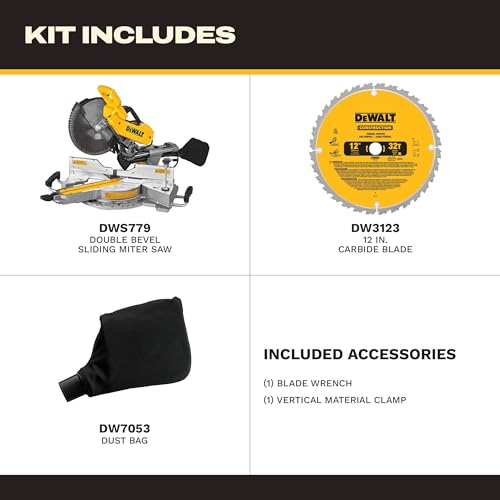
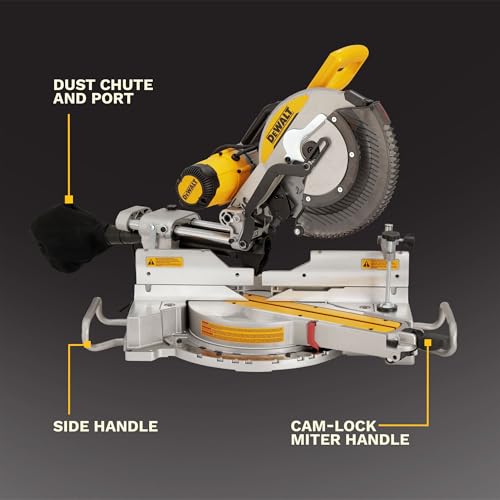
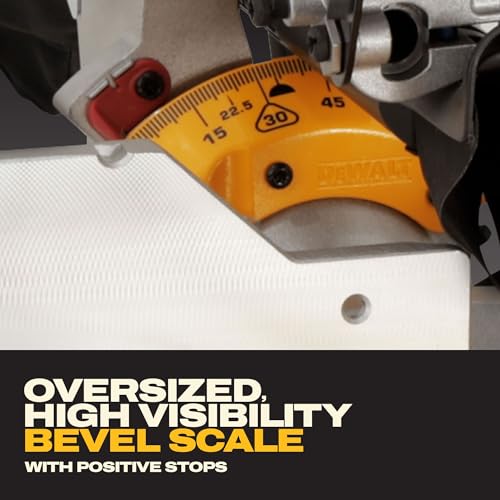
The DWS779 is essentially the DWS780’s slightly more affordable sibling, and it shows in a few subtle cuts, no XPS shadow line, and the miter detent plate has fewer stops. But don’t mistake that for a downgrade in core performance. It still runs on the same 15-amp, 3,800 RPM motor, handles 2×14 lumber at 90°, and shares the same dual steel rails and sliding fence system. The dust collection is identical, capturing over 75% of debris, which is rare at this level.
Owners praise its reliability on job sites, with many using it for cabinetry and flooring where precision matters. The lack of a shadow line means you’ll rely more on blade alignment and eye judgment, which can slow things down. But if you’re someone who already uses a separate laser guide or prefers mechanical alignment, this model delivers pro-level cutting without the premium price. I’d choose the DWS780 if the shadow line is critical, but for pure value in a pro-grade saw, the DWS779 wins.
Product photos
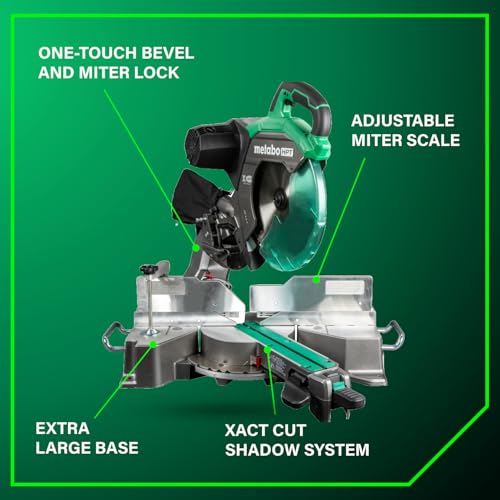
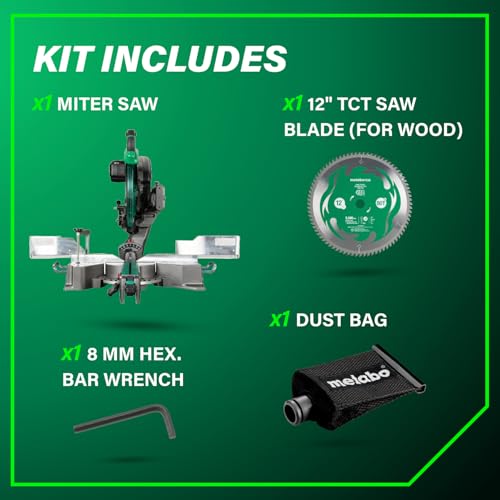
Metabo HPT C12RSH3 12″ Dual Bevel Sliding Miter Saw

Strengths
- One-touch bevel lock
- Xact Cut shadow line
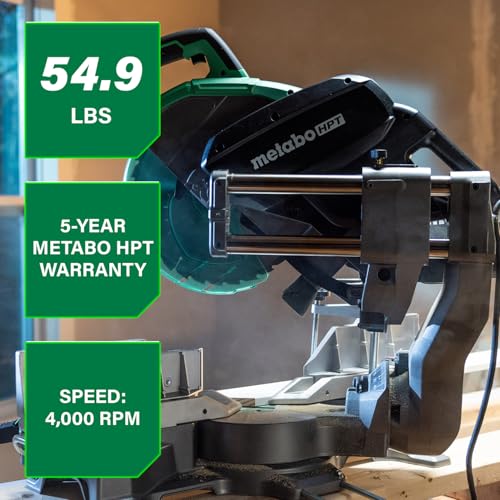
- 4,000 RPM motor
- Precise miter scale
- 5-year warranty
Trade-offs
- Fewer miter detents
- Slightly slower RPM
- Limited left miter range
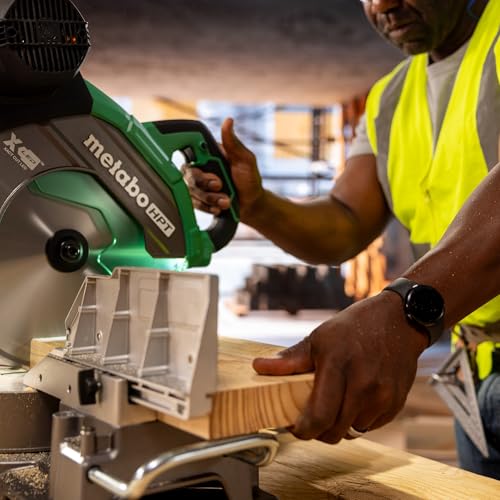
Metabo HPT built this saw for precision, and it shows. The 4,000 RPM motor is slightly slower than DEWALT’s, but the one-touch bevel and miter locks make adjustments faster and smoother. The Xact Cut shadow line is sharp and consistent, and owners report it holds calibration well over time. With a miter range up to 57° right and 45° left, it’s flexible for complex crown molding setups.
The 9 miter detents are fewer than some, but the adjustable miter scale compensates with fine-tuning ability. Build quality feels premium, tighter tolerances, less play in the arm. It’s not as widely reviewed as the DEWALT models, but the feedback we have is overwhelmingly positive for accuracy and durability. If you value exacting cuts and Japanese engineering, this is the pick over the DWS780, even if it costs a bit more.
Product photos

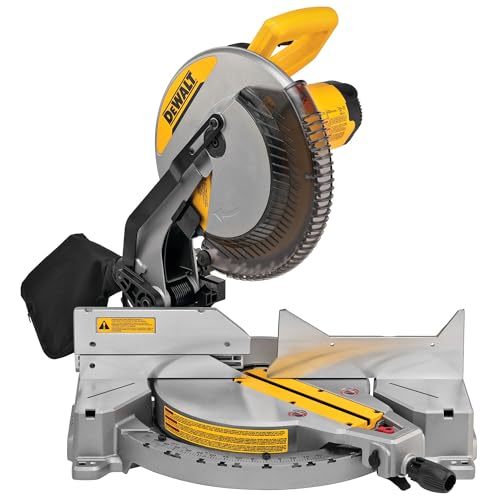
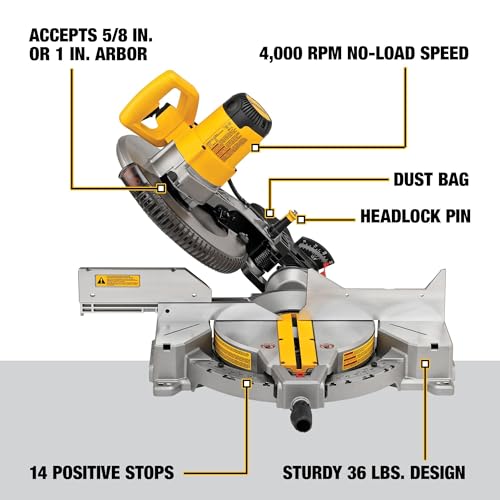
DEWALT DWS715 12″ Single Bevel Miter Saw
Strengths
- 12-inch blade capacity
- 14 miter detents
- Durable build
- 2×8 crosscut at 90°
- Stable base
Trade-offs
- Single bevel (limited right bevel)
- No sliding rails
- No shadow line or LED
The DWS715 is DEWALT’s no-frills 12-inch single bevel option, and it’s built like a tank. It delivers the core benefit of a larger blade, 2×8 crosscuts at 90°, with DEWALT’s signature durability, but with notable limitations. The bevel only swings left (48°), and right bevel is capped at 3°, which is clearly a cost-saving move. You won’t find a shadow line or sliding rails here, just a solid, fixed-arm design.
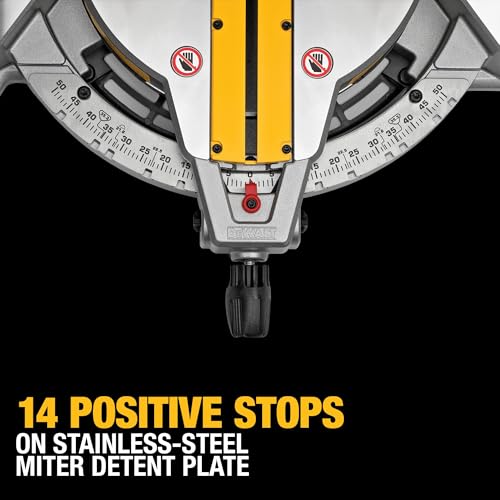
Still, the stainless-steel miter detent plate with 14 positive stops is a win for speed on repetitive cuts. Owners appreciate its simplicity and sturdiness, especially for basic framing or deck work where dual bevel isn’t needed. Compared to the DWS779 or DWS780, it’s a step down in versatility, but if you’re after a dependable, budget-friendly 12-inch saw for straightforward cuts, this one holds up. I’d pick it over the SKIL 10-inch if you regularly cut thicker stock.
Product photos
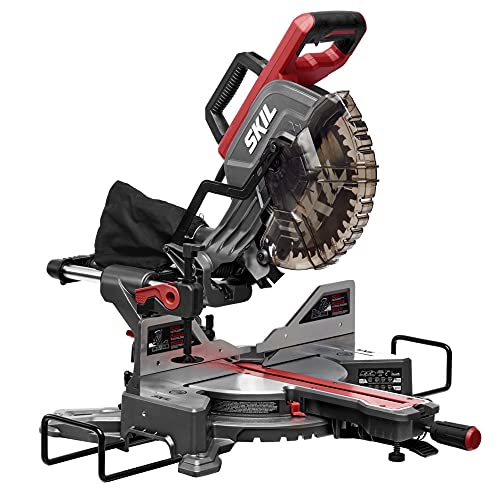
SKIL MS6305-00 10″ Dual Bevel Sliding Miter Saw
Strengths
- Dual bevel design
- LED shadow line
- 11 miter detents
- 4,800 RPM motor
- 2×12 crosscut capacity
Trade-offs
- Less durable rail system
- No dust bag included
- Smaller cutting depth
At this price point, SKIL managed to pack in dual bevel capability, a 4,800 RPM motor, and an LED shadow line, which is no small feat. The 10-inch blade limits vertical capacity compared to 12-inch models, but it still handles 2×12 at 90° and 2×8 at 45°, which covers most baseboard and trim work. The LED shadow line gets strong marks from owners for clarity, outperforming basic lasers on similar budget saws. It’s not as refined as DEWALT’s XPS, but it’s effective.
What surprises me is the 11 positive miter detents, more than some pricier models, which speeds up common-angle work. That said, the sliding rails feel a bit less rigid than the DEWALT or Metabo HPT options, and some reviewers mention minor alignment tweaks out of the box. Still, for someone needing dual bevel flexibility without the 12-inch footprint or price, this is the smarter buy over stepping up unnecessarily.
Product photos


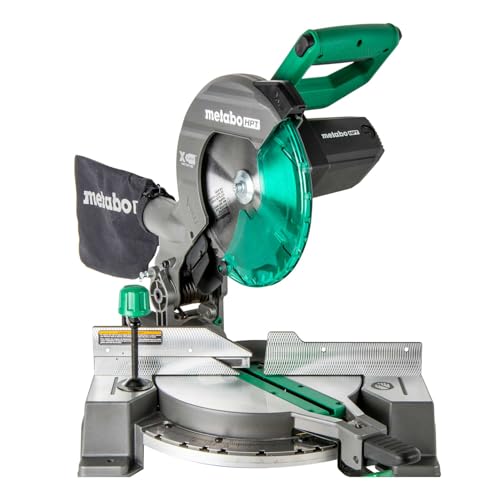
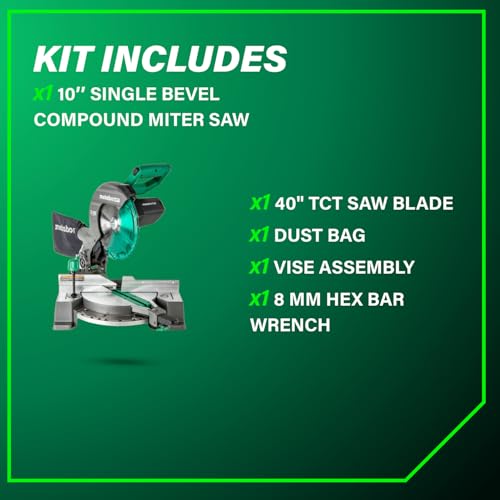
Metabo HPT C10FCG2 10″ Single Bevel Miter Saw
Strengths
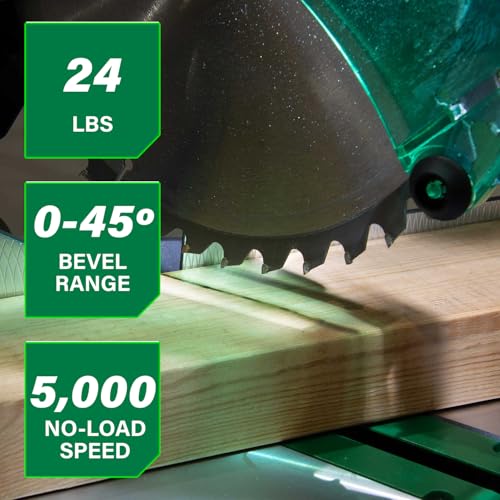
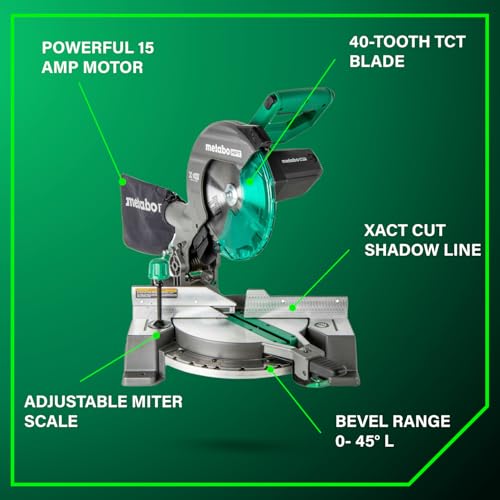
- 24 lbs, highly portable
- 5,000 RPM motor
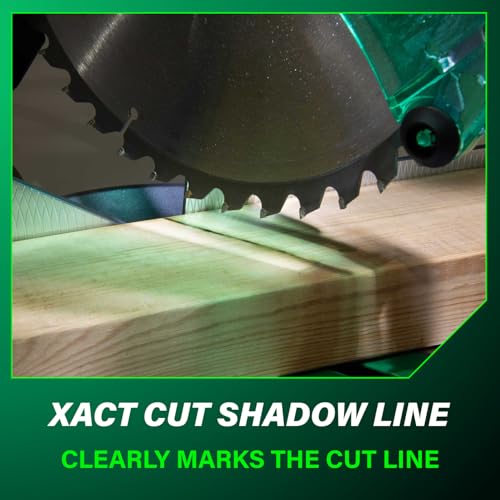
- Xact Cut shadow line
- Vice clamping system
- 5-year warranty
Trade-offs
- Single bevel only
- Limited vertical cut capacity
- Smaller blade diameter
At just 24 lbs, this Metabo HPT is a standout for portability without sacrificing power. The 15-amp motor pushes the blade to 5,000 RPM, which is higher than most 12-inch saws, and owners say it translates into cleaner, faster cuts on hardwood and dense trim. The Xact Cut shadow line is bright and consistent, a real upgrade over basic lasers, and the vice clamping system is a rare inclusion at this size, adding real control on small pieces.
It’s a single bevel model, so you’ll need to flip the workpiece for left bevels, which can be a pain on large stock. But the 0-52° miter range gives plenty of flexibility for crown molding and picture frames. The build quality feels solid, and the 5-year warranty speaks to Metabo HPT’s confidence. For a lightweight saw that doesn’t feel cheap, this is the one I’d recommend over the SKIL 10-inch models.
Product photos

SKIL MS6306-00 7-1/4″ Compact Miter Saw

Strengths
- Ultra-compact design
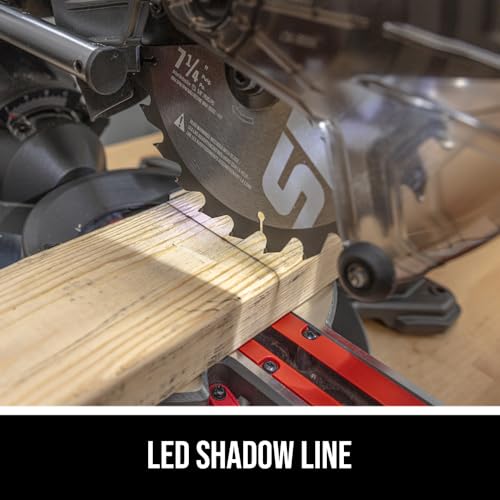
- LED shadow line
- Under 25 lbs
- Flush wall capability
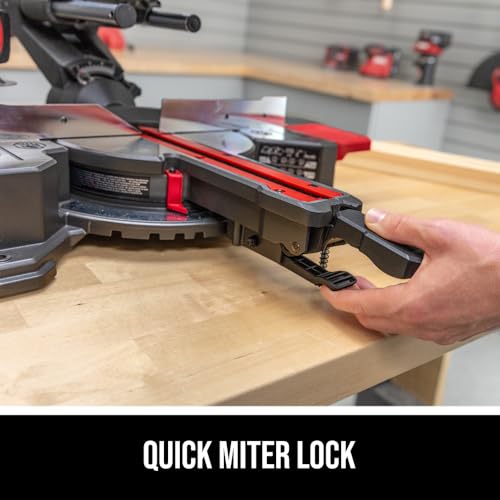
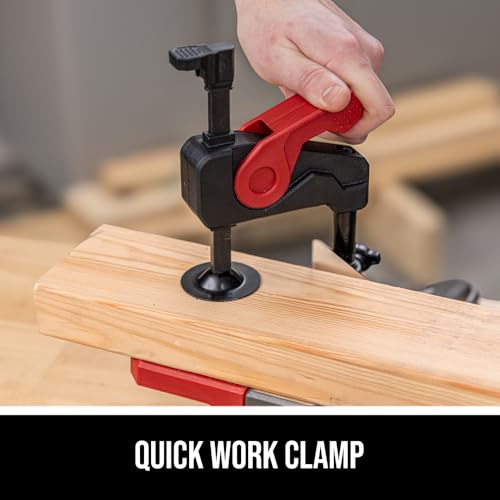
- Quick miter lock
Trade-offs
- 7-1/4-inch blade limits depth
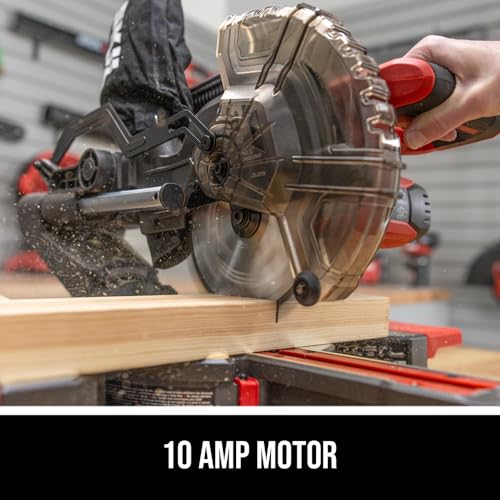
- 10-amp motor, less power
- No bevel right
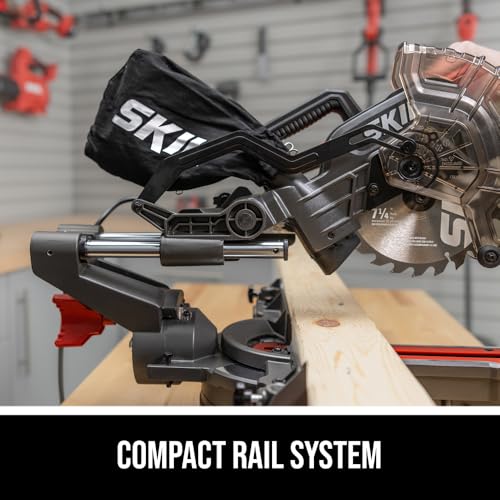
This SKIL punches above its weight in compactness. The 7-1/4-inch blade isn’t for heavy lumber, but it’s perfect for baseboards, casing, and shelf planks, exactly what it’s designed for. At under 25 lbs and with a fixed compact rail system, it can sit flush against a wall, a rare and useful feature in tight workshops or vans. The LED shadow line is surprisingly effective, and the quick miter lock makes angle changes fast.
Owners love it for small indoor jobs where space is tight. The 10-amp motor limits it to softer woods and thinner stock, and the 2×6 miter cut capacity shows that. But for a dedicated trim saw that’s easy to store and move, this one fills a niche the larger models can’t. I’d compare it to the CRAFTSMAN cordless, but with more consistent power, just less portability.
Product photos
CRAFTSMAN CMCS714M1 7-1/4″ Cordless Sliding Miter Saw
Strengths
- Cordless convenience
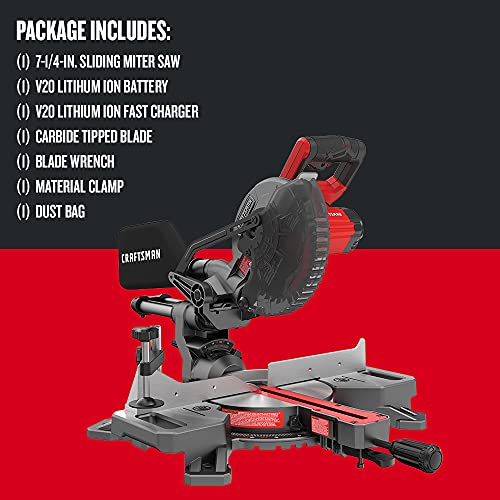
- Battery and charger included
- LED cut line
- Lightweight design
- Good runtime
Trade-offs
- 7-1/4-inch blade
- Limited cut depth
- Not for heavy materials
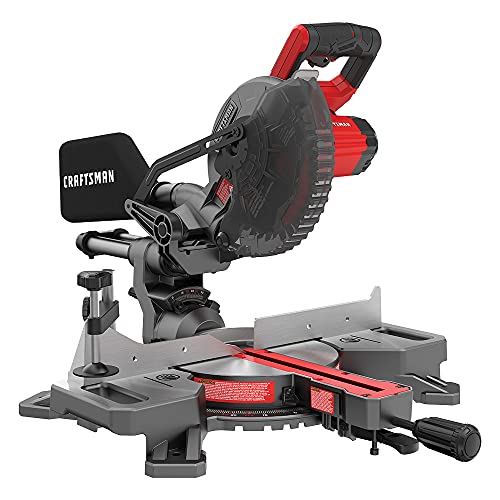
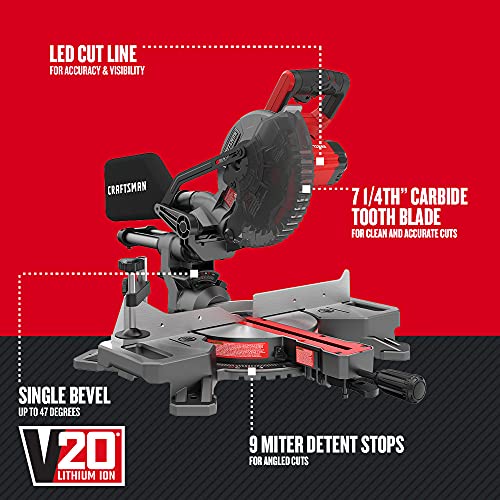
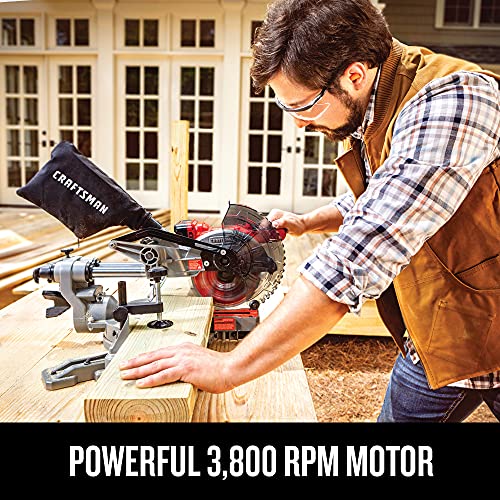
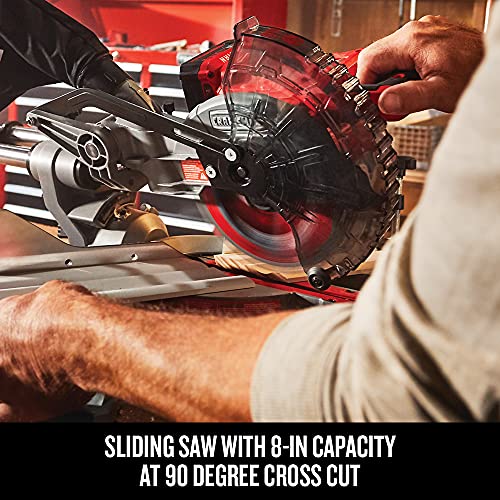
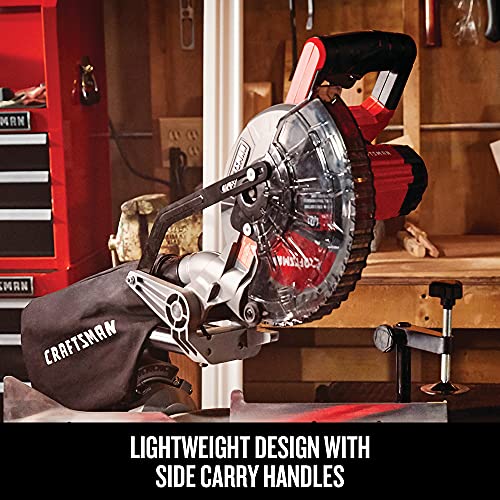
Going cordless on a miter saw is still a niche move, but CRAFTSMAN makes a compelling case. With a 3,800 RPM motor and up to 585 cuts on a single charge in MDF baseboard, this saw is built for mobility. The LED cut line helps in dim garages or unfinished rooms, and the 8-inch crosscut at 90° covers most interior trim jobs. It’s lightweight and comes with handles, making it easy to haul up ladders or into basements.
But the trade-offs are real. The 7-1/4-inch blade and sliding arm mean limited depth, no 2×10 or 2×12 cuts here. And while the battery life is impressive on paper, cutting hardwood or dense materials eats into that fast. Owners like it for occasional use, but no one’s replacing their corded saw with it full-time. Compared to the SKIL compact model, it’s more convenient in power source but less powerful. For cordless freedom, it’s the best option, just know the limits.
Product photos
How We Chose These mitre saws
Rather than a hands-on lab test, my research for these recommendations focused on a detailed comparison of published specifications and features across numerous models. I weighed owner reviews from major retailers alongside expert opinions found in woodworking publications and trusted online sources. Ultimately, I ranked saws based on how well they delivered on the core needs of a wide range of users, from DIY homeowners to professional contractors.
For mitre saws, cutting capacity, accuracy, and build quality were the most important factors. A saw’s ability to handle common project materials – like 2x lumber and crown molding – without struggle directly impacts its usefulness. Equally crucial is a precise miter and bevel system; inaccurate cuts waste material and time. Durability matters, too, as a solid build promises years of reliable service.
Specifications reliably indicate motor power, blade size, and maximum cut dimensions. However, I relied heavily on owner feedback to assess real-world performance, particularly regarding dust collection effectiveness, the smoothness of sliding rails, and the long-term durability of key components. Reputation also played a role; brands known for quality control and customer support naturally ranked higher. If you’re new to these tools, understanding miter saw basics is a great first step.
What To Look For In mitre saws
Picking the right mitre saw depends heavily on what you intend to build. It’s not a one-size-fits-all situation, and jumping for the biggest, most expensive model isn’t always the answer.
A good mitre saw balances accuracy, power, and usability for the intended applications. Key features to evaluate include motor strength (amps and RPM), bevel and miter range, blade quality, dust collection efficiency, and the overall build quality impacting long-term durability. Look for positive stops at common angles and a clear line of sight to the blade.
Blade and Cutting Capacity
Don’t fixate solely on blade diameter. While a 12-inch blade handles larger stock, a 10-inch or even 7-1/4-inch saw might be plenty if you’re primarily working with trim and smaller boards. More important is blade quality; a cheap blade on a powerful saw will still produce rough cuts. Consider the material you’ll be cutting most. For hardwoods, a higher tooth count blade is essential. If you’re frequently cutting pressure-treated lumber, a blade specifically designed for that purpose will last much longer and prevent corrosion.
Sliding vs. Non-Sliding Mechanisms
Sliding mitre saws significantly increase your crosscut capacity, letting you handle wider boards. However, they’re also bulkier and more expensive. If you’re space-constrained or mostly work with narrower stock, a non-sliding (standard) mitre saw might be a better fit. Think about whether you’ll need to frequently cut 2×12 lumber at 90 degrees or if 2×6 is the largest dimension you anticipate. A sliding model adds versatility, but it’s a trade-off with portability. For those looking to understand the difference, a compound miter saw explained can be a great resource.
Features and Value
Beyond the basics, consider features like dust collection, LED work lights, and miter detent stops. Effective dust collection isn’t just about cleanliness; it improves visibility and reduces respiratory hazards. An LED light illuminates the cut line, especially helpful in dimly lit workshops. And positive stops at common angles (like 22.5 and 45 degrees) speed up repetitive cuts. But don’t overpay for features you won’t use.
Here’s what I often see buyers prioritize: * A decent dust port (essential). * Clear angle markings (very helpful). * A robust miter detent system (saves time and ensures accuracy), especially if you’re frequently making angled cuts.
A saw that sits unused because it’s too heavy or difficult to set up is a waste of money. Prioritize ease of use and features that match your needs, not just the most impressive-sounding specs.
If you’re still unsure which type of saw is best, exploring different precision compound miter saws can help narrow your options. Many DIYers also find it helpful to compare several best compound models before making a final decision.
Mitre Saws Compared
Here’s a comparison of key specifications for the mitre saws discussed.
| Product | Blade Size (in) | Bevel (Left/Right) | Sliding? | Max Crosscut (90°) | Motor (Amps) | Weight (lbs) |
|---|---|---|---|---|---|---|
| DEWALT DWS780 | 12 | 49/49 | Yes | 2×14 | 15 | 58 |
| DEWALT DWS779 | 12 | 49/49 | Yes | 2×14 | 15 | N/A |
| Metabo HPT C12RSH3 | 12 | 45/45 | Yes | N/A | N/A | N/A |
| DEWALT DWS715 | 12 | 0-48/0-3 | No | 2×8 | N/A | N/A |
| SKIL MS6305-00 | 10 | 48/45 | Yes | 2×12 | 15 | N/A |
| Metabo HPT C10FCG2 | 10 | 0-45 (Left) | No | N/A | 15 | 24 |
| SKIL MS6306-00 | 7.25 | 0-47/0-50 | No | 2×10 | 10 | <25 |
| CRAFTSMAN CMCS714M1 | 7.25 | N/A | Yes | 8″ | N/A | N/A |
Frequently Asked Questions
What blade grit is best for cutting fine details in mitre saw projects?
A higher grit blade, typically 60-80 teeth, produces the cleanest cuts for detailed work like crown molding or trim. These blades minimize splintering and tear-out, resulting in a more professional finish.
Can I use a mitre saw to cut metal?
No, standard mitre saw blades aren’t designed for metal cutting. You’d require a specialized metal-cutting blade and a saw capable of the slower speeds needed to avoid damaging the blade and creating sparks.
How often should I calibrate my mitre saw?
You should check the calibration of your mitre saw before each major project, or at least every six months with regular use. Small bumps or vibrations can throw off the accuracy, so verifying squareness and angle settings is key.
What’s the difference between a bevel cut and a miter cut?
A bevel cut changes the angle of the blade relative to the workpiece, creating a slanted edge, while a miter cut changes the angle of the blade across the workpiece, creating angled ends. Understanding both is crucial for more complex projects.
Are more expensive mitre saws always better?
Not necessarily. While higher prices often mean better build quality and features, a more expensive saw isn’t always the best choice. Many users find that exploring sliding miter saws within a reasonable budget delivers excellent performance for their needs.
The Bottom Line
Choosing a mitre saw often comes down to balancing how much control you want with how much fuss you’re willing to deal with. For most homeowners and DIYers seeking a blend of power, accuracy, and features, the DEWALT DWS780 stands out as the strongest overall pick. It offers a generous cutting capacity and a reputation for reliability that’s hard to beat.
If you’re on a tighter budget, the SKIL MS6306-00 delivers impressive value, while the SKIL MS6305-00 provides a versatile sliding option without breaking the bank. For those needing a compact and portable saw for trim work and smaller projects, the Metabo HPT C10FCG2 is an excellent choice. Understanding accurate miter saw cuts will help you get the most out of whichever saw you choose.
Ultimately, the specs matter less than a solid foundation: a sharp blade, a well-maintained fence, and a commitment to safe operation. Don’t get lost in the details of bevel capacity or motor amps if you haven’t mastered the fundamentals of proper technique and material support.
