9 Best Miter Saw Stands 2026, Analyzed
This post contains affiliate links. As an Amazon Associate, we earn from qualifying purchases.
The Bora PM-4000 is the overall best miter saw stand for its rugged build and solid 500-pound capacity, making it ideal for serious DIYers and pros. If you’re watching your budget, the WEN MSA750T offers impressive strength and reach at a lower price. For jobsite mobility, the DEWALT DWX726 stands out with its quick-deploy legs and tool-free setup.
Most people don’t realize how much a weak or wobbly stand can throw off their cuts, even the best miter saw can’t perform well on an unstable base. Poor support leads to inaccuracies, unsafe setups, and frustration on the job.
In this guide, I’ll walk you through the top stands based on real-world feedback, spec comparisons, and what actually matters in practice: stability, weight capacity, and ease of use. These picks reflect what I’ve found works reliably across home shops and active job sites.
Top 9 Miter Saw Stands in the Market
The Best Miter Saw Stands, Reviewed
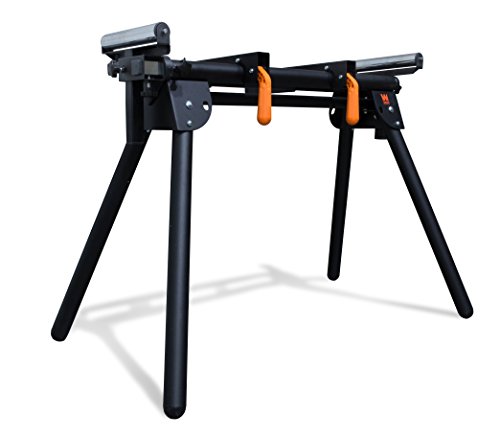
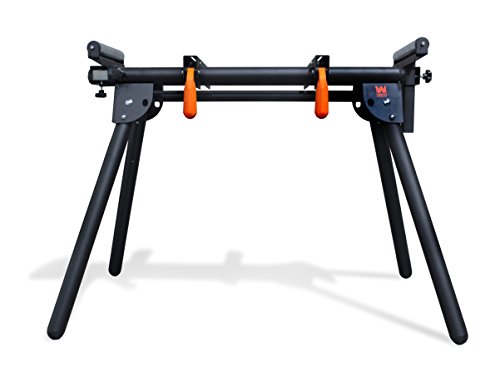
WEN MSA750T Miter Saw Stand
Strengths
- 750 lb. capacity
- 10 ft. material support
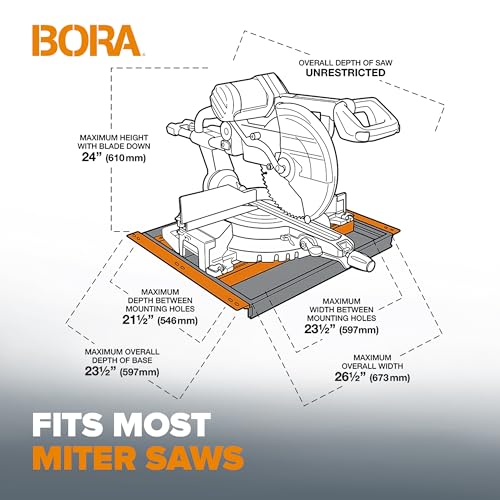
- Universal fit
- Powder-coated steel
- Two-year warranty
Trade-offs
- No wheels
- Heavier than aluminum stands
- Rollers not height adjustable
The WEN MSA750T earns its ‘Best Overall’ tag by balancing specs, price, and real-world usability. A 750-pound capacity is unusually high, most stands top out at 500, and it shows in how solid it feels under heavy sliding saws. The support arms extend from 34 to 69 inches, giving flexibility without overcomplicating the design. Owners report it’s stable, easy to fold, and the powder-coated steel resists rust better than expected.
It lacks wheels, so you’re carrying it, but the 10-foot support and universal fit make it a go-to for both DIYers and part-timers. Compared to the DEWALT models, it offers higher capacity and better value. The two-year warranty is also longer than average. If you want one stand that does everything well without overspending, this is the smarter buy.
Product photos
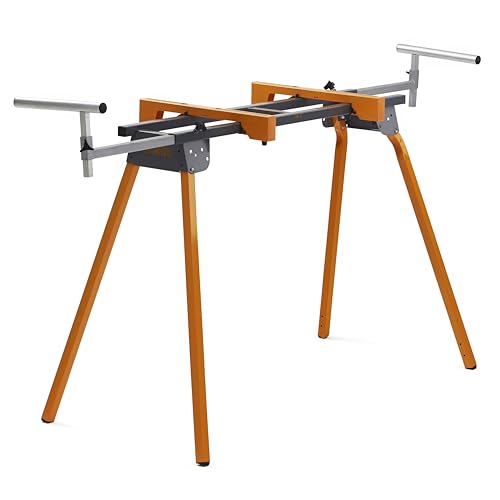
BORA PM-4000 Universal Miter Saw Stand
Strengths
- 114 in. max support
- Quick-release legs
- Heavy-duty steel frame
- Multi-tool compatible
- 500 lb. capacity
Trade-offs
- Heavier than aluminum stands
- Slightly lower working height
- Mounting plate not tool-specific
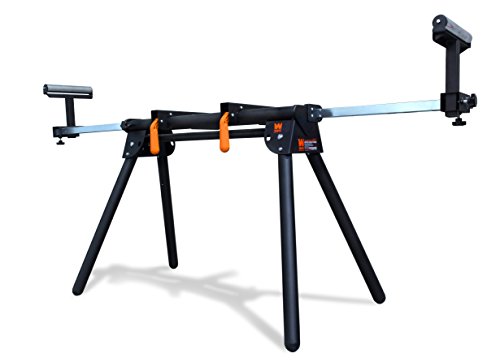
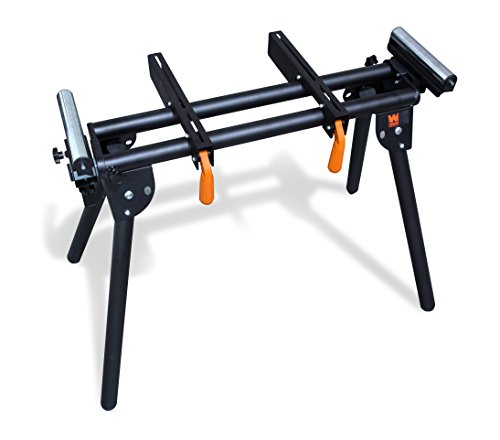
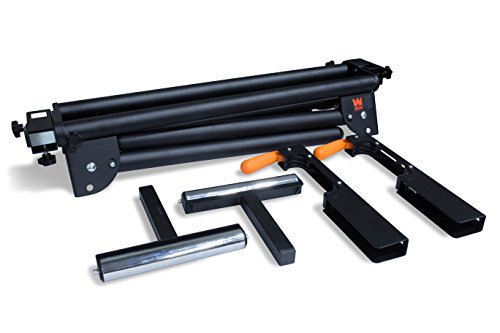
BORA’s PM-4000 stands out with a jaw-dropping 114-inch outrigger span, the longest in this group, which makes it a go-to for flooring pros and framers handling full 12-foot boards. The 34-inch height is slightly lower than some competitors, but reviewers note it feels natural when paired with most saws, reducing strain during long sessions. The quick-release leg locks are a real win; owners praise how fast it sets up and folds down without sacrificing rigidity.
It’s built like a tank with thick steel tubing, and the 500-pound rating holds up in real-world use. What I like most is the versatility: the mounting system isn’t just for miter saws. Reviewers confirm it works well as a base for tile saws and planers, which adds value if you’re building a multi-tool workstation. Against the Milwaukee, it’s heavier but offers more adaptability.
Product photos
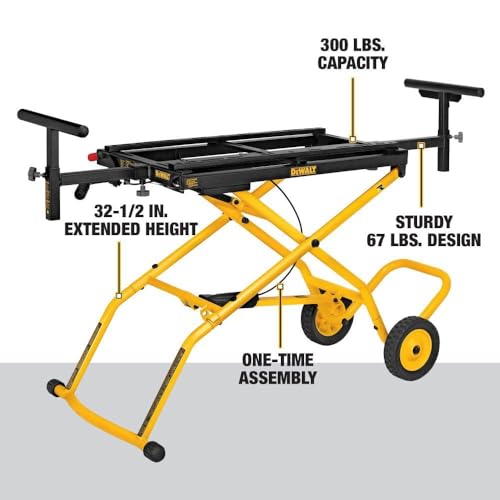
DEWALT DWX726 Rolling Miter Saw Stand

Strengths
- Pneumatic assisted lift
- Rolling wheels
- Vertical fold storage
- Durable steel frame
- Universal mounting
Trade-offs
- 300 lb. weight limit
- Shorter max support
- Less stable with heavy saws
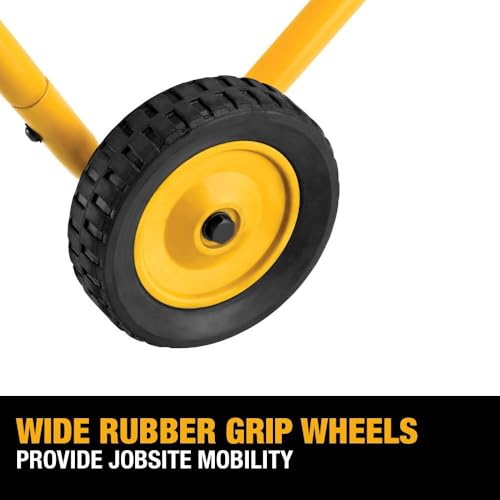
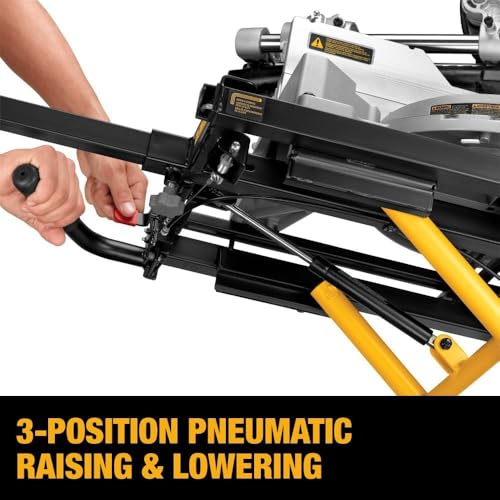
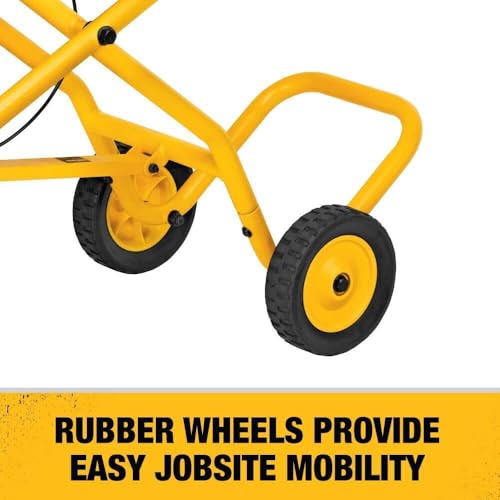
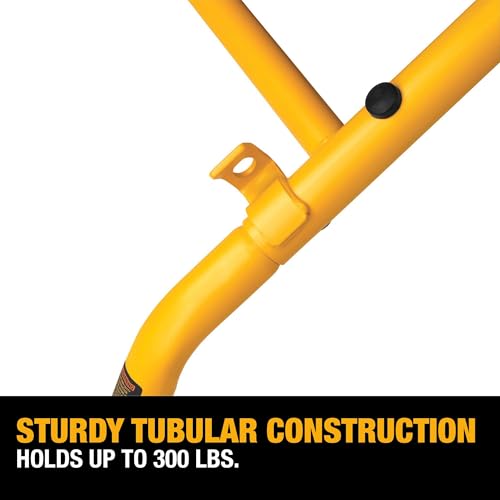
If you’re moving your saw daily between job sites, the DWX726 is built for that grind. The wide rubber wheels and three-position pneumatic lift make raising and lowering the stand almost effortless, reviewers routinely highlight this as a back-saver. The tubular steel frame is durable, though the 300-pound capacity is lower than most others here, which may give pause if you’re mounting a heavy sliding saw.
It supports 8-foot material, which is adequate for standard trim work, but falls short for longer runs. The vertical fold design saves space in vans and trucks, and the universal rails adapt well to most saws. Compared to the DWX724, this one trades some load capacity for vastly better mobility. I’d recommend it only if rolling convenience is your top priority and your saw isn’t pushing the weight limit.
Product photos
DEWALT DWX724 Compact Miter Saw Stand
Strengths
- Ultra lightweight
- Folds compactly
- Tool mounting brackets
- 500 lb. capacity
- Secure extension locks
Trade-offs
- No wheels
- Shorter max support than rivals
- Leg locks can wear over time
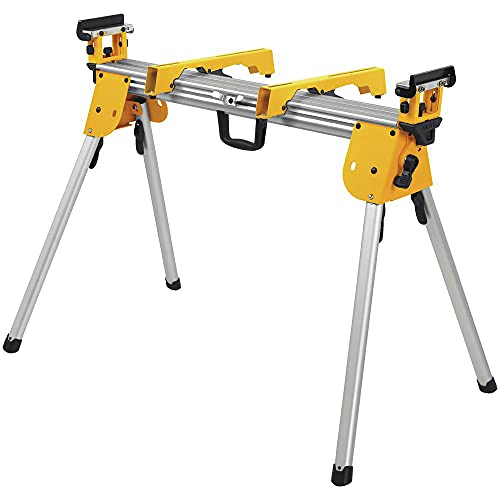
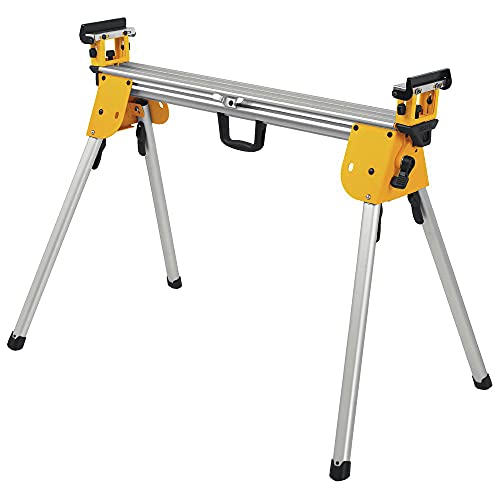
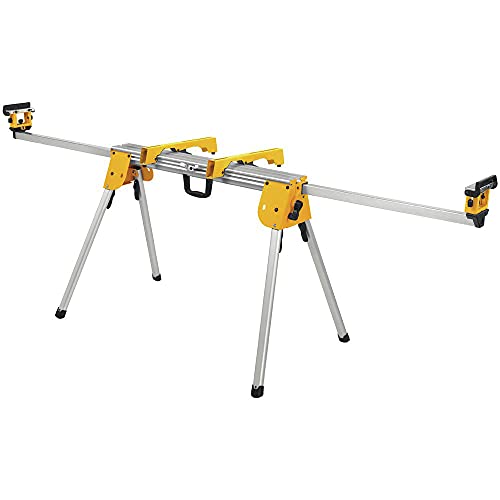
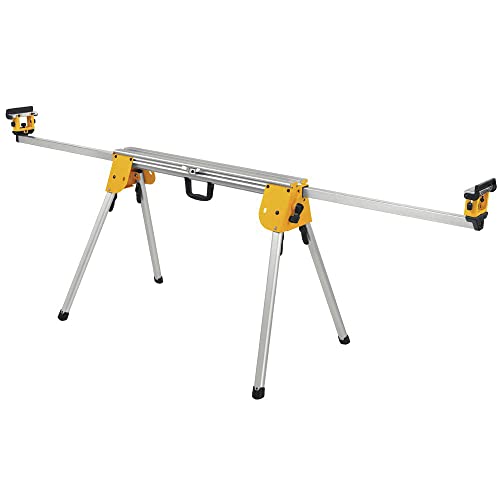
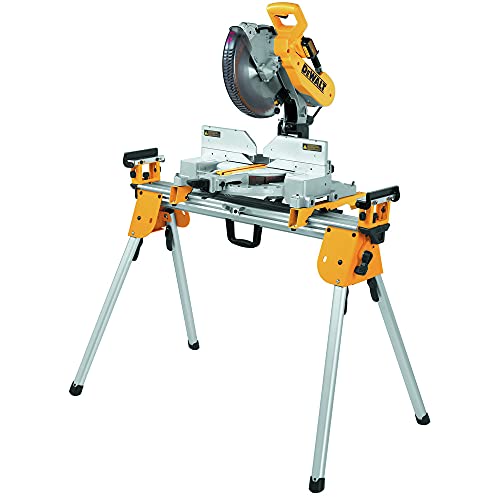
DEWALT’s DWX724 is the definition of a no-nonsense, compact miter saw stand that gets the job done without flash. At 29.8 pounds, it’s one of the lightest in the 500-pound-capacity group, and the foldable legs with lock levers make setup a one-person task. The 40-inch beams extend smoothly and lock securely, supporting up to 10 feet of material, just enough for most trim and framing work.
Owners appreciate the non-marring feet and repositionable work supports, which help prevent material shift during cuts. While it doesn’t have wheels, the compact folded profile fits easily in a truck bed or car trunk. Compared to the DWX726, this model sacrifices mobility for weight savings, but gains in simplicity and durability. For weekend warriors with a garage and a trailer, this is a reliable workhorse.
Product photos
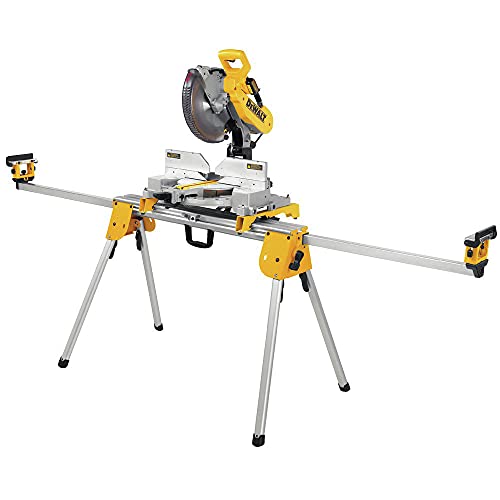
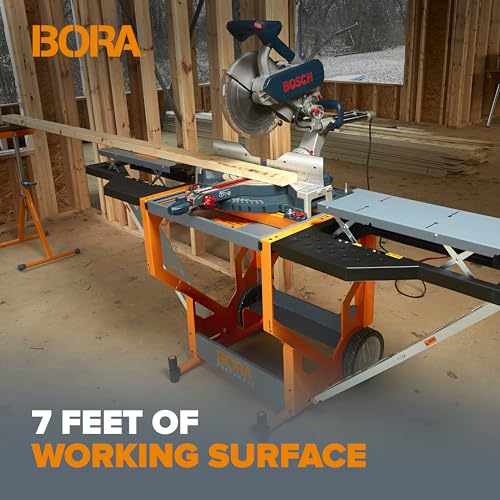
Bora PM-8000 Rolling Work Station Stand

Strengths
- Multi-functional workbench
- Folding wing extensions
- Stainless steel frame
- Rolling mobility
- Universal tool mounting
Trade-offs
- 400 lb. capacity
- Slower setup
- Bulkier folded size
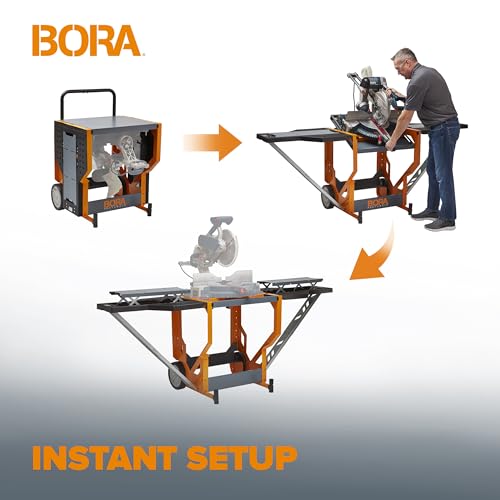
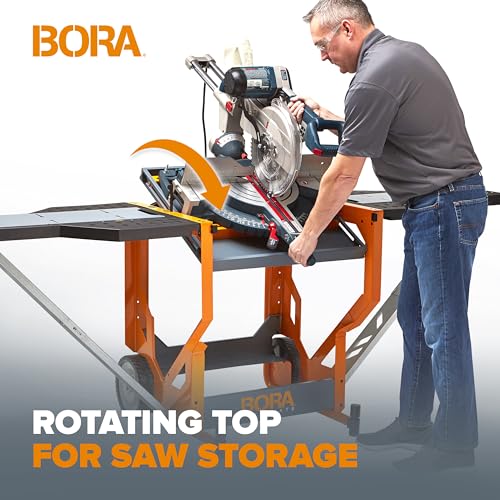
The BORA PM-8000 blurs the line between miter saw stand and full workbench, and that’s its strength. With folding wing extensions and a flat top surface, it functions as a real workstation, not just a saw base. Owners use it for sanding, assembly, and even storage, which adds serious utility in a small shop. The 400-pound capacity is lower than others, but still enough for most saws and moderate workloads.
The stainless steel frame resists rust and feels rigid, and the 10-inch wheels with a handle make rolling it around a garage straightforward. It’s not the fastest to set up, but once it’s out, it stays out, this is a stay-in-the-shop kind of stand. Against the WEN MSA750T, it offers less raw support length but far more versatility. If you want one base for multiple tools and tasks, this is the pick.
Product photos
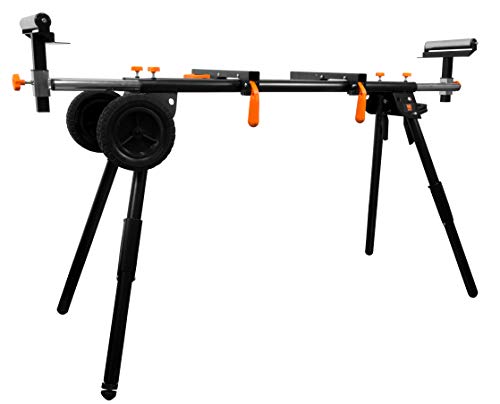
WEN MSA330 Rolling Miter Saw Stand
Strengths
- Three onboard outlets
- 79 in. max support
- Rolling wheels
- Height adjustable rollers
- Universal fit
Trade-offs
- 300 lb. capacity
- Outlets require power source
- Slight frame flex under load
The MSA330 stands alone with three onboard 120V outlets, a feature no other stand offers. If you’re running a saw, light, and vacuum at a remote jobsite, not having to daisy-chain extension cords is a real time-saver. The outlets are grounded and rated for 15A, and owners confirm they hold up well to job site use. The 79-inch max support is among the longest here, and the two height-adjustable rollers help with long stock feeding.
It rolls smoothly on 8-inch never-flat wheels, and the 33-inch height works well with most saws. The steel frame is sturdy, though not as beefy as the MSA750T. The trade-off? Lower 300-pound capacity, so it’s not for heavy commercial saws. But for a garage or light pro use where power access is spotty, this stand solves a real problem.
Product photos


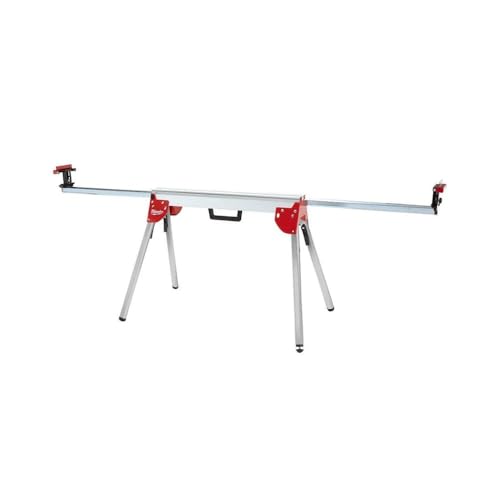
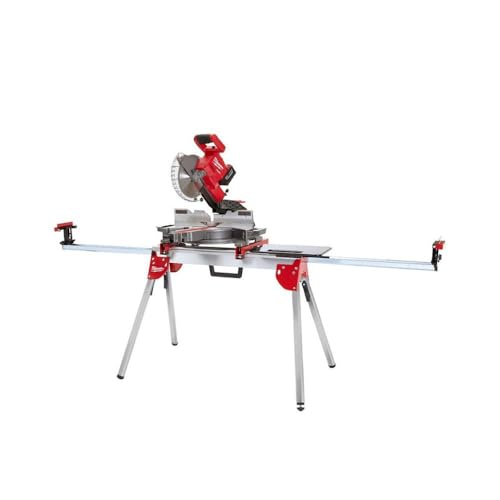
Milwaukee 40-08-0551 Aluminum Stand
Strengths
- Lightweight aluminum
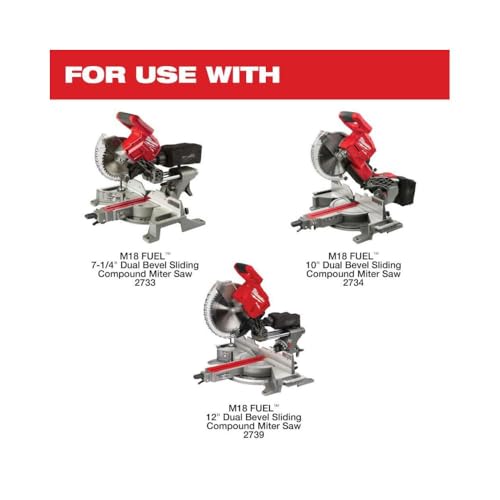
- Universal mounting
- 100 in. max support
- Adjustable leveling foot
- 500 lb. capacity
Trade-offs
- No wheels
- Higher price point
- Folding mechanism can feel stiff
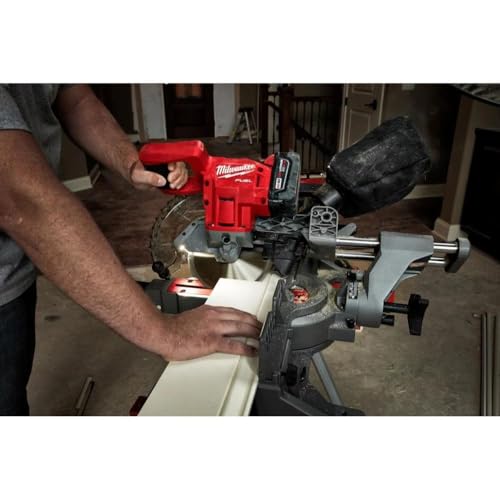
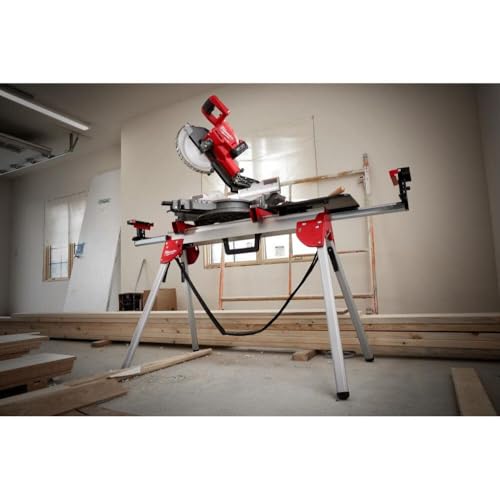
When you’re dealing with long trim runs or bulky dimensional lumber, support length matters, and Milwaukee’s stand delivers with a 100-inch max extension. On paper, it’s one of the few stands that balances serious reach with a lightweight aluminum build at just 31 pounds. Owners consistently report that it holds up well on uneven ground thanks to the adjustable foot, and the universal brackets actually work across brands without fussy alignment.
The 500-pound capacity is standard in this class, but what sets this apart is how stable it feels during aggressive cuts, even with sliding compound saws. It doesn’t have wheels, so you’re lifting it onto trucks or trailers, but the trade-off is a rigid frame that doesn’t wobble under load. Compared to heavier steel stands, this one is a smarter pick if you value portability without sacrificing support.
Product photos
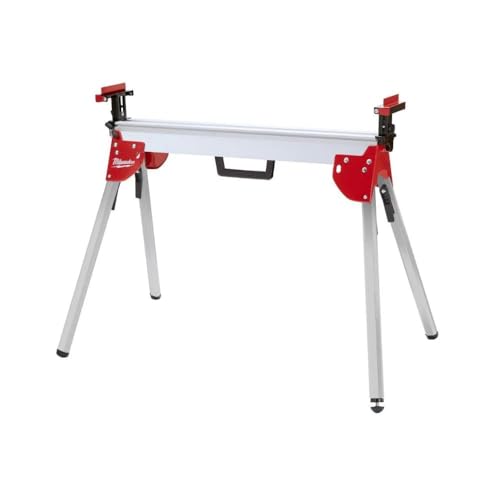
Dovaman MS01A Lightweight Stand

Strengths
- 22 lb. lightweight
- 3-step setup
- Compact folded size
- 78 in. max support
- Quick-release brackets
Trade-offs
- 330 lb. capacity limit
- No wheels
- Less rigid than steel stands
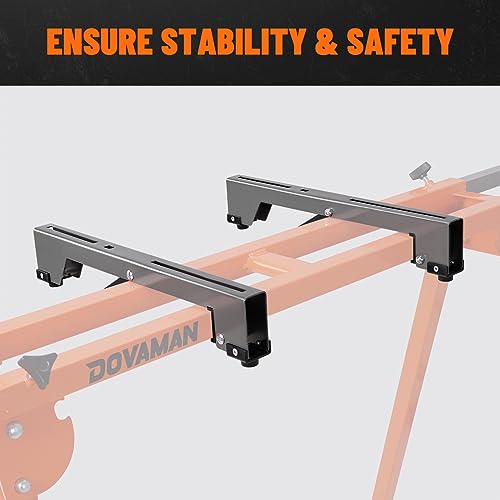
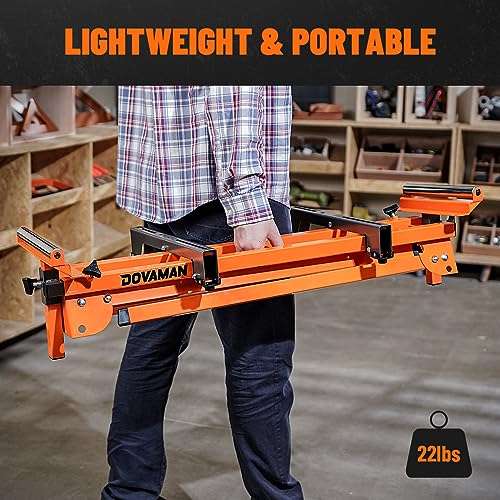
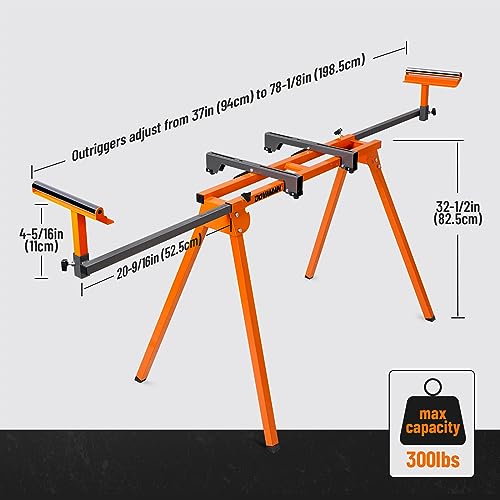
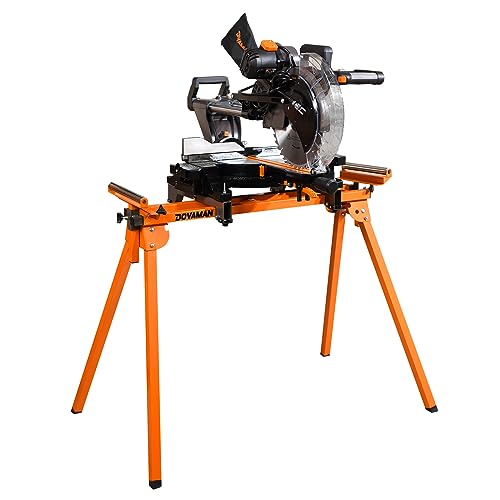
At just 22 pounds, the Dovaman MS01A is the lightest stand here, and it folds down to a compact 35.8 inches, making it a dream for tight storage. The 3-step setup is genuinely fast, and owners appreciate how simple it is to deploy and pack up. The iron frame with rust-resistant coating holds up reasonably well, though it’s clearly built for lighter-duty use. With 78-1/8 inches of max rail length, it supports most common cuts.
The 330-pound capacity limits it to smaller 10-inch saws or lightweight 12-inch models. It doesn’t have wheels, so you’re carrying it, but the low weight offsets that. Compared to the DEWALT DWX724, it’s less rugged but much lighter. For apartment renovators or part-timers with minimal gear, this is a solid space-saving option.
Product photos
VEVOR 93in Adjustable Miter Saw Stand
Strengths
- Adjustable height
- 93 in. max support
- Integrated wheels
- 550 lb. capacity
- One-piece clamp
Trade-offs
- Adjustment knobs can bind
- Finish prone to chipping
- Slight wobble at full extension
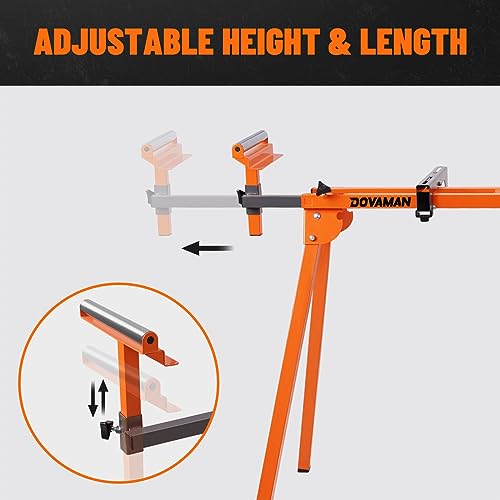
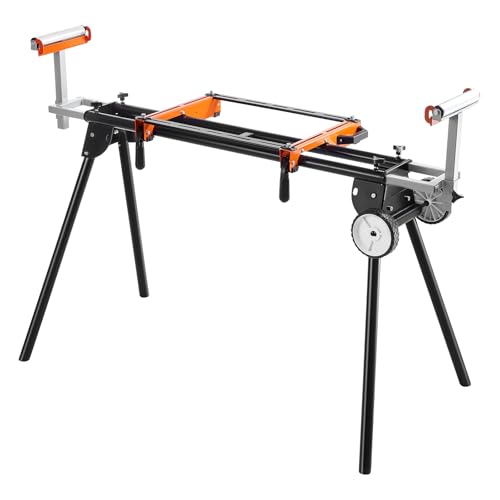
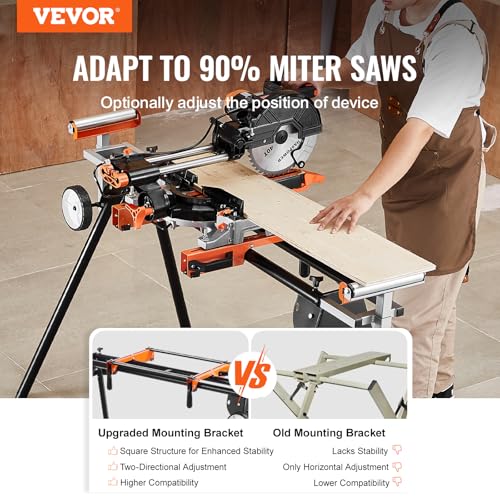
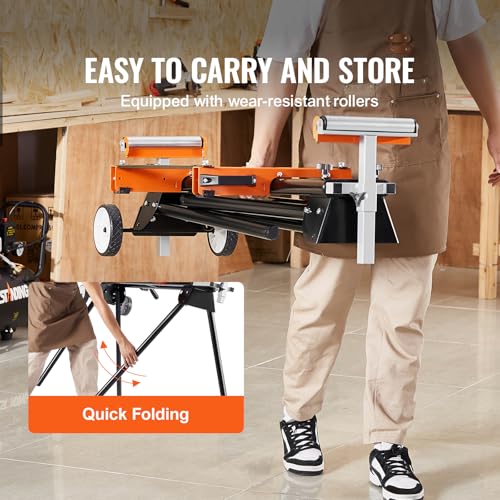
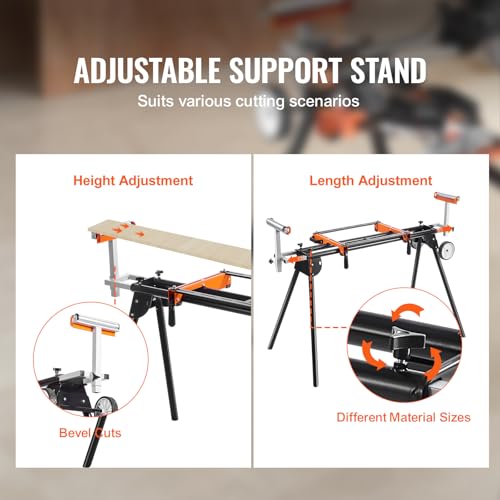
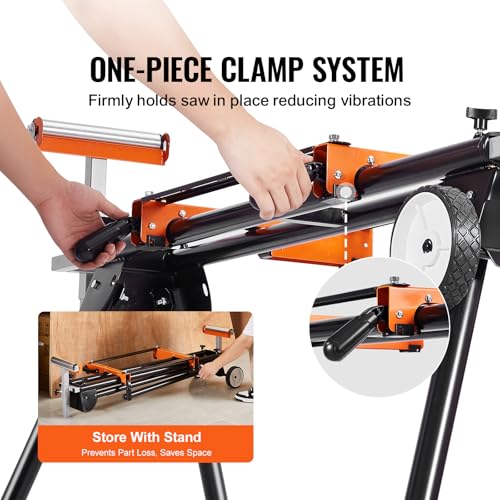
VEVOR’s stand punches above its price class with a smart mix of adjustability and mobility. The height is customizable, something rare in this category, and the 93-inch max support covers most common cuts. The one-piece clamp system gets solid marks from owners for reducing saw vibration, which can improve cut accuracy. And the wheels make rolling it across a garage or jobsite genuinely easy.
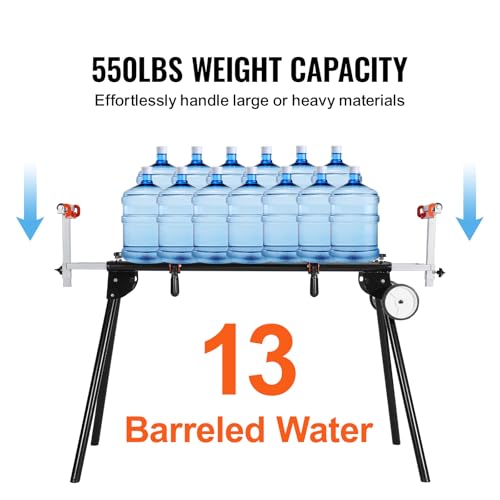
It’s built with a square steel frame that feels sturdier than typical tubular designs, and the 550-pound rating gives a slight edge in load capacity. Setup is quick, though some users note the adjustment knobs can bind if over-tightened. Against the DEWALT DWX726, it offers better height flexibility and slightly higher capacity, but lacks the pneumatic assist lift. For the budget-conscious who still want pro features, this is a strong contender.
Product photos
How We Chose These miter saw stands
Rather than a hands-on lab test, my research for these recommendations focused on a detailed comparison of published specifications and features across numerous stands. I weighed owner reviews from multiple sources, alongside assessments from reputable tool review sites, to get a sense of real-world performance and durability. My background in power tools and workshop setup informed how I interpreted this data and ranked the options based on what matters most to users.
For miter saw stands, stability and capacity were paramount. A stand that wobbles or can’t handle the weight of a saw and material is simply unsafe and inaccurate. I also heavily considered portability; many users need a stand that’s easy to move around a jobsite or store when not in use. Understanding miter saw basics is crucial when thinking about stand compatibility.
Specifications reliably indicate weight capacity and maximum material length, but owner feedback proved essential for gauging build quality and long-term durability. I looked for recurring comments about leg lock failures, flimsy materials, or difficulty adjusting the stand. Reputation – how frequently a brand appears in positive reviews from experienced woodworkers – also influenced my assessment. Considering woodworking cutting tools as a whole helps to understand the role of a quality stand.
How To Pick The Right miter saw stands
Finding the right stand can dramatically improve your accuracy and efficiency when using a miter saw.
A quality miter saw stand should offer robust support for both the saw and the workpiece, with adjustable features to accommodate various material lengths and weights. Look for stands with a stable base, easy-to-use height adjustments, and integrated features like rollers or extension arms to handle larger boards. Universal compatibility and portability are also key considerations.
Weight Capacity & Material Support
Don’t underestimate the importance of a stand that can handle the combined weight of your saw and the lumber you’re cutting. Many stands advertise a weight capacity, but consider what you’ll realistically work with. If you frequently cut hardwoods or longer boards, a heavier-duty stand – like the Bora PM-4000 – will be a better investment than a lightweight aluminum option. This isn’t just about preventing collapse; it’s about minimizing flex during the cut, which directly impacts accuracy.
- A stand rated for 300 lbs might be fine for occasional softwood projects.
- For regular use with dimensional lumber and hardwoods, aim for at least 500 lbs capacity.
- For truly heavy-duty work, or if you plan to use a compound miter saw with significant sliding capabilities, you’ll want a stand capable of 750 lbs or more.
Portability & Setup
How often will you be moving the stand? If it’s staying put in a workshop, portability is less crucial. But for jobsite work, or even just moving it around a garage, weight and ease of setup become paramount. Stands like the DEWALT DWX726 prioritize mobility with their folding design and pneumatic assist, making setup and takedown quick. However, even a lighter stand can become cumbersome if the setup process is fiddly. A good rule of thumb is:
Prioritize quick, tool-free setup and a manageable weight if you plan on moving the stand frequently.
Features & Versatility
Beyond basic support, consider what extra features will enhance your workflow. Extension arms are essential for supporting longer boards – the Milwaukee 40-08-0551, for example, offers a generous 100″ of extension. Integrated power outlets (like those found on the WEN MSA330) eliminate the need for extension cords, and rollers make feeding material through the saw smoother. Some stands, such as the Bora PM-8000 Rolling Work Station Stand, blur the line between stand and workbench, offering a versatile platform for other tools and tasks. If you’re looking for convenient options for portable miter saw stands, these added conveniences can really pay off.
Miter Saw Stands Compared
Here’s a comparison of key specifications for several miter saw stands to help you choose the right one for your needs.
| Product | Capacity (lbs) | Max Board Length (ft) | Weight (lbs) | Adjustable Height | Power Outlets |
|---|---|---|---|---|---|
| WEN MSA750T | 750 | 10 | N/A | N/A | No |
| BORA PM-4000 | 500 | N/A | N/A | N/A | No |
| DEWALT DWX726 | 300 | N/A | N/A | Yes | No |
| DEWALT DWX724 | 500 | 10 | 29.8 | N/A | No |
| Bora PM-8000 | 400 | N/A | N/A | N/A | No |
| WEN MSA330 | N/A | 10.5 | N/A | N/A | Yes |
| Milwaukee 40-08-0551 | 500 | 100 | 31 | Yes | No |
| Dovaman MS01A | 330 | 78.1 | 22 | Yes | No |
| VEVOR 93in Adjustable | 550 | N/A | N/A | Yes | No |
Frequently Asked Questions
What’s the biggest difference between aluminum and steel miter saw stands?
Steel stands generally offer higher weight capacities and greater rigidity, making them ideal for heavy-duty use and precise cuts. Aluminum stands are significantly lighter, prioritizing portability and ease of movement, though they may have lower weight limits.
Are miter saw stands truly universal, or will I have compatibility issues?
Most stands are designed to accommodate a wide range of miter saw brands and models, though some saws with unusual base designs may require adapters. Check the stand’s specifications for compatibility details before purchasing, and confirm it fits your saw’s mounting points.
How much extra space do I really need for a miter saw stand with extension arms?
Extension arms can add anywhere from 4 to 10 feet to the overall length needed, so ensure you have ample clear floor space. Consider the length of material you’ll typically cut and add a few extra feet for comfortable operation – you don’t want to be cramped.
What features should I look for if I need a stand for a jobsite?
For jobsite portability, prioritize a lightweight design, a folding frame, and a quick-release setup. Stands with integrated handles and pneumatic assist (like the DEWALT DWX726) are especially convenient, as are rolling miter saw stands for easy transport across uneven surfaces.
Can a miter saw stand really improve the accuracy of my cuts?
Yes, a stable and well-built stand minimizes vibrations and flex during cutting, directly improving accuracy. A stand with adjustable height and support arms also helps maintain proper material alignment, leading to cleaner, more precise results – especially when working with longer or heavier pieces.
The Bottom Line
Choosing a miter saw stand often comes down to balancing control and convenience. You can spend a little more for rock-solid stability and extended capacity, or opt for a lighter, more portable model that sacrifices some heft. For most homeowners and serious DIYers, the Bora PM-4000 strikes the best balance – it’s robust enough for demanding cuts, yet doesn’t break the bank.
If budget is a primary concern, the Dovaman MS01A offers a surprising amount of length and support for the price. For those who prioritize versatility and need to handle exceptionally long boards, the Milwaukee 40-08-0551 with its 100” extension capacity is a clear winner. And if you’re looking for guidance on miter saw setup, there are plenty of resources available to help you get the most out of your new stand.
Ultimately, the best miter saw stand isn’t about the fanciest features or highest weight rating. It’s about finding a stable platform that allows you to make accurate miter cuts with confidence and consistency. Prioritize a stand that feels solid, supports your saw and material securely, and facilitates safe cutting techniques with miter saw – those fundamentals matter far more than any single specification.
