
8 Best Lawn Aerator Tools of 2026
This post contains affiliate links. As an Amazon Associate, we earn from qualifying purchases.
The Zalawn Manual Core Aerator Tool is the best overall choice for effective soil relief, thanks to its heat-treated steel tines and plug-removing design. For those on a budget, the Walensee Spike Lawn Aerator Tool offers basic aeration at a lower price, while the SENVERT Rolling Lawn Aerator provides better coverage for larger yards.
Most homeowners don’t realize how much compacted soil hurts their lawn until they see thinning grass and poor drainage. Aeration helps, but picking the wrong tool can waste time or even make things worse. This guide cuts through the noise, comparing core and spike types, material durability, and real-world performance based on specs and owner feedback. We focused on build quality, tine effectiveness, and suitability for different lawn sizes to find models that deliver actual results.
Top 8 Lawn Aerator Tools in the Market
The Best Lawn Aerator Tools, Reviewed
Zalawn Manual Core Aerator Tool
Strengths
- 4-inch deep tines
- Anti-clog design
- Ergonomic grip
Trade-offs
- Higher price point
- Manual effort
- 3 tines only
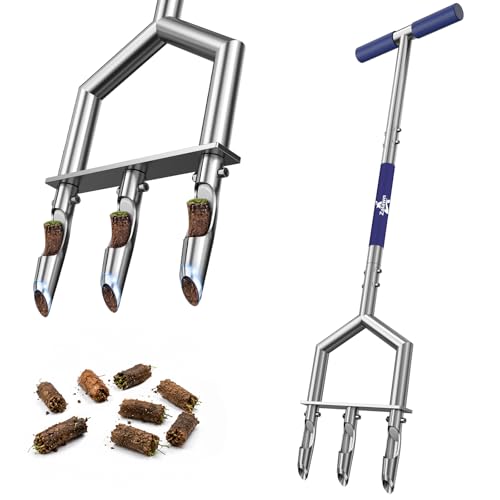
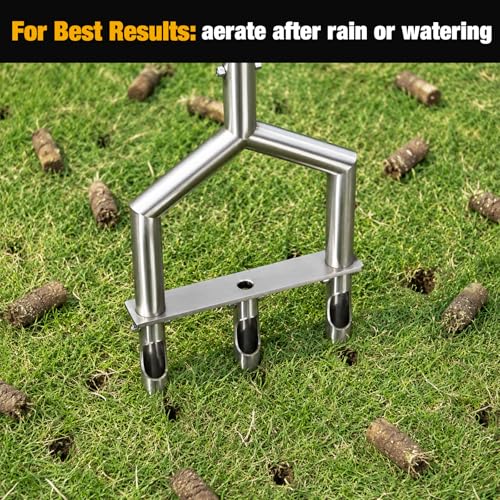
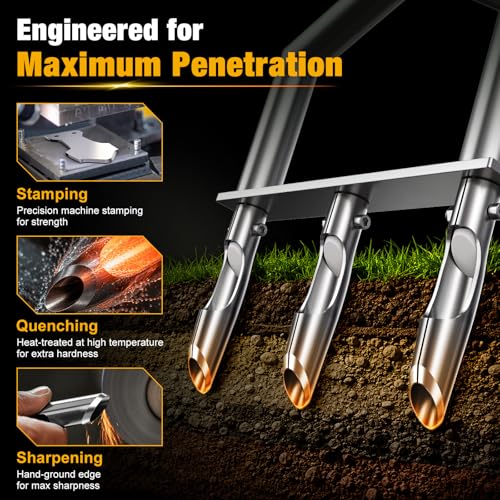
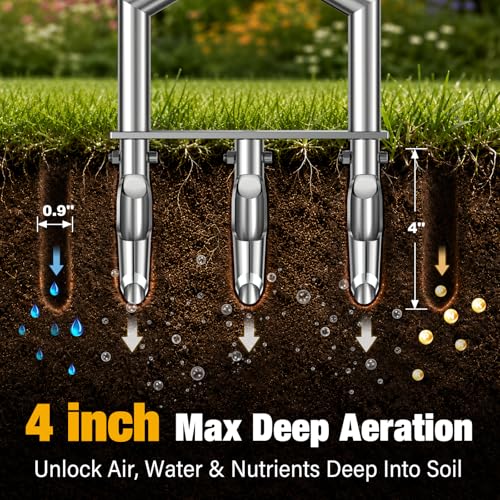
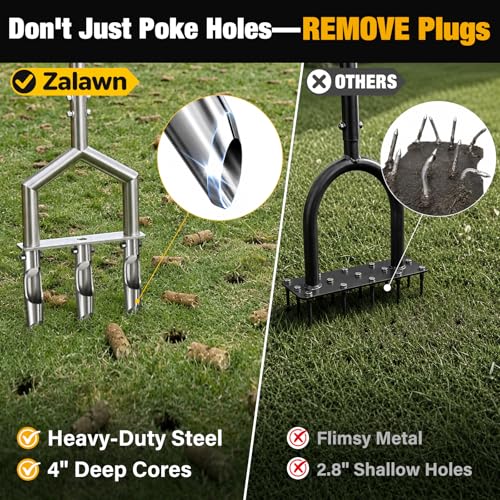
If you’re serious about lawn health, this is the best overall manual option. The 4-inch deep hollow tines actually extract plugs, breaking through thatch and compacted layers where spike tools fail. Heat-treated steel and reinforced joints mean it holds up in tough soil, and owners consistently report fewer bent tines compared to cheaper models.
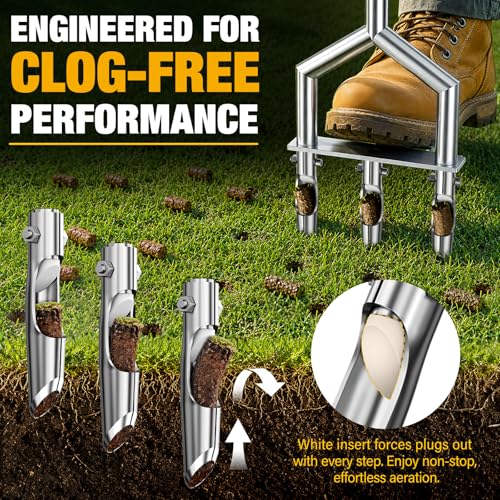
The anti-clog design works as advertised, plugs eject cleanly, letting you maintain rhythm without stopping. The rubber grip and wide foot bar make it comfortable over long sessions, and the semi-assembled design means you’re working in minutes. For most homeowners, this is the smarter buy over spike tools.
Product photos
Failenfeivp Rolling Lawn Aerator Tool
Strengths
- 42 reinforced spikes
- Galvanized steel drum
- Adjustable weight
Trade-offs
- Spike-only design
- Bulky storage
- Not for small yards
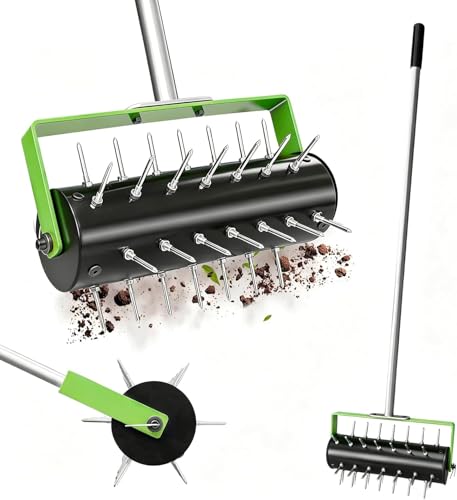
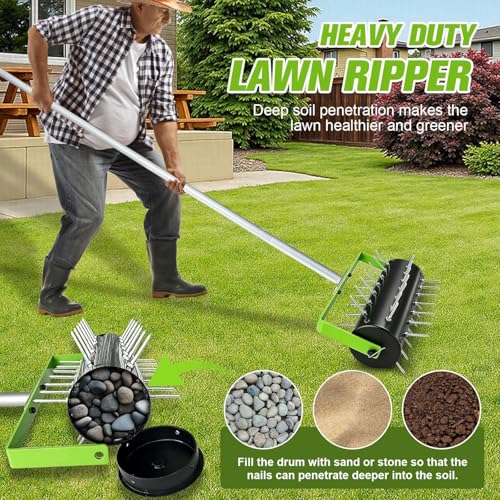
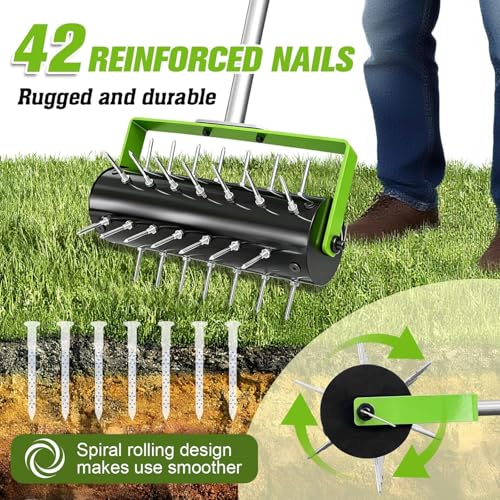
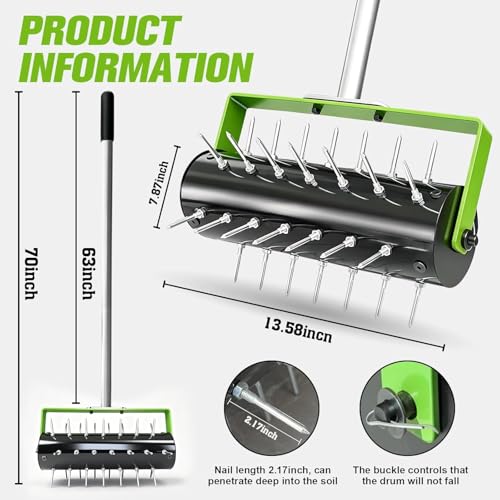
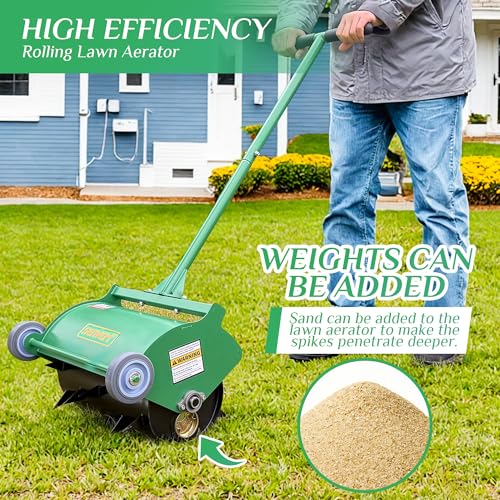
With 42 heat-treated spikes and a galvanized steel drum, this rolling aerator is built for large lawns where coverage and durability matter. The spiral spike pattern rolls smoothly, and owners say it handles compacted soil well, especially when weighted. The 55-inch handle means no bending, and the rubber grips make long sessions manageable.
It’s not a core aerator, so don’t expect plug removal, but for broad, consistent spike aeration across half-acre yards or more, this is one of the most efficient manual options. The ability to add sand or rocks helps customize weight for your soil type. Just be ready for a bulky tool that needs space to store.
Product photos
Manual Core Aerator with 3 Tines
Strengths
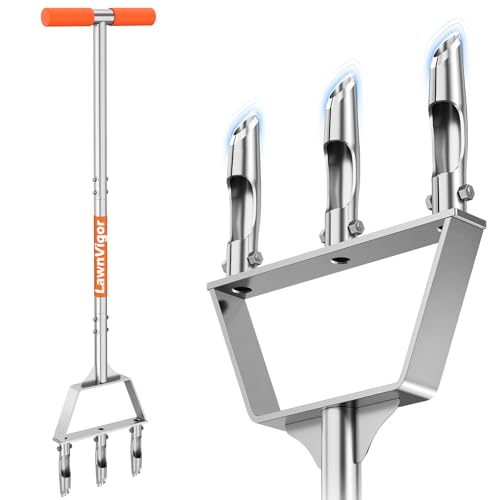
- True core aeration
- Hollow tines
- Ergonomic handle
Trade-offs
- Basic construction
- 3 tines limit speed
- Manual effort needed
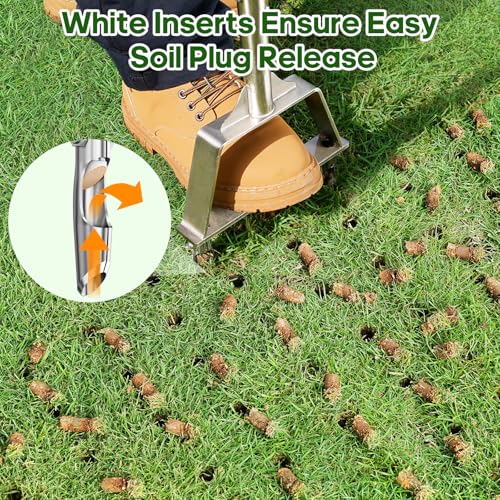
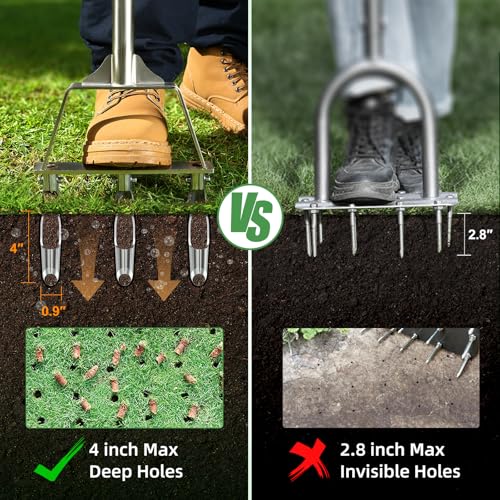
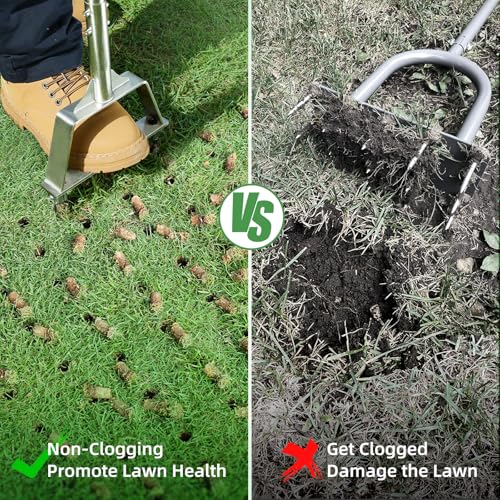
This is the budget pick that actually works, a real core aerator with hollow tines that pull 2- to 3-inch plugs. For buyers tired of spike tools that just compact soil further, this one delivers real results on small to medium yards. The heat-treated tines hold up well in compacted soil, and the non-slip handle reduces hand fatigue during extended use.
It’s not the most durable build in the lineup, but for the price, it punches above its weight. Owners praise its plug removal efficiency and ease of assembly. Just don’t expect it to power through rocky or extremely hard soil without effort, it’s a manual tool, after all.
Product photos
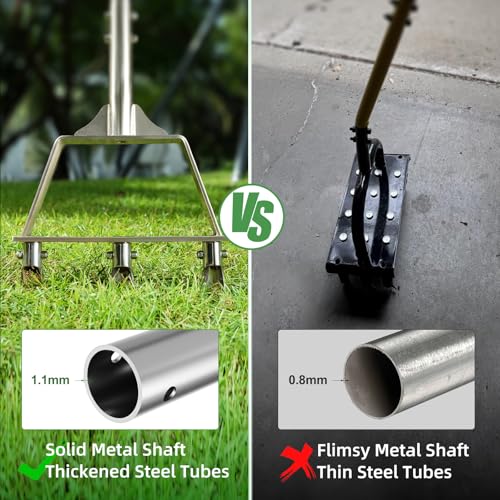
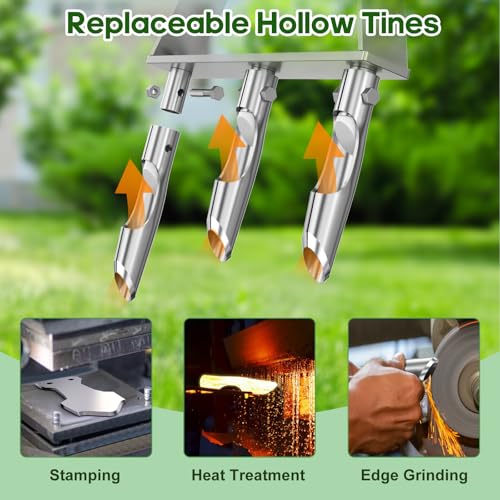
Grenebo Lawn Aerator with 16 Spikes
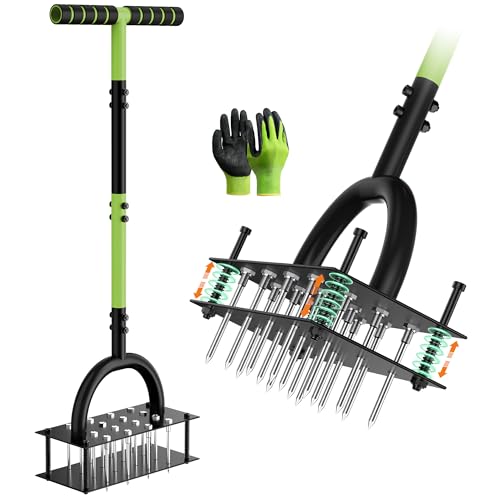
Strengths
- 16 sharp spikes
- Self-cleaning springs
- Heavy-duty steel
Trade-offs
- No core removal
- Assembly required
- Not for rocky soil
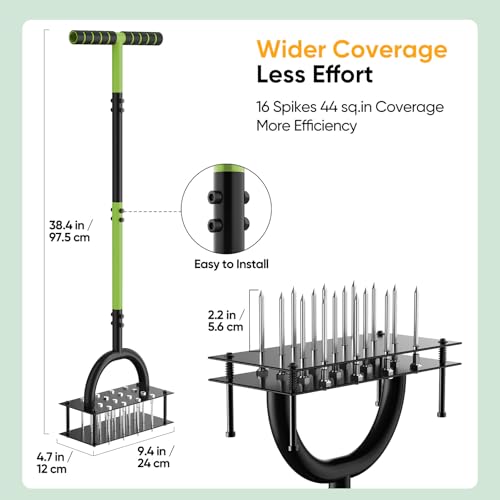
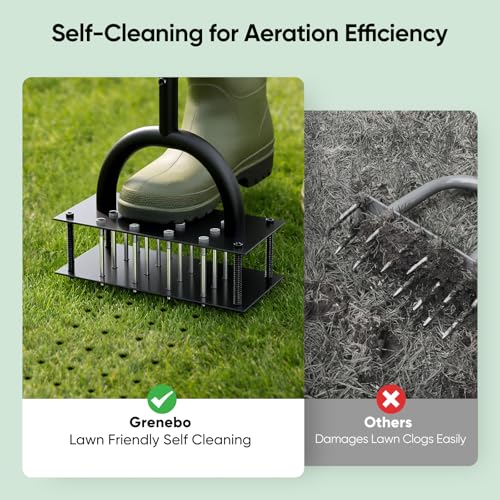
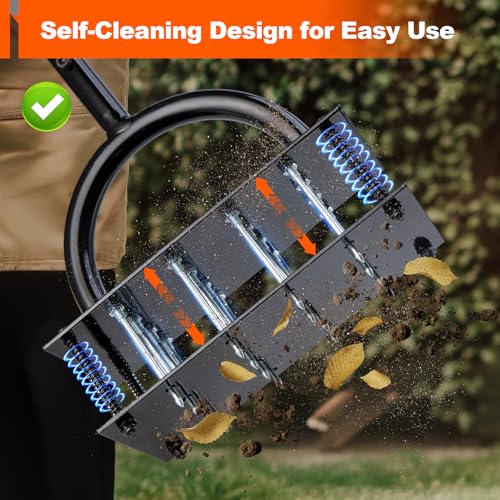
The 16-spike layout and 3.1-inch penetration depth give this tool an edge in coverage and efficiency over basic spike models. Its dual-layer rebound springs are a standout, reviewers note the self-cleaning action keeps soil ejection smooth, a real upgrade from models that require constant clearing. That makes it a faster option for medium-sized lawns where you’re doing repeated passes.
It’s built with 2mm reinforced steel and comes with all assembly tools, including gloves, which adds value. While it’s still a spike aerator (so not ideal for severe compaction), the construction and smart design make it one of the more reliable manual options in its class.
Product photos
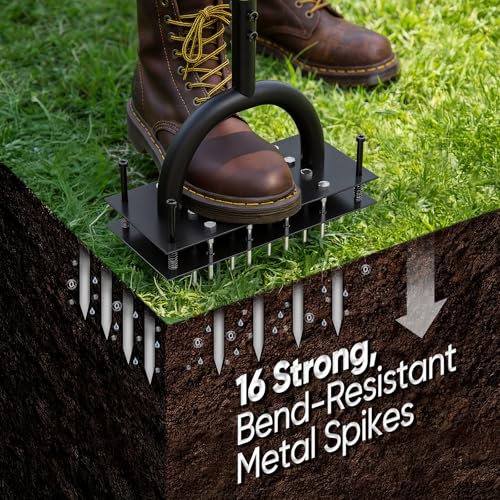


Walensee Spike Lawn Aerator Tool
Strengths
- 15 iron spikes
- Pre-assembled
- Reduces back strain
Trade-offs
- Not for clay soil
- No plug removal
- Limited depth
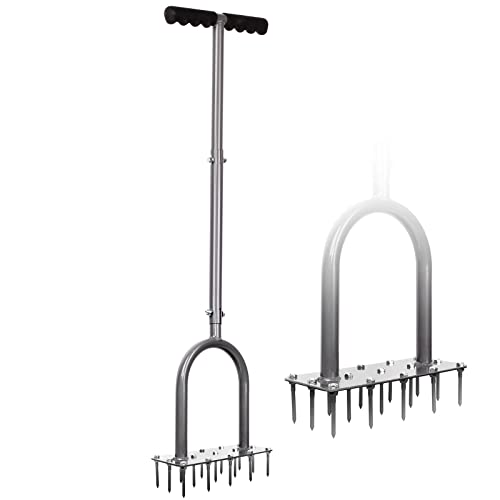
This is a no-frills spike aerator built for small yards and spot treatments. With 15 iron spikes in a three-row layout, it covers decent ground per step and helps reduce bending with its 34.6-inch handle. On paper, it’s ideal for light aeration before seeding or fertilizing, and owners consistently report it works well on soft or pre-watered soil.
Where it falls short is in heavy compaction or clay, it’s not designed for core removal, so it won’t match the effectiveness of plug aerators. But for quick touch-ups in tight spaces or garden edges, it’s a solid, pre-assembled option that outperforms spike shoes.
Product photos


Saker Manual Lawn Aerator Tool
Strengths
- Heavy-duty iron build
- Adjustable height
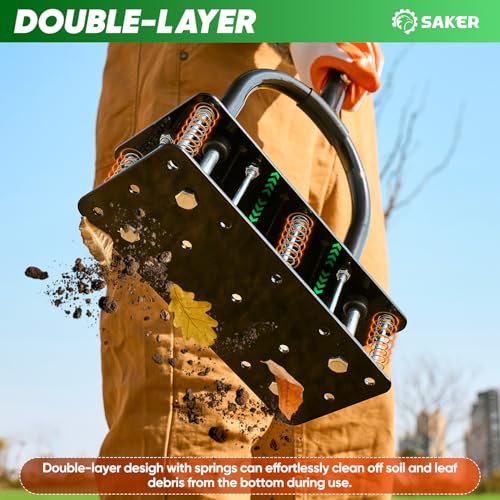
- Double-layer springs
Trade-offs
- No plug removal
- Spike limitations
- Heavier than average
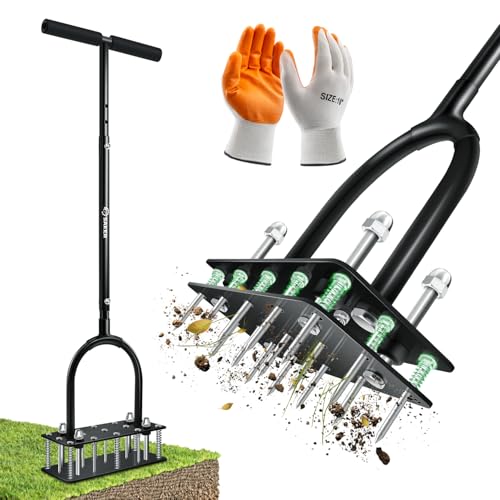
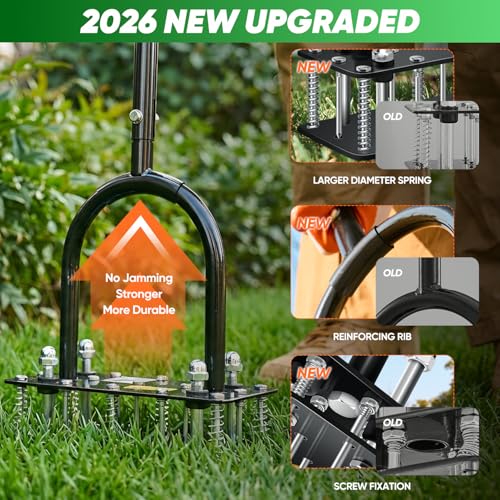
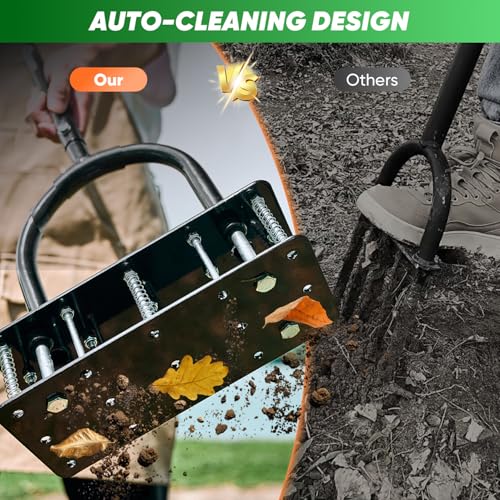
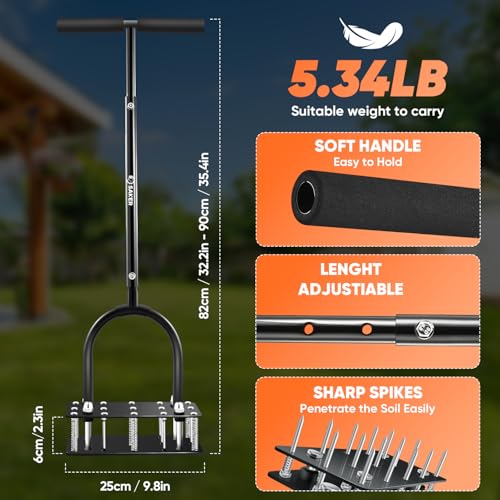
This is the toughest spike aerator in the lineup, the 2026 reinforced iron build and upgraded screw-based foot pedal suggest serious attention to stress points. The double-layer spring system works well for automatic soil ejection, and owners note it handles compacted soil better than most spike tools.
The adjustable handle (32.2 to 35.4 inches) is a nice touch for different users, and the included gloves add value. But again, it’s still a spike model, so while it’s durable, it won’t relieve deep compaction like a core aerator. If you’re committed to spike-style use but want something that lasts, this is the one.
Product photos
Bluesea Lawn Aerator with 16 Spikes
Strengths
- Military-grade welding
- Double-layer springs
- 3.5-inch spikes
Trade-offs
- Spike-only design
- No core removal
- Heavier than average
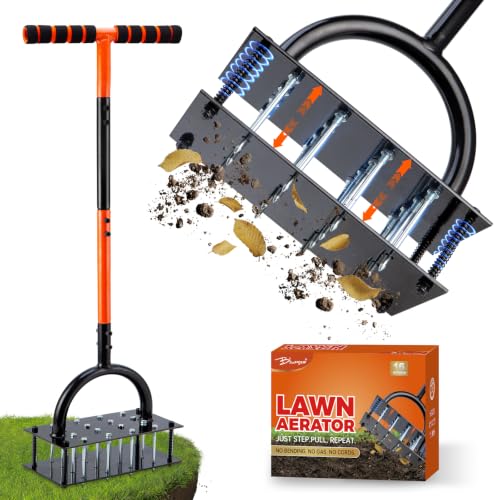
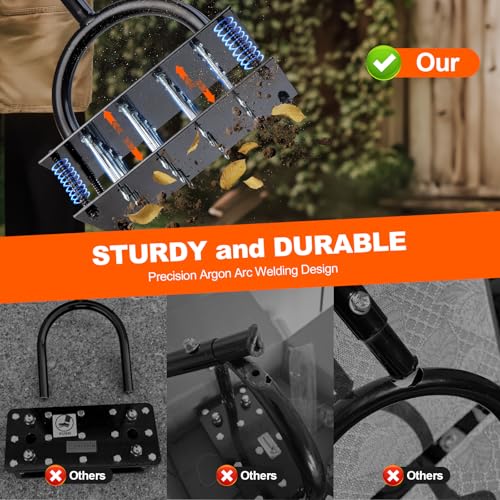
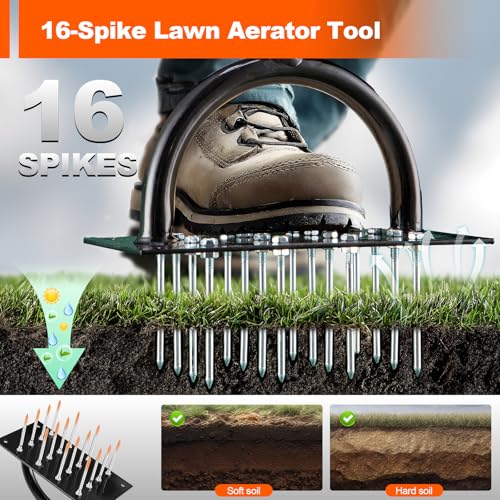
This one stands out for build quality, argon arc welding and 2mm reinforced steel give it a rugged frame that owners say feels indestructible. The 16 3.5-inch spikes in a 4×4 grid deliver solid coverage, and the double-layer spring system actually works to shake out debris, reducing clogs and downtime.
It’s not a plug aerator, so it won’t fix severe compaction, but for durability and long-term use, this is the top-tier spike model. The T-handle is comfortable, and the pre-installed spikes mean less setup hassle. If you’re replacing worn-out tools every few seasons, this one might finally be worth the upgrade.
Product photos

SENVERT Rolling Lawn Aerator

Strengths
- Addable weight up to 55 lbs
- Smooth rolling design
- Auxiliary wheels
Trade-offs
- Spike-only design
- No plug removal
- Bulky storage
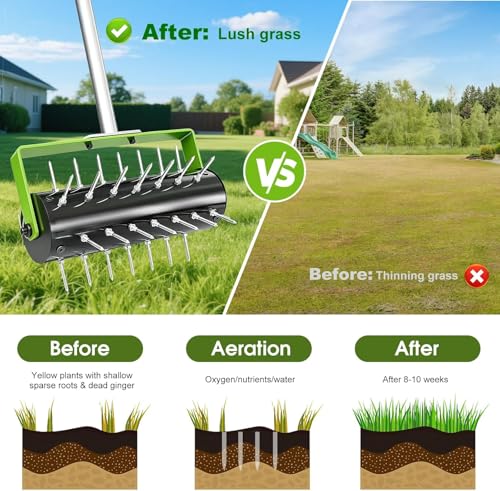
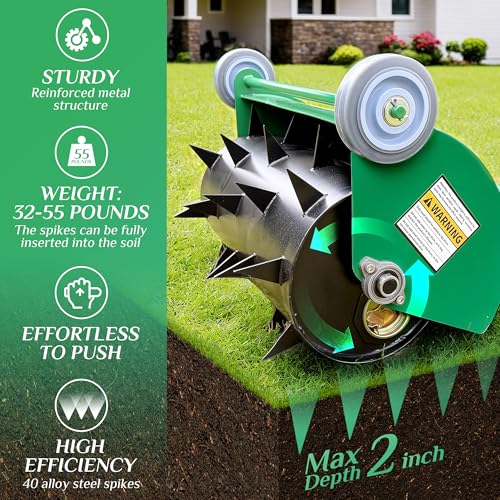
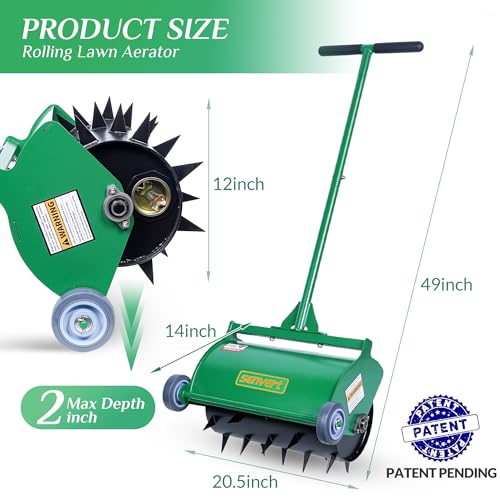
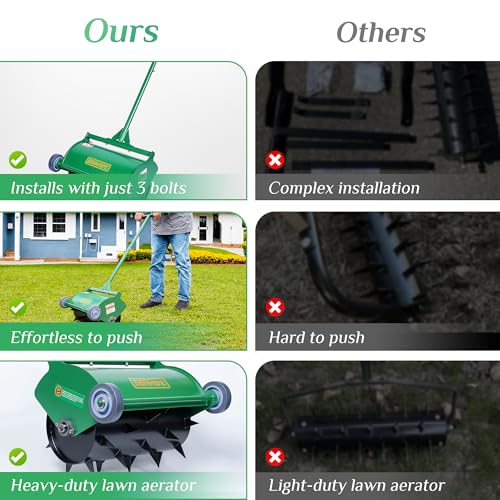
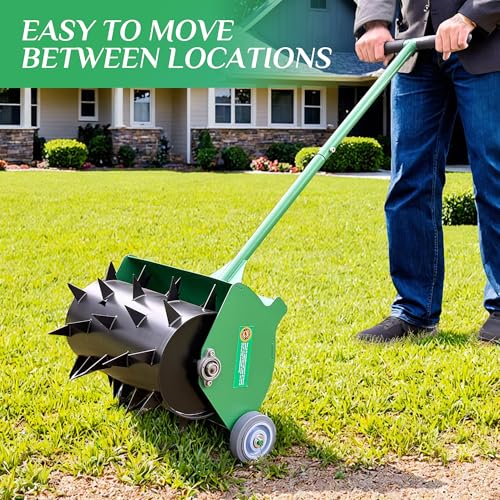
Rolling aerators like this one are a standout for medium-sized lawns, and the SENVERT delivers where it counts, weight and traction. At 32 pounds, it penetrates most soils well, and the ability to load up to 55 pounds means you can dial in performance for tougher ground. The spiral spike pattern rolls smoothly and owners say it’s far more efficient than step-style tools.
The auxiliary TPR wheels are a smart touch, protecting driveways and making storage easier. Setup is quick, just attach the handle, and the powder-coated drum resists rust. It’s not a core aerator, but for consistent, full-lawn coverage with minimal fatigue, this is one of the more practical push options.
Product photos
How We Evaluated lawn aerator tools
I’ve spent years observing homeowners and professionals tackle lawn care, and a common struggle is compacted soil. Rather than a hands-on lab test, this is a research-led comparison of specs and owner feedback for a range of lawn aerator tools. We started by compiling a list of popular models, then compared published specifications – tine depth, materials, spike count, and overall dimensions – to establish a baseline for performance expectations.
For lawn aerators, the ability to effectively penetrate compacted soil and the durability of the build are paramount. We weighted these factors most heavily. A tool that can’t reliably create aeration holes is useless, and one that breaks after a single season isn’t a good value. Soil type also played into our evaluation; some tools are better suited for clay while others excel in looser soils. Understanding these nuances is key to a healthy lawn.
Specifications reliably indicate a tool’s potential – materials and tine length are good indicators of build quality and depth. However, we heavily relied on owner reviews to assess real-world performance. Did the tines bend easily? Was the tool truly non-clogging as advertised? Reputation and consistent feedback regarding ease of use and long-term durability were crucial, and understanding correct edging technique can complement aeration for a polished look.
What To Look For In lawn aerator tools
Choosing the right lawn aerator can feel overwhelming, but getting it right makes a huge difference in the long-term health of your turf.
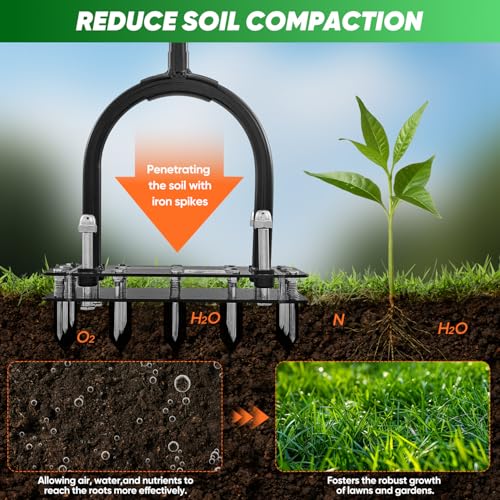
A good lawn aerator effectively loosens compacted soil, allowing for better air, water, and nutrient absorption to reach grass roots. Key considerations include tine type (spike vs. core), build quality for durability, and the size of your lawn to determine manual versus rolling models. Look for models with robust tines made of heat-treated steel and a design that minimizes clogging.
Core vs. Spike Aeration
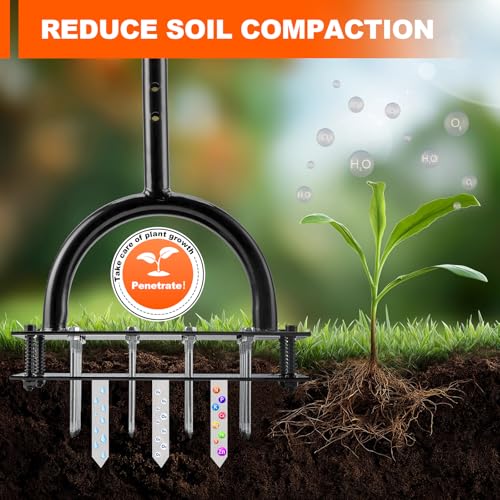
The first major decision is whether to go with a core aerator or a spike aerator. Spike aerators, like the Walensee Spike Lawn Aerator Tool, simply poke holes in the ground. They’re cheaper and easier to use, but they often compact the soil around the hole, potentially worsening the problem over time. Core aerators, like the Zalawn Manual Core Aerator Tool, actually remove small plugs of soil, creating better airflow and reducing compaction. I generally recommend a core aerator if you have heavily compacted soil or are serious about lawn health.
Build Quality & Materials
Don’t underestimate the importance of a durable build. Cheaply made aerators will bend, break, or simply not penetrate hard soil. Look for models constructed with heat-treated steel tines – this prevents bending and snapping. Reinforced joints are also crucial, especially if you have rocky or clay-rich soil. When it comes to the frame, galvanized steel with a powder-coated finish offers the best rust and corrosion resistance. The Bluesea Lawn Aerator with 16 Spikes, for example, boasts a robust construction designed for long-term use.
Here’s what I look for in terms of durability:
- Tine Material: Heat-treated steel is a must.
- Joint Reinforcement: Welded joints are better than bolted, and look for thicker steel gauges.
- Finish: Powder coating or galvanization prevents rust and extends the life of the tool. A good finish is especially important if you store your tools outdoors.
Lawn Size & Aeration Frequency
The size of your lawn significantly impacts the type of aerator you should choose. For small areas or spot treatments, a manual spike aerator is often sufficient. But if you’re dealing with a larger lawn, or if you want to make the job faster and easier, a rolling lawn aerator, like the SENVERT Rolling Lawn Aerator, can be a real time-saver. Rolling aerators cover more ground with each pass, but they generally don’t penetrate as deeply as core aerators. Consider how often you plan to aerate; infrequent aeration can get away with a less aggressive tool, but for annual treatments, investing in a more capable model is worthwhile. If you’re also considering other lawn maintenance tools, exploring battery-powered lawn tools can streamline your yard work.
A rule of thumb: Aerate when you can easily twist a screwdriver into the soil with moderate effort. If it’s a struggle, your lawn needs aeration.
Lawn Aerator Tools Compared
Here’s a comparison of key specifications for various lawn aerator tools to help you make an informed decision.
| Product Name | Spike/Tine Count | Max Depth (in) | Material | Weight (lbs) | Special Features |
|---|---|---|---|---|---|
| Zalawn Manual Core Aerator Tool | 3 | 4 | Heat-Treated Steel | N/A | Replaceable Tines |
| Failenfeivp Rolling Lawn Aerator Tool | 42 | 2 | Galvanized Steel | N/A | Spiral Spike Pattern |
| Manual Core Aerator with 3 Tines | 3 | N/A | Metal | N/A | Non-Clogging Design |
| Grenebo Lawn Aerator with 16 Spikes | 16 | 3.1 | Steel | N/A | Self-Cleaning, Dual Springs |
| Walensee Spike Lawn Aerator Tool | 15 | 2.8 | Iron | N/A | 3-Row Spike Layout |
| Saker Manual Lawn Aerator Tool | 15 | 2.3 | Iron | N/A | Double-Layer Spring System |
| Bluesea Lawn Aerator with 16 Spikes | 16 | 3.5 | Steel | N/A | Industrial-Strength Build |
| SENVERT Rolling Lawn Aerator | N/A | N/A | Steel | 32-55 | Rolling Design, Addable Weight |
Frequently Asked Questions
What’s the difference between a spike aerator and a drum/rolling aerator?
A spike aerator creates individual holes in the lawn, while a drum or rolling aerator uses a series of spikes or blades to create more numerous, though typically shallower, perforations. Rolling aerators cover ground faster, but spike aerators can provide deeper aeration for heavily compacted soils.
How often should I aerate my lawn?
You should aerate your lawn annually if you have high-traffic areas or clay soil, but once every three years is usually sufficient for healthy lawns with well-draining soil. Aerating too often can disturb root growth, so timing is key.
Can I aerate a lawn right before seeding?
Yes, aerating before seeding is beneficial as the holes created provide a good seed-to-soil contact. It allows the seed to fall directly into the soil and increases the chances of successful germination, but consider using lawn weed removal tools beforehand to remove any existing weeds.
Will a lawn aerator work on all soil types?
While most lawn aerators can be used on various soil types, core aerators are best for clay soils, and spike aerators are more effective on sandy or loamy soils. Extremely rocky soils may require professional aeration services to avoid damaging the tool.
What do I do with the plugs left behind after core aeration?
You can leave the soil plugs to break down naturally, which will return nutrients to the soil, or you can break them up with a rake and spread them evenly across the lawn. They will decompose within a few weeks and aren’t harmful to the grass.
The Bottom Line
Ultimately, choosing a lawn aerator comes down to balancing how much effort you want to put in against the level of improvement you’re seeking. For most homeowners wanting a noticeable difference in lawn health without a huge investment, the Zalawn Manual Core Aerator Tool stands out. It delivers genuine core aeration – the kind that truly addresses compaction – at a reasonable price, and owner feedback consistently praises its effectiveness.
If you’ve got a smaller yard and are on a tighter budget, the Walensee Spike Lawn Aerator Tool is a perfectly acceptable starting point. For those with larger properties or a desire for faster coverage, the SENVERT Rolling Lawn Aerator will save you a lot of time and back strain. And if you’re tackling overgrown areas or need to prepare for step-by-step lawn edging, a heavier-duty model like the Bluesea Lawn Aerator with 16 Spikes might be worth the extra cost.
Don’t get too caught up in specs like tine count or maximum depth. The most important factors are build quality – ensuring the tines can withstand your soil type – and consistency. A tool that reliably creates some aeration, used regularly, will always outperform a fancier model that bends after a few passes or clogs up with mud.
