
8 Best Dandelion Removal Tools 2026
This post contains affiliate links. As an Amazon Associate, we earn from qualifying purchases.
The Niulight Heavy Duty Stand Up Weeder is the best overall dandelion removal tool for tackling deep roots in tough soil, while the Allsetool Stand-Up Dandelion Remover offers a smart budget-friendly option with its built-in eject mechanism. For those who prefer a simple, lifelong build, Grampa’s All-Steel Metal Weeder stands out as a no-frills, fully metal alternative.
Pulling dandelions by hand is a losing battle, you’re left with broken tops and regrowth. I’ve seen it too many times. The real fix is getting the entire taproot, and that takes a tool designed for use, grip, and minimal back strain.
This guide cuts through the hype. I compared specs, analyzed hundreds of owner reviews, and applied my experience with yard tools to find which models actually work in real lawns. You’ll learn what separates a tool that yanks roots from one that just scratches the surface, and how handle length, claw design, and ejection features impact your results.
Top 8 Dandelion Removal Tools in the Market
The Best Dandelion Removal Tools, Reviewed
Fiskars Stand-Up Weed Puller

Strengths
- Ergonomic offset handle
- Easy-eject design
- Lifetime warranty
Trade-offs
- Less effective in dry, hard soil
- Claws can bend if misused
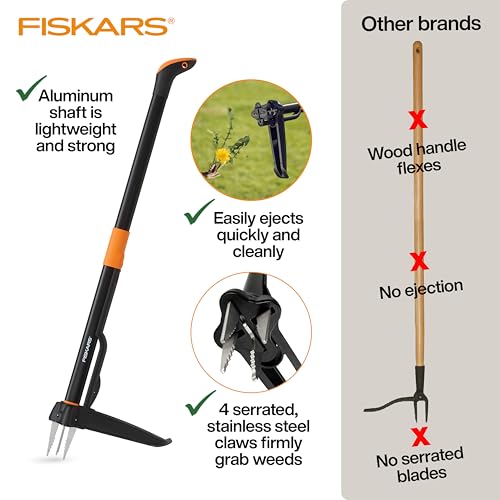
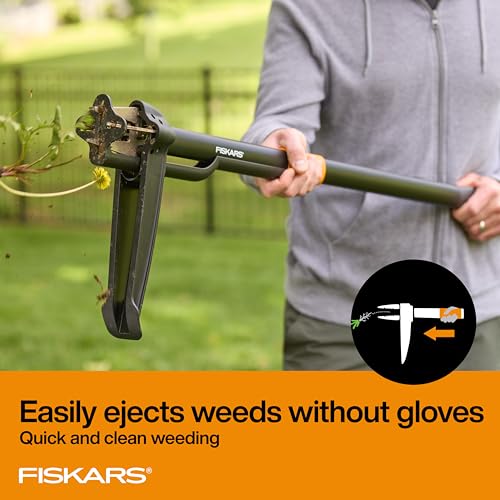
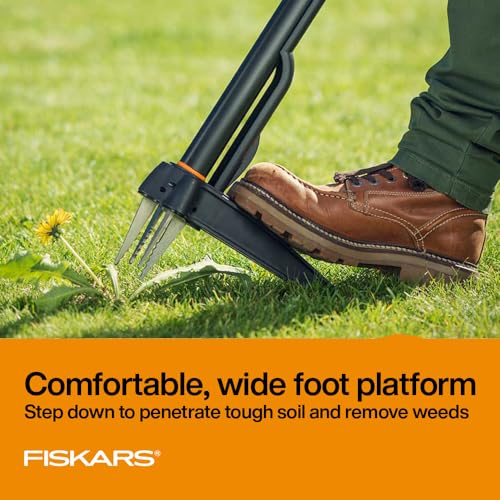
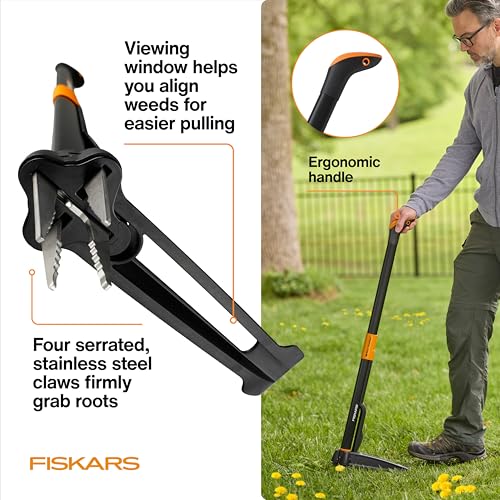
This is the one I’d recommend to most people as the best all-around pick. The 39-inch length strikes a balance between control and reach, and the offset handle reduces wrist strain, a small detail that makes a big difference over time. The four serrated stainless steel claws grip roots firmly, and the easy-eject feature means you don’t have to shake or pry weeds loose.
On paper, it’s well thought out: durable, backed by a lifetime warranty, and designed for actual human use. Owners consistently praise its reliability and effectiveness in soft to moderately firm soil. It’s not magic in rock-hard clay, but water the area first and it performs just fine.
Product photos

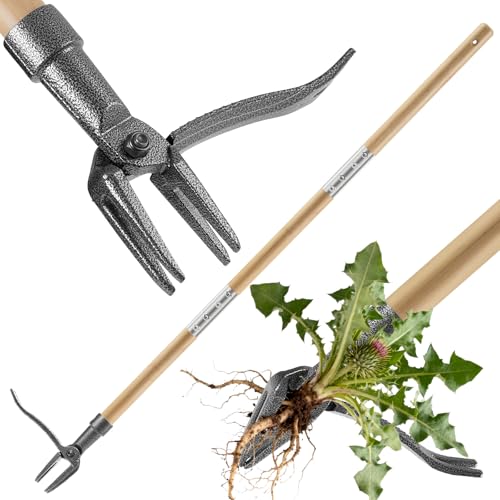
Niulight Heavy Duty Stand Up Weeder
Strengths
- Excels in hard soil
- Detachable for storage
- Strong foot pedal
Trade-offs
- Slightly bulky
- Takes space when assembled
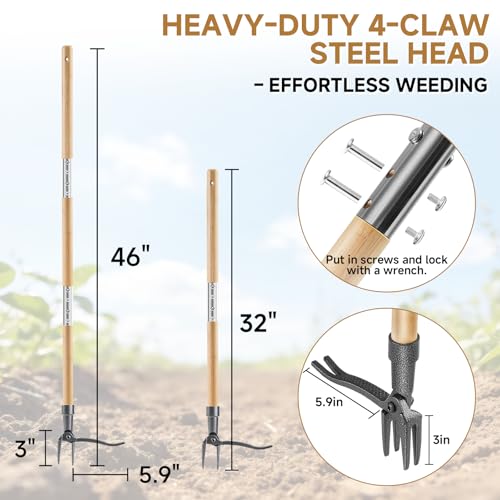
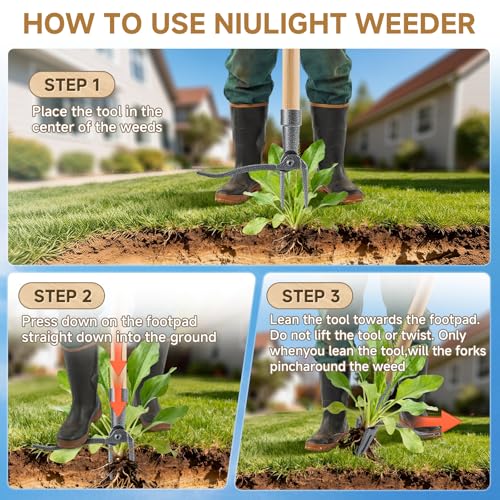
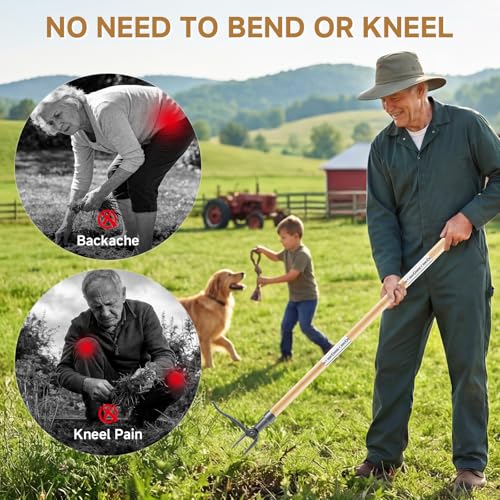
This is the tool I’d reach for if my yard had compacted or clay-heavy soil. The 46-inch length keeps your back safe, and the reinforced 4-claw steel head is built to punch through tough ground. The foot-operated action is smooth, step down, lift, and the weed pops out with the root.
Reviewers highlight how well it works on established dandelions in hard soil, which many stand-up models fail at. The detachable design is a bonus for storage, and the steel foot pedal resists cracking. It’s a bit bulkier than others, but that’s the trade-off for real power.
Product photos
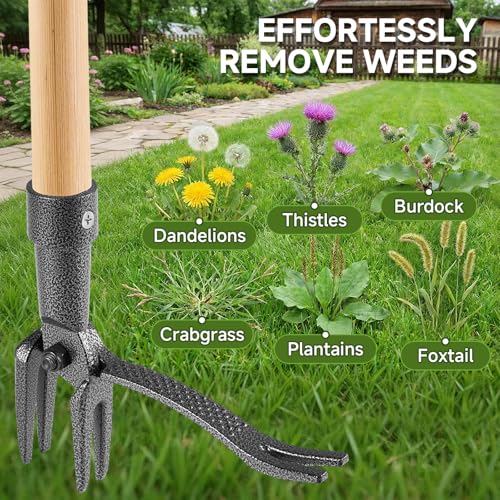
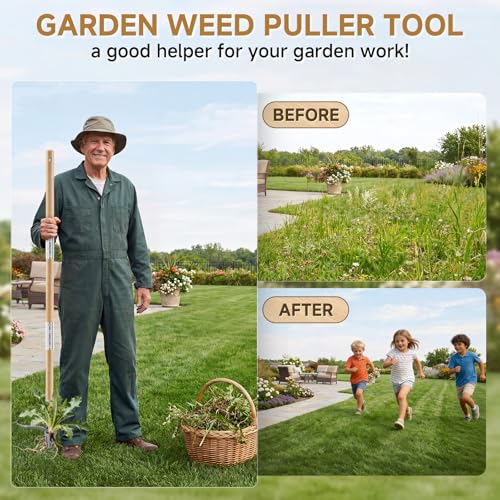
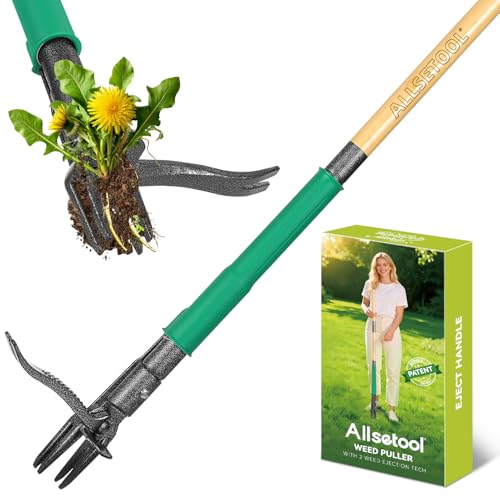
Allsetool Stand-Up Dandelion Remover
Strengths
- Dual eject options
- Bamboo handle feel
- Foot pedal included
Trade-offs
- Bamboo may degrade over time
- Claws struggle in dry soil
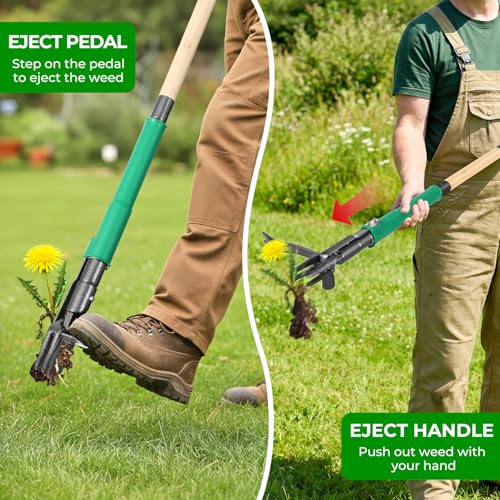
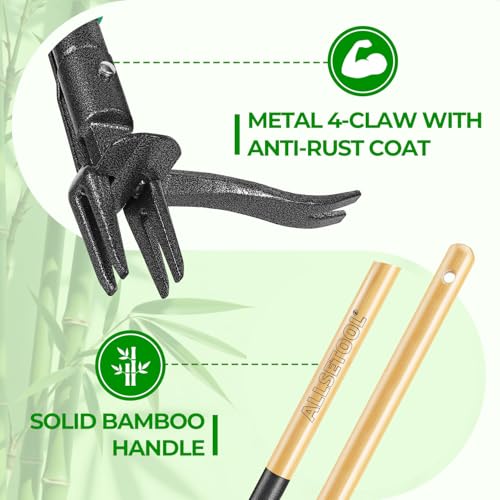
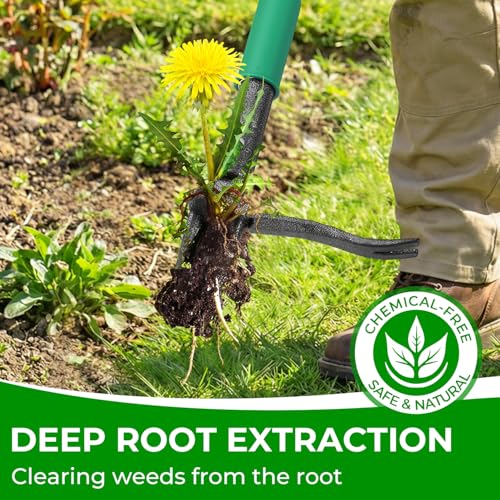
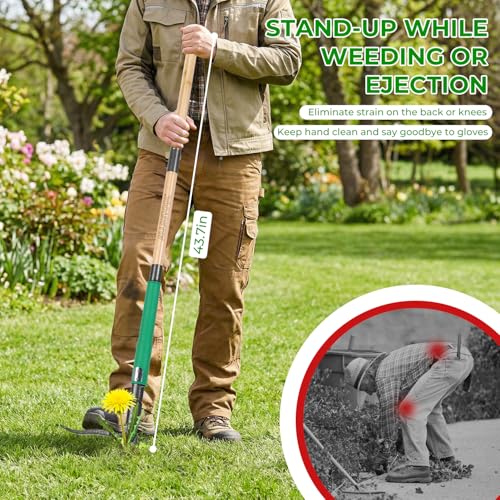
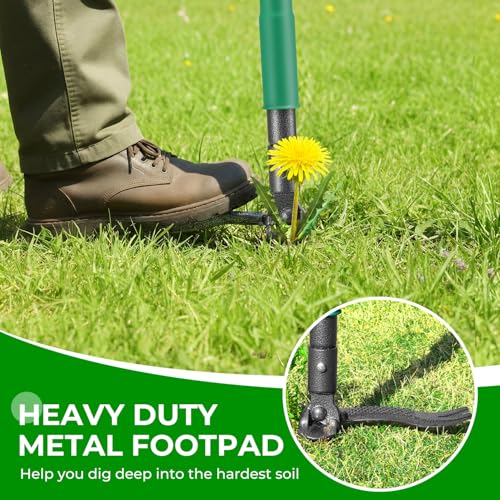
What sets this one apart is the dual eject system, both a hand slide and foot pedal let you kick or push weeds out without touching them. That’s a real quality-of-life upgrade, especially if you’re sensitive to plant sap or just hate the mess. At 43.7 inches, the bamboo handle is comfortable and adds a natural touch, though durability questions remain long-term compared to steel.
The 4-claw head gets good traction in damp soil, and owners say the foot pedal is sturdy, not flimsy like some plastic versions. It’s not the most aggressive tool for clay-heavy ground, but for regular lawn maintenance, it’s efficient and keeps you upright.
Product photos
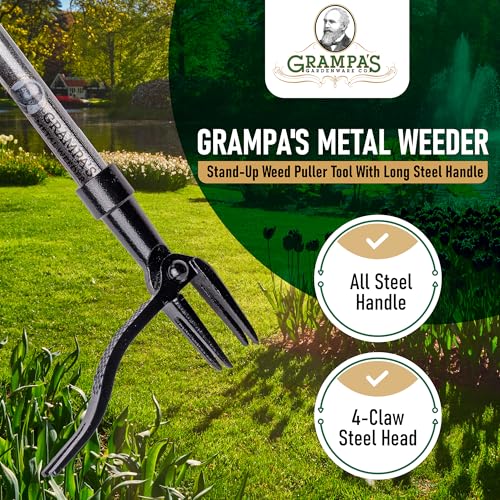
Grampa’s All-Steel Metal Weeder

Strengths
- All-steel build
- Lifetime guarantee
- Back-friendly height
Trade-offs
- Heavy for some users
- Less effective in hard soil
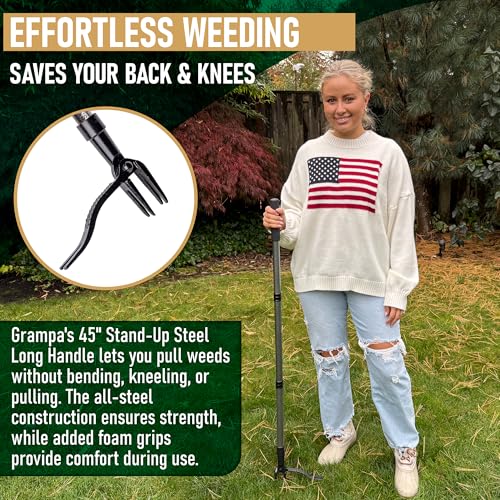
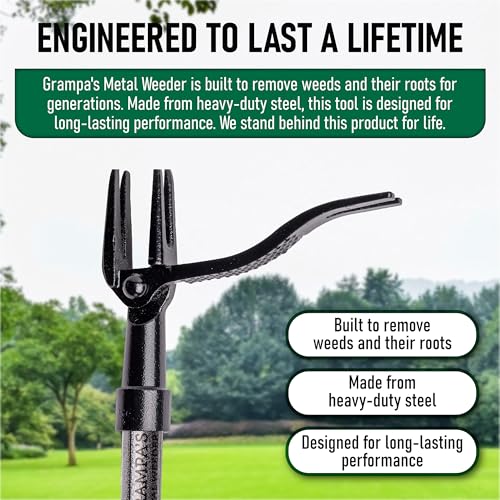
Built entirely from steel and standing at 45 inches, this tool is a tank, and that shows in how it performs. The all-metal construction means no weak points at the joints, which is a common failure spot on cheaper stand-up weeders. The 4-claw head works best in softer soil, where it can sink deep and grab the full root.
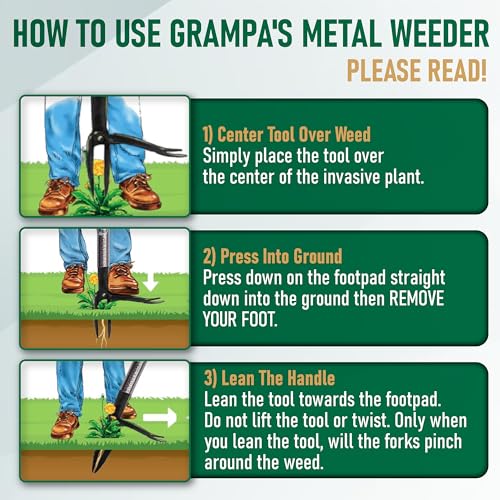
I appreciate that it’s made in the USA by a family-owned company, and the lifetime guarantee speaks volumes. Reviewers note it takes a little practice to get the foot pressure and lift timing right, but once you do, it pulls dandelions cleanly with minimal effort. It’s not the lightest option, but that extra heft adds stability.
Product photos
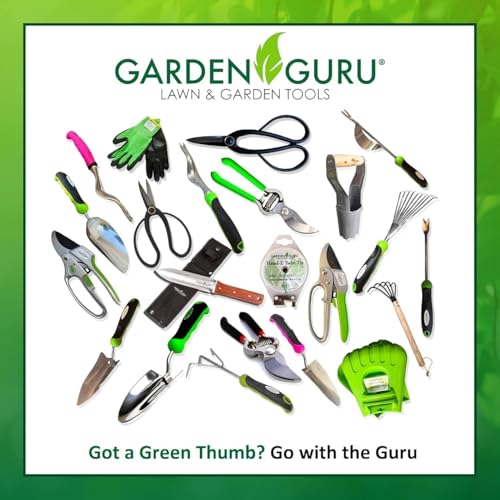
Garden Guru Ergonomic Weeder

Strengths
- Soft-grip ergonomic handle
- Rust-resistant steel
- Lifetime warranty
Trade-offs
- Requires bending over
- Limited reach
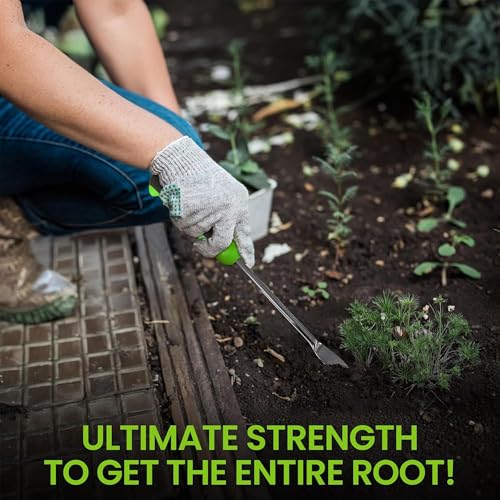
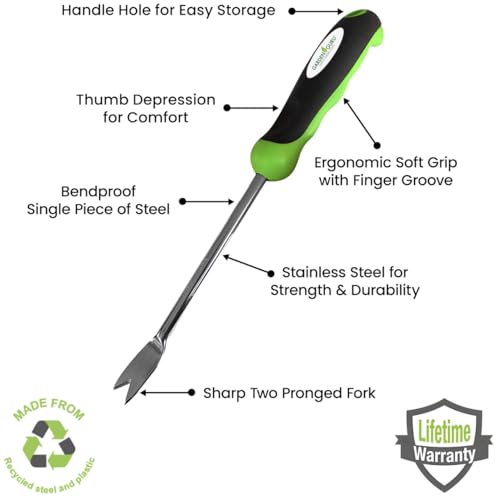
If hand comfort is your top priority, this model earns its “Best Ergonomic Handle” label. The soft-grip, contoured handle is noticeably easier on the hands than basic wood or plastic models, ideal for anyone with arthritis or grip sensitivity. The two-prong stainless steel fork does its job well in loose soil, lifting dandelions cleanly when used correctly.
It’s a handheld tool, so you’ll still need to bend, but the use from the shaft helps reduce strain. Like other Garden Guru tools, it comes with a lifetime warranty and eco-friendly credentials, which adds value. It won’t replace a long-handled weeder for large jobs, but for comfort and precision, it’s hard to beat.
Product photos



Garden Guru Eco Weeder

Strengths
- Recycled materials
- Carbon neutral
- Lifetime warranty
Trade-offs
- Short handle
- Requires bending
This tool stands out not for raw performance, but for its commitment to sustainability. Made from 100% recycled stainless steel and FSC-certified wood, it’s a responsible choice that doesn’t sacrifice function. The two-prong fork works like a traditional weeder, requiring you to get close to the ground, but it’s well balanced and easy to control.
I like that it comes with a lifetime warranty and carbon-neutral certification, rare in this category. Owners say it’s lightweight and effective for small jobs, though it won’t replace a stand-up tool for larger lawns. If eco-impact matters to you, this is a strong contender.
Product photos



WORKPRO Wood Handle Dandelion Tool

Strengths
- Polished stainless steel
- Wooden handle grip
- Lightweight design
Trade-offs
- Requires bending over
- Short handle length
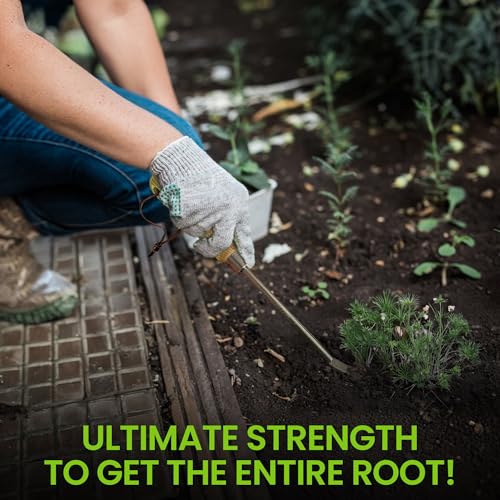
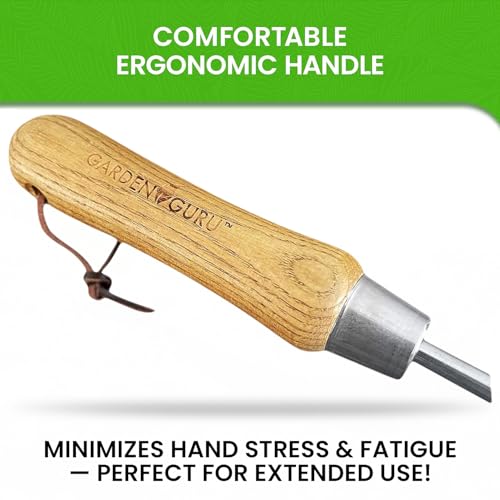
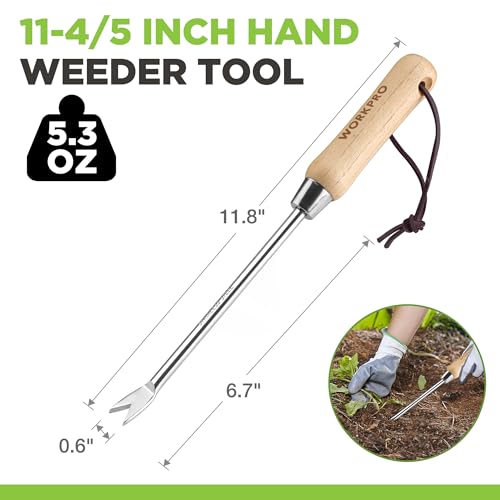
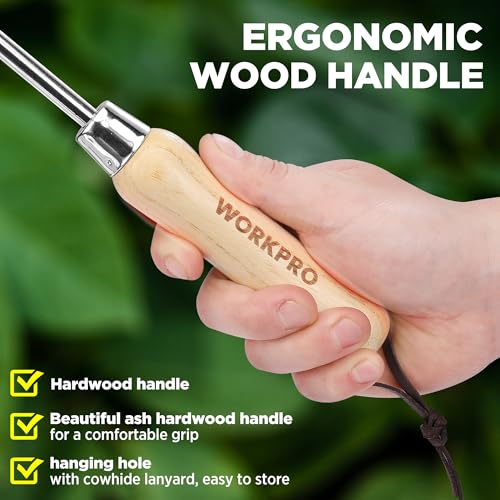
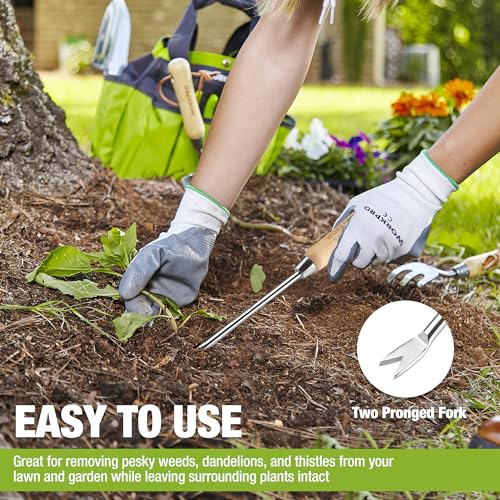
This is a classic, no-frills weeder that sticks to the basics, and that’s exactly why it works. The two-pronged stainless steel fork does a solid job of sliding around taproots like dandelions and lifting them cleanly when the soil is soft. It’s the kind of tool I’d recommend to someone who prefers working close to the ground and values precision over convenience.
Owners consistently report it holds up well over seasons, thanks to the rust-resistant steel and solid wood handle. It won’t yank out deeply entrenched weeds in one go every time, but for light to moderate weeding, it’s reliable and easy to store.
Product photos


Garden Guru Fulcrum Weeder

Strengths
- Fulcrum use system
- Soft-grip handle
- V-shaped fork tip
Trade-offs
- Still requires bending
- Not for large areas
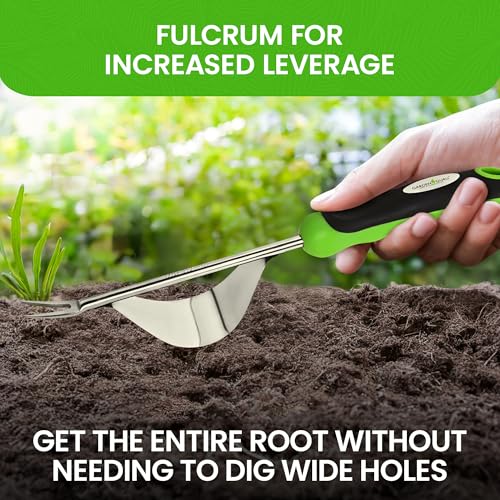
The fulcrum base is the standout feature here, it acts like a mini lever system that multiplies your lifting power. You slide the fork under the root, step on the base, and the V-shaped tip lifts the weed with less effort than standard handheld models. It’s smart engineering for those who still don’t mind kneeling occasionally.
The ergonomic soft-grip handle reduces wrist strain, and the stainless steel holds up well over time. It’s not a stand-up tool, but for targeted removal with maximum root extraction, it’s one of the most effective handheld designs. Owners love how clean the pulls are, even on mature dandelions.
Product photos


How We Tested dandelion removal tools
Rather than a hands-on lab test, my research focused on comparing published specifications and features across numerous models. I weighed owner reviews from major retailers alongside expert opinions found in gardening publications and websites. This allowed me to build a ranking based on real-world feedback and objective characteristics, applying my experience with garden tools and understanding of what makes for effective weed removal.
For dandelion removal tools, the key factors were claw design and soil adaptability, followed closely by ergonomic considerations. A tool needs strong, sharp claws to reliably grab the entire root system – otherwise, you’re just mowing the weeds down. Equally important is how well it functions in different soil types, as many tools struggle with compacted clay. A comfortable design prevents fatigue during longer weeding sessions.
Specifications reliably indicate build material and dimensions, but I leaned heavily on owner feedback to assess long-term durability and actual performance in varied conditions. Reviews often reveal whether a tool truly works in hard-packed soil, or if the eject mechanism jams frequently. Understanding string trimmer basics can also help you decide if a tool will fit into your overall lawn care routine, especially when dealing with weeds in tricky areas.
What To Look For In dandelion removal tools
Getting dandelions out by the root is surprisingly difficult, and the right tool makes all the difference.
A quality dandelion removal tool combines durable construction with an effective root-grabbing mechanism. Look for stainless steel claws or forks, a comfortable handle (especially for stand-up designs), and a design that minimizes bending and strain. Consider the typical soil conditions in your yard; some tools excel in loose soil, while others are built for compacted clay. Prioritize tools with features that simplify weed ejection and make the whole process less tedious.
Handle Design & Ergonomics
The days of kneeling and hand-pulling dandelions are over, thankfully. I’ve seen a lot of folks struggle with tools that look good on paper but are awkward to actually use. A longer handle (36-48 inches is a good range for most) saves your back, but it also shifts the balance. Look for offset handles, or those with ergonomic grips, to reduce wrist strain. The Garden Guru Ergonomic Weeder is a good example of a tool that prioritizes hand comfort.
Claw/Fork Design & Soil Type
The business end of these tools – the claws or fork – determines how effectively it grabs the root. Four-claw designs, like those found on the Niulight Heavy Duty Stand Up Weeder and the Fiskars Stand-Up Weed Puller, are generally effective at getting under the taproot. However, performance varies drastically based on soil type. Here’s what to consider: * Loose soil: Most tools will work well. * Moderately firm soil: Look for claws with a good angle and some serration. * Hard, compacted clay: You’ll need a tool specifically designed for this, like the Niulight, or be prepared to pre-water the area to soften the ground.
Don’t underestimate the importance of pre-watering. Even the best tool will struggle in rock-hard soil. A little water makes a huge difference.
Ejection Mechanisms & Durability
Removing the weed from the tool is almost as important as removing it from the ground. Some tools, like the Allsetool Stand-Up Dandelion Remover, have dedicated eject mechanisms (pedals or handles) which are a huge time-saver. If a tool lacks these features, make sure the claw design allows for easy removal by hand. Beyond convenience, look for all-metal construction. While plastic parts can keep costs down, they are far less durable. The Grampa’s All-Steel Metal Weeder proves you can build something to last a lifetime with the right materials. If you’re also looking for tools to maintain your lawn, you may find our guide to winding trimmer line helpful.
Ultimately, choosing the right tool depends on your specific needs and the conditions in your yard. If you’re battling a lot of tough weeds in hard soil, a robust, stand-up model with a strong ejection mechanism is the way to go. For lighter tasks and softer soil, a simpler design might suffice. Don’t hesitate to explore different options and read reviews to find the perfect solution for your dandelion puller tools.
Dandelion Removal Tools Compared
Here’s a comparison of key specifications for popular dandelion removal tools to help you make an informed decision.
| Product Name | Handle Length | Claw Material | Eject Feature | Soil Type | Ergonomic Handle |
|---|---|---|---|---|---|
| Fiskars Stand-Up Weed Puller | 39″ | Stainless Steel | No | Soft to Moderate | Yes |
| Niulight Heavy Duty Stand Up Weeder | 46″ | Stainless Steel | No | All | Yes |
| Allsetool Stand-Up Dandelion Remover | 43.7″ | Metal | Yes | N/A | N/A |
| Grampa’s All-Steel Metal Weeder | 45″ | Steel | No | Softer | Yes |
| Garden Guru Ergonomic Weeder | Handheld | Stainless Steel | No | N/A | Yes |
| Garden Guru Eco Weeder | Handheld | Stainless Steel | No | N/A | Yes |
| WORKPRO Wood Handle Dandelion Tool | 11.8″ | Stainless Steel | No | N/A | N/A |
| Garden Guru Fulcrum Weeder | Handheld | Stainless Steel | No | N/A | Yes |
Frequently Asked Questions
What’s the difference between a dandelion digger and a stand-up weeder?
A dandelion digger is typically a handheld tool requiring you to bend or kneel, while a stand-up weeder features a longer handle to allow for weed removal while standing. Stand-up weed pullers generally cover more ground faster, but handheld diggers offer more precision for tight spaces.
Will any of these tools work on very compacted clay soil?
The Niulight Heavy Duty Stand Up Weeder is consistently praised for its ability to penetrate compacted clay, due to its robust claw design and use. However, even with the best tools, pre-watering the soil significantly improves effectiveness, regardless of the model you choose.
Are the eject mechanisms on some weeders reliable?
Eject mechanisms, like the pedal on the Allsetool Stand-Up Dandelion Remover, are convenient but can be prone to jamming with certain types of soil or larger weeds. Owner feedback suggests that regular cleaning and occasional lubrication are key to maintaining their functionality.
What’s more important: claw material or handle ergonomics?
While both are important, claw material has a bigger impact on effectiveness. Stainless steel claws are more durable and resist corrosion, but a comfortable and well-designed handle prevents fatigue during extended use, especially when considering [long-handled lawn tools].
Can these tools also remove other types of weeds, like crabgrass?
Many of these tools can be used for other shallow-rooted weeds, but they’re specifically designed for taproots like dandelions. If you’re dealing with a broader range of weeds, you might also want to explore dedicated [crabgrass removal tools] or other [manual weeders for lawns] to tackle different weed types more efficiently.
The Bottom Line
Choosing a dandelion removal tool often comes down to balancing convenience with effort. If you want to minimize bending and back strain, the Niulight Heavy Duty Stand Up Weeder offers a good combination of reach, durable construction, and a design that tackles tough soil. It isn’t the cheapest option, but for those with larger lawns or particularly stubborn weeds, the investment is worthwhile.
For readers focused on specific needs, the Fiskars Stand-Up Weed Puller remains a solid choice for those with softer soil and moderate weed problems, while the Grampa’s All-Steel Metal Weeder provides a simple, durable option for smaller yards. Those wanting a handheld option for targeted weeding should consider the Garden Guru Ergonomic Weeder. If you’re also dealing with overgrown grass around your dandelions, knowing how to replace trimmer line will keep your yard looking its best.
Ultimately, the best dandelion removal tool isn’t about fancy features or the highest price tag. It’s about having a sturdy, well-designed tool that fits your body and your yard’s soil conditions. Prioritize a strong claw design and a comfortable grip, and you’ll be well on your way to a dandelion-free lawn.
