
8 Best Jig Saws of 2026
This post contains affiliate links. As an Amazon Associate, we earn from qualifying purchases.
The DEWALT 20V MAX XR stands out as the overall best jig saw for its power, precision, and reliability, especially if you’re already in the DeWalt ecosystem. For those on a tighter budget, the WEN 33606 delivers strong performance and useful features without the high price tag. And if you value versatility across materials and jobsite mobility, the SKIL PWR CORE Brushless cordless model earns its spot with efficient power and smooth handling.
Choosing the wrong jig saw can lead to rough cuts, frustrating blade changes, and hands that tire fast. As someone who’s spent years working with these tools in real-world conditions, I know how much difference the right saw makes in both results and comfort.
This guide cuts through the noise by focusing on what actually matters: power delivery, orbital control, blade handling, and long-term durability. These picks are based on a deep explore specs, owner experiences, and performance trends across the most trusted brands in the trade.
Top 8 Jig Saws in the Market
The Best Jig Saws, Reviewed
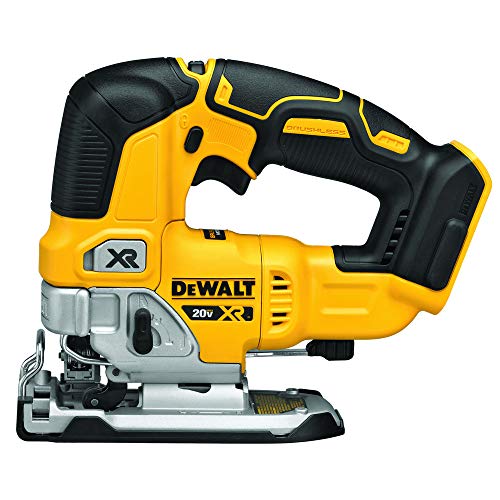
DEWALT 20V MAX XR Jig Saw
Strengths
- Brushless motor
- Dust blower included
- All-metal blade clamp
Trade-offs
- Bare tool only
- Higher price point
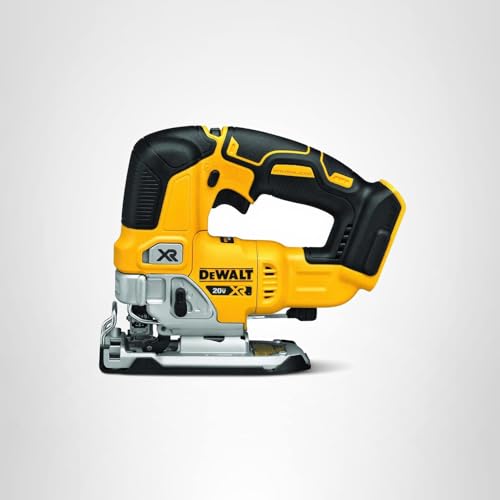
The DEWALT DCS334B is the benchmark for cordless jig saws, and for good reason. Its brushless motor delivers consistent power and better battery efficiency, which owners confirm translates to more cuts per charge than older brushed models. At 3200 SPM with 4 orbital settings, it handles everything from laminated plywood to steel pipe with confidence. The all-metal keyless blade change is fast and secure, no wobble, even under load.
The ergonomics are spot-on: compact, well-balanced, and comfortable for extended use. The integrated dust blower and LED are practical touches that stay out of the way. Compared to the SKIL PWR CORE, it’s more refined and powerful, though you’ll pay more and need your own battery. For most serious users, this is the smarter buy, it’s the one I’d recommend to a friend upgrading from a corded model.
Product photos
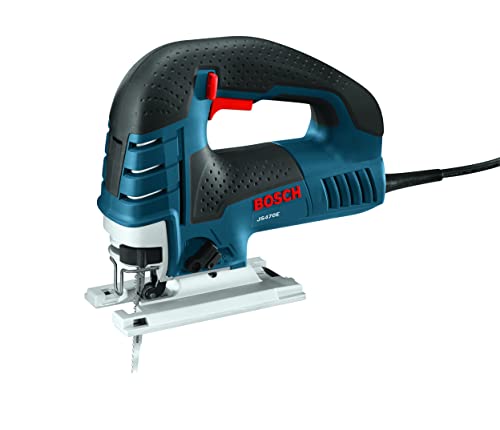
BOSCH Top-Handle Jig Saw 7.0 Amp
Strengths
- Powerful 7.0 Amp motor
- Low vibration design
- 4 orbital settings
Trade-offs
- Top-handle not ideal for all users
- Heavier than compact models
The Bosch JS470E is what you reach for when you need precision and reliability over portability. With a 7.0 Amp motor and 3100 SPM, it’s built to plow through thick hardwood or layered materials without flinching. The top-handle design gives excellent control for overhead or angled cuts, and Bosch’s low-vibration engineering really shows, owners consistently report less fatigue during long sessions.
Its 4-orbit setting system offers more granular control than most saws, letting you fine-tune aggressiveness versus smoothness. The included accessories like anti-splinter insert and carrying case add real value. Compared to the SKIL and WEN corded models, this one feels more refined, with better balance and a sturdier shoe. If you’re working in a shop or on-site with reliable power, this is the kind of tool that disappears into the job, quiet, accurate, and dependable.
Product photos


SKIL PWR CORE Brushless 20V Jig Saw

Strengths
- Brushless motor
- Includes battery and charger
- Tool-free adjustments
Trade-offs
- 2.0Ah battery limits runtime
- No dust blower
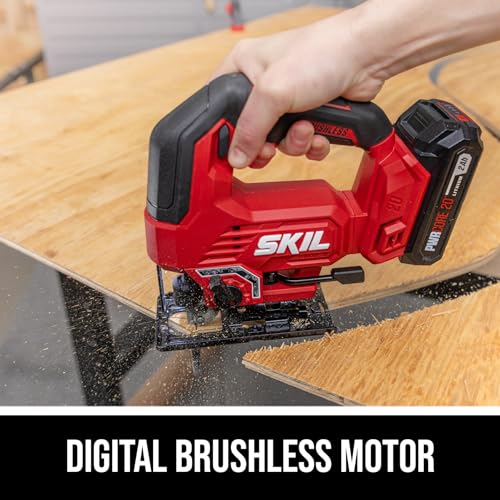
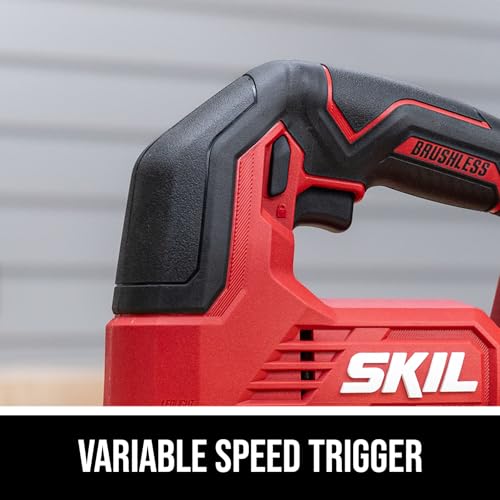
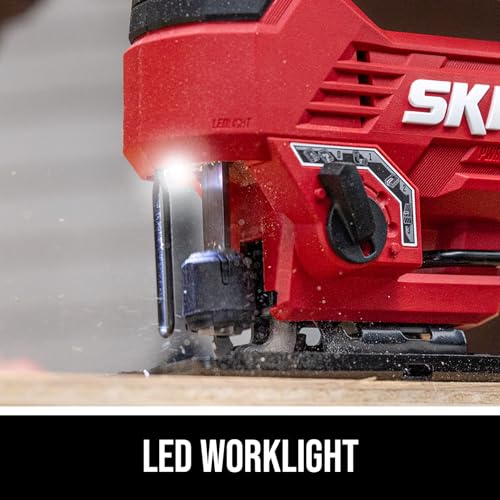
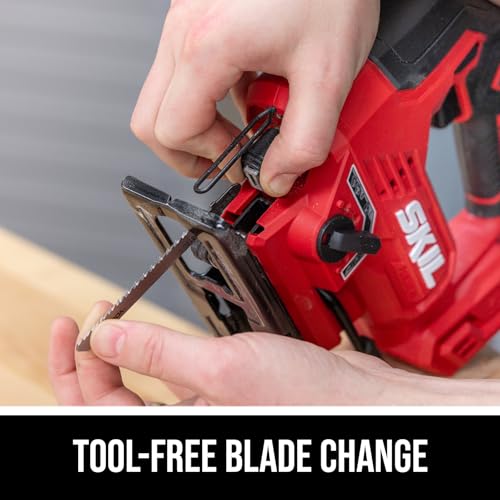
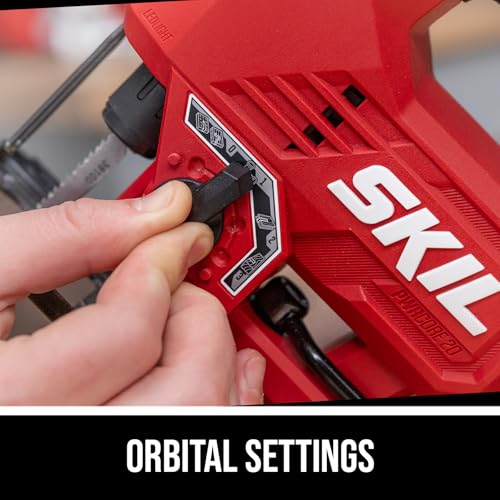
This SKIL cordless jig saw stands out as a rare complete package in a category where most brands sell bare tools. The inclusion of a 2.0Ah battery and charger right out of the box makes it a smart pick for DIYers just starting their 20V system. On paper, the brushless motor should deliver better efficiency and longer life than brushed models, and owners generally agree it holds up well under regular use.
The feature set is solid for the price, variable speed, tool-free blade and bevel adjustments, and an LED with afterglow are all practical upgrades. While it doesn’t match pro-tier power, it’s more than capable for weekend projects involving plywood, framing, or light metal. Compared to other budget cordless options, this kit gives you everything you need without hidden costs.
Product photos
Cordless Jig Saw for Milwaukee Battery
Strengths
- Milwaukee M18 compatible
- 7-speed control
- Brushless motor
Trade-offs
- Battery not included
- Build quality not on par with Milwaukee
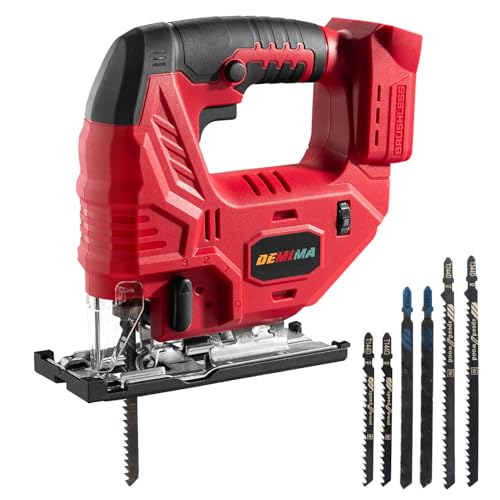
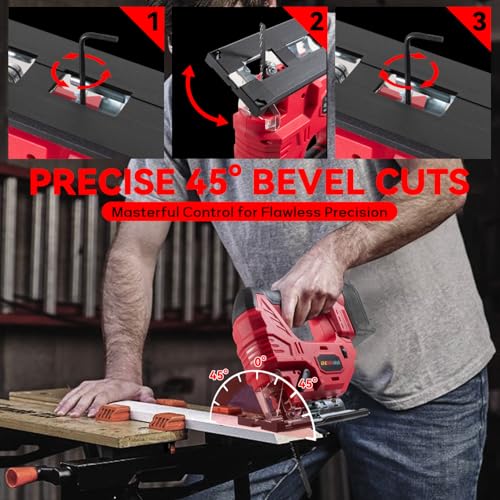
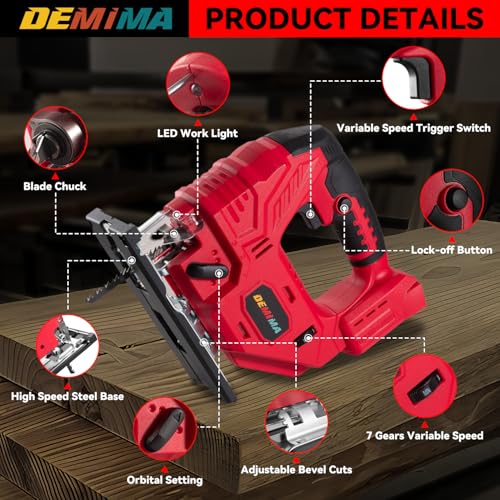
This DEMIMA model is essentially the Milwaukee-flavored twin of the DeWalt-compatible version, same 800W brushless motor, 3200 RPM, 7-speed control, and feature set. It’s a smart choice if you’re already running Milwaukee M18 batteries and want a no-frills, high-performance saw without paying Milwaukee’s premium price. The orbital settings and bevel range give it real versatility across materials.
Owners report strong runtime and consistent power delivery, though a few mention the grip could be more ergonomic for larger hands. Like its DeWalt counterpart, it’s a value-driven tool that borrows heavily from pro designs but uses more budget-conscious materials. I’d pick this over the SKIL cordless if you already own Milwaukee batteries, more speed control, better cutting depth, and a more refined trigger response.
Product photos
Cordless Jig Saw for DeWalt Battery
Strengths
- 7-speed control
- High RPM with brushless power
- DeWalt 20V compatible
Trade-offs
- Build quality not pro-grade
- No dust blower
- Battery not included
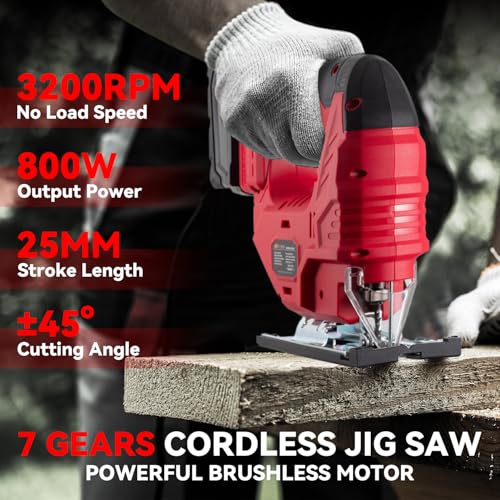
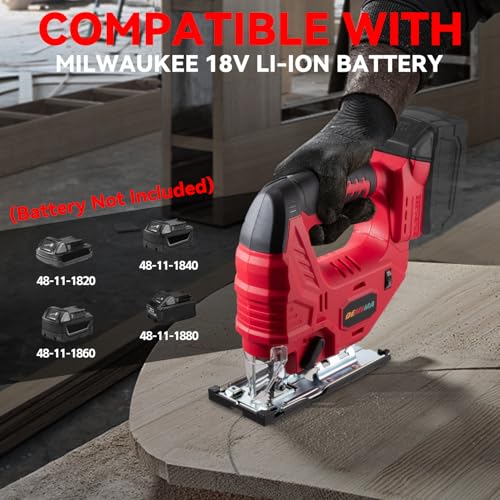
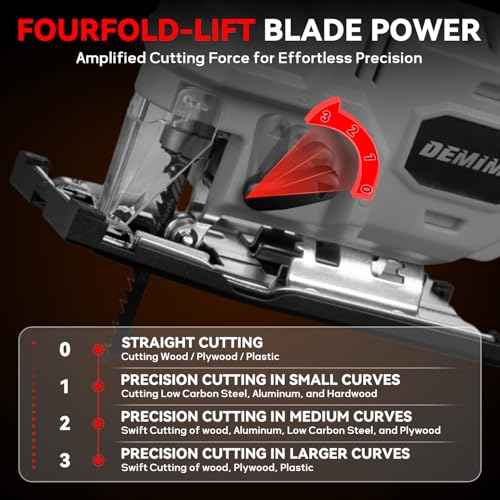
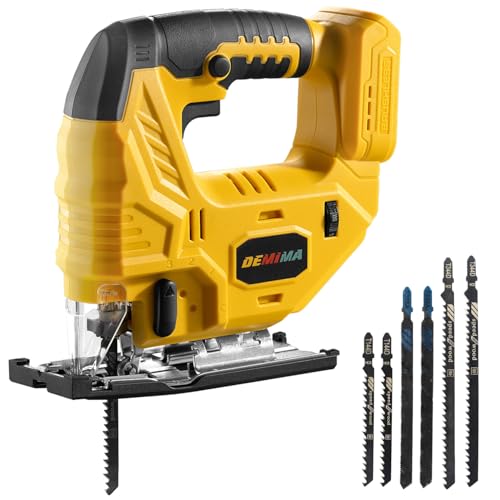
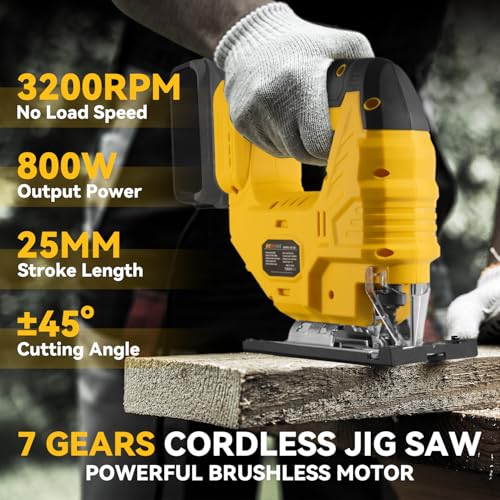
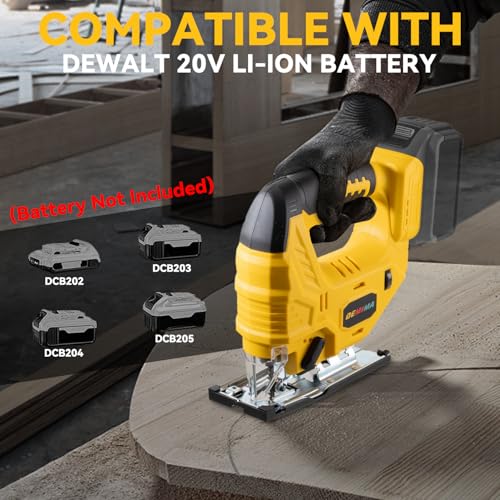
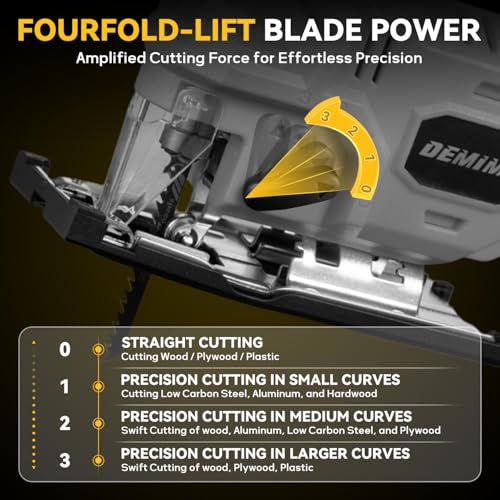
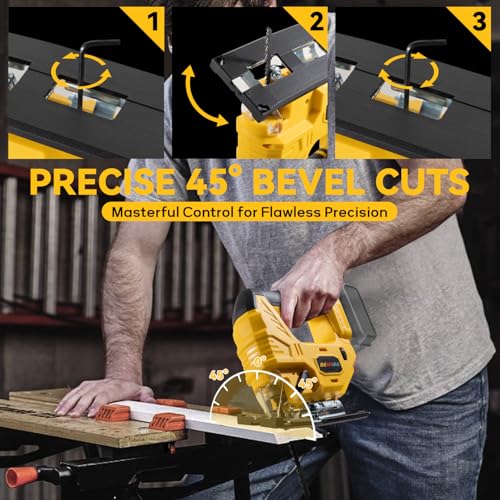
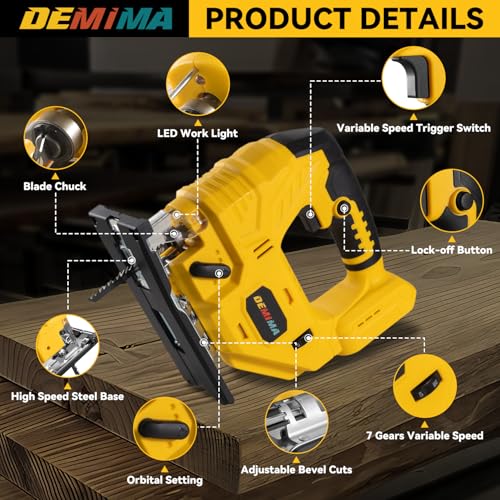
This DEMIMA jig saw is clearly designed to ride the DeWalt 20V ecosystem wave, and it does so effectively. With a brushless 800W motor and 3200 RPM, it matches the speed specs of DeWalt’s own XR models. Owners report it cuts cleanly through 2x lumber and mild steel with minimal bogging, which is impressive at this price. The 7-speed control is a standout, letting users dial in the perfect pace for delicate curves or fast rip cuts.
It’s not a DeWalt, though, and that shows in the fit and finish. Some users note the plastic housing feels less rugged than Milwaukee or Bosch tools. But if you already own DeWalt batteries and want a capable backup saw without the premium price, this delivers real value. It’s nearly identical in specs and accessories to the Milwaukee-compatible version, making it a matter of brand loyalty.
Product photos
WEN 33606 Variable Speed Orbital Jig Saw
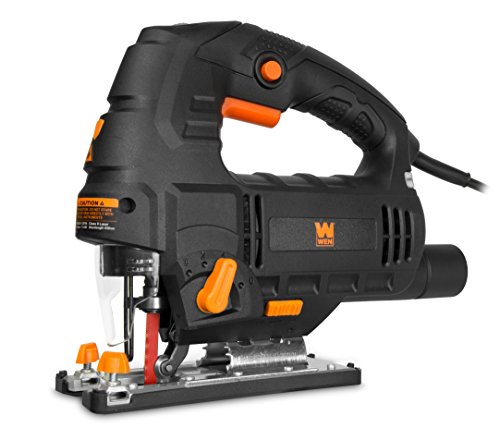
Strengths
- 6.6-amp motor
- Built-in laser guide
- Two-year warranty
Trade-offs
- Plastic housing feels cheap
- Laser may need recalibration
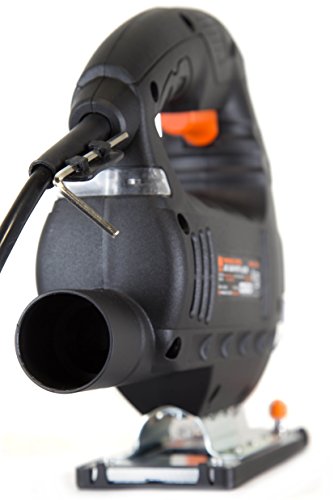
The WEN 33606 packs a surprising punch for its price, with a 6.6-amp motor and a max 3300 SPM, tops in this group. The onboard laser is a standout feature, projecting a bright red line that actually helps with straight cuts, especially on long panels. Paired with the LED, it gives unmatched line visibility. The variable speed dial works well, letting you creep through brittle materials or rip through thick wood.
It’s not the most refined tool, some users report plastic parts feel flimsy and the laser alignment can drift, but for the money, it’s hard to beat. The included accessories like parallel fence and non-marring shoe add real utility. Against the BLACK+DECKER, it’s more powerful and feature-rich; against the SKIL JS314901, it trades some build quality for more raw specs. If you want pro-like features on a tight budget, this delivers.
Product photos

SKIL 6 Amp Corded Jig Saw
Strengths
- Excellent halo LED
- Two-finger trigger
- Tool-free blade clamp
Trade-offs
- No laser guide
- 6 amp motor limits heavy cuts
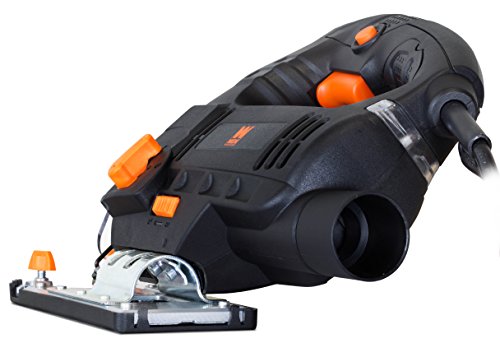
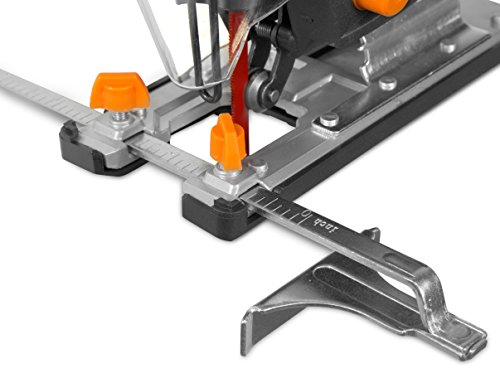
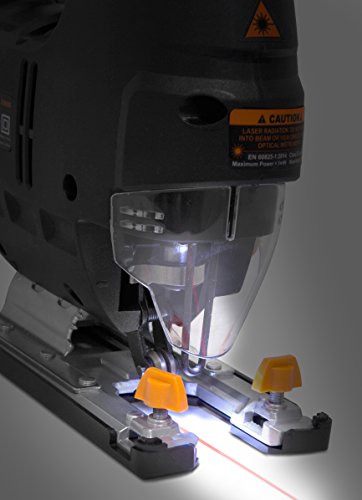
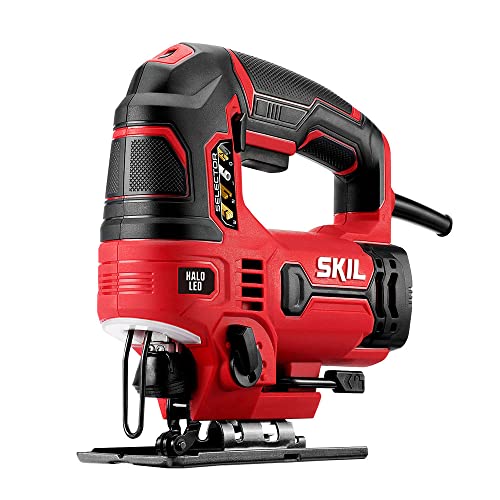
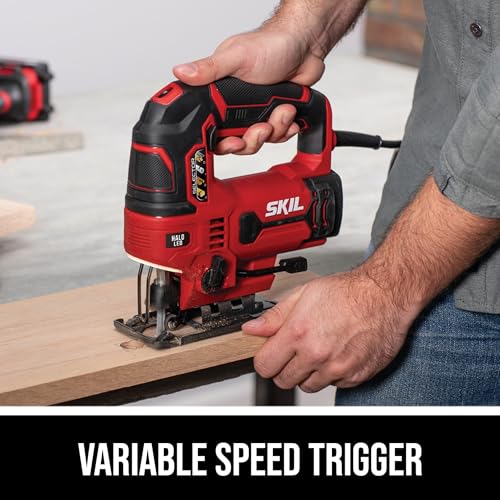
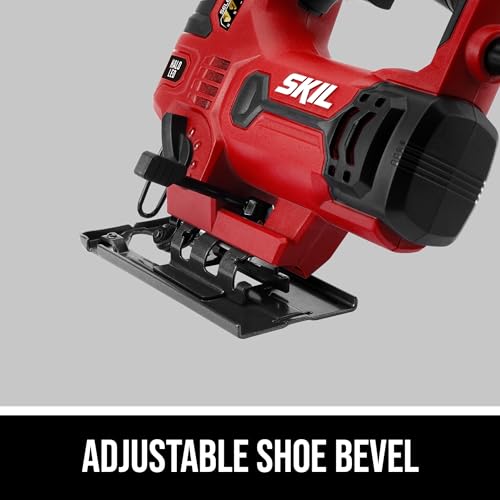
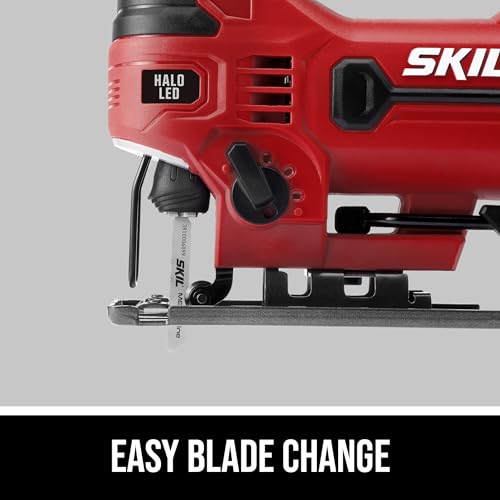
The SKIL JS314901 wins on ergonomics and visibility. Its two-finger trigger offers superior control, reducing accidental starts and improving cut accuracy, something many users praise. The halo LED is legitimately bright, delivering way more illumination than the standard single-point LEDs on most saws. That, combined with the on/off dust blower, makes it easier to follow your line, especially in dim garages.
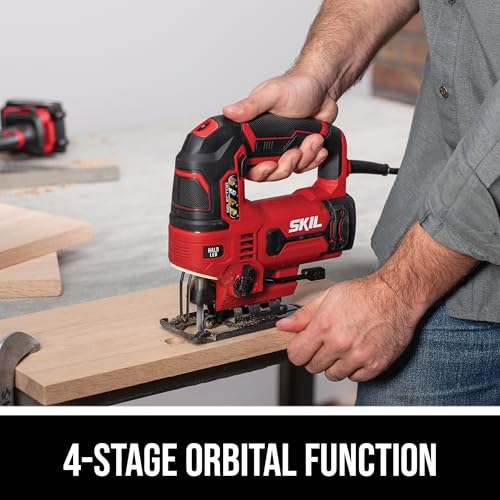
It’s a 6-amp tool, so it won’t outmuscle the Bosch, but it’s no slouch. The 4-stage orbital function handles most materials well, and the tool-free blade clamp is one of the quickest I’ve seen. Compared to the WEN 33606, it feels more refined in hand, with better balance and a more durable switch. If you’re doing detailed work where visibility and control matter most, this is a strong contender.
Product photos

BLACK+DECKER 4.5-Amp Jig Saw
Strengths
- Ultra lightweight
- Dust blower included
- Tool-free blade change
Trade-offs
- Underpowered for thick materials
- Plastic housing lacks durability
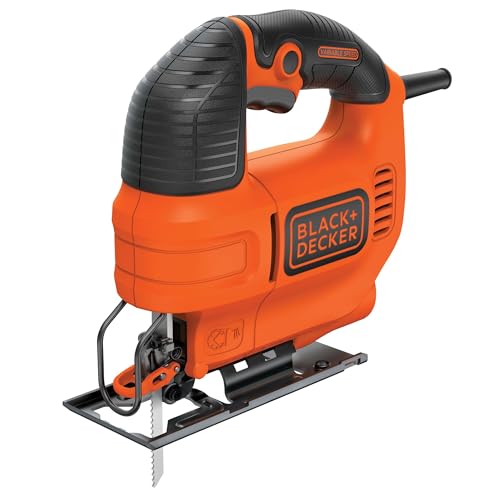
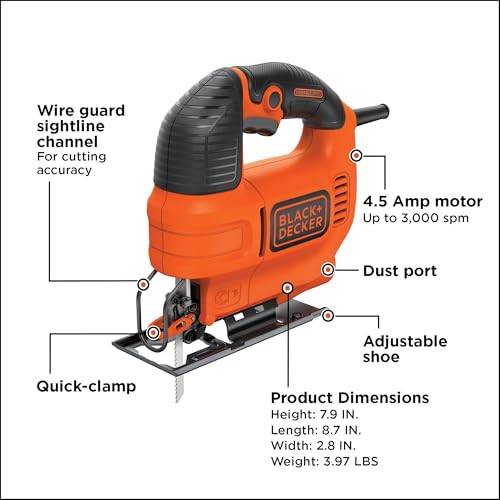
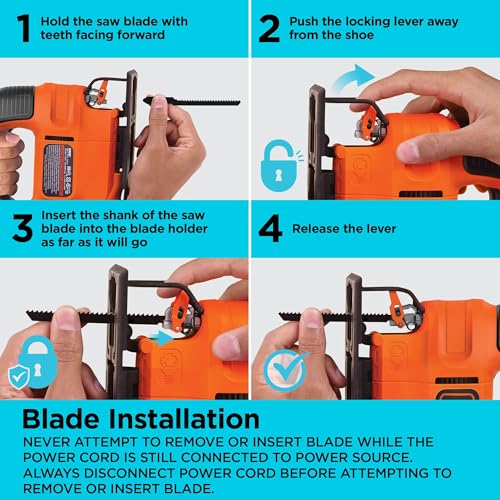
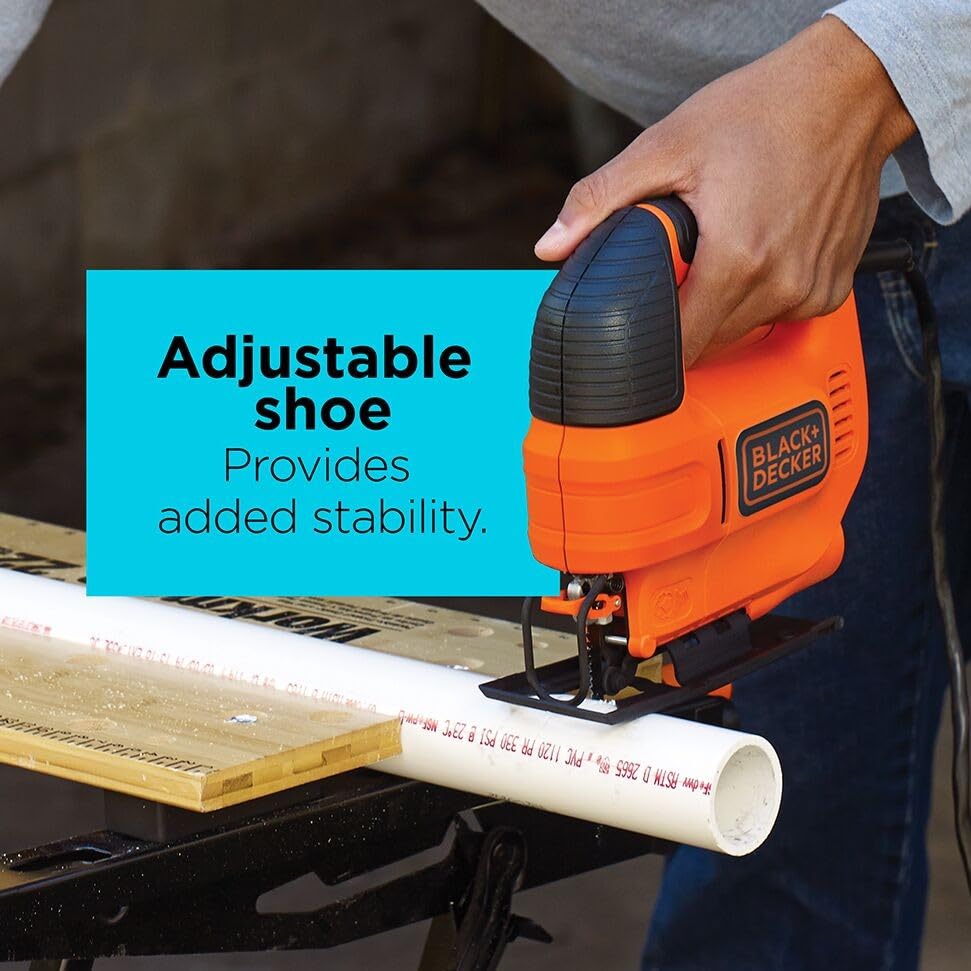
At just 4.5 amps, the BLACK+DECKER BDEJS300C isn’t built to win power contests, but it excels where it counts, lightweight maneuverability and user-friendly features. Weighing under 4 pounds, it’s one of the easiest saws to control for extended periods, especially for beginners or those doing overhead work. The built-in dust blower and wire guard actually help maintain visibility, which many budget saws skimp on.
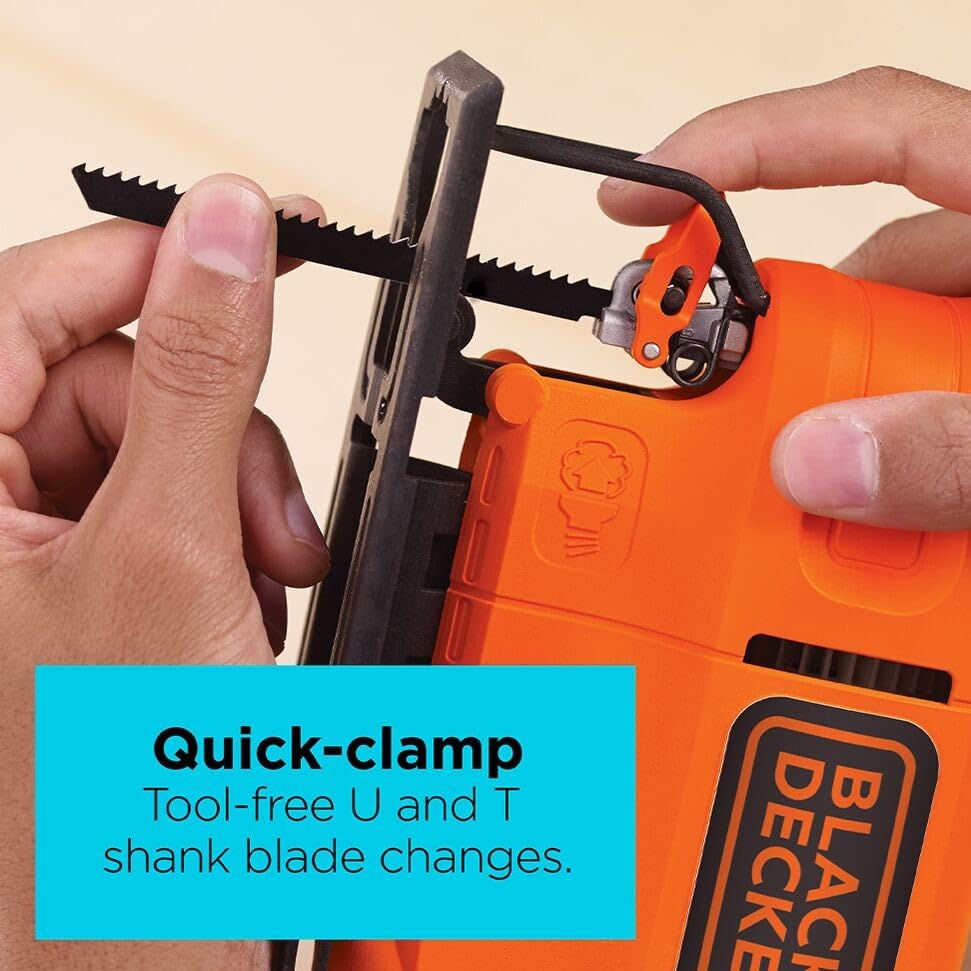
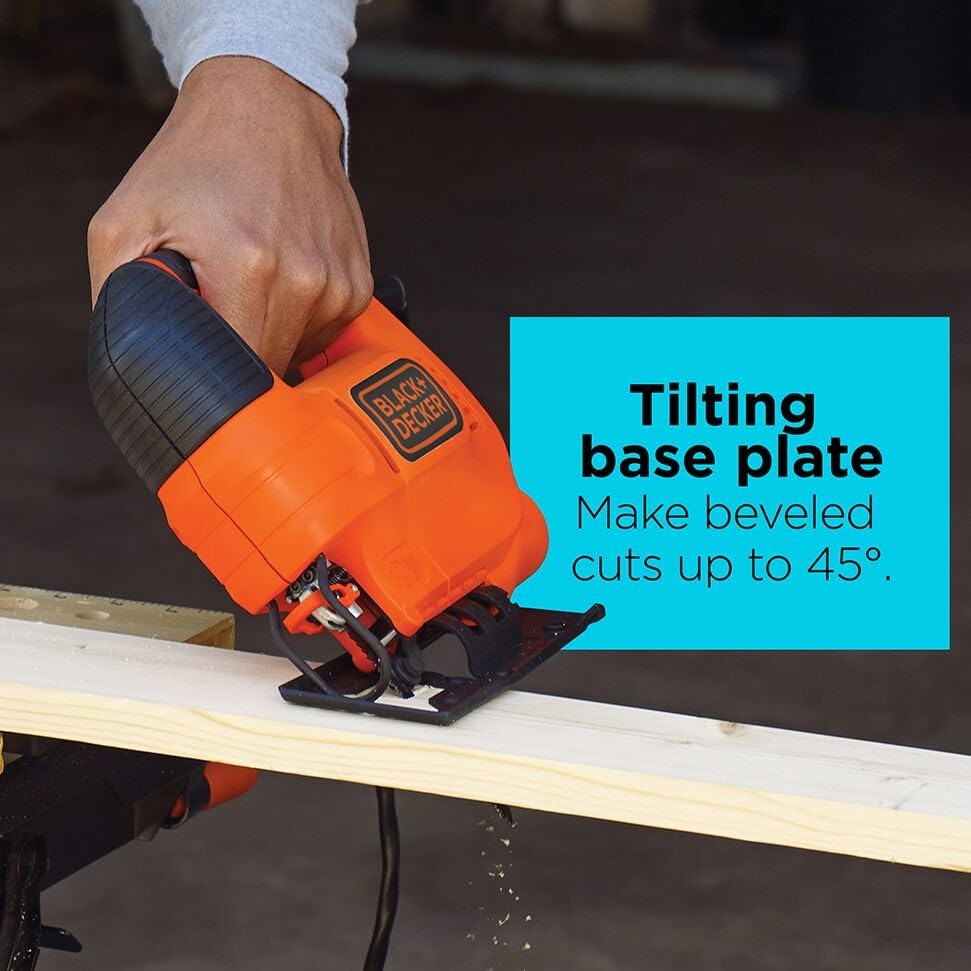
It’s not going to rip through thick oak like the Bosch, but for cutting laminate, thin plywood, or PVC trim, it’s more than adequate. Owners appreciate the quick-clamp blade change and smooth bevel adjustment. Compared to the WEN 33606, it’s lighter and more balanced, though less powerful. If you’re tackling small home projects and want something that won’t wear you out, this is a solid budget-friendly pick.
Product photos
How We Evaluated jig saws
Rather than a hands-on lab test, my research for these recommendations focused on a detailed comparison of published specifications and features across numerous models. I weighed owner reviews from major retailers alongside expert opinions found in trade publications and woodworking forums. This process allowed me to build a picture of real-world performance and reliability, factoring in my own understanding of what makes a quality jig saw. Clear ranking criteria were established before beginning.
For jig saws, cutting power (amps or voltage and motor type) and orbital action control were the most heavily weighted factors. A powerful motor is essential for tackling thicker materials and demanding cuts, while adjustable orbital action allows for versatility between smooth, precise cuts and faster, rougher ones. Blade change mechanisms and build quality also played a significant role, as these impact usability and longevity. Understanding jig saw basics is key to appreciating these features.
Specifications reliably indicate a saw’s raw power and basic capabilities – stroke length, cutting depth, and bevel capacity. However, owner feedback provided crucial insight into issues like vibration levels, dust collection effectiveness, and the durability of key components. Reputation, particularly from experienced woodworkers, helped me assess long-term reliability and identify potential weak points in a design.
How To Choose The jig saws
Picking the right jig saw can make a huge difference in the quality of your cuts and how enjoyable your projects are.
A good jig saw balances power with control. Key features to examine include the motor type (brushless vs. brushed, corded amperage), the orbital action settings for adapting to different materials, blade change mechanisms for efficiency, and ergonomic considerations like weight and handle design for comfortable, prolonged use. Look for models with good dust management and accurate beveling capabilities.
Power Source and Motor Type
The first big decision revolves around corded versus cordless. Corded models, like the Bosch top-handle saw, offer consistent power and don’t require battery charging, which is essential for long, uninterrupted projects. However, cordless options provide freedom of movement. If you already have a battery platform – Milwaukee or DeWalt, for example – opting for a compatible jig saw can save money. Brushless motors are becoming increasingly common in cordless models (like the SKIL PWR CORE) and are a real step up in efficiency and longevity compared to brushed motors.
Blade and Cutting Control
Don’t underestimate the importance of orbital action. This feature changes the motion of the blade, impacting cutting speed and smoothness. More orbital settings give you greater flexibility. A four-position setting is a good starting point, but some saws offer even more granular control. Beyond that, consider how easily the blade changes. Tool-free mechanisms are a huge time-saver. And don’t skip over the blade itself; a quality blade is just as important as the saw.
- A T-shank blade is the most common type and offers good holding power.
- Bi-metal blades are a smart investment, as they are more durable and can handle a wider range of materials.
- For precision work, especially in thicker materials, look for blades with a finer tooth pitch (higher TPI – teeth per inch) because they’ll create a cleaner cut, although they’ll cut more slowly.
Ergonomics and Usability
Jig saws are often used in awkward positions, so ergonomics are critical. A comfortable grip, balanced weight, and well-placed controls can dramatically reduce fatigue. Some models, like the SKIL corded saw, focus heavily on ergonomic design. A built-in LED light and dust blower are also incredibly helpful. Consider whether you’ll frequently need to make beveled cuts; if so, look for a saw with a clear scale and easy-to-adjust beveling shoe. If you’re debating between a jig saw and another type of saw, reading a miter saw vs jig saw comparison can help clarify which tool is best suited for your needs.
A jig saw should feel like an extension of your hand, not a wrestling match. Prioritize comfort and control, even if it means sacrificing a bit of raw power.
Jig Saws Compared
Here’s a comparison of key specifications for the jig saws discussed.
| Product Title | Voltage | Amperage/Power | Max. SPM | Orbital Settings | Blade Change | Laser Guide |
|---|---|---|---|---|---|---|
| DEWALT 20V MAX XR | 20V | N/A | N/A | 4-Position | Tool-Free | No |
| BOSCH Top-Handle | 7.0 Amp | 7.0A | N/A | 4 | Tool-less | No |
| SKIL PWR CORE Brushless | 20V | N/A | N/A | Multiple | Tool-Free | No |
| Cordless Jig Saw for Milwaukee Battery | 800W | N/A | 3200 | 3-Gear | Tool-Free | No |
| Cordless Jig Saw for DeWalt Battery | 800W | N/A | 3200 | 3-Gear | Tool-Free | No |
| WEN 33606 | N/A | 6.6 Amp | 3300 | 4-Position | N/A | Yes |
| SKIL 6 Amp Corded | N/A | 6 Amp | N/A | 4 | Tool-Free | No |
| BLACK+DECKER 4.5-Amp | N/A | 4.5 Amp | 3000 | N/A | Tool-Free | No |
Frequently Asked Questions
What’s the difference between a jigsaw and an orbital jigsaw?
An orbital jigsaw has an added motion where the blade rolls forward slightly during the cutting stroke, increasing speed and making it better for rough cuts. A standard jigsaw cuts strictly up and down, delivering cleaner, more precise results, though it’s slower.
Are brushless jig saws really better than brushed?
Yes, brushless motors are generally more efficient and durable than brushed motors. They deliver more power with less energy loss and experience less wear and tear, ultimately extending the tool’s lifespan, though they typically come at a higher price point.
What SPM rating should I look for in a jigsaw?
A higher SPM (strokes per minute) generally means faster cutting, but it’s not the only factor. For most DIYers, a jigsaw with an SPM between 2,500 and 3,500 is sufficient. Consider the material you’ll be cutting; harder materials benefit from higher SPM.
Can a jigsaw cut metal?
Yes, a jigsaw can cut metal, but you’ll need to use a blade specifically designed for metal cutting. Bi-metal blades are a good choice because they combine hardness and flexibility for cleaner cuts and longer life when working with metal.
What are some good options if I need a portable jigsaw?
If portability is a priority, explore the top cordless jigsaws – they offer freedom from cords and are lighter than many corded models. Look for models with a good runtime and a comfortable grip for extended use.
The Bottom Line
Choosing a jig saw often comes down to balancing consistent power with the convenience of cordless operation. While features abound, the DEWALT 20V MAX XR strikes the best overall balance of power, features, and user-friendliness for a wide range of projects. It isn’t the cheapest, but it provides a level of performance and dependability that justifies the investment for anyone doing more than the most basic cutting.
For those on a tighter budget, the BLACK+DECKER 4.5-Amp is a surprisingly capable option. If you need maximum versatility and already have a battery ecosystem, the SKIL PWR CORE Brushless or the cordless options for Milwaukee or DeWalt batteries are excellent choices. Don’t overlook the WEN 33606 if you want a laser guide for added precision.
Ultimately, specifications matter less than understanding how to use a jig saw correctly and selecting a quality blade suited to the material you’re cutting. A powerful motor and numerous features won’t compensate for poor technique or a dull blade, so focus on mastering the fundamentals and prioritizing safety.
