
9 Best Grout Removal Tools of 2026
This post contains affiliate links. As an Amazon Associate, we earn from qualifying purchases.
The 37 Pack Grout Removal Tool Kit stands out as the best overall choice, thanks to its durable tungsten carbide blades and wide range of accessories for different jobs. For those on a budget, the ALLWAY Soft-Grip Grout & Caulk Tool gets the job done without breaking the bank, while the LEILUO Diamond Oscillating Tool Blades are ideal for power tool users who want speed and precision.
Grout removal is tedious work, and the wrong tool can turn a simple refresh into a frustrating mess, damaging tiles, wearing out your hands, or leaving behind uneven joints. I’ve researched the options extensively, focusing on what actually holds up in real use: blade quality, build durability, and how well a tool handles different grout types and tight spaces.
This guide breaks down the top picks based on specs, owner feedback, and practical needs for both small touch-ups and full renovations. You’ll learn what makes a grout tool effective, why blade material matters more than marketing terms like “diamond style,” and which models deliver consistent performance without wasted money or effort.
Top 9 Grout Removal Tools in the Market
The Best Grout Removal Tools, Reviewed
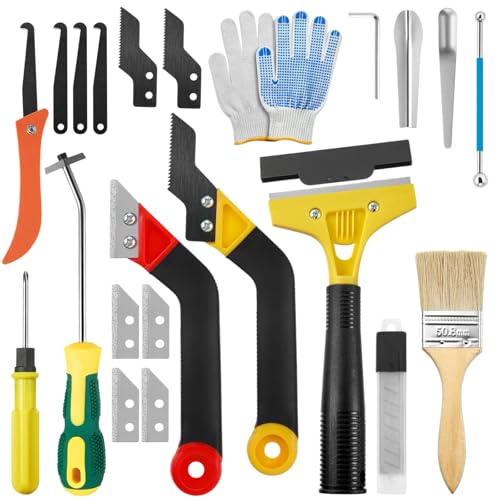
33 Pack Grout Removal Tool Kit
Strengths
- Large blade selection
- Good ergonomic grips
- All-in-one solution
Trade-offs
- Blade quality varies slightly
- No case included
- Some tools feel lightweight
This is the most complete manual kit on the list, and for good reason. With 33 pieces, including two grout saws, seven cleaning blades, and a dedicated caulk remover, it’s the go-to for anyone who wants everything in one box. The high-hardness blades cut through stubborn grout without chipping, and the hand saws offer control in tight spots where power tools struggle. Owners praise the non-slip grips, they really do reduce hand fatigue over hours of scraping.
Compared to the 23-pack, this one offers more blades and redundancy, which matters when you’re mid-job and a tip snaps. It doesn’t have the ultra-premium materials of some standalone tools, but the value is undeniable. For most DIYers tackling a full bathroom or floor project, this is the smarter buy.
Product photos

23 Pack Grout Removal Tool Kit

Strengths
- Tungsten carbide blades
- Ergonomic rubber grips
- Multiple blade types
Trade-offs
- Blades can dull on epoxy grout
- Some tools feel cramped
- No storage case
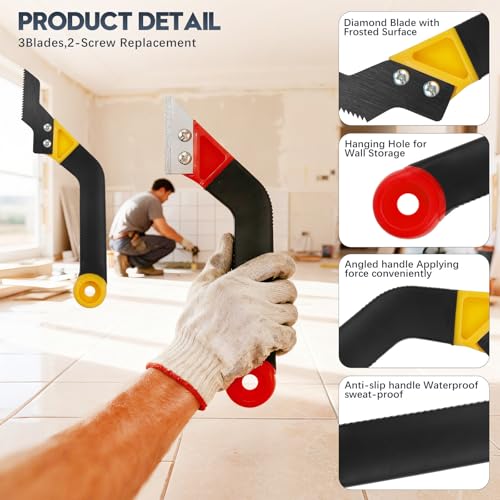
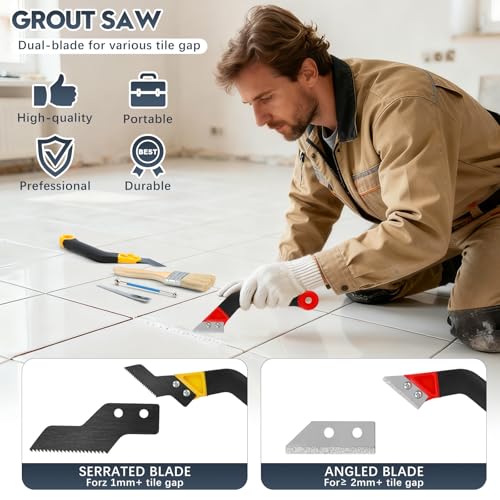
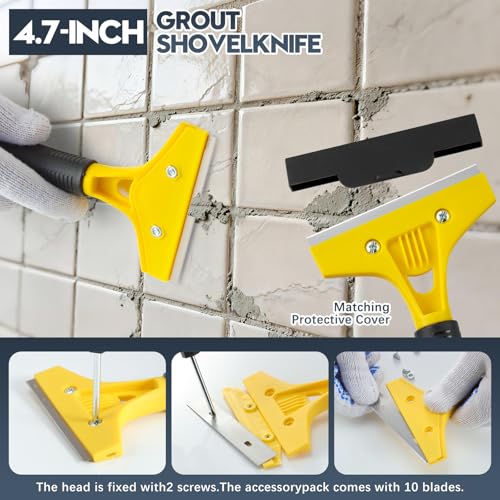
If you’re knee-deep in a bathroom or shower regrout, this kit covers most of what you’ll need. The tungsten carbide blades stand out, they’re noticeably harder than standard steel and hold up well against sanded grout, which eats through lesser tools. Reviewers note the angled heads help in corners, and the inclusion of surgical-grade hook and serrated knives adds real versatility for detail work. It’s not the largest kit here, but the build quality leans pro-grade, and the anti-slip grips make a difference during long sessions.
Compared to basic scrapers, this set gives you precision and durability. The blade covers and gloves are a nice touch for safety, though some users wish the handles were a bit longer for use. For heavy-duty or recurring jobs, this kit strikes a smart balance between capability and cost.
Product photos
37 Pack Grout Removal Tool Kit

Strengths
- 20 extra blades
- Adjustable heads
- Heavy-duty build
Trade-offs
- Overkill for small jobs
- No organized case
- Some blades feel brittle
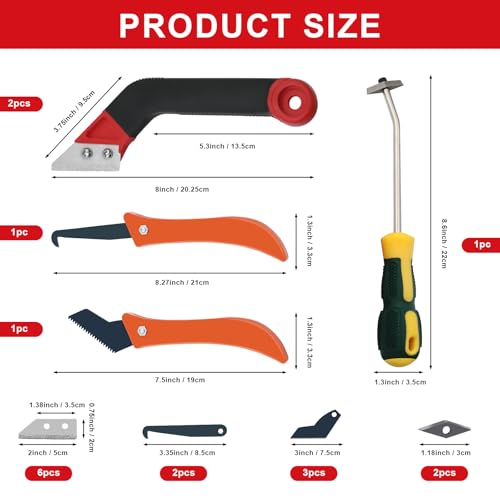
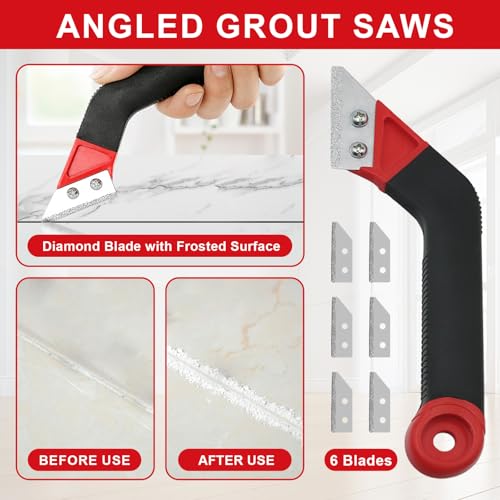
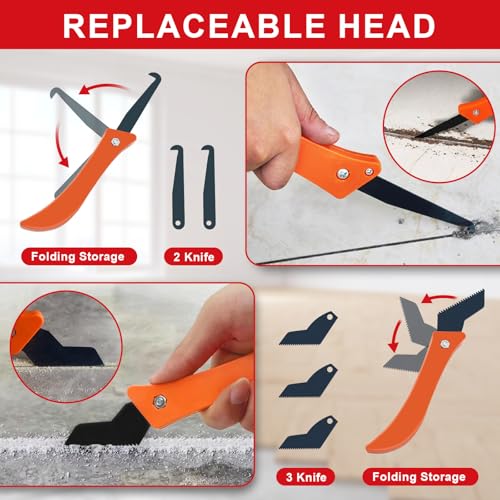
This is the big gun, 37 pieces, including 20 extra blades and five precision heads, makes it the most extensive kit for large or recurring jobs. The tungsten carbide blades are tough, and the reinforced steel construction holds up to repeated use on stone and concrete. The adjustable blade system lets you swap heads based on grout hardness, which pros appreciate.
Reviewers note the sheer volume of parts can be overwhelming for beginners, but for contractors or serious DIYers, it’s a long-term investment. Compared to the 33-pack, this one offers more redundancy and blade variety. The gloves and safety design are standard, but the real win is the durability and coverage.
Product photos

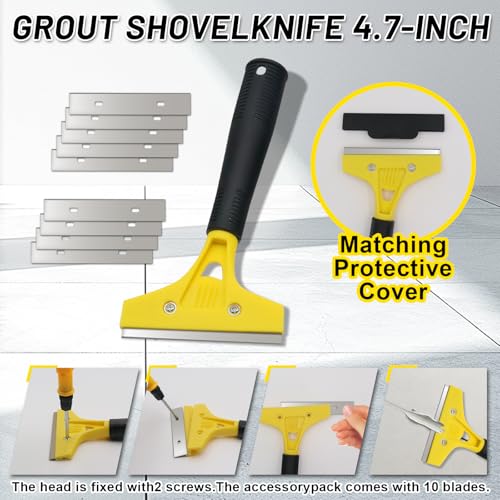
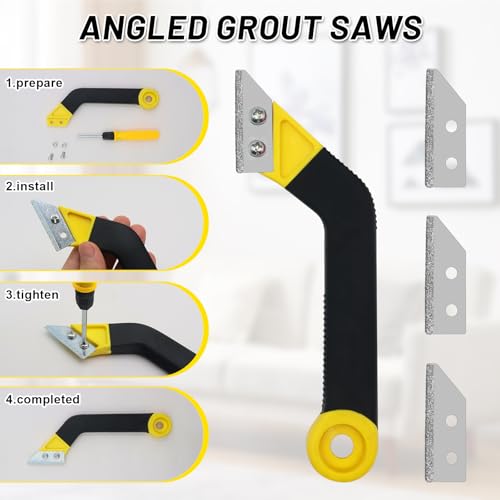
Coitak Angled Grout Saw with Blades

Strengths
- Angled head design
- 3 extra blades
- Compact and precise
Trade-offs
- Plastic body flexes
- Blade not true diamond
- Limited depth
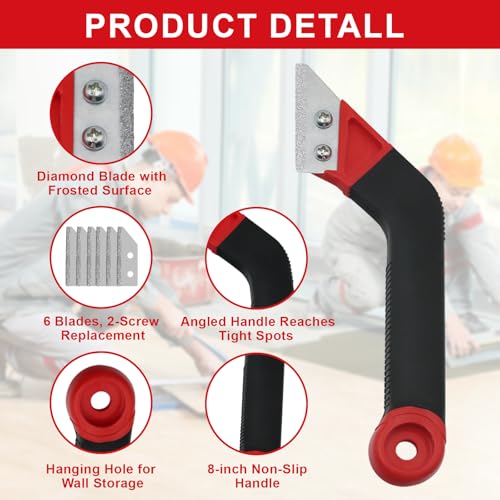
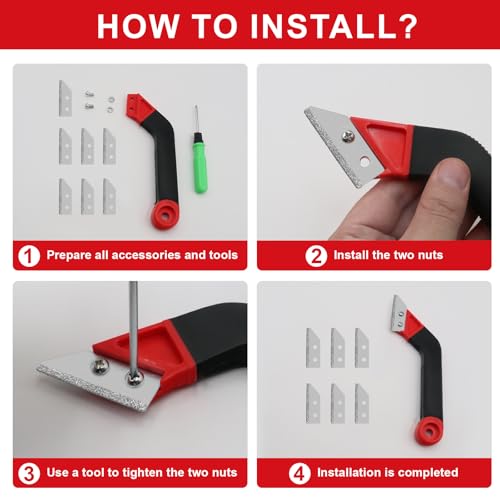
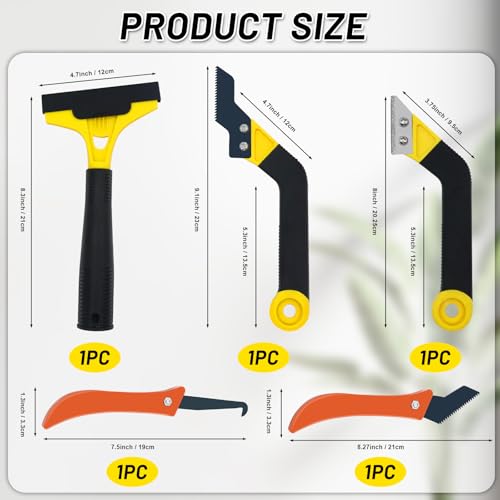
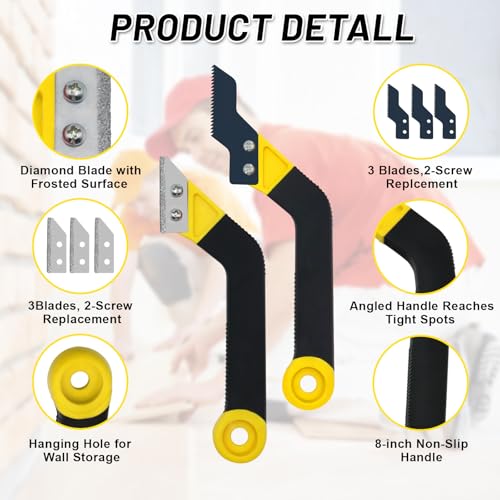
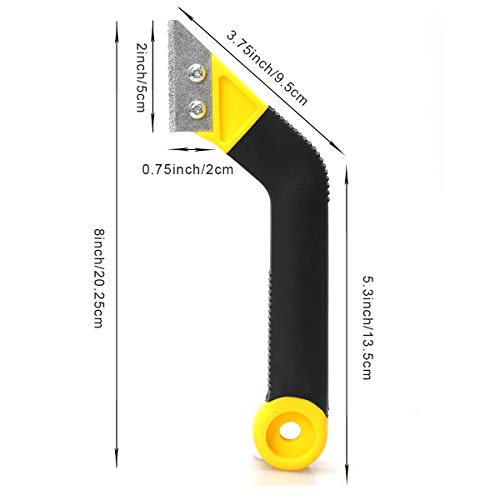
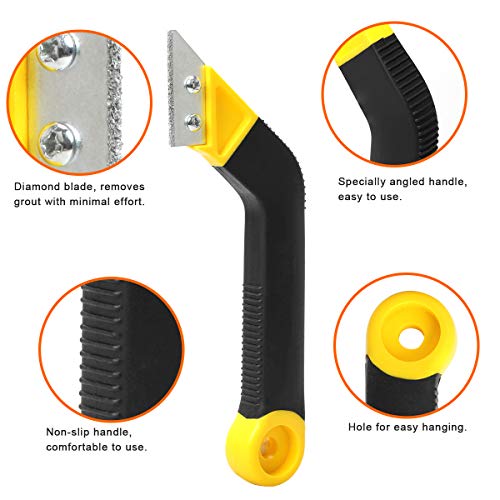
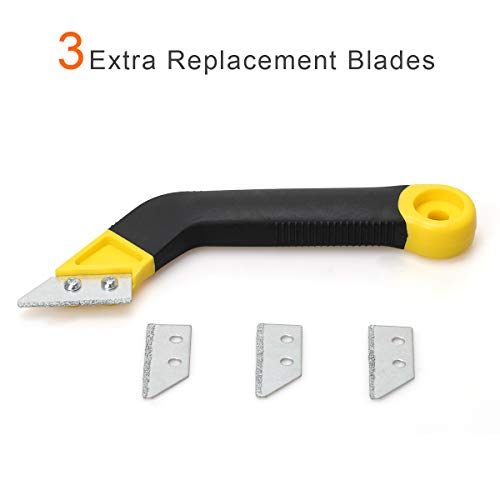
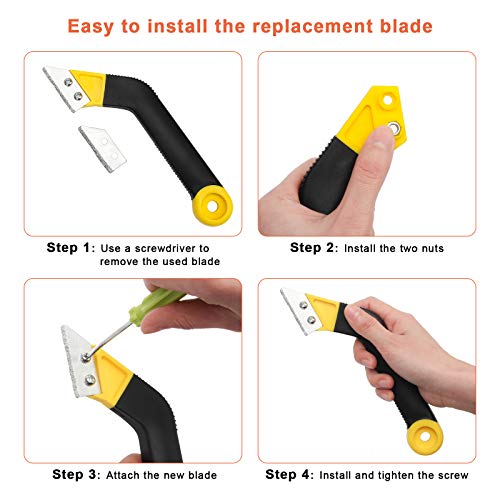
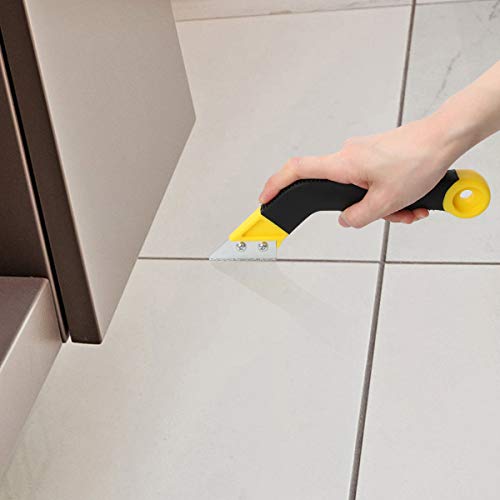
The angled head is the standout here, it’s perfect for getting into corners and along baseboards where straight tools can’t reach. The “diamond style” blade isn’t actual diamond, but it’s hardened enough to handle sanded grout without immediate wear. At 8 inches, it’s compact and easy to control, making it a solid pick for precision tasks. The three extra blades are a real plus, and owners note the screw-on system makes swaps quick.
It’s not going to replace a full kit, but as a dedicated detail saw, it outperforms many in its class. Compared to the Saker tool, this one is more focused and durable for grout-specific work. If you’re doing edge cleanup or tight joints, this yellow saw deserves a spot in your bag.
Product photos
Grout Removal Tool with Hard Tips
Strengths
- Tungsten steel blade
- Eight scraping edges
- Long handle use
Trade-offs
- Bulky for tight spots
- No blade storage
- Heavier than others
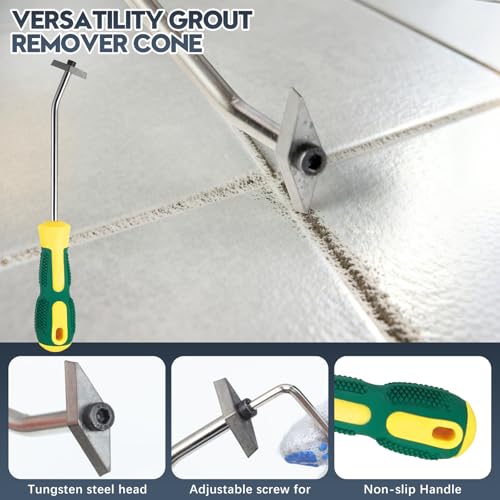
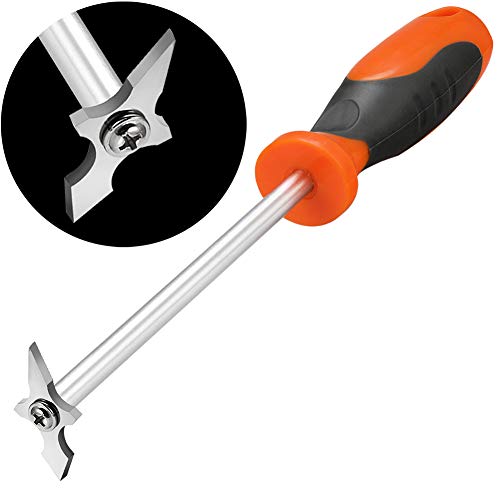
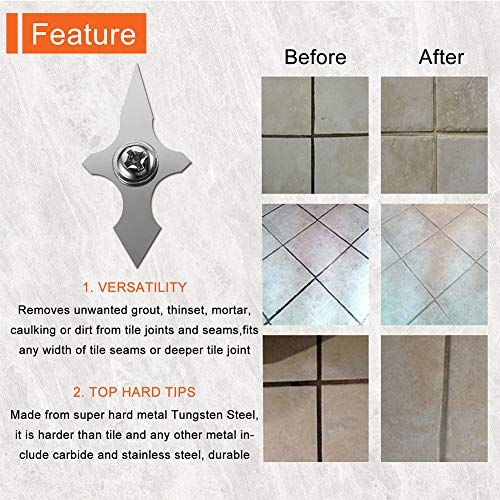
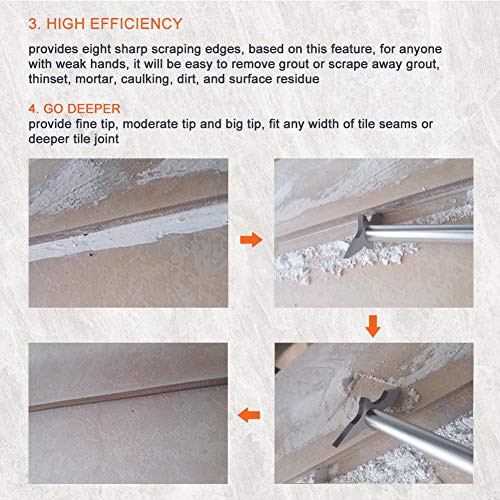
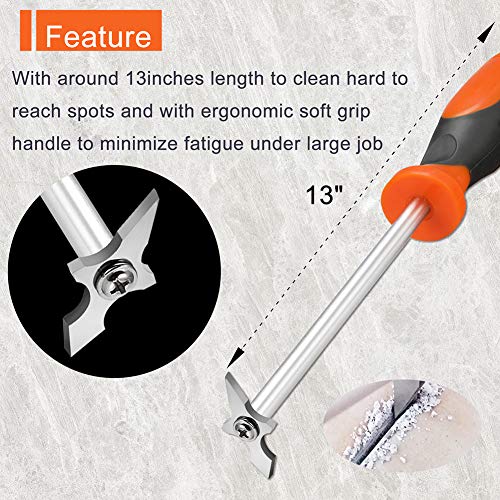
This one’s built for punishment. The tungsten steel blade is harder than most tiles, so it won’t dull quickly, and the eight scraping edges mean you get multiple life cycles before replacement. The long 13-inch handle helps with use, which matters when you’re fighting hardened grout in deep joints. Owners consistently report it powers through old, crumbly grout and even thinset with less hand fatigue than shorter tools.
The tip variety, fine, moderate, and big, adds real utility across different joint widths. Compared to the Goldblatt, this is the muscle version: less finesse, more force. It’s not as refined for detail, but for tough, wide, or deeply packed grout lines, it’s one of the most effective manual options here.
Product photos

Goldblatt Carbide Tip Grout Tool
Strengths
- Carbide tip durability
- Fine detail control
- Comfortable grip
Trade-offs
- Slow for large areas
- Single function
- Limited reach
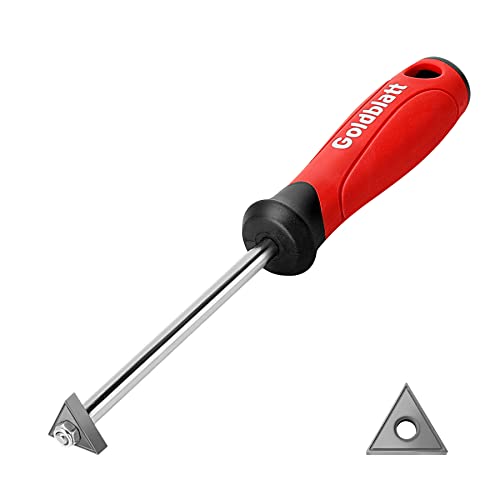
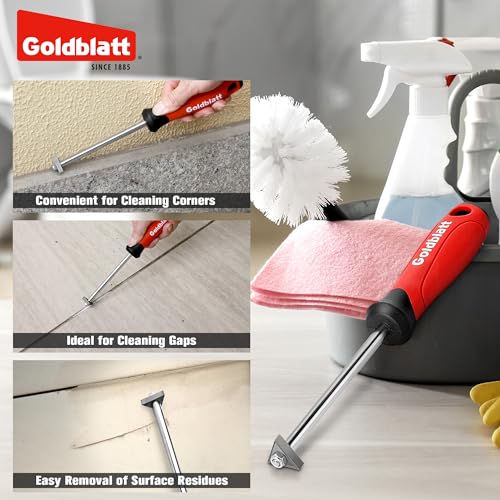
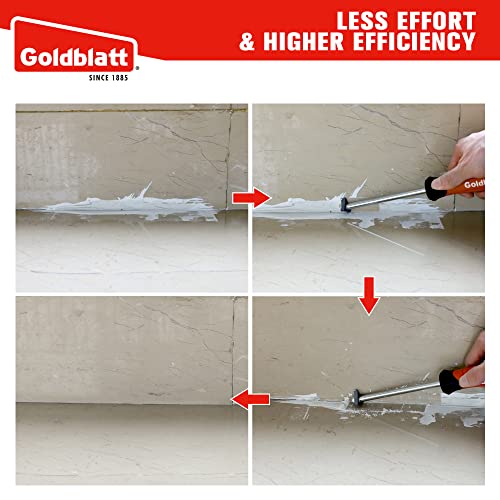
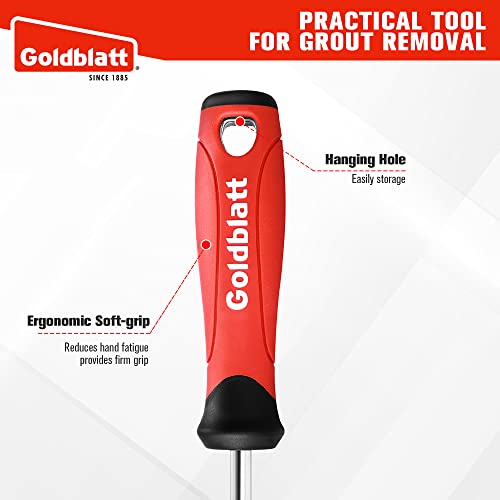
This is a precision instrument for detail work, not brute force. The triangular carbide tip is sharp and stays that way, letting you dig into tight corners, edges, and grout lines where wider tools can’t reach. The fine groove design actually helps with control, and having a spare tip included means you’re not dead in the water when it wears out. I’d pick this over bulkier tools when working near delicate edges or doing touch-up work after a power tool pass.
Reviewers note it’s lightweight and comfortable, and the soft-grip handle does reduce strain. But it’s not built for speed, you’ll be there a while if you’re doing an entire floor. Compared to multi-blade kits, this is a specialist, not a generalist. But for spot repairs or cleaning up after a demo, it’s hard to beat.
Product photos


ALLWAY Soft-Grip Grout & Caulk Tool

Strengths
- Affordable price
- Soft-grip comfort
- Decent durability
Trade-offs
- Basic blade material
- No extras included
- Limited precision
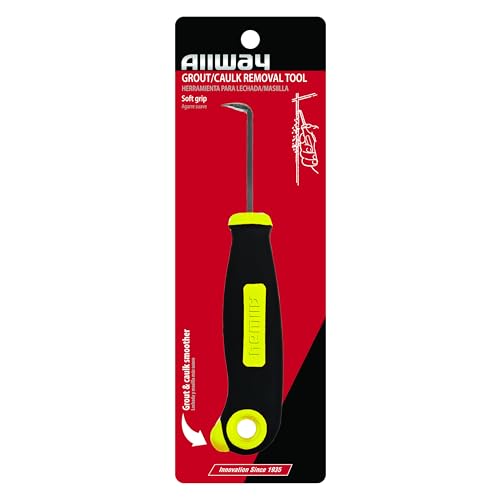
This is the budget play, and it delivers where it counts. The carbon steel blade is decent for light grout and caulk removal, and the soft-grip handle actually helps reduce fatigue, a rare plus at this price. It’s not going to last years of heavy use, but for a one-time bathroom refresh or small repair, it gets the job done without breaking the bank.
Compared to the Saker or Goldblatt tools, it lacks finesse and specialty features, but it’s more durable than it looks. Owners say it’s a solid starter tool, especially for new DIYers testing the waters. If you’re not ready to invest in a full kit, this is the smart entry point.
Product photos
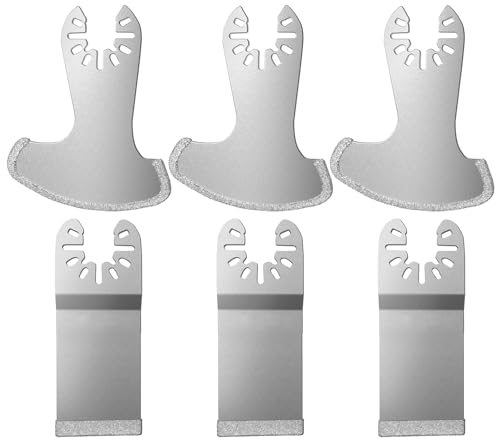
LEILUO Diamond Oscillating Tool Blades
Strengths
- Diamond grit edges
- Thin profile access
- 6 blades included
Trade-offs
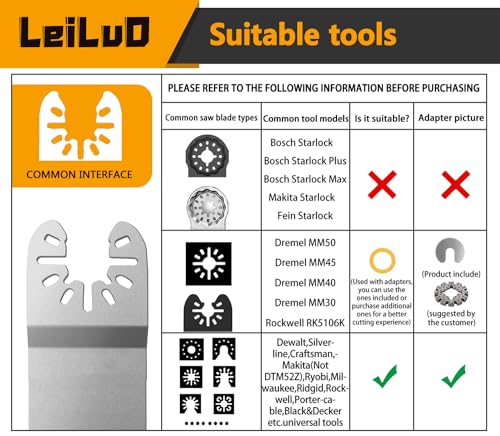
- No Bosch compatibility
- Requires adapter for some Dremel
- Blade life depends on technique
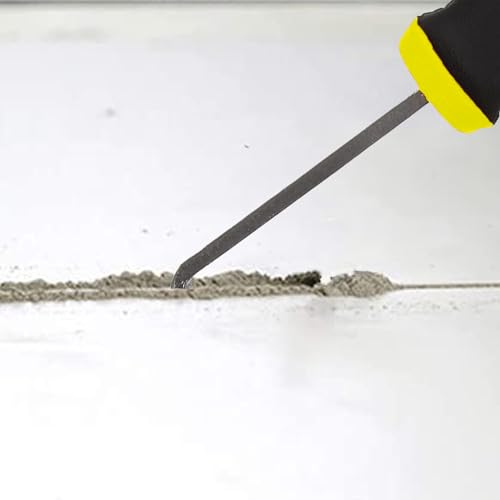
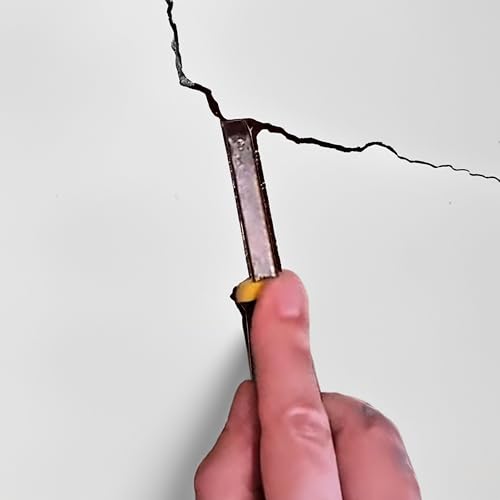
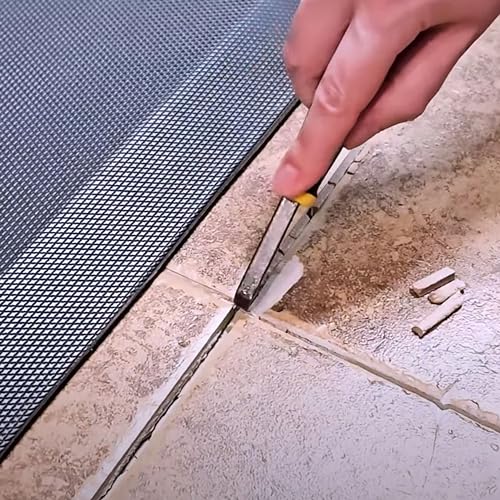
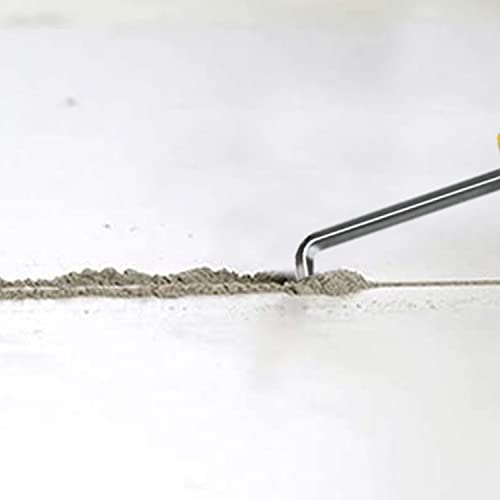
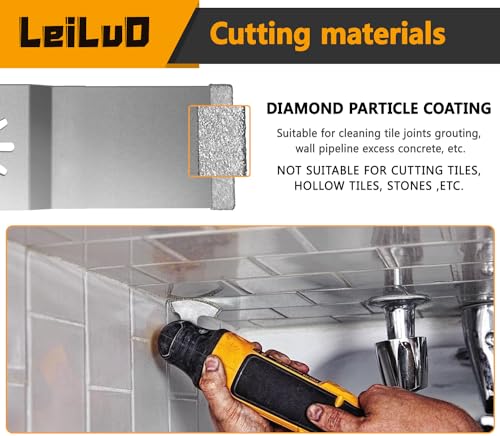
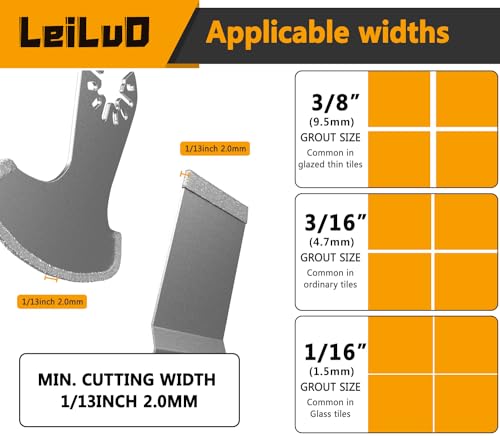
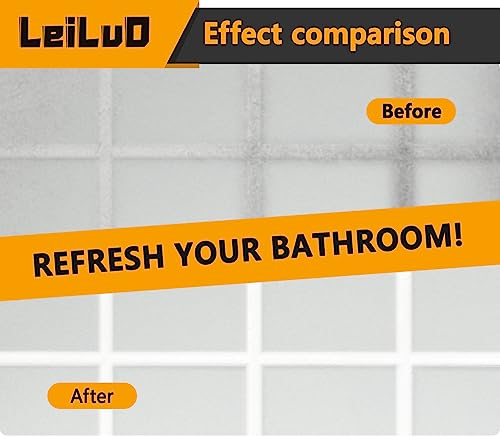
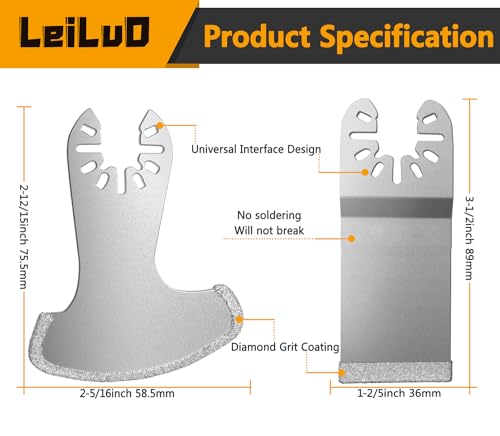
For power tool users, this is the smart upgrade. The diamond grit edges cut through grout fast, and the thin 1.6mm flat blades get into narrow joints that manual tools struggle with. The crescent blades handle wider gaps and edge work well. Compatibility is broad across DeWalt, Milwaukee, Makita, and Ryobi, though Bosch and Fein users are out of luck.
Owners report these last longer than standard blades and produce less dust than rotary tools. The key is using low speed and letting the oscillation do the work, push too hard and you’ll kill the blade fast. Compared to full manual kits, this is the speed demon. If you already own an oscillating tool, this kit turns it into a grout-removal machine.
Product photos
Saker 3-in-1 Caulking & Grout Tool
Strengths
- Stainless steel blade
- Caulk smoothing function
- Multi-surface use
Trade-offs
- Plastic body wears fast
- Not for heavy grout
- Limited durability
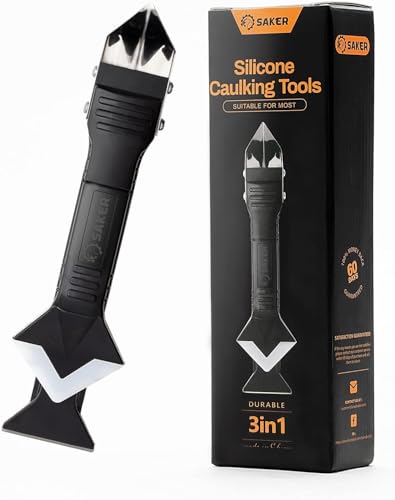
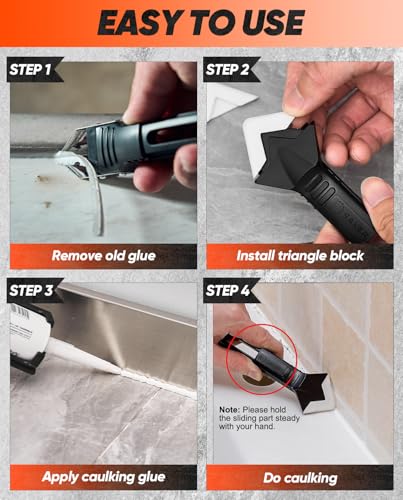
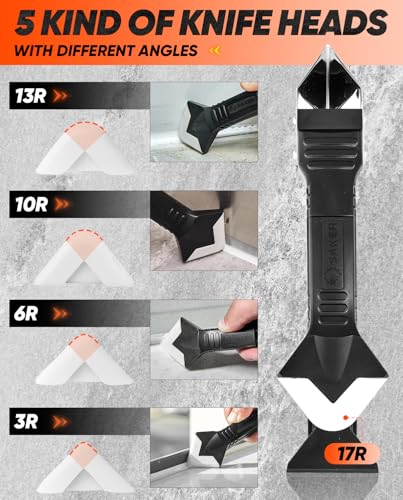
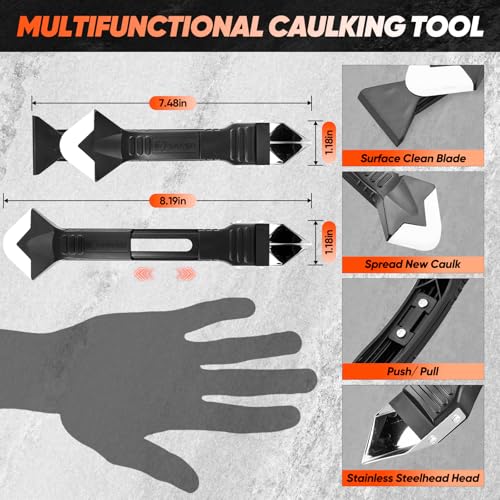
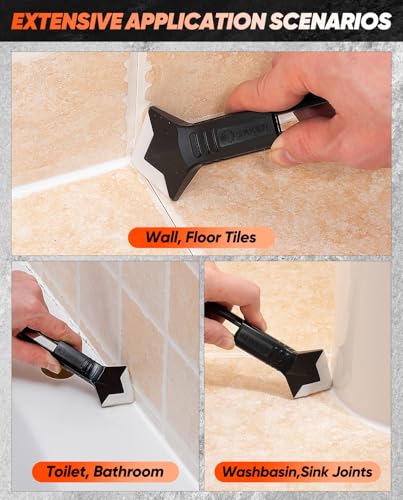
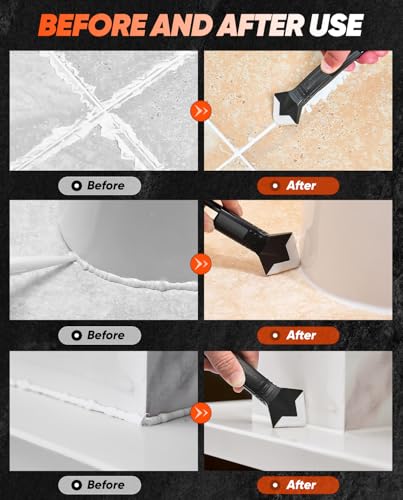
This tool isn’t really a grout removal specialist, it’s built for caulk work, and that’s where it shines. The stainless steel scraper edge handles old sealant reasonably well, and the silicone smoother side is actually useful for getting clean, professional-looking bead lines without tape. On paper, the 3-in-1 design makes sense: strip old caulk, clean residue, then smooth new application. But the plastic body and limited blade durability mean it’s not going to survive heavy grout jobs or repeated use on tough joints.
Owners consistently report it works fine for light maintenance around sinks and tubs, but you’ll want something sturdier if you’re dealing with cracked or sanded grout. Compared to dedicated grout tools, this one feels flimsy in harder applications, and the note in the specs about avoiding cement surfaces confirms its limits. Still, for resealing bathrooms or quick touch-ups, it’s a neat little combo.
Product photos
How We Chose These grout removal tools
Rather than a hands-on lab test, this is a research-led comparison of specs and owner feedback across a range of grout removal tools. I focused on published product details – blade materials, tool construction, and included accessories – and then weighed those against what owners are saying about performance in real-world use. Reputable expert reviews were also considered, looking for consistency in assessments of durability and ease of use. My goal was to rank tools based on their potential to deliver effective and lasting results.
For grout removal, blade material and tool versatility proved most important. Durable blades (tungsten carbide or diamond-coated) consistently showed up in positive reviews, indicating they hold an edge longer and tackle tougher grout types. The ability to handle multiple tasks – not just removal, but also smoothing and prepping surfaces – added significant value, particularly for DIYers working on larger projects. A comfortable grip and ergonomic design also factored heavily, as this work can be repetitive and physically demanding.
Specifications reliably indicate the potential for performance, like blade material and tool construction. However, owner feedback clarified how those specs translate into actual usability. For example, a tool claiming carbide blades might still receive negative reviews if the blade attachment is flimsy or the handle uncomfortable. Reputations built on consistent positive feedback – and a lack of recurring complaints about premature wear or breakage – were strong indicators of overall quality. Learning about wet saw cutting techniques helped me understand the importance of blade quality in similar material removal tasks.
What To Look For In grout removal tools
Finding the right grout removal tool can save a lot of backache and ensure a clean, professional finish to tile work.
A quality grout removal tool prioritizes blade durability, ergonomic design for extended use, and adaptability to different grout types and tile materials. Look for tools with replaceable blades, comfortable grips, and designs that allow access to tight corners and varying grout widths. Consider whether you need a manual tool for precision or a power tool attachment for speed.
Blade Material & Durability
The material of the blade is paramount. Don’t fall for tools advertising “diamond style” blades without understanding what that means. Truly effective blades use either tungsten carbide or actual diamond grit, and even then, quality varies. Tungsten carbide is excellent for most common cement-based grouts, offering a good balance of hardness and cost, but it will wear down over time. Diamond-coated blades last longer and are better suited for harder epoxy grouts or extensive projects. If you’re planning on tackling a large bathroom renovation, investing in a tool with easily replaceable, high-quality blades, or considering oscillating tool grout blades for power tool compatibility, is a smart move.
Ergonomics & Control
Grout removal is rarely a quick task, so comfort is key. A poorly designed handle will quickly lead to hand fatigue and reduce your control, increasing the risk of damaging surrounding tiles. Look for tools with ergonomic, non-slip grips, ideally those contoured to fit the natural curve of your hand. The weight and balance of the tool also matter; a tool that feels too heavy or awkward will be more difficult to maneuver, especially in tight spaces.
- A simple, straight blade is excellent for large, open areas.
- An angled blade is essential for reaching grout in corners and along edges.
- A tool with adjustable blade depth or multiple blade types offers the most versatility, allowing you to tackle different grout thicknesses and materials without constantly switching tools.
Don’t underestimate the value of a comfortable grip. A tool you want to hold is one you’ll use safely and effectively.
Application & Versatility
Consider the scope of your project. Are you just touching up a small area of grout in a shower, or are you completely re-tiling a room? For small jobs, a simple hand tool like the Goldblatt Carbide Tip Grout Tool might suffice. However, for larger projects or particularly stubborn grout, a power tool attachment, or a more robust manual tool with multiple blade options (like the 37-Pack kit) will save you considerable time and effort. If you’re working with concrete or other hard materials, understanding concrete cutting techniques may be helpful to avoid damaging the tool or the surface you are working on. Also, don’t overlook the potential for a tool to double as a caulk removal tool; many kits, such as the Saker 3-in-1, offer features for both tasks.
Grout Removal Tools Compared
Here’s a comparison of key specifications for various grout removal tools available on the market.
| Product Title | Kit Size | Blade Material | Power Tool Compatible | Handle Material | Best For |
|---|---|---|---|---|---|
| 33 Pack Grout Removal Tool Kit | 33 Pcs | High-Hardness Steel | No | Non-Slip | Best Overall |
| 23 Pack Grout Removal Tool Kit | 23 Pcs | Tungsten Carbide | No | Rubberized | Heavy-Duty Use |
| 37 Pack Grout Removal Tool Kit | 37 Pcs | Tungsten Carbide | No | Non-Slip | Large Projects |
| Coitak Angled Grout Saw with Blades | N/A | Diamond Style | No | Plastic | Precision Work |
| Grout Removal Tool with Hard Tips | N/A | Tungsten Steel | No | Soft Grip | Tough Grout |
| Goldblatt Carbide Tip Grout Tool | 1 Pcs | Carbide | No | Soft Grip | Detail Cleaning |
| ALLWAY Soft-Grip Grout & Caulk Tool | 1 Pcs | Carbon Steel | No | Soft Grip | Budget Friendly |
| LEILUO Diamond Oscillating Tool Blades | 6 Pcs | Diamond Grit | Yes | N/A | Power Tool Users |
| Saker 3-in-1 Caulking & Grout Tool | N/A | Stainless Steel | No | N/A | Caulk Removal/Finish |
Frequently Asked Questions
What’s the difference between tungsten carbide and diamond blades?
Diamond blades last significantly longer and cut through harder epoxy grouts, but they are more expensive. Tungsten carbide is a good choice for most cement-based grouts and offers a balance between durability and cost.
Can I use these tools on heated tile floors?
Yes, most manual grout removal tools won’t be affected by the heat, but be careful not to scratch the heating elements beneath the tile. Always test in an inconspicuous area first.
Are power tool attachments really faster?
Generally, yes. Oscillating tool attachments with diamond blades remove grout much faster than manual tools, especially for large areas. However, they require more control to avoid damaging the surrounding tiles.
What do I do with the old grout dust?
Grout dust contains silica, so it’s best to wear a dust mask during removal and carefully vacuum it up with a HEPA filter vacuum. Dispose of it according to local regulations; it shouldn’t be swept into drains.
What other tools might I need for a full tile refresh?
Beyond grout removal, you might need a shop vacuum, a margin trowel for applying new grout, a grout float, sponges, and potentially caulk removal tools if you’re also dealing with old caulk lines around tubs or showers.
The Bottom Line
Ultimately, choosing a grout removal tool comes down to balancing how much control you want with how much effort you’re willing to put in. For most homeowners and DIYers, the 33 Pack Grout Removal Tool Kit strikes the best balance – it offers a good range of blades for different situations, a comfortable grip, and solid construction without breaking the bank. It’s a versatile kit that will handle the majority of grout removal tasks you’re likely to encounter.
If you’re on a tighter budget, or just need something for minor touch-ups, the ALLWAY Soft-Grip Grout & Caulk Tool is a perfectly serviceable option. For those who prefer working with power tools, the LEILUO Diamond Oscillating Tool Blades are a great choice, offering speed and efficiency when paired with an oscillating multi-tool. And for anyone considering larger tile projects, learning about tile cutting techniques can be incredibly valuable.
Don’t get too hung up on blade coatings or fancy features. The most important things are a comfortable, secure grip, blades that feel solid and well-attached, and a willingness to take your time. A little patience and the right technique will always deliver better results than a top-of-the-line tool used carelessly.
