7 Best Dust Separators for 2026
This post contains affiliate links. As an Amazon Associate, we earn from qualifying purchases.
The Dustopper PRO stands out as the best overall dust separator, thanks to its patented cyclonic design that consistently captures fine particles. For budget-conscious DIYers, the Kreg Dust Separator delivers excellent performance with 99.9% separation efficiency. If you need something heavy-duty and portable, the DEWALT 10 Gallon Stainless Tank model is a top pick for its durability and worksite-ready build.
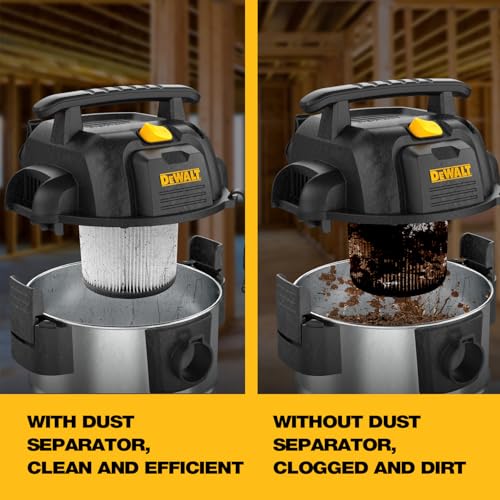
Most shop vac users don’t realize how quickly fine dust destroys filters and reduces suction, leading to more cleanup time and higher long-term costs. A quality dust separator changes that by capturing debris before it reaches your vacuum.
This guide covers the top-performing models based on separation efficiency, build quality, and real-world feedback from users like us who care about clean air and tool longevity. I focused on designs that make a measurable difference in workshop performance, not just marketing hype.
Top 7 Dust Separators in the Market
The Best Dust Separators, Reviewed
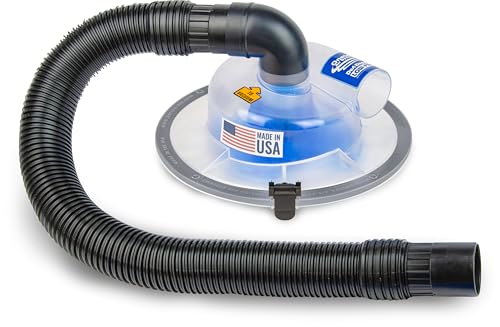
Dust Deputy Low-Pro Plus Cyclone
Strengths
- Over 99.9% capture rate
- Low-profile design
- Includes flexible hose
Trade-offs
- Bucket not included
- Gasket requires care
The Dust Deputy Low-Pro Plus is the one I’d recommend to most serious DIYers and shop owners as the best all-around performer. It captures over 99.9% of debris before it hits your filter, which aligns with what owners consistently report, dramatically longer filter life and sustained vacuum power. The low-profile design improves stability and fits neatly under benches, and the included neoprene gasket delivers a reliable, leak-free seal on standard 5-gallon buckets.
Compared to others, it strikes the best balance of efficiency, build quality, and value. It flows better than lid-style separators and works with most shop vacs thanks to the 2.5” adapter. While not as portable as the Festool or as large as the VEVOR, it’s the smartest general-purpose upgrade for the average workshop.
Product photos

The Dustopper PRO
Strengths
- Optimized airflow design
- Leak-proof gasket
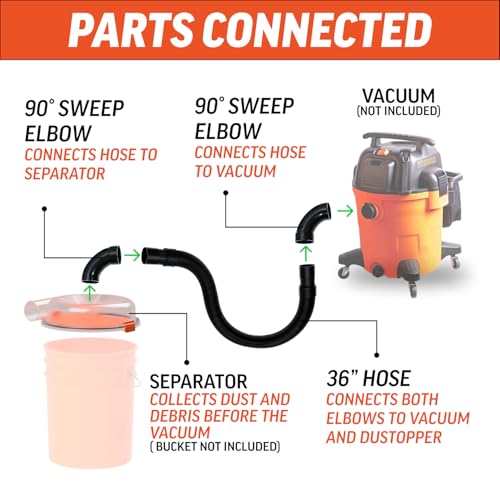
- Includes two sweep elbows
Trade-offs
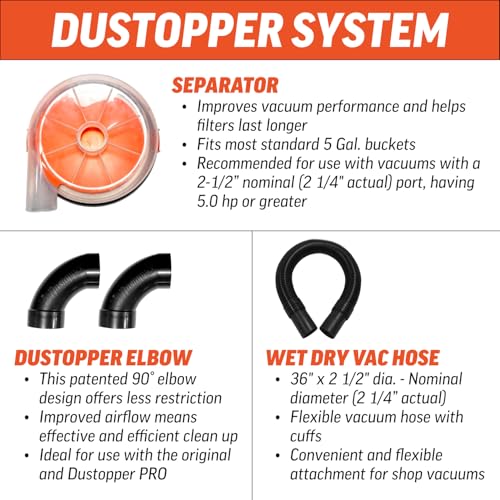
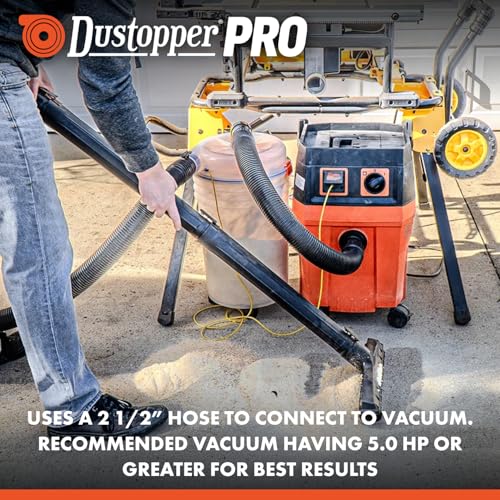
- Requires 5HP+ vacuum
- Higher price point
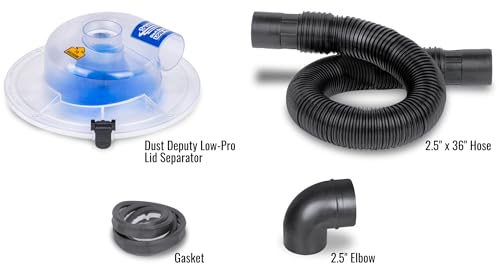
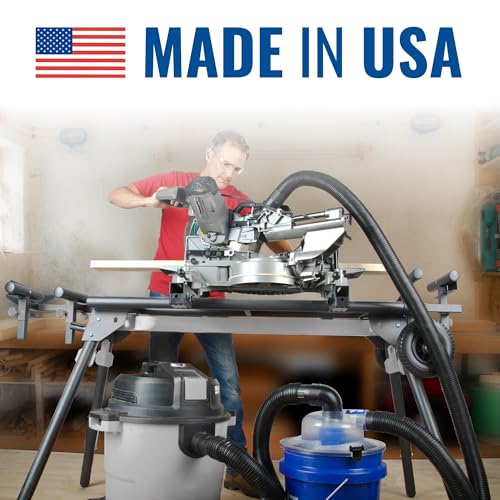
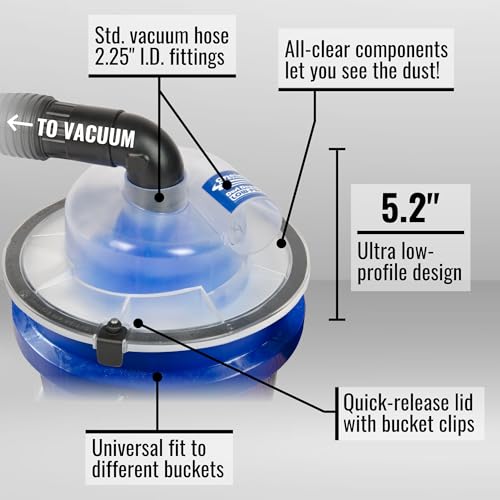
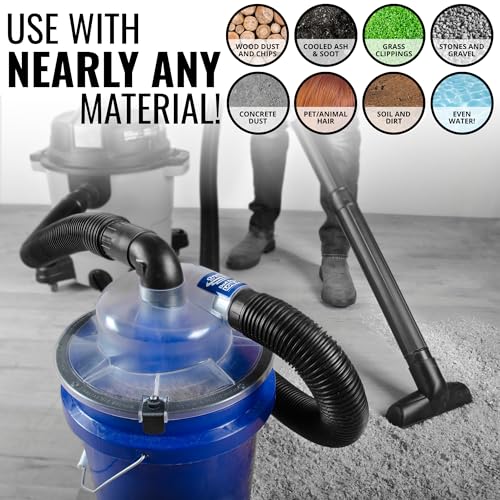
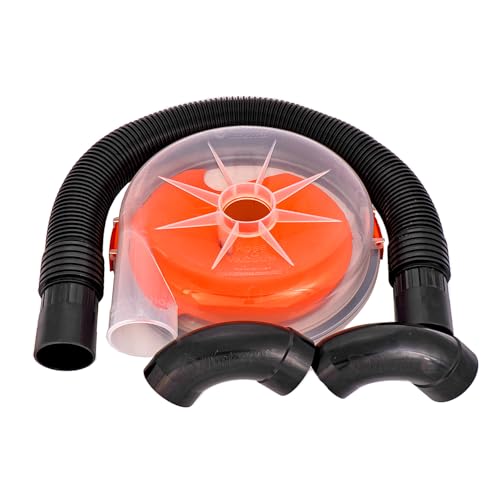
The Dustopper PRO stands out because it prioritizes intelligent airflow over raw power. Engineers in the dust collection space often stress that excessive CFM can create turbulence that reduces separation efficiency, this unit is built around that principle. Its patented low-profile design isn’t just about saving space; it’s engineered to smooth airflow and minimize eddy currents, which owners say translates into cleaner vacuums and fewer clogged filters.
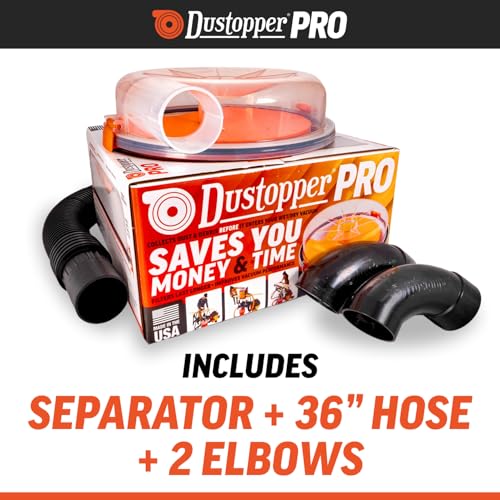
It also comes with two high-flow sweep elbows, which are genuinely useful upgrades over basic 90-degree bends, they reduce turbulence in the line and improve overall system performance. When compared to lid-style separators, the Dustopper PRO consistently earns praise for both build quality and real-world efficiency. Being made in the USA adds to its appeal for buyers who value durability and precision.
Product photos

Festool CT CYCLONE Separator
Strengths
- Fits Systainer system
- OSHA Table 1 compliant
- Compact flat design
Trade-offs
- Limited to Festool vacs
- Smaller capacity
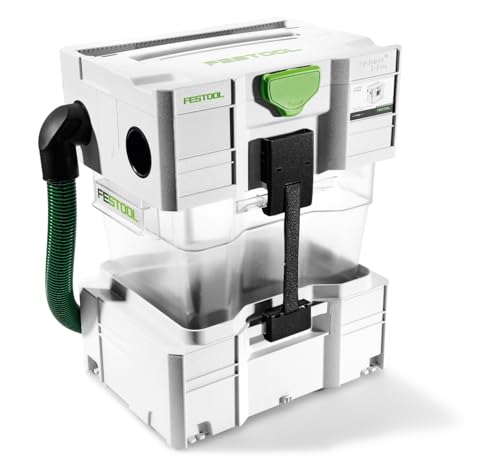
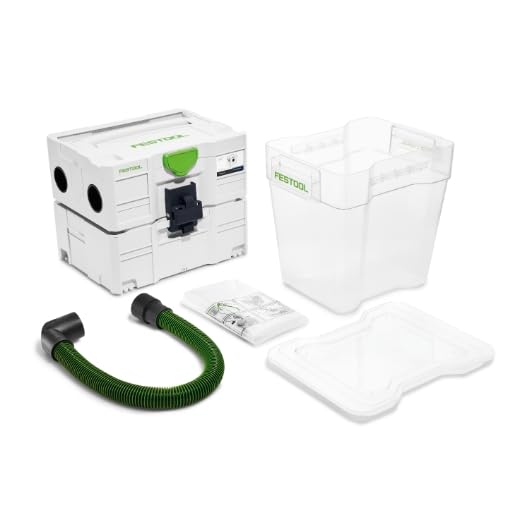
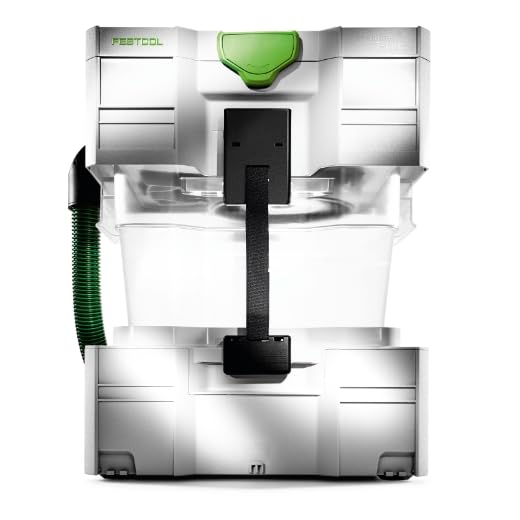
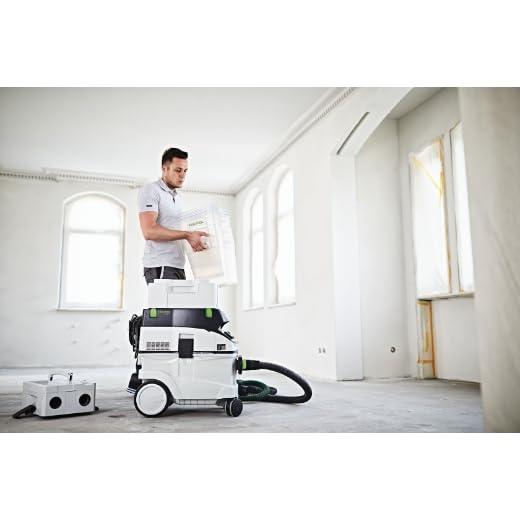
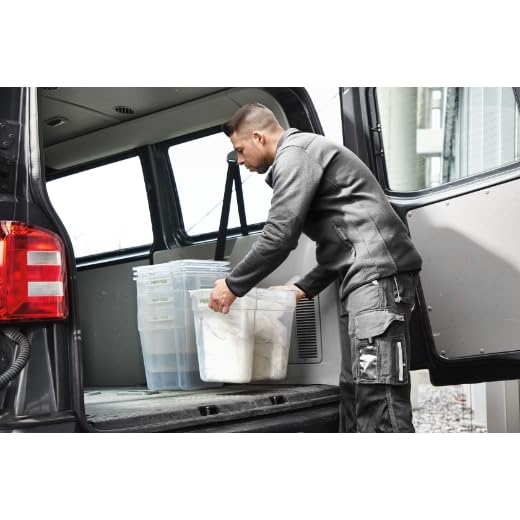
Festool’s CT CYCLONE is the go-to when portability and system integration matter most. Its flat cyclone design allows it to nest neatly inside a Systainer, which is a standout for anyone who transports tools regularly. For contractors moving between job sites or organized DIYers who value modular storage, this isn’t just convenient, it’s part of a larger, efficient workflow.
It’s not the largest or highest-capacity unit, but when paired with a Festool CT extractor, it delivers OSHA Table 1 compliance for silica dust, which is a major advantage for pros doing concrete or masonry work. Owners appreciate how it keeps filters cleaner longer, though some note it’s less effective with heavy chip loads compared to larger metal cyclones. If you’re already in the Festool ecosystem, this is a no-brainer.
Product photos

VEVOR Cyclone with Metal Tank

Strengths
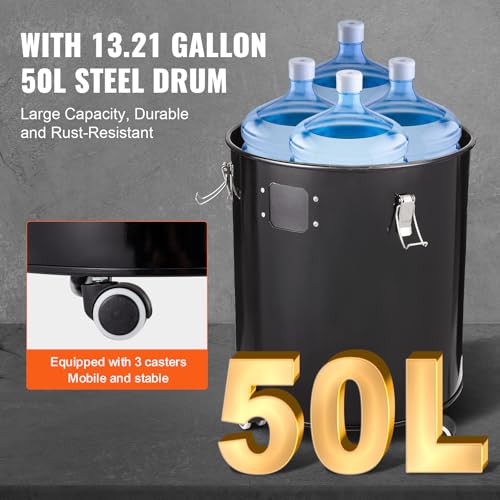
- Large 13.21-gallon tank
- Transparent body
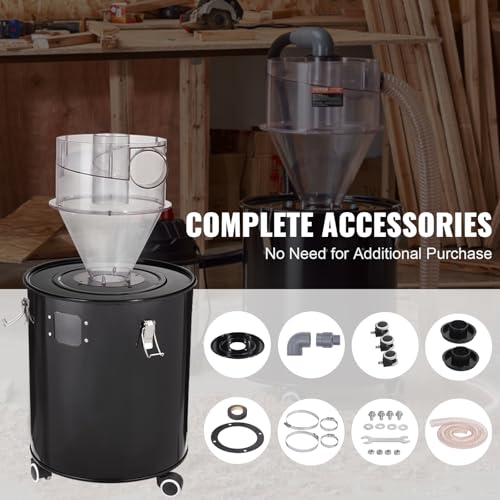
- Includes full kit
Trade-offs
- Bulky and heavy
- Plastic connectors on metal tank
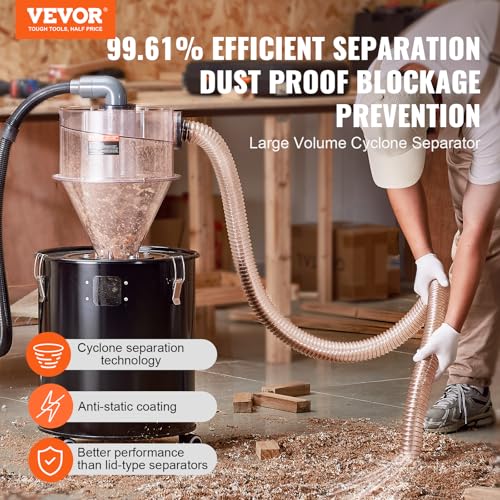
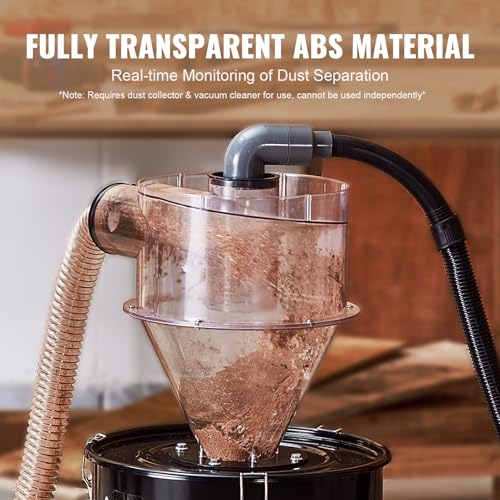
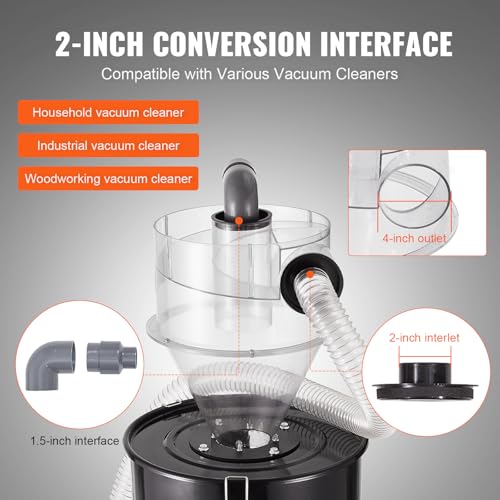
With a 13.21-gallon iron tank and a 99.61% separation rate, the VEVOR unit is built for volume. This is the kind of separator that makes sense in a busy workshop where you’re running multiple tools back-to-back and don’t want to stop to empty the bucket every hour. The transparent design is a standout, being able to see dust buildup in real time helps with maintenance scheduling, and owners consistently highlight this as a practical benefit.
It’s heavier and less refined than premium models, but the four casters make it movable, and the included wrench and full kit simplify setup. Compared to bucket-based systems, this offers more durability and capacity, though it lacks the compactness of low-profile designs. If you’re tired of emptying 5-gallon buckets every few jobs, this one solves that pain point.
Product photos
DEWALT 10 Gallon Stainless Tank

Strengths
- Stainless steel tank
- High durability
- Large 10-gallon capacity
Trade-offs
- Basic cyclone design
- Heavier than plastic units
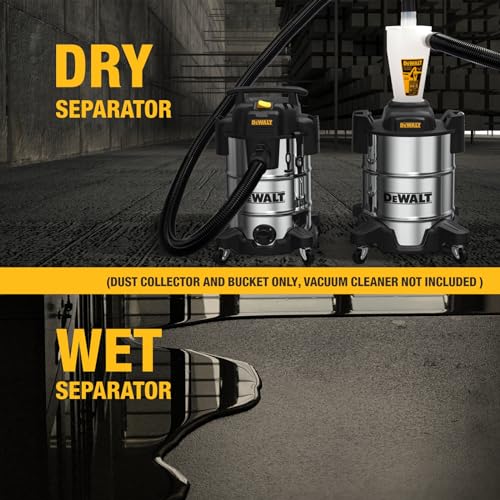
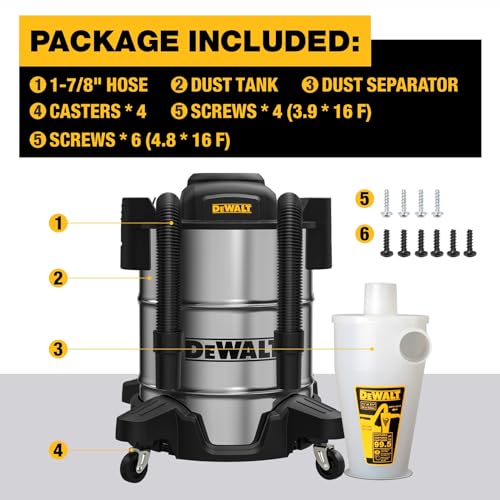
DEWALT built this one to last. The 10-gallon stainless steel tank is a major upgrade over plastic or galvanized buckets, it resists dents, corrosion, and warping over time. Combined with a four-caster base, it’s stable, durable, and easy to move around a larger shop. Owners appreciate the industrial-grade materials and the fact that it handles everything from metal shavings to wet drywall mud without issue.
It’s not the most efficient in terms of airflow design, it lacks the engineered elbows or cyclone optimization of the Dustopper or Dust Deputy, but what it sacrifices in finesse, it makes up for in brute resilience. For contractors or shops where tools take a beating, that durability matters. If you want a separator that can survive years of abuse, this is the pick.
Product photos
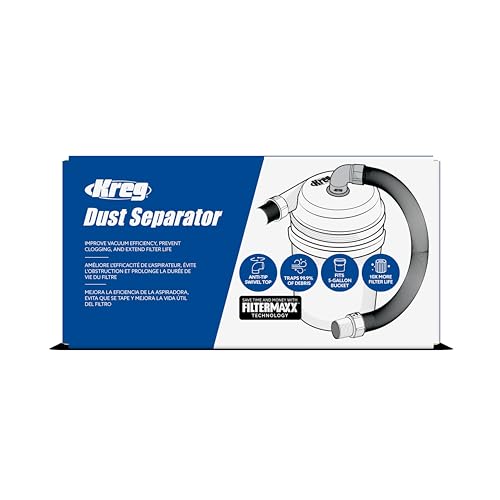
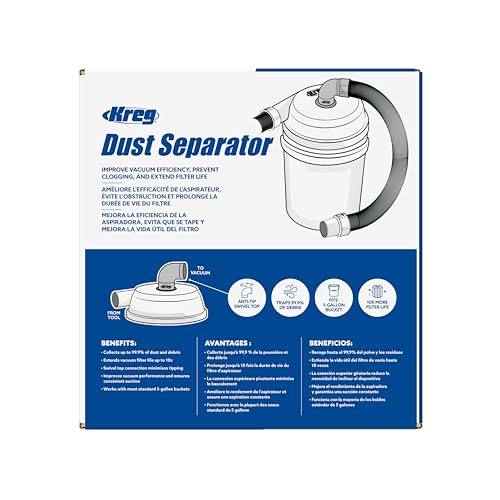
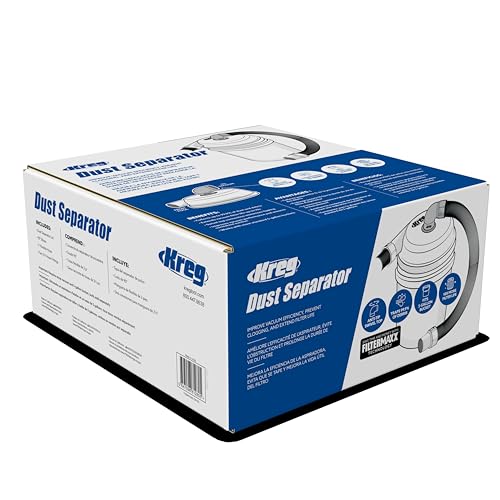
Kreg Dust Separator
Strengths
- High fine-dust capture
- Swivel hose connection
- Simple hose cuffs
Trade-offs
- Bulky footprint
- Limited portability
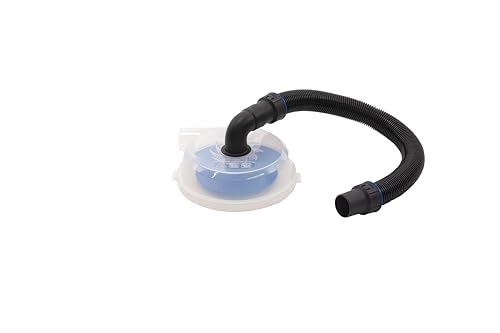
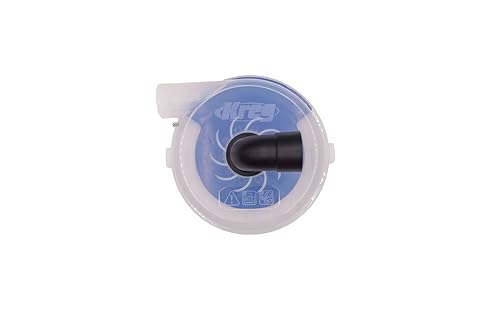
Kreg built this separator with fine dust in mind, and on paper, that focus shows. The FilterMaxx fin technology is designed to capture up to 99.9% of airborne particles before they hit your vacuum’s filter, which aligns with what many owners report, noticeably cleaner filters and sustained suction over long sessions. The swivel top connection is a small but smart touch, reducing strain on hoses and minimizing the risk of tipping during use.
Still, while it performs well for fine dust, it’s not the most space-efficient design, and some users note it can feel bulky under a workbench. Compared to low-profile models like the Dustopper PRO or Dust Deputy Low-Pro, this one demands more clearance. If you’re running a tight shop and dealing mostly with fine particulates from sanding or routing, it’s a solid performer, just not the most streamlined option.
Product photos
Cikawit Dust Separator Kit
Strengths
- Affordable price
- Leak-resistant seal
- Compact size
Trade-offs
- Plastic construction
- Less efficient at high CFM
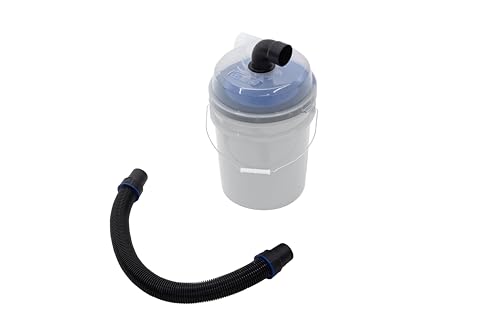
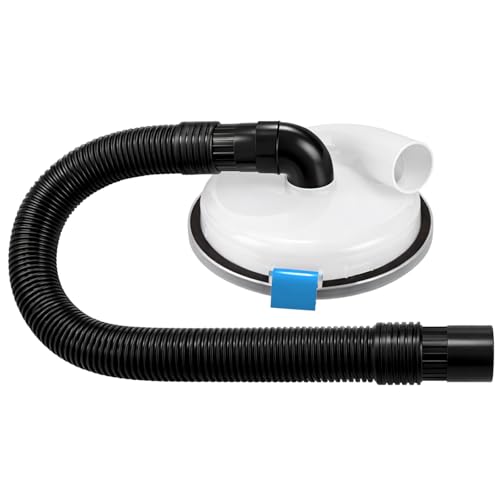
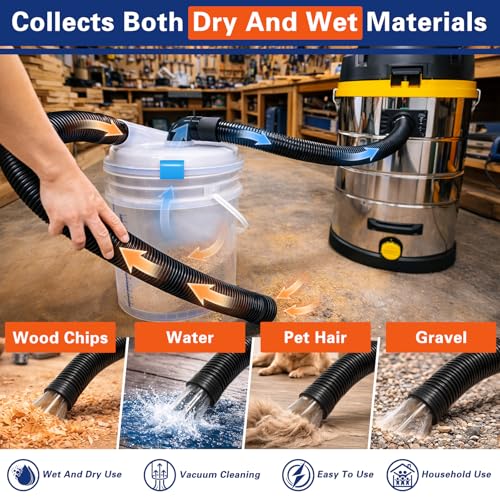
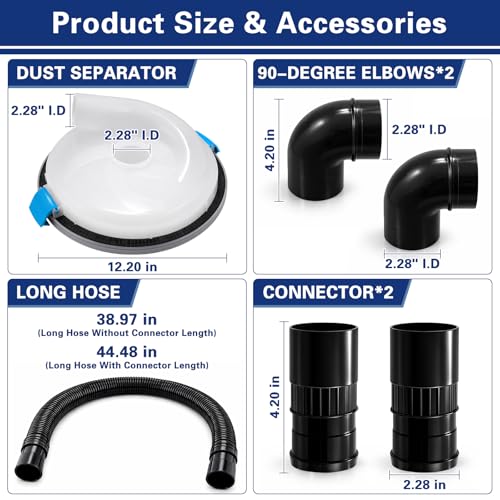
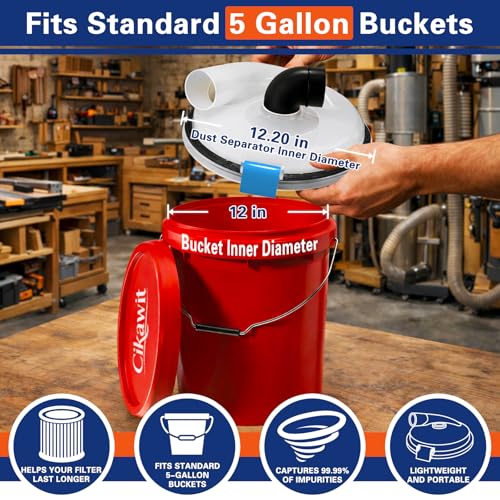
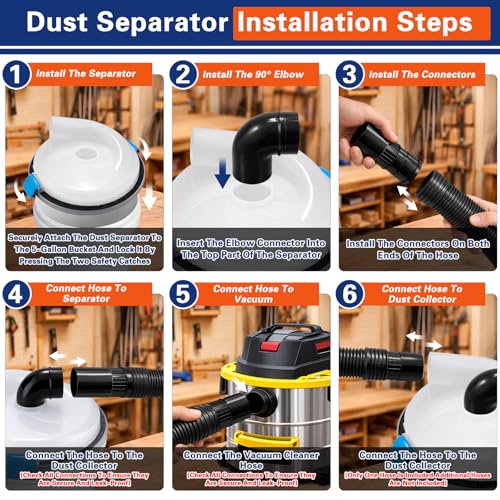
Cikawit delivers a remarkably complete package for the price. For budget-focused buyers, this separator checks most boxes: it fits standard 5-gallon buckets, includes 90-degree elbows and a 2-1/2” hose, and features a pre-installed gasket that actually works. Owners report it performs surprisingly well for fine dust and wet debris alike, with minimal air leaks when properly seated.
It won’t match the airflow refinement of the Dustopper PRO or the build quality of the DEWALT, but for hobbyists or part-time woodworkers, it’s more than capable. The compact design helps it fit under benches, and the fact that it handles both wet and dry materials adds to its versatility. When value matters most, this one stands out.
Product photos

How We Chose These dust separators
Rather than a hands-on lab test, my research for these recommendations involved a detailed comparison of published specifications and features across numerous models. I weighed owner reviews from major retailers alongside professional assessments from woodworking and shop tool publications. My analysis focused on identifying which separators consistently delivered on key performance indicators, and how well they addressed common user pain points. Ultimately, I ranked these units based on their ability to effectively remove dust before it reaches the vacuum filter.
For dust separators, consistent airflow and separation efficiency are paramount. I gave the most weight to designs that demonstrated a high capacity for capturing fine dust – a critical factor for both respiratory health and filter longevity. Durability also factored heavily, as these units often operate in demanding workshop environments. A separator’s compatibility with standard shop vac hose sizes and pail configurations was also a key consideration.
Specifications provide a good baseline for understanding airflow (CFM) and tank capacity, but owner feedback proved invaluable for assessing real-world performance. Comments regarding filter life extension, ease of emptying, and the unit’s ability to handle various dust types heavily influenced my rankings. I also considered reputation; brands consistently praised for quality and innovation received a boost. You can explore more about complete solutions in our guide to workshop dust collection systems.
How To Pick The Right dust separators
Picking the right dust separator can dramatically improve your shop’s air quality and extend the life of your vacuum.
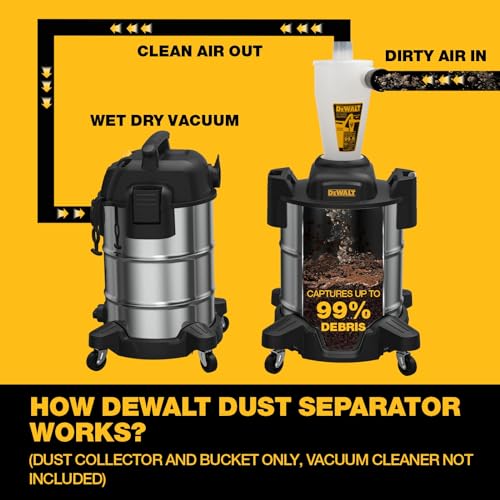
A good dust separator prioritizes efficient particle removal before they reach the vacuum’s filter. Look for designs that use cyclonic action to separate debris via centrifugal force, maximizing airflow while minimizing filter clogging. Consider tank capacity, hose compatibility, and build quality – especially if you work with fine dust or large volumes of material.
Understanding Airflow and Separation Efficiency
Many assume more airflow (measured in CFM) is always better, but that isn’t necessarily true. While you want sufficient airflow to carry debris, excessive CFM can actually reduce separation efficiency by creating turbulence. The best designs, like the Dustopper PRO, are engineered to optimize separation, not just brute force. I’ve seen users report significant improvements in filter life simply by switching to a separator that focuses on efficient cyclonic action, even if it means a slightly lower CFM rating. It’s a subtle point, but one that impacts long-term cost and performance.
Material and Build Quality Matter
Durability is always a concern, and the materials used in a dust separator can make a big difference. Plastic separators are generally more affordable, but metal tanks – like those found in the DEWALT model – offer superior longevity and resistance to damage. Consider the environment you’ll be using the separator in. If you work with abrasive materials like concrete or drywall, a metal tank is a worthwhile investment.
Here’s what to look for when evaluating build quality: * A secure lid seal (a pre-installed gasket is a plus). * Robust hose connections that won’t crack or loosen with use. * Stable base construction (casters are helpful for portability).
Balancing Capacity, Portability, and Budget
The ideal capacity depends on your typical projects and workshop size. A smaller separator is fine for occasional use and limited dust, but if you generate a lot of waste, a larger-capacity model like the VEVOR with its 13.21-gallon tank will save you frequent emptying.
Don’t skimp on the separator to save a few dollars. A quality unit protects your investment in a good vacuum and keeps your shop cleaner and healthier.
Portability is another factor. If you need to move the separator around frequently, consider a more compact design or one with casters. For those seeking a truly portable solution that integrates with a larger dust collection system, the Festool CT CYCLONE Separator is a strong choice. Ultimately, finding the right balance between these factors is key, and exploring options like different cyclonic separation systems can help you narrow down your selection. I often advise folks to think about how they actually work and choose a separator that fits their workflow.
Dust Separators Compared
Here’s a comparison of key specifications for various dust separators to help you choose the right one for your needs.
| Product Title | Capacity | Hose Compatibility | Separation Rate | Port Size (in) | Special Features |
|---|---|---|---|---|---|
| Dust Deputy Low-Pro Plus Cyclone | N/A | 2.5″ | >99.9% | 2.25 | Flexible Hose, Swivel Cuff |
| The Dustopper PRO | N/A | N/A | N/A | N/A | Patented Design, 2 Elbows |
| Festool CT CYCLONE Separator | N/A | N/A | N/A | N/A | Portable, Systainer Fit |
| VEVOR Cyclone with Metal Tank | 13.21 Gal | 4.0″, 2.0″ (adapter) | 99.61% | 3.81/1.97 | Transparent Tank, Casters |
| DEWALT 10 Gallon Stainless Tank | 10 Gal | 1-7/8″, 2-1/2″ | N/A | N/A | Stainless Steel, Casters |
| Kreg Dust Separator | N/A | N/A | 99.9% | N/A | Swivel Top, FilterMaxx Fins |
| Cikawit Dust Separator Kit | N/A | N/A | N/A | 2.5 | Leak-Resistant, Compact |
Frequently Asked Questions
What level of dust separation efficiency should I expect?
A good dust separator should capture at least 99% of particulate matter before it reaches your vacuum. Higher efficiency rates, like the >99.9% claimed by some models, mean less filter maintenance and better air quality, but remember CFM also plays a role.
Are dust separators compatible with all shop vacuums?
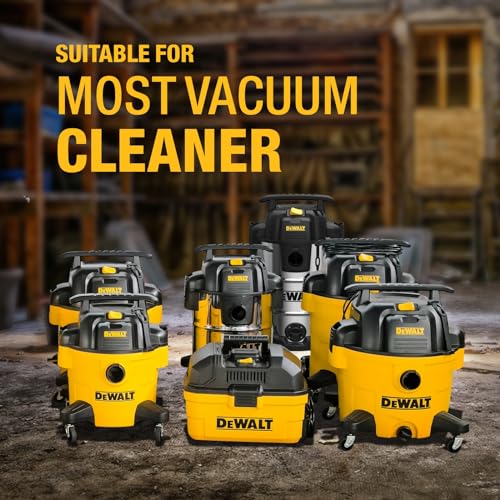
Most separators work with standard shop vac hose sizes (typically 2.5 inches), but you may need an adapter. Check your vacuum’s hose diameter and the separator’s specifications to confirm compatibility before purchasing.
What’s the advantage of a metal tank versus plastic?
Metal tanks, like those in the DEWALT model, offer vastly superior durability, particularly when dealing with abrasive dust. While plastic is cheaper, a metal tank will withstand more wear and tear in a demanding workshop environment.
How often will I need to empty the collection tank?
Emptying frequency depends on the tank capacity and the amount of dust generated. Larger tanks (like the VEVOR’s 13.21-gallon model) require less frequent emptying, while smaller tanks are better suited for lighter use or smaller shops.
Are dust separators useful for more than just woodworking?
Absolutely. While often discussed in the context of woodworking, dust separators are beneficial for any task creating fine dust – from drywall sanding to concrete grinding. Consider exploring woodworking-specific dust collectors if you’re primarily focused on wood projects.
The Bottom Line
Choosing a dust separator often comes down to balancing upfront cost with long-term benefits. While you can find budget-friendly options, I consistently recommend the Dustopper PRO for most workshops. Its unique design maximizes separation efficiency, protecting your vacuum’s filter and saving you money in the long run.
For specific needs, the VEVOR Cyclone with Metal Tank is an excellent choice if you generate a large volume of dust and want a durable, high-capacity unit. If portability and integration with a larger system are priorities, the Festool CT CYCLONE Separator remains the top pick. And for those seeking a simple, effective solution on a tighter budget, the Cikawit Dust Separator Kit offers a good entry point.
Ultimately, remember that specs aren’t everything. Focus on airflow efficiency rather than just raw CFM, prioritize durable construction, and select a separator that fits your workflow. Investing in a good dust separator – and exploring top-rated dust collectors – isn’t just about protecting your tools; it’s about protecting your health and creating a more enjoyable workshop environment.
