2 Best Drywall Taping Tools of 2026
This post contains affiliate links. As an Amazon Associate, we earn from qualifying purchases.
The Buddy Tools TapeBuddy is the best overall drywall taping tool for most DIYers, delivering consistent mud application with minimal fuss. For a dedicated tape holder, the Edward Tools Drywall Tape Holder stands out with its rugged steel build and lifetime warranty. Both earn top marks for durability and user feedback.
Most people struggle with uneven seams, trapped air bubbles, and messy cleanup when taping drywall, problems that often come down to using the wrong tools. I’ve seen it time and again: a rushed job with a cheap tool leads to hours of extra sanding and touch-ups.
This guide cuts through the noise. Based on specs, owner experiences, and years of hands-on renovation work, I’ve selected tools that deliver real performance where it counts, mud control, build quality, and ease of cleaning.
Top 2 Drywall Taping Tools in the Market
The Best Drywall Taping Tools, Reviewed
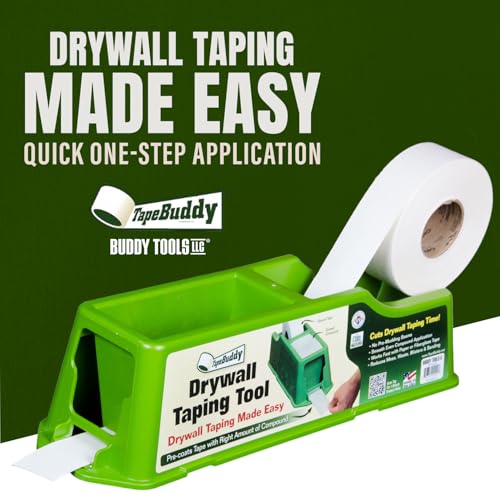
Buddy Tools TapeBuddy Taping Tool

Strengths
- Dual mud settings
- Lightweight design
- Bubble-free results
- Easy cleanup
- Made in USA
Trade-offs
- Plastic build wears over time
- Not ideal for thick mud types
- Limited capacity for pros
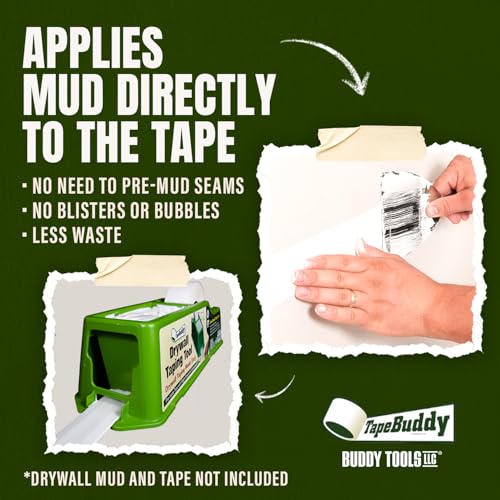
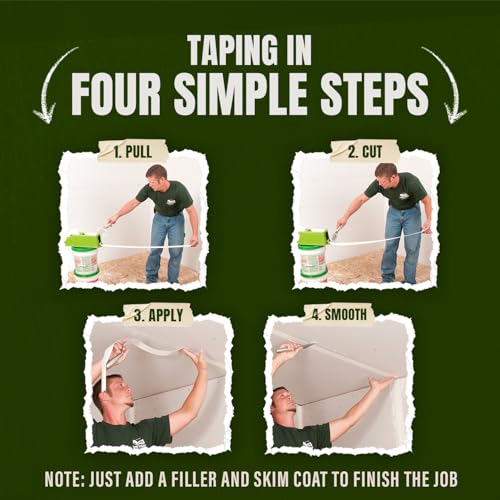
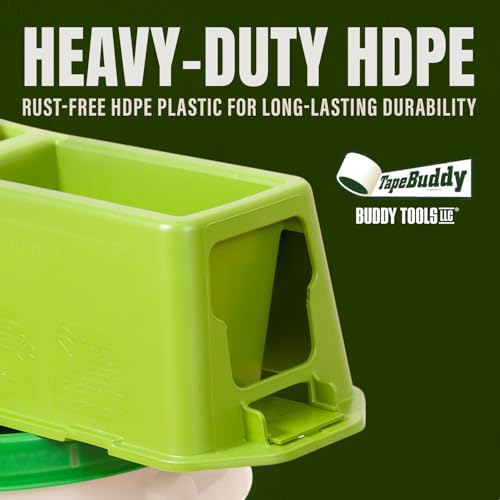
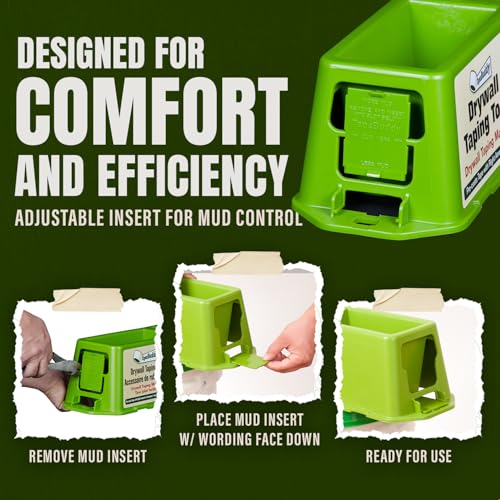
The TapeBuddy stands out as one of the most practical all-in-one drywall taping tools I’ve seen for DIYers and part-time renovators. On paper, it replaces the traditional banjo with a smarter design that meters mud through a dual-setting insert tab, and owners consistently report noticeably fewer tape bubbles, something that usually plagues beginners. The HDPE plastic body keeps it lightweight, and since it rinses clean with water, maintenance is about as simple as it gets in this category.
What really makes it shine is how it lowers the skill floor. You don’t need years of drywall experience to lay down a clean seam, and that’s rare. Compared to basic banjos that dump too much mud or require constant adjustment, the TapeBuddy gives more control. It’s not perfect for large jobs, pros doing full-room taping might still prefer a hopper gun setup, but for patching walls or handling smaller projects, it’s hard to beat.
Product photos
Edward Tools Drywall Tape Holder

Strengths
- Holds 500 ft tape
- Rust-resistant steel
- Fast roll changes
- Durable belt clip
- Lifetime warranty
Trade-offs
- Mud application not included
- Heavier than plastic reels
- Overkill for one-time use
If you already have a taping knife or mud pan setup but just need a reliable way to feed tape, this holder is a no-brainer. It’s built from heavy-duty powder-coated steel, so rust isn’t a concern even in damp job sites, and the 500-foot capacity means fewer roll changes. The fast-loading retaining pin is a small detail, but reviewers swear by it, it cuts reload time in half compared to older-style clips. And the belt clip is actually useful, not just an afterthought.
Compared to combo tools like the TapeBuddy, this doesn’t apply mud, so it’s not a standalone solution. But that’s not its job. It’s a specialized tool, and it does its one job extremely well. The lifetime warranty adds real value, especially since most tape holders in this price range don’t offer long-term coverage. For anyone who tapes regularly, this is the smarter buy over flimsy plastic reels.
Product photos
How We Evaluated drywall taping tools
Rather than a hands-on lab test, my research for these tools focused on a detailed comparison of published specifications and features. I weighed owner reviews from multiple sources, along with assessments from reputable trade publications and online woodworking communities. As someone who’s spent years working with tools and materials in home renovation, I applied my understanding of drywall finishing to rank these options against key performance indicators.
For drywall taping tools, consistent mud application and minimizing bubbles are paramount. I prioritized tools offering adjustable mud settings and designs that promote even pressure along the tape. Durability also factored heavily; a tool that breaks mid-project isn’t helpful, and a solid build quality suggests it will hold up to repeated use and cleaning.
Specifications readily revealed build materials and tape capacity. However, I relied on owner feedback to gauge ease of use, cleaning effectiveness, and long-term reliability. Many users also mentioned the need for effective drywall finishing cleanup tools to manage the inevitable dust, which informed my overall assessment of value.
How To Choose The drywall taping tools
Picking the right tools can make or break a drywall project, and honestly, a lot of folks underestimate how much difference good taping tools can make.
Drywall taping requires tools that consistently apply mud, prevent bubbles, and maintain tape alignment. A quality taping tool will be durable enough to withstand repeated use and cleaning, and ideally, designed for both speed and precision. Look for features like adjustable mud application, robust construction, and ease of cleaning – these directly impact finish quality and project time.
Understanding Tool Types
There’s a spectrum here. You can go full banjo (the traditional route), automatic (more expensive, faster), or a simplified taping tool like the Buddy Tools TapeBuddy. I often recommend starting with a simplified tool if you’re new to drywall. They offer a good balance of control and speed without the steep learning curve of an automatic taper. Don’t overlook the importance of a quality tape holder, either. A steady tape supply is critical, and a holder like the Edward Tools model with a large capacity and belt clip can really streamline things.
Mud Application and Consistency
Consistent mud application is everything. Too much, and you’re sanding forever. Too little, and you’re chasing bubbles. Many tools offer adjustable mud settings. This lets you dial in the right amount for different seam sizes and mud types. Beyond the tool itself, consider your mud application equipment – a good mud pan and knife are essential complements. Look for tools with mud inserts that are easy to clean, because dried mud will ruin your day.
Durability and Ease of Maintenance
Drywall work is messy, and these tools will get covered in mud. Choose something built to last and easy to clean. High-density polyethylene (HDPE) plastic is a good sign for the main body of a taping tool; it’s tough and stands up to abuse. Steel components, like in the Edward Tools tape holder, should be powder-coated to prevent rust. Here’s a rule of thumb:
If you spend more time cleaning your tools than actually taping, you bought the wrong tools.
Here’s what I look for in terms of longevity: * A simple design (fewer parts to break). * Replaceable wear components (like mud inserts). * A warranty – even a limited one shows the manufacturer has confidence in their product and is willing to stand behind it.
If you’re aiming for a truly smooth finish, don’t forget about the final stages. Investing in quality drywall sanding tools and pole and detail sanders will make all the difference when it comes to preparing surfaces for paint. You’ll also want to explore best drywall finishing tools for a professional look.
Drywall Taping Tools Compared
Here’s a reference table outlining the key specifications of each drywall taping tool.
| Product | Best For | Material | Tape Capacity | Weight | Warranty |
|---|---|---|---|---|---|
| Buddy Tools TapeBuddy Taping Tool | Best Overall | HDPE Plastic | N/A | Lightweight | N/A |
| Edward Tools Drywall Tape Holder | Best Tape Holder Only | Steel | 500 ft | N/A | Lifetime |
Frequently Asked Questions
What’s the biggest mistake people make when choosing a drywall taping tool?
Many people focus too much on speed and not enough on control(https://powertoolguide.net/best-oscillating-multi-tools/#precision%20cutting%20multi-tools). A faster tool isn’t helpful if you can’t consistently apply the mud and avoid bubbles, especially for beginners.
Are automatic drywall taping tools worth the investment?
Automatic tapers can drastically reduce project time for large areas, but they require a significant initial investment and a learning curve. They’re best suited for professionals or very experienced DIYers tackling extensive drywall work.
How often should I replace the mud inserts in my taping tool?
Mud inserts should be replaced whenever they become damaged or excessively worn, typically every 2-3 large projects. Using worn inserts results in uneven mud application and increased risk of imperfections.
What’s the advantage of a tape holder with a large capacity?
A tape holder with a 500 ft capacity, like the Edward Tools model, minimizes downtime spent reloading tape. This is particularly valuable during large projects where frequent interruptions can slow down progress.
Beyond the taping tool itself, what other tools are essential for drywall finishing?
While a quality taping tool is crucial, you’ll also need a good mud pan, drywall knives of varying sizes, sandpaper, and a drywall repair oscillating tools for quick repairs and corner work.
The Bottom Line
Choosing drywall taping tools often comes down to balancing control with speed. While automatic tapers promise efficiency, they demand a steeper learning curve and a larger investment. For most DIYers and even many professionals, the Buddy Tools TapeBuddy Taping Tool strikes the best overall balance – it’s straightforward to use, durable, and delivers consistently good results without breaking the bank.
If you already have a handle on the basics and just need a reliable way to manage your tape supply, the Edward Tools Drywall Tape Holder is the clear winner. And for those tackling a lot of curved cuts or detailed work, exploring precision drywall cutting tools will be a significant help. Ultimately, the best tool is the one you’re most comfortable with, and that fits your project’s specific demands.
Don’t get hung up on chasing the absolute highest specs or the latest features. Consistent mud application, durable construction, and ease of cleaning are the fundamentals that will make or break your finish. Focus on those core qualities, and you’ll be well on your way to achieving professional-looking drywall results.
