6 Best DeWalt Circular Saws of 2026
This post contains affiliate links. As an Amazon Associate, we earn from qualifying purchases.
The DEWALT FLEXVOLT 60V MAX 7-1/4″ Circular Saw is the best overall pick for power and runtime, especially for heavy-duty jobs. For budget-conscious buyers, the DEWALT 7-1/4″ Corded Circular Saw delivers solid performance without the battery cost. If portability is key, the DEWALT 20V MAX XR 7-1/4″ Circular Saw balances size and strength for most DIYers.
Most people don’t realize how quickly a weak or poorly balanced circular saw can turn a simple cut into a frustrating mess. Kickback, inaccurate lines, and stalling mid-cut are common issues when the tool isn’t matched to the task.
As someone who’s spent years evaluating how tools perform in real-world conditions, I focused on specs, owner feedback, and long-term reliability to narrow down the best Dewalt models. This guide breaks down what actually matters, power, blade size, ergonomics, and key safety features, so you can pick the right saw for your projects without getting lost in marketing hype.
Top 6 Dewalt Circular Saws in the Market
The Best Dewalt Circular Saws, Reviewed
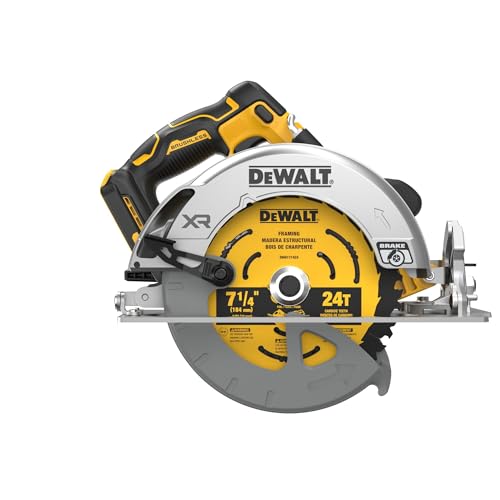
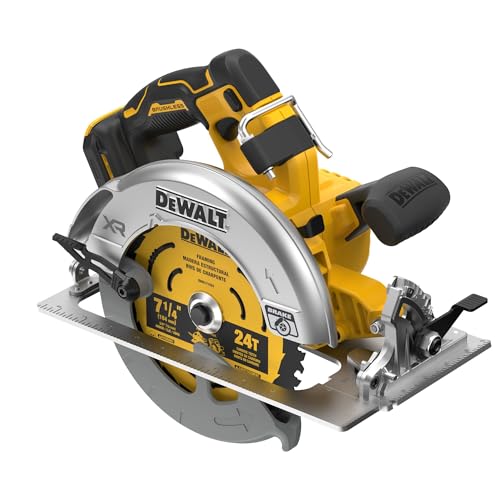
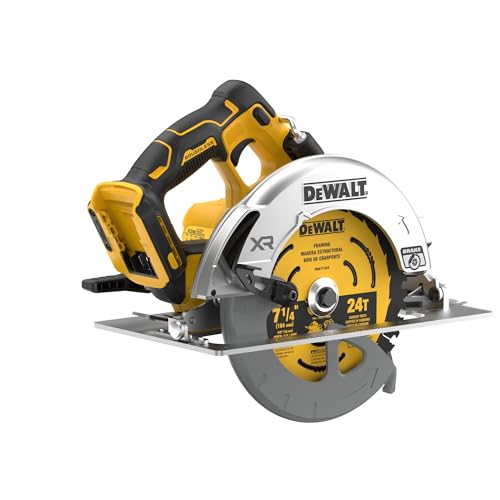
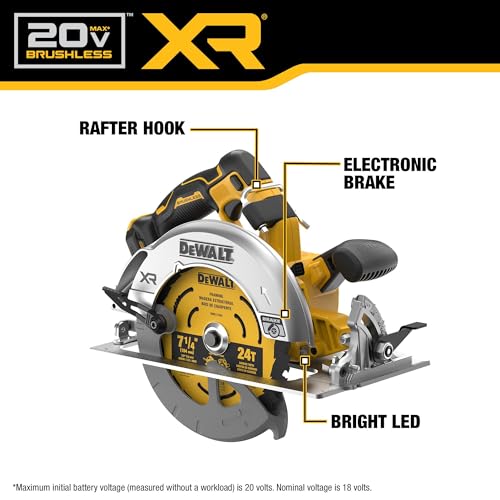
DEWALT 20V MAX XR 7-1/4″ Circular Saw

Strengths
- Most powerful 20V DEWALT saw
- 7-1/4 inch blade
- Brushless motor
- 5,500 RPM
- 2-9/16 in. depth
Trade-offs
- No LED light
- Tool only
- Slightly heavier
This DCS590B is DEWALT’s answer to users who want the full 7-1/4-inch cut in a 20V package without sacrificing power. With a brushless motor hitting 5,500 RPM and up to 1,700 MWO, it’s their most powerful 20V circular saw, and owners report it handles thick lumber and OSB with confidence. The 2-9/16-inch depth at 90 degrees matches corded models, and the bevel range goes to 50 degrees, slightly less than the DCS578B, but still plenty for most jobs.
What seals the deal is the combination of power, depth, and 20V flexibility. Unlike the 60V model, this one runs on the widely adopted 20V MAX batteries, making it easier to share cells across tools. It doesn’t have an LED, which feels like a missed opportunity, but the electric brake and solid build make up for it. For most users, this is the smarter buy over the DCS391B or even the DCS565B.
Product photos

DEWALT FLEXVOLT 60V MAX 7-1/4″ Circular Saw
Strengths
- 47% more power vs DCS575
- 60V FLEXVOLT system
- LED for visibility
- 57-degree bevel
- Rafter hook
Trade-offs
- Heavy without battery
- Higher cost of ownership
- Tool only
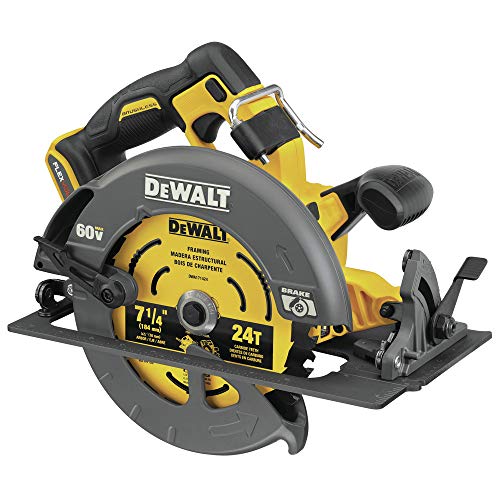
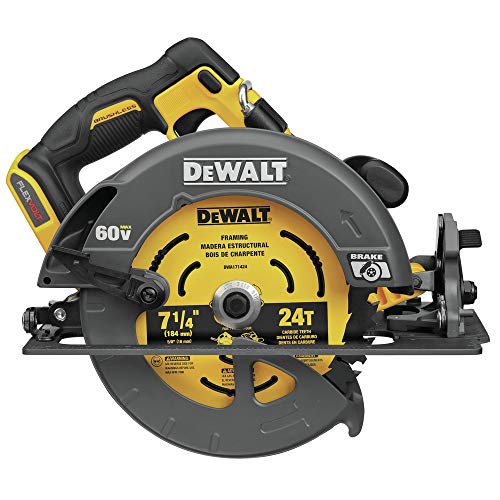
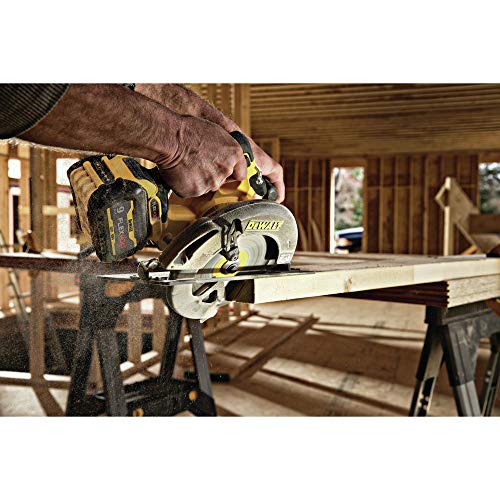
If raw power is your priority, the DCS578B stands out with up to 47% more output than DEWALT’s older DCS575 model. Running on 60V FLEXVOLT, this saw doesn’t just match corded performance, it sustains it across heavy cuts in pressure-treated lumber or plywood stacks. The 57-degree bevel is on par with the best in class, and the electric brake adds safety without slowing workflow.
What really lifts this model is the integrated LED. In dim conditions or inside unfinished framing, it makes a real difference in cut precision. The rafter hook is a small but thoughtful addition for quick storage on the job. On paper, it’s built for pros who demand cordless freedom without compromise. Compared to the 20V models, this one delivers deeper power reserves and better runtime under load.
Product photos

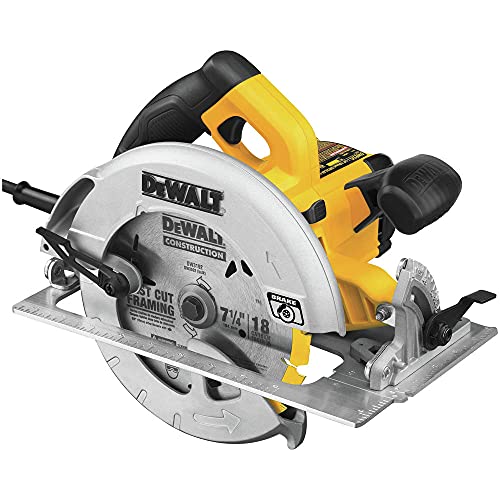
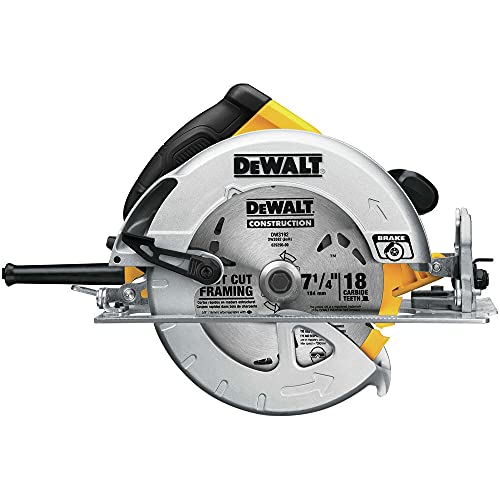
DEWALT 7-1/4″ Corded Circular Saw

Strengths
- Lightweight for class
- 15-amp reliable power
- 57-degree bevel capacity
- Electric brake
- Dust blower
Trade-offs
- Cord limits mobility
- No LED light
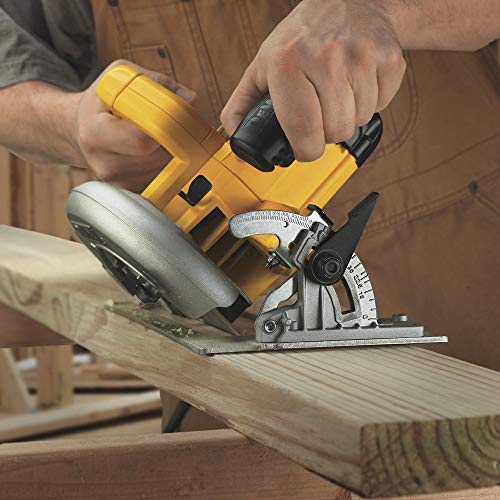
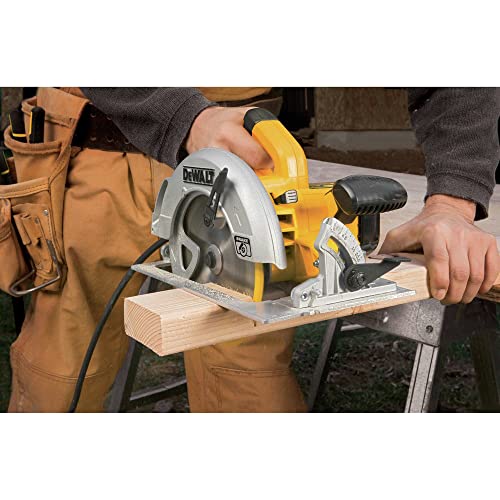
This corded DEWALT DWE575SB is the kind of workhorse I’d expect to see on a pro site where power is never in question. At 8.8 pounds, it’s among the lightest in its class, which helps with fatigue during long cuts, and the 15-amp motor delivers consistent torque even through dense lumber or stacked decking. The 57-degree bevel capacity is a real advantage for trim work or angled framing, and owners consistently report clean, accurate cuts thanks to the smooth aluminum base and well-balanced design.
The electric brake is a safety win, stopping the blade fast after release, and the dust blower is actually useful, keeping the cut line visible without needing to stop and wipe debris. The patented cord protection system is a small detail, but field feedback shows it really does reduce strain and prevent accidental disconnects, which matters when you’re working on ladders or in tight spots. Compared to cordless models, this one wins on sustained output and reliability.
Product photos
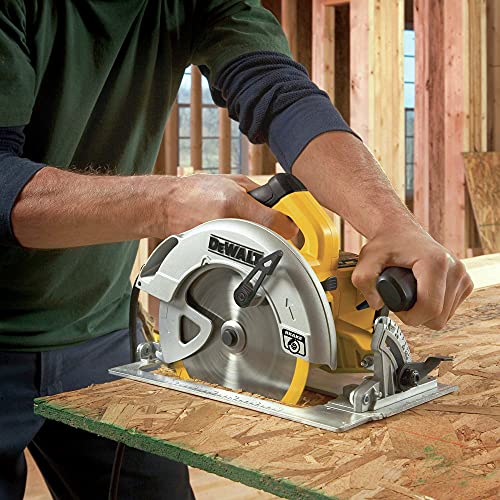
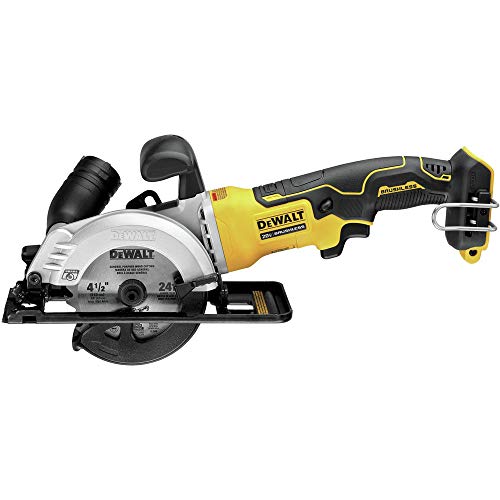
DEWALT ATOMIC 20V 4-1/2″ Circular Saw

Strengths
- Extremely lightweight
- Compact for tight spaces
- Brushless motor
- Onboard blade key
- Hang hook
Trade-offs
- 4-1/2 inch blade
- Limited depth of cut
- Not for heavy tasks
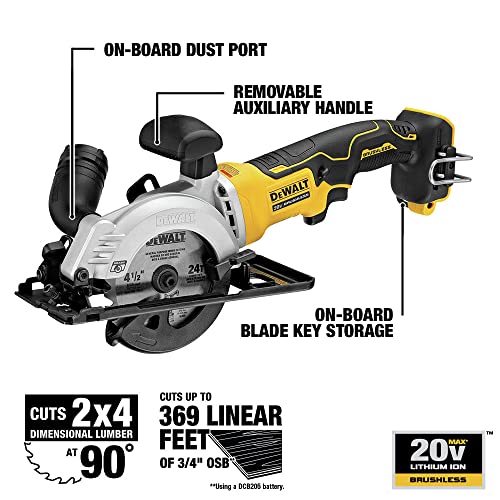
This little Atomic saw is built for one thing: tight spaces and ultra-light tasks. The 4-1/2-inch blade may seem limited, but it’s surprisingly capable, cutting 2x material at 90 degrees thanks to the bevel gear design. At just over 4 pounds, it’s the lightest DEWALT circular saw in the lineup, and the compact form makes it a favorite for overhead cuts or inside cabinetry work.
Owners love the removable auxiliary handle, it lets you choke up for precision when needed. The onboard blade key and hang hook add convenience, and the brushless motor delivers decent runtime for its size. But make no mistake, this isn’t for framing or decking. Compared to the DCS391B, it trades power and blade size for agility. It’s a niche tool, but a smart one for the right job.
Product photos
DEWALT 20V MAX 6-1/2″ Brushless Saw

Strengths
- Brushless motor
- Tool-free bevel
- LED light
- Airlock dust port
- Rafter hook
Trade-offs
- 6-1/2 inch blade
- Slightly less depth
- Tool only
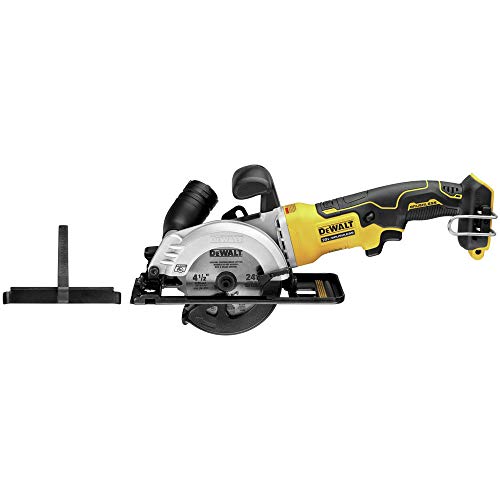
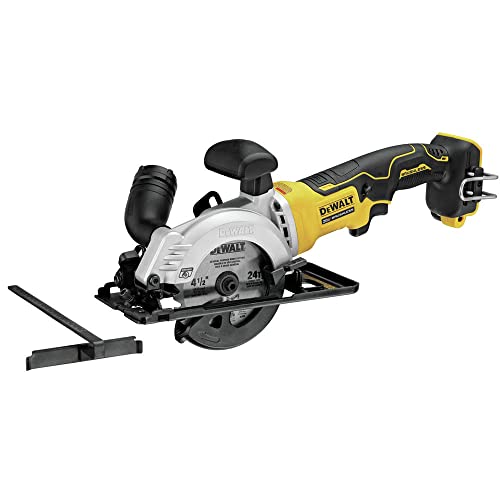
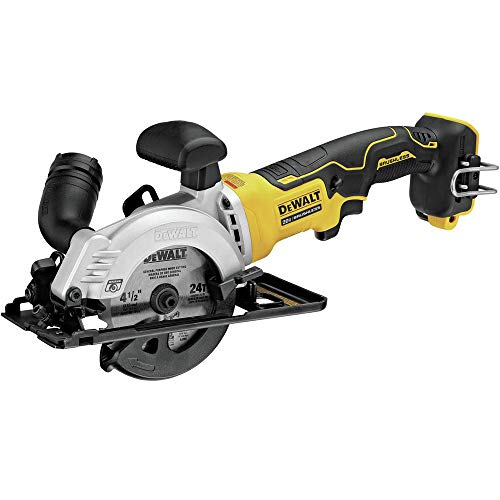
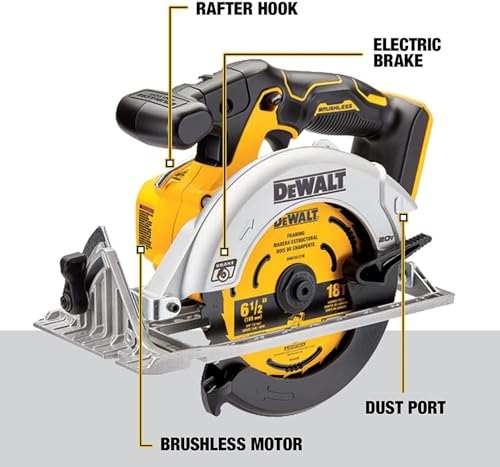
The DCS565B hits a sweet spot between power and portability, making it my go-to recommendation for most mid-range users. The brushless motor delivers strong efficiency, and owners report solid runtime even through long cutting sessions. At 6-1/2 inches, the blade size is slightly smaller than full-size models, but it still handles 2x material with ease and offers better control in tight spaces.
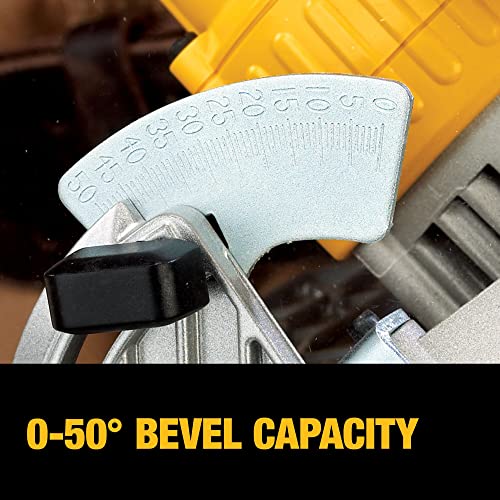
I appreciate the tool-free bevel lever, adjusting from 0 to 50 degrees is fast and secure, which matters when switching between framing and trim work. The airlock-compatible dust port is a nice touch for those serious about cleanup. Compared to the DCS391B, this model feels more refined, with better balance and a more durable build. The rafter hook and LED add real utility without bloating the price.
Product photos
DEWALT 20V MAX 6-1/2″ Circular Saw
Strengths
- Affordable entry point
- Includes blade
- Magnesium shoe
- Keyless blade change
- 3-year warranty
Trade-offs
- Brushed motor
- No LED
- Less efficient
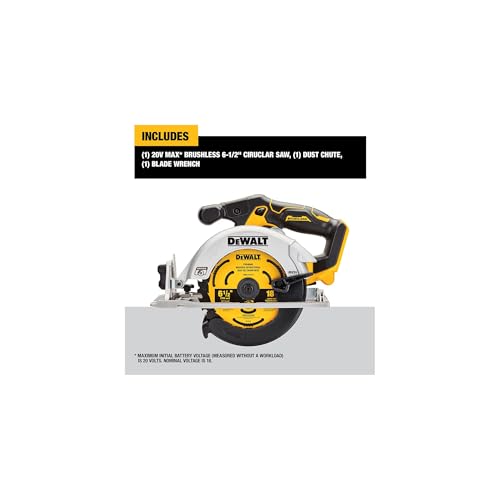
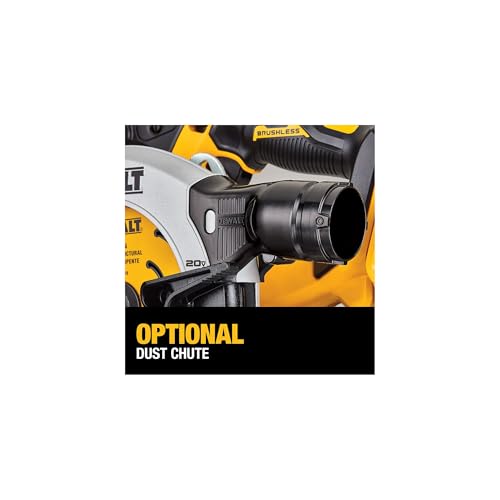
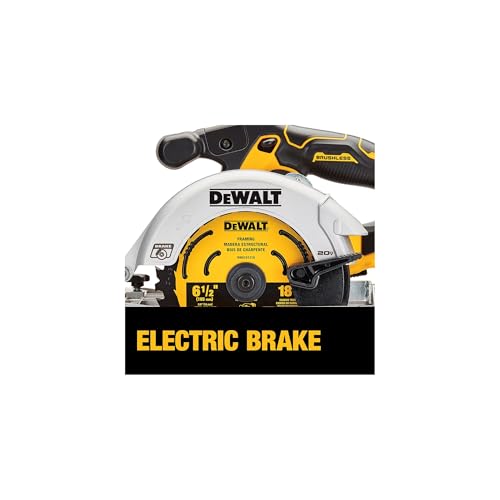
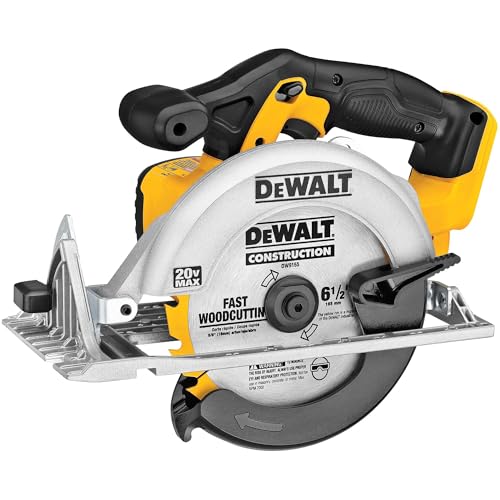
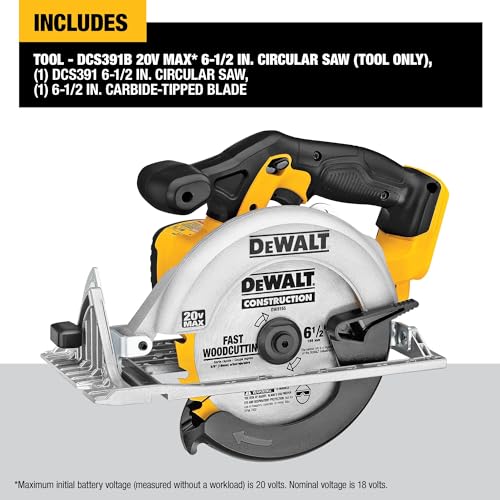
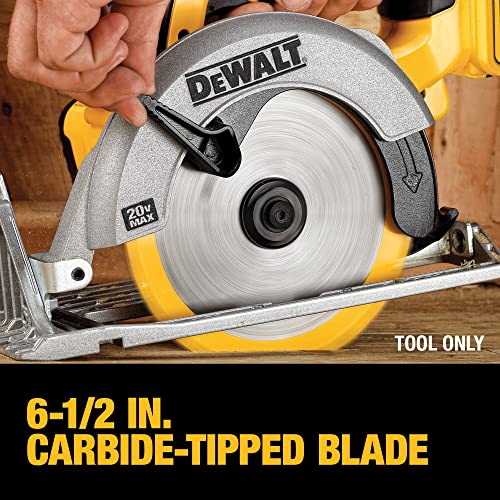
The DCS391B is clearly positioned as DEWALT’s budget-friendly entry into cordless circular saws, and it delivers where it counts: basic cuts, decent power, and solid build for the price. The 6-1/2-inch blade with 18 teeth is included, which is a plus, and it can handle 2x material at both 90 and 45 degrees, enough for most DIY projects. The magnesium shoe adds durability without adding weight, and the rubber overmold grip improves control.
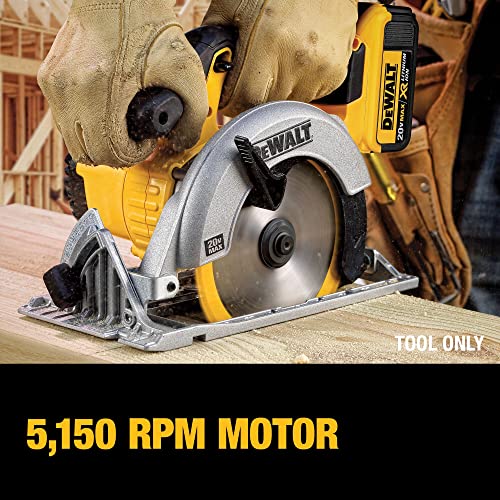
That said, it lacks a brushless motor, so efficiency and longevity aren’t on par with models like the DCS565B. The 5150 RPM is adequate, but under load, it slows more than brushless units. Still, the 3-year warranty gives peace of mind, and the keyless blade change speeds up swaps. For new tool users or those building a starter kit, this is a functional, no-frills option.
Product photos
How We Chose These dewalt circular saws
Rather than a hands-on lab test, my research for these recommendations focused on a detailed comparison of published specifications and features across the Dewalt circular saw lineup. I weighed owner reviews from multiple sources – including retailer sites and woodworking forums – alongside assessments from reputable tool review websites. This data was then ranked against criteria important to a range of users, from homeowners to professional contractors.
For Dewalt circular saws, cutting power and battery runtime (for cordless models) were heavily weighted. A saw’s ability to handle common materials like plywood, dimensional lumber, and even tougher materials like treated lumber is critical. Beyond that, I gave significant consideration to features that enhance accuracy and safety, like electric brakes and clear line-of-sight designs.
Specifications reliably indicate motor power (MWO, RPM) and maximum cut depth and bevel capacity. However, real-world usability – how a saw feels in the hand, how well the blade brake functions, and overall durability – are best gauged from owner feedback and long-term reputation. Understanding these nuances is key, and I used owner experiences to supplement the raw numbers. If you’re new to using these tools, reviewing beginner circular saw guide can be a great starting point.
What To Look For In dewalt circular saws
Choosing the right circular saw can feel overwhelming, but focusing on your typical tasks and desired features will narrow down the options quickly.
A good circular saw balances power, accuracy, and usability. Buyers should prioritize a motor capable of handling their common materials, a blade appropriate for the cuts they’ll make most often, and features that enhance safety and control – like an electric brake and a clear line of sight. Blade quality and the robustness of the baseplate are also key indicators of long-term performance.
Motor Power and Voltage
The motor is the heart of any circular saw. Corded saws generally offer consistent power for demanding tasks, but cordless models have come a long way. If you primarily tackle light-duty cutting – thin plywood, trim work – a 20V saw might be sufficient. However, for framing lumber, thicker hardwoods, or frequent, extended use, stepping up to a FLEXVOLT 60V model (or a high-amp corded option) is a smart move. Don’t get caught up in just wattage or voltage numbers; consider the motor type. Brushless motors are more efficient, run cooler, and typically last longer than brushed motors. If you’re considering DeWalt cordless circular saws, understanding the different battery platforms is crucial.
Blade Size and Type
Blade size dictates the maximum cutting depth, and the type of blade determines what materials you can cut efficiently. A 7-1/4″ blade is the most common size, offering a good balance of power and maneuverability. Smaller 4-1/2″ or 6-1/2″ blades are ideal for tighter spaces and lighter materials, but they won’t cut as deeply. Beyond size, blade tooth count matters. Fewer teeth (10-24) are better for ripping (cutting with the grain) while more teeth (40+) excel at crosscutting (cutting against the grain) and producing cleaner finishes. Knowing how to perform a circular saw blade swap is also essential for maximizing versatility.
- A 24-tooth blade is a good all-around choice for general construction.
- For fine woodworking, a blade with 60-80 teeth will minimize splintering and produce smoother cuts.
- Specialty blades exist for specific materials like metal, masonry, and plastic; using the correct blade extends blade life and improves cut quality – and attempting to cut metal with a wood blade is a recipe for disaster (and a broken blade).
Ergonomics and Features
Beyond raw power, consider how comfortable and easy the saw is to use. Weight is a significant factor, especially for overhead cuts. Look for saws with comfortable grips and well-placed controls. An electric brake is a valuable safety feature, stopping the blade quickly after you release the trigger. A clear line of sight is also crucial for accurate cuts; some models include integrated LED lights or dust blowers to improve visibility. For those who frequently work on roofs or at heights, a rafter hook is an invaluable addition. To explore the top DeWalt cordless models and find one tailored to your needs, check out our detailed guides.
A saw that feels right in your hand is a saw you’ll use more confidently and safely. Don’t underestimate the importance of a comfortable grip, intuitive controls, and features that minimize fatigue.
Dewalt Circular Saws Compared
Here’s a comparison of key specifications for Dewalt circular saws to help you choose the right tool.
| Product Title | Voltage | Blade Size (in) | Max Cut Depth (90°) | Brushless | Electric Brake |
|---|---|---|---|---|---|
| DEWALT 20V MAX XR 7-1/4″ Circular Saw | 20V | 7-1/4 | 2-9/16 | Yes | Yes |
| DEWALT FLEXVOLT 60V MAX 7-1/4″ Circular Saw | 60V | 7-1/4 | 2-9/16 | Yes | Yes |
| DEWALT 7-1/4″ Corded Circular Saw | Corded | 7-1/4 | 2-9/16 | No | Yes |
| DEWALT ATOMIC 20V 4-1/2″ Circular Saw | 20V | 4-1/2 | N/A | Yes | Yes |
| DEWALT 20V MAX 6-1/2″ Brushless Saw | 20V | 6-1/2 | N/A | Yes | Yes |
| DEWALT 20V MAX 6-1/2″ Circular Saw | 20V | 6-1/2 | 2-1/8 | No | N/A |
Frequently Asked Questions
What’s the difference between Dewalt 20V MAX and FLEXVOLT saws?
FLEXVOLT 60V saws offer significantly more power and runtime than 20V MAX models, making them better suited for demanding tasks like cutting thick hardwoods or performing consistent, all-day work. FLEXVOLT batteries are backwards compatible with 20V MAX tools, but 20V MAX batteries cannot power FLEXVOLT tools.
Are Dewalt circular saws good for professional use?
Yes, Dewalt circular saws are a popular choice among professionals, particularly the FLEXVOLT and high-amp corded models. They are known for their durability, power, and wide availability of replacement parts, and many feature brushless motors for extended life and consistent performance.
What blade should I use for cutting treated lumber?
A blade specifically designed for treated lumber (often featuring carbide-tipped teeth) is essential. Treated lumber is abrasive and will quickly dull standard blades, so using the correct blade will improve cut quality and extend the life of your saw.
Can I use a Dewalt circular saw to cut metal?
While technically possible with a specialized metal-cutting blade, it’s generally not recommended. Circular saws are designed for wood and wood products, and attempting to cut metal can damage the blade, the saw, and potentially cause injury. For metal cutting, a dedicated metal-cutting saw is a much safer and more effective option.
Where can I find more information on DeWalt corded circular saws?
You can explore a detailed comparison and reviews of DeWalt corded circular saws on our site. These saws provide consistent power and are a good choice if you don’t need the portability of a cordless model.
The Bottom Line
Ultimately, choosing a circular saw comes down to balancing power and convenience with your budget and typical projects. For most homeowners and DIYers who need a reliable all-around performer, the DEWALT FLEXVOLT 60V MAX 7-1/4″ Circular Saw stands out. It delivers the power to tackle tough cuts while remaining relatively manageable, and the FLEXVOLT battery system offers excellent runtime and compatibility across a wide range of tools.
If you’re working on a tighter budget or primarily need a saw for lighter tasks, the DEWALT 20V MAX XR 7-1/4″ Circular Saw is an excellent choice. It provides plenty of power for most common cuts, and the 20V MAX platform is widely available and affordable. For those needing a compact saw for tight spaces or detail work, the DEWALT ATOMIC 20V 4-1/2″ Circular Saw offers impressive power in a smaller package. Don’t forget that performing essential circular saw maintenance will keep any of these saws running smoothly for years to come.
At the end of the day, specifications matter less than a saw’s overall balance of power, safety features, and how it feels in your hands. Prioritize a comfortable grip, a clear line of sight, and an electric brake, these elements will contribute more to accurate, safe, and efficient work than any extra horsepower or fancy feature.
