
9 Best Cut Off Saws of 2026
This post contains affiliate links. As an Amazon Associate, we earn from qualifying purchases.
The Evolution R12DCT stands out as the best overall cut off saw for its dust control and precision, especially with masonry. For tight budgets, the VEVOR 14″ Abrasive Chop Saw delivers heavy-duty performance without the high price. If you need portability, the DEWALT 20V MAX XR is the top cordless pick.
Most people don’t realize how quickly a poorly chosen cut off saw can turn a simple job into a frustrating mess. The wrong power source, inadequate cutting depth, or poor dust management can slow you down and compromise safety.
After comparing the field and analyzing owner feedback, I focused on power, material compatibility, and real-world usability. This guide breaks down what matters most so you can pick a saw that matches your workload, not just the specs on the box.
Top 9 Cut Off Saws in the Market
The Best Cut Off Saws, Reviewed
Evolution R12DCT 12″ Concrete Saw

Strengths
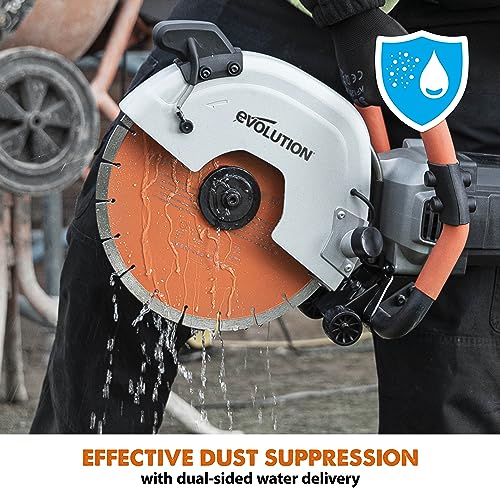
- Water-fed dust control
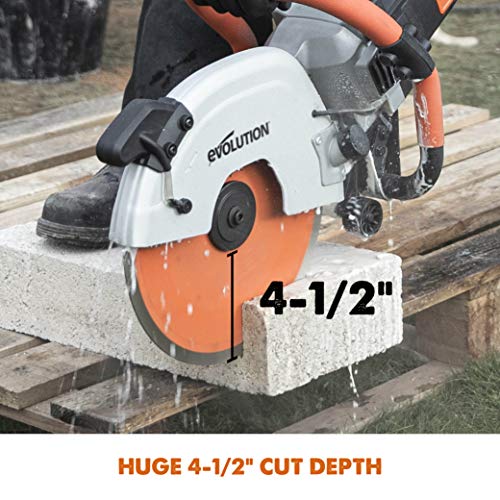
- Deep 4.5-inch cut
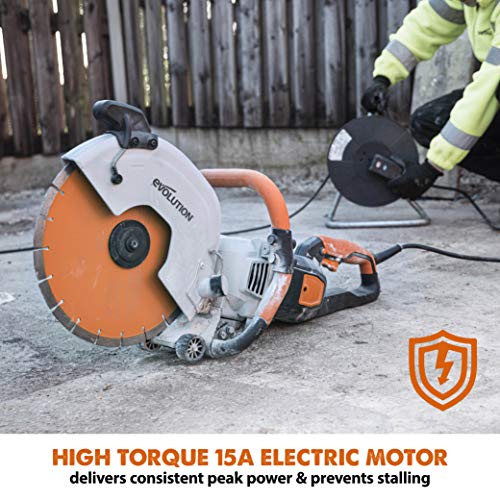
- Electric, no gas or pull cord
- Premium diamond blade
- 3-year warranty
Trade-offs
- Requires water supply
- Heavy setup
- Higher initial cost
If you’re cutting concrete, brick, or pavers, especially indoors or in regulated environments, this Evolution saw is in a class of its own. The water-fed dust suppression is the real deal, keeping silica dust down to OSHA-compliant levels, and owners consistently note cleaner worksites and fewer respiratory concerns. The 4.5-inch cut depth and 15A electric motor give it serious reach and reliability without the fumes or maintenance of gas models.
It’s not lightweight, and you’ll need a water source, but compared to angle grinders or dry-cutting saws, this is the smarter long-term pick. The included 12-inch diamond blade cuts through rebar-laced concrete without bogging, and the 3-year warranty signals Evolution’s confidence. For masonry pros, this isn’t just convenient, it’s essential.
Product photos


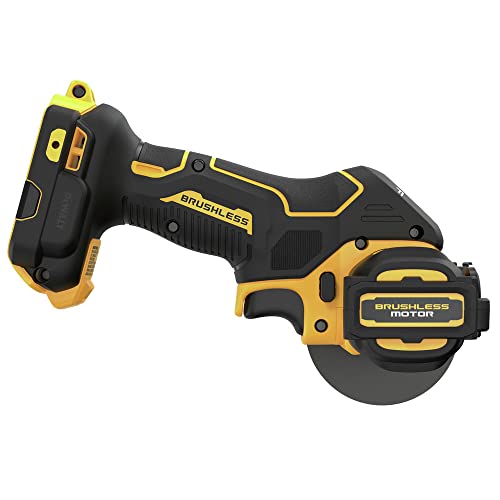
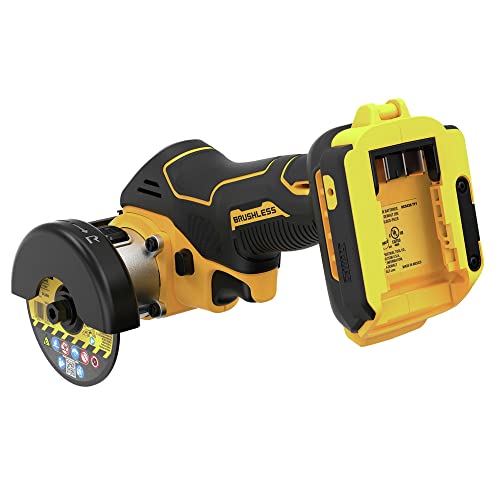
DEWALT 20V MAX XR Cut Off Tool

Strengths
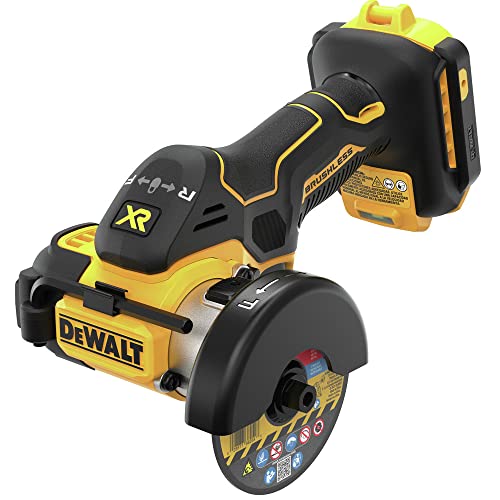
- High 550 MWO power
- Depth adjustment
- AirLock dust shroud
- Bright LED light
- Multi-material wheels
Trade-offs
- Expensive bare tool
- Heavy for cordless
- Battery sold separately
DEWALT’s DCS438B is the gold standard in cordless cut off tools. The 550 MWO brushless motor delivers aggressive cutting power, and owners consistently praise its ability to slice through steel, tile, and PVC with minimal kickback. The tool-free depth adjustment and AirLock dust shroud make it one of the few cordless models that can handle indoor jobs without creating a mess.
It’s pricier than the RYOBI or Ecarke, but the build quality, LED lighting, and dust compatibility justify it. Compared to Milwaukee’s 12V model, it offers more raw power and better depth control. If you’re a pro who needs reliability, dust management, and multi-material performance, this is the smarter buy.
Product photos


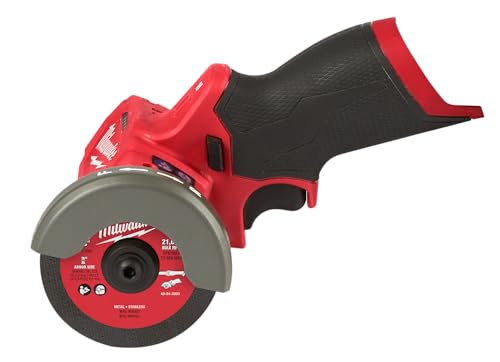
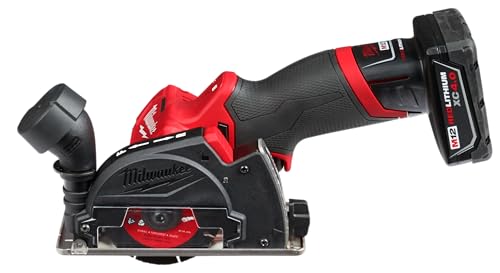
Milwaukee 12V Cut-Off Tool

Strengths
- Compact 12V design
- Reversible rotation
- Brushless motor
- Redlink intelligence
- Excellent ergonomics
Trade-offs
- Limited cut depth
- 12V power limit
- No depth or dust control
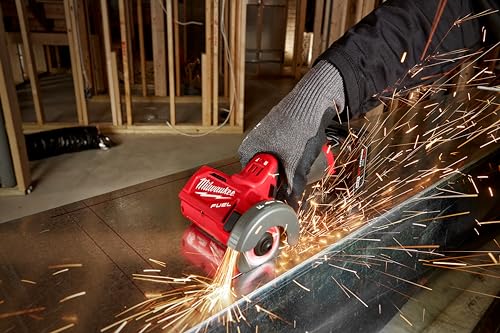
Milwaukee’s 12V cut off tool is the definition of compact power. The Powerstate brushless motor and Redlink Plus intelligence give it impressive torque for such a small package, and owners love how easily it fits into tight spaces, under sinks, behind walls, inside cabinets. The reversible blade rotation helps prevent jamming, a detail that matters when you’re working blind.
It’s not meant for deep or prolonged cuts, and the 12V battery limits runtime under heavy load. But compared to the RYOBI or Ecarke models, it feels more refined, better balance, tighter tolerances, and smoother operation. For a pro who values brand reliability and tool ecosystem, this is a no-brainer for detail work.
Product photos


RYOBI 18V Brushless Cut-Off Tool

Strengths
- Brushless motor
- Adjustable depth guard
- Dual LED lights
- Compact and lightweight
- RYOBI battery compatible
Trade-offs
- 3-inch wheel limit
- No dust extraction
- Shorter runtime under load
RYOBI continues to punch above its weight in the budget cordless space, and this 3-inch cut off tool proves it. The 19,500 RPM brushless motor gives it surprising power for its size, and owners find it especially useful for cutting metal studs, PVC, and even thin roofing felt with the right wheel. The adjustable depth guard is a standout feature at this price, letting you control cut depth down to 0.62 inches, something even pricier models sometimes skip.
It’s not as refined as the DEWALT or Milwaukee options, and the 3-inch wheel limits cut depth, but for homeowners and light contractors using RYOBI’s extensive ONE+ battery lineup, this is a smart buy. I’d pick it over the Ecarke for its better ergonomics and integrated LED lighting.
Product photos
VEVOR 14″ Abrasive Chop Saw

Strengths
- High power motor
- Large 14-inch blade
- Tool-free miter adjust
- Sturdy clamping vise
- Effective spark guard
Trade-offs
- Heavy and bulky
- No dust control
- Loud under load
When you need to slice through rebar, angle iron, or thick-walled pipe all day, the VEVOR 14-inch chop saw earns its keep. The 2300W motor and 80-tooth blade deliver consistent, aggressive cuts with minimal vibration, owners report fewer blade changes and cleaner finishes than with cheaper 12-inch models. The tool-free miter adjustment from 0° to 45° is a real time-saver on the job, and the spark guard offers solid protection.
It’s bulky and not meant for tight spaces, but that’s expected. Compared to the Yumark or smaller VEVOR 7.25-inch model, this is the workhorse for serious metal fabrication. If you’re framing commercial structures or doing structural steel prep, this is one of the few budget-friendly saws that won’t quit after a week.
Product photos


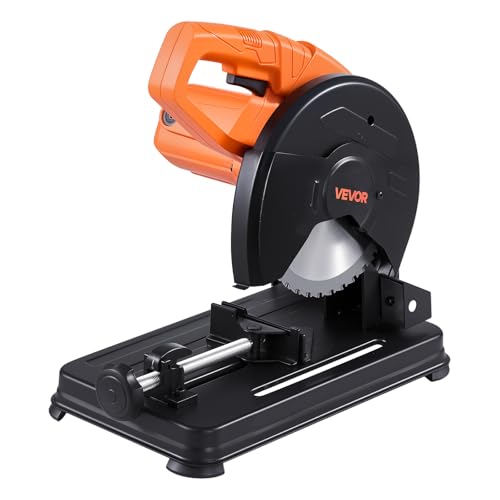
VEVOR 7-1/4″ Metal Chop Saw
Strengths
- Cold cut blade longevity
- Precise miter adjustment
- Quick-clamp vise
- 4000 RPM speed
- Durable build
Trade-offs
- Smaller blade diameter
- No dust extraction
- Basic motor cooling
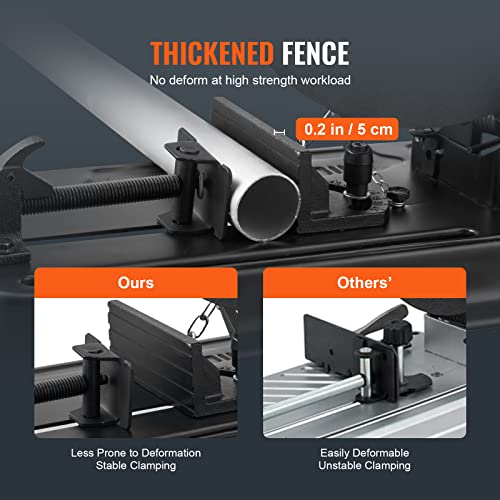
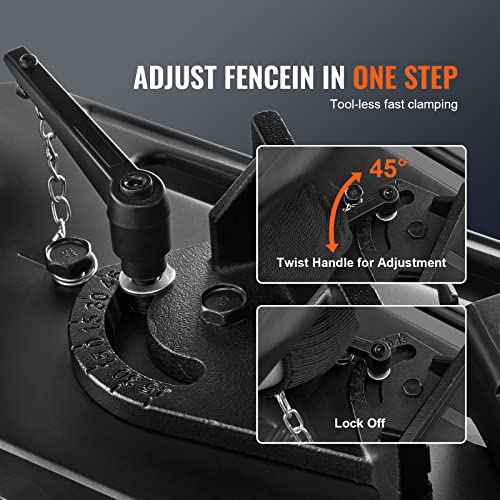
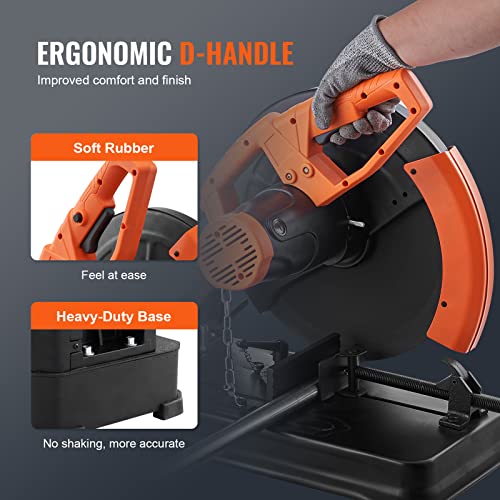
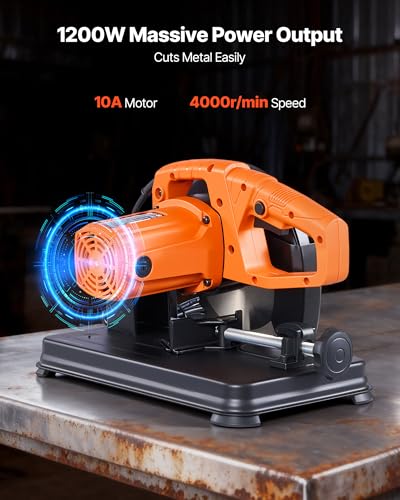
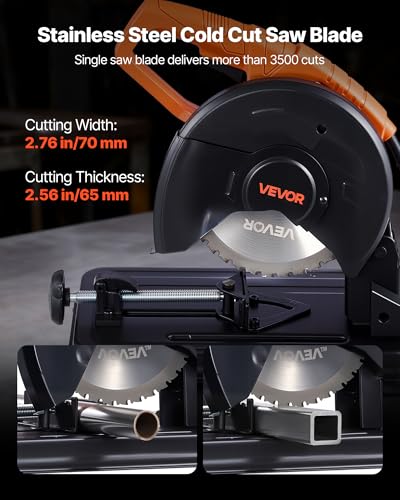
This 7.25-inch VEVOR chop saw is a solid mid-tier option for shops that need more capacity than a 6-inch but don’t want the bulk of a 14-inch. The 1200W motor and 4000 RPM speed handle I-beams, flat bars, and square tubing with confidence, and owners report the cold cut blade lasts well over 3,500 cuts, few competitors match that lifespan.
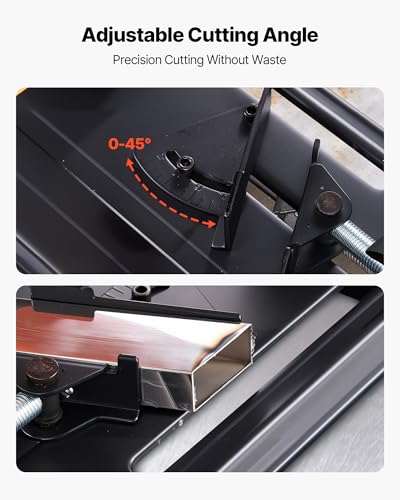
The 0–45° miter adjust is smooth and repeatable, and the quick-clamp vise speeds up setup. It’s not as rugged as the 14-inch VEVOR, but for small fabrication shops or HVAC work, it strikes a good balance. I’d choose this over the Yumark if you need more precision and less vibration.
Product photos

Yumark 2200W Abrasive Chop Saw
Strengths
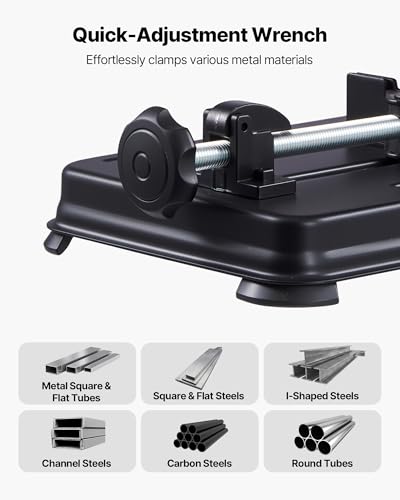
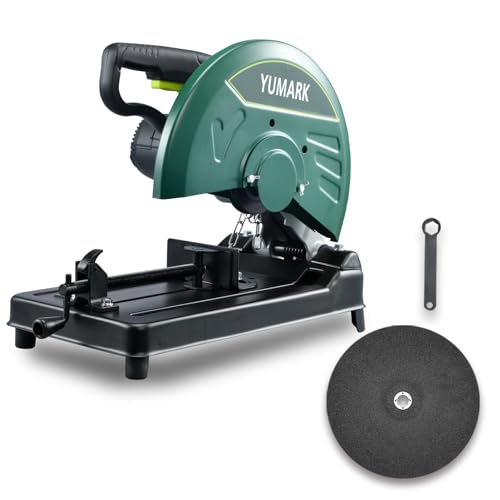
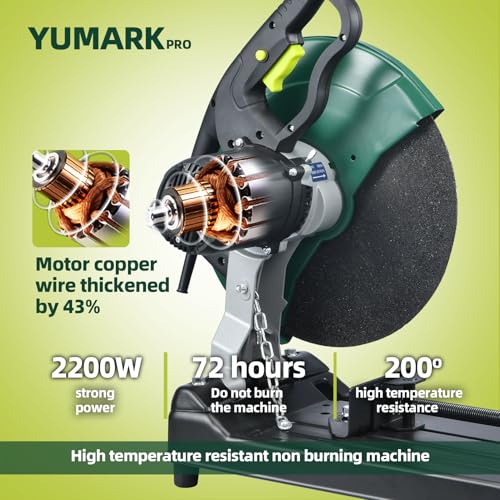
- 2200W upgraded motor
- Stable non-slip base
- Dual insulation safety
- Good blade life
- Low maintenance
Trade-offs
- Basic miter adjustment
- No dust collection
- No LED or depth gauge
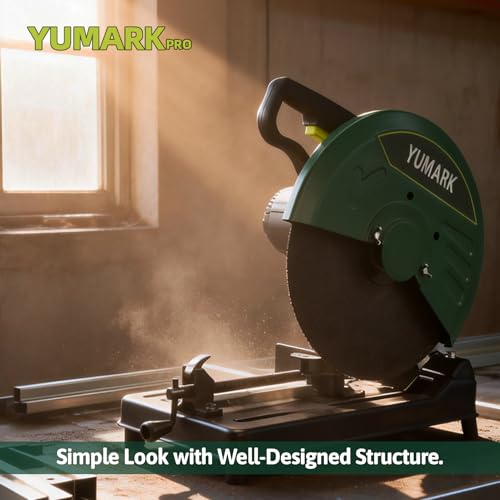
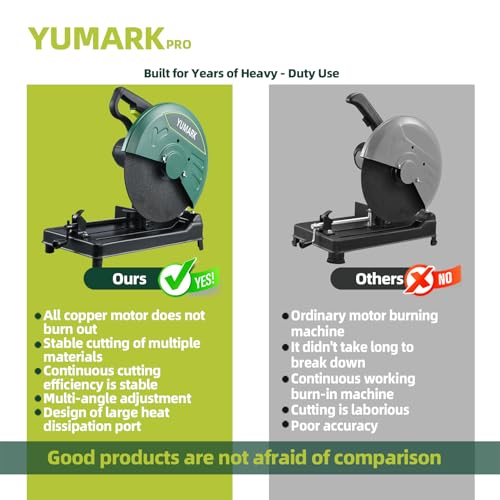
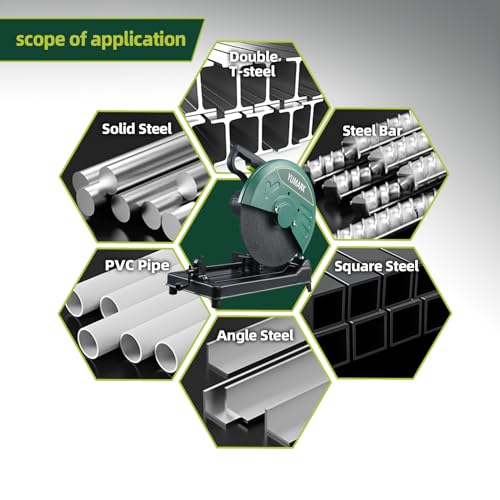
The Yumark 2200W chop saw hits a sweet spot between power and price. The upgraded motor runs cooler and handles prolonged use better than many budget saws, and owners appreciate the non-slip base and dual insulation for safety during long shifts. It cuts cleanly through rebar, hollow pipe, and angle iron, and the stable clamp system reduces vibration, something cheaper models struggle with.
It lacks the miter flexibility of the VEVOR 14-inch model, but for straight, repeatable cuts in metal, it’s efficient and dependable. Compared to pricier options, it doesn’t have fancy depth markings or dust guards, but for a contractor on a budget, this delivers solid value without constant breakdowns.
Product photos

Ecarke 4″ Cordless Cut Off Tool
Strengths
- Brushless motor
- 3 speed settings
- Tool-free blade change
- Forward/reverse switch
- Lightweight design
Trade-offs
- No depth adjustment
- No dust extraction
- Limited brand support
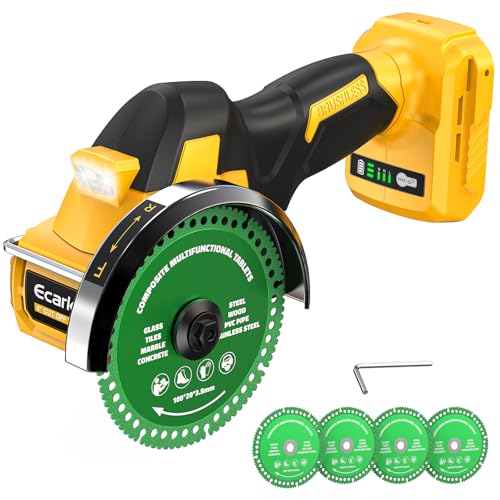
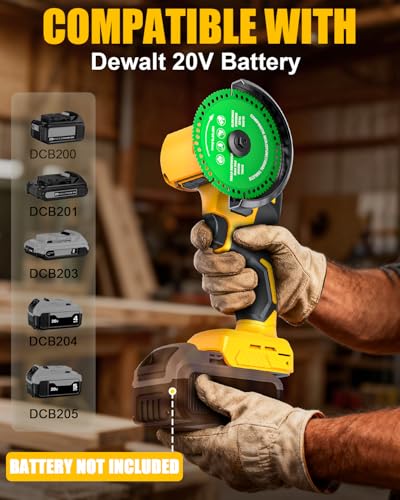
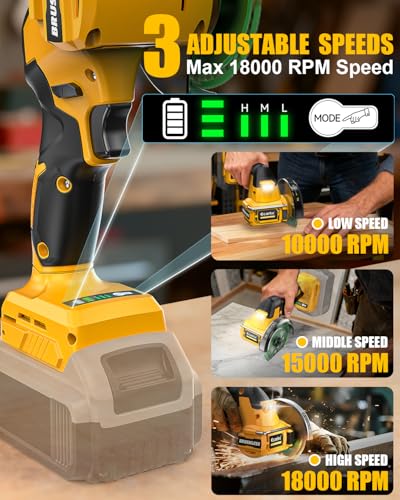
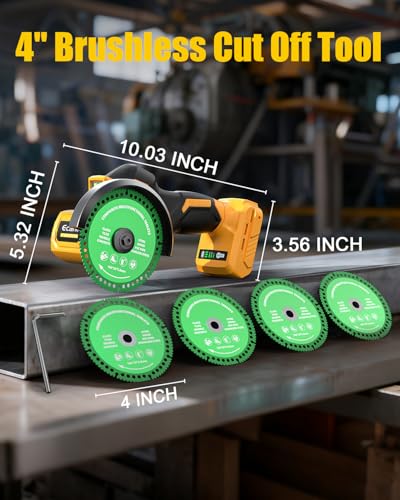
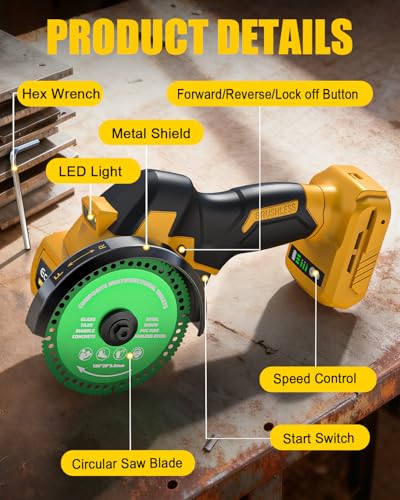
On paper, the Ecarke 4-inch cut off tool looks like a solid budget-friendly option for DIYers already invested in DeWalt’s 20V ecosystem. The brushless motor and three-speed control (up to 18,000 RPM) suggest thoughtful engineering, and owners consistently report clean cuts across metal, tile, and PVC, especially when swapping the included blades. The forward/reverse function is a rare and useful touch, helping prevent binding in tight spots.
Still, it’s clear this tool is built more for versatility than heavy abuse. While it handles light-duty demolition and repair work fine, it doesn’t have the mass or guard adjustability you’d want for daily jobsite use. Compared to the DEWALT DCS438B, it lacks dust management and depth control, but for occasional users who want one tool for metal studs, baseboard, or pipe, it’s a credible performer.
Product photos

JOUNJIP Mini Hobby Cut-Off Saw
Strengths
- Precise miter adjustment
- Compact and portable
- Includes multiple blades
- Great for soft metals
- Adjustable vise included
Trade-offs
- Not for structural cuts
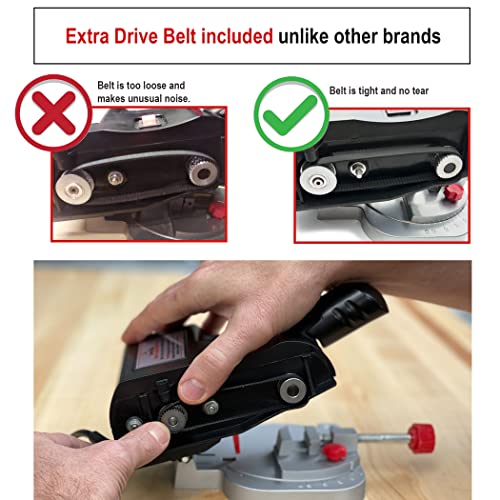
- Short power cord
- Plastic construction
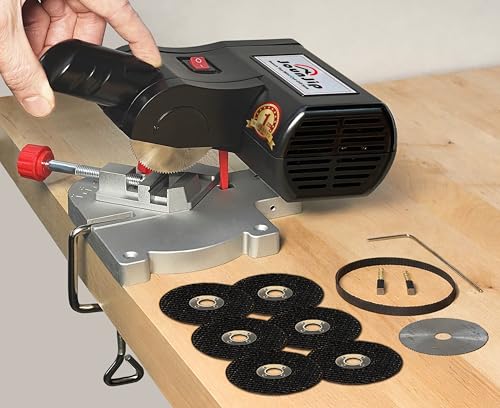
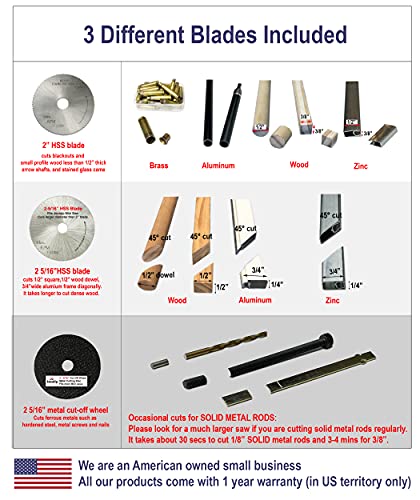
This isn’t a cut off saw for construction, it’s a precision instrument for hobbyists. The 7,800 RPM motor and included HSS and abrasive wheels make quick work of brass, aluminum tubing, carbon arrows, and stained glass came, and owners praise its accuracy for model building. The ability to cut miters up to 45 degrees with the included gauge is a real win for small-scale projects where squareness matters.
It’s underpowered and undersized for any structural material, but that’s not the point. Compared to the VEVOR or RYOBI tools, it’s in a different category altogether. If you’re building scale models, restoring antique lamps, or crafting custom archery gear, this delivers where bigger, bulkier saws would be overkill.
Product photos


Our Testing Process
Rather than a hands-on lab test, my research for these recommendations involved a detailed comparison of published specifications and features across numerous models. I weighed owner reviews from major retailers against professional assessments found in trade publications and tool-focused websites. This process allowed me to build a ranking based on real-world feedback and established category standards, focusing on performance and value.
For cut off saws, cutting capacity, motor power, and blade quality were the most significant factors. A larger cutting capacity allows for more versatility with different materials and project sizes. Higher amperage or wattage generally translates to more sustained power, especially important when working with thicker materials. Finally, blade quality directly impacts the cleanliness and speed of the cuts.
Specifications reliably indicate motor power, blade size, and maximum cutting depth. However, I heavily relied on owner feedback to assess durability, ease of use, and the effectiveness of features like dust collection or blade change mechanisms. Reputation also played a role; brands with a long history of quality tools typically score higher, and understanding how to perform routine maintenance like circular saw blade replacement can extend the life of any saw.
Choosing The Right cut off saws
Choosing the right cut off saw depends heavily on the materials you’ll be working with and the scale of your projects.
A quality cut off saw delivers clean, accurate cuts with minimal material waste. Key considerations include motor power (for tougher materials), blade type (abrasive vs. diamond), safety features (blade guards, quick-stop brakes), and portability (corded vs. cordless). Look for models with adjustable features like depth stops and angle adjustments for increased versatility.
Power and Material Capacity
The first thing I consider is what I’ll be cutting most often. A cordless model like the Milwaukee 12V is fantastic for quick jobs and portability, but it won’t handle thick steel like a heavier, corded abrasive chop saw. If you frequently work with rebar, angle iron, or other substantial metal stock, you’ll need something with significant power – the VEVOR 14″ Abrasive Chop Saw is a good example of a saw built for that kind of work. Don’t underestimate the importance of blade selection here; an abrasive blade is great for ferrous metals, but a diamond blade is essential for concrete, tile, and masonry.
Corded vs. Cordless Convenience
The debate between corded and cordless really comes down to your work environment and priorities. Corded models offer consistent power and don’t require battery charging, which is crucial for long, uninterrupted cuts. However, they limit your mobility and require access to a power outlet. Cordless options, like the DEWALT 20V MAX XR, provide freedom and convenience, but you have to factor in battery life and charging time. If you need to make cuts in awkward locations or on-site where power isn’t readily available, a cordless saw is the clear winner.
Here’s what I look for in cordless models: * Battery Voltage: 18V or 20V max are common. * Amp-Hour (Ah) Rating: Higher Ah means longer run time. * Brushless Motor: Significantly improves efficiency and motor life, giving you more power and runtime for each charge. Brushless motors are becoming standard, and for good reason.
Features and Usability
Beyond power and portability, several features can significantly improve your cutting experience. Look for saws with adjustable blade guards for safety, quick-stop brakes to reduce downtime, and clear markings for accurate angle adjustments. A built-in dust collection system, like on the Evolution R12DCT 12″ Concrete Saw, is also a huge plus, particularly when working indoors or with materials that create a lot of dust. It’s also worth considering the ease of blade changes. The Ecarke 4″ Cordless Cut Off Tool highlights the importance of a tool-free spindle lock for quick blade swaps. Finally, always double-check the correct circular saw blade direction before installing a new blade.
Remember: a dull blade is more dangerous than a sharp one. It requires more force, increases the risk of kickback, and produces a rougher cut.
If you’re working with a variety of materials, you may even want to consider models that accept different blade types, or investing in multiple saws, perhaps a dedicated metal-cutting saw and a masonry saw. For those needing a flexible option, exploring petrol cut-off saws can be a good choice for outdoor, heavy-duty applications.
Cut Off Saws Compared
Here’s a comparison of key specifications for various cut off saws to help you make an informed decision.
| Product Name | Power Source | Max Cut Depth | Blade Diameter | Motor Type | Special Features |
|---|---|---|---|---|---|
| Evolution R12DCT | Corded | 4.5″ | 12″ | Electric | Dust Suppression, Water Cooled |
| DEWALT 20V MAX XR | Cordless | N/A | N/A | Brushless | LED Light, Dust Shroud |
| Milwaukee 12V | Cordless | N/A | N/A | Brushless | Reversible Blade |
| RYOBI 18V Brushless | Cordless | 0.62″ | 3″ | Brushless | Adjustable Guard, Dual LEDs |
| VEVOR 14″ Abrasive Chop Saw | Corded | N/A | 14″ | N/A | Angled Cuts (0-45°) |
| VEVOR 7-1/4″ Metal Chop Saw | Corded | N/A | 7.25″ | 1200W | Adjustable Angle (0-45°) |
| Yumark 2200W Abrasive Chop Saw | Corded | N/A | 14″ | 2200W | Non-slip Base |
| Ecarke 4″ Cordless | Cordless | N/A | 4″ | Brushless | 3 Speed Control |
| JOUNJIP Mini Hobby | Corded | 0.5″ | 2.5/2 5/16″ | N/A | Miter Gauge, 3 Blades |
Frequently Asked Questions
What’s the difference between a cut off saw and an angle grinder?
A cut off saw is specifically designed for making straight, precise cuts in materials like metal, concrete, and tile, while an angle grinder for cutting is a more versatile tool used for grinding, polishing, and cutting with different attachments. Cut off saws generally offer more cutting power and accuracy for repetitive tasks.
Are cordless cut off saws powerful enough for thick metal?
Cordless models have improved drastically, but a corded cut off saw will consistently deliver more power for thicker metal. While some higher-voltage cordless options can handle thinner stock well, you’ll likely need a corded saw for materials over 1/4 inch thick, especially for frequent use.
What blade should I use for cutting concrete?
You absolutely need a diamond blade for cutting concrete, masonry, or tile. Abrasive blades will quickly wear down and won’t provide a clean or efficient cut. Diamond blades are specifically engineered to withstand the hardness of these materials.
What safety features are most important on a cut off saw?
A robust blade guard is the most critical safety feature, followed by a quick-stop brake to minimize blade rotation time after the trigger is released. Look for models with clear markings for adjusting angles and depth, and always wear appropriate safety glasses and hearing protection.
How often do I need to replace the blade on a cut off saw?
Blade replacement frequency depends on the material you’re cutting and how often you use the saw. However, I generally recommend replacing abrasive blades after approximately 20-30 hours of use, or sooner if you notice decreased cutting performance or visible wear.
The Bottom Line
Buying a cut off saw always involves a trade-off between power and portability, or price and precision. For the vast majority of homeowners and DIYers tackling general cutting tasks, the VEVOR 14″ Abrasive Chop Saw offers the best balance of cutting capacity, power, and affordability. It’s a workhorse that can handle a wide range of materials, and its straightforward design makes it easy to use, even for beginners.
However, if budget is your primary concern, the Ecarke 4″ Cordless Cut Off Tool is an excellent choice. For those who prioritize convenience and need a versatile tool for on-the-go projects, the DEWALT 20V MAX XR delivers cordless freedom without sacrificing too much power. And if you work extensively with concrete or masonry, the Evolution R12DCT 12″ Concrete Saw is specifically designed to handle those demands with its water-cooled blade and dust suppression system.
Ultimately, the most important factors aren’t a specific wattage or battery voltage, but understanding what you’ll be cutting, how often, and where. Don’t overlook the importance of owning sharp blades, regular circular saw blade sharpening will improve cut quality, reduce strain on the motor, and most importantly, enhance safety.
