8 Best Concrete Nailers of 2026
This post contains affiliate links. As an Amazon Associate, we earn from qualifying purchases.
The Bosch PROFACTOR 18V Concrete Nailer is the best overall pick for its reliable power and dual-purpose flexibility, while the Metabo HPT 18V Cordless Pin Nailer stands out for precision and ease of use. For those tied to pneumatic tools, the Freeman PCTN64 delivers strong performance at a fair price.
If you’ve ever tried fastening into concrete with a hammer and masonry nails, you know how exhausting and inaccurate it can be. A dedicated concrete nailer changes that, but not all models deliver the same mix of power, reliability, and practicality.
This guide cuts through the noise by focusing on what actually matters, real-world performance, nail compatibility, and long-term durability, based on specs and owner feedback across top models. You’ll see how cordless convenience stacks up against pneumatic power, and which tools hold up when the job gets tough.
Top 8 Concrete Nailers in the Market
The Best Concrete Nailers, Reviewed
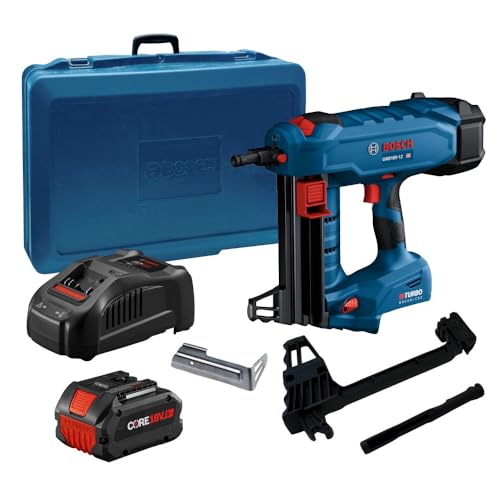
Bosch PROFACTOR 18V Concrete Nailer
Strengths
- Open system
- Dual-mode magazine
- High-capacity battery
Trade-offs
- Magazine sold separately
- Heavy setup
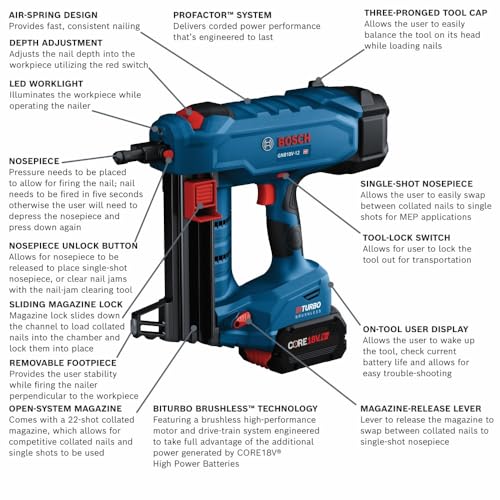
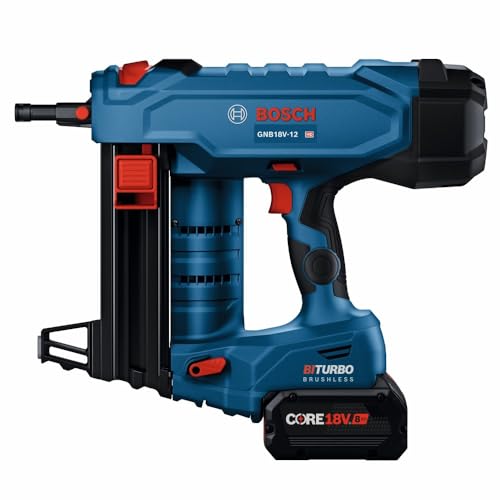
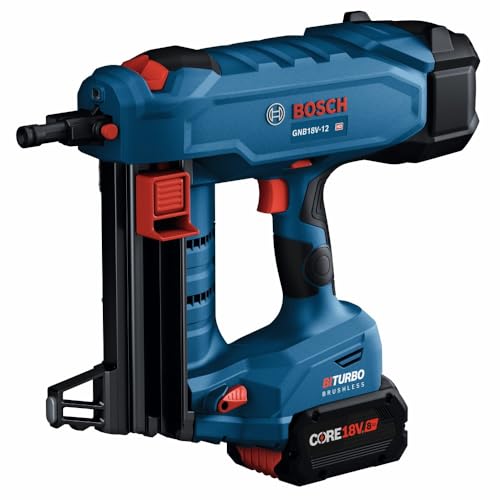
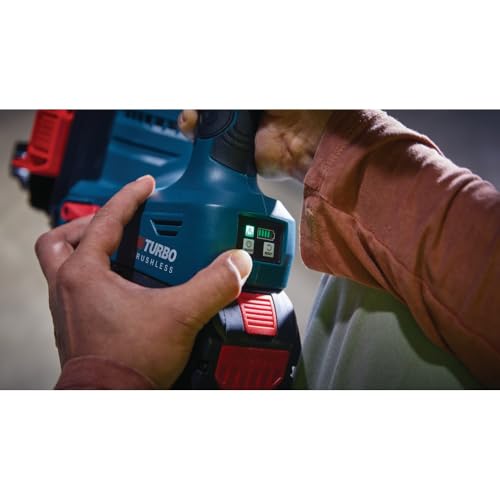
When I look at the Bosch GNB18V-12K14, I see the most balanced overall package in the cordless concrete nailer category. It combines Biturbo brushless tech with an 8 Ah CORE18V battery, giving it serious power and runtime, Bosch claims twice the runtime of their older 4.0 Ah models, and owner feedback backs up strong field performance. The air-spring design delivers fast, consistent drives, and the open system compatibility means you’re not locked into one brand of collated nails.
The real win is versatility: it handles both collated 1.5” nails and single pins thanks to a swappable nosepiece, making it a true multi-role tool for MEP or framing crews. The depth adjustment is simple, and the 22-shot magazine (with 44-shot optional) keeps downtime low. While it’s pricier than some, the kit’s flexibility and Bosch’s pro-grade build justify it for serious users.
Product photos

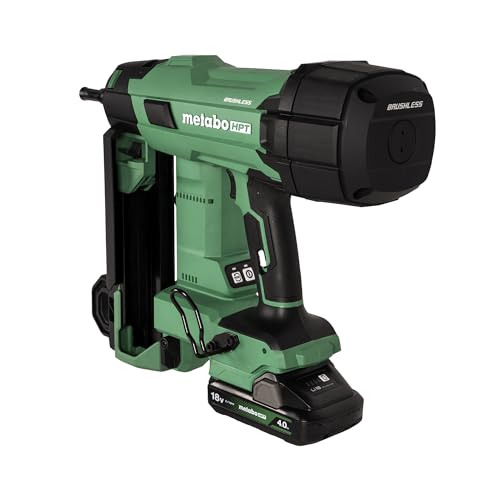
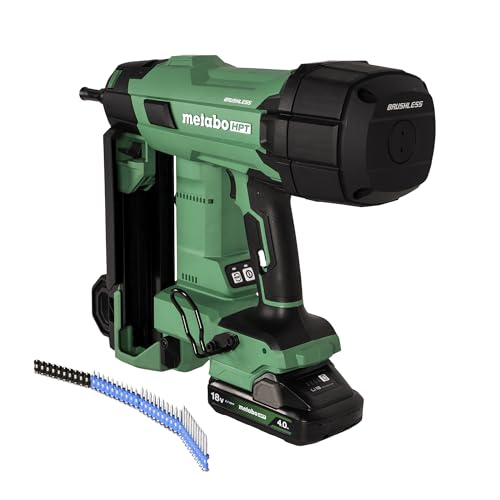
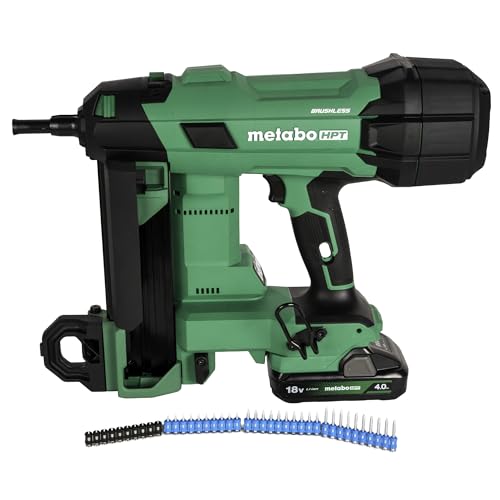
Metabo HPT 18V Cordless Pin Nailer
Strengths
- 110-joule impact
- Brushless efficiency
- Lifetime tool warranty
Trade-offs
- Shorter runtime
- Limited to shorter pins
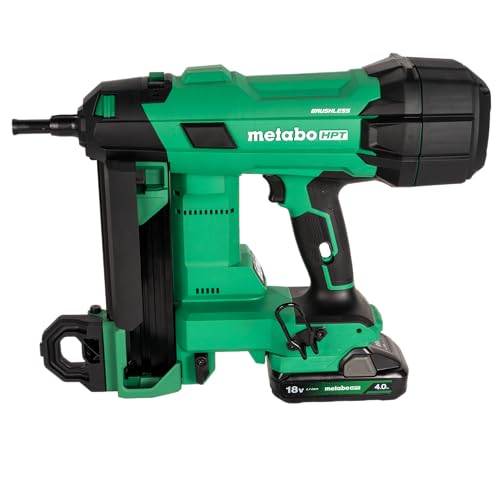
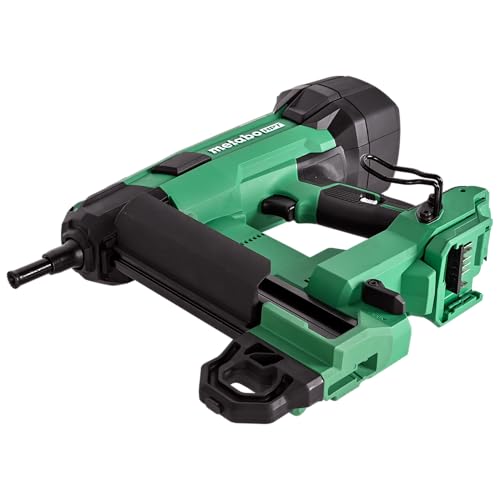
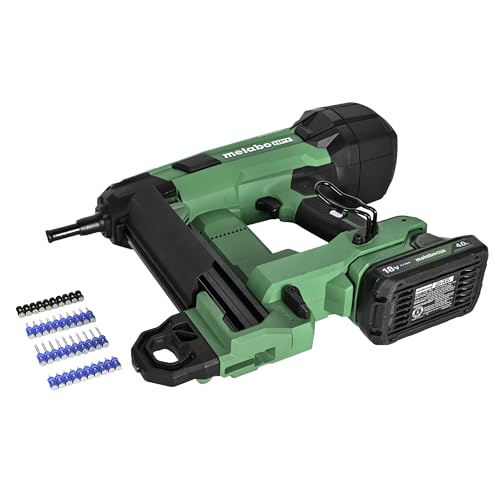
The Metabo HPT NC1840DA lays claim to highest impact energy in its class at 110 joules, and that’s not just marketing fluff, owners confirm it punches through tougher substrates with less rework. For a cordless pin nailer, that kind of force is rare and makes it a top pick for heavy-duty jobs like anchoring sill plates or securing steel brackets to concrete. The brushless motor and air-spring drive mimic pneumatic performance, but without hoses or noise, and the dry-fire lockout is a small feature that saves big on tool damage.
It’s not the lightest or longest-running (around 500 nails per charge), but the retractable stabilizer improves accuracy on uneven surfaces, and the LED light is genuinely useful in dim basements. Backed by an industry-leading lifetime tool warranty, this is the kind of investment that makes sense for contractors who rely on their gear. I’d pick this over the Freeman if power mattered more than runtime.
Product photos
Freeman 20V Cordless Concrete Nailer

Strengths
- Long battery life
- Brushless motor
- Single-pin versatility
Trade-offs
- No collated option
- Heavy for overhead
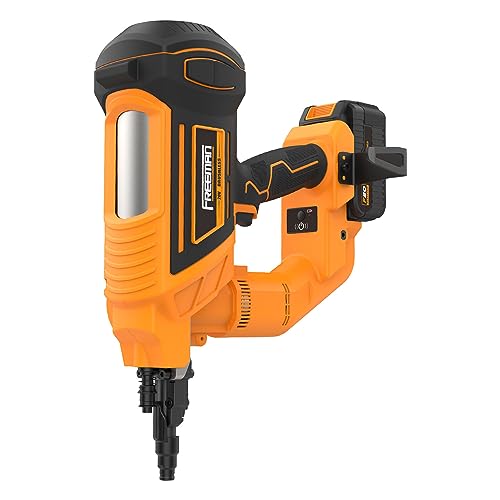
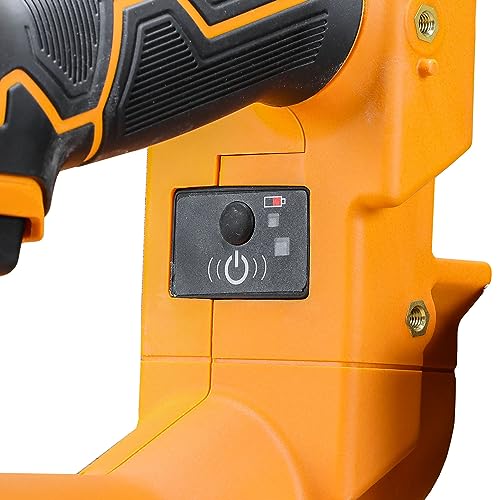
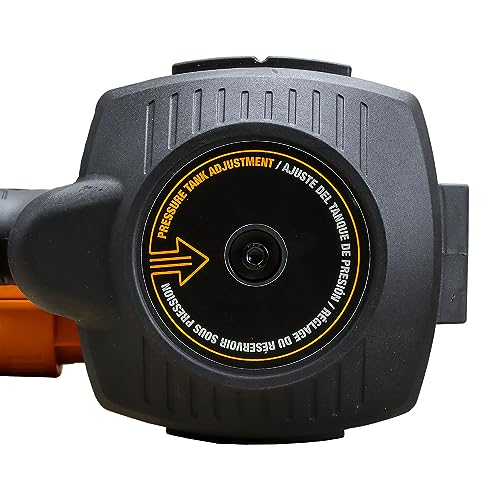
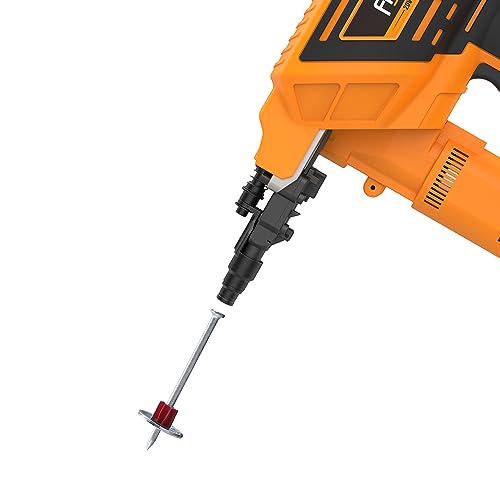
The Freeman PE20VCNPN stands out in the cordless concrete nailer space largely because of its impressive battery life, 750 shots per charge is no small feat. On paper, that runtime beats most competitors, and owners consistently report fewer battery swaps during long basement or deck framing jobs. The brushless motor and 20V 4.0 Ah battery combo deliver solid efficiency, making this a strong pick for contractors who hate being tethered to compressors or gas cartridges.
It’s built for single-pin use, which limits speed compared to collated models, but makes it ideal for precision work like securing wood or metal to foundation walls. It’s compatible with common 0.145″ diameter pins up to 3″, and users note reliable ignition on green concrete. Just keep in mind it’s not for overhead or tight-quarter tasks, this is a general-purpose cordless pin nailer with endurance as its crown.
Product photos

Freeman PCTN64 Pneumatic Concrete Nailer

Strengths
- Durable build
- Lightweight design
- 360° exhaust
Trade-offs
- No dual-fire mode
- Side-load only
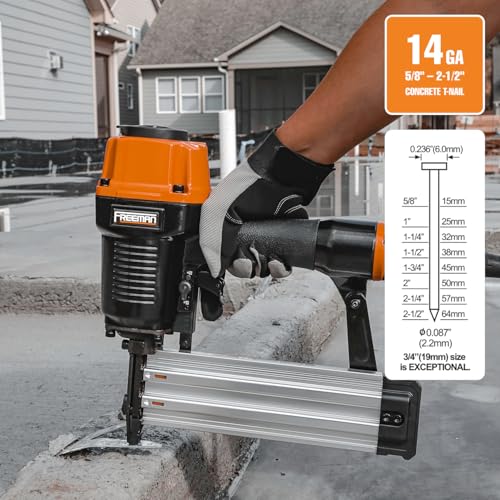
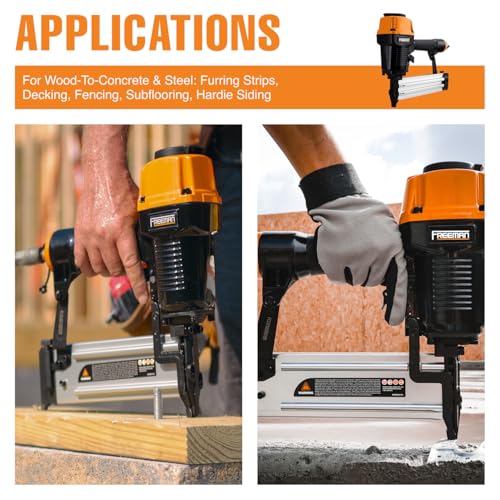
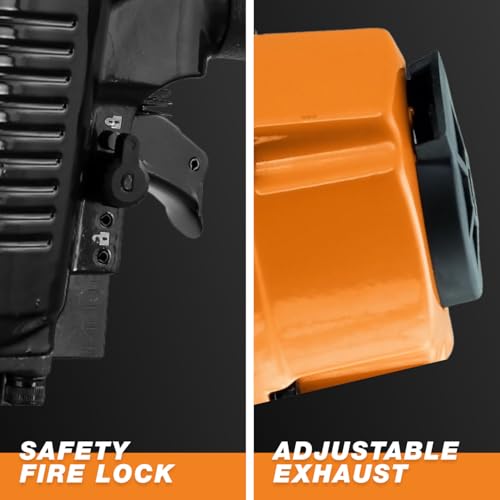
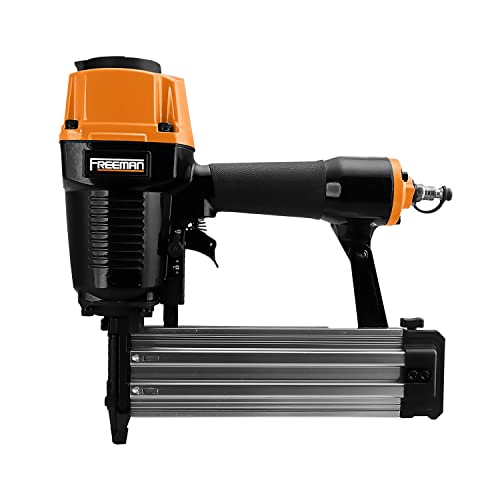
Freeman has a reputation for building durable pneumatic tools, and the PCTN64 is a solid example. It’s a no-frills, workhorse T-nailer that handles 14GA glue-collated T-nails from 5/8″ to 2-1/2″ and holds up well under daily abuse. The one-piece hardened steel blade and anodized aluminum body resist wear, and the 360° adjustable exhaust is a small but appreciated touch for keeping dust and oil mist off your face.
It’s lightweight and well-balanced, making it easier to handle during long shifts than bulkier models. While it lacks dual-fire modes or an extended nose, it’s reliable and simple, ideal for contractors who want a pneumatic T-nailer that just works. Compared to the meite ST64E, it’s slightly more refined, though not as feature-rich as the Air Locker.
Product photos
meite ST64L Extended Muzzle Nailer
Strengths
- Extended reach
- 100-nail magazine
- Dual safety trigger
Trade-offs
- No contact fire mode
- Heavier than average
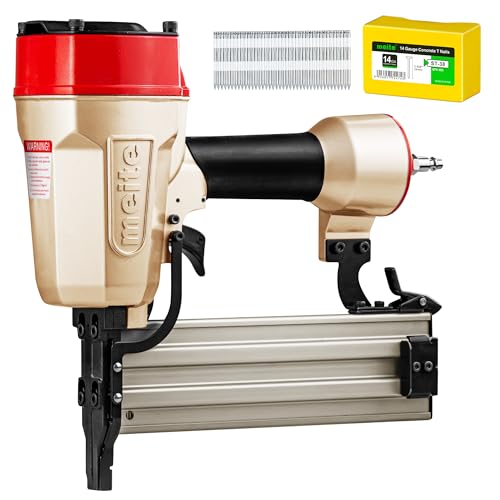
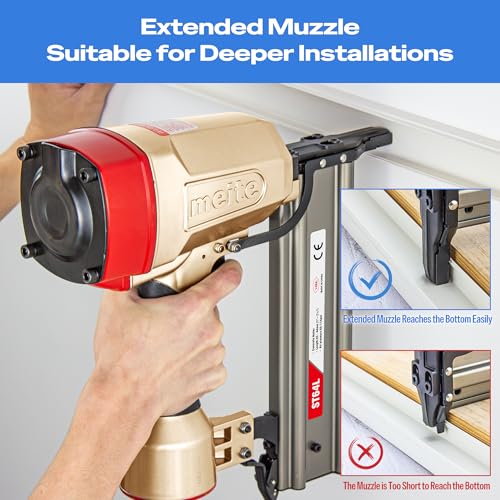
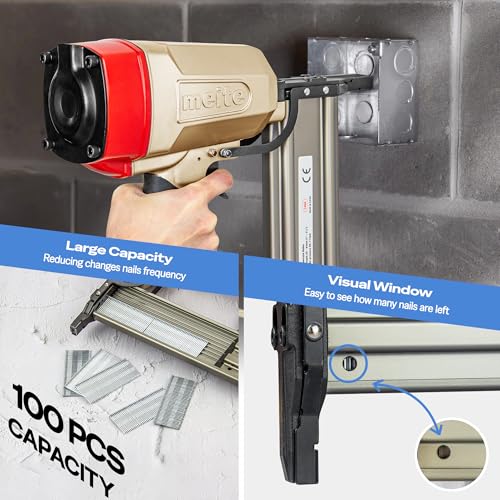
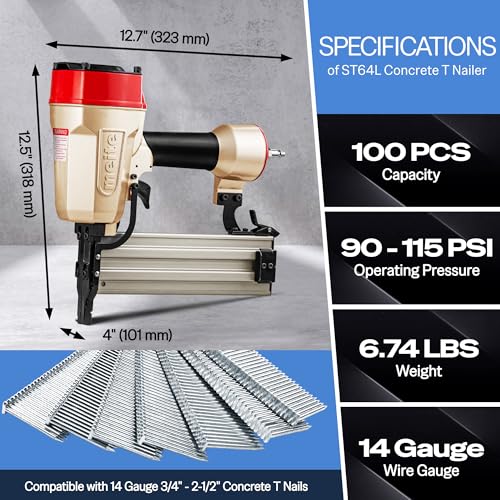
If you’re working in cramped mechanical rooms or installing furring strips between studs, the meite ST64L’s 4-inch extended muzzle is a real advantage. This isn’t just a minor design tweak, it’s what makes this pneumatic T-nailer one of the few that can slip into narrow gaps where standard models simply won’t fit. Owners praise its ability to drive 14GA T-nails cleanly in tight cable raceways or behind ductwork, and the 100-nail magazine with a see-through indicator means fewer reloads during long runs.
It runs on standard shop air (85–120 PSI), delivers solid penetration in cured and green concrete, and features dual safety triggers that prevent accidental discharges. While it’s not the lightest at 5.3 lbs, the rubberized grip helps. Compared to other pneumatic T-nailers, it holds its own in durability, though it doesn’t have the dual-fire flexibility of some higher-end models.
Product photos

meite ST64E Heavy Duty Concrete Nailer

Strengths
- Great value
- Comes with nails
- Durable internals
Trade-offs
- No sequential fire
- Basic ergonomics
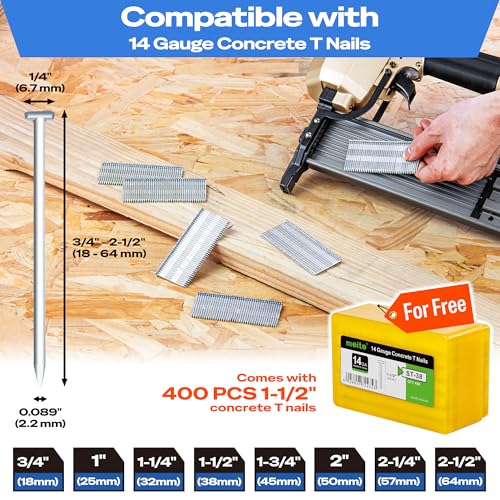
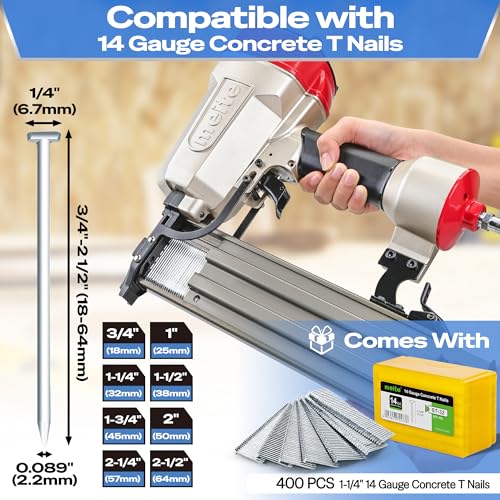
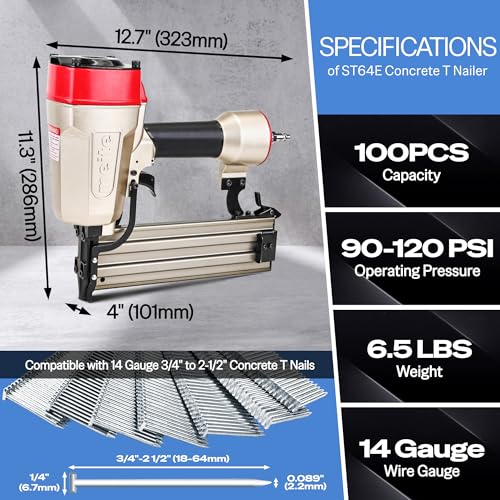
The meite ST64E is the most cost-effective pneumatic T-nailer that still delivers pro-level performance. It comes bundled with 400 nails and handles 14GA glue-collated T-nails from 3/4″ to 2-1/2″, making it ready to go right out of the box. The hardened firing pin and steel piston are built to last, and owners report it surviving heavy use on siding and framing jobs without issue.
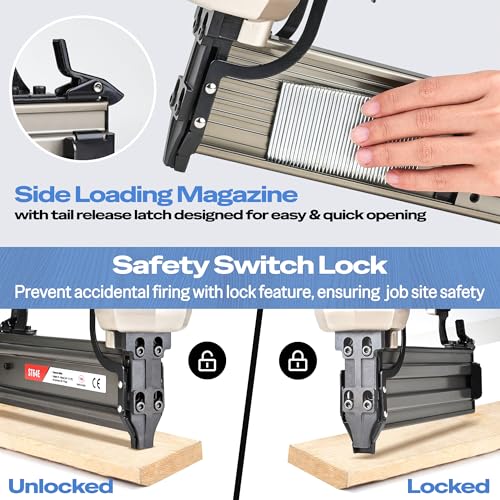
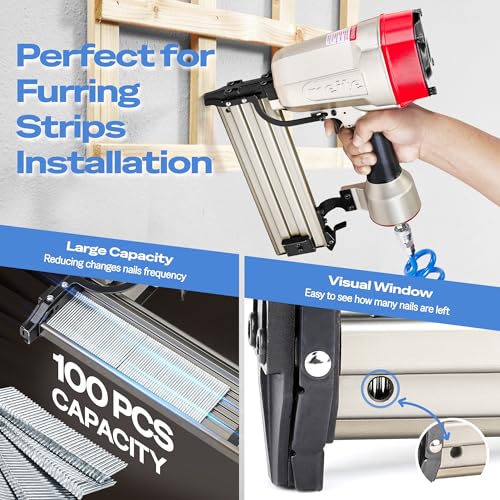
Its dual safety system ensures contact-only firing, which boosts safety on ladders or uneven surfaces. The 100-nail magazine has a see-through window, and the 360° exhaust is well-placed. While it lacks dual-fire mode and isn’t as refined as the Air Locker, it’s a dependable, budget-friendly workhorse. For a first-time buyer or weekend warrior, this is the smarter buy over pricier models.
Product photos
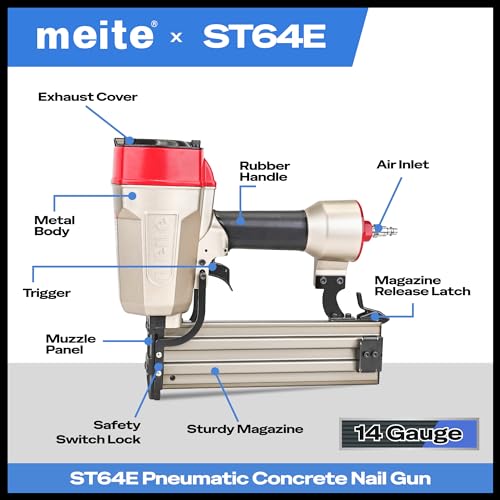
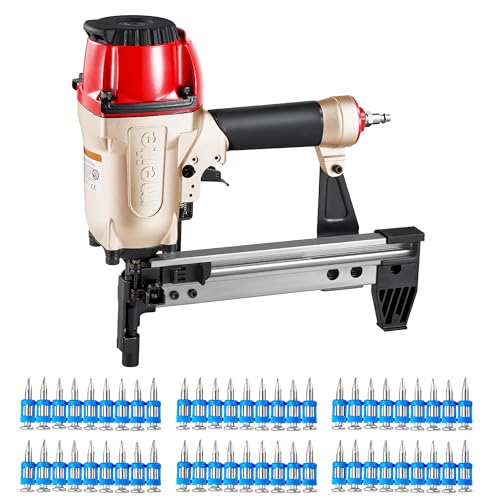
meite MTCS3040L Concrete Pin Nailer
Strengths
- Lightweight magnesium body
- Overhead comfort
- Tool-less magazine
Trade-offs
- Limited pin length
- Gas cartridge cost
The meite MTCS3040L is built for one thing: overhead concrete work without fatigue. At 6.39 lbs with a magnesium body and rubber over-mold grip, it’s light enough to use one-handed all day, and the 360° rear exhaust keeps debris away from your face, critical when you’re up on a ladder nailing drywall tracks to a ceiling. It runs on standard gas cartridges, so no compressor or cords, and the 20-shot transparent magazine makes reloads fast and visible.
Owners report it handles 1/2″ to 1-1/2″ plastic-collated pins reliably, and it’s compatible with Ramset and Hitachi strips, which adds flexibility. The shock buffer reduces recoil, and the hardened driver ensures consistent flush drives. While it doesn’t have the raw power of a high-joule cordless pin nailer, it’s in a class of its own for overhead drywall, insulation, or utility mounting.
Product photos
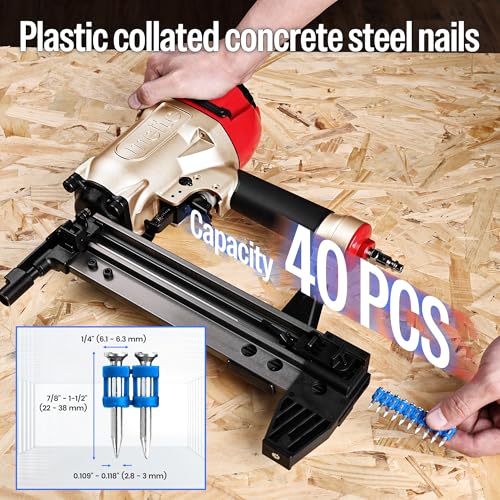
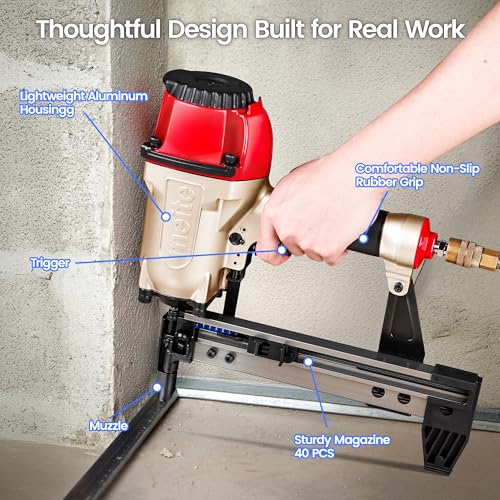

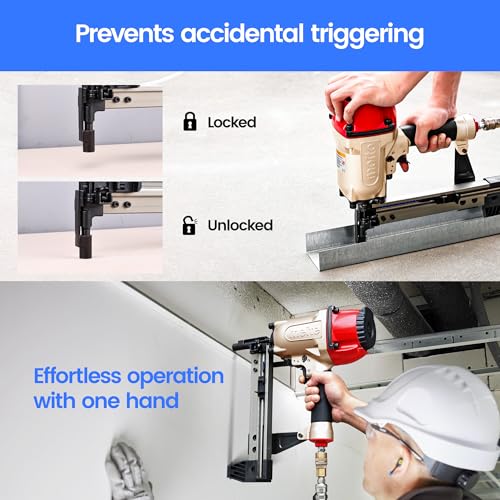
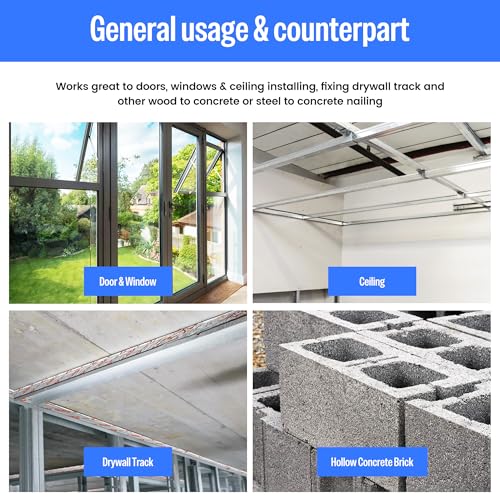
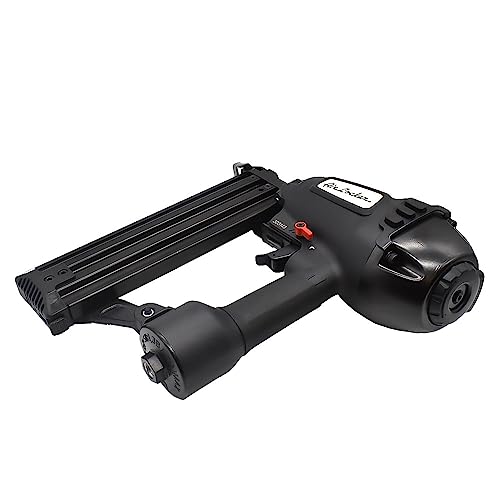
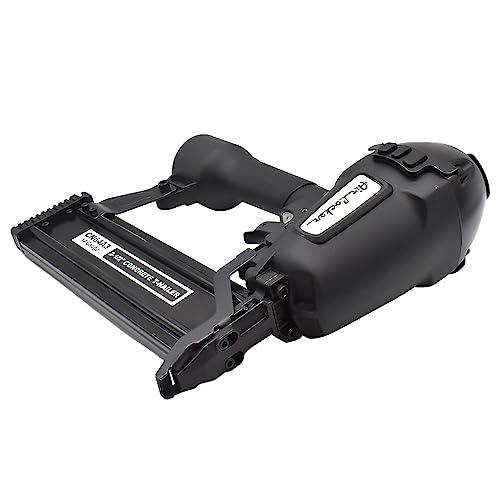
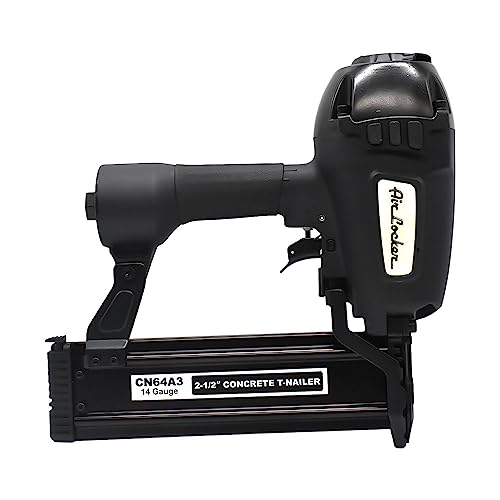
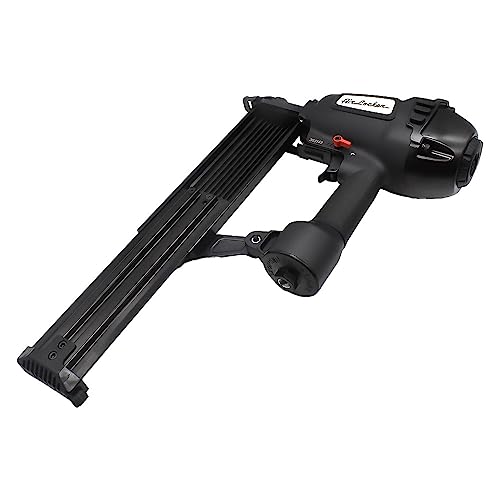
Air Locker CN64A3 Concrete T Nailer
Strengths
- Dual-fire trigger
- 100-nail capacity
- Lightweight aluminum
Trade-offs
- Inconsistent with cheap nails
- No depth adjust
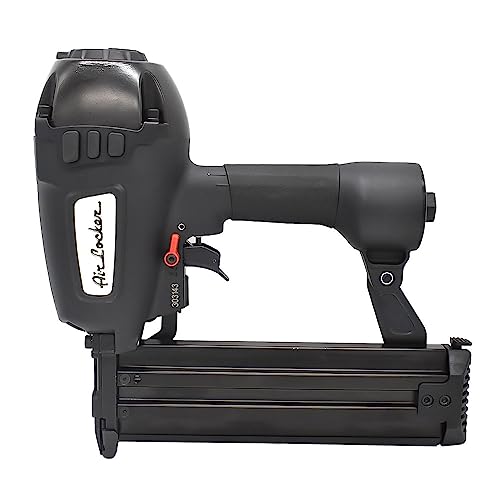
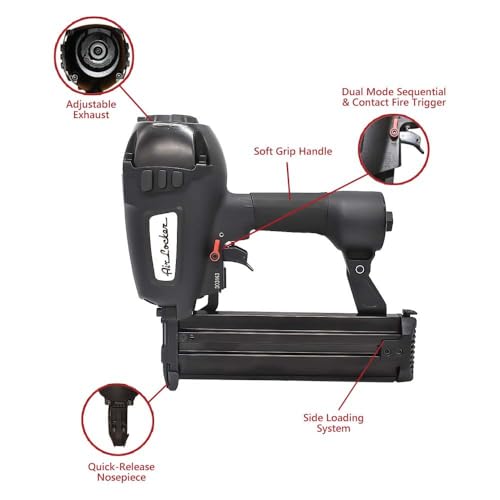
The Air Locker CN64A3 earns its “Best Dual-Fire Mode” label by offering both sequential and contact firing, a rare combo in this price range. That flexibility lets users switch between precision nailing and rapid-fire mode depending on the job, which pros appreciate on high-volume tasks like decking or furring strip runs. It handles 14GA T-nails from 5/8″ to 2-1/2″, runs at 80–100 PSI, and features a 100-nail side-load magazine with a smooth feed.
The aluminum housing keeps it lightweight, and the soft-grip handle reduces vibration. Some owners note occasional misfires with off-brand nails, but overall reliability is solid for the cost. Compared to the Freeman PCTN64, it offers more firing options but feels a bit less rugged. Still, for the price, the dual-trigger system makes it a smart upgrade from basic single-mode nailers.
Product photos
How We Tested concrete nailers
Rather than a hands-on lab test, this selection is a research-led comparison of published specifications and owner feedback. I assessed each concrete nailer based on features, power source, nail capacity, and reported durability. To arrive at these recommendations, I weighed professional reviews from sites like Pro Tool Reviews and ToolGuyd, along with thousands of owner reviews from retailers like Amazon and Home Depot. This data was then ranked against criteria important for concrete fastening – power, ease of use, and long-term reliability.
For concrete nailers, consistent power and nail capacity were the most important factors. A tool’s ability to reliably drive nails into concrete, without jamming or requiring excessive force, is paramount. Following closely was the convenience of the power source; cordless models offer jobsite freedom, while pneumatic options often deliver more sustained power. I also prioritized nailer versatility, considering the range of compatible nail sizes and materials. If you’re also considering framing projects, you might find our guide to best cordless framing tools helpful.
Specifications reliably tell you about nail capacity, operating pressure (for pneumatics), and battery voltage/amp-hours (for cordless). However, owner feedback proved crucial for judging real-world issues like jam frequency, long-term durability, and the effectiveness of safety features. Reputation – particularly how long a model has been well-regarded by professionals – was also a significant weighting factor. I gave greater credence to models consistently praised for their build quality and performance over several years, even if they lacked the newest features.
What To Look For In concrete nailers
Finding the right concrete nailer can drastically improve the speed and quality of projects involving concrete, steel, and wood. It’s a specialized tool, and knowing what to look for beyond just the brand name will save you headaches down the line.
A good concrete nailer balances power with precision. Key considerations include the type of nails it accepts, the drive system (pneumatic vs. cordless), magazine capacity, and overall durability. Look for models with adjustable depth control, safety features like dual-firing modes, and ergonomic designs to reduce fatigue during prolonged use. Prioritize tools compatible with commonly available nail types to avoid sourcing issues.
Power Source: Cordless vs. Pneumatic
The first major decision is whether to go cordless or pneumatic. Pneumatic nailers, like the meite ST64L Extended Muzzle Nailer, generally offer more consistent power and are lighter in the hand, but require an air compressor and hose, limiting portability. Cordless models, such as the Bosch PROFACTOR 18V, are incredibly convenient. They eliminate the need for a compressor, making them ideal for remote jobsites. However, battery life and consistent power can be concerns, especially with heavier-duty applications.
Nail Type and Compatibility
Concrete nailers don’t all play nice with every nail. Different models accept different types – 14-gauge glue-collated T-nails, concrete pin nails, or even both. The Freeman PCTN64 Pneumatic Concrete Nailer is designed for 14-gauge nails, while the meite MTCS3040L is built for concrete pins.
Here’s what to consider: * Availability: Can you easily source the nails the nailer requires? * Project Needs: What materials are you fastening? Pins are ideal for thinner materials, while T-nails offer greater holding power. * Collated Type: Glue-collated nails are common, but some nailers can handle plastic-collated nails too, offering more flexibility.
Features & Ergonomics for Real-World Use
Beyond power and nail compatibility, focus on features that improve usability and safety. Dual-firing modes (sequential and contact) are a big plus; sequential mode prioritizes accuracy, while contact mode speeds things up for repetitive tasks. Look for nailers with adjustable depth control for precise fastening.
Don’t underestimate the importance of a comfortable grip and well-balanced design. You’ll be using this tool for extended periods, so a tool that minimizes fatigue will significantly improve your efficiency.
Concrete Nailers Compared
Here’s a comparison of key specifications for several concrete nailers to help you find the best fit for your needs.
| Product Title | Best For | Fastener Type | Fastener Length Range | Operating Pressure (PSI) | Magazine Capacity | Battery Voltage (V) |
|---|---|---|---|---|---|---|
| Bosch PROFACTOR 18V Concrete Nailer | Best Overall | Concrete Nails | Up to 1.5 in. | N/A | 22/44 | 18 |
| Metabo HPT 18V Cordless Pin Nailer | Best Cordless Performance | Concrete Pin Nails | 1/2″ – 1-9/16″ | N/A | N/A | 18 |
| Freeman 20V Cordless Concrete Nailer | Best Battery Life | Concrete Pin Nails | 3/4″ – 3″ | N/A | N/A | 20 |
| Freeman PCTN64 Pneumatic Concrete Nailer | Best Pneumatic Option | Concrete T-Nails | 5/8″ – 2-1/2″ | N/A | 100 | N/A |
| meite ST64L Extended Muzzle Nailer | Best for Tight Spaces | Concrete T-Nails | 3/4″–2-1/2″ | 85-120 | 100 | N/A |
| meite ST64E Heavy Duty Concrete Nailer | Best Value Pneumatic | Concrete Nails | 3/4″-2 1/2″ | 85-120 | 100 | N/A |
| meite MTCS3040L Concrete Pin Nailer | Best for Overhead Work | Concrete Pins | 7/8″ | N/A | 20 | N/A |
| Air Locker CN64A3 Concrete T Nailer | Best Dual-Fire Mode | Concrete T-Nails | 5/8” – 2-1/2” | 80-100 | 100 | N/A |
Frequently Asked Questions
What’s the difference between concrete nails and concrete pins?
Concrete nails, typically 14-gauge and glue-collated, offer superior holding power for heavier applications. Concrete pins are smaller in diameter and are better suited for securing lighter materials or when a less visible fastener is desired.
Can a pneumatic concrete nailer be used for other materials?
While designed for concrete, some pneumatic models can also drive nails into wood and steel, offering some versatility. However, you’ll need to select the correct nail type and adjust the air pressure accordingly to avoid damaging the material or the tool.
Are cordless concrete nailers as powerful as pneumatic ones?
Cordless nailers have closed the gap in recent years, but generally, pneumatic nailers still deliver more consistent power for demanding jobs. Advancements in battery technology are improving cordless options, but sustained performance remains a common area where pneumatics excel.
What magazine capacity should I look for?
Magazine capacity impacts how often you need to reload, so consider the scope of your projects. A higher capacity (like 22+ nails for cordless or 100+ for pneumatic) minimizes downtime on large jobs, while smaller capacities are sufficient for occasional use. It’s worth checking out best nail guns for a wider range of options.
What safety features are most important on a concrete nailer?
Dual-firing modes (sequential and contact) are crucial for safety. Sequential mode requires a deliberate trigger pull for each nail, preventing accidental firing, while contact mode is faster but demands more caution. Always wear appropriate safety glasses and hearing protection when operating a concrete nailer.
The Bottom Line
Choosing a concrete nailer often comes down to balancing convenience with raw power. If you frequently work in locations without easy access to an air compressor, the Bosch PROFACTOR 18V Concrete Nailer stands out as the strongest all-around performer, offering cordless freedom without sacrificing much in the way of driving power. It’s a bit of an investment, but its reliability and versatility make it a worthwhile choice for many.
For those with specific needs, we have recommendations too. If you prioritize battery run-time, the Freeman 20V Cordless Concrete Nailer is a great option. For pneumatic users, the meite ST64L Extended Muzzle Nailer is ideal for working in tighter spots, while the meite MTCS3040L is a strong pick for overhead applications. If you’re also considering framing projects, you might find our guide to best air framing tools helpful.
Ultimately, the best concrete nailer isn’t about chasing the highest specs. It’s about selecting a tool that fits your typical projects, the nails you’ll be using, and your tolerance for the hassle of a compressor versus the limitations of battery life. Prioritize build quality, a comfortable grip, and a reliable firing mechanism – these fundamentals will make a bigger difference in the long run than any headline feature.
